Wanted Dead or Alive

The past month been an interesting one, so much so that I’ve not really been able to get a whole lot of anything writing related finished. This is partly my own fault, of course; I should have repeatedly resisted the urge to continue to read and refresh pages and follow links and so forth; but like a train wreck, I wasn’t able to ever tear my eyes away from the carnage.

As I said to a friend at the height of the drama, “Every time I think the last car of the train has come off the rails and the wreck is finished, here comes another train on the same tracks and I am mesmerized all over again.” I’ve read blog posts and Facebook posts and Twitter threads, over and over again, my mouth wide open and there being literally no way to keep my jaw from its permanently dropped position other than using both hands to push it up and then hold it in place.

I mean, wow. What a month it has been for both the crime and horror fiction communities.

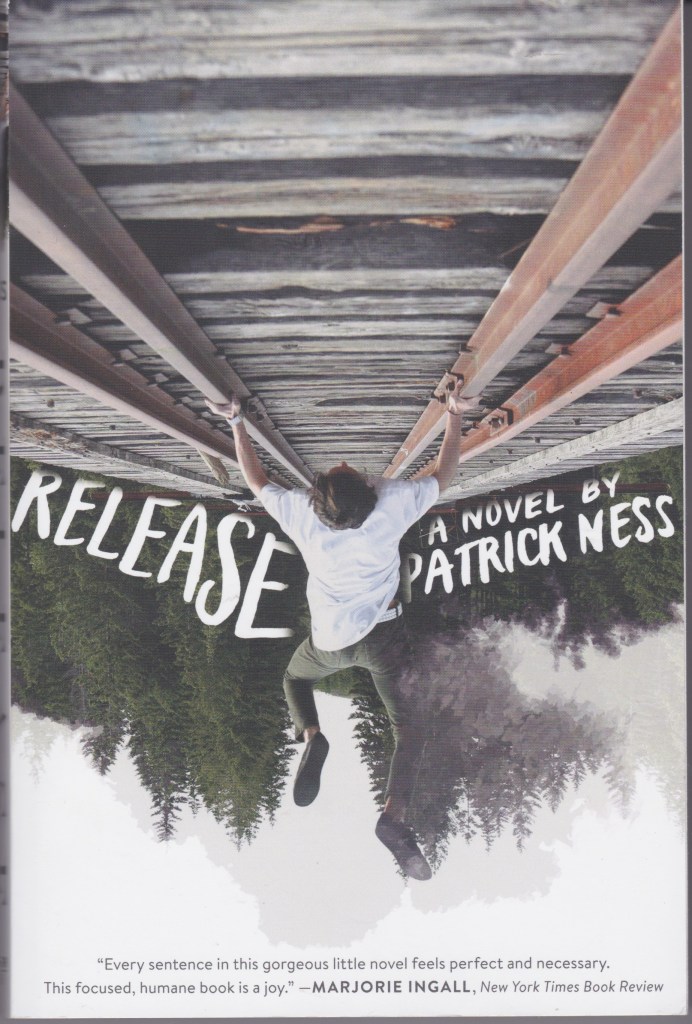
This is a roundabout way of getting to a question that has come up a lot in the last decade or so, and one I’ve thought about a lot, but have never really addressed very much…but with all these shenanigans going on recently, I started thinking about this again, and it also played into my thoughts about reading The Hunter by Richard Stark, and my recent read of I the Jury by Mickey Spillane; two enormously popular novels by well-regarded crime writers that might not hold up as well through the modern day lens as they perhaps did when they were originally released.

And that ever-present question of the artist versus the art.

Probably the first time I’ve ever thought about whether it’s possible to continue to enjoy art despite the artist was, of course, the film Chinatown. I never saw it in the theatrical release, but it’s widely regarded as one of the best crime films ever made; I remember it was nominated for like ten or eleven Oscars in the year it was released (which, if memory serves, was the same year as The Godfather Part II, which pretty much won everything imaginable), and the debate about the movie has raged ever since Polanski fled the country to avoid statutory rape consequences. I find that abhorrent; and any defense of Polanski’s indefensible behavior irrelevant to me. But I wanted to watch Chinatown, and Rosemary’s Baby is one of my favorite horror movies of all time; I revisit it every now and then. So, how can I justify watching and enjoying these two films directed by someone who did something heinous? When I was finally able to stream Chinatown a few years back, I justified it to myself by saying it was 1. before the statutory rape and 2. if I didn’t review or talk about or promote the film on social media or on my blog, streaming it through a service I already pay for isn’t contributing much, if any, money to Polanski’s bank account.

And yes, I am very well aware of how ludicrous and torturous those mental hoops I jumped through actually are.

There was also the Orson Scott Card debacle a few years back, and I didn’t jump through hoops on that one. I had read and enjoyed Ender’s Game, and had thought about reading more of Card’s work…until I discovered he was a horrific homophobe who actually worked, donated money to, and actively sought to block gay equality in the United States. 

Nope, sorry, done.

It’s one thing to have abhorrent opinions about a minority; it’s another to actively work–and use the money you’ve earned through your art–against the rights of that minority. Fuck all the way off, Mr. Card, and never come back.

Which brings me to The Hunter.

the hunter

When a fresh-faced guy in a Chevy offered him a lift, Parker told him to go to  hell. The guy said, “Screw you, buddy,” yanked his Chevy back into the stream of traffic, and roared on down to the tollbooths. Parker spat in the right-hand lane, lit his last cigarette, and walked across the George Washington Bridge.

The 8 a.m. traffic went mmmmmm, mmmmmm, all on this side, headed for the city. Over there, lanes and lanes of nobody going to Jersey. Underneath, the same thing.

Out in the middle, the bridge trembled and swayed in the wind. It does it all the time, but he’d never noticed it. He’d never walked it before. He felt it shivering under his feet, and he got mad. He threw the used-up butt at the river, spat on a passing hubcab, and strode on.

Richard Stark is one of the pseudonyms of crime writer extraordinaire Donald Westlake. I will be the first to admit, repeatedly, that my education in not only literature but crime fiction is sorely lacking; there are many authors whose works I should have read and haven’t; Westlake is one. I read my first Westlake a few years ago, a Hard Case Crime edition of The Comedy is Finished and it was amazingly good. I ordered a copy of The Hot Rock shortly thereafter; alas, it is still in the TBR pile., and I do intend to get to it at some point.

Westlake also happens to be an inspiration to one of my favorite queer writers, Rob Byrnes, who writes witty, Westlake-like queer caper novels (if you’ve not already read him, you must do so immediately).

I first discovered that Westlake was also Richard Stark when these Parker novels he wrote under that name were brought back into print recently by the University of Chicago Press, and a crime writer I admire deeply, Chris Holm, announced he’d written an introduction for one of the books. Chris has never steered me wrong in his recommendations (for that matter, neither has his amazing wife, Katrina Niidas Holm, who was the one who steered me to Michael McDowell’s The Elementals, for which I will always be grateful), and so I thought, as is my wont, to start with the first book in the series, The Hunter.

And once I started reading it, as you can see by the opening above, I was caught up in the story and the voice.

But, as I said earlier, The Hunter was very much a novel of its time: 1960.

Parker was considered an anti-hero when the books first started coming into print–although today I suppose he would be considered a sociopath. He does live by a code, even if he is a sociopathic criminal; and one has to admire the dedication to that code, and how he never deviates from it. He doesn’t have an issue with breaking the law–in fact, he makes his living breaking the law–nor does he have a problem with meting out vengeance on those who do him wrong. In The Hunter, he is betrayed–and almost killed–by his partners in a high-stakes robbery; amongst those who wronged and cheated him are his wife–and he kills her without a second thought, and then goes after the rest of those involved in the scam, even though some of them are very well connected with the New York mob. (The mob is referred to as a ‘syndicate’ in the book; an old term I haven’t heard in a very long time, and it was a lovely piece of nostalgia. Organized crime was often referred to as a ‘syndicate’ back in the day.)

It’s tautly written, suspenseful (will Parker get his revenge, or will he be betrayed yet again?) and I kept turning the pages. I really enjoyed the book tremendously, and will go back and continue to read the Parker novels–I am curious to see how Stark developed the character and the continuing story of his life and career in crime, as well as to see how Westlake continued to develop as a writer under the name Richard Stark.

However–the casual homophobia of the time slapped me in the face a couple of times while I was reading the book:

Page Three: On the way, he panhandled a dime from a latent fag with big hips and stopped in a grimy diner for coffee.

p. 38: “She’s dead. So is your fat pansy. You can be dead, too, if you want.”

Yeah, I did kind of recoil, and in both instances I debated finishing the book. But…it was written in 1960, and the attitude towards homosexuality exhibited in those lines (including the slur pansy, which I haven’t heard in a while) was common. We can’t deny that it existed–we cannot deny homophobia exists today any more than we can that it did in 1960–and it was a sign of the times. Does that mean the book shouldn’t be read? Should it come with a trigger warning? A deep-seated contempt for homosexuality was part and parcel of the alpha male/tough guy persona of the times, and including that language in the book was an easy way to convey the no-nonsense masculinity of the character (it was also there in I the Jury–much more so in the Spillane than the Stark).

The attitudes towards women isn’t much better; but again, a sign of the times:

p. 135 He used one cord to tie her hands behind her, the other to tie her ankles. He found scissors in a desk drawer next to an inhaler, snipped off part of her slip and used it for a gag. She had good legs–But not now. After it was over, after Mal was dead, he’d want somebody then.

Ew, because killing someone is a turn-on? Although it fits with the character Stark has created; this is a man who killed his wife without a second thought.

But…I enjoyed reading the book. I suspect my enjoyment would have been greater in the past–I probably would have loved this series had I discovered it in my late teens and early twenties, but the world was a different place then, too. I am definitely going to continue reading the series; as I said earlier, I am curious to see how the character develops and changes and grows–or if he doesn’t, how bad he becomes. I am intrigued by the character, and of course, the writing is absolutely stellar.

I don’t think, for the record, books from earlier times should be held to the same standards as we would hold something newly published; times and attitudes vary and change over time. It’s hard to read an older book without the modern lenses, however; probably as little as ten years ago I would have dismissed the “pansy” remarks or the misogyny apparent in the character without feeling the need to point it out. I don’t think these books should be cancelled or not read; primarily because it’s incredibly important to have these conversations–as well as these works serve as a time capsule, a window into another time where things hadn’t yet changed but needed to, certainly.

I do recommend it; as I said, I will continue reading the Parker series and I am looking forward to reading more of the Westlake novels as well.

Rock Steady

Watchmen is, quite frankly, brilliant television.

While I would never consider myself a comics nerd, I did grow up with them, and have periodically returned to them as an adult. I’m a fan of the genre of super-heroes, but would never consider myself anything more expert than any other sideline, keeps up with it slightly, fan. (Although the world of comics fans endlessly fascinates me; I’ve loved attending the local version of Comic Con, and suspect the bigger ones would be too overwhelming and too much for me.)  Anyway, that’s a roundabout way of saying I’ve never read the source material for this show, but have heard about it for years. I’m enjoying this show so much I now want to go back and read the original source material (which I’m sure is now readily available, certainly) as well as go back and watch the film that was made of it several years ago. I would say that’s a statement about how much I am enjoying the show, while admiring it at the same time; I now want to know the entire story, or as much of it as I can glean to get a better understanding of the show.

A need I never felt, quite frankly, with The Walking Dead, and only somewhat with Game of Thrones (I won’t commit to reading that entire series until it’s completed, thank you very much).

The Saints also managed to win a heart-attack inducing game yesterday, which I was felt quite certain they were determined to lose for some unknown reason. But they managed to get the last second field goal and dodged the bullet; the Panthers missed their own just moments before. The Saints aren’t playing as solidly as I would like, but I would imagine there’s an adjustment period when you have to switch quarterbacks again–and it takes some time to get fully back into the old rhythms again. Still, we’re having a glorious football season in Louisiana, one that I hope everyone is taking the time to enjoy.

This week is Thanksgiving, and as I’ve been thinking about American mythology a lot lately, it seems only fitting that yet another myth looms on the horizon; a holiday where Americans gather to be grateful and give thanks for what they have…as the final, massive full frontal assault of Christmas commercialism looms just over the horizon. I watched another couple of hours of World War II-Pacific theater documentaries yesterday–I’m not sure why I am so drawn to that particular period of history lately, or that particular theater of that particular war; draw your own conclusions–and again, found myself as a present-day prosecutor, trying the United States for war crimes for the use of nuclear weapons on civilian populations. It is easy to be judgmental in hindsight; my living room in New Orleans in November 2019  is vastly different than the Oval Office in Washington in July 1945, and I certainly don’t have the future of the world in the palms of my hands; it’s easy to question decisions of the past with the hindsight of the present.

But I also find it hard to believe we would have used nuclear weapons on Germany.

Hindsight.

Looking back at the past with the mindset of the present.

Watchmen‘s entire approach to racism and the past is incredibly powerful, and also incredibly important. A pivotal event in the narrative is the obliteration of the a economically strong and growing black community near Tulsa back in the 1920’s; a horrifying racist slaughter and eradication of a community for daring to believe American mythology and trying to live the American dream as non-whites.

It also got me thinking about diversity, and the push for it in publishing, particularly in crime fiction lately, given some of the incidents that have occurred recently at crime events, or involving crime fiction organizations over the last few years. It occurred to me that inclusion, and diversity, are important words that may not carry with them their own importance; what we are really trying to accomplish is the desegregation of publishing and the creative arts; integrating writers of color and queer writers into the mainstream of publishing. Integration and segregation are much more powerful words; but desegregation is an incorrect term, in that it presupposes that there are separate but equal publishing worlds, which isn’t true; perhaps that’s why integration isn’t the word we use about talking about diversity in publishing.

But I think integration gets the point across more than inclusion does.

I am still reading both The Nickel Boys and Bourbon Street, hope to get more of the Whitehead read today, in fact. This first day of Thanksgiving week vacation–after three days of essentially relaxing and doing something periodically, but mostly doing nothing active–needs to be more of an active day than a passive one. I am going to work on my emails today, I am going to write today–not sure just quite yet what it is I will be writing, but I am going to be writing today for sure–and making other arrangements as well. There’s a lot of filing and cleaning that needs to get done, but I am going to be home alone all day with the needy kitty–who will insist on sitting in my desk chair once Paul leaves for the day–and I am determined to get all of this finished….or at least progress. I’ve kind of been letting a lot of stuff slide because I haven’t wanted to deal with it; well that day of reckoning has now arrived.

And on that note, it’s back to the spice mines.

12716110_1028251090568495_1090377440025608000_o

Big Time

LSU won again last night, blasting Arkansas 56-20 to win the West division for the first time since 2011, and a date in the SEC title game with Georgia. The Tigers are now 10-0, and pretty much all the entire college football world can talk about; upstaging defending national champion Clemson and even Ohio State, the power of the Big Ten this year. It has been quite a ride for us Tiger fans this year, and of course the whole state is abuzz with excitement; I can’t remember a time when both the Saints and LSU had the chance to go all the way in the same season.

It’s chilly this morning in the Lost Apartment, but sunny and lovely outside. I’m not sure if this means it’s also cold outside–when I take the recycling out later I imagine I will find out–but my morning coffee is doing an absolutely lovely job of warming up my insides this morning, which is also lovely. I’m still on vacation–one week from today is the last day of it–and so far I’ve not really accomplished much of anything, really. I’ve done some cleaning and organizing, but for the most part have enmeshed myself in laziness and making excuses for not doing anything–primarily from watching television. After the LSU game ended last night, we watched the final three episodes of Unbelievable, which didn’t disappoint. Merritt Weaver and Toni Collette deserve Emmy nominations at the very least; but with all the A-list names that are coming to television and doing great work, the Emmys are becoming more competitive than the Oscars.

I am also still reading Richard Campanella’s Bourbon Street, which is only deepening my knowledge of just how wild and rowdy and sinful New Orleans has always been, even back in the beginning–which makes all the complaints we currently deal with from people about our crime rate a bit…I don’t know, seem a little ignorant? New Orleans has always been a city of sin, with all kinds of crime and criminal activity and licentiousness and prostitution and drinking and pretty much every kind of “vice” you can think of flourishing here–as it always has in port cities, like San Francisco and Havana and Miami and Cartagena. Reading Campanella’s book makes me even more fascinated with the history of New Orleans, and considering, seriously considering, the possibility of writing more historical crime fiction about the city. As I may have mentioned before, I’d already started writing a historical short story about the city; I’ve also been asked to write a Sherlock Holmes pastiche set in New Orleans, which I’ve been thinking about a lot lately; being asked to do so seemed almost serendipitous, given the deep dive I’ve been making into New Orleans history over the course of the last year.

There are, of course, any number of crime novels/series set in the past in New Orleans; I’ve not read David Fulmer’s jazz age/Storyville crime novels, but I loved Barbara Hambly’s Benjamin January series, which opened with A Free Man of Color. I know James Sallis also wrote a detective series set in the early twentieth century; I read one of them but never finished the series (he is perhaps best known for his novel Driver, which was made into a film with Ryan Gosling). I’m sure there are others–time to consult Susan Larson’s Book Lover’s Guide to New Orleans–and at some point, I need to go back to read classics from New Orleans’ past. (My education in New Orleans Literature is sorely lacking; just as my education in classic literature and crime fiction wind up being sorely lacking as well.)

There’s simply never enough time, is there?

I’m going to try to get some writing done today, as well as some progress on reading The Nickel Boys by Colson Whitehead, and hopefully today I’ll also be able to get those blog entries about the books I’ve read lately finished as well.

One of my (attainable) goals for this week is to get all of my email answered; I am tired of things just sitting there, nagging at me and gnawing at my subconscious. But I am going to just ignore it again today–several years ago I decided to release myself from the tyrannical bonds of my email by not answering emails on the weekend; I can still read them, but I won’t answer before Monday; because emails beget emails, and responding to one means you might get another one to respond to, and so on, and so on, and suddenly all your valuable writing and/or goofing off time has magically vanished, circling around the drain of the endless cycle of email.

And on that note, tis time to return to the spice mines. Have a lovely Sunday, Constant Reader.

12742404_1020895461304807_5978549477158676034_n

Nothing’s Going to Change My Love For You

It’s gloomy and gray outside my windows this morning. I slept late–we stayed up late watching Unbelievable, which is so fantastic, and the performances of Merritt Weaver and Toni Collette are amazing–and a little later on I must run out to pick up some prescriptions and the mail. I’m still a bit groggy this morning as I sip my first cup of coffee, so here’s hoping the next cup or two will clear the cobwebs inside my brain and get me going.

I was terribly lazy (again) yesterday; I did get the car serviced (if you’re going to buy a Honda in the New Orleans area, you cannot go wrong with Superior Honda on the West Bank), after which I made groceries, hit the Sonic, and drove back across the river. I did the laundry (still not finished) and started cleaning and organizing, but also got sucked into a really bizarre true crime documentary on Hulu, The Turpin 13: Family Secrets Revealed, which left more questions behind in its wake than it answered. The Turpins were a family of Pentecostal Christians who eventually had thirteen children, whom they isolated and controlled in their various homes over the years, including such traumas as chaining them to their beds; starving them; not allowing them to bathe; and not allowing them to go outside during the day, in fact turning them into nocturnal beings who went to bed at 5 am, slept all day, and got up when the sun went down. It’s an interesting, albeit fascinating, story, but as I said, the couple are still awaiting trial so there aren’t any real answers there. I also watched the start of another World War II documentary of colorized footage on Netflix–very similar to the one I just watched yet different; I mean, obviously World War II documentaries are going to be similar as it’s history and history doesn’t–rarely–change.

Although watching the other colorized one, produced by the British and therefore not quite so interested in maintaining and upholding American mythology was very interesting.

I am also moving along in The Nickel Boys, Colson Whitehead’s latest, and am truly enjoying it. I like the way Whitehead writes, and I am all in for his main character, Elwood, growing up in Tallahassee during the Civil Rights era. As I do like to occasionally remind people, the Civil Rights era was my childhood; it really wasn’t that long ago. (The Second World War was also during my parents’ lifetimes, although they were too young at the time to remember any of it.) One of the many reasons to read diverse, non-white American authors is to see the country, its history, culture and society, through the eyes of the outsider, which challenges the narrative so often put forth, of American exceptionalism…and as I said earlier, those narratives also prop up and perpetuate American mythology. (This is, I think, one of the many reasons I so greatly enjoyed Neil Gaiman’s American Gods when I read it all those years ago–the concept of an American mythology, along with the identities and creation of gods through an American lens of what precisely we do worship in this country makes one start to question our collective societal values, as well as the mythology we are taught as truth.)

I’m also still reading Richard Campanella’s Bourbon Street, which is quite fun and educational, as part of my continued study of New Orleans history. I still have quite a few volumes to get through, and then I plan to move on to general Louisiana history.

But as I said above, the question of what is real and what is American mythology often colors the history we read and study. Reading Robert Tallant’s work, for example, clearly shows that white supremacy colors any of his writings about New Orleans and Louisiana history, and the same goes for Harnett Kane, and probably many other historical writers of the past. And when you consider that most reference materials from our own history are often newspapers–which weren’t exactly beacons of journalistic morality and integrity in the past–one has to wonder what the actual truth of our shared American history actually is.

Which is more than a little disturbing, really.

There’s an essay or a non-fiction book on American mythology–probably not one I will ever write, but it’s something that strikes me as needing to be written; although I would imagine Howard Zinn’s works of “people’s histories” of the United States would certainly qualify. (I do highly recommend Howard Zinn; all Americans should read him, and his People’s History of the United States should be taught, if not at the lower levels than certainly in college.)

And now it is time for me to get on with my day. There are some interesting football games on today, but nothing really strikes my fancy until this evening’s LSU-Arkansas game (GEAUX TIGERS!) and so will most likely will have the television on in the background as I read, write, and clean the rest of the day.

Have a lovely Saturday,  Constant Reader.

55500774_10156774317873855_1975147814665060352_n

Don’t Get Me Wrong

Monday morning and I’m not fully awake yet this morning, which isn’t really a surprise; I had a feeling when I went to bed last night I’d not want to get up this morning. I was correct; I was awake when my alarm went off but the bed felt so lovely I simply wanted to stay there other than get up and get the day started. I have to work both of my long days this week, which is going to be a bit rough. But next week is Thanksgiving week already, and I have that entire week off, which is going to be absolutely lovely.

I got some very good background writing stuff done yesterday–the old “let me sit and think about this some more” mentality, and I think it worked; I am, at the very least, very pleased with the changes I came up with for the manuscript, and realized I need to go back to the beginning to input those changes rather than moving forward with it. While I’d much prefer to simply keep going forward, I need to go back and put those changes in, because they shift the tone a lot and plus, it’s excellent character backstory for my main character, who I’m starting to feel like I know a lot better. I know what I was trying to do with him–mostly make him somewhat unreliable–and in order to do that, I was keeping my distance from him; making the story told in a distant first person point of view. But I felt like this made my character distant and cold and unrelatable; there’s a way of doing this–which hit me smack dab between the eyes yesterday–where I can make him relatable and likable, even if he isn’t being completely honest with the reader.

And that, I think, makes the story work even better.

The Saints won yesterday at Tampa, putting the bad taste left in everyone’s mouth from last week’s inexplicable loss to the Falcons away. It was a good weekend for Louisiana football, what with LSU winning (if sloppily) Saturday and the Saints on Sunday. It’s looking like both teams will be in the play-offs, with a good shot at possibly running the table. It’s certainly going to be a memorable season for both, which is lovely for us fans. I did some more cleaning yesterday around the game, and finished reading The Ferguson Affair, about which I’ll probably be writing a more detailed blog entry about–knowing full well I still owe one for Richard Stark’s The Hunter.

When I mentioned I was reading The Ferguson Affair, a friend on Twitter tweeted at me, “the lovely thing about reading MacDonald is it doesn’t matter which one–as they are all the same” and I soon realized that while I was initially resistant to the statement, she was actually kind of right; and the tropes were all there in this book, which wasn’t a Lew Archer–but it might as well have been. The primary trope of MacDonald’s work–the wealthy, beautiful woman haunted by demons from her past and that of her family–was certainly front and center in this one; the main character was a lawyer in a small California coastal town called Buenavista whose wife is about to give birth any day now. I was, however, particularly interested in the book (as I read it) for two particular reasons–there was a tie to Hollywood in the story, and there was some interesting dynamics of race and class at play in Buenavista; which is why I want to give the book its own blog entry. But now that I have finished reading it, I can now move on to Colson Whitehead’s The Nickel Boys, which I am really looking forward to. Whitehead has become one of my favorite writers–and that, of course, is entirely predicated on my reading Underground Railroad, which I absolutely loved. The Nickel Boys mines the same territory as Lori Roy’s superb The Disappearing–the boarding school for troubled boys in Florida, which is an idea I’m also terribly interested in (John Hart also wrote about the ‘reform school’ in Iron House), but with all of those heavyweight talents already covering the same material I don’t see much point in my doing so as well.

I also watched a Netflix series called Greatest Events of World War II in Colour, in which they’ve taken the actual black-and-white war footage from the second world war and colorized it. World War II fascinates and repels me at the same time for any number of reasons, but I never tire of watching or reading about it. I’ve been trying to find the old The World at War series that aired on PBS when I was a child, but can’t seem to find it anywhere. As I watched the first six episodes of ten (the war begins, the rescue at Dunkirk, the battle for Stalingrad, Pearl Harbor, Midway, and Normandy) I kept thinking about Herman Wouk’s epic novels about the war, The Winds of War and War and Remembrance, wishing I had the time to give them a reread. I also remembered the absolutely brilliant Foyle’s War series, which I loved and should probably rewatch, and also was reminded of yet another book idea–one which would require several trips to Hawaii for research. I’ve not read a lot of World War II fiction–From Here to Eternity, The Naked and the Dead, etc.–but have always meant to get around to it. I suppose one of these days I actually will. I particularly want to read the unabridged version of From Here to Eternity, which apparently includes depictions and scenes of the underground military gay scene in Hawaii on the eve of the Pearl Harbor attack. Reading I the Jury by Mickey Spillane and, to a lesser degree, The Hunter by Richard Stark, has also reminded me of the period…and I do think that essay about toxic masculinity and PTSD and how that played out in the Spillane novel could still work.

If I only had the time to write the damned thing.

We also started watching Netflix’ Unbelievable last night, and what that poor young girl went through with the cops–and everyone basically in her life after she was raped–was horrifying, and I also got the sense that the way they depicted how someone is treated after they are raped–the necessary medical exams and tests, the constant having to repeat the story of your trauma, over and over again, to unsympathetic people who clearly don’t know if they believe you or not–was absolutely horrifying. I always knew rape was underreported and part of that was due to the dehumanizing experience of reporting…I had no idea, naturally, as a man just how horrible and horrific it is.

As we watched, Paul said, “It really is a wonder any woman reports, you know?”

And this also gave me thoughts about the Kansas book.

I also started a new journal this weekend. Huzzah!

And now back to the spice mines.

1201763173_58d775d17c

Meet Me Half Way

LSU won last night, 58-37, over Mississippi at Vaught-Hemingway Stadium in Oxford; but the defense gave up a lot in the second half–yards and touchdowns–and at times had me wondering if this would indeed turn into a trap game. A couple of offensive mistakes that the Rebels capitalized on, and suddenly they had pulled back within two touchdowns to 44-30 before the Tigers scored twice more to effectively ice the game. I may have sworn at the television a few times, as LSU’s pristine, well-oiled precision in the first half got sloppy in the second.

I suppose it is a measure of LSU’s success this season that a 21 point win in a rivalry game on the road felt disappointing; I guess this is what it means to become a member of an incredibly spoiled fan base. 58 points and over 700 yards on offense–and I was swearing at the television. Lord.

But the defense is going to have to play better than this if LSU is going to win the SEC title game against Georgia, who clinched the East by beating Auburn yesterday.

Yesterday was a good day on many fronts. I cleaned and organized, which of course always makes me happy; I didn’t get to the floors yesterday, but everything else is cleaned and organized, with a few more things to finish off this morning before I get back to work. I did have a relatively good day yesterday–cleaning and organizing capped by an LSU game is always the best Saturday possible for me. I also managed to read some more of The Ferguson Affair, and making notes on it. It’s not one of the stronger MacDonald novels–definitely not as good as some Lew Archers I’ve read–but it’s an interesting story, and I do like how the entire case begins with the main character, an attorney, being called in to represent a young woman accused of stealing, or rather, being part of a burglary gang robbing wealthy residents of the small city–and how it unrolls from there. I also made some notes on my current work-in-progress; dissecting why the story isn’t playing well in my head and realizing that it’s my own stubbornness and refusal to change things–even when they aren’t working. I always try to  make it work somehow before recognizing finally that it’s not working and must be changed; I have to go back and redo the first chapters of the book–which I’ve already kind of done. Part of the reluctance to see things clearly is because I don’t want to redo work I’ve already done—but if the work doesn’t work, accept that the time was wasted and redo it, for fuck’s sake. And so that is the task that lies before me today. I am going to go ahead and finish redoing chapter 13, because I’ve been in the middle of it for quite some time now–not finishing because deep down I knew I was going to have to go back and rework the earlier stuff, and why keep going when you know you’re going to have to revise and edit and rewrite what you are currently revising and editing and rewriting? Not an effective use of time or energy…and sometimes you have to just accept that you’ve wasted the time and be done with it. But I do believe I have now solved the key problem with my story, and it will now work going forward.

The other day I talked about the Stephen King short story “The Raft” (filmed as part of Creepshow 2), primarily in the terms of a book idea inspired by the trope of the story–essentially, four (or more) young people go somewhere no one knows they are, and something bad happens to them there–and they know rescue isn’t coming because no one knows where they are, and even if they did, it would take a while before anyone figured out they needed help–and wouldn’t know where to find them. Because of this, I kept thinking about “The Raft,” and finally at one point yesterday I got down my copy of Skeleton Crew and reread the story.

It’s extraordinary, really, and a good reminder of why Stephen King is one of my favorite writers.

It was forty miles from Horlicks University in Pittsburgh to Cascade Lake, and although dark comes early to that part of the world in October and although they didn’t get going until six o’clock, there was still a little light in the sky when they got there. They had come in Deke’s Camaro. Deke didn’t waste any time when he was sober. After a couple of beers, he made that Camaro walk and talk.

He had hardly brought the car to a stop at the pole fence between the parking lot and the beach before he was out and pulling off his shirt. His eyes were scanning the water for the raft. Randy got out of the shotgun seat, a little reluctantly. This had been his idea, true enough, but he had never expected Deke to take it seriously. The girls were moving around in the back seat, getting ready to get out.

Deke’s eyes scanned the water restlessly, side to side (sniper’s eyes, Randy thought uncomfortably) and then fixed on a point.

“It’s there!” he shouted, slapping the hood of the Camaro. “Just like you said, Randy! Hot damn! Last one in’s a rotten egg!”

“The Raft” is a terrifying story, and one that is all too easy to relate to. Randy is the main character of the story, and we see it all through his point of view. Deke is his best friend and roommate, on a football scholarship, handsome and well-built and holding the world in the palm of his hands; things come easily to him, especially women. The two girls with them on this adventure are Rachel, Deke’s current girlfriend, and LaVerne–who, as it turns out, isn’t a particularly nice girl in how we tend to define that sort of thing. Randy likes Rachel but really is into LaVerne; one of the dynamics of the story is that Deke and Rachel’s relationship is ending (but she isn’t aware) and LaVerne is poised to move in on Deke–and it happens during the course of the story. Randy loves Deke, Deke is his best friend and he admires him and would do anything for him; but he also harbors a bit of resentment for his beloved best friend–for whom everything seems to be easy, and women willing to crawl into his bed are easy to find; he also resents that women don’t seem to notice him when Deke is around. This is excellent character building by King; this makes Randy relatable.

(When I first read this story in the mid-1980’s, I had already become accustomed to being the “friend no one notices”; I always had male friends who were good looking and well-built and a lot of fun to be around, so I always felt eclipsed and that no one noticed me. This continued for many years, even after I came out in every aspect of my life–that weird mixture of love and resentment one can have for a friend who is always the center of attention who doesn’t even try to be; it just happens. It also reminds me of the dynamic at the root of A Separate Peace, which I read as a teenager; I need to go back at some point and reread that book to get a better sense of the novel and the queer undertones that even I–a closeted and terrified thirteen year old–was able to pick up on.)

The building of suspense–and the terror that comes when they realize the weird little oil slick on the water not only has intelligence but is a predator–is phenomenal, and yet another example of King’s story-telling genius.

I also could relate to the story because when I was a teenager in Kansas, there was a nearby lake we often went to, for swimming and so forth; it was out in the middle of nowhere, and it, too, had a raft you could swim out to and sunbathe on. (I used that lake in my novel Sara; in what I think is probably the best, most frightening horror I have ever written–that chapter at the lake is absolutely terrifying–or at least I think so, at any rate.)

But remembering–and rereading–“The Raft” also reminds me of the Short Story Project from last year, which I hadn’t intended to stop doing, but I got sidetracked with this year’s Diversity Project, among other things. But it’s time for me to get back to work on everything this morning, and so, Constant Reader, I bid you adieu as I head back into the spice mines.

aussiebum

Right on Track

I’m going to go vote as soon as I post this, as it’s run-off election day and the gubernatorial race is far, far too close for comfort, to be completely honest. It’s astonishing to me that this is even close, but hatred of Democrats runs deep in some sections of Louisiana. We have, despite our laxness in so many ways here, a deeply conservative streak running through the state; which is fine, a lot of states do, but here in Louisiana the fact that Bobby Jindal was so popular–even as his economic policies dismantled and destroyed the state while he used Louisiana as a launching pad for the White House–that he essentially ran for reelection unopposed, is absolutely terrifying. Louisiana has not completely recovered from the horrors wrought upon on every level by Jindal, whose desire for power and attention overruled any common sense approach he might have towards governing, and the thought we could return to those very policies that nearly bankrupted the state and could have resulted in our universities being shuttered, is absolutely terrifying. As I said, this shouldn’t even be close….and yet it’s going to be.

Tonight LSU goes to Oxford to play Ole Miss in the Magnolia Bowl; the renewal of another storied SEC/Southern college football rivalry, perhaps best known as the rivalry that  featured Billy Cannon’s run on Halloween night in 1959, as the Number One and defending national champion Tigers took on third-ranked Ole Miss. The punt return for a touchdown was LSU’s only score and a goal line stand as time ran out–Billy Cannon made the game-winning tackle as well–and LSU won. (Alas, LSU lost a later game in the season and didn’t win a second national championship; and just like in 2011, the Sugar Bowl was a rematch of that ‘game of the century,’ with LSU losing the rematch–also like in 2011, only with Alabama–21-0–which was also the score of the Alabama rematch in 2011.) The first time Paul and I went to a game in Tiger Stadium was the Ole Miss game in 2010; we went to the Ole Miss game in 2012 as well. Ole Miss always, somehow, manages to play LSU really tough, even in years when they should be a pushover; they take the rivalry very seriously–more seriously than LSU does–and have pulled off the upset more than once. (LSU returned the favor in Tiger Stadium in 2014, handing the Rebels their first loss of the season and ending their SEC–and national– championship hopes 10-7)

I also want to break the habit of referring to the University of Mississippi as Ole Miss, which has always bothered me and I’ve wondered for years when it would be brought up. The University is in turmoil these days–and kind of has been for decades, really; you would be hard-pressed to find another university in the South with stronger ties to the Confederate/Jim Crow/racist/segregationist past. The team name in the Rebels; for years the mascot was Johnny Reb; a white-haired, white-mustached white man in a gray Confederate uniform, and the fans in the stadium inevitably waved, rather than pom-pons or towels like so many fan bases do, Confederate flags. That flag–which is really the battle flag of the Army of Northern Virginia, so didn’t even really have a tie to the state of Mississippi other than as a symbol of racism and white supremacy–was also seen as a symbol of the school. Johnny Reb is no longer the mascot–it’s a black bear–and the fans no longer wave Confederate flags. But there’s some serious issues going on with the selection of the new university chancellor, and there’s also a movement to get Ole Miss removed as a designation/nickname for the school. It’s going to be hard to break the habit of shortening Mississippi to Ole Miss; but the nickname, sadly, also has its roots in the racist, slave-owning past.

Frankly, I’m surprised it took this long for people to figure that out, or to think about it.

“Ole Miss” is what the slaves called the matriarch of the family that owned the plantation; whether she was the “master’s” mother or wife–there could, at times, be an “Ole Miss” and a “Young Miss.” It’s right there in the pages of Gone with the Wind; the Fontaines have an Ole Miss and a Young Miss; the slaves at Tara call the white women “Miss”–Miss Ellen, Miss Scarlett, Miss Carreen, Miss Suellen–and it’s a sign of deference; as an older white man living in a Southern city I still see signs of this from time to time with my clients; younger people of color always call me “Mr. Greg” while young white people call me by my first name only. I cringe a little whenever they do, and always thank them for their politeness, but insist they drop the mister. It also makes me sad when they find it hard to do so; continuing to slip and call me Mr. Greg.

Anyway, there’s a movement afoot to remove the nickname from Mississippi–but seriously, typing that out even seems weird, and calling them Mississippi seems even weirder. But I’ve decided I cannot call them by that nickname any more. It may not be much, but it’s the least I can do.

I went up to Oxford for an event a couple of years ago; The Radical South–got put up in a gorgeous hotel on campus, paid a rather lovely honorarium, taken out for a lovely meal by the organizer who’d invited me (Theresa Starkey, who co-edited Detecting the South, the academic book of essays on Southern Crime fiction I contributed a piece to, that recently was released; one of my proudest career moments–not the least of which meant sharing a table of contents with Megan Abbott and Ace Atkins), and I actually rather fell in love with Oxford. It’s a charming little old Southern town, complete with a picturesque Town Square, with a courthouse on one side of it; my immediate thought was oh my God, Mayberry DOES still exist. As I walked around the town and explored, I was inspired, particularly because I kept finding places that were perfect for disposing of bodies (the crime writer mind is always active), and I began putting together a novel in my head; a series of rapes on campus with the serial rapist escalating, as the university and town desperately try to keep the rapes quiet until a body is found. Obviously, that couldn’t be set at the actual campus of Mississippi; I’d have to fictionalize it. I took tons of pictures and, as is often my wont, think about that book every once in a while.

What’s also interesting to me is that there’s no airport in Oxford–LSU flew into Memphis last night, and I would imagine bussed from there to Oxford, which is about a little under an hour away and just over the state line from Tennessee–and Oxford isn’t even on the Interstate; you have to take a state highway for about twenty minutes or so before you reach Oxford. (Mississippi State’s hometown of Starkville is also not on an interstate highway; the only major universities in the SEC that are in towns not on an interstate, at least that I’m aware of. Lexington, Knoxville, and Athens are off I-75; Vanderbilt’s in Nashville, etc etc)

Hopefully, we’ll keep our streak going tonight. A lesser team without the amazing offense we are running this year buried the Rebels last year–LSU has won three straight game in the rivalry; has only lost five times this century and one of the Rebels’ wins was forfeited. But as I said, the Rebs have always (I cannot tell you how hard it is to not default to calling them Ole Miss–Mississippi seems weird, as does calling them the Rebels or the Rebs–although in all honesty, if they changed their mascot to a Minuteman or a Revolutionary War soldier or  general it would make calling the Rebels or Rebs less fraught) played tough against LSU–those games we attended in 2010 and 2012 came down to the last minute before the Tigers prevailed.

Okay, I am going to finish this and go vote. I am going to come home and read The Ferguson Affair (it’s taking longer to read than it should, and I do have a serious problem with the main character, which I’ll talk about when I talk about the book), do some cleaning, brainstorm on the book and maybe even sit down and do some writing. I’ll probably put the Auburn-Georgia game on, but will try to keep myself occupied rather than just sitting in my chair and blowing off the entire day.

I also have to get the campus serial rapist/killer book out of my head for now, too.

FOCUS.

augRussian-Hotties1

I’ve Been In Love Before

And just like that, it’s Friday again in New Orleans, with a weekend dawning full of promise and potential. How I choose to squander that promise and potential remains to be seen, quite frankly.

But I am sure I will earn another Olympic gold in procrastination and justification. I am getting rather good at it.

So last night we watched the season finale of American Horror Story: 1984. Sigh. Another season of  great potential, an interesting and diverse cast, and a terrific idea….yet the entire season left me feeling meh. Paul and I laughed our way through the finale, which, for a “horror story” is perhaps not the best intended reaction? I guess making an homage to slasher films from the 1980’s, including a summer camp, and then making it completely camp wasn’t what I was expecting, and frankly, when it comes to clever campy homages Scream set a bar so damned high that its sequels couldn’t even clear–but they came close. For a brief moment, as I watched, I did think oh, this is clever–he’s doing a pastiche of an entire series of slasher movies, like following the arc of the Friday the 13th’s first few films or so…but no, I wasn’t right. But that would be a much more clever idea than what we were given, frankly.

I’ve always said that the line between the horror and crime genres–be it film, novels, short stories, or television–is a very thin one that gets crossed rather frequently. The Silence of the Lambs is considered a horror film (I’ve not read the book; it’s in my TBR pile along with Red Dragon, and I will eventually get to them both), but it’s also very much a procedural: Clarice Starling, federal agent, is part of the team trying to catch a brutal serial killer, Buffalo Bill. Filming it as a horror film made it suspenseful and terrifying; much more so than had it been filmed as a straight-up procedural (which is why I am very curious about the novels). I’ve always wanted to do a straight-up novel about a mass, or spree, killing–which is what slasher movies really are at heart–that begins in the aftermath of a night like Halloween, when the police are called to the scene of a mass killing with brutalized, butchered bodies everywhere–or when the state police arrive at the camp at Crystal Lake; the first quarter/third of the book is the discovery of the bodies and the lead detective trying to place together the time-line of the murders. That’s as far as I’ve ever gotten with the idea, honestly; if I can ever figure out where to go from there, I’ll probably write it (although it occurs to me that what would be rather clever would be to alternate between the night before, when it’s happened, and the following morning as the detective puts the time line together….hmmmm *makes note*).

I also have an idea about a novel set in a ghost town in the California mountains–I’ve had this idea for quite some time, going back to the 1980’s (almost all of my California ideas were born in the 1980’s, when I lived there), and my mind keeps coming back to it from time to time. I think the idea was born from reading Stephen King’s short story “The Raft”, and then seeing it on film in Creepshow 2 (Paul Satterfield in that skimpy yellow speedo made quite an impression on me; it even occurs to me now that may have subliminally had a connection to my short story “Man in a Speedo”); the basic concept was the same–five or six college students decide to spend a weekend camping in a ghost town, getting drunk and high and having sex–only to have it all go South in the most terrifying way. I also realize that the “group of young people come to a remote location and all get killed off gradually” is probably the more hoary of the horror tropes; in order to do something like that one has to not only do it exceptionally well,  but say something new. I wanted to call it Sunburst, because that would be the name of the remote ghost town; a town that sprung up around a gold mine that eventually petered out and the town died with it. I also wanted it to be set in the mountains because–well, because the mountains in California are so beautiful–I wanted to set it on a mountain top that had a lovely view across a valley or canyon to Yosemite National Park.

This is why I never get anything done, really–I have so many ideas, and get new ones all the time, and so things get pushed to the side and forgotten until something reminds me of the original idea. I also like to think that I will eventually come back around to the idea and write it…it has happened before, of course–Sara, Sorceress, Sleeping Angel, Dark Tide all come to mind–and so it’s not so hard to believe those ideas’ time will eventually come. Hell, even Bury Me in Shadows was originally conceived of in the 1980’s, as a short story I wrote called “Ruins”–and the idea was always there in the back of my mind; which is partly why I finally decided to write the damned thing.

Finishing it, on the other hand, seems to be an enormous problem thus far. I am hoping to break this lengthy non-writing streak–well, I’ve been writing a bit here and there, just not producing on a daily basis the amount I not only should be but can do as a general rule–this weekend. The LSU game is Saturday night, and while yes, Auburn-Georgia is in the afternoon, I’m not so sure I care that much about watching it. Background noise, maybe, and if it’s a Georgia rout I can always turn it off….and I’m not so sure when the Saints game is on Sunday. I am also falling into the trap of thinking oh I have a week off for Thanksgiving come up and I can finish it then. No, no, NO. I should finish it before then, so I can spend that week polishing it and making it pretty before sending it off on December 1.

I seriously don’t know what to do, to be perfectly honest. I just know I need to be writing more than I am–and if not the book, then a short story or something. AUGH.

And since I don’t have to go in until later, I might as well do some this morning.

Have a lovely Friday, Constant Reader.

augRussian-Hotties6

Mandolin Rain

Thursday, aka Friday Eve, has arrived and I have a purring kitty interfering with my computer usage this morning before I go to the office. Which is fine; he usually doesn’t want to sit in my lap when I’m at the computer and he seems to be okay with that this morning, which is lovely.

It’s been a week for the publishing world, let me tell you, Constant Reader. I am not going to talk about any of that here; I have another blog entry I am working on, where I talk about reading The Hunter by Richard Stark, which correlates with the crazy publishing week, so it’s best left to there.

Last night we watched perhaps the best episode of Castle Rock that has aired, either season, to date; as we learned about Annie Wilkes’ childhood and her relationship with her parents–and the two actors who played her mother and father were astonishingly good. It was riveting television, and I was truly sorry to see the episode end. It also seriously paid homage to Misery, and a lot of the things we are familiar with Annie saying were all learned from her parents. I know Castle Rock is theoretically set in an alternate universe to King’s novels, which enables them to use his characters, settings, and stories to create new versions–which is genius, really–and doing an entire season with Annie Wilkes as a younger woman was incredibly smart. Lizzy Kaplan is giving an Emmy worthy performance as young Annie, and watching this is making me want to reread Misery, which I still consider one of the best books of the last century.

Ironically, I wasn’t able to finish this entry yesterday; it’s the first blog day I’ve missed in quite a while. There’s been a lot of drama in two writing communities I belong to this week, and I’ve not been able to look away from either–one in particular I described to Paul as a slow-motion train wreck, and just when you think the last car has finally come off the tracks, here comes another train on the same line. Today, however, I am determined to ignore the train wreck as much as possible because I have too much to get done. I’ve not even been able to catch up on my emails, and the inbox just keeps filling up every damned day. So, today I am going to finish paying the bills, clean out my inbox, and do some goddamned writing. I’ll never finish this fucking book if I don’t focus, and I have some short stories that need to be reworked and revised and so forth as well.

Last night we watched the second-to-last episode of American Horror Story: 1984, and have just about decided that the only way one can watch a season of anything produced by Ryan Murphy is to simply not think about it, because once you start thinking about it you see all the holes in the plot and all the contrived behavior that makes no sense in terms of character–because the characters are only there to service the plot, which is the penultimate story-telling sin. But I can’t stop myself from watching–and somewhat enjoying–these shows. Some of the kids at work were streaming the Hotel season, which I’d stopped watching as it aired and never finished; and it seemed a bit more cohesive in a binge. I may go back and rewatch it, just to see if it works better as a binge show where you don’t have time to think about these things.

It certainly worked with The Politician.

I also want to finish reading The Ferguson Affair, which is making me think about some other issues with old works being read through the present-day lens (which also occurred with me reading The Hunter and, a few months back,  I the Jury)–and the age-old question of separating the artist from the art (not in Macdonald’s case; as far as I know he was never problematic, but the attitudes of the time, translated into fiction, are what I am talking about in this case–in particular, women and minorities and how they are represented on the pages of the book).

I am also slowly but surely making my way through Richard Campanella’s Bourbon Street, and enjoying the trip immensely. New Orleans history–dark and bloody as it is–is endlessly fascinating, and I am always finding inspiration for more stories and books the more of it I read.

I’m not really sure how much I am going to get done this weekend–the emotional drains of the LSU-Alabama game on Saturday, followed by the Saints-Falcons game on Sunday–is probably going to be prohibitive of doing any writing–unless I do it in the mornings–all weekend. So, mostly reading will be on the agenda this weekend, methinks.

And on that note, tis back to the spice mines with me. I don’t have to head into the office until around noonish, so I have this morning free to write and answer emails and put away dishes and…sigh. I’m getting tired just thinking about it, so I better just do it.

Til tomorrow, Constant Reader.

12278783_974033955990958_8280930644329109887_n

Can’t We Try

And just like that, this is the last day of my combination of illness/vacation. The good news is that I think I’m over everything that prevented the trip to Bouchercon in Dallas; the other good news is that I feel remarkably rested, centered, and ready to get back into the world again. I slept deeply and well again last night–and for those of you who can sleep well every night, I hope you appreciate it! I certainly never did back in the days when I could fall asleep simply by putting my head on the pillow and closing my eyes.

That seems so very long ago now.

These little vacations, I think, are very important for me. I need to recharge more frequently than I used to, and the weekends, while helpful, simply aren’t enough anymore. I have another little week-long vacation coming at the end of this month; I always try to take them around office holidays–so I am taking the first three days of Thanksgiving week off. As I said, I do need to take these little vacations every now and then in order to continue functioning; I wear out a lot easier now that I am older.

Paul and I got caught up on Catherine the Great last night, which is quite enjoyable (although as I said to Paul, “Catherine’s life when she was younger, and how she came to power, is a lot more interesting than this part of her life; but since you have Helen Mirren, it has to be about her when she’s older.” And Helen Mirren is absolutely killing it.

We also watched the first three episodes of Watchmen last night, and we are all in on this one, too. Regina King is just a goddess, and one of our best actresses working today. The story is all too apt for this time, as well–it’s themes of racism and white supremacy and fighting it, while exposing all the ugly nastiness of white supremacy, is all too too timely for our present day–and the third episode, which brings the remarkably talented and vastly under-appreciated Jean Smart into the cast, was one of the best. As a federal agent who hates vigilantes, and has come to Tulsa to help fight not only the white supremacy but to also bust “vigilantes”–which would be, in her own words, “some rich asshole with too many toys”–Smart is the anchor the show needed–the first two episodes didn’t seem as cohesive or to make as much sense as they all do now; the addition of her and her character pulled the entire show together and has essentially set up the conflict for the rest of the season. I never read the graphic novel on which the show is based; but it’s another take at superheroes (vigilantes) like Amazon’s The Boys, and it veers away from the path that DC and Marvel set up with their own hero universes.

I started reading another book yesterday, but am not sure I’m going to finish it–too much misogyny and homophobia in it already–it was originally published in 1962–but I might go ahead and finish it; it would tie directly into the essay about toxic masculinity that reading I the Jury inspired, and let’s face it, that essay needs other examples rather than just Spillane. I know I want to reread James Ellroy’s Clandestine because of its remembered homophobia; it’s one of the reasons I never read more Ellroy, despite always wanting to. He’s an MWA Grand Master; deeply respected in the field, and considered one of the giants in the genre, plus LA Confidential alone sounds terrific. And reading Ellroy to get a sense of 1950’s Los Angeles is probably the best way to get a sense for the time, for Chlorine.

I’m also still thinking about Silvia Moreno-Garcia’s Certain Dark Things. It’s just that good, Constant Reader. I also saw she has signed to do a novel for Agora, the Polis Books diversity imprint; I seriously can’t wait to read that.

I’ve done very little writing since I went on vacation; I’ve been primarily focusing on resting, doing some cleaning and filing, and getting over being sick. I’ve felt really good the last few days, and I think I can face returning to the office again tomorrow. I’d like to get some writing done today–I also want to get my email inbox emptied out–but I am not going to pressure myself; I am simply going to take the day as it comes and try to get whatever needs to be done finished as it comes along. I kind of need to reread where I am with Bury Me in Shadows anyway; I’ve not even really looked at it much over the last two weeks as I was not feeling myself. Today I feel rested and relaxed and healthy enough to possibly get some work done; and even if I don’t–if I save my energy because I am going back to work again tomorrow–I should be able to get some reading done. I may go ahead and finish reading that book I started to read this weekend; it’s kind of short, and so it shouldn’t take terribly long to read, right?

And then I can move on to something else.

I’m still enjoying Richard Campanella’s Bourbon Street, although I always find the early Colonial period of New Orleans a bit dull and uninteresting…although I am curious to see how the street–and the city itself–eventually became such a rough place. People in Louisiana outside of New Orleans–the ones who comment on newspaper articles and television station websites–always trash New Orleans as being “dangerous” and “full of crime” and “unsafe”; which, to me, I have always considered codewords  for racists, who can’t stand the idea of all the people of color who live and work here. They often will talk, in their little comment/rants, about how New Orleans “didn’t used to be like that” and bemoan the wonderful, lily-white days before desegregation. But my reading of New Orleans history definitely gives the lie to those comments; historically, the city has always been a hotbed of crime and murder. Always. Those lovely “white flight emigrants” are like those people who seem to think the 1950’s was this idyllic period of American history, when it was anything but that; the ones who think Happy Days was a documentary, and Leave It to Beaver was reality television. Frankly, it wasn’t particularly a great time to be white, either–McCarthyism, the widespread fear of communism and the Soviets, the shadow of the mushroom cloud, the rise of the suburbs–it was not the wonderful time we are so often told it was. What was wonderful about the 1950’s? The economy was booming in the post-war period.

Which should tell you all you need to know about white American priorities.

Over this past weekend I got an idea about what to do with a failed short story I’ve done many drafts on and has been rejected everywhere. I do think I can now do something with it, and maybe even get it published somewhere. Stranger things have happened, after all.

And now, I think I’m going to get some more coffee, work on my emails for a bit, and then repair to my chair to read for a little bit while I figure out how to best spend my last day of vacation. Have a lovely day, Constant Reader!

12219348_974033942657626_1437633031952871209_n