It was the sixth Chanse, and I was trying something different with the opening of this one. I hadn’t read Ross Macdonald before I became a writer, and I was very much in the “John D. is my favorite Macdonald crime writer” camp. I had been on panels with Chris Rice a few times and he raved about Ross every time, so I kept thinking you need to read Ross Macdonald and so, sometime after Katrina, I started reading the Archer novels, moving on to stand alones and the short stories eventually. When it was time for me to write this book, I thought, tryto write an opening in Ross Macdonald’s style, and try to keep that world-weary, cynical pov through the whole book.
The house was a tired-looking single shotgun, badly in need of paint and listing to one side. It was in the middle of a block on Constance Street, facing the river. There was a rusted cyclone fence around the front yard. A statue of the Blessed Virgin Mary sat inside a circle of stone to the left of the walk leading to the front gallery. I put my car into park and verified the address—sorry I’d quit smoking for maybe the ten thousandth time.
In my line of work, it’s never a good idea to make a decision when you’re tired.
But I’d given my word, even though I’d been ready to fall asleep. It didn’t mean I had to take the job—whatever it was. All I had to do was find out what the problem was, maybe even just give some advice—which would most likely be eithernothing anyone can do or this is a job for the police.
Besides, whoever lived in this dump sure as hell couldn’t afford a private eye.
I shut off the engine and got out of the car. It was already over eighty degrees, and it wasn’t even noon yet. Beads of sweat popped out on my forehead. Early April, and it felt like summer already. I sighed and pushed the gate open. It only opened about six inches before it caught on the cracked pavement of the walk and stopped. I sighed and stepped through, catching my jeans on the fence with a slight ripping sound. I swore under my breath and examined the tear. The jeans weren’t new, but it was still annoying.
This book had several different inspirations.
First, the casino used to have MMA fights every weekend, so we had MMA fighters in the city. One of their requirements to fight was they had to have a current negative HIV and Hep C test, and guess what we do at my job? For the longest time, all these hot young fighters would come into the office every Saturday to get cleared to fight, and they came in fairly regularly. I used to talk to them a lot–I wrestled, and MMA is a lot more violent–to get some kind of idea why they did this, how they got into it, and so on. I had thought about writing a mystery about a murdered MMA fighter, but could never really get my mind around it…and then I decided, what if he was the client? Interesting.
The second source of inspiration came from a decision of the Archdiocese of New Orleans to close some churches/parishes in the city, and my friend Billy Martin was involved in the protests to save Our Lady of Good Counsel (it was a gorgeous church), even getting arrested. I wanted to do something around this as it was something that actually happened, and I also got to skewer the Archdiocese (any place that could hire David Vitter’s horrific wife to be their legal counsel deserves every skewering it gets)…so I filed that thought away.
The third and final inspiration was serving on jury duty for a civil trial. It was, of all things, a Katrina insurance fight–in which the insurance company was trying to not pay out a claim (all of us in the jury were like, “why on earth would you allow a Katrina insurance case to go to trial in New Orleans? We fucking hate insurance companies.” The fact that it was Lloyd’s of London (who became famous in the wake of the San Francisco earthquake when the president of the company wired the San Francisco office, “pay every claim”) made it even more of an eyeroll for me. An apartment complex on the west bank had sustained damage in the storm, and the insurance company was claiming they didn’t have to pay out “because the claim is for issues that predated Katrina and the place was a shithole” while claiming the complex could have reopened after Katrina “because it was gorgeous” and so they didn’t have to pay out for lost income. The first person who was called to the stand was the complex’s forensic accountant who corroborated all of the plaintiff’s claims and basically made it clear that Lloyd’s was just trying to get out of a huge payment. After he testified, we took a long lunch as they were all in conference…and the claim was settled. I think the lawyers from Lloyd’s hoped that the plaintiff would eventually back down and wouldn’t go to court–and they called that bluff and were decimating Lloyd’s in court.
I mean, the place couldn’t be a shithole and a beautiful property available for rental. Make up your fucking minds, trash at the insurance company.
And what if the MMA fighter’s mom was fighting the closing of her church, had worked for someone suing an insurance company, and then she disappears?
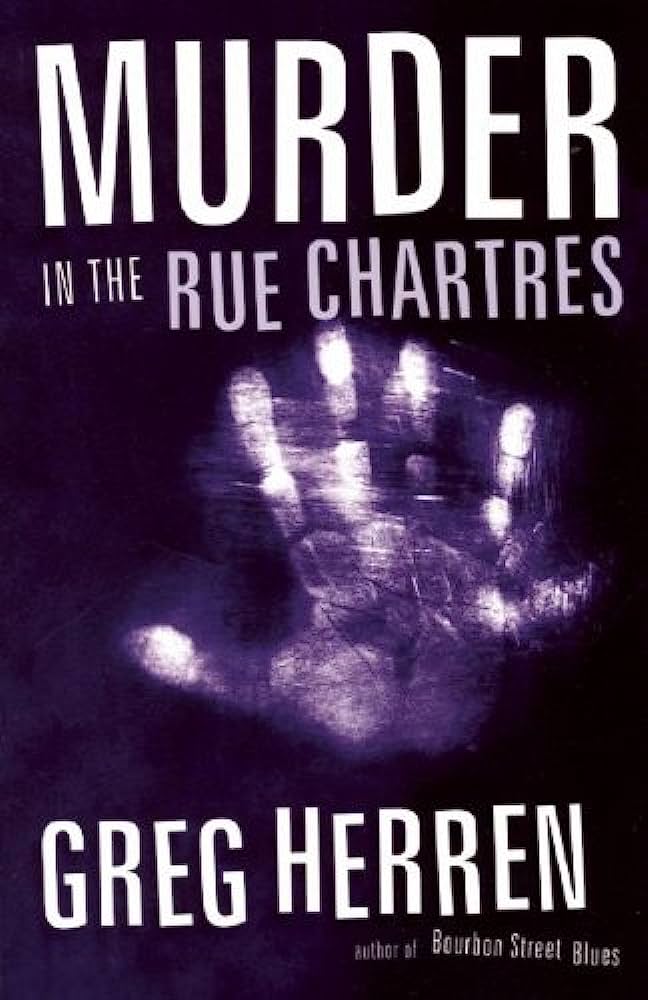
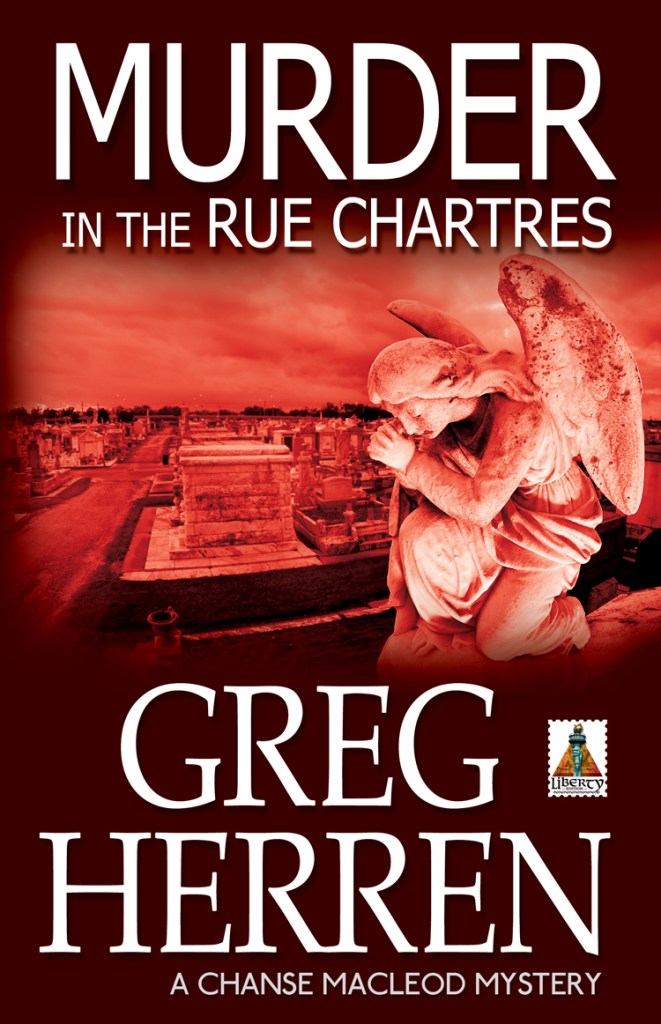
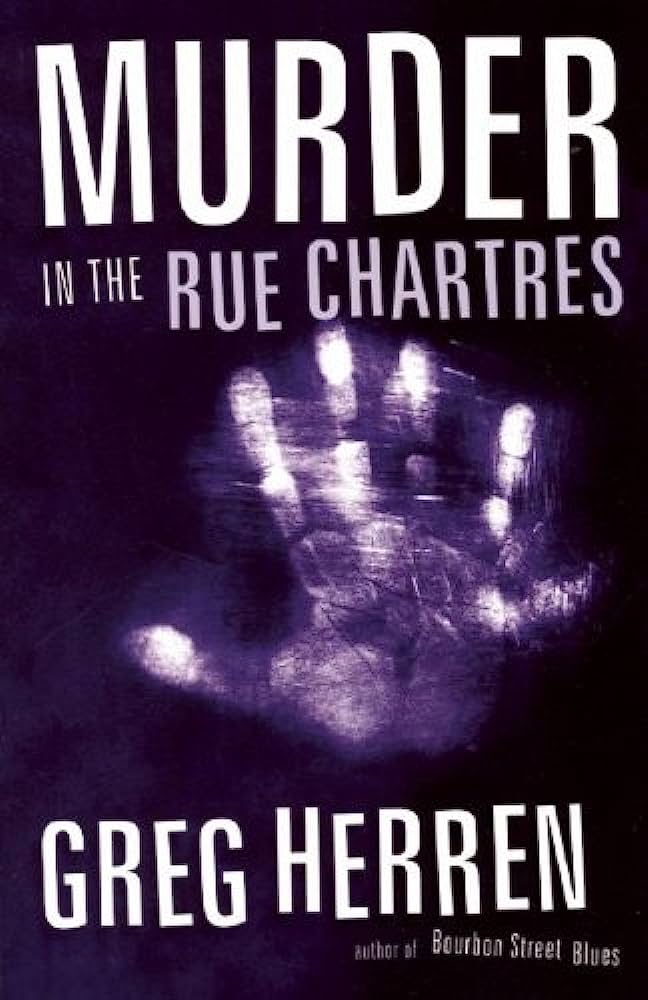
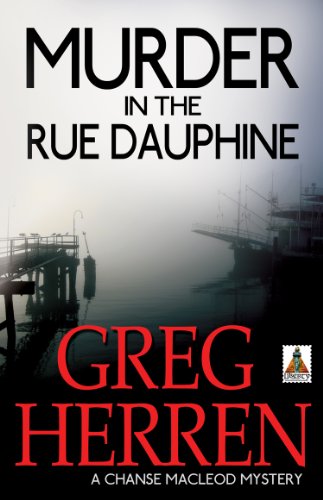
Yes, that was a lot of fun to write. And I was pretty pleased with how it turned out in the end, too. It was also my first Chanse novel with Bold Strokes, and they gave me that beautiful cover above that I love. It made a lovely transition for the series.
If you will recall from my last entry about the Chanse series, I had a new editor for the second book in the series. I had also written a proposal for the follow-up, Murder in the Rue St. Claude, which was going to be about a nursing home and an angel of death. The second book ended with a tragedy for Chanse, and the last scene of the book was Chanse saying goodbye to someone before their life-support was turned off. I did a trickery and was going to have the person be in the nursing home, still living, only a suspicious death happens there and one of the workers talks to Chanse about her fears. The editor wasn’t the most professional or organized person, and I had to send the proposal to her three times on request with no contract offer. I was very irritated by this, but there were also a lot of changes going on there–including moving the offices from LA to New York, which I thought was an incredibly stupid business decision…and I wound up with yet another new editor right before Katrina hit. I honestly wasn’t sure if I would go back to writing ever again–one of the lulls in my career–but things eventually settled down and I started house sitting for a friend in Hammond over on the north shore while I waited for the city to reopen so I could drive into the city and get some more things from the house. I did, my friends’ trip was cut short, and I was going to return to Kentucky to my parents’ after one more swing by the apartment to pick up things. Imagine my surprise that my mail service was open, my grocery store and bank were open, and so was my gym. We’d moved into the main house from the carriage house, which hadn’t been rented yet as it needed some work before the hurricane, and so….I just moved back into the carriage house and cleaned up around the property and kept an eye on the main house, as well as emptying out the water from the machines that were trying to keep the insides of the apartments dry (the roof was gone).
While I was in Hammond, my new editor got me to reluctantly co-edit an anthology about New Orleans called Love, Bourbon Street (a title I hate to this day), and he was trying to talk me into writing a Chanse book about Katrina. I didn’t really want to, but he kept insisting and finally, I gave in and agreed to write it. However, the nursing home I was researching was a place they left people to die in–wasn’t touching that with a ten foot pole–and it occurred to me that I could wrap the case around Hurricane Katrina. He was hired by the client the Friday before Katrina, and obviously he couldn’t do the job now.
And that was the seed from which Murder in the Rue Chartres (no title at the time of contract) grew.1
This is the original cover from Alyson Books.This is the new cover for the Bold Strokes ebook
It was six weeks before I returned to my broken city.
Usually when I drove home from the west, as soon as I crossed onto dry land again in Kenner, excitement would bubble up inside and I’d start to smile. Almost home, I’d think, and let out a sigh of relief. New Orleans was home for me, and I hated leaving for any reason. I’d never regretted moving there after graduating from LSU. It was the first place I’d ever felt at home, like I belonged. I’d hated the little town in east Texas where I’d grown up. All I could think about was getting old enough to escape. Baton Rouge for college had been merely a way station—it never occurred to me to permanently settle there. New Orleans was where I belonged, and I’d known that the first time I’d ever set foot in the city. It was a crazy quilt of eccentricities, frivolities, and irritations sweltering in the damp heat, a city where you could buy a drink at any time of day, a place where you could easily believe in magic. I couldn’t imagine living anywhere else. Any time I’d taken a trip before, within a few days I’d get homesick and started counting the hours until it was time to come home.
But this time wasn’t like the others. This time, I hadn’t been able to come home, and had no idea how long it would be before I could. Now, I was nervous, my stomach clenched into knots, my palms sweating on the steering wheel as I sang along to Vicki Sue Robinson’s “Turn the Beat Around” on the radio. It was everything I’d feared for the last few weeks when I thought about coming home, the anxiety building as the odometer clocked off another mile and I got closer to home.
It was different.
The most obvious thing was the lack of traffic. Even outside the airport, the traffic was usually heavy, sometimes slowing to a complete standstill. But other than a couple of military vehicles, a cement mixer, and a couple of dirty and tired looking sedans, I-10 was deserted. There was a film of dirt on everything as far as I could see, tinting my vision sepia. Huge trees lay toppled and debris was everywhere. Signs that used to advertise hotels, motels, restaurants, storage facilities, and pretty much any kind of business you could think of were now just poles, the signs gone except for the support skeleton. Buildings had been blown over, fences were wrecked and down, and almost everywhere I looked blue tarps hung on roofs, their edges lifting in the slight breeze. My breath started coming a little faster, my eyes filled, and I bit down on my lower lip as I focused back on the road.
No cars joined at the airport on-ramp, or the one at Williams Boulevard just beyond it. No planes were landing or taking off.
Most of the writing I did in the fall of 2005 was my blog, which at the time was on Livejournal. (The old stuff is still there, but I started making things private after a year because of plagiarism; I guess people thought they could steal my words if they were on a blog.) I documented as much of the experience as I could, so people outside of Louisiana could see that the city wasn’t fully recovered despite no longer being in the news. American attention had moved past New Orleans by the spring of 2006.
When I started writing the book, I was really glad I had done that with the blog, because more than anything else it reminded me of the emotions I was going through, that horrible depression and not remembering things from day to day, the need for medications, panic attacks, depression, and the way the entire city just seemed dead. I did repurpose a lot of stuff that was on the blog–rewritten and edited, of course–and I could tell, as I wrote the book, that I was either doing some of the best work of my life to that point or I was overwriting it mercilessly. You never can be sure.
But I also needed to flesh out the murder mystery I came up with, and I also wanted to write about a historical real life tragedy of the Quarter. The client who hired him that Friday before Katrina roared into the Gulf and came ashore was engaged, and she wanted Chanse to find her father, who’d disappeared from their lives when she and her brothers were very young. But what happened to her father? Who killed her, and why? Was her murder a reaction to her looking for him?
I had started using Tennessee Williams quotes to open my New Orleans novels with the third (Jackson Square Jazz: “A good looking boy like you is always wanted” from Orpheus Descending) and I liked the conceit so much I kept doing it. I knew someone who’d built a crime novel around the basic set up of Cat on a Hot Tin Roof, and I thought, what if the person who knows all the answers has been in a mental hospital for decades? Then what if Mrs. Venable had succeeded in getting Catherine locked up with all of Sebastian’s secrets lobotomized out of her head?
I named the family Verlaine as a nod to the Venables, and aged Mrs. Venable as well as gender swapping her (this was also a bit influenced by The Big Sleep), and I was off to the races.
My editor wrote me when he finished reading the manuscript and told me it was one of the best mysteries he’d ever read. The reviews! My word, I still can’t believe the reviews, and how good they were. I got a rave in the Times-Picayune, Library Journal and Publishers Weekly.
And yes, it won a Lambda Literary Award for Best Gay Mystery.
The irony that two books I wanted nothing to do with, let alone write or edit, ended up with each winning Lambda Literary Awards, does not escape me. ↩︎
Oddly enough, the second Chanse was the fourth novel I published, and therein lies a tale.
Funny how with these earlier books there’s always a story, isn’t it?
So, I sold Murder in the Rue Dauphine to Alyson in September of 1999–but the pub date wasn’t until February 2002. I saw no point in writing a sequel to the book immediately; primarily because there was a nearly two and a half year wait between signing the contract and when they were able to schedule me in. So, I figured I had about a year and a half before I needed to get it finished (everyone told me it would be released a year after the first, and in all honesty, what was the point of writing two or three books while waiting for the first to come out so the others could be scheduled?), and so, with time to spare and a lengthy period of time to “waste”, I decided to start thinking about the “what ifs”–what if the book sells super-well and is popular? What if this isn’t just a one-off standalone and could be turned into a series? The more I thought about it, the more I liked the idea and I liked letting my mind roam.
So, what would I do if the series took off and I needed to write more?
Being creative and full of energy in my late thirties, and thrilled to death that now I wouldn’t die without having published a novel, I reread the manuscript and my analysis of who Chanse was and why he was who he was, and I started mapping out a personal journey for him, that lasted several books. He was a cynical loner, with a couple of friends, and he was still really not adjusted to being gay when the first book opens. He was estranged from his immediate family of younger sister and brother and his parents; he never returned to Cottonwood Wells after leaving for LSU. He’s ashamed of his family but he also knows they will never accept his sexuality, either, so it’s very easy for him to cut them off almost entirely. So, his journey was going to be like that of the main characters of the show Moonlighting; each case would teach himself something about life and himself, and he would grow from the lesson learned in each book. Each book going forward would have a life lesson for him (Rue Dauphine did as well; the lesson was ‘you can’t just trust someone automatically because they’re queer.’); and the one he’d learn in the second book would be about love and trust (the third would be about sacrifice, the fourth would deal with his family, the fifth would have him fall in love with someone else, the sixth would deal with him dealing with losing his best friend to her husband and realizing he does need other people, and the seventh, the swan song for the story, would find him ready to finally commit to someone and live with them, so the series would be seven books long).
Shortly after I sold the first book, I again learned that lesson myself–the case in the first book was inspired by a gay con artist who’d gotten involved with a non-profit here in the city and then blew out of town overnight, having stolen/embezzled a shit ton of money and leaving a pile of debts behind. I had written to a local color magazine for the gay community (I can’t remember the name!) about writing for them. I wrote something for them, and they hired me to be editor of the magazine, as the business was expanding and it would free up the founder to focus on the new directions while I ran the magazine. It was fun, I got to work with a lot of fun new friends, and…then it all blew up in our faces. It was very similar to the earlier situation–a gay con artist blows into town, makes a lot of promises, runs up a lot of debt and then it just blew up completely. Turns out the guy was a con artist with a record of credit card fraud, and he was on the FBI watchlist so yes, I did get interviewed several times by the local office of the FBI.
The second book, which had the working title Murder in the Rue Royal, was based on that story, but I had already been playing around with a stalker storyline, and then I realized how I could cross the two stories into one seamlessly and write the book. I managed to get another first draft finished when a two-book deal to write the Scotty series for Kensington and Alyson dropped the option for the second book, saying “two mystery series with a gay main character in the same city by the same author are too similar to each other”–which I took as a challenge to make Bourbon Street Blues and Scotty as different as I possibly could to prove them wrong. So, the manuscript went into a drawer and I started happily working on Scotty instead…and again, it was a stand-alone that morphed into a series.
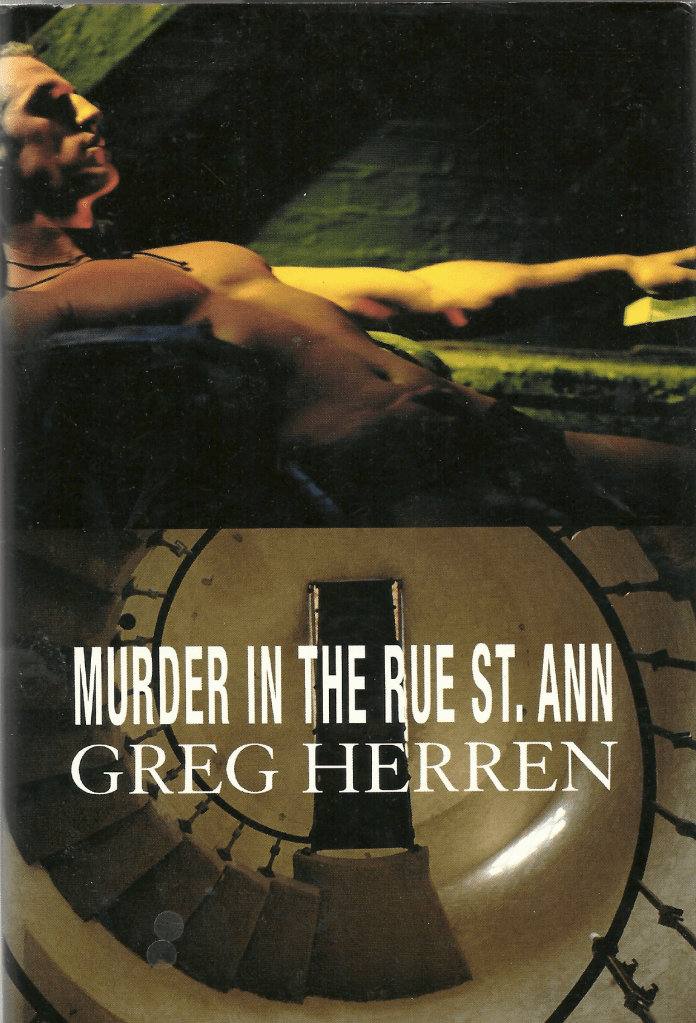
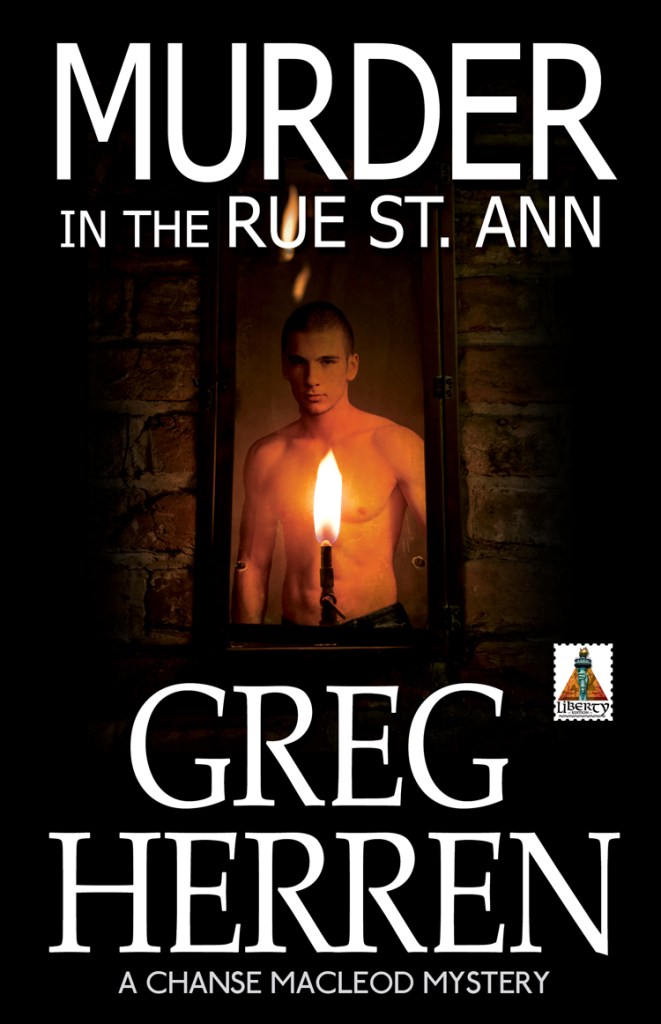
This was the Insightoutbooks edition cover of Murder in the Rue St. AnnThis is the new cover the book got when Bild Strokes Books republished the book as an ebook.
I took a streetcar named St. Charles down to Canal, crossed the street and walked down to Royal.
It was eleven o’clock in the morning on one of those splendidly sunny September days that makes you glad to be alive. Taking the streetcar had been a good idea. The long heat of summer had broken, and the air was crisp and in the mid-seventies. The sky was that blue unique to New Orleans, with wispy white clouds scattered across its expanse. There was just a hint of cool moisture in the air. There were a lot of people milling around the sidewalks on Canal— a good sign for the tourist season. Canal used to be the main shopping drag of the city, with huge department stores like Maison Blanche and D. H. Holmes. Those were long gone. They had either gone out of business or fled to the suburbs— now it was mostly hotels, fast food, and Foot Lockers.
There were hopes that putting the Canal streetcar line back in place would stimulate a recovery for the street. So far, all the construction work had simply made the Quarter difficult to get to from uptown. Add to that the chore of trying to find a place to park that would get me a ticket in two hours or cost ten dollars, and I was kind of glad I was having car trouble—the streetcar down and a cab home was very simple.
Not that riding the streetcar didn’t bring its own set of aggravations. If the cars ran on any fixed schedule, I’d never been able to figure it out. You could wait for one for half an hour and then three in a row, all packed to the gills, would show up. The streetcar ostensibly operated as public transportation, but was also a de rigeur tourist attraction. There was no way of telling when you’d be able to catch one with a place to sit. But when you did, it was nice to find a window seat on a sunny day and enjoy the city clacking by.
So, when Alyson chose to drop the Chanse series after I signed with Kensington, Murder in the Rue Royal went back into a drawer, which was fine–it wasn’t a good book–and I moved on with my life. The advance for signing with Kensington paid for our move back to New Orleans from Washington, and moving back here was absolutely worth ending the Chanse series for, seriously. I still didn’t have an agent, but I’d been signed to book contracts by two publishers already, and I figured it might be easier now. We accomplished the move, get our new apartment set up on Sophie B. Wright Place, and started putting our lives back together. I don’t remember the timeline of how it came to be, but I was still working with Alyson on my first and second erotic anthologies (Full Body Contact and FRATSEX), so I was aware when my editor left and a new person, that I knew slightly, moved from assistant editor to senior editor. We were talking on the phone one day about Full Body Contact and she casually mentioned, “I don’t see your second Chanse book here on the schedule, what’s going on?” and I told her the story, “Oh for fuck’s sake, when can you get it done by?” and that became the second contract for Chanse.
So, after finished Jackson Square Jazz and turning it in, I broke out Murder in the Rue Royal (the title had already been changed on the contract to Murder in the Rue St. Ann; my new editor didn’t like the alliteration) from the drawer, blew the dust off it, and reread the manuscript. I looked at my timeline for the series, and saw that this was the one where he was supposed to fuck up his relationship, but I didn’t see it in the manuscript. I reread the first book, thought long and hard about Chanse and who he was at this point in his life and after several long days of musing it hit me, between the eyes: jealousy. Jealousy would be what fucks up his relationship, and it only made more sense to me that Chanse would be the jealous one. Paul had a loving, accepting family and was more secure in and of himself as a gay man and what he wanted out of life. Paul was considering becoming ground-based at the New Orleans airport so he could settle down and have more of a life with Chanse, which also has Chanse very alarmed and makes the jealousy even more intense….so what would be the thing that would set Chanse’s jealousy off? Something from Paul’s past that Chanse didn’t know but finds out about in the worst possible way?
I had had some issues, believe it or not, with stalkers over the years. I had always wanted to write about a stalker, so what if Paul had a stalker? Why would Paul have a stalker? And then it occurred to me that Paul had a past he wasn’t ashamed of, but had never mentioned to Chanse. Not out of a fear that Chanse wouldn’t understand, but mainly because he had no need to tell him because it wasn’t anything dark. He had done some nude modeling when he was younger and he had also done some soft-core wrestling fetish porn, which is where the stalker came from. And what if I could work the con man he’s been hired by was someone Paul knew from the soft-core fetish porn? What if the guy contacted Paul because he’d been getting threatening notes on top of everything else going on in his life? And what if Chanse ran into Paul when he was leaving the con man’s offices, which brings all this out about Paul’s past? What if it shook a jealous, possessive, insecure Chanse enough for them to fight about it? And what if Paul disappears after the con man is murdered?
That was something I could work with, and so I did.
I’ve always called Murder in the Rue St. Ann my most under-appreciated work. By the time the book had come out, Paul had lost his eye to the muggers and we were in recovery mode. I didn’t do much of anything to promote the book (other than a signing at Outwrite in Atlanta, where I signed all of my books until they closed), and it kind of came and went quickly. I felt it was the most unappreciated of all my books. Jackson Square Jazz had come out earlier in the year before Paul was attacked, and it sucked all the oxygen up that year intended for me–it was the Lambda nominee, not Rue St. Ann–and I didn’t pay much attention to the book after it came out, either. The ‘christians” came for me a few months after the book’s release as well, and then Katrina…so yeah, Rue St. Ann got no press, got no attention, but somehow still managed to sell well.
I did have the next one planned, Murder in the Rue St. Claude, which there was a proposal in for, but Alyson was also going through other, deeply concerning changes that showed how little the higher-ups knew about anything, let alone publishing. But that’s a tale for another time, I think.
It’s cold again this morning in New Orleans, with it around thirty-one this morning as I swill my coffee and shiver a bit here in the workspace. There’s always cold air coming in from somewhere–the windows, the frames, somewhere–so it’s always a bit colder when I’m at my desk than it is elsewhere inside the apartment. I slept really well again last night–still don’t know where the sleeping pill bottle got to, thanks again, Sparky–but I do have a stopgap until I can get that prescription refilled again at the end of the month, and it worked last night. Fingers crossed that it continues to do so until I either find the original bottle or get the refill at the end of the month…
Yesterday was a good day around here. I had my strength PT yesterday morning, which is getting more difficult by the appointment. It really kicked up into gear yesterday, and while I was very happy to make it through the workout without begging for mercy or having to take too many breaks–it was harder than I imagined, but I also refused to get concerned, anxious or worried about the fact I was using only four pound dumbbells for some and a six pounder for others. But the burning of lactic acid in my muscles, while startling at first, eventually reminded me of how good it feels when you do work out, and the rest of my body was screaming to be stretched, exercised and used. I ran a couple of errands afterwards before returning home to my work-at-home chores. I finished watching the first episode of the 1982 BBC Brideshead Revisited, which I’d never seen before and am now watching (and eventually reading the original source material), inspired by Saltburn, and that’s partly so I can write more intelligently about the film, which still haunts me. I cannot remember the last time I was so interested and intrigued by and with a film, which means it’s a good one. It even has me thinking about revisiting The Talented Mr. Ripley, and reading more of the Ripley novels, which I have steadfastly ignored for the most part despite my abiding love for Highsmith’s work (the woman herself not so much…although it is interesting that two of my favorite women authors of all time, Highsmith and du Maurier, were lesbians or had lesbian tendencies).
We also watch Friday Night Heights, as ESPN calls the Friday night SEC gymnastics meets, to see LSU take down Kentucky and become the first team this season to break the overall 198 score mark, which is incredibly impressive. LSU has everything they need to win their first national title this year, but they’re going to have to be mentally tough and keep improving, which they already seem to be doing quite well.
After that, we watched the season finale of Reacher, which was fun if inexplicable; the ability to do all kinds of crazy stunts and so forth thanks to CGI does tend the make things a bit ridiculous as crews are always trying to outdo everything that came before. The helicopter scene was a bit preposterous, but no more preposterous than some of the aerial feats performed in whatever that Tom Holland/Mark Wahlberg treasure hunt movie was last year. (Those scenes always remind me that I wouldn’t survive as I would be so absolutely terrified I would either have a heart attack or a stroke on the spot, if not both simultaneously–you don’t see Scotty ever getting into a plane or a helicopter or anything; the biggest heights thing I ever did with Scotty was in Jackson Square Jazz and there’s been nothing since.)
I also think I am getting to the point where I am going to be ready to really start writing again. There was a lot of inspiration and creative thinking done yesterday while doing some tedious work-at-home chores; which really felt good. I think I may even be able to sit down tomorrow morning after i get up and actually go to town with writing. I am in the process of starting a new Scotty, so the opening is playing in my head; I know the boys will be living in the Garden District while Cooper Construction1 turns the townhouse on Decatur Street into a single family home again with a personal gym on the first floor. I had been thinking it needs to be set in either July or August (Mississippi River Mischief was set in May) and I definitely think it should be Hurricane Party Hustle, the accursed title and story I had to abandon in the wake of Katrina. It’s still a good story, and it could work, even with the difference in time (2005 was a different world than 2019, which is when this will be), then I can do the Mardi Gras book, and then the quarantine book….which will bring Scotty to twelve adventures and then maybe–just maybe–I can think about retiring the character and the series. I am not saying I am going to, but that’s as far out as I have him planned and when I run out of plans is usually when I reevaluate.
I also have some things to do today for the Bold Strokes Book-a-Thon today. At eleven am eastern I am moderating a panel on strong finishes; then I have a young adult panel and a “you’ve written an insane amount of books” panel. That’s probably going to take most of my brain bandwidth today, and when that’s all done I can probably do some chores and maybe do some reading–or watch more Brideshead Revisited.
And on that note, I think I am going to head into the spice mines for the rest of the day. Have a lovely Saturday, stay warm, and who knows? I might be back later.
Yes, this is a shout out to A Streetcar Named Murder, in case you missed it. ↩︎
I am up earlier than I have been since before the surgery (no, I don’t want a cookie–never been a cookie fan, even as a kid), and feel pretty good this morning. Yesterday was a pretty good day, over all. I didn’t really leave the house at all, but I worked on getting things more under-control around here–the kitchen has been a mess since the ceiling collapse, and the cabinets and drawers need some serious organizing–and also spent most of the day doing other chores around here, while thinking about getting back to work writing. The brace is still awkward to work around, but it feels like I’m getting more used to working with it on–and having a cleared and cleaned off desk surface also helps with that as well. I am going to run some errands this afternoon, but there’s not college football today to distract me or send me to the easy chair for the day, so I have little choice about blowing the day off, methinks, which is not a bad thing. I also did laundry and more dishes yesterday, and I have some other things I need to do here in the kitchen/office today as well. I also spent some time reading the second book in Raquel V. Reyes’ delightful Caribbean kitchen cozy series (Calypso, Cooking and Corpses), which is just as delightful as the first, and then…well, I fell down a Youtube/Twitter wormhole that was eye-opening and shocking before Paul got home from the gym and we watched this week’s Fellow Travelers, which, interestingly enough, kind of tied into the wormhole in some ways; as you may recall, just the other day I was talking about how these stories (Fellow Travelers), while sad and depressing, were necessary to remind people of how awful the past was for queer people not that long ago; we don’t have much of a societal memory for things that happened as recently as twenty years ago. There’s a large gap in our community that was created by the HIV/AIDS pandemic, so the oral traditions within the community of passing along our history was horrifically interrupted and many younger queers–and those that aren’t that young–have no way of connecting to the past, and don’t even know where to start looking.
During the shutdown I spent a lot of time in my easy chair making condom packs for the day job to justify getting paid for being at home–there were other job duties I could do at home, but mostly I made a shit ton of condom packs–and so I spent a lot of time looking through streaming apps on my Apple TV for things to watch while my hands worked. This was how I discovered the endless wormholes of Youtube video essays and documentaries; and of course, algorithms started suggesting other videos and channels of “influencers” similar to the videos I had watched and was finding on my own. Discovering Matt Baume’s delightful channel about queer rep in popular culture was a joy for me; he named sources for his information, was very clear about what was fact, what was unknowable, and what was his opinion–and since most of it was stuff that aired or happened while I was alive, it was a lovely trip down memory lane for me, reminding me of the few things that resonated with me growing up as a lonely queer kid and what shaped my views on what it was like to be a gay man in America. (Also, once I discovered there was such a thing as queer books and queer publishing, spent most of the 1990’s reading mostly queer stuff…and I’ve always been a voracious reader.) Anyway, watching Matt’s videos and subscribing to his channel shifted the algorithms, and I started getting other videos and channels suggested to me….and one of those belonged to a queer video essayist named James Somerton, and one of them–called Evil Queens and having to do with Disney–I don’t remember the actual name of the video, and he has since scrubbed his entire Youtube channel (more on that drama later)–and thought, interesting–a long time ago I read and reviewed a book called Tinker Belles and Evil Queens by Sean Griffin, but you can’t copyright a title and can you talk about queer coding and such in Disney and not use the words “evil queens”? Disney has always fascinated me, since I turned into a Disney queen after The Little Mermaid (I was never a big Disney kid; that waited until my adulthood and coming out, oddly enough), and Griffin’s book was so astonishing and good and insightful that I never forgot it. I watched Somerton’s video, and it all seemed incredibly familiar to me–and I did note he said some things that were wrong; mainly Gay Days/Gay Nights at Disneyworld were never official, Disney-sponsored events…which I know because I lived in Florida and used to gofor Gay Day. I also thought it was odd that he left out how the Southern Baptists tried to boycott Disney to stop Gay Days…and were ground completely into the dust by the Mouse. But it didn’t fit the narrative of the video essay–how Disney queer baits us for money then betrays us by not giving us rep in their films1. I also thought it was weird that the book–which so much of the video’s content was dependent on for its facts; the stuff that was wrong I assumed was from Somerton himself–wasn’t credited for anything, or even mentioned as a companion reading piece to the video itself. Periodically, after that, Youtube would suggest other videos to me from him, and I’d watch them, mainly out of curiosity…and began noticing things.
Like how his entire video about queer coding in Hollywood film seemed incredibly familiar–like I’d read it all already in the uncredited The Celluloid Closet by Vito Russo, which had already been made into a documentary in 1996…so much so that I bought an e-book of it to see and yes, it was used almost word for word with no attribution. And some of his other videos…were not only offensive but just bald-faced lies, things he’d made up, or okay, let’s be fair–conclusions he drew were from cherry-picked facts and broad speculations made from those facts; it seemed, in his video on gay body image issues, that he took the old 1990’s term for gym and body culture (the “you have to be a ripped muscle god to have any sexual currency”), which was “body fascism”, and somehow extrapolated from there the bizarre notion that Nazis created body culture and American GI’s brought it back from Europe after the war…and even weirder, somehow we didn’t get it from the Soviets because they were so “bundled up” we couldn’t see their bodies. (Maybe he should have read Michelangelo Signorile’s Life Outside, which explored how body culture morphed into something even bigger after the advent of AIDS because a strong, muscular, defined body was the antithesis of the wasting most people dying from AIDS experienced at the time; fit body= not infected; seriously, dude.) He was also horribly misogynistic at times–he didn’t like lesbians, and he hated straight women, and was also borderline transphobic at times despite trying to champion transpeople? It was all very weird, but I would periodically put on one of his videos that sounded interesting, even as he made claims that didn’t make sense or was simply restating things I’d already read somewhere. I didn’t think much of it, but I was idly curious–the way I often am; periodically I think about influencers and how to write a crime novel around one, and Youtube influencers seemed like the way to go if I were going to do that, and so I always chalked it up to research…and sometimes, the wrong things he said would send me off in search of the actual facts, so it was kind of educational by reminding me of things I’d forgotten about.
Turns out, he plagiarized almost all of his videos, never credited or named sources unless called out for it (he took down the videos about Disney and queer coding and put them back up as “based upon” the books he literally was quoting verbatim); the scandal dropped this week–I only found out yesterday–with two other Youtube influencers making really long videos about the plagiarism and the harmful lies he was spreading, as well as the self-loathing, misogyny, and transphobia. I went down that wormhole yesterday, watching both videos–which were long as the crimes were plentiful–and now his Youtube channel is gone, completely. As I said, I didn’t put a lot of thought into it–but he had a Patreon, and his Youtube channel was monetized, which meant he was profiting from the work of other queer creators that he was plagiarizing and stealing, then playing victim when caught…until he was literally destroyed by these other two Youtubers this week. He was apparently making a shit ton of money–and you know, there’s the plot for an influencer crime novel.
It was very eye-opening.
But it extrapolates further to what I’ve been thinking about since starting to watch Fellow Travelers–dark and sad and depressing as these stories are, they are important because our history is always erased; how are queer kids supposed to feel pride and understand where we’ve come from and what we’ve fought for, if they never hear about it, can’t find it, and are never told? The kids I work with (with an age range from early thirties to early twenties) don’t remember how horrible HIV/AIDS was because they hadn’t been born yet or weren’t old enough to really pay attention before the cocktail and the new meds changed it from a fatal disease to a chronic one (with treatment). There’s SO MUCH bad information out there about sexually transmitted infections, and so little education, that it frightens me on an almost daily basis as I work with my clients.
Obviously, this is what I’ve been wrestling with lately, with myself and my own artistic work (yes, I am starting to think of myself as an artist, which I should have done all along); what responsibility do we have to the younger people who don’t know our history, the history I lived through? It’s part of the reason I started writing “Never Kiss a Stranger”, and set it in 1994; I wanted to show what gay life in New Orleans was like during the time when HIV/AIDS was still a death sentence, and the city was also crumbling and dying itself before the wave of renewal and gentrification that started before Katrina and kicked into high gear; who is going to write that story if I don’t?
And what responsibility do I have to current and future generations of queer people as an artist? Do I have any? Or is my only responsibility as an artist to myself?
Something to think about, at any rate.
And on that somber note, I am heading into the spice mines. Have a marvelous Sunday, Constant Reader, and I’ll probably be back later; I can never stay away for long.
Uh, I guess he never saw the Disney documentary about Howard Ashman, who was partly responsible for the Disney animation renaissance and who died of AIDS before the release of the last film he completed, Beauty and the Beast; to date the only animated film to be Oscar nominated for Best Picture, and won three other Oscars, including two for Ashman? ↩︎
This is probably one of the most famous songs about New Orleans of all times, and of course, doing a deep dive into the history of the song–which began as an English folk song, of all things–was a pleasant way to spend a few hours. I heard the recording by the Animals when I was a kid, and honestly never cared very much about it. I always thought it was about a house of prostitution in New Orleans–Storyville, probably–but never gave it much more thought than that. But when I was looking for titles of songs about New Orleans to use for blatant self promotion for Mississippi River Mischief,it was kind of an obvious one. And when it came up on my list for this next post, I realized I didn’t really know very much about the song other than I didn’t care for it very much. It originated in the 16th century as an English folk song, and gradually evolved into an Appalachian folk song called “Rising Sun Blues” (great title, I may abscond with it, frankly) before finally becoming a folk-rock hit for The Animals in 1964 with its current name. (Musicologists suggests it’s thematically related to the old English folk song “The Unfortunate Rake,” per Wikipedia.)
I do find that kind of thing interesting, even if I don’t have any use for that information. (Although Barbara Michaels did a great job of using classic traditional folk songs and their history as the foundation for her underrated but marvelous novel Prince of Darkness–which I would love to revisit.)
If you were playing Family Feud and the question “what is New Orleans known for”, the top two answers would probably be Bourbon Street and Mardi Gras. This annoys the locals and the natives to no end; and it’s understandable. Boiling New Orleans down to those two things is incredibly reductive. But they are major facets of the city, and both are responsible for a lot of tourist revenue, which the parish, city and state desperately need because our state and local governments (all of Louisiana’s cities and parishes) are complete and utter failures. When we moved here in the mid-90s, New Orleans had a strong base of tourism, but it was nothing like now. Since Katrina the city’s primary focus has been building the city into a tourist destination, putting all of the proverbial eggs into that particular basket. The pandemic wound up killing businesses that Katrina couldn’t; the St. Charles Tavern at the corner at Martin Luther King didn’t survive COVID, as one example. (They had amazing fried mushrooms; we used to get them every once in a while as a delicious greasy breaded and deep-fried treat.)
When I first decided to start writing about New Orleans (much as I hate to say this, but New Orleans really IS my muse, and I love that I live in the neighborhood of the Muses here), one of the things I was determined not to do was use clichés about the city in my work. It wasn’t until my fifth novel that I wrote about Carnival/Mardi Gras, which is where most writers about the city inevitably start (cliché as it may be, you also cannot write about New Orleans without eventually having to write about it); I wanted to get more established as a writer before I went there. Part of the reasons the first two Scotty books were set around Southern Decadence and (to a far lesser extent) Halloween was because those were also important holidays for the gays here. I did address Bourbon Street with the first Scotty; I knew that title (Bourbon Street Blues) would tell anyone that it was a New Orleans story, so yes, I took advantage of a cliché there. But I also realize now that most of my New Orleans writings were very provincial in a way; I mostly write about the “sliver along the river”–the Marigny, the Quarter, the CBD, the lower Garden District, the Garden District, the Irish Channel, and Uptown. There’s way more to New Orleans than these neighborhoods–sometimes I send them over the bridge to the West Bank or out to Metairie; there was a very vivid post-Katrina scene where I sent Chanse out to Lakeview, but for the most part I’ve not done much about other neighborhoods here. The West Bank, City Park, the East, Gentilly; all of these rich and vibrant neighborhoods–as well as the diverse ethnic make-up of the city–are very fertile ground for someone writing about New Orleans. Generally, the neighborhoods I write about are the neighborhoods writers who don’t live here focus on because they are the better known ones.
And of course, I’ve rarely, if ever, touched the history of the city–and it is rich, compelling, and fascinating…and super dark.
That’s kind of why I wanted to move this recent Scotty out of the city and into one of the rural parishes not far from the city limits. I have fictionalized these parishes before–I try not to fictionalize New Orleans, but have no problem inventing parishes and towns in the rest of Louisiana. St. Jeanne d’Arc parish is loosely based on St. John the Baptist and St. Charles parishes, known as “river parishes” because they run along the river north of the city. Redemption, also an invention I’ve used in other books, is based on the “bayou parishes”–not along the river, but between the river and the wetlands/Gulf of Mexico; those are Terrebonne and Lafourche parishes. Louisiana is just as interesting as New Orleans, and also has an amazing and interesting history of its own. Of course, the next Scotty will be back in the city–his next few, if they go as planned, will all be within the city–but that doesn’t mean I don’t want to keep writing about Louisiana and my fictional parishes, either.
There really is so much material here I could never run out of ideas.
Thursday and my last day in the office for the week. I slept super-great last night–the first time this week that has happened–and only woke up once. I feel rested and good this morning. Tomorrow, of course, I have to get my oral surgery done in the morning (yay? Well, the end result will be a lot of pain to end the almost constant pain I’ve been living with for years, so that’s better, right?) and then it will be a soft food/mostly liquid (not alcoholic) for I don’t know how long. I weighed myself yesterday, and with even my shoes and belt on and my keys attached to my belt and my wallet in my pocket, I’d lost three pounds since the last time I weighed myself (I would imagine all the eating I did in San Diego made me weight go up dramatically). It would be great if I could get back down to 200 at some point (I remember the days vividly when I would never admit to weighing that much publicly; then again, weighing that much would have completely freaked me out).
I managed to get the page proofing for Mississippi River Mischief done last night after work, and the book’s not bad at all. The writing is strong and the plot makes sense, which is always a plus, and it does move along nicely. I also had forgotten that I had set up the next one in the afterward; or at least had gotten the premise begun–this next one is going to take place while the boys are living in the dower house on Papa Diderot’s Garden District property, and maybe, just maybe, this next one will be the long-awaited and never-written (thanks to Katrina) Hurricane Party Hustle. Then again I am getting ahead of myself, am I not? Let me get all this other stuff done first and then I can worry about the tenth Scotty. But next year Scotty turns twenty-one at last (legal at last! legal at last!) and so I think I may spend a lot of time next year celebrating twenty-one years of Scotty. I think the ebook for Jackson Square Jazz might finally get launched, making the book available for the first time since 2010, and then I can rest easy at long last. I’m not sure how much work I am going to be able to do this weekend–will I be on painkillers the entire time? Will I be too zonked out on painkillers to get anything done this weekend? I guess we shall just have to wait and see. I also don’t know if and when I’ll be blogging again, either. But hopefully I can be lucid enough to read S. A. Cosby’s All the Sinners Bleed or if I can’t read, lucid enough to watch movies.
We watched some of the US Open last night, which was nice. I keep forgetting that it’s happening; we stream now rather than have cable, so I no longer have any idea when anything actually airs or what is actually airing, which is a significant shift in how I watch television. It was nice that so many Americans made it to the quarter-finals–it’s been a long time since the US made such a great showing at the US Open–and sadly, I have to admit that I’ve just not been as interested in tennis since Serena Williams retired. But I do love to watch tennis, as I remembered last night as I proofed, occasionally looking up to watch the action. We watched Madison Keys win, and then watched Carlos Alcazar until I went to bed (Paul of course stayed up watching).
The cover proof also landed in my inbox this morning so that’s what I’ll be doing tonight: filling out the page proof form and proofing the cover. I’m starting to feel creative again, too, which is super-great. I want to get some more writing done, and of course I need to start plotting out the next two books I am going to write while trying to finish a draft of Muscles, which is the plan for this fall (I probably will have to put Muscles aside to work on something else, but might as well get as much done as I can before the arm surgery, whenever that might wind up being).
More and more people who’d been at Bouchercon are testing positive for COVID, which believe me is the worst possible outcome I could have when I swab myself every morning. Sure, it means I’d have to reschedule the oral surgery, but there are definitely worse things that could happen to me then testing positive for it. I would definitely need to be past it when I consult with the Tulane Institute of Sports Medicine. It’s weird because everything is so up in the air until I know what’s going on with my arm, and how long the recovery process is going to be. I don’t know that I want to be doing a lot of traveling with my arm in a soft cast and a sling (and not the good kind, wink wink nudge nudge) because how would i handle the carry-on luggage? Heavy sigh. Again–not going to worry about it because that’s just borrowing trouble.
And on that note, my test is negative and I am heading into the spice mines. Have a great Thursday, Constant Reader.
And here we are on yet another Pay-the-Bills Wednesday. Paul is leaving today, and won’t be back until a week from Saturday. I also don’t have Scooter for cuddles and company. Will I go mad living under conditions of absolute reality? Even larks and katydids are believed by some to dream.
Yesterday was a much better day than I’ve had in quite some time, all things considered. I slept incredibly well, so didn’t start off my day either sleepy or groggy or tired, which is always a plus. The work day was relatively low-key; we were slow in the morning but busy in the afternoon, and frankly, I prefer it that way; busy in the morning inevitably means tired in the afternoon, and if we’re so it’s agony. But over all, a good day at the office and an auspicious beginning to the month of August. (I also didn’t note that it was the anniversary of both of our moves to New Orleans; first in 1996, then again on August 1 2001 when we moved back home from That Horrible Year Away.)
I ran errands on my way home–mail, prescriptions, groceries–and then came home to a sink full of dirty dishes which needed attention, so I took care of that as well as another load of laundry, and then sat my ample buttocks into my desk chair and banged out the revision of Chapter 3 I’d been stuck on for a little less than a week (not so much stuck as tired and didn’t want to bother with it, in brutal honesty) and got it finished and under control before moving onto Chapter Four. I also worked on “Whim of the Wind” for a little while, and also did some more research into the history of the city I am fictionalizing for the WIP, which I continue to fail to discuss. Perhaps this weekend? Perhaps. I kind of want to see if I can get past Chapter 4 before I talk about the book publicly, but that’s nothing more than my own superstitions, which is pretty stupid. As a general rule I don’t believe in things like jinxes and curses and so forth, but I do believe you can actually speak things into existence sometimes. The only takeaway I got from Psych 101 in college was the concept of visualization; that picturing something in your mind can make it happen–but not like winning the powerball or anything like that, but more along the lines of why you always spill something full when you’re carrying it no matter how careful you are…because your mind cannot picture a negative–you can’t see yourself not spilling it; so when you think about not spilling it, you will because you see yourself in your mind actually spilling it. (It’s like how you cannot prove a negative–you can rarely prove you aren’t something; but it is incredibly easy to prove you are. I use this example: someone drinks a lot. They don’t think they have a problem, they don’t wake up in the morning feeling like death warmed over twice and wanting another drink. But once someone says, “You have a drinking problem”, you can’t prove that you don’t. You can say you aren’t, but that’s denial. You can stop drinking for a time period—but if you start drinking again, well, there, you see, you were in recovery and then relapsed! You cannot win, so why bother trying?) It is much harder to prove something isn’t true than it is proving something is. Guilt is the same way–how do you convince the cops, who are convinced you are, that you aren’t?
I will say this about the WIP–it’s more hardboiled and noir than what I usually write, I am having a lot of fun with it, and it’s been a long time since I wrote anything set in Florida, if I ever have? Dark Tide started as a Florida panhandle novel, but I moved it to the Alabama coast; “Cold Beer No Flies” was a panhandle story, too. But this is me fictionalizing Tampa–come to think of it, my main character in The Orion Mask lived in a fictional Tampa I am using again for this one–and I’ve not set foot in Tampa, other than flying in and out for Bouchercon in St. Petersburg, since I moved away in December 1995 to once again reboot and restart my life.
I was tired after all my errands yesterday–the thermostat in my car let me know it was 101 when I left the office yesterday; it is insane for it to be that hot, even in New Orleans. It’s exhausting dealing with this insane summer heat this year. But I did get some writing done yesterday, which was a good thing, and of course Paul finished packing. Heavy heaving sigh. Ah, well, I have Superman and Lois to catch up on, and My Adventures with Superman, and so many old classic films to watch, so I shouldn’t have any trouble keeping myself entertained so I don’t feel lonely or bored. And of course I could be writing, which is always difficult in August…I also think about how about eighteen years ago I was finishing (finally) Mardi Gras Mambo at long last in that last, fateful August before Katrina. It really was a completely different world all those years ago; maybe I ‘ll go back and read those old Livejournal entries from August of 2005, so I can remember the world before once again. I also have a lot of reading to get caught up on, as well. I have some errands to run this evening on the way home from work, and then I am going to be inside for the night. We did watch another episode of Gotham Knights last night–very intense, as the season finale moves closer–but now I have to wait for Paul to come home to finish. Heavy heaving sigh.
But perhaps I’ll use all this solitude productively. One never knows, and on that note, I am heading into the spice mines. Have a lovely Wednesday, Constant Reader, and I will check in with you again tomorrow.
My first series will always be special to me, even though I’ve retired Chanse MacLeod…at least for now, at any rate; I’ve learned (sometimes the hard way) that I shouldn’t ever say never when it comes to my writing career. Chanse will always be special for me in that he was the main character in my first book to be published as well as the first series of mine to see print. I originally created Chanse in 1989–can you believe that? Thirteen years from the time I first started constructing the character and him getting into print.
When I left California and moved to Houston that year, I decided to put the miseries of the 1980’s behind me, forget the past, and try to move on to the future I wanted for myself. I still had no idea what I wanted to do to make a living, but I knew I was never going to become a writer unless I actually, you know, wrote. When I moved to Houston, I moved away from reading mostly epic fantasy and horror to reading crime and horror. Sue Grafton’s F is for Fugitive had just been released, and the bookstore–Bookstop?–I frequented in Houston had a store catalogue that had book reviews and author interviews, and Sue Grafton was on the cover. I thought the alphabet titles was a great idea, so I bought the first three and took them home. I loved them, and started diving back into the crime fiction genre headfirst. I also started reading the Erle Stanley Gardner Perry Mason novels again–I’d read some when I was a kid–and I also started reading the rest of the Travis McGee series (I’d read, and not liked, The Dreadful Lemon Sky when I was thirteen; I wasn’t old enough to appreciate the series) and absolutely loved them. I loved McDonald’s writing style more than anything else, and the descriptions of McGee sounded, well, hot.
I started creating Chanse MacLeod as a blend of Kinsey and Travis McGee, really; I was driving to work one day and crossed a bayou. noticing the sign for the first time, and thought “The Body in the Bayou would be a great title for his first book” and so i started constructing the character and his world. He was a former cop turned private eye in Houston; he’d played college football at Auburn but suffered a career-ending injury his senior year and so he went into law enforcement, eventually going out on his own. He had a secretary named Clara that he shared with a couple of lawyers in an office suite in downtown Houston, and most of his work involved trying to get evidence of adultery for wealthy and suspicious spouses. In 1994. after I fell in love with New Orleans, I moved Chanse to New Orleans and his college experience to LSU; I also was discovering gay crime novels around this same time, so I decided to make Chanse a gay man; from a small town in Texas with homophobic parents and family, playing a sport where homophobia is rife, and he too discovered and fell in love with New Orlean…so he became a cop when his football career ended, eventually becoming a private eye. I started rewriting the four or five chapters I’d written with the story set in Houston…but once I moved to New Orleans and began to grasp what it was actually like to live here, I threw the entire thing out and started over.
That manuscript I started over became Murder in the Rue Dauphine, and the first place I submitted it to offered me a contract six weeks after I mailed them the manuscript. Alyson was home for the first five books in the series…before Alyson Books went belly-up, without paying me the advance for the fifth book and no longer paying me royalties on the others (the entire series was still in print when Alyson folded).
Burn in hell, corporate trash who bought Alyson.
(The company had been doomed for a while, and the unfortunate last minute attempt to rescue it failed, which I thought was horrifically unfair to the person who they brought in to save it. The final collapse was hardly his fault; his predecessors had made so many unbelievably stupid mistakes there was no saving the business, really. And ebooks and so forth started eroding away at the reader base, at the same time the business began to crumble. I’ve always felt bad for the poor dude who was the last to hold the title of publisher. I don’t think he had any staff and he was the only person working there by the bitter end.)
But when Alyson went belly-up and chose to stop honoring their contractual obligations to pay their writers, I’d already moved the Scotty series to Bold Strokes Books and was doing not only anthologies for them but also editorial work for them, so moving the Chanse series there was a no-brainer.
The last two books in the series were done with Bold Strokes Books.
As with anything with my career, I had a plan for the Chanse series but of course, man plans and the gods laugh. I had always intended the series to be seven books, from the very beginning, and I had this emotional journey for him all mapped out: the series would chart his progression from lonely, damaged and scarred loner with a snide sense of humor to more centered, more grounded, more mature and more settled into his life. So, when the series opened, he was–against his better judgment–seeing a hot flight attendant, and wondering if he was actually falling in love and had the opportunity to be happy for once in his life. I really did give him a miserable backstory; alcoholic mother, abusive drunk redneck father, grew up living in a trailer park in a snotty small Texas town where no one would let him forget he was trash until he showed some football playing ability–and he was just cynical enough to understand they still considered him trash, but trash with a skill they appreciated. He went to LSU and joined a fraternity in a final attempt to banish the homosexuality from his brain (it didn’t work), and then was injured in a bowl game so his career was over–he’d been considering going for the NFL draft. He was a big man, as such; and spent a lot of time in the gym working out and keeping fit. I also had to make a horrific decision while writing the second book–with every intention of walking that ending back in the third.
And then Katrina happened, and everything changed.
My editor at Alyson Books at the time, Joe Pittman, was new. He had come on board shortly after my previous editor was let go (I had a different editor for each of the first three Chanse books, and in fact had a different for the last two–so the Chanse series went through five editors at Alyson…now I would see that as a sign), and I was assigned to him as a gay mystery writer. He got in touch with me after Katrina to check in on me and of course, to encourage me to write about Katrina, which I did NOT want to do whilst I was in the middle of experiencing the aftermath still. I was still unhoused at the time, staying with my parents in Kentucky, before moving back to Hammond, Louisiana, just before Rita to housesit. Paul and I talked on the phone one morning and suggested we do a fundraising anthology for Katrina victims…but I wasn’t interested. Joe called me that afternoon and with the same suggestion, so I told him Paul wanted to do one and that was how Love, Bourbon Street came to be. Joe also kept insisting to me that I should write a post-Katrina book as the next Chanse book, and despite my reluctance I decided to go ahead and do it. Part of the problem, as I saw it, was, how do you end a book on a hopeful note when the city is still in ruins and most of the population still displaced? Joe kept pushing me, and I finally agreed to write Murder in the Rue Chartres–and I really don’t remember anything about writing the book other than I did actually write it, and it turned out to be one of my best books. It won the Lambda, for one thing, and got great reviews everywhere.
The fourth Chanse novel was, in my opinion, the weakest of the series. They’d fired my editor before I signed a contract for the fourth book, and when that finally happened, they needed me to write in like eight weeks. I asked for a two book contract so I would never have to write another book in eight weeks again (LOL at my naivete), and they were so desperate for the fourth they agreed. (I had already written a Scotty book that was just sitting in a drawer; I turned it into the fourth Chanse and to this day I think it was a mistake.) Of course, they did publish the fifth, but they never paid me a dime for Murder in the Garden District. The only money I’ve made off that book is from the ebook Bold Strokes put up–I gave them the entire Chanse backlist for ebooks, and those Chanse books still sell.
Maybe I shouldn’t have ended the series at seven?
But it felt like the right place to stop. Chanse’s personal story of personal growth and how it happened kind of got lost along the way; he grew and changed as the series progressed, but writing the last two–which I also think are good–felt a little paint-by-the-numbers for me; I felt that writing the sixth and when I felt it again in the seventh, I decided to stop there. I wasn’t getting any satisfaction for writing the books anymore, there was no joy derived from doing them, and since I’d already planned to stop at seven…I stopped at seven.
I still get ideas for Chanse books, of course. I have an LSU fraternity murder that would be a perfect Chanse story–I planned it as a novella–and of course, I’ve always wanted to fictionalize the Jeff Davis Eight murders as a Chanse novel, too. Maybe I could do three Chanse novellas published in one book?
That would make a lot more sense, and could be even more fun to write than one long single story novel.
Or I may not do anything with Chanse at all, and use those stories/plots for something else.
The first song I ever danced to in a gay bar was, quite naturally, “It’s Raining Men.”
I never said I wasn’t a stereotype, did I?
I was twenty-one the first time I ever set foot in a gay bar. (If there were gay bars anywhere near me in Kansas, I had no idea) It was in Fresno, California, of all places; where I spent the 80’s and which I often lovingly refer to as “Topeka in the Valley.” It wasn’t much of anything, really; a small building on Blackstone Avenue, I think just past Olive, and near the off-ramp for the new cross-town highway in an attempt to alleviate traffic on the main streets of the city (it may have been further north). The bar was called the Express, and someone I worked with–the first obviously gay man I ever knew, and certainly the first one who was out and proud and not ashamed of it–took me one night after work. I was nervous as hell. I had no idea what I was getting myself into, and I remember it was dark and crowded. There was a bigger front room with the bar, and there was a smaller dance floor further in the back. We arrived–I didn’t recognize the song that was playing–got a beer (he got a vodka and cranberry), and then the next song started up. I didn’t know it, had never heard it before, but he dragged me out onto the dance floor and yes, the song was quite a jam. I loved it, and rather self0-consciously danced my ass off (I always loved to dance). My friend later told me the song was by the Weather Girls, who used to sing back-up for Sylvester, and it was called “It’s Raining Men.” The song was utterly ridiculous–it still is–but those powerhouse vocals, the driving beat, and the absolute joy in the idea that all you had to do was “rip off the roof and stay in bed” so a hot man will drop in from the sky for you? How could gay men not embrace the song? I bought the single at Tower Records a few days later, and every time that song played, I’d be out on the dance floor. Even now, when I hear it, I always think back to that first night I went to a gay bar.
HIV/AIDS was already a thing, but we didn’t know much about it in Fresno; it seemed like something new and scary but maybe no worse than some other new diseases that had been discovered in the 1970’s/early 1980’s. The rare yet terrifying information and reporting on it referred to it as GRID. It eventually claimed that co-worker who took me to my first gay bar, and his roommate, who was the one who told me years later that the co-worker (whose name I cannot recall, I just know it started with a K) was in the hospital, dying. “It’s Raining Men” always reminds me of him; always takes me back to that first time when I so nervously paid my cover charge and flashed my ID and walked into my first ever gay bar. There was another gay bar in Fresno, the Red Lantern, that was in a much shoddier (“dangerous”) part of town. (Gay bars, back in the day, were never in the best neighborhoods. Tracks in Ybor City in the early 90’s–when I lived in Tampa–was also not in the best neighborhood. Ybor City did begin gentrifying before I moved away, but originally? Yeah, not the best neighborhood.) I went there a few times as well–made friends there, made friends in the other bar, too. I lost all those friends, of course, and their names and faces are also gone, more lives lost to the mists of time in my memory. It seems a bit shameful to not be able to remember the names and faces of the first people who knew a part of me I’d never let anyone see before, but they also didn’t know me in that I kept the other part of my life secret from them.
It’s very strange, because I decided to google the gays bars of Fresno while I was writing this and apparently the Express closed in 2013? I don’t think it stayed in the same location–according to the site I found it had also been called “708” before becoming the Express again; who knows what that was all about. But the Red Lantern is still there on Belmont Avenue, in the same location; how wild is that? That’s a pretty long-lived gay bar for a place like Fresno, really. I remember in Houston there was JR’s, and Heaven, and maybe another one there in the Montrose district. But I didn’t start spending a lot of my weekend evenings in gay bars until I moved to Tampa. Tracks in Ybor City and Howard Avenue Station were the two primary gay bars when I lived there; and there was Bedrox on Clearwater Beach–which was the gay section.
And of course, there are gay bars everywhere in New Orleans. I haven’t set foot in one in a number of years, and may never do so again. I’m old; spending the night dancing would end with me in the hospital, or needing days to recover.
I don’t know what gay bars are like now because I’ve not been a part of that culture for a very long time–we haven’t even done condom outreach during special weekends in the bars in years anymore–which is why it’s hard for me to write about Scotty being still a party-boy. His age in the book I just finished and turned in is roughly forty-three or forty-four; after Katrina when I had to actually pick a time for the books to have been set (Katrina couldn’t be ignored), I decided that the Southern Decadence where Scotty met both Frank and Colin was in 2004, Jackson Square Jazz was that Halloween, and Mardi Gras Mambo was Carnival 2005. Scotty had just turned twenty-nine in Bourbon Street Blues, which meant he was roughly born in 1976, which works with the other timelines, making him twelve or thirteen when the Cabildo caught fire the last time. While the other books can be more amorphous, obviously Who Dat Whodunnit was set in January of 2010, right before the Saints won the Super Bowl. With the pandemic starting in 2020–which I will deal with at some point–this one had to take place before the world shut down, so I am thinking it’s May of 2019. I don’t want to skip ahead a year to the pandemic, so Quarter Quarantine Quadrille will be further in the future. I kind of want to do Decadence again in another book–with Scotty older but not much wiser–but am not entirely sure. I also would like to really do a Scotty Halloween book, and maybe even a hurricane evacuation one, I don’t know.
I am, however, very glad that I did write those first three Scotty books, when I was enmeshed in gay bar culture, because I’m glad it’s preserved in fiction. That world is gone now–washed away when the levees failed and the city rebuilt. Someone once told me I was the only person to document that pre-Katrina gay male existence, of going out to bars and being promiscuous and dancing all night long and drinking too much and occasionally dipping into party drugs.
I’m also kind of glad modern gays don’t have to use the weekends and gay bars as a place to let loose and be as free and gay as possible, which they couldn’t do during the week. Friday nights were always a relief, a respite from a cold and unloving world that judged us harshly and wished us harm.
I don’t miss the bright lights, the cigarette smoke (that’s how long it’s been), the stench of male sweat and the smell of poppers in the air as the deejay spins another banger. I mean, I do, but not in a sad kind of way; those memories are lovely and they make me a little wistful for the days when gay bars weren’t clogged with bachelorette parties and obnoxious drunk straight girls. But those weren’t the good old days, really; we had no rights and our sex lives were against the law; the few legal protections we have now were goals back then, something we could strive to achieve sometime in the distant future. I certainly never thought Lawrence would decriminalize my sex life and Obergefell would make it legal for Paul and I to marry; I never thought those things would happen during my lifetime. I didn’t expect to see an openly gay member of the Presidential cabinet; out queer characters as leads in television shows and movies–none of these things seemed possible to that closeted twenty-one year old who walked wide-eyed into the Express and went out to dance to “It’s Raining Men.”
I had no idea what the future held for me or for my community that night. In some ways I wish I could let that kid know everything would be okay and his life would turn out so much better than he ever dared dream…but knowing might change things, and I wouldn’t want to change anything that would take away the life I live now, because I love it.







 Queer and Loathing in America