Your Mama Don’t Dance

Well, Monday has rolled around again after a lovely, restful weekend, and I am hopeful that this week–the tail end of July and the beginning of August–will be lovely and productive.

Yesterday I managed to have the hole in the page open and finished off Chapter Nineteen–which, once I started, was much easier than I’d thought it would be, and I was also able to get Chapter Twenty set up at the end of that chapter. I’m also, as I go into the final act, aware of things that I need to set up earlier in the manuscript; which is lovely, even though this is wrong way around; I should have known all this when I was writing it, which is my usual way of doing things. (Although, if I am being completely honest, the Kansas book wasn’t written this way, and I only figured out how to end Royal Street Reveillon while I was writing it; this is a trend I don’t like and needs to end now. Perhaps when I start writing Chlorine, things will follow the more traditional Greg writing path.)

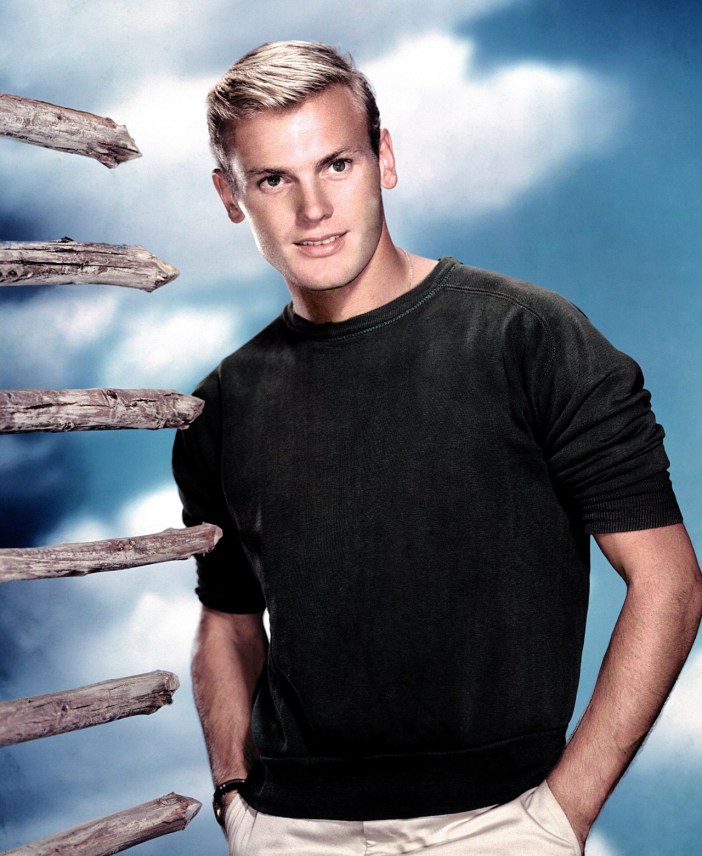
Speaking of Chlorine, I did manage to find my copy of Tab Hunter’s memoir, Tab Hunter Confidential: The Making of a Movie Star. I met Tab Hunter years ago, at a Publishing Triangle party in New York (he was with Joyce Dewitt–yes, the one from Three’s Company, and she was absolutely charming), and he was still incredibly handsome and a very nice man. He eventually came to the Tennessee Williams Festival (yes, I played Good Husband and asked him if he would do it, got his manager’s card, and passed that along to Paul), and was again, just as handsome and charming as ever. We have a signed copy of the book, but I’ve never read it–it’s been in the TBR pile for over a decade–and I am delighted now to have a work-related excuse to read it, along with any number of other Hollywood histories and books about show business and celebrities from the 1950’s. (Must find biographies of Rock Hudson, Montgomery Clift, and Anthony Perkins…and George Cukor, for that matter.) It’s going to be ever so much fun to submerge myself in post-war Hollywood and Los Angeles.

Steph Cha’s novel Your House Will Pay also continues to fascinate, entertain, and enthrall. It’s quite excellent, and I am savoring the pages, the chapters, the development of the parallel stories of the two families tied together by a trauma in the past. It’s also incredibly immersive; the characters are so very terribly real, as is the world they inhabit. It’s turning out to be so much more than I thought it was going to be–and I was excited for what I thought it would be–so it’s even more of a gift than I originally thought it was going to be.

We are also getting drawn in more to the Prime series The Boys, which is also, like the Cha novel, turning out to be so much more than I’d anticipated. It’s darker, for one thing, and kind of exceptional in showing how powerful a single, average human being actually can be, without the assistance of extra-special powers of some kind. It’s also a much more complex examination of how extraordinarily gifted humans would be monetized, branded, and image controlled–very similar to the Hollywood period I am going to be immersing myself in shortly. Yay! It’s a fascinating period, and definitely one I want to know a lot more about.

And on that note, tis time to get back to the spice mines.

IMG_1984

Delta Dawn

And now, tis time to turn the three days left of my vacation into a productive time.

I have spent the last two days simply doing as I pleased; occasionally stepping up to do some chores around the Lost Apartment, but mostly just reading and watching things on television. I tried, the other night, to watch a movie, but gave up on both Lucky Logan and The Man in the Iron Mask (Leonardo DiCaprio version); I also tried watching a documentary, How the Devil Got His Horns, but quickly bored of each of them. I will probably give Lucky Logan another shot, as I love both Channing Tatum and Adam Driver, and it seems like a subversively brilliant and funny noir movie. (I actually stopped watching, not because I was bored, but because I thought, Paul would probably like this movie so I should wait and watch it with him)

I also watched the original Star Wars trilogy yesterday–well, more like had it on as background noise while I did other things–and while Episode IV has always been my favorite, since it was the first, I have to confess for the most part Episode V is probably the better film. I also have always resisted criticism of Episode VI, but the more I watch the more I tend to agree with the criticism. I mean, really, was the entire opening sequence rescuing Han necessary? It took up a good portion of the film, quite frankly, and to what purpose? And precisely, how did Luke, who never finished his training in Episode V, was far too impatient and wasn’t breaking through, suddenly become a Jedi Master in Episode VI?

Questions. So. Many. Questions.

But today, I need to get moving. I need to write, I need to proof the pages of Royal Street Reveillon AND the cover design and get that turned in. I need to finish cleaning the downstairs–I started and made some lovely headway over the past two days, doing it leisurely, and I’d like to keep that pace going, so by Sunday evening the entire place will be sparkling and clean. I want to read some more of Angie Kim’s Miracle Creek, and I have a lot of cleaning and organizing to do around my desk–balanced around the complaints and whines of Needy Kitty, who wants me to sit in my easy chair so he can sleep in my lap. I’ve also been going to bed ridiculously early every night, around ten, and sleeping until eight every morning, which has also been lovely. I don’t feel a bit slothful, which I usually do when I am getting this much sleep and doing so little. But I chose to look at Wednesday and Thursday as holidays, and now I can get some work done over these final three days of vacation.

A Twitter conversation sometime in the last few weeks with Rob Hart (whose soon-to-be-released The Warehouse–actually being released on my birthday) got me thinking about gay representation in crime fiction over the years, and reading I the Jury (surprise! Mickey Spillane’s first novel is rife with homophobia) made me remember that the only James Ellroy book I’ve ever read also had homophobia in it. I’d always wanted to read Ellroy, just had never gotten around to it, and I’d decided to dip in with a lesser known work. There was a gay character in it–minor–and the way he was talked about, the way he was treated, and the language that was used, was horrific. Despite owning a copy of L.A. Confidential, I’ve never read it…nor read any other Ellroy. I’ve always intended to go back and read some Ellroy; I met him when he was named a Grand Master by the Mystery Writers of America and we had a weird bonding experience over the Ken Holt mystery series for boys that we both read as kids. But I could never remember the name of the book of his I’d read. I knew it had a one-word title, which narrowed it down somewhat, and I’d even gotten a copy of Perfidia only to realize it wasn’t the book. For some reason I went digging around on Amazon and realized the book in question was Clandestine, and now I want to read it again.

Honestly. But the Spillane essay I’ve been making notes on would kind of fit into the over-all concept of a larger examination of gay representation, homophobia, and homophobic content in crime fiction; as well as questions of masculinity and toughness in America and American fiction.

It was also be interesting to do an essay comparing/contrasting Megan Abbott’s historical noir fiction with Ellroy’s.

So much writing, so little time, so little desire to actually do any of it.

Heavy heaving sigh.

I’d love to write noir novels about the hidden gay underground of Hollywood’s Golden Age; I had a great idea for one a while back that involved the drowning murder of a young actor who was sleeping with powerful gay men to help his own star rise at a studio in the 1950’s, and how his roommate/best friend/ex-lover, also an actor on the rise, tries to solve the crime since the homophobic cops don’t give a shit about another dead gay man in Los Angeles. It even has a great noir-like title: Chlorine.

I have so many ideas, always.

And now, it’s back to the spice mines. I have a load of laundry to fold, some things to print, and then it’s time to buckle down and start getting things done.

Have a lovely post-holiday Friday, Constant Reader.

IMG_1143

This Town

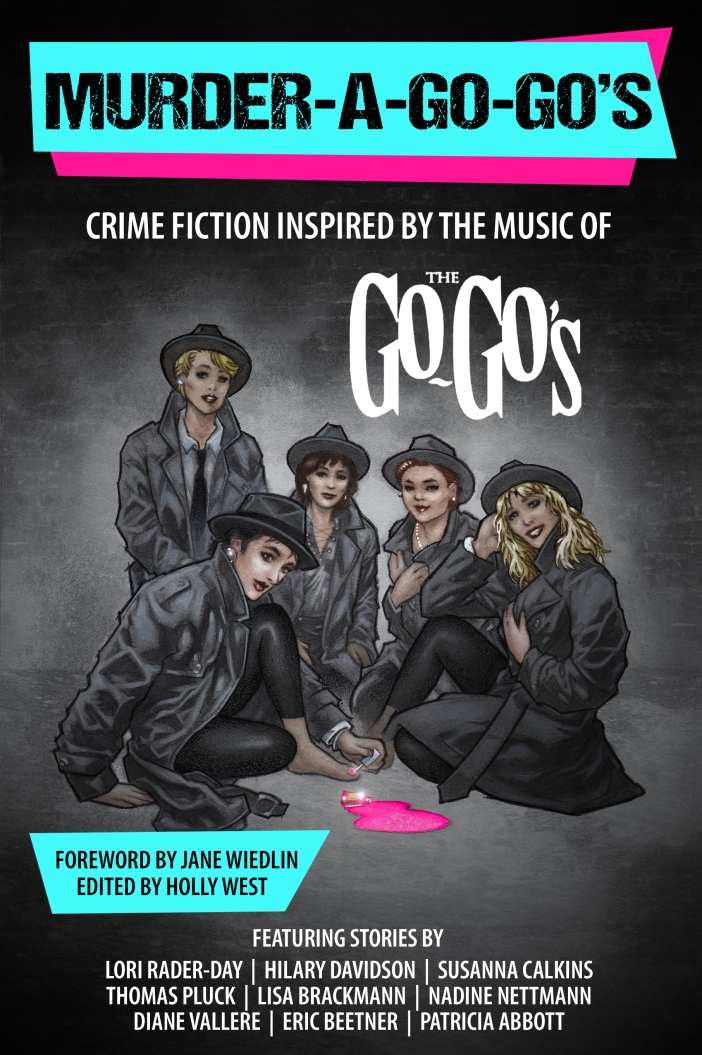
As I have mentioned before, I kind of invited myself to contribute to this anthology. It’s probably the single most brazen thing I’ve ever done as a writer. I’m not sure how it happened, exactly; I just saw it on Twitter or something and shamelessly contacted Holly West, who–rather than saying who the fuck are you? HELL FUCKING NO, was quite gracious and said, “By all means! I have a spot for you!”

The songs I got to choose from were three of my favorites, but I eventually decided on “This Town,” after reviewing the lyrics:

We all know the chosen toys 
Of catty girls and pretty boys 
Make up that face 
Jump in the race 
Life’s a kick in this town 
Life’s a kick in this town
This town is our town 
It is so glamorous 
Bet you’d live here if you could 
And be one of us
Change the lines that were said before 
We’re all dreamers – we’re all whores 
Discarded stars 
Like worn out cars 
Litter the streets of this town 
Litter the streets of this town
This town is our town 
It is so glamorous 
Bet you’d live here if you could 
And be one of us


 “We’re all dreamers–we’re all whores”–that was the line that sold me; this was the song I was going to use.

But despite the fact that was the line that convinced me, these lines:

Bet you’d live here if you could 
And be one of us

were the ones that actually inspired my story.

cover-west-murder-go-gos-frontOur IDs were fake, but no one seemed to care. Even when a burly bouncer asked to see them, his bare meaty arms adorned with tattoos, his bored eyes just flicked over the lami- nate before waving us inside. Celia was right about that, like she was right about every- thing. She could always find someone with coke to share or sell, or who was happy to share their blunt with us. She was a golden girl, the kind I used to think only existed in books or movies, the girl that’s too perfect to exist, the one every other girl wants to be friends with, wants to be. The one all the guys notice first, their eyes wide open and their jaws gone slack.

She always had the trendiest new make-up, the first to try out a daring new look we were too cowardly to try but quick to copy, always the first, the one everyone else imitat- ed. She seemed to glow from inside, drawing everyone’s eyes to her effortlessly, and she somehow managed to always look perfect, even when she was drunk, even after dancing for hours when our make-up ran down our cheeks and perspiration dampened our arm- pits. Her skirts were just the tiniest bit shorter than everyone else’s, her tops seemed to fit her in a way they didn’t fit anyone else, her hair thicker and shinier and bouncier. She pulled in guys like night insects to a white light, caught up in her magic. They only no- ticed the rest of us once she’d turned her attention elsewhere. We didn’t mind taking sec- ond place because it seemed like the natural order of things. She always knew the right thing to say—whether kind or insulting—and we all gravitated to her. She was our pledge class president, organized, efficient, determined we be the best pledge class our Omega Psi chapter had ever seen. Even the sisters seemed to be a little in awe of her, grateful she’d picked Omega Psi out of all the offers she’d had—every sorority had offered her a bid, I’d overheard one sister telling another at Monday night dinner, her voice awed as she went on to say that had never happened in the history of the Greek system at Tulane.

And she made us all feel special, whispering “Sisters” to us as we hooked our pinkie fingers and whispered the word back to her, committing to a lifelong bond with her.

She was Celia, and we were better for knowing her, special for being her sisters, like she’d selected us to be pledges and not the actives.

She somehow even knew the best places to catch the parades at our first Mardi Gras and wasn’t from New Orleans.

Haven’t we all known a girl like Celia, the one who somehow always knows what the next thing is, who always wears new styles and fashions before anyone else, who always seems to know where the best parties are, where to find the cute guys, the one everyone is drawn to, who draws the eye, who is the center of attention?

I was in a fraternity in college, and another trope that pops up regularly in my fiction is college Greeks–fraternities and sororities. Chanse was an alum of an LSU fraternity (I have an in-progress short story where Chanse deals with the current day members of his old fraternity after a suspicious death on Big Brother Night, “Once a Tiger”), and of course there are the Todd Gregory fraternity novels. Sororities fascinated me back then, and they still do today; they were a lot stricter than their male counterparts back when I was in college, and still seemed stuck, rules and tradition-wise, in the 1950’s.

Anyway, one day during Carnival last year I was standing under the balcony in front of the praline shop during a Saturday afternoon parade–Iris, I think it was–when a gaggle of sorority girls passed by in front of me. The clear leader of the pack was a beautiful young woman the others were clearly trying to please and impress; the alpha to their betas. They all paused right next to me so the leader could light a cigarette. As she put her cigarette in her purse three men of varying ages immediately stepped up to light her cigarette for her–one was in his fifties, one was slightly older than the girls, and another who might have been in his thirties–and I remembered another golden girl from a sorority back when I was in college…and I wondered what it would be like to be, not the alpha girl, but one of the betas, caught up in her thrall, and what you might be willing to do  for your alpha. Is it peer pressure, is it desire to please, what precisely is it that keeps you in thrall and makes you do things against your nature?

And that night, I started writing “This Town.”

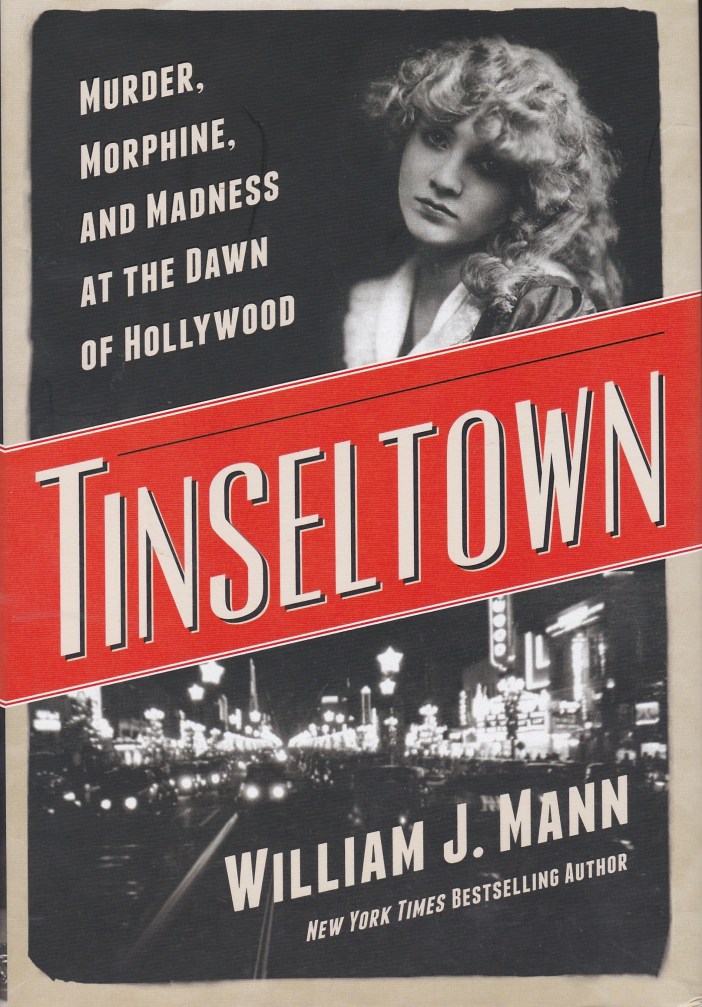
The great irony, of course, was that after I’d written the story and Holly graciously agreed to use it in her anthology, I was reading William J. Mann’s Edgar-winning Tinseltown and realized that “this town” has a specific connotation, one that makes the song itself make even greater sense: “this town” is how people in Los Angeles refer to show business, i.e. “you’ll never eat lunch in this town again.” I’d even know that, from years of reading biographies and memoirs and histories of Hollywood and the studio system, but…my mind and my memory is a sieve these days.

But I’m very proud of my story, and I hope that you will like it, too, when you get a chance to read it.

Mad About You

Summer has returned, and while expected always, it’s return always, somehow, catches me off-guard; I forget what it’s like to always have damp socks, to have that slick feeling of sticky dried sweat on your skin, the way the sweat affects the corners of your eyes and your eyelids, the way the heavy wet heat drains all of your energy from you. Even after twenty-two years here, every summer there’s an adjustment period of getting used to it. The heat index is in the high nineties now every day, regardless, and life comes about making it from one air conditioned place to another as quickly as possible.

Thursday night Paul stayed at the office late working on a grant that was due yesterday, so I was at home with Scooter and at loose ends. I wasn’t able to get much writing done that day–one of those days–and as I sat in my easy chair with my journal and a cat asleep in my lap, I decided to watch the documentary Tab Hunter Confidential on Prime. In all honesty, I don’t think I’ve ever seen a Tab Hunter film (other than Polyester and Lust in the Dust), but I knew he’d been around since the 1950’s. I knew he was a teen idol/heart throb. I also knew he’d been involved with Tony Perkins, and that he’d come out in a memoir also titled Tab Hunter Confidential. As the documentary started, I realized with a start, I’ve met Tab Hunter–several times, in fact and so as the documentary played I kept thinking, wow, I’m one or two degrees of separation from everyone in this, including everyone he co-starred with.

And, I knew how handsome he was because I’d met him in person.

I was completely blown away by how beautiful he was when  he was young.

I mean, wow.

m3 Tab Hunter 3 11 18

I mean, don’t get me wrong–he’s still an incredibly handsome man, which should have given me some idea of just how breathtakingly beautiful he was when he was young.

It’s also very weird to be watching a documentary and realize, oh, yeah, I’ve met Tab Hunter a couple of times.

My life is so weird.

It’s an interesting documentary, about being a closeted star in the Hollywood system and having the studio “fixers” cleaning up messes and keeping you out of the papers and so forth. There’s a terrific gay noir novel just waiting to be written about 1950’s gay Hollywood, and I am almost there coming up with the story in my mind.

I already have the two books I am writing though, and once they are finished, I know what the next two are going to be…so Hollywood gay noir will have to be after that, I guess.

I have to work today; I am doing testing all day at Gay Pride, but have Monday off. So, I am going to hopefully finish reading the Roth today between clients, and maybe, maybe, finally get to start reading Alex Segura’s Blackout.

And now, back to the spice mines.


Party All The Time

Saturday morning. I need to read aloud some stories this morning–“Don’t Look Down,” “This Town,” and “Fireflies”–and I’d like to get some work done on either Scotty or the WIP this weekend. I need to clean this weekend; I got started lasted night, washing the bed linens and blankets, a pre-vacuuming downstairs, organizing books, putting away a load of dishes; I also spent a lot of time in my easy chair reading Lori Roy’s stunning new novel, The Disappearing, which is giving me all kinds of thoughts and things to think about. It’s really extraordinary; you should, by all means, preorder it.

I am also working on a much longer blog piece; about being a gay writer, “own voices,” “we need diverse books”, and various other hashtags and ‘movements’ that have occured over the years on social media. There was an instance lately where an encounter with an albeit well-meaning straight lady kind of took me aback; I wasn’t really sure how to react to what she said. Albeit was well-intended, it was still kind of a backhanded slap in the face.

I find myself thinking weirdly deep thoughts about being a gay writer these days; because no matter what I write and no matter what I do, no matter how hard I might try to run away from it, gay is so inextricably a part of me that I cannot wall it off; no matter what I think or do or write or say, that different point of view is always going to be there; it cannot be turned off. There was, back in the day, a lot of talk about a gay sensibility that queer writers brought to their work; I don’t know if that conversation is still being had. But then, this is all fodder for that other blog entry I want to write; I shouldn’t get that in-depth with it here.

I did finish reading William J. Mann’s Edgar Award-winning Tinseltown: Murder, Morphine and Madness at the Dawn of; Hollywood, last night. Bill is one of my oldest friends in publishing of any kind; we’ve known each other well over twenty years, I would say. I interviewed him years ago for his first publication, the novel The Men from The Boys, and again later with the release of his first Hollywood history/biography, Wisecracker,  a biography of William Haines, the first openly gay movie star; who chose to give up his career when Louis B. Mayer told him he needed to give up his partner and marry a woman. He then went on to have a long career as an interior decorator; he was a close friend of Joan Crawford’s, who said of his long-time partnership, “it’s the only happy marriage in Hollywood.” Tinseltown tells the story of the murder of the director William Desmond Taylor in 1920, and how the big-wigs in Hollywood not only tried to cover up important details of the murder for their own reasons, but how the murder affected the lives of three Hollywood women: major star Mabel Normand (immortalized by Stevie Nicks in song on one of her most recent albums); up-and-coming star Mary Miles Minter; and fringe actress wannabe Patricia Palmer. It’s a well-crafted, well-researched reconstruction of what happened nearly a hundred years ago: it’s also an interesting overview of how Hollywood became what it was; how the Hays Production Code was born as well as the big studio systems; and how hoydenish religious groups have always made a lot of noise and tried to force their point of view down the throats of the rest of the country. I enjoyed it thoroughly, and highly recommend it.

tinseltown

I’ve always wanted to write a book or two set in old Hollywood; maybe not in the days of the silents, but perhaps one in the 1930’s and another in the 1950’s. The one about the 1950’s has more of a shape in my head; even a title (Chlorine), but there’s so much else I need to write.

But first I need to get my act together today and do all the things I need to get done today; I also need to probably come up with a schedule and list of goals. There are so many books I want to write, so many short stories I want to write, so many short stories I need to revise. There’s only so much time in every day.

And now, back to the spice mines.

PS So far, cutting the cable chord is going swimmingly. I couldn’t be more pleased.

Lay Your Hands on Me

I managed to get all the errands done yesterday, and didn’t feel exhausted until I was in the process of putting away all the groceries and things. I went to both the grocery store and Costco yesterday; I was rather impressed that I wasn’t worn out much sooner. I did get the bedding laundered as well. But I didn’t get any writing done; I am going to need to do that today.

There are a lot of things I am going to need to do today. Sigh.

I’ve been invited to contribute to an anthology; and I am not certain I have anything ready to send along. I do have this one incredibly disturbing story that I would like to make even more disturbing–that’s just how I roll–and I need to get back to work on the Scotty draft. I’d like to revise Chapter 11 a bit today, get it cleaned up more so it isn’t nearly as sloppy as it currently is, and I want to get these other two stories cleaned up as well. I need to spend some more time with “Don’t Look Down” than I have been; I need to get inside the characters more, understand who they are better, and then I think the story will wind up being a lot more strong. The same goes with the Chanse story; the story is really about his relationship with his brother and that’s not strong enough in the story as it sounds right now. That is also, I think, the problem with the Scotty book. I need to spend some time today with it as well, figuring out motivations and so forth.

Ah, being a writer. Always such a challenge.

We finished watching Collateral last night, and I was rather pleased with it; it was written by David Hare, the playwright, and you could tell it was written by someone good. Carey Mulligan was terrific, and I highly recommend it for anyone who enjoys complex, multi-layered crime dramas. I think tonight we may watch Justice League, to just to see if it really is as terrible as everyone seemed to think; I didn’t hate either Man of Steel or Batman vs. Superman, so I am not going into it as a hater.

I’m also still reading Tinseltown, which I am greatly enjoying. I don’t know a lot about the early days of Hollywood; the early 1920’s and late 19-teens, other than what I know from reading biographies of David O. Selznick, whose father was a producer and tried to build up a studio at the same time Adolph Zukor was building Paramount, and before the big merger that created Metro-Goldwyn-Mayer (MGM). So all this is new information to me, and William J. Mann is a terrific historian and researcher. (I am more familiar with later periods of Hollywood, but hardly an expert.) I’ve always wanted to write about Hollywood’s past; I have an idea for a noir novel to be set in the late 1940’s, but my lack of familiarity with the nuts and bolts of Hollywood in that period makes it difficult–or rather, makes my already vast insecurity about writing about another period even stronger. Although I’ve already written one short story about that time–an ambiguous setting of the early 1950’s–I don’t know. Maybe I should try it as a short story first, see if I can get the sense of the period?

I don’t know.

I’m also saddened to say that I’ve now finished reading both of Lawrence Block’s art-inspired anthologies, In Sunlight or in Shadow and Alive in Shape and Color, but I’ve heard through the grapevine that he is putting together another, which is great. So, for today’s edition of the Short Story Project, I am sad to say this is the last story from a Block anthology: “A Woman in the Sun,” by Justin Scott, from In Sunlight or In Shadow.

Could she change his mind? Four steps to the open window, lean out and call, “Don’t.”

Or walk to the window and call, “Go ahead, do it.Good luck.”

Or stand here and do nothing.

He had left her his last cigarette. She had talked him into leaving the gun and he had kept his word. It was still on the night table, wrapped in one of her stockings. She had the time of the cigarette to make up her mind. More time, if she didn’t smoke it. Let it smoulder.

This is an interesting story; in that it leaves more questions unanswered than it actually answers. We never know the characters’ names, nor do we really know what has brough them to this point. All we do learn, as the story progresses, is that both are at the end of their ropes and done, basically; they are both ready to die. The only question is whether she will stop him or will she join him, and this rather uninvolved, distant approach makes the story even more poignant and sad; there’s a very strong sense of melancholy that runs throughout this story, and the reader soon realizes you don’t have to know the whys and hows and whats of their pasts–all you need to know and feel is their now.

Powerful.

I then started reading through Jim Fusilli’s Crime Plus Music, and the next story up was”Me Untamed” by David Liss.

She covered the black eye with makeup, but I could still see it was there, something alien and unaccountable. Like a vandal’s scrawl across a museum painting, the dull outline of her bruise was an outrage. Carla smiled and greeted everyone good morning, defying us to say a word, to let our eyes linger too long. It was, I supposed, how she protected herself.

Jim Baron, the senior partner in the practice, met my gaze and flicked his head toward Carla as she walked past with a stack of case folders under her arm. Carla was getting ready, as we did every Tuesday and Thursday, for surgeries–no office visits on those days, just procedures. The practice felt a bit like a gastrointestinal assembly line, and sometimes I hated how we moved patients in and out, hardly taking the time to look at them, but Jim cracked the whip. It was volume, volume, volume as far as he was concerned. We were there to heal, not to socialize, and the more healing, the better.

The point of view is that of a divorced, shy, quiet Milquetoasty doctor,  who is kind of in love with Carla, or maybe he is not. She’s married to a thug of a guy, a man’s man, who works out and so forth, the kind of man a Milquetoast would hate. And he decides to do something about Carla’s abuse…decides to make himself into the kind of man he’s always wanted to be, the kind of man that he thinks Carla would like and love. This is a terrific story, with a terrific twist at the end that lifts it up even higher in terms of craft. Well done, sir!

And now, back to the spice mines.

KONICA MINOLTA DIGITAL CAMERA

Cherish

I was a little boy in the 1960’s; I was eight when the decade came to an end. The world was a very uncertain place for a kid during that time period; people really believed the country was falling apart, or being pulled apart. The divide between the generations, the divide between left and right, the concept of American exceptionalism vs American responsibility; the Vietnam War and the opposition to it; the rise of the civil rights movement and the struggle to end Jim Crow once and for all; the rise of the women’s movement; and even the beginnings of a queer rights movement–all in the 1960’s. A president was murdered and men landed on the moon. There was a huge societal upheaval that changed everything that people had come to know and expect; television also began to change and grow up some, which led to some groundbreaking series in the latter half of the decade as well as set the stage for what was to come in the 1970’s. The after shocks from the 1960’s are still being felt today.

It was also a strange time for films; at the beginning of the decade the big studios and the old systems of American filmmaking were starting to erode away. The best picture Oscar winner in 1961, for example, was West Side Story, the film version of a hugely successful Broadway musical that recast the feuding Montagues and Capulets from Shakespeare’s Romeo and Juliet into juvenile gangs–one white, one Puerto Rican. (I rewatched this film shortly after the 2016 election, and was amazed at how differently I saw it then I did before) The Academy Award for best picture in 1969 was Midnight Cowboy, to date the only Oscar winner to have an X rating (although by today’s standards the film is remarkably tame), a movie which would have never been made in 1961. (Midnight Cowboy is another film I need to see again, quite frankly; I also would like to read the book it was based on again.)

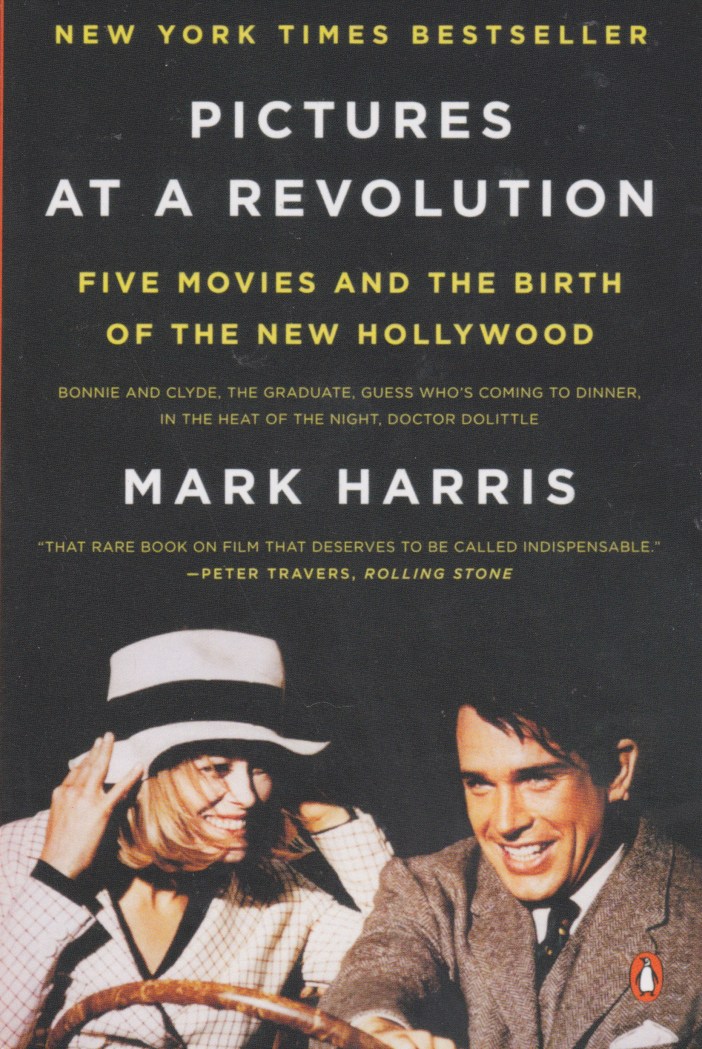
Mark Harris, a Hollywood historian whose book Five Came Back was made into a documentary which I enjoyed, wrote a brilliant book called Pictures at a Revolution, which looked at how film, and the film industry, changed during that decade through the framework of the five films nominated for the Academy Award for Best Picture in 1967; which, if any year was indicative of the changes being made and the changes to come, was indeed the perfect illustration. Two of the films were old style Hollywood–Guess Who’s Coming to Dinner and Doctor Dolittle–two were of the new Hollywood–Bonnie and Clyde and The Graduate–and the fifth, and ultimate winner  (In the Heat of the Night) seemed to straddle the line in some ways, and whose win–and other four wins–seemed to be a compromise between the old and the new.

Harris’ book, which follows all five films from conception to script development to production and then release, culminating in the Oscar ceremony itself, is riveting and informative. You learn who all the players in each case were; you follow along the studio politics and behind-the-scenes deal-making that went into the making of each film, and in each case, Harris brilliantly illustrates how each film represents an aspect of his thesis. Guess Who’s Coming to Dinner and In the Heat of the Night both dealt with the current issues of race; one as a gentle family comedy and the other through the darker lens of a murder investigation in a small Mississippi town, Dr. Dolittle represented the beginning of the end of the big Hollywood musical; the early part of the 1960’s gave the world the Oscar winners West Side Story, My Fair Lady, and The Sound of Music; the immense musical flops of the second half of the decade were ushered in with this epic disaster (there’s also a book in tracing the rise and fall of the big Hollywood musical in the 1960’s).

I greatly enjoyed this book, and if you’re a fan of movies, or have an interest in the industry, this is a great read for you. I’m not so interested in the film industry of today, but I am interested in its past, to be honest; I don’t really care about the Academy Awards anymore and often change the channel while it’s on–there are no surprises anymore, and the ridiculous amount of awards leading up to the Oscars, from the Golden Globes to the SAG Awards to the Writers’ and Directors’ Guild awards, have taken away any mystery or suspense as to who is going to win; it’s much more interesting to read about the old days when they were always kind of up for grabs, and hadn’t become the expensive, overblown spectacle they’ve become today.

The book also made me want to watch these films again; it’s been years since I’ve seen any of them, and in most cases, I only saw them in their edited-for-television versions.

pictures at a revolution

Dancing in the Sheets

The sun is shining, and the temperature has climbed to 49 degrees. The boil-water advisory ended finally last evening–it’s just not a crisis in New Orleans unless we have a boil-water advisory!–and here I sit this morning, ensconced at my desk with a cup of coffee, a load of laundry tumbling in the dryer, with great expectations of the day. I went to the gym last evening after work, and my muscles, while a bit tired, still feel stretched and worked and supple, if that makes sense. Probably the best thing about rededicating myself to physical exercise again is how much better I feel; I don’t ache or feel tired the way I did just last week, and the stretching and the treadmill are also making me feel ever so much better. Today, I am going to clean (if it’s Saturday I must be cleaning) but I am also going to write, edit and read today. Paul is going into the office to work (it’s that time of year again) and so I have the day to myself. I want to finish the first draft of “The Trouble with Autofill” and I want to edit “Cold Beer No Flies.”

Among many other things; my to-do list is ridiculous, quite frankly. But the only way to make progress is not to get overwhelmed by the enormity of the list but rather to keep plugging away at it.

I finished reading Miami by Joan Didion earlier this week, and it was quite good. Didion’s writing style is quite amazing, actually, and while the story of the book might seem, at first glance, to be rather dated; the truth is it is still very much appropriate to our modern times. Miami is a look at the Cuban exiles in the city, how they relate to each other, and how they impact south Florida politically; and to a lesser extent, the relationship between the US government with them as well as with Castro’s Cuba. During the Cold War Cuba was a much more terrifying apparition, close as it was to Florida, and it’s amazing how people do not realize the political clout, as a result of their sheer numbers, that the Cuban immigrants weld in that part of the state, and in the entire state as well. The importance of Florida as a swing state cannot be discounted; and therefore the Cuban-American community’s influence on national politics is something that has to always be considered. (A present day comparison would be the Puerto Ricans moving to Florida today in great numbers as a result of the hurricane destruction of their island; the difference being those Puerto Ricans are already American citizens who can register to vote and can impact 2018 already.) Didion’s look at Miami in the 1980’s, as a Caribbean city on the mainland, is also reminiscent of descriptions of New Orleans as the northernmost Caribbean city; the thing I love the most about Didion’s work is how she makes you think. Reading Miami made me want to write about Miami; I’ve been wanting to write about Florida for a long time, as Constant Reader already knows. Something to ponder.

miami

I also started reading Mark Harris’ Pictures at a Revolution, which is a look at the film industry through the lens of the five films nominated for the Academy Award for Best Picture in 1967, and how they were made. Harris’ thesis is that was the year that bridged the gap between old and new Hollywood; and the five Best Picture nominees illustrated that perfectly: an expensive musical flop (Doctor Dolittle); two old style Hollywood pictures about race (Guess Who’s Coming to Dinner and In the Heat of the Night), and two films that illustrated new Hollywood and its influence by European filmmakers like Truffaut and Fellini and Antonioni (Bonnie and Clyde and The Graduate). I, of course, have always been fascinated by Hollywood history and have been ever since I read Garson Kanin’s Tracy and Hepburn and Bob Thomas’ Selznick as a kid; this book is right up my alley, and since it’s been awhile since I’ve read any Hollywood history, I am looking forward to reading this (and his Five Came Back–I’ve already watched the documentary based on it).

The Short Story Project also moves apace; I am frequently surprised as I look through my shelves for something to read how many single author collections and anthologies dot them. My Ipad also has quite a few loaded onto the Kindle app; I often buy them when they are either free or reduced in price, and so my Kindle app is filled with books I’ve not yet read, primarily because I don’t like to read on it (which I realize is nothing more than stubbornness; if I can watch movies or television programs on it, why resist reading books there?) Yesterday I found my battered old Dell paperback of Agatha Christie’s The Golden Ball and Other Stories, which I remember loving as a child. I was looking for my copy of Lawrence Block’s first anthology inspired by paintings–those of Edward Hopper– In Sunlight or in Shadow, which I would have sworn I’d purchased in hardcover; yet it wasn’t anywhere on the shelves or in any of the TBR piles, before remembering I’d bought it as an ebook when the Macavity nominations come out; Block’s story “Autumn at the Automat” was a finalist, along with mine (I still can’t believe it) and I wanted to read all the other nominated stories for an entry, so the immediacy of the need required buying the ebook. It is a handsome volume, though, so I’ll need to buy a hard copy to pair with the new one. (New bucket list item: write a story for one of these anthologies by Lawrence Block)

Once I’d located it on the iPad, I scoured the table of contents and landed on a Joyce Carol Oates story, “The Woman in the Window.” I have to confess I’ve not read much of Ms. Oates; I am not even remotely familiar with what she writes. But she, too, was a Macavity finalist last year, for her story “The Crawl Space” (which also won the Stoker Award), and that story creeped me the fuck out. I know she’s been a Stoker finalist before, but I also think she tends to write across genre a lot and therefore isn’t pigeon-holed in one way or the other.

Beneath the cushion of the plush blue chair she has hidden it.

Almost shyly her fingers grope for it, then recoil as if it were burning-hot.

No! None of this will happen, don’t be ridiculous!

It is eleven A.M. He has promised to meet her in this room in which it is always eleven A.M.

This story, frankly, isn’t as strong as “The Crawl Space,” but it’s an interesting exercise in how thin the line between lust and loathing is; the woman of the title is a secretary having an affair with a much wealthier man, and as she gets older and older she is feeling more and more trapped in the relationship; he is married and he often has to break plans with her for his wife. There is also a shift occasionally to his point of view, and he’s not so fond of her anymore, either. Passion has cooled but habit has set in; and the way those lines can get crossed is chilling–and how destructive such a relationship can be to both parties, emotionally and mentally, is explored in great detail yet sparse language by Ms. Oates. The story’s not as creepy, as I said, as the other; but the end–which she leaves kind of hanging–you do feel that something awful is going to happen; maybe not today, maybe not tomorrow, but eventually.

I’ve not read Joe Hill before, and there are several reasons for that; none of which would make any sense to anyone who is not me; I am nothing if not aware of my own eccentricities, which is why I generally don’t share them with people; I don’t need someone else to point out that something doesn’t make sense. But I do have a copy of his short story collection 20th Century Ghosts, which I spied on the shelves as I looked for my copy of the Block anthology. Aha, I thought, perfect. I can read a Joe Hill story for the Short Story Project. So, I curled up under a blanket in my easy chair, waited for Scooter to get settled in my lap, and started reading “Best New Horror.”

A month before his deadline, Eddie Carroll ripped open a manila envelope, and a magazine called The True North Literary Review slipped out into his hands. Carroll was used to getting magazines in the mail, although most of them had titles like Cemetery Dance and specialized in horror fiction. People sent him their books, too. Piles of them cluttered his Brookline townhouse, a heap on the couch in his office, a stack by the coffee maker. Books of horror stories, all of them.

No one had time to read them all, although once–when he was in his early thirties and just starting out as the editor of America’s Best New Horror–he had made a conscientious effort to try. Carroll had guided sixteen volumes of Best New Horror to press, had been working on the series for over a third of his life now. It added up to thousands of hours of reading and proofing and letter-writing, thousands of hours he could never have back.

He had come to hate the magazines especially. So many of them used the cheapest ink, and he had learned to loathe the way it came off on his fingers, the harsh stink of it.

I did not mention the elephant in the room; said elephant, of course, being that Joe Hill is Stephen King’s son. (The Kings are a very literary family; Mr. King’s wife Tabitha is a poet and a novelist; their other son Owen also writes, as does Owen’s wife, Kelly Braffet; I read a novel by Ms. Braffet sometime in the last couple of years–not aware of the King connection–and greatly enjoyed it.)

But simply based on a reading of “Best New Horror,” I have to say Joe Hill is also a terrific writer. And while it, like some of his father’s work, bears a strong resemblance to something I would have read in an Tales from the Crypt or House of Mystery comic book–that is not a criticism. I loved those comics, and the stories I read in them; they had a deep influence on me not only as a writer but as a reader. “Best New Horror”, as you can tell by the opening, tells the tale of Eddie Carroll, a writing teacher and a long-time editor of the Best New Horror series, a chore he has learned to loathe and, basically, phone in every year for the money. This resonated with me; as an anthology editor myself, one of the reasons I stepped away from editing them–or took a break from doing it–was because it was becoming rote; a chore rather than something I found joy in doing. Eddie is an example of why I stopped–I didn’t want to become like him; embittered by the experience and tired of not finding anything fresh or new (unlike Eddie, I was able to keep the experience fresh because each anthology I did was a new topic; if I had done twenty anthologies with the same theme I would have gone on a killing spree). But in the mail comes a story from a new writer that is simply brilliant; original and fresh and resonant and horrifying in its reality; the story reinvigorates Eddie and makes the editing job no longer a chore; he has to have this story, and will do whatever he has to in order to track the writer down…but as with any horror  tale of obsession, it’s not going to end well. But Hill brilliantly keeps stringing the reader along, and the ending is just absolutely brilliant and clever. I am really looking forward to reading more of these stories.

And now, I must get back to the spice mines. There are clothes to fold, dishes to wash, floors to clean, stories to write and edit; I am probably coming back here for another entry later as I am trying to get caught up on posting the stories I’ve read–but I make no promises. I have another story to write as a call for submissions crossed my computer screen on Thursday; I have an unfinished story that I can repurpose, but I also need to get a first draft done so I can work the story out.

Until later, Constant Reader.

Billie Jean

So, I didn’t get any writing done yesterday because I sat down with Lyndsay Faye’s The Gods of Gotham at long last, intending to read only one chapter–and then the next thing I knew it was time to make dinner and I was on page 100. Reluctantly I put the book down and made dinner; after which we watched Orphan Black, Game of Thrones, and the first episode of Amazon Prime’s The Last Tycoon before repairing to bed for the evening. Lyndsay’s book is extraordinary and exceptional; I’m both sorry and glad that I waited so long to read it–glad because I am clearly going to love every word of it; sorry that I could have savored it so much sooner. Heavy sigh.

So many books, so little time.

I am greatly enjoying this season of Game of Thrones, and am very curious as to how it is all going to shape up. Last night’s episode was terrific; when the credits started rolling I was like, “it’s over already?” That’s always a good sign, frankly; and Dame Diana Rigg’s final line as Lady Tyrell was just absolutely perfect.

We then switched over to Amazon Prime to try out The Last Tycoon. I’ve never read the Fitzgerald novel because, frankly, it was unfinished, and God knows I’d never want anyone to read anything of mine after I die that was unfinished. But I was curious to see this, as a sucker for old Hollywood. The show is set during the era of the big studios and their star system; where the studios crafted very careful images of their stars and turned out movie after movie after movie. My fascination with this time began when I was a kid and read Bob Thomas’ biography Selznick; I went on to read Tracy and Hepburn, biographies of stars like Spencer Tracy, Bette Davis, Joan Crawford, and Clark Gable, amongst many others; histories of Hollywood, and so forth. I’ve always wanted to write about that period; it’s really a great time for noir and crime, but again–research. Anyway, I was curious to see how the show was, and I was more than a little impressed. Fitzgerald had first-hand experience with Hollywood and the old studio system, and clearly the character played by Matt Bomer (who is just breathtakingly beautiful, and would be stunning in black and white) is based on Irving Thalberg; the genius producer with a heart problem who is aching to make the perfect film before he dies. Kelsey Grammer is also good, as always, as the studio boss, and the rest of the cast, none of whom I really recognized, are all good in their parts. There was also a big plot twist at the end of the first episode that I didn’t see coming, so kudos to that! It’s also filmed beautifully; the sets and costumes are spot on and everyone looks like they just stepped off the set of a 30’s movie. I am really looking forward to seeing more. I hope it’s not disappointing!

All right, back to the spice mines. Here’s a Monday hunk to get your week off to a great start!

IMG_1701