Solid

It still feels chilly this morning, after a weekend of lowered temperatures. But the sun is shining, and all feels well with the world. I wrote yesterday; a lot, in fact, well over three thousand words; which is a lot for me to do on a weekend day. I even did it all by two pm, so I had the rest of the day to putz around. I finished a very weak first draft of “Burning Crosses,” worked on “Don’t Look Down” some more, and finished a very weak Scotty Chapter 11. But i know how to fix “Burning Crosses,” so that’s not a problem, and I know what I need to do with “Don’t Look Down,” which I just can’t seem to focus on. I also recognize that my feelings about the Scotty manuscript are the usual loss of faith I always have somewhere mid-manuscript; and I just need to ignore it and soldier on, with the mantra I can always fix this later! I can always fix this later!

Which I seem to be using a lot lately. I’m not quite sure what that says about the quality of what I’ve been writing.

I’m in this weird place right now with my writing; trying to feel more confident in it and my ability, while at the same time my insecurity is undermining me while I am actually writing. I need to ignore the things that pop up in my head as I work on the Scotty book, the slings and arrows hurled at me over the years that I can’t seem to get out of my mind and try to remember all the positive things that have been said about me and my work; which I don’t tend to take as seriously as the negative.

Honestly.

We started watching Lost in Space and Troy: The Fall of a City; we stopped because Paul didn’t like them–I was, so it gives me something to watch when I’m on the treadmill at the gym. We also gave Siren on Freeform a try; neither one of us was terribly sold on it, although I’d be willing to give it another episode or two before giving up on it entirely. Then we moved on to The Alienist, and yes, we are both committed to it. I never read the novel when it came out, but I do remember it made quite a stir when it did, and that the queer publishing community stood up and took note of it as well. I never could grasp why, but now that I am watching the show, I see why; there is a serial killer praying on boy prostitutes in 1890’s New York, and the ‘alienist’, Dr. Kreuzler, is rare in that time that he doesn’t see homosexuality or trans issues as either sinful or mental illness; it’s very queer positive, if you can get past the slaughter of the boy-prostitutes, which are particularly gruesome. But it’s very well done and interesting; we’ll keep going.

I also read some short stories. First up is  “Les Beaux Jours” by Joyce Carol Oates, from Lawrence Block’s Alive in Shape and Color:

Daddy please come bring me home. Daddy I am so sorry.

Daddy it is your fault. Daddy I hate you.

Daddy, no! I love you Daddy whatever you have done.

Daddy I am under a spell here. I am not myself  here.

The place in which I am a captive–it is in the Alps, I think. It is a great, old house like a castle made of ancient rock. Through high windows you can see moors stretching to the mountainous horizon. All is scrubby gray-green as if undersea. The light is perpetual twilight.

Dusk is when the Master comes. I am in love with the Master.

Daddy no! I do not love the Master at all, I am terrified of the Master.

I’d not read Joyce Carol Oates before a few years ago; I read her short story that was a Macavity finalist the same year I was, and was blown away by it. I always thought Oates was more of a literary writer, but she writes crime and horror and dark stories, and she does it incredibly well. This story is Oates at her best; disturbing and creepy and horrifying. She manages to get the voice of the trapped girl perfectly; that strange mix of Stockholm syndrome and desperation to get away; the fear that she might die there. Very disturbing.

“Truth Comes out of Her Well to Shame Mankind,” by Thomas Pluck,  also from Alive in Shape and Color:

The cracking of the skulls was performed by a practiced hand. The bowl separated from the eye sockets and teeth. These were no virgin cannibals like the lost colonists of Roanoke, with their hesitation marks. Whatever people had done this had been done before, and had perhaps been doing it for a very long time.

Devin cupped the skull in his palm, reminded of how Danes toasted before a drink.

Thomas Pluck is one of the better writers we have in the crime fiction world right now, and I hope this appearance in the Block anthology is a sign that he’s beginning to get his due. He wrote a story for Blood on the Bayou that was superb; I have his novel Bad Boy Boogie, in my TBR pile. This story, about an arrogant ass of a man who visits an archaeological site, being led by a woman he didn’t get along with in college, is not only chilling but timely; men all so frequently are unaware of the damage they leave in their wake, aren’t they, and this story is about that very thing; carelessness, just as The Great Gatsby was about the carelessness of the Buchanans. Very well done.

And now, back to the spice mines.

30595147_10156310071713256_742405299911118398_n

Some Like It Hot

Our weather forecast for today is grim; thunderstorms and downpours and flash flooding. Happy Saturday! Right now, even at this early hour, it’s already grim and gray outside; yesterday my sinuses were bothering me–another sign, not only of impending heavy weather but that I’m getting old because I am predicting the weather with my body–and I was incredibly tired when I got home. I repaired to my easy chair and read some more of Bryan Camp’s The City of Lost Fortunes (it’s wonderful, preorder it now), and then watched the first episode of two Netflix series, the Lost in Space reboot and Troy: The Fall of a City. I enjoyed both–although of course with Troy, I know how it ends–and there was a moment when Helen was telling Paris the myth of Actaeon and mentioned the goddess Diana and I was all “wrong! Helen would have called her Artemis!” which then sent me into another spiral because Wonder Woman is also from Greek mythology yet her name is Diana…and did the Greeks have the name Diana, or was it Roman? Yeesh, my mind.

It’s getting darker and the wind is picking up.

The plan for today is to do some writing, do some cleaning, and finish reading Bryan’s book. I also need to catch up on Riverdale and Krypton. Heavy sigh. I am really happy with some of the work I’ve been doing this week, and need to stay focused. I want to get “Don’t Look Down” finished, and I need to write an introduction to the short story collection, and there’s another story that needs to be done, and I still haven’t work on that revision based on editorial notes on another story. As you can see, it never ends for one Gregalicious. But as I said, I’m enjoying the work–which I couldn’t say last year–and that’s always a plus. I think the direction in which I am taking the Scotty novel in Chapter Eleven is quite fun and different; whether I am right in that assumption or whether it’s more a symptom of my creative ADHD, I suppose we’ll see once we have the first draft completed. But I have to have a completed first draft in order to see, don’t I?

Heavy heaving sigh.

Anyway I’ve got two more stories read for The Short Story Project. First up is “Office at Night” by Warren Moore,  from Lawrence Block’s anthology In Sunlight and In Shadow:

Margaret heard the train rumble by as Walter looked at the papers on the desk. The cord on the window shade swung, whether from the trains’s vibrations or from the breeze through the window, she didn’t know. She couldn’t feel either, nor did she feel the blue dress–her favorite–clinging to her curves. All she saw was Walter, and all he saw were the files in the pool of light from the desk lamp.

She had put the papers in the file cabinet and rested her arm atop the folders for seemed like–could have been–a lifetime ago. The phrase brought a slight smile to Margaret’s face. Any time could be a lifetime, depending on how long you lived. And she had thought from time to time that she and Walter might have had a lifetime together. Before she had died.

I really enjoyed this story; which is about lost opportunities and melancholy. Margaret was a large woman while alive; tall and big boned, tauntingly called Large Marge by the cruel children in the small town where she grew up. This made her withdrawn and shy. As soon as she was able she moved to New York, moved into a rooming house, and got a job, slowly starting to build a life for herself and leave “Large Marge” behind. Then she accidentally is killed–not in a crime or anything, just an accident–and her ghost visits the office where she worked, and loved her boss–but that past history made her unable to speak up, unable to say anything, unable to make a try for happiness. Like I said, it’s more about that sense of sadness and melancholy than a story with beginning, middle and end; but it’s incredibly well written and that melancholy…wow.

The next story was “Still Life 1931” by Kris Nelscott, also in Lawrence Block’s  In Sunlight and in Shadow.

She first noticed outside Memphis: they didn’t ride segregated in the box cars. At the time, she was standing outside yet abotehr closed bank. The line of aggrieved customers wrapped around the block–men in their dusty pants, stained workshirts, caps on their heads; women wearing low heels, day dresses, and battered hats.

Lurleen looked just different enough to attract attention. Her green cloche hat was a bit too new, her coat a little too heavy. Her shoes were scuffed like everyone else’s. but hers were scuffed from too much travel, not age and wear.

This story is absolutely amazing, and one of the most powerful in this collection, which is saying a lot. Set in the early 1930’s, Nelscott captures the era perfectly; the failing banks and the desperation of people losing their savings; the racial issues in the deep South; and Lurleen’s own sense of who she is, of right and wrong. When the story opens, Lurleen, recently widowed, is taking the train to small towns and cities all over the South, closing bank accounts she’d opened years earlier and withdrawing all the cash. The story opens with her in line at one bank where a run has happened; the bank has closed “temporarily”, but the sign on the door doesn’t indicate any time when the bank might reopen. As the story progress, we learn that Lurleen, before her marriage, worked for the NAACP, going around the South and interviewing witnesses and survivors, documenting lynchings and racial violence in the South. The story is powerful; Lurleen is well developed, and I was sorry when the story ended because I wanted to know more about Lurleen and the work she had done, the work she was going to begin doing again. According to the author bio, Nelscott is planning to write more about Lurleen, which is kind of exciting; I certainly hope she does.

And now back to the spice mines.

IMG_4188

Too Late for Goodbyes

Well, we made it to Friday, didn’t we? I do feel sometimes as though wishing for the weekend, or counting the days until payday, is kind of wishing my life away. (My mother used to tell me that when I was younger, and it’s one of those things I’ve never forgotten. Whether or not that’s a good thing, I’m not sure. Most of my mother’s sayings are like that; my favorite being always expect the worst and you’ll never be disappointed. I’m never sure if that means lower your expectations to avoid disappointment, or if it means the opposite–if you always think the worst is going to happen you’ll make it happen? So confusing. But most of these came from her incredibly pragmatic mother, so I tend to think the former rather than the latter in this case.)

I wrote close to three thousand words yesterday; and yet felt disappointed with my output. Two thirds of them were my short story “Burning Crosses,” which I am enjoying but again am struggling to write and the rest were on the next chapter of the Scotty book, which I actually enjoyed writing. I am hoping to get both this story and maybe two chapters of the Scotty finished this weekend; I want to do some cleaning as well (quelle surprise) and I want to finish reading my Bryan Camp novel so I can blog about it before the release next week. It’s really good, and you NEED to preorder it. Seriously.

I’ve gone back to streaming The Shannara Chronicles, and have seriously gotten sucked into the show. I’ve now watched the first episode of Season Two, and am liking the direction it’s taking. I don’t remember the books; I only read the first two–The Sword of Shannara and The Elfstones of Shannara–and I think the show was culled from the second book on. Paul’s back home now, so it’s going to be tricky watching shows he’s not watching; the Festivals are over and he won’t be home late anymore or working on the weekends.

For the Short Story Project, I offer the following two stories:

First up is “Orange is for Anguish, Blue for Insanity” by David Morrell,  from Lawrence Block’s Alive in Shape and Color.

Van Dorn’s work was controversial, of course. The scandal his paintings caused among Parisian artists in the late 1800s provided the stuff of legend. Disdaining conventions, thrusting beyond accepted theories, Van Dorn seized upon the essentials of his craft to which he’d devoted his soul. Color, design, and texture. With those principles in mind, he created portraits and landscapes so different, so innovative, that their subjects seemed merely an excuse for Van Dorn to put paint upon canvas. His brilliant colors, applied in passionate splotches and swirls, often so thick that they projected an eighth of an inch from the canvas in the manner of a bas-relief, so dominated the viewer’s perception that the person or scene depicted seemed secondary to technique.

Impressionism, the prevailing avant-garde theory of the late 1800s, imitated the eye’s tendency to perceive the edges of peripheral objects as blurs. Van Dorn went one step further and so emphasized the lack of distinction among objects that they seemed to melt together, to merge into an interconnected, pantheistic universe of color. The branches of a Van Dorn tree became ectoplasmic tentacles, thrusting toward the sky and the grass, just as tentacles from the sky and the grass thrust toward the tree, all melding together in a radiant swirl. He seemed to address himself not to the illusions of light but to  reality itself, or at least his theory of it. The tree is the sky, his technique asserted. The grass is the tree, and the sky is grass. All is one.

David Morrell is a long time best selling author, and I’ve met him several times; he’s an incredibly nice man. He’ll always be known as the author of First Blood–he calls himself “Rambo’s Father,” but he’s enjoyed a lot of success throughout his career. This story is one of my favorites from this collection, and perhaps one of the top five new stories I’ve read for the Short Story Project. It’s fan-fucking-tastic; a story about art and obsession and madness and genius; I could devote an entire entry to simply unpacking and deconstructing the themes and symbols and metaphors in this fucking brilliant story. Alive in Shape and Color is a fantastic collection, frankly, that if you like short stories you should definitely read; but this story is so good I would tell you this book is worth the cover price in order to read this story alone. I fricking loved it. LOVED it.

Next up was “The Preacher Collects,” By Gail Levin, from Lawrence Block’s In Sunlight and In Shadow:

They call me “Reverend Sanborn.” I was born Arthayet R. Sanborn, Jr., in Manchester, New Hampshire, sone of Arthayer and Annie Quimby Sanborn. I graduated from Gordon College, a good Christian school in Wenham, Massachusetts, and in Woonsocket, Rhode Island, before I went to Nyack, New York, where I led the First Baptist Church, located on North Broadway. My job came with the security of a home, just next to the church, where I lived with my wife, Ruth, and our four children.

Before long I met at church our neighbor and long-time parishioner, Marion Louise Hopper. An aging spinster, she lived alone in her family’s old house next door to the church. She liked to boast that her younger brother, and only sibling, was a famous artist, named Edward. Edward Hopper, however, appeared to want as little as possible to do with Nyack and his sister.

I didn’t care for this story as much as some others, but it’s well written. It’s about a minister who basically robs Edward Hopper’s work from his sister, who still lives in the family home, but we never really get a sense of why he does this, his justifications for it, and it just moves from this to that to there to this to that to there; it was kind of emotionally flat for me. Of course, I also read this right after the Morrell story in the other collection, and it may very well be that affected my perception of this story. I’ll give it another go at some point, which would be only fair.

And now, back to the spice mines.

1e3769b75af0e60ee6016d9974644998

Walking on Sunshine

Wednesday. I found my missing copy of The City of Lost Fortunes, which ironically was in my backpack the entire time in a pocket I didn’t check because I wouldn’t have put it in there. Yes, sometimes I wonder about what’s left of my sanity.

Paul returns sometime today; he never tells me his itinerary when he travels, so unless I absolutely pin him down and make him tell me, or forward the itinerary to me, I have no clue when he gets home. It’s usually late in the evening–he is one of those who, no matter how many times I tell him to never do this–always takes the last flight of the day. Rule Number One of traveling is never to take the last flight of the day because disruptions in service can trap you overnight somewhere. And since visiting his family always requires a connection somewhere, it happens almost every single time.

I also finished reading The City of Falling Angels last night; John Berendt’s tome about Venice, and enjoyed it very thoroughly. I have some thoughts about the book, and Venice in general, but I am going to let them percolate for a day or so before talking about them on here.

Yesterday I worked some more on “Don’t Look Down”–again, it is like pulling teeth–and started another short story. I shouldn’t have started writing another story, in all honesty, but “Burning Crosses” has been a story I’ve wanted to write for a really long time, and it starting taking form in my head yesterday so I just kind of dove in headfirst. I also started “Feast of the Redeemer,” my Venice story, which I blame entirely on John Berendt. Today I don’t know what I’m going to write, but I think I am going to start trying to outline the rest of the Scotty book. It may not actually be actual writing,  but it counts as work.

I read two more short stories. First up: “The Daemon Lover” by Shirley Jackson, from The Lottery and Other Stories:

She had not slept well; from one-thirty, when Jamie left and she went lingeringly to bed, until seven, when she at last allowed herself to get up and make coffee, she had slept fitfully, stirring awake to open her eyes and look into the half-darkness, remembering over and over, slipping again into a feverish dream. She spent almost an hour over her coffee–they were to have a real breakfast on the way–and then, unless she wanted to dress early, had nothing to do. She washed her coffee cup and made the bed, looking carefully over the clothes she planned to wear, worried unnecessarily, at the window, over whether it would be a fine day. She sat down to read, thought she might write a letter to her sister instead, and began, in her finest handwriting, “Dearest Anne, by the time you get this I will be married. Doesn’t it sound funny? I can hardly believe it myself, but when I tell you how it happened, you’ll see it’s even stranger than that…”

Sitting, pen in hand, she hesitated over what to say next, read the lines already written, and tore up the letter. She went to the window and saw that it was undeniably a fine day. It occurred to her that perhaps she ought not to wear the blue silk dress; it was too plain, almost severe, and she wanted to be soft, feminine. Anxiously she pulled through the dresses in the closet, and hesitated over a print she had worn the summer before; it was too young for her, and it had a ruffled neck, and it was very early in the year for a print dress, but still…

This story, which is sad and tragic and, like so many Shirley Jackson stories, a real mystery where it’s left up to the reader to interpret what is really is about, is terrific. It resonated with me because I am one of those people who is too excited and restless to sleep the night before something I am looking forward to; and I can never wait until it’s time on that day, having to make myself busy doing things and keeping myself occupied and then, when the appointed time arrives…yeah. One of my neuroses is being stood up; having someone make a date with me for anything, something I am excited about doing, and then never hearing from the person. With this story, we are never entirely sure if this is something she imagined or it was only in her head or if it was real, and this makes it all the more poignant and sad and heartbreaking. There was something of Raymond Carver in this story; in its ordinariness and sadness and poignancy; but Jackson was far superior to Carver–although this story made me want to read something of his again.

Next was “Ampurdan” by Warren Moore, from Lawrence Block’s Alive in Shape and Color.

Alan Bowling was walking again. The golden light of the Colorado autumn played across the rusts and browns of the ground beneath him. Behind him, the city. The air was cool here, away from the shops, the school, the fringes of the city of Ampurdan.

Alan didn’t know why the city–pfft, city. Don’t put on airs; at most, a town, really–was named Ampurdan. He had read that the word was an old name for a place in Spain now called Emporda. He himself privately called it “Ampersand,” a place between two other places, connecting them by force of…by force of what? How did an ampersand connect things, other than by force of will and in the mind of the person connecting them? The and of the ampersand the conjunction, was between whatever two things the speaker, the thinker, chose to conjoin. And since in Alan’s life, the only conjunctions he saw were the compounding of day upin day, there seemed to be little sense of a period to this place, to this life. Merely a string of days becoming ellipsis, until one day each inhabitant reached an end of words.

“Ampurdan” is a perfectly fine story, and similar to the Jackson in its depiction of sadness, loneliness, and poignant in telling the story of lonely Alan Bowling, who goes through his life missing opportunities to be happy through no fault of his own. He knew love once and it wasn’t returned; he was also the kind of person who only loves once. There’s also a bitter horror at the center of the story, but rather than being horrified by what Bowling did, we are sympathetic and understanding because Moore does such an amazing job of painting the picture of who Alan is, what drives him, that aching sadness and loneliness at the core of his being. This isn’t one of my favorite stories in this collection, but it’s certainly a strong story, and an indication of how terrific the entire collection is, honestly.

And now, back to the spice mines with me,

milo ventigmilglio

Sussudio

Ah, Thursday.

Yesterday I pulled a couple of wisdom teeth–i.e. worked on two short stories, only managing to drag about two thousand words total out of me between the two–so I suppose, over all,  the day was a win. Two thousand words are two thousand words, but neither story is finished; neither story is half finished; I know how to end them but I don’t know how to get there. So, I need to spend some time with the peacock book, scribbling thoughts and ideas and figuring some things out before going back to work on them In a moment of augh what a fucking mess I organized and filed the stuff piling up around my desk here in the kitchen–being able to file away two stories that are sold, for example, and stacking up the ones in progress. Imagine my surprise to find that right now I am working on–not counting the two I was mentioning previously–nine stories, for a total of eleven in some degree of progress. JFC. That wears me out just thinking about it. But one I think is for an anthology that has a due date coming up, so I need to get it polished and into submission shape; and I’ll start whipping some of these others into shape between now and End of Festivals, at which point I need to seriously focus on WIP and the Scotty book again. I also have another story out for submission right now, and am about to hit send on another this weekend (this one is one of the eleven aforementioned; the other is not). So, since January 1, I have worked on/written somewhere around thirteen or fourteen short stories.

Yeesh.

And, since each story is roughly, on average 4500 words….that’s 63000 words approximately since the beginning of the year…which isn’t counting the Scotty or the WIP.

Fuck me. I guess I can stop beating myself up about being lazy.

That’s another thing about short stories, though; because each is an individual project, all on its own–unless and until you take stock, like I did last night, you don’t realize how much actual work you’ve done. Granted, all of them are in various stages of production; first drafts, second drafts, some are closer to being finished than others, some are finished. But when you’re working on a novel, and know your word count, you always know how much work you’ve done and how much you have left to do. And focusing on writing these stories–which are almost enough for a collection all on their own–which is also something I’m considering. I had already published enough crime and horror short stories to put a book together. Hmmmm.

I also read a couple of short stories. First up is “You’ll Always Remember Me” by Steve Fisher, from Best Noir of the 20th Century, edited by James Ellroy and Otto Penzler.

I could tell it was Pushton blowing the bugle and I got out of bed tearing half of the bedclothes with me. I ran to the door and yelled, “Drown it! Drown it! Drown it!” and then I slammed the door and went along the row of beds and pulled the covers off the rest of the guys and said:

“Come on, get up. Get up! Don’t you hear Pushton out there blowing his stinky lungs out?”

I hate bugles anyway, but the way this guy Pushton all but murders reveille kills me. I hadn’t slept very well, thinking of the news I was going to hear this morning, one way or the other, and then to be jarred out of what sleep I could get by Pushton climaxed everything.

Set in a military school, this is an absolutely chilling story told from the point of view of Thorpe, a student at the school. A girl he is dating’s older brother has been convicted of murdering their father; they are waiting for either a pardon or a commutation of the death sentence. Thorpe comes across, at first, as a typical self-absorbed teenager who sees events and the world only in how they directly affect and impact him. But as the story progresses and we get to know Thorpe better…the suspense and tension builds as the story moves forward to its inevitable, inescapable end. Very well done, and creepya s fuck.

I also read a Shirley Jackson story, from the collection Just an Ordinary Day, “The Smoking Room”:

He was taller than I imagined him. And noisier. Here I was, all by myself, downstairs in the dormitory smoking room with my typewriter, and all of a sudden there was a terrific crash and sort of sizzle, and I turned around and there he was.

“Can’t you be a little quieter?” I said. “I’m trying to work.”

He just stood there, with smoke rolling off his head. “This is as quietly as I can do it,” he said apologetically. “It takes a lot of explosive power, you know.”

“Well, explode somewhere else,” I said. “Men aren’t allowed in here.”

It’s a very short story, and clever and witty in that way only Jackson could manage: it’s a deal-with-the-devil story that turns the traditional trope on its head; not only is the young woman–who never has a name–unimpressed with the devil and what he can do for her, she’s also smarter than he is. I enjoyed this five page story, which leads off this collection, very much.

And now, back to the spice mines.

IMG_2260

We Belong

Wednesday morning, and I have go have blood work done. No worries–it’s just for the semi-annual check-up, but I hate this whole process of fasting/not having anything to drink after midnight, plus the abject misery of having blood drawn–my veins roll, so they always have to DIG for them, generally leaving me with an enormous bruise–blah blah blah. Yay.

Plus, I can’t have coffee until I get back home.

AIEEEEEE!

Heavy heaving sigh.

Well, it wasn’t as bad as feared. She managed to get the blood vials filled on the first try, without having to dig! For once, I don’t mind getting one of those damnable “how was your visit?” emails, as now I get to recognize my technician for a job very well done. I don’t even have a bruise!

It’s been an interesting week. I’m watching the Netflix series Seven Seconds, which I am enjoying the hell out of, and Paul and I are watching also a BBC series called Retribution, which is one of the best concepts for a crime series I’ve seen in quite a while: a young married couple, who grew up as neighbors in rural Scotland, are murdered a few weeks after the wedding by a junkie robbing their apartment; the wife is about seven months pregnant. As the families get the news and grieve, the very next night after the bodies are found the killer for some reason is coming to see them and buys guys at a station twenty miles from where they live. There is a terrible storm that night and he wrecks his car, and the families find him and bring him inside. After they do, they see a news report which identifies him as the killer…and he is at their mercy. They drag him out to the barn, and sometime during the night someone cuts his throat…and now they have to cover up the crime. Juicy, right?

I also started writing two new short stories this week; don’t ask me why, I don’t know why I am on such a short story roll lately. One of them is my Italian short story, the one I’ve been wanting to write since we visited Panzano; I wanted to set a story there ever since I first saw that gorgeous village in Tuscany. The other is one I started a long time ago, but only wrote the opening paragraph; for some reason the rest of the story revealed itself to me this week so I started working on that as well. Who knew?

I also read some short stories this week.

First was “Where Are You Going, Where Have You Been” by Joyce Carol Oates; which was originally published in 1966 and is now available for free pdf download on-line;

Her name was Connie. She was fifteen, and she had a quick, nervous giggling habit of craning her neck to look into mirrors or checking other people’s faces to make sure her own was all right. Her mother, who noticed everything and knew everything and who hadn’t much reason any longer to look at her own face, always scolded Connie about it. “Stop gawking at yourself. Who are you? You think you’re so pretty?” she would say. Connie was raise her eyebrows at these familiar old complaints and look right through her mother, into a shadowy vision of herself as she was right at that moment: she knew she was pretty and that was everything. Her mother had been pretty once, too, if you could believe those old snapshots in the album, but now her looks were gone and that was why she was always after Connie.

I’m not sure how I came across this story, but wow, is it ever disturbing. I’ve really enjoyed my discovery of Oates’ talents through reading the occasional short story, and each one makes me want to read more. Connie, so confident in her looks and the power they give her, unfortunately attracts the attention of the wrong guy who turns up at her house one day with a friend when she is there by herself. As Connie tries to handle the situation…the sense of dread Oates evokes in her prose is palpable. I couldn’t stop reading, while at the same time was afraid to keep reading.

The next story I read was “A Jury of Her Peers” by Susan Glaspell.

When Martha Hale opened the storm-door and got a cut of the north wind, she ran back for her big woolen scarf. As she hurriedly wound that round her head her eye made a scandalized sweep of her kitchen. It was no ordinary thing that called her away–it was probably further from ordinary than anything that had ever happened in Dickson County. But what her eye took in was that her kitchen was in no shape for leaving: her bread all ready for mixing, half the flour sifted and half unsifted.

She hated to see things half done; but she had been at that when the team from town stopped to get Mr. Hale, and then the sheriff came running in to say his wife wished Mrs. Hale would come too–adding, with a grin, that he guessed she was getting scary and wanted another woman along. So she had dropped everything right where it was.

“Martha!” now came her husband’s impatient voice. “Don’t keep folks waiting out here in the cold.”

She again opened the storm-door, and this time joined the three men and the one woman waiting for her in the big two-seated buggy.

When I was in high school, I was in a contest play; one of the many disciplines for what was called Speech Competition in the state of Illinois was one-act plays. I auditioned for the contest one-act at my high school and was cast in Susan Glaspell’s one-act play Trifles, which was based on this short story. As a teenager, I thought the play was kind of silly and dumb, to be honest. We did well, but didn’t make it out of regional competition; we placed third, with every judge placing us third; if any judge had given us a first we would have moved on. But hey, it was my high school’s first time doing a contest play, we had practically no budget or set, and the two schools that beat us did the first act of Antigone, complete with sets and costumes, and the other did the first act of The Importance of Being Earnest, again, with an apparently bottomless budget for sets and costumes; both schools were also known for their drama departments.

Reading the original short story, all these years later, as both a fan and writer of crime fiction, made me appreciate the tale all the more. It’s about psychology; what drove the woman to kill her husband, after years and years of a miserable existence, why now? And the two other wives, the ones who find the motive, and understand it and sympathize with her, have to decide whether to share that with the condescending men/husbands, who basically spend the whole story mocking them and women in general, when they are the ones who actually solve the case…it’s actually genius and actually quite brilliant.

And now, back to the spice mines.

12795475_1033437423383944_9161554592569797704_n

Cool It Now

I still have that horrible throaty cough periodically, but my voice is more normal and I don’t feel off, which I am counting as a win. I also think that my body has changed on me again; my eating habits are bad–I often forget to eat and rarely, if ever, get hungry–but now my blood sugar will drop, leaving me feeling tired and ill. I need to start making sure that I fuel my body properly; gallons of coffee in the morning aren’t the way to go, and that is also inhibiting my sleep at night.

Heavy sigh.

But once the Olympics are over, I can go back to getting in bed at ten and reading for a half an hour or so before going to sleep; I am greatly enjoying The Black Prince of Florence, as well as my other current non-fiction read, Joan Didion’s essay collection After Henry. Didion is amazing; the way she crafts sentences and paragraphs is both lyrical and beautiful. I wish I had one tenth of her skill. I also made some progress with the Short Story Project, and am thinking I may write a Chanse short story. Reading all these Tess Monaghan (Laura Lippman) and Kinsey Millhone (Sue Grafton) and Lew Archer (Ross Macdonald) short stories are showing me how it’s possible to write and craft a private eye short story; and I have an idea in my head about one where Chanse goes back to LSU for a fraternity reunion that might turn deadly. It’s just a thought; I’ve always wanted to do that in a novel, but it might just be a short story, you know? One of my problems has always been that I think in terms of novels as opposed to short stories; I’ve certainly turned short stories into novels (Sorceress and Sleeping Angel come to mind), and am even thinking of turning another one into a novel. Reading all these short stories has been inspiring me to write short stories, which is incredibly cool. I have several in progress right now; I’ve been asked to write for two anthologies where the story is inspired by a song; which is something I have certainly done before, and I’m having a lot of fun with those. I also want to write something for the MWA anthology, and I have another I am writing to submit to another anthology as well. I am still working on the WIP and the Scotty, never fear–the Scotty is taking a timely and dark turn, which is kind of cool–but I have all these short stories dancing around in my head!

Bitchin’.

I also read two short stories over the weekend. The first was Sue Grafton’s “Long Gone,” from her Kinsey and Me collection.

September in Santa Teresa. I’ve never known anyone yet who doesn’t suffer a certain restlessness when autumn rolls around. it’s the season of new school clothes, fresh notebooks, and finely sharpened pencils without any teeth marks in the wood. We’re all eight years old again and anything is possible. The new year should never begin on January 1. It begins in the gall and continues as long as our saddle oxfords remain unscuffed and our lunch boxes have no dents.

My name is Kinsey Millhone. I’m female, thirty-two, twice divorced, “doing business as” Kinsey Millhone Investigations in a little town ninety-nine miles north of Los Angeles. Mine isn’t a walk-in trade like a beauty salon. Most of my clients find themselves in a bind and then seek my services, hoping I can offer a solution for a mere thirty bucks an hour, plus expenses. Robert Ackerman’s message was waiting on my answering machine that Monday morning at nine when I got in.

One of the things that rarely gets mentioned in discussion about Sue Grafton’s work is how funny she can; and this particular story, with Kinsey having to interview a husband who wants to hire her to find his wife, and having to deal with his three children, all under five, is actually, despite its dark tone and subject matter, kind of breezy and funny. Kinsey’s droll sense of humor, and her sympathy for the missing wife–which comes from her own dour outlook at marriage and family–made me laugh out loud several times during the course of reading the story. It’s a pity that Grafton didn’t write more short stories, because these are gems.

I then moved on to “The Barber” by Flannery O’Connor, from The Complete Stories.

It is trying on liberals in Dilton.

After the Democratic White Primary, Rayber changed his barber. Three weeks before it, while he was shaving him, the barber said, “Who you gonna vote for?”

“Darmon,” Rayber said.

“You a n*****r-lover?”

Rayber started in the chair. He had not expected to be approached so brutally. “No,” he said. If he had not been off-balance, he would have said, “I am neither a Negro- nor a white-lover.” He had said that before to Jacobs, the philosophy man, and–to show you how trying it is for liberals in Dilton–Jacobs–a man of his education, had muttered, “That’s a poor way to be.”

A writer friend of mine–probably one of my closest friends who is also a writer–is a huge Flannery O’Connor fan. As I mentioned when I talked about reading her story “The Geranium,” I had read her A Good Man Is Hard To Find and wasn’t overly impressed with it. Also, as I said when I read “The Geranium,” the racism and use of the n-word is kind of hard for me to see. And yet…in this story, it fits and has to be used, even though it fills me with distaste to see it on the page and to read it. “The Barber,” you see, is the perfect personification of what it’s like to live in the South and be confronted by in-your-face racism all the time. This doesn’t excuse it by any means, or say it’s okay; but wow, how honest and true this story is.

Rayber is a liberal, who clearly believes in racial equality; he is a teacher at the local college and when he is confronted with the racism from his barber and some of the other men in his shop, he is startled, shocked; doesn’t know what to do. Part of his white privilege comes from being surrounded, he believes, by people who believe the same way he does; that racism and bigotry and segregation is wrong and a moral evil. He doesn’t know what to do when he is confronted by it in the face of his barber, someone whose chair he has sat in for years, presumably, and allowed to apply a straight razor to his face and neck. Now, this pleasant person whom he has never really paid a whole lot of attention to and has never really given much of a thought to, other than he provides a service well that Rayber needs, is confronting him with a hideousness that is quite horrifying while holding a sharp razor at his throat. What makes this all the more brilliant is how O’Connor doesn’t even make that connection for the reader; she just puts it out there and lets the reader come to his own realization. And afterwards, after being mocked by the barber and his friends in the shop for how he chooses to cast his vote, he spends the next week angry and bitter about the experience, and preparing to explain his vote logically and rationally the next time he gets shaved; to reason with the barber and tell him how wrong racism is…and inevitably, when that times comes, as the barber jovially mocks him for his vote, he eventually becomes frustrated and physically lashes out.

This story resonated strongly with me. Whenever I am confronted with something I find morally abhorrent, to my face, it catches me so off-guard that I can’t really respond logically and rationally–sometimes even at all– because it is hard for me to understand that there are people out there who actually can hold positions I hold morally abhorrent; I’ve never been able to wrap my mind around, for example, homophobia. I don’t get it. I do not understand how anyone can simply devalue and deny another human being their humanity. It’s hard for me to write homophobic characters because I cannot fully flesh those characters out and make them anything other than one-dimensional; I cannot grasp hatred like that. But, as one editor told me early in my career, even Hitler loved his dogs. I could relate to O’Connor’s character, and his inability to understand, to realize, what he was dealing with; that behind the friendly face and jovial attitude is someone whose core values and beliefs are so repugnant to him that they didn’t seem POSSIBLE.

And that is the mark of a truly gifted writer.

I haven’t been able to stop thinking about that story since I read it, and again, the mark of a great writer. Ms. O’Connor made me think, made me reflect, got under my skin and made me question my own self, not only as a person but as a writer.

Wow.

And now back to the spice mines.

RyanPaevey14

Shout

It doesn’t seem like Thursday; this short post-Mardi Gras week has messed up my inner clock and pretty much everything else you can think of; Carnival messed up my sleep and workout schedules as well. I was going to go to the gym this morning, but I am worn out still and have little to no energy; so I am going to wait and get back on track this weekend.

I did manage to start writing a short story yesterday (2800 words of it) and finish a chapter of the new Scotty (1800 words) for a grand total of 4600 words written yesterday, which is pretty freaking awesome, and I am going to count that as a major win. The writing muscles were, frankly, rusty, but I’m hoping I was able to shake the rust out some. I’d say I managed to do just that; it was difficult at first, but then the words started coming so I took it and ran with it.

I was also commenting yesterday to a friend and fellow writer yesterday about how crazy this business is; we are so constantly beaten down by not only the industry but by readers and reviewers that even little things like an email I found yesterday–I am still digging out from under–rejecting a story I’d submitted but read You’re too good of a writer to get a standard form rejection letter; this story was too slow for us, but please send more of your work–can make your day.  Heavy sigh.

I also saw a lot of chatter on social media–before the mass shooting–about charity anthologies and writers needing to be paid for their work. I have some thoughts about that as well, but I’ve not had enough coffee yet this morning to coherently put them together; although I found it interesting that one of the people talking about not writing for free and needing to be paid said I hate writing, so…

Wow. That one caught me off guard. Maybe he/she was simply being flippant in the moment, but no matter how hard it is sometimes, how stressful, and how much I loathe doing it, I never really hate writing, and would never say that I do. I love writing. I have a love/hate relationship with the publishing industry, but the writing itself? I love doing it. I enjoy it. It gives me pleasure. I wouldn’t do it if I hated it because I don’t have to do it. I miss it when I’m not doing it; and not writing definitely affects my moods; not for the better. To each their own, I suppose.

Over the weekend, between parades, I read a shit ton of short stories for The Short Story Project. It really is amazing how many anthologies and single-author collections I have here on hand.

For example, I have Flannery O’Connor’s National Book Award winner The Complete Stories. I read the first story in the book, “The Geranium,” Monday afternoon, I think it was.

Old Dudley folded into the chair he was gradually molding to his own shape and looked out the window fifteen feet away into another window framed by blackened red brick. He was waiting for the geranium. They put it out every morning about ten and they took it in at five-thirty. Mrs. Carson back home had a geranium in her window. There were plenty of geraniums at home, better-looking geraniums. Ours are sho-nuff geraniums, Old Dudley thought, not any er this pale pink business with green, paper bows. The geranium they would put in the window reminded him of the Grisby boy at home who had polio and had to be wheeled out every morning and left in the sun to blink. Lutisha could have taken that geranium and stuck it in the ground and had something worth looking at in a few weeks. Those people across the alley had no business with one. They set it out and let the hot sun bake it all day and they put it so near the ledge the wind could almost knock it over. They had no business with it, no business with it. It shouldn’t have been there. Old Dudley felt his throat knotting up. Lutish could root anything. Rabie too. His throat was drawn taut. He laid his head back and tried to clear his mind. There wasn’t much he could think of to think about that didn’t do his throat that way.

Many authors whom I respect often speak reverently of Flannery O’Connor. Many years ago, I read A Good Man Is Hard to Find and wasn’t overly impressed with it, to be honest. I bought this collection after reading a list of great Southern Gothic classics. I honestly think back when I first tried to O’Connor I was not in the kind of place where I could appreciate her work–similar to reading Carson McCullers and not getting the big deal and recently reading Reflections in a Golden Eye and getting it–because “The Geranium” is a really great story; and a very Southern one, at that, about family responsibility. The story is basically about old Dudley, whose family has now judged him too old to live by himself or to take care of himself, even in a boarding house, so he has to move in with one of his children. The daughter who takes him in lives in New York, and she doesn’t take him in out of love and wanting to help out; it’s done out of responsibility and a desire to show her siblings that she’s a better daughter than they are. That responsibility clearly chafes at her (Southern child martyr syndrome; I’ve seen it in my own family), and he is very unhappy to be there as well. He focuses on two things–the geranium across the alley in the window, and the fact that a man of color has moved into the apartment next door. The daughter and her family think nothing of it; he, as a Southern man, is horrified by it (he doesn’t say ‘man of color,’ either, FYI) and the two obsessions juxtapose against each other. It’s more an in-depth character study than anything else; one that you can’t stop thinking about after it’s over, and it’s kind of awful and true and sad all at the same time.

I definitely wasn’t in a place to appreciate O’Connor when I tried before.

I then went back to Alive in Shape and Color, Lawrence Block’s second anthology of stories inspired by paintings, and read Michael Connelly’s “The Third Panel.”

Detective Nicholas Zelinsky was with the first body when the captain called for him to come outside the house. He stepped out and pulled the breathing mask down under his chin. Captain Dale Henry was under the canopy tent, trying to protect himself from the desert sun.  He gestured toward the horizon, and Zelinsky saw the black helicopter coming in low under the sun and over the open scrubland. It banked and he could see FBI in white letters on the side door. The craft circled the house as if looking for a place to land in tight circumstances. But the house stood alone in a grid-work of dirt streets where the planned housing development was never built after the big bust a decade earlier. They were in the middle of nowhere seven miles out of Lancaster, which in turn was seventy miles out of LA.

“I thought you said they were driving out,” Zelinsky called above the sound of the chopper.

Michael Connelly is one of the most successful and prolific crime writers of our time. I read his first Bosch novel several years ago and absolutely loved it; but as much as I loved it the thought of even trying to get caught up on his canon is overwhelming–so many books! It would almost be like a year-long project, a la the Short Story Project, to read the entire Connelly oeuvre. But this story–which is quite short, actually–is taut and suspenseful and well-written; a team of detectives and crime scene techs are investigating a meth-lab murder when the FBI agents show up, with a rolled up copy of a Heironymous Bosch painting, and reveals that there’s a group going around killing ‘sinners’ in ways based from images from the painting. Very clever, and the twist at the end is also really well done.

And now, back to the spice mines.

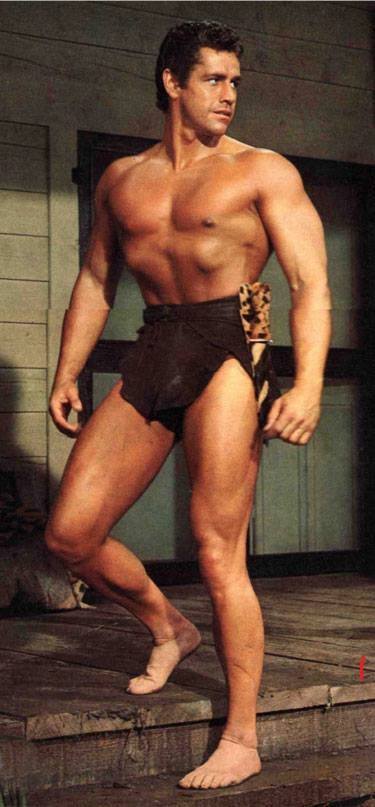
Here’s a Throwback Thursday hunk for you, actor and physique model Gordon Scott:

20728242_10212670337849946_4851579278645951324_n

New Moon on Monday

I made it to the gym again yesterday, which felt fantastic–despite the fact that I added a set to everything, and upped the speed of the treadmill by .2 miles per hour. The stretching helps; I can’t believe I worked out all those years without bothering to ever take the time to stop and stretch (okay, yes, I was naturally flexible, but I wouldn’t have lost the level of flexibility I had if I’d been stretching all those years). I also organized a bit, did some chores around the house, and wrote the first draft of a story for an anthology with a deadline of February 15th. The story’s not quite there yet, but I think it’s not only a good idea but one that revisions and rewrites will only make stronger. Huzzah! And yay for me!

It was also in the seventies (!!!) yesterday; considering just three days ago we had a hard freeze…yeah, the weather in southeastern Louisiana might be a bit bipolar. I also had a breakthrough on how to revise the first chapter, not only of the WIP but of the Scotty as well. Hallelujah! I really think this focus and positivity mantra might actually be working. Granted, it’s still only January, but between the working out, and the writing…yeah, this is turning into a much better year already than last.

I also read some short stories!

First up was “Music for Chameleons.” by Truman Capote, from his collection Music for Chameleons:

She is tall and slender, perhaps seventy, silver-haired, soigne, neither black nor white, a pale golden rum color. She is a Martinique aristocrat who lives in Fort de France but also has an apartment in Paris. We are sitting on the terrace of her house, an airy, elegant house that looks as if it was made of wooden lace: it reminds me of certain old New Orleans houses. We are drinking iced mint tea slightly flavored with absinthe.

Three green chameleons race one another across the terrace; one pauses at Madame’s feet, flicking its forked tongue, and she comments: “Chameleons. Such exceptional creatures. The way they change color. Red. Yellow. Lime. Pink. Lavender. And did you know that are very fond of music?” She regards me with her fine black eyes. “You don’t believe me?”

During the course of the afternoon she had told me many curious things. How at night her garden with filled with mammoth night-flying moths. That her chauffeur, a dignified figure who had driven me to her house in a dark green Mercedes, was a wife-poisoner who had escaped from Devil’s Island. And she had described a village high in the norther mountains that is inhabited entirely by albinos: “Little pink-eyed people white as chalk. Occasionally one sees a few on the streets of Fort de France.”

I love Truman Capote’s work–I reread In Cold Blood every few years or so, and his short fiction is also pretty compelling. I started reading this story before, but never finished; but in reading it now I realize I kind of borrowed the opening of this one for the opening of a chapter of Garden District Gothic, when Scotty goes to see Vernita Godwin, who is sitting on her front gallery in the Garden District sipping absinthe. I really love that image, of two people on a gallery sipping absinthe while ceiling fans turn overhead. The story isn’t really a story, in the classic definition of what comprises a story; this is more of the slice of life school of short stories, because it’s really just about a conversation between two people after dinner, about life in Fort de France, Guadeloupe. Part of the conversation is about a homophobic hate crime that had occurred on the island in the past; surprisingly, justice was actually served because, as the lady puts it, ‘we don’t tolerate murder here.’ But the strongest image of this poetically written story is the lady, sitting at the piano playing classical music for the iguanas, who listen in the doorway to the terrace and bob their colored heads in time with the music. That’s what I read Capote for–those poetic images.

Next up was “The Intoxicated” by Shirley Jackson,  from The Lottery and Other Stories:

He was just tight enough and just familiar enough with the house to be able to go out into the kitchen alone, apparently to get ice, but actually to sober up a little; he was not quite enough a friend of the family to pass out on the living-room couch. He left the party behind without reluctance, the group by the piano singing “Stardust,” his hostess talking earnestly to a young man with thin clean glasses and a sullen mouth; he walked guardedly through the dining-room where a little group of four or five people sat on the stiff chairs reasoning something out carefully among themselves; the kitchen doors swung abruptly to his touch, and he sat down beside an enormous white enamel table, clean and cold under his hand. He put his glass on a good spot in the green pattern and looked up to find that a young girl was regarding him speculatively from across the table.

“Hello,” he said. “You the daughter?”

“I’m Eileen,” she said. “Yes.”

I’m also a huge fan of Shirley Jackson who, as Stephen King once said, ‘never had to raise her voice.’ This story, like the Capote, is a slice of life type story, with a bit of a bizarre twist to it. The drunk party guest and the teenaged daughter have a lengthy conversation about how his generation has ruined the world and how it is up to hers to burn everything to the ground so it can start over, and be the better for it. It’s unsettling, but the end–when he returns to the party a little more sober than when he left it–leaves you to wonder what is going to become of Eileen–and what that story would be like.

I haven’t read a lot of Jackson’s short fiction–I’ve not read “The Lottery,” although I’ve seen the short film made of it in grade school and in an Acting class in high school we did the play, but I intend to remedy this grave error and lack in my reading history during this Short Story Project.

The third story I read was “Pastorale” by James M. Cain,  included in Best American Noir of the Twentieth Century, by editors  James Ellroy and Otto Penzler;

Well, it looks like Burbie is going to get hung. And if he does; what he can lay it on is, he always figured he was so damned smart.

You see, Burbie, he left town when he was about sixteen years old. He run away with one of them traveling shows, “East Lynne” I think it was, and he stayed away about ten years. And when he came back he thought he knowed a lot. Burbie, he’d got them watery blue eyes what kind of stick out from his face, and how he killed the time was to sit around and listen to the boys talk down at the poolroom or over at the barber shop or a couple other places where he hung out, and then wink at you like they was all making a fool of theirself and nobody didn’t know it but him.

This was Cain’s first published story, and it is not only a macabre, dark little story but it also, as the editors point out, contains themes Cain would return to again and again in his short novels; amoral man has affair with beautiful woman and they plan together to kill her husband. “Pastorale” though, isn’t told from the point of view of the amoral man, like The Postman Always Rings Twice or Double Indemnity; the story is told by a third party, someone who knows what happened and is telling the story to someone–the reader, but it’s told almost entirely in vernacular and in that man’s voice, which is arresting and very strong and very rural; the voice reminded me a lot of his Appalachian saga of incest and murder, The Butterfly, and it also reminded me of Faulkner. The tale teller passes no judgment on Burbie or his lady love for their adultery and murder; if anything, he thinks they were fools because Burbie’s own vanity is what wound up bringing them down. It also gave me some thoughts about voice, and point of view, and story-telling.

If you cannot tell, Constant Reader, I am greatly enjoying my self-education in The Art of the Short Story, and I hope you are enjoying following me on this path half as much as I am enjoying going down it.

And now, back to the spice mines.

Head over Heels

Well, I survived yesterdays’ trip to Metairie and Target (shudder) and also spent way more money than I should have; which of course is part of the Target trap. But none of the money was wasted and it was all things we will use, and things we needed. So there’s that. I’m still flummoxed, though, at how much I spent. Heavy heaving sigh.

I wasn’t sore at all from my workout Sunday yesterday, although I did start feeling tired/sleepy early in the evening. I wrote two thousand words of a short story I got the idea for while watching Broadchurch Sunday evening (we finished season two, and started season three last night); the show and the story are kind of linked as the show gave me the idea for the story; it’s called “Neighborhood Warning” and the story really flowed, at least until I started getting sleepy. AT that point I retired to my easy chair to read; I worked on the Short Story Project while waiting for Paul to come home. I read  “Safety Rules” by Jill D. Block from Lawrence Block’s anthology Alive in Shape and Color.

Day One

This was my third time, and I knew exactly what to expect. I got downtown early, so I had time to stop at Starbucks when I got off the subway. I was upstairs, in the appointed room, at 8:55. I found a seat, took out my magazine, flipped past the fashion ads, and was already pretty well into Graydon Carter’s piece on Trump by the time things got started. The lady told us to tear our cards along the perforated fold, and after she collected the bottom piece, she turned on the instructional video.

I wasn’t at all surprised when a court officer came into the room, about thirty minutes after the video ended, to call for the first group. I knew the drill–twenty or twenty-five of us would be taken up to a courtroom where they’d be selecting a jury. Everyone else would stay here, and other groups would be called for throughout the day and maybe into tomorrow. Three days tops, and I’d have done my civic duty. I hoped that I would be called in this first group–early in, early out. Maybe I’d even have time to look for boots before I headed uptown.

Veronica Ellis, our main character, is following the rules; summoned for jury duty, she assumes it’s going to be the same as it always has been before. But this time is different, and she starts paying more attention as she realizes a lot more people have been called than she is used to, and soon enough the jury pool finds out that their case is the 1978 kidnapping and murder of Milo Richter, a young boy and the person who may have committed the crime at long last is being brought to trial. The Richter case is famous, but has even more resonance for Veronica–when she was young, around the same time as the Richter case, her best childhood friend Micheline was kidnapped and murdered. At first, Veronica sees that is a kind of karmic justice–she is meant to serve on this jury, as a way of getting justice for Micheline…but then she begins to wonder if she actually should serve on this jury. Block skillfully juggles her timelines between the present day going through the motions of jury duty with Veronica remembering Micheline and what happened when she was a little girl. I was totally sucked into this story, and enjoyed it very much.

I also read Barry Hannah’s “Testimony of Pilot,” from his collection Airships.

When I was ten, eleven and twelve, I did a good bit of my play in the backyard of a three-story wooden house my father bought and rented out, his first venture into real estate. We lived right across the street from it, but over here was the place to do your real play. Here there was a harrowed but overgrown garden, a vine-swallowed fence at the back end, and beyond the fence a cornfield which belonged to someone else. This was not the country. This was the town, Clinton, Mississippi between Jackson on the east and Vicksburg on the west. On this lot stood a few water oaks, a few plum bushes, and much overgrowth of honeysuckle vine. At the very back end, at the fence, stood three strong nude chinaberry trees.

I’ve always felt my lack of appreciation for the talents of Barry Hannah an obvious intellectual failure on my part. This edition of Airships, which was originally published in 1978, had an introduction–or rather, an “appreciation”–by Pulitzer Prize winner Richard Ford; the collections itself won the PEN/Malamud Award back when I was just graduating from high school. I bought my first copy of this collection back in the early 1980’s, when I was attending Fresno City College after flunking out of school in Kansas, to try to get my GPA up to a level that would warrant admission into the California State University system. I took another Creative Writing class there, after my first horrible attempt in Kansas, and there I found an instructor who not only believed in me and my talents, but actively encouraged me to take writing up as a profession; several of the stories I wrote for his class he encouraged me to submit to magazines and professional journals. None of those stories ever saw print, of course, but I always appreciated him as a teacher. He was very into Barry Hannah and Raymond Carver (the other text for the class besides Airships was Carver’s Will You Please Be Quiet Please), and while I could see why, at the time, he appreciated and loved Hannah’s writing style so much, it didn’r work for me. We were asked to read the story “Love Too Long” to discuss in class; the rest was independent reading, and after “Love Too Long” I never picked the book up again. Hannah didn’t resonate with me. I bought another copy of this book last year, along with Hannah’s novel Geronimo Rex when I was looking at Southern Gothic literature; I found a list of Southern Gothic writers somewhere and Hannah was listed. I thought, perhaps I can appreciate him now and bought the two books.

One of the things that has to be addressed right off the bat is the racism and homophobia in this story. I didn’t address the issue of racism in Faulkner’s story “Barn Burning” yesterday; primarily because the use of the n-word was only in dialogue and was only used in dialogue by the character of the asshole redneck father; it worked in that instance, even as it was jarring to read for me, and while Faulkner used the word “Negro” to refer to people of color in the text, at the time the story was written that was the commonly accepted, socially acceptable word to use. But Hannah’s character is very much a racist and very much a homophobe; the words fag and queer are used in this story as casually as the n-word. This automatically renders the main character of this story unlikable to me, and likewise unrelatable; I am predisposed to dislike him and he gets none of my sympathy. In fact, nothing he does in this story makes him sympathetic in any way. Maybe that was what Hannah was trying to do in this story, but I couldn’t help but think, as I read it, that the story was loosely slapped together and in a strong need of editorial guidance. I’m still not even sure what the point of the story was. The story opens when the main character is a kid, with his psychotic neighbor kid launched M-80’s from a makeshift cannon at a house where people of color live (lovely); turns out they are sending them at the wrong house and the kid who lives there for some reason comes across the field to tell them to stop and for some reason brings his saxophone with him–I guess that’s because it’s something kids would do? They launch an M-80 at him and injure him without much remorse. He then becomes friends with the main character when they are both in the high school band and the story keeps following them from point to point until the sax-player, Arden Quadberry, winds up a fighter pilot in the Nacy during Vietnam and…I guess this is a slice of life story.

It was originally published in Esquire, which paid what would be considered a lot of money now, let alone in the 1970’s, for short fiction.  Maybe Hannah was a writer of his time, who hasn’t aged well–Richard Ford notwithstanding–but it’s just more of the straight white cisgender male macho posturing to me, and his literary word choices/flourishes just don’t work for me, which is clearly my own failing; I ‘d rather read a genre short story than something like this. I’ll continue to read Hannah, hoping to have that aha moment where his genius will reveal itself to me–after all, they’re short stories so it’s not a colossal time suck if I never get it–but yeah, I just don’t get it.

And now, back to the spice mines.

26196451_321860411641954_3040436925599999815_n