Round and Round

So, I did it. I went to the gym yesterday for the first time in months, and God knows when the last time I went without a trainer appointment. I am very proud of myself for taking this first step, and I have to remember to stay motivated. It felt fantastic. I’d forgotten how great endorphins feel. I went in, and did some stretches before heading to the weight machines. I went all the back to my origins (something I seem to be doing a lot this year), and started doing my work outs the way I did when I first got back in shape way back in 1995: a full body workout (chest, back, shoulders, biceps, triceps, leg press, and calf raises, then abs and cardio) and did low weights, tried to not overdo it, and only did one set of 15 on everything. I will go up to two sets of everything on the fourth workout; three sets on the seventh, and up the weights on the tenth, and then on every fourth thereafter. I am not concerned about gaining size; this is more of a cardiovascular than strength workout. Maybe by the summer I might change to something more muscle building, but any workout with weights is going to gain some size. I’d like to hit my goal weight of 200 by July; we shall see. I also am not certain what that is going to do to my build, to be honest. But I can adapt…and posting publicly about this is also going to shame me into being more consistent.

And this morning I still feel good; I can tell I exercised, but am not sore. Yay! SO lovely to know I am doing it right. It’s hard to believe that it’s been so long since I learned about the body and how to exercise properly. I wonder–yes, I just googled my old gym in Tampa; it closed in 2003 and was still owned by the same person when it closed as when it opened. Good ole Metroflex and Alan. When I wrote Murder in the Rue Dauphine I based the gym Chanse worked out at on Metroflex; I even named the manager Alan. I’d completely forgotten about that until just now….

We watched I, Tonya last night and really enjoyed it. I have a lot of thoughts about it, but I’m going to let them digest for a few days before I post about it. The cast is excellent, and I think the movie is, too.

I have lots I want to get done on this holiday Monday; I am making an excursion to Metairie, and have lots of writing to do, and lots of editing, and tons of emails to anwer and get caught up on.

The Short Story Project continues. Yesterday I read the first story in Sue Grafton’s Kinsey and Me, “Between the Sheets”:

I squinted at the woman sitting across the desk from me. I could have sworn she’d just told me there was a dead man in her daughter’s bed, which seemed like a strange thing to say, accompanied, as it was, by a pleasant smile and carefully modulated tone. Maybe I’d misunderstood.

It was nine o’clock in the morning, some ordinary day of the week. I was, I confess, hungover–a rare occurrence in my life. I do not drink often or much, but the night before I’d been at a birthday party for my landlord, Henry Pitts, who’d just turned eighty-two. Apparently the celebration had gotten out of hand because here I was, feeling fuzzy-headed and faintly nauseated, trying to look like an especially smart and capable private investigator, which is what I am when I’m in good form.

My name is Kinsey Millhone. I’m thirty-two years olds, divorced, a licensed P.I., running my own agency in a town ninety-five miles north of Los Angeles. The woman had told me her name was Emily Culpepper and that much made sense. She was very small, one of those women who at any age will be thought “cute,” God forbid. She had short dark hair and a sweet face and she looked like a perfect suburban housewife. She was wearing a pale blue blouse with a Peter Pan collar, a heather-colored Shetland sweater with grosgrain ribbon down the front, a heather tweed skirt, hose, and Capezios with a dainty heel, I guessed her to be roughly my age.

“Between the Sheets’ is a delight, if for no other reason than the fact that it’s actually a traditional mystery story; one that is solved by viewing the crime scene, interviewing people, and observing the clues left behind by the killer and making deductions. This is particularly fun because the Kinsey novels are hardboiled style private eye novels, tough with sparse prose and told from Kinsey’s slightly cynical, world-weary point of view. This short story, still in that voice, though, has several moments os humor, and could easily have been an Erle Stanley Gardner Perry Mason story, or an Agatha Christie–although Christie’s short stories always seemed to me to border on the noir side.

The other story I read was “Barn Burning” from The Collected Stories of William Faulkner, an enormous volume I’ve only occasionally dipped into:

The store in which the Justice of the Peace’s court was sitting smelled of  cheese. The boy, crouched on his nail keg at the back of the crowded room, knew he smelled cheese, and more: from where he sat he could see the ranked shelves close-packed with the solid, squat, dynamic shapes of tin cans whose labels his stomach read, not from the lettering which meant nothing to his mind but from the scarlet devils and the silver curve of fish–this, the cheese which he knew he smelled and the hermetic meat which his intestines believed he smelled coming in intermittent gusts momentary and brief between the other constant one, the smell and sense just a little but of fear because mostly of despair and grief, the old fierce pull of blood. He could not see the table where the Justice sat and before which his father and his father’s enemy (our enemy, he thought in that despair; ourn! mine and him both! He;s my father!) stood, but he could hear them, the two of them that is, because his father had said no word yet:

“But what proof have you, Mr. Harris?”

Faulkner is one of my all-time favorite writers; his “A Rose for Emily” is one of the greatest short stories ever written–if not the greatest–and both Sanctuary and The Sound and the Fury are works of art most writers can only aspire to. There’s no sentimentality in Faulkner, at least not to me; he doesn’t romanticize poverty, he doesn’t romanticize the rural Southern experience, nor does he write about heroic figures. He writes about damaged and flawed human beings, and while his work is called “Southern Gothic,” I’m not sure if gothic is the right word. For me at least the descriptor gothic conjures up an entirely different image and style of story and writing. Reading Faulkner reminds me of home, reminds me of relatives and summers spent in rural Alabama, of orange-meat watermelons and fireflies and  four o’clocks and screen doors and ticks on dogs and red dirt and big red Coca-Cola coolers with a bottle opener on the side. “Barn Burning” is told from the perspective of a young boy, Colonel Sartoris Snopes, and opens with his father being found not guilty, for lack of evidence, of burning the Harris barn after a dispute about a loose hog; but despite the lack of evidence the Snopes family is banished from the county and sent on their way to the next sharecropping farm, where things go bad yet again, but this time Sarty can’t let it happen. It’s about learning the difference between right and wrong, and learning that sometimes loyalty to blood simply because of blood isn’t enough. It’s a terrific story, with great imagery and beautiful language use, and yes, reminded me of my long love affair with Faulkner’s work. He’s not easy to read by any means; but so worth the effort.

And now,  back to the spice mines.

tumblr_o5h18dblnH1uzn77yo1_540

If Ever You’re In My Arms Again

Thursday! It’s hard to believe Christmas is just next weekend. But I mailed my Christmas cards last night on the way home from work (I am very proud of myself; I generally don’t do cards. But this year I not only bought them, but addressed and stamped them and put them in the mail. Not sure how this all came about, but there you have it.), before stopping at the grocery store, and there it is. I’m a bit worn out this morning, tired despite sleeping well (one lovely thing about colder weather is that I sleep better), but I don’t have a lengthy day today and tomorrow is a short one. I hope to start revising stories today while also working on the book some. We shall see how that goes.

I”m still processing the election results in Alabama the other night. I pretty much saw the whole thing as a foregone conclusion; I am from Alabama and my family is from there, and outside of my immediate family, almost everyone on both sides still lives there. I am very well aware of what the Roy Moore supporters are like, how they think, etc. I didn’t need to red Hillbilly Elegy–I did try, but it’s Appalachian apologia was so smug and frankly, wrong I not only put it in the donation pile but I also donated the cover price I’d spent to the Southern Poverty Law Center. (For the record, I think that book is a falsehood designed not only to fool liberals but to lure them into a false state of understanding; one that will hoodwink them into being fooled again and again. There was nothing true or profound in that book.)

I love Alabama in spite of not only itself but myself. The Alabama values the entire country saw on display during the Roy Moore campaign (a pedophile is better than a Democrat; the entire country is out to get us in a liberal conspiracy; we had no race problems here until Obama; Roy Moore waving his pistol at a rally; everything about Kayla Moore–from her teen pregnancy to  her adulterous affair to her divorce to her gold, diamond encrusted earrings she wore on every occasion to prove to everyone just how much more Christian she is than everyone else) are something I am well-acquainted with; I’ve dealt with that mentality my entire life and have tried, unsuccessfully, to wrap my mind around it for fifty-six years: a Christianity that has nothing to do with the actual teachings of Jesus; an almost fanatical belief that their belief and values are the only right ones and anyone who disagrees is in the service of evil; that Satan is very real and working his evil on the country and the world through the Democratic party; and an absolute, unwavering faith that they are going to Heaven and anyone who disagrees in the slightest way with the way they think is going to straight to Hell unless they repent and change their ways and believe what they do and get on board with their version of not just religion but politics. Religion and politics are very much mixed in the South, and don’t ever believe otherwise; they are used interchangeably to validate the other.

It has always been thus; thus is may always be. And don’t mistake it–this election was far closer than it should have been.

Maybe my outlook is a bit bleak, but the county where my family is from in Alabama went 76% for Moore. So I know whereof I speak.

A while ago, I talked about rereading To Kill a Mockingbird and having a lot more issues with it than I did when I originally read the book, back when I was ten or eleven. Don’t get me wrong, the central message of the book–racism is terrible and wrong–still comes through just as strongly as it did when I originally read it, and it’s still incredibly beautifully written. The problems I saw with it, though, went way beyond the notion or concept of the white savior; which Atticus Finch certainly was. Probably the most false scene in the book to me, and the most problematic, was the scene where Tom is in jail and the sheriff comes to get Atticus because those trashy Ewells have gotten some of the other trashy rural people in the county riled up about Tom’s alleged rape of Mayella Ewell; and they want to lynch him. When I originally read the book the horror of those terrible racists coming to exact an unjust punishment on Tom terrified me, and I was thrilled that the upright citizens of the town came to stand off against them and save Tom. Rereading that as an adult–well, every bit of it read to me as not only false but a-historical. Anyone who knows anything about the Jim Crow south knows that the sheriff wouldn’t have gotten some “good men” together to protect a black man accused of raping a white girl; the sheriff would have been one of them. All one has to do is read accounts of what happened to Emmett Till…and so many others, to call bullshit on this part of the book.

Not every white person in Alabama is, or was, a racist; an active member of the KKK. But those who didn’t stand up to those who were? The word we’re looking for is complicit.

I still haven’t read Go Set a Watchman, but I will at some point. I’m still amused at all the people, mostly white, who were so upset and horrified that their beloved Atticus Finch turned out to be a racist and a segregationist after all. I never once got the sense when I was reading To Kill a Mockingbird, even when I was a child, that Atticus wasn’t a racist; he was appointed by the court to represent a black man accused of raping a white girl–and he did, as he was an ethical lawyer, bound to to defend him to the best of his ability. He did so. Did that make him a better man than a lawyer who might have refused to take the case? Yes, it did. It also made him a better man than a lawyer who would have taken the case and botched it. But what also strikes me as false about this book was the judge who appointed Atticus, knowing he would do the best job possible. Really? Again, all you have to do is read accounts of Jim Crow justice in Alabama to know this is also false. If Tom Robinson wasn’t lynched  he most certainly would have been railroaded. He was found guilty despite the great job Atticus did in his defense, despite proving that Mayella Ewing’s testimony couldn’t have been the truth. That, indeed, seemed real and true to me. But the system in 1930’s Alabama trying to be fair to Tom? Bullshit.

Don’t get me wrong: To Kill a Mockingbird is still a beautiful book, and its message is a good one. But it’s also a fairy tale; a fiction that would have never happened in the time period in which it was set. I also can see why Harper Lee’s editor persuaded her not to publish Go Set a Watchman, in which Scout deals with her father being a segregationist, and write To Kill a Mockingbird, in which her father is a hero fighting prejudice and racism, instead. That was the book that needed to be published at the time; and it was a very savvy move. The book was a huge bestseller, has never been out of print, won the Pulitzer Prize, and was made into an Academy Award winning film classic.

This election, in which a small majority of Alabama voters, led by people of color, chose not to elect the racist homophobic evangelic Christian child molester, was a wonderful outcome on every level. akin to the Louisiana electorate choosing the Democrat over adulterous whoremonger David Vitter for governor. But is this is a sea change for the two deep red Southern states, both of which have a proportionally large evangelical Christian population who seriously believe there were no racial issues in their state until Barack Obama was elected president? Only time will tell–and progressives and Democrats have a lot of work to do in the meantime. A lot. But the South can be won back. It won’t be easy, but it can happen.

And now back to the spice mines.

8ae2faf03b2cfd39ca16762fa3d16751

Jump (For My Love)

As Constant Reader is aware, I find short stories to be particularly difficult to write. I’m not sure why that is–and it’s entirely possible it’s post-traumatic stress disorder from college writing classes (kidding)–but it’s a fact. Constant Reader also is aware I am a horror fan, but writing horror short stories is even more difficult than writing crime stories for me–or any other kind of short story, to be honest.

So, several years ago, when Vince Liaguno asked me to submit a story to his Unspeakable Horror 2: Abominations of Desire anthology, I was very enthusiastic about saying yes; but at the same time, more than a little nervous and not certain I’d be able to pull it off…but I decided to do something particularly Louisiana: a rougarou story.

QUQ2MDAzOTYyMTA5Qjk5M0MzOEQ6YTIwZWI1N2MwYWU3ZjgxODE3YmUxMjc4NTA1NzljODM6Ojo6OjA=

The old woman was babbling excitedly, her toothless gums moving up and down as she gesticulated wildly with her arms. Spittle flew from her wrinkled lips, wisps of her thin gray hair floating around her head as it moved back and forth and side to side. Old is an understatement, Special Agent Tom Washburn thought, unable to understand a word she was saying. She looks ancient, like one of those unwrapped Egyptian mummies on that show I watched last night.

 It was a struggle to keep his revulsion from showing on his face.

Despite the oppressive heat, she had a white shawl wrapped around her bony shoulders as she rocked in her worn, wooden rocking chair. Her feet were bare and dirty, her toenails long and yellowed. Blue veins spider-webbed over the tops of her feet, making them look like complicated road maps. She was wearing a shapeless white cotton dress with yellow stains in the armpits. The brown, wrinkled flesh hung from her bony arms. Her fingernails were long, grown out so far they’d started curving back in on themselves. They were painted a bright red, contrasting with the brown skin and the dark liver spots on her hands. Her face was more wrinkled than he’d thought it possible for any human to be—her entire face seemed to be nothing more than folds of hanging, sun-browned skin. An enormous mole on her pointed chin had a few white hairs sprouting out of it. Her eyes were a startling blue, but seemed filmy and unfocused. A wooden cane with a brass alligator head leaned against her rocking chair, and on the table next to her a glass ashtray was overflowing with gray ash and cigarette butts.

She’s like something out of a really bad nightmare, he thought.

Tom couldn’t understand a word she was saying—she might as well have been speaking a foreign language as far as he was concerned. Every once in a while he caught an identifiable English word in her sing-song Cajun dialect that almost sounded like chanting. He closed his eyes and wished again he was anywhere but this rotting houseboat on the edge of a swamp. This is, he thought angrily, without a doubt the stupidest call I’ve ever gone out on. If I’d known how this day was going to turn out I’d have called in sick this morning.

He wiped sweat from his forehead with his already damp sleeve. It was stiflingly hot in the houseboat, which stank of collard greens, stale sweat and cigarette smoke. The ceiling fan was turning but all it seemed to  do was push the heavy damp air around. The living room—if you could call the tiny space that—was crammed full of strange objects arranged with no apparent rhyme or reason. He picked up a snow globe with the Empire State Building inside and shook it. He set it back down where it had been—next to a shellacked baby alligator head, some polished sea shells, a small rusting Matchbox car, and what appeared to be a copper head of John F. Kennedy. There was a thin coat of dust on everything. Cobwebs danced from the ceiling. He slapped at a mosquito and stepped closer to one of the windows, hoping for a breeze. He glanced back over at his partner.

When I was a kid, I used to love the Movie of the Week on ABC. They did a lot of mysteries and horror–the argument could be made that these television films were the best place to find horror in the 1970’s, and broadened the audience somewhat–but there was one in particular that always stuck out in my mind; it was set in rural Louisiana, and Barbara Rush played the lead female role. It was either called Moon of the Wolf or Cry of the Wolf,and it was the first time I’d heard a werewolf called by it’s French name: loup-garou.

Loup-garou. Doesn’t that sound awesome? I’ve always had that tucked away in the back of my head, and of course, I’ve always been interested in werewolves, who’ve never really gotten their due in the horror genre, particularly if compared to vampires.

Living in Louisiana, you cannot escape Cajun culture, and Louisiana, for whatever reason, is a place where the supernatural is far more easy to believe in than anywhere else I’ve ever lived. There’s something about the air here; the way Spanish moss hangs from ancient trees, the heaviness of the damp air, the way the past is so much a part of the present  here. In Acadiana, the term loup-garou was Cajunized to rougarou, which to me was even cooler sounding than the original. And in Cajun culture, a rougarou didn’t necessarily have to a wolf; the creature could also be, of course, an alligator.

A gatorman? I was all in.

I had also just finished writing my Todd Gregory novel about vampires, Need, which hadn’t quite turned out the way I’d intended it to–it was a set-up novel; the sequel, Desire, was really going to get the story, and the world I was creating, going–so I was in the mindset of writing supernatural tales. I had also, years ago, kind of toyed with an idea of doing a series that would be my own version of Dark Shadows, only set in Acadiana around a small town called Bayou Shadows, loosely based on Breaux Bridge. So, with a rougarou in mind, I started writing my story.

Imagine my thrill to see, not only a great review of the collection, but one that singled out my story, on the Cemetery Dance website this past week!

Here it is, reviewed by Blu Gilliand.

While desire drives the plot of the above stories, other authors manage to embrace the theme without making it the central point. In Greg Herren’s “Rougaroo” (my personal favorite of the anthology), we follow a couple of special agents on a mission deep in bayou country. Rumor has it that a rougaroo—a man who morphs into a gator/human hybrid during the full moon—is stalking a small community. It’s a great little monster story; one in which desire plays a small but integral role.

How lovely! It’s also lovely to be in an anthology with such amazing horror writers as Lisa Morton, Laird Barron, Gemma Files, Stephen Graham Jones, Lee Thomas, and Norman Prentiss, among the other glittering names on the table of contents.

You can order the book here.

And now, back to the spice mines. Must get groceries, hit the gym, clean, write  and edit. Heavy heaving sigh.


Pass the Dutchie

Bouchercon next year will be in St. Petersburg, Florida. It will be hot and sticky, but there will be lovely gulf breezes and a sun shower every afternoon right around three o’clock.

Last night we watched LSU beat Ole Miss 40-24; we’re on a three game win streak now and bowl eligible. There’s a bye next week, and then LSU has to play at Alabama. Heavy sigh. I don’t know if I’ll even watch that game…I know I will, but it’s going to be hard to watch. LSU hasn’t beaten Alabama since 2011, and it’s not very likely they will this year. The fan in me is hopeful; the realist in me isn’t.

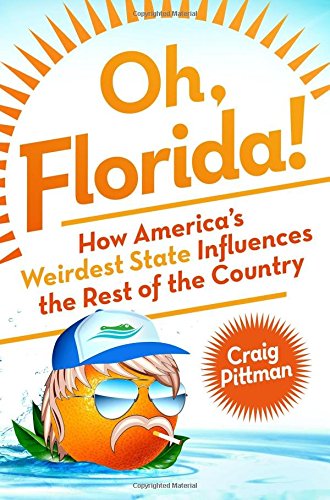
I did manage to finish reading Anna Dressed in Blood yesterday. I’m not going to review it, though–it was okay; I can see why it appeals to tweens and young teens, but it doesn’t really work on an adult level. I think maybe if I hadn’t watched all eleven or twelve or however many seasons of Supernatural there are, I might have enjoyed it more; but it was too reminiscent of the show for me. The main character’s name is even Cas…and of course, there’s a Cas on Supernatural. Apparently the author, Kendare Blake, has turned it into a series, and that’s terrific. I doubt I’ll read another. I only knew of the book because a tween reviewer raved about my own Sara and compared the two to each other favorably; she also compared it to Pretty Little Liars, which I also appreciated. I started my reread of The Haunting of Hill House last night as well, and also finished reading Craig Pittman’s Oh, Florida!, which I also enjoyed. It reminded me a lot of childhood summers spent in Florida, and even inspired me to drag out an old short story set in the Panhandle, “Cold Beer No Flies,” which I’ve been sort of working on since getting back from Toronto. I do recommend the book highly; while it doesn’t fully explain the weirdness that is Florida, it is very informative, at times funny, and I enjoyed it tremendously.

51eCxTDS8iL

It’s even got me thinking about writing a new series set in Florida, if you can believe that. But that’s how my mind works. I’ve been toying with a couple of ideas for noir novels set in Florida for a long time–I also have an idea for a funny noir style novel set there as well–and the lovely thing about having this book on my shelf is I can always take it down and reread a section to get my inspiration jump-started.

I also need to get that damned copy edit of Jackson Square Jazz finished this week. That’s my goal; get the copy edit done, start the final revision of the WIP, and do two chapters of the new Scotty this week while writing some short stories. It’s lofty, but I think I can get it all done.

And on that note, t’is off to the spice mines.

Try Again

Stephen King, in his seminal work on horror Danse Macabre, talked about two different kinds of house horror novels–the haunted house, and the bad place. The primary difference between the two is that a haunted house story is about the actual spirits and what they do; what must be done to put the spirit to rest (Barbara Michaels’ brilliant Ammie Come Home fits into this category), and the bad place where you don’t really know what is causing whatever it is that is going on in the place; it’s just a bad, bad place. Examples of the bad place  are of course Shirley Jackson’s The Haunting of Hill House, Stephen King’s The Shining, and Michael MacDowell’s The Elementals.

While I was traveling to and from Toronto, I read two short novels about ‘bad places’; Robert Marasco’s Burnt Offerings and Christopher Rice’s The Vines. 

I remember Burnt Offerings from when I was a kid, and we used to go to the Zayre’s department store every Saturday. I would spend the entire time my mother was shopping looking at every book in the book racks, and I picked it up numerous times only to always set it back and pick something else; I’m not sure why. I remember it was also made into a movie with Bette Davis that I’ve also never seen, and periodically it appears on lists of ‘best haunted house’ novels. Vaillancourt Books recently reissued it, and I bought a copy. It’s good, even if it subscribes to one of those horror tropes that always requires the suspension of belief–if something seems too good to be true, it usually is. A family from the city–Queens, i believe–take a summer rental out on Long Island that, of course, is too good to be true; a dilapidated but once stately manor. Husband, wife, young son, and the husband’s aunt–despite the husband’s misgivings–move out there for the summer; the only requirement of them (other than the rent) is that three times a day the wife must take a tray of food up to the owners’ mother’s suite of rooms and never knock–just leave the tray outside. The wife soon becomes obsessed with the house and cleaning it, putting it into order; finding treasures in closets and cupboards and bringing them out…and ignoring the distance growing between her and her husband, his aunt, and her son. Strange things start to happen, and occasionally she is aware that something’s terribly amiss…and then goes back to cleaning. The story is told very simply, the setting is perfect, and the descriptions of the treasures she finds are lovingly written–and the sense of growing impending doom and claustrophobia are perfect.

The Vines is Christopher Rice’s second horror novel (The Heavens Rise is the first; it’s still in my TBR pile) and it, too, is a variation of the bad place horror convention; Spring House is a gorgeously restored house outside of New Orleans with a horrifying history of its own. The night of owner Caitlin Chaisson’s birthday party, she sees her husband having sex with a beautiful young woman who works for the catering company; emotionally distraught, she leaves the house intent on slashing her wrists and killing herself in the estate’s gazebo. But as she cuts at her wrists, her husband and his one-nighter come outside to the gardening shed, and something monstrous grows up out of the ground to drink her blood and avenge her betrayal. The one-nighter loses her mind and the husband disappears; none of this makes any sense to the police who arrive and are not willing to upset the wealthiest woman in the parish. There are two other primary characters–Nova, the African-American daughter of Caitlin’s groundskeeper and a student at LSU who is there that night, and Caitlin’s former best friend, a gay nurse who has been estranged from her since he told her the truth about her husband’s infidelities–and years earlier, Blake and his teenaged boyfriend were attacked in a hate crime, the boyfriend dying…the true story of the attack has never come out, and it’s a lot more complicated than anyone ever knew. It’s a terrific tale of vengeance from the past and vengeance for the present, with the tension building as it hurries to its climax. I was also impressed with how Christopher handled the bloody, slave-owning history of Spring House–something I’ve wondered about how to handle without being too heavy-handed with a ghost story I’ve been wanting to write with its origins in the Civil War period in rural Alabama.

And now, back to the spice mines.

This Town

It’s Friday morning in New Orleans, and I slept fitfully; but when I did sleep, it was terrific. I only have to work a half-day today, which is lovely, and tonight I am hoping to not only get a chance to read some more of Rebecca Chance’s lovely Killer Affair, but to get further in the line edit as well. This weekend my plan is to work on the line edit and clean, alternating between the two, which hopefully will do the trick. I’ve not gotten as far along this week on anything that I’d hoped; the weekly to-do list is a complete and utter disaster. The good news this week was that our renewed passports arrived (hurray!), I got some great books–everything from the new Michael Connelly to Eric Ambler to Chester Himes–to add to the TBR pile, and the latest short story is really taking a good shape, one with which I am really and truly pleased.

My short stories are much darker than my novels. The WIP, currently being line edited, has little to no humor in it; at least none that I’m aware of–but then again I am not the best judge of that. I love to tell the story of my New Orleans Noir story, “Annunciation Shotgun,” which I thought  was this dark, unsettling tale, and continued thinking so until at a reading for the anthology, Chris Wiltz, one of the other contributors (her story, “Night Taxi,” is quite chilling) said to me, “Oh, I loved your story! It’s so funny!”

I was a little taken aback, as I’d thought it was a dark story…and then when it was my turn to read to the gathered audience, there were times when I got laughs.

Okay, I remember thinking, I guess I can be funny even when I’m not trying to be.

This story I’m working on now is also grim and dark; but I think the primary reason I’m drawn to the genre I work in primarily is my interest in damaged people. The Great Gatsby  was about damaged people, and the damage people can leave in their wake; it didn’t try, however, to explain or get into how the people got damaged and why,  and that was its greatest disappointment to me. This current story was inspired by watching a documentary while Paul was at his mother’s; I always have to find things to watch when he’s gone that we wouldn’t want to watch together (in other words, things want to watch that he doesn’t. He tired of the TV series Scream; so I finished watching it while he was gone. Likewise, you can never go wrong with documentaries). I watched one on either Netflix, Hulu, or Amazon–I don’t remember which–about a young man and his brothers, who’d escaped a religious cult. As I watched these damaged young men trying to make sense of their childhood and fit into a world and society they were woefully underprepared for, while the main point-of-view character was also trying to reestablish a relationship with his mother, still in the cult and distant to him–I couldn’t help but wonder about the young women refugees from the cult he interviewed, and the stories they shared about their sexual abuse and, basically, being brainwashed into thinking that was normal. (The boys were also apparently sexually abused as well as physically abused, but their sexual abuse was skipped over; mentioned but not gotten into in depth.) I had my notebook in my lap, and I scribbled down notes…and eventually started writing the story I thought up while watching the documentary. The story is dark–I am revising it now, making it even darker than the first draft–which also limits its saleability quotient, but hey, I am definitely going to put it out there.

Christ, I have so many works in progress. Nothing like creative ADD without a deadline to anchor you down.

I’ve also not decided what book to write next once this WIP is finished. I am thinking about getting back to Scotty with Crescent City Charade, but there’s another noir I’d love to tackle, and my “A Holler Full of Kudzu” could easily be explored as a novel.  Heavy heaving sigh.

And on that note, it’s back to the spice mines with me! Here’s a Friday hunk for you, to get your weekend started properly.

Nyle_Feature

Yes or No

Good morning, Sunday people! I slept deeply and well last night, so this morning I feel rested. My muscles don’t feel tight, either–but I am still going to stretch this morning. I gave up on two things yesterday–reading A Feast of Snakes and writing “A Holler Full of Kudzu.” The first because it’s, quite frankly, stupid; I didn’t believe the characters, nor did I believe the story, nor did I care about any of it. Harry Crews did, however, write some terrific paragraphs and create some amazing sentences, but about halfway through–and mind you, the entire novel is less than 200 pages, and it’s taken me over a week to get halfway through it–I just wasn’t buying into it or believing it. The second I gave up on because, while I do think there’s a short story in there, there’s also more than enough story to become a novel; and I am not sure at this point what exactly the short story should be. It was also taking me a really long time to write it; I think in slightly more than a week I’d only managed slightly more than two thousand words. So, I decided to put it to the side, let it percolate for a while, and then I can come back to it. This morning, this day, I am going to try to finish “Quiet Desperation” (which I’d forgotten I was in the process of writing, because I got so caught up in the my recent interest in Southern Gothic), revise “For All Tomorrow’s Lies”, and then start the revision of my WIP. I am going to do something dramatically different with that, as well; I am going to revise the last five chapters first, and then work my way backward through the book. It’s odd, but I always am worried that working in a linear way, which is what I usually do, the first half gets more attention than the second, and the second half of the book always is like a neglected stepchild, when it is really the most important part of the book.

I also started a reread last night of one of my favorite Agatha Christie novels, and one of her lesser-known ones: Endless Night. Some of my favorite Agatha Christie novels are her less-known ones (A Murder is Announced, Death Comes as the End, The Body in the Library, The Mirror Crack’d, N or M, The Man in the Brown Suit, They Came to Baghdad, Cat Among the Pigeons,  and The Secret of Chimneys, among many others), which isn’t to say the more famous ones–The Murder of Roger Ackroyd, The Mysterious Affair at Styles, Murder on the Orient Express, And Then There Were None, and Death on the Nile–weren’t enjoyable. I am actually curious to see the new film version of Murder on the Orient Express, but seriously; is there anyone who doesn’t know the ending of that famous novel at this point?

Endless Night is one of my favorite Christies because it is vastly different than any of her other novels; one of the things that is the most amazing about Christie is she basically did everything first. Endless Night is more Gothic in style and tone; bordering on the noir side. I didn’t get very far into reading it yesterday before it was time to go get our weekend treat (a deep dish pizza from That’s Amore) and then we watched an Andy Samberg mock-documentary, Never Stop Never Stopping, which was really funny, and then it was time for a few episodes of Ozark, which continues to amaze and enthrall us. The way it’s shot is superb, the cinematography Oscar level, and both Jason Bateman and Laura Linney are killing it in their performances; they should be frontrunners for next year’s Emmys. And the Lake of the Ozarks is almost as much a character as the actors themselves, as well as the stunning beauty of the area. And, of course, tonight is Game of Thrones.

I didn’t get as much cleaning done as I would have liked yesterday, but I did reread some stories that need revision, and I think I may have figured out how to revise them and make them stronger; we shall see when I start working on them again, no? I’ve also still be digesting my reread of The Great Gatsby, and that’s a whole other entry in and of itself.

And on that note, I should get back to the spice mines. Here’s a Sunday hunk for you.

17457810_1306427206072007_4945909802005088083_n

Cool Jerk

Our twenty-second anniversary was Thursday this week–where DID the time go? It was a lovely evening, spent getting caught up on Animal Kingdom and Orphan Black. We’ll probably get a pizza from That’s Amore tonight, and there you have it; living large in the lower Garden District. Woo-hoo!

I came to the painful decision to set aside “A Holler Full of Kudzu” last night while streaming Ozark (which is truly amazing; can’t wait to watch more) because there’s too much story there for it to be a short story; it might be a novella or a even a novel. I worried about that when I started writing it; and part of the reason I am having so much trouble with it is because I can’t figure out how to condense all the story there into a short story. If there’s a way to do it, putting the story aside and letting it percolate in the back of my mind is the right answer; today I am going to try to finish reading A Feast of Snakes before rereading the WIP and making the final polish before being officially finished with it and (gulp) starting to target agents for it. This is rather worrying for me, obviously; it’s not like I am obsessive or something. Ah, well.

Paul is heading into the office today, so after I get home from Wacky Russian I should have the house to myself to read and clean. I may work on revising one of the stories I’ve written recently; I reread one of them the other day and made voluminous notes on how to fix the story; still not sure I’d be able to sell it anywhere, but those are the risks when you write short stories. I think I have a handle on the story I want to submit to the MWA anthology this year, and I think I have figured out how to fix an old story that’s been collecting dust in the archives as well. So, my ambitious plan for this weekend is to finish reading a book; start revising the WIP, and rewrite two short stories. It’s very ambitious, I know, and I probably won’t even come remotely close to getting all of that done, but you know there’s always hope. And I let setting a high bar for myself, you know?

Christ, the house is a mess.

And on that note, it’s back to the spice mines.

Here’s a hunk to get your Saturday off to a nice start.

17362839_10155911491912678_7418470337111801239_n

Turn to You

Very tired this morning; a late night of bar testing concluded my twelve hour day yesterday and there is nothing like walking ten blocks on a sultry, steamy New Orleans night to stand in the upstairs of a bar whose a/c is set to “Econo”, and then walking ten blocks back.

I changed my socks three times yesterday.

But I have a short day today; only four hours to put in today, and I don’t have to be at the office until four. Huzzah! I also get to go in a little later tomorrow, and don’t have to work a full eight hour shift then, either. So, I get to sort of ease my way in to the weekend, which is lovely. I am making a Costco run this morning, making a grocery run tomorrow, and then I get to only leave the house to go see Wacky Russian Saturday morning. I do rather have to get motivated, though, which isn’t easy when you’re already tired. But if I have another cup of coffee, do my morning stretching, and then hop in the shower, I will be good.

One can hope, anyway.

My short story continues to putter along, and man, is it all over the place. I am trying very hard not to stop myself and correct the narrative–I’m just trying to get the story down, do the polishing and reorganizing on the next go round, but it’s kind of slow going. I kind of have a vague idea of what the story is and how it’s going to end, and I am writing a lot of chaff that will have to be separated out later, and the voice is all over the place as well. Ah, well, the great joys of being a writer; this constant internal struggle between confidence, over-confidence, and NO confidence. The Three Faces of Greg, as it were.

I’m still reading A Feast of Snakes; it’s very short, and I should be able to finish it soon. But I am going to absolutely reward myself with the latest Rebecca Chance, Killer Affair, when I am finished with this one. (I need a break from the Southern Gothic, frankly, but I’ll be jumping back in right after.) My copies of Barry Hannah’s Airships and Raymond Carver’s Will You Please Be Quiet Please arrived, so I also have more short stories to read, and of course, there are more stories in Faulkner’s Knight’s Gambit to read as well.

I think it’s very important for a writer to read as widely as possible. I read scifi, fantasy, horror, romance, ‘literary’, ‘popular’, and historicals, in addition to social history and commentary, literary criticism, and biographies, as well as history. I also love comic books. But I’ve been reading almost exclusively crime novels for a very long time, and as such, there’s been such a narrow focus in my reading that I need to expand out a bit; I am enjoying the Southern Gothic reading I’ve been doing–some of which could be defined as crime fiction, which makes it all the more fun–and it also makes me realize that reading all these different types and styles of fiction should be helping make me into a better writer.

I am hoping to get back to the serious chore of the final edit of the WIP this weekend; one of the reasons I want to get all this errand running finished over today and tomorrow is so that I won’t be too tired on the weekend to get this accomplished.

And on that note, I need to get the day going.

Here’s a Throwback Thursday hunk for you, Constant Reader:

3005e6390cf20ad64273209c1c0b9308--days-of-our-lives-hot-hunks

Robert Kelker-Kelly, from Another World and Days of Our Lives

We’ve Got the Beat

Staring down a twelve-hour day at the office today, rather grimly. Actually, it’s eight hours of testing at the office, and then three hours bar testing tonight, but I get a very short day tomorrow as a result and hopefully, I won’t be dead tired by the time I get home tonight. I slept in again this morning; would be perfectly happy to continue sleeping, quite frankly; so sleeping in tomorrow morning is actually going to be rather lovely. For some reason, though, my days are messed up this week; I kept thinking yesterday was Thursday, for example, and so am still a bit disoriented this morning about the days of the week.

Clearly, I am getting old.

As I continue to work on “A Holler Full of Kudzu” I am constantly second-guessing myself; I’ve written about the world/area where the story is set before, and I am worried, of course, that I am repeating myself with it. This morning I decided to just forge forward and stop worrying about it; that’s what edits/revisions/rewrites are for, after all. Part of the reason I’ve been so drawn to Southern Gothic fiction lately has been because not only because I am Southern but because I’ve so rarely used that personal history to write. As I have said before, two of my favorite short stories that I’ve written are “Small-town Boy” and the as-yet-unpublished “Whim of the Wind”; recently I’ve been thinking about that Civil War ghost story I’ve been thinking about writing for thirty years–which is also set in the same area (fictional Corinth County, Alabama, which I briefly touched on in Dark Tide–it’s where my main character is from originally–and again in Going Down for the Count–again, where the main character is from originally); and the more Southern Gothic fiction I read, the more I want to write that book. “A Holler Full of Kudzu” is also set in that area; and I am more than a little concerned that the story might wind up too derivative of “Small-town Boy”; but I will, as mentioned before, deal with that in the rewrites.

I also watched Captain America Civil War yesterday, since it marked the debut of Tom Holland as Spiderman. (And yes, I have become a huge fan of young Mr. Holland, but not in a creepy old-man pervy way. I just think he’s adorably cute.) I mean, the movie was okay, but Holland was definitely the highlight of the movie for me. I’ve not seen Captain America The Winter Soldier, so I obviously missed some plot points that probably would have helped the viewing experience somewhat; but it wasn’t that hard to figure out. I am, however, tempted to go back and watch it; I do love Chris Evans, but there are just so many Marvel films now that it’s a huge time commitment to get caught up on them all–and much as I love Chris Hemsworth, the first Thor movie was kind of boring.

All right, Constant Reader, ’tis back to the spice mines with me. Here’s a shot of Chris Evans, without a shirt, to help you through your Hump Day.

chris-evan-shirtless