Saturday morning and all is well here in the Lost Apartment. Yesterday turned out lovely, after the rain, there was this lovely chill dampness to the air that was quite nice. I got all of my work done without a problem, and worked on the house. The kitchen looks terrific now–I still need to do the floors and some touch up; same with living room–and it was nice to come downstairs to a very clean kitchen and work space. I also did all the dishes and all the laundry! I also spent some time icing my ankles, and will probably do that some more today. I never got around to writing yesterday, and I didn’t read anything I have in progress already (I honestly don’t know what’s wrong with my brain lately), but as I was moving things around I picked up a couple of books that I paged through a bit (The Last Picture Show and Michelangelo, but more on those later), so that’s something. I watched the reunions for The Traitors seasons 3 and 4, which were fun (more on those later). When Paul came down, I finished the day’s chores and settled in for the LSU-Dartmouth baseball game, before we switched over to the LSU Gymnastics meet against Alabama (yes, if you didn’t know already, we are a very LSU house), and then it was off to bed. I slept really well for the first time in a while, and feel rested. My Achilles tendons also need icing this morning before I head out for my errands later this morning.
Today, I am going to pick up the mail, and make some groceries on the way back home. I had planned on washing the car, but now I don’t think I am going to. I also need to get mailing envelopes because I’ve been terribly lazy about sending the copies of my book to the people I need to; but this whole month has been kind of weird in some ways, which I am still thinking about and processing. I am also a little freaked out that tomorrow is March 1 already, but that’s how time passes in New Orleans in the first two months of the year. It also looks gray outside this morning, but it’s supposed to be sunny and warm by the early afternoon.
As I had mentioned, as I was moving books around yesterday, I came across copies of Larry McMurtry’s The Last Picture Show and Michelangelo by William E. Wallace, both books I enjoyed, and The Last Picture Show was influential on me, I think, as a writer. The Last Picture Show was basically another, male-driven version of Peyton Place–the dark, dirty sex secrets of a small town, and it also made me a lifelong fan of McMurtry. (I also loved the film version.) I was going to reread it a few summers ago, but I gave up on the read when we got to the calf-fucking and taking Billy to the hooker who bloodied his nose. Billy was unable to give consent to anything, so from a modern reading this entire sequence is pretty disturbing, but I think I will give it another go because of how the book treats homosexuality; I’d like to see the book through that lens, and see precisely how the future Oscar winning screenwriter of Brokeback Mountain dealt with it in an early novel.
Left Coast Crime is criming right now, and of course I am enjoying everyone’s social media posts, but…I don’t have any FOMO? Considering FOMO has been a major driving factor throughout my life, and often to my own detriment, I think this is some serious personal growth. I never really liked the “pick me” side of my fractured personality, and I am not in the least bit sorry to banish that part of my brain into some remote, dusty and not easily accessed back wrinkle in the very back of my skull. I think this is a big step forward for me, you know?
Connor Storrie is hosting Saturday Night Live tonight, and I may stay up to watch some of it–I can also replay it on Peacock tomorrow morning, or find clips on Youtube if I can’t stay up that late. They are also bringing on one or two of the Hughes bros–trying to rehab them in front of the audience Connor will bring them (straight women and gay men–yeah, I am sure they’ll be embraced by the live audience and we should be prepared for NBC to mute any negative audience reactions to their stain of an appearance. Since NBC also hosts the Olympics, obviously they feel the need to rehabilitate the men who can’t say sorry, ladies, we totally fucked up in the moment and we are so sorry to spit in your faces about your accomplishments like that. You see how institutions always rally to the cause of infantile boys who never grow up? I do love the way the country has stepped up for the women, though. My favorite thing this past week has been reading the comments on the social media posts of the NHL or the teams’ accounts.
And I think a harsh critique and rebuke of that infantilizing “boys will be boys/locker room talk” enabling bullshit is in order, and could be the introduction to my essays series on masculinity. Hmmm.
And on that note, I am heading into the spice mines. Have a lovely day, Constant Reader, and I will be back tomorrow morning.
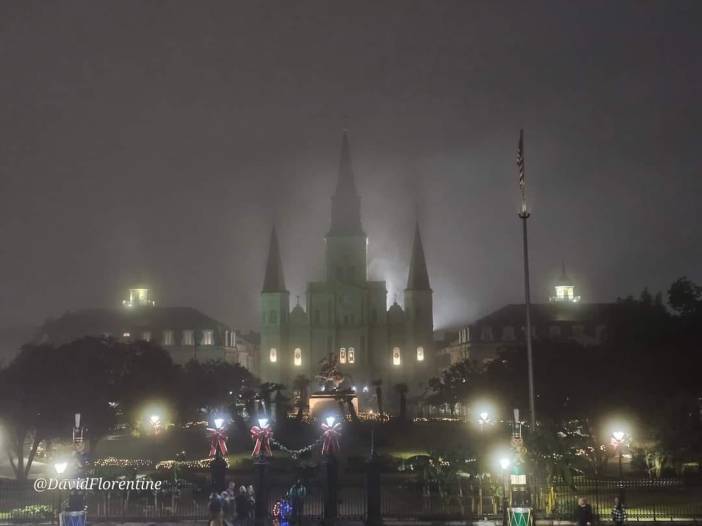
David Florentine is a great New Orleans photographer; check out his work! I especially love the spectral mist in this shot. You can check out his website here.
The other night I picked up an old favorite book I read originally when I was a teenager and realized, as I paged through it, that The Other by Thomas Tryon was probably one of the most influential books I’ve read, as far as my own writing style is concerned. Obviously the series books are different, but the stand-alones owe a lot to The Other, and probably one of the books I will write later this year will owe even more to it. I always forget it when someone tags me on social media to list books that made me who I am or influenced me or something like that, and I never remember The Other.
But looking through those pages, I remembered another book I read around the same time that also had a lot of influence on me as a writer, Larry McMurtry’s The Last Picture Show.
Sometimes Sonny felt like he was the the only human creature in the town. It was a bad feeling, and it usually came on him in the mornings early, when the streets were completely empty, the way they were one Saturday morning in late November. The night before Sonny had played his last game of football for Thalia High School, but it wasn’t thet that made him feel so strange and alone. It was the look of the town.
There was only one car parked on the courthouse square–the night watchman’s old white Nash. A cold norther was singing in off the plains, swirling long ribbons of dust down Main Street, the only street in Thalia with businesses on it. Sonny’s pickup was a ’41 Chevrolet, not at its best on cold mornings. In front of the picture show it coughed out an had to be choked for a while, but then it started again and jerked its way to the red light, blowing out spumes of white exhaust that the wind whipped away.
At the red light he starts to turn south toward the all-night café, but when he looked north to see if anyone was coming he turned that way instead. No one at all was coming but he saw his young friend Billy, headed out. He had his broom and was sweeping right down the idle of the highway into the gusting wind. Billy lived at the poolhall with Sam the Lion, and sweeping was all he really knew how to do. The only trouble was he overdid it. He swept the poolhall in the mornings, the café in the afternoons, and the picture show at night, and always, unless someone specifically told him to stop, he just kept sweeping, down the sidewalk, on through the town sometimes one way nd sometimes another, sweeping happily until someone noticed him and brought him back to the pool hall.
Sonny drove up beside him and honked. Billy quit sweeping at once and got in the pickup. He was a stocky boy, not very smart, but perfectly friendly; picking him up made Sonny feel less lonesome. If Billy was out the poolhall must be open, and when the poolhall was open he was never lonesome. One of the nice things about living in Thalia was that the poolhall often opened by 6:30 or 7 a.m., the reason being that Sam the Lion, who owned it, was a very bad sleeper.
I think it was seventh or eighth grade when I first read The Last Picture Show. I had a battered copy that I got at a flea market (my grandmother’s second husband loved a flea market, and I always went with him whenever possible to look for books), and I hadn’t known the Oscar winning film (which I wouldn’t see uncut for over a decade until VCR’s became a thing and video rentals) was based on a book. There were some differences between the book and the movie–I never understood why they changed the name of the town from Thalia to Anarene–but for the most part, the movie was pretty faithful to the book.
I had meant to reread the book a few years ago–it had been years–but quit when I got to the part where the town’s older teenage boys decided to fuck a calf; I didn’t remember that from early reads and…it yucked me out. Interestingly enough, it never used to bother me, and I am not sure how I feel about that…or if I just went yuck and kept reading, or skimmed and moved on, but as an adult, I appreciate the book all the more, especially since I wound up living in a small rural town and going to a small rural high school several years after that first read. I never asked any of the kids I went to school with if they ever fucked animals–definitely didn’t want to know for sure–but I always did wonder, and there were definitely some kids I thought oh yeah.
But the book, about these kids learning about love and life and sex and growing up in a dying dusty small town whose best days are already past, has always resonated with me. My parents grew up in that same kind of environment in Alabama during the same time period, and there was so much…I don’t know, boredom and poverty in those small rural towns? The book and movie both were billed as the story of the explosive boredom in a small town. And that’s the part that people generally forget when thinking about the past and rural living–how boring it was. You had to find things to entertain yourself as a teenager, and that can lead to all kinds of trouble. McMurtry gave all of his characters humanity, and they were completely believable. There was the preacher’s kid, so uptight with his Christianity and strict life that he eventually takes a little girl with what is generally assumed as molestation in mind, and yet you can’t feel a little bit of sympathy for this poor kid with his horrific cruel parents (spare the rod and all that nonsense) who finally snaps. Everyone thinks he’s a “homo” anyway–which is really funny, because the person who really torments poor Joe Bob Blanton is the football coach, Coach Popper–who, despite being the embodiment of the town’s thoughts on masculinity (toxic, of course) is the town’s real homosexual–and he also accuses the English teacher of it, because he’s kind and gentle, and ruins him.
Very 1950s there, actually, and only emphasized to me how dangerous letting anyone know I was gay could be, and why I was so scared of my true self.
Great book, great movie–but please don’t mention Texasville to me. I hated that book.
Thursday morning, and my first night spent alone here has passed. It’s so eerie and quiet around here without Paul and Scooter. It’s also weird having that big old bed to myself–Paul is rarely, if ever, not home; I’m the one who’s always traveling–and of course, the apartment always grows exponentially in size somehow when it’s just me in the house. Go figure, right? But I hope to get some things done around the house–I can, for example, spend an entire day upstairs on the weekend cleaning, using Paul’s computer to work on and I can stream stuff through the television upstairs while I clean and organize and try to get it into some semblance of order. I can also work on the downstairs every night and over the weekend, etc. I always plan to get a lot done and I inevitably end up not getting a lot done, which is part of my perpetuation of me being incompetent and lazy and so on; make so many plans there’s no way in hell you can complete them all even if you’re super motivated and driven, and thus can castigate myself once again as a lazy loser.
Lather, rinse, repeat.
So, I am planning on making the best of being a temporary widow. I am not going to be a slug, and I don’t have Scooter’s demands for a lap to sleep in to blame it on, either. SO THERE ARE NO EXCUSES. I doubt very seriously that Paul will come home to an apartment so sparkling clean and organized he’ll think he’s in the wrong house, but I can certainly make it all look better at any rate. I may even move furniture. I know, madness, right?
Stranger things have happened. And will again!
I was mostly productive last night; I decided to not really do a whole lot of anything much more than chores. I did several loads of laundry and several loads of dishes, picked things up, reorganized a bit and wiped things down–one would almost think I was on a very strict and tight deadline or something. I had a few pleasant down moments, because when doing laundry and loads of dishes sometimes you have to wait–and there’s not the time to start watching something or writing something, so it’s short little videos on Youtube time, and avoiding wormholes there is sometimes difficult, but it wasn’t last night. I spent some time moving and organizing computer files, and frankly, it was a nice and easy relaxing evening. I got things done, didn’t get sidetracked, and made a great start on the thorough cleaning the apartment needs. I am probably going to spend the weekend mostly working on the upstairs, because we are having work done on the downstairs; when I got home last night there was an enormous ladder and some other tools and things in the living room; and the work on repairing the walls had begun. I have no idea how long that is going to take, but obviously, there isn’t much point to doing a lot of work in the living room while that is happening. And…being forced to focus on the kitchen, laundry room, attic, and upstairs isn’t a bad thing at all. I can always take plug a flash drive into Paul’s computer and write while I am up there working, too.
The theory here is staying busy will keep me from feeling lonely or missing Paul and Scooter. (We really need to get a cat as soon as he gets back, seriously.) Hopefully tonight when I get home from work (and running errands) I can work on the book and do some more cleaning and/or organizing. I may even try to repair that wobbly drawer myself. The file cabinet itself needs a serious purge, as do some of the file boxes I have accumulated around the apartment in my tragic paper hoarding need. As I was looking around at the books last night and thinking about the next serious pruning, I kept coming across books where I would think at first oh, that can go, I’ll never read that again but as I reached for it remembered, oh yes, you wanted to read that because its hardboiled crime fiction set in Los Angeles in the same period as Chlorine is set, and there was a really horrific scene where a gay man is abused by the cops, and that could be helpful in getting into the mindset of how MY queer characters would view the LAPD in that period and so I moved on to the next book on the shelf. It was literally funny how almost every book in my apartment, on my shelves or yes, in the stacks on the floor, I could remember a distinct reason for wanting to read the book and in many cases, it involved writing something; whether a short story, a novel, or an essay about themes or characters or whatever within the book, there was some writing-related reason I wanted to read that book for the first time, or in some cases, like The Lords of Discipline or The Last Picture Show, for maybe the fiftieth time because I wanted to revisit it and see how I felt about it now, at this point in my life as a reader.
I’ve been trying to remember my influences, the cultural moments that resonated or impacted me in some way that changed the way I write because my perspectives had also changed. I recently acquired a copy of a juvenile mystery I remember reading, either from the library or from buying a copy at the Scholastic Book Fair, which I lived for when I was a kid, because I wanted to read it again–and already, just from seeing the image of the original cover and reading the description, I can still remember details from a book I read over fifty years ago; and those were the mysteries I read before I found the series mystery books for kids; once I started with the series, that was all I read…before moving onto novels for adults, which I read voraciously. I’ve talked about and written about books that I loved reading when I was a kid or a teenager, books that made an impression on me in some way and that I remember very fondly, like The Thorn Birds or Green Darkness or The Other Side of Midnight, and sometimes I wish I had the time to go back and revisit those books–but there is so little time and those books are all so long. Everything back then seemed to be incredibly long–The Winds of War, everything by James Michener, Captains and the Kings, Rich Man Poor Man, and even Dress Gray, the West Point murder mystery I always wanted to reread back to back with The Lords of Discipline. Genre fiction–mysteries, romance, scifi–were shorter books as a general rule. Even Harold Robbins wrote some door-stoppers of novels, like The Carpetbaggers and A Stone for Danny Fisher. Irving Wallace churned out incredibly lengthy books that ultimately really were thrillers at their beating heart; Irving Stone mastered the historical biography; and Irwin Shaw also wrote novels the size of leviathans.
And somehow I managed to read them all.
I am not the voracious reader I was when I was younger and had more energy and somehow more time (no cell phone or Internet, more like), and I also read a lot faster than I do now. Heavy sigh. But today is the last day in the office of the week for me, and the last time this week I have to get up this early–I did wake up several times during the night, but I feel rested this morning, if a little spacy–and that’s very nice.
And on that final note, I am heading into the spice mines. Have a lovely day, everyone, and I’ll check in with you again later.
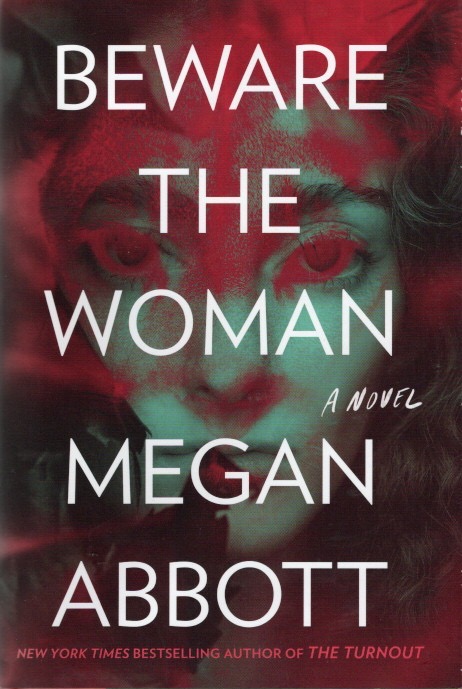
I finished reading the new Megan Abbott novel, Beware the Woman, this morning during a marvelous, raging thunderstorm that filled the gutters and streets of New Orleans with dirty swirling water, cutting the temperature to something bearable for once this summer and cooling the interior of my apartment to the point I needed to put on a sweatshirt and a knit cap on my head. Curled under a blanket with a good book while a thunderstorm rages with a warm cup of coffee on the side table, tendrils of steam rising in curly-cues of white from the creamer-lightened pool of soft brown, is perhaps my happiest of places.
Hell, reading anything new by Megan Abbott is my happiest of places.
My first Megan Abbott novel was Bury Me Deep, which stunned me with its craftsmanship, its voice, its literate choices of words and sentences structures that are short yet lyrical, minimalist strokes painting a broad canvas of human frailty and contradiction, crime and desire that comes from a primal place within, almost inexplicable and unexplainable yet so easily understandable and recognizable. I went on from there to Dare Me and the rest of her all-too-short canon; admiring, loving, respecting and enjoying each book with its magical spell woven by a true master of the literary form, astonishing in its humanity and an exploration of what lengths her characters will go to in order to get the thing (or things) they want, need, desire and hunger for.
Some of the earlier reviews I saw for Beware the Woman painted some parallels between the book and what is perhaps my favorite novel of all time, Rebecca by Daphne du Maurier…which had me intrigued and interested even more than usual.
But more on that later.
“We should go back,” he said suddenly, shaking me out of sleep.
“What?” I whispered, huddled under the thin bedspread at the motor inn, the air conditioner stuck on HI. “What did you say?”
“We should turn around and go back.”
“Go back?” I was trying to see his face in the narrow band of light through the stiff crackling curtains, the gap between every motel curtain ever. “We’re only a few hours away.”
“We should go back and just explain it wasn’t a good time. Not with the baby coming.”
His voice was funny, strained from the AC, the detergent haze of the room.
I propped myself up on my elbows, shaking off the bleary weirdness.
We’d driven all day. In my head, in my chest, we were still driving, the road buzzing beneath us, my feet shaking, cramped, over the gas.
Our main character here is Jacy Ashe, a pregnant wife in her early thirties, married to a neon sign artist, Jed, and working as an elementary school teacher. They are en route when the story opens to the remote upper peninsula of Michigan (primarily known to me from Steve Hamilton’s novels) to visit Jed’s retired doctor father, who lives up there in what used to be the family summer place, with his housekeeper, Mrs. Brandt. This is one of the classic set-ups of one of my favorite subgenres of crime fiction–the Gothic–as well as placing it strongly into another category I love, domestic suspense. This novel has echoes of du Maurier, Phyllis A. Whitney, Dorothy B. Hughes, and Margaret Millar…blended seamlessly together into a classic yet modern novel that updates and reinvigorates both subgenres, bringing them into the modern era and proving they are still just as relevant and important as they have ever been.
(Aside: I do not know where Abbott came up with the name “Jacy,” but it’s one I’ve always liked and wanted to use in my own work since first reading Larry McMurtry’s The Last Picture Show and seeing the Bogdonovich film based on it; I smiled and wondered if that was where Abbott got the unusual name from.)
The Gothic set-up is there, and I can also see the slight echoes from Rebecca: the brooding remote house in the country where tragedy has occurred in the past; the mysterious housekeeper who doesn’t seem to like our heroine very much; the slow-burn of slow revelations of secrets from the past; and the creeping paranoia and potential gaslighting of Jacy…often explained away as her pregnancy hormones or a reaction to the medications after she has a pregnancy complication. One of the strengths of Gothics, for me, is that question of paranoia vs. reality; the gaslighting that is always a hallmark of a Gothic novel. After all, what reason could either Jacy’s father-in-law or husband have for wanting to drive her mad and risking her baby’s health and well-being? She feels her husband slipping away from her and no one seems to believe her…this is probably one of the best depictions of a paranoid pregnant woman in literature since at least Rosemary’s Baby.
Someone once said the Gothic and domestic suspense novels were “women’s noir,” because the danger to them always arose from them being women and doing women’s things; a reaction to the terror of getting married and placing (until very recently) all of your agency into the hands of your husband–and what if you chose poorly?
Abbott takes the best elements of noir and combines them with the foundations of domestic suspense and Gothic to explore what it is like to be a woman, how it is to be a woman, and the trap of societal and cultural expectations for women.
And there’s a reason why the cops always look at the husband first when a woman is killed.
This is a brilliant novel, with many layers to unpack and unravel through its deceptively simple voice and brevity of language. Megan Abbott is a sorceress, a Scheherazade of crime fiction to whom you simply cannot stop listening. Read it, cherish it, love it.
I know, it catches people off-guard that a sixty year old gay man is a massive football fan, but I’ve never subscribed to stereotypes. I love football, with an especial love for the college game (I used to only watch the Saints in the NFL, but have started rooting for the Cincinnati Bengals because, well, Joe fucking Burrow); I think everyone knows I am a massive LSU fan. (GEAUX TIGERS!)
There really isn’t anything else in the world like a Saturday night in Death Valley. I will remember the 2019 night game against Florida probably for the rest of my life. God, what a great game, and it was so much fun. I am aware that I am digressing.
Anyway, I grew up in a Southern football family (even if we didn’t live in the South, we were from the South and that’s all that matters), so it was inevitable that I should become both a football fan and a football player. I played all four years in high school, all of my cousins also played, and I have close relatives who played at both the college and professional levels (and I don’t mean some small college in the middle of nowhere; I mean in the SEC–Auburn and Alabama, and there may be even more that I don’t know about). I have relatives who were successful coaches. Every fall Saturday the television was tuned into whatever college game was playing–even if we weren’t fans of either team; it’s hard to imagine now with the 24/7 college football coverage, but when I was growing up ABC had a monopoly on all NCAA football games. They would usually play one game of national significance, and then the second game was regional–important to that region. As we did not live in the South, we rarely got to see SEC games other than Alabama–Alabama was almost inevitably the only Southern team of “national interest” throughout the 1970’s (I really don’t remember the 1960’s much, but we lived in Chicago so I imagine we saw a lot of Big Ten and Notre Dame games; I don’t really remember a lot of my life before the suburbs, really–some things, yes, but most things not so much)
I’ve never really read a lot of fiction about football, though; it inevitably winds up being something cliched and tired. I loved North Dallas Forty by Peter Gent; hated Semi-Tough by Dan Jenkins; but do remember enjoying End Zone by Don DeLillo (I was going to reread this recently; but there’s so much to read. I did try to to reread Semi-Tough–but when I opened the book there were racial slurs and other mess on page one, so I threw it in the trash; no thanks). And I’ve also enjoyed other books with football involved, even if it wasn’t necessarily what the book was about. (The Hardy Boys were on the Bayport High football team in The Crisscross Shadow–the only time football is mentioned in the series.) There’s also a tendency, in books about high school and football to make the football players and cheerleaders the villains of the story, which has never really sat right with me. I was never bullied by anyone on the football team, and maybe the cheerleaders weren’t bitches to me because I was on the team and my sister was a cheerleader, but that wasn’t my experience (one thing I truly appreciated about Stephen King’s Christine was the horrible bullies at Libertyville High weren’t the football players but the hard-case kids–which was also my experience; which is probably yet another reason the book is one of my favorites of the King canon, methinks).
But…I can also see why it’s so attractive to make the jocks and cheerleaders the villains of high school dramas. And I sort of did something similar in #shedeservedit, didn’t I? Those boys on the Marysville and Steubenville high school teams certainly fit the bill of villainy.
So, when people started recommending Eli Cranor’s debut Don‘t Know Tough to me, I wasn’t so sure. I just published a book of my own about high school football and the toxicity it can engender in a small town (#shedeservedit), and revisiting my memories of high school and football was harder than I had thought it would be; I thought I could be dispassionate about it all while writing about it (I often write about things to try to distance myself from them and gain some perspective) but I was wrong. It was hard to write that book, much harder than I thought it would be–and it took years (first draft was written in 2015; published in 2022).
But enough people whose opinions I respect were raving about the book, so I got a copy and once I started reading it, there was no way I could stop.
Still feel the burn on my neck. Told Coach it was a ringworm this morning when he pick me up, but it ain’t. It a cigarette, or at least what a lit cigarette do when it stuck in your neck. Just stared at Him when He did it. No way I’s gonna let Him see me hurt. No way. bit a hole through the side of my cheek, swallowed blood, and just stared at Him. Tasted blood all day.
Tasted it while I saw in Ms. Miller’s class. Woke up in Algebra tasting it. Drank milk from a cardboard box at lunch and still, I tasted it. But now it eighth period football. Coach already got the boys lined up on either side of the fifty, a crease in between, a small space for running and tackling, for pain.
This my favorite drill.
I just been standing back here, watching the other boys go at it. The sound of pads popping like sheet metal flapping in a storm.
“Who want next?” holler Bull. Bull ain’t the head coach. Bull coach the defense. He as mean as they come.
One of my favorite books of all time about small towns is Larry McMurtry’s The Last Picture Show (I also love the film, which is extraordinary and one of, in my opinion, the best films made during the 1970’s). I did try to reread it recently–I was interested in refreshing my memory of its gay subplots and the mental breakdown of poor Joe Bob Blanton, but I’d also forgotten the part about the bored teenaged boys decided to fuck some calves, so when I got to that part I put the book down in distaste. But now that I’ve finished Don’t Know Tough, I kind of want to go back and reread The Last Picture Show again (I can skip that distasteful part…weird that I didn’t remember it).
Don’t Know Tough is yet another incredibly impressive debut, further confirming the truth of what I said at the Lefty Award banquet–the last few years have seen so many amazing and diverse and extraordinary debuts that the future of our genre is in very good hands. I won’t lie–when I started reading the book, I wasn’t sure I could keep reading it; I was worried that the entire book would be written in that grammatically garbled first-person voice but as I kept reading that first chapter I got into the rhythm of the language and started seeing the beauty and fluidity of the style choice–which is no small feat to pull off, and pull off consistently, throughout the entire book…to the point I was also a little disappointed that the entire book wasn’t done in that same style. Billy Lowe is the character whose voice this is; and the story of the novel revolves around him and the horrific Shakespearean tragedy that his life actually is. His mother is an alcoholic, and lives with an abusive piece of shit who obviously directs violence at Billy. He has a younger half-brother who was fathered by this POS; he also has an older brother who lives elsewhere. Billy’s situation has turned him into a wild beast of rage with an exceptional gift for channeling that rage into playing football. He’s not big enough in size to go major college, but his coach feels like there’s a chance he could get a football scholarship to a smaller college, and break the cycle of poverty he is trapped in at the moment. Billy is exceptionally compelling–it’s hard to read his first person point of view and not have your heart break for this kid; and hope that it’s all going to work out for him in the end, despite the disturbing pattern of violence in both his life and behavior.
Denton High has made the Arkansas state play-offs, but without Billy in the backfield their chances of advancing are practically nil. It’s important for Denton to do well in the post season because their coach’s job depends on it. Trent Powers is a born-again Christian, whose last coaching job in California crapped out–winning only three games in his final three seasons before being fired. This job is another chance for him, even though his wife and daughters hate relocating to a small town in Arkansas from California (much is made throughout the book of Coach Powers’ Prius, seen by the locals are weird and strange and almost otherworldly and unmanly). Coach Powers also has a very soft spot for his star player, and not just because he’s a star player–he actually feels compassion for the horror the young player’s life has been up to that point, and he wants to help–even if Billy doesn’t want any help from anyone. Billy’s future, to Billy at any rate, is already set, and he’s not going to end up going anywhere or doing anything or having a good life and decent future. He doesn’t see himself being worthy of anything or of doing better than his assigned lot in life.
The Powers family is a direct contrast to Billy’s; loving and nurturing couple, raising two daughters and trying to do right by them. How far is too far to go when helping someone in Billy’s situation, is the question. Coach’s wife–the daughter of a successful football coach who took Trent in when he was a kid from a similar background as Billy’s…and yes, he slept with his coach’s daughter and got her pregnant. So both Coach and his wife have the fear that the same thing will happen to their daughter and Billy–especially when the daughter starts opening up to Billy.
But one night Billy’s abuser is murdered. No one would blame Billy for killing the abusive bastard–well, the law would. But the story of what happened that night is far more complicated, and far more surprising, than the reader can imagine.
The pacing is also exceptional, and I love the contrasts between the third person point of view we see much of the novel in, with the Billy point of view chapters mixed in. The language choices and imagery are spare and tight yet full and rich and immersive–reminding me not only of Megan Abbott and her brilliant Dare Me, but also with a healthy dash of Daniel Woodrell, Tom Franklin, S. A. Cosby, and Kelly J. Ford (all masters of Southern Gothic) mixed in. The little touches of how claustrophobic small Southern towns can be, the class disparities between the haves and the have nots, and what teenagers in those types of environments was simply masterful.
I was completely blown away by this amazing work, and suspect that you will be as well. Highly recommended. I cannot wait to see what Eli Cranor does next.
Sometimes I try to remember the first time I saw or heard or watched or read something, anything, that made me feel less weird, less like an outsider…often to no avail. I can never remember if it was That Certain Summer (a very SPECIAL ABC Movie of the Week), or reading Larry McMurtry’s The Last Picture Show, or discovering The Front Runner on the paperback racks at the News Depot on Commercial Street in Emporia; and then I will remember something else, some vague memory of something–hints about Richard the Lion-Hearted in Norah Lofts’ The Lute Player, or subtle hints here and there throughout history (Edward II and Piers Gaveston; Louis XIV’s brother Phillippe Duc D’Orleans; James I and Robert Carr; Achilles and Patroclus)…Mary Renault’s Alexander the Great series…I can never remember precisely the first time I was exposed to who and what I am in popular culture, nor can I remember if it was positive or negative. I do know that in my own life, it was made very clear to me when I was very young that what I am was not normal, was unacceptable, wasn’t what I was supposed to be. My earliest memories are of me not being like other boys, and it took me a while to realize that the others were just playing at being boys (something I was never very good at) and were actually like that; that they weren’t, underneath, just like me, just better at pretending than I was.
This is why we have emphasized, as a community, the importance of representation in popular culture; kids needs to see themselves reflected in the culture they consume so they don’t feel like they don’t belong. Queer kids aren’t raised queer; we don’t learn how to be queer by interacting with our peers (who are mostly straight when we are kids), nor do we learn anything about being queer while we are inside the educational system in this country. I’ve always firmly believed that queers take longer–at least in the olden days–to form lasting romantic relationships because we don’t have “trial runs” when we are kids; we don’t get to date, we don’t get to “go steady”, etc. We don’t get to play House with other kids of the same gender, we don’t learn societal and cultural expectations about relationships and how they work when we are actually kids. Our queer adolescence doesn’t actually start until we come out–admit it to ourselves without shame, and then start telling our family and our friends and our co-workers that we aren’t wired the same way they are. It’s very tricky, and very complicated and sometimes very messy.
Representation absolutely matters.
And we cling to that representation when it shows up. When a prime time show like SOAP introduces the first long-running gay character to the world in Jody Dallas (does anyone even remember this was Billy Crystal’s big break, playing gay on a sitcom in the 1970’s/early 80’s?), we watch–even if the depiction is problematic to the extreme (you also learn very early that your hunger for representation will also force you to turn a blind eye to some things). Steven Carrington on Dynasty, the terrible film Making Love from the early 1980’s, as well as some other problematic depictions and films along the way–we took what we got, and always had to remember that these characters and stories also had to be palatable to straight people…that, in fact, these characters and stories were created with straight people in mind.
As they used to say, “but will it play in Peoria?”
As i stare down sixty this month, I am very happy to see that representation becoming common-place. It’s lovely to see gay books–THRILLERS, even–being published by major presses with queer characters in them. It’s lovely seeing straight writers including sensitive depictions of queer characters and their stories in their books.
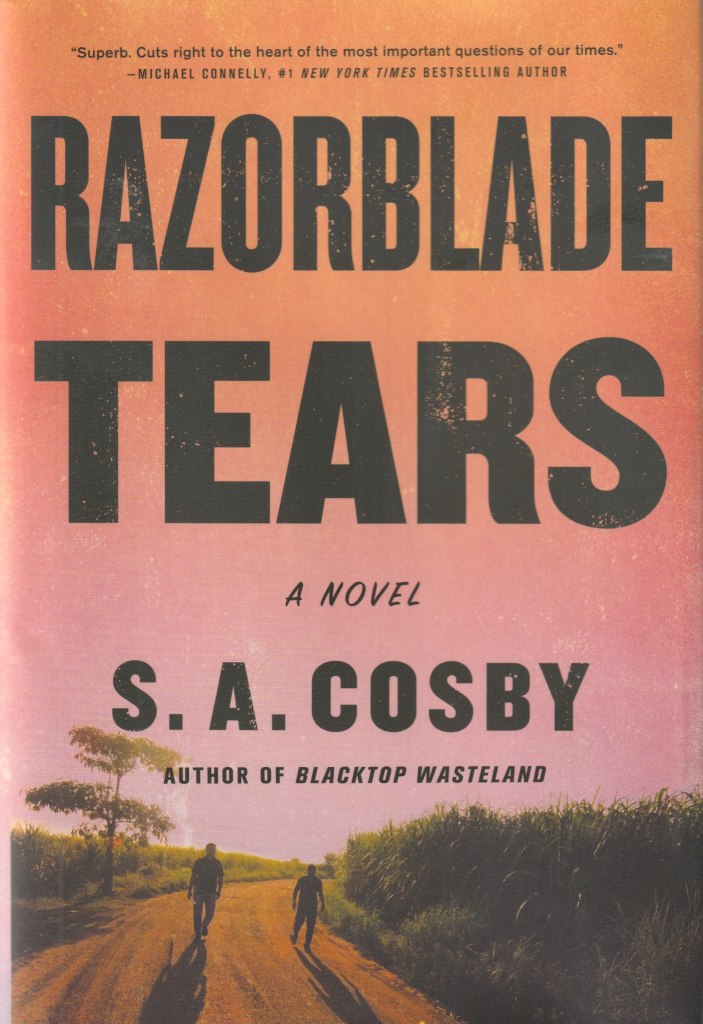
And over the year, yes, problematic tropes that can make you very, very tired have also developed–which makes me wary every time I approach a book by a non-queer person that takes on a trope without hesitation, as S. A. Cosby’s Razorblade Tears does, and that trope is one of the biggest and most hated by the queer community: bury your gays.
Ike tried to remember a time when men with badges coming to his door early in the morning brought anything other than heartache and misery, but try as he might, nothing came to mind.
The two men stood side by side on the small concrete landing of his front step with their hands on their belts near their badges and guns. The morning sun made the badges glimmer like gold nuggets. The two cops were a study in contrast. One was a tall but wiry Asian man. He was all sharp angles and hard edges. The other, a florid-faces white man, was built like a powerlifter with a massive head sitting atop a wide neck. They both wore white dress shirts with clip-on ties. The powerlifter had sweat stains spreading down from his armpits that vaguely resembled maps of England and Ireland respectively.
Ike’s queasy stomach began to do somersaults. He was fifteen years removed from Coldwater State Penitentiary. He has bucked the recidivism statistics ever since he’d walked out of that festering wound. Not so much as a speeding ticket in all those years. Yet here he was with his tongue dry and the back of his throat burning as the two cops stared down at him. It was bad enough being a Black man in the goo ol US of A and talking to the cops. You always felt like you were on the edge of some imaginary precipice during any interaction with an officer of the law. If you were an ex-con, it felt like the precipice was covered in bacon grease.
“Yes?” Ike said.
My faulty memory doesn’t remember how and when I first became aware of S. A. Cosby. What I do remember is that I bought and read one of his earlier works (perhaps his debut?) My Darkest Prayer, and enjoyed it thoroughly. Hard-boiled with a healthy dose of noir, I had a great time reading it–and was thrilled when his Blacktop Wasteland debuted to raves and attention and lots of recognition. Cosby can write like a house afire; and while he keeps up a rat-a-tat pace of story, he also manages to construct sentences and paragraphs beautifully, with a poet’s gift for language–spare and tight, yet poetic and beautiful at the same time (Megan Abbott is the Galactic Empress of this).
So, when I heard the “elevator pitch” for Razorblade Tears, I inwardly winced a bit, even as I had to admit Shawn’s guts; taking on bury your gays is a ballsy move–and also a bit of a dangerous one. If you don’t stick the landing…you’re fucked.
For those of you who don’t know what bury your gays means, it’s very simple: a show, or a book, or a movie, will introduce gay characters (lesbians, queers, whatever initial in the all encompassing umbrella those characters might choose for their identity), get the audience (and especially the queer viewers) deeply vested in them–and then kill them off suddenly and unexpectedly, all so the other queer characters (but usually the straight ones) will experience some kind of personal growth…in other words, you introduce a gay man into your narrative simply to later use him as a plot device, so the other characters can mourn and experience personal growth.
That’s probably explained badly, but you get the gist: gays will inevitably die. A good example of this is the so-called groundbreaking AIDS movie, Philadelphia–but the Tom Hanks character in that movie existed so that Denzel Washington’s character could grow and develop and move on from his own homophobic beliefs and fears about HIV/AIDS; as Sarah Schulman, one of our community’s finest minds, once said, “the entire point of Philadelphia is to make straight people feel better about HIV/AIDS and the gay men dying from it.” (Sections of her book Stagestruck: Theatre, AIDS, and the Marketing of Gay America are absolutely brilliant; it should be required reading for any Queer Studies course.)
The plot of Razorblade Tears is so deeply steeped in “bury your gays” that the gays are already dead when the book opens. The gays in question–Derek and Isiah–were brutally murdered, and the police don’t seem to care too much about looking into who killed them. Their homophobic fathers–both ex-cons–decide to look for their son’s killers. Both Ike and Bobby Lee feel a lot of guilt about their sons and how they rejected them both–their relationship, their eventual marriage, their child–while they were alive; finding their killers isn’t just about revenge but also a matter of atonement. In some ways, it’s like this book is borne from the anger every queer child rejected by their parents feels–you’ll be sorry when I’m dead.*
Ike and Bobby Lee are, indeed, sorry now that their sons are dead.
This also falls into another long-existent fictional trope: don’t fuck with a father. How many films (I’m looking at you, Liam Neeson), books or television shows are about a father’s rage, a father’s revenge, what a father will do to save or avenge their children?
Ike and Buddy Lee aren’t supermen, though. Cosby’s strength (besides his ability with words and images) is how well he creates characters and makes them human through their faults and frailties. Ike and Buddy Lee don’t much like each other as the story begins to move along–I kept thinking of the old Sidney Poitier/Tony Curtis movie, The Defiant Ones–but their ability to look past their own internal prejudices to see the commonalities between them as they unite in this foolhardy crusade to avenge their murdered sons is the real strength of the book here. (As well as the language.) You eventually start to understand them, care about them, want them to get their vengeance…even as you know it will bring them no peace.
I have to admit, I was hesitant to start reading this. I really was concerned I wasn’t going to be able to read it with the empathy necessary for Ike and Buddy Lee and their suffering–that I would think, yeah, well, maybe you should have thought about that when he was alive–but the book ultimately isn’t about their redemption, either; which is a genius move by Cosby. He makes their pain all too real–I cannot imagine the pain any parent should feel when their child dies–but he makes it clear there’s no easy answers here for Ike and Buddy Lee, and that pain will go on even if they get justice for their sons.
Shawn is also a master of writing about the Southern working class–about the poverty, the lack of opportunity, the societal neglect and how those factors all combine to keep those already mired in it trapped with little chance of escape; he clearly loves the rural South but not so much that he can’t expose the tragedy and ugliness that exists there.
It’s a powerful book, and I do recommend it….although the people who probably should read it inevitably won’t. I can recommend it, and do, enthusiastically; it’s a very powerful book, and it made me think–and what more can you want from art?
*sadly, I have seen all too often that a lot of those parents aren’t sorry when their rejected child dies; far too regularly they will say something along the lines of “So-and-so died for me years ago.”
Friday with a tooth extraction looming. Not really a yay, but at the same time I’ll be delighted to get that pesky tooth problem finally taken care of–and yes, I am at that age, and of that heritage, where I am counting the teeth I have left (the real “heritage, not hate” of rural Southern people).
I spent most of yesterday making condom packs–the boxes are starting to take over the living room, so I am going to have to take them all into the office relatively soon–and getting caught up on Real Housewives of Beverly Hills (#lockherup) and Superman and Lois (which I love; more on that to come), and then doing laundry and straightening things up around the house. There’s still a lot to do, as always, and I was reflecting this morning (as I lazed in bed until nearly eight) that I haven’t matched last week’s writing production at all this week. Part of it is depleted creative batteries–I really drained them writing nearly twenty thousand words in a week–and said depletion inevitably brings self-doubt and imposter syndrome in its wake. I’m getting better about the imposter syndrome (about time, really) and feel a lot more confident about writing in general lately; I am feeling more like my normal, balanced self again. I’d love to get “The Sound of Snow Falling” finished this weekend, as well as the revision of chapter one of Chlorine–as well as deciding which novella to try to get finished by the July 4th weekend (I am torn between “Never Kiss a Stranger” and “A Holler Full of Kudzu”); but that’s also going to be dependent on how the tooth thing goes and what kind of pain killers I am on for the weekend. I am hoping that I’ll be able to focus and get shit done regardless of what pain killers I am taking–but I also suspect that they aren’t going to be as free and easy with them as they were the last time I had teeth pulled, which was eleven years ago (thanks greedy trash Sackler family for creating the opioid crisis! May you all burn in hell for eternity!). My email inbox also needs attention, and I really need to sit down and write out who all I owe emails to as well as answer the significant amount of them that have piled up in the meantime.
And in a worst case scenario in which I am completely leveled by the painkillers, hopefully I can at least read, or watch movies or something. I really do want to finally watch The Godfather films–yes, I know–along with any number of classic American and foreign films I’ve never seen. One of the lovely things about working at home and doing the condom packs has been getting to watch films I’ve never seen and have always wanted to, as well as the occasional rewatch of something classic, like Cabaret or The Last Picture Show. I’ve been enjoying my education in film history, great performances, and terrific film making, even if some are flawed and don’t live up to the hype (I understand the importance of The French Connection in film history, but the plot is terribly flawed, and while it doesn’t really make Popeye Doyle into a hero…it depicts him realistically as a very flawed cop…its stark realistic approach to police brutality, civil rights abuse, and systemic racism embodied in Doyle is almost painful to watch; but Hackman earned his Oscar).
I also have some other blog entries I want to get finished and posted over the weekend–an in-depth discussion of Superman and Lois, as well as something deeply personal I may never post (that old ‘bleeding in public’ thing which I still struggle with from time to time) but I am trying to embrace my past more rather than simply moving on from it; which I also recognize is kind of strange. “You’re going to talk about things in your blog that you’ve never talked about with friends over the decades?” Yes, I get that it’s strange, but I also know in writing about things from my past–the way my mind remembers them, even if they aren’t precisely accurate–will help me come to terms with some things. My methodology of never looking back and just living in the present while planning for the future may have helped me get to where I am today, but it may not have been the most emotionally healthy way for me to grow and develop, and most of all, heal. Things I thought were scarred over have not actually healed beyond a scab, which comes off rather easily once I remember it’s there–and that isn’t healthy. Freeing myself from some of these burdens from the past could certainly not hurt in any way, shape or form.
It’s getting cloudy, which might mean a thunderstorm is arriving at any moment; not sure how I feel about that. We’ve been having a lot of rain lately–and while I do love a thunderstorm (there’s something comforting about being safely warm and dry inside while it pours down outside), we’ve certainly been having an excess of them lately. The ground is already saturated, so it’s harder for the rain to be absorbed into the ground so the streets flood more easily–and as the payoff on my car draws nearer and nearer, I worry about it being ruined more than I have…
And on that bright note, I am heading into the data-entry spice mines. Have a lovely Friday, everyone!
Last night wasn’t perhaps the best night of sleep I could have had, but it wasn’t too bad. I think I may have gone into a deep sleep for a while, but spent some time in the dreaded, dreadful half-sleep I’ve come to know and despise. I am working at home today–the apartment is definitely in need of some straightening, organizing, and cleaning–and I have some phone calls I need to make. I also have to swing by the office at some point, because I ran out of lube for the condom packs yesterday, and thus need another case of it.
I love that I have a job where I can casually say, welp, ran out of lube again so I have to run by the office.
Pretty cool.
We finished watching season 1 of Who Killed Sara? last night, and then began watching a Freeform show–a teen crime drama I’d made note of when seeing previews a while back–called Cruel Summer. It’s an interesting show–not even based on a novel, which I thought it must have been–in that it has three different timelines; three consecutive summers, in which we see dramatic changes in the main character, Jeannette: the first summer, where she was nerdy with frizzy hair and glasses and braces (the typical way show business always depicts nerdy); the second summer, where she has transformed into a beauty whose is popular and beloved; and the third summer, where she has no friends, is hated, and has been accused of something–in the first episode we aren’t sure what happened; another pretty, popular girl is missing in the second summer timeline, and we don’t find out exactly what happened to her until the second episode. We watched the first two episodes–became completely absorbed into the story by the second, and there are two more to stream, after which we will have to wait every week for a new episode. A lot of new seasons of shows we already are into start dropping in mid-May; including Who Killed Sara?, so we should have plenty of things to watch in the upcoming months.
I started writing a short story in my journal last night; the idea has been niggling at the back of my brain for the last few days, and finally last night I started scribbling in my journal. The working title for the story is “The Glory in Damnation,” which is a great title but doesn’t really fit what I am writing, so I’ll have to come up with another. Don’t get me wrong, I like that title–will probably use it again at some point, but right now I don’t have a better one for this story so will leave it as is. (I won’t start typing into Word until I have the right title for it; I use the titles for the file names and changing file names is one of those things that I dislike doing, while being full aware it doesn’t make any sense.) I want to spend some time this weekend with my short stories, while getting ready to do revisions of #shedeservedit, and of course I need to outline the first act of Chlorine.
Hopefully, I won’t be a lazy slug this weekend and can get this all done–plus the cleaning.
While I was making condom packs yesterday, I rewatched a film I haven’t seen in a while, The Last Picture Show. The book (by Larry McMurtry) and film both had an impact on me when I was a teen; both remain on the list of my favorites. I tried to reread the book a few years ago, but stopped when I got to the part about the teen boys having sex with heifers; the book had such a weirdly nonchalant attitude toward bestiality, like it was a normal part of rural Texas boys’ growing up, that I was a bit repulsed and put the book down. I also loved the movie, and had been wanting to watch it again, to see if it would actually hold up as well as fit into the Cynical 70’s Film Festival. It does, on both levels; and I kind of want to dive back into the book again. Peter Bogdonavich, who directed and co-wrote the movie, did an inspired job with it; this was the start of his hot streak, which included the superb What’s Up, Doc? and Paper Moon. The film was shot in black-and-white (as was Paper Moon), and every time I’ve watched it I marveled at the genius behind this choice. The cinematography gives the film an almost dreamy, slightly out of focus quality, which really works and makes an impact; Bogdanovich made a 1950’s style movie with an 1970’s sensibility. The acting was superb; Timothy Bottoms was fantastic as Sonny, as was Jeff Bridges as Duane, and of course, Ben Johnson and Cloris Leachman won Oscars for their pitch-perfect performances as Sam the Lion and Ruth Popper–that final scene with Leachman is staggering in its impact and she earned that Oscar. Ellen Burstyn is stunning and beautiful as Lois Farrow, and Eileen Brennan’s Genevieve didn’t get nearly the accolades she deserved. Cybill Shepherd made her first appearance on film as beautiful, selfish, narcissist Jacy Farrow, and she was absolutely the right choice for that part as well. Randy Quaid also has a small role as Lester Barlow, who is instrumental to Jacy’s story; he is painfully young in this, and years away from his break with reality. When he grins, you can actually see a resemblance to his brother Dennis–which he grew out of as he got older. The film opens with a panning shot of the main street of the town of Anarene (Thalia in the book), with the only sound the howling of the wind as dust blows, and Bogdonavich ends the film with a similar panning shot, which centers firmly the dying small town as the anchor to the story. (In the book, Sonny is the emotional heart of the story.) It’s nostalgic, but not seen through rose-colored glasses; both book and movie focus on how the town and the times warped the lives of the characters; how they endure the body blows of a hard life and yet somehow continue enduring. I’m glad I watched it again–because it does indeed hold up and is a classic that doesn’t get neat the attention it should.
And on that note, I need to get back to the spice mines. Have a lovely Friday, Constant Reader, and I will check in with you again tomorrow.
Sunday and a gray morning here in New Orleans. We’re supposed to have thunderstorms (some severe) throughout the day; of course I have to make groceries and go to the gym at some point–which means watching the weather to see when I can make a break for it. But other than that, I have the entire day relatively free; I finished the revisions of Bury Me in Shadows and turned them in yesterday to my editor. I think I caught everything; it’s a tricky manuscript. But as I revised and edited yesterday, I was pretty pleased with it, overall; which is a switch from the usual. I also realized one of my problems with reading my work once it’s finished is that I am rarely, if ever, able to turn off editor-mode; because I generally read my work with an eye to editing and fixing and making it stronger–and I use that mindset when I go back and read things after they’ve been published. I don’t know if there’s a switch in my head I can flip to make that change, but here’s hoping.
Paul went to a party last night–I could have gone, but was a little worn down from finishing the edits, so I stayed home and watched a documentary series on the Smithsonian Channel called Apocalypse: The Second World War, which was quite interesting to watch. Almost all of the footage used in the series was shot either by professional documentarians or journalists covering the war, or amateurs…I never cease to be amazed when I see how young the American military were during this conflict. World War II is endlessly fascinating to me, because it was such an enormous turning point for the world and civilization; the world was a vastly different place after the Axis surrender than it was before the Nazis invaded Poland in 1939. It’s been a while since I read any fiction about the war–when I was a teenager I read a lot of it, as well as a lot of post-war fiction–and I realized I’d rarely read any fiction from the point of view of soldiers actually fighting on the ground or in the air (other than The Young Lions by Irwin Shaw, for the most part I read things like Herman Wouk’s The Caine Mutiny, The Winds of War/War and Remembrance, etc.). I’ve never read Norman Mailer’s The Naked and the Dead, for example, or any of the post-war novels that sort of glutted the market in the decades following. I got down James Jones’ From Here to Eternity–I bought a copy of the unabridged version, which was released by the estate sometime in the last decade, with all the parts the publisher originally removed restored–and I think I am going to take that with me to read when I go visit my parents later this month. It’s one of my father’s favorite books and movies–it’s also been a hot minute since I’ve seen the movie–and since my main character in Chlorine served, it’s probably not a bad idea for me to read it. I read the first couple of pages yesterday evening before I went to bed, and it’s actually quite good…so I am looking forward to reading it. After I finish the things I need to get done today, I am going to curl up and read The Butcher’s Boy with an eye to finishing it today, so I can dive into A Letter of Mary by Laurie R. King.
One of the more interesting things about having all these streaming services and apps is the ability to find treasures like the Smithsonian Channel buried inside of them. As Constant Reader has undoubtedly noticed, I love documentaries, and now that we have such a glut of streaming services we pay for, I am now searching through them for documentary channels and so forth, and have been enormously pleased with what I have found thus far. (I also took advantage of a special deal for Shudder yesterday–two months at 99 cents each, before reversion to regular pricing, so am going to up my horror game for a while) There’s really never a reason to be bored, is there, with the wealth of streaming services out there? I can certainly always find something, no matter how obscure–which is also why I refuse to “rent” something to stream–although I am thinking about biting the bullet and paying to stream The Last Picture Show, which I really do want to see again.
I cleaned and organized and filed yesterday as well, which has left the kitchen looking–well, if not tidy, certainly in much better shape than it had been in–and I also started another donation box of books. I also want to start clearing out the storage attic here in the Lost Apartment, which isn’t going to be easy, and will certainly make a mess in the living room–which still looks like a storm struck it–but I really do want to start getting rid of things we don’t really need anymore, and there are a shit ton of boxes up there of unnecessary things. Progress may be incremental, but progress is progress.
And I should probably, at some point, start revising and editing the Kansas book, but I think I am going to take this week off from novels.
I started writing a short story this past week–really, just the opening sentence and a second paragraph–which also came from a novel idea. The book idea arose from a joke with some writer friends about noir fiction and noir covers, with their scantily clad sex bomb femme fatales; I joked that someone should write a noir about a strip club in the French Quarter and call it Girls! Girls! Girls! so the cover could have poll dancers and so forth on it; which then of course started the wheels in my creative brain turning and meshing the gears. A character I introduced in the later Chanse books–who eventually got her private eye license and he took her on as a partner–had worked as a stripper in the Quarter to put herself through UNO; I liked her a lot (even though her name is escaping me at the moment) and had even thought about making her the main character in a series, with Chanse as part of her supporting cast. But this was different, and called for a different character–for a while, when thinking about this, I toyed with the notion of an undercover cop or FBI agent; but then thought, in this time, could a woman be assigned to go undercover as a stripper? Maybe, but it could prove problematic. And then I remembered an intern from years ago, when I worked at the Community Center, who worked part time at the Hustler Club as a “shot girl”–her job was walking around with a tray with shots in test tubes. When someone bought one, she’d place the test tube in her cleavage and have to lean forward to dump the shot in his mouth. She hated it–she was a lesbian–but the money was so damned good she only had to work two nights a week and made enough to pay the rent and the bills and so forth. Someone could easily go undercover a shot girl–which, while still demeaning, wasn’t as demeaning as stripping. But the other day for some reason I was thinking about this again, and the thing that made the most sense was that one of the shot girls gets picked up by Vice and is forced to become an informer….which would make her walk the line between the cops and her crooked, organized crime employers, as well as with her co-workers. So, when the opening occurred to me the other day, I wrote it down and saved the file as a short story called “Shot Girl” (thereby adding yet another file to the “unfinished short story” list). I think maybe this week I’ll work on one of the unfinished stories in the drawer.
And on that note, it’s time to head into the spice mines. Have a lovely day, Constant Reader, and I will check in with you again tomorrow morning.
The sun is actually out today and there aren’t many–if any–clouds in our beautiful blue sky this morning, which is lovely. It’s rained pretty constantly ever since Tuesday afternoon, and everything outside is still wet from nearly a week of rain. I love rain–especially thunderstorms–but even I thought five straight days of them was a bit extreme. I wound up running my errands in the rain yesterday–I dropped off another five boxes of books to the Ladder Library sale yesterday (you actually can tell now that I’ve gotten rid of books)–and made groceries and got the mail. It was pouring while I did all of this, so my plans to go to the gym yesterday were finally scrapped. I also wound up taking the day off from almost everything yesterday–I think I needed a brain-free day, frankly–and so we watched a lot of television–we binged all the way through a delightful comedy called The Other Two, watched the Tom Holland movie Cherry on Apple Plus, and then switched over to Acorn for a riveting crime show called The Cry.
Yes, I was a slug all day and I am not a bit ashamed of it.
Oh, sure, I had my journal with me and scribbled notes freeform all day–my favorite is that I came up with a short story title I now HAVE to use, “To Live and Die in La.”, while having absolutely no idea what the story would actually be, but I laughed at the title and now want to. use it–so I did do something. But today I have to start revising/copy editing/making notes on Bury Me in Shadows–due to be returned to my editor no later than the first of May–and so, if I do go to the gym today (leaning towards it, since it’s sunny out) I can curl up in my easy chair to do it, so that’s a start. I really need to work on my story–the deadline for that submission call is May 15, I believe–and so I need to kick everything up a notch this week. I am getting caught up on a lot of other things as well–it’s never-ending, and have also accepted that I only have so much bandwidth for things. The emails, for example…I’ll never get caught up on those, ever…so I need to prioritize and so forth in order to get through everything that absolutely needs to be responded to immediately.
I also need to spend some time getting organized and cleaning a bit this morning. There’s filing to be done, of course–always–and somehow the kitchen looks like a tornado ripped through here (not completely an exaggeration, to be honest) and I need to get that taken care of this morning. I have a load of laundry to do, and there’s always dishes–always. I also want to organize the refrigerator a bit more this morning. Since the sun is out, I’ll probably grill hamburgers later on this afternoon, which is always an absolute treat (I really prefer all meat to be cooked over hot charcoal, frankly–or at least, most). I am also a bit excited that the next step of book decluttering (and yes, I am aware I am completely Marie Kondo-ing my apartment) is to go up into the storage attic and start clearing the boxes up there. This will, of course, be more complicated than the bookcases and the hidden boxes in the living room, since I’ll have to bring them down and go through them, combining the ones to keep (I can’t imagine there will be many of those) while putting aside the ones to donate. The goal is to clear out enough space in the storage attic so I can clean out my storage rental and close that account; most of the books in the storage are copies of my own books (and my kids’ series collection) along with some other things–mostly papers–and it would be nice to either no longer have that bill every month, or to use that space for other things…but at the moment I can’t think of anything that we’d need to keep it for.
But it would be great to lose that bill by the end of the summer.
Not as great as paying off the car, but still pretty good.
I think I’m going to add Semi-Tough to the donate pile. The first three pages are nothing but racial slurs as well as justifications for using them, and how the main character–it’s a first person narrative–isn’t really racist and the slurs are just words that don’t mean offense and so on–and yeah, I really don’t feel like spending any of my time with that kind of character. I certainly wouldn’t in real life–imagine being at dinner or a cocktail party and the person you are talking to says, and this is a direct quote from page one: Just because I may happen to say (the n-word) doesn’t mean I’m a racist.
Um, actually it does. It says a lot about you, who you are, and how you were raised, as well as how you see people and the world.
And I really have no desire to read a book filled with racial slurs…because you KNOW its also full of gay slurs, too–and most likely without the caveat justifying the racial slurs: Now listen, just because I say “faggot” doesn’t mean I’m homophobic.
Sure, Jan.
There are so many other good books to read, why reread something I originally read as a teen that plays on racism and homophobia and misogyny for humor? I stopped rereading The Last Picture Show, a book I absolutely loved, a few years ago when it got to the part about bestiality, and how it was perfectly normal for the teen boys to fuck animals…I closed the book and put it away. I may go back and reread the entire thing at some point–the reason I was rereading it in the first place was to examine how it handles homosexuality–which I distinctly remembered it doing–but I don’t think I was able to get far enough into it to get to that part. I know that Coach Popper–long-suffering Ruth’s awful husband–was a deeply repressed one, who favored one of the more athletic boys primarily because of his attraction to him; that the preacher’s son Billy Bob Blanton was often mocked and teased and bullied and humiliated for being a “four-eyed queer” (before he molests a little girl, after which he’s taken away as a pervert); and that the heterosexual English teacher, who was cultured and sensitive and kind, was accused by the coach of impure thoughts and fired (everyone, of course, would never suspect the manly football coach of anything, or question him); and I remembered a particular poignant scene between the fired English teacher–who’s been fired, whose wife has left him and taken their daughters and filed for divorce–and Ruth, where he’s just so beaten down and defeated that it’s heartbreaking. But yeah–that whole “boys will be boys” attitude towards bestiality was too much for me to get through again.
The Last Two is a terrific show, and quite funny. Paul and I really enjoyed it; the premise of the show is the two older children are in their late twenties–one is a struggling actor whose most recent audition was for a commercial in which he would play “Party-goer who smells a fart”; the daughter had wanted to become a dancer until she broke her ankle and dropped out of dance school and cannot figure out what she wants to do with the rest of her life–when suddenly, their thirteen year old brother puts up a video of him singing a ridiculous song (“Marry Me at Recess”) and becomes an overnight viral sensation with a record deal and a manager under the name “Chase Dreams”; which makes them feel even more like losers. The older brother, Cary, is also gay and in a weird relationship with his straight roommate; the daughter has broken up with her boyfriend and is now homeless at the beginning of the show. I thought it was terrific, frankly, and look forward to season two.
My primary takeaway from Cherry is that Tom Holland is an amazingly talented actor–he really gives a stunning performance as a poor young man who falls in love, gets his heart broken and joins the military, serves as a medic in Iraq and comes home to nothing but PTSD and drug addiction, which leads him to a life of crime. It’s a very dark story–but also weirdly a love story at the same time–and I don’t think the film, worked overall; the Russo Brothers, who directed, turned it into this big grand opera style thing in the way they shot it; to the point where the beautiful imagery is almost intrusive. It’s a very real story–based on a true story–and it highlights, very powerfully, how we abandon our troops completely after their service is over (since they’re no longer the troops….”support the troops” makes me angry because it is used primarily as a political prop and the actual soldiers themselves suffer in silence and neglect while we give billionaires and corporations every break in the world), but it’s worth watching for Tom Holland’s performance–he was also fantastic in The Devil All The Time–and it’s really nice to see him pushing himself in his non-superhero roles (he’s also the best, in my opinion, Spider-Man).
And on that note, I am heading back into the spice mines. Have a lovely Sunday, Constant Reader!





 Queer and Loathing in America