Tomorrow Belongs to Me

Ah, Cabaret.

I first became aware of this movie from commercials on television, and it looked very weird to young Greg. I had no idea what the movie was about, other than it was a musical; starred Liza Minnelli; also had the gorgeous Michael York in the cast; and seemed to be set in old pre-Nazi Germany. It also came out in the same year as The Godfather, which sucked all the air out of the year when it comes to film. I had also read that book that year because of the movie…which also got me interested in Marlon Brando, which is a whole other entry. (Not to mention the sex scenes, which were really confusing in a lot of ways…especially Lucy Mancini’s over-large vagina.) But Liza was everywhere that year, too–every talk show, had her own special “Liza with a Z”, magazine covers and newspapers and periodicals like you wouldn’t believe.

I had no clue what the plot was, other than decadence and debauchery?

I remember asking a friend that year if she knew what Cabaret was about–her parents were European immigrants from after the war; her father was Czech and mother German–and she told me her parents had seen it and her mother said, “It’s all about homosexuals”, which naturally got me incredibly interested in the movie. I finally saw it several years later when it aired on television, but everything queer was sliced out of the movie and it was disjointed and didn’t make a lot of sense, so I thought well, that was shit, how did it win all those Oscars?

Because of course, all the queer stuff has been excised from the movie; the movie was basically castrated and to me, seemed like nothing more than a vehicle to move the movie along to the next musical number–many musicals are like this, so I really didn’t understand what the big deal was about this one.

A few years later, I caught the original uncut version on HBO…and have been a fan ever since.

Cabaret never should have been sold to television for airing because it had to be gutted to make it ready for prime time. I only hope no one involved with the film saw that version of it, but it really was a desecration.

By the time I saw the movie as Bob Fosse originally intended it to be seen, I had become aware of the source material: Goodbye to Berlin by Christopher Isherwood, an autobiographical novel about his experiences in Weimar Berlin and witnessing the rise of the Nazis–and how their malevolence was poisoning German society and culture. It had been adapted for the stage by John Van Druten as I Am a Camera (which is the opening sentence of the second paragraph of the book), and the play was also filmed, starring Julie Harris, who may have played Sally on stage, too. I Am a Camera was adapted into the musical Cabaret, but significant changes were made from the stage version of the musical in adapting it for the screen–and the screen adaptation also wound up causing the stage version to revised, remodeled, and reinvented as well. (And to make things even more confusing, Isherwood later wrote a memoir about that time period in Berlin called Christopher and His Kind, which was also filmed.)

I had not seen the earlier film, nor had I read the book when I saw the uncut version of Cabaret.
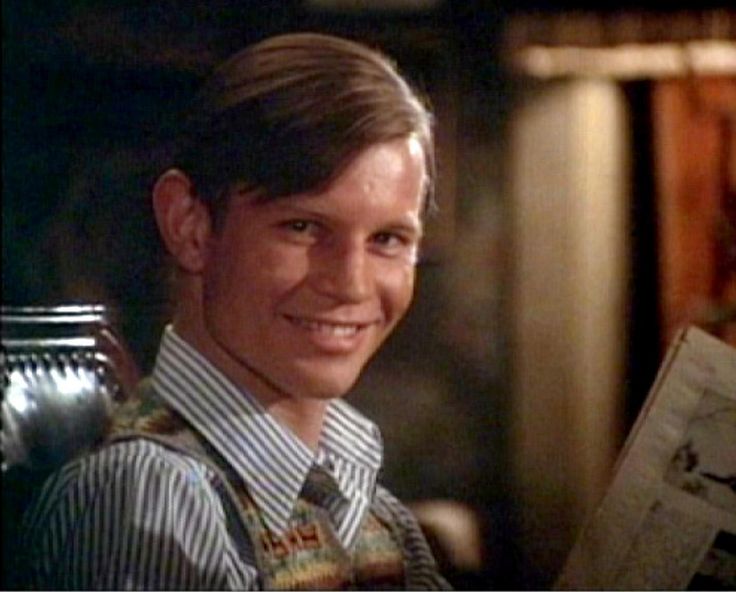
And you really couldn’t go wrong casting Michael York in the 1970s. Stunningly handsome, and that velvety voice that just dripped syrup.
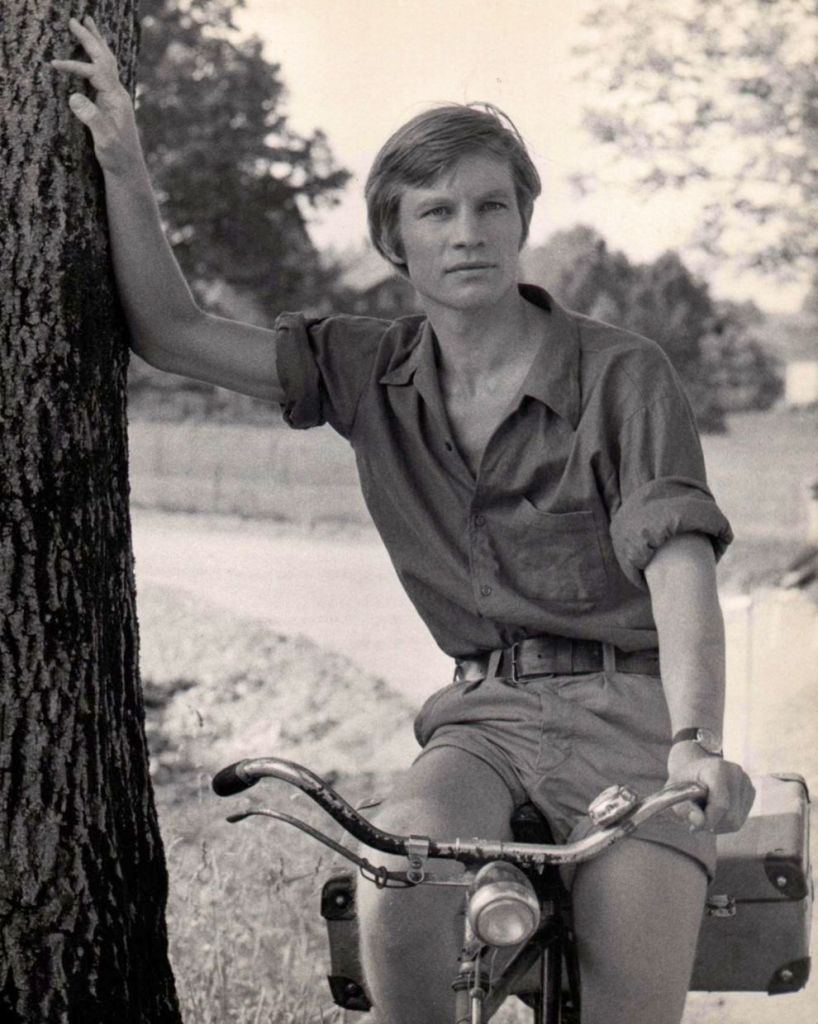
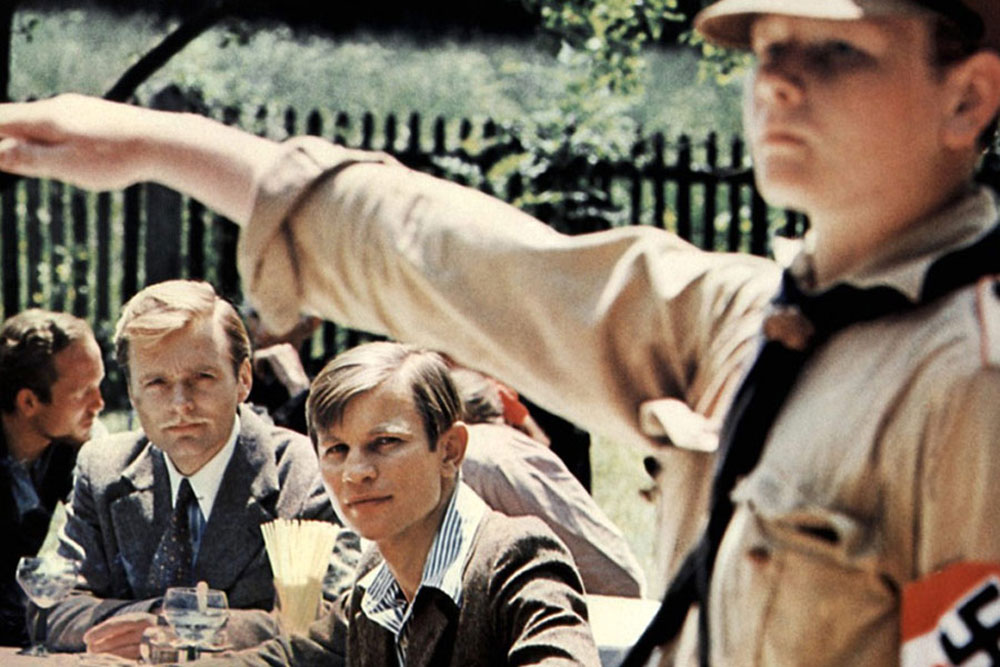
I mean, really. I think this is from Something for Everyone, which is a great, little-known queer movie also starring Angela Lansbury! (There’s a watchable version uploaded to Youtube, but the sound and picture quality isn’t great.)

I rewatch the film every now and then. I went through an Isherwood phase in the late 90’s/early aughts, when I read everything he wrote, and I enjoyed them all. And when I see some political movements today (hello, MAGAts!), Cabaret is never far from my mind.

It’s astonishing that the film was even made, given that homosexuality was still considered a mental illness in 1972, and the film didn’t judge. It simply presented these alternative sexualities as normal, and while the times themselves weren’t normal, there was also a very strong sense that the Weimar period–which is endlessly fascinating, which is one of many reasons I love Babylon Berlin so much–that filled the German political vacuum between the wars wasn’t very different from the twenties everywhere else, either; a time when the society and culture rejected the old, more conservative times that led to the first war, and everyone just wanted to have a good time because so much was misery. (I often wonder how much the American Stock Market crash of 1929 had to do with the rise of fascism in Germany; it was the economy, after all, that really caused the problems, and wasn’t the global economy heavily impacted by the collapse of Wall Street? We never realize how what happens in our country affects the rest of the world, because the United States is just as narcissistic as the convicted felon the Republicans are running.)

But the underlying message of Cabaret is one that is hard to miss: that living in your own bubble and ignoring the world outside is precisely how garbage like the Nazis rise to power…the assumption that someone else will do something to take care of it, and we’ll just keep having fun. In the late 1980s and early 1990s I thought we as a country we’re headed down that path; the unholy marriage between the right wing and evangelical christianity (I will never capitalize that C because cults don’t deserve that respect) certainly made it very clear to me that there was a very large segment of the American population that would be more than happy to put all racialized people and queer people into death camps. (I even started toying with the idea for a novel about that very thing; I still think about that idea A LOT, and even more so since 2016–which is also when I started rewatching Cabaret again on a more regular basis. Cabaret, and Bob Fosse’s vision of what it should be, was very powerful; and it changed the face of what movie musicals looked like and could be, and has influenced stage and screen musicals ever since. It’s a stunningly shot film, and now I can say that I understand why Fosse won the Oscar instead of Francis Ford Coppola for The Godfather; both films are masterpieces, but Cabaret was more “showy,” and that always wins over diligent and detailed craft.

And no, the movie isn’t “all about homosexuals”–even though there’s a minor character who is a trans woman; the main character is gay and bi-curious, and Max, Sally’s other love interest, is also bi and sleeps with them both cheerily. That was VERY avant-garde attitude to have in a 1972 Hollywood movie made for American audiences.

I wonder how seeing it on the screen in 1972 might have impacted me? But I also can’t imagine my mother and sister sitting through it, either.

Cabaret is a must-see if you’re interested in queer film–or great American cinema, for that matter. And I will judge you for not seeing it. In fact, I’m doing that right now.
Oh Very Young

So, are you ready for some MORE blatant self-promotion?

During the Bold Strokes Book-a-thon, the other panel I was on had to do with writing young adult fiction (the other panelists were amazing, I might add), and once again, I am answering the questions sent to us by the moderator to turn into an interview with JUST me (because it’s all about ME ME ME) but I do urge you to seek out the video of the panel. It was terrific, and I was definitely the most uninteresting person on the panel, seriously; this is NOT self-deprecation. (I bought everyone’s books during the panel, I might add; definitely check out Lauren Melissa Ellzey.)

What is the definition of Young Adult? How does it differ from other genres?

I think it’s primarily an age distinction, to be honest, which is something that always makes me uncomfortable. Growing up I read far above my age level; when I was in seventh grade I was reading at a college level, per the tests and so forth. I mean, I did read The Godfather when I was ten; my parents, despite their conservative religious beliefs and values, let me read whatever I wanted without having to ask permission–I think when I asked Mom if I could read something the last time she replied “Read whatever you want, I don’t care” and after that I never asked again. When I was a kid, there was no such thing as young adult; everything was either for adults or “juvenile.” The juvenile category contained multitudes, beginning with the Little Golden Books and picture books to kids’ mysteries to Judy Blume. I think sometime in the 1980’s the genre was separated into “juvenile” for kids 8-12 and “young adult” for 12-18.

But there are kids like me, who can read above their age/class level and others who can’t read at their age/class level, and I think in some ways that differential could be harmful for those who are below-average readers–reading is the most crucial aspect of education, because if you can’t read…and no matter how many ways they try to make the language around slower readers more accepting and less stigmatizing…it doesn’t really help kids to be told they’re below average or not as smart or quick as the other students. (One of my primary problems throughout my education is I would understand something the first time, while others inevitably didn’t, and as the teacher explained for a second or third or more time, my ADD would kick in and my mind would wander because I didn’t need to listen and then wouldn’t be listening when the teacher moved on.

Ah, well. 

Oh, and all subgenres of fiction also have the middle grade/juvenile and young adult sub-sub-genres.

Why or how did YOU choose YA?

I don’t know that I chose y/a so much as it chose me.

I started writing when I was a child (all my childish scribblings are lost to moves and time passing), and I wrote about kids my age. My first attempts at writing were always some kind of kids’ mystery series, a la The Hardy Boys and The Three Investigators (I’d still like to do this, frankly), and when I became a teenager, I started writing about teenagers. I wrote a bunch of short stories while in high school about the same group of kids going to the same high school. Those stories slowly but surely grew into a sprawling, handwritten novel about the county with plots and subplots and main characters and minor characters and all of this history; a “Peyton Place in Kansas kind of thing”. I worked on it for like five years, and eventually had this enormous sprawling mess that needed to be revised and rewritten and typed…and since I didn’t know how to type, made that part of it a problem. So I shoved it into a drawer and started pulling from it rather than revising it; taking out plots and characters and using them in other books and other stories.

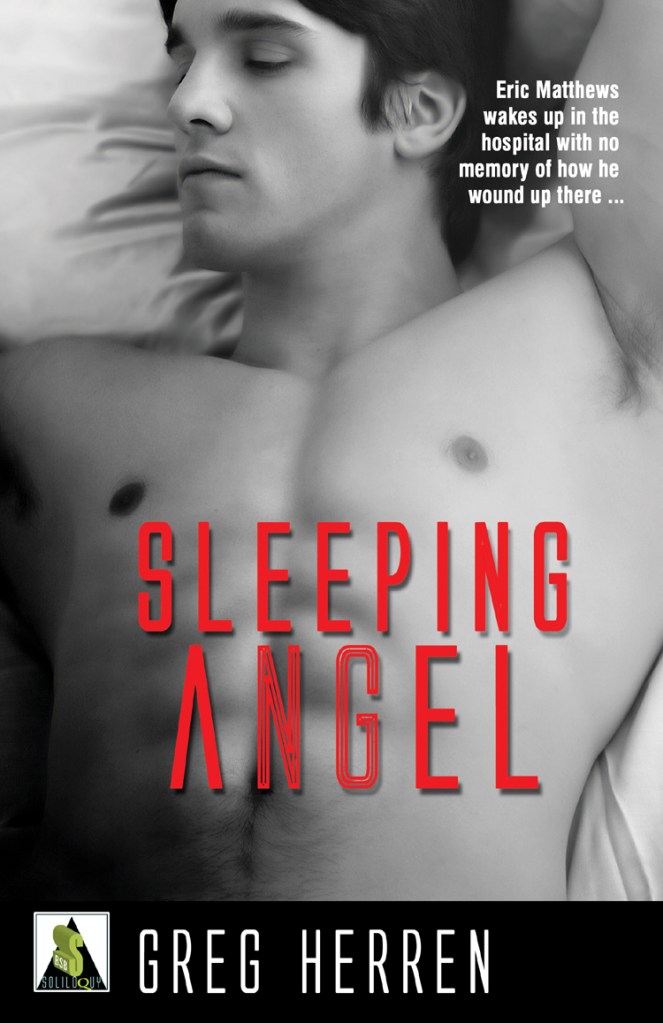
After I finished that, I spent the next five years mostly working on short stories. I started another book, more horror than anything else, but never got further than the third chapter. I finally decided to write a horror novel built from my old manuscript and those short stories from high school. I was about three chapters into it when I discovered two things: there was a big market in y/a horror at the time (Christopher Pike and R. L. Stine were HUGE during this period) and so I bought some of them. When I finished, I thought, “You know, I should turn Sara into a y/a novel” (because I thought somehow that would be easier? Foolish, foolish rookie) and so… I did. I was right in that thinking of it in those terms made it possible for me to finish a draft, but I wasn’t very happy with it so I put it aside and started writing another one, Sorceress, which was also horror but also had some strong Gothic moments in it. When I finished that one, again I wasn’t pleased with it so I started another–Sleeping Angel–which was the one I thought really had potential. I never finished that draft–by this time I’d discovered that gay fiction and nonfiction existed, so I started reading that and trying to write about gay characters instead.

Those manuscripts remained in my drawer for well over a decade, until a friend of mine took a job as a young adult acquisitions editor, and she wanted to work with me. I told her I’d written three (although it was technically two and a half), and gave her a brief synopsis of them. She liked Sorceress the best, so I started revising and editing it and turning it into something publishable. Once it was all done, she’d left that publisher, but started her own small press for y/a books for underrepresented teens, and she wanted to launch the press with Sorceress. I said “okay” and we were off. I eventually realized I needed to let Bold Strokes know, and when I did, I got an email back saying you know we do y/a, too? And so I sold the other two to them, and have never looked back since then.

Are there specific rules for writing YA (things you can’t do)?  Does Bold Strokes add on or impose specific or additional rules?

I don’t pay too much attention to rules, frankly. There’s no graphic sex in my books, but it’s hinted at. I also try to swear less in young adult books than I do in adult fiction, which is probably not as big of a deal as I think it is? The society I grew up in was a lot more puritanical–believe it or not–that the one we live in today. So I always default to that setting, and then have to shake it off. Swearing isn’t as big of a deal as it used to be. No one thinks they’re marrying a virgin anymore, and on and on. And having been attacked for daring to accept an invitation to speak to queer high school students, I tend to tread softly. There have been a couple of times where I’ve had to change language, or how a scene went, because my editor thought it might be problematic; and frankly, I never want to be offensive, so I have no problem with it. I don’t see it as a free speech issue the way so many intentionally offensive writers claim it is. I shouldn’t take offense to someone calling me a faggot? Grow the fuck up. The so-called free speech “crusaders” are always defending hate speech as well as trying to shut up the people who find it objectionable. You do not have a constitutional freedom from consequences or getting a negative response to things you say and do, period. It’s really not hard to understand unless you want to be passive/aggressive and childish and a moron.

How do you remember back to these days, specifically how it felt or feels? (this is coming from your moderator who is much older than you are)

Well, for one thing, I’ve always kept a journal and I still have them all. (I was insufferable when I was younger, seriously.)

My sister has a theory that we forget a lot of the pleasant memories from our childhoods, but remember the traumas in great detail. I believe the truth of that, because school was a nightmare for me from the day we moved to the suburbs until I was done with it. I remember how it felt to read Greg Herren sucks cock on a desk at school. I remember how it felt to be mocked, laughed at, and bullied by assholes. I do remember the good things, though I tend to always focus on the bad.

The first thing I always do is abandon whatever “wisdom” about life I’ve theoretically learned since leaving high school, and put myself into the teenager mindset: they think they are the main characters in everyone they know’s story, and everything is the end of the world or their life is ruined and you are the most horrible parent ever! I’m not entirely sure I’ve escaped thinking that way, to be brutally honest: I am horribly selfish.

How do you come up with your characters?  Your stories? 

I am weird in that I inevitably always start with a title. I hear something or read something and think, that would make a good title. The next question is what story would fit that title? And it kind of goes from there. The title may change, the character names and story might change and evolve, but I can’t write anything that doesn’t have a title. Bizarre, I know. Usually with my young adult stuff it’s an idea I’ve had for a number of years and finally decide to explore whether it’s a novel or a short story, and go from there.

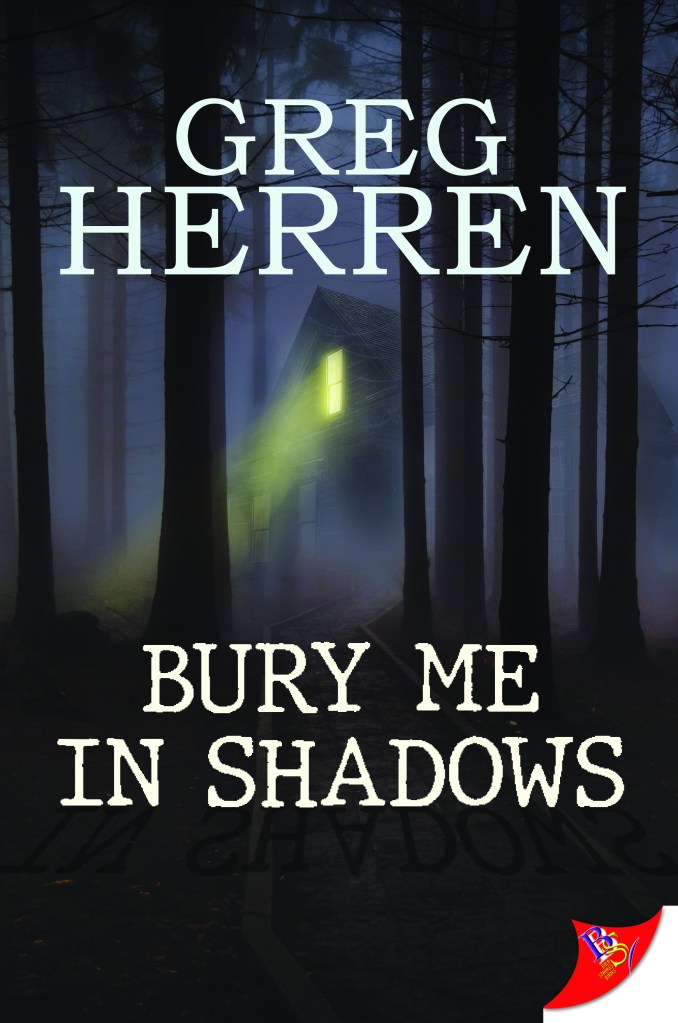
Dark Tide was originally called Mermaid Inn, Bury Me in Shadows was originally Ruins, but the others pretty much stayed the same from beginning to end.

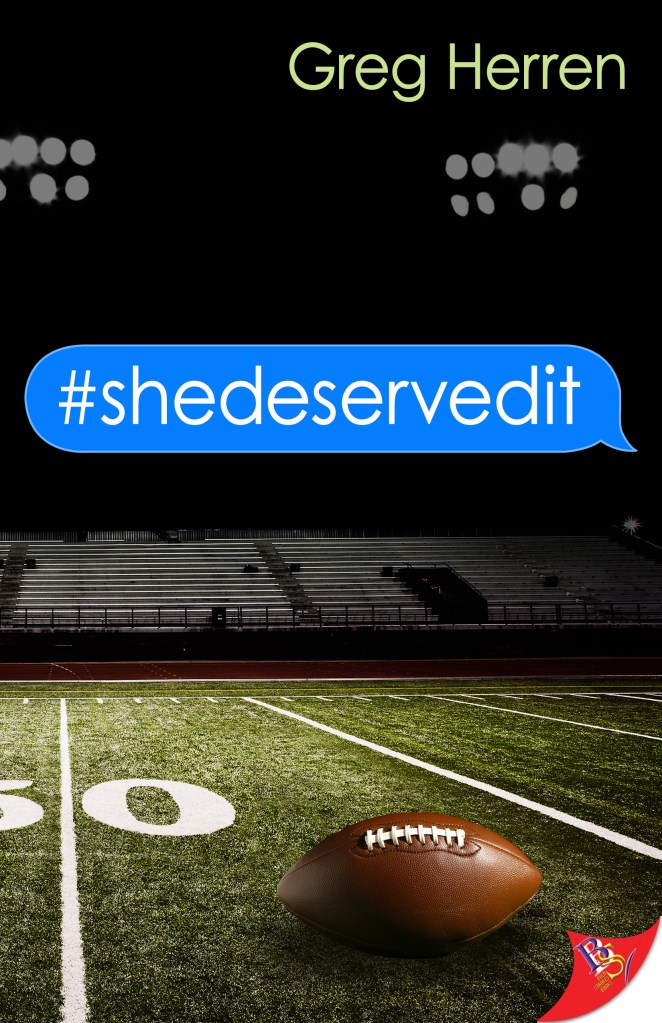
I wrote #shedeservedit because I was angry about the Steubenville/Maryville rape cases, and remembered stories and gossip from when I was in high school and college…and rethinking them through a more evolved brain about women and misogyny… well, it made me angrier. I had already planned on writing a story set in the same town with the same characters and opening with the same murder (I always referred to it as “the Kansas book” for years), but the motive was something I always had trouble grounding in reality. After those cases…it clicked in my head. You need to write this story about small town misogyny, protecting the star jocks from the girls at all cost, and make that the plot. It was easy to write because I was angry. Making it a compelling read was harder, because the subject matter was sickening to me.

I needed to write that book, and I don’t regret doing it, either…but it’s not exactly a feel good story people can escape into, either.

Why do you think YA is so popular?

It’s more accessible, I think. I mentioned reading ability before, and I do think that most readers aren’t into the Great Literary Tomes, hundreds of pages of beautiful writing with no real point or story. People kind of want to escape their cares and worries, and y/a books tend to be really entertaining. We’re competing with phones and tablets and streaming, so we need to write entertaining and engaging books.

Any specific must do-s or must-haves to get your writing each day?

I’m not nearly as anal about that as I used to be, before I returned to work full-time. I am very aware that I have little time to waste when I write, and thus must seize whatever opportunities to write show up. But if pressed, coffee. I can’t write unless I’ve had coffee when I got up.

Up Where We Belong

Shirley Jackson never explained.

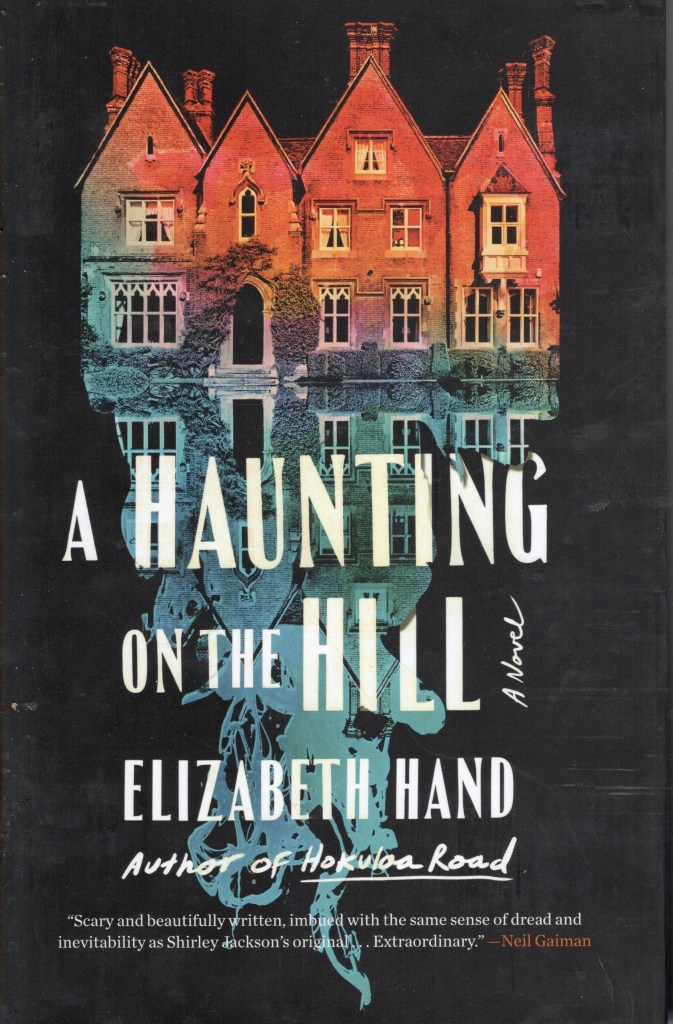
I’ve always loved The Haunting of Hill House, and Jackson has always been one of my favorite writers. I’ve long ago lost count of how many times I’ve reread the book, and of course I love the original film version from 1963, directed by Robert Wise and starring Julie Harris in one of her best screen roles as Nell. The sense of dread and fear contained within the pages of that incredibly short novel are astounding. I’ve always believed that one of the book’s greatest strengths was its lack of explanation; horror novels, or ghost stories, or whatever you want to call Jackson’s novel, inevitably always get hung up on explanations of who or what caused the place to become haunted and/or accursed. Jackson never bothered, knowing instinctively that the unknown is far more unsettling and terrifying than any understanding or explanation she could provide to her readers; she just never explained. “The Lottery” offers no clues as to why the villagers have developed this annual ritual, it simply happens and she shows it to us without explanation…which again makes it that much more unsettling. In the years since I originally discovered and read a very cheap copy of The Haunting of Hill House at a used book store, with its Gothic-style cover depicting a beautiful Nell with long flowing hair and a long flowing gown, holding a candle while climbing the horrible spiral staircase in the library, I’ve read more of Jackson and become an even bigger fan of her work than I already was. The Haunting of Hill House and “The Lottery” firmly cemented Jackson’s deserved place in American literature; the rest of her equally brilliant, disturbing and unsettling work serve to heighten that place and elevate it even more.

I am not a purist. A long time ago I realized that films and television programs adapted from books would almost always be disappointing for a fan of the book; ones that are actually better than the book (The Exorcist, The Godfather) are few and far between. I stopped getting irritated by these changes a long time ago. I also learned to stop being bothered by such things; it’s an adaptation, after all, and that means changes because it’s now a different medium. (I have already mentioned my amusement at how militant fans can be about these things; particularly when it comes to things like Nancy Drew or the Hardy Boys.) I hated the 1999 remake of The Haunting; it was special effects nightmare that made little to no sense; the whole point of the story was you never see what it is that’s going on and never are really sure; this second film version ignored that and therefore, it wasn’t The Haunting but just another haunted house movie. I greatly enjoyed the Netflix adaptation mini-series by Mike Flanagan; it was a different interpretation–again, you never see anything–and I thought it was a brilliant modernization/adaptation.

But I did approach this book, said to be a retelling of the story, with a bit of trepidation. I’d heard of Ms. Hand before, of course–I have a copy of Curious Toys, which I bought when she on the Shirley Jackson Award for it, and had been meaning to get to her work at some point.

I left the rental just as the sun poked its head above the nearby mountains, and golden light filled the broad stretch of river that ran alongside the little town. Nisa was still curled up in bed, beathing deeply, her dark curls stuck to her cheek. I brushed them aside but she never stirred. Nisa slept like a child. Unlike me, she was never troubled by nightmares or insomnia. It would be another hour or two before she woke. Longer, maybe. Probably.

I kissed her cheek, breathing in her scent–lilac-and-freesia perfume mingled with my own Jasmin et Tabac, one of my few luxuries–and ran my hand along her bare shoulder. I was tempted to crawl back in bed beside her, but I also felt an odd restlessness, a nagging sense that there was somewhere I needed to be. There wasn’t–we knew no on around here except for Theresa and Giorgio, and both would be at work at their home offices overlooking the river.

I kissed Nisa again: if she woke, I’d take it as a sign, and remain here. But she didn’t wake.

I scrawled a note on a piece of paper–Nisa often forgot to turn her notifications off, she’d be grumpy all morning if a text woke her. Going for a drive, back with provisions. Love you.

This book isn’t a retelling of the Jackson novel, but rather a kind of sequel, picking up at Hill House some sixty years after poor Nell drove her car into the tree after the turn in the driveway as she realized she’d been wrong about everything but only too late. This is a new story of Hill House, and our main character, Holly Sherwin, is staying upstate with her lover Nisa in an Air BnB, and bored, wakes up early and goes for a drive. A playwright, she’s recently won a grant to help cover expenses while she works on her play, Witching Night, which is based on an old sixteenth century manuscript she came across by chance. It’s the story of an old woman accused of witchcraft and burned at the stake, based on a real event; her girlfriend Nisa is an accomplished rising singer/songwriter, who is rewriting old murder ballads to use as the soundtrack/backdrop of the play. She goes for a drive and finds herself at Hill House…which draws her in much as it did Nell in the original Jackson and she decides to rent the house for two weeks, move in with her cast (her bisexual friend Stevie, a former child star molested on set and now an amazing sound tech) and Amanda, a brilliant aging actress whose career took a turn when a costar fell to his death–and of course people wondered if she pushed him. Holly herself has a bit of a checkered past; someone had told her a story that she adapted into a play; the original person threatened to sue her but before anything can be done that person commits suicide. That derailed her playwriting career–and believe me, Hand does an excellent job of depicting what the excitement that a burnt-out creative experiences when inspiration, an opportunity to flex those creaky muscles and create again, feels like.

All four of the characters are beautifully rendered and are completely real, and one of the things I liked was how Hand slyly also referenced the Flanagan mini-series as a part of the Hill House continuity. Hand’s Hill House has similarities to Jackson’s, and there are more than enough nods for the Jackson fan to recognize and smile about. Hand also does an incredible job of creating that claustrophobic dream-like feel Jackson used for her book, but Hand doesn’t mimic Jackson’s style; the style of this novel is entirely Hand’s, but one has to marvel at Hand’s mastery of creating that same feeling in her reader but in an entirely different way. The language she uses is flawless and rhythmic, just like Jackson’s was, but again completely different. There are also moments that mirror the original novel beautifully; call backs to the original story that I personally felt like little secrets Hand was sharing with me the reader. It’s a very intimate story, and I felt like I was there with them, the characters were people I understood and knew and cared about. Hand also tells the story in alternating points of view, which helps create the off-balance slightly skewed perspective the story needs; Holly tells the story in the first person, but the others are from a third person point of view.

It was terrific, and I look forward to reading more of Hand’s work.

Play with Fire

Well, I met quota again last night which was marvelous. It’s still a bit chilly this morning. By the weekend it should be back into the seventies (it was yesterday as I ran my errands after work; it’s sixty-one this morning but it does feel colder outside of my bed and blankets), as the Alabama and Kansas State fans start arriving for the Sugar Bowl. LSU is also playing on New Years’ Day in the Citrus Bowl against Purdue, which will probably be the only game I actually watch that day.

There’s been a conversation going on over at Book Twitter lately that doesn’t really impact me in any way, but it’s been kind of interesting to follow. The conversation has to do with concerns about what is and isn’t considered y/a fiction as well as what is, or should be, considered age-appropriate reading material for teenagers and pre-teens. It doesn’t impact me because no one considers me a young adult writer, for one thing; despite having written numerous books with younger and/or teenaged characters (Sorceress, Sleeping Angel, Sara, Lake Thirteen, Dark Tide, Bury Me in Shadows, #shedeservedit), most people think of me as a gay mystery writer. Everything published under my own name is a mystery novel of some sort, whether it’s one of the series books or one of the stand-alones. I’ve never really marketed myself as a writer of young adult fiction, really; I shy away from that, I think, because of The Virginia Incident and the subconscious fear that one day that controversy might resurrect itself (which is ludicrous, and I know that; it certainly would have by now and it hasn’t, which further proves my belief that The Incident had nothing to do with me or my writing or my career and everything to do with systemic homophobia and othering used for political gain). It just seems weird to me that in less than five years after that happened–when I was deemed a menace to America’s youth–I could publish books for teenagers without a single whiff of complaint or scandal or even the raise of a single eyebrow.

Interesting, isn’t it? Almost like the whole thing was just more smoke and mirrors whose sole intent was to rile the homophobic base.

I just love that my existence is considered by some as a constant and continued threat to children.

One of the things that has always mystified me over the years is what is and isn’t considered age-appropriate. Intellectually I was far more advanced that most of my classmates (my emotional and personal maturity being an entire other subject–I’d say I am still behind on that score) and I started reading early. The library and the Scholastic Book Fairs were my best friends as a child, and I read everything I could get my hands on. I loved history, from which grew an appreciation and love for historical fiction (which I really don’t read much of anymore, which is odd. I really want to read Hilary Mantel’s Cromwell books…) and of course, my grandmother got me interested in “scary” movies and mysteries.

You’d think I’d be a huge fan of historical mysteries, but I actually don’t read many of them. I did love Elizabeth Peters’ Amelia Peabody series, and I’ve become a huge fan of Laurie R. King’s Mary Russell series…I think exploring historical mysteries might be a project for 2023.

But the point was I was reading books far too advanced for most people my age when I was young. I freely will admit that in my first read of Gone with the Wind at age ten I didn’t know Rhett raped Scarlett the night of Ashley’s surprise birthday party–it wasn’t until a reread in my late teens where I thought oh, this isn’t right–let alone that she enjoyed being overpowered and forced. I also read The Godfather when I was ten, and there was no mistaking anything about Sonny Corleone and Lucy Mancini. He had a cock the size of a horse’s and her vagina was apparently the Lincoln Tunnel. (Although the she felt something burning pass between her thighs still mystifies me to this day.) I also read The Exorcist when I was ten and I was also very well aware of what was going on in the crucifix masturbation scene. As a kid, I was fascinated by these sex scenes (aka “the dirty parts”), and it wasn’t until I was older than I began to question the entire Sonny-Lucy thing (and why it was even in the book in the first place); and while the crucifix scene was gross, shocking and basically icky to me at ten–when I reread the book sometime in the past decade it seemed prurient, to be honest–used primarily for shock value and to get people to talk about it.

So, yes, I started reading books for adults when I was around ten. I also read Antonia Fraser’s Mary Queen of Scots and Robert K. Massie’s Nicholas and Alexandra that same year–I remember doing a book report on Mary Queen of Scots and my teacher not believing that I had read the thick volume; he started opening the book at random and asking me questions–which I was able to answer, so he grudgingly accepted the book report and gave me an A. (Teachers have doubted me all of my life; can’t imagine why I am insecure about my intelligence…)

Over the course of my teens I also read books by Harold Robbins, Sidney Sheldon, Jackie Collins, Jacqueline Susann and Gordon Merrick-every last one of them crammed to the gills with racy sex scenes. I was also reading Stephen King, Irving Wallace, Herman Wouk, Agatha Christie, Ellery Queen, Jean Plaidy, Victoria Holt, Phyllis A. Whitney and any number of authors who wrote for adult audiences not teens. Were there things in the books I didn’t understand? Sure there were. Were there things in those books that were probably inappropriate for teenagers? Undoubtedly. (I’ve also never forgotten the scene in Joyce Haber’s The Users where a Liza Minnelli-based character fucked herself with her own Oscar; some images are simply too vivid to forget methinks.)

This is one reason I shy away from calling some of my books with teenagers “young adult” novels. Megan Abbott’s Dare Me centered teenagers, but I would never consider Dare Me a young adult novel. I was thinking about this the other night while watching Sex Lives of College Girls (it’s hilarious, you really should be watching); can I authentically write about teenagers anymore? Have I ever been able to? I don’t speak their language anymore, and I haven’t been one in over forty years (!!!!); I don’t know the technology they use or their slang or what they watch or listen to. I don’t know what today’s teens think about virginity and sexuality these days; do the tired old tropes still exist? Does that whole “good girl/bad girl” dynamic still exist, or are today’s teenaged girls a bit more sophisticated than they were when I was in high school when it comes to sex and sexuality? (Contrasting two high school shows with queer content makes you wonder–there’s the jaded cynicism of the rich kids in Elite vs the wholesome purity and innocence and sweetness of Heartstopper, which also had me wondering–although I feel certain Heartstopper might be closer to reality than Elite…or that’s just my hope?) Of course I have other ideas for more books about young people–I have another in-progress one that’s been sitting around for a very long time that I need to repurpose–and I’d kind of like to write more at some point, but I don’t know. My suburban 70’s serial killer preying on teenaged boys book would be told from the perspective of a twelve year old, but it would definitely not be a young adult novel–but will probably be marketed and sold as one.

And on that note I am heading into the spice mines on my last day in the office for 2022. Check back in with you later, Constant Reader.

Mr. Bojangles

Saturday morning in the Lost Apartment, and I am kind of excited about the weekend if I am being honest. It’s nice, for one thing, to be able to sleep in a bit this morning and tomorrow; I do have some things to do today (one is doing something personal for myself; along the lines of important self-care) and of course, I am doing an on-line interview with Spirit of Ink’s Jaden Terrell as well (she’s actually quite lovely, too; I can’t believe how many years I’ve known her now). Tomorrow I have to probably go run some errands–I am hoping after my interview today I will make it to the gym, after which I will come home to curl up with Carol Goodman’s The Lake of Lost Languages with an eye to finishing it. It really is good, y’all; I hate that it’s taking me so damned long to get it done, really. I also have some other blog posts I need to finish and post–I’ve got to stop starting blog entries and then not finishing and saving them as drafts and then never going back and finishing and/or posting them; every time I go to the draft page here those unfinished entries reproach me, and they’re getting MEANER the more time goes by. Like I really need to be shamed and mocked by unfinished blog posts?

Bastards, really.

So, as I mentioned, we finished watching Minx earlier this week. I had started this during my festival widowhood, had some initial issues with it (still kind of have those original issues, to be fair) but somewhere around the third or fourth episode the show hit its stride and I started to really enjoy it. (It’s also a stark reminder that women had little to no rights less than fifty years ago, and thanks to the fuckhead judicial activists on the “supreme Court”–which should now always be put in quotes as the fucking joke it actually is, as well as supreme should henceforth be in all lower-case–those rights are about to be taken away in the service of an incredibly anti-American authoritarian agenda by the party of “small government”…yeah) The premise behind the show is simple: an ardent feminist and journalist wants to launch a new magazine for feminists called The Matriarchy Awakens (yes, that is actually what she is calling it) while working the subscription line at a magazine for teen girls. She believes that women–once they are aware of what feminism is really about–want and need such a magazine, to enlighten them about their own oppression and to learn more about their own power and equality. The show opens with her going to a weird fair where magazine companies take pitches for new magazines (is this something that really used to happen?) and of course, none of the old white men take her seriously or see anything of potential in her magazine. While she is waiting to go inside, she meets a pig of a man who actually produces porn magazines…long story short he offers to publish her magazine with the catch that she needs photo spreads of nude male models inside–“why shouldn’t a woman get to look at a dong if they want to?” Naturally, she is horrified…and then the Burt Reynolds issue of Cosmopolitan comes out and she realizes that it could, indeed, be empowering for women to look at naked men–but the editorial content will have a very strong feminist bent, and that empowering female sexuality should also be a part of feminism. As I mentioned in my earliest commentary on the show, I disliked the trope of the uptight feminist woman who needs to loosen up and enjoy herself–and her own sexuality–more; but it was handled a lot better than I thought it would be; it wasn’t the tired old “she just needs to get laid” thing. There are also a lot of male dongs shown in this; I wasn’t expecting the parade of penises as they look for their first centerfold–but there was nothing salacious or even erotic about the dongs on this show; they were just…dicks. But the show continued to improve with each episode, and it–along with Physical, which we didn’t finish–is a stark reminder of just how shitty it was to be a woman in this country back then (somewhat better now, but not even remotely close to where it needs to be, frankly).

It also made me think it would be interesting to see a documentary about how Playgirl got started and its journey over the years until it finally ceased publication. (I have an idea about a noirish type thriller set in the 1970’s about the struggle against prohibitions on porn called Obscenity, which is part of what I call The Chlorine Quartet.)

We also started watching The Offer last night, which is about the making of The Godfather, from the point of view of producer Albert Ruddy. I knew a lot of this material already–Mario Puzo had already documented the writing and selling of the book, and then the making of the movie, in a long-forgotten book called The Godfather Papers back after the movie was released and hailed as an instant classic; which included his memories, diary entries, and correspondence. I read the book (I mean The Godfather) when I was about eleven or twelve years old; I don’t really remember. My father had the paperback edition with the black cover and the white print, with the image of the hand holding the puppeteer’s strings, and I also recall one summer while visiting relatives in the South one of my cousins had a copy that had all the “dirty parts” dog-eared–so I had read about Lucy Mancini’s bizarre vagina problems before I actually sat down and read the book. I’ve been meaning to go back and reread it; it’s been called a turgid potboiler melodrama, trash, you name it–but if nothing else, it was a really good read. Obviously this is one of the cases where the film was better than the book, and I’ve been meaning to watch the movies again at some point, but it’s such a time commitment…

We also got caught up on this week’s Under the Banner of Heaven, which is twisted and bizarre. I’ve never read the book, despite being a fan of Jon Krakauer, so I don’t know where this is going, and I am very tempted to go back and read the book now.

I slept well last night (as I am sure some of you are wondering about; like anyone really cares whether I can sleep or not) and so feel pretty good this morning. I have a lot of things to get done around here before my appointment at 11:15–the sink is full of dishes; the dishwasher is also full with clean dishes to put away; I am doing laundry; and at some point the trash needs to be taken out–and of course I need to make lists so I know what all I have to get done over the course of this weekend.

Heavy sigh.

And on that note, I’d best head into the spice mines and make another cup of coffee. Have a great Saturday, Constant Reader.

Gloria

Friday with a tooth extraction looming. Not really a yay, but at the same time I’ll be delighted to get that pesky tooth problem finally taken care of–and yes, I am at that age, and of that heritage, where I am counting the teeth I have left (the real “heritage, not hate” of rural Southern people).

I spent most of yesterday making condom packs–the boxes are starting to take over the living room, so I am going to have to take them all into the office relatively soon–and getting caught up on Real Housewives of Beverly Hills (#lockherup) and Superman and Lois (which I love; more on that to come), and then doing laundry and straightening things up around the house. There’s still a lot to do, as always, and I was reflecting this morning (as I lazed in bed until nearly eight) that I haven’t matched last week’s writing production at all this week. Part of it is depleted creative batteries–I really drained them writing nearly twenty thousand words in a week–and said depletion inevitably brings self-doubt and imposter syndrome in its wake. I’m getting better about the imposter syndrome (about time, really) and feel a lot more confident about writing in general lately; I am feeling more like my normal, balanced self again. I’d love to get “The Sound of Snow Falling” finished this weekend, as well as the revision of chapter one of Chlorine–as well as deciding which novella to try to get finished by the July 4th weekend (I am torn between “Never Kiss a Stranger” and “A Holler Full of Kudzu”); but that’s also going to be dependent on how the tooth thing goes and what kind of pain killers I am on for the weekend. I am hoping that I’ll be able to focus and get shit done regardless of what pain killers I am taking–but I also suspect that they aren’t going to be as free and easy with them as they were the last time I had teeth pulled, which was eleven years ago (thanks greedy trash Sackler family for creating the opioid crisis! May you all burn in hell for eternity!). My email inbox also needs attention, and I really need to sit down and write out who all I owe emails to as well as answer the significant amount of them that have piled up in the meantime.

And in a worst case scenario in which I am completely leveled by the painkillers, hopefully I can at least read, or watch movies or something. I really do want to finally watch The Godfather films–yes, I know–along with any number of classic American and foreign films I’ve never seen. One of the lovely things about working at home and doing the condom packs has been getting to watch films I’ve never seen and have always wanted to, as well as the occasional rewatch of something classic, like Cabaret or The Last Picture Show. I’ve been enjoying my education in film history, great performances, and terrific film making, even if some are flawed and don’t live up to the hype (I understand the importance of The French Connection in film history, but the plot is terribly flawed, and while it doesn’t really make Popeye Doyle into a hero…it depicts him realistically as a very flawed cop…its stark realistic approach to police brutality, civil rights abuse, and systemic racism embodied in Doyle is almost painful to watch; but Hackman earned his Oscar).

I also have some other blog entries I want to get finished and posted over the weekend–an in-depth discussion of Superman and Lois, as well as something deeply personal I may never post (that old ‘bleeding in public’ thing which I still struggle with from time to time) but I am trying to embrace my past more rather than simply moving on from it; which I also recognize is kind of strange. “You’re going to talk about things in your blog that you’ve never talked about with friends over the decades?” Yes, I get that it’s strange, but I also know in writing about things from my past–the way my mind remembers them, even if they aren’t precisely accurate–will help me come to terms with some things. My methodology of never looking back and just living in the present while planning for the future may have helped me get to where I am today, but it may not have been the most emotionally healthy way for me to grow and develop, and most of all, heal. Things I thought were scarred over have not actually healed beyond a scab, which comes off rather easily once I remember it’s there–and that isn’t healthy. Freeing myself from some of these burdens from the past could certainly not hurt in any way, shape or form.

It’s getting cloudy, which might mean a thunderstorm is arriving at any moment; not sure how I feel about that. We’ve been having a lot of rain lately–and while I do love a thunderstorm (there’s something comforting about being safely warm and dry inside while it pours down outside), we’ve certainly been having an excess of them lately. The ground is already saturated, so it’s harder for the rain to be absorbed into the ground so the streets flood more easily–and as the payoff on my car draws nearer and nearer, I worry about it being ruined more than I have…

And on that bright note, I am heading into the data-entry spice mines. Have a lovely Friday, everyone!

Me!

Hey there, Saturday! It’s gray and raining here in New Orleans, which explains why I slept so deeply and well last night–there’s really nothing like the sound of rain to put me to sleep. (I wish it would rain every night, quite frankly.)

I didn’t write at all yesterday. After I finished work I went to the gym and did my workout, then came home and was quite tired, both physically and mentally. I repaired to the easy chair with a bottle of Sunkist (I’m trying to reduce my caffeine by not drinking as much Coke, but I also like sugary fizzy drinks, so non-caffeinated Sunkist works just fine as a substitute; I am also considering 7-Up) and switched on the television, going into a loop of Ted Lasso reviews, clips, etc. Everyone is already starting to prepare their Best of the Year lists, and I wish that I could do the same, but trying to remember 2020 isn’t particularly easy. I know I didn’t read as much as I usually do, and most of what I did read I’ve forgotten already–even forgotten that I read them, to be completely honest. I also really can’t remember much of what I watched on television or what films I watched or what short stories or documentaries or movies. But Ted Lasso continues to stand out for any number of reasons–it also helps that I regularly recommend it to people who then wind up loving it as much as Paul and I did. I know a book I read early in the year–Elizabeth Little’s Pretty as a Picture–is making a lot of Best of lists; I read that before the pandemic shut down when the world changed, and literally, it seems like it was a million years ago when I read it.

Then again, I also don’t limit myself to things that came out during the calendar year when I make a best-of list; my list is the best things I read or watched during the calendar year, regardless of when they were actually released. My list, my rules. So, at some point I guess I will go through my blog entries and find the things I enjoyed enough to talk about on here, and will thus pull together a list of what I enjoyed most in 2020. (I know that television is going to be a three way tie between The Mandalorian, Schitt’s Creek, and Ted Lasso–and I am also going to have to come up with a foreign-language television so I can mention Dark and Elite and Toy Boy.)

Today I plan to write all day–or most of it–around doing household chores and so forth. There’s literally no need to turn on the television and watch football–although as a diehard LSU fan I’ll have to tune in to the horror that will be the Florida game tonight–and so I might as well take as much advantage of a free-from-football day to write and get caught up on the book. Two chapters a day this weekend will take me to Chapter 21, with only five left in this draft, which will–again, as I have reiterated over and over–give me some down time to let it rest before going over it one last time before turning it in. I am also very excited about the prospect of getting back to work on the Kansas book one last time before turning it in and calling it a day on it as well.

I also want to spend some time reading The Spy Who Came In From the Cold. John LeCarre is widely considered one of the greats when it came to spy novels–or whatever the genre is called–and while it has been quite some time since I read Ian Fleming, Helen MacInnes, Robert Ludlum, and Alistair MacLean, I am very interested in reading LeCarre. The first few chapters of this book haven’t exactly grabbed me, but I do appreciate the writing. One of the things I love the most about the mystery genre is there are so many fascinating and interesting subgenres–the broad spectrum of what is routinely considered mystery fiction is quite vast; everything from traditional mysteries to romantic suspense to police procedurals to international intrigue. (I also want to finish it so I can move on to the new Alison Gaylin, and I also have the new Lisa Unger–and I think I have the new Ivy Pochoda as well) Spending the rainy morning reading really sounds like a lovely way to spend the morning, does it not?

Yesterday I watched The Ruling Class while I was making condom packs for the Cynical 70’s Film Festival. The film hangs entirely on yet another award-worthy performance by Peter O’Toole as the fourteenth Earl of Gurney, who is completely insane–and yet because of the terms of his father’s will (his father was into auto-asphyxiation, which finally went terribly wrong and he hung himself while wearing a military jacket and a tutu) the entire estate is his–and any attempt to break the will means everything will go to a charity. So his vile family cooks up a scheme to get him married and produce an heir, after which they will promptly have him committed. It’s a satire, and occasionally the cast will suddenly break into song-and-dance; which was disconcerting the first time it happened, but after that I went with it. Coral Browne–most famous for playing Vera Charles to perfection in Auntie Mame–is also a standout here as his grasping aunt-in-law; she really should have had a bigger career. When we first meet the new earl he thinks he’s God and insists on being called “J.C.”–and as the family continues to try to either cure him or have him committed, O’Toole could easily have started chewing the scenery and gone over the top; yet he is remarkably restrained and completely believable in the part. He was nominated for an Oscar (losing to Marlon Brando in The Godfather), and deservedly so; his great misfortune as an Oscar contender was to always be nominated against performances that became legendary. The film is quite a send up of the British class system and how it rotted and how it really didn’t make sense from the very beginning–noblesse oblige, indeed, and yes, cynical. It would be interesting to see how a remake/reboot could work, with one of our fine British actors of the present day in the role–but I also can’t see how anyone could ever outdo O’Toole.

And now, I am going to repair to my easy chair with John LeCarre, get under my blankets and hope that Scooter joins me for some kitty cuddling–if he hasn’t gone back upstairs to bed with Paul. Have a lovely Saturday, Constant Reader!

I Knew You Were Trouble

And here we are, Wednesday, the midpoint of the week and somehow the last day of the month of September. The weather is changing in New Orleans, with the temperatures dropping into the mid to high sixties overnight but still getting up into the eighties during the day. The temperature, for example, dropped so suddenly last night that I became aware that the floor felt cold, and had to put on my slippers. (Slippers always sounds so weird to me; we always called them house shoes when I was growing up and so I still think of them that way; I merely used slippers in this instance because after originally typing house shoes, I thought, no one will know what that means and changed it. Likewise, as a kid, there were exactly two kinds of athletic shoes: gym shoes and tennis shoes; some people called them sneakers. I still say “gym shoes” or “tennis shoes”, in fact. I guess it’s one of my many many many eccentricities.) The colder night weather also makes sleep easier for me, unfortunately, it also makes the I don’t want to get out of bed feeling I have every morning more intensive and powerful.

I have a lot to get done today, and I also think it might be time to move on from the Cynical 70’s Film Festival today; I’m not sure there are any more of those types of films available on HBO MAX; I know there are more on some of the other streaming services; I know I added both The French Connection and Dog Day Afternoon to my watchlists somewhere, but what I really want to watch is Serpico. I also think I should probably rewatch The Godfather, and I’ve actually never seen The Godfather Part II. I was also thinking I should rewatch Chinatown, but then you get into that whole “artist vs. the art” thing. (At least I was never much of a Woody Allen fan.)

I was tired when I got home from work yesterday; Paul was finishing off a grant so I basically sat in my easy chair last night, physically tired and emotionally drained, and too mentally tired to engage with a new book, so I basically watched history videos on Youtube and wrote notes in my journal. I somehow managed to come up with some more ideas for stories yesterday; and also tried making sense of some of my notes in the journal–which isn’t always easy; sometimes I just scribble stuff down without context–for example, I wrote down the words targeted individual and when I looked at it last night I literally had no idea what I meant, what it was supposed to be, or why I wrote it down in the first place. This morning, in retrospect, I think it came from watching The Vow about the NXIVM cult; I seem to recall someone on the show talking about someone as being a “targeted individual,” which essentially means someone the cult actively pursued to get them to join, because they were important enough in some way–influential, financial, celebrity–that would lend the cult credibility and visibility if said person joined. Even as I typed that, the more right I think I am with that interpretation; I liked the whole chilling concept of the phrase to the point that I most likely thought it was something interesting enough to look into and explore fictionally, and that it would also make a great title. (I also googled it, and found that there’s an even more interesting definition of the term–loosely, people think they are ‘targeted individuals’ and think the government or some big organization is spying on them, including the planting of listening devices in their homes and bugging their phones.)

I also had some breakthroughs about both of the manuscripts I am still working on; how to make them better and even more stronger than they are and hopefully, I will be able to make those changes to the manuscripts and make them tighter, the characters more relatable and believable, and get the damned things finished once and for all.

I also got copy edits on a short story I sold; I need to give it another once-over at some point; I have an essay to finish revising and another one to edit, and some website writing to do. It never ends around here, really, and I shudder at the thought of checking my email inbox this morning. I also have some day job research to do this morning before moving on to my condom packing this afternoon; I also have to get organized and pay my bills this morning (yup, it’s Pay-the-Bills day, my favorite every two week cycle). I can’t believe tomorrow is actually October. October. As long as this year has been–this long, interminable March we’ve never seemed able to move beyond–it nevertheless is shocking to me that it’s October already somehow. September went by in a blur, and even now, looking back at it and recognizing the issues of depression and so forth I was dealing with all month–it still seems like Labor Day was just last week, and the entire month is shrouded in clouds in my memory banks.

Sigh.

And on that note, tis back to the spice mines with me. Have a lovely Wednesday, Constant Reader–you’ve got this.

Mama He’s Crazy

Believe it or not, back before the Internet and social media, it was possible for a book to go viral; to become so popular and so talked about it would sell a gazillion copies and establish the author–usually–as a long-time bestseller. To this day, I don’t know how I became aware of the viral books of the 1970’s (titles like Coma by Robin Cook; Jonathon Livingston Seagull by Richard Back; Jaws by Peter Benchley; The Other by Thomas Tryon; The Exorcist by William Peter Blatty; and The Godfather by Mario Puzo, among others), yet I did become very aware of them, and read most of them (true confession: I never read Jonathon Livingston Seagull, despite being a number one fiction bestseller for two consecutive years).

Mary Higgins Clark’s Where Are The Children? was a viral sensation when it was first published in 1975; I read it in paperback, and distinctly remember plucking it off the wire rack in the Emporia Safeway. I started reading it in the car as my mom drove us back home to Americus–the little town seven miles or so northwest of Emporia, where we lived; population less than a thousand, and the only time I’ve ever lived in such a small town–and couldn’t stop reading. I helped her bring the groceries in, went to my bedroom, and piled the pillows up and went back to reading.

where are the children

He could feel the chill coming through the cracks around the windowpanes. Clumsily he got up and lumbered over to the window. Reaching for one of the thick towels he kept handy, he stuffed it around the rotting frame.

The incoming draft made a soft, hissing sound in the towel, a sound that vaguely pleased him. He looked out at the mist-filled sky and studied the whitecaps churning in the water. From this side of the house it was often possible to see Provincetown, on the opposite side of Cape Cod Bay.

He hated the Cape. He hated the bleakness of it on a November day like this; the stark grayness of the water; the stolid people who didn’t say much but studied you with their eyes. He had hated it the one summer he’d been here–waves of tourists sprawling on the beaches; climbing up the steep embankment to this house; gawking in the downstairs windows, cupping their hands over their eyes to peer inside.

He hated the large FOR SALE sign that Ray Eldredge has posted on the front and back of the big house and the fact that now Ray and the woman who worked for him had begun bringing people in to see the house. Last month it has been only a matter of luck that he’d come along as they’d started through; only lyck that hed gotten to the top floor before they had and been able to put away the telescope.

Time was running out. Somebody would buy this house and he wouldn’t be able to rent it again. That was why he’d sent the article to the paper. He wanted to still be here to enjoy seeing her exposed for what she was in front of these people…now, when she must have started to feel safe.

I bought another copy of Where Are The Children? in 2014; my original copy lost years ago to one of many moves, intending to go back and rereading it at some point. The importance of Mary Higgins Clark, not just to women crime writers but to the genre in general, cannot ever be overstated. Clark was the bridge between the domestic suspense masters of the past–Margaret Millar, Charlotte Armstrong, Dorothy B. Hughes, among many others–and the next generation of women crime writers that dawned in the 1980’s, as well as to the modern domestic suspense writers–women like Alison Gaylin, Lori Rader-Day,  Catriona McPherson, and Wendy Corsi Staub, among many others–and her example–of grace, generosity, kindness, and assistance–is one other writers should emulate.

We could all use more Mary Higgins Clarks in the world.

Anyway, because of this importance, I thought I should reread her first as an homage to her importance; I’d recently met her, in passing, and was shocked when I ran into her again a year later that she remembered my name and the short conversation we’d had as I’d helped her onto the escalator at the Grand Hyatt in New York; I, of course, remembered every word and that glowing smile she’d given me. There was little doubt in my mind she wouldn’t remember me; how many thousands of people had passed briefly through her life? But she was sharp as a tack, and remembered me. “Greg! I was hoping you’d be here if I needed help with the escalator again,” she said, holding our her hand to me with that thousand-watt smile of hers. Then she winked, “I’ll be looking for you later. How did that book you were writing turn out?” When I told her I’d worked out the problem (yes, as I helped her onto the escalator and chatted briefly, I somehow managed to tell her that one of the many reasons I admired her was her dedication to working hard, and asked if she ever got stuck–because I was stuck on my WIP. She laughed and said, “Work through it. That’s the only way.” She was right.) and the book was coming out that very month, she replied, “I look forward to reading it.”

I seriously doubt that she did, frankly–but it was an incredibly kind and generous thing to say to someone many many rungs on the ladder beneath her, if we can even be said to be on the same ladder.

Her recent death obviously saddened many, me amongst them. So I decided to memorialize her by rereading her first and most famous bestseller, Where Are The Children? 

And really, it was past time, wasn’t it?

Upon finishing my reread, I would say that Clark was most like Charlotte Armstrong, of the women who came before her; she wrote about, like Armstrong, normal every day women who were simply minding their own business when something evil came across their path, and they had to dig deep inside and discover their own strength to overcome it.

In Where Are The Children?, Clark came up with a devilishly clever plot about one of the worst things that could ever happen to a woman: the loss of her children. Nancy Harmon, now Nancy Eldredge, married one of her college professors and had two children by him, only to have them snatched away and murdered. Their bodies were found washed ashore, their heads taped inside plastic bags; dead before they went into the water. Nancy was tried for their murders, convicted–and then released on appeal due to a technicality. The disappearance of the prime witness against her made retrying her impractical; so she changed her hair and disappeared from San Francisco to Cape Cod, where she found and married a realtor and had two more children–where no one knows who she is. (This would, of course, be impossible–or incredibly difficult–today; with the Internet and 24 hour news, everyone in the country would recognize her, different hair color or no.) Nancy is still haunted by her past, most of which she has buried in her subconscious–but little does she realize her idyllic new life is about to upended: on the same day the local paper runs an article exposing her past, her two children, Michael and Missy, disappear yet again; and of course, it looks like she has killed yet another set of her children.

But what Clark does is let the reader know immediately that Nancy is not only innocent of killing this set of children, but the first set as well. The book opens, as seen above, with a chapter in the point of view of the villain of the story; she does this consistently throughout the book–we see the events from other points of views, other than just Nancy’s and the villain’s, which also helps the suspense build and keeps the reader turning the page.

Also, it should be noted that the entire timeline of the book is less than one day, and probably not even ten hours; the children disappear around ten in the morning and the climax of the book happens after nightfall. Also, the book takes place during a particularly nasty thunderstorm, which includes hail.

Another excellent way she builds suspense is bringing in minor characters on the periphery of the story, puts a scene in their point of view, and of course it turns out that each one of these minor characters holds another, crucial piece of the puzzle.

Where Are The Children? is a subversive novel in many ways, and it’s easy to see how it became a phenomenon, and why Clark won the hearts of millions of readers. She plays with the tropes of what it means to be a mother; how quickly we blame mothers for anything that happens to their children or how they behave; and how quickly the admiration for motherhood can turn to contempt and scorn–and how easy that turn is made.

It can also be seen as a sequel, of sorts, to those Gothic novels where a child is endangered and the heroine has to act to save the child; this was a well Phyllis A. Whitney and Victoria Holt drew from, many many times. Instead of trying to save the child, in this case this is the aftermath of what happened should the mother (or young governess, whomever the heroine was) not have succeeded the first time in saving the children–but has a chance at redemption by finding and saving the second set of children.

It reminded me somewhat of Charlotte Armstrong’s Mischief, which is also long overdue for a revisit.

And now, back to the spice mines.

Kodachrome

Friday morning bliss.

It kind of feels like Saturday, which means I’m going to soon be completely disoriented, with no idea what day it is any day. Which is kind of lovely; I rather enjoy being a little off-kilter. It’s one of my many peculiarities; the vast number of weird idiosyncrasies housed inside my head. I didn’t sleep well at first last night, so I took something around two in the morning to help me sleep, so I wound up sleeping later than I usually do and am still a bit groggy this morning. While this is most definitely not a terrific start to my long weekend mini-vacation, I am going to roll with it. I am going to keep drinking my coffee, eat a little something (I forgot to eat yesterday, so my stomach is empty and deeply unhappy with me this morning), and perhaps retire to my easy chair a little later on to finish reading S. A. Cosby’s  My Darkest Prayer, which I am really enjoying.

I just hate that I have so little time to read during the week anymore. Books continue to pile up and the TBR pile grows like kudzu over a field in Alabama. But it’s okay; it’s always been that way around here; never enough time to read everything I want to read. That’s what it would say on my tombstone, were I to have one: NEVER ENOUGH TIME TO READ. (I do not intend to be buried or have any kind of tombstone/marker/any such thing; I want to be cremated and the ashes spread into the Mississippi River at Jackson Square–after all my organs are harvested)

I also suspect, given how groggy my body still feels (that first cup of coffee worked only on my brain thus far) that I most likely won’t be leaving the house today, other than taking recycling and/or garbage to the cans in the front of the house. I like those days, really; if I were given a choice I would probably never leave the house, which is one of the many reasons it’s probably best that I never have a work-at-home job ever again; I would never interact with people outside the artificiality of social media.

I do intend to write today–I have a couple of interviews I need to get done–and I’d like to maybe even get started on my next chapter of Bury Me in Shadows–and there are a ridiculous amount of emails that need to be answered or deleted in my various inboxes. A ridiculous amount–I’ve let them slide all week knowing I had a five-day weekend with which to deal with/answer them. I’m also going to launder the bed linens (it’s Friday, after all) and there’s also a load of laundry in the dryer that’s going to need to be folded and put away. The kitchen/office is messy–at least, it needs to be straightened up, and I of course need to move that stack of books off the counter, where I placed them in order to pose them for the obligatory stack of copies of the new book photos, which I took Thursday morning, methinks, or Wednesday night; I cannot be certain of when I precisely did take the pictures, as well as put together the stack of books to send to people to whom I owe copies of the book.

Which also means I need to go get envelopes to put them in–which means venturing out into the heat advisory to get them from the Office Depot on St. Charles. Heavy heaving sigh. I suppose there are worse things? I was also thinking it might be fun to get a pizza from That’s Amore this weekend (it IS my birthday weekend, after all), but that might need to wait until Saturday or Sunday.

Last night we watched Animal Kingdom, and after Paul retired upstairs to do his usual “night-before-work” prep, I watched a documentary about Bob Fosse on Youtube; Steam Heat, which was rather interesting. (As you might be thinking, my interest in Bob Fosse–and Gwen Verdon–came from watching Fosse Verdon, which was spectacular.) I find the Fosse choreographer/director aesthetic interesting; and I’ve also enjoyed watching old clips of Gwen Verdon performing live–there aren’t many, unfortunately; particularly when you consider she was one of the biggest Broadway stars of her time; she won more Tonys than any other major stage diva, including Ethel Merman and Mary Martin, but isn’t as well known as they are to modern audiences. Verdon’s virtuosity and charisma doesn’t come across as completely on film as it must have on stage, but you cannot help but admire the commitment and the dance ability she displayed. I was telling Paul how ubiquitous the music from Sweet Charity was at the time it was playing on Broadway. Everyone knew “If They Could See Me Now” and “Hey Big Spender”; it was interesting watching a clip of the latter from the film version and realizing that I knew all the words, every beat of the song, and every highlight–simply from watching variety shows on television in the late 1960’s.

And let’s face it–even the film version of Cabaret was right up Verdon’s alley had she been young enough; Sally Bowles is the kind of role she inhabited to perfection.

Which reminds me, I would like to watch Cabaret again. I watched it again a few years ago, for the first time since I was a teenager (when I didn’t get it at all; but was watching the disemboweled ‘cut-for-television’ version, where the bisexuality was completely erased from the film, which also removed the sense from the story), and was enthralled by its absolute brilliance. (I still think The Godfather is a far superior picture, but can see why Academy Awards voters went for it in so many categories at the time instead of voting for The Godfather.)

And maybe I should reread The Berlin Stories by Isherwood again. I did read most of the Isherwood oeuvre back in the day, but would probably appreciate his work more now than I did when I read them.

All right, I am going to go sit in my easy chair and read My Darkest Prayer for the rest of this morning.

Have a lovely Friday, Constant Reader.

15939_103395293012190_100000251595958_88366_2559023_n