Being Southern hasn’t been as difficult for me as it is for most Southern people, when it comes to forgetting the past and not taking pride in a heritage that includes racism and bigotry and enslavement. Some of the earliest lessons I learned about life in these United States was that I was one of the few people who started recognizing something that I wouldn’t know the name for until I was much older: cognitive dissonance. What I was being told at home was different from what I was being taught in school, and even that, while better balanced, was “patriotism good rah rah rah U!S!A! U!S!A!” all the time, nonstop. I began wondering about how much of an American “hero” Christopher Columbus really was, as all he brought to the New World was genocide, slavery, disease, centuries of oppression and looting the resources of the Americas. I started dealing with more cognitive dissonance as I got older and began seeing the flaws in white American supremacy, the contradictions and conflicts, and I had to think and reconcile all of these differing opinions. As I got older, resolving those cognitive dissonances required abandoning the education I got as a child about our country and its history because it was drenched in white supremacy and American exceptionalism and, well, lies to make white people feel better about themselves1. Reading and studying history made me look at modern Christianity askance–your religion has always been bloody, intolerant and cruel; but I’m supposed to believe the faith that slaughtered non-believers gleefully has changed and learned the errors of its ways?
Likewise, the Civil Rights Movement was in full swing when I was a child, and saw I watched the marches and the horror of the violence on the news. I didn’t understand nor believe the so-called religious justification for bigotry–my view of Christianity was markedly different from what I was learning in Sunday school for sure–but as someone blessed with white privilege I was also oblivious to a lot of what the Black community has dealt with throughout our bloody and horrific national history. My beliefs and values have never stagnated or been chiseled into stone; I appreciate gaining new perspective and examining my own internal biases and prejudices, and changing my mind predicated on the new perspective.
There are some things, however, I will never change my mind about: bigotry and prejudice are evil and have no basis in anything except vile ignorance and emotion.
The “we need diverse books” movement on-line was absolutely wonderful, because it gave me an easy opportunity to find books by diverse authors that either didn’t exist before or did and weren’t given much of a push. I loved the expansion of the crime and horror genres to include these characters and themes and stories; I love their fresh perspectives on society and culture and yes, the genres themselves. Books by S. A. Cosby, Kellye Garrett, Rachel Howzell Hall, Tracy Clark, Cheryl Head, and other racialized authors have not only been revelatory, but so strongly written and brilliant that it’s pushing other authors to better their own work to keep up. I’ve also been reading a lot of non-fiction about the civil rights movement and the history of prejudice and racism in this country, informing not only myself but with my own work, as well.
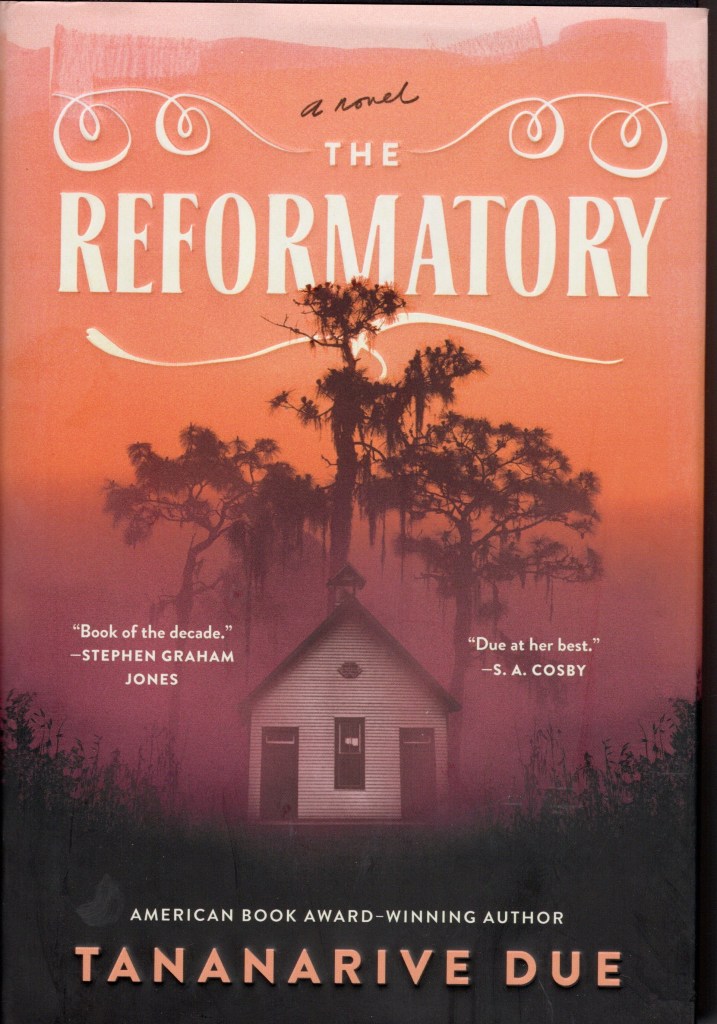
And in a class almost by itself is Tananarive Due’s The Reformatory.
Robert Stephens held his breath and counted to three, hoping to see Mama.
Some mornings his nose tickled with a trace of talcum powder or Madam C. J. Walker’s Glossine hair grease, and he felt…something hovering over him, watching him sleep. His groggy brain would think…Mama? If he gasped or sat up too quickly, or even wiped the sleep from his eyes, it was gone like a dream. But sometimes, when the June daylight charged early through the thin curtain and broke the darkness, movement glided across the red glow of his closed eyelids like someone walking past his bed. He felt no gentle kisses or fingertips brushing his forehead. No whispers of assurances and motherly love. Nothing like what people said ghosts were supposed to be, much less your dead mama. That morning he was patient, counting the way he’d practiced–one one thousand, two one thousand, three one thousand–and slitted his eyes open.
A woman’s shadow passed outside of the window above him, features appearing in the gaps between the sheets of tinfoil taped across the glass. In a white dress, maybe. Maybe. Moving fast, in a hurry.
“Mama?”
This book is a revelation. It is without question one of the most powerful books I’ve read in I don’t know how long.
I knew it was going to be a hard read, because I knew what the book was based on. I also don’t remember when I first became aware of the horrors of the notorious Dozier School for Boys in Florida, but it was a horror to be sure. I’ve read some novels based on that story (I loved Lori Roy’s The Disappearing) already, and so was familiar. Reading about enslavement and the Jim Crow South2 is inevitably a hard slog for me, and not just because of the white guilt it deservedly triggers; it just staggers me that in a country that supposedly is about equality and freedom such things could happen, be taken as normal, and changing the system is so violently opposed…a lot of racist Southerners see nothing wrong with that history and would like it to return, so these kinds of stories of American atrocities against its own citizens are incredibly important. The pen is indeed mightier than the sword, which is why repressive governments always go after journalists and writers; a well-told story that illustrates the injustice for the reader and humanizes it can change minds.
The Reformatory is about the Gracetown School for Boys and a young twelve year old Black boy who is sent there for absolutely nothing; an older white boy was sexualizing his older sister Gloria, and when young Robert stands up for her he gets a brutal shove, and he retaliates with a kick. Alas, the white boy’s father is wealthy and therefore powerful, and he wants this “uppity” behavior punished. In a joke trial that’s not even a trial, the corrupt racist judge sends Robert to the hell of the reformatory. Robert’s story doesn’t become about a search for his own justice, but the hell of surviving a place where boys die regularly but never of natural causes. Young Robbie has a gift, too–he can see ghosts–and there are a lot of ghosts there for him to navigate. Gloria’s story becomes about her desperate drive to get her brother out of there and correct the injustice. Their father was also a union organizer, and was falsely accused of raping and beating a white woman, so he fled north to Chicago. So, the boy in custody is also a pawn for the white power structure who really wants to get their hands on Robert Senior.
The warden, Haddock, is a sadistic predator who enjoys torturing and raping and murdering his charges. He also has a special need for young Robbie’s ghost seeing abilities, wanting to rid the campus of the ghosts of his victims. Due manages to make the horrors of that place absolutely real, with some of the most vivid and powerful images I’ve come across in a novel in years.
But the true horror of the book isn’t the ghosts at the school. The true horror is its horrific and realistic depiction of the Jim Crow south, and the lack of hope for change in the Black characters. It was about halfway through the book that I realized, as much as I was loving this book, that there was no happily ever after for Black people under Jim Crow, before civil rights. They might be able to escape a predicament, but there was no escape ever from the system.
Which is absolutely terrifying.
Definitely check this book out, and I am going to look for my next read from Due.






 Queer and Loathing in America