Take a Chance On Me

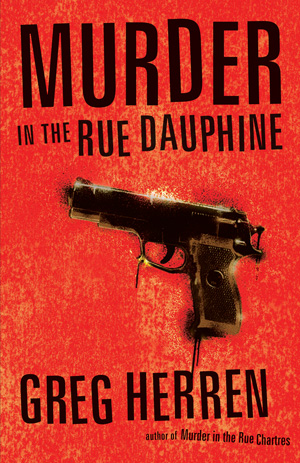
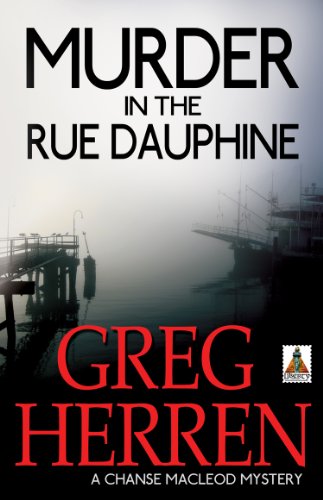
Ah, Murder in the Rue Dauphine.

It’s always weird for me to talk about my writing and my books and so forth on here; I always worry that I am either contradicting and/or repeating myself. When you’re as self-obsessed as I am, that can be a problem; talking about myself is probably my favorite thing to do–on here, at least. And I feel like I’ve told the story of where Chanse came from and how the series developed from the very beginning many, many times.

It was when I was living in Houston that I rediscovered crime fiction, and the old love was even deeper once it was rediscovered. This was the period when I read most of the Perry Mason novels, discovered Paretsky and Grafton and Muller, and decided to give Travis McGee and John D. MacDonald another try. (I had read The Dreadful Lemon Sky when I was a teenager, but I hadn’t liked it; I was more into the classic detective mystery, with lots of suspects and a denouement with everyone gathered in a drawing room as the identity of the killer was unveiled–the McGee series was definitely not that. But MacDonald had written a superb introduction to Stephen King’s first short story collection, Night Shift, and I had always wanted to give him another chance–pun fully intended.) I devoured the McGee series this time around; and I really admired the character and how fully rounded and developed he was (I should give the series a reread; I’d be curious to see how they hold up now)…and armed with all these new private eye novels and Perry Mason puzzles, so I started coming up with my own version. Even the name was a shout out to McGee. My character was also tall with sandy/dirty blond hair, a former college football player, and he lived in Houston, with an office downtown and a secretary named Clara. The title of the first book was going to be The Body in the Bayou, and I started basing the case on the tragic Joan Robinson Hill case, immortalized in Tommy Thompson’s Blood and Money (the premise of the story was that the character representing Joan’s father hires Chanse after Joan’s death to find dirt on John–and then John is murdered; fictionalized, of course.) I wrote about six or seven really bad chapters long hand before giving up. I didn’t know how to write a novel then nor did I understand the concept of rewrites and revisions and drafts. (My ignorance was truly astounding.) The hurdle I couldn’t clear was typing. I was a terrible typist. I’d had a job in California working for an insurance brokerage that was computerized, and had a word processing program that I used to write short stories on; it made such an incredible difference that I knew I would have a much better shot at actually making my dreams come true if I only had a word processor…

In 1991, after I moved to Tampa, I managed to get a word processor, and that was what I wrote my first two and a half young adult novels on–the original drafts of Sara, Sorceress, and Sleeping Angel–and used it happily for several years until it finally died on me. But by then, I was living with Paul and had swung back around to wanting to write adult crime fiction again, and I wanted to write the Chanse character that I’d already created…so I picked back up on The Body in the Bayou, moved it from Houston to New Orleans, got rid of the office and the secretary, and made Chanse gay. I kept the title, but threw away the story; I wanted it to be a gay story, too. I don’t really remember the plot, but it had to do with the murder of a beautiful boy-toy for a wealthy closeted gay man in New Orleans…and Chanse knew the boy-toy from his days working as an escort before he landed the rich man, I wrote about six or seven chapters of this before we moved to New Orleans….and I realized I’d have to throw it all out again because it was all wrong; I’d made the classic mistake so many writers make when writing about New Orleans: writing about it having never lived here, I only had tourist experiences–which are vastly and dramatically different from the actually “living here” experiences. So, once again, I threw it all out and started over, this time calling it Tricks instead of The Body in the Bayou.

The title morphed again to the less saleable Faggots Die after the first draft; and I remember talking to Felice Picano–he was coming into town for the Tennessee Williams Festival, and I picked him up at the airport. As we drove back into the city from Kenner, we talked about my book and the series, and he nixed the new title as well as the old one. “No one, ” he wisely said, “will pick up a book called Faggots Die, and Tricks sounds like a pornographic memoir of your sex life.” Felice was actually the one who suggested I mimic titles for the series from a classic writer…and we were throwing titles around in the car when I said, “You know, the streets in the Quarter are technically rues–Rue Bourbon, Rue Royale, Rue Dumaine–and the murder happens on Dauphine. Maybe Murder in the Rue Dauphine?”

“That’s perfect,” Felice said, and then we played with Poe titles the rest of the way into the city–incidentally, one of them was The Purloined Rentboy, which became my short story “The Affair of the Purloined Rentboy”, so never throw anything away.

And thus was Murder in the Rue Dauphine titled; and the plan for the series titles was also devised–the branding was changed by the publisher, but I can honestly say my first book was titled by Felice Picano.

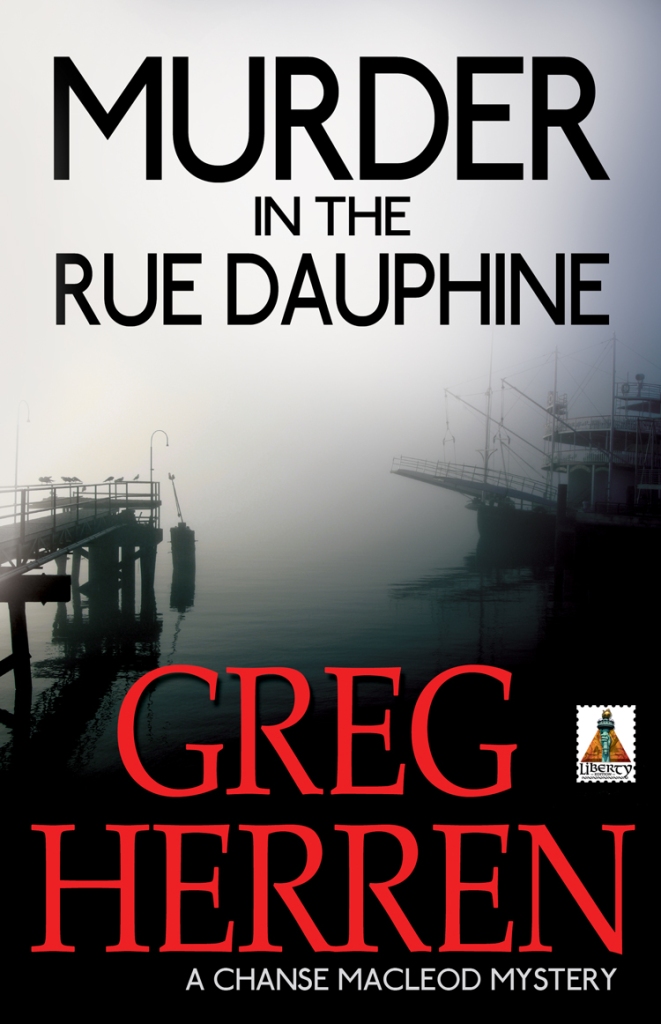
Never come to New Orleans in the summer. It’s hot. It’s humid. It’s sticky. It’s damp. It’s hot. Air conditioners blow on high. Ceiling fans rotate. Nothing helps. The air is thick as syrup. Sweat becomes a given. No antiperspirant works. Aerosols, sticks, powders, and creams all fail. The thick air just hangs there, brooding. The sun shows no mercy. The vegetation grows out of control. Everything’s wet. The build­ings perspire. Even a simple task becomes a chore. Taking the garbage out becomes an ordeal. The heat makes the garbage rot faster. The city starts to smell sour. The locals try to mask the smell of sweat with more perfume. Hair spray sales go up. Women turn their hair into lacquered helmets that start to sag after an hour or so.

Even the flies get lazy.

My sinuses were giving me fits as I left the airport and headed into the city. It was only 7 o’clock in the morning but already hotter than hell. The air was thick. I reached for the box of tissue under my seat and blew my nose. The pressure in my ears popped. Blessed relief.

As I drove alongside the runways I could see a Transco Airlines 737 taxiing into takeoff position. I saluted as I drove past, thinking it might be the flight that my current lover was working. Paul looked good in the uniform. It takes a great body to look sexy in polyester. He does.

He’d be gone for four days on this trip. I was at loose ends. I’d wrapped up a security job for Crown Enterprises the previous Wednesday. The big check that I’d banked guaranteed I wouldn’t have to worry about money for a while. I like when money’s not a concern.

And so began a series that lasted for seven titles and about twelve years or so; I don’t remember what year the last book in the series was published. I never expected anyone would publish it; it was intended to be a “practice novel” so I would get used to rejections and learn. It was also the first manuscript I ever wrote that went through multiple drafts before I thought it was finished enough to send out on query. It was supposed to be an exercise in learning humility and getting experience with the business while I wrote the book I did expect to get an agent with and sell–which was what I’d always called “the Kansas book” for over a decade at this point. (It eventually morphed into #shedeservedit.) But you never really learn what you’re supposed to when you’re stubborn, thin-skinned, and used to being demeaned and talked over and not taken seriously, for any number of reasons. I sent the manuscript to three agents: two sent me lovely but form rejections, which was disappointed but not surprising. I took this well, put the manuscripts away to send to three more once the final rejection came.

It came on a Friday, if I recall correctly. I went to pick-up the mail and my manuscript was there. Not a surprise, of course, but still a little disappointing. I went out to my car and opened the package…and paper-clipped to the title page of the rubber-band bound manuscript was a torn piece of used paper, with a note in ink reading I find this manuscriptand characters neither interesting or compelling with the agent’s initials at the bottom.

It was like being slapped in the face.

By the time I got home I was in a raging fury. I was literally shaking with rage when I came inside. How fucking unprofessional, I thought as I sat down at my computer to check my emails, trying to decide how I would enact my vengeance on this rude piece of shit.1 There was an email there from the editor I was working with on an anthology which had taken my first-ever fiction short story and thus would be my first publication. I had never read the signature line–mainly because I was so excited for my first fiction sale (NARRATOR VOICE: it was porn). This day, he concluded his email with Please send us more work. We definitely want to see more from you and as my ego preened, slightly soothed from the insulting agent note from earlier in the day2, I also looked down at the signature line and realized I was communicating with the senior editor at Alyson Books! I immediately wrote him back a very short note: I’ve written a novel with a gay private eye set in New Orleans, would you be interested in that? and before I could talk myself out of it, hit send.

He wrote back immediately and said please send it to me ASAP!

I put the same manuscript back in a new envelope, and drove back to the postal service to get it in the mail before I changed my mind, and breathed a sigh of relief once I got back to the car–and immediately forgot all about it.

Six weeks later I came home to a phone message from the editor. I called him back, he made me an offer, and my career leapt forward much faster than I expected…and it started a roll of good luck and “being in the right place at the right time” that has kept me publishing almost non-stop since Murder in the Rue Dauphine was released in 2002.

It sold really well, got mostly favorable reviews, and scored me my first Lambda Literary Award nomination.

Not bad for a manuscript and characters who were neither interesting or compelling, right?3

It also took me a long time to realize–or rationalize–that the note wasn’t meant for me. (I was most offended that I wasn’t even worthy of an actual form rejection letter; that was the truly insulting part for me.) I realized when telling this story on a panel somewhere, that the note was probably meant for an intern or a secretary or an assistant, who just shoved the whole thing in an envelope to do the rejection and through some wild Lucy-and-Ethel office shenanigans, it went out without the rejection letter and with the note intended for internal eyes only…and made me wonder, how different would my career and life be had that fuck-up not happened?

We’ll never know, I guess.

  1. Not really proud of this reaction, but I did get the last laugh. ↩︎
  2. Said agent died a few years later. I may have smiled and said good, a la Bette Davis vis a vis Joan Crawford’s death. ↩︎
  3. I may be more forgiving about a lot of things these days, but I will always be petty about that hateful agent. ↩︎

Baby, Come to Me

Today’s hunk is probably going to get flagged for “sensitive content” on the various prudish social media sites, but so be it.

The roofers came in yesterday and worked on the kitchen ceiling, and of course day one, I was able to close Sparky up in the bathroom until they left. Yesterday, he figured out how to open the bathroom door, which meant I had to crate him and he did NOT like that at all. But apparently, our cat is an evil genius and super smart–not a bad thing, it just means our only option when the apartment is being worked on is to crate him, and I really don’t like doing that…but he’s so curious about everything I fear if he got out we’d never catch him and he’d be so excited by all the new things to explore and investigate…sigh. Hopefully they won’t be here long; they just have to do some caulking and rehang the fixture. We will see.

I survived my first physical therapy session–which wasn’t bad at all. They gave me some exercises to do, which don’t take long, and I go back again tomorrow morning for round two. I will be able to schedule it around my work schedule, so that’s also a plus, and I really like my therapist. I have to say, having not had a lot of experience with medical stuff other than when Paul was having some procedure and my primary care visits (and having heard horror stories from other people about hospitals, treatments, insurance, etc.) this was extremely easy and simple. I have really gotten amazing care on every level, despite the misdiagnosis from my former primary care physician, and the insurance (knock wood) has been easy every step of the way; if there were any issues with it, it was handled by the medical staff and I didn’t have to deal with any of it.

The worst part of this entire thing–once I was able to disconnect all the things I was attached to for 72 hours after the procedure–was the antibiotics, which made me nauseous; they had also giving me an anti-nausea medication so I could handle those. But I absolutely hated them. The anti-nausea medication kept me from vomiting it all back up, but I could also tell when the nausea was occurring. I never had to throw up, but I could tell my body was fighting it with the help of the other pill, and while not as unpleasant as actually throwing up would be, it was unpleasant.

And you know, if that’s the worst thing to experience after this kind of major surgery, that’s pretty impressive. I got amazing care.

So, yesterday from shortly after I got home from PT until about six last night I was exiled from my workspace, and so I simply sat in my easy chair and read this year’s Christmas murder mystery from Donna Andrews, Let It Crow! Let It Crow! Let It Crow! and am enjoying it–Meg participating as a last minute replacement in a television reality competition blacksmithing show (which is actually a brilliant idea) was an excellent way to shut down listening to Sparky howl from upstairs while they worked on the ceiling. I didn’t get as far into it as I should have, or would have under ordinary circumstances, but I was often going upstairs to try to calm him down and there was a lot of sawing, drilling, and hammering noises. I got about a hundred pages in, which wasn’t bad at all, really, given all the distractions, and the book flows so smoothly…that’s one of the things that I love about Donna’s books–they are so smooth, everything flows nearly and cleanly into the next scene, chapter, clue, strange occurence, and that feeling carries back and forth between books. I counted the books listed at the front of this volume, and by my count, this is book thirty-three in the series; how many other series have exceeded that number? Ellery Queen? Nero Wolfe? Perry Mason? And all at the same publisher, too. That’s really a skill that should be respected.

We watched some more of Fellow Travelers last night and the show is very good; high production values, excellent writing, superb acting (Jonathan Bailey deserves at the very least an Emmy nomination, but I doubt he’ll get it; gay men playing gay parts seldom get recognized) and it’s an important story–showing how horrific it was to be gay back during the days of Eisenhower and McCarthy, and working in Washington; I’m glad Thomas Mallon wrote the book and even gladder Showtime made it and clearly spared no expense. But…it’s hard to watch sometimes. I won’t say it’s triggering, because that’s not the right word, but as i told Paul last night, this isn’t going to end well. The story flashes back and forth between the 1950’s and the 1980’s, in AIDS-devastated San Francisco in 1985, so…yeah, not exactly going to end on a high note, is it? As I was watching last night, I couldn’t help but think of Felice Picano’s Like People in History, which similarly flashed back to the past from the present–AIDs-ravaged New York in the early 1990s–through the entire progress of queer rights and the arrival of HIV/AIDS. That would also make a terrific mini-series, and these stories, hard as they are to read and watch and relive, are important because the memories of living through that time, and what it was like, are fading…and as those of us who survived the plague years get older and die from causes other than HIV/AIDS, I worry those stories won’t be told, or remembered, anymore. It’s bad enough that it’ll be thought of as distant history and not as horrific as it was, something that happened to other people a long time ago.

I remember when I first started writing, and in that time period for queer people there was always the question–do I write about HIV/AIDS? Does everything–all of our art–have to center HIV/AIDS? Even now, I wonder about whether I should or not in a book; do I have a responsibility to my readers and my community to talk about HIV, PrEP, undetectable viral loads and so forth? Or is that something people don’t want to read about, would find intrusive to the narrative? I’ve never wanted to write anything that even remotely hinted at that heavy-handed “a very special episode” way so many television shows handled social issues in the 1980s.

Heavy thoughts for a Wednesday morning before heading into the spice mines. Have a great day, Constant Reader, and I’ll be back probably later, depending on the workers.

One More Chance

My first series will always be special to me, even though I’ve retired Chanse MacLeod…at least for now, at any rate; I’ve learned (sometimes the hard way) that I shouldn’t ever say never when it comes to my writing career. Chanse will always be special for me in that he was the main character in my first book to be published as well as the first series of mine to see print. I originally created Chanse in 1989–can you believe that? Thirteen years from the time I first started constructing the character and him getting into print.

When I left California and moved to Houston that year, I decided to put the miseries of the 1980’s behind me, forget the past, and try to move on to the future I wanted for myself. I still had no idea what I wanted to do to make a living, but I knew I was never going to become a writer unless I actually, you know, wrote. When I moved to Houston, I moved away from reading mostly epic fantasy and horror to reading crime and horror. Sue Grafton’s F is for Fugitive had just been released, and the bookstore–Bookstop?–I frequented in Houston had a store catalogue that had book reviews and author interviews, and Sue Grafton was on the cover. I thought the alphabet titles was a great idea, so I bought the first three and took them home. I loved them, and started diving back into the crime fiction genre headfirst. I also started reading the Erle Stanley Gardner Perry Mason novels again–I’d read some when I was a kid–and I also started reading the rest of the Travis McGee series (I’d read, and not liked, The Dreadful Lemon Sky when I was thirteen; I wasn’t old enough to appreciate the series) and absolutely loved them. I loved McDonald’s writing style more than anything else, and the descriptions of McGee sounded, well, hot.

I started creating Chanse MacLeod as a blend of Kinsey and Travis McGee, really; I was driving to work one day and crossed a bayou. noticing the sign for the first time, and thought “The Body in the Bayou would be a great title for his first book” and so i started constructing the character and his world. He was a former cop turned private eye in Houston; he’d played college football at Auburn but suffered a career-ending injury his senior year and so he went into law enforcement, eventually going out on his own. He had a secretary named Clara that he shared with a couple of lawyers in an office suite in downtown Houston, and most of his work involved trying to get evidence of adultery for wealthy and suspicious spouses. In 1994. after I fell in love with New Orleans, I moved Chanse to New Orleans and his college experience to LSU; I also was discovering gay crime novels around this same time, so I decided to make Chanse a gay man; from a small town in Texas with homophobic parents and family, playing a sport where homophobia is rife, and he too discovered and fell in love with New Orlean…so he became a cop when his football career ended, eventually becoming a private eye. I started rewriting the four or five chapters I’d written with the story set in Houston…but once I moved to New Orleans and began to grasp what it was actually like to live here, I threw the entire thing out and started over.

That manuscript I started over became Murder in the Rue Dauphine, and the first place I submitted it to offered me a contract six weeks after I mailed them the manuscript. Alyson was home for the first five books in the series…before Alyson Books went belly-up, without paying me the advance for the fifth book and no longer paying me royalties on the others (the entire series was still in print when Alyson folded).

Burn in hell, corporate trash who bought Alyson.

(The company had been doomed for a while, and the unfortunate last minute attempt to rescue it failed, which I thought was horrifically unfair to the person who they brought in to save it. The final collapse was hardly his fault; his predecessors had made so many unbelievably stupid mistakes there was no saving the business, really. And ebooks and so forth started eroding away at the reader base, at the same time the business began to crumble. I’ve always felt bad for the poor dude who was the last to hold the title of publisher. I don’t think he had any staff and he was the only person working there by the bitter end.)

But when Alyson went belly-up and chose to stop honoring their contractual obligations to pay their writers, I’d already moved the Scotty series to Bold Strokes Books and was doing not only anthologies for them but also editorial work for them, so moving the Chanse series there was a no-brainer.

The last two books in the series were done with Bold Strokes Books.

As with anything with my career, I had a plan for the Chanse series but of course, man plans and the gods laugh. I had always intended the series to be seven books, from the very beginning, and I had this emotional journey for him all mapped out: the series would chart his progression from lonely, damaged and scarred loner with a snide sense of humor to more centered, more grounded, more mature and more settled into his life. So, when the series opened, he was–against his better judgment–seeing a hot flight attendant, and wondering if he was actually falling in love and had the opportunity to be happy for once in his life. I really did give him a miserable backstory; alcoholic mother, abusive drunk redneck father, grew up living in a trailer park in a snotty small Texas town where no one would let him forget he was trash until he showed some football playing ability–and he was just cynical enough to understand they still considered him trash, but trash with a skill they appreciated. He went to LSU and joined a fraternity in a final attempt to banish the homosexuality from his brain (it didn’t work), and then was injured in a bowl game so his career was over–he’d been considering going for the NFL draft. He was a big man, as such; and spent a lot of time in the gym working out and keeping fit. I also had to make a horrific decision while writing the second book–with every intention of walking that ending back in the third.

And then Katrina happened, and everything changed.

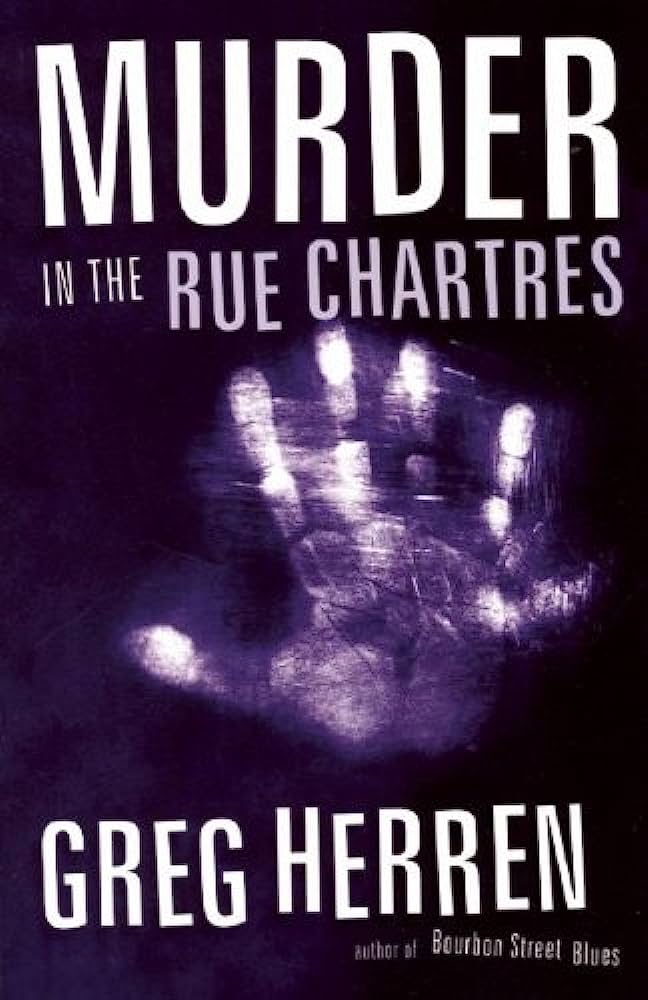
My editor at Alyson Books at the time, Joe Pittman, was new. He had come on board shortly after my previous editor was let go (I had a different editor for each of the first three Chanse books, and in fact had a different for the last two–so the Chanse series went through five editors at Alyson…now I would see that as a sign), and I was assigned to him as a gay mystery writer. He got in touch with me after Katrina to check in on me and of course, to encourage me to write about Katrina, which I did NOT want to do whilst I was in the middle of experiencing the aftermath still. I was still unhoused at the time, staying with my parents in Kentucky, before moving back to Hammond, Louisiana, just before Rita to housesit. Paul and I talked on the phone one morning and suggested we do a fundraising anthology for Katrina victims…but I wasn’t interested. Joe called me that afternoon and with the same suggestion, so I told him Paul wanted to do one and that was how Love, Bourbon Street came to be. Joe also kept insisting to me that I should write a post-Katrina book as the next Chanse book, and despite my reluctance I decided to go ahead and do it. Part of the problem, as I saw it, was, how do you end a book on a hopeful note when the city is still in ruins and most of the population still displaced? Joe kept pushing me, and I finally agreed to write Murder in the Rue Chartres–and I really don’t remember anything about writing the book other than I did actually write it, and it turned out to be one of my best books. It won the Lambda, for one thing, and got great reviews everywhere.

The fourth Chanse novel was, in my opinion, the weakest of the series. They’d fired my editor before I signed a contract for the fourth book, and when that finally happened, they needed me to write in like eight weeks. I asked for a two book contract so I would never have to write another book in eight weeks again (LOL at my naivete), and they were so desperate for the fourth they agreed. (I had already written a Scotty book that was just sitting in a drawer; I turned it into the fourth Chanse and to this day I think it was a mistake.) Of course, they did publish the fifth, but they never paid me a dime for Murder in the Garden District. The only money I’ve made off that book is from the ebook Bold Strokes put up–I gave them the entire Chanse backlist for ebooks, and those Chanse books still sell.

Maybe I shouldn’t have ended the series at seven?

But it felt like the right place to stop. Chanse’s personal story of personal growth and how it happened kind of got lost along the way; he grew and changed as the series progressed, but writing the last two–which I also think are good–felt a little paint-by-the-numbers for me; I felt that writing the sixth and when I felt it again in the seventh, I decided to stop there. I wasn’t getting any satisfaction for writing the books anymore, there was no joy derived from doing them, and since I’d already planned to stop at seven…I stopped at seven.

I still get ideas for Chanse books, of course. I have an LSU fraternity murder that would be a perfect Chanse story–I planned it as a novella–and of course, I’ve always wanted to fictionalize the Jeff Davis Eight murders as a Chanse novel, too. Maybe I could do three Chanse novellas published in one book?

That would make a lot more sense, and could be even more fun to write than one long single story novel.

Or I may not do anything with Chanse at all, and use those stories/plots for something else.

Times Change

And here we are on Monday morning yet again–the world keeps turning and revolving around the sun, bringing the endless cycle of night and day we’ve become accustomed to as perhaps one of the few things in this life we can reliably depend upon; things which, alas, are in far too short a supply these days.

I worked on the book yesterday–I wasn’t feeling especially motivated, to be honest, and decided to try not to force anything, but I did get some things done with it, which was necessary, so I don’t feel like the day was entirely lost, either. Paul slept late and I went to the gym, getting home before he got up and left for the office. I was in bed (damned six a.m. alarm anyway) by the time he got home, so I am not even entirely sure when he got home, to be honest. I think I woke up and glanced at the clock around midnight when he was getting into bed–but I may have dreamed that. After I was finished with the bare minimum of the work I got done yesterday, I started watching a documentary series about Egypt–Planet Egypt–but when I was getting going on the second episode, I realized you’ve already seen this–they jump from Narmer to basically the 18th Dynasty and so decided to find something else to watch. I wound up landing on Visible, the documentary about queer representation on television through the decades, and I managed to get through the first two episodes. Ironically, I remember the bad representation on screen from mostly the 70’s (they also didn’t mention another notorious queer killer–John Davidson played a cross-dressing murderer on The Streets of San Francisco to some serious critical acclaim. I didn’t watch it, but it was yet another early representation of queer as psycho killer, so I was a bit surprised they skipped it–and if you think about it, it’s really strange that of all television shows, The Streets of San Francisco wasn’t loaded with queer representation….then again, Arthur Hailey’s Hotel was an 80’s show set in San Francisco with nary a queer in sight; which tells you everything about the times). It also has reminded me that I should probably let go of a lot of the shame I feel/felt about not really coming out until I was thirty in every aspect of my life…it was a very different time, and not everyone was able to escape to San Francisco or New York, which at the time were the only real options for queers.

One of the things that actually gives me hope for the future is seeing all the openly young queer people living their lives today in every part of the country, something that simply wasn’t really possible when I was a teenager or in my twenties.

Another takeaway from the documentary, which I will probably finish tonight–I never remembered Raymond Burr as being as sexy as he actually was–he had amazingly beautiful and expressive eyes. I wonder…are the original Perry Mason shows streaming anywhere? I loved the books, and I can remember watching the repeats when I was a kid. My grandmother loved Perry Mason, and she was really my gateway to mystery books and movies, as well as horror. I never finished watching the HBO reboot, which I was sort of enjoying while not enjoying it at the same time–I didn’t necessarily like the fleshing out of the character or giving him this angsty back story, an the plot was glacial and hard to follow, but it was extremely well done and well acted, and you can never go wrong with Tatiana Maslany, ever. But I’ve also not been driven to go back and finish it, either–the same with Penny Dreadful: City of Angels–although the two shows vaguely reminded me of each other. I had to stop watching that one because of the unrelenting racism against the Latinx community of Los Angeles–which, of course, is completely historically accurate, yet hard to watch because you also knew there would be no justice for them. Perhaps I should go back and watch them back-to-back? They seemed to be similar thematically….hmmm, it’s a thought, and of course, I love Natalie Dormer.

I also managed to read a few chapters of The Russia House, but wasn’t really able to focus the way I would have liked to, so I put it aside and started looking for documentaries.

And this coming weekend is the Tennessee Williams Festival, which means my first quarter of 2021 widowhood will be coming to an end relatively soon. I’m not sure I’ll know how to act, having to make dinner and pack lunches for Paul every day–I stopped doing that early in the pandemic, and am not entirely sure I’ll go back to it. Half the time he wouldn’t eat his sandwich until he came home at night, alleviating the need to make dinner, of course, but he has to carry so much with him as it is and if he wasn’t going to eat it most of the time during the day, why carry it along? I try to reduce everything I have to carry to and from work as much as I can–and I don’t walk, I drive.

It’s going to be in the 70’s this afternoon, which is lovely. It’s in the high fifties right now, which means I’ll have to take a jacket with me to work today, but it’s okay–a relatively small price to pay, really, for lovely weather later today. I did make it to the gym yesterday–even increased some weights–and my flexibility is slowly coming back. Oh, I know even now I am more flexible than most people, but I also can remember how flexible I used to be, and while I seriously doubt I can ever get back to that level at age sixty, the stretching does make my muscles feel better–they feel marvelous this morning, frankly–and what I really should do is stretch every morning when I get up here in the kitchen–doing it every day rather than three times a week would make the gains progress more rapidly, obviously–but that’s something I’ll have to gradually work myself up to. I am pleased with the progress I’ve made thus far–I’ve noticeably lost weight, and people are noticing; every week I get at least one mention from a client, or get asked have you been working out, which is always lovely to hear; positive reinforcement is always welcomed. I also know from experience that I will never really see the changes, or if I do, I won’t think it’s enough–I am so fucking critical of myself and I don’t think that is something I’ll ever be able to change at this late date; I’ve tried to stop being self-deprecating but it’s an on-going struggle, really.

And a particularly annoying one, I might add.

Academic

And just like that, it’s Saturday again, and huzzah to everyone for making it through another week. It’s another beautiful morning here in New Orleans; the sun already high and shining bright, the sky bright blue. I have errands to run and the gym to get to, and then I am planning on spending the rest of the day reading the manuscript and editing it. It will be a full day here in the Lost Apartment, and I relish getting back to work on my book. I hate being behind–this was the month I was supposed to spend getting caught up on everything else and finishing short stories so next month I could focus on Chlorine–but delays and things happen, as always, and sure, I am in that time of life where one is acutely aware of how quickly the sand is slipping through the hourglass–but I have also learned to not beat myself up over things I have little control over. I have no control over whether I sleep well, for example, and I have no control over my energy levels. I can do the best that I can, but I exert only so much control over any of those things.

Not allowing myself to get upset or stressed over things I cannot control is a lesson I am still learning, alas.

I often feel pulled in many directions (and am fully aware that this is probably the case for everyone; it seems as though everyone is having a rough time since the pandemic shut down the world last year–almost a full year ago; we closed down services at my day job on March 16th) with an inevitable amount of endless tasks for everything I am involved in, and usually every day I have an idea of what I want and/or need to get done with every day; and yet I never achieve those goals because inevitably something new pops in and/or pops up that requires attention of some sort from me, and this inevitably results in me not getting to everything that needs getting to, which then makes the to-do list seem even more endless, and on and on. Part of the problem I’ve been having since the pandemic altered everything is my inability to sit down and make an actual to-do list–because the to-do list would inevitably require me to get through all of my emails, and I sometimes have neither the strength nor the patience to work my way through them all. Right now in my primary in-box I have 56 unread emails–I’ve already deleted the trek–and there’s about another 100 or so in there I’ve already read that probably need a response, or an addition to my to-do list.

I also remembered last night, as Paul and I watched the LSU gymnastics team defeat Missouri, that I’ve never finished watching two shows I really liked and was enjoying that he didn’t–Perry Mason on HBO Max and Penny Dreadful: City of Angels on Showtime. So those, along with a rewatch binge of Megan Abbott’s Dare Me, should go on my list of things to watch while I am making condom packs–or when I am done with work for the day and Paul’s not home. I was quite delighted that he came home from the office so we could watch the gymnastics; I am not really seeing a lot of him these days and so those moments when he is home are more to be cherished and enjoyed because of their rarity. I am a Festival widow every March, really; but this year more so than any other I am really looking forward to the Festival being over.

I also would like to get back into reading some more…I’m not sure what in my brain is broken, but for some reason I can’t read anything other than the chapter of so of Gore Vidal’s Lincoln that I get through every morning. I think it’s a combination of all the things I have hanging over my head, quite frankly, that keeps me from reading–and as I’ve also said, watching television or a movie or even just Youtube videos is much more passive than active and requires little to no brain power. I did come up with a couple of great titles yesterday for short stories as I made my condom packs and continued watching videos about queer representation in films and television from the 1960’s through the 1990’s; there was a lovely little video yesterday of how the Queer Cruise videos guy was helped to come out by viewing The Rocky Horror Picture Show when he was in high school; and that got me thinking about my own history with Rocky Horror, and what it meant to me; perhaps yet another essay someday. Is that still shown as a midnight movie? I would imagine not, given the pandemic and the fact that’s been on television and available to purchase on tape or download now for decades; I remember thinking the first time it aired on television well, that’s the end of that and it honestly did feel like the end of an era. I imagine many freaks and weirdos and queer kids no longer need something like The Rocky Horror Picture Show as a gateway to their own worlds and the possibilities that life holds for them…there’s more and more queer rep all the time, in books, movies, plays, and television; although I would imagine in more repressive parts of the country Rocky Horror would still be a revelation.

And now I am thinking about writing a short story or a book about a murder built around a midnight showing of the movie. Oy, it really never ends…

I also like this other idea for a story I came up with yesterday: “The Rites of False Spring.” I scribbled down a lot of notes about that one.

And on that note, the spice won’t mine itself, so I should probably head on into the mines.

One of the Crowd

And it’s now the fifth of July, and so far–at least for me–the second half of this annus horribilis is off to an okay start. Yesterday was oddly not humid or hot; there wasn’t much direct sunlight and even by noon I hadn’t been forced to turn on the portable Arctic Air coolers that have so far made life in the kitchen/office bearable; I remain, as ever, buried and behind in all of my work, which is to be expected, of course–par for it, actually. I am always behind and scrambling to catch up, and since my personality is this peculiar combination of Type A mixed in with almost chronic laziness, this will most likely always be my state of being.

The sun is out, however, this morning, and while it remains cool here in the Lost Apartment, there’s no telling how hot it perhaps might get in here later this afternoon. I accomplished very little yesterday, truth be told; I started working on “You Won’t See Me” and didn’t get very far, because it was wandering off into a different direction than where it was originally intended to go–it wasn’t until I quit writing in disgust and adjourned to my easy chair that I realized (or remembered)where I’d wanted to go with the story in the first place, so I made some notes and went back to reading Cottonmouths. Later we streamed a lot more of The Club, which has a rather lengthy first season–it’s been a while since I’ve seen a season of anything recent that runs for over twenty episodes–and an awful lot has happened. We’re finally into the mid-teens, and halfway finished with the show, which we are still enjoying. And Cottonmouths remains quite delightful.

I refuse to allow myself to give into despair this fair morning over what I wasn’t able to get accomplished over the last two days. This morning I feel, for want of better terms, not only vivacious but alive and rested. The clouds of exhaustion that have made my thinking not as clear have lifted, or so it seems at this very moment, and we shall see how this day turns out, won’t we? I hope to get quite a bit accomplished today–we have the clinic open the next two days–and I have been sleeping well lately. I’m actually feeling close to normal for the first time in months, and while mentioning it also has me concerned that I might be jinxing it in some way, it’s actually been quite lovely.

It is very difficult to not fall into the ease of despair with the news every day–hell, every day for the last few years, quite frankly. The pandemic is raging out of control and might not get better for a while; Florida, for example, has reported more new cases over the last eight days than Louisiana has had since it first arrived here (um, where are all those people claiming it was irresponsible for us to have Carnival NOW? Cavorting on the beaches in Florida?), and as the crisis seems to continue to deepen rather than get better, the return to normality everyone seems to want gets pushed further and further back because of selfishness, frankly. As I joked to Paul yesterday about not getting much writing done yesterday, “What’s the point of writing anything new when who knows if there will even be a publishing industry next year?”

I’ve not, to be honest, thought much about my writing career this year, or at least since March. It was lovely being nominated for a Lambda Award–it’s been years since the last time–but I also knew once I saw Michael Nava’s name on the short-list I didn’t have a prayer of winning. But the nominations are always nice. I have thought about writing more Scotty books–I did leave their personal story on a cliffhanger in Royal Street Reveillon, after all–but there are two manuscripts in the hopper I need to finish first, and I want to work on Chlorine next. I need to get this Secret Project finished and out of my hair in order to get back to the two manuscripts–I’ve solved the issues with Bury Me in Shadows over the course of the pandemic–and I’ve also solved the plot issues with the Kansas book while I’ve essentially been too distracted and too exhausted and too ill to actually do any actual writing. My goal for this week–and yes, the week, not today–is to get that proposal finished; get a couple more of these stories under control and/or closer to finished; and if I have a highly productive week, to take next weekend off again to rest and recharge while trying to make some progress in the TBR pile. I want to reread another Perry Mason novel–I have The Case of the Calendar Girl in a hardcover I found in a used bookstore sometime during my travels over the past few years, and watching the new HBO Perry Mason has made me want to reconnect with the original character again–and I also want to get back into reading through both the John D. MacDonald and Ross MacDonald and Margaret Millar canons; which will help me get into a place where I will be able to get Chlorine written sooner rather than later. I also have some Dorothy B. Hughes novels on hand I’ve not read as well…and of course, there’s the Diversity Project to get back to at some point, in addition to the Short Story Project. I have Sara Paretsky’s short story collection on its way, as well as the latest Lawrence Block anthology, which I think is called In the Darkling Halls of Ivy (I could be wrong but it’s something like that), and of course, I still have his previous anthology on my side table, untouched.

So much to read, so much to watch, so little free time in which to do it all–and that includes, I might add, so little time to write everything I want to write before I die.

And on that note, I am going to head back into the spice mines. Have a lovely Sunday, Constant Reader–I certainly hope that I do.

Sail Away

So I went ahead and sent out three stories on submission yesterday; “This Thing of Darkness,” “Night Follows Night”, and the Sherlock story. Will any of them actually be accepted? Who knows, but that’s all part and parcel of the joy of being a writer who likes to write short stories despite being rarely asked to write them. I have like 86 short stories in some form of progress now, but it felt really good to write finis on these and sent them out. If they are rejected, oh well; I’ll just save them for my next short story collection.

See how that works? Staying positive is always a plus, you know?

And last night before I went to bed I checked the Pandora’s Box known more commonly as my email inbox to discover a delightful email from the editor of the Sherlock anthology that she loves the new edition of the story and is sending me a contract! How absolutely delightful. I am glad “The Affair of the Purloined Rentboy” will see print, and as always, it’s lovely to get that kind of affirmation. It’s also a period piece, which was just as daunting as writing a Holmes story set in New Orleans–the only rule for the anthology was that it couldn’t be set in London, and Holmes and Watson couldn’t be English. So I made Holmes a Louisianan–and we never are quite sure where Watson is from. But it was great fun, challenging, and very, as I said, daunting. While I’ve read the Holmes stories–and the Nicholas Meyer novels, and other stories written by modern day Sherlockians (notably, Lyndsay Faye and Laurie King), I don’t think of myself as an avid Sherlockian. Even now, I cannot think of the plot of either A Scandal in Bohemia or The Red-headed League.

So, I wasn’t a hundred percent certain I could write such a story that would be worthy of publication, but it was a challenge–and I do enjoy challenges. I like pushing myself as a writer, trying something different, seeing if I can continue to grow as a writer. (But just between you and me, the only reason I even thought I could possibly do this was because it was specified not to be canon–no London, not the late nineteenth century, no need for continuity. No, this was a way I could write a Sherlock story and make it entirely my own as well. And of course, setting it in 1916 was also a bit of a challenge for me as well; I’ve never done much period/historical writing, and since I knew, once the title came to me, that Storyville had to be involved (how else could one write “The Affair of the Purloined Rentboy” and not involve Storyville?), which presented a host of other issues. Fortunately, I’ve been reading lots of New Orleans history lately, and one of the books was about Storyville: Gary Krist’s Empire of Sin (highly recommended, by the way), and in a short story I wouldn’t have to have the ongoing detail a novel would require, so I thought, fuck it, let’s give it a shot.

I was also able to use one of the locations I often use in Scotty books, the Hotel Aquitaine, which made it even more fun for me.

So, apparently, the thinking positive thing might actually work. How lovely!

Also, yesterday I (the ever-present resident Luddite) managed to figure out how to go back and read the chat from the Queer Noir at the Bar reading on Friday night–I kept accidentally closing it, and when I was reading I never looked at it–and wow. Everyone was so gracious and kind about my reading! I’m glad, though, that I wasn’t reading the chat while I was reading because it would have freaked me out. Thank you all for being so kind.

I also started reading Kelly J. Ford’s Cottonmouths, and as I read, I began to remember why I hesitated to read it. Being from the South, and from a particularly poor part of the South, I sometimes have trouble reading about that world; because of the memories it brings back, and while Ford’s prose is magnificently beautiful, she also brought me right into a world I know so well–a world I’ve been trying to shake off my entire life. There’s probably something to be said, or perhaps written, about my struggle with where I am from; the deep pride instilled in me my entire childhood about being Southern and the defensiveness that automatically arises whenever someone else is critical of (what I still think of) as home; and how that pride also runs concurrent with a river of shame–two rivers, running parallel, a kind of Tigris and Euphrates within my soul, my psyche, my being. I’ve started and never finished any number of stories and novels set in Alabama; my files run over with them. Bury Me in Shadows is the first manuscript set in Alabama I’ve ever finished a full draft of (there are a couple of short stories I’ve finished; Dark Tide is also set in Alabama but down in a little town on Mobile Bay–which isn’t quite the same thing), and I have yet to complete it enough to turn it into my publisher. Reading Kelly’s book takes me to the same places Daniel Woodrell’s work takes me, or Ace Atkins’ The Ranger series…that inner conflict, that inability to decide, that pride of place and where I come from coupled with shame. I could see it all so clearly in my head as I read that first chapter…she may have been writing about rural Arkansas but it could have been rural Alabama. It’s real, it’s vivid, and it’s beautiful.

The rural south is savage in its beauty.

My whole life has really been about dualities; being Southern but not growing up there; closeted self v. authentic self; being a writer but also always having some other job for whatever reason. My identity has always been sort of splintered; it’s probably why I am so constantly down on myself because I never really feel whole, or like I fit in somewhere–because I’ve been outside my entire life.

And, I have found few things trigger me to dark emotion–anger or depression–than being reminded that I am an outsider.

We started watching Perry Mason, and we’re enjoying it–but it’s really not Perry Mason. It’s something entirely else, with the characters given the same names as the ones Erle Stanley Gardner used. The cast is fantastic, and it’s a terrific noir series (if a bit reminiscent of Penny Dreadful: City of Angels–which we stopped watching, for reasons that are not pertinent here), so we will keep watching–but, it’s not really the same show or characters.

And it makes me want to reread one of the originals again.

And on that note, tis back to the spice mines with me.

The Man Who Has Everything

Tuesday morning and it looks like the rain has finally passed us; we actually got more rain all day yesterday than we did from Cristobal on Sunday. I know other places got slammed much harder than we did, but at least it was relatively minor and damage from the storm wasn’t nearly as bad as it was from previous storms.

The Anthony Award nominations were released yesterday, and sure, I was a little disappointed for a brief moment that I wasn’t among their number; but the nominations are chock full of diversity; lots of women, lots of people of color, and a wide variety of nominations. This is one year that is going to be incredibly difficult for me to pick winners because there are so many good books and stories nominated that I’ve actually read and loved. I’m still surprised that I’ve actually won an Anthony and been nominated another time, to be completely honest.

Awards are lovely, and everyone wants to win one–even if they don’t want to admit it; I do admit it. I like being nominated and I like winning even more. I tend to lose more than I win, which is actually kind of nice–I always figure I’m going to lose again, so it’s always a pleasant surprise on those rare occasions when I actually do win.

We’re still watching 13 Reasons Why, but I’m not really sure why. As we get deeper into the season it’s getting more and more off the rails–what the fuck with that camping trip episode, seriously–and while the story kind of makes sense, so much of it doesn’t. If they had simply chosen to explore the mental trauma the kids experience from everything they’ve been through–including violent sexual assaults and murder, which would definitely create mental issues, breakdowns, and behavioral problems–I think I would be enjoying this more; the concept of another kid who knows the truth trying to get them all to confess by playing torturous games with them is basically ripping off Pretty Little Liars and really speaks to a lack of creativity and originality; I could be wrong, and we’re vested enough in the show to keep watching, since we know it’s the final season.

I’m kind of looking forward to the new Perry Mason, too.

Oh, I’m so tired, too, this morning. I’ve not really had a good restful night’s sleep in a while now, and exhaustion is wearing me down. My kitchen is a mess yet again, and I still haven’t done the floors; but I just don’t have the energy to get any of this stuff taken care of–let alone the writing I need to get done.

Heavy sigh.

And now back to the spice mines.

Footsteps

I wound up deciding to take yesterday off from the world–computer, social media, you name it–because for whatever reason my desktop was acting wonky yesterday morning and eventually I grew so irritated I decided to run my errands. When I got home from that further irritation–nothing like people not only not wearing masks in public but not maintaining social distance as well–and I just wanted to scream at everyone: “do you want us to be on lockdown through September? What the fuck is wrong with you?”

But then I remember–this is New Orleans and nobody follows rules here; or at least, they ignore them when they’re inconvenient. It’s sadly part of the charm here, and now that it’s something important…I see how dangerous that can be. But it was nevertheless more fuel for my irritation, and by the time I got home my computer was still wonky so I decided to say fuck it and take the day away from the computer and social media. It was kind of nice–I fell into a Youtube hole of history videos (I am really glad to be studying history again; as I’ve said before, I kind of wish I’d majored in History in college–but would have never been able to narrow down a field of majority interest). I spent most of the afternoon moving and rearranging books and filing and cleaning while this Youtube videos played on continually; I learned some more about the Byzantine empire, the plague, and the Hapsburgs–who are so fascinating to me. Let other wars, you, happy Austria, marry.  Someday I’d still like to do a book about the powerful women of the sixteenth century; and many of those important women were Hapsburgs.

One of the things I’ve found interesting is how writers are engaging with their lockdown situation and their social media. Lists are popping up everywhere; and as I daydreamed yesterday while doing my chores and so forth, I started thinking about my own lists–rather than ten albums or books or movies that shaped me, I wanted to come up with more specifics: My Ten Favorite Agatha Christie novels, my favorite romantic suspense novels, my favorite crime novels by women, and so on. The reboot of Perry Mason, coming this summer from HBO (it looks worth a look, frankly; although I imagine there are any number of Mason purists who will naturally hate it; there always are), might be worth taking a look at some Perry Mason novels–I feel the books don’t get nearly as much attention as the TV series based on them; and the books don’t get talked about nearly enough, either. Talk about puzzles–Erle Stanley Gardner was a master of crime plotting, and red herrings, and confusing the reader; I don’t think I ever correctly solved a Perry Mason case until Perry revealed their identity, dramatically, in the court room (which is, of course, where that trope originated); and I do have a couple of them lying around on the shelves in the laundry room–The Case of the Calendar Girl and The Case of the Crying Swallow–so perhaps, as part of the Reread Project, I should revisit them both.

I also spent some time thinking about The Plot Against America–which is directly related to our finishing Ryan Murphy’s Hollywood last night on Netflix. Both are alternate histories, but one of the things about Hollywood is that it was an alternate history that was actually appealing; usually, alternate histories inevitably paint an uglier reality than the one that actually happened (although it’s hard to imagine a more dystopian alternate history for the present day than the actuality); Hollywood didn’t do that. Instead, it showed how horribly racist, homophobic, and misogynist the country was, and how Hollywood reflected that…and then gave us a lovely alternate history where a Hollywood studio saw its duty to change those things and open up society in the late 1940’s. It’s quite marvelous, actually; I kept waiting for reality to break over them, but it never did. It’s very well done, and it’s shot in the style of Hollywood films of the time, right up to the obligatory happy Hollywood ending. And of course, the boys were beautiful. The Plot Against America, on the other hand, was completely horrifying because it was so easy to imagine that we as a country could have gone that way. I don’t know how the novel ends–I never finished it; I have said before that I am not a fan of Roth and I never got past the first chapter of this one–but I thought the way the show ended was perfect, even if it was terrifying at the same time; it was more of an indictment of the United States (as I said to Paul, “this show is terrifying because it could so easily have gone this way here”) and humanity than anything else.  Hollywood also could be seen as an indictment of the way things used to be–its message seemed to be this could have all changed so much earlier if anyone in Hollywood had the courage to make these changes–and that is just as damning as The Plot Against America.

Today I am going to write and edit and revise and get things done. I think I am always teetering on the edge on Saturdays anyway; still leftover tired and so forth from the week, and then having to deal with the general public on top of that is always draining and rough on my moods. Computer issues on top only heightens the aggravation, and being already on the razor’s edge doesn’t make it any easier. I kind of have a mess here in the kitchen that needs to be handled–I deliberately avoided my desk yesterday, so there’s sorting and filing that needs to be done around here as well–but this morning, after I finish this, I am going to abjure to my easy chair and read for a bit. I want to get further into Mysterious Skin, and then I am most likely going to move on to another Mary Stewart reread, either Thunder on the Right (which I don’t remember at all) or Madam Will You Talk?, which I have some memory of; and there are also short stories I’d like to sink my teeth into. I haven’t touched the most recent Lawrence Block anthology, which looks terrific and has some amazing contributors. I want to get my story “Night Follows Night” revised today and possibly submitted somewhere; I’d also love to get some revisions done on “This Thing of Darkness” and “Never Kiss a Stranger.”

And of course, the Secret Project. I really need to get back to work on the Secret Project.

So, yes, I have my work cut out for me today. I also should spend some time drafting the replies to the massive amounts of emails I’ve accumulated over the last day or so. And then I feel like I can face Monday with a clear conscience.

Have a lovely Sunday, Constant Reader. I plan to.

IMG_0822

When I Call Your Name

One of the great pleasures I have in life is reading; I’ve always loved to read, always been able to escape whatever ailed me at the time–loneliness, depression, heartbreak, self-loathing–by escaping into the pages of a book; imagining myself to be a part of the story, getting lost in the words and the sentences and paragraphs of an engaging author; finding sanctuary from a far too frequently cold and cruel world. I’ve always found my solace in books–whether it was Hercule Poirot using his little gray cells to outwit a killer or Perry Mason casting a spell in a courtroom or a Gothic heroine fearing she was married to someone who wanted to kill her in a palatial mansion or castle somewhere–books were my safe place. It’s why I’ve always treasured them, why I hoard them, why I am reluctant to part with them once I’ve experienced the world contained between its covers.

I’ve heard great things about Carol Goodman and her novels over the years; I had the great pleasure of meeting her in person at the HarperCollins party at Bouchercon in St. Petersburg when I was a little the worse for wine but she was gracious and friendly and kind to me. She had recently won the Mary Higgins Clark Award for The Widow’s House, and more recently a friend (whose taste is impeccable and I trust implicitly) told me that Goodman was a modern-day Daphne du Maurier.

And for me, there is no higher praise.

So last weekend, when another friend had sent me the ARC for Goodman’s latest, The Sea of Lost Girls, I decided it would be the first of hers that I would read. Last Saturday as I sat in my easy chair, shifting around the stack of books on the end table I picked it up, thinking first ugh another “girl” title and flipped it open to the first page, just to get a taste.

The next thing I knew I was one hundred pages in and reluctantly had to put it aside to do something else. I carried it with me all week, waiting for an opportunity to delve into it again, but such a moment never happened…until this morning, as I tore through the book with my morning coffee.

And may I just say, wow?

Scan

The phone wakes me as if it were sounding an alarm inside my chest. What now, it rings, what now what now what now.

I know it’s Rudy. The phone is set to ring for only two people–Harmon and Rudy (at least I made the short list, Harmon had once joked)–and Harmon is next to me in bed. Besides, what has Harmon ever brought me but comfort and safety? But Rudy…

The phone has stopped ringing by the time I grab it but there is a text on the screen.

Mom?

I’m here, I text back. My thumb hovers over the keypad. If he were here maybe I could slip in baby, like I used to call him when he woke up from nightmares, but you can’t text that to your seventeen-year-old son. What’s up? I thumb instead. Casual. As if it isn’t–I check the number on the top of the screen–2:50 in the freaking morning.

I defy anyone to stop reading after those opening paragraphs.

The Sea of Lost Girls isn’t another one of those “girl” books that have become so prevalent since Gillian Flynn’s Gone Girl became a viral sensation; the only commonality is the use of the word “girl” in the title, but Goodman’s tale is as dark and rich and layered and complex as Flynn’s. It’s also incredibly literate, but one supposes that is to be expected, given the setting is an elite boarding school on the Maine coast near Portland (the Maine coast has always held a fascination for me, thanks to Dark Shadows). The main character, a teacher married to another teacher, is a big fan of The Scarlet Letter; her troubled teenaged son is currently playing the lead in a school production of The Crucible. Both of those works have a lot of bearing and similarities to the plot of this incredible novel, but saying any more than that would be a spoiler.

The book’s set-up is that Tess’ troubled son has finally found a girlfriend–an intelligent student who is directing The Crucible–and on this night in question Tess goes to pick up her son at their “safe place”, which has to do with a rock causeway leading out to Maiden Island; legend holds that the stones are Indian maidens who drowned and were turned into rocks. Her son is soaking wet and his sweatshirt has blood on the sleeve; a nervous Tess takes him home, launders the shirt and gives her son her husband’s sweatshirt–exactly the same, drying on a radiator–to wear instead. That simple act has enormous ramifications, particularly when Rudy’s girlfriend Lila’s body is found near the rocks on the causeway.

Does Tess cover for her son? She does…but her husband, because he wore the sweatshirt jogging, now becomes a prime suspect. Husband or son?

If that was the lynchpin of the story it would be another adequate, enjoyable thriller; but there is so much more to the story of what happened to Lila–as well as the secrets Tess has kept hidden about her own past. The school used to be a Home for Wayward Girls, and the school’s own dark history, which Tess is also a part of,  has an important part to play in this riveting story of a wife and mother torn between the husband and son she loves, both suspects in a murder–which maybe her own secrets have something to do with as well.

This exploration of motherhood rates up there, in my opinion, with Laura Lippman’s And When She Was Good and Hush Hush and James M. Cain’s Mildred Pierce as a classic.

And, as always when I read something extraordinary, it inspired me and gave me ideas for my own work.

It also made me want to reread both The Crucible and The Scarlet Letter.

It is being released this month. Get it now. You won’t be sorry.