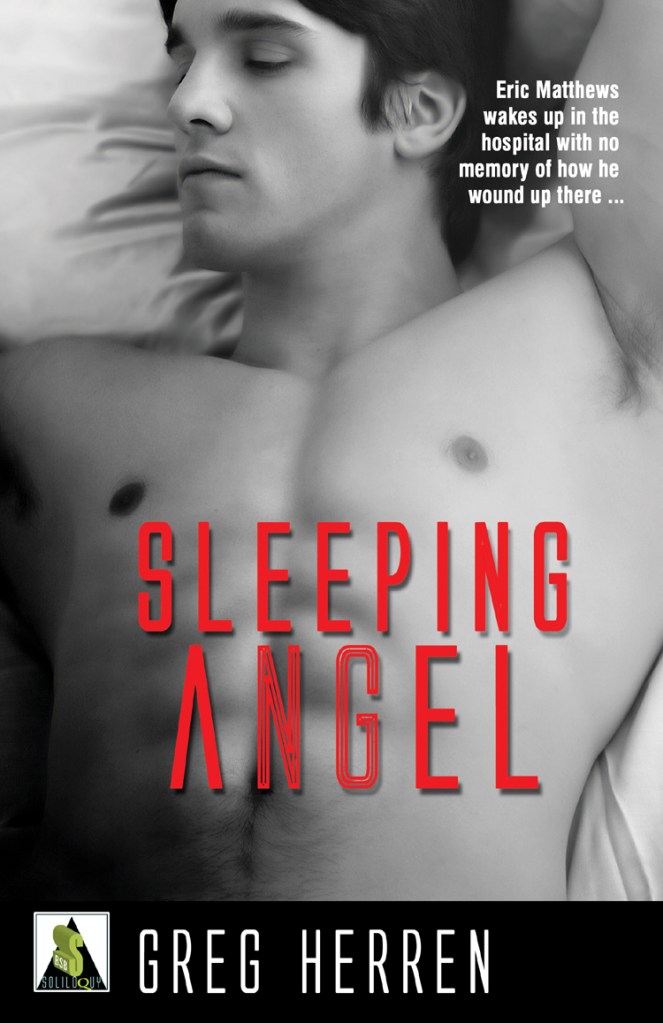
Sleeping Angel

I originally started writing Sleeping Angel in 1994.

That seems like such a long time ago, too. I hadn’t met Paul yet, was still working for that wretched airline at the airport, was broke broke broke and often ran out of money long before payday, and any kind of decent life for me seemed impossible. It was the next year I decided to snap out of the constant feeling sorry for myself, and instead of waiting for the world to come knocking on my door to make my dreams come true, that the only person who could make my dreams a reality was me, and that I needed to make the changes necessary to my life if I were going to become a writer for real–like stop dreaming about it and writing now and then, and start taking it seriously and writing all the fucking time, and trying to make it happen–which meant sending things out to try to get them published.

It’s weird how you forget things about books you’ve written until something out of left field reminds you of something. Julie Hennrikus, during our Sisters in Crime podcast interview, asked me about writing young adult fiction, and how I came to do that. The story is very simple, really; after discovering Christopher Pike and R. L. Stine and other young adult authors who wrote young adult novels that were either crime or horror or a cross of the two, I decided to take the book I was writing at the time–Sara–and write it as a young adult novel instead of as one for adults. It really didn’t take a lot, to be honest–I removed the framing device that firmly set the book back in the 1970’s–and turned it into a modern day story about teenagers (which it always was). After I finished Sara, I wrote another called Sorceress–and when I finished it, I began writing Sleeping Angel. I still didn’t have a strong grasp of how writing actually worked (which is kind of embarrassing when I remember how naive and stupid I actually was back then, but what did I know. seriously? Very little.) and so I never rewrote anything; I just printed them (I had bought a very inexpensive word processor that I loved, and wrote on) out and saved the originals. I was about half-way through Sleeping Angel when I discovered there was such a thing as queer crime novels…so I abandoned writing young adult fiction and started thinking more in terms of writing a gay private eye series…which eventually became the Chanse MacLeod series and Murder in the Rue Dauphine.

Flash forward another decade or so, and in the spring of 2005 I attended BEA and the Lambda Awards in New York. I lost twice that year (Best Gay Mystery for Jackson Square Jazz and Best Scifi/Fantasy/Horror for Shadows of the Night) and then on Saturday night I attended a cocktail party for the Publishing Triangle. (It was at this party that I met both Tab Hunter and Joyce Dewitt.) I also met a very nice man who was familiar with my work, and asked me if I had ever considered writing young adult fiction with gay characters and themes? I laughed and replied that I had two completed first drafts and a partial for another in a drawer back home; he then gave me a business card and told me he would love to take a look at them with an eye to publishing. I lost the card years ago, probably in the Katrina aftermath, but he was an editor for Simon and Schuster Teen, which was very exciting. I told him I would revise one and send it to him as soon as I finished Mardi Gras Mambo, which was at that point over a year overdue (I didn’t mention that part). This was exciting for me, as one can imagine; another opportunity gained by simply being in the right place at the right time, which has been the story of my career pretty much every step of its way. Once I finished Mardi Gras Mambo that August, I started revising Sara.

And then came Hurricane Katrina, and everything went insane for a few years, and I abandoned the attempt to rewrite Sara. There was just too much going on, I was displaced and finding it hard to get back into writing, and I just wasn’t in the right place emotionally to revise or rewrite a book. I’ve always regretted that last opportunity.

Flash forward another year or so and I casually mentioned to a friend this missed opportunity. What I didn’t know when I mentioned it (bemoaned it, really; I still regret this lost chance) was that she had been working for another publisher as an acquiring editor for young adult/children’s work. “Would you rewrite one of these for me? I’d love to pitch this to the company.” So….rather than Sara, I went with a rewrite of Sorceress, which had a teenaged girl lead character and I didn’t see any place to add queer content (I’d been adding that to the revision of Sara ) and sent it to her. Alas, before she had the opportunity to pitch it the line she acquired for was closed down and that was the end of that….until a few years later when she decided to start her own small press for juvenile/young adult fiction, and wanted Sorceress. I sent it to her, we signed a contract…and then I realized I needed to let Bold Strokes Books know I was doing this. I emailed them, and they replied, “You know we do young adult?”

Well.

I wrote back and mentioned I had two others collecting dust, and so I contracted both Sara and Sleeping Angel with them. I decided to do Sleeping Angel first–which is odd, as I didn’t even have a completed first draft; I don’t remember why I decided to do this, frankly–and so I started writing and revising.

The really funny thing–just looking at the cover for the book–is that the character name “Eric Matthews” was one I came up with when I was in college; I had an idea for a book set in my fraternity, and came up with three names for characters that were pledge brothers and friends: Eric Matthews, Chris Moore, and Blair Blanchard. I used Eric and Chris for Sleeping Angel (completely forgetting that I had already used those names in Every Frat Boy Wants It a few years earlier), so yes, even though the fraternity books I used were by “Todd Gregory”, I accidentally re-used the character names.

Whoops.

The original intent with my young adult fiction was to connect it all together, the way R. L. Stine did with Fear Street, and sort of how all of Stephen King’s work is as well. The three books I started with–Sara, Sorceress, and Sleeping Angel–were connected, and were the springboard from which the others would come–or were supposed to come, from. Sara was set in rural Kansas. The main character of Sorceress moved from rural Kansas to a small town in the mountains in California, Woodbridge, which was also where Sleeping Angel was set. The main character of Sara moved to Kansas from the Chicago suburb where the main character of Lake Thirteen was from, and so on. (Likewise, the main character from Dark Tide was also from the same county in Alabama where Bury Me in Shadows took place, and #shedeservedit was set in the town that was the county seat for that rural Kansas area where Sara was set.) I’d consciously forgotten that, but fortunately my subconscious still holds on to things the forefront of my brain doesn’t.

When I originally envisioned Sleeping Angel back in 1993 (or 1994, I don’t remember which), the concept I wanted to explore was something, a concept, that Dean Koontz had used in his book Hideaway–that someone was in a car accident and died, only to be resuscitated by the EMT’s. But when he came back to life, he brought back something with him from the other side that gave him a psychic connection with a serial killer. It was an interesting idea–I wasn’t using the serial killer thing–but I loved the entire concept of someone being brought back with something extra (which, now that I think about it, is also the entire conceit Stephen King built The Dead Zone around). I decided to keep the car accident to open the book in the new version, but the opening I originally wrote had to be tossed. I also came up with an entirely new concept for the book: what if you were in a bad car accident, but there was a dead body in the car who was NOT killed in the accident but had been shot and was already dead when the car crashed? And if the main character has amnesia….who killed the kid in the back seat?

And away we went.

He was driving too fast, and knew he should ease his foot off the gas pedal, bringing the car down to a safer, more manageable speed.

But he couldn’t bring himself to do it.

“Hang in there, buddy,” he muttered grimly under his breath, taking his eyes off the road for just a moment to glance in the rearview mirror into the backseat. What he saw wasn’t encouraging. Sean’s eyes were closed, and he couldn’t tell if Sean was still breathing.

The blood–there was so much of it, and it was everywhere.

He swallowed and took a deep breath, trying to hold down the panic. He had to stay calm. He couldn’t let the fear take over, he just couldn’t. He had to hold himself together. He had to get to town, to get Sean to the hospital before it was too late–if it wasn’t already too late.

Not a bad beginning, right? Pulls you right into the story.

I don’t remember what–if anything–I was expecting when Sleeping Angel was finally released (it actually wound up coming out before Sorceress, ironically); it had not even been six years since the right-wing homophobes had come for me for daring to accept an invitation to speak to high school students in a Gay-Straight Alliance. And now I’d actually dared to write a book about teenagers, for teenagers. The horror! But the book come out and there wasn’t even the slightest whisper of controversy about the “gay pornographer” writing a y/a book. It got really good reviews for the most part, people really seemed to enjoy it, and it eventually won a gold medal for Outstanding Young Adult Mystery/Horror from the Moonbeam Children’s Book Awards, which I’d never heard of but was kind of a big deal, or so I’m told. The gold medal was nice, too–very pretty (but it’s not the rock from the Shirley Jackson Awards–the smooth polished stone I got for being a finalist may be my favorite thing I ever received as recognition for my writing).

I’m still pretty proud of Sleeping Angel.

Of Thee I Sing

This is a weird 4th of July for me.

It’s always been a strange holiday for me, having grown up as an outsider drenched in Americana and taught American mythology rather than US history. (The more I use the word American to describe things that really only involve the US the less comfortable I am with it, particularly as I grow older. It’s simply a shorthand, obviously, for the much more awkward “US citizens,” but its use erases the fact that Canadians, Mexicans, and those from Central and South America are also Americans, and others them to US citizens. USAmericans also is an awkward construction. And can people of non-indigenous descent have a right to call themselves Americans in the first place? Once you start parsing, it’s a bottomless well.) It isn’t really our nation’s birthday, either–it’s Independence Day; the anniversary of the day the Declaration of Independence was ratified. Our actual national birthday is the date the Constitution was ratified and we actually became the United States from the thirteen colonies–and after the British defeat at Yorktown and the Peace of Paris, we actually were thirteen independent states in a loose alliance with each other for self-protection, and it was entirely possible those states might not have ever unified into a single nation. That was the real miracle of our nation’s founding–that, and the fact that thirteen disunited colonies who agreed on very little somehow took on the largest and most powerful global empire the world have ever seen and managed to defeat them–without checking I cannot be entirely sure, but it might be the only war the British Empire lost before it’s post-World War II collapse.

So, this year’s celebration is a bit muted. We are losing our freedoms and our rights–losing them to a bizarre political coalition that claims they are the real Americans, what they believe is the only way to believe and/or think about politics and the country, who scream and whine and protest about their freedoms and their liberties as cover for the fact they want to steal the freedoms and liberties–and citizenship–of people who do not agree with them. We have a “supreme court” that uses the Constitution, and almost 250 years of precedent and decided law, to wipe their asses with because it doesn’t really fit their vision of a theocratic nation ruled by a minority that forces the majority to put up with their bullshit because they have gerrymandered, legislated, and ruled in such a way as to entrench their power. This has happened before, of course–it always has happened before (which is why our lack of interest and education about our short national history is so deliberately encouraged; so we won’t learn from the mistakes of the past)–and I feel like we are living in a situation very similar to that in which the country was in between 1850 and 1861: an extremely loud and belligerent minority had been controlling and running the country since almost the beginning, in defense of a completely indefensible belief that it was okay for white Americans to either own people with differently hued skin, or to kill them with impunity. The slavery supporters had packed the Supreme Court with their supporters, and the compromises over the admissions of MIssouri and Kansas to the union were fraught because the slave states saw they were in danger of being outnumbered and thus losing their hold on the government.

And now this illegitimate body currently sitting on our highest court–deciding law for a majority even though most of them were appointed by presidents who didn’t win the popular vote–has started legislating from the bench under the guiding conservative principle that “it’s for each state to decide”–abortion rights, same sex marriage, racial equality, etc.

Because that worked so well with slavery?

The entire point of a federal, centralized government is to have the final say on law and rights; the Constitution also makes it very clear that the laws of one state should be honored by the others. But the framers of the Constitution also knew that there would be times when one state’s laws would come into conflict with another’s, and the federal government would have to decide which law was Constitutional–as they both might or might not be; but the idea was the law that restricted or prohibited rights more would be the one thrown out. This balancing act, naturally, was already in trouble because of slavery; a free state could not be forced to recognize the property rights laws of a slave state, and a slave state would never recognize the laws of a free state that outlawed slavery outright. The conflict and battle between states’ rights and the Federal government was baked into the document from the beginning, because the Southern states refused to give up their right to own people in a nation that was predicated on freedom and equality of all men.

The notion that a state like Texas could criminalize abortion (or anything) to the extent they have, and that they expect pro-choice states to not only comply with their laws but turn over documents and accused violators of said law is just the Fugitive Slave Act all over again: conservative states are all about federalism when it comes to enforcing their own laws…but will scream “States’ rights!” to protect their own.

The cognitive dissonance it must require to be a conservative astounds me sometimes.

I’ve spent most of my life with my sex life making me a criminal in almost every state in which I lived. Lawrence v. Texas guaranteed that the government had no right to tell me who I could sleep with and what I could do in my bedroom with that consenting adult. I remember the day that decision came down; it was something I never thought I would see in my own lifetime. One of the things I was trying to recapture (am trying to recapture, really) in “Never Kiss a Stranger” is that sense of criminality; of how it felt to be a sexual outlaw; how every time you went into a gay bar you knew there was a chance the place would be raided by the police–or that every time you left a gay bar you were in danger from the police until you made it safely home. It wasn’t something conscious you’d think about back in those days, but it was always there in the back of your mind. Gay bars inevitably (with the exception of the French Quarter in New Orleans, the Castro on San Francisco, West Hollywood, and the village, among others) were in a sketchy part of town, and often they were own by the Mob for money-laundering purposes. The marriage between the gay bars and the Mob was an uneasy one, of course–a marriage of convenience. The Mob needed to launder their money, bars are an excellent way to do so, and the Mob could also pay off the cops to prevent raids–a corruption-go-round, if you will. (Gay bar raids inevitably wound up being extortion for corrupt cops to get more bribe money from the mob…this weird marriage between criminals–gay men and the Mob–is something I want to explore in fiction more. And the police, for the record, have never been friends or allies to my community; quite the obverse, in fact.)

I should make a note to reread this next year on the 4th of July. Will things be better or worse? My money’s on worse.

And on that note, I am heading into the spice mines.

Stop Draggin’ My Heart Around

Thursday and my last day in the office this week. Huzzah! Which means I do not have to get up at six tomorrow morning, which is lovely, and next week my work at home day is Monday, so I don’t have to be back in the office until Tuesday, which is kind of nice. I need to do a couple of errands tomorrow–brake tag and wash the car–but I am also kind of hoping against hope that I can make it to the gym tomorrow in the early evening as well. I hate that the first thing to go out the window whenever I am overwhelmed with work are the two things I enjoy most in life and are, really, things that are just for me: working out and writing.

I entered #shedeservedit for the Thriller Award for Best Children’s/Young Adult this week; I am not sure if there’s any point, really, but you cannot complain about queer books not making award shortlists if you don’t enter your own and encourage every other queer writer to do so as well. I am also entering it for the Edgars. Dream big, Gregalicious.

I have to admit I’ve not really been promoting #shedeservedit the way I should be, and I am not entirely sure why that is. Every step of the way of writing that book I was worried about whether I was the right person to tell that story or not…something I would have never even thought about ten years ago. I still don’t think I would have been the right person to tell the story had the main pov character been a girl; making it a guy, seeing everything that was going on in Liberty Center from a male teenager who is also on the football team, for me, made it more palatable–and it’s not just the story of the toxic masculinity and the rape culture permeating the town of Liberty Center: there’s a whole lot of just plain wrong going on in that town, and my main character, Alex, was affected and damaged by all of it, even as (sometimes) merely a witness to the shenanigans. Everything has a ripple effect, after all. But at the same time, the book has a content warning–which, I am ashamed to admit, never crossed my mind that it would need when I was writing it. How would a young woman who has experienced this, or knows someone who has, react to reading this story? That thought also kind of made me pull back a bit from the promotional stuff. Even with a content warning, is what happens in the book–even though it’s all already happened, and is seen only through flashbacks–going to be too difficult for a young woman (or a young man, for that matter) who has experienced something similar to read? The book has been out in the world now for over five months, it has a four and a half star rating on Amazon (I will not look at Goodreads, and no one can make me go to that barren hellscape for authors)…but at the same time there hasn’t been any pushback thus far on the book–which also doesn’t mean it won’t eventually happen, either.

But this week, I was scrolling through my Twitter feed (I honestly don’t know why I do this. Sometimes I have fun joking around with my friends there, and I’ve seen posts about books that I went on to read and enjoy, but for far too large a percentage of the time I have to step away from it in revulsion when I see how truly terrible so many people are willing to be behind the anonymity of a computer screen, a cartoon avatar, and a fake name…and how many more are unashamed to reveal their monstrous true selves with their actual names and images proudly on display for everyone to see) and I came across a piece from The Cut, which is a part of New York magazine and Vulture and I am not sure what all other websites and so forth are involved in that tangled mess of on-line and print publications. It purported to be about a high school teenager who “made a mistake” and “got canceled by his school.”

Ah, another story about the evils of cancel culture, I thought to myself, should I bother?

Reader, I bothered. And dear God in heaven, I am so sorry I did. If you want to read the nauseating swill for yourself, if it is still up, it can be found here: https://www.thecut.com/article/cancel-culture-high-school-teens.html. If you have high blood pressure, I would advise against it.

What makes the entire thing worse, in my opinion, is of course they assigned this piece to a woman. There’s a reason why men accused of sexual harassment or sexual assault will inevitably hire a female defense attorney–it subliminally communicates to the jury would a woman defend this person if he were a rapist? No woman would take on such a case! But when I was doing my research for #shedeservedit, one of the things I noted was how many women didn’t believe the girls, how many of their peers didn’t believe the girls, and that the nastiest and most vicious critics of the victims were other women/girls. I remember reading about Brock Turner’s mother, weeping and sobbing about how her son’s life was being ruined (implied: by that drunk slut!); the former girlfriend who wrote a character reference letter for him to the judge, and on and on. (I always wonder–as I did with Brock Turner–does he have any sisters or female first cousins? What do they think about this?)

Anyway, the author of this piece–whose sympathies are entirely with this boy whose only regret for sharing nude pictures of his girlfriend with his friends (when he was “drunk,” because I guess that makes it okay) is that he was shunned by his entire high school–misses the lede in this article so many times. She is so desperate to make us all feel bad for this kid for being made to feel the absolute least amount of consequence possible for his actions that she misses that the girls at this school felt so betrayed and dismissed by the system–which is supposed to protect them–that they took action on their own. That is the story here–what the students had to step up to do because THE ADULTS and the SCHOOL SYSTEM failed them.

But no, we get another “oh this poor boy”. (Who went to four proms and is leaving for college in the fall, where none of this will follow him.) By a woman writer who, per Wikipedia, has teenaged daughters of their own. How must THEY feel when reading their mother’s latest work?

Not even ten years ago the victims in Steubenville and Marysville were the ones shunned; not the guys who got them wasted and took advantage of them. (At least the Steubenville victim got some justice, as two of the boys were convicted; the poor girl in Marysville got nothing but slut-shamed and eventually she committed suicide.)

My original inspiration for writing this book honestly came back in the early 1990’s. Remember the Spur Posse at Lakewood High School? (No less an august literary figure than Joan Didion herself wrote about the Spur Posse, in her New Yorker piece “Trouble in Lakewood.”) I thought I had read about the Spur Posse in Rolling Stone–which, let’s face it, I was more likely to read at the time than the New Yorker–and was completely appalled…I sat down and started writing an idea for a book based on it, where the girls of the school, getting nowhere with the police and the school administration and so forth, become ‘avenging angels’ to publicly shame and embarrass the boys…and then they start dying. I wrote a couple of chapters, created some characters, and titled it When Stallions Die (stallions, obviously, a stand-in for Spur Posse); I always meant to swing back around to it at some point because it was an interesting idea (if you agree, you should read Lisa Lutz’ brilliant The Swallows from a few years’ back) and I still might–one never knows. But it was the Spur Posse situation that made me start thinking–long and hard–about sexual assault and sexual misconduct, victim-blaming and slut-shaming, and the weird need that some women have to protect men at any cost: “boys will be boys,” “any red-blooded American boy”…”locker room talk.”

And since I had been wanting to write a Kansas book, and had been playing around with a story for a small city in Kansas, its teens, and its high school football team, #shedeservedit kind of evolved from there.

I don’t know why I am so reluctant and/or nervous to promote the book. It was a deeply personal book for me to write (as was Bury Me in Shadows), and yes, I put a lot of my teenaged self into that book–not the surface Greg everyone saw and knew, but the interior Greg, the one who was so deeply miserable and unhappy and alone on the inside.

Wow, this rambled on for a lot longer than I expected it to! That article clearly pissed me off, did it not?

And on that note, I am heading into the spice mines.

Doesn’t Somebody Want to Be Wanted

WARNING: POTENTIAL SPOILERS AHEAD FOR EVERY SEASON OF ELITE.

One of the most moving moments during Left Coast Crime came during Raquel V. Reyes’ acceptance speech for Best Humorous Mystery for Mango, Mambo, and Murder. Raquel spoke very eloquently about her love for the crime fiction genre, and why it was so important for her to write a Latina sleuth heroine in her series: “Representation matters,” she emphasized, her voice breaking a little bit. This naturally got me to thinking about representation and its importance. It reminded me of the weird little boy in Chicago (and later, in the suburbs and on the plains of Kansas) who believed he was so weird, unnatural, and anything but normal; and how those rare appearances of gay men in fiction–scattered here and there in paperbacks–meant so much to me and made me feel, even if just for a moment, that I wasn’t strange and weird and an outsider. There were people like me out there somewhere, and maybe, just maybe, someday I’d find them and my community and feel like, finally, I belonged somewhere.

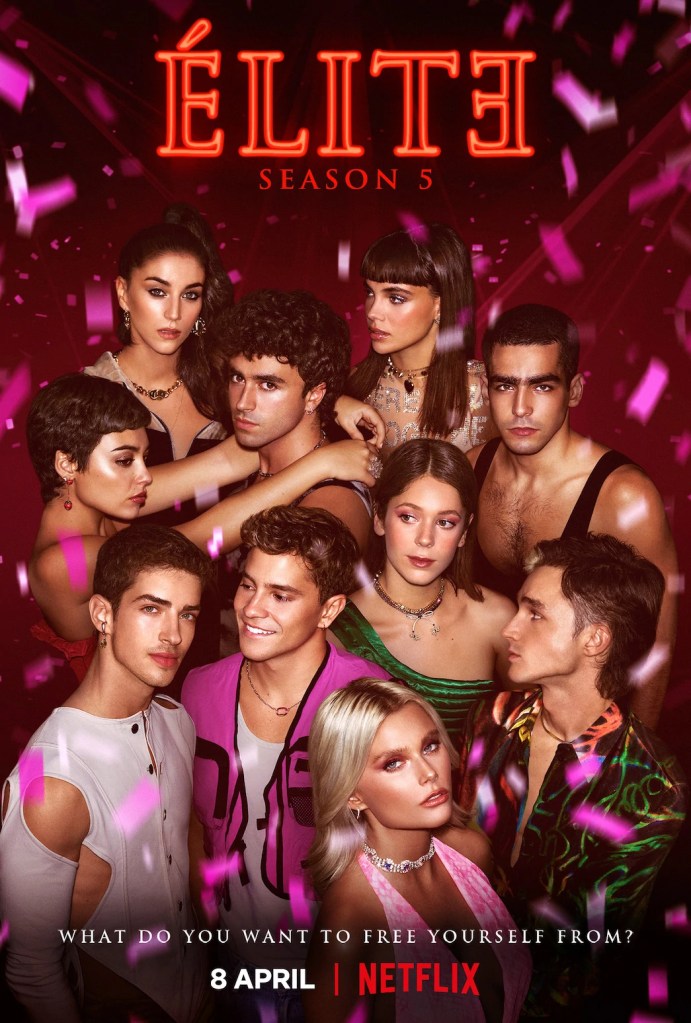
I was thinking about this very thing as Paul and I binged our way through Season 5 of our favorite show, Elité, on Netflix recently (the new season dropped while I was in Albuquerque).

I don’t remember how, when, or why Paul and I started watching Elité, but I am so glad we did. I know it was pre-pandemic, because I do remember both of us being concerned about when the fourth season would drop and whether it would be delayed because of the pandemic. But regardless of when we started watching, this Spanish-language Gossip Girl type show (far, far superior to Gossip Girl, sorry, stans, don’t @ me) really captured our imaginations and we became full fledged addicts. (The best way to describe the show is as a terrific hybrid of Gossip Girl and How to Get Away with Murder, yet better than both). I think part of it was the great cast–everyone was not only gorgeous, but they were remarkably talented as well, and the writing/plotting/story construction was superb; take note, American television series. I also greatly enjoyed the Ander/Omar romance, which began with both deeply closeted and meeting guys on hook-up apps, which is how they met. They began building a relationship, coming out to friends and family–it didn’t go well with Omar’s Palestinian parents–and their romance was given equal weight to that of their straight cast members; I don’t recall many shows where that happens. It was handled very well, and they literally became one of the show’s “super couples”, to borrow a daytime soap term. Fans loved them, and their romance was handled so beautifully that I was impressed, all the way from the terrors of the closet to fears about acceptance to actually coming out and developing a romance, with all the drama and upheavals young straight couples usually have to deal with. Omar and Ander were no different from any other romantic couple on the show; their story was just as important as the others, and there was never any sense of “oh they’re just pandering because we’ll always watch something with gay representation on it.”

And it wasn’t just Omar and Ander, either. Polo and Carla were in a long-term relationship since they were children; deeply in love and yet somehow bored with each other, both found themselves attracted to sexy new student Cristian; and that progressed from Polo watching Cristian and Carla together to joining them! Polo’s sexuality became a bit more murky than it was at the beginning. Is he bisexual, pan, or are they all three polyamorous? Carla and Polo end up breaking up and Cristian left the show after a tragic accident; but the intricacies and intrigues from their long-term relationship continued to play out and affect their storylines as well as others along the way. A lesbian romance was introduced into season 4, as well as a new villainous gay character, whose entire purpose was simply to be rebellious against his father and try to come between Omar and Ander. Played by the strikingly beautiful Manu Rios, I liked the idea of a manipulative gay villain (think Erica Kane as a gay man), but hoped they would flesh him out more. I felt Manu Rios was more talented than the material they were giving him, and hoped that in Season 5 we’d get to know him better.

(There are many other reasons I love the show–the other characters are also incredibly well developed, and their behavior fits their characters as they’ve developed along the way; no one ever acts in a way that doesn’t feel realistic simply to suit a story-line, something else American show runners should pay attention to.)

Season 5 literally dropped the Friday night I was in Albuquerque, and as soon as I got back to New Orleans, Paul and I started watching, and binged the entire season in like two nights. Season 4 wasn’t as good as the first three seasons (the bar was set high, to be fair), but it was also a transitional season; at least half of the cast graduated at the end of season three and thus left the show–which I thought was probably a good thing, despite losing some absolute favorite characters from those earlier seasons. Season 4 transitioned the story as the show added new cast members to replace those who’d left; so we didn’t enjoy it as much as we could have (more original cast members departed at the end of season 4) and so I was worried that Season 5 wouldn’t be as good, either…but I am delighted to report I was totally wrong on that score. -With Season 5, the show is back at the incredibly high level/standard it set for itself in those first three seasons, and while it is very hard to compare the one season with the interconnected stories of those first three, I don’t know. Season 5 might just be my favorite.

And of course, now that we’ve seen Season 5, the stage has been set for a very strong new, sixth season, and I literally cannot wait.

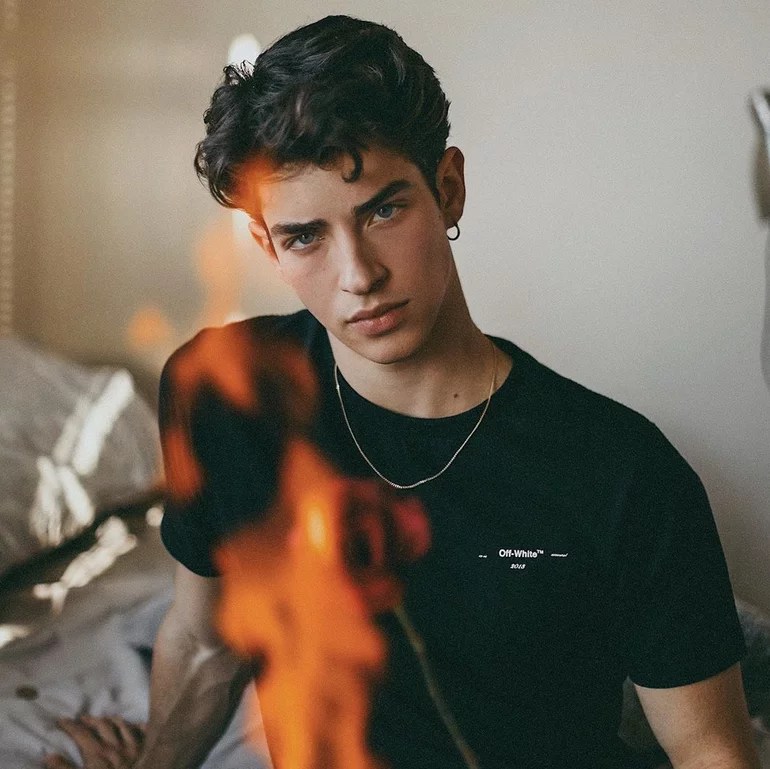
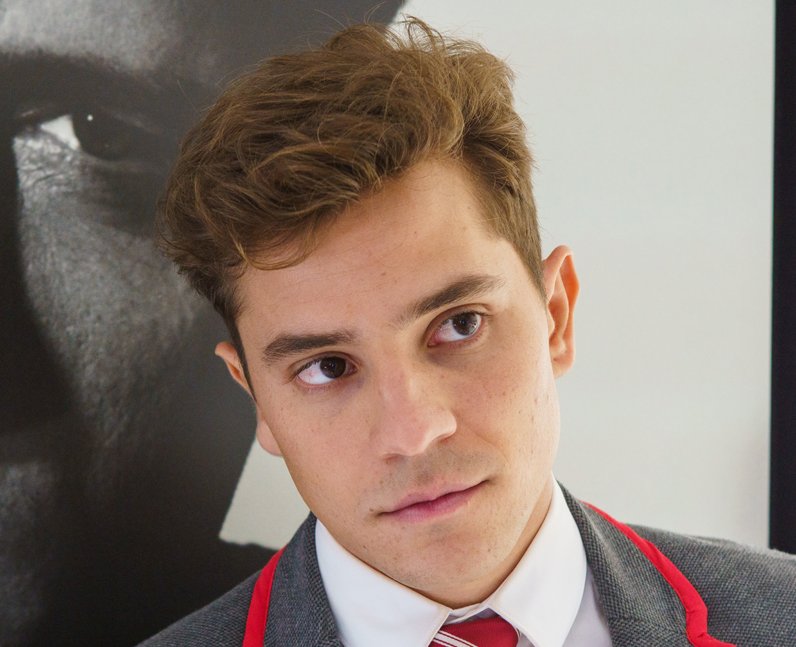
But the primary strength of this most-recent season comes from the further development of the character of Patrick, played by the stunningly beautiful young actor Manu Rios, through a truly terrific storyline that let us see sides of Patrick we’ve not seen before.

I mean, look at that stunning face.

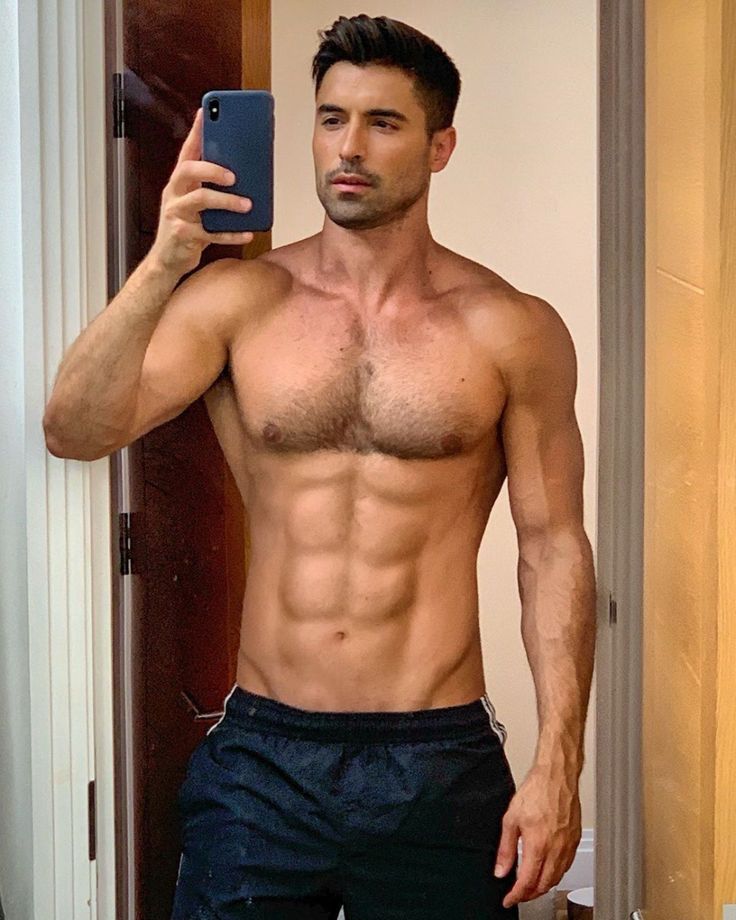
The body isn’t too shabby, either.

Patrick joined the cast of characters, as I mentioned, in season 4. The openly gay character was primarily brought in as an agent of chaos: self-absorbed, narcissistic and rebelling against his strict father (the new principal), his role in season 4 was primarily to cause drama and disruption between the long-running gay romance storyline between Omar and Ander (again, and it can’t be said enough, how lovely was the Omar/Ander storyline, where a gay couple in a soapy show got the kind of story usually reserved for opposite sex teen couples?), so he was kind of a villain character–striking out angrily whenever he was hurt but inevitably causing more trouble for himself than for others, but the role was played with such sensitivity and style by Manu Rios that we as viewers couldn’t hate him the way we should have, the way we wanted to; since he was really “the other guy” and causing trouble between the already fraught Ander/Omar relationship we were all rooting for. Patrick was really nothing more than the latest obstacle to their happily ever after; but when Ander also left the show after season four, I wondered if Patrick and Omar would pick back up–it didn’t seem likely, but they were the gay characters, so…

And even I didn’t fully appreciate how talented Manu Rios was during season four–but that changed in a matter of moments in Season 5. I mean, I could see he was beautiful–anyone with eyes can see that–but could he turn what was essentially a one-note character into someone who seemed perfectly real to the viewers?

The answer was yes yes a thousand times yes.

You see, there’s a new student at Las Encinas in season 5, who catches Patrick’s eye on his first day: Ivan Carvalho, played by André Lamoglia.

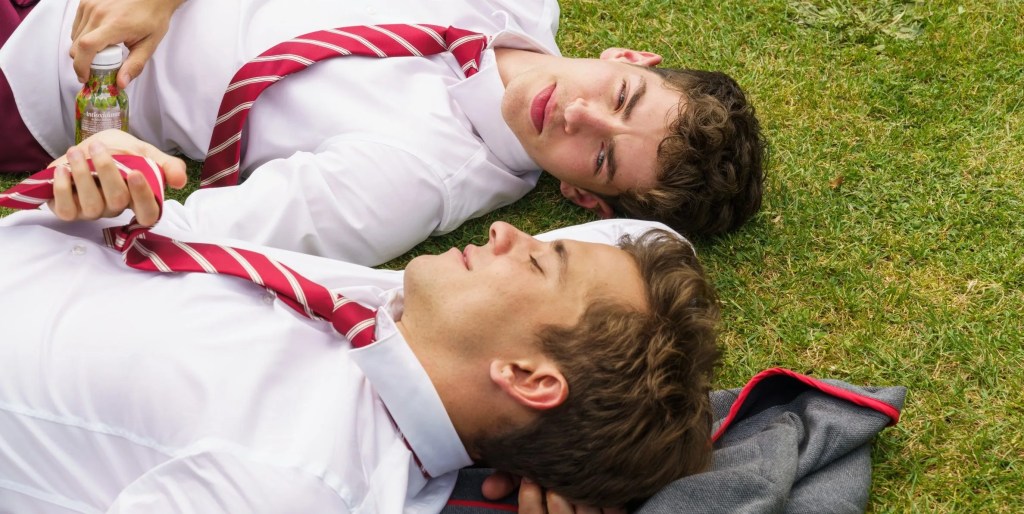
This picture doesn’t do him justice in the least, either. He’s beautiful. And the way his face lights up when he smiles–utterly irresistible. (Lamoglia is also a remarkably good actor.) His father is a world-famous soccer player, Cruz Catalho, and there’s no sign or mention of Ivan’s mother. But Cruz lives the good life of the hard-partying rich superstar, often telling his uptight son–who’s moved around the world following his father’s career, unable to make lasting friends or set down roots anywhere as a result–to loosen up. Ivan just wants a normal life–with Cruz always telling him to relax and enjoy the great life Cruz is able to provide for him.

And the character is so kind and loving and understanding…it’s easy to see why Patrick would not only be attracted to him for his looks but drawn to him as a person. He sees Patrick in a way no one else ever has before. It’s impossible not to root for them to fall in love with each other.

Ivan first comes to Patrick’s attention when he is looking for directions to the high school locker room–which, at the time, didn’t strike me as odd but now looking back, it kind of does; he was in his gym clothes and in need of a shower, but I SUPPOSE that it’s entirely possible he could have gotten turned around–new school and all, I guess. Immediately interested and attracted to this handsome stranger, Patrick not only gives him directions but offers to take him there “since I was on my way there anyway.” They talk as they shower–but Ivan is onto Patrick; after the shower he points out with a smile, “you just wanted to shower with me to see me naked” he teases, pointing out Patrick’s arousal. As I mentioned, Ivan is breathtakingly gorgeous. When he smiles, you can’t do anything but melt. And yet, the two boys have undeniable chemistry.

But Ivan is straight. He keeps telling Patrick this, over and over again, but…

We actually first meet Ivan as he is getting ready for school, climbing over the passed out bodies in the living room to see if his father will drive him to school. Instead, Cruz winds up hugging the toilet and telling Ivan to take the car. During his first initial meeting with Patrick, Ivan definitely points out that he isn’t gay, but he’s not put off by Patrick’s sexuality, either. They can be friends–but that’s all it’s going to be. He knows Patrick is attracted to him, and he’s a bit of a tease; sending mixed signals that confuse and anger Patrick.

This, too, is an old trope of a story, and I was really not overly thrilled with it; it’s clichéd and one of the tired old reasons the homophobes trot out whenever they want to deny us our rightful place in society and culture: we want to convert everyone.

Because it’s just that easy.

But at the same time, Patrick’s desperate crush on his new straight best friend isn’t played as exploitative. There’s more there than just him being a cocktease, really; Ivan clearly cares very deeply for Patrick, and their friendship means a lot to him. He cares, and this is a new experience for Patrick; he isn’t used to anyone genuinely caring for him. He’s a disappointment to his father, he loves his sisters but those relationships are very tense, and he really just wants to be loved. So the fact that he has found someone who genuinely loves him is confusing; he loves being loved, but he is also strongly attracted to Ivan, in love with him (at one point Ivan teases him, “you’ve fallen for me”) and isn’t sure how to react or behave or what. Ivan is attracted also to Patrick’s sister Ari–and the heartbreak when Patrick sees them together is completely believable; and it’s all done in his incredibly expressive face. After seeing Ivan and Ari having sex on a boat on the lake…heartbroken Patrick goes back to the dock and sits there, hating himself and hating his life. While he’s sitting there, Ivan’s father Cruz comes out there–they’ve already had a couple of run ins already, and Patrick is on to the fact that Cruz isn’t as straight as he acts–and as Cruz comforts Patrick–they begin to kiss!

Did. Not. See. That. Coming.

At the time, I was rather impressed with the writing, frankly. What better set-up for drama than having Patrick, in love with Ivan, wind up in a relationship with Ivan’s dad? (Yes, aware of the creepiness of an adult man sleeping with a high school student; yet I still thought it make an interesting story.) But the writers are even more clever than that.

Patrick winds up comforting Ivan after his brief little fling on the water with Ari–who no longer wants to even speak to him–and the two boys go back to the Carvalho household. Cruz isn’t happy with this–he has his own developing feelings for Patrick, so he acts homophobic, but privately he invites Patrick to join him later after Ivan falls asleep. Later, when Patrick cleans up before bed and walks into Ivan’s room, he sees Ivan watching porn and they come oh-so-close again to something physical happening…but Ivan pulls aways again. Frustrated and hurt AGAIN, Patrick goes to the guest room. While watching porn on his phone and masturbating, he gets a text from Cruz asking is Ivan asleep yet? Hating himself but hurt AND horny, Patrick gets up to go join Cruz–but when he walks out of the guest room Ivan is there in the hallway.

IVAN: I can’t sleep.

PATRICK: Count sheep.

IVAN: No, no, I want you to come back to my room with me.

PATRICK: You need to stop. I am going to get really angry with you.

IVAN: I can’t stop thinking that…what if…because of prejudice or fear or something…what if I am missing out on something amazing…with someone amazing…who makes me feel amazing.

PATRICK: Stop.

Ivan then tries to kiss Patrick, but awkwardly. Patrick pushes him away, and Ivan apologizes. “I’m sorry, I’m just really nervous but I want this.”

The look on Patrick’s face literally made me tear up as he said, “No, let me.” And then they kiss. When Patrick pulls away he says, “Are you okay?”

Ivan smiles and just nods, and the two boys go back to Ivan’s room.

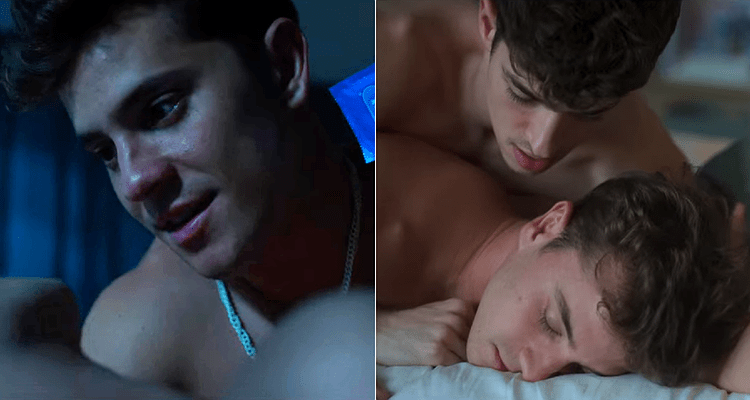
What followed was the most amazing slightly longer than five minutes gay sex scene I’ve ever seen outside of gay porn. But it wasn’t raunchy (it’s definitely not gay porn); it was sensual and beautiful and erotic; an expression of love between two young men who’ve never been really in love before. It wasn’t all candlelight and roses; it was Ivan’s first time (at one point, he’s doing oral on Patrick for the first time, and Patrick stops him–“watch the teeth!” I defy anyone to find a gay man who has never said that or had that said to him once in his life. ) and while i know rimming scenes have become more commonplace on cable shows, I’ve never seen two males do it as realistically as it was done here. Patrick allows Ivan to top him, and even that was realistic, honest, authentic. The entire thing was beautifully shot and scored (EDIT: the song playing in the background is Brian Eno’s “By the River,” which is beautiful and perfect for this scene), and the acting was fucking fantastic (the pun was deliberate). I literally got tears in my eyes.

There were three more episodes in the season after this–with ups and downs and more pain and heartache for the two–but it all comes together in the incredible season finale, which again left me in tears.

This entire season could have simply focused on Patrick and Ivan’s story, and I would have been happy. But the other storylines of the season–which didn’t seem all that great in the first half–coalesced in the second half of the season, with twists and surprises and suspense; this show is fantastic at surprise twists that make you gasp.

But this story…wow. How much of a difference would it have made in my life to have seen something like this play out on a television series when I was a teenager? Even in my early twenties? Both young actors are fantastic. The acting is stellar, and I have to admit it’s one of the few times I’ve seen a gay storyline play out like this where I was absolutely 100% convinced they were in love with each other, was rooting for them, wanted them to end up together against all the odds.

Manu Rios and André Lamoglia steal the fifth season right out from under the rest of the cast–which is no small feat, as Elité’s biggest strength has always been its incredibly talented cast.

I loved this show already, but I love it all the more now. I have no idea what they are going to do with Ivan and Patrick for the next season; but whatever it is, I am here for it…and so are the rest of the fans of the show around the world. (Yes, I did a deep dive the other day on-line; Patrick and Ivan and their story are the breakout stars of season 5…as they should be.)

I would seriously write Patrick/Ivan fanfic.

Bravo, Elité and Netflix, and thank you.

Go Away Little Girl

It’s really strange to look back at old music–from really not that long ago–and see how actually pedophilic and disturbing the lyrics to some of these songs actually are. Today’s title, for example, is about a guy being tempted by a girl who’s much too young for him–but while he at least recognizes this, the song itself makes it sound like she is the seductive temptress, which again: weird and uncomfortable. Granted, the version I am most familiar with is Donny Osmond’s, and he was prepubescent when he recorded it, so there is that. But imagine how creepy it would sound if sung by someone in their twenties? Thirties?

I am sure you get the point.

Yesterday wasn’t one of my better days, frankly. I woke up at five in the morning and of course, was wide awake (fortunately, Scooter decided that was the time to start howling for food and water, so it wasn’t a total disaster; he would have woken me up then anyway so hurray for already being awake, at least). But I felt very–not tired, but also not entirely checked into my day, if that makes any kind of sense? It’s a weird feeling, and not one I am particularly fond of, either–but what can you do? Try to function as best you can, is the only answer–along with hoping that tomorrow will be better. It’s sort of the like the post-novel writing malaise I often experience when I’ve turned a book in; but it’s not quite the same. I tried working on some writing yesterday to no avail; I did get a bit done but very very little. But after abandoning the attempt to write, I sat down with Chris Holm’s Child Zero, which is quite compelling and extremely well written. I got only a few chapters in before Paul got home from the gym (it’s so lovely having a husband again; it’s been like four months of having a roommate I never see), and thus had to reluctantly put the book aside.

We’re also getting some nasty weather later this afternoon–hurricane force winds are predicted, and potential tornadoes (again). The worst of the weather will be north of us–sorry, Mississippi, please stay safe, my Mississippi friends–but it’s also supposed to be at its worst right around the time I get off work and head home. There’s also potential for power outages–as always with high winds–so who knows what’s going to happen around here? I will have to figure out precisely what to do when it’s time for me to come home, I suppose. Yay? AH, well, weather has become even more threatening to us down here over the last few years, I suppose.

We also started watching season two of The Righteous Gemstones last night, which is a very underrated show–it’s quite funny, and of course, the goings-on behind the scenes at most megachurches always is interesting to me on some levels. John D. MacDonald’s One More Sunday is maybe my favorite novel about a televangelist family (MacDonald was a stunning writer, one of the best and one of my favorites, definitely an influence on my career); and of course, in one of its many iterations the Kansas book (now #shedeservedit) was about a megachurch in Kansas; which might still become a book, although probably no longer set in Kansas. Although hypocritical evangelicals has become a cliche…

But it’s also pay-the-bills day (yay?) But at least I can pay them and not worry about buying groceries and so forth, so definitely yay.

And hopefully, tonight when I get home we’ll have power so I can do some writing.

And on that note, tis off to the spice mines with me! Have a lovely Wednesday, Constant Reader!

Y

Your Wonderful, Sweet Sweet Love

Well, last night was a bit intense there for a while.

Yes, we had really horrific weather events down here last evening. I was sitting in my easy chair, relaxing and watching episodes of Young Justice when my phone started blaring the emergency alert. I knew there was a chance of tornadoes because we were having high winds all day (another emergency alert) and thunderstorms would be moving in during the early night. Sure enough, the wind was howling and the rain was coming down in torrents and lightning was flashing–and then my phone emergency alert started going off. I immediately paused the show and switched over to Margaret Orr on WDSU (since Nash Roberts retired, Ms. Orr has been my go-to local weatherperson, and saw that the “tornadic” (a new word to me) storm was on the West Bank–and there was another, separate one entirely, on the North Shore. The location of this tornadic storm placed it pretty much directly across the river from my neighborhood–needless to say, a bit terrifying knowing it was literally that close–but the path the storm was following indicated it would probably jump the river just below the French Quarter, into either the Marigny, Bywater or lower 9th ward neighborhoods. (Even more scary–I know a lot of people in those neighborhoods, so of course I was scrolling through social media rapidly making sure my friends were all okay and worrying.) Then came the visual confirmation there was actually a tornado on the ground over there–and yes, know and love people over on the West Bank as well–and then it jumped the river into the lower 9th.

I grew up with tornadoes–they weren’t common but did happen in Chicago; but of course, five years in Kansas. My first thought was great there are no basements in southeastern Louisiana and second was fuck there’s really not even an interior place for me to huddle in this apartment if it comes here and third was acceptance: oh well, if it comes this way hope for the best.

Seriously, y’all. Major major yikes.

I know at least one person died in St. Bernard Parish (Chalmette/Arabi), and I’m not seeing any estimates on damage yet (haven’t done a deep dive) but I do remember I drove through the East on a trip out of town after the tornado there a few years ago and being horrified by what I was seeing (not on the level of the ‘disaster drives’ I took around the city when I returned after Katrina, but still pretty fucking horrible; Katrina’s a very high bar, after all). I know thousands are still without power this morning, and I’m not sure how this is going to affect my work day–I don’t know if there’s power at the building, for example, but I think I would have heard something by now–but I wouldn’t be surprised if my appointments have a rather high percentage of no-shows today.

The new book’s cover reveal was graciously hosted by none other than Dru Ann Love this morning; you can find it right here! I love this cover–the look on the cat’s face, based on Scooter, is absolutely perfect–and I am very excited about the new book. I am hopeful it will become a series–it was a one-book only deal, so hopefully it will continue. Huzzah!

I did manage to get quite a bit done yesterday, and was tired a bit when I got home last night so wasn’t able to get any reading or much else of anything done other than watching Live Justice and the second episode of Minx (I have some thoughts on this show, which I am enjoying but not sure if I should be, if that makes sense? But I will discuss that more at another time, and feel like I need to give the show a few more episodes before making up my mind one way or another; I will say that the thing I found problematic in the first episode was that the main character–whom I liked–was very much a 70’s feminist stereotype: humorless, strident, angry–not that they didn’t have every right to be, mind you, but I often find that this lazy stereotype inevitably leads to lazy character development: let’s watch as the uptight opinionated humorless feminist learns how to relax and shed the systemic misogyny training she received as a woman growing up when she did, and of course, being around a porn publisher and porn models…you see what I mean? I like the positive representation of porn and the people who work in it, but…maybe I am making more of this than I should. I don’t know) before of course the tornado alarm went off on my phone, which shifted everything for the rest of the evening.

Paul’s moving into the hotel today so I will also be home alone for until Sunday night or Monday morning. Sigh, Festival widowhood staring me in the face again.

And on that note, tis off to the spice mines. Have a lovely and safe day, Constant Reader!

Up the Ladder to the Roof

It’s a gray Saturday morning, and my body clock has definitely reset. I woke up just before six again, wide awake, but stayed in bed for another hour (just like yesterday). I don’t feel as energetic as I did yesterday, though; but I have things to dig through and work to do and lots of coffee on-hand for fueling. But that’s okay; I don’t have huge plans for the day. I am going to start doing some editing, I am going to work on my short story a bit, and i am going to spend some more time with Kellye Garrett’s Like A Sister, which will be my reward for getting the other stuff done. I need to go make groceries at some point this weekend, just haven’t decided which day to do that. I also need to go to the gym, maybe later today. There’s always organizing and cleaning to do, too.

In other words, another normal weekend around the Lost Apartment.

But that’s cool, I suppose. Trying to do normal things helps me deal with the over-all concern about the world burning to the ground around us, which sometimes makes doing anything feel completely pointless. (I do remember all the hesitation from people in December about trying not to get thrilled or be happy that 2021 was coming to an end; we all felt that way every December for several years only for the new year to be even worse than the one before. Looks, sadly, like those people were right.) It’s a weird place to be in for someone my age, or in my generation, or those of us who remember the world before the collapse of the Soviet Union. I’m sure many of them, like me, had forgotten what it was like to live under the daily threat of nuclear annihilation and the end of civilization as we’ve come to know it. But that’s what we did back then–we went about our daily lives with that worry in the back of our minds at all times. I remember the amazement and joy when the Berlin Wall came down, and Germany reunified; part of their punishment for causing World War II and uncountable war crimes was allowing the Russians to basically split the country, turning East Germany into a communist satellite state while West Germany became a democracy and joined NATO and the west–basically for protection from a Communist takeover. I don’t miss nuclear apocalyptic fiction and films; Neville Shute’s On the Beach was such a bleak read, and the television movie The Day After was also dark and hopeless. There was an abandoned nuclear missile base about two or three miles from my high school in Kansas (which I’ve always wanted to write about); I remember there was a PBS documentary that aired when I was in high school about nuclear war, which was also the first time it ever crossed my mind that Kansas, of all places, would be a strategic military target for the Russians (because of all the missile bases spread across the prairie), they even named the closest town to the abandoned base as a target (Bushong, Kansas, population 37 at the time). And of course, The Day After made that very clear, as it took place in Kansas City and environs. Testament is another bleak film about the aftermath of nuclear war; and I remember reading another book, War Day, by Whitley Strieber and someone else, set about twenty years after a nuclear war between the superpowers. We used to learn about all kinds of things, like the electromagnetic pulse (the detonation of a nuclear weapon in the atmosphere which somehow–I don’t remember how it worked–rendered anything requiring electricity to cease working), often simplified to EMP. We were taught that iodine helped with radiation sickness, along with the grim knowledge that those killed instantly were the lucky ones. Apocalyptic and dystopian fiction used to be about the aftermath of nuclear war.

I didn’t realize how lovely it had been to be able to push those concerns completely out of my mind.

And what unique privilege it is, to be so consumed with worry over what may happen that might affect me and my life, while people are literally being slaughtered by the minute and large cities are being bombed and shelled ruthlessly and refugees are fleeing by the hundreds of thousands.

And there are other atrocities occurring around the world that aren’t being reported on, or covered as widely by the western media–primarily because the people being slaughtered or bombed aren’t white.

The great irony is that we consider our current civilization as the apex of humanity thus far–that civilization continues to evolve and grow less barbaric with the passage of time, while knowing that future generations will look back to our times and wonder what the fuck was wrong with them? How could they not see how fucked up the world was, and do something about it?

What is happening in Ukraine is just another chapter in the never-ending on-going series of books showing how incredibly inhumane humans are.

I don’t know what’s going to happen over there, and I worry that a peaceable resolution is not possible. I don’t see how Putin can possibly survive this, and he is a desperate thug with a massive Napoleon complex. I don’t know how many Ukrainians have to die before the rest of the world says enough. I don’t know how you get a madman with a nuclear arsenal to stop making war on civilians.

So, I just keep going. I get up every morning and have coffee. I check my emails, read some, delete some and reply to others. I check the news to see the latest from the front. I work on day job responsibilities and my writing and MWA business and edit. I do my dishes and clean my house and cook dinner and try to read to take my mind off the nightmares unfolding in the far corners of the world. I donate what I can to relief efforts. Little things, here and there, to cope with a reality that is incredibly worrisome and stressful and so overwhelming that I can’t allow myself to spend too much time going down that road–because I have the privilege to not have to be concerned about surviving today’s bombings. I have food and medicine and access to services. I have power and water and a working car. I have resources to draw upon. I am lucky.

I create. I write novels, fictions which may or may not have any meaning, trifles that can serve as a distraction from the worries and cares of a burning world over which I have little to no control. I have always been hesitant to use the word art when it comes to my writing; I’ve always felt that it isn’t for me to decide whether my work is art or I am an artist. But literature is a form of art, so therefore by extension my work is art and I am an artist; whether good or bad, important or forgettable is for others to discuss, debate and decide. But one of the foundations of civilization is art; art can survive the centuries and epochs and tell future generations stories about the times in which we live, to give them context for our civilization and our country and what we do and how we live. Fiction can educate and distract; it can provide a needed distraction and escape from the horrors of reality and provide comfort and joy in times of stress and terror. I have always escaped into books, and as a writer, I can also now escape into worlds and characters of my own creation. Reading and writing have always been my escapes; and now, more than ever, those kinds of escapes are necessary.

So, writers–we need to keep creating even as the world burns. There is always a need for beauty and truth, especially in times like these. And with electronic books–our words can now last for eternity, forever–or at least as long as civilization as we know it exists. I have no crystal ball; I do not have visions–although there have been times I’ve felt like Cassandra screaming on the walls of Troy, ignored and mocked as she tells them their future and of their folly. I do not know how this will all turn out, I do not know where we will be tomorrow or the next day. But as long as I have the ability to do so, I will keep working. I will keep making to-do lists and crossing off the tasks as I complete them. I will go on, living my life and doing whatever small thing I can do to try to keep the light burning. I will always try to make sense of the senseless, and I will always keep going.

No matter how dark the world might seem, no matter how much suffering we have to witness.

And on that somber note, I am going to dive into the spice mines. Have a lovely Saturday, Constant Reader, and hope you and all your loved ones are safe and secure, and continue to be.

I’m Livin’ in Shame

As Constant Reader is aware, I have a kind of love/hate relationship with short stories.

I love them as a form. I love reading them–there are few pleasures greater than a biting short story with a sting at the end (I’m looking at you, Karin Slaughter’s “An Unremarkable Heart”)–and I love writing them…but I also hate writing them. I hate that there are fewer and fewer paying markets for them. Every writing class I took when I was younger always emphasized the short story and its importance (although I know any number of novelists who can’t or won’t or don’t write them), so it’s always a bit sad for me to see markets drying up and going away. I’ve had some great highs in my writing career thus far, and some of them have been thanks to short stories.

The thing about short stories is there are two ways to write them: you either get the idea for one and start working on it, or you’re asked to contribute one (or come across a call for submissions). I am not so great at writing for a submission call; I am inevitably on deadline for a novel (when am I not?) and the time frame inevitably for the calls never works out for me. I’ve had some luck with selling to markets with submission calls, but often I end up submitting a story I don’t feel is 100% there yet because it’s the day of the deadline and I’ve run out of time…so I will send it in, hoping I’m wrong and the story actually IS finished.

I am rarely wrong.

So, I generally just write stories when I get the idea. Sometimes I can get the first draft finished before the well runs dry or I have to put it aside to move on to something else I have to write; sometimes I just scribble down the title and the concept behind the story.

“This Thing of Darkness” was originally written for one of the MWA anthologies; I believe it was for the Michael Koryta When a Stranger Comes to Town. I didn’t think the story was actually ready to be read by anyone outside of my apartment, but it was the deadline and I thought why the hell not, nothing ventured nothing gained, and it’s an anonymous read so the judges won’t judge me PERSONALLY if it sucks. It was rejected–as I’d figured it would be, which was fine; those are such a long shot getting in through the hundreds of slush submissions is truly an accomplishment, kudos to those who have!–and so I tinkered with it here and there, now and then, over the years since that first submission. I didn’t think it was appropriate for most crime markets–it’s about a gay man to whom something horrible happened when he was a teenager, and I kind of went into detail about what happened to him–so I wasn’t surprised when I sent it to one and it was deemed “inappropriate” for their readers. So, I sat on it and figured it would be included in This Town and Other Stories.

Then Frank W. Butterfield contacted me for a story for his anthology of Valentine’s crime stories, and I thought, “You know, “This Thing of Darkness” is set during Halloween…you can change it from Halloween to Valentine’s Day” and so I did–and Frank graciously took the story.

Climbing the steps alongside the fenced in wooden deck, he couldn’t help but smile. He’d always loved that the place was named Tacos and Beer. So simple and unpretentious, in a world growing more complicated every day. The patio deck was crowded, filled with what he guessed were hipsters, with bare arms covered in vibrant multi-colored tattoos, the young men with their greasy-looking hair pulled back into manbuns, the women’s streaked with bright, vibrant colors and cut in a variety of styles. They seemed to all wear clunky boots and old, long out of style clothing stained and worn and riddled with holes. The sun glittered on their numerous piercings. He guessed their employers didn’t care about the artwork on their skin, or the posts and hoops bedazzling their faces.

He knew he was hopelessly, tragically, unhip. He’d never been one of the cool kids, and long since lost the desire to be one.

Although he would have thought they’d be too cool to celebrate Valentine’s Day? But many of them were obviously couples. Flowers wrapped in tissue paper adorned tabletops: carnations in various shades of pink, white and red; bullet-headed roses with baby’s breath; and arrangements of lilies and snapdragons and blooms he couldn’t identify. Heart-shaped boxes of chocolates, still tightly wrapped in cellophane, sometimes caught the light of the dying sun while he glanced at them.

He sat down at a tall table-top for two inside, perching on a stool facing the door. The inside wasn’t nearly as crowded as the deck. It was the first sunny warm day in New Orleans in quite some time—Carnival had been cold and gray and damp and miserable– and what young person didn’t want to be outside basking in the sunshine while drinking their artisanal craft beers and munching their tacos, laughing, enjoying being young and in love? He watched through the window, imagining he could hear the youthful spirit in their voices.

Oh, to be young again.

Or to be in love, for that matter.

This is, even though it is set in one of my favorite (or used to be, anyway; I don’t know if it’s still there or not) places to eat in my neighborhood, Tacos and Beer on St. Charles Avenue, really not a New Orleans story; it’s one of my Kansas stories. Glenn, my main character, grew up in Kansas and now is a writer living in New Orleans. (Hmmm.) The premise of the story is that, years after he left Kansas never to return, he gets an email out of the blue from someone he went to high school with, someone he hasn’t seen since Graduation Night, David Zimmer. David was the first friend he made when he moved to rural Kansas and started up new as a junior at Kingston County High. David stayed his friend even as he moved on to hanging out with more popular kids and, having been the bullied gay kid at his old high school, Glenn gives in the allure of being a football player and being part of the “in” crowd, having friends and not being picked on, desperately afraid that the gay rumors and bullying will somehow catch up to him at Kingston County High. Sadly, it does…and then one night at an end of the school year party, Glenn gets deeply into trouble, and needs David’s help–David, the first friend, the one he left behind in his need to be a “cool kid,” is the only person to whom he can turn in his hour of need.

At Graduation, they both agreed it was best they never see or speak to each other again.

Until now, and David is coming to New Orleans and wants to meet.

The idea for this story originated in something that actually happened; I did hear from an old friend I went to high school with; whom I’d neither seen nor spoken to since we graduated from high school (he went away to school at MIT; I eventually left Kansas, never to return), and he was coming through New Orleans on his way to run a marathon or something in Mississippi, so we decided to have dinner together and catch up. We did indeed meet at Tacos and Beer–but the horrible thing that happened to Glenn in high school never happened to me at any rate, and I’d certainly not turned to him for help in a dire situation we’d kept secret for forty years. I did, as the character in the story did also, arrive early. In fact, while I was sitting there waiting for my friend, watching the people out on the deck, that the idea for the story came to me.

I think it went something like I should write a story about two high school friends meeting up for the first time in nearly forty years to but what would the story be about to ah, they covered up something when they were in high school, were never found out, and have avoided each other deliberately for all that time, so of course the email out of the blue has made my main character nervous–what could he want after all this time?

And the longer I waited, the more I delved into the story in my head (and yes, this is also a cautionary tale about knowing writers: literally everything is material for us, and we can find inspiration for a new story almost anywhere), the more I liked the idea behind it, and when I got home (I only drank iced tea so I could write the story down when I got home) I parked at the computer and started writing.

I am very happy with the story and how it wound up turning out; dark and twisted, yet all under the happy veneer of a busy restaurant on St. Charles Avenue.

And if you’re interested in a copy of Cupid Shot Me, order it here.

You Don’t Have to Tell Me

There really is nothing quite like a good read, is there?

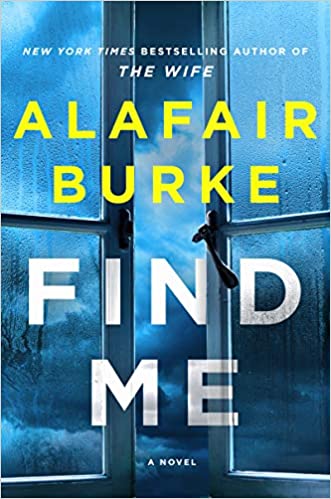
Alafair Burke has become one of my go-to’s; an author whose every book I preorder and start salivating when I get the shipping notice. I’ve not read her extensive backlist as of yet; I was late to the Burke party and began with The Ex. I do possess most of the backlist and it’s all in my TBR pile, but I’ve gotten so addicted to reading the new ones when they come out I never think to go back to the shelves to get one of the older titles–which is something I clearly need to do; and never have I felt that pull more than while reading her latest.

You see, she wrote a series about a New York cop named Ellie Hatcher–and Ellie comes back as part of the ensemble cast of Find Me, and what I saw of Ellie made me want to go back and read more about her. Well done on that front, Alafair! (This is something that I absolutely love when authors do; like how whenever Laura Lippman needs a Baltimore private eye, she brings in her old series character Tess–which is always a welcome joy whenever it happens….and maybe something I might be able to do with Chanse at some point. Hmmm.)

But I was very excited when Find Me was delivered into my hot little hands, and yesterday, while I was freezing inside the Lost Apartment, I grabbed a blanket and repaired to my easy chair, intent to read for an hour.

I didn’t stop until the book was finished.

Hope Miller shifted her gaze from the gas nozzle to the pump. When the gallon counter hit twelve, she scolded herself for not filling up before her trip into the city. She couldn’t risk an empty tank.

The nearest customer leaned against his green Jeep, sharing her same awkward wait, watching the digital numbers tick by. She noticed him looking at her. When he noticed her noticing, he flashed a practiced grin. She didn’t smile back.

That phrase, “It takes more muscles to frown than smile?” She had googled it once. Turns out, facial descriptions are subjective. Smiles, sneers, frowns, and smirks are all in the eye of the beholder. And the so-called facial nerve controls forty-something muscles, but some people have all of them, while others are missing almost half.

But scientists did agree on one thing–that smiles are innate. Reflexive. And viewed across cultures as a sign of friendliness.

A single man smiling at a single woman alone at a gas station at night?

Pretty great opening, isn’t it? The entire opening chapter is an exercise in suspense: is the woman imagining that this man isn’t just some stranger at a gas station? Is she being paranoid, or is this just the start of an innocuous encounter encapsulating the micro-aggressions directed at women by men on a daily basis? I understand that paranoia myself a bit–I experience it every time I travel throughout the deep South and have to stop for gas or to get something to eat; I am always on high alert during these times, paying attention to any and everything around me, and especially the people. I’ve stopped for gas and noticed someone staring at me before, and then following me back onto the highway, my heartrate increasing and adrenaline pumping through my veins as every mile ticks off on the odometer; I will often deliberately slow down to force the suspicious vehicle to eventually pass me…and this happens more regularly than it probably should. Anyway, I can relate to the main character’s paranoia; this is masterful suspense writing by the author, because now I have been pulled into the story and I am worried about the main character.

The book is mostly set in the Hamptons, with some scenes taking place in New York City; there’s even a detour to Wichita (KANSAS!!! It keeps popping up everywhere lately!). The main character of the story is NOT the paranoid young woman in the first chapter (and I cannot explain to you, Constant Reader, how wonderful that first chapter is; everything in that first chapter, every tiniest detail–everything she feels and thinks and remembers–is crucial to the story), but rather her sort-of adopted sister, criminal defense attorney Lindsay Kelly. The young woman in the first chapter, Hope Miller, is already, in and of herself, a mystery. She was found some years earlier, as a teenager, thrown from a wrecked vehicle with no memory of who she is, where she came from, or how she wound up in New Jersey. (The car had Indiana plates and was reported stolen.) Eventually, she takes the name Hope Miller and moves in with the Kelly family–a woman without a past that Lindsay somehow feels responsible for; more so than as a friend or as a sister. Hope is damaged, obviously, and has only recently decided to take control of her life and start over somewhere different than the small town in New Jersey where she’s been living since the Kellys took her in–she wants to go somewhere where everyone doesn’t know her as “the mystery girl with amnesia.” Hope disappears, and Lindsay is desperate to find her; has her true past finally come back to haunt Hope? Who is she? And what, if anything, does she have to do with the murder of a local charter fisherman who was murdered around the time she disappeared? Is she dangerous?

The search for Hope soon draws in some more characters–including, as mentioned earlier, police detective Ellie Hatcher from Manhattan–and there are multiple stories going, all of them tied together, all of them leading back to Hope’s mysterious past, and there’s also a potential link to a serial killer Ellie’s father investigated back when she was a girl. The characters are all well-drawn and developed enough to be real enough to draw the reader in to root for them; Burke is also masterful at pacing and when is the right opportunity to play yet another card that will either further confuse or enlighten the reader as the story continues to take shape out of the amorphous confusing mist entangling the characters.

Juggling all of the subplots and keeping them tied into the main story is also not an easy task for a writer, but Burke manages to do so, tidily winding up every loose end to leave the reader, as they close the book, smiling and satisfied with the experience.

(You’re Gone But) Always in My Heart

The late Joan Didion famously said we tell ourselves stories in order to live. I’ve parsed the statement any number of times–it’s most commonly taken to mean that it’s important we tell stories of the human experience (the good, the bad, the mediocre and all the varieties in between) to better understand ourselves, our society and culture. I had never read Didion myself until several years ago; of course I knew who she was and what she had written–although if asked before reading her work, I would have only been able to name Play It as It Lays, which I still haven’t read. One of my co-workers had a library copy of her Miami in his officer a few years ago, and I idly picked it up when I was in his office. He recommended very strongly that I read Didion, and so it was with Miami I started; the opening line (Havana dreams come to dust in Miami) sold me on the book. I enjoyed it, and went on to read other works of hers: A Book of Common Prayer, Slouching Toward Bethlehem, and After Henry, among others. I loved the way she wrote; that the complexity of her work came from her poetic use of language and words rather than on complicated sentences. It was reading Didion’s essays (and Laura Lippman’s) that made me start thinking about writing essays myself; I started one trying to use a similar style to Didion–which was interesting–but think it’s rather more important to stick to my own voice, for better or for worse; there was only one Didion, and there should only be the one.

As I was being interviewed the other night I was talking about my re-education; about having to unlearn and relearn things from when I was a kid. I’ve been thinking about this a lot lately; part of it was turning sixty this past year, part of it was writing two books back-to-back that are sort of based in my own personal history–so remembering what Alabama and Kansas were like for me meant exploring a lot of my past, reliving and rehashing it with the perspective of time having passed and with a coldly sober, unemotional eye. I remembered, as I was talking about the Lost Cause and other American mythology we are taught as children (Washington and the cherry tree; Honest Abe the rail-splitter; and so many other Americans of the past we have deified) , the Didion quote and found a new meaning in it. When I was a child, I remember that in the South, for some reason, my cousins and their friends and the adults never would refer to someone as a liar; etiquette, perhaps, or politeness being behind this oddity. What they said instead of saying you were lying was “Oh, you’re telling stories.” If someone was a liar, you’d say “he tells stories.”

We tell ourselves stories in order to live.

Given this weird rural Southern thing about “telling stories”, this can be reinterpreted as we tell ourselves lies in order to live–and it all falls into place, because we do tell lies to ourselves in order to live with ourselves, within this culture, within this society. Never has this been more evident than is this strange battle the right has started about Critical Race Theory–which wasn’t being taught in any American public school below the collegiate level. If there’s nothing in American history that we should be ashamed of, why is there so much opposition to the truth? Why are we taught lies in order that we may live?

The war cry of the white Southerners who want to keep their monuments to white supremacy and treason has been “Heritage not hate!” But the heritage is hate, which was the entire point of Bury Me in Shadows. You cannot have it both ways: you cannot celebrate a history of treason against the United States, while claiming to be “more patriotic” that other Americans who do not celebrate the killing of American soldiers (ask Jane Fonda about how posing on an enemy gun goes over). The bare facts of the matter are that some (not all) of the states where it was legal to enslave people were afraid they would lose their right to enslave people, and as such they decided they were better off starting their own country. They wanted a war they couldn’t possibly win, and the fact that it didn’t end quickly has more to do with the incompetence of the Union generals and their political ambitions (there are reasons there are no statues of George McLellan anywhere to be found) than the righteousness of the Confederate cause and the brilliant leadership of Robert E. Lee. They abhor Sherman as a war criminal (“he waged war on civilians!” Um, we also firebombed Dresden during the second world war, and what were Nagasaki and Hiroshima if not the obliteration with atomic weapons of civilian populations? Sherman said “war is hell”–you cannot start a war and then complain about how the other side chooses to fight it.). They claim it had nothing to do with slavery and everything to do with “states’ rights”…when the reality is the only state right they were concerned about was the right to enslave people–they certainly wanted the federal government to enforce the Fugitive Slave Act against the wills of the free states, didn’t they? Their end game in Congress and the courts was to force the federal government to permit enslavement in every state of the union and every territory; this was the crux of the Dred Scott Decision of the Supreme Court, which more than anything else set the stage for the war.

If there’s nothing terrible about the actual history, why so much fear around the truth?

We tell ourselves lies in order to live.

If the truth is too terrible to be faced, then it absolutely needs to be.

There’s nothing quite so romantic as a lost cause, is there? Whether it’s the Jacobites in England with their toasts to “the King across the water”; the emigres from the French Revolution; or the Confederacy, losing sides inevitably always romanticize their defeat and the loss of a better world their victory would have created. An entire industry has developed in this country around the mythology of the Lost Cause; how could it not when one of the most successful American films of all time portrays the Lost Cause so sympathetically? The opening epigram of Gone with the Wind reads “There once was a land of Cavaliers and cotton fields known as the Old South…” And yet the movie depicts an incredibly classist society, predicated on the enslavement of Africans; the entire idea behind the founding of this country was the elimination of class distinctions–the equality of all.

But even Margaret Mitchell, when asked if the Tara in the movie was how she pictured it as she wrote about it, scoffed and said, “Tara was a farm.”

And not everyone in the old South was rich or owned a plantation. Not everyone was an enslaver, and not everyone was on board with the Lost Cause. But we rarely hear about the Southerners who fought on the Union side in the war; we never hear about Southerners who were abolitionists; and we never hear about the atrocities inflicted on those loyalist Southerners by the rebels, either.

And speaking of war crimes, what about Andersonville?

We tell ourselves lies in order to live.

We cannot celebrate our achievements without acknowledging our failures. It is far worse to not learn from a mistake than making the mistake in the first place. It is not unpatriotic to look at our history, culture, and society critically, to examine and evaluate how we are failing to live up to the ideals upon which our country was founded. The Founding Fathers were not mythical gods of infallibility; they were all too human, with all the concomitant jealousies, pettiness, arrogance and ego that comes with it. They were, for one thing, mostly unable to conceive of a society where women and non-white people were deserving of equality under the law. But they also knew they were not perfect, which was why they created a system that could adapt to the changing tides of history.

George Santayana’s famous quote, “Those who cannot learn from history are doomed to repeat it” is something I think about every day. I also love the George Bernard Shaw quote, “What we learn from history is that we learn nothing from history.

We need to stop telling ourselves lies. The truth might seem to be too much to be faced; it might be ugly and hideous and shameful…but it will also set us free.