Your Wonderful, Sweet Sweet Love

Well, last night was a bit intense there for a while.

Yes, we had really horrific weather events down here last evening. I was sitting in my easy chair, relaxing and watching episodes of Young Justice when my phone started blaring the emergency alert. I knew there was a chance of tornadoes because we were having high winds all day (another emergency alert) and thunderstorms would be moving in during the early night. Sure enough, the wind was howling and the rain was coming down in torrents and lightning was flashing–and then my phone emergency alert started going off. I immediately paused the show and switched over to Margaret Orr on WDSU (since Nash Roberts retired, Ms. Orr has been my go-to local weatherperson, and saw that the “tornadic” (a new word to me) storm was on the West Bank–and there was another, separate one entirely, on the North Shore. The location of this tornadic storm placed it pretty much directly across the river from my neighborhood–needless to say, a bit terrifying knowing it was literally that close–but the path the storm was following indicated it would probably jump the river just below the French Quarter, into either the Marigny, Bywater or lower 9th ward neighborhoods. (Even more scary–I know a lot of people in those neighborhoods, so of course I was scrolling through social media rapidly making sure my friends were all okay and worrying.) Then came the visual confirmation there was actually a tornado on the ground over there–and yes, know and love people over on the West Bank as well–and then it jumped the river into the lower 9th.

I grew up with tornadoes–they weren’t common but did happen in Chicago; but of course, five years in Kansas. My first thought was great there are no basements in southeastern Louisiana and second was fuck there’s really not even an interior place for me to huddle in this apartment if it comes here and third was acceptance: oh well, if it comes this way hope for the best.

Seriously, y’all. Major major yikes.

I know at least one person died in St. Bernard Parish (Chalmette/Arabi), and I’m not seeing any estimates on damage yet (haven’t done a deep dive) but I do remember I drove through the East on a trip out of town after the tornado there a few years ago and being horrified by what I was seeing (not on the level of the ‘disaster drives’ I took around the city when I returned after Katrina, but still pretty fucking horrible; Katrina’s a very high bar, after all). I know thousands are still without power this morning, and I’m not sure how this is going to affect my work day–I don’t know if there’s power at the building, for example, but I think I would have heard something by now–but I wouldn’t be surprised if my appointments have a rather high percentage of no-shows today.

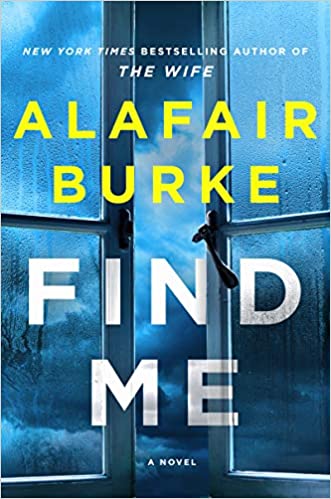
The new book’s cover reveal was graciously hosted by none other than Dru Ann Love this morning; you can find it right here! I love this cover–the look on the cat’s face, based on Scooter, is absolutely perfect–and I am very excited about the new book. I am hopeful it will become a series–it was a one-book only deal, so hopefully it will continue. Huzzah!

I did manage to get quite a bit done yesterday, and was tired a bit when I got home last night so wasn’t able to get any reading or much else of anything done other than watching Live Justice and the second episode of Minx (I have some thoughts on this show, which I am enjoying but not sure if I should be, if that makes sense? But I will discuss that more at another time, and feel like I need to give the show a few more episodes before making up my mind one way or another; I will say that the thing I found problematic in the first episode was that the main character–whom I liked–was very much a 70’s feminist stereotype: humorless, strident, angry–not that they didn’t have every right to be, mind you, but I often find that this lazy stereotype inevitably leads to lazy character development: let’s watch as the uptight opinionated humorless feminist learns how to relax and shed the systemic misogyny training she received as a woman growing up when she did, and of course, being around a porn publisher and porn models…you see what I mean? I like the positive representation of porn and the people who work in it, but…maybe I am making more of this than I should. I don’t know) before of course the tornado alarm went off on my phone, which shifted everything for the rest of the evening.

Paul’s moving into the hotel today so I will also be home alone for until Sunday night or Monday morning. Sigh, Festival widowhood staring me in the face again.

And on that note, tis off to the spice mines. Have a lovely and safe day, Constant Reader!
Up the Ladder to the Roof

It’s a gray Saturday morning, and my body clock has definitely reset. I woke up just before six again, wide awake, but stayed in bed for another hour (just like yesterday). I don’t feel as energetic as I did yesterday, though; but I have things to dig through and work to do and lots of coffee on-hand for fueling. But that’s okay; I don’t have huge plans for the day. I am going to start doing some editing, I am going to work on my short story a bit, and i am going to spend some more time with Kellye Garrett’s Like A Sister, which will be my reward for getting the other stuff done. I need to go make groceries at some point this weekend, just haven’t decided which day to do that. I also need to go to the gym, maybe later today. There’s always organizing and cleaning to do, too.

In other words, another normal weekend around the Lost Apartment.

But that’s cool, I suppose. Trying to do normal things helps me deal with the over-all concern about the world burning to the ground around us, which sometimes makes doing anything feel completely pointless. (I do remember all the hesitation from people in December about trying not to get thrilled or be happy that 2021 was coming to an end; we all felt that way every December for several years only for the new year to be even worse than the one before. Looks, sadly, like those people were right.) It’s a weird place to be in for someone my age, or in my generation, or those of us who remember the world before the collapse of the Soviet Union. I’m sure many of them, like me, had forgotten what it was like to live under the daily threat of nuclear annihilation and the end of civilization as we’ve come to know it. But that’s what we did back then–we went about our daily lives with that worry in the back of our minds at all times. I remember the amazement and joy when the Berlin Wall came down, and Germany reunified; part of their punishment for causing World War II and uncountable war crimes was allowing the Russians to basically split the country, turning East Germany into a communist satellite state while West Germany became a democracy and joined NATO and the west–basically for protection from a Communist takeover. I don’t miss nuclear apocalyptic fiction and films; Neville Shute’s On the Beach was such a bleak read, and the television movie The Day After was also dark and hopeless. There was an abandoned nuclear missile base about two or three miles from my high school in Kansas (which I’ve always wanted to write about); I remember there was a PBS documentary that aired when I was in high school about nuclear war, which was also the first time it ever crossed my mind that Kansas, of all places, would be a strategic military target for the Russians (because of all the missile bases spread across the prairie), they even named the closest town to the abandoned base as a target (Bushong, Kansas, population 37 at the time). And of course, The Day After made that very clear, as it took place in Kansas City and environs. Testament is another bleak film about the aftermath of nuclear war; and I remember reading another book, War Day, by Whitley Strieber and someone else, set about twenty years after a nuclear war between the superpowers. We used to learn about all kinds of things, like the electromagnetic pulse (the detonation of a nuclear weapon in the atmosphere which somehow–I don’t remember how it worked–rendered anything requiring electricity to cease working), often simplified to EMP. We were taught that iodine helped with radiation sickness, along with the grim knowledge that those killed instantly were the lucky ones. Apocalyptic and dystopian fiction used to be about the aftermath of nuclear war.

I didn’t realize how lovely it had been to be able to push those concerns completely out of my mind.

And what unique privilege it is, to be so consumed with worry over what may happen that might affect me and my life, while people are literally being slaughtered by the minute and large cities are being bombed and shelled ruthlessly and refugees are fleeing by the hundreds of thousands.

And there are other atrocities occurring around the world that aren’t being reported on, or covered as widely by the western media–primarily because the people being slaughtered or bombed aren’t white.

The great irony is that we consider our current civilization as the apex of humanity thus far–that civilization continues to evolve and grow less barbaric with the passage of time, while knowing that future generations will look back to our times and wonder what the fuck was wrong with them? How could they not see how fucked up the world was, and do something about it?

What is happening in Ukraine is just another chapter in the never-ending on-going series of books showing how incredibly inhumane humans are.

I don’t know what’s going to happen over there, and I worry that a peaceable resolution is not possible. I don’t see how Putin can possibly survive this, and he is a desperate thug with a massive Napoleon complex. I don’t know how many Ukrainians have to die before the rest of the world says enough. I don’t know how you get a madman with a nuclear arsenal to stop making war on civilians.

So, I just keep going. I get up every morning and have coffee. I check my emails, read some, delete some and reply to others. I check the news to see the latest from the front. I work on day job responsibilities and my writing and MWA business and edit. I do my dishes and clean my house and cook dinner and try to read to take my mind off the nightmares unfolding in the far corners of the world. I donate what I can to relief efforts. Little things, here and there, to cope with a reality that is incredibly worrisome and stressful and so overwhelming that I can’t allow myself to spend too much time going down that road–because I have the privilege to not have to be concerned about surviving today’s bombings. I have food and medicine and access to services. I have power and water and a working car. I have resources to draw upon. I am lucky.

I create. I write novels, fictions which may or may not have any meaning, trifles that can serve as a distraction from the worries and cares of a burning world over which I have little to no control. I have always been hesitant to use the word art when it comes to my writing; I’ve always felt that it isn’t for me to decide whether my work is art or I am an artist. But literature is a form of art, so therefore by extension my work is art and I am an artist; whether good or bad, important or forgettable is for others to discuss, debate and decide. But one of the foundations of civilization is art; art can survive the centuries and epochs and tell future generations stories about the times in which we live, to give them context for our civilization and our country and what we do and how we live. Fiction can educate and distract; it can provide a needed distraction and escape from the horrors of reality and provide comfort and joy in times of stress and terror. I have always escaped into books, and as a writer, I can also now escape into worlds and characters of my own creation. Reading and writing have always been my escapes; and now, more than ever, those kinds of escapes are necessary.

So, writers–we need to keep creating even as the world burns. There is always a need for beauty and truth, especially in times like these. And with electronic books–our words can now last for eternity, forever–or at least as long as civilization as we know it exists. I have no crystal ball; I do not have visions–although there have been times I’ve felt like Cassandra screaming on the walls of Troy, ignored and mocked as she tells them their future and of their folly. I do not know how this will all turn out, I do not know where we will be tomorrow or the next day. But as long as I have the ability to do so, I will keep working. I will keep making to-do lists and crossing off the tasks as I complete them. I will go on, living my life and doing whatever small thing I can do to try to keep the light burning. I will always try to make sense of the senseless, and I will always keep going.

No matter how dark the world might seem, no matter how much suffering we have to witness.

And on that somber note, I am going to dive into the spice mines. Have a lovely Saturday, Constant Reader, and hope you and all your loved ones are safe and secure, and continue to be.

I’m Livin’ in Shame

As Constant Reader is aware, I have a kind of love/hate relationship with short stories.

I love them as a form. I love reading them–there are few pleasures greater than a biting short story with a sting at the end (I’m looking at you, Karin Slaughter’s “An Unremarkable Heart”)–and I love writing them…but I also hate writing them. I hate that there are fewer and fewer paying markets for them. Every writing class I took when I was younger always emphasized the short story and its importance (although I know any number of novelists who can’t or won’t or don’t write them), so it’s always a bit sad for me to see markets drying up and going away. I’ve had some great highs in my writing career thus far, and some of them have been thanks to short stories.

The thing about short stories is there are two ways to write them: you either get the idea for one and start working on it, or you’re asked to contribute one (or come across a call for submissions). I am not so great at writing for a submission call; I am inevitably on deadline for a novel (when am I not?) and the time frame inevitably for the calls never works out for me. I’ve had some luck with selling to markets with submission calls, but often I end up submitting a story I don’t feel is 100% there yet because it’s the day of the deadline and I’ve run out of time…so I will send it in, hoping I’m wrong and the story actually IS finished.

I am rarely wrong.

So, I generally just write stories when I get the idea. Sometimes I can get the first draft finished before the well runs dry or I have to put it aside to move on to something else I have to write; sometimes I just scribble down the title and the concept behind the story.

“This Thing of Darkness” was originally written for one of the MWA anthologies; I believe it was for the Michael Koryta When a Stranger Comes to Town. I didn’t think the story was actually ready to be read by anyone outside of my apartment, but it was the deadline and I thought why the hell not, nothing ventured nothing gained, and it’s an anonymous read so the judges won’t judge me PERSONALLY if it sucks. It was rejected–as I’d figured it would be, which was fine; those are such a long shot getting in through the hundreds of slush submissions is truly an accomplishment, kudos to those who have!–and so I tinkered with it here and there, now and then, over the years since that first submission. I didn’t think it was appropriate for most crime markets–it’s about a gay man to whom something horrible happened when he was a teenager, and I kind of went into detail about what happened to him–so I wasn’t surprised when I sent it to one and it was deemed “inappropriate” for their readers. So, I sat on it and figured it would be included in This Town and Other Stories.

Then Frank W. Butterfield contacted me for a story for his anthology of Valentine’s crime stories, and I thought, “You know, “This Thing of Darkness” is set during Halloween…you can change it from Halloween to Valentine’s Day” and so I did–and Frank graciously took the story.

Climbing the steps alongside the fenced in wooden deck, he couldn’t help but smile. He’d always loved that the place was named Tacos and Beer. So simple and unpretentious, in a world growing more complicated every day. The patio deck was crowded, filled with what he guessed were hipsters, with bare arms covered in vibrant multi-colored tattoos, the young men with their greasy-looking hair pulled back into manbuns, the women’s streaked with bright, vibrant colors and cut in a variety of styles. They seemed to all wear clunky boots and old, long out of style clothing stained and worn and riddled with holes. The sun glittered on their numerous piercings. He guessed their employers didn’t care about the artwork on their skin, or the posts and hoops bedazzling their faces.

He knew he was hopelessly, tragically, unhip. He’d never been one of the cool kids, and long since lost the desire to be one.

Although he would have thought they’d be too cool to celebrate Valentine’s Day? But many of them were obviously couples. Flowers wrapped in tissue paper adorned tabletops: carnations in various shades of pink, white and red; bullet-headed roses with baby’s breath; and arrangements of lilies and snapdragons and blooms he couldn’t identify. Heart-shaped boxes of chocolates, still tightly wrapped in cellophane, sometimes caught the light of the dying sun while he glanced at them.

He sat down at a tall table-top for two inside, perching on a stool facing the door. The inside wasn’t nearly as crowded as the deck. It was the first sunny warm day in New Orleans in quite some time—Carnival had been cold and gray and damp and miserable– and what young person didn’t want to be outside basking in the sunshine while drinking their artisanal craft beers and munching their tacos, laughing, enjoying being young and in love? He watched through the window, imagining he could hear the youthful spirit in their voices.

Oh, to be young again.

Or to be in love, for that matter.

This is, even though it is set in one of my favorite (or used to be, anyway; I don’t know if it’s still there or not) places to eat in my neighborhood, Tacos and Beer on St. Charles Avenue, really not a New Orleans story; it’s one of my Kansas stories. Glenn, my main character, grew up in Kansas and now is a writer living in New Orleans. (Hmmm.) The premise of the story is that, years after he left Kansas never to return, he gets an email out of the blue from someone he went to high school with, someone he hasn’t seen since Graduation Night, David Zimmer. David was the first friend he made when he moved to rural Kansas and started up new as a junior at Kingston County High. David stayed his friend even as he moved on to hanging out with more popular kids and, having been the bullied gay kid at his old high school, Glenn gives in the allure of being a football player and being part of the “in” crowd, having friends and not being picked on, desperately afraid that the gay rumors and bullying will somehow catch up to him at Kingston County High. Sadly, it does…and then one night at an end of the school year party, Glenn gets deeply into trouble, and needs David’s help–David, the first friend, the one he left behind in his need to be a “cool kid,” is the only person to whom he can turn in his hour of need.

At Graduation, they both agreed it was best they never see or speak to each other again.

Until now, and David is coming to New Orleans and wants to meet.

The idea for this story originated in something that actually happened; I did hear from an old friend I went to high school with; whom I’d neither seen nor spoken to since we graduated from high school (he went away to school at MIT; I eventually left Kansas, never to return), and he was coming through New Orleans on his way to run a marathon or something in Mississippi, so we decided to have dinner together and catch up. We did indeed meet at Tacos and Beer–but the horrible thing that happened to Glenn in high school never happened to me at any rate, and I’d certainly not turned to him for help in a dire situation we’d kept secret for forty years. I did, as the character in the story did also, arrive early. In fact, while I was sitting there waiting for my friend, watching the people out on the deck, that the idea for the story came to me.

I think it went something like I should write a story about two high school friends meeting up for the first time in nearly forty years to but what would the story be about to ah, they covered up something when they were in high school, were never found out, and have avoided each other deliberately for all that time, so of course the email out of the blue has made my main character nervous–what could he want after all this time?

And the longer I waited, the more I delved into the story in my head (and yes, this is also a cautionary tale about knowing writers: literally everything is material for us, and we can find inspiration for a new story almost anywhere), the more I liked the idea behind it, and when I got home (I only drank iced tea so I could write the story down when I got home) I parked at the computer and started writing.

I am very happy with the story and how it wound up turning out; dark and twisted, yet all under the happy veneer of a busy restaurant on St. Charles Avenue.

And if you’re interested in a copy of Cupid Shot Me, order it here.

You Don’t Have to Tell Me

There really is nothing quite like a good read, is there?

Alafair Burke has become one of my go-to’s; an author whose every book I preorder and start salivating when I get the shipping notice. I’ve not read her extensive backlist as of yet; I was late to the Burke party and began with The Ex. I do possess most of the backlist and it’s all in my TBR pile, but I’ve gotten so addicted to reading the new ones when they come out I never think to go back to the shelves to get one of the older titles–which is something I clearly need to do; and never have I felt that pull more than while reading her latest.

You see, she wrote a series about a New York cop named Ellie Hatcher–and Ellie comes back as part of the ensemble cast of Find Me, and what I saw of Ellie made me want to go back and read more about her. Well done on that front, Alafair! (This is something that I absolutely love when authors do; like how whenever Laura Lippman needs a Baltimore private eye, she brings in her old series character Tess–which is always a welcome joy whenever it happens….and maybe something I might be able to do with Chanse at some point. Hmmm.)

But I was very excited when Find Me was delivered into my hot little hands, and yesterday, while I was freezing inside the Lost Apartment, I grabbed a blanket and repaired to my easy chair, intent to read for an hour.

I didn’t stop until the book was finished.

Hope Miller shifted her gaze from the gas nozzle to the pump. When the gallon counter hit twelve, she scolded herself for not filling up before her trip into the city. She couldn’t risk an empty tank.

The nearest customer leaned against his green Jeep, sharing her same awkward wait, watching the digital numbers tick by. She noticed him looking at her. When he noticed her noticing, he flashed a practiced grin. She didn’t smile back.

That phrase, “It takes more muscles to frown than smile?” She had googled it once. Turns out, facial descriptions are subjective. Smiles, sneers, frowns, and smirks are all in the eye of the beholder. And the so-called facial nerve controls forty-something muscles, but some people have all of them, while others are missing almost half.

But scientists did agree on one thing–that smiles are innate. Reflexive. And viewed across cultures as a sign of friendliness.

A single man smiling at a single woman alone at a gas station at night?

Pretty great opening, isn’t it? The entire opening chapter is an exercise in suspense: is the woman imagining that this man isn’t just some stranger at a gas station? Is she being paranoid, or is this just the start of an innocuous encounter encapsulating the micro-aggressions directed at women by men on a daily basis? I understand that paranoia myself a bit–I experience it every time I travel throughout the deep South and have to stop for gas or to get something to eat; I am always on high alert during these times, paying attention to any and everything around me, and especially the people. I’ve stopped for gas and noticed someone staring at me before, and then following me back onto the highway, my heartrate increasing and adrenaline pumping through my veins as every mile ticks off on the odometer; I will often deliberately slow down to force the suspicious vehicle to eventually pass me…and this happens more regularly than it probably should. Anyway, I can relate to the main character’s paranoia; this is masterful suspense writing by the author, because now I have been pulled into the story and I am worried about the main character.

The book is mostly set in the Hamptons, with some scenes taking place in New York City; there’s even a detour to Wichita (KANSAS!!! It keeps popping up everywhere lately!). The main character of the story is NOT the paranoid young woman in the first chapter (and I cannot explain to you, Constant Reader, how wonderful that first chapter is; everything in that first chapter, every tiniest detail–everything she feels and thinks and remembers–is crucial to the story), but rather her sort-of adopted sister, criminal defense attorney Lindsay Kelly. The young woman in the first chapter, Hope Miller, is already, in and of herself, a mystery. She was found some years earlier, as a teenager, thrown from a wrecked vehicle with no memory of who she is, where she came from, or how she wound up in New Jersey. (The car had Indiana plates and was reported stolen.) Eventually, she takes the name Hope Miller and moves in with the Kelly family–a woman without a past that Lindsay somehow feels responsible for; more so than as a friend or as a sister. Hope is damaged, obviously, and has only recently decided to take control of her life and start over somewhere different than the small town in New Jersey where she’s been living since the Kellys took her in–she wants to go somewhere where everyone doesn’t know her as “the mystery girl with amnesia.” Hope disappears, and Lindsay is desperate to find her; has her true past finally come back to haunt Hope? Who is she? And what, if anything, does she have to do with the murder of a local charter fisherman who was murdered around the time she disappeared? Is she dangerous?

The search for Hope soon draws in some more characters–including, as mentioned earlier, police detective Ellie Hatcher from Manhattan–and there are multiple stories going, all of them tied together, all of them leading back to Hope’s mysterious past, and there’s also a potential link to a serial killer Ellie’s father investigated back when she was a girl. The characters are all well-drawn and developed enough to be real enough to draw the reader in to root for them; Burke is also masterful at pacing and when is the right opportunity to play yet another card that will either further confuse or enlighten the reader as the story continues to take shape out of the amorphous confusing mist entangling the characters.

Juggling all of the subplots and keeping them tied into the main story is also not an easy task for a writer, but Burke manages to do so, tidily winding up every loose end to leave the reader, as they close the book, smiling and satisfied with the experience.

(You’re Gone But) Always in My Heart

The late Joan Didion famously said we tell ourselves stories in order to live. I’ve parsed the statement any number of times–it’s most commonly taken to mean that it’s important we tell stories of the human experience (the good, the bad, the mediocre and all the varieties in between) to better understand ourselves, our society and culture. I had never read Didion myself until several years ago; of course I knew who she was and what she had written–although if asked before reading her work, I would have only been able to name Play It as It Lays, which I still haven’t read. One of my co-workers had a library copy of her Miami in his officer a few years ago, and I idly picked it up when I was in his office. He recommended very strongly that I read Didion, and so it was with Miami I started; the opening line (Havana dreams come to dust in Miami) sold me on the book. I enjoyed it, and went on to read other works of hers: A Book of Common Prayer, Slouching Toward Bethlehem, and After Henry, among others. I loved the way she wrote; that the complexity of her work came from her poetic use of language and words rather than on complicated sentences. It was reading Didion’s essays (and Laura Lippman’s) that made me start thinking about writing essays myself; I started one trying to use a similar style to Didion–which was interesting–but think it’s rather more important to stick to my own voice, for better or for worse; there was only one Didion, and there should only be the one.

As I was being interviewed the other night I was talking about my re-education; about having to unlearn and relearn things from when I was a kid. I’ve been thinking about this a lot lately; part of it was turning sixty this past year, part of it was writing two books back-to-back that are sort of based in my own personal history–so remembering what Alabama and Kansas were like for me meant exploring a lot of my past, reliving and rehashing it with the perspective of time having passed and with a coldly sober, unemotional eye. I remembered, as I was talking about the Lost Cause and other American mythology we are taught as children (Washington and the cherry tree; Honest Abe the rail-splitter; and so many other Americans of the past we have deified) , the Didion quote and found a new meaning in it. When I was a child, I remember that in the South, for some reason, my cousins and their friends and the adults never would refer to someone as a liar; etiquette, perhaps, or politeness being behind this oddity. What they said instead of saying you were lying was “Oh, you’re telling stories.” If someone was a liar, you’d say “he tells stories.”

We tell ourselves stories in order to live.

Given this weird rural Southern thing about “telling stories”, this can be reinterpreted as we tell ourselves lies in order to live–and it all falls into place, because we do tell lies to ourselves in order to live with ourselves, within this culture, within this society. Never has this been more evident than is this strange battle the right has started about Critical Race Theory–which wasn’t being taught in any American public school below the collegiate level. If there’s nothing in American history that we should be ashamed of, why is there so much opposition to the truth? Why are we taught lies in order that we may live?

The war cry of the white Southerners who want to keep their monuments to white supremacy and treason has been “Heritage not hate!” But the heritage is hate, which was the entire point of Bury Me in Shadows. You cannot have it both ways: you cannot celebrate a history of treason against the United States, while claiming to be “more patriotic” that other Americans who do not celebrate the killing of American soldiers (ask Jane Fonda about how posing on an enemy gun goes over). The bare facts of the matter are that some (not all) of the states where it was legal to enslave people were afraid they would lose their right to enslave people, and as such they decided they were better off starting their own country. They wanted a war they couldn’t possibly win, and the fact that it didn’t end quickly has more to do with the incompetence of the Union generals and their political ambitions (there are reasons there are no statues of George McLellan anywhere to be found) than the righteousness of the Confederate cause and the brilliant leadership of Robert E. Lee. They abhor Sherman as a war criminal (“he waged war on civilians!” Um, we also firebombed Dresden during the second world war, and what were Nagasaki and Hiroshima if not the obliteration with atomic weapons of civilian populations? Sherman said “war is hell”–you cannot start a war and then complain about how the other side chooses to fight it.). They claim it had nothing to do with slavery and everything to do with “states’ rights”…when the reality is the only state right they were concerned about was the right to enslave people–they certainly wanted the federal government to enforce the Fugitive Slave Act against the wills of the free states, didn’t they? Their end game in Congress and the courts was to force the federal government to permit enslavement in every state of the union and every territory; this was the crux of the Dred Scott Decision of the Supreme Court, which more than anything else set the stage for the war.

If there’s nothing terrible about the actual history, why so much fear around the truth?

We tell ourselves lies in order to live.

If the truth is too terrible to be faced, then it absolutely needs to be.

There’s nothing quite so romantic as a lost cause, is there? Whether it’s the Jacobites in England with their toasts to “the King across the water”; the emigres from the French Revolution; or the Confederacy, losing sides inevitably always romanticize their defeat and the loss of a better world their victory would have created. An entire industry has developed in this country around the mythology of the Lost Cause; how could it not when one of the most successful American films of all time portrays the Lost Cause so sympathetically? The opening epigram of Gone with the Wind reads “There once was a land of Cavaliers and cotton fields known as the Old South…” And yet the movie depicts an incredibly classist society, predicated on the enslavement of Africans; the entire idea behind the founding of this country was the elimination of class distinctions–the equality of all.

But even Margaret Mitchell, when asked if the Tara in the movie was how she pictured it as she wrote about it, scoffed and said, “Tara was a farm.”

And not everyone in the old South was rich or owned a plantation. Not everyone was an enslaver, and not everyone was on board with the Lost Cause. But we rarely hear about the Southerners who fought on the Union side in the war; we never hear about Southerners who were abolitionists; and we never hear about the atrocities inflicted on those loyalist Southerners by the rebels, either.

And speaking of war crimes, what about Andersonville?

We tell ourselves lies in order to live.

We cannot celebrate our achievements without acknowledging our failures. It is far worse to not learn from a mistake than making the mistake in the first place. It is not unpatriotic to look at our history, culture, and society critically, to examine and evaluate how we are failing to live up to the ideals upon which our country was founded. The Founding Fathers were not mythical gods of infallibility; they were all too human, with all the concomitant jealousies, pettiness, arrogance and ego that comes with it. They were, for one thing, mostly unable to conceive of a society where women and non-white people were deserving of equality under the law. But they also knew they were not perfect, which was why they created a system that could adapt to the changing tides of history.

George Santayana’s famous quote, “Those who cannot learn from history are doomed to repeat it” is something I think about every day. I also love the George Bernard Shaw quote, “What we learn from history is that we learn nothing from history.

We need to stop telling ourselves lies. The truth might seem to be too much to be faced; it might be ugly and hideous and shameful…but it will also set us free.

When the Lovelight Starts Shining Through His Eyes

As I mentioned yesterday–these blog post titles taken from the Supremes discography sometimes feel a bit off as I do some Blatant Self-Promotion about my new soon-to-be-released novel #shedeservedit.

I got my first ignorant comment on one of those blog posts yesterday; someone posted a link to a video about “toxic femininity” and how it’s “as bad if not worse” than “toxic masculinity.” Needless to say, I not only didn’t approve the comment but marked it as spam and blocked the user from commenting/reading my blog. For those of you who are new here–I don’t engage with trolls, not do I permit them the energy or the oxygen of allowing their ignorance to be seen by anyone here. This is my blog and I pay for it; therefore I will curate the content here and if you want to troll me, well, it’s just going to earn you a comment marked as spam and get you blocked, so don’t waste your time or energy on me. You may, of course–I cannot stop you, but I won’t engage with you nor will I allow Constant Reader to see your ignorance, so there you have it.

I wrote yesterday, and it felt good to get another chapter down. I only have two more to go and the revisions, and I have to say, pantsing this thing on a tight deadline hasn’t been the easiest way to write this book, but it’s working. I’ve got the plot all worked out now, who the killer is and why, and now all I have to do is cram the resolution into the last two chapters and we are finished, done, ready to go off to the editor with prayers that she likes what I’ve done and doesn’t require a complete overhaul, which is also entirely possible and within the realm of probability–one of the reasons, frankly, that I’ve not signed. a contract to dive straight away into another book when this one is finished; I thought it best to leave my time free just in case. (I am going to start working on Chlorine and Mississsippi River Mischief while waiting for my edits; there’s always something to write, after all–I can also work on the revisions of the novellas in the meantime as well.)

There’s always something…

Today’s BSP is going to focus on writing about small towns, rather than what I’ve been covering (toxic masculinity). The first book I remember reading about a small town that really stands out to me–as an examination of small town dynamics, rather than merely a setting for the story–was Ellery Queen’s Calamity Town, which was, if you are an Ellery Queen fan, the first Wrightsville story. There were several of these novels–the second, I believe, was The Murderer is a Fox–and I enjoyed them all; Queen clearly loved writing about Wrightsville, since he kept returning to the scene of the crimes, as it were, but the best, the true standout for me, was the first: Calamity Town. This book–published well over a decade before Grace Metalious scandalized the world with Peyton Place–also covers the same territory as Peyton Place: scandal and hypocrisy and the paralyzing power of gossip in small town America. Calamity Town remains a favorite mystery novel of mine to this day; I should reread it. It’s plot is ingenious and entirely rooted in human psychology, and it also contains one of the best and most clever misdirections in crime fiction history. It was Calamity Town that made me first start thinking about how small town society is actually a microcosm of American society as a whole, all encapsulated in a small package, and also that made me realize, for the first time, how claustrophobic small towns can be; where everyone knows everyone and you can’t really do anything without someone knowing; and how secrets kept can become very damaging over time. Queen is, at first, struck by the apple-pie Americana of Wrightville…and then he begins peeling back the layers.

Peyton Place, which I found to be far less scandalous than either General Hospital or All My Children by the time I got a copy at a secondhand bookstore in Emporia when I was seventeen or eighteen, also showed me again how claustrophobic small town life could be. Sure, there’s some bad to the point of laughable writing in the book (“your nipples are hard as diamonds”, anyone?) but other than those brief moments, overall it’s a very well-constructed book and a damning indictment on the hypocrisy of American small towns. I also read Sinclair Lewis’ Main Street around the same time for an American Literature class (I still think we should have read Elmer Gantry instead, or It Can’t Happen Here, but I was not in charge of the syllabus), which is also about the falseness of keeping up appearances and worrying what the neighbors think. I find it interesting that “small town American values” are frequently–particularly by conservatives–pointed out as what is the backbone of our country and so on and so forth (part of the entire “cities are BAD” thing we have had going on culturally for decades, if not centuries), but when that veil is peeled back, there is just as much rot and decay as in any “wicked” city. As I pointed out on Susan Larson’s radio show the other day, the vast majority of the soaps were originally set in very small towns, rather than urban centers.

Nobody does small towns quite like Stephen King, and the first time he really addressed small town life was in ‘salem’s Lot–although it can be argued he did a masterwork on small town life with Needful Things–and it was in his tale of small town Maine being overrun by vampires, he also did an incredible job of painting the town, it’s working class citizens and the minutiae of their lives; how circumstances trapped some of them and killed their dreams–and how others never had any dreams to be killed in the first place. The way he interweaves the lives of his small town characters, their relationships and histories and how everything is interconnected is masterful; has anyone ever done a critical analysis of King’s work with small towns? It also falls into this group; what King does with Derry is just as exceptional as his work on Castle Rock and Jerusalem’s Lot in the other works.

I based Liberty Center on Emporia, Kansas, geographically; my town is loosely laid out the same way Emporia is; there’s a small college there, as in Emporia, and there’s a meat packing plant on one side of town that reeks of death and stale blood on the south side of town, and of course, the waterfall on the river on the way out of town heading south and the park that goes with it. Other than that, it’s memory and invention; I’ve not set foot in Emporia in nearly forty years and have no plans to ever do so again. (Likewise, when I write about my fictionalized county in Alabama–it’s loosely based on where my family is from, but I haven’t been there in thirty years and will most likely never go visit again, so it’s all memory and invention for me.) I don’t know if I will write another novel about Kansas–I have some other ideas, of course, don’t I always–but it seems weird to create another fictional small city so similar to Liberty Center, but at the same time it seems even weirder to set another book there after having already done so (although i should probably revisit Sara sometime and see how I did it–and what I called the towns in Kahola County–before deciding one way or the other).

Heavy sigh.

Today I need to write another chapter, and I also need to work on revising a short story as well as writing a promotional article–and of course, there’s the horror that is my email inbox which needs to be dealt with this week once and for all (it’s all relative; answering everything and emptying it out inevitably means generating more emails there; my email responses will trigger emails in response which turns it into a Sisyphean task without end), and today is the men’s US figure skating championships, which naturally I plan to watch so I need to get my writing done before then, don’t I?

So on that note, I head into the spice mines. Have a lovely Sunday, Constant Reader.

Let Me Go The Right Way

A question I’ve been hearing a lot lately, when it comes to my new book. is why do you question whether you are the right person to tell this story?

It may entirely be a side effect of the long psychological disorder (one of many!) I possess that is more commonly known as Imposter Syndrome; but over the last decade or so there have been so many questions about who can tell what story that I don’t really think it’s so surprising that I would be concerned about my right to the tell the story of #shedeservedit that I chose to tell. It’s a book about toxic masculinity in a small town that manifests itself in a rape culture that devalues women, especially the girls, at the local high school; that toxic masculinity culture was created by the town’s worshipful devotion of the high school football team. Fans derives from fanatics, after all, and living in the South (and being Southern) has exposed me to the ‘football fan mob mentality’ that I was trying to recreate in my story. I’ve seen, for example, LSU fans rise up in righteous fury and indignation at the questioning of whether it’s animal cruelty for them to have a live tiger mascot with an amazing habitat on the campus; I’ve seen them rise up in defense of the administration and the players when players have been credibly accused of any number of crimes (not the least of which sexual harassment/assault of female students); and there are any other number of examples here I could cite–and that’s just LSU.

But in a story about toxic masculinity in a small town, I also centered a teenaged boy in the story; we see it all through his eyes, not that of any of the girls. That’s really the primary concern I had about how this book would be received: how could you put a boy at the center of a story about rape culture?

And I guess my response should be why wouldn’t I?

Because, as I read the articles and books that served as background research (there’s a chilling amount of research out there for anyone who is interested), all I could keep thinking was what is wrong with these boys? And from there I began to extrapolate further in my never-ending mental gymnastics. What do the kids who are not football players think about the privilege the players enjoy? High school is, after all, wanting/trying to fit in, not wanting to attract bad attention from people, not standing out from the crowd with an unpopular view or opinion. As I continued to read and research–and in the beginning, you have to remember, I started looking into all of this to begin with not because I wanted to write about it, but because the Steubenville/Marysville cases stoked my curiosity.

It was actually during the reading on Marysville that it hit me right between the eyes: the Marysville victim, Daisy Coleman, had not only been a cheerleader but her older brother was on the football team; the guys that got her drunk and assaulted her were not only guys she knew but felt safe with but were her brother’s teammates and friends.

And that was when I realized, you need to change the Kansas book to be about this, and write about the brother of a past victim when there is a new victim.

And then the other day, in an irony of ironies, I got my copy of Laura Lippman’s new collection, Seasonal Work, in the mail–and there it was, in the table of contents; her own story inspired by the Marysville incident, “Five Fires”; which I read when it was initially published; a story Laura and I had, in one of our infrequent but marvelous alcohol-fueled conversations, talked about (I’d forgotten what an integral part of shaping my own story that conversation with Laura all those years ago played).

“Five Fires” is quite marvelous.

“There was another fire last night.” That’s the first woman. Tennis skirt, Lacoste polo, gold chain with a diamond on it, like a drop of water.

The other woman–I don’t know either of them, you can’t, even in a town as small as ours, know everybody–says: “That makes three this month, doesn’t it?”

“Two. The one at the vacant–you know that place. And now behind Langley’s.”

And the playhouse, I want to say. The first one was that playhouse. But I don’t say it, because, again, I don’t know them. But three is right. There have been three since August 1, and it’s only August 10.

Whereas my story is told from the point of view of a victim’s brother–who is also on the football team–Laura’s story was inspired (if I remember correctly) by a newspaper article on Marysville, when the victim’s house was burned to the ground in a nasty work of arson–as if the family hadn’t been through enough already–and I don’t remember whether it was a photograph or a video she’d seen, of a vigil supporting the accused; there was a young woman in the picture that caught her attention and made her think, now why would that girl not support another young woman in a horrible situation? Why is it so easy for her to not believe the victim? And she thus wrote the story, to try to get into the mindset of a young teenaged girl who found it easy to believe an accused rapist and blame the victim.

It’s really quite an extraordinary story, and rereading it now, after all these years, I am even more impressed with how well done–touching, sad, and poignant–it is. It would be easy to make a villain of this girl, but Lippman approaches her with a strong sense of empathy, and while the character’s views and behavior can be quite repellant, the fact that Lippman gets so deep into her head and point of view makes character all the more compelling, and heartbreakingly sad at the same time–all the while never ever losing sight of who the real victim in the story is. It’s a terrific story, incredibly well done, and I strongly recommend getting this collection of stories; it’s worth it for “Five Fires” alone.

And on that note, I am heading back into the spice mines. Have a lovely Thursday, Constant Reader!

Where Did Our Love Go?

It is cold again this morning–37 degrees to be exact–and while I was prepared for it yesterday, I was not this morning. I was under the impression that yesterday morning’s frigid clime was an aberration; a cold spell that was going to be experienced overnight and then it would be over, with the lows for the rest of this week hovering in the low fifties. That was incorrect, and it clearly changed at some point since I checked it yesterday morning. It is bitterly cold this morning; and not only am I cold, I am bitter.

I got another chapter of the book finished yesterday–huzzah!–and now have three to go plus the revisions, which are going to be difficult but not impossible; definitely wearying. I ran some errands on the way home last night, and then we watched the first two episodes of Yellowjackets on Showtime, and are completely all-in on the show. It’s incredibly well done, and you can never go wrong with Juliette Lewis and Christina Ricci–ever.

Today of course I have a lot to do as always; I need to get another chapter written tonight, some more emails cleaned out of the inbox, and work on that article–which I should have finished yesterday. It’s hard because I am trying to make sure I get the intro to the list of books (Kansas crime) absolutely correct; I am trying to talk about the strange dichotomy of how we always are taught this myth that rural, small town life is the American ideal, the ‘true America’–yet that myth completely ignores the level and degree of true crime and nastiness that is there once you pull back the patriotic “real America” sheen we paint that lifestyle with…yet I also have to be careful not to offend anyone, which isn’t easy to do. Yet that dichotomy remains, and is as true today as it ever has been: urban areas don’t have a monopoly on crime, sin, or scandal. (Ever notice how the majority of soap operas back in the day were actually set in small towns?) I hope I can be as motivated today as I was yesterday, when I managed to get a lot finished during the course of the evening while I waited for Paul to get home from the gym so we could start watching Yellowjackets. The kitchen is still a mess, alas, and there are dishes still in the dishwasher to put away, but I have to admit that the cold doesn’t exactly motivate me to do much besides sit under a blanket and read/edit/write, you know? But I at least managed to get the throw rugs put back in place and ran the vacuum cleaner over them–no small feat, especially when it’s cold.

This morning, obviously, I didn’t want to leave the warm comfort of the bed and the covers to venture out into the cold of the Lost Apartment, but I did. The coffee hit the spot this morning, and I remembered there was a load of laundry in the washer (a small one) that I put into the dryer this morning. I am still a bit cold, but the coffee is warming me from the inside and that’s always a good thing, really. On my lunch break today I get to drive out to UNO to record Susan Larson’s “The Reading Life” radio show, which is kind of exciting, and I’ve also been asked for another phone interview for this Friday, which I can do while I make condom packs since it’s on the phone, obviously. I’d like to make a Costco run at some point this weekend, but we’ll have to see. I’m supposed to go to New York next week, but the jury’s still out on whether travel should be something I consider. If it weren’t for my day job, I’d say I’ll take the risk but…the day job. It’s really not a good idea to take those kinds of risks when it’s entirely possible I could become an asymptomatic carrier, and that’s really not a good look for a public health worker in a public health clinic. Decisions, decisions…

But I am hoping that this weekend will be a nice one, with lovely warm sunshine and a slight chill in the air. I have yet to return to the gym–my shoulder is starting to feel normal again, so I think maybe this weekend a walk over to the gym might be in order both days, really–and it’s time to get used to no football on the weekends again, which will be nice and will allow me to get more things done on Saturdays than I have been used to getting done lately, or since the hurricane. I always try to remember what Saturdays are like when it isn’t football season and it’s always hard for me to remember what those Saturdays are like the rest of the year. Do I spend them cleaning, or do I waste them, do I write or edit or do any number of things? I honestly can never recall from one year to the next. I suppose I will watch part of the LSU game tonight until it’s time for me to go to bed (the game has a ridiculously late start time, and there’s no way it will be over before it’s time for me to go to bed, and I am not going to stay up to watch so I can be exhausted and sleepy all day tomorrow, no thanks). Plus the team is depleted with opt-outs, transfers, and who knows what all. I don’t even think they have a scholarship quarterback on the roster, so there won’t be much of a passing game, that’s for sure. (May not even be able to watch an entire quarter, now that I think about it.)

And on that note, I am going to head into the spice mines. Have a lovely Tuesday, Constant Reader!

Never Again

One of the many Youtube wormholes I have fallen down since the pandemic descended upon on our world has been the magical journey of the music reaction video. I didn’t know this was even a thing–I think it was Twins the New Trend’s reaction video to the Carpenters that went viral was when I actually learned this is something people not only do, but can make money from (O magical world of the Internet! Is there anything that can’t be monetized?) but this led me to, thanks to Youtube suggestions, other young people or music specialists (vocal coaches, etc.) reacting to older music they’ve not heard before, or from artists they may recognize the name of but not their music.

Needless to say, seeing these young people discover, appreciate, and love Fleetwood Mac (and Stevie Nicks) is not only a lot of fun but also is an unneeded justification of my nearly life-long love of the band. The Rumours album is probably my favorite album of all time; and since it was released (and I discovered it) when I was in high school in Kansas, Rumours is always linked in my mind to not only high school but to Kansas in particular. I didn’t have an 8-track player in my car when I was in high school–I never even had a car of any kind with the capacity to do anything other than play the radio until 1991–but radio was a major player back in those days, and I of course had other friends who did have 8 track or cassette players in their cars… Rumours was pretty much owned by everyone (as was Hotel California by the Eagles and Boston’s debut album) and so it was often heard in cars, played loudly, as it drove way over the speed limit down country roads.

But watching these people discover the Mac, and listening to and enjoying their music for the first time (despite my devotion to Stevie and all things Stevie, my favorite Mac song will always be “Go Your Own Way”) has taken me down that pleasant road of nostalgia and memory…which came somewhat in handy as I wrote #shedeservedit aka the Kansas Book. I based Liberty Center geographically on Emporia, Kansas; but I have not set foot in Emporia since I left one snowy February night in 1981 so I had to rely a lot on memories. I did use Google Earth to revisit, in case my faulty memory was wrong about where a street was or how the grid the city was laid out on precisely was laid out–where was the Catholic cemetery, where was the college campus, where was the park down by the waterfall–but since I was also fictionalizing everything, it was more of a guideline than anything else; it was easier for me to picture it all in my head that way rather than making it all up from scratch. (I also got the name Liberty Center, and used it, as a tribute to Philip Roth and his novel When She Was Good; I’d gone through many many iterations of names for that town throughout the years, but Liberty Center was just too perfect not to use)

And yes, I listened to a lot of Fleetwood Mac while I was writing the book. While Hotel California and Boston can both take me back to Kansas if I listen to them, Fleetwood Mac’s first three albums with Lindsay Buckingham and Stevie Nicks (Fleetwood Mac, Rumours, Tusk) definitely do it almost from the first chord (if I am writing, of course–I am also realizing as I write this and think it through that I need to write an essay about my lifelong fandom of Fleetwood Mac, and how their music has always inspired me with my writing and creativity as well as connected with me emotionally).

Although, interestingly enough, the first time I ever published fiction about Kansas–my short story “Promises in Every Star”–it was actually inspired by another band, ’til Tuesday. But that’s a story for another time.

Music has always been important to my writing process–back in the days of CD’s, I used to put five in the stereo and hit shuffle whenever I started writing, trying to make them all from the same artist or at least similar artists–and I’ve noticed that recently I don’t listen to music quite as much as I used to when I write, and have been thinking that maybe I need to go back to that process. I rediscovered my love of writing after a long burnt out period by using journals to record ideas and random thoughts and things again–going back to my roots, as it were–and so maybe music is something I need to add back into my writing experience, especially since I am coming down to crunch time with the new book.

I’m working at home today–there’s data entry to do and condoms packs to make, as always–and then of course tomorrow is our paid holiday for New Year’s, so I can spend that day writing and cleaning and running errands and so forth. I need to pick up a prescription today, so will probably do that at some point (I think the pharmacy will be closed tomorrow, since its in one of our buildings and they do get holidays as well) and also will need to do a deep dive into my email inbox and get some things done around here.

And that’s my cue to head into the spice mines. Have a lovely New Year’s Eve Eve!

I Want a Guy

Wednesday morning and I am having no small bit of trouble shaking off the shackles of Morpheus this morning. First I didn’t want to get out of bed (even considered hitting snooze a third time) and now as I sit here with the dark pressing against my windows and my first cup of coffee not really doing it for me the way I would have hoped, I do worry about waking up and getting out of the house and on my way to the office this morning. Traffic has been light to non-existent this week (last week as well; the holidays thing, without a doubt), so my blood pressure hasn’t gone up at all on the drives into the office recently. I know I should probably do some Blatant Self-Promotion this morning but it’s going to have to wait until tomorrow, methinks; I am not sure if my mind is clear and unfogged enough to talk about rape and/or sexual assault this morning, let alone toxic masculinity–about which I have oh so many thoughts. Instead, I will freeform this morning’s entry while I keep swilling my coffee, hoping the cobwebs will clear and I can get a clear and present grasp of my reality this morning.

We’ll see how that goes, won’t we?

We are finally on the final season of Gossip Girl–I’ll have to go back and check to see when precisely we embarked on this binge journey, but it feels like it’s been most of the month of December, if not longer; probably longer, because we got started watching the sequel series and only turned on the original when it took a break and we had to wait for new episodes; and I think that was back in November, if I am not mistaken. (And yes, a quick search of my Facebook page shows that we were, indeed, already watching the OG Gossip Girl before Thanksgiving, so we’ve been watching for well over a month, which is wonderful. I miss the days when television shows had over twenty episodes per season.) The show is winding down–the final season is only ten episodes (!)–but I also think this final season’s entire purpose was to wrap everything up and end the show. I’ll miss it when it’s finished, but it’s also time to get back into watching everything else we were watching–we still need to finish The Sinner–and I suspect we will be done with Gossip Girl this weekend so we will need to find new things to watch, as well as remembering the things we’d started but not finished in the meantime.

Such an exciting post today, am I right?

It rained overnight–it actually started raining shortly after Paul left the house for the gym–and so this morning it’s cool and humid, which is weird and causes condensation and the fogging up of car windows. I’ve been working pretty consistently on the book every day–it’s a mess, but it’s getting done, which means the clean-up work before it’s turned in is going to be mind-numbing, stressful and exhausting, if exhilarating at the same time. I do enjoy writing every day–I don’t know why it, like going to the gym, is always viewed as an odious chore that I have to force myself to do every day; it really makes little to no sense. It does make one tend to wonder–I love going to the gym, I love writing; they are two of my favorite things to do (reading and sleeping being the other two) and yet I always have to make myself do it. I don’t know why I resist doing things that give me pleasure–lately, I’ve also been having to make myself read, which I never thought would happen.

Go figure.

But work on the book is proceeding apace–editing and revising is going to be an incredibly stressful nightmare, but I can worry about that later–and I am pleased, very pleased. I am being highly productive, which is nice to know that I can still do, and i just wish I could remember that if I was this productive every step of the way, I could get a lot more done. But then the lazies set in and all bets are off.

So, what can I say that would be blatant self-promotion? Not really sure, to be honest. This is probably one of the darkest books I’ve ever written, although I am sure there are parts in it that are funny that I didn’t plan (I rarely intend to be funny; it’s always unintentional, but at least I am laughed with for the most part rather than laughed at) that way.

Liberty Center is, as I have often mentioned, based geographically on Emporia, the county seat of Lyon County, Kansas, which is where we lived from 1976-1981. We didn’t actually live in Emporia; we lived seven miles northwest of Emporia–I don’t remember what the road was that led to our little town was officially called, but I know we called it the Americus Road and the road was where the old Katy Railroad line used to run; that may also be incorrect but that was what I was told. Americus was one of the larger towns in Lyon County (Emporia had over twenty-five thousand, I believe; Americus was 952), and I used to catch the school bus at the Americus Grade School (which had previously served as the high school until it was closed and folded into consolidated high school sixteen miles northeast, Northern Heights High School) and it seemed to always take forever to get to school every morning. This was a significant cultural shock for me, as we had lived in a rather populous suburb of Chicago the previous four years and before that, in the city itself on the south side, near Lawndale. We also went from having three networks and several locals on the television to only having CBS from the Kansas City affiliate (we were able to get cable within the first year we lived there; so we went back to having access to the networks and other cable channels–CNN, ESPN, etc. in their early days–while everyone else I went to school with still only had access to that CBS station….this was the period when my mom watched the CBS soaps; once the cable came on she switched to ABC in the mid-to-late 70’s heydays of General Hospital/All My Children (which were the soaps I watched when on break from school in Illinois). It was weird and uncomfortable switching high schools between my sophomore and junior years, but at the same time I saw it as getting a new start, where no one knew that I had been bullied, belittled, and mocked for the last four years for being (choose one) queer fairy faggot homo queen girly-boy femme etc. (This did eventually happen at my small high school but not really in any significant way until the second semester of my senior year.)

And it was actually a good experience for me, in all honesty. I did much better in school there, got started writing actual fiction, had my mind opened to a lot of new authors and genres in my English classes, and learned a lot–my suburban high school was simply not structured to work well for a student like me, with my attention deficit disorders and so forth. There’s really not been anywhere I lived that didn’t benefit me in some way–there was good and bad everywhere–but when the time and opportunity to move away came, it was past time. I needed to get out of Kansas, I needed to get away from there…and while the next chapter of my life was to become dramatically changed and reshaped into something other than what I was expecting when we moved, there was no way of knowing that was going to happen. In February 1981 when I boarded a night train to California, I had no access to the New York Times or anywhere I could get anything remotely considered news of interest for not straight people, and so I didn’t see the small pieces about the “strange cancer” that was only affecting gay men in New York…but it would be on my radar soon enough.

And on that note, tis back to the spice mines.