Lonesome Tonight

Lonesome is such a great word. It really doesn’t get used much nowadays, and may be bordering on archaic, but I think it summons up an entirely deeper (and possibly different) emotion than lonely. It was usually used in songs–“I’m So Lonesome I Could Cry” sounds more effective than “I’m So Lonely I Could Cry”, for example–and for some reason (maybe it was country music, I can’t be certain) I’ve always thought of it as a rural, Southern word. But, as I said, there’s something almost poetic to the word for me, and I really do want to write either a story or a book called Kansas Lonesome, because the prairie in rural Kansas, to me, is truly symbolic of the word; whenever I think about it, I think about a house out in the middle of nowhere and the winter winds howling around it.

It’s cold again this morning, and even now the sky is slowly starting to get lighter. It was pitch dark out there beyond the windows as I made my cappuccino this morning, and it should be a good morning/day. I slept very well last night–I did wake up at four briefly, but as able to fall back asleep for another two hours–and I even got some work done on my story yesterday. The first draft still isn’t finished–I was thinking last night, as I binge-watched news, that I’ve never really recovered from finishing the book, which is why I’ve been so lackadaisical and unable to truly focus; this happens a lot in the aftermath of finishing a book, because I actually need to recharge more than I ever did before–but I have every confidence that I will finish it today. Tomorrow I am taking a personal day, as I have medical appointments and so forth (just routine annual maintenance, nothing to be concerned about) and am hoping that around said appointments that I will be able to get some more work on the story finished. I also just realized the 15th, which is the due date, is actually Friday and not Thursday, so that’s definitely promising; a bit of a reprieve, if you will. This is also a three day weekend, so I can actually have a day of resting and cleaning and errands before diving headfirst into the revisions of #shedeservedit, which is going to require a thorough reread first, and then picking it apart from top to bottom (along with the character names) before stitching the whole thing back together again.

Paul’s been busy working the last two nights, so we’ve not been able to pick up on Bridgerton again, which is a shame as we are both thoroughly enjoying it. I really want to get back to reading; next up is Laurie R. King’s first Mary Russell Sherlockian tale, and just from looking at the opening I can tell already I am going to love it, because Mary’s voice reminds me of that of one of my all-time favorite fictional characters, the inimitable Amelia Peabody. And that reminder also served to remind me of one of the greatest influences on my writing career, one whom I never pay enough homage to and never properly credit: one Elizabeth Peters/Barbara Michaels. Reading her works, under either name, is a master class in plot, character, setting and voice; the books are not only entertaining but incredibly smart, and she also had a penchant for some of the best opening lines in crime fiction. The Peters novels all have brilliant first sentences; the Michaels novels incredible opening paragraphs. I’d be hard pressed to select a favorite Peters novel–every Amelia Peabody novel is a joy; same with her stand-clones, Vicky Bliss, and Jacqueline Kirby series–but I can unequivocally state that my favorite Barbara Michaels novel is Ammie Come Home, and her Gothics heavily influenced mine. Bury Me in Shadows and Lake Thirteen are perhaps where the influence are most obvious; I even worried, numerous times, that Shadows was too derivative of Lake Thirteen. I have a New Orleans Gothic in the back of my mind–Voices in an Empty Room–that I may get to sometime over the next few years, but again, I worry that it’s derivative of the earlier ones.

Welcome to the world of the prolific, where you always fear you are recycling plots and characters!

Oh! I got a 12 hour Twitter ban yesterday, and I must say I was enormously disappointed that pundits and right-wingers didn’t immediately rush to defend my freedom of speech. I will admit that I deserved the ban; it’s what I get for being stupid. My standard rule of thumb is whenever I see an incredibly stupid and/or offensive tweet, I allow myself to type out a snarky response. Usually I never finish, thinking better of them before getting to the end and hitting send. Alas, I tried this on my phone yesterday. I’d started typing a truly angry response when I thought, “no, you can’t send that, not cool” and tried to delete the draft but instead accidentally sent it–resulting in an immediate ban. It wasn’t there long enough for someone to report it or for Twitter to actually review it (I am not kidding when I am saying it was immediate), so Twitter is clearly policing itself and what is being allowed on their site. I own it; it was a terrible thing to even think, let alone say in response to someone no matter the provocation, and thus I will not complain about it. I would even go so far as to thank them for reminding me that such angry tweets aren’t cool, and while I am allowed to be angry about the sack of the Capitol, I need to be a better person than I have been lately. So thanks, Twitter.

I’ll do better.

And while perhaps this should have started back in the days of birtherism, I am fine with having such algorithms in place now.

And on that note, I am heading into the spice mines. Have a lovely Impeachment Wednesday, everyone, and I will catch you tomorrow.

Shake It Off

Believe it or not, we have finally reached the last Monday of 2020.

As always, I have a lot of work to do, but I slept exceptionally well for a change and the bed was comfortable and felt so lovely I stayed in bed for another hour after I woke up initially; sue me. I have a gazillion things to do today, including going to the bank and making groceries as well as going to the gym at some point; I also have to work on the book today. The work went very well yesterday and I was enormously pleased with what I managed to get done yesterday. I have a mere five chapters left to revise and a final chapter yet to be written; all of which needs to be done by Friday, and I do feel like it can be done–especially since I don’t even need to leave the house on either Tuesday or Thursday. I am not certain if the gym is going to be open on Friday–I guess I can ask when I go there today; I do find it strange that they don’t post their holiday hours anywhere around the front desk or on the front door, but it’s also not “my” gym, so I guess they can run it however they please. I also have a gazillion emails to answer, which doesn’t sound in the least bit fun or interesting, but it has to be done.

I did, as I mentioned earlier, manage to get a lot done yesterday–and not just on the book. More cleaning and organizing was required–still have some more to do today at some point–as well as making new folders, both physical and virtual, and of course, this meant more filing. While it was busywork, it needed to be done, and I actually did the floors in the kitchen–well, the rugs anyway–which always makes the kitchen look ever-so-much better. I am going to do the rugs in the living room today at some point, and then over the rest of the week do the actual floors themselves–and yes, I am going to do the windows as well.

I intended to start reading the new Alison Gaylin–I am lucky to have a very advance copy of The Colleciive, available from your local independents and on-line this coming summer of 2021–but I got caught up in Czity of Nets, which is, of course, Chlorine research, and after reading through it (I went ahead and bought the ebook; I do believe I must have donated the hardcover after I finished reading it, as Chlorine had yet to occur to me at the time I read it) I thought about it some more and was like, dude, you’re going to be writing the Kansas book next–maybe you should do some more background on it…because truth be told, most of it is being written based on almost forty year old memories of Kansas, and that really won’t do, will it? So, I went into a Kansas internet wormhole for quite some time and actually got pretty far afield from what I was originally looking up–you know how one thing inevitably leads to another on-line–and soon I was looking up rivers and lakes and the small rural towns scattered around the nucleus of Emporia, which was the county seat of where I lived as a teenager–towns with names like Admire and Allen, Bushong and Cottonwood Falls, Council Grove and Neosho Rapids, Olpe and Hamilton and Reading and Hartford. I’ll probably also take another read of In Cold Blood while I work on this revision as well; few writers have captured Kansas quite the way Capote did in that book. I also started looking at history as well–the history of Bleeding Kansas and the Kansas-Nebraska Act, both of which were preludes to the Civil War. And as much as I am basing my fictional city of “Liberty Center” (shout out to Philip Roth and his When She Was Good) on Emporia, I also have to remember–just as how Bury Me in Shadows is a fictionalized version of the part of Alabama I come from–that I am fictionalizing the town; so I can make changes as needed and the fictionalization doesn’t have to be exact.

It’s so wild that the Kansas book is going to finally be finished and published–and all the different iterations it’s gone through over the course of my life. I actually started writing this book originally in high school–which is when I came up with the character names and places–and it was actually the very first manuscript I completed, by hand, in 1983 after writing it for about four years, continuing the stories I started writing about these characters in high school. This book will bear very little resemblance to any of those earlier iterations; over the years I’ve used the character names in other works, primarily my only other Kansas book, Sara–which I really need to reread to make sure I don’t re-use names I’ve already used. I think the ones I’ve used since high school were used in Sara, which I thought would be my one book about Kansas, so I threw all the character names and place names into it. I had wanted to connect this book in a way to Sara as well; since they are about the same part of Kansas, and I try to connect all of my work in some way, but I’ve never ever liked the name I came up with for the county seat, and now I’ve settled on Liberty Center….but I also tell myself that the two differently named counties can actually be next door neighbors, Liberty County can be right next to Kahola County, and thus Kahola High can be Liberty Center’s arch rival.

Looking into those small towns, some of them considered to be ghost towns now, also piqued my interest. I have several ideas about writing about Kansas–the Bloody Benders, of course, and I have a great title for a prairie noir called Kansas Lonesome I really want to write–and as I said, this book has been through many iterations. The great irony of finally publishing this–and finishing it, let’s be honest–still doesn’t mean I am writing the Kansas book I’ve always wanted to write; this book does focus on the murder of a high school football player, as the Kansas book I’ve been wanting to write since around 2002 did; but this is a vastly different story from what I originally wanted to write–and I still may write that book, centered around Kahola rather than Liberty Center; I’m not sure–and there’s also the cult college thing–the Way International and their Way College of Emporia, which isn’t there anymore; they closed the campus and sold the property to Emporia State University–and the Way has declined over the decades since they were large and wealthy enough to buy a bankrupt Presbyterian college in a small city in Kansas–but that’s a whole other story. There’s also the megachurch story I want to write about Kansas….which is also sort of tied into my original story of the quarterback’s murder. Who knew Kansas could be so inspirational?

But you see how I wind up wasting days….

And on that note, tis time to return to the spice mines. Those emails will not answer themselves, after all, and I’ve got a lot to get done today before the sun sets. Have a happy final Monday of 2020, Constant Reader!

New York City Boy

I really miss New York.

As I’ve gotten older and more set in my ways, I’ve grown to abhor travel for the most part. I have trouble sleeping in hotel beds, for one thing–and by the time I am finally used to the bed, it’s the last night of the trip and I inevitably will have to get up early the next morning, ensuring exhaustion when I arrive at Armstrong International here in New Orleans. I don’t like working on laptops anymore–my eyes have gotten so bad the small screen is a pain in the ass, and the difference in keyboard from my desktops (home and work) is too much of an adaptation, so getting writing done when I travel has become next to impossible as well; now when I travel I just try to keep up with deleting junk emails from my various inboxes to make catching up on those easier when I get back home.

New York always exhausts me when I visit; it seems like I catch the pace of the city and am constantly running from one meeting to another, grabbing lunch sometime and a coffee here and there. But I love it there, and every trip up to there always makes me feel kind of like a kid again. When I was a kid I used to dream about being an author and going to New York for authorial business; I always feel like an author when I am there–because I am always there primarily for writing or publishing business. Business trips to New York! That was the kind of glamour I dreamed about when I was a kid, both in the suburbs of Chicago and out in the small rural town in Kansas I grew up in, where the seeds of my writing dreams were planted and germinated. Part of the reason I agreed to become Executive Vice President of Mystery Writers of America was because that meant a minimum of two business trips up there per year–one in January for the annual board meeting, and another in late April/early May for all the Edgar Award festivities. The pandemic, of course, cancelled all those plans for this year and probably next; I wouldn’t be surprised if I am not able to get to New York again until January 2022.

There’s obviously no time frame on when this pandemic will end, or when i will become comfortable with traveling again. I generally don’t travel much, even though conferences and so forth are tax deductions for me; I generally make it to Bouchercon and that’s about it for my year. I was hoping to go to more events over the next few years–not the least of which would be related to trying to be more visible as an MWA executive, trying to meet as many members as possible and engaging with them about the organization. The position is a lot of work, and trying to keep as many plates spinning as possible at the same time, hoping against hope none of those plates will go crashing to the floor. My personality is this bizarre combination of Type A and laziness; probably has more to do with mood swings and possible manic phases than anything else, really. I never seem to be able to say no, for one thing, and so I always wind up with more plates spinning than need to be going at the same time. It’s also hard to prioritize plates–which ones matter more than others?–and inevitably, for some reason or another (subconscious self-destructive patterns, perhaps?) wind up prioritizing the ones that don’t matter as much and won’t make me any money.

But I miss New York so much. I have so many friends there that my short visits never allow me to see everyone that I would like to see–as much as I would love to cram as many people in as I can, of course, I barely have time to get everything done that needs to be done up there, and I am always tired from the hotel-induced insomnia as it is. I miss taking the subway. I miss Grand Central Station. I miss drinking dirty vodka martinis with extra olives with my friends; for some reason martinis always makes me feel posh and authorial; I think it’s because all the people in the 1950’s and 1960’s movies that firmly fixed the city in my imagination drank martinis. I marvel at the energy required to live there, the crowds of people on the streets and the subways, in the stores and the coffee shops, and the joys of going shopping–when I have the time. I had intended to visit the New York Public Library–just to look around–the next time I came up; I’ve always wanted to go inside and have a look around.

I already have resigned myself to the bitter reality that there will be no board meeting in New York in January, and probably no Edgar ceremony in May, either.

But someday, New York, someday.

You’re My Best Friend

If I had a dollar for every time I’ve been told that I’m a terrible friend, I wouldn’t need a day job.

If I had a ten dollar bill for every time I’ve been told I am a terrible person, I would be debt-free.

Friendship has always been a tricky thing for me to negotiate. It’s something I’ve never really quite understood the rules for–like so many other aspects of life; it really needs, at least for me, a rulebook or a guide of some kind. I was a very sheltered child, and have–this always makes people laugh when I say this, but it’s true–a horrible degree of painful shyness. I never know how to start a conversation with someone I have just met, and social occasions where I don’t know anyone are excruciating, as I can never introduce myself to anyone and just start talking. Social events where I only know one person in attendance is excruciating for the person I know, as I literally glom onto them like a life preserver and refuse to let them out of my presence–and if they do manage to escape, I will find them like I’ve chipped them, tracking them down like an escaped pet.

I always feel bad about it later–wondering, as is my wont, if the poor person I glommed on to even likes me or enjoys my company in the first place. I also wonder if I should apologize.

I don’t understand the rules, you see.

So, as with everything, I have always taken my cues from books, television shows, and movies. Ah, those marvelous friendships that exist in fiction! Trixie Belden and the Bob-Whites; Nancy with Bess and George; Frank and Joe with Chet, and so on and so forth. I always wanted friends like the ones fictional characters had, wanted to be a friend like fictional characters actually were. But, as I grew older and life continuously proved to be much more difficult, as well as vastly different, from the fictional worlds I loved to escape into, I began to learn that I not only didn’t understand what friendships were like in the real world, but that there were rules I didn’t know about, and those rules were different with every person.

One of the maxims I began to swear by when I burned my life to the ground at thirty-three and started to building a life that was more in keeping to what I had wanted and dreamed of since I was a child was the common denominator in all of your problems is you. Neat, simple, and to the point; it’s also true. But there are, as I learned over the year, also corollaries to the theorems; other truths to be considered, proofs and postulates. At thirty-three, I very willingly took ownership that all the issues I had previously, either with friends or in romantic-type relationships, were mine and mine only–any blame for dysfunction or ruptures or bad behavior could only be laid at my own door. I was never able, for example, to understand or figure out where a relationship went wrong, turned sour, when knowing me and interacting with me became so problematic and difficult that it was easier for someone to just walk away rather than try to work it out (which I always believed was something that friends did; one of those rules that were never explained to me). I tried, believe me–so many hours and journal entries wasted on trying to understand what I did wrong, where I went wrong, what was wrong with me, why did this continue to happen?

I thought back to all the times I’d been ghosted by someone, or a friend had informed me that I was a terrible person and a bad friend; in retrospect, it was something that happened so regularly that there had to be some truth in it. I’d always thought, and taken pride in, being a good friend; for always being there with kind words and a shoulder to be cried upon whenever it was needed…and yet–

And yet.

And yet, as I noted on my birthday blog, I found that I was also frequently disappointed by people. Whether it was my birthday, or being included in things, or whenever I needed someone to talk to when I was personally going through something difficult…inevitably, what I made myself available for with others wasn’t being made available to me. When I tried to talk to someone about problems, it was often dismissed–or I was told, “Jesus, you’re such a downer.” I have had friends tell me, through intermediaries, that “so-and-so doesn’t really want to talk to you anymore because they just can’t deal with you anymore.”

I learned this lesson: when you expect things from people you will inevitably be disappointed.

I’m not sure how old I was, or when I discovered an all-too-important corollary to my common-denominator theorem, but it was incredibly freeing. That corollary was certain personality types attract emotional predators, and that isn’t the fault of the person who attracts them.

Narcissists, for example, seek the personality types that will feed their self-obsession–and they aren’t interested in anyone else’s self-obsession unless it correlates with their own; in other words, if listening to your problems and offering comfort will soothe their own self-satisfaction; i.e. see what a good friend I am? I am such a wonderful person.

I know that I have narcissistic tendencies and that I have an ego; I don’t really think it’s possible for someone to become a creative artist without the odd mixture of complicated and complex and contradictory personality traits that inevitably drive so many of us to drink, drugs, and/or despair; the introversion and self-obsession and ego that drives us to create and believe that others will be interested in our creations, while at the same time being harshly self-critical, self-defeating, and utterly insecure about everything.

And while I’ve also come to realize that while friendship isn’t, and shouldn’t be, something where one needs to be constantly keeping score, a lot of people do that very thing.

I also learned to be suspicious of people doing nice things for me–because in the past, that nice thing inevitably would be used to bludgeon me as an example of how much better a friend that person was than I, and therefore I didn’t deserve to have friends.

When you’re told you’re terrible in some way, especially if it comes from more than one person, it becomes easy to believe that it’ s true. I’ve also been ghosted a lot; one day I would be close friends with someone and the next day the same person didn’t want to speak to me, say hello, or even acknowledge my existence. The first time that happened to me was in seventh grade, in junior high school (junior high was a horrible experience for me, but that’s not the point of this entry), and ever since then, I’ve had difficulty in trusting people completely; whenever I met someone new, befriended someone, there’s always been a wariness inside my mind, a little voice saying remember–you can’t trust people to not turn on you and that, coupled with my innate shyness and social awkwardness, has always made it difficult for me to ever get really close to people. It was in junior high, after all, that I learned there were names for what and who I was–unpleasant, insulting names, always said in a sneering, contemptuous manner–and so I kept my true self hidden from people.

Faggot. Sissy. Fag. Cocksucker.

Even before I was completely sure I knew what the words meant, I knew they were bad–they weren’t complimentary–and whatever they meant, it wasn’t anything I wanted to be.

God knows I’ve been told enough times by people that I’m a terrible friend and a terrible person; it used to always slash me to the quick and hurt my feelings. I was ghosted in junior high school by an entire group of friends who suddenly all stopped speaking to me or acknowledging my existence–to this day I don’t know why–and that early experience, combined with innate shyness, has always made it difficult for me to trust people. And as I’ve gotten older, my trust has gotten harder to earn.

But as I said, I wish there was a manual of some kind; instructions or something. I never know what is appropriate and what isn’t; I’ve also certainly been known to misjudge politeness for friendship before. Am I supposed to reach out to someone when they’re going through a rough time, or do I give them their space? Is it more annoying to have to answer emails and messages from friends who mean well when you’re going through something, or is it better to be left alone? I also have a tendency to withdraw into myself whenever things aren’t going so well; I don’t reach out to other people for support when I am going through something, and while I do appreciate well wishes and things like that…I don’t understand the rules.

I know lots of people at this point in my life; social media has made keeping up with people from my past much easier than it ever was before. I do notice there are gaps, though; I have reacquainted myself with people I went to high school with in Kansas, but no one from before that; after high school graduation the next big gap is people I met and knew from 1978-1985. There are people I know from when we first moved to New Orleans, and various writers and authors and editors and actors and actresses with whom I have crossed paths at one time or another, and people I’ve worked with. My friends’ list on Facebook is a curious mixture of people from all over the country with me as the primary common denominator.

But one thing I have definitely learned over the years is when someone abuses you–emotionally, mentally, verbally–they will do it again, and no matter how much you care about them , or how much time or energy you’ve put into the relationship, it will happen again. I’ve gotten much better about recognizing the difference between a disagreement and an abusive friendship, and my go-to has become If I won’t let my mother talk to me like this, well, youre not my mother.

But I still wish there was a guidebook, you know? It would make things so much easier.

207487_10150150060542610_263430972609_7301793_6247407_n

Go West

Good morning, Thursday; just today and tomorrow before we slide into another delightful three day weekend. Memorial Day! Huzzah! I am always about another day off from the day job–which I completely understand that it sounds like I don’t like my day job, which couldn’t be further from the truth. I just enjoy not having to go to work more than I enjoy going to work; I’m not sure how everyone else comes down on that category, but I’d be more than willing to bet that most people prefer their days off to their days on.

I could be wrong, but I rather doubt it.

Anyway, here I am at the crack of dawn swilling down coffee and trying to get more awake and alert. I am looking at a long day of screening at both buildings (Marine in the morning, Elysian Fields in the afternoon) and right now it seems like its about a million years staring into my face. But I will persevere, and deal with the heavy traffic on the way home just after five. Tomorrow is the Friday of a long weekend, which is absolutely lovely, and my ink cartridge was delivered yesterday so I can pick it up on my way into the office tomorrow and actually start printing shit I need to print again this weekend. Yesterday was a relatively good day, despite being tired–that tired lasted again, like the day before, pretty much all day–but I managed to get my errands accomplished after work and got some organizing and straightening done in the kitchen/office area; always a plus. Paul was a little late getting home last night, but we watched an episode of The Great and then I started streaming The Story of Soaps, an ABC show about the history of the soaps–just to see if it was any good–and it was quite enjoyable; I’ll look forward to watching the rest of it this evening. I watched soaps from the time I was a kid–our babysitter in the summer watched General Hospital, One Life to Live, and Dark Shadows, which is how I got started watching them, and over the years I remained pretty (fairly) loyal to General Hospital and One Life to Live. The summer we moved to Kansas, until we got cable we only got the CBS affiliate from Kansas City, so my mom and I ended up watching the CBS shows–from The Young and the Restless through Search for Tomorrow, As the World Turns, Guiding Light, and The Edge of Night. After cable, we watched General Hospital–it was the late 1970’s by then, and everyone was watching General Hospital by that point.

It’s interesting, in some ways, that our moves–my moves–gradually went west. The suburb we moved to when we left the south side of Chicago was west; from there to Kansas, and from there to California. I started heading more and more east from California, to Houston and then to Tampa, before going north to Minneapolis and coming back south to New Orleans. I never thought about it too much, really; but it’s interesting how I’ve moved around the country and the strange pattern to it. Of course, we’ve been in New Orleans since 1996 (barring that year in Washington), and since I’ve lived here longer than I have anywhere else, I tend to think of New Orleans as home more than I’ve ever thought of the places I’ve lived previously. Granted, had we never left Chicago, I probably would think of Chicago as home, but I’ve literally only been back to Chicago maybe twice, possibly three times, since departing the area in 1975. I’ve never been back to Kansas, and I’ve been to Houston many times since I moved to Tampa–but only twice to Tampa since leaving there (I’ve actually been to Orlando quite a bit; I’d say I’ve visited Orlando more than anywhere other than Houston over the last twenty-odd years).

I tend to not write about Florida, for the most part; while I’ve written about a fictional city in California based on Fresno in the Frat Boy books (the third was set in a different fictional California city, San Felice, based on Santa Barbara), and I’ve written about the panhandle of Florida, I’ve never really based anything on, or written about, the real Tampa or a city based on it (I do have ideas for some stories set in “Bay City”); I’ve not really written about Houston, either. My fiction has always primarily been set in New Orleans, with a few books scattered about other places (Alabama, Kansas, a mountain town in California called Woodbridge) but it’s almost inevitably New Orleans I write about; which makes sense. I live here, I love it here, and I will probably die in New Orleans.

And I’m fine with that, frankly.

“Go West” is also a song I associate with New Orleans, actually. I know it was originally a Village People recording–which I actually never heard before the Pet Shop Boys covered it–but I always associate it with 1994 and when I first started coming to New Orleans; it, along with Erasure’s “Always” were the big hits of the moment that were always being played in gay bars, and I heard them both for the first time on the dance floor at the Parade on my thirty-third birthday; which was also the first time I ever did Ecstasy. So, whenever I hear “Go West” by the Pet Shop Boys, I always think back to that birthday and that trip to New Orleans (“Always” has the same affect, but not as intensely; I’ve never been able to find the proper dance remix the Parade used to play–and in fact, a lyric of the song, “Hold On To The Night”, became a short story I’ve never published anywhere–and haven’t even tried to revise in almost thirty years. It wasn’t a crime story; I was writing gay short stories then, about gay life in New Orleans–and no, I never published the vast majority of them (with the sole exception of “Stigmata”, which was published in an anthology that came and went very quickly), although I did adapt some of them into erotica stories and some could easily be adapted into crime stories…I know a fragment of one, I think, morphed into “Someone to Lay Down Beside Me,” which was published in Jerry Wheeler’s The Dirty Diner anthology, and was probably reprinted in Promises in Every Star.

I should probably pull those stories out again and see if there’s anything I can do with them,

And on that note, I am heading back into the spice mines.

IMG_1080

DJ Culture

Ah, Kansas.

I only spent five and a half years there, and yet somehow, it more shaped my psyche and who I am than the years as a child in Chicago or the four and a half years in its suburbs; even more so than the eight years spent in California. I’m not entirely sure why precisely that is, but it’s true. I think perhaps it’s because it was there I really and truly started writing, and started seriously thinking that my both life and career were going to be about writing. By the time we took the 1:30 a.m. train out of Emporia for California, my identity as a writer was firmly fixed in my head; when I stepped off the train into the California sunshine, I knew I was going to be a writer someday, somehow, some way.

And when I lived there, in Kansas, I wasn’t really aware of other Kansas writers. (I also wasn’t aware of other gay people there, either.) Now, of course, I know Sara Paretsky is a Kansan, along with Nancy Pickard and Kay Kendall and Lori Roy; I don’t know if Scott Phillips is a native, but he writes about Kansas. Alafair Burke grew up in Wichita.

And of course, there’s Scott Heim.

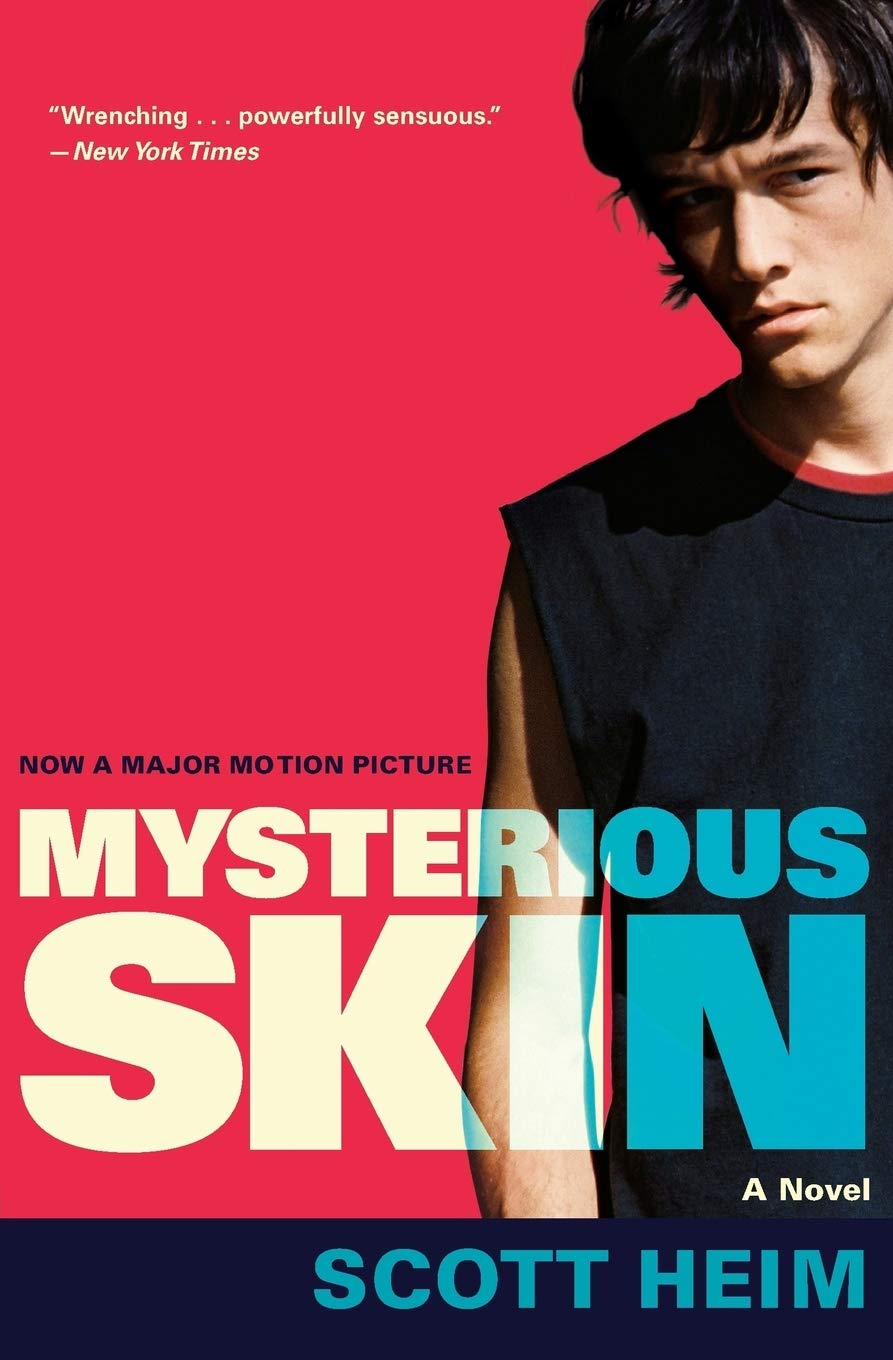
I recently read a novella by Scott, “Loam”, which was really good, and it put me to thinking about Mysterious Skin, the first of three novels he published, and alas, the only one that I’v actually read. I read it back in the late 1990’s, methinks, when I was scrabbling around trying to get caught up on gay lit and read as much of it as I could. I also saw the film (I’ll watch anything with Joseph Gordon-Leavitt in it, quite frankly), and while I have met him and spent a little time with him, and we follow each other on both Facebook and Twitter, I don’t know that I would safe in referring to him as a friend, I do consider him an acquaintance of whom I am very fond. He’s quite witty on social media, and I admire his skill as a writer…so I thought I should take a reread whirl with Mysterious Skin. 

I also wanted to read it as a dark crime novel, borderline noir; I was certain the story would hold up, but since Mystery Writers of America classifies it’s definition of a mystery as writing about the commission, solving, and/or aftermath of a crime….while it can be a stretch, Mysterious Skin kind of fits into that broad definition. Laura Lippman thinks we need to stop claiming literary works, like Crime and Punishment and Sanctuary as crime novels; but I honestly believe Sanctuary absolutely and positively is a masterwork of literary noir; the line between “Southern Gothic” and “crime fiction” is relatively tiny and there is a lot of crossover. Some of Flannery O’Connor’s work, definitely Southern Gothic, crosses over that fine line between literary fiction and crime.

I am not defining literary works, or works from other fields, as crime fiction to try to elevate crime fiction; it doesn’t need elevating to get respect, which was Laura’s point. Crime fiction deserves respect because it is good, and those who dismiss sneeringly as genre need to remember that literary fiction is just as much a genre as anything else.

As Nevada Barr said, “It’s either mystery or romance or just plain boring.”

6132sc9ejNL

The summer I was eight years old, five hours disappeared from my life. I can’t explain.  I remember this: first, sitting on the bench during my Little League team’s 7 P.M. game, and second, waking in the crawl space of my house near midnight. Whatever happened during that empty expanse of time remains a blur.

When I came to, I opened my eyes to darkness. I sat with my legs pushed to my chest, my arms wrapped around them, my head sandwiched between my knees. My hands were clasped so tightly they hurt. I unfolded slowly, like a butterfly from its cocoon.

I brushed a sleeve over my glasses, and my eyes adjusted. To my right, I saw diagonal slits of light from a small door. Zillions of dust motes fluttered through the rays. The light stretched ribbons across a cement floor to illuminate my sneaker’s rubber toe. The room around me seemed to shrink, cramped with shadows, its ceiling less than three feet tall. A network of rusty popes lined a paint-spattered wall. Cobwebs clogged their upper corners.

My thoughts clarified. I was sitting in the crawl space of our house, that murky crevice beneath the porch. I wore my Little League uniform and cap, my Rawlings glove on my left hand. My stomach ached. The skin on both wrists was rubbed raw. When I breathed, I felt flakes of dried blood inside my nose.

Like some of the best crime novels, Mysterious Skin is about survivors of a trauma, and the different ways people react to suffering through trauma. It actually isn’t a stretch to call it a crime or mystery novel; the central story is trying to determine what happened to Brian Lackey when he was seven years old and lost five hours of time. Brian at first becomes obsessed with UFO’s and alien encounters, as those are the only places he can find where other people also lost time; so he becomes convinced that he was kidnapped by a UFO and experimented on; all the evidence, such as it is, certainly points to that. The other boy, Neil, had a sexual relationship with his Little League coach, which he believed was consensual and that Coach loved him; as he grows up he becomes a hustler, tricking with johns cruising a park in Hutchinson (all these small cities in Kansas have/had gay cruising places; Emporia even had one) and eventually moving away to New York, where he continues hustling. Neil’s trauma is actually even unknown to him; he’s convinced himself that he was special and that Coach loved him; their sexual relationship wasn’t perverse or perverted or anything wrong, but rather based in love and consent; his own memories are very clouded, and as a young adult hustler he finds himself drawn to older men, much like Coach was.

It’s very definitely a literary novel, make no mistake, but it is, at heart, a novel about a crime and the trauma that comes from that crime and its aftermath; which fits the definition of “mystery” that comes from Mystery Writers of America. I doubt very seriously the panel of judges for the Best First Novel Edgar the year this was released would have picked it as a finalist (which it deserved to be); the subject matter is hard enough for people to deal with, let alone the sexuality of Neil, who is essentially a teen hustler, getting paid by older men for sex.

Beautifully written with a sparsity of language that Megan Abbott or James M. Cain or Shirley Jackson would embrace; Heim chooses words carefully to evoke powerful images and emotions and realities in as few words as possible, and while some might think the ending a bit of a cheat, leaving the door open to many possibilities–I feel like he found the absolute perfect place to end his novel: Neil coming to realize that what he experienced with Coach wasn’t love (something he has been adamantly refusing to understand since it happened–that whole I’m different than the others thing so many children feel under those circumstances–I’ve known any number of gay men who had relationships with adults when they were very young and didn’t realize it wasn’t love until they aged out of their Lolita-like relationships) and Brian finally piercing through the veil his mind has hidden the truth from all these years because it was too much for him to handle…until he could handle it.

Mysterious Skin is also an incredibly powerful depiction of what it’s like to be grow up working class in a sparsely populated state like Kansas–the worries about money, the beater cars you keep coaxing more life out of, that college might not be an option, and there aren’t that many good jobs to be had–and what it’s like to grow up queer under those circumstances. At one point in the book Heim says something incredibly smart and true–about how the stuff that is hip and cool on the coasts takes about three years to get to the center of the country; which is something I learned very quickly when I moved to California and all of my clothes were dated and wrong and out of style.

This is a truly terrific book, and I encourage you to read it, if you haven’t already.

The Former Enfant Terrible

I don’t know that I would consider myself a former enfant terrible; I’m not entirely sure I am not currently one, given the actual definition of the term. In French it means unruly child, and I don’t know that I was one of those or not, but the current Webster definition (that of a person whose unconventional or controversial behavior or ideas shock, embarrass, or annoy others)–that I can actually see. I’m certainly annoying; I can be embarrassing; and I am pretty sure I’ve said or done things other people might consider, or see, as shocking. I mean, just being gay shocks some people.

If I could choose which of those three verbs I would pick, if I could only be one: most definitely, without question, annoying.

I am sure there are many who would agree that I have already succeeded on that score. (shrugs) It happens.

Well, we’ve made it to Wednesday somehow, and that’s an accomplishment of which we can be terribly proud. Making it through any day these days is an accomplishment, really; I know that everyone else is as sick of the phrase the new normal as I am (it certainly begs the question of what is normal); and I’m not certain this is a ‘new normal’ anyway; the real new normal is what comes after all of this, and that’s the part I’m kind of worried about, to be honest. What will the new world, arising from the ashes of the COVID-19 pandemic like the phoenix of lore, look like? We had already established that there is a certain percentage of the population who aren’t civic-minded, don’t care about anyone outside of their immediate circle of selfishness, and believe that if they’re unhappy no one else should be; appallingly awful as they are, at least they’re setting example for everyone else of who not to be–although others–a much smaller amount, to be sure–see their wretched behavior and jump on the bandwagon of selfishness and hatred. We’ve always had those people in this country; they were Tories during the revolution; pro-slavery; America First while the Nazis ravaged Europe and began slaughtering undesirables; and so forth.

We started watching David Simon’s new HBO mini-series, The Plot Against America, based on the novel of the same name by Philip Roth. I’m not going to argue the merits of Philip Roth as a writer; he won every conceivable writing award during his lengthy career, and whenever I’ve dabbled into his canon, I’ve not really come away terribly impressed. At the direction of my friend Laura, I read When She Was Good, and I had read another one of his earlier novels already, Letting Go; I wasn’t really impressed terribly by either–I’ve never really understood, or gotten, novels about the sexual messes straight people get themselves into because of their warped sense of everything about themselves, let alone the American puritan ethic about sex and sexuality; I tried reading The Plot Against America because it was a topic that interested me: what if Nazi sympathizer and anti-Semite Charles Lindbergh had been elected president in 1940, rather than Roosevelt winning his unprecedented third term? I gave up about a chapter into it–as I often say about literary novels (looking at you, Jonathan Franzen), why would I read a novel about characters the author clearly doesn’t like? I”m not interested in people debating me about the genius of Philip Roth; I don’t get it, and that’s fine. I’ll give him another try–probably after I finish watching this show, I’ll probably give The Plot Against America another try, It came out around the same time I read Sinclair Lewis’ disturbing, if flawed, It Can’t Happen Here, which was chilling in its depiction of how easily Fascism could rise, and become perfectly acceptable, in this country (I sometimes wonder what Lewis, a brilliant social critic and writer, would think of these modern times in which we find ourselves), which is something I’ve chewed over a few times myself, and have considered writing about at some point. I saw the possibilities of where we are right now back in the 1980’s, during the height of the HIV/AIDS pandemic, as people died and no one cared because it was “the right people” who were doing the dying. That was what first inspired my alternate American history novel idea–one that still is bubbling in the back of my mind, the rise of the American dystopia, and the concurrent horrors that would come in its wake.

I do think that the times in which we currently live will be referred to by future historians as “the Oligarchy” or “the Oligarch Age,” as opposed to the truly falsely named “Gilded Age,” when workers were as disposable as animals and the capitalistic monsters rose to wealth and power in ways unforeseeable to the original founders.

I’m still reading Mysterious Skin (or rather, rereading it) and I’m very interested to find that I don’t remember as much of it as I had originally thought. It brings back to me a lot of memories of Kansas, and while I was never a child there, I can imagine what it would have been like. There’s a dark sensibility to this story, and the writing, that I’m really enjoying; I’ve always believed Scott Heim could write amazing noir stories, and kind of wish he would. I just haven’t been able to focus as clearly on reading as I would like lately; primarily because I’ve been writing again, and apparently, I can either focus on writing or focus on reading, but not both at the same time. It’s a very vivid depiction of being an outsider as a child–for both of its main male characters–and that is certainly something I can relate to, even now; although I never truly felt like an outsider until we moved to suburbia. After that, I spent the next twenty-three years feeling like I didn’t belong, in either my world or any world, for that matter. Heim really gets that across, and far better than I did in Sara.

The weather outside is frightful. Last night as we watched another episode of The Plot Against America, a massive thunderstorm rolled in, and it continued to rain throughout the night–and even this morning, this storm system (or another one, who knows? Not a meteorologist) is still raging outside my windows. Right now the rain has stopped, but when I first woke up it was coming down pretty intensely. It appears that is our forecast for the rest of the day as well, so it’s good, gloomy day for working from home. Ah, there was another blast of lightning, and thunder immediately behind. Yikes! Glad I am not going out there into that mess, quite frankly.

And of all things–because of course I don’t have enough works in progress–I started writing some new short stories last night–“In the Shadow of a Tomb,” “Procession of the Penitent,” “Dimestore Cowboy,” “The Plague Doctor” and “The Arrow in the Cardinal’s Cap”–mostly openings and an idea of the story, and who knows whether anything will ever come out of any of them, really, but it’s nice to be productive again, even if it’s scattered and all over the place. But I am going to try to spend this weekend sending stories out for submission again; it’s a really nice feeling to have stories out in the world, even if they don’t get taken.

And on that note, back to work. Have a lovely Wednesday, Constant Reader!

IMG_0808

Before

As Constant Reader is no doubt aware, I’ve been worried recently about my inability to sit down and write. I’ve done some writing, of course, in drabs and dribs here and there; applauding myself for getting as many as a thousand written in a day–which is a major drop off from what I used to be able to manage, pre-pandemic, although I must confess it’s been quite a while since I’d had one of those days before the world shut down. But I am very pleased to report–despite innumerable, continuous frustrations with my computer and its inability to function properly (thank again, Apple Mojave update; may your code-writers burn in hell for all eternity without respite or mercy)–that yesterday I managed to not only write, but I put down over three thousand words in slightly more than an hour and finished the first draft of the Sherlock story–thank you, baby Jesus–and now can let it sit for a while before I revise it again. It’s very rough, and probably more than a little bit jumbled, but I have it done and with a few reminders this week of Doyle’s style, I should be able to get it finished and turned in on time.

Huzzah!

I cannot tell you how nice it felt to get three thousand or so words down in such a short period of time, Constant Reader. It’s nice to know those muscles haven’t atrophied, and are still there when I need to call upon them. I’m also really glad to have the story draft finished; regardless of how good or bad it might be, it’s lovely to have a draft done so I can revise it and fix it at leisure during the last few days (eleven, actually) before the deadline hits. It’s caused me so much stress, quite frankly, and I am so relieved to know that I can still write, and my usual amount at that, even during a pandemic with all these additional stressors and irritants going on. And believe you me, there are plenty of those enough to go around.

I did start rereading Mysterious Skin again yesterday afternoon–after finishing the story, doing a load of dishes, folding clothes, and straightening the kitchen–and I am totally loving it. It’s weird–I do remember reading it before; I distinctly remember the cover, with pieces of cereal scattered across it, but I don’t remember actually reading it. I also remember the story, but mostly from the film. The reason I am finding it strange that I don’t remember reading it before (and to be fair, I didn’t remember a lot of things in the books I’ve reread in the Reread Project so far–I didn’t remember that there was a living mummy in Crocodile in the Sandbank; I thought the dolphin rescue was in Mary Stewart’s The Moon-spinners but it was actually in This Rough Magic; I didn’t remember there being a love interest in Nine Coaches Waiting…etc. etc. etc.) is because it’s resonating with me as I read it; I was a teenager living in Kansas during the time the book is set; I’d been to the state fair in Hutchinson; I’ve been to Pretty Prairie and I’vve even been through Little River, and the way Heim describes the countryside–it’s like being there again. Maybe when I first read the book I was still compartmentalizing my past; I used to do that quite a bit, shutting the door on painful memories of a deeply unhappy past, and lately I’ve begun unpacking all of those memories a bit more–not sure why, but that’s a subject for another time. But I am enjoying the book a lot, as I thought I would, and am really looking forward to getting deeper into it.

And reading it is making think about my own novel, Sara, to date the only novel I’ve published that is set in Kansas. Maybe I should reread some of my own work for the Reread Project? There’s quite a bit about my old books I honestly don’t remember–and I really should start keeping a list of my character names, at the very least. I think when I started up on the Kansas book again a few years ago, I had reread Sara and was horrified to realize I was using the exact same character names I’d used in it; in fairness, those character names have been hanging around in my head since I wrote my first novel forty years ago–the terribly written, highly cliched, trite handwritten manuscript that no one will ever see because I am not going to include it in my papers, should I ever get my shit together and get those donated–and I always recycle from unpublished work. I just started writing about Kansas and of course those names popped out–and so later, when I went back to work on another Kansas book those names popped right out again.

And oh, those Kansas memories, of towns named Council Grove and Salina and Cottonwood Falls; Neosho Rapids and Hiawatha and Yates Center; Garden City and Great Bend and Junction City; Derby and Newton and Pratt. The six towns that consolidated into my high school: Americus, Bushong, Allen, Dunlap, Admire and Miller. The other high schools we played against–Olpe and Madison and Hartford, Waverly and Lebo and Reading. Little towns that were drying up and blowing away; a couple of blocks, some abandoned buildings, maybe a little post office and a gas station. Bushong was just off the road the bus took from Americus to Northern Heights High School, which was about a half-mile or so east of Allen–which there wasn’t much to, either. You couldn’t see much of Bushong from the road; there were railroad tracks there when I was a teenager, and so the bus always had to stop, open the folding doors, and see if there was a train coming or not. There were bushes and trees hiding the remnants of the town from the state road–the Americus Road, is what we called it–but you could still see the roof of the abandoned all-grades-in-one school. Back when we lived in Americus we didn’t have street names or house numbers; Google Earth assures me that is no longer the case. We used to have to pick up our mail at the post office; everyone had a post office box. I remember our combination: three turns right, stop on 3,  a full left turn and stop between 8 and 9, turn back to the right and stop on 5.

The things you remember, right? But I’m sure I am remembering some things wrong; I invariably do, as I said the other day.

But, as I said, the thing is I am remembering, and I am not recoiling from the memories, which is also really nice. I’m not sure when the exorcism of my old demons from past lives occurred, but it did; I’m kind of sorry I shut all the memories away for so long. I think some of it has to do with writing Bury Me in Shadows, which started making me remember Alabama–I have no memories of living there, but I used to spend a few weeks down there every summer until we moved to the suburbs, at my grandmother’s house; I am setting the book in a county based on where we are from and my grandmother’s house is located precisely where my character’s grandmother’s house is located. (The funny thing is I keep trying to make things fit, but the truth is I don’t have to make anything fit into what I remember; it’s fiction, so I have the freedom to change whatever the hell I want to; the story itself is patched together from stories my other grandmother used to tell me when I was a kid–probably half-truths at best, outright lies at worse; perhaps some family legends? I don’t know, but those stories have hung around in my head for most of my life.) I’ve been wanting to write this story for quite some time, and even wrote it as a short story called “Ruins” back in my twenties, while I lived in Fresno.

The one thing I need to be careful about is I don’t want to mirror the ghost story I told in Lake Thirteen, which kind of makes me nervous. I’m always worried that I repeat myself; as a very kind reader gently asked me recently, how many car accidents has Scotty been in? 

Sadly, more than I want to admit.

And on that note, tis back to the spice mines with me.

IMG_0246

Beautiful People

UP at the crack of dawn, literally, to go to work this morning. I’m covering for someone on the morning screening shift–something I literally said I would never do again after getting sick–and yet here we are because I cannot say no to anything asked of me nicely.

I hate being such a pushover, but then again, I’ve always been easy.

Yesterday was my first day of really working from home for an entire day; it was strange, and I kept feeling guilty all day, like I was getting away with something? Everyone else, I suppose, has already adjusted to this entire working from home thing, but for me, this was my first “all eight hours at home” thing, and man, was it weird. I suppose it’s going to be equally weird once this is all over, when everyone is back in the office every day–which again, is going to take some getting used to; being around people after being in strict isolation for a lengthy period of time isn’t going to be like flipping a switch or something.

Paul and I continue to enjoy the Australian crime show My Life is Murder (or is it Murder is My Life?) on Acorn, starring the perfectly cast and always underrated Lucy Lawless. Naturally, I had to retire early last evening in order to get up early this morning–I suspect I’ll be tired tonight; one thing that has changed since I got over being sick is that I no longer go into a deep, restful sleep every night; now I wake up several times during the night (just like old times!) and don’t really rest as well as I should. I suppose the return of some sort of normalcy should make me happy, but it doesn’t–that’s not the normalcy I actually wanted back, frankly–but there you have it.

I tried to write for a bit last night after I finished working, but I was mostly doing data entry and my eyes were bleary, so I retired to the easy chair after being entreated by Scooter, who wanted my warm lap to sleep in (it was oddly cold yesterday; it was 52 degrees when I woke up in the morning), and so I picked out a short true crime thing on my Kindle to read–Little Slaughterhouse on the Prairie, which is about the Bloody Benders, a family of serial killers who lived in Labette County, Kansas, in the early 1870’s and definitely killed at least eleven men, if not more. Whether there was a financial motive or they just enjoyed killing people. no one is sure–not much is really known about the Benders, and what little information there is, is often contradictory. I heard the stories about the Benders when I lived in Kansas, and I’ve always wanted to write about them, but just reading this thing yesterday–outside of the killings, they just weren’t very interesting. I had hoped reading this might give me the background necessary to come up with an idea, but no such luck.

But I am confident I’ll be able to get a first draft of the Sherlock story finished this weekend, and I am going to work on revising the other two stories I wanted to get finished and turned in and are all due by the end of the month.

Bouchercon Sacramento was cancelled yesterday, which is a shame–not entirely unexpected, as the time continues to roll out and this doesn’t seem to be abating as quickly as everyone might have hoped at some point. It’s not looking good for football season, either–how weird would it be to watch football being played in empty stadiums? I cannot stand the thought of not having football season–talk about weird–but we’ve already seen college basketball and the NBA and NHL and MLB all cancel. Losing Sacramento Bouchercon was doubly sad for me because I was ill and had to cancel out of Dallas Bouchercon–so by the time it rolls around in New Orleans next year, it will have been two years since I’ve been to Bouchercon. But at least it’s in New Orleans next year, and maybe the people who were considering skipping because of the swampy heat of Labor Day weekend will reconsider, since there was no Bouchercon to be had this year. But my deepest sympathies to the Sacramento Bouchercon planning team, what a shame that all your work was for naught.

There’s a scary thought in the back of my mind that this pandemic is going to be killing off events like this–that they won’t come back, especially if they are required to go two years without happening.

These are indeed strange times.

I also don’t see New Orleans adhering to the “shelter-at-home” thing for much longer–it won’t be official, naturally, that order will stay in place, but New Orleanians are too social and love to be around other people far too much; I am sure many are chafing already to throw a party or something, because that’s kind of what we do here to get through rough times: have fun. But having fun runs the risk of killing people now, so…there’s that.

And apparently the entire world decided to email me after I walked away from my computer yesterday. Great.

And now, back to the spice mines. It’s Thursday, Constant Reader, in case you can’t remember what day it is from your own shelter-at-home situation.

IMG_0098

Always

Kansas.

We moved to Kansas the summer I turned fifteen. It was a bit of culture shock; we’d been living a middle-to-upper middle class suburb of Chicago for about four years then, after spending eight or nine years in a working-class, very blue-collar neighborhood in Chicago, populated primarily with eastern European immigrants, or second, maybe third, generation Americans from central to eastern Europe. All I really knew about Kansas, before moving there, was that it had been a part of the Dust Bowl during the depression; I’d read about “bleeding Kansas” in history books; and of course, tornadoes and The Wizard of Oz (which is a movie I’ve never cared for; I watched it once as a kid and never again). Neither Nancy Drew nor the Hardy Boys ever had an adventure there; nor had any of the other kids’ series or Scholastic Book Club mysteries I’d read. But it was in Kansas that I actually started writing seriously, and began to think about being a writer when I grew up. (It was also in Kansas that I had the bad creative writing professor, and other bad history professors; I actually cannot think of a single decent teacher I had at the university level in Kansas–but then again, I was incredibly miserable when I lived in Kansas and it’s entirely possible that misery bled over into every other aspect of my life.)

I also don’t want to make it seem as though the five or so years I spent there were completely miserable. I did have fun–I was always desperately trying to have fun to distract me from the terror that arose from my sexuality, which was a secret that must be guarded from everyone at all times; it’s laughable to think about it now, but that terror was very real to me then.

It was in Kansas I started writing about teenagers, and while none of that stuff I’d written was publishable–I still have the handwritten novel I started writing there somewhere; the thought of rereading it turns my stomach as I can only imagine how incredibly bad, trite, and cliched it all was–but those characters have lived on and appeared in my actual published work as an adult; primarily I kept the character names and the basis of who they were, fleshing them out and (hopefully) making them three dimensional. Sara is, to date, the only book I’ve published that is set in Kansas; Laura, the main character in Sorceress, is also from Kansas–but the book is set in California. And of course I’ve been playing with the Kansas book now for something like fifteen years–hopefully, that will be finished and done this year.

I love to read about Kansas, and two of my favorite crime writers–Lori Roy and Sara Paretsky–are also from Kansas; Lori’s first novel, Bent Road (it’s brilliant, as is everything she writes) is set in Kansas; Sara, of course, primarily writes about Chicago but wrote a stand alone several years ago called Bleeding Kansas I’ve always wanted to get around to. Nancy Pickard also wrote two stunningly brilliant novels set in Kansas–The Virgin of Small Plains and The Scent of Rain and Lightning; I cannot recommend them enough. One cannot talk about Kansas books, either, without mentioning Truman Capote’s “true crime novel” In Cold Blood, which I like to reread every now and then.

There’s just something noir about Kansas; I don’t know how to describe it, or why it feels that way to me; but there’s just something about the wide open spaces and the wind, that Peyton Place-like feel to the small cities…Emporia (the county seat; we lived about eight miles out of town in an even smaller town called Americus) even had its own full blown scandal where a minister and the church secretary had an affair and murdered their spouses; it was even made into a two-part mini-series filmed on location in Emporia starring Jobeth Williams as the femme fatale. Those small towns, scattered all over the northern part of Lyon County, once thriving and bustling but now barely hand on when I lived there…the abandoned schools, still standing (they’d all been consolidated into one high school in the 1950’s) in the emptying little towns…our consolidated high school, out in the middle of the country with the football field backing up to a pasture; and the explosive boredom for teenagers. I always turn back to Kansas somehow, whenever I am thinking creatively or wanting to write a new short story–so much material, really. Emporia even had a cult; the old Presbyterian College of Emporia had gone bankrupt sometime in the early 1970’s and The Way International had bought the campus, turning it into The Way College of Emporia and I have to tell you, those kids from The Way College were terrifying–and there were lots of stories and urban legends about what went on there on that campus; how much was true I’ll probably never know, but I do know they used to have armed security guards patrolling the edge of campus, and every teenager knew not to ever get cornered anywhere with no possible escape by two or more of those kids….they always traveled in groups, never less than two and rarely more than six, but always in multiples of two. They always looked very clean cut, but you knew them by the nametags they were required to wear, their empty glassy eyes, and the big smiles on their faces.

There’s also the story of the bloody Benders, serial killers who operated an inn and murdered their guests in the nineteenth century before disappearing; I’m sure every nook and cranny of Kansas has some kind of horrible tale of murder hidden away.

And about three or four miles from our high school–you had to turn right when you reached the state road from Americus to get there; if you turned left towards Council Grove you’d pass this place: an abandoned nuclear missile base, that is still there. We used to go there sometimes for kicks–opening the door and listening to the strange sounds from deep inside and water dripping. I had plenty of nightmares about that missile base.

But the only other gay novelist I know from Kansas is Scott Heim (or at least the only one I know of who sometimes writes about Kansas). I read his debut novel Mysterious Skin sometime in the mid to late 1990’s, and was blown away by it (the film is also quite good). Mysterious Skin is set in Kansas, of course, and while it is a literary novel, and a quite good one, for me there were some elements of noir to the story; I have moved it to the The Reread Project pile and hope to get to it again relatively soon, so i can discuss it with more credibility and authority. I’ve not had the opportunity to read his other two novels, In Awe and We Disappear, but I’m adding them to the “need to get a copy” list.

Over this past weekend I read a short story Scott wrote for Amazon; part of something called The Disorder Collection, along with stories from several other authors. You can buy “Loam” here; it’s well worth the ninety-nine cents.

We agreed to share the driving. The early-morning flights had left us feeling run-down, but my sisters said my eyes looked the least bleary, so I should drive first. The clouds had gone gray; it had started to rain. But we could take our time. The afternoon we’d been dreading lay before us in hot, wet highways flanked by sorghum and corn and glistening shocks of wheat. It was late summer, already harvest season, and the fields shuddered in the wind, the grains full and heavy as though fed with blood.

At the rental counter, a cheery, silver-haired clerk had offered us a white sedan, but Louise had disapproved. “A simple compact is fine,” she said, “and no extra options. Just make sure it’s as black as possible. Is ‘funeral black’ a color?” She’d glanced across the desk to Miriam and me, urging us to smile. No one had smiled since we’d met in the arrival lobby with hesitant hugs.

The clerk didn’t seem to grasp Louise’s reference, but when she collected our licenses, she was attentive enough to catch our dates of birth. She turned and yelled, “Girls, come look–triplets!”

It had been years since we’d been subjected to this kind of foolishness. We watched as her pair of coworkers stood from their desks and approached the counter. I could guess what was coming next: we didn’t look anything alike; we had varying shades of brown and blond hair; even our bodies and the ways we dressed, so different. Louise stopped their small talk before it could start, outstretching her hand to silence the room. “Look, our father just died, okay? Let’s sign what we need to sign and get this over with.”

One of the things I love about Heim’s work–and having only read one novel over twenty years ago and now this short story–is that he often writes about the aftereffects, and the aftermath, of traumas and how the victims deal and cope. This is something that interests me; I often think and wonder about how people who’ve dealt with something–my husband is a serial sex offender; my father murdered my mother, my grandfather was a serial killer–they had no control over cope and go on with their lives; I’m actually writing a story dealing with that sort of thing right now (one of the many stories I have in some sort of progress right now; it’s called “He Didn’t Kill Her”), and also those who were directly victimized–how do they deal? How do they cope? How do they go on with their lives after something so traumatic happens to them?

This is why this century’s reboots and sequels to Halloween interest me, because they show how Laurie Strode, years later, was psychologically damaged and who she became; one of the things I loved about the Scream films is they showed how everything that has happened to her has turned Sydney into a different person from who she imagined she’d be before the murders started.

Heim doesn’t write about the peripherally damaged; he writes about those who actually were damaged first-hand. In “Loam”, his triplets are clearly damaged by something that happened to them when they were children; they are returning to bury their father and clearly have not been back to Kansas in years. It isn’t clear what happened to them–it may have just been bad parenting in the beginning–and it isn’t until they stop at a second-hand store (what we used to call “junk shops” when I was a kid) and find some strange and mysterious pictures of their first grade classmates on a table that the memories of the past–and what they went through–begin to come to the fore.

I do wish Scott Heim would write more. This story, sad and dark and mysterious, is everything I love to read.

This: The afternoon we’d been dreading lay before us in hot, wet highways flanked by sorghum and corn and glistening shocks of wheat. It was late summer, already harvest season, and the fields shuddered in the wind, the grains full and heavy as though fed with blood–I wish I’d written that.

Buy it or borrow it if you have Amazon Prime. It’s very well worth the time.

IMG_0112