Good for Me

The LSU game on Saturday was not pleasant, alas; it’s never fun to lose, particularly when it’s to a hated rival. I was far too tense during the game, and realized that it was because of pent-up nervous energy. I correctly diagnosed that if I got out of my easy chair, turned both the upstairs and downstairs televisions to the game, and used the time to listen–occasionally watching–while cleaning and organizing, I could remain calm and cool and not get overwrought. I love football, but I don’t love the anxiety and stress that comes from total immersion in a game…so I think from now on I am primarily going to listen while cleaning the house.

And when the game was over and LSU had lost, I had a clean apartment and had done several loads of laundry and several loads of dishes. So that counts, at least for me, as a win. I also started another book purge; recognizing that some of my justification for hoarding some books (“someday I’ll write a non-fiction book about blah-blah-blah”) was just that: justification. Rather grimly, as I started pruning books off my shelves I told myself, you’d only ever have time to write that non-fiction book if you reached a place where you could support yourself solely by writing. And if that is the case, you can always buy another copy of the book.

The Saints didn’t play yesterday; rather they are on Monday Night Football playing the Washington Racist Stereotypes Redskins, which means getting home from the main office tonight will be a chore–which means I have to go the long way to avoid the Superdome and the Central Business District. Yay. It also means Paul will have to walk home from work, but I am sure he is already expecting that outcome.

Yesterday I didn’t feel well; a fever that kept coming and going, runny nose, congestion…very unpleasant. I couldn’t focus because I had sick head; my mind couldn’t focus. I tried writing for a while and finally had to give up on it. Instead, I curled up in my easy chair and finished reading Alice Bolin’s Dead Girls.


IMG_2453

Love Touch

Sunday morning, as I sit here in my cool workspace swilling coffee, trying to wake up and figure out what to do with the rest of my day. I need to go to the grocery store and I should also probably make an attempt to go to the gym; but I can’t seem to find my iPad, which makes doing cardio pointless (I read or watch TV on my iPad while on the treadmill; perhaps not having my iPad is simply an excuse for not going; what if it’s gone, lost, stolen? I am trying not to think that way and am hoping that I simply left it at the office. If not, I am terribly screwed because I don’t know where it is and I currently don’t have the cash on hand to replace it. So, yes, let’s just continue pretending happily that it’s as the office, shall we?)

I could, of course, just go to the gym and do weights. That always feels good, at any rate. Perhaps once I finish swilling this coffee….

I slept late yesterday, and I slept even later today. I spent most of yesterday not only reading but doing chores around the house, on the pretense that today I would not only go to the grocery store and the gym, but I would also spend some time writing today. I need to finish a short story; I need to revise still another, and there’s that new one struggling to take root in my brain that I haven’t really decided what to do with just yet. There are two others swirling around up there in my head, as well as others I’ve not thought about or have forgotten about in the meantime. But now, now as I wake up I feel more confident about running the errands and going to the gym and actually doing some writing today.

I’ve been reading The History of Western Philosophy by Bertrand Russell, and greatly enjoying it; is there anything quite like well-written non-fiction? It’s why I love Joan Didion and Barbara Tuchman; one of the things I love to do while reading is to learn, and non-fiction fills that need quite beautifully. I also like non-fiction that makes me think; which is why I am looking forward to reading Dead Girls by Alice Bolin. I still would love to do a collection of my own essays, book reviews, and so forth; but egad, what an odious chore pulling all of that together would be. I struggle with essays, but I also think that the writing of essays; the ability to pull thoughts from my head and extrapolate them out to their fullest meaning, is vitally important and a skill-set I wish I had honed more properly. A friend once pointed out to me, as I bemoaned my inability to write essays, that my blog itself is nothing more than years of personal essays. That took me aback, because it was, in many ways, correct; there is definitely some truth to that, but it’s hard for me to take the blog seriously in that fashion, because so much of it is simply written off the top of my head in the morning as I wake up and drink coffee and try to figure out what to do with the rest of my day.

One of the problems for me with personal essays is, ultimately, the issue of self-deprecation, which I’ve addressed in previous blog entries about my writing and my career and my books; who am I to write about this subject? Am I expert enough in this to write about it, or am I simply talking about things that smarter, better-educated people have written about long ago and having the hubristic belief that I am the only person to see this truth for the first time? 

And, in considering myself self-deprecatingly as not that special or particularly smart, I defeat myself and never write the essay.

And of course, there is the problem of all the lies my memory tells me.

But yesterday, I took the afternoon to finish read an ARC of Lou Berney’s new novel, November Road, and was blown away by it.

Scan.jpeg

Behold! The Big Easy in all its wicked splendor!

Frank Guidry paused at the corner of Toulouse to  bask in the neon furnace glow. He’d lived in New Orleans the better part of his thirty-seven years on earth, but the dirty glitter and sizzle of the French Quarter still hit his bloodstream like a drug. Yokels and locals, muggers and hustlers, fire-eaters and magicians. A go-go girl was draped over the wrought-iron rail of a second floor balcony, one book sprung free from her sequined negligee and swaying like a metronome to the beat of the jazz trio inside. Bass, drums, piano, tearing through “Night and Day.” But that was New Orleans for you. Even the worst band in the crummiest clip joint in the city could swing, man, swing.

A guy came whipping up the street, screaming bloody murder. Hot on his heels–a woman waving a butcher knife, screaming, too,

Guidry soft-shoed out of their way. The beat cop on the corner yawned. The juggler outside the 500 Club didn’t drop a ball. Just another Wednesday night on Bourbon Street.

Lou’s previous novel, The Long and Faraway Gone, won every crime-writing award under the sun that it was eligible for: Edgar, Anthony, Macavity, and I don’t know what all; it was the crime publishing equivalent of the EGOT. It was, obviously, an exceptional novel. I met Lou when we were on a panel together at the Raleigh Bouchercon, along with Lori Roy and Liz Milliron; moderated by the amazing Katrina Niidas Holm. It was funny, because the panel topic was, I think, writing about small towns which, in fact, none of us on the panel really did, but we had fun with the topic and I know I brought up Peyton Place at least once and pointed out that suburbs are small towns with the primary difference being suburbs are bedroom communities for cities while small towns aren’t attached in any way to a larger city. It was fun and spirited and I liked Lou, thought he was incredibly smart, as were Liz and Lori. Lori and Lou went on to win Edgars for that year; and I admire their work tremendously. I’ve not had the opportunity to read Liz’ work; but she did have a terrific story in the New Orleans Bouchercon anthology, Blood on the Bayou.

Anyway, I digress.

I’ve been looking forward to November Road since I finished reading The Long and Faraway Gone, but I still need to go back and read Lou’s first two novels, Whiplash River and Gutshot Straight. 

I also have to admit, I was a little hesitant about Lou’s new book; it’s built around the Kennedy assassination in 1963, which always gives me pause (I have yet to immerse myself in Stephen King’s 11/22/63). I’m not sure why I don’t care to read fiction around the Kennedy assassination, but there you have: an insight into my mind. But the Kennedy assassination, while a primary plot device, is just that: a device to set the story in motion. Frank Guidry is involved with a mob boss in New Orleans, and after the Kennedy assassination he is given instructions to fly to Dallas, retrieve a car, and drive it to Houston to dispose of it. While he is doing this, he realizes that he is getting rid of evidence that may be of vital importance to the investigation into the president’s murder–and as such, is a loose end who knows too much and figures out he’s got to disappear now because they’re going to want to kill him. And sure enough, they do send someone after him, Paul Barone, a remorseless killer and tracker. The cat-and-mouse game between them builds suspense throughout the book.

But it’s not just about Frank, and it is a credit to Berney’s talent, creativity and imagination in that he throws in another primary character, constructed carefully in all the facets and layers that make her live and breathe: Charlotte. Charlotte is a wife and mother in a small town in Oklahoma, married to a useless drunk fuck-up with whom she had two daughters, and her salary working for the local town photographer is the primary thing keeping a roof over their heads. Her own ambitions for being a photographer herself are constantly shat upon by her boss, her society and culture and environment: she is a woman, a wife and mother, and in 1963 that so thoroughly defines her that any other ambition she might have throws her identity as wife and mother into question. Trapped, with the walls closing in on her closer every day, Charlotte takes the president’s assassination as a sign for her to run away with the girls and start over. Charlotte is an extraordinary character;  her relationship with her daughters is the strong backbone of this story. You root for her, you want her to make her escape and make her dreams come true.

Frank and Charlotte cross paths in New Mexico, and Frank sees them as his salvation; his murderous pursuers might be thrown off as they are looking for a single man, not one traveling with his wife and kids; the book becomes even stronger and more suspenseful once they are all together. Frank and Charlotte become close, despite not being completely honest with each other; they are both keeping their cards close to their vests, but yet form a loving bond. WIll they escape, or will they not?

November Road reminded me a lot of Laura Lippman’s Sunburn; the same kind of relationship building between a man and a woman where a lot of information, important, information, is held back from each other, and that lack of trust while falling in love is an important theme in both books: women trying to make their best lives, even if it means making morally questionable decisions, while becoming involved with a man who isn’t completely honest with her. Berney’s writing style, and tone, and mood, also put me in mind of Megan Abbott’s brilliant Give Me Your Hand. If you’ve not read yet the Lippman and Abbott novels, I’d recommend getting them and holding on to them until Berney’s book is released in October and reading them all over the course of a long weekend.

Bravo.

Smooth Operator

April Fool’s Eve!

I slept in this morning, after staying up much later than I intended last night. I’d read somewhere that you should stop looking at a screen of any kind–television, computer, phone, iPad–at least half an hour before going to bed to help with sleep, and frankly, I’ll try just about anything that will help in that regard; so I’ve started keeping a non-fiction book on my nightstand, to read for about half an hour every night before attempting sleep. The last two I read were The Black Prince of Florence and Joan Didion’s After Henry; last night I started onJon Ronson’s So You’ve Been Publicly Shamed. I couldn’t stop reading it, of course, and before I knew it, I’d read through the first two people he’d interviewed about their public shamings–Jonah Lehrer and Justine Sacco–and wanted to keep going; but I forced myself to put the book down because it was much later than I wanted to stay up and I was worried about not getting up this morning.

I was right.

It’s kind of interesting to be reading the Ronson book about how public shaming destroyed the lives of two people–one who did something terrible (Lerner) and the other who made a really dumb joke on Twitter that went viral–and Ronson is really a good writer; I actually have some sympathy for the people he is writing about. But this is another, perfect example of why Twitter terrifies and fascinates me at the same time. I can’t imagine how horrible it would be to go viral in such a way on social media, but then again, I try to be very careful with social media. Is that cowardly? Perhaps it is, but i also don’t have time for arguing with people on social media, nor do I have an inclination to do so. I am frequently exposed to different viewpoints on my own social media–but as long as it is couched respectfully and is not in any way nasty or vicious, I like seeing points of view that are different than my own. (Homophobia, misogyny, and racism, however, are always deal-breakers. I never have any sympathy or interest in seeing that point of view.)

As you can tell, I am finding the book to be very interesting.

We also finished watching Season 2 of Santa Clarita Diet, which is hilarious. I highly recommend it. I also got caught up on Krypton and Riverdale yesterday, and did some more writing–not very good writing, mind you; for some reason “Don’t Look Down” is becoming increasingly more and more difficult to write, but I am determined to get that first fucking draft done this weekend. I also want to get some revisions done today. I am going to run some errands and go to the gym in a little bit, and then I am hoping to be able to get home and sit down and just write for the rest of the afternoon, which is going to require me shutting down all social media and closing my web browsers. I think I’ll clean the windows today as well, and maybe do some cleaning…which is the best way to deal with getting stuck on writing.

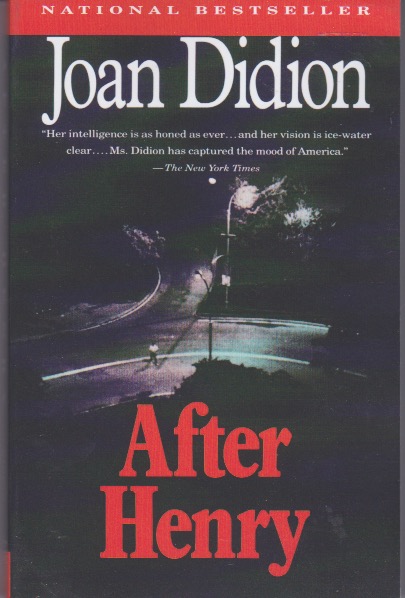
As I said, I finished reading Joan Didion’s After Henry this week.

after henry

It’s a collections of essays she wrote that were published in various places, and tackle various subjects in that amazing style of writing she had; the way she constructs sentences, and puts words and paragraphs together, is so amazing that it’s hard sometimes to drink in what she is actually saying. These essays, about politics in Los Angeles; natural disasters in southern California; the Central Park jogger case in New York; the political conventions in 1988; the Reagan administration and the face it presented to the world; and several others, are pretty amazing and also serve as a kind of time capsule of recent history. I am really looking forward to reading another non-fiction Didion book, and possibly another of her novels.

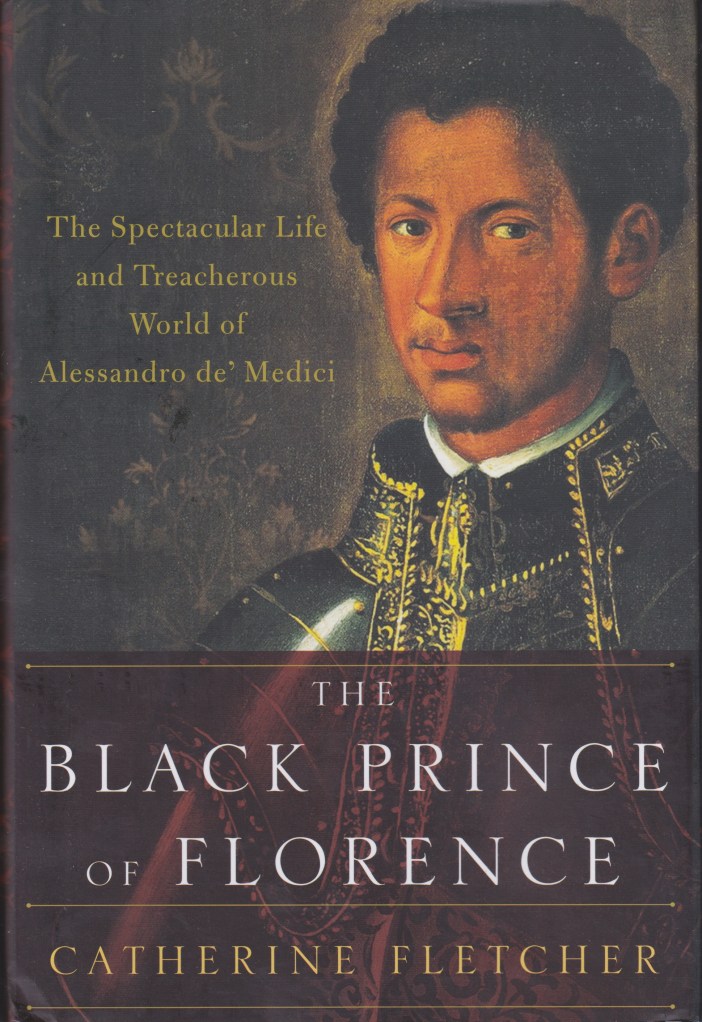
I had finished reading The Black Prince of Florence before I took up the Didion.

the black prince of florence.jpeg

As Constant Reader is aware, I am fascinated by the Medici family of Florence, who rose from being merchant class to one of the wealthiest banking families in Europe to popes and queens to royalty in their own right. Alessandro de Medici, the little known subject of this biography, was the first Medici to attain royalty on his own; due to the machinations of his uncle, Pope Clement VII (better known to history as the pope who refused Henry VIII’s request for a divorce from Catherine of Aragon), he became Duke of Florence and the republic came to an end. Alessandro was illegitimate, and there is no proof of whom his mother was; his legitimate sister, Catherine, became queen of France. Fletcher does an excellent job of explaining the tumult of the times; how Italy had been riven by a series of wars between different city-states as well as between France and the Holy Roman Empire, both with extensive claims to various places on the peninsula, along with all the machinations in Rome for the papacy. The question of whether Alessandro’s mother was an African slave, or that was simply a slander to discredit him during his lifetime by his enemies, is one that Fletcher takes up; she also explains the differences between modern day views of race as opposed to those of the sixteenth century. I found the book to be endlessly fascinating, and really helped me get a better grasp of just how the Medici family became royalty. Alessandro’s sister Catherine is probably the most famous (notorious?) member of the family; I have numerous biographies of her on my shelves I look forward to reading.

I’ve also read some more short stories for the Short Story Project. First up is”A Poison That Leaves No Trace” by Sue Grafton, from Kinsey and Me:

The woman was waiting for me outside my office when I arrived that morning. She was short and quite plump, wearing jeans in a size I’ve never seen on the rack. Her blouse was tunic length, ostensibly to disguise her considerable rear end. Someone must have told her never to wear horizontal stripes, so the bold red-and-blue bands ran diagonally across her torso with a dizzying effect. Big red canvas tote, matching canvas wedgies. Her face was round, seamless, and smooth, her hair a uniformly dark shade that suggested a rinse. She might have been any age between forty and sixty. “You’re not Kinsey Millhone,” she said as I approached.

“Actually, I am. Would you like to come in?” I unlocked the door and stepped back so she could pass in front of me. She was giving me the once-over, as if my appearance was as remarkable to her as hers was to me.

This story is kind of clever, with a surprise twist at the end that caught me off guard; a woman hires Kinsey to prove that her niece murdered the woman’s sister for the insurance money. It’s fraud, all right, but not what Kinsey was originally led to believe, and the twists and turns are spooled out very cleverly.

The next up was another Sue Grafton tale from Kinsey and Me, “Full Circle.”

The accident seemed to happen in slow motion–one of those stop-action sequences that seem to go on forever though in tryth no mare than a few seconds have elapsed. It was Friday afternoon, rush hour, Santa Teresa traffic moving at a lively pace, my little VW holding its own despite the fact it’s fifteen years out of date. I was feeling good. I’d just wrapped up a case and I had a check in my handbag for four thousand bucks, not bad considering the fact that I’m a female private eye, self-employed, and subject to the feast-or-famine vagaries of any other freelance work.

I glanced to my left as a young woman, driving a white compact, appeared in my driver’s-side mirror. A bright red Porsche was bearing down on her in the fast lane. I adjust my speed, making room for her, sensing that she meant to cut right in front of me. A navy blue pick-up truck was coming up on my right, each of us jockeying for position as the late afternoon sun washed down out of a cloudless California spring sky. I had glanced in my rearview mirror, checking traffic behind me, when I heard a loud popping noise. I snapped my attention back to the road in front of me. The white compact veered abruptly back into the fast lane, clipped the rear of the red Porsche, then hit the center divider and careened directly into my path. I slammed on my brakes, adrenaline shooting through me as I fought to control the VW’s fishtailing rear end.

This story opens with one of the best descriptions of the slow-motion horror of an accident on the highway; how it happens right before your eyes and how you basically have to rely on instinct and automatic reaction to try to avoid the accident because your brain is so busy processing what it’s seeing. The story is worth reading for that alone, but it turns into a case when the mother of the girl driving the compact, Caroline Spurrier, hires Kinsey because it turns out the accident didn’t kill Caroline; she’d been shot. The man driving the truck also has disappeared. From that point on, it’s a great example of a private eye story.

Sigh. I’m going to miss Sue Grafton.

Axel F

GOOD FRIDAY. I slept in, which was absolutely lovely, and am now enjoying my first cup of coffee this morning. The herd of cats are outside my windows, gathered for their morning feeding, and Scooter is firmly ensconced on my desk–it’s going to be a long day of him needing attention, I suspect–and am looking forward to  my three-day weekend. It looks gorgeous outside, honestly; I think I might clean the windows today, as well as work on cleaning the house. I also need to hit the gym; it’s been well over two weeks at this point, and I’m not going to get leaner sitting on my ass thinking about it, quite frankly.

I am also procrastinating running some errands as well as cleaning. I am also planning on getting some writing done, and some reading. I’ve gotten some fantastic ARC’s this week, and there are a couple of other novels I’ve been meaning to get to  as well; I am hoping to get to one of those this weekend. The primary problem here, of course, is that I can’t decide which to read. I am also almost finished with Joan Didion’s essay collection, After Henry, which, despite its bad name, is quite enjoyable. I am still abstaining from buying new books until I get the TBR more manageable and under control, but am itching to get my hands on another Didion non-fiction.

Yesterday I worked some more on “Don’t Look Down” and another one that’s been languishing, “A Holler Full of Kudzu,” but I also realized yesterday as I looked at the unholy mess that is “Don’t Look Down” that I am going to simply approach these stories as I do a novel; in other words, just write everything as it comes to me, and worry about editing and revising later. That quite often works for me when I am writing a novel, so why not apply it to a short story? I also want to get a final first draft of those stories done this weekend, as well as “Once a Tiger” while also revising and reworking “My Brother’s Keeper”; Sunday is not only Easter but it’s also April 1st, which is when I intended to put all short story work aside and dive back into the novels. (I may use Sunday for the short stories, and move on to Scotty on Monday; I may just use Sunday as a buffer day between them all, who knows? We’ll see, won’t we?)

We are also watching the second season of Santa Clarita Diet, which is just as funny, charming and clever as the first. I have also started watching Krypton, the Superman prequel on Syfy, and I am enjoying it. It’s getting some so-so reviews, but I am enjoying it so far; I’ve always loved the Krypton stories, and John Byrne’s comic book mini-series The World of Krypton from the original DC reboot in the 1980’s is still one of my all-time favorite comics. Some of the elements from that mini-series are showing up in this show–not having followed comics as much over the last twenty years or so has limited my knowledge of things; of what is considered canon now and what is not; but some of the things I am seeing in this show were things I first became aware of in The World of Krypton. I also need to get caught up on Riverdale; at least I have things I can watch while doing cardio at the gym!

I also managed to read some short stories. First up is  “The Downward Path to Wisdom” by Katherine Anne Porter, from The Collected Stories of Katherine Anne Porter.

In the square bedroom with the big window Mama and Papa were lolling back on their pillows handing each other things from the wide black tray on the small table with crossed legs. They were smiling and they smiled even more when the little boy, with the feeling of sleep still in his skin and hair, came in and walked up to the bed. Leaning against it, his bare toes wriggling in the white fur rug, he went on eating peanuts which he took from his pajamas pocket. He was four years old.

“Here’s my baby,” said Mama. “Lift him up, will you?”

This is another one of those Porter stories that just wasn’t for me. I mean, I get what she was doing; the entire story is told from the point of view of a small child, and she manages to really get that way children have no sense of time perfectly. The passage of time either seems incredibly slow and other times is really fast; and the way the child observes the clashes and moodiness and volatility of the adults around him is sort of interesting; but the story itself isn’t interesting at all. Not really for me, I guess; I should just park Ms. Porter’s collection back on the shelf and be done with it, frankly. But I also remember that I had a much greater appreciation of “The Jilting of Granny Weatherall” this time around, and keep thinking, well, maybe I’ll appreciate one of the others in a different way this time.

Yeah, well, it didn’t happen with this story.

Next up was another Sue Grafton story from Kinsey and Me, “Falling off the Roof.”

It was six a.m and I was jogging on the bike path at the beach, trotting three miles in behalf of my sagging rear end. I’m thirty-two years old, weighing in at 118, so you wouldn’t think I’d have to concern myself with such things, but I’m a private eye by trade and I’m single on top of that. Sometimes I end up running for my life, so it will never do to get out of shape.

I had just hit my stride. My breathing was audible but not labored, my shoes chunking rhythmically as the asphalt sped away underneath my feet. What worried me was the sound of someone running behind me, and gaining too. I glanced back casually and felt adrenaline shoot through my heart, jolting it up to jackhammer pace. A man in a black sweat suit was closing ground. I picked up speed, quickly assessing the situation. There wasn’t another soul in sight. No other joggers. None of the usual bums sleeping on the grass.

This story is terrific. Kinsey is hired by a man who thinks his brother brother was murdere; he fell off his roof and the police ruled it an accident. However, he was in a really bad marriage that seemed to suddenly settle down some in the weeks before the death, and the brother suspects the wife had something to do with the death–despite her rigid, airtight alibi. Kinsey starts looking into things, and soon becomes fairly certain that it was a murder; the trick is figuring out how she did it and got away with it…which leads Kinsey to going undercover at a Mystery Book Club. This story is clever, clever, clever, and one of my favorites of the Kinsey short stories.

And on that note, tis back to the spice mines with me.

28947357_10215609280568073_7475821141611561298_o


Dancing in the Sheets

The sun is shining, and the temperature has climbed to 49 degrees. The boil-water advisory ended finally last evening–it’s just not a crisis in New Orleans unless we have a boil-water advisory!–and here I sit this morning, ensconced at my desk with a cup of coffee, a load of laundry tumbling in the dryer, with great expectations of the day. I went to the gym last evening after work, and my muscles, while a bit tired, still feel stretched and worked and supple, if that makes sense. Probably the best thing about rededicating myself to physical exercise again is how much better I feel; I don’t ache or feel tired the way I did just last week, and the stretching and the treadmill are also making me feel ever so much better. Today, I am going to clean (if it’s Saturday I must be cleaning) but I am also going to write, edit and read today. Paul is going into the office to work (it’s that time of year again) and so I have the day to myself. I want to finish the first draft of “The Trouble with Autofill” and I want to edit “Cold Beer No Flies.”

Among many other things; my to-do list is ridiculous, quite frankly. But the only way to make progress is not to get overwhelmed by the enormity of the list but rather to keep plugging away at it.

I finished reading Miami by Joan Didion earlier this week, and it was quite good. Didion’s writing style is quite amazing, actually, and while the story of the book might seem, at first glance, to be rather dated; the truth is it is still very much appropriate to our modern times. Miami is a look at the Cuban exiles in the city, how they relate to each other, and how they impact south Florida politically; and to a lesser extent, the relationship between the US government with them as well as with Castro’s Cuba. During the Cold War Cuba was a much more terrifying apparition, close as it was to Florida, and it’s amazing how people do not realize the political clout, as a result of their sheer numbers, that the Cuban immigrants weld in that part of the state, and in the entire state as well. The importance of Florida as a swing state cannot be discounted; and therefore the Cuban-American community’s influence on national politics is something that has to always be considered. (A present day comparison would be the Puerto Ricans moving to Florida today in great numbers as a result of the hurricane destruction of their island; the difference being those Puerto Ricans are already American citizens who can register to vote and can impact 2018 already.) Didion’s look at Miami in the 1980’s, as a Caribbean city on the mainland, is also reminiscent of descriptions of New Orleans as the northernmost Caribbean city; the thing I love the most about Didion’s work is how she makes you think. Reading Miami made me want to write about Miami; I’ve been wanting to write about Florida for a long time, as Constant Reader already knows. Something to ponder.

miami

I also started reading Mark Harris’ Pictures at a Revolution, which is a look at the film industry through the lens of the five films nominated for the Academy Award for Best Picture in 1967, and how they were made. Harris’ thesis is that was the year that bridged the gap between old and new Hollywood; and the five Best Picture nominees illustrated that perfectly: an expensive musical flop (Doctor Dolittle); two old style Hollywood pictures about race (Guess Who’s Coming to Dinner and In the Heat of the Night), and two films that illustrated new Hollywood and its influence by European filmmakers like Truffaut and Fellini and Antonioni (Bonnie and Clyde and The Graduate). I, of course, have always been fascinated by Hollywood history and have been ever since I read Garson Kanin’s Tracy and Hepburn and Bob Thomas’ Selznick as a kid; this book is right up my alley, and since it’s been awhile since I’ve read any Hollywood history, I am looking forward to reading this (and his Five Came Back–I’ve already watched the documentary based on it).

The Short Story Project also moves apace; I am frequently surprised as I look through my shelves for something to read how many single author collections and anthologies dot them. My Ipad also has quite a few loaded onto the Kindle app; I often buy them when they are either free or reduced in price, and so my Kindle app is filled with books I’ve not yet read, primarily because I don’t like to read on it (which I realize is nothing more than stubbornness; if I can watch movies or television programs on it, why resist reading books there?) Yesterday I found my battered old Dell paperback of Agatha Christie’s The Golden Ball and Other Stories, which I remember loving as a child. I was looking for my copy of Lawrence Block’s first anthology inspired by paintings–those of Edward Hopper– In Sunlight or in Shadow, which I would have sworn I’d purchased in hardcover; yet it wasn’t anywhere on the shelves or in any of the TBR piles, before remembering I’d bought it as an ebook when the Macavity nominations come out; Block’s story “Autumn at the Automat” was a finalist, along with mine (I still can’t believe it) and I wanted to read all the other nominated stories for an entry, so the immediacy of the need required buying the ebook. It is a handsome volume, though, so I’ll need to buy a hard copy to pair with the new one. (New bucket list item: write a story for one of these anthologies by Lawrence Block)

Once I’d located it on the iPad, I scoured the table of contents and landed on a Joyce Carol Oates story, “The Woman in the Window.” I have to confess I’ve not read much of Ms. Oates; I am not even remotely familiar with what she writes. But she, too, was a Macavity finalist last year, for her story “The Crawl Space” (which also won the Stoker Award), and that story creeped me the fuck out. I know she’s been a Stoker finalist before, but I also think she tends to write across genre a lot and therefore isn’t pigeon-holed in one way or the other.

Beneath the cushion of the plush blue chair she has hidden it.

Almost shyly her fingers grope for it, then recoil as if it were burning-hot.

No! None of this will happen, don’t be ridiculous!

It is eleven A.M. He has promised to meet her in this room in which it is always eleven A.M.

This story, frankly, isn’t as strong as “The Crawl Space,” but it’s an interesting exercise in how thin the line between lust and loathing is; the woman of the title is a secretary having an affair with a much wealthier man, and as she gets older and older she is feeling more and more trapped in the relationship; he is married and he often has to break plans with her for his wife. There is also a shift occasionally to his point of view, and he’s not so fond of her anymore, either. Passion has cooled but habit has set in; and the way those lines can get crossed is chilling–and how destructive such a relationship can be to both parties, emotionally and mentally, is explored in great detail yet sparse language by Ms. Oates. The story’s not as creepy, as I said, as the other; but the end–which she leaves kind of hanging–you do feel that something awful is going to happen; maybe not today, maybe not tomorrow, but eventually.

I’ve not read Joe Hill before, and there are several reasons for that; none of which would make any sense to anyone who is not me; I am nothing if not aware of my own eccentricities, which is why I generally don’t share them with people; I don’t need someone else to point out that something doesn’t make sense. But I do have a copy of his short story collection 20th Century Ghosts, which I spied on the shelves as I looked for my copy of the Block anthology. Aha, I thought, perfect. I can read a Joe Hill story for the Short Story Project. So, I curled up under a blanket in my easy chair, waited for Scooter to get settled in my lap, and started reading “Best New Horror.”

A month before his deadline, Eddie Carroll ripped open a manila envelope, and a magazine called The True North Literary Review slipped out into his hands. Carroll was used to getting magazines in the mail, although most of them had titles like Cemetery Dance and specialized in horror fiction. People sent him their books, too. Piles of them cluttered his Brookline townhouse, a heap on the couch in his office, a stack by the coffee maker. Books of horror stories, all of them.

No one had time to read them all, although once–when he was in his early thirties and just starting out as the editor of America’s Best New Horror–he had made a conscientious effort to try. Carroll had guided sixteen volumes of Best New Horror to press, had been working on the series for over a third of his life now. It added up to thousands of hours of reading and proofing and letter-writing, thousands of hours he could never have back.

He had come to hate the magazines especially. So many of them used the cheapest ink, and he had learned to loathe the way it came off on his fingers, the harsh stink of it.

I did not mention the elephant in the room; said elephant, of course, being that Joe Hill is Stephen King’s son. (The Kings are a very literary family; Mr. King’s wife Tabitha is a poet and a novelist; their other son Owen also writes, as does Owen’s wife, Kelly Braffet; I read a novel by Ms. Braffet sometime in the last couple of years–not aware of the King connection–and greatly enjoyed it.)

But simply based on a reading of “Best New Horror,” I have to say Joe Hill is also a terrific writer. And while it, like some of his father’s work, bears a strong resemblance to something I would have read in an Tales from the Crypt or House of Mystery comic book–that is not a criticism. I loved those comics, and the stories I read in them; they had a deep influence on me not only as a writer but as a reader. “Best New Horror”, as you can tell by the opening, tells the tale of Eddie Carroll, a writing teacher and a long-time editor of the Best New Horror series, a chore he has learned to loathe and, basically, phone in every year for the money. This resonated with me; as an anthology editor myself, one of the reasons I stepped away from editing them–or took a break from doing it–was because it was becoming rote; a chore rather than something I found joy in doing. Eddie is an example of why I stopped–I didn’t want to become like him; embittered by the experience and tired of not finding anything fresh or new (unlike Eddie, I was able to keep the experience fresh because each anthology I did was a new topic; if I had done twenty anthologies with the same theme I would have gone on a killing spree). But in the mail comes a story from a new writer that is simply brilliant; original and fresh and resonant and horrifying in its reality; the story reinvigorates Eddie and makes the editing job no longer a chore; he has to have this story, and will do whatever he has to in order to track the writer down…but as with any horror  tale of obsession, it’s not going to end well. But Hill brilliantly keeps stringing the reader along, and the ending is just absolutely brilliant and clever. I am really looking forward to reading more of these stories.

And now, I must get back to the spice mines. There are clothes to fold, dishes to wash, floors to clean, stories to write and edit; I am probably coming back here for another entry later as I am trying to get caught up on posting the stories I’ve read–but I make no promises. I have another story to write as a call for submissions crossed my computer screen on Thursday; I have an unfinished story that I can repurpose, but I also need to get a first draft done so I can work the story out.

Until later, Constant Reader.

Tonight

SNOW DAY!

Yes, we had freezing temperatures in New Orleans the last two nights, and when I woke yesterday morning it was only 20 degrees; it’s 21 today. There was snow and ice outside both yesterday and today–not much, it’s New Orleans, seriously–but the exciting news yesterday morning was work was canceled because the roads were closed! The text went out around nine in the morning, but I, good boy who is determined to stick to his goals that I am, was at the gym. Yes, I got up yesterday morning, bundled up against the cold, and went to the gym. There were tumbleweeds blowing through there, of course, but I did my stretches, my workout, and twenty minutes  of cardio(okay, it was 17:58, but it was nine and I thought I needed to get home and get ready for work). I came home, did the dishes, packed Paul’s lunch, got cleaned up, packed my own lunch and headed out to the car, which had ice all over its windows. I got inside, started the car and turned the defrosters on, and was about to plug my phone into the stereo when I saw that I had 15 text messages….the initial messages about the office being closed and responses from co-workers. I immediately shut off the car and came inside and put my sweats back on.

Here is the horror that was New Orleans yesterday morning:

Really not much of anything, seriously. But as I told my boss last night, I know how to drive in snow and ice, but these people down here? Not so much.

The problem, apparently, was that the bridges into New Orleans–we’re kind of an island, surrounded by water and swamp and you have to cross a bridge to get into the city no matter from what direction–were icy, and of course, that makes them dangerous because people here don’t know how to drive on ice and the bridges are all pretty high. So the bridges were closed and so commuters couldn’t get into the city; the highways are also raised in many places and therefore dangerous when icy. So basically, the entire city shut down. I could have made it to work, but hey, you know, the office was closed. Today so far I’ve not heard about anything–I doubt very seriously we would close two days in a row, and I have no problem with going in.

But it was nice having a free day to stay home with the cat, you know? I did laundry, and since it was so cold at my desk in the kitchen even with the space heater on, decided to make it a real Snow Day and simply retire to my easy chair with the cat in my lap and work on the Short Story Project. I read a Lee Child story from one of the Lawrence Block painting anthologies, and a Laura Lippman from her collection Hardly Knew Her.

Lee Child’s story was “Pierre, Lucien, and Me”, from Alive in Shape and Color:

I survived my first heart attack. But as soon as I well enough to sit up in bed, the doctor came back and told me I was sure to have a second. Only a matter of time, he said. The first episode had been indicative of a serious underlying weakness. Which it had just made worse. Could be days. Or weeks. Months at most. He said from now on I should consider myself an invalid.

I said, “This is 1928, for fuck’s sake, They got people talking on the radio from far away. Don’t you have a pill for it?”

No pill, he said. Nothing to be done. Maybe see a show. And maybe write some letters. He told me what people regretted most were the things they didn’t say. Then he left. Then I left. Now I have been home four days. Doing nothing. Waiting for the second episode. Days away, or weeks, or months. I have no way of knowing.

I’m a fan of Lee Child, and one of my favorite memories was walking to Green Goddess with Alafair Burke when Romantic Times was here one year, and we ran into Lee on the street. I was a big fan, of course, but had never met him. Alafair, of course, knew him, and she invited him to join us. So I not only got to have lunch with Alafair Burke but also Lee Child. (How awesome are my namedropping skills?)

Anyway, he was as charming and self-deprecating as I’d heard–ridiculously tall and slender as well.

I love his Reacher series, but am many years behind on it, alas–so many books, so little time–but this story was short and quite lovely. The main character, as you can tell from the opening, is dying, and reflecting on his life; thinking back on whom he might need to apologize to or make amends with, and cannot really think of anyone. Then a name pops into his head; a millionaire he rather swindled, and the tale of the swindle makes up the rest of the story. The voice is charming and the swindle itself isn’t really that terrible, as far as these things go; he didn’t cause any harm, really, even if what he did was a crime.

I then moved on to Laura Lippman’s “Hardly Knew Her”, from her amazing collection Hardly Knew Her:

Sofia was a lean, hipless girl, the type that older men still called a tomboy in 1975, although her only hoydenish quality was a love of football. In the vacant lot behind the neighborhood tavern, the boys welcomed her into their games. This was in part because she was quick, with sure hands. But even touch football sometimes ended in pile-ups, where it was possible to steal a touch or two and claim it was accidental. She tolerated this feeble groping most of the time, punching the occasional boy who pressed too hard too long, which put the others on notice for a while. Then they forgot, or it happened again–they touched, she punched. It was a price she was more than willing to pay for the exhilaration she felt when she passed the few yew berry bushes that marked the end zone, a gaggle of boys breathless in her wake.

But for all the afternoons she spent at the vacant lot, she never made peace with the tricky plays–the faked handoffs, the double pumps, the gimmicky laterals. It seemed cowardly to her, a way for less gifted players to punish those with natural talent. It was one thing to spin and feint down the field, eluding grasping hands with a swivel of her nonhips. But to pretend the ball was somewhere it wasn’t struck her as cheating, and no one could ever persuade her otherwise.

Sofia, called Fee by her family and by no one else–she won’t allow it–has a father with a gambling problem; he plays in a game in the neighborhood tavern every Friday night. When he does well, there are gifts for the family on Saturday; when he doesn’t, he takes those gifts in the middle of the night and pawns or sells them, or turns them over as payment for a debt. He’s not a good bluffer, like his daughter, depending on the luck of the draw for his success or failure. But Fee is given a lovely amethyst necklace for her birthday–an heirloom–and when her father takes it to pay a debt, Fee is finished with her father, finished with this existence, and decides she is getting her necklace back. How this all plays out for Fee is a coming-of-age tale like no other I’ve read; one that only a talent like Laura Lippman could write. This collection of short stories is really quite extraordinary; as is the Block anthology; y’all really need to read these two books if you are a fan of short stories.

I also started watching, of all things, original episodes of Scooby Doo Where Are You? through Amazon Prime; I’ve been thinking a lot about Scooby Doo and its predecessor, Jonny Quest, since getting to meet one of the directors/animators for Hanna-Barbera at Comic-Con a couple of weeks ago. Jonny Quest is actually the first memory I have of watching something mystery/adventure related, and my love for Jonny Quest never really abated; I think, therefore, that the show was what triggered my lifelong love of mysteries and the crime genre; Scooby Doo came along around the time I was discovered the Hardy Boys and Nancy Drew and Trixie Belden. I’ll keep watching and musing about this some more, before making a post. I also still owe a post about I Tonya. I also finished reading Joan Didion’s Miami last night; so I’ll have to post about that as well.

So, that was how I spent my Snow Day; resting and relaxing and reading. It was actually quite lovely; we watched two episodes of Broadchurch last night and only have three to go before finishing the show. This third season is also quite good, and it’s cool how they’ve woven characters from the initial story into the present investigation; this entire season is an exploration about sexual assault, sex in genre, and porn. I am looking forward to seeing how it all plays out.

And now, back to the spice mines. As I said, I don’t think we’ll get another Snow Day today, so I have to get back to work. But how lovely to have a day where I didn’t really have to do anything; it’s been a long time. (Okay, I did the dishes and a load of laundry, but overall, it was a light responsibility day.)



State of Shock

Good morning, Constant Reader, and everyone who only occasionally stops by, should you happen to stop by this chilly late December morning. It’s very gray outside, and the Lost Apartment is cold, and I have a slight sinus headache, but nothing I can power my way through. I still am not feeling at 100% yet, but am getting there; maybe by this weekend? One can hope.

I feel slightly cotton-headed this morning, and am trying to decide what to read next. I’m definitely doing a month or two of short story reading for the first two months of the new year, which I am kind of excited about. Yesterday I was tired all day, and never made my to-do list; I’ll have to get that done today. Today is also payday, so I’ll have to pay the bills today as well. I didn’t really want to get out of bed this morning, honestly; the bed was warm and comfortable and it was cold in the apartment–and I would gladly go back to bed if i could. Heavy sigh.

I know I have some short stories to work on, and I need to do some other things as well. I hate this cotton-headed feeling! It makes it really hard to focus. One short story, which is do this weekend, is almost finished; it only needs two quick tweaks and another read-through before I turn it in; the other story isn’t necessarily a big priority; I just wanted to get it done and out of the way months before it is actually due because I don’t want to have to want until the last minute to work on it and have to rush, if that makes sense. It sort of does, doesn’t it? (See what I mean about cotton-headed?)

It’s always something, isn’t it?

I am still enjoying Joan Didion’s Miami, and think I’m going to read, for fiction, Lisa Unger’s The Red Hunter next. I always enjoy Lisa’s work, and while I am still carefully doling it out so I won’t run out of Unger books to read, I think it’s safe to go ahead and read another one. I also suppose I should do a year recap here, as well as a goals-setting entry for 2018. Sigh.

Okay, back to the spice mines.

IMG_1040

Legs

Post-Christmas, and it’s gray outside. I have to work today; it’s a late night so I don’t have to go in until later. It’s gray and chilly outside, and the Lost Apartment is a disaster area. I don’t feel quite so ill today; in fact, I feel better today than I have in over a week. Dare I hope that whatever it is I was contaminated with is finally over? I think so. I am not coughing, I don’t feel feverish, and I don’t feel dizzy nor weak; how lovely to get over my illness in time to go back to work! I do have a three day weekend upcoming, but we are having lunch at Commander’s on New Year’s Eve, seeing I Tonya that evening, and of course, the LSU bowl game is that Monday. And the next weekend is Comic-Con, at which I will be exceptionally busy. Heavy heaving sigh.

I also now have to figure out what I need to get done. I’ve been in the fog of illness for so long I don’t remember what’s due and to who anymore.

I slept most of yesterday. I woke up early, put the turkey in the slow cooker, tried to do the dishes and some straightening up, and then Paul and I binge-watched The Night Manager, which was remarkably good. I kept dozing off during it, though, missing almost all of episode 3,  as well as significant chunks of 2 and 4, but I did see all of 5 and 6. I’d never really seen Tom Hiddleston in anything before–not counting Thor–and I see why he is such a big deal. Handsome and talented and extremely charismatic, and those eyes! We then watched an old BBC miniseries with Daniel Craig, Archangel, and I also slept through most of it. Then I went to bed and slept like a stone. I think the sleep was a desperately needed part of the healing process, to be honest; the illness kicked off with an inability to sleep for three consecutive nights, which continued through the illness. So, finally being able to sleep well, and get some rest, was something I greatly appreciated and clearly needed. My mind does seem clear this morning, even if the disaster area that is the apartment is defeating to look at. But I must persist, because cleaning the apartment is long overdue, and it’s tragic how quickly it can get out of control.

I am delving more deeply into Joan Didion’s Miami every night before I go to sleep, and the book is simply fantastic. I’m amazed at how she wrote; the way she effortlessly creates a mood with her word choices, which are clever and insightful and spare at the same time. I’ve also decided to make the month of January “Short Story Month” again, perhaps extending it into February as well, since I have so many marvelous anthologies and single-author collections to choose from. And really, how difficult is it to read a short story every day? Not very.

And so, on that note, it is back to the spice mines with me.

augRussian-Hotties4

Love is a Battlefield

Yesterday I made an attempt to run errands; but after I went to the bank I felt dizzy and nauseous, so skipped the grocery store and came home. I spent the rest of the day alternating between fevers and normal, and so on, so I simply parked myself in my easy chair with a book, a blanket, and a cat. I finished reading Joan Didion’s A Book of Common Prayer, which was extraordinary, and started another that I’m not too wild about. I also started watching a documentary of the history of the Papacy on Prime, which conveniently now has an app for AppleTV. I shall continue to try to read the book I’m not wild about, but it may not survive the fifty-page rule. Harsh, I know, but I have a lot of books to read.

I am hoping that I am in the last stage of this illness; I am still coughing so hard that my lungs and diaphragm hurt, and right now my eyes are kind of warm, but I think I am going to be able to hang with a quick (ha!) trip to get groceries and then spending the rest of the day curled up underneath a blanket with a book. My kitchen of course is a disaster area, but I feel confident that I’ll be able to get it cleaned up today as well. This is a big transition from yesterday, I might add, when I felt like a limp dishrag for most of the day.

Hope springs eternal.

In other exciting news, I’ll be signing and speaking on two panels at Comic Con in New Orleans in two weeks. Huzzah! Of course, this appearance is contingent on my living that long; which is a moment by moment thing. I am feeling odd again right now; not sure what that’s about, or even how to describe it, but I guess the easiest way to sum it up in one word is fuzzy; like I am out of my body and observing but not participating. It’s unnerving, and it definitely needs to stop.

All right, I think I might need to lie down again. Heavy sigh.

18953035_10213420277288443_320740805906235544_n

Islands in the Stream

I am officially on Christmas vacation! It’s only four and a half days, but I will take it, thank you very much. I am still not at 100%, but today is much better than the nadir of Wednesday, and even yesterday. My throat is raw and my chest still hurts from coughing so hard, but I am down to DayQuil, cough drops, and the occasional tablespoon of honey. I had planned originally to get a lot done today; and I still might try. I am a bit foggy right now, but then I’ve only been up for about an hour thus far. I think the worst part of this illness has been the utter exhaustion. Yesterday was the worst on the score; I was so tired everything ached.

And to add insult to injury, I’ve gained two pounds this week. Where is the justice in THAT?

I’ll tell you where: nowhere.

I am over halfway through with Joan Didion’s A Book of Common Prayer, and it is really quite marvelous. I tend to shy away from literary fiction, as a general rule, but this is not only gorgeously written but it’s telling an interesting story as well. That’s my primary complaint with literary fiction; if the story isn’t interesting the writing has to be beautiful, and so often it isn’t. I’ve never really understood the cults of writers like William Styron, Philip Roth, Jonathan Franzen; I’ve read their books and not been overly impressed with them. (Although they all have their moments.) But I generally simply say “I guess I’m just not smart enough to understand or appreciate their brilliance” and end the conversation there. I guess I’m just not a fan of the “plight of the straight white male” school of literature.

All right, I’m feeling a wave of illness coming on, so I am going to retire my easy chair with the book.

17798925_1312229192158475_4033782346156936879_n