Juliet

This is an Alysa Liu fan page, for the record. How amazing was her free skate at the Olympics? She was just joy personified on the ice, and seriously, you can never go wrong skating to anything by Donna Summer (I would love to see ice dancers skate to “I Feel Love,” honestly). I was at work while the women skated, but had it playing on my phone while I worked, casting glances at it here and there throughout the hours it was on. I happened to look when Amber Glenn was skating, but at the point where she messed up the landing on that damned triple loop jump, and thought, oh no, poor Amber so I stopped watching for a bit…so was thrilled and surprised to see that Amber had climbed into first place. Isabeau Levito had a tough time out there, too. I watched Alysa skate and it made my heart full. I didn’t see the silver medalist skate–the young woman I thought would win it all–but came back in time for the final skater to see Alysa still in first. The young Japanese girl who got the bronze didn’t have a clean go of it, but she is also beautiful and a gorgeous skater who will be fun to watch in the years to come, and Alysa won the gold medal! I couldn’t wait to get home to watch again, so I could see her do it. (I actually came back to it when she had finished and said, into the camera, That’s what I’m fucking talking about! I also loved that she swore a few more times after coming off the ice. Amber climbed all the way up to fifth–just missing out on a medal by a few points; had she not missed the landing on that loop she may have climbed up into third. Alysa’s individual medal is the first for the US since Sasha Cohen got silver back in 2006, and the first gold since Sarah Hughes in 2002.1

Sigh, I love the Olympics, and I especially love the figure skating. I was also happy to see Ilia Malinin bouncing back from his difficult men’s final, hanging out with other athletes just watching in the stands, or with Martha Stewart and Snoop (I’ve yet to forgive him for his homophobia and his MAGA appearances), hanging with Simone Biles (one of the many superstars of sport who reached out to him), or my personal favorite–the pictures with Tara Lipinski’s daughter Georgie. I also loved seeing skaters supporting each other, cheering for each other and congratulating each other (or consoling, whatever the case may be), which is a very refreshing change over the last few years. The sports broadcasting narrative–the competitive rivalries were also personal ones–always made it seem like the skaters hated each other (true in some instances) but for the most part, they’ve known each other and competed and toured with each other since they were kids so2

Work at home Friday and here we go! I had a nice day at work yesterday, with not a lot of clients so I was able to get caught up on almost everything. I have some quality assurance work to do and some data entry, around getting the house under control. I’m going to have some things delivered either today or tomorrow, and I’m going to run uptown tomorrow to get the mail and stop by the Fresh Market for fresh meat and berries. My Achilles tendons feel okay this morning, but I’m going to ice them anyway while I hopefully sit in my chair doing the quality control stuff.

I’m sorry the Olympics are coming to an end. So many feel-good moments, as always, and so many athletes I’d never heard of before having great Olympic moments, you know? I do think my favorites of these Olympics were Nazgûl the Olympic dog (google it if you’re unaware–he was a very good boy!), and the absolutely charming Japanese figure skating team–their joy in skating and each other was delightful to see. And in a selfish way, I’m kind of glad Ilia got a gold but not an individual medal, which means we’ll get at least four more years of his amazing skating and technical achievements. Is a quint next?

We also watched this week’s episode of The Traitors, and I was terribly disappointed to see Johnny and Tara come so close only to blow it in the end. We have another week to find out who the last murder victim will be (my money’s on Johnny or Mark; if I were Rob and Eric I’d murder JOhnny so Tara can be a wreck and a distraction for the other faithfuls. God how I love this show! We also started watching this week’s episode of The Beauty, which is so off-the-rails and insane–and every time I see him on my screen I loathe pedo-defender Ashton Kutcher more and more. He’s also terrible in this show; how did he ever have a career past his “oh isn’t he cute and dumb” phase. I never thought he was all that, to be honest, and very one-note. Kind of perfect for a show called The Beauty, now that I think about it. It really is a terribly written show, and most of the dialogue is very cringe, as the kids would say. The cast is talented (except for Kutcher) but it’s a shame watching them try to create something out of the beautiful nothing they were given to work with. It’s definitely a hate-watch, at this point, and this last episode–are we really supposed to believe a billionaire would go to that much trouble to shut down an FBI investigation when all he would have to do is donate money to whatever MAGA bullshit grift going on at the moment and the DOJ would shut that shit down faster than Usain Bolt could run at his peak.

And on that note, I am going to head into the spice mines for the morning. I am going to try to get some things done before my workday starts with an online meeting. Have a great Friday, darling Constant Reader, and I will see you tomorrow morning.

Seriously, dude–why not just wear the black tights underneath? But definitely pretty. Professional wrestling is so homoerotic!
  1. Not that she would ever do such a thing–and especially because she lost gold to Americans in 1998 and 2002, so it doesn’t make sense–but I actually wondered if US Olympic skating was cursed after Michelle Kwan won silver and bronze despite being favored. ↩︎ ↩︎
  2. Tonya-Nancy being the most famous–and they had been friends before. ↩︎
Doing the Best That I Can

Sunday in the Lost Apartment and all is quiet here. Today’s four parades start later this morning and literally run all day. I suspect I’m going to skip them all today. I wandered out to Iris, but just can’t stand for very long; I’m just not in good enough physical condition yet to exert myself into anything other than sitting in a chair resting and icing my ankles, which I did for quite some time yesterday. I overslept in the morning–Sparky was cuddled up with me again, with the occasional plaintive “mew” to try to wake me up. The bed did feel marvelous yesterday morning, but the morning was already pretty much over by the time I was caffeinated and finished with yesterday’s blog entry. I read for a while (and this reread of The Secret of Hangman’s Inn is showing me, at long last, the primary flaw in kids’ detective fiction–which is also why The Three Investigators have held up better than most of their contemporaries), and did some here and there chores. I don’t, after all, have to go back to the office until Wednesday morning, so having another day that was mostly for resting my body and my brain didn’t seem like a waste, you know?

I finished rewatching Judgment at Nuremberg and it remarkably holds up still in modern times. Not going to lie, and if the reasons I rewatched it aren’t quite as obvious in this modern time, let me explai it to you: we are, despite all the lessons and warnings from the past, sliding into that same kind of world where “just following orders” is no longer merely about ‘doing your job’ but doing evil. Nuremberg is one of the best films–if American propaganda heavy–dealing with these questions of national guilt and national morality; I remember someone writing (or saying) after 1945 how amazing it was that no German was really a Nazi and how none of them “knew.”

Did people admit shamefacedly to being in the Klan after? Still?

I’ve always given the common German people a bit of slack about being Nazis, simply because, monstrous as Nazism was, they weren’t making the plans and the decisions. So, how much culpability did the rank-and-file people actually bear? The cogs in the killing machine?

For example, how culpable are all Americans in what is going on in the country now? Was it possible for every day Germans to not know what was being done in their name?

We don’t know what’s going on in our own concentration camps, do we? But we know they exist and more are being built, don’t we? As Americans, how much culpability do we have as citizens? It is easy to say “we didn’t vote for this” or “I was opposed to Vietnam” or “dropping nuclear weapons on Japan was necessary to save American lives” or “my ancestors didn’t own slaves/weren’t in the Klan/didn’t benefit from systemic discrimination” but…wasn’t enslavement human trafficking, and on a scale modern minds can scarcely comprehend how big it was, how horrible it was, and historians and American propagandists have done an excellent job of downplaying the horrors and dismissing the immorality of owning other people. Human beings had less rights than animals in the so-called land of the free; and this is not even taking into consideration the genocide of the indigenous peoples and the mistreatment of those survivors for generations. History will not look back and think all of that horror was unknown to most Americans. They will say it was a horrible part of US History, a spreading stain that soaked in and spread for hundreds of years. Is not the whole world responsible for not stopping Hitler when they could have? The Allies knew about the camps as early as 1940, if not sooner, and did not only nothing but actively worked to suppress the information. Why?

And there were American Nazis before the war–lots of them. Still are, in fact. So much for never forgetting, right?

Heavy thoughts on Bacchus Sunday, but Judgment at Nuremberg is a still important and necessary film.

After the movie finished, we watched The Fighting Tiger, the ESPN documentary on D-D Breaux, the legendary LSU Gymnastics coach for over forty years, who single-handedly built the program up from nothing, which was incredibly fun and also reminded me of how long Paul and I have been watching LSU Gymnastics. I had been meaning to check out this most recent season of The Traitors, because Johnny Weir and Tara Lipinski are both on, so I switched over to that. We’d never watched the show before, but MY GOD were we entertained! I was kind of hesitant because I despise Lisa Rinna (a complete turn on her, by the way; I was a fan before she was a real housewife), but this show is perfect for her! She stopped being fun as a housewife, but this is the Rinna I enjoyed in her first seasons on the show. We stayed up much later than we intended because we simply couldn’t turn it off–and there are former seasons to catch up on, too! HUZZAH!!!

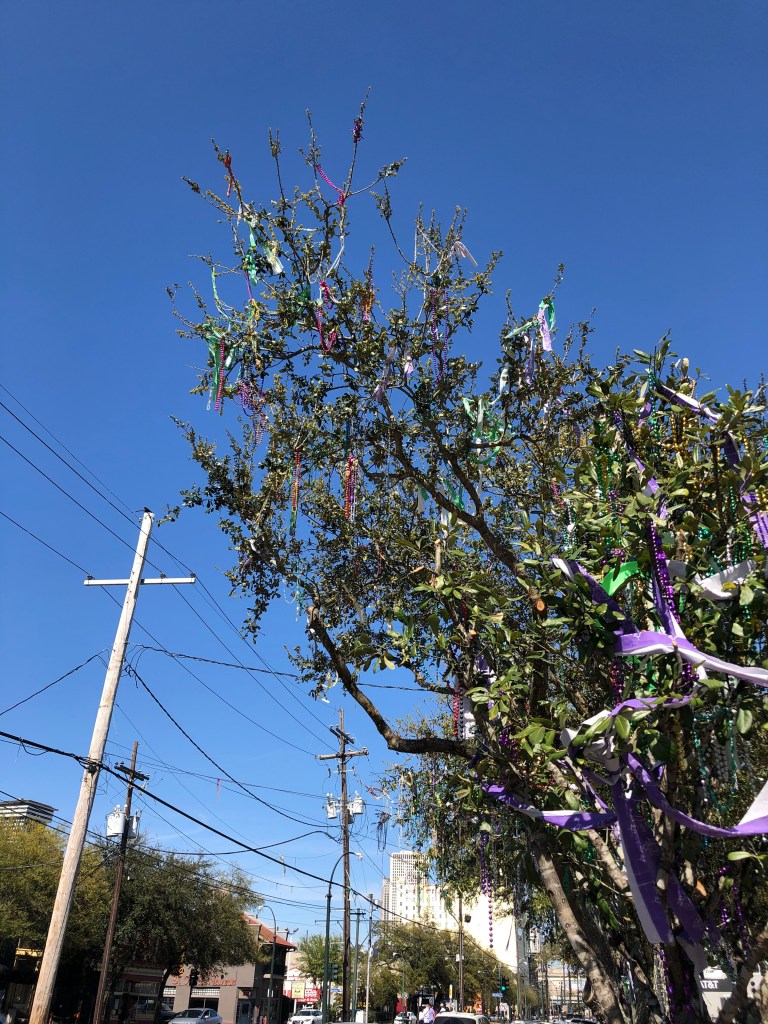
It looks like its going to be another gorgeous day out on the parade route–maybe I’ll wander down there to take some pictures; tomorrow I plan on walking over to Office Depot and take some current pictures of the bead trees; one of the many things I miss about our office on Frenchmen Street is walking to and from there during parade season, and all the bead debris along the way. There was also a racist moment in Tucks yesterday, apparently, with some riders hanging a black doll over the side of the float by the neck with beads–so it looked like a lynching victim, which is completely and totally disgusting and unacceptable. I hope the fucks who did it are publicly named and shamed; they deserve worse. There’s no excuse for that shit ever–let alone during Carnival. They should have been pulled off the float and had the shit kicked out of them.

And on that note, my easy chair and my ice machine are calling me this morning. Seriously, I cannot wait for Paul to get up so we can get back to The Traitors, which is my new addiction! Have a great Sunday wherever you are, and I’ll be back for a Lundi Gras post tomorrow.

The World Turned Upside Down

Happy Second Class Citizen Independence Day, Constant Reader!

I am so tired of being Cassandra on the walls of Troy, warning people of the impending doom from the consequences of their narcissistic privilege, only to be either ignored or patted on the head condescendingly and told I don’t understand or am being terribly overdramatic. Well, too many of you didn’t listen and here we are.

But I am not going to talk about the fraud perpetrated on this country recently by six illegitimate and corrupt justices on the Supreme Court. This is the date designated as the nation’s birthday, and it’s a day of celebration as well as contemplation.

Despite its flaws and faults; its checkered history and immoral lapses in policy; and the current turmoil of bigotry and hatred and divisiveness, I still love my country. Despite the slanders and slurs hurled against people like me, I am a citizen just like anyone else in this country. I pay taxes like everyone else. There is nothing in the Constitution prohibiting my existence or my life or my reality; yet religious zealots, over and over again throughout our history, keep trying to seize control of the government in order to legislate their version of morality, theoretically based in their religion. I was raised in that religion, read the Bible and went to worship and prayed and Sunday school and all of that–as a child and without my consent. I know the Bible. I’ve read it, many times. I’ve studied it, read religious philosophy and religious studies. I’ve studied and read up on the history of Western civilization, which is forever yoked to the history of the rise of Christianity. I know when doctrine was decided as legitimate and what was heresy; what texts were left out of the Christian Bible and why; as well as the relationship of the New Testament and law to the Old. I’ve read up on the basic messages of many religions, from Islam to Hinduism to what most would call “voodoo” to the mythologies of ancient civilizations. The conclusion that I came to, from my reading and studying and so forth, was that the modern religions I considered all have, at their core, the same fundamental principle: be kind, be helpful, have empathy and compassion for others, and most importantly, do not judge. Judgment is reserved for God, however you choose to see him, and He is very jealous of that privilege. None of us are perfect and we are all sinners–but our sins are between us and God and are none of your fucking business.

Winston Churchill once said about the United States, “You can always count on Americans to do the right thing–once they’ve exhausted every other possibility.” It’s true. In his farewell address George Washington warned of our nation being dragged into “the broils of Europe” (which would make a great title), and that was the cornerstone of our foreign policy for generations. American soldiers did not fight a war in Europe until the first World War–and even then we only came in during the third year of the conflict. Likewise, we stayed out of the second World War, as the world erupted into flames, until we ourselves we attacked two years into the war, and the European allies of Japan also declared war on us. We have been participating in the broils of Europe ever since.

Those are realities. But our entrance into each war changed its course, and enabled the Allies to emerge triumphant. Defeating the Nazis is something we can be proud of, even as we essentially had an apartheid system of our own at home. Defeating the Japanese and putting an end to their war crimes is something we can also take pride in–even though there was a very strong element of revenge to the war–but using nuclear weapons on civilians to bring a close to the war is still morally and ethically questionable. (The horrific racism against the Japanese during the war was also abominable, and that’s doesn’t even take into consideration the horror of the unconstitutional incarceration of thousands of Japanese-Americans, while also robbing them of their belongings and destroying their businesses.)

But the ideals on which this country was founded–freedoms essentially from the potential tyranny of the Federal government–are very high-minded and noble. We have not lived up to those ideals too many times, and the fact that people who are straight, white, and cisgender have always been given priority over everyone who doesn’t fit into that demographic isn’t something we should be proud of–our system is flawed because human beings are flawed. Loving your country doesn’t mean turning a blind eye to its faults and problems, and critiquing and discussing moral, legal and ethical failures in our history, in my mind, is further proof that you do love the country and want it to live up to its ideals of equality and justice for everyone regardless of any adjectives that can be placed in front of the word American. My country has disappointed me, never more so than recently with a renegade Supreme Court discarding precedent, accepted law, and essentially pissing on the very idea of equality while pursuing what can be best be called a completely unAmerican agenda to undermine the basic principles of justice and liberty for all. Patriotism doesn’t require blind obedience and loyalty; which is why the Founding Fathers tried very hard to protect dissent.

I seriously doubt Benjamin Franklin or John Adams would ever agree that corporations are people, entitled to all legal protections of the individual while also not being held accountable legally than the individual; therefore the “citizenship” of corporations is also higher class than that of the individual.

But how can you not love and admire and respect the ideals the country strives to achieve? We haven’t always lived up to those ideals; many times we have failed, horribly.

I have always believed that the arc of justice always bends towards justice, and that we as a country can and should always be looking for ways to make things better, pass legislation to correct flaws and defects in the system, and always keep a wary eye out for corruption. The Founding Fathers also could not conceive of anyone making a career out of politics, either, which is why they established no term limits, which was a huge mistake. We have a presidential term limit now, but none for either house of Congress or the Supreme Court, or any federal bench for that matter. That was a major flaw and oversight in the drafting of our remarkable Constitution, with the end result we have a corrupt system where our politicians are often up for sale, and aren’t even ashamed. How does someone middle class or from a poor background go into politics and retire wealthy?

But, like Churchill, I have faith that my fellow Americans will always, inevitably, do the right thing–once every other possibility is explored and exhausted.

May you have a fabulous fourth of July, Constant Reader. I’ll probably make several posts today; who knows?

Won’t Get Fooled Again

I am classified as a baby boomer because of the year I was born (1961) but I kind of think I am an exception to that rule, or should be, at any rate. My parents just missed being boomers, being born in 1942, but they don’t remember the war, and I think the war is the real defining generational moment. But I grew up around older people (they seemed ancient!) who had served. Our neighborhood in Chicago was a melting pot of various eastern/middle European refugees who came after the war, and for me that made the war seem very real as opposed to a historical event. We saw all the films in elementary school about the war–along with some extraordinary pro-American anti-Communist patriotic propaganda–and as very young children we were exposed to the films of the camps. The Holocaust was real, it was recent, and it was still absolutely horrifying. (We were also taught why using atomic weapons on Japan was the right, moral decision and hey, they started it after all–but that’s a topic for another day.) I remember watching a documentary series on PBS called The World at War, and of course, old war films were being shown on television all the time. (And somehow, Hogan’s Heroes was also on the air when I was a child–and then rerun in syndication for quite a while.) I read a lot of war fiction growing up–From Here to Eternity to The Caine Mutiny to War and Remembrance to The Young Lions to Tales of the South Pacific. I read a lot of World War II books–and there were even more books where it was a major part of the plot but it did affect the story and the characters in some way. (You can even stretch and include The Godfather–both book and movie–because Michael Corleone was a war hero at the beginning.)

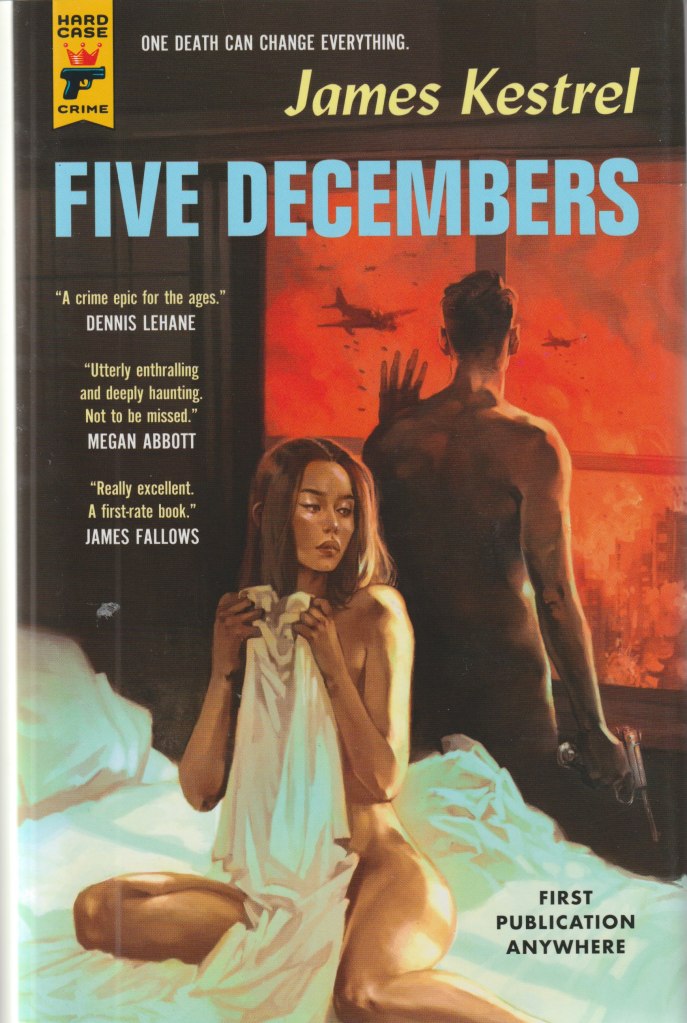
I also fell in love with Hawaii the first time I went in 1991; I went every year after that until 1995 (thank you, flight benefits!) and I miss it. I would love to go back again, and I would imagine it’s very different there now than it was the last time I was there. But on one of those trips to Hawaii–I don’t remember which one–I came up with a very basic idea for a book, that would open on December 8, 1941. The wrecks in Pearl Harbor were still smoking and the entire island chain was on high alert. My idea was to then have an Army brass’ wife call the local police station to report a murder: she found the young Japanese man who worked for her doing yard work and odd jobs with his throat cut in her rose bushes. That was as far as the idea ever progressed, and I never have had the time to sit and think it through. But I love that opening idea, and that set-up; even as I type these words now characters are taking shape in my head (KNOCK IT OFF, CREATIVITY)…anyway, so it was a no-brainer that I wanted to to read Five Decembers by James Kestrel the first time I learned of its existence.

Joe McGrady was looking at a whiskey. It was so new the ice hadn’t begun to melt, even in this heat. A cacophony surrounded him. Sailors were ordering beers ten at a go, reaching past each other to light the girls’ cigarettes. Someone dropped a nickel in the Wurlitzer, and then there was Jimmy Dorsey and his orchestra. The men compensated for the new noise. They raised their voices. They were shouting at the girls now, and they outnumbered them. The night was just getting started, and so far they weren’t drinking anything harder than beer. They wouldn’t get to fistfights for another few hours. By the time they did, it would be some other cop’s problem. So he picked up his drink, and sniffed it. Forty-five cents per liquid ounce. Worth every penny, even if a three-finger pour took more than an hour to earn.

Before he had a taste of it, the barman was back. Shaved head, swollen eyes. Straight razor scars on both his cheeks. A face that made you want to hurry up and drink. But McGrady set his glass down.

“Joe,Tip said.

“Yeah?”

“Telephone–Captain Beamer, I guess, You can take it upstairs.

He knew the way. So he grabbed the drink again, and knocked it back. The whole thing, one gulp. Smooth and smoky. He might as well have it. If Beamer was calling him now, then he was going to be pulling overtime. Which meant tomorrow–Thursday–was going to be a bust. Molly was going to be disappointed. On the other hand, he’d be drawing extra pay. So he could afford to make it up to her later. He put three half-dollars on the bar, wiped his mouth on his shirtsleeve, and went upstairs.

I had heard great things about this book–it literally won the Edgar for Best Novel last month–and of course, it’s time and setting (a murder mystery set in Honolulu just before, during and after December 7? Oh hell yeah) made it a must-get. I didn’t read it as soon as I got a copy of course; it went into the TBR stack and moved up quite a few places after it won the Edgar. On the one hand, I’d heard nothing but great things about the book (and it won the Edgar)…but on the other hand, I also was worried about how this Pearl Harbor noir might affect my potential write-sometime-in-the-future-but-before-I-die Pearl Harbor murder mystery; namely, would I simply think oh this is so fucking good I can’t bear to write something that would be compared (unfavorably) to it because mine would inevitably be the weaker of the two? (I know how unhinged this sounds, but I’ve never pretended that anything that goes on inside of my brain is anything other than that.)

Yes, the book is that good, and no, it didn’t leave me thinking that I could never write my own book idea. If anything, it made me think, oh, I should try mine at some point but I am going to have to do a shit ton of research–which was something I already was aware of, to be fair–but its a good idea and could be interesting and fun to work on.

So, yeah, there was clearly no need to wait to read this outside my own neuroses.

Joe McGrady is the hero of this tale, which does indeed open in late November/December 1941 and finally wraps up the case in December 1945–the “five Decembers” of the title. Joe is ex-military and wound up in Honolulu on the police force, where he is neither liked nor trusted because he didn’t come up through the ranks; the thin blue line in Honolulu considers him to be an outsider. The case he catches while having a drink in the bar involves two bodies found butchered in a hut on a pineapple plantation; a young white male and a young Japanese female, stripped nude and essentially gutted. The case has wider implications other than the apparent (“my god, someone butchered two people in an extremely violent and gory way!”) as the young man is the nephew of Admiral Kimmel, the commander-in-chief of the Pacific Naval Fleet. As tensions between the United States and Japan are heating up to the inevitability of war, the murder of someone related to a person so high up in the chain of command could be espionage, could be any number of things that could have an effect on the security of the country and the Pacific fleet–and we, as readers, are also very aware of what’s around the corner in just a few days. Joe does note that his boss seems a bit weird about the investigation, and he’s paired with a bruiser detective who likes to beat information out of people and confessions out of possibly innocent people. He’s dating a young woman who attends the University, and may even be falling in love with her. We don’t get a lot of backstory on Joe, but the strength of the authorial voice makes unemotional, mostly internal Joe a hero you can root for. The trail of the murders eventually leads to Hong Kong, and Joe sets off on the transoceanic flight, which includes stops at Guam and Wake Island, where he picks up more clues and the trail of the possible killer–and there’s a murder victim on Wake kind of similar to the ones in Hawaii. But once he arrives in Hong Kong he decides not to immediately go to the police department there and ask assistance; rather he decides to follow the trail himself at first…a mistake, as he winds up getting arrested and framed for a rape. He is in the Hong Kong jail hoping that the US Embassy will get him out when the bombs start falling. He is taken to Japan as a prisoner of war, and the case–and the book, take a completely surprising twist and turn once he is there.

Anything else would be a spoiler, so I can’t really talk about the story anymore–but it’s compelling, convincing, beautiful and tragic and sad all at the same time. We see a lot of things through Joe’s eyes–both inhumanity and humanity; the absolute horrors of war (there’s a horrifyingly grim account of the fire bombing of Tokyo), and finally, the war ends, he returns to Hawaii, and is able to at long last close the case in a way that is enormously satisfying.

I really really enjoyed this immersive book which used a hardboiled crime story to talk about the horrors of war and the inhumanity that xenophobic and racist values and beliefs can create. It was riveting and very hard to put down once I started.

Highly, highly recommended.

Urgent

History is, as the adage goes, written by the winners, and that has always certainly held true of US history.

As Constant Reader is undoubtedly aware, I love me some history, and always have; ever since I was a kid. The history I learned in school, as well as how it was taught, instilled a deep pride in me, as a citizen, of my country and its history. But I never limited myself to the textbooks and the classroom; as a voracious reader with an appreciation and love for history, I often read history for its own sake, because I found it interesting, and felt that the slight overview/outline I was taught in public schools–and later, in college (I remember writing an essay for an American History course in college about the Spanish-American War on a test in a blue book–remember those? do they still use them?–and my extensive reading outside of class, throughout my life, of history enabled me to write in greater detail in my essay than most of my classmates, who had only the textbook chapters and the outside reading assigned me of Edmund Morris’ The Rise of Theodore Roosevelt to draw from; I knew from outside reading that the king of Spain at the time was Alfonso XIII and he was a child; that his mother, Queen Maria-Christina, was the actual regent, etc. etc. etc. Needless to say I got an A, and the instructor wrote in the margins how pleased he was that I had clearly done so much outside reading/study on my own, even going so far as to suggest I switch to a History major; I sometimes wonder–particularly whenever I think about writing about history–if I indeed should have. That, however, would have taken my writing career in an entirely different direction) wasn’t as in-depth as I would like, and because of all the reading I did on my own, I always found myself bored in History classes.

Again, I probably should have majored in history.

Anyway, twentieth century history was never something I was terribly interested in when I was younger. I had a vague working knowledge of it; I certainly knew more than most of my fellow citizens, but my interests inevitably always lay further distant in the past. I certainly didn’t have a strong knowledge of the First World War, other than the basics: how it started, how old-fashioned notions of government and war which hadn’t truly responded to the great advances in industrialization and modernization of technology resulted in a horrifying bloodbath that convulsed Europe and killed millions unnecessarily over old-fashioned notions of the honor of dynasties and the corresponding idiocies of secret treaties and alliances and spats between imperial cousins; that the peace that followed in the wake of a bitter war resulted in a far worse global convulsion in less than three decades; and that the entry of the United States very late in the war swung the bloody stalemate into a victory by the Allies. (Also recommended reading: The Fall of the Dynasties by Edward Taylor. )

One of my fraternity brothers was a History major, and one spring afternoon after classes, as we took bong hits and listened to Pink Floyd’s The Wall album, I asked him what his concentration was in, and he replied the First World War. What followed was a rather interesting conversation about the war and its causes, and the American entry–that was probably not as interesting as I recall; stoner conversations are never as interesting later as they seem at the time– and when I mentioned the Zimmermann Telegram, he dismissed it with a wave of his hand. “Oh, it was so obviously a forgery!” Since that was his concentration for his major, I always took that fact at his word; he was majoring in the subject so therefore I assumed he had done the research to back up that assertion, and as I was becoming rather cynical on the subject of our government and the propaganda that was public school history courses, it was easy to believe that the British and President Wilson (a horrific racist) could have quite easily collaborated to deceive the American public and thus swing public opinion in favor of American entry into the war.

As an enormous fan of Barbara Tuchman’s, I have been working my way through her canon, and so was quite interested to read her take on the telegram; she wrote a very short book on the subject, perhaps the shortest of her career, aptly titled The Zimmermann Telegram.

I generally always am reading some kind of non-fiction at the same time as I am tearing through my fiction choices; the lovely thing about reading non-fiction–particularly history–is that I don’t feel the same urgency to finish it; non-fiction is always there, waiting for you to come back to it, and since you already know how it’s going to come out, there’s not the same sense of desire to see how it all plays out. For The Zimmermann Telegram, for example, I knew the book would end with the United States entering the war; there are no surprise twists waiting for you in history when you already have a basic knowledge going into it–likewise, any biography of Mary Queen of Scots isn’t going to end differently. The historian’s analyses of the facts may be different than those of others already read, but the bare facts remain: history is history, facts are facts, and the only difference from one to another is the analyses and interpretations of the facts (I also have my own theories about Mary Queen of Scots–again, interpretations and analyses inevitably differ, and the winners do write history; which is why I deeply appreciated The Creation of Anne Boleyn, which pointed out that our modern day interpretations of her are based in letters and chronicles of the time, which were hardly fair; I could take make the same case for the Queen of Scots–but facts are facts: she was executed in 1587; she lost her throne in 1567; her marriages were her marriages and her son was her son). Tuchman’s analyses are heavily researched and formed from extensive reading–and she generally comes across as fairly impartial; she also writes in a reader-friendly style that brings the personalities of the people she writes about to life and is never, ever boring–a tendency in even the most non-academic writing styles of the majority of historians.

She makes a very strong case for the authenticity of the Zimmermann Telegram–bolstered primarily by the fact that the Germans admitted its authenticity at the time (which essentially guaranteed American entrance into the conflict as a belligerent, which was hardly in the best interests of the German Empire at the time), and there was also a follow-up telegram to the original, even more damning than the first–whose existence remained secret at the time and wasn’t revealed until after the war; because the British didn’t want the Germans to know they had broken their code and were reading their telegraphic communiqués. She also does an excellent job of setting the stage, giving all the perspectives from every side–the neutral American, the Allied, and the Central Powers–and this was a terrific, wonderful read, as are all of Ms. Tuchman’s works.

(If you are not aware of the Zimmermann Telegram, essentially it was an attempt of the German Empire to draw Mexico into the war against the US as an ally of the Central Powers should Wilson lead our country into the war; the Germans promised Mexico they would have German assistance in reconquering Texas, Arizona, and New Mexico. The Germans were also trying to draw Japan into a war against the US–promising them American possession in the Pacific and perhaps even the Pacific Coast states…essentially predicting the second World War as an added, interesting twist. As you can well imagine, when this telegram was made public the entire country went from pacifism to a demand for war)

Next for my non-fiction reading pleasure: Robert Caro’s enormous and exhaustively researched The Power Broker: Robert Moses and the Fall of New York.

Rock Steady

Watchmen is, quite frankly, brilliant television.

While I would never consider myself a comics nerd, I did grow up with them, and have periodically returned to them as an adult. I’m a fan of the genre of super-heroes, but would never consider myself anything more expert than any other sideline, keeps up with it slightly, fan. (Although the world of comics fans endlessly fascinates me; I’ve loved attending the local version of Comic Con, and suspect the bigger ones would be too overwhelming and too much for me.)  Anyway, that’s a roundabout way of saying I’ve never read the source material for this show, but have heard about it for years. I’m enjoying this show so much I now want to go back and read the original source material (which I’m sure is now readily available, certainly) as well as go back and watch the film that was made of it several years ago. I would say that’s a statement about how much I am enjoying the show, while admiring it at the same time; I now want to know the entire story, or as much of it as I can glean to get a better understanding of the show.

A need I never felt, quite frankly, with The Walking Dead, and only somewhat with Game of Thrones (I won’t commit to reading that entire series until it’s completed, thank you very much).

The Saints also managed to win a heart-attack inducing game yesterday, which I was felt quite certain they were determined to lose for some unknown reason. But they managed to get the last second field goal and dodged the bullet; the Panthers missed their own just moments before. The Saints aren’t playing as solidly as I would like, but I would imagine there’s an adjustment period when you have to switch quarterbacks again–and it takes some time to get fully back into the old rhythms again. Still, we’re having a glorious football season in Louisiana, one that I hope everyone is taking the time to enjoy.

This week is Thanksgiving, and as I’ve been thinking about American mythology a lot lately, it seems only fitting that yet another myth looms on the horizon; a holiday where Americans gather to be grateful and give thanks for what they have…as the final, massive full frontal assault of Christmas commercialism looms just over the horizon. I watched another couple of hours of World War II-Pacific theater documentaries yesterday–I’m not sure why I am so drawn to that particular period of history lately, or that particular theater of that particular war; draw your own conclusions–and again, found myself as a present-day prosecutor, trying the United States for war crimes for the use of nuclear weapons on civilian populations. It is easy to be judgmental in hindsight; my living room in New Orleans in November 2019  is vastly different than the Oval Office in Washington in July 1945, and I certainly don’t have the future of the world in the palms of my hands; it’s easy to question decisions of the past with the hindsight of the present.

But I also find it hard to believe we would have used nuclear weapons on Germany.

Hindsight.

Looking back at the past with the mindset of the present.

Watchmen‘s entire approach to racism and the past is incredibly powerful, and also incredibly important. A pivotal event in the narrative is the obliteration of the a economically strong and growing black community near Tulsa back in the 1920’s; a horrifying racist slaughter and eradication of a community for daring to believe American mythology and trying to live the American dream as non-whites.

It also got me thinking about diversity, and the push for it in publishing, particularly in crime fiction lately, given some of the incidents that have occurred recently at crime events, or involving crime fiction organizations over the last few years. It occurred to me that inclusion, and diversity, are important words that may not carry with them their own importance; what we are really trying to accomplish is the desegregation of publishing and the creative arts; integrating writers of color and queer writers into the mainstream of publishing. Integration and segregation are much more powerful words; but desegregation is an incorrect term, in that it presupposes that there are separate but equal publishing worlds, which isn’t true; perhaps that’s why integration isn’t the word we use about talking about diversity in publishing.

But I think integration gets the point across more than inclusion does.

I am still reading both The Nickel Boys and Bourbon Street, hope to get more of the Whitehead read today, in fact. This first day of Thanksgiving week vacation–after three days of essentially relaxing and doing something periodically, but mostly doing nothing active–needs to be more of an active day than a passive one. I am going to work on my emails today, I am going to write today–not sure just quite yet what it is I will be writing, but I am going to be writing today for sure–and making other arrangements as well. There’s a lot of filing and cleaning that needs to get done, but I am going to be home alone all day with the needy kitty–who will insist on sitting in my desk chair once Paul leaves for the day–and I am determined to get all of this finished….or at least progress. I’ve kind of been letting a lot of stuff slide because I haven’t wanted to deal with it; well that day of reckoning has now arrived.

And on that note, it’s back to the spice mines.

12716110_1028251090568495_1090377440025608000_o