A Teenager in Love

Monday morning and back to the office blog. I did write some yesterday–not nearly enough–and I did get some things done this weekend. I bought blinds for the breakfast nook, but I think they are too small; I may have to exchange them for another, larger set. Which is okay; I can do it after work one night as the Lowe’s is just up Elysian Fields. Tonight after work I have to go to the gym to do PT, and then I’m coming home to do some more writing and cleaning. Paul’s moving into the Monteleone on Wednesday, which means I’ll be here alone with the Sparkster, and also means Sparky will be very needy. He loves the cat treats I got him this weekend, no surprise there, and so I will continue to dole them out for good behavior. I feel rested this morning, which is different from most usual Monday mornings, but I think that has to do with making myself get up early Sunday morning and not sleeping late again the way I did Saturday morning.

Still, that felt amazing.

I feel pretty good this morning, too. The temperature dropped again over night, so there is a bit of a chill in the air this morning. I need to actually look at the program for S&S this weekend so I can put the stuff I am doing on my calendar and can start planning for the weekend. It’ll be weird being home alone for the long weekend (Wednesday thru Monday), but I’ve been a Festival widow since January anyway, so it probably won’t even be noticeable. I’ve also taken Monday off, as it’s always brutal getting up at six in the morning after the Festivals have concluded. It was a little odd this morning, though; Sparky usually comes and starts smacking me in the face with his paw just before the alarm goes off, and continues to do so while purring and cuddling until I get up. He didn’t come out from under the bed until I actually got out of bed, and just followed me downstairs instead of insisting on food immediately. His bowl was completely empty this morning, too.

I did write about a thousand new words on the short story yesterday, but my mind kept wandering and I got up to do something and just never went back. I also edited the 2000 words or so I had already done, so I think it was probably more new words than merely a thousand. It still feels a little rusty for me when I’m writing, but the best way to get past that is to keep writing until it starts to feel natural again and my mind stops wandering when I am writing. That’s the weirdest part. Usually when I write I shut out everything and am laser-focused, that’s not the case anymore and that’s fine.

My mind is still bouncing all over the place, too. It’s trying to spike my anxiety, too, but I just take some deep breaths and calm down, which is a lot easier to do with the new medications.

I did finish reading The Cook by Harry Kressing, which was an interesting and short read. It was a black comedy of sorts, more of a Kafka-esque fable than anything else, but in all honesty I enjoyed the movie version (Something for Everyone) a lot more than I did the book; in the book Conrad seduces everyone with his incredible food and force of will; in the movie, he’s played by a stunningly beautiful young Michael York who actually sexually seduces his prey until he gets what he wants. I will do a more in-depth review of the book at some point, but it does play into my thoughts that Saltburn owes more to that movie than it does The Talented Mr. Ripley or Brideshead Revisited.

We also finished watching season two of The Tourist, which was twisty and clever and fun and we really enjoyed it and are really looking forward to the third season–the second ended with a terrific cliffhanger twist that definitely will make for a fascinating and exciting third season. Plus, Jamie Dornan and Danielle Macdonald have some amazing chemistry together.

I also watched some documentaries last night about Jayne Mansfield, who I’ve been thinking about a lot lately. I’m not entirely sure what triggered me to thinking about her again. I first read about her in Earl Wilson’s The Show Business Nobody Knows when I was a teenager, and from there went on to read May Mann’s biography of her, Jayne Mansfield. She was very interesting to me, and was thrilled when her daughter began her career as an actress. I remember thinking Mariska Hargitay? She must be Jayne Mansfield’s daughter because what are the odds of there being two Mariska Hargitays? and watched her for years on Law and Order: SVU. Oh, now I do remember. I bought a copy of the Wilson off ebay because I thought it might be helpful with Chlorine, to give me an idea of what it was like to be in show business in the 1950’s, and of course, he devoted a chapter to her. I bought another bio of her off eBay recently, and she is very interesting, as she always has been to me. I’ve only seen one film of hers, Will Success Spoil Rock Hunter, which I thought was hilarious and she was fantastic in it. Benjamin Dreyer brought her up on one of the social media channels this weekend, and so I thought I’d find what I could of her on Youtube. Her story was actually perfect for someone like Jackie Collins or Jacqueline Susann to have written a huge trashy novel about, I’ve always thought. I also loved that she was actually–despite her image as a sexy dumb blonde–incredibly smart, almost genius level. And she only worked in show business for about ten years–while having four children, too, and keeping that incredible figure.

It’s funny; I’m not sure if you’ve ever noticed, Constant Reader, but I generally use song titles for my blog posts. About twelve years ago it was getting harder and harder to think up song titles organically, so I started using themes–Stevie Nicks songs, Pet Shop Boys songs, top 100 hits of 1977, that sort of thing. I can’t remember now which years I’ve used so I recently went back to the top 100 of 1959, I think; it’s interesting how many titles and songs have to do with teenagers; clearly, modern songwriters don’t have to write about teenage heartbreak anymore to appeal to young listeners. I also started watching Eras: The Taylor Swift Concert Movie, and I have to say I am very impressed. I can’t dedicate three and a half hours to watching it, but putting it on and listening while doing chores is terrific. Her show is amazing–I still have over an hour to watch (and am bummed she didn’t do “Red”) and I am actually looking forward to it. I also love how much right-wingers hate her.

And on that note, I am heading into the spice mines. Have a lovely day Constant Reader, and I may be back later, you never can be sure. I’m tricky that way!

Ladies Who Lunch

Americans have always been fascinated by rich people.

We all want to be rich, after all; as someone once said, “The United States is a nation of temporarily distressed millionaires.” So, in lieu of actually being rich, we obsess about them. The rich used to be celebrities for no other reason than being rich. It’s always been interesting to me that in our so-called “classless” society (which was part of the point; no class privilege, everyone is the same in the eyes of the law) we obsess about the rich, we want to know everything about them, and we lap up gossip about them like a kitten with a bowl of cream. I am constantly amazed whenever I watch something or read something set in Great Britain, because that whole “royalty and nobility” thing is just so stupid and ludicrous (and indefensible) on its face that I don’t understand why Americans get so into it; the fascination with the not-very-interesting House of Windsor, for one. We fought not just one but two wars to rid ourselves of royalty and nobility…yet we can’t get enough of the British royals, or the so-called American aristocracy. (Generic we there, I could give a rat’s ass about the horse-faced inbred Windsors and their insane wealth, quite frankly.)

I wanted to be rich when I was a kid; I spent a lot of time in my youth fantasizing about being rich and famous and escaping my humdrum, everyday existence and becoming a celebrity of sorts with no idea of how to do so. I was intrigued by the rich and celebrities; I used to read People and Us regularly, always looked at the headlines on the tabloids at the grocery store, and used to always prefer watching movies and television programs about the rich. (Dynasty, anyone?) I loved trashy novels about obscenely wealthy (and inevitably perverted) society types and celebrities–Valley of the Dolls has always been a favorite of mine, along with all the others from that time period–Judith Krantz, Harold Robbins, Jackie Collins, Sidney Sheldon and all the knock-offs. I was a strange child, with all kinds of things going on in my head and so many voices talking to me and my attention definitely had an extraordinary deficit; I always referred to it as the “buzzing.” The only time I could ever truly focus my brain was either reading a book or watching something on television–and even as a child, I often read while I was watching television. (Which is why I read so much, even though that buzzing isn’t there anymore and hasn’t been for decades.)

As I get older and start revisiting my past (its traumas along with its joys) I begin to remember things, little clues and observations that stuck in my head as a lesson and remained there long after the actual inciting incident was long forgotten. I’ve always had a mild loathing for Truman Capote, for example, which really needs to be unpacked. Capote was everywhere when I was a child; there was endless talk shows littering the television schedules those days–Dick Cavett, Merv Griffin, Mike Douglas, John Davidson, and on and on and on–and Capote was always a popular guest on these shows. I wasn’t really sure what he did or who he was, but he was someone famous and he was on television a lot. I saw him in the atrocious film Murder by Death, and I know I knew/had heard that he was a homosexual, a gay; and I also knew I was a gay. It terrified me that I was destined to end up as another Capote–affected high-pitched speech and mannerisms, foppish clothing that just screamed gay at anyone looking; Capote made no bones about who or what he was and refused to hide anything…yet he gained a kind of celebrity and fame and success in that incredibly homophobic time period, and no one had a problem with putting him front and center on television during the day time.

But this isn’t about my own self-loathing as evidenced by my decades of feeling repulsed by Truman Capote; that I will save for when I finish watching Capote v. the Swans.

“Carissimo!” she cried. “You’re just what I’m looking for. A lunch date. The duchess stood me up.”

“Black or white?” I said.

“White,” she said, reversing my direction on the sidewalk.

White is Wallis Windsor, whereas the Black Duchess is what her friends called Perla Apfeldorf, the Brazilian wife of a notoriously racist South African diamond industrialist. As for the lady who knew the distinction, she was indeed a lady–Lady Ina Coolbirth, an American married to a British chemicals tycoon and a lot of woman in every way. Tall, taller than most men, Ina was a big breezy peppy broad, born and raised on a ranch in Montana.

“This is the second time she’s canceled,” Ina Coolbirth continued. “She says she has hives. Or the duke has hives. One or the other. Anyway, I’ve still got a table at Côte Basque. So, shall we? Because I do so need someone to talk to, really. And, thank God, Jonesy, it can be you.”

I do want to be clear that once I started reading Capote, he quickly became a writer whom I admired very much; I don’t think I’ve ever read anything he’s written that didn’t take my breath away with its style and sentence construction and poetry. He truly was a master stylist, and perhaps with a greater output he might have become one of the established masters of American literature, required reading for aspiring writers and students of American literature. In Cold Blood is a masterpiece I go back to again and again; I prefer his novella Breakfast at Tiffany’s to the film without question; and I was blown away by his debut novel, Other Voices Other Rooms, which was one of those books that made me think my childhood, and my being from Alabama, might be worth mining for my work.

I read “La Côte Basque 1965” years ago, and didn’t really remember it very much other than remembering I didn’t care for it very much. I was aware of the scandal that followed its publication and that all of Capote’s carefully cultivated rich society women friends felt betrayed by it and turned on him, which sent him into a decline from which he never recovered, before dying himself. I’ve always seen Capote as an example of wasted talents. Anyway, I read the story but not being familiar with his social set, I didn’t recognize any of the people gossiped about in the story or who the woman he was lunching with represented (Slim Keith, for the record), and so it kind of bored me; it was a short story about someone having lunch and gossiping about people the reader had no way of knowing who they were or anything about. I assumed this was because the story was an excerpt from the novel, and the novel itself would establish who all these women were and their relationships with each other. But I did know it was all thinly veiled gossip about his friends, and they never forgave him for it. (I also didn’t recognize “Ann Hopkins” in the story as Ann Woodward; I hadn’t known until the television series that he was involved in her story. I primarily knew about her from reading The Two Mrs. Grenvilles and articles in Vanity Fair, and I actually thought, when reading that book, that it was based on the Reynolds tobacco heir murder that Robert Wilder based his book Written on the Wind on; it wasn’t until later that I learned about the Woodward incident) so I thought, well, it was an entertaining if confusing read.

It was kind of like listening to two strangers talk in a Starbucks and gossip about people you don’t know; entertaining but nothing serious, not really a story of any kind, and I didn’t at the time see how it would all fit into a novel as a chapter in the first place. What purpose to the overall story did this nasty gossip play? Why was it necessary for Ina to share these stories at this particular lunch (and don’t get me started on White Duchess and Black Duchess)? Were these people she was talking about important to the book as a whole? It was hard for me to tell, and I put it away, thinking at the time probably a good thing he never finished the book.

Watching the show about fallout from the story’s publication, I decided to read the story again.

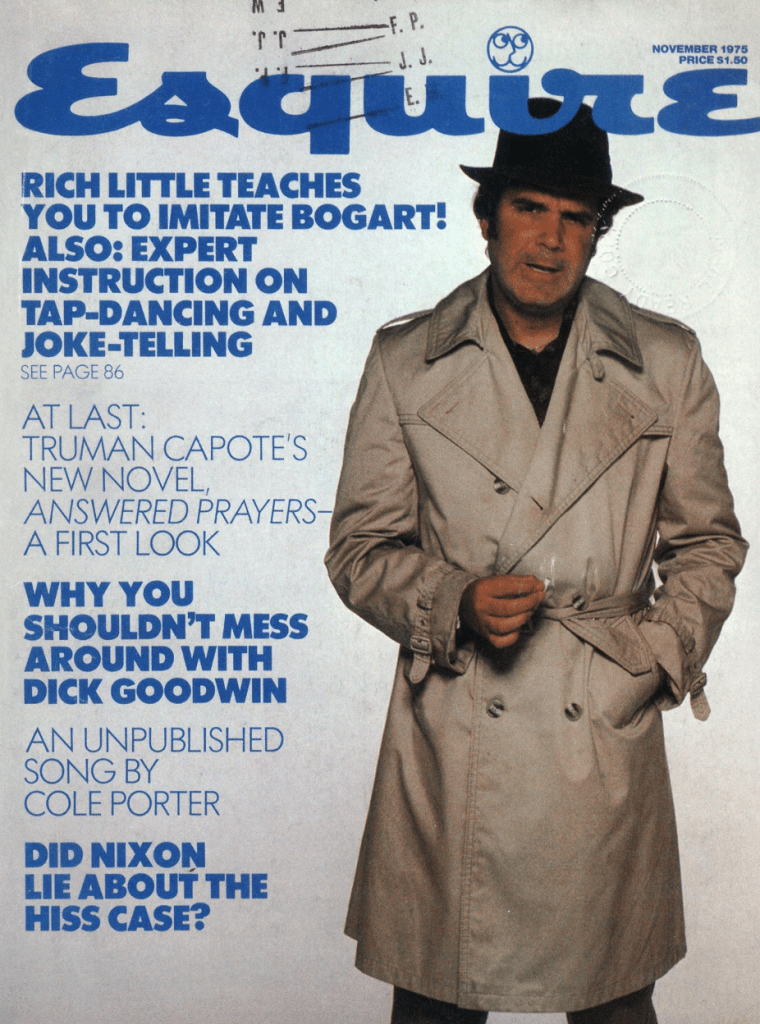
And I still question why Esquire chose to publish it, as well as why Capote thought this chapter was the one to send them. Capote was a genius, of course, and after In Cold Blood was one of the biggest names in American literature (he truly invented the true crime genre); of course they are going to publish whatever he sent them, no matter how bad it was. It wasn’t promoted as a story, after all, it was a novel excerpt.

What I’ve not been able to figure out from any of this is why he thought he could publish this without any fallout from his “swans.” I guess it went to the grave with Capote, who clearly didn’t–and I don’t think ever did–understand why they were so upset with him, which just astonishes me. (Someone once thought I based a character on her–I didn’t–and was very angry with me. I didn’t care, because I neither cared about the person nor her concerns, but I know how careful you have to be as a writer with these sorts of things.)

I wish I could say I liked it better on the reread. I did not. It’s still the same mess it was when I originally read over twenty years ago. It’s just a rich woman being bitchy to her gay friend she feels free to be bitchy about her friends with, and when you have no context (even knowing this time who the actual people were, and yes, he barely disguised them) about the women being discussed or anything about them…it’s just boring, gossip about people you don’t know and you don’t know enough to care about, so it’s just a bitchy little boring lunch. I don’t know what could come before that or after, as an author myself; had I been the fiction editor at Esquire I would have been pissed that was what he sent in, and I would have definitely taken a red pencil to it before I would have published it–and Esquire? Why did Esquire, a men’s lifestyle magazine, publish this when the right place would have been Vogue or Vanity Fair or even The New Yorker. None of it made sense then, none of it makes sense to me now; and if this is the best example we have of Answered Prayers, maybe it’s not such a bad thing that the manuscript–if it ever existed–disappeared.

Sorry, Truman, you were a great writer but this one was a swing-and-a-miss.

destination unknown

Thursday, and I am so relieved that the recovery is going well, and that I can actually start fending for myself. The brace isn’t rigidly locked anymore, and I have a lot more freedom of movement–plus I no longer need that wretched sling, which I hated, and I am no longer attached to anything. Granted, I haven’t been since last Friday, when the pain ball1 was removed Later this morning I am calling to make my first PT appointment, and another referral to follow up on as well. I also slept in my bed last night for the first time since the surgery. I was sleeping super-well in my easy chair, and was a little worried about going back to the bed (I will worry about anything, thanks, anxiety!) because I usually sleep on my left side–which is the bad arm–but I fell asleep lying on my back and shifted to the right side and back a couple of times, but other than that, I was dead to the world. I also slept for another ten hours last night, and I am thinking that I need to get this rest. My body is demanding it, and it feels marvelous to sleep so deeply and restfully–this is what I am always longing for most of the time….but I’m not going to start going to bed at eight once I am back to work because yeah, that would be terrible.

I took it easy yesterday after getting home from my appointment and a couple of errands. The temperature has turned cold (for New Orleans, don’t @ me), which always makes the apartment feel a bit more snug. I did some straightening up, took a long hot shower (still not easy, but so much better than before), and then curled up in my chair with Sparky and J. D. O’Brien’s Zig Zag, which I enjoyed very much (more on that later). I’m still trying to figure out a way to comfortably type with the brace, which isn’t as easy as one might expect. because the brace raises the hand so it’s not flush with the keyboard. It just feels awkward and so I need to find a position to type that doesn’t feel awkward–or I need to get used to it. I don’t know that I’ll have the brace on long enough to worry about Carpal tunnel syndrome, but you know me–anxiety always on the starting line waiting for the starting gun. We also finished watching Bodies, which I also highly recommend. It’s extremely well done, and very clever. If you liked Dark, you’ll definitely enjoy Bodies. I haven’t picked out my next read yet, but I have some incredibly delightful options to choose from. Yay! I love having a massive TBR-pile filled with terrific books by great writers. I am leaning towards Christmas Presents by Lisa Unger; I do want to read some holiday themed novels this Christmas season.

Christ, it’s Christmas season already. I may have to have my annual viewing of A Charlie Brown Christmas soon. I feel more like being in the holiday spirit this year. We haven’t decorated in years (and what little decorating we did was kind of half-assed, anyway) because the one thing Scooter would–in his long, comfortable life as a lap cat–actually spring into action against was the tree. That first Scooter Christmas was the last time we decorated, and I feel pretty confident that Sparky would see the tree as an amusement park, since everything is a toy to him and all he wants to do is play. I didn’t notice until the other day–and maybe it’s a recent development–but Sparky has some orange in his coat. It’s more obvious when he’s lying on his back, but we did end up with another orange cat, even though we didn’t realize it! The string of orange babies continues!

I was also thinking some more yesterday about being a writer–and the many different ways there are to be one. What is the difference between an author and a writer? Are authors artists? What is literary art and what is not, and who decides? Can genre fiction be art (of fucking course)? This was triggered by one of those things on one of the social media platforms where you were supposed to “quote text” my favorite books by women, and right off the top of my head I rattled off five great ones…and then I started remembering more, and more, and still more. I’ve read hundreds, if not thousands, of marvelous novels and short stories and essays and columns written by women. Why were those the five that popped up into my brain at first, why are they so implanted on my brain that I would come forth with these titles; any such list from me will always include The Haunting of Hill House by Shirley Jackson and Rebecca by Daphne du Maurier, and I will never apologize for that. Which left me with only four, and there were so many options. My mind immediately defaulted to four women writers I love, and then had to pick which of their canon was the best. Then I remembered a beautiful novel about friendship, love and loss that made me weep (Somewhere Off The Coast of Maine by Ann Hood) and thought, damn it, I loved that book and I want it on my list…and then started remembering all the others, the dozens if not hundreds, of other women writers whose works entertain, enlighten, and edify my life. There are so many great women writers, currently and in the past, who wrote so many amazing books that it would be hard to name them all, and I would certainly always forget scores of them. For some reason yesterday I was thinking about Taylor Caldwell–who used to write massive doorstopper books about rich people and industries, as well as interesting historical fiction. If remembered at all today, it would probably be for Captains and the Kings, but that wasn’t one of my favorites of hers–that would probably be Testimony of Two Men, which was about medicine in the late 1800’s and a courageous doctor who believed in modern breakthroughs rather than “we’ve always done it this way”–so of course the entire medical establishment was trying to ruin him as he bravely stuck to his principles and tried to modernize American medicine. I would probably hate it if I read it today for the first time–my politics, ethics, morals, and tastes have dramatically changed since I was a teenager, which was when I read Caldwell–but I do remember it fondly. And there’s Grace Metalious, who wrote Peyton Place; Jacqueline Susann and Valley of the Dolls; Jackie Collins and Hollywood Wives; any number of Agatha Christie novels–I mean, there have always been so many great women writers around. Does anyone remember Rona Jaffe? I’ve always wanted to reread The Best of Everything, and I think I have a copy of it somewhere. Then there’s the scifi/fantasy writers, too–Anne McCaffrey and The Dragonriders of Pern, Ursula LeGuin and A Wizard of Earthsea, the amazing Octavia Butler….as I said on whatever social media platform that was, I could sit here and name women writers who wrote books that I loved all day. Victoria Holt, Mary Stewart, Phyllis A. Whitney, Dorothy Eden, Susan Howatch…seriously. Maybe I should write a book of essays about women writers that aren’t remembered much today? ANYA SETON! How I loved Anya Seton back in the day–and all the crime women–Margaret Millar, Charlotte Armstrong, Dorothy L. Hughes, Mary Roberts Rhinehart, Helen MacInnes, Patricia Highsmith, and Mignon Eberhard, to start.

I bet no one else remembers Edna Ferber–and if they do, it’s for Giant and it’s because of the movie (many of her books became famous films: Cimarron, Saratoga Trunk, Show Boat, and So Big). Now that I think about it, I think she addressed race issues in both Saratoga Trunk and Show Boat….which may be worth revisiting. She was also a member of the Algonquin Round Table.

This entry sounds and feels more like me than the more recent ones have, doesn’t it? I am itching to dive back into the book this morning, after I pay some bills and do some other aggravating chores. I also have a prescription ready to pick up; so since I have to go to a Midcity pharmacy to get it, I may as well make a grocery run on Carrollton.

I didn’t realize what a difference sleeping in the bed would actually make, really.

And on that note, I am heading into the spice mines for the day. Have a blessed Thursday, Constant Reader, and I’ll check in with you again a little later, as I really need to do a lot more promo. OH! That reminds me, here is a lovely review of Mississippi River Mischief; check it out! That absolutely made my day–and reminded me that I need to do more self-promotion.

  1. I had a contraption attached to my left shoulder that dispensed a nerve-deadener to the arm, so I wouldn’t feel pain. It lasted for 72 hours, and by the time it was empty, I didn’t have any pain, which was great. I also had to carry it around in basically a fanny pack, so it was one more thing I had to drag around those stressful first 72 hours. However, if you are going to have surgery, ask for one. It was amazing. ↩︎

Play with Fire

Well, I met quota again last night which was marvelous. It’s still a bit chilly this morning. By the weekend it should be back into the seventies (it was yesterday as I ran my errands after work; it’s sixty-one this morning but it does feel colder outside of my bed and blankets), as the Alabama and Kansas State fans start arriving for the Sugar Bowl. LSU is also playing on New Years’ Day in the Citrus Bowl against Purdue, which will probably be the only game I actually watch that day.

There’s been a conversation going on over at Book Twitter lately that doesn’t really impact me in any way, but it’s been kind of interesting to follow. The conversation has to do with concerns about what is and isn’t considered y/a fiction as well as what is, or should be, considered age-appropriate reading material for teenagers and pre-teens. It doesn’t impact me because no one considers me a young adult writer, for one thing; despite having written numerous books with younger and/or teenaged characters (Sorceress, Sleeping Angel, Sara, Lake Thirteen, Dark Tide, Bury Me in Shadows, #shedeservedit), most people think of me as a gay mystery writer. Everything published under my own name is a mystery novel of some sort, whether it’s one of the series books or one of the stand-alones. I’ve never really marketed myself as a writer of young adult fiction, really; I shy away from that, I think, because of The Virginia Incident and the subconscious fear that one day that controversy might resurrect itself (which is ludicrous, and I know that; it certainly would have by now and it hasn’t, which further proves my belief that The Incident had nothing to do with me or my writing or my career and everything to do with systemic homophobia and othering used for political gain). It just seems weird to me that in less than five years after that happened–when I was deemed a menace to America’s youth–I could publish books for teenagers without a single whiff of complaint or scandal or even the raise of a single eyebrow.

Interesting, isn’t it? Almost like the whole thing was just more smoke and mirrors whose sole intent was to rile the homophobic base.

I just love that my existence is considered by some as a constant and continued threat to children.

One of the things that has always mystified me over the years is what is and isn’t considered age-appropriate. Intellectually I was far more advanced that most of my classmates (my emotional and personal maturity being an entire other subject–I’d say I am still behind on that score) and I started reading early. The library and the Scholastic Book Fairs were my best friends as a child, and I read everything I could get my hands on. I loved history, from which grew an appreciation and love for historical fiction (which I really don’t read much of anymore, which is odd. I really want to read Hilary Mantel’s Cromwell books…) and of course, my grandmother got me interested in “scary” movies and mysteries.

You’d think I’d be a huge fan of historical mysteries, but I actually don’t read many of them. I did love Elizabeth Peters’ Amelia Peabody series, and I’ve become a huge fan of Laurie R. King’s Mary Russell series…I think exploring historical mysteries might be a project for 2023.

But the point was I was reading books far too advanced for most people my age when I was young. I freely will admit that in my first read of Gone with the Wind at age ten I didn’t know Rhett raped Scarlett the night of Ashley’s surprise birthday party–it wasn’t until a reread in my late teens where I thought oh, this isn’t right–let alone that she enjoyed being overpowered and forced. I also read The Godfather when I was ten, and there was no mistaking anything about Sonny Corleone and Lucy Mancini. He had a cock the size of a horse’s and her vagina was apparently the Lincoln Tunnel. (Although the she felt something burning pass between her thighs still mystifies me to this day.) I also read The Exorcist when I was ten and I was also very well aware of what was going on in the crucifix masturbation scene. As a kid, I was fascinated by these sex scenes (aka “the dirty parts”), and it wasn’t until I was older than I began to question the entire Sonny-Lucy thing (and why it was even in the book in the first place); and while the crucifix scene was gross, shocking and basically icky to me at ten–when I reread the book sometime in the past decade it seemed prurient, to be honest–used primarily for shock value and to get people to talk about it.

So, yes, I started reading books for adults when I was around ten. I also read Antonia Fraser’s Mary Queen of Scots and Robert K. Massie’s Nicholas and Alexandra that same year–I remember doing a book report on Mary Queen of Scots and my teacher not believing that I had read the thick volume; he started opening the book at random and asking me questions–which I was able to answer, so he grudgingly accepted the book report and gave me an A. (Teachers have doubted me all of my life; can’t imagine why I am insecure about my intelligence…)

Over the course of my teens I also read books by Harold Robbins, Sidney Sheldon, Jackie Collins, Jacqueline Susann and Gordon Merrick-every last one of them crammed to the gills with racy sex scenes. I was also reading Stephen King, Irving Wallace, Herman Wouk, Agatha Christie, Ellery Queen, Jean Plaidy, Victoria Holt, Phyllis A. Whitney and any number of authors who wrote for adult audiences not teens. Were there things in the books I didn’t understand? Sure there were. Were there things in those books that were probably inappropriate for teenagers? Undoubtedly. (I’ve also never forgotten the scene in Joyce Haber’s The Users where a Liza Minnelli-based character fucked herself with her own Oscar; some images are simply too vivid to forget methinks.)

This is one reason I shy away from calling some of my books with teenagers “young adult” novels. Megan Abbott’s Dare Me centered teenagers, but I would never consider Dare Me a young adult novel. I was thinking about this the other night while watching Sex Lives of College Girls (it’s hilarious, you really should be watching); can I authentically write about teenagers anymore? Have I ever been able to? I don’t speak their language anymore, and I haven’t been one in over forty years (!!!!); I don’t know the technology they use or their slang or what they watch or listen to. I don’t know what today’s teens think about virginity and sexuality these days; do the tired old tropes still exist? Does that whole “good girl/bad girl” dynamic still exist, or are today’s teenaged girls a bit more sophisticated than they were when I was in high school when it comes to sex and sexuality? (Contrasting two high school shows with queer content makes you wonder–there’s the jaded cynicism of the rich kids in Elite vs the wholesome purity and innocence and sweetness of Heartstopper, which also had me wondering–although I feel certain Heartstopper might be closer to reality than Elite…or that’s just my hope?) Of course I have other ideas for more books about young people–I have another in-progress one that’s been sitting around for a very long time that I need to repurpose–and I’d kind of like to write more at some point, but I don’t know. My suburban 70’s serial killer preying on teenaged boys book would be told from the perspective of a twelve year old, but it would definitely not be a young adult novel–but will probably be marketed and sold as one.

And on that note I am heading into the spice mines on my last day in the office for 2022. Check back in with you later, Constant Reader.

Are You Ready for This?

Tuesday and back to the day job for a shortened week of work, in which I will only have to get up at six twice, praise be to the baby Jesus.

I am still basking a bit in the afterglow of reading Laurie R. King’s remarkable The Beekeeper’s Apprentice (and there are VOLUMES of Mary Russell cases! VOLUMES!). Wow, what an achievement that was, and one that I certainly envy. It’s very daunting, too–as a writer, I am never more aware of my failings as when I am reading the words of a far more gifted author–and am still feeling a little daunted as I move deeper into the prep work for the final draft of the Kansas book and its ultimate completion. But I got a lot of rest over the long weekend, football is over so my weekends are completely free going forward, and I have a lot of writing that I want to get done this year–hell, I want to get a lot of things done this year, and full steam ahead, I say. As the dark presses up against my windows and I sip my cappuccino, I don’t feel worried or stressed or upset about anything; my mantra it is what it is should help keep me moving forward. I need to stop stressing and worrying about finding the time to do things because the reality is all the stressing and worrying does is kill time and prevent me from doing things, so I need to just try to let go of worry and strife and hunker down and get shit done.

I always feel like I can conquer the world when I am properly rested, don’t I?

But the restful weekend was nice, and nourishing, and lovely. Last week–well, every moment since our nation’s Capitol came under attack–has been insanity, utter insanity, and I was doing the old doom-scroll and watching the news at every opportunity lately as well (it’s been years since I turned on either MSNBC or CNN) and while I am still deeply concerned about the country, the inauguration, and our imminent near-future, I get all tensed up inside and stressed again, so I am, for my own mental health and creativity, going to have to. back away from it and just check in randomly and periodically and resist the urge to keep scrolling or watching. American politics and history–always of such interest to me–have become so toxic that even observing history occurring sends my blood pressure sky-rocketing and twists my stomach into knots.

But it does seem as though the majority of people not lost to Q-Anon conspiracy has finally awakened to what I’ve been screaming about for about thirty years–the depth of these people’s hatred for anyone who disagrees with them on anything. They do not and have not seen as Americans; they do not see us as equals. They only see us as an enemy who must be destroyed at all costs, and woe be to they who do not goose-step in line with their authoritarian values and beliefs. Maybe it was easier to see for me because as a gay man I have been in their rifle-sights for as long as I can remember, I don’t know–but I can remember being dismissed in 2008 and 2009 when I said that they weren’t interested in working together or bridging the divide; they just wanted to obstruct and undermine and paralyze. The Q-Anon traitorous mob that sacked the Capitol on January 6 had its roots in the Tea Party and their racist hatred of Barack Obama, and this was their inevitable path–just as their seditious ancestors refused to compromise on any level about slavery to the point they were willing to destroy the country. Their descendants are no different–and believe you me, part of the Lost Cause mythology holds that the Confederacy was the true American democracy, and those who believe in the Lost Cause still believe it today.

The cognitive dissonance inside their brains must be staggering, absolutely staggering.

We watched two more episodes of Bridgerton last night, which is strangely addicting–but one can always expect that from a Shondaland show, can’t one? Who would have ever thought the highly restrictive societal expectations of the upper, privileged class when it came to marriage for women would make for such riveting television? Part of the American fascination with the aristocracy, I suppose–the same mentality that made Dallas and Dynasty ratings champions back in the day and drove the careers of Harold Robbins, Sidney Sheldon, Jacqueline Susann, and Jackie Collins into the bestselling stratosphere: we like to see rich people suffering. But Bridgerton is an absolute delight, from its writing to its excellent diverse casting choices to every bit of its high production values, from costumes to sets. (There’s an absolutely lovely scene in which Daphne and her brother–the fourth episode, perhaps, or the third?–decide to not wake the servants to make them warm milk in the middle of the night, realize they don’t know how to work the stove, and end up drinking it cold, which tells us all about the class divide–imagine not being able to work a stove! But I daresay there are wealthy people in the country today who wouldn’t know how to light a pilot light or how to work their kitchen appliances)

Tonight, after work, I have to dive headfirst into the revision of the book, which, while daunting, needs to be done. February is a short month which means I don’t have as many days before March 1 to get the book finished; there is the Fat Tuesday holiday coming up as well–I may take off Lundi Gras for a longer weekend–so I can focus on the book writing during that time as well, which should help dramatically. I am not as stressed about this book as I perhaps might (or should) be; I am also relatively certain that can be chalked up to pure denial. I am also trying to decide what to read next–I am still all aflutter from the brilliance of the Laurie R. King novel I read over the weekend; and I have so many options to choose from (the advantage and curse of a deep TBR pile, I suppose) that it’s going to be a difficult decision. I may resort to short stories for the week and wait until the weekend, when I have more time, to get involved in a wondrous read, whatever that may prove to be.

And on that note, tis off to the spice mines with me. Have a lovely Tuesday, Constant Reader! I certainly intend to do so.

London

I’ve always wanted to go to London, and hopefully, one day before I die I’ll be in that former capitol of world empire; visit the Egyptian exhibit at the British Museum; see the jewels in the Tower of London and the spot where Anne Boleyn died; stand at the side of the Thames and acknowledge all the history that sailed from its banks. I do love me some history, after all, and after I’d become incredibly familiar with American history I moved on to English, and eventually European (primarily French, to be honest); it was the time that PBS was airing first The Six Wives of Henry VIII, with Keith Michell, and later Elizabeth R with Glenda Jackson (who is whom I always picture when I think about Elizabeth I, with due apologies to both Bette Davis and Cate Blanchett); plus, the establishment of the Atlantic coastal colonies was directly, obviously, tied to English history. I read about the Wars of the Roses and the family split that led to them in Thomas B. Costain’s The Last Plantagenets, bought at a flea market for a dime; I eventually read his entire “Pageant of England” series: The Conquering Family, The Magnificent Century, and The Three Edwards; The Last Plantagenets was the final volume of that series (Costain also wrote terrific historical fiction, which I ate up with a spoon), and thus, Costain is responsible for my fascination with two of the most interesting women in English history–Eleanor of Aquitaine (total badass) and Isabella, aka the She-wolf of France; she who overthrew and murdered her husband Edward II, with the help of her lover…only to eventually have her lover murdered by her son’s adherents and wind up banished to Castle Rising for the rest of her life.

Someday, London. I know you’re waiting for me over there to come.

Yesterday was a good day as far as work was concerned; I managed to write almost three thousand words on the Secret Project (maybe even more, since i also revised the first chapter) and I’m feeling a lot more confident about it. I knew I would, once I dove back into work on it, but just wish I hadn’t pushed it off for so long; I could be done with it by now if I’d not wasted so much time, which is highly annoying, but also kind of par for the course, really.

But…there it is, you know? Why waste time with regrets?

White Lines continues to entertain us highly; I swear, people, if you’re not watching shows from Netflix Spain, you are missing out on some seriously bonkers drama. First Toy Boy, now this? A crime drama set on Ibiza, with feuding club families, cocaine and Ecstasy everywhere, and murder? I’m telling you, it’s like Jackie Collins and Sidney Sheldon got together and created a show–and it’s oddly compelling, for all of that (as was Toy Boy).

Tuesday and a short week staring us all down. I already feel off; as though my hard-won equilibrium has been stripped away somehow and I’m not even remotely sure where I am at and what I need to do.

Ah, well, back to the spice mines with me.

I’m Your Man

Well, the first day of vacation passed without too much of note occurring. We grilled out for dinner–burgers and cheese dogs–and watched It on HBO; I cleaned and started organizing the kitchen; we watched a few more episodes of Big Mouth on Netflix-, and oh yes, Paul spent most of the day watching Wimbledon. I was most pleased to spend a day relaxing (and yes, I find cleaning and organizing to be relaxing; feel free to sue me), and will probably spend today doing more of the same, in addition to going to the gym and doing some writing and answering some emails. I keep thinking today is Sunday, which is also kind of funny–evidence of how nuts the mind can be; I kept thinking yesterday as Saturday. I need to revise my short story for submission to Cemetery Dance (yes, a long shot, but it’s a bucket list thing and I am going to keep trying every year until I actually get in) and in other bizarre news, I also managed to start writing my next book yesterday. I didn’t intend to; but I just felt like I needed to get that opening written down. It’s been swirling in my head for months now, and getting started neither took a long time nor was it particularly painful (what’s going to be painful is rereading the Scotty manuscript, which I am rather dreading).

Here it is:

The summer I graduated from high school my mother ruined my life.

Okay, I’m exaggerating. Mom says I do that a lot—well, that, and that I’m melodramatic. When I tell her being called a drama queen by my mom will make a great story for my future therapist, she just gives me that look and says, “The prosecution rests, Your Honor.”

This particular book is going to be vastly different from anything I’ve written before–I am being most ambitious in my thinking with this one–and I am also writing about a kind of character I’ve never really done before–oh, sure, gay teenager, to be sure, I’ve done that multiple times–but he’s also the only child of a incredibly successful attorney single mother, and the tricky part, the part that’s kept me from writing this book, which began as a short story called “Ruins” about thirty years ago, was I simply could not figure out how to get my main character to spend the summer in rural Alabama, which I have finally managed to do.

Also, yesterday while I was cleaning and organizing–and really, this is the best way to have this sort of thing happen–I kept getting ideas on how to fix and repair the Scotty novel. There really is something to writing an entire draft from start to finish, even knowing that it’s sloppy and you’re leaving things dangling or starting threads that you don’t see through to fruition, as opposed to going back and revising as you go so that by the time you reach the end, you’re past deadline and you don’t get to revise or rewrite the end, or have the time to go back and do much fixing once you’ve finally devised the end. I’ve always been paranoid about that with my Scotty books, which is kind of how I’ve written them all since Mardi Gras Mambo. But if 2018 has been about anything, it’s been about going back to the beginnings and remembering how I used to do things, and going back to my original systems has really been helpful when it comes to writing.

And I got to say, I love that very much.

Next up in Promises in Every Star and Other Stories is “Wrought Iron Lace”:

The guy who just moved in across the courtyard is gorgeous.

 I would guess that he’s still in his early thirties, maybe still the late twenties. Since I turned forty it’s really hard for me to judge age. Twenty years olds look like babies, fifty year olds look forty, and that group in between I just have no fucking clue. I watched him move in the day after I came home from the hospital. I have three pins in my leg from the car accident, and I have to keep it elevated as much as possible. I can’t stand on it yet, even with crutches, so I have a nice loaner wheelchair from the hospital. Friends are running errands for me when they can, and checking in on me to make sure I’m not lying on the floor in the bathroom helpless. I don’t think I’ve ever spent so much time at home by myself ever before. It’s amazing how little there is to watch on television, even with eighty cable channels. Is there anyone left on the planet who has not seen the movie Sixteen Candles? Why do they have to keep airing it?

It was a Saturday, and if ever there was a day of television hell, it’s Saturday. There’s nothing on, at any time of the day. I don’t really care that much about billiards, snowboarding, or timber-sports, thank you very much. I knew that the vacant apartment on the other side of the courtyard had been rented, the lower one, but I’d forgotten someone was moving in. My apartment is the second floor of a converted slave quarter, and my balcony has a view straight into the living room and bedroom windows of the lower in the back of the main house. I had seen the young lesbian couple who had lived there naked in the bedroom entirely too many times, and had trained myself not to notice those windows.

What can I say? I was bored, bored, bored.  It was eleven o’clock in the morning, I’d been up for three hours, and I wasn’t expecting anyone to come by again until two o’clock. I put a Jewel CD on, and pushed myself out onto the balcony. It was a beautiful October morning, the sky blue, the sun shining and warm, but none of the humidity that made New Orleans almost unlivable in the summer. There was a stack of books on the balcony table, and I figured this enforced captivity was a pretty good time to catch up on my reading. On top of the stack was a hardcover with two incredibly pretty young men giving each other the eye on the jacket. They were fully dressed, so I knew it was a romance rather than some porn. The sex would be soft-core, the characters fairly two-dimensional, and the problems they faced would be most likely vapid, but it would while away some time without requiring a vast degree of thought.

The door in the gate opened, and this guy came in. Wow, was my instant reaction. I put the book down on the table. He was wearing a black tank tee, tight black jean shorts that reached almost to his knees, with the bottom inch or so rolled up, and calfskin ankle boots with heavy socks pushed down on top of them. He was wearing a black baseball cap with the fleur-de-lis emblem of the Saints on the front. He had a key ring in his hand, and he walked right over to the door of the vacant apartment and unlocked it. When his back turned to me, my jaw dropped. He had without a doubt the most beautiful ass I have ever seen in my entire life. It was hard, it was round, perfectly curved. It was an ass to make men weep, an ass that belonged on an underwear box, an ass that could launch a thousand hard-ons.

I lit a cigarette.

A couple of other guys, muscular, attractive enough but nothing like the first, came back carrying boxes. Any other time, I would have probably been attracted to either or both of them, but the incredible beauty of the first boy (I found myself thinking of him as a “boy” strangely) made them seem like the girls who don’t make the Top Ten at Miss America. I’m sure they were used to it–it probably happened to them in bars all the time. I sat there for several hours, watching them move boxes and furniture, occasionally breaking to have a beer or a smoke break at one of the iron tables in the courtyard. The also-rans eventually removed their shirts, displaying fairly nice torsos, one with some hair, the other completely smooth. Again, under ordinary circumstances I would have been fantasizing a pretty damned vivid three way scene. If I could walk I’d be down there helping, flirting a little, feeling them out about trysting. I would watch the sweat glistening on their bare skin in the sun and wonder how it might taste, if their armpits were becoming a little smelly perhaps from the sweat, if their underwear was sticking to their asses. But my mind was solely on my new neighbor, hoping that he too would take his shirt of, give me a glimpse of his chest and back, maybe the waistband of his underwear showing above his shorts. It never occurred to me that they might be aware of me, the aging man in the wheelchair up on the balcony watching them hungrily without even saying hello. I never saw them look up or give any indication they were being watched. For all I knew, when they were out of sight on the street taking stuff out of the truck they could be laughing their asses off at the perv on the balcony, thinking he’s hidden behind the  wrought iron lacework. But if that were the case, it wouldn’t have mattered to me at all. I could not tear myself away from watching the boy in the black tank tee.

I wrote this story for an anthology called  A View to a Thrill (finally! I remember the anthology!) which was about voyeurism. Voyeurism always reminds me of Rear Window, and so I wanted to do a kind of Rear Window take on a gay erotica story; without the murder, of course.

When I first moved to New Orleans all those years ago, I always wanted to write a book about a group of gay guys–friends and frenemies–who all lived around a courtyard in the French Quarter and their quest for love and happiness and success; kind of Armistead Maupin meets Jacqueline Susann, using the same structure of Valley of the Dolls–one older character who’s already at the top of his game and owns the buildings, and the three younger ones who become unlikely friends/frenemies on their journey. I called it The World Is Full of Ex-Lovers (a play on two Jackie Collins titles), and from time to time, I found myself writing short stories about these guys. “Stigmata,” which was my first or second non-erotica short story, was about these guys; so was “Touch Me in the Morning,” the story I wrote for Foolish Hearts and had completely forgotten about until I took the book down and looked at the table of contents. I’ve got a lot of first drafts and partial drafts of stories written about these guys and their courtyard. One of the things I love about New Orleans is how, in rental situations (like the one I currently am in) you find yourself in a kind of enforced intimacy with your neighbors; one that you tend to ignore for the most part to maintain the illusion of privacy.

I even used the concept of the French Quarter courtyard with friends living around as a key component in Murder in the Rue Dauphine.

Maybe someday I’ll write that book. You never know.

Anyway, I digress. As I was pondering my ideas for a voyeur story, what better setting than a French Quarter courtyard that a number of people rent apartments around? I broke my character’s legs and gave him the upstairs apartment in a slave quarter/carriage house in the back of the courtyard, who observes a really hot young man moving into one of the apartments in the back wing of the main house, through the wrought iron lace of his balcony. I think the story turned out well, and I’ve always been pleased with both it and its title; in fact, when I thought about collecting the erotic stories together originally the book’s title was going to be Wrought Iron Lace and Other Stories.

And now, back to the spice mines.

IMG_4275

Head over Heels

There was an article somewhere recently that described a new trend in literary fiction, inspired by Elena Ferrante: writing about women’s friendships. I literally did a double-take when I saw it; because there have been books, across all genres, about female friendships for many, many years–for example, the examination of women’s friendships and relationships with other women were at the root of every Rona Jaffe novel; the primary strengths of both Peyton Place and Valley of the Dolls lie in the friendships between the women; going back to Jane Eyre, there are always friendships between women at the heart of novels (hello, Jane Austen?). The point is this is nothing new, so to describe this as a ‘new trend’ is short-sighted to say the least, lazy writing at the worst.

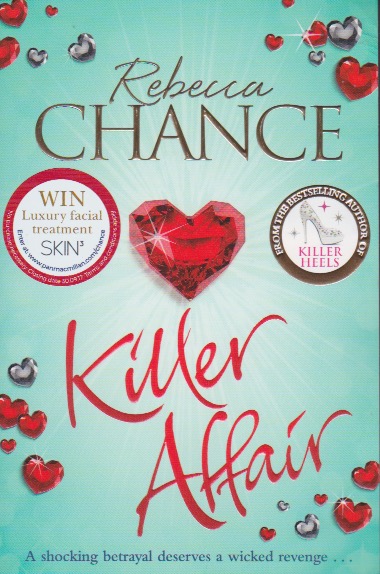
Rebecca Chance novels kind of defy description, to be honest. They are called ‘bonkbusters’ in her native England (where they are runaway bestsellers); some call them ‘glamorous thrillers.’ She writes about what used to be called ‘the jet set’, or ‘the beautiful people’, or the ‘rich and beautiful’; territory that used to be mined by Jackie Collins, Judith Krantz, Sidney Sheldon, Harold Robbins, and Jacqueline Susann. And while I don’t mean to demean her predecessors in the field, who were quite good at what they did and wrote yarns you simply could not put down, Chance’s novels are different; in that they combine sharp social commentary, wit (at times, they are laugh out loud funny), and characters that you can’t help but like and identify with.

Her latest, Killer Affair, is no exception.

killer affair

It was an ocean liner come to rest in the heart of London, its glittering, prow-shaped facade jutting towards the Thames. From its terraces and balconies, the view was unparalleled: the beautiful curve of the Playhouse Theatre with its glowing lights, the flow of boats along the wide river, the sprawl of the South Bank beyond, London’s bounty spread like a fabulous offering of endless possibilities to the gilded, privileged guests who occupied the penthouse suites.

However, the young woman who was climbing out of the black cab outside the hotel entrance in Whitehall was in no mood for relaxing on a private balcony with a glass of champagne, resting her arms on the rail, gazing down over the glittering city as she made plans for that evening. Her jaw was set determinedly, her eyes hard. The liveried doorman, reaching into the can for her two suitcases, asked if she was a guest at the hotel, to which she responded curtly that no, she had a booking at the spa and needed to check her luggage.

If the doorman thought it was strange for a day spa visitor to arrive with a pair of large, battered suitcases, there was not a hint of that reaction on his face; his demeanour remained entirely polite and neutral as he carried them inside.

And so begins the latest Rebecca Chance novel–who is this woman, and what is she doing at the spa? The prologue ends with her discovering her target–another woman with whom she is angry–and dumping ice all over her recumbent figure as she spits out angrily, “You bitch! You’ve ruined my life!” (With hints of Shirley Conran’s brilliant, memorable opening to her novel, Lace: “Which one of you bitches is my mother?”)

The book then flashes back to the beginning of the story; how the two women met and became involved with each other’s lives. One of them is Lexy O’Brien, a reality television superstar in the UK who quite literally and ruthlessly climbed to the top of the pile of reality stars by carefully planning her every move, maximizing every bit of publicity she could gather, and is now quite happily married to a sexy former footballer who now is a TV commentator. The two live with their two children and various staff in a beautiful mansion in Sandbank, one of the most expensive places to buy property in the world, and Lexy is planning her next assault on the tabloids/entertainment journalism: writing a memoir. Of course, Lexy isn’t going to write it herself but needs a ghostwriter, which is where young, chubby Caroline comes in. Caroline works writing press releases and also writes a blog, shares a flat with four other broke young people, and dreams of becoming a successful novelist. She is quite dazzled at first by Lexy and her life; Lexy, while immensely narcissistic and self-absorbed (two vitally necessary personality traits for any reality star) is not a bad person–she just sees everyone around her as tools for her stardom and vehicles for publicity. She is actually quite generous with the bedazzled Caroline, and the young woman is grateful at first…but the more she writes, the less dazzled by Lexy she is…and the little nickname Lexy gives her at first–“Ghost Mouse”–begins to rankle…especially as Caroline, by being quiet, listening, and paying attention, learns a lot more than Lexy could ever imagine. And soon, she begins to not just envy Lexy her life, but to believe Lexy doesn’t deserve it.

To tell anymore would spoil the twisty, clever and wickedly funny plot (although it has strong elements of All About Eve), and despite all appearances to the contrary, neither Lexy nor Caroline is a villain. Chance, as always, has created three dimensional characters, strong women with good and bad sides, whose behavioral motivations make complete sense–and her keen insights into reality television, writing and publishing, and how intricate and delicate relationships between friends, family, and lovers can be, make the book completely un-put-down-able. I deeply resented having to put the book aside to work on my own writing, or go to work, or to go to bed. Yesterday I sat down in my easy chair to read for an hour before doing my own writing–and seven hours later put the book down with an enormously satisfied sigh.

Americans, you can either order the book from Amazon.co.uk; the Book Depository; or from Murder by the Book in Houston. It’s soooooo worth it, believe me.