Work at home Friday (gotta get down it’s Friday) and I slept a little later than I thought I would; Sparky didn’t even try to wake me up at the usual time (how does he know?) but there you have it. I feel good and rested this morning, and I have errands to run this morning before my work-at-home chores this afternoon. I have to take Paul to some appointments and since I’m already out, might as well run my own while I’m at it, right? I am going to get a new desk chair today; this one is incredibly old–I bought it when we moved back in here after Katrina from the carriage house–and Skittle is the one who ripped it to shreds, and he’s been gone since 2010, so yeah, I am overdue for a new one. It always sinks, too, so I sit too low at the computer.
I hope everyone still in Helene’s path are sheltering safely, and those over whom it has already passed are okay. She’s turned out to be quite the bitch. I worry about the flooding, which looks to be horrific. Although all this rain water and swollen flooding rivers will help deter this year’s salt intrusion up the river, which isn’t a bad thing.
I had a pretty decent day, but by the time I got home from work last night I was feeling a little brain fatigue. I worked a bit on the Scotty Bible last night (got Garden District Gothic entered, leaving only a few left to go, including Jackson Square Jazz), and went ahead and rewatched the first two episodes of Monsters, and within the context of the rest of the series, they aren’t as bad as I originally thought they were. I’m still not sure whose perspective that first episode was supposed to be from, but I think it’s the American public’s, and the second was the cops’. It is really interesting how much thinking I’ve done about this show, and there’s some interesting commentary, methinks, that I should be able to write and talk about. I want to start watching Grotesquerie tonight (love me some Niecy Nash-Betts) after Paul gets home, and I also want to get some cleaning done today. I have to launder the bed linens, and there’s still a sink filled with dishes to wash. Heavy sigh. But I was thinking last night I might put the film of the Eras tour on again while I am working around the house today; I do love me some Taylor Swift, and I was thinking I am not as familiar with her newer stuff as I am her older stuff (which I still love and has never gotten old to me), and I enjoyed the concert film, so why not watch it again?
The LSU game tomorrow night is being broadcast on the SEC Network, so I can watch it if I so desire, but it’s also on at the same time as Georgia-Alabama, which is what I will probably end up watching. The Saints game is at noon on Sunday, and we’re playing the hated Falcons, so I am going to have to plan my Sunday around that. I am not sure of the college football schedule for tomorrow, but I should try to do any remaining errands tomorrow morning before the games start. A quick glance over the schedule really doesn’t show anything I absolutely must watch, so I am hopeful I won’t go into a football coma and get sucked into watching games I don’t care about all day. Que sera, sera.
I am going to be taking Jordan Harper’s Everybody Knows with me on this morning’s Paul’s appointments tour of the city, and I also hope to finish reading it this weekend before diving into my October Horror reading, starting with a reread of We Have Always Lived in the Castle and Gabino Iglesias’ new book. I’d like to get through several horror novels this coming month, but I also am not sure how that would look. I am going to have to go up to Kentucky later in the month–LSU’s bye weekend is looking pretty good for that trip–and I should be able to get a lot of reading done while I am up there. Also, I can listen to books in the car. I am probably going to meet Dad in Alabama for the weekend weekend after next (the Mississippi game), and then go up to Kentucky a week or so later for a longer visit. It’ll be cold up there (of course), but it’s been a hot minute so I’ll probably drive up on a Saturday and back on Sunday.
And on that note, I am bringing this to a close so I can get cleaned up and do some other things this morning. Have a lovely Friday, and please please please stay safe if you’re in the path of Helene.
Thursday, and my last day in the office for the week, which I’m not going to cheer about but I am starting to feel it. I haven’t had a full week of work in what seems like forever, between Labor Day and the hurricane and all. This week is the reset week, when you have to get re-oriented and back into the normal flow of life. I think I’m there; I wrote again this week, and I also worked on the Scotty Bible. I didn’t write anything last night, but I typed up the notes from three volumes. Left to go are Jackson Square Jazz, Vieux Carré Voodoo, and Garden District Gothic, and I also have to go through the last two and nock pages. Then I have to organize it, as well as summarize each book and list key plot points and characters. One of the lovely things about having a lengthy backlist is you can go back and mine the old books for references and even “hmmm, could this character be interesting to bring back at this point?” Yes, I am enjoying myself, and it’s great. I ran an errand after work last night–just the mail–but I also have to stop on the way home tonight at the grocery for a small run (I am resisting the urge to splurge on jelly beans, which are my literal favorite thing right now, and I am trying to break the habit but they’re so good!!!!) and will probably take the evening off from doing anything other than chores. Paul caught up the laundry yesterday, which was a very pleasant surprise, and I am currently soaking the dishes so I can finish washing them tonight. I would love to cruise into the weekend with all of these chores already taken care of so I can lose myself in college football while correcting the manuscript so far (as well as reading it all the way through to see how repetitious and tedious it must be).
I feel good and alert this morning, which is nice, and also think I slept through the night for the first time in a while–I’ve been waking up lately in the middle of the night, but am always able to get back to sleep–and I feel rested. No telling how long that will last, of course, but–last day in the office for the week, so as long as I make it through the day–and it will be a busy one, too. That’s fine; being busy always makes the day go by faster, which is nicer than having it drag all day. We’re still catching up on appointments that were canceled last week because of the hurricane, and looking ahead to next week…well, next week isn’t quite as busy once the “oops I need to do my STI swabs” worries from Southern Decadence experiences starts to fade. Halloween, of course, is just around the corner, so we’ll have one of these periods in the two weeks following it, as well. My people are like clockwork, really.
WE got caught up on English Teacher, Bad Monkey, and Only Murders in the Building last night. There are also a lot of other shows dropping soon that look great, too; I’m interested in American Sports Story: Aaron Hernandez because that case always interested me. I’d even thought about basing a book on it, using LSU and the Saints rather than Florida and the Patriots, but I don’t know if it’s that compelling anymore, so seeing it through the eyes of a fictionalize television adaptation will help me make up my mind if it’s something I want to attempt in the future. I’d like to spend some time reading Jordan Harper’s Everyone Knows, which is wonderful, and I’d love to finish it this weekend and move on to my Halloween Horror Reading challenge for October. I want to reread an old horror favorite to prime the pump, maybe Stephen King or The Haunting of Hill House, which is overdue for a reread, or I could perhaps reread We Have Always Lived in the Castle, which I’ve not reread in a very long time. Yeah, maybe that’s what I’ll do.
There are some big college games this weekend, too. I want to wash the car this weekend and clean out the interior, which I think I might be able to do tomorrow afternoon when I finish my work-at-home duties and on the way home from picking up the mail. My messy workspace needs to be organized and cleaned this weekend, and maybe–just maybe–I’ll be able to take a box down out of the attic. I can clean all the copies of my own books out of the cabinets once there’s space for them to be stored in the attic, which will be a lovely way to free up space and reorganize the kitchen. I’d also like to get a few more chapters done before the end of the weekend and Monday rolls around again. I really do need to get into the habit of making to-do lists again…
And on that note, I am going to bring this to a close. Have a lovely Thursday, Constant Reader, and I’ll be back tomorrow morning, if not sooner; one never knows.
Thursday morning and last day in the office this week. I think I have a prescription to pick up; I neede to call and see if it’s ready or not during the day today. I was tired yesterday–I’ve been mentally weary all week for some reason–and was very happy to come straight home from work. I resisted Sparky and finished the dishes, which need to be put away tonight. It was very nice to come down to a clean kitchen with nothing on the counters and the sink empty. This kind of also puts me ahead on the weekend, too. Huzzah! I still have some filing and straightening and organizing to do around the house. The Olympics end this weekend, which means technically I can start writing again this weekend–I mean, ending a few days early on the embargo isn’t going to be the end of the world or anything, and I am kind of itching to get back to writing again. That, by the way, feels good.
I feel decent this morning, too. I’ll probably get tired at some point during the morning, and I am sure my butt will be dragging come this afternoon. I also need to get the mail today–maybe tomorrow; it depends on timing–and I do have some errands to run tomorrow. Maybe the mail can wait? Who knows? I do have a meeting tomorrow in the morning, and I made an appointment to get my labs drawn next Friday (fasting labs, and no way am I fasting all morning and not having coffee; there was nothing available for tomorrow until the time of my meeting). I feel very good about getting back on top of my health stuff, and my insurance issues are all ironed out. I have one more leftover issue from the surgery, and I hope to get that taken care of this weekend. Thank God.
In other big news, I deleted my Twitter account yesterday. I just bit the bullet, went in, and deactivated my account. I don’t care if someone else uses it because I don’t think I will ever go back there. I know, I know, I should have done it a long time ago. Being there only helps as another user to count towards advertising revenue, and I don’t want any part of that on my soul and conscience anymore. I went back and forth over the morality of being there still (friends who are only there, etc. v. being complicit with that vile company) and pondered the hypocrisy of that, while keeping my newsletter on Substack1 and actively working to build an audience there. It wound up not being that difficult of a decision, really; I realized that the only times this week I’ve been tense or irritated has been because of Twitter and morally bankrupt people there, so it’s clearly not good for my mental health. I deleted it for my own well-being in the end, but making it about ‘taking an ethical stand’ is verifiably false. I don’t like getting credit for something I don’t deserve, and there was nothing noble about deleting my account other than self-preservation. I don’t even know why I went there in the first place, to be honest. I’ve never really gotten much joy out of being there, and what joy I managed to find there didn’t make up for the absolute horror of being there. I was never targeted or swarmed, it was never anything like that…but what is allowed there under the guise of “free speech” (and they decide what is protected and what is not, with a heavy thumb down on the scale on the side of being fascist or enabling it) is horrific and shameful and disgusting.
I did enjoy removing the app from my phone, though. It was almost as satisfying as slamming down the phone receiver used to be.
We’re also still in a boil water advisory, and today’s “feels like” is going to be 110. Woo-hoo! But it’s August, what can I expect or what more can I want? This weekend is also the Red Dress Run (which is how Garden District Gothic opens, or was it a different Scotty? Sigh), and there are some other things going on around town as always–Dirty Linen in the Quarter (it’s the Quarter’s version of White Linen Night, and I really should write about both) and there’s a Drew Brees pickleball tournament (I’m not really sure what pickleball is, to be honest, and not sure that I want to, either), too. Sounds like a good weekend to stay home to me, doesn’t it? It’s going to also be horrifically and horribly hot, too.
And on that note, I am heading down into the spice mines. Have a lovely Thursday, Constant Reader, and I’ll most likely be back at some point later.
Greg Louganis, seen here in his Olympic debut in Montreal as a teenager, winning the silver medal. I was enchanted by his incredible physical beauty.
Two people I really respect in this business are still at Substack, and since they have better ethics than me and are, in general, much better humans than I am, I will defer to their judgment in this case. ↩︎
So, Greg, you have a book coming out from a new press in October, and the main character is a drag queen? What the actual hell?
Well, therein lies a tale.
I never thought I would write about a drag queen, in all honesty. It’s not that I’m opposed to drag or anything like that; drag has always been an important part of gay culture (I really wish someone would do a history of drag that’s not academic in tone and therefore accessible to everyone without a PhD) and I’ve always appreciated it as an art form. Yes, some queens are better at it than others, and there are some who are just really tragic…but I admire and respect every single one of them who puts on the dress and wig and heels and make-up and goes out there to perform. My own anxiety manifests itself whenever I have to perform or speak in public (although I managed to successfully control it and get through Boucheron panels swimmingly; I don’t think my stage fright is a thing of the past yet but I’m getting better); I can’t imagine the courage it takes to do drag that first time.
I also never considered doing drag because of my vanity–I wouldn’t look pretty in drag and I would want to be pretty. Shallow, party of one, your table is ready. I’ve seen many performances over the year and even have friends who do it, but my primary interest in drag has always primarily been in it as an art form and political statement critiquing gender roles, masculinity, and femininity; and it holds a very important place in queer culture. I once did drag, for a Showgirls-themed birthday party–I looked like Stockard Channing, which isn’t a bad thing–but it was more of a costume than a real attempt at doing drag. My friend Mark always wanted to make me up for Halloween or Fat Tuesday as Joan Crawford–it was the shoulders, the eyebrows, the narrow hips, and the shape of my face more than any striking resemblance to Ms. Crawford, I think–and while I was interested in being transformed into Ms. Crawford, one of the things I hated the most about doing plays in high school was the make-up. I hated having that shit all over my face, and it never did what it was supposed to in the first place (I inevitably always played old men, so they had to try to age me, and it’s not like we had make-up artists who knew what they were doing in high school.). And the padding? The wig? The dress? Not to mention the lack of pockets and the difficulty in using the bathroom– yeah, not for me. Drag does show up in my work sometimes–not very often–and the most fun thing for me about that is coming up with drag names for the characters. I know I’ve used Floretta Flynn a number of times, to the point where in my New Orleans universe she’s probably one of the bigger and most successful queens in New Orleans. Two of the biggest names in drag came from New Orleans–Varla Jean Merman and Bianca del Rio are both from here. We used to go to Drag Bingo hosted by Bianca and Blanche Debris at Oz on Sundays before she left for New York after Katrina–and Bianca was just as funny and just as big of a bitch then as she is now. She always drew crowds, and of course I met her a few times out of drag (I am quite sure Roy doesn’t remember me).
And believe me, I was very careful not to attract her attention while she was holding a microphone.
I also once wrote a short story that opened with one character saying in the Clover Grill, “You sure see a lot of tragic drag in this town at four a.m.”
Paul and I also were fans of RuPaul’s Drag Race for awhile, too–but like Project Runway, we stopped watching one season when it was obvious that it wasn’t being judged fairly (it was fucking blatantly obvious) and that was it for us. Don’t serve me competition reality when the competition is obviously rigged for a particular competitor. I do love some of the queens we did watch on there–it’s been amazing watching Jinkx Monsoon’s star take flight–and I always liked Tatianna, and just to name a few–Ben de la Creme, Adore Delano, and Manila Luzon are all fabulous. Paul follows a lot of them on Youtube, and of course I do enjoy Trixie and Katya’s We Like to Watch on Netflix.
And naturally, we love Bianca because she’s a New Orleans queen.
But it never crossed my mind to write about one as a main character. It wasn’t my milieu, so to speak (and just typing that made me want to bang my head on my desk. Take risks! I should always take risks in my work!), and so while every once in a while I’d think “maybe I should write a drag queen into this story”, I never did.
Last summer, I am not exactly sure when (2022 was pretty much a blur of misery), I got an email with a request for a ZOOM meeting with two very dear friends, along with another friend of theirs I may have met once over twenty years ago, James Conrad. He wrote Making Love to the Minor Poets of Chicago back in the days when I was a reviewer/worked for Lambda Book Report, and the purpose of the call was they wanted to talk about a possible project for me. You know me, I am always up for a new project and a new possibility…so you can imagine my surprise to find out what they wanted was for me to write a cozy with a drag queen main character. James owns and operates the Golden Notebook bookstore in Woodstock, and decided to start a publishing company through the store and wanted this to be their first venture into crime. I pointed out that I a) knew next to nothing about drag and b) I’m not really a cozy writer (the Scotty series can be classified that way except for a lot of cozy rule-breaking; and yes, I did write A Streetcar Named Murder, which wasn’t out yet and I wasn’t sure if it was even any good), they pointed out that I am a writer who can write anything (this is true, but there are some things I can’t and won’t ever write–and yes, as I typed that I was thinking there you go limiting yourself again–maybe those are the things you should be trying to take on), and then I also remembered a few things–some of my co-workers at the day job do drag, and in fact, my former supervisor had attend a “drag school” here locally, started by a queen who’d retired here from San Francisco after a lengthy and successful career in drag; Paul even knows the queen who runs it. I sent James an early electronic uncorrected proof of Streetcar, so he could get an idea of my writing style, and waited to hear back.
While waiting, I asked some of my co-workers if they’d be okay with me asking them questions–which of course they were more than happy to do–and the more I thought about it, the more it made sense for me to approach this in the same way I approached writing Streetcar–I knew nothing about antiques, so I made my character the same. So, if I am going to write about a drag queen, I needed to write her origin story first–and I decided to make her an accidental drag queen; forced to step in when a queen doesn’t show for a performance. But how would that work? I realized my character had to already know about hair and make-up, so I decided to make him a glam artist, hired to do make-up for women on special occasions and styling them. How did he wind up doing glam? His grandmother, who was from New Orleans, used to have her own Uptown beauty shop on Magazine Street that was frequented by upper class New Orleans women, who would also hire her for special occasions to style them. He spent his childhood summers in New Orleans; his grandmother was the only family member who had no problem with his sexuality, and she taught him all about hair and make-up (and classic Hollywood). He went to cosmetology school instead of college (his grandmother paid for it) and he worked in a high-end salon in Dallas until his grandmother died, leaving him the house and most of her money.
I also had a great idea for the opening, which I quickly wrote up and James liked it…and so we moved forward with the plans for it. I had a Scotty book under contract, and I knew I could juggle the two and get them both done on time.
Of course, I didn’t realize how much work it would be to turn MWA over to my successor, I didn’t know Mom was going to go into the final decline ending with her death during this time, and….well, hindsight is twenty-twenty, isn’t it?
“I don’t know, Jem,” Lauralee Dorgenois said, frowning and raising a perfectly plucked eyebrow as she looked back over her shoulder into the three-way mirror set-up in her dressing room. “You’re sure that this dress doesn’t make my butt look big?”
Okay, I’m going to take a sidebar right here to give y’all some free-of-charge advice that is more than worth its weight in gold. There is only one correct answer to be given without pause or hesitation any time a woman asks you if something she is wearing makes her butt look big: “No.”
You always, always,ALWAYSsay no.
If that is, in fact, a lie—you say “I don’t know if that cut drapes right” or “I don’t like what that color does to your skin”.
There are literally a thousand other options besides making the incredibly foolish mistake of saying ‘yes’ or the seemingly safe, non-comital ‘maybe.’ Marriages, engagements, friendships, and relationships have all ended over this question being answered incorrectly—and no, it’s not a trap question. Women are bombarded from childhood with images of what they are supposed to look like and what they are supposed to wear. They are taught to fear fat cells and fatty foods, spend millions on diets and gym memberships and personal trainers. They are gaslit into thinking that being any size larger than zero and not having big firm breasts and not having a wrinkle-free face aglow with the dewiness of youth means they are doomed to grow old alone and unloved. So, they try to fight aging—and the fear of being traded in for a younger model—by having poison injected into their faces, excess skin surgically removed, and their hair constantly colored and touched up. Centuries of societal and systemic misogyny, of telling women they don’t measure up, echo in those sad, simple words: does it make my butt look big?
My heart breaks a little every time I hear them.
However, I get paid to make them look good. My opinion must be honest, but I still need to be delicate. Why be hurtful when you don’t have to be?
I tilted my head to one side and brought my eyebrows together as I looked her up and down yet again. “You’re curvy, Lauralee,” I replied finally, fluffing the peacock feathers on her shoulders to spread them out further. It was true. Lauralee was about five seven, and maybe could stand to lose a pound here and there. Her hourglass figure had thickened a slight bit once she hit forty, but it was barely noticeable. I’d picked out a green silk dress for her because the color made her green eyes sparkle like emeralds. It clung perfectly to her hips and was cut low in the front to shove off the ample bosom, highlighted by an emerald pendant handing from a gold chain just above the cleavage. I’d braided her long auburn hair into a French braid that dropped about half-way down her back. I’d woven some extra pieces of auburn into the braid to make it thicker. “And there’s nothing wrong with that, you know. We’d put Marilyn Monroe on a diet today.”
Several years ago, I tried writing a third series set in New Orleans with a gay male protagonist. It was a character I had already created; he showed up in a couple of Scotty books: true crime writer Jerry Channing, who’d gotten rich on a true crime novel about a child murder case in the Garden District in the 1990’s called Garden District Gothic, (which also became a Scotty title when he and the boys got sucked into that ancient cold case) and wound up solving it. I had wanted to write a fictional story based on the very real Jeff Davis Eight murders, and thought who better to center in the story than a true crime writer researching the case for an article or perhaps even a follow-up book than Jerry Channing? But as I started developing the character out from the sketchy details provided in earlier Scotty books, I suddenly realized what I was actually doing was combining Chanse and Scotty into a single person, so I shelved the story–or at least, the new series, because if all I was going to do was just merge two previous characters into one, there was no point in bothering. I had then gone on to create a new series with a straight woman as the main character (A Streetcar Named Murder), and I was determined that, with this new potential series set in New Orleans, the last thing I needed was to just rip-off previous characters.
So meet Jem Richard, twenty-something glam artist and New Orleans home owner. Jem lives in the 7th Ward (not far from my day job office, actually; over on St. Roch Avenue between Claiborne and St. Claude), and the house flooded during Katrina–Jem remembers coming down with his family to help work on the house for his grandmother, Mee Maw of sainted memory–and I gave him a pole-dancing roommate who also works at Crescent Care. (Another Easter egg is the book opens with Jem being enormously disappointed to be ghosted by someone with whom he had several dates –a Tulane grad named Tradd. Bury Me in Shadows readers may remember Tradd as the asshole who broke up with Jake and sent him into the alcohol/drug spiral that landed him in the hospital when that story opens. I also want to use Tradd again somewhere else…but that is indeed a tale for another time.) Jem does well for himself, but has no health insurance and never is guaranteed work–but he also really doesn’t want to go back to working in a salon again, either. (He also sometimes books gigs with film, theater and television companies.) He’s kind of a lost soul, not really sure what he wants or what he wants to do with the rest of his life–but he also is lucky: he owns his own home, for one, and has several marketable skills. He kind of feels like he’s been spinning his wheels and not getting anywhere since coming to live in New Orleans. Jem has considered doing drag before–he’s very into costuming, and has won the Bourbon Street Award for Best Drag Costume on Fat Tuesday the previous two Carnivals–but he (like me) is haunted by stage fright. He did a play while in high school and the stage fright was such a horrible experience he gave up his dream of being a performer and started working as the make-up and hair person for the school productions.
So, when he’s hired to be a back-up glam artist for a fashion show at Designs by Marigny, only to find out the models were drag queens. A little taken aback, he rolls with the challenge, and when one doesn’t show, Jem gets pressed into service (he can fit into the dress). The show is being managed by the same person who runs the local drag school–a sweetheart named Ellis, whose drag name is Mary Queen of THOTS. Jem has a bad history with Marigny the fashion designer–she’d hired him todo the make-up for a previous show, and her check bounced–so the friend who recruited him to do the show makes sure he gets paid in advance. Of course, since the models are drag queens, the show attracts anti-drag protestors–there’s a suspicion that the designer, Marigny, deliberately used queens hoping to attract a protest and more publicity. Throughout the course of the evening Jem overhears Marigny arguing with several different people, and the next morning wakes up to the news she’s been murdered–and somehow Jem is not only a suspect but he’s also a target.
But why?
Jem also has a black cat named Shade.
As I said, while it had never occurred to me previously to write a drag queen character, the more I thought about it, the more I wanted to do so. Drag queens are currently under attack by the forces of bigoted evil. Part of this comes from the right-wing demonization of transwomen, spear-headed by hateful bigoted lying trash like Libs of TikTok (if you’ve ever retweeted the Axis Sally of the Proud Boys, know that’s why I blocked you and we will never, ever be friends again) and Moms for Liberty, who are both so fucking ignorant and clouded with hate that they think drag queens and transwomen are the same thing. The idea that children need to be protected from drag queens at all costs because it’s somehow sexualizing them is disgusting and ignorant and offensive on its face; merely rephrasing Anita Bryant’s vile claim that queers need to recruit children, i.e. all queers are pedophiles. They prove they’re liars on a daily basis and that it really has nothing to do with “concern” for children and everything to do with bigotry and hatred, because they never go after religious organizations, youth pastors, Boy Scout troop leaders, and Republicans–you know, the ones who are being convicted of child rape and child porn on a regular, almost daily basis –but only the queers are their primary concern. First off, not all drag queens are transwomen and not all transwomen were drag queens. Yes, some transpeople start their transition by doing drag, to get a better idea of whether or not they are more comfortable as a woman than as a man. I work with a lot of transpeople, and have for quite some time. I’ve witnessed people transition and evolve, and I’ve also seen the change in demeanor, confidence, and emotional well-being when they do.
What better way for a writer to fight back against ignorance than writing about it? And I loved the deliciousness of fighting homophobic and transphobic bigotry by writing a cozy series.
Tuesday morning with dark pressing against the windows. When does this hateful Daylight Savings Time shit happen this year, anyway? The extra hour of sleep in the fall is always lovely and nice; it’s the paying it back in the spring that totally sucks. Ah, well. I slept well last night and feel fairly wide awake (I actually wrote wild first; wild awake sounds like it should be a thing, really) and am looking forward to another exciting day at work. I recently had my job changed a bit–I got a substantial raise and a new job description, that I have to sign today at the office–and the new stuff goes into effect with the start of the new pay period on Friday. It was very nice–it was the meeting I had yesterday–to have years of dedication to my employer acknowledged and appreciated (I knew I was appreciated, but it’s nice to get financial and employee level recognition as well). It will help me get these bills paid off faster as well, which is kind of nice. I’ve not made enough progress on that front as I would like this year, but it looks like I’ll get further ahead by the end of the year.
I also wrote about 1677 words yesterday; the first work on the Scotty book in weeks, and yes, it was literally along the lines of pulling teeth. The gears had rusted and were most definitely creaking as I tried to get them moving yesterday. It wasn’t easy, but I am hoping that getting started will help grease the wheels somewhat and will help me get more done, bit by bit, day by day, until it is finally finished. I always, every time, forget that things don’t have to be perfect the first time through–even though time is running out already–and I am trying to not to let the impending deadline make me crazy.
We watched a few more episodes of Your Honor last night, which completely changed course and direction in a completely unexpected way in last night’s two episodes; I’m not really sure what is going on with the show–it’s almost like they took on a new show-runner and writers after episode 4. It was a significant change in tone and direction, and a new character was added out of nowhere in a weird transitional method of getting to the new direction/new story. It’s clever enough–although we did have to laugh because (and yes, it’s a New Orleans thing) that he was trying to drop off the extortion/blackmail money during the Red Dress Run, which is always on a Saturday in August which means it’s hellish outside, temperature wise…but on the show, it was clearly a weekday for some reason because he went to the bank first to remove the money, and no one was hot or sweating and it looked kind of chilly out, to be honest. (For the record, I put the Red Dress Run into Garden District Gothic as the opening sequence; Scotty taking Taylor to his first Red Dress Run.) But it’s entertaining enough, and yes, I am aware how snooty we who live here are about shows and movies set and filmed here but not in a bad way; I personally just get amused by the bizarre geography they use for them. But like I said yesterday, it’s about shots that reflect New Orleans to the viewers, and to do that sometimes you have to create a new geography that makes no sense to us, but works for everyone else.
There has been an endless on-going thing on social media over the last few days about Billy Eichner’s tweets about his disappointment in his new film Bros not performing as well at the box office as he had hoped and the studio had projected; basically, it boiled to him saying straight people didn’t show up for a gay movie. I get his frustration as a queer artist; queer authors could all easily say we would be more successful if straight readers bought our books, too; it’s not like a lot of straights show up for us, either. But…I don’t know how true that is. I don’t know who reads my books or who my core audience is; I assume it’s gay men, with a smattering of lesbians and straight women thrown in for good measure, based on social media interactions and responses to my blog posts. (And yes, I know I am being heterophobic in assuming there are very few, if any, straight male readers of my work. I am okay with this completely because I really don’t write with straight men in mind, to be honest.) Again, I get the disappointment–and some people on Twitter do miss the point entirely; Bros was the first major studio film release about gay men starring gay men and employing almost entirely queer people behind the scenes, which does make the movie groundbreaking in some ways (bringing up the success of other gay films from big studios is an apples to oranges thing; since most of those were straight written, straight produced and starred straight people in a queer film targeting to straight people). So, yeah, I get why Billy Eichner is disappointed…I don’t know that I would have taken the disappointment to social media, though. (Oh, I know the answer to that, who am I fooling? You never take disappointment to social media unless you enjoy feeling like a carcass being picked apart by vultures.) I’m not a particular fan of his; as someone whose persona also is drily funny sarcastic bitch, he always seems angry to me, and anger makes me uncomfortable rather than amused. I’ll watch the movie when it’s streaming, but I do think the lower box office than predicted might have to do with people not being comfortable going back to a movie theater just yet; and while I recognize this as an assumption, I feel pretty safe in concluding that the Venn diagram of people who would tend (or be interested potentially) to see a gay rom-com in the theater and those who are still taking COVID precautions seriously is pretty much one big circle, you know? I think Fire Island did really well for Hulu over the summer, and we don’t know that Bros is a flop yet, either. I don’t see the underperformance of Bros as necessarily the death knell of queer cinema from the major studios, either; yes, it won’t help the next film get produced but I don’t think it will stop the next one from being produced. And for the last time, it’s impossible for any queer film to represent every queer experience in the world because every queer person has a different experience. No one film (or television show, for that matter) can adequately represent the entire community, and we need to get past that kind of thinking–was Who’s Afraid of Virginia Woolf? representative of all straight married couples?
I don’t know why we hold queer films (and television series, for that matter) to higher standards than we do straight films and series, but probably because there are fewer of them, and less still that are written, produced and star actual queer people. My usual issues with queer film isn’t that they aren’t representative, but mainly because they just aren’t very good (the few that are good are quite marvelous, actually–I will always hold that the best gay movie is Beautiful Thing)…but that’s a discussion for another time.
And on that note, I am going to head into the spice mines. Have a lovely Tuesday, Constant Reader!
Oh, Scotty VII, what an interesting path you took to publication.
Back when ebooks and Kindles first started to be a thing, they rather revolutionized publishing. This new technology rang the death knell on some independent book stores as well as some small presses, and it was considered the great equalizer: you no longer needed to follow the long-established path to publication that went writer/agent/publisher; and just having an agent was no guarantee your book would ever see print and if it did, that it would sell. You no longer needed a publisher to put your book out and get it to readers; all you needed to do was get a cover designed and format your manuscript and upload it. This excited a lot of people; I was one of them, but still approached the entire thing very cautiously. I have never had a problem with people who elect to self-publish their work rather than follow the traditional path; I certainly never followed the traditional path or ran my career the way I was supposed to, at least according to almost every author I knew.
But ultimately, for me, the ebook revolution and becoming a publisher/author hybrid seemed not only like a risk but a time-consuming one. I didn’t have the time available to market the books I was traditionally publishing the way I should, let alone having the time to have to do all the marketing myself.
But I was curious, and remained open-minded. A friend started her own company and wanted me to write some things for her–short, more like novellas than novels–and since I’d always wanted to spin Paige off into her own series (despite being concerned about writing a mainstream type book from a woman’s perspective) and so I thought, well, here’s a chance to try something new and different. I wound up writing two of these and was partly through a third when I began to realize that even with an independent publisher doing some of the work, I just didn’t have the time or money or incentive to work any harder at marketing these books than I already was–and they needed more attention and promotion than I was able to give them, so we decided to end the business relationship, the already done books came down from sales sites, and that was the end of that.
I did eventually slap up Bourbon Street Blues as an ebook on Amazon, and it’s done okay for me; I’ve not promoted it at all but copies sell every month–but I am not getting rich, either. I also have a longer short story up as an e-original (but it’s also in my print collection Survivor’s Guilt and Other Stories) and yes, I know I need to get Jackson Square Jazz up (one of these days), and perhaps when I’ve retired and have more time, I’ll explore the self-publishing option again just for the hell of it.
But there I was, with a partially completed manuscript and it was a very fun story; I hated wasting it (it was called The Mad Catter), and so, with a little bit of tweaking, I turned it into the seventh Scotty book, and renamed it Garden District Gothic.
I really love the cover Bold Strokes gave me for it, too:
You know you live in New Orleans when you leave your house on a hot Saturday morning in August for drinks wearing a red dress.
It was well over ninety degrees, and the humidity had tipped the heat index up to about 110, maybe 105 in the shade. The hordes of men and women in red dresses were waving handheld fans furiously as sweat ran down their bodies. Everywhere you looked, there were crowds of people in red, sweating but somehow, despite the ridiculous heat, having a good time. I could feel the heat from the pavement through my red-and-white saddle shoes and was glad I’d decided wearing hose would be a bad idea. The thick red socks I was wearing were hot enough, thank you, and were soaked through. They were new, so were probably dying my ankles, calves, and feet pink. But it was for charity, I kept reminding myself as I greeted friends and people whose names I couldn’t remember but whose faces looked familiar as we worked our way up and down and around the Quarter.
Finally, I had enough around noon and decided to call it a day.
“I don’t think I’ve ever been so hot in my life, and I grew up in Alabama,” my sort of nephew, Taylor Wheeler, said in his soft accent, wiping sweat from his forehead as we trudged down Governor Nicholls Street on our way home.
“It hasn’t been this hot in a while,” I replied, trying really hard not to laugh. I’d been forcing down giggles pretty much all day since he came galloping down the back steps the way he always does and I got my first look at his outfit. “But the last few summers have been mild—this is normal for August, usually.” It was true—everyone in town was complaining about the heat like it was something unusual, but we hadn’t had our usual hellish summer weather in a couple of years.
Last summer had been not only mild but dry, with little humidity and practically no rain—which was unheard of. Usually it rains every day around three in the summer, when the humidity has gotten so thick it turns to rain.
“I don’t even want to think about how much sweat is in my butt crack,” he complained, furiously waving the fan he’d picked up somewhere, trying to create a breeze.
I gave up trying to fight it and just gave in to the laughter.
One of the primary problems of turning The Mad Catter into Garden District Gothic was that the book was intended originally to be a sequel to a pair of books that no longer existed; vanished forever into the ether. I had established a character in earlier books of the series who was supposed to take front and center in this one, but I no longer had the back story and was facing the issue of how do I introduce this woman into Scotty’s world? And it was important, because the case involved a long ago murder that took place in this woman’s Garden District mansion–she didn’t own it at the time; she bought it from the original family that owned it, and owned it at the time of the unsolved murder–but I decided the easiest way to do this was make the woman a friend of Scotty’s older sister, which is how he knew her; and she had been a member of the cast of a reality-TV show called Grande Dames of New Orleans, which had been the centering of the previous book in the now-defunct series. I always thought the Grande Dames (obviously, my version of the Real Housewives franchises) was a clever idea and a fun one to explore as well as poke fun at in a fictional setting, and I hated wasting in a series that no one could access anymore. So I decided to keep Serena, and mention that she was in the cast of the new show which hadn’t started filming yet, and she had bought this big house as a centerpiece for her to be filmed in from the show, giving up her luxurious condo in One River Place. (This also gave me the opening to center the next Scotty book in the Grande Dames show.) The party that now opened the book was a housewarming party, so Serena could show off her new manse with the checkered past.
I had also created a character in the Paige series to serve as a kind of nemesis for her, a true crime writer named Jerry Channing, whom eventually I used as the impetus for getting the plot started in The Orion Mask. Jerry became rich and famous writing a book about the infamous, unsolved murder called Garden District Gothic, which in the Paige series seemed like a Scotty title to me, and I used it as a wink to those who were familiar with the Scotty series…and so, in writing about Scotty and the gang solving this old notorious murder, why wouldn’t I call the book Garden District Gothic, since it really is a Scotty title after all?
The murder was, of course, based on the Jon-Benet Ramsey murder that dominated the media and culture for so long back in the day. I just took the set-up of the story from that real-life case and started making up my own characters and backstories for them and went with it from there. The one thing that always bothered me the most about the case was the fact that people viewed the Ramsey family as speaking to the lawyers before calling the police as suspicious; no, it’s actually smart. Sure, it made them look “guilty” in the press (with all those headlines in the tabloids screaming this conclusively proves one of the family did it!!!! Who calls their lawyer first??? To which I again repeat, people who are fucking smart call their lawyer first. Period.), but it was the smart thing to do; someone had the presence of mind to realize that the most obvious suspects in the murder of a child are going to be the immediate family, and why–in a distraught state of grief over your child’s brutal murder–you would need to have a lawyer present when you’re being questioned by the police so you don’t say anything that could be misconstrued as an admission of guilt when you are not in fact guilty.
Always, always, always call the lawyers first. Always. If i have learned anything from my extensive reading of true crime and study of crime fiction, it is “never talk to the cops without a lawyer, especially if you are innocent.”
I was pleased with it when I was finished with it, but I’d kind of like to revise the ending a bit.
And of course, writing it left me with the decision of whether to reuse my Grande Dames of New Orleans reality show for the next Scotty book.
As I get ready to write another Scotty book, I am busy making his acquaintance all over again. It might seem strange, but yes, although I’ve written eight books about my ex-go-go boy/personal trainer/private eye, it remains true in this as in all other aspects of my life that my memory is not what it once was; in fact, I don’t think I’ve ever written a Scotty book since the first three without having to go back and revisit the series again. I have made continuity errors over the years (Scotty’s mother’s name changed over the course of the series, from Cecile to Marguerite and back to Cecile again), and I may forget things about his past and things I’ve written in previous books, but the one thing I never ever forget is his voice.
No matter what else is going on in my life, Scotty’s voice is very easy for me to slip back into, like a house shoe, and it somehow always feels like coming home to me in some ways. This is odd–because I would have always thought Chanse was the series character I was more connected to rather than Chanse, but that’s not the case at all. Scotty just won’t go away; but I ended the Chanse series and only every once in a while do I regret it (although I am beginning to suspect that I am going to probably end up writing another Chanse novel at some point in my life; I have two ideas that he’d be perfect for, but it also might be better and more challenging for me to simply come up with a whole new character for those stories rather than resurrecting Chanse); Scotty just won’t ever go away.
The idea for the Scotty series famously came to me during Southern Decadence, 1998.
(Well, I don’t know about famously, but I know I’ve told this story before many, many times. Feel free to skip ahead if you don’t want to see how I remember the birth of the character and the series now)
It was a Sunday afternoon, and Paul and I had somehow managed to get prime balcony standing spots–at the Bourbon Pub/Parade, right at the corner of St. Ann and Bourbon where the railing curves at the corner to head alongside the upper floor down the St. Ann side; so we could look down directly into the roiling mass of sweaty, almost completely naked bodies of hundreds of gay men from all over the country. That was my favorite spot for Decadence sight-seeing (Halloween, too, for that matter), and as I looked down into the crowd, I saw a guy in booty shorts and a very very loose fitting tank top, carrying a bag and trying to get through. I recognized him as one of the out-of-town dancers working at the Pub/Parade that weekend (I may have tipped him the night before) and as I watched in sympathy as he tried to get through that tightly-packed crowd of gays in various stages of being wasted, I closed my eyes and an image of him–or someone like him–fighting his way through the Decadence crowd while being chased by bad guys with shaved heads popped into my head just as Paul said, next to me, “You should really write a story set during Decadence” and then it popped into my head: someone escaping the bad guys has slipped a computer disc into one of the dancers’ boots on Friday night as he danced on the downstairs bar, and the bad guys want the disc back.
I didn’t have any way to write it down, obviously–I was wearing booty shorts, socks, and half-boots that came to my ankles, with nothing underneath the shorts and I had my tank top tucked through a belt loop like a tail in the back–yet even the title popped into my head: Bourbon Street Blues. The idea clearly stuck, because when I got home the next morning at about six or seven, dehydrated, drenched in sweat and having lost the tank top at some point during the night, I remembered it and wrote it down.
At some point over the next two years, I wrote a short story called “Bourbon Street Blues” about my stripper–only instead of being from out of town, I made him a local, filling in for someone booked from out of town for the weekend who had to cancel–and wrote about seven thousand words. It felt very rushed to me–the story–and I kept thinking it’s too long for a short story, it would have to be a novel but I also wasn’t sure there was enough story there for a novel. But I liked the idea, no one (at least, to the best of my knowledge) had written anything like it, and I thought, someday I’ll get a chance to write this story and develop this character.
Flash forward to 2001. This was during the time Paul and I had moved to DC to work for the Lambda Literary Foundation, we were miserable there and wanted to move back to New Orleans but didn’t have the money to do so, and the release of Murder in the Rue Dauphine was still at least a year away. I was talking to an editor on the phone about one of his new gay releases, and out of the blue I just pitched Bourbon Street Blues to him. He loved the idea, and asked me to write a proposal and email it to him. I had never written a proposal before, but I thought what the hell, how hard can it be? and so I wrote a two page proposal for the book. Two months later they made me a two-book offer–and the money was good enough to pay for Paul and I to move back to New Orleans as well as to live on for a while. I had only seen the book as a one-off, but they wanted a series. I needed and wanted the money, so I thought I can figure this out later and signed it.
Three months later, we moved back to New Orleans and I started writing the book.
The original cover is on the left.*
The one thing I wanted to do with Scotty was make him unabashedly, unashamedly, gay. I didn’t want him to have any hang-ups, a sad backstory, or parental issues. I wanted him to be a free spirit who embraces life with both hands, lived in the Quarter, and loved having sex, loved being found desirable, and never really said anything or thought anything mean about anyone else. I made him a personal trainer, and his poverty–he agrees to do the dancing gig for Decadence because he’s behind on his rent and other bills; he teaches aerobics and was a personal trainer–comes from his grandparents freezing his trust funds when he dropped out of college to go to work for a booking agency for male dancers. He has since stopped doing that, but fills in when needed (and when he needs the money) at the Pub/Parade. I also based the shitty politician running for governor–and trying to mount a Christofascist takeover of the state, beginning with an attack on Southern Decadence–on an actual politician who ran for the US Senate shortly after we moved here; we saw him being interviewed on the news and couldn’t believe it wasn’t a joke, some kind of performance art–but forget it Greg, it’s Louisiana.
I also want to let you know that while I was working on this manuscript my first book, Murder in the Rue Dauphine, was released–and I got a “damned with faint praise” review from the Bay Area Reporter, which complained that “it would have been nice to see inside the heads of the other characters”, which took me aback as the book was a first person narrative, which made that impossible. What the reviewer I think was trying to say was that she wished the book had been told in the third person; that to her that would have made the book more interesting to her. But in my baby-author naïveté, all I could think was how can you see inside the heads of other characters in a third person narrative unless the main character was psychic?And the proverbial lightbulb came on over my head. Make Scotty a psychic. This was also an integral key to the puzzle of who Scotty was; the reviewer also yawned over my “gay stereotypes” in Rue Dauphine, so I decided to make Scotty the embodiment of all the worst stereotypes of muscular gay men who worked out and had a lot of sex. Just writing that down now, I realize how incredibly insane it was for me to use my new series book and character to respond to criticism o my debut novel; and when the book came out I braced myself for the inevitable backlash to come.
No one was more surprised than I was at how readers embraced him. The book got great reviews, even from Publishers Weekly and Library Journal (Kirkus, of course, has always pretended I don’t exist). Bourbon Street Blues was even nominated for a Lambda Literary Award for Best Gay Mystery of 2003 (I lost, I think to John Morgan Wilson?) shortly after the sequel, Jackson Square Jazz, was released.
Jackson Square Jazz’s story was actually a recycled idea I had for a spin-off book for Chanse’s best friend Paige. The original concept was that someone would steal the Louisiana Purchase from the Cabildo–and somehow Paige stumbled onto the theft, and knew that the one on display currently there was a copy. (I was calling it, originally enough, Louisiana Purchase.) I decided to make that the basis of the second Scotty book. (This was inspired by a documentary I’d seen about the Cabildo fire of 1989–that may be the wrong date–and how the fire department tried saving everything in the museum before fighting the fire. I remembered how in the documentary they literally were placing historical objects and paintings against the fence at Jackson Square and thinking, anyone could have walked off with something during the fire…and my imagination immediately was off to the races.) Unfortunately, when I met with the museum director–whose actual first day on the job was the day of the fire–I found out that 1) the copy of the Louisiana Purchase at the Cabildo was actually only a replica and the original was stored in the weather-protected underground archive at the Library of Congress and 2) it was more than one page long–I’d imagined it was one large document like the Declaration of Independence; it is not. However–he also suggested I make the MacGuffin the Napoleon death mask–one of the three originals made when Napoleon died–and gave me some great backstory on it as well that I don’t remember if I used in the book or not; but it was a lot of fun talking to him (his name escapes me at the moment, alas) and was a great example of why it is important to actually do research and talk to people.
I also wanted to include figure skating–the working title for the book was Death Spiral, which the publisher made me change, asking for something alliterative, like Bourbon Street Blues–and so I decided to open the book with Scotty having a horrific hangover and then realizing someone was in the bed with him (it’s to this day one of my favorite book openings; what slutty gay man hasn’t been there?)…and then I remembered I’d introduced two love interests for Scotty in book one, and here he was in bed with someone else entirely. (The young man he woke up with was a figure skater in town to compete at Skate America, being held in the Smoothie King Arena.) I loved both of his love interests, and knew I was going to have to bring both of them back somehow, and then I was going to have to figure out which one he’d end up with. (Spoiler: I couldn’t decide, so he wound up with both of them.) I also threw in a ghost, a billionaire artifact collector, and pretty much everything but the kitchen sink. I turned in the book, along with a proposal for Book Three, in which I finally decided I was going to resolve the threeway relationship personal story, and that would be the end of the Scotty trilogy.
Man plans and God laughs. (Jackson Square Jazz was also nominated for a Lambda; I think this was the time I lost to Anthony Bidulka.)
Mardi Gras Mambo turned out to be an entire other kettle of fish.
I’m not entirely sure I remember exactly what the original plot of Mardi Gras Mambo was going to be, but I know it had to do with the Krewe of Iris (Scotty’s sister Rain belongs) and the book opened at the Iris parade on the Saturday morning before Fat Tuesday. It was due in June of 2004, and of course, I wasn’t nearly finished by the time Memorial Day rolled around, and was planning on asking for another month on the manuscript on the Tuesday after. Of course, that was the Memorial Day weekend when Paul was attacked and everything went to hell in my personal life. My publisher was incredibly kind; they took the book off schedule, told me to take care of Paul, and get the book done whenever I got the book done.
I started writing it again in January of 2005, shortly after I began keeping a blog in order to get me writing again. That was when the Christian/Virginia nonsense happened, and everything got derailed again. When I started writing the book again, I threw out everything except that first chapter at the Iris parade–which did wind up in the final book–and I do not recall what the second plot I chose to write was at this time, other than I knew I was bringing in a Russian character, inspired by someone I’d seen around in the bars for years and had always been just awestruck by his body–and yes, that Russian turned out to eventually be Wacky Russian, my personal trainer. I actually kept this as an inspiration–Eclipse used to be the nightlife insert for IMPACT News, a queer newspaper that died out in the early aughts:
Finally, it was April 2005, and I started writing Mardi Gras Mambo again. I had the plot all figured out–it was completely insane–but I also realized I couldn’t end the personal story with Scotty the way I had hoped and wrap it all up with Book Three. There had to be a Book 4, and so when I finished the book at last and turned it in, I included a proposal for a fourth Scotty, Hurricane Party Hustle–which was going to be set during an evacuation for a hurricane that missed New Orleans…I always thought it would be interesting to write a mystery story set during such an evacuation.
Of course, I turned the book into Kensington on August 14th, 2005. Fourteen days later, Paul, Skittle and I fled from New Orleans in the face of Hurricane Katrina.
I wouldn’t come back for good until October 11. Paul didn’t come home until after Thanksgiving.
Of course, I wrote to my editor a day or so after the levee failure to say, well, I don’t think I can write that book I proposed now.
I didn’t see, for a very long time afterwards, how I could write another Scotty book–light, funny, zany–in the aftermath of Hurricane Katrina. Then one day I was walking to work from where I’d parked my car and some people on bicycles came riding toward me. They smiled and waved and I smiled and waved back…and realized oh my God, that was Brad and Anjelina. Their house wasn’t far from my office–in fact, it was quite literally around the block from where Scotty lived–and I thought, you know, Brad kind of looks the way I describe Scotty–wouldn’t it be funny if someone tried to kill Scotty because he looked like a movie star who lived in his neighborhood? The more I thought about it, the funnier it became, and I started writing the proposal for Hollywood South Hustle when I got home from work that night. I was so certain they would take it that I started developing the characters and writing out a detailed synopsis…and they turned it down.
I wasn’t expecting that, but it was a marketing decision. Even if they signed the book immediately, it would still be another year before it would come out, and they felt by then Scotty’s audience was long gone, if it wasn’t already. It was disappointing, but right around the same time Alyson came back to me for a fourth Chanse book but they needed it right away–like within ten weeks–so I turned the Scotty story into Murder in the Rue Ursulines. I finished the book, turned it in, and figured the Scotty series was dead, alas.
Shortly thereafter, during the Gay Easter Parade an idea for a different Scotty book occurred to me . The parade was over and I was walking back to my car to drive home when I walked underneath a balcony…just as they started watering their plants. I got soaked–you can’t get mad, it happens in the Quarter periodically and it’s just one of those New Orleans things–and I thought, you really need to write about this. As I walked to the car, dripping, I pictured Scotty hurrying to catch a ride on his parents’ business’ float for the Easter Parade–and of course, he’d wear a white bikini, rabbit ears, and have a rabbit tail–when the exact same thing happened to him, only his bikini would become see-through when wet. By the time I’d driven home, I’d figured that the person on the balcony would be an old friend of his parents’, he’d invited Scotty in to dry off, and when Scotty was on his way home from the parade, the cops would be there because the friend had been murdered. Using The Moonstone as my inspiration, I came up with another MacGuffin story, a way for Colin to come back and explain everything that happened during Mardi Gras Mambo, and I had the perfect ending to Scotty’s story. I just didn’t have a publisher.
But Bold Strokes Books, a primarily lesbian publisher, had started doing books by and about gay men. I’d taken an erotica anthology to them when it was orphaned by the death of its original publisher, and so I wrote and asked if they wanted a Scotty story. They did, and thus Scotty came back to life one more time…and I figured that was the end of it. I wrapped up the personal story about the three-way relationship in a way that was organic and made sense; and I also added a new wrinkle to Scotty’s personal life: Frank’s late-in-life decision to become a professional wrestler. (One of the things we locals learned from Hurricane Katrina was to not put off following or chasing dreams or goals; my attitude thus became go for it and I started chasing down dreams I’d pushed to the side for years.) Mardi Gras Mambo and Vieux Carré Voodoo were both nominated for Lambdas, but at this point I can’t remember who I lost to in both of those cases–for the record, Lambda has never rewarded a Scotty book with an award–probably because they are inevitably funny and over-the-top, which never wins awards because funny is seen as “not serious,” despite the fact that humor/comedy is much harder than drama/tragedy.
I didn’t think I was going to write another Scotty book then, either. But then something miraculous happened: the New Orleans Saints won the Super Bowl, and I wanted to write about what it was like to live here during that incredible time. It didn’t seem like the right story for another Chanse book, so I thought, well, I can pull Scotty back out and write it from his point of view.
And of course, Who Dat Whodunnit was just sitting there for the title. How could I not write that book?
I had already established over the course of the series that the two sides of his family–the Diderots (maternal) and the Bradleys (paternal) didn’t really get along. The Diderots go back to Iberville and the 1718 settling of New Orleans; the Bradleys were Americans who came after 1803, and thus are not only parvenus to the aristocratic Diderots, but also l’Américains. Perish the thought! We’d also established that the Diderots were not nearly as conservative as their State Street living in-laws, but we’d never actually seen much of the Bradley side of the family, so I thought why not do the Bradleys and let us get to know the other side of Scotty’s family? It was around the same time I started reading about a megachurch out in Kenner (or Metairie? I don’t recall) that was rising to prominence in local politics and was, as you can imagine, homophobic. The same-sex marriage wars were also being fought at this time; and during one of those pageants (Miss America? Miss USA?) the reigning Miss California was asked about same-sex marriage during the question portion by judge Perez Hilton (why was he judging a beauty pageant for women is a mystery for the ages) and she responded that her faith had taught her that marriage was between a man and a woman (the audience started jeering) and she apologized by saying “I’m sorry, but that’s how I was raised!” She wound up as First Runner-Up, and some felt, rightly or wrongly, that her “politically incorrect” answer cost her the title. In some ways, I felt bad for her (although it’s not my fault it’s how I was raised I have always thought was an incredibly stupid thing to say; you have free will, and you should be capable of making up your own mind rather than simply parroting things without question you were raised to believe. So if your parents were racist white supremacists…) but then of course, the Right tried to turn her into a martyr and heroine, and she dove right into that headfirst, erasing any sympathy I might have felt for her (I still think the question was inappropriate for a pageant, as would be anything polarizing–and yes, well aware that same-sex marriage shouldn’t be polarizing, but here we are), and of course, Miss Upright Moral Christian had a bit of a shady past that eventually came out and that was that. I decided to base the murder victim in the book on this girl, and tried to explore the influence of this megachurch on her. I also gave Scotty a first cousin who was the darling of the Bradley grandparents because he was a jock and was on the Saints team as a player–but also a homophobic asshole. The Bradleys were like something out of Tennessee Williams–I think I even named Scotty’s uncle (the football player’s dad) Uncle Skipper as an homage to Cat on a Hot Tin Roof.
There’s a lot of story there left in the Bradley side of the family, now that I think about it–and I’ll be digging into that in the new one, rest assured!
Funny story: After I wrote Who Dat Whodunnit, I decided I was not going to write another Scotty book. This had been Book 5 of what started as a stand-alone and then became a trilogy and yet somehow, I’d kept going on top of that. I kind of felt played out a bit with Scotty, and the longer the series went on, the more problems I was having with things like character ages–Scotty was getting older, which meant his parents were getting older, which meant his grandparents were getting older, too. I didn’t want to deal with the deaths of his grandparents (or Aunt Sylvia, who was his grandmother’s age and had married Uncle Misha), and so I had two options: pretend they weren’t getting older and not talk about their ages, or let the series go. I was still writing Chanse at the time, and I kind of figured that would be the series that went on longer. But I was on a panel at Saints and Sinners and someone from the audience asked me if there would be another Scotty.
GREG: Probably not, but if I can figure out a way to include Mike the Tiger (the live tiger mascot at LSU), Huey Long, and a treasure hunt for Huey’s deduct box, I will.
(I had read T. Harry Williams’ award winning biography Huey Long and had become fascinated completely with him. All I had known about Long going into reading that biography was that he’d been a demagogue (thanks, US History textbook from high school) and Robert Penn Warren’s All the King’s Men had been loosely based on his life and career. Mention Long’s name to anyone and they immediately reply with “oh, he was so corrupt”–which amused me, since every Louisiana politician is corrupt to a degree–and I knew Roosevelt and others had worried about him as a populist politician who reminded them of Hitler (and the way he crushed his opposition in Louisiana and essentially became the state’s dictator, who could blame them?), but what was the real story? And Huey Long made me start to have what was at first a grudging admiration for him which grew into a kind of fandom the more I learned. (There are some similarities–more than one would think–between Long and LBJ in the Caro biographies, as well as with Robert Moses, another Caro biography; which would make for a very interesting comparison/contract essay at some point.) But the more I read about Long, the more I wanted to write about him. He fascinated me, and the fact that his trove of cash–the deduct box–was never recovered after his murder was even more fascinating to me.)
And don’t you know, later that night, it came to me. A few months earlier there had been a bomb threat at the LSU campus, and there had been some controversy about how the administration had handled the situation–they’d evacuated Mike the Tiger off the campus before the mass evacuation call for the students. It made sense to me (but I didn’t blame the students for being upset because it absolutely looked like the administration cared more about the tiger’s safety than the students’)–in the chaos of evacuating the campus, getting the tiger out safely would have been a nightmare, and God forbid something happen and Mike got loose. Then it hit me: what if some animal rights’ activists had staged the bomb threat in order to steal the tiger in order to set him free somewhere? (Mike is a frequent target of PETA, who often calls for him to be released into the wild–not in the US, of course–, or sent to a big cat sanctuary.) So, I had the tiger kidnapped, and since Huey Long was responsible for LSU being what it is today, it only made sense for the treasure hunt to have to do with his missing “deduct box”–Huey always used cash, after his assassination the deduct box containing thousands and thousands of dollars in cash disappeared–and there we had it: a plot involving Mike the Tiger, Huey Long, and the deduct box.
This was also the book where I decided to extend Scotty’s family a bit further by adding a new, younger gay character to the mix: Taylor, Frank’s nephew, disowned by Frank’s sister and her homophobic husband after he comes out to them after a semester in Paris, and so he comes to live with Scotty and the boys in the house on Decatur Street. I wanted to bring in someone younger, and gay, with literally hardly any gay experience in the world to reflect the change between generations of gay men and how they view being gay and the rest of the world.
I also figured this would be the last one, but like I said, Scotty just won’t go away.
SIDENOTE: I had to write to the administrators of the Huey Long website for permission to use some quotes from the site in the book. Needless to say, they were very wary of me when they responded, so I emailed them the chapter where I would use the quotes–Scotty was doing some research on Long, and came across the website. Like me, Scotty had always been told Long was corrupt and a demagogue…but demagogues also don’t get things done, which Long did. Some of Long’s programs–like the Homestead Exemption–still exist as public policy in Louisiana. They wrote me back, granting permission…and that was when I found out the person I was talking to was Long’s great-granddaughter, who was rightfully suspicious of anyone writing about her great-grandfather. I sent her a copy of the book when it was finished, and she sent me a lovely thank you card, which is probably one of my favorite writing souvenirs.
The genesis of Garden District Gothic was weird, but yet serves as yet another example of my adage never throw anything you’ve written away.
I had always wanted to spin Chanse’s best friend, journalist Paige Tourneur, off into her own series. I had always intended to do so; from the first time I thought her up for Murder in the Rue Dauphine I thought, “she’s fun and witty and interesting and that weird name–there’s so much more story there than we can get to as a supporting player in a series about someone else.” I have so much written down about Paige and her origin story; how she came up with that name and why; how she wound up at LSU; and so on and so forth. A friend started an ebook publishing company, and wanted me to write Paige novellas for her; I did two–Fashion Victim and Dead Housewives of New Orleans–but the sales, frankly, weren’t there and I didn’t have the necessary time to put in marketing them to help drive the sales, so even though I’d started a third, The Mad Catter, we agreed to kill the series and pull the first two from availability; ultimately, I was working too hard for too little pay-off. I was disappointed, obviously; Paige was kind of a passion project for me–I’d made any number of false starts writing a series book for her, and it was sad to see that there wasn’t an audience for her after all. But I had about four chapters of The Mad Catter in place, and I didn’t want to waste the time spent on them…so I decided to turn them into a Scotty book, which became Garden District Gothic.
I also brought in a new character–a true crime writer with a shady past of his own–who actually wrote a book, a la Midnight in the Garden of Good and Evil, about the case. The name of his book? Garden District Gothic. I brought him in, thinking I would spin him off into his own book/series–I thought it might be fun to write about a writer…(I thought about using him as the main character in another book based on an actual unsolved string of murders in a rural Louisiana parish, but very quickly realized he was simply an amalgamation of Scotty and Chanse, so that book–The Bodies in the Bayou–went onto the backburner. I think I may have created the character before, in the Chanse series, but I could be remembering that wrong. I also used this book to sort of set up the next; I will explain that further when I am talking about Royal Street Reveillon. I also crossed the character of Paige Tourneur over from the Chanse series into the Scotty series (I loved the character, hated to sideline her after I ended the Chanse series and the novella series didn’t pan out); not that she will be a big part of the Scotty series, but hey, every so often I need a journalist, and why not use a character I am very fond of already and wasn’t ready to stop writing about?
The book was loosely based, obviously, on the Jon-Benet Ramsey case–a decades old notorious murder of a child in the Garden District that was never solved. I wanted to examine and explore issues of class in New Orleans, but I am not entirely sure I pulled off what I intended with the book.
Then again, I think that with every book, don’t I?
And we now come to the (so far) most recent book of the Scotty series, Royal Street Reveillon.
Originally I’d envisioned the Scotty trilogy (when it morphed from a stand-alone) as encompassing the three big gay holidays in New Orleans: Southern Decadence, Halloween, and Mardi Gras. Jackson Square Jazz wound up taking place just before Halloween, alas; Scotty talks about their costumes in the epilogue, but I hit the other two holidays out of the park. When I added a fourth book, I tied it to the Gay Easter Parade–Scotty is on his way to ride on the Devil’s Weed’s float when the book opened–and then of course the next book was sort of Christmas/sort of Mardi Gras/sort of the Super Bowl. Baton Rouge Bingo was the first book that wasn’t tied to a holiday of some sort; neither was Garden District Gothic. But for the next Scotty book, I wanted to do a Christmas book. I’ve never really written much about Christmas, and I do love the season, especially in New Orleans. I wasn’t sure what kind of plot I was going to use, but I knew it was going to be set during Christmas season and I knew I wanted to use reveillon, the Christmas season meal you use to break your fast for Mass, in the title. I had introduced one of the characters from Dead Housewives of New Orleans in Garden District Gothic, so it only made sense to me (or so it seemed at the time) for me to take the framework of Dead Housewives–the entire Real Housewives spoof I wanted to write–and build this new story around it. I changed a lot–made the overarching story much more complicated, and especially complicating the “whodunnit” aspects of the three murders that all occurred within twenty-four hours of the premiere party for Grande Dames of New Orleans.
I also did a couple of horrible things to Scotty and his loved ones over the course of this book…which will have to be dealt with in the new one, alas. I hate when I do this to myself! But with Royal Street Reveillon and its darker themes, I wanted to show how much Scotty has grown and changed over the course of the series; he’s evolved as a person, partly because of the changes to his life and partly because of what he experiences through the murders he finds himself involved in. Do I wish, as I start writing Mississippi River Mischief, that maybe I hadn’t given so many growth opportunities over the years to Scotty and his gang of family and friends? Absolutely. But that’s part of the challenge of writing a series, and what makes it so much fun.
*Funny story about the original cover of Bourbon Street Blues. Back in the day, publishers used to meet with reps from Barnes & Noble and Borders to show them covers and get their input; covers were changed based on those meetings. The Bourbon Street Blues cover was so in-your-face it took me aback when I first saw it; and they had toned the original image down dramatically, mainly smoothing down the bulge so it wasn’t so in-your-face. The Barnes & Noble buyer told them, “he needs a bigger bulge” so they made it bigger–but were still cautious; the image’s original bulge was still bigger. I do think that story is hilarious.
I ran my errands–got the mail (which had a check!), swung by the Latter Library (which will be the setting for one of my new series books if it takes off) and picked up my book about obscenity trials (Dirty Works: Obscenity on Trial in America’s First Sexual Revolution) and then swung by Fresh Market to pick up some fresh fruits and vegetables and some other odds and ends. I returned home, felt pretty decent, and then spent the rest of the day cleaning and organizing and redoing the kitchen cabinets to make them feel a bit less cramped and crowded. When Paul got home from work we watched some television, finishing The Most Hated Man on the Internet (recommended), watched Uncharted with Tom Holland and Mark Wahlberg (not missing much if you skip this), and started The Sandman on Netflix, which is superb.
Today I am going to continue with some of the cleaning and organizing, but am hoping to squeeze out some time to write before sinking back into my easy chair to enjoy more of The Sandman, which is extraordinary. I read the comic series years and years ago–I have some of the hardcover collections, which I’ve always intended to go back to and reread–and loved it. I had also loved the Neil Gaiman’s books American Gods and Good Omens, but found the adaptations to leave something to be desired, so I was worried about The Sandman being well done and good. Rest assured, it is very well done; visually arresting and stunning, the story relatively easy to follow, and the casting is superb. I think I may have to take some time and go back and reread the collections I have on hand–I always like to read the source material while I am watching the adaptation–but I also want to spend some time with the Ippolito book, which I want to finish this week. I am definitely going to be working on my Scotty book this weekend; progress must be made on it sooner rather than later, else it’s going to turn into one of those nightmarish deadline scenarios and God knows I do not want to find myself in another one of those situations ever again, perish the thought. (I say that about every deadline, don’t I? I am nothing if not sort of self-aware…)
I’m also trying to decide what to cook. I’ve been wanting to make shrimp-fried rice, which requires making rice the day before (apparently it needs to be at least day-old in order to make it), and I’ve been thinking that it’s not a bad idea to cook some things today that Paul can just heat up at night for something to eat, primarily because I never feel like cooking (or rarely) on the days when I go into the office (I keep hoping that we’ll eventually go back to our old schedule so I can go back to my normal schedule, which will make my life ever so much easier to handle, mainly because insomnia won’t be such an existential threat to my well-being the way it is when I have to get up at six in the morning); it would also help to clear some things out of the refrigerator (which is something I have to deal with today–cleaning out the refrigerator) and that’s always a good thing, methinks.
I was trying to remember where I had sold stories to this year and what short stories I have coming out at some point in the near future last night, and of course, couldn’t remember some of the places I had sold stories–which is why I try to keep the spreadsheet of submissions and sales–and maybe today, if I have some time after working on the book (I really want to pull that first chapter together today and maybe even get started on the second, to be honest) I may work on one of my short stories in progress. I know I have promised two stories with paranormal elements in them to two specific calls, and there’s another one I want to submit to, but don’t mind if I don’t get into it. (Another thing to do this week if I have time; try to figure out what my next short story collection will look like) I am feeling rather ambitious this morning, am I not? I am going to try to get my writing, cleaning and organizing (and weekly cooking preparations) all taken care of before I sit down to try to read this afternoon, so I am going to try to stay focused this morning, which is never an easy process for me. I’m also writing an entry for here about the birth and growth of the Scotty series that I should probably work a little more on, as well as some of the other in-progress entries I have–that whole personal essay thing I was talking about the other day–and of course, I am in the process of inventing an entire parish in Louisiana for the new Scotty book. It’s not like it’s the first time; I think I invented one on the north shore for Baton Rouge Bingo that popped up again in Garden District Gothic, but I could also be remembering wrong. I know I am going to have to go back to an old Scotty book to dig out something from his past that he’s going to have to face up to in Mississippi River Mischief which is going to be a lot of fun for me to write, frankly.
Come to think of it, I’ve invented rural parishes outside of New Orleans for several books now; I should go back and reread through them to get a sense or semblance of what I’ve already done and pull it all together.
Hmmm.
And on that note I think I am going to head into the spice mines. I want to put the dishes away and get started on making this rice for tomorrow’s dinner (I also suspect it’s going to make way too much for both Paul and I to eat), and cleaning out the refrigerator while also doing some other chores until my brain is awake enough to start figuring out how to start this Scotty book and where it’s going to go. SO have a lovely Sunday, Constant Reader. I’ll check in with you again tomorrow.
Not sure what the weather is like out there today. I actually allowed myself to sleep late this morning (it’s the weekend) and even attacked the potential of insomnia with full force: breathing strip on my nose, aromatherapy thing on with sleep formula sprinkled into the water, sleeping pill, NyQuil, melatonin, and Deep Sleep pillow spray from This Works! (It really, really does.) The end result was ten hours of beautiful, dreamless sleep and feeling rested this morning. I did feel tired most of yesterday, to be honest, and when the day-job work-at-home duties were completed for the day I was tired, bone-tired, and I never made the errand run yesterday–an indication of how tired I really was; we’re out of things with no way to really replenish supplies until Monday. But there’s the Walgreens on the corner (if I get there early enough in the day before the crowds descend on St. Charles Avenue–I should probably walk over there once I finish this) as a stopgap–or actually, I could go to day after Tucks, when the crowds move to Egalité Circle for Endymion. Come to think of it, I could actually move my car and go to the grocery store this evening….no, it can wait till Monday.
Life inside the parade route.
Despite being tired last night, I did write a short story in my head last night for this deadline on Monday, so I am going to try to get a draft written today so I can polish it and rewrite it over the next two days to make the deadline on Monday. It’s a longshot, anyway, but the pay is good and who knows, they may actually like my weird story about a séance being conducted by a fake psychic while a real one is also there and senses that someone at the table is planning a murder. I just wrote a story with this psychic (“The Rosary of Broken Promises”) and some of the other characters in the story are characters I’ve used in stories before–“An Arrow for Sebastian,” and the hostess also appeared in one of the Scotty books–Garden District Gothic, I think–but that also goes back to my “Greg’s New Orleans Multi-verse” theory from the other day. So, I did accomplish something last night, and I feel good about that.
You have to cherish every win, no matter how small. But now I have to physically write the thing.
Just start typing, Greg, and soon enough it will be finished.
And on that note I am going to do just that. Have a lovely day, Constant Reader, and I’ll talk to you tomorrow.
As far as summers go, I’d say this is one of the cruelest of my life thus far. (Nothing, however, including this one, has been as bad as 2005; let me make that very clear–but this one also isn’t over yet and apparently the Saharan dust storm that was hindering the formation of hurricanes is over now. Yay.)
I read an interesting piece on Crimereads about Robert S. Parker and his creation of his iconic character, Spenser, which put me back in mind of how I came to create MY character, Chanse MacLeod–who I have been thinking about lately ( I’ve decided that rather than writing novels about him I’m going to work on some novellas, and then put four of them together as a book; currently the working titles for the first three are “Once a Tiger,” “The Body in the Bayou,” and “The Man in the Velvet Mask”–I still need a fourth, and it’s entirely possible that any of these could turn actually into a novel, and I do have some amorphous ideas about what the fourth one could be), and reading this piece, which is excerpted from a scholarly tome about the genre I would like to read (Detectives in the Shadows: A Hard-boiled History by Susanna Lee), made me start thinking about how I created Chanse, and the entire process that the series actually went through over the years of his development.
It also made me think about looking at Chanse, the series, the characters, and the stories I chose to tell in a more critical, analytic way; I am not sure if I can do this, actually–while I’ve not published a Chanse novel since Murder in the Arts District back on October 14, 2014 (!!! Six years? It’s been six years since I retired the series? WOW)–which means I do have some distance from the books now, I still am the person who wrote them…even though I barely remember any of them now; I cannot recall plot points, or character names, outside of the regulars who populate every one of the books (I also cheated by using some of the same regulars in the Scotty series; Venus Casanova and Blaine Tujague, the police detective partners, appear in both series; and Paige Tourneur, Chanse’s best friend and a reporter, originally for the Times-Picayune who eventually moved on to become editor of Crescent City magazine, also turned up in the Scotty series, in Garden District Gothic and then again in Royal Street Reveillon. Serena Castlemaine, one of the cast members of the Grande Dames of New Orleans, who shows up in the most recent two Scotty books–the same as Paige–is a cousin of the deceased husband of Chanse’s landlady and erstwhile regular employer, Barbara Palmer Castlemaine).
I first created the character of Chanse MacLeod while I was living in Houston in 1989, and the series was intended to be set in Houston as well. I didn’t know of any crime novels or series set in Houston, one of the biggest cities in the country, and I thought that was strange (and probably wrong). Houston seemed like the perfect city for a crime series–huge and sprawling, economically depressed at the time but there was still a lot of oil money and speculators, con artists and crime–and the original story was called The Body in the Bayou (a title of which I am very fond, and is currently back in the running to be the title of a Chanse novella), because Houston also has bayous. I was reading John D. MacDonald’s Travis McGee series at the time, and loving them–I particularly loved the character of Travis McGee–and how twisty and complicated (if sometimes farfetched) the plots of the novels were. I had read The Dreadful Lemon Sky when I was thirteen, and liked it; but promptly forgot about MacDonald and McGee; a Book Stop in Houston that I frequented reminded me of them and I started picking them up. I had also discovered Sue Grafton and Sara Paretsky by this time, and was falling in love with the crime genre all over again, developing a taste for the more hard-boiled side I disliked as a teenager. This was when I decided to try writing in this field again–for most of the 1980’s I was trying to write horror and science fiction (and doing so, very badly).
But coming back to the field that I loved as a kid, tearing through the paperback stand alones from Scholastic Book Club and all the series, from Nancy Drew to the Three Investigators to Trixie Belden before graduating on to Agatha Christie and Ellery Queen and Erle Stanley Gardner, seemed preordained, and also seemed somehow right; writing mysteries, or crime fiction, seemed to me the right path to becoming a published author (turns out, that was the correct assumption for me to make, and one that I have never regretted).
Chanse was originally, as a straight man, a graduate of Texas A&M and a two year veteran of the Houston Oilers; an injury eventually led to early retirement and joining the Houston PD, where he only lasted another three years before quitting and getting a private eye license. He had a secretary, a woman of color named Clara, who was heavyset and in her early fifties. That was about as far as I got; I think I wrote a first draft of a first chapter which established him as having his office near NASA, in Clear Lake (which was near where I lived) and his first case was going to involve a wealthy oil family in River Oaks. Chanse was also six four, dirty blond hair, green eyes, and weighed about two-twenty. When I fell in love with New Orleans four or five years later, I started revising the character and started writing The Body in the Bayou while I lived in Minneapolis. By this time I’d discovered that gay fiction was actually a thing, and that queer mysteries actually existed: Joseph Hanson, Michael Nava, RD Zimmerman, etc. I wanted to write about New Orleans, and I wanted to write a more hard-boiled, MacDonald like hero than what I was reading. (Not that Hanson, Nava, and the rest weren’t doing hard-boiled stuff; they were–I just wanted to subvert the trope of the straight male loner-hero detective.)
Chanse was definitely a loner, and after I moved to New Orleans I once again started revising the manuscript and story that eventually became Murder in the Rue Dauphine. He was cynical about life, love and relationships, even as he was slowly inching his way into a relationship with a flight attendant named Paul Maxwell; he had only two friends, really: Paige Tourneur, who’d been his “beard” while he was at LSU and in a fraternity and was now a reporter for the Times-Picayune; and Blaine Tujague, a former one-night stand and fellow gay man on the NOPD (I changed his backstory to having attended LSU on a football scholarship and a career-ending injury in the Sugar Bowl at the end of his senior year, which led him to joining NOPD, where he lasted for two years before going out on his own). He also lived in a one bedroom apartment on Camp Street, across the street from Coliseum Square in a converted Victorian, the living room also served as his office–and that was the same place where Paul and I lived when we first moved to New Orleans.
The series and the character evolved in ways I didn’t foresee when I first imagined him as that straight private eye in Houston; or even when I rebooted him into a gay one in New Orleans. The original plan was to have him evolve and grow from every case he took on–which would parallel some kind of personal issue and/or crisis he was enduring as he solved the case–the first case was about his concerns about getting involved in a serious relationship as he investigated a case that made him realize he was very lucky to have found someone that he could be with openly; the second case was about investigating someone who wasn’t who they claimed to be while at the same time he was finding out things about Paul’s past that made him uncomfortable. Katrina, of course, came along between book two and book three and changed everything; I know I also wrote another that dealt with the issues between mothers and children which made him reexamine his own relationship with his mother.
The great irony is I probably need to revisit the books to talk about them individually, or to even take a stronger, more in-depth look at the character; maybe that’s something I can do (since I have ebooks of the entire series) when I am too tired to focus on reading something new or to write anything.
And it’s really not a bad idea to reexamine all of my books and short stories at some point, in order to get an idea of what to do (and how to do it) going forward.

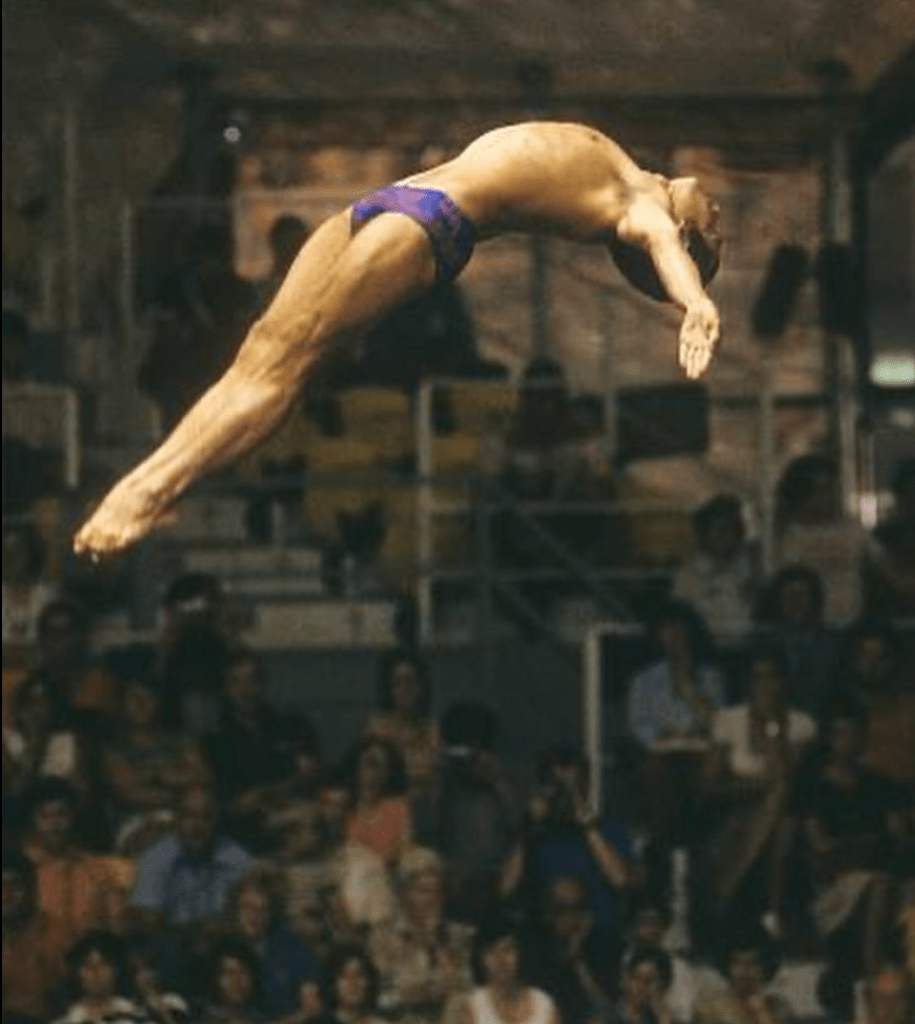
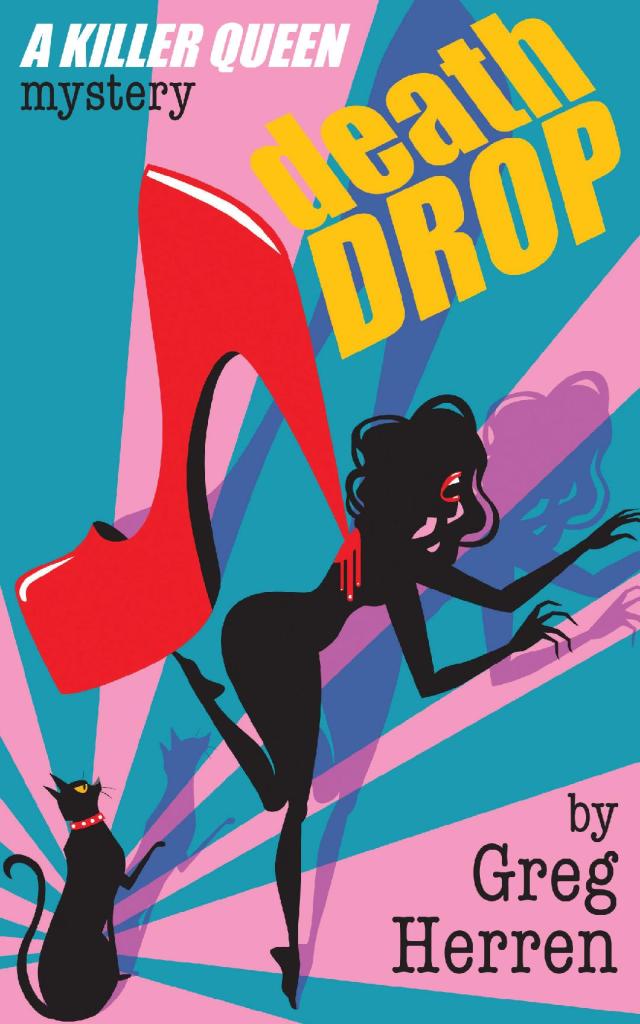

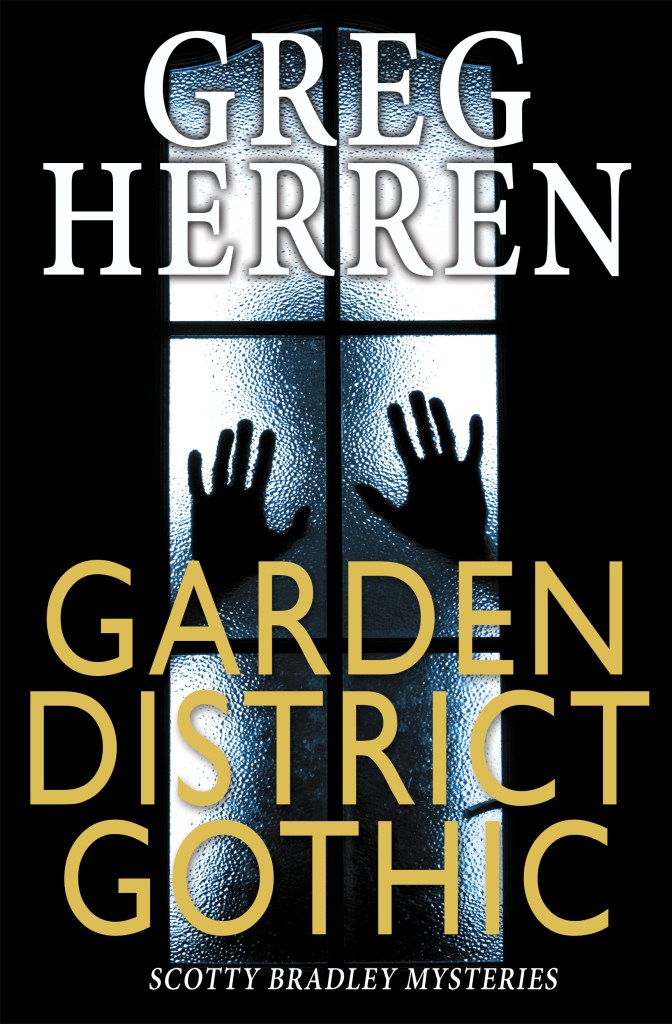
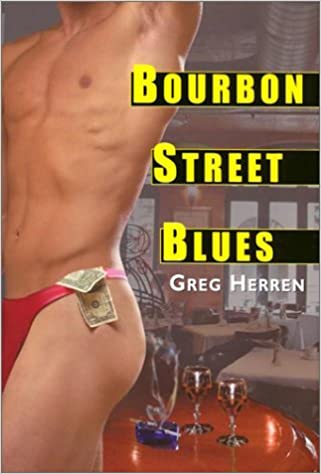
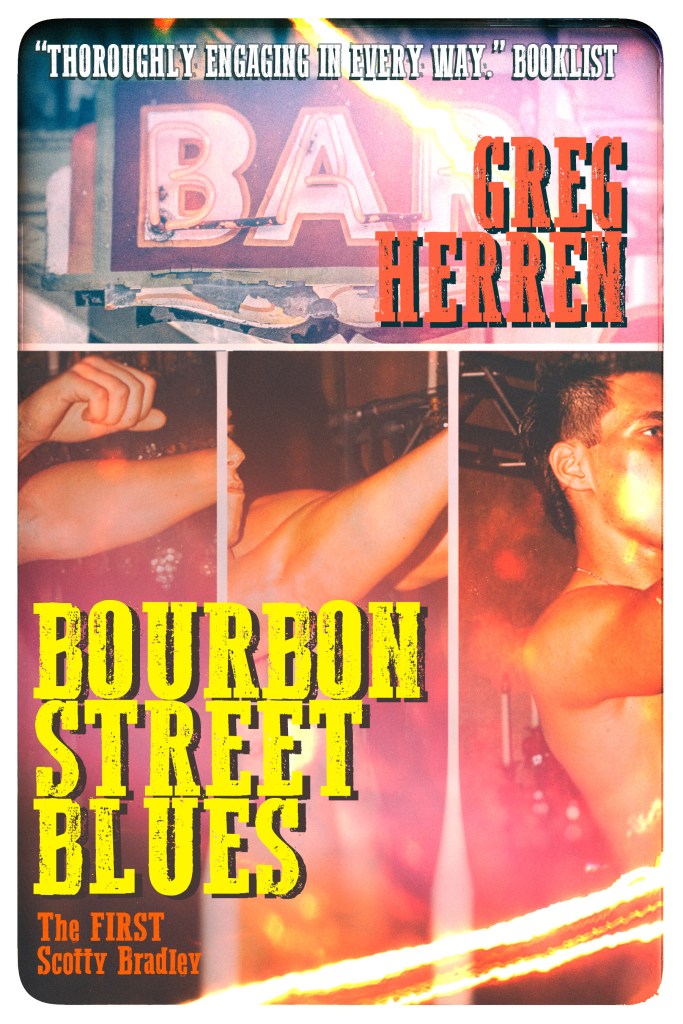
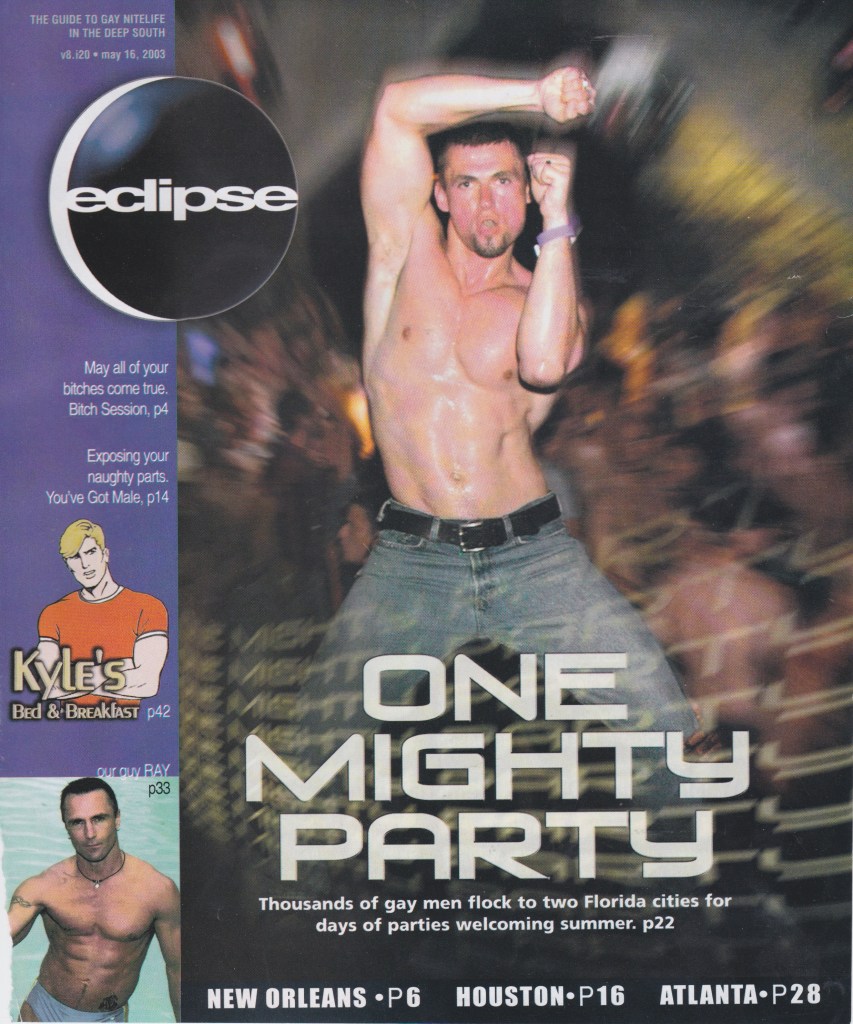
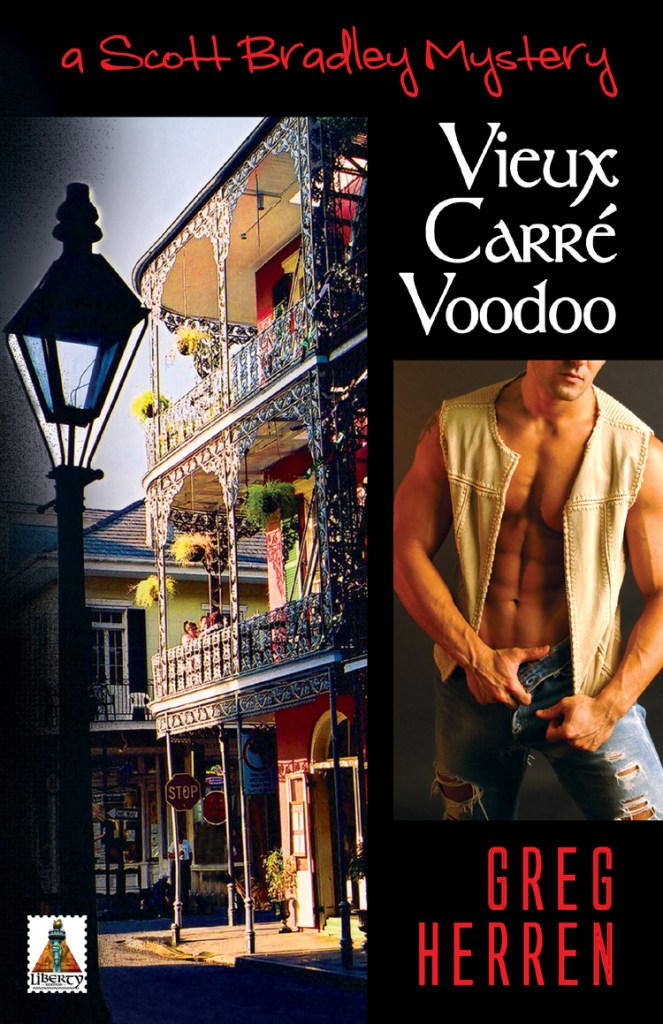
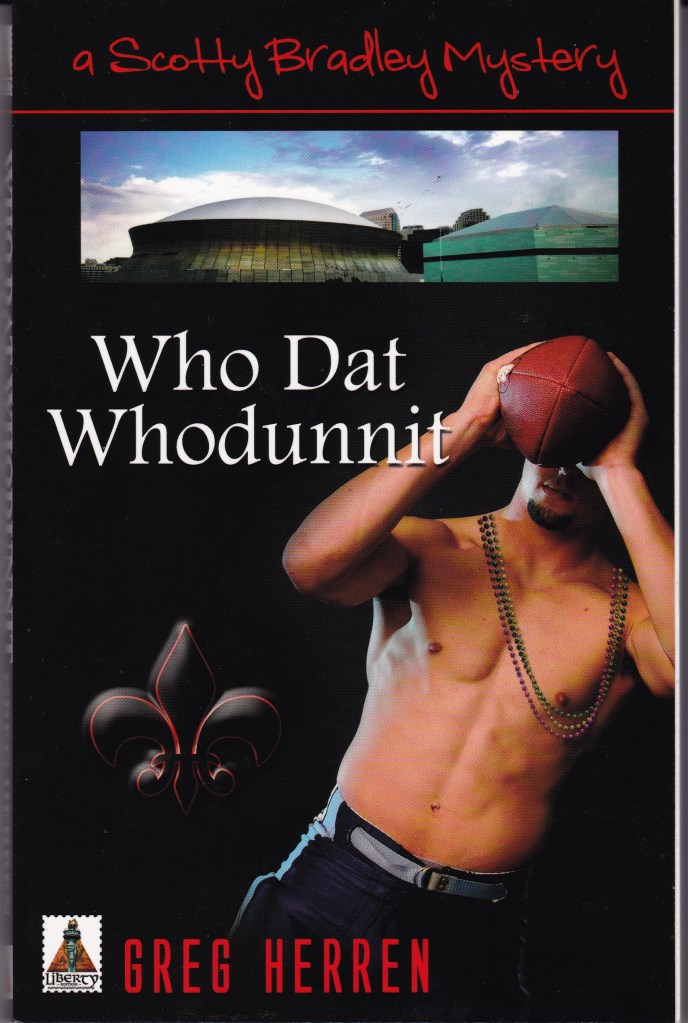
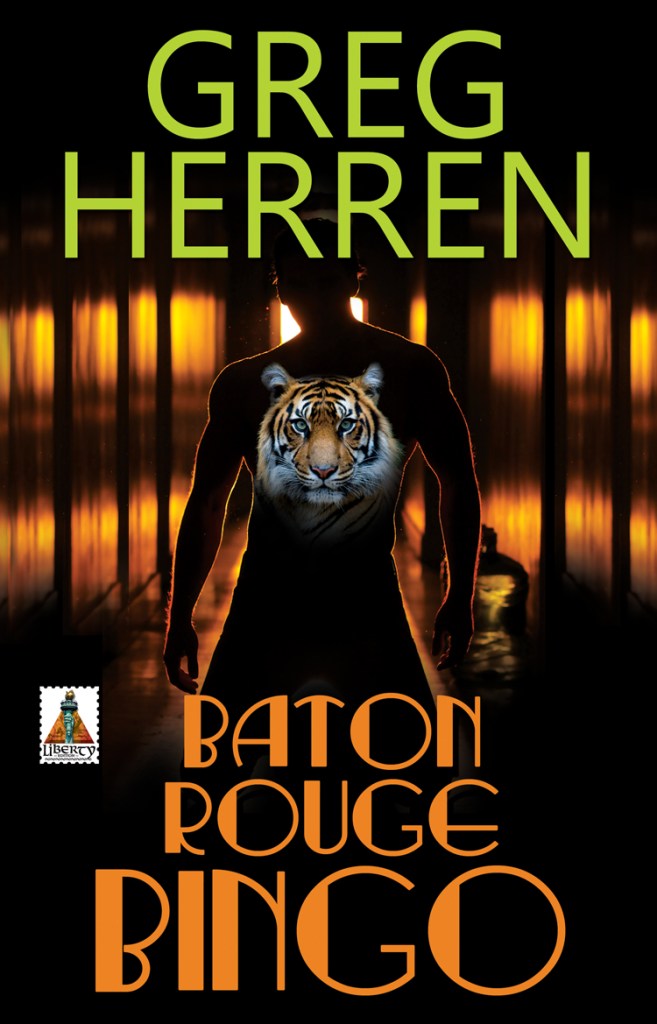
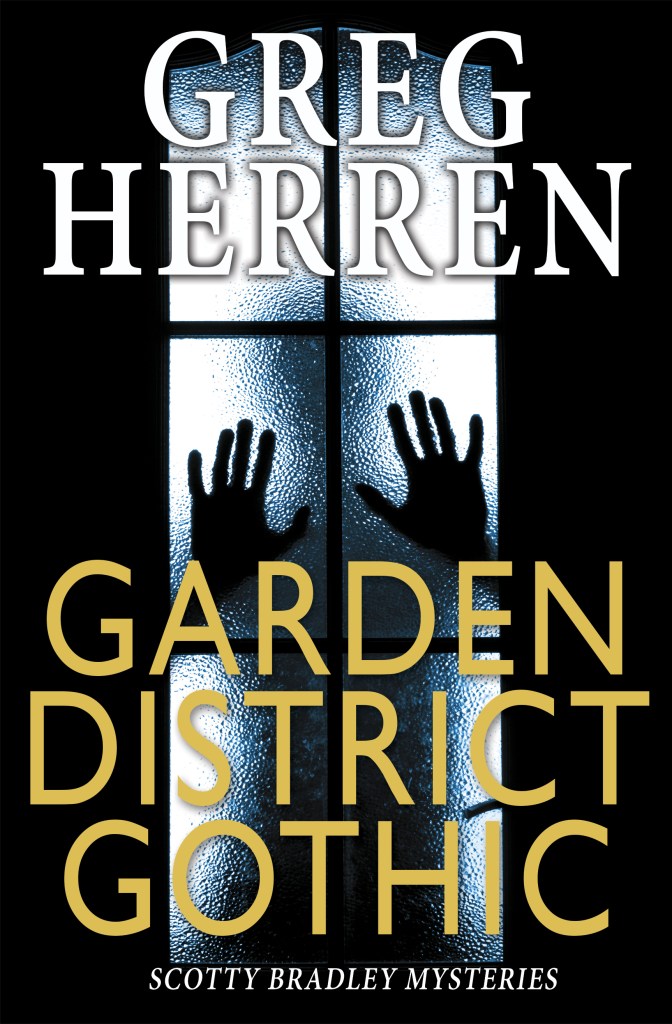
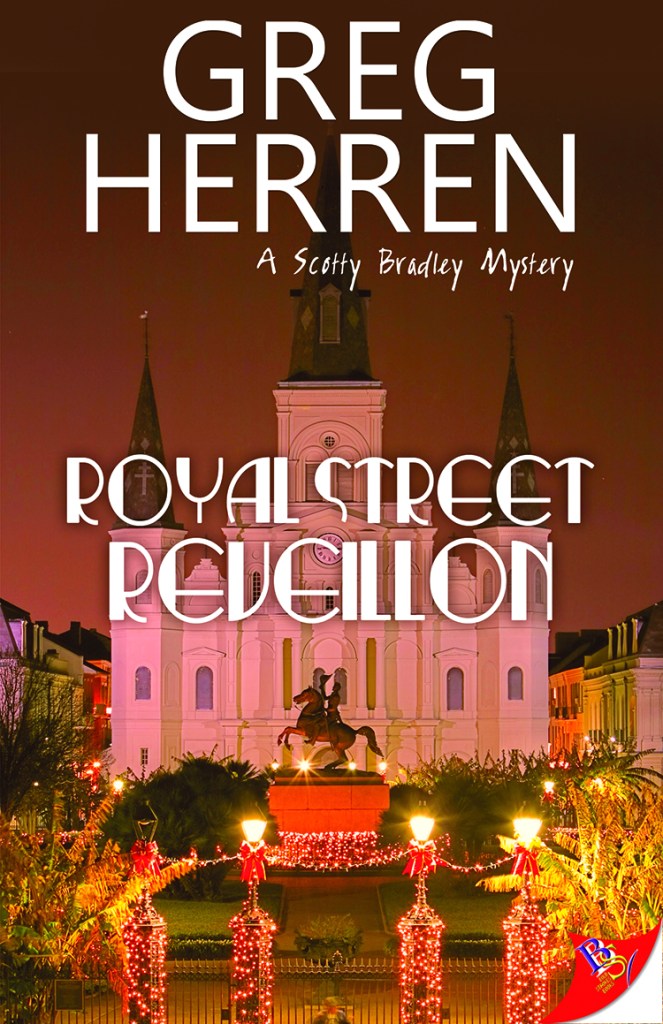



 Queer and Loathing in America