Blue Bell Knoll

I’m home, and exhausted.

I drove back this morning from Kentucky. The drive isn’t hideous (other than the hell that Chattanooga always is, either direction, no matter the time of day or day of the week or time of the year); it’s actually quite a lovely drive. The mountains of Kentucky and Tennessee are stunningly beautiful. There’s a brief jog into Georgia’s northwest mountains before I connect to I-59 south and cross the Alabama state line, returning to the central time zone at the same instant (being on Eastern time seriously fucks with my body clock, and it’s getting worse). Alabama is–well, Alabama is beautiful. I will always feel that tug and tie to the state of my birth, where my people are from, where my mother and ancestors are buried. It isn’t easy sometimes to love the land of my birth; it’s complicated, as so many things that don’t need to be actually are. I think I am probably going to write about Alabama again, because I find myself wrestling with that complicated, sometimes agonizing tie, trying to understand and unravel and perhaps finally find some kind of peace rather than just mournful acceptance.

It also always interests me how little traffic there is through Mississippi. Maybe a bit in Meridian, but nothing more than a slight irritation, ever. Once I pass Meridian, I am in the home stretch and start to get antsy, anxious and tired and ready to just be home. I start watching the mileage markers alongside the highway; and I always feel a bit of a little thrill the first time the milage to New Orleans is on a sign; that means soon and the countdown is in its final stages. It always surprises me a little how quickly I can get home once I reach Slidell, though I start getting antsy to get through Bayou Sauvage and start relaxing again because I am almost to the East and then the high rise; and when I reach the top of that I see the CBD and the Superdome and I release a lot of tension I didn’t even realize I was holding in my shoulders. It’s always lovely to come home–even if getting out of the car in front of the house was oppressive. My God, it was lovely in Kentucky; I’d forgotten what a heat advisory in New Orleans feels like–which always makes me laugh: how can I always forget? For fuck’s sake, I write about it all the fucking time.

It was an interesting week. I don’t think I’ve had an entire week off from work since we went to Italy (willing to freely admit that might be incorrect; my memory banks are currently fried and I am beginning to suspect they aren’t going to repair themselves). It was incredibly hot in Alabama, Lord, was it hot in Alabama. But…I also don’t spend a lot of time outside in the summer in New Orleans, to be fair, and I spent a lot of time outdoors whilst in Alabama. Monday was Mom and Dad’s anniversary, so that’s why I took the trip. I met Dad in Jasper, where we stayed, on Sunday; we went to the grave on Monday and drove around the county, visiting other graves of ancestors. We also went to the county courthouse at 2:00, which was when they were married…and then we departed for Kentucky. There was a horrific thunderstorm Sunday night in Jasper; there was an even worse one in Kentucky–a derecho–and so a lot of trees and tree limbs came down, and of course my parents’ house had lost power on Sunday night, and it hadn’t been restored by the time we got there on Monday night. It came back on Tuesday night, but my sense of days and dates and so forth was already screwed up by then, and I’d lost track of everything. I spent a lot of time with Dad, which was great and I am very happy I was able to do this with him so he didn’t have to do it alone; and it was great spending time with him up north.

I got my love of history from my dad, which is something I am forever grateful for, and so of course we talked a lot about history, not just the family stuff but the county and Alabama in general. I read a couple of history books while I was up there–more on those later–and Dad gave me some terrific ones about Alabama, which of course started triggering my fallow creativity. I did a lot of creative thinking while I was up there, and of course, as I said, I was also wrestling with my complicated heritage and complicated feelings about it. I may not agree with many of my father’s takes on history–particularly US History and the Civil War–but I enjoy listening respectfully to his (wrong) opinions, and of course, it got me to thinking about my complicated heritage and how I feel about it, which naturally made me want to write some more about it. I have an idea germinating, but I am going to do some more research and reading before I even start spitballing ideas (and titles) for the next Alabama book.

Talking to my dad about my mother and the rest of the family also made me realize some things about myself. Mom hated conflict and avoided it at all costs and she also suffered from anxiety. I hate conflict and avoid it at (almost) all costs, and I also suffer from crippling anxiety sometimes; I am always anxious, but sometimes…it’s horrible, really. The Xanax helps somewhat, but not always. I even have anxiety about having anxiety. So of course, the perfect job for someone with anxiety is being a writer, which is almost non-stop anxiety triggers.

I listened to Carol Goodman’s The Widow’s House on the way up, and her The Seduction of Water on the way back. I haven’t finished the second–about an hour or so left–which I will probably finish listening to while I do chores. There will, of course, be more on them later. I also missed the second game of the College World Series final on my way up to Jasper, and you can imagine my horror, Constant Reader, to see that after winning the first game against Florida, my Tigers got spanked in the second 24-4. This would ordinarily have made me a bit tense about the final, winner takes all game; but was also delighted to arrive in Kentucky to see that LSU pounded Florida 18-4 to bring home LSU’s seventh national championship on baseball (GEAUX TIGERS!!!).

I started writing this last night, hoping to post it before I went to bed, but I just got overwhelmingly exhausted, so I went to bed…and was unable to fall asleep. Yay. SO I finally got tired of just laying there and got up and finished this, am doing some laundry, and have a load of dishes soaking in soapy water in the sink. I have a lot of errands to do today (well, it may only be 4:53 am, but it is Sunday), chores around the house, and so I figured I should get up and get going on the day rather than just staying in bed, hoping to get a nap or something before sunrise. Yet here I am. Sigh. But I only have to get through Monday at the office (and run errands on the way home) and then have the 4th off. It’s going to be a very somber 4th for me this year, as the Supreme Court decided, in their bigoted bought and paid for opinion, that I am a second class citizen that “Christians” can essentially spit on.

How fucking Christ-like. There will be more on that later, as well.

And on that note, I am going to go fold some clothes and get some things done. I’ll be back later, no doubt.

Only Girl in the World

I saw that John Jakes died yesterday–or they announced he had passed yesterday–which was kind of jolting; primarily because he’d come across my radar again lately. I don’t remember who or how, but I was looking at something or looking up something and a quote from him about reviews and critics and his place in American literature, or he was asked about the literary stars of the day or something (these memory lapses are so aggravating) but I loved what his response was: I don’t remember exactly the comparison, but he compared books to wine: his were an inexpensive wine you could pick up at a grocery store, satisfying but nothing special, while others were the really rare and fine vintages you went down into the cellar to retrieve and had to blow dust off the bottle. (It may have been meats; I can’t remember exactly but the wine analogy seemed more correct and apt, frankly.) I appreciated that, because I spent a lot of my teens and early twenties reading Jakes’ American history novels. They were fun to read but not great, and I wound up reading the entire eight volume Kent Family Chronicles as well as the North and South trilogy (and I think in some weird way the train of thought that led me to the Jakes quote was remembering Kirstie Alley and Patrick Swayze in the mini-series of North and South, because I was also thinking about the Civil War because I was watching Civil War documentaries on Youtube, which led me to abolitionists and a meme I saw reading I don’t argue with people John Brown would have shot and you see how that all goes; the weird and twisted slipperiness of my mind. I hadn’t thought about Jakes in years; and now he’s popped up twice within a couple of weeks. (He was ninety, so had a long and full and vastly successful life. Those books were all bestsellers and the first three of the Kent books were filmed for television; I think the original plan was to film them all but that ended after the third made for television movie.)

I think there were eight books in the Kent Family series; the original plan was to follow the family through American history, but the book series ended in the 1880’s, I think; it ended before the twentieth century–which was smart. How would you cover the world wars and Vietnam? Civil rights? These were very pro-Americana books, too; they were all part of the big Bicentennial Celebration of 1976–which was a very big deal at the time, if you weren’t born yet, and the years leading up to 7/4/76 were a lot of patriotic overkill, frankly. Every business and company had some sort of Bicentennial celebration tie-in, starting in about 1974, I think, so by the time the actual Bicentennial rolled around many of us were already sick and tired of hearing about it. We had just moved to Kansas that summer, and we still only could get one channel–CBS out of Kansas City. (Hard to believe there was a time when you could live somewhere and only get one channel, but it used to be very commonplace, and there were only three networks anyway.) The primary problem, for me, with the Kent series was how plausible is it that every member of this family is a friend or acquaintance of every famous person in our history?

I slept well again last night, which is marvelous. I did laundry and put the dishes away after work, and made a grocery run, picked up a prescription, and got the mail. I was a busy Gregalicious yesterday, and I worked some more on the book as well. I feel a lot better about the book–it’s not nearly as terrible as I had feared; I really do need to work on not hating my work or at least going overboard as far as their condition, frankly. I am looking forward to making some more good progress this weekend as well; now that I am feeling more myself again (I feel good this morning, too) I think I am going to be able to get all of this finished and revised and reworked and handled and improved. This is the part of writing a book that I enjoy; the drudgery is the first draft, and the polishing and improving is the most satisfying, because you see and can feel it taking shape.

I did break down and watch the first episode of the new season of Ted Lasso without Paul last night; it was marvelous, as expected, and just such a delightful show and characters. I decided it was okay to go ahead and watch because I figured I wouldn’t mind a second watch when the Festivals are over. It just might well be my favorite comedy series of all time; definitely up there with Schitt’s Creek and Cheers for sure. Today I also am heading in to see the doctor this afternoon about my toe, which still hurts to bend and twinges when I walk, but I am not limping. Maybe it’s a waste of the doctor’s time, but you never know, and once you’re past sixty you kind of have to take any of these sorts of things that happen seriously. (I have a tendency to ignore it and hope it goes away on its own.) It’s been nearly a month since it all started; I think it was exactly four weeks ago today that it started hurting and initially swelled, but between Carnival and Mom, I didn’t really have a chance to get in, and as soon as I was able to know for sure I could make an appointment and keep it, I did–and this was the first one available. Fingers crossed it isn’t anything more serious than arthritis or (sigh) gout.

It’s amazing what a difference to my overall mood getting back on the writing horse makes, seriously. Now that I am working on the manuscript again, I’m sleeping better and feel more settled and like myself again, which is lovely–I was beginning to wonder. I wasn’t quite as tired yesterday when I left the office, and I have to say, it’s been marvelous feeling rested and being able to work again. Much as I whine and complain about writing–usually, it’s not the writing itself I complain about, but rather deadline stress more than anything else–I do love it, I do love doing it, and it really makes me happy. I recently realized that while my primary identity is author, another identity (and one I’ve held much longer than author) is reader. I have always been, first and foremost, a reader. I love to read, and wish I had more time to do so; hence the not worrying about ever being bored if and when I do get to the point of retirement–there will always be books to read, stories to write, and something to clean around the house. I am only bored if and when I choose to be; and there’s also always some movie I haven’t seen I can stream, too. I’m a homebody, and the older I get the more true that becomes. I am putting off a Costco run until after the Festivals, even though we’re getting low on things and out of others; there’s no point in doing much restocking of the kitchen since Paul will be moving down to the hotel on Wednesday and not coming home until either Sunday or Monday. I need to figure out what I am doing over the weekend myself. I think I have something Saturday morning, a reading that afternoon, and then a panel on Sunday? I don’t know, I’d have to check I suppose, and at some point I should get that all put into my phone calendar.

And on that note, I am heading into the spice mines. Have a lovely Thursday, Constant Reader, and I will check in with you again tomorrow.

Old Man River

Can you believe I’ve written all these Blatant Self-Promotion* posts about New Orleans and my book A Streetcar Named Murder and haven’t yet written about the most defining thing about the city–the Mississippi River?

Why, we would not be here if not for that mighty river, the Father of Waters.

Sometimes, just for shits and giggles, I try to imagine what it was like for the Europeans to see the Mississippi for the first time. Imagine you’re a colonizer, heading west and hacking your way through the Forest Primeval, and you suddenly come upon this enormous river. Or imagine you’re on a boat powered by the wind, following along the coastline of the Gulf of Mexico and suddenly the water becomes muddy and messy and dirty, as opposed to the sparklingly clear blues and greens you’d been seeing since sailing into the Gulf in the first place? And then to come into the delta, trying to find the primary channel, and finding yourself in the fast-moving currents of an enormous river? Spaniard Hernando de Soto was the first European (well, probably one of his men, but he was the leader so naturally took credit for it) to lay eyes on the river inland just below Natchez; a Spanish navigator had already mapped the Gulf coastline by this time. Father Marquette explored the river, as did Joliet later (Marquette and Joliet played a very big role in my learning of History as a child in Chicago; a nearby suburb of Chicago was named Joliet. So learning the history of the Chicago area taught me about the exploration of the river by the French, coming south from Quebec and along the St. Lawrence through the Great Lakes). De la Salle discovered the mouth of the river and claimed it and all the land in its valley for France; Iberville rediscovered the mouth about fifteen years later and began exploring up the river, eventually deciding to settle a port/town/colony on the shores of the river where there was high ground…and that settlement became New Orleans.

For the record, the location was actually the perfect place for a city to be built, despite the climate, the water and the swampy land. New Orleans is the southern-most point on the river that is protected from the sea enough to accommodate shallow water ships but where it’s also deep enough to handle ocean-going ships. (The river is incredibly low right now–too low for barges to make it down here.) New Orleans became a vitally important city as the continent was slowly and gradually colonized by Europeans and later their descendants; water was the easiest mode of transportation before railroads and roads, and you can get almost everywhere within the two mountain ranges of the northern American continent by water. I think you used to be able to actually sail into the St. Lawrence down through the Great Lakes and down the Chicago and Illinois rivers to connect to the Mississippi and the Gulf, but am not sure if that is still true.

Because of the river and the Gulf, New Orleans became one of the most important ports in the western hemisphere and gradually one of the largest cities in the United States, and certainly one of the wealthiest.

I love the Mississippi River. It’s fascinated me since childhood; this enormous river that divides the country in two. As a child fascinated by history–beginning with US history–the importance of the Mississippi, and how it was linked to how the country grew and developed over the centuries, and how it was vital strategically and economically to a developing nation. The early fall of New Orleans during the Civil War guaranteed the Confederacy would fail. When Thomas Jefferson offered to buy New Orleans from Napoleon, the French conquerer, recognizing that without New Orleans the rest of the Louisiana territory was essentially worthless, threw in most of the North American continent in for a few million more. The primary takeaway for me from reading Mark Twain was his love of the river that I came to share. I also loved that I moved to New Orleans, practically the furthest south you can live on the river, from Minneapolis, practically the furthest north you can live on it. I can remember on a trip to the South from Chicago that we detoured and went to where the Ohio and Mississippi meet; I actually stood on that corner of Kentucky with the Ohio to my left and the Mississippi to my right. (The Ohio used to fascinate me as well; another river pivotal to the colonization and conquest of the continent.) I remember thinking how cool it was that the Ohio was blue and the Mississippi brown; that the wall of blue ended at the wall of brown–but there was a blue streak running down the middle of the brown for a good distance.

I love living here by the river, and one of the things I miss the most about working on Frenchmen Street is I don’t get the opportunity to walk down to Jackson Square, climb the levee, and stroll along the Moon Walk beside the river. It’s so massive that sometimes we forget how truly huge the river actually is; how when you fly into New Orleans over the river you can look from the window and see massive freighters that look like toys in a bathtub. Standing on the levee looking at the big freighters coming in or going out, they do seem almost like toys. I love how the city is below the river level, so when you’re driving down Tchoupitoulas the big ships are higher than the street.

I’d love to read about folk legends about the river, too–the size of the catfish and other creatures in its depths. And I want to write more about the river, too.

*Technically, I should be doing more of them, frankly.

Johnny Are You Queer?

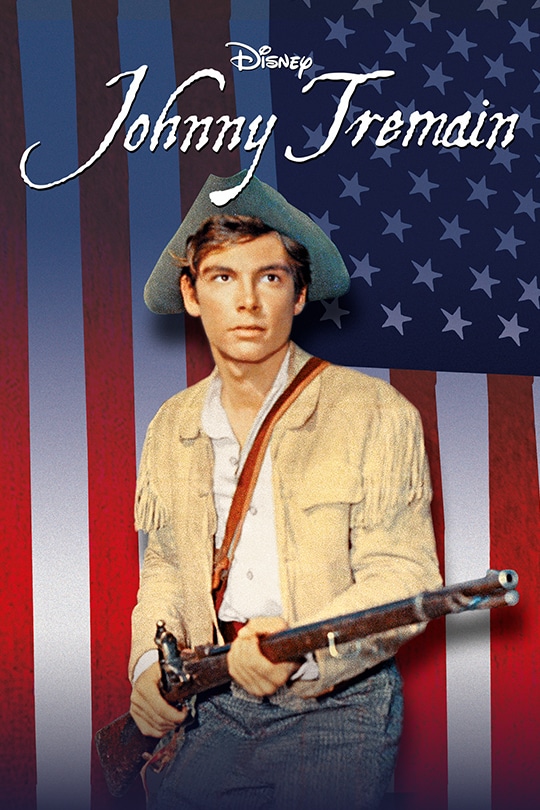
I have been wanting to rewatch Johnny Tremain for quite some time now.

When Disney Plus went live, the first thing I did (after subscribing) was search for it there; I did this at least once every two weeks since the service launched, to no avail. I would look for it on Amazon Prime, Netflix, everywhere; whenever I would sign up for yet another streaming service I would look for it. I never quite understood–and still don’t–why Disney Plus doesn’t have it; but the other day at work I realized I hadn’t looked for it for a while, so signed into Disney Plus on my browser: nope. Oh might as well give Amazon Prime a try, I thought, although Disney not having one of its own properties while another streaming service had it was, I thought, highly unlikely.

And yet, there it was: to rent or buy. I didn’t want to buy it, and I really hate paying to rent to stream something when I already pay for far too many streaming services (I really need to get past the mentality of subscribing when I want to watch something when it’s far cheaper in the long run to merely rent the movie or show), but I’v been wanting to rewatch this movie for years and there it finally was; so I did, and rewatched it yesterday whilst making my daily allotment of condom packs.

I also remembered, when I found the film, that Johnny Tremain was my gateway drug to not only my lifelong interest in American history–which eventually led to an interest in history in general. We had an assembly at my elementary school to watch the movie, and I saw it again when it aired on The Wonderful World of Disney (it may even have still been Disney’s Wonderful World of Color). I eventually read the book, which I got from a Scholastic Book Fair, and it became a treasured favorite. I also recognized, before rewatching the movie as a sixty-year-old, that it was a Disney film aimed for kids made in the 1950’s during the Red Scare when we were all living under the shadow of the mushroom cloud; Walt himself was, among many other things, a deeply conservative pro-America anti-Communist homophobe, and given all those things, it was going to most likely be–if looked at with a cold, judgmental, independent eye–a barely disguised propaganda film. (I am also curious to reread the book; since it was published in 1943, during the height of the second world war, it was also probably pro-American propaganda, when all the country needed to be united to believe that we were fighting evil to make the world a better place, and since American democracy was the be-all end-all…you see what I mean?)

I mean, once you recognize and identify Lost Cause mythology as an ideation to perpetrate and protect white supremacy, it’s also relatively easy to start reexamining all of American history and see the mythology that has been built up around the founding and creation of the country, as well as the deification of the Founding Fathers.

But while I was researching the book and movie the other day, I also came across a paper–queer theory–by Dr. Frank Henderson at Furman University that essentially reexamines the text of the novel from a queer perspective looking for subtext: the piece is titled “Could Johnny Tremain Be Gay? Reinterpretation as a Subversive Act” and was published in the Journal of Homosexuality (I read the abstract, and an article about it, rather than paying $40 to access the actual paper and read it; seriously, how do academics research if this stuff is so expensive? I will probably try to track a copy down through the library; which I guess, actually, is what academics do), and it gave me some pause for thought. I do remember that Johnny was more bratty and selfish in the book than he was in the movie (I remember being startled by this when I read the book the first time) and he literally had nothing but disdain for Cilla or any other girl in the book (which, at the time, was part and parcel of that weird societal norm or belief that prepubescent boys think girls are icky and don’t like them or want anything to do with them–again, very odd in a heteronormative culture) but when he becomes friends with Rab, an older boy involved with the Sons of Liberty, he almost idol-worships the older boy and allows himself to forget his innate selfishness and get involved with something bigger than himself–the revolutionary thinking that led Boston to revolt in the first place. That can be read, as Dr. Henderson states, as a queer relationship between the boys, and that Johnny could be read as queer. I seriously doubt that was what Esther Forbes was thinking when she wrote the book–the book was meant for boys and there was, as I said, that weird “boys don’t like girls” norm for a very long time (it certainly was a consistent theme in Disney productions aimed at boys; same with the Hardy Boys book and other mystery/adventure series aimed at boys from the time). This was in theory erased from the film…but I’m not entirely sure it was.

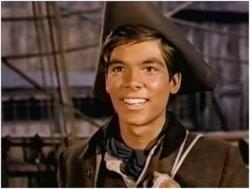
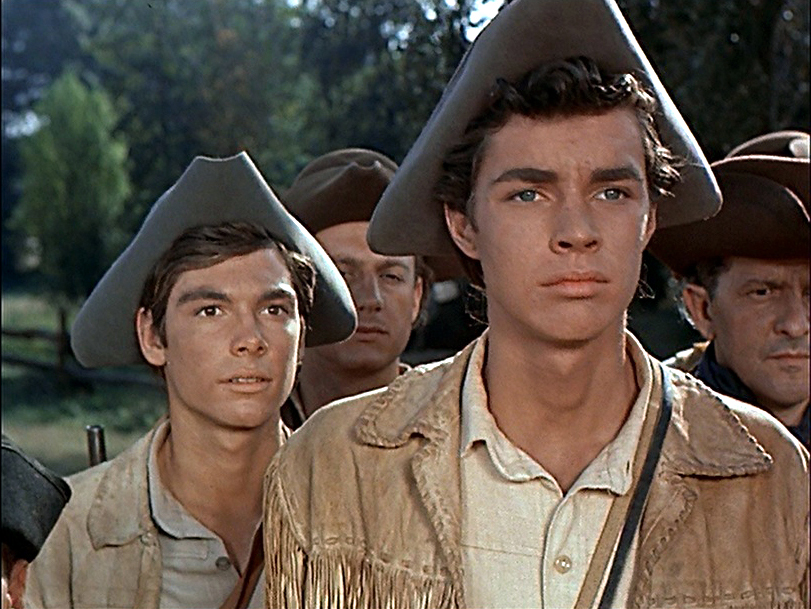
First of all, there’s absolutely no question that Hal Stalmaster, who played Johnny but never really worked much afterwards, mostly guesting on television shows, was a stunningly beautiful young man.

He also wasn’t a very good actor, but the heavy-handed direction of any Disney live-action film aimed at kids for a very long time didn’t inspire the best work from the cast (Mary Poppins, of course, being an exception).

The young actor who played Rab was also ridiculously good looking–and turned out to be a younger Richard Beymer (billed as Dick) who would go on to play Tony in West Side Story and later, Twin Peaks–and they certainly had more chemistry together than Johnny had with Cilla, who was turned into a love interest of sorts, with him giving her a quick peck on the cheek (their only intimacy) as he runs through the streets of Boston with the news that the British would be leaving Boston “by sea”.

The movie was very typical Americana–so yes, propaganda–which sterilized and cleaned up the period in Boston before the outbreak of the war, with rather stiff pronouncements about ideals and principles and freedom and the rights of man and liberties and tyranny–all the patriotic buzzwords cast about by people who want to silence those who don’t agree with them–without any real explanation of what that means.

And yet, as oversimplified and “cleaned up” as this is made to be in the movie, it’s still effective–it’s very stirring to think about the nerve of the American rebels, doing something practically unheard of in history–not just defying their king (there was a long history of rebellions against the worst abuses of kingship throughout the centuries; just the century before the British actually beheaded their king and did without one for eleven or so years; 150 years before Louis XVI went to the guillotine in Paris) but defying the might of the most powerful and richest empire the world had ever seen. It’s hard not to think about–although everyone in this movie is a revolutionary, all Bostonians except for the villains, and the villainous American loyalists are actually worse than the British military themselves–what that period must have been like to live through; the divided loyalties, the betrayal of neighbor by neighbor, spies and treachery and murders. (I’d love to write a historical mystery set in Boston during this period, actually.)

It’s not a bad movie, but it’s also not a great one; and it certainly does its part in upholding the mythology created about the American revolution.

And yes, this could easily be yet another essay.

Take Good Care of Her

As the launch date for my book draws nearer and nearer, I find myself not experiencing the kind of stress and anxiety that I usually feel as the clock winds down. Maybe it’s because I am making the effort to promote the book this time around? Finding the time to do so? Paying more attention than I usually do when I have a book coming out? I don’t know why I am feeling so much more relaxed than I ordinarily do in the final days before this release, but it’s nice to have some awareness—other than the usual stopping in the middle of something to think, oh yes, I have a book coming out—is it today or tomorrow? I should probably do something about that, shouldn’t I?

It really is a wonder that I have any career of any kind, seriously.

And maybe it’s just the swing back from the twenty months or so of nightmarish existence, but I do feel like I am doing good work when I am writing these days. I don’t really remember much of the final push to get Bury Me in Shadows finished and out of the way, but I do remember doing the page proofs and thinking, you kind of did what you wanted to with this, well done! One of my big worries whenever I start writing something new is the fear I’ve already written the story, albeit in a different form; I was worried, almost constantly, that I was plagiarizing Lake Thirteen, my other ghost story, in this book. But the stories are very different, and the main character in each are quite different from each other. I think the mood in both books—the atmosphere I was creating—are very similar to each other, but I was trying to do something Gothic and almost dream-like with both.

As I mentioned the other day, I’ve always worried about writing about the South, and Alabama, in particular. How does one write about the South without dealing with the racism, present and past, of the region? How do you write honestly, with realistic Southern characters, without touching on that third rail of enslavement and war? Not all Southerners are racists, of course, just as not all Southerners are homophobes (I do make that point—about them not being all homophobes—in the second or third chapter of the book). But you cannot write about the South without mentioning that whole “Lost Cause/states’ rights” nonsense; that misplaced pride in something that was, at its core, evil. I was not educated in the South; I started school in the Chicago public education system; we moved out to the suburbs for junior high and my first two years of high school, finishing in Kansas. I was never taught in school that the root cause of the Civil War was anything other than slavery; and in all my extensive outside reading of American history, I never came across any of that. (I knew that the Southern politicians were all shouting “states’ rights!” in the lead-up to secession; but this was subterfuge. They couldn’t win the argument about slavery on moral grounds, so they fought against emancipation on Constitutional grounds. And, as I often note whenever someone trots out the tired states’ rights canard, the only right they cared about was the right to own slaves, and they sure as hell wanted the Fugitive Slave Act enforced against the will of the free states, didn’t they?)

I also like to point out that all those lovely, wonderful society ladies in Gone with the Wind—Melanie, Mrs. Meade, Mrs. Elsing, Mrs. Merriweather, etc.—would all be full-on Trump voters today. (I’ve not read the book in years, but while I do remember that in several places, Ashley talks about how he would have freed the enslaved people at Twelve Oaks had the war not come; but Melanie talks about the Lost Cause with all the fervor of a believer at a revival meeting in a tent…which makes Melanie, theoretically the moral center of the book, the biggest racist of the main characters in the story—and yes, I know, Margaret Mitchell did a great job of propagandizing the “Cause” as the Confederacy rather than slavery; but there’s an awful lot of racism and “they were better off enslaved” in that book, which, along with the movie, has done a great job of romanticizing something hideous and ugly )

I could write volumes about Gone with the Wind and how problematic both book and movie are (not the least of which is that Rhett rapes Scarlett but she enjoys it), but that’s an entirely different subject, deserving of its own entry (or two or three) or an essay—but I will say this one last thing on the Gone with the Wind subject: since the movie was released, for decades it imprinted on the minds of white Americans “this is what the antebellum South, and enslavement, was like”—when it was actually nothing of the sort and bore no resemblance to anything true or right.

One of the things I wanted to make clear with Bury Me in Shadows is that the shadow of white supremacy can be overcome and the continuing link, from generation to generation (parents teaching it to their children, who teach it to their children) can be broken by a person not blinded to realities or brainwashed by romantic fantasies; that character in this book for me is Jake’s mother, Glynis Chapman. Glynis rejected the white supremacy/racism she was raised with and did not pass that on to her son. I’ve always felt—and this was best exemplified with that Miss California who all those years ago blamed her homophobia on “It’s how I was raised”; it’s how I was raised is perhaps the laziest, most disgraceful, and embarrassing excuse ever given for perpetuating hatred and discrimination. It essentially states that you are incapable of thinking logically and rationally for yourself; you are incurious, and your parents are God-like, with beliefs and values that are above question. At least own your bigotry and don’t blame it on your parents because at some point, you must become your own person; you either continue to blindly believe everything your parents told you, or you actually become a functional human being capable of making up your own mind rather than simply blindly parroting what you were taught. I began questioning everything quite young, frankly; more so than most, but still to a far lesser degree than I should have. I didn’t question American mythology as young as I should have, but I did start questioning religion quite young–and I am also happy that I never fossilized my beliefs and values but rather kept them fluid and receptive to change based on new information, or more in depth thought.

Racism, and white supremacy, are evil. Period. Race theory has no validity or origin in actual science—the genetic differences between white people and non-white people are so infinitesimal as to be practically non-existent—and were created for no other reason than to justify western European colonialism, exploitation, and looting the resources of the rest of the world for power and money. Originally cloaked in religious fervor (if there was gold and riches for the crown, there were souls to be won for the cross), even American expansionism at the expense of the indigenous people of this continent was called manifest destiny, which gave mass genocide and the theft of land a cloak of holiness: it is the destiny of the white man to rule over others and expand his empire.

And it can’t get more white supremacist than that, can it?

I’ve never understood the notion of racial pride, frankly; likewise, I’ve never really grasped the mentality behind ancestor-worship, as evidenced by Confederate apologists. Regardless of reason, the truth is, and always has been, that the Southern states tried to destroy the union, period. They fired on the flag. The great irony that the Confederate apologists also consider themselves to be more patriotic Americans than those who think the Confederates were traitors–talk about cognitive dissonance–is something that always amuses me. How do you chant USA! USA! during the Olympics or other international sporting events of any kind when you have a Confederate flag decal on your car? Why are you do defensive about the crimes of your ancestors, when you have no more control over what they did during their lifetimes than they have over yours? No one can help who they are descended from and no one pays for the crimes of their ancestors. Confederate monuments never should have been erected (again, the groups that raised the money for them and put them up were run by women like Melanie Wilkes and Mrs. Meade and the other society women from Gone with the Wind) so there should have been no need for discussion, debate, or confrontation over their removal; as I always say, “Where are the statues of Benedict Arnold or the other Tories from the Revolutionary War? Weren’t they just standing behind their values and beliefs? They also saw themselves as patriots–just for the King.” I am incredibly happy not to see the statue of traitor Robert E. Lee every time I drive home from work–I hated having to try to explain the existence of the statue and the circle named for him to visitors…I used to say, “And here’s one of our monuments to treason, Lee Circle” every time I drove around it with a visitor in the car.

So, no, Bury Me in Shadows is definitely not a Lost Cause narrative that romanticizes the antebellum Southern states or the Civil War–and is definitely not the place to look for one.

It’s One of Those Nights (Yes Love)

So, for today’s BSP about Bury Me in Shadows, I am going to talk about where the actual story that goes to the heart of the plot came from.

My grandmother was probably one of the biggest influences in my life, for both good and bad. I won’t talk about the bad—I was raised to believe you never bleed in public—and there was quite a bit of it; I didn’t speak to her the last thirteen or so years of her life. But the good was good, really. She loved old movies and passed that love of the glory days of Hollywood on to me; she always encouraged me to read and to be a writer; and she was the one who instilled in me my love for crime films and (to a lesser degree) horror ones—what she used to call “scary movies”; I watched The Haunting for the first time with her, and sometimes when I rewatch an old classic, like The Strange Love of Martha Ivers or The Letter, I remember watching it with her on the couch. She was also the one who introduced me to some authors I love, Victoria Holt (The Secret Woman) and Mary Stewart (The Ivy Tree), and she also encouraged my interest in history, which she also really enjoyed. She used to tell me stories about the past all the time when I was young—stories that at the time, and for most of my life, I remembered as being “family history” and was very surprised as an adult to find out they were fairly common legends and stories from all over the South, as well as from books and movies. In other words, none of the stories were true…but when I was thinking about this again the other day it occurred to me that it was entirely possible I was remembering it wrong—it was a long fucking time ago, after all, and my memory has been wrong before. It’s entirely possible she was just telling me stories, that I assumed were family histories…anyway, there were a lot of them, and when I was in college I started writing a lot of the ones I remembered down. They were often tales of blood and murder and crime; sometimes ghost stories.

The Lost Boys, the legend I used as the basis for the book’s background, is one of those stories.

And yes, bits and pieces of the story are apocryphal; sewn together by my grandmother into one story to entertain me.

Long story short: before the Civil War the county where my family comes from (again, not sure if this is true or not; the histories of the area I’ve read indicate that it’s not; so she either was weaving a story for me or I misunderstood the story or altered it in my memory as I got older) used to mostly belong entirely to one family—from which I am theoretically descended from (my grandmother also had a lot of delusions of grandeur)—and after the war, they lost nearly everything, except for a small tract of land that still remains in the family to this day. Anyway, the father and the oldest son went off to war, leaving his wife and two younger sons behind. The father was killed in the war. When the son came home after the war was over, the house had burned to the ground and there was no sign of wife or the two youngest sons anywhere; they’d vanished without a trace. No one ever knew what became of them; and the story, according to my grandmother, was that a deserting Union soldier burned the house and killed them (yes, the same story as appeared in Gone with the Wind, among others; my grandmother also told me another story about a Union deserter committing murder of a defenseless Southern woman—which I also turned into a short story that collects dust in my files), and that on or around the anniversary of their deaths, you could hear the younger boy calling for his mother in the woods near where the old house had been. Good stuff, right? I certainly thought so, and what a great basis for a story.

Of course, when I started researching the history of the county, none of this appeared to be true—the Union army never came any closer to the county than Tuscaloosa, for one, so the odds of a deserter making it all the way there on foot are pretty slim, and especially if no one else saw him—and of course, none of my ancestors owned most of the county. But it was a good story, even if not true, and I felt that writing about it could make for an interesting tale. My main character, Jake, is aware of the old family legend; he wrote a paper about it in high school, but doesn’t believe it’s anything more than a legend. I thought it would be cool to leave the ruins of the original house there, deep in the woods, far from the county road and the current domicile of the family, the crumbling house on the dirt road just off the county road. I also brought in a team of archaeologists from the University of Alabama, excavating the ruins—one of the few sites left that haven’t been excavated—and the professor leading the team, Dr. Brady (named after a historian friend), while intrigued and interested in the legend, isn’t trying to find proof one way or the other; he’s simply interested in what information about how the family lived can be unearthed.

The book is more than this, of course; but the Lost Boys legend was the starting point from which the rest of the book grew. I have a very complicated relationship with Alabama, to be honest; it’s my homeplace and I love the state. It’s stunningly beautiful. Even the poor rural county we came from is beautiful, with rolling hills and small mountains covered in pine forest, hollows filled with kudzu, muddy orange streams and rivers, riotously colored flowering bushes, and the air…oh, how wonderfully clean and fresh and pure the air smells. I love the orange dirt, and how round and smooth the gravel can be. The sky is a gorgeous cerulean, and of course, when it rains, it really rains. I can remember how still and heavy and damp the hot summer air was, the gnats and mosquitoes and dirt daubers and wasps and hornets and bees and horseflies. Whenever I stop as I drive through on my way somewhere else (usually Kentucky or Atlanta), I am always amazed at how lovely the young people are working in the small highway-side town’s fast food places. I remember screen doors with a coil so they’d always shut (or slam, if you just let go), and the big red Coca-Cola coolers with the bottle opener on the side in the general stores—and of course, the big old style Dr Pepper signs, that looked like a clock with only the numbers 10, 2 and 4—because that was the time for a Dr Pepper. (I also remember it was considered a cure-all when you were sick; just heat some Dr Pepper on the stove and add lemon; just like 7-Up was a cure for an upset stomach.)

But the state’s history– enslaved people, what happened to the indigenous tribes, Jim Crow, Selma, the institutionalized racism–is also deeply problematic. How does one write about the problematic history of the state? How do you point out how wrong all of that is without becoming preachy? I’ve often taken issue with white-written narratives about the pre-Civil Rights era in the South, as well as those set during that era and after; I remember reading one book where the heroine was doing research about the history of an incredibly racist town where a race-related murder had occurred, driven by the Klan–but focusing on the good, non-racist, non-Klan members of the town–what I call the see? We aren’t all bad take. I definitely didn’t want to write one of those stories. A few years back, I found a copy of a book I read when I was fairly young–it belonged to my uncle, actually–about the Civil Rights era in Alabama, called The Klansman by William Bradford Huie, whom I believe was actually a journalism professor at the University of Alabama…and it was different than I remembered, yet still chilling. I’m not sure what Huie was trying to do with the book, to be honest; the Klan sympathizers really came across badly, and even those who weren’t out and out members of the Klan were still racists who saw the Klan as a necessary “evil”–the sheriff couldn’t get elected without the support of the Klan, and he spends the book trying to walk the line between pleasing the Klan and not doing anything illegal…but you lie down with dogs, you wake up with fleas. (I read it the same summer as I read To Kill a Mockingbird, which also belonged to my uncle; the two books are forever linked in my mind.)

Bury Me in Shadows may be many things, but it’s not a Lost Cause narrative, nor is it a “look at the nice white saviors” novel, either.

And I think that’s enough about that for today.

Every Song Is You

Wednesday morning!

Yesterday was a really good day. I was productive again–not as much as the previous two days, but still, I’m counting it as a win. I even wrote. I worked on a short story and an essay–granted, the short story was a revision, so somewhat easier than actually writing something from scratch on a blank page–but it was still pretty awesome to be flexing some creative muscles again. I also think my editorial eye has become a lot more clear than it’s been in over twenty-one months; I definitely think I am going to be tweaking this story perhaps one more time. But it felt amazing to be writing again–rewriting, as it were–and so my new plan is to try to get this three short stories I’ve been trying to revise forever revised this week, and start working on A Streetcar Named Murder in earnest this weekend.

Tonight after work I am going to go to the gym for Leg Day, and try to get some more editing done. I also want to finish reading Velvet Was the Night so I can start my Horror for Halloween reading, beginning with the annual reread of The Haunting of Hill House. I had also planned to read one of the Stephen Kings I have on hand but not yet read–probably The Institute–and another Paul Tremblay at the very least; but I’ve got to finish what I am already reading before I can move on to anything else. I think this decommitment to watching college football all day on Saturday will help, and just the occasional check-in on the Saints on Sunday should also help free up some of my time. I think today’s lower energy mode is probably just the usual oh I’ve gotten up at six for three straight mornings tired; even now as the coffee kicks into gear I am starting to feel more alert and more on top of things–which is pretty fucking cool. Yay!

I’ve also been writing blog posts to promote Bury Me in Shadows; I wrote a rather lengthy one about the backstory behind the book–where the Civil War ghost story aspect of the book came from, and why it was kind of difficult to write such a thing in the present time, knowing that the rebel side was wrong and problematic–and the underlying root cause of all the racial tension and problems we still face as a country today (I’ve preordered The 1619 Project, and can’t wait to read it). One of my primary worries/concerns with writing this book was how easy it would be to step wrong and write something offensive. I still worry from time to time that I did exactly that, and when the book is released there will be controversy. But if I got something wrong, or wrote something that is offensive, I will own my mistakes, apologize for them, and try to do better going forward.

I don’t understand when admitting you were wrong or made a mistake became a sign of weakness in this country. I also don’t understand it. I don’t like being wrong, but I am also not going to double down on being wrong. Not meaning any offense doesn’t mean you won’t offend someone, and for the record, I’m sorry you were offended is not the same thing as I’m sorry I offended you. The first is a non-apology, and the speaker isn’t really sorry for what they said, they are only sorry you were offended by it. The second takes ownership of the situation and doesn’t let the original speaker off the hook, and personalizes the apology. I also don’t understand why this is so hard for people to understand.

Yesterday Twitter was all abuzz about the Kidney Woman story in the New York Times, which tried to stir up the whole argument about drawing inspiration from someone else’s life or story. I’ve always believed that it’s impossible for any writer to create either a character or situation lifted from real life; if anything, it’s only a starting place, because a writer cannot know everything about any real life person–you don’t know their every experience, you don’t know what the seminal experiences that created who they are and how they react to things, you don’t know how their mind works or how they even think; at best, all you really see if how they outwardly react to a person or a situation–you don’t know what they are thinking, you don’t know their triggers, you don’t know anything, really–so you have to make up a lot of it, and you base it on your observations of how that person behaves and reacts. Observation is very key, yes, and an understanding of psychology, but again, everyone is different and no one can predict how anyone else will think or react or behave in any given situation. Which is why we are always surprised by the behavior of people we know; we don’t really know them at any great depth so of course we are always going to be surprised and caught off guard by their actions. Nobody likes to think people talk about them behind their back; no one really wants to know what people that dislike say about them. But you have to understand that it’s very human–friends tell each other things, and everyone talks about everyone else (it always amazes me that this salient fact of life is always addresses so insanely on reality televisions shows–“don’t talk about me behind my back!” Um, everyone does it, hello? And most of the time it means nothing. If someone has pissed me off, I will inevitably talk about it to a mutual friend–just to get it off my chest and out of my system. Usually, I am over it once I talk it through with another person–everyone needs to vent, why is this so hard to understand? And it doesn’t have to mean anything more than that…”yes, I was mad at you, but once I talked it through with X I realized it wasn’t anything, I was over it, and why hurt your feelings or start a fight with you when it really wasn’t anything?”). I certainly don’t want to know what people say about me when I’ve irritated them or pissed them off; I’m perfectly happy being oblivious.

With the caveat that if I behave in a way that really gets on someone’s nerves regularly, I would like to know so I can decide to change the behavior or not.

Then again, I’ve never understood the rules of friendship, either.

We finished Midnight Mass last night, and thoroughly enjoyed it. Mike Flanagan, who also did The Haunting of Hill House (which I was able to enjoy as I merely viewed as fan fiction rather than a straightforward adaptation of the classic novel–one of my favorites), did an excellent job here. It’s a deep meditation on religion and the power of belief, juxtaposed with some serious horror. The acting is superb; the characters deeply drawn and compelling, and it’s hard to look away. I prefer this kind of creepy, unsettling horror to jump scares and gore, frankly. I do recommend the show, but prepared to think some heavy thoughts about the power of religion and its potential for abuse–as well as how easy it is to misinterpret something as holy when it most certainly is not.

And on that note, tis off to the spice mines with me. Have a lovely day, Constant Reader.

Together We’re Better

Yesterday actually turned out to be quite lovely.

I was a little bleary when I got up yesterday morning (my Fitbit advises me I only slept deeply for 3 hours, 48 minutes; the rest was “light sleep” and I woke up three times), but for whatever reason, I decided to start getting to work on things. I started answering emails (I am very careful with email. I refuse to let it control my life, which it easily can; so I answer emails over the weekends and in the mornings, save my responses as drafts, and send them all after lunch. I do not send emails after five pm CST; I do not read them, either. Email at one point took over my life, which made getting anything done impossible and raised my stress levels to unbelievable heights. I realized anyone who absolutely, positively needs to reach me has my cell phone number…and if I don’t trust you with my cell phone number…you don’t really need an answer right away. And guess what? The world didn’t end, I didn’t miss out on anything, and nothing became harder) while reading coverage of the LSU debacle from Saturday night (one thing I did mean to mention and didn’t yesterday; I try not to be overly critical of college athletes because they are basically kids. It’s easy to forget that when you’re watching on television, but when you see them on the sidelines with their helmets off, or while walking down Victory Hill to the stadium in their suits and ties…you see a bunch of teenagers and young men in their early twenties. They are kids—and those baby faces on those big muscular bodies is a very strange juxtaposition sometimes). I decided on the way home from Baton Rouge that while I do, indeed, love football, I really shouldn’t give up my weekends to it all fall. Now that LSU is definitely out of the running for anything, I’ll probably not watch as much football as I would if they were still in contention for anything. I’ll still watch LSU, and occasionally I may spend an afternoon watching a big game—the SEC title game, the play-offs—I am not going to spend every Saturday pretty much glued to the television all day, flipping between games all day. And I also rarely enjoy watching the Saints—I love them, they’re my guys, my team, my heart—but their games are so damned stressful it’s hard to enjoy them, and when the games is over I am always, win or lose, emotionally and physically and mentally exhausted. So, I decided it made more sense to get things done, check in on the score periodically, and not sweat it too much. (Good thing. Like LSU, the Saints led the entire game, folded like a newspaper in the fourth quarter and wound up losing.) I made groceries, filled the car’s gas tank, and before going, I started weeding shit out of my iCloud and saving it all to my back-up hard drive.  I wound up freeing up over four hundred and seven gigabytes in my flash storage, and suddenly my computer was running very quickly again.

And yes, it’s my fault.* I have a gazillion pictures files, going back to digital camera days. I used to back up my hard drive and my flash drives regularly to the cloud—and those folders are enormous. I don’t probably need all of it—I was weeding through bits here and there as I moved the files over to the back-up hard drive (eventually planning on copying them up to Dropbox), and started finding all kinds of interesting things. Story fragments I’d forgotten, book ideas and anthology ideas and essays I’d started; some of these things are in very rough, first draft form—and got left behind as my addled, AHDH-like brain moved on to the next thirty or forty ideas for all of the above. I also was kind of amused to see how I often I plagiarize myself; I had a completely different idea for the book I wanted to call A Streetcar Named Murder fifteen years ago—which I can still use at some point, just have to come up with a new title. I’d forgotten that all the way through the process Need was called A Vampire’s Heart; my editor suggested changing it after I turned the book it. It was a wise choice; my title was very romance sounding and Need was hardly that. It was also interesting seeing, over the years, how many different ideas I’ve had for a gay noir set in the world of ballet (damn you, Megan Abbott!). I discovered that Murder in the Garden District actually began as Murder on the Avenue (a title I can repurpose for an idea I had last week); I found the original files for Hollywood South Hustle, the Scotty book that turned into a Chanse MacLeod, Murder in the Rue Ursulines; I found the files for the Colin book that tells us what he was doing and where he was between Mardi Gras Mambo and Vieux Carré Voodoo; I found the original Paige novel I started writing in 2004, in which an Ann Coulter-like pundit from New Orleans is murdered; I found the first three chapters of the Scotty Katrina book, Hurricane Party High,  in which they don’t evacuate during a fictional hurricane, and the chapters where I rewrote it, had the, evacuate to Frank’s sister’s in rural Alabama (and we meet Frank’s nephew Taylor for the first time—and I also remembered that they belonged to some weird kind of religious cult and that Taylor was going to come to New Orleans in the future to visit during their version of rumspringa, but eventually abandoned the idea completely and never did a Scotty/Katrina book; was reminded that Dark Tide began as Mermaid Inn; that I wrote the first chapter of Timothy during the summer of 2003; and if I even tried to list all the iterations that wound up being #shedeservedit, we would be here all day (Sins of Omission, I think, was my favorite earlier title; again, a completely different book with some slight similarities…I may have to take a longer look at some of those iterations because being reminded of them all, I also remembered that I really liked all the versions).

I also found many, many nonfiction pieces I’ve written over the years—many of which I’d long since forgotten about—so maybe that essay collection won’t take quite as long to pull together as I had originally thought. Huzzah!

And I also discovered something else that I knew but had slipped out of my consciousness: that Bury Me in Shadows was called, for the first and second drafts, Bury Me in Satin—which gives off an entirely different vibe, doesn’t it? I wrote a very early version of it as a short story while in college, called it “Ruins,” but never wrote a second draft because I knew it wasn’t a short story; it needed to be a book, and one day I would write it. I was never completely comfortable with the story, to be honest; I wasn’t sure how I could write a modern novel built around a Civil War legend in rural Alabama. I absolutely didn’t want to write a fucking Lost Cause narrative—which is what this easily could have become, and people might come to it thinking it is, and are going to be very angry when they find out it is not that—but I really wasn’t sure how to tell the story…and in my mind, I thought of it as Ruins—which I freely admit is not a great title, and has been over-used.

As luck would have it, I was watching some awards show—I can’t begin to try to remember what year—and one of the nominated groups performed. I’d never heard of The Band Perry before; and the song they performed, “If I Die Young,” absolutely blew me away. (I just remembered, I kind of used the title as guidance when writing Need—always trying to remember he became undead very young) The first two lines of the chorus are this:

If I die young,

Bury me in satin

And I thought to myself, Bury Me in Satin is a perfect title for the Civil War ghost story! Melancholy and sort of romantic; I’ve always thought of hauntings as more about loss than being terrifying (you do not have to go full out jump scare, use gore or blood or violence to scare the reader, and if you doubt me, read Barbara Michaels’ Ammie Come Home), which is why I’ve always loved the Barbara Michaels novels that were ghost stories. That was the feeling I wanted to convey, that sad creepiness, and longing—I wanted a Gothic feel to the book, and I felt that line captured what I wanted perfectly. But as I wrote it, it didn’t quite feel as right as it did in that moment (I still love the song—and the video is interesting and kind of Gothic, doing a Tennyson Lady of Shalott thing), and then one day it hit me: changed ‘satin’ to ‘shadows’, and there’s your perfect title.

And so it was.

Oh dear, look at the time. Till tomorrow, Constant Reader! I am off to the spice mines! Have a lovely Monday!

*I will add the caveat to this that anything stored in the Cloud should not affect the flash storage in the actual computer and its operating system, and yes, I am prepared and more than willing to die on that hill.

Homage

Gore Vidal was one of three rather important gay male writers who emerged from the wreckage of World War II (the others being Tennessee Williams and Truman Capote), and I have always enjoyed reading his work–even if it’s not page turning material; I like the way he writes and I like the way he tells his stories.

He wrote six or seven major works of fiction based in American history that tell, in their own way, a more clear-eyed vision of what American history was and how the nation developed; called the Narratives of Empire, they certainly weren’t published in order but rather, I gather, in the order that struck his fancy; he was also busy writing other things and feuding with other writers–notably Capote, Norman Mailer, and William F. Buckley–and he obviously had a flair for the outrageous and controversial; The City and the Pillar, a very frank and daring and sympathetic look at the experiences of one young man navigating the world as a gay man, made him so controversial he was unpublishable for a number of years; he spent the time writing mysteries under the name Edgar Box and writing screenplays. Myra Breckinridge, which undoubtedly does not hold up to modern scrutiny and eyes; the book was clearly intended as satire, examining societal gender constructs and views on sexuality as well as the role of women. I read it for the first time maybe ten years ago, and it struck me as quaint; an artifact of a time certainly less enlightened, but trying to head for the light. (It may be worth a reread.) He also wrote Julian the Apostate, which I greatly enjoyed and read one year beside the pool during Saints & Sinners, back when it was in May and we used to always spend the weekend at the Olivier House on Toulouse Street.

But the Narratives of Empire began with, I think, Washington DC, followed by 1876 and later Burr; he also wrote about the aftermath of the Spanish-American War and the growth of the American empire in Empire, which I have also read and greatly enjoyed. I’ve not read all the titles yet; but reading Lincoln next after Empire made the most sense to me as some of the real-life characters depicted in that book are also in Lincoln, and it’s been a very long time since I read anything about Lincoln.

Elihu B. Washburne opened his gold watch. The spidery hands shows five minutes to six.

“Wait here,” he said to the driver, who said, “How do I know you’re coming back, sir?”

At the best of times Congressman Washburne’s temper was a most unstable affair, and his sudden outbursts of rage–he could roar like a preacher anticipating hell–were much admired in his adopted state of Illinois, where constituents proudly claimed that he was the only militant teetotaller who behaved exactly like a normal person at five minutes to six, say, in the early morning of an icy winter day–of the twenty-third of February, 1861, to be exact.

“Why, you black—!” As the cry in Washburne’s throat began to go to its terrible maximum, caution, the politican’s ever-present angel, cut short the statesman’s breath. A puff of unresonated cold steam filled the space between the congressman and the Negro driver on his high seat.

Heart beating rapidly with unslaked fury, Washburne gave the driver some coins. “You are to stay here until I return, you hear me?”

Growing up with Southern parents and the so-called “Southern heritage”, Lincoln’s place in history was, to say the least, still resented. The lionization of Lincoln after his death was, in some part, made possible by his murder; there’s not telling what the judgment of history would be on him had he lived to serve out his second term. Would we revile Lincoln for the reconstruction policies he would have followed? How different would the face of our present day nation be had he lived? An enormous mythology has sprung up around Lincoln since his death; “Honest Abe the rail-splitter” is a tale told to school children to this day, or how a young girl told him to grow a beard, and so on and so forth. The Civil War has been analyzed and written about endlessly; no one person could ever hope to read and digest all the documentation that exists of the conflict, let alone all the books published centering the war. I was always interested in Lincoln–even as a child I couldn’t wrap my mind around the mentality that people claiming to be “patriotic Americans” reviled Lincoln and glorified the Confederacy; I still am unable to consider such without triggering a massive amount of cognitive dissonance in my brain–and read lots of children’s books about him, but by the time I was an adult I was no longer interested in reading further biographies of the man. I am relatively uninterested in the possibility that he may have had relationships with men; without definitive proof that will always be a theory, and let’s face it, there is more evidence (although nothing conclusive) about his predecessor James Buchanan’s sexuality than there ever will be about Lincoln’s–hence my story “The Dreadful Scott Decision” I wrote for The Faking of the President.

Lincoln’s task was to preserve the Union in the face of its collapse, and that is what he strove to do. Was secession constitutional? Lincoln didn’t think so; the Constitution did not provide for the dissolution of the Union but at the same time it stated that any rights or restrictions not granted to the federal government in the document thereby fell to the individual states. So, does that mean the states held the right to leave the union? Andrew Jackson certainly didn’t think so, since he threatened to send federal troops into South Carolina during the nullification crisis. Part of the reason I actually wanted to read this book at this time was because of the stark reminder that Lincoln’s presidency, and the Civil War, serve as proof that mollifying white supremacy and continually compromising with an angry volatile minority, never ends well. (We are seeing it again now with the old Confederate states allied with their rural midwestern states…and of course as always, the ones threatening insurrection or secession claim to be “true patriots.”

Whatever, Mary.

Lincoln serves to humanize the man, and is also equally frank about Lincoln’s own white supremacist beliefs. Is Vidal’s assertion that Lincoln wanted to take the freed slaves and colonize them into Central America or somewhere back in Africa while reimbursing the slave owners for the loss of “property” accurate? It’s not the first time I’ve heard this (never heard it in school, though) and it seems likely to me. I also liked how Vidal got the panic of what it was like to live in Washington during there war so spot on; we never think about that, or how Maryland was a slave state surrounding the district, or that slavery existed and was legal in the district itself; slaves built the White House and the Capital. We never see into Lincoln’s head or from his point of view in this book–a masterful trick of Vidal’s, who thus leaves Lincoln a mystery to the reader.

It’s a compelling narrative, and it also shows us the point of view throughout of one of the conspirators who were hanged for plotting to kill him–David Suratt–and this jumping around from points of view–either of those who admired Lincoln, hated him, or thought him incompetent–gives a more three-dimensional view of the man we have deified for the last 156 years. He was definitely smart, a master politician, and, as Vidal says in the closing paragraphs of the book–if Washington was the father of our country, Lincoln was the father of our modern country.

Highly recommended.

1963

And now it’s Saturday. It’s still cold in New Orleans and we still don’t have any heat but it’s not as bad as Texas by any means, and we never lost either power or water pressure. So far we haven’t had a rolling blackout, either–although they were threatened. I spent most of yesterday unpacking and repacking condom packs, while watching history videos on Youtube, done by a local New Orleanian–someone I do not know–correcting revisionist history; it began with his lengthy video on the Confederate propaganda movie Gods and Generals–which I have never seen; I tend to avoid Civil War films because they are all-too frequently Lost Cause narratives at best or defenses of white supremacy at worst–even the ones that don’t center Confederate stories. I have no desire to see either. I was raised on the Lost Cause false-narrative, and I am still kind of bitter about being taught false narratives as truth as a child. I also resent having had to spend so much of my adult life correcting everything I learned that was wrong and/or incorrect; relearning American history without the rose-colored glasses of American exceptionalism and manifest destiny firmly placed on my nose and eyes.

Writing Bury Me in Shadows, methinks, is in some ways for me kind of a reckoning with that “heritage.”

The cold is going to continue through this weekend, but tomorrow is supposed to be relatively normal late winter weather for New Orleans. It will be nice to get back to normal. It’s currently forty degrees and sunny outside, and I’ll take it, thank you very much.

Today I am going to spend most of the day rereading and revising my manuscript. I want to be able to get through the entire thing in one sitting–this way I can catch most of the repetition, and I am going to also be starting to sprinkle the new stuff through the manuscript that needs to be added. I am hoping that on Sunday I can go to the gym and start inputting the changes; Monday I will assess as to whether I believe I can finish before the deadline or not. (I am a firm believer in not waiting until the last minute to let my publisher know the manuscript will be late.) I mean, I do have another full weekend to get it all done, but it’s not going to be super easy. I have to write an entire season of a podcast–or at least, significant excerpts from said podcast–and there’s at least one more chapter that needs to be written. (Depends on the inputted changes I am going to be making as I go; the goal is to make writing that last chapter really easy by making it a “now that everything is over and has been resolved” kind of chapter.)

It’s going to be lovely to be done with the book, to be honest. I started writing this version in the summer of 2015; I wrote the entire first draft in slightly less than one month–without the last chapter; I never did write the last chapter because I knew I was going to have to make changes to the story and why write something I might have to throw completely out? I have always tried to be efficient with my writing–not going off on tangents, not writing things that will have to be cut out later (it’s so painful cutting out entire scenes and chapters)–and knowing that I couldn’t really write the final chapter until I was absolutely certain about the story itself. I know the story now–this is like the eighth draft, seriously, I don’t think I’ve ever written anything that took this many drafts (novels, at any rate; I have short stories that have been through eight or more drafts, seriously). I am looking forward to moving on from it at long last; I want to start planning the writing of Chlorine next, while also finishing some short stories and putting together some proposals for other ideas I have. If all goes well, I will be able to write a first draft of Chlorine in April, a first draft of the next Scotty in May, and then spend the summer revising and rewriting both. I’d like to spend the fall finishing other odds and ends I have in my files–“Never Kiss a Stranger” has been crying to me from the files to be finished, for one, and there are a couple of other novellas and short stories I want get done. Granted, if any of the proposals sell I will have to change my writing schedule, but if none of them do sell…well, I have plenty on hand for me to write.

I may even start a new series. I’ve been thinking that a gay cozy mystery might be fun to write. I love puzzles and lots of suspects and things; I’d love to do something along the lines of James Anderson’s The Case of the Blood-Stained Egg Cosy, which is probably my favorite cozy mystery of all time; a big mansion, secret passages, jewel thieves, international espionage–all taking place over a house party weekend at an English country home. I’ve always felt it was a shame that those wonderful old classic home house party/small village mysteries the British wrote that I loved to read really couldn’t be replicated in the US…and then later realized that is because those stories are completely rooted in the British class system and what would be comparable here and then…yeah, you see where this went, don’t you? Although some day I will figure out how to do one of those…

I WILL. And it will be marvelous.

I also need to reread The Affair of the Blood-Stained Egg Cosy again. It’s really quite marvelous; I do hope it holds up.

I’ve also been sort of paging through/rereading the Three Investigators’ The Mystery of the Fiery Eye, which in some ways was a tribute to Wilkie Collins’ The Moonstone–which I also did with my own Vieux Carré Voodoo–while not finishing the Dana Girls’ The Clue in the Cobweb. I also keep meaning to get back into reading short stories, since my mind is in that weird “I need to finish my book” place where I can’t focus on reading anything new (once the book is done, I am going to spend some serious time with Jess Lourey’s Unspeakable Things, which I had started reading before locking into “finish the book” mode), so it’s either short stories or rereads until I turn this manuscript in. Anyway, that’s one of my favorite Three Investigators books because it, too, involves a treasure hunt with vague clues (or rather, a riddle of sorts) the boys have to figure out in order to find their new young friend August’s inheritance, the Fiery Eye, a cursed jewel stolen from an idol in a fictional southern Asian nation (Constant Reader will note that Vieux Carré Voodoo also involved the need to solve a riddle to find a cursed jewel stolen from a temple in a fictional southeast Asian country). I also recently–and I don’t remember if I shared this here or not–had the epiphany that the Scotty series, in some ways, is in and of itself a tribute to The Three Investigators…if they were adults and gay and in a “throuple”, as such relationships are called nowadays (I first heard the term in a CDC training). It also occurred to me that many kids’ series involve the main character and two close friends–or if the main characters are a pair (the Hardys and the Danas) they’re inevitably given a close pal who shares their adventures (in fairness, the Dana sisters have several friends who fill that role; some of the books involve several of their friends, but the only one whose name I can recall now is Evelyn Starr–although I believe they also had a friend named Doris Garland, but I am not sure about that name). As I thought about this more, I had to wonder if this was an attempt to steer the books away from homoeroticism or the undercurrent of the main character and his/her best friend being more like a couple then as friends….but I also can’t imagine that being a concern when these books were first conceived? (Although Trixie Belden and her best friend Honey Wheeler certainly play out the butch/femme lesbian dynamic rather convincingly–which I think why in later books in the series they played down Trixie’s “tomboyishness” and tried to make her more of a girly-girl.) Nancy Drew’s first four books featured her and her dear friend Helen Corning; in book five Helen vanishes (she shows up in a couple of later books) and is replaced by cousins Bess and George (again, the butch/femme dynamic at play, even though they are made cousins to avoid such thinking…but George is so damned butch and Bess so femme people made the connection anyway). The Hardys have Chet Morton, who is relentlessly fat-shamed and mocked throughout the entire series (Frank and Joe sometimes aren’t the wonderful boys they are made out to be). I have certainly made note of the homoerotic undercurrent in the Ken Holt series (with his best pal Sandy) and the Rick Brant series (with his best pal Scotty) before; there is none of this in the Three Investigators series because there are three of them, and they are vaguely around thirteen; it is doubtful any of them have gone through complete puberty yet because they still think of girls as kind of alien creatures, which really plays strangely in the series where the male leads are in their later teens….the chasteness of the Hardys with their token girlfriends–like Nancy, Bess and George with their token boyfriends–never quite rings true to me. They don’t even kiss! That probably has more to do with their target audience (nine to thirteen year olds) than anything else, but even when I was a prepubescent kid it struck me as strange.

I still want to try writing my own middle-grade series for kids; I think I may take a month this summer and try to write one and see what happens. I’ve been planning such a series since I was a kid, after all, and my writing career lately has seemed to be all about writing the things I’ve been leaving on the back burner simmering for years.

And on that note, I am heading back into the spice mines. My book is calling to me, and I want to read some short stories with the rest of my morning caffeine. Have a lovely day, Constant Reader–and friends in Texas, hope you’re doing okay. I’ve been thinking about all y’all this past week.