Drop Me Off In New Orleans

Ah, some more blatant self-promotion! I’ve done some on-line panels so far this year, which has been terrific. Here are the questions from one I did, turned into an interview so I can promote myself! I believe these questions were for a queer crime panel, and the credit for the questions goes to the one and only J. M. (Jean) Redmann; you can order her books here.

Why did you choose your characters and their professions? What drew you to them?

Hmmm. This is tough, because I have so many books and so many different main characters…I think I’ll stick to my two primary series to answer the question. I wanted to write about a gay private detective in New Orleans, and I wanted him to be a big man, a former college football player who may have been able to be a journeyman NFL player had he not been injured in his final college game. I wanted him to be uncomfortable in his gay skin, and the point of his journey throughout the series was to grow and learn until he was finally comfortable in that skin, and able to be loved and give it.

Scotty, on the other hand, was created as a stand-alone character and I wanted him to basically be the antithesis of Chanse; in which he had few if not hang-ups, was completely comfortable being a sexually active gay man with a snarky sense of humor covering an incredibly big and kind heart. He didn’t really need to grow much–he usually is the catalyst for other characters’ growth–but as he’s aged, I’ve really enjoyed his journey.

What attracted you to writing mysteries?

I always liked them. As long as I can remember, my two biggest reading passions were history and mystery, with horror/Gothics close behind. I would check anything out of the library with mystery, haunted, ghost, phantom, secret, or clue in the title. Then I discovered the series books–The Three Investigators, Trixie Belden, et al–and after that there was no turning back.

What does being queer/gay/lesbian bring to your story?

I think queer people have the outsider point of view down to an art form because that’s how we see the world–from the margins. The easiest way to critique society, the culture, and how people interact with each other is from a remove–and queer people see all of those things from a remove through no fault of their own. I didn’t have role models when I was growing up, at least to teach me how to be a decent adult gay human being, so I had to learn it all on my own for the most part. I’ve also been confused and mystified by American culture, philosophy, and society, because it wasn’t designed for people like me. When I came out, I was just at sea in the queer world as I always had been in the straight one, and I’ve never forgotten those experiences, either, and they also inform my work.

How do we deal with how the wider world deals with queer characters? Especially in these times?

It can be depressing, which is emotionally and psychologically dangerous. It’s bad enough experiencing homophobia, but then to immerse yourself in it in order to write about it? Even more horrific. Watching Pray Away this weekend made me furious with the ex-gay movement all over again; listening to queer people hating themselves and their desires in order to be at peace with God in some twisted way? But if God is infallible…this is the doctrine Christianity gets hung up on. They think we’re mistakes, but if their God is infallible, He had to have made us perfect and its willful sin or the devil whispering in our ears. This is their incredibly harmful and dangerous rhetoric. If God tests humans, perhaps he made queer people to test the faithful–and they are failing.

But they can never admit to that.

How do you deal with diversity? No author can be everything their characters need to be, how do you handle reflecting the wider world?

I write mostly about New Orleans, and beyond that, mostly the south with occasional forays into other areas of the country–upstate New York, Kansas, California–and you cannot write about a city like New Orleans realistically without having Black characters, period. New Orleans is a majority Black city. You also can’t write about the South without touching on the issues of race and a problematic history. I’ve always included diverse characters in my books. I don’t like to describe skin color, frankly, and most white writers do it in the form of food, which I find unsettling–do you want to eat them? Cinnamon skin, cocoa, cafe au lait, eggplant, dark chocolate, etc.–I’ve seen all of those used to describe skin color and it always makes me recoil because it’s so damned lazy. I don’t think I would ever write from the perspective of a Black character–there are plenty of Black authors who can do that more authentically, and given how most diversity pledges by major publishers also inevitably end up in quotas, I don’t want to take a spot from a Black creator. I do love reading work by racialized authors, but I would never try to write from that perspective.

How do you use setting? What does it bring to the story?

Setting is one of my strengths, I think, so I always use it to enhance my story. I am also very lucky in that I live in New Orleans, where anything can happen on any given day and you can never go too far over the top about anything–if anything, you have to tone things down to be believable. I think setting is important because it tells you so much about the characters–why do they live there, how has it shaped them, did they live somewhere else, how do they deal with the challenges, what annoys them, what do they love–and is an important foundation for your story.

How do your books start—not the book beginning, but the start of the process of writing the book. Where do the ideas come from and how does that coalesce into a book?

It usually is something I find interesting and I think I should write about that. Sometimes the ideas take years to coalesce and come together, sometimes they are immediate. The Scotty books inevitably begin with three disparate things I want to address in one book, and then I have to figure out how to combine them all into a story. The next Scotty’s prompts are evacuation, statute of limitations, and obsession. It’s coming together in my head enough that I think I’ll be able to write it this fall.

Once you’re writing, what’s your process? Outline? Write from start to finish?

I used to outline, but now I kind of have it in my head and then will only go back and outline when I am stuck, so I can see where I went wrong in the manuscript. I always write from beginning to end. I don’t know how people can write backwards! I’ve thought about trying it sometime, though.

What are the hard parts of writing for you? The parts you enjoy?

Definitely the middle. The middle is soul-destroying, and always triggers Imposter Syndrome. I also hate copy edits, but recognize them as a necessary evil.

I love the actual writing and revising and all of that. There’s nothing like putting down a good word count for the day, regardless of how bad those words might be. I think revising is magic: you take garbage and turn it into something terrific.

Which writers influenced you?

All of them, in one way or another. I especially love Shirley Jackson, Patricia Highsmith, Daphne du Maurier, and John D. MacDonald. Currently? Alison Gaylin, Megan Abbott, Laura Lippman, Michael Koryta, Alex Segura, Michael Thomas Ford, S. A. Cosby, Kellye Garrett, and Alafair Burke–there really are so many. I always take something away from everything I read, whether good or bad.

What are you working on now?

Right now I am writing a sequel to Death Drop, in the Killer Queen series. I also have a ton of short stories and novellas in progress, and I already have ideas for the next three or four (or more) books.

Any advice for newer writers?

Keep writing and keep believing in yourself, and keep reading.

Last words of wisdom?

If you want to be a writer, read Benjamin Dreyer’s Dreyer’s English and Stephen King’s On Writing.

The Battle of New Orleans

Every once in a while, I need to remind myself of how much I love my home town.

I was thinking about this the other day. I think part of the malaise I’ve been experiencing lately has everything to do with my creative muscles being tight and unexercised for so long–and almost every time I manage to write fiction, it’s so exhausting and draining that I can’t write more, either. Monday got derailed early, and that night we had another torrential, street-flooding thunderstorm…and the kitchen roof started leaking again. I mean, it only does this during that kind of rain; but we have many downpours like that over the course of a year. That kind of kicked the malaise back up into higher gear–I just am so tired of having to deal with things like this over and over when all I really want to do is just go about my day, moving from A to B and getting things done and being productive. It all becomes so much, you know? The rise of queer hate to levels not seen since the 2004 election (may you roast forever on a spit in hell, Karl Rove), and it’s very tiring. It’s also tiring to think that I may be living in the last days of the American experiment with democracy, too–and the fact that far too many of my fellow Americans are just fine with that is kind of upsetting.

Such good Germans.

But I do love New Orleans, even if I have to remind myself of that from time to time. I do; there’s just something about this city that is in my blood, my DNA, and my being; I cannot imagine being happy anywhere else. I could exist somewhere else, of course, but I really don’t want to really just exist anymore. My blog is getting feisty again because I am feeling feisty again and pissed off about a lot of things. I’ve also been immersing myself in gay and queer culture again lately–Capote and Isherwood, anyone?–and remembering how hard life used to be for people like me (see Fellow Travelers and It’s a Sin), it invigorates my senses and intellect against injustice and unfairness as it always does. Recounting stories of my past recently as well as all the introspection I’ve been doing since losing Mom last year (and really, I started thinking about it more during the pandemic, and a lot of it was because of It’s a Sin) has me remembering things, how they used to be, and what New Orleans is like now as opposed to how it was when I first moved here all those years ago, or all the times I came to visit when I worked for Continental. The city is different now than it was then–sleepily crumbling away in the hot sun and heavy wet air–and I’ve been a bit resistant to those changes. I don’t like that it’s insanely expensive to pay rent or buy a home here now–one of the strengths of the city was how many working class people owned homes here, and that seems to be going away as the city continues gentrifying itself.

Monday I also gave a co-worker a ride home from the office, and since it was a torrential rain, I drove her into the Quarter and let her out at her door on St. Ann Street close to the corner at Dauphine. I honestly can’t remember the last time I drove through the Quarter, and I really don’t go down there much anymore other than for the TWFest/S&S. I took Dauphine out of the Quarter, and a lot has changed since the 1990’s, or even the last time I drove through. I think during the festivals this year I am going to explore the Quarter a bit more than I have the last few years, and hopefully drink in some more atmosphere. I’ve kind of felt a little phony writing the Scotty books lately, since I am rarely if ever down there now since my office moved, and have been telling myself I need to explore and take pictures again.

I was thinking Tuesday night when I got home from work that I was becoming as bad as all those locals who look back nostalgically for the past and the way things used to be. I also know I am glossing over what the mid to late 1990’s were really like here, as well as for us. New Orleans has changed and has never remained the same throughout its history, but the foundation of the city remains the same. I want to write about that time in New Orleans (“Never Kiss a Stranger”), so that’s it preserved forever, those days when the sodomy laws hadn’t been overturned yet, and when the gay bars always got raided in the weeks leading up to Decadence so that we knew they were “letting” us have Decadence; the people we thought were insane in state politics in 1996 are now running things and trying their damnedest to turn Louisiana back to 1860 and shoving their religion down everyone’s throats. My primary issue with still writing about the city has nothing to do with how much I love the city, or how I feel about things around here, but mainly because I don’t know what it’s like to go out on the weekends to the bars in the Quarter, or what it’s like for gay men in their forties here now.

So yes, I am looking forward to writing the next Scotty–and revisiting the Chanse series, as I’ve been doing, has me actually considering doing another Chanse story. I have two ideas for him, actually, but am not sure either is going to amount to anything.

And I will always love New Orleans.

Five Minutes Alone

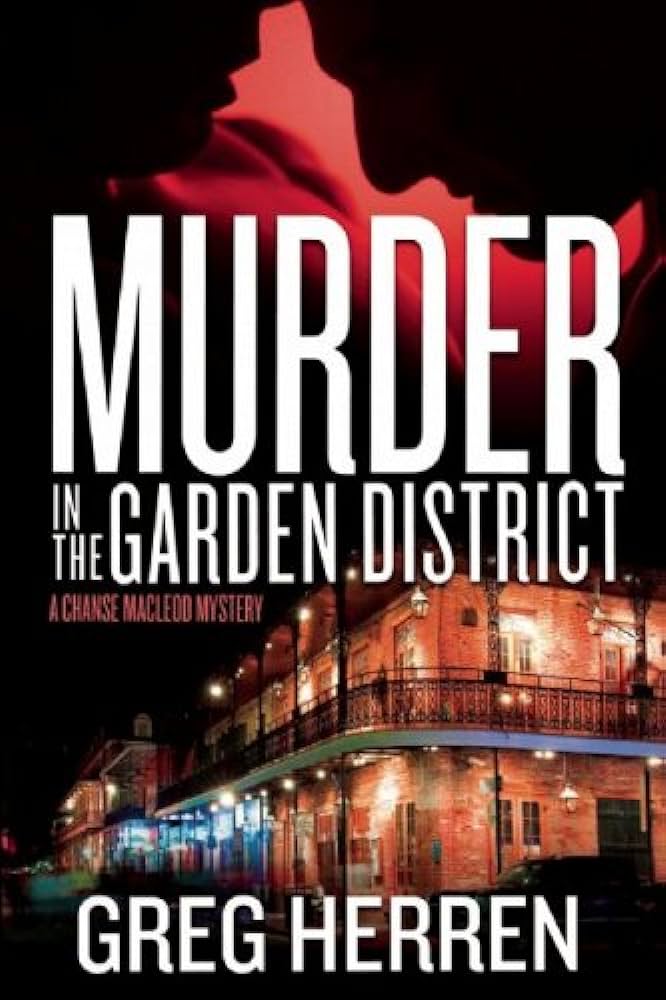
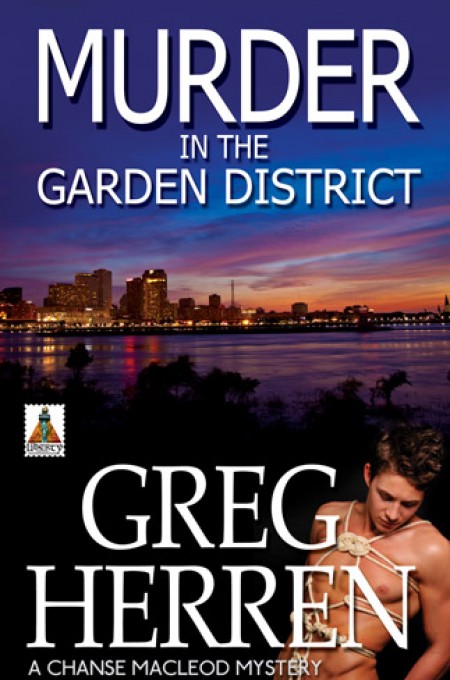
Interestingly enough, the plot of Murder in the Garden District is the oldest of all my books, dating back to the late 1970s/early 1980’s.

Weird, huh?

But the murder mystery plot I used for this book was the same one I used for that dreadful novel I handwrote between 1980 and 1984. In the book, the girl from the wrong side of the tracks winds up marrying the wealthiest man in town, who is more than twice her age and has a daughter only slightly younger than she is–and he also has a monstrous, domineering bitch of a mother who hated her new daughter-in-law. He is shot and killed one night, and the young wife is the primary suspect. I always liked that plot and story, and so when it was time to write Murder in the Garden District I took that plot and turned it into a Chanse mystery. I also was able to pull out a subplot involving his landlady and employer, Barbara, that I had always wanted to do and thought it made the most sense to entwine the two stories in this book.

I also wanted to deal with Chanse’s estrangement from his family, with the possibility of reconciling with his mother, who was now dying of cancer at MD Anderson in Houston. This book was, on almost every level, about mothers.

I climbed out of my car and immediately started sweating. Christ, I thought, tempted to loosen the uncharacteristic tie I was wearing, this better be worth it. I slammed the car door and headed for the front gate of the Palmer House. I’d been driving back from Houston when Barbara called, asking that I come by at four to meet a prospective client. She’d ordered me to wear a tie, which meant it was one of her society friends. And society friend meant deep pockets, which is always a good thing. I wiped the sweat off my forehead. So much for making a good impression, I thought as I opened the gate and headed up the walk to the house.

The Palmer House was a historic landmark of the Garden District, and also happened to be the home of my landlady and employer, Barbara Castlemaine, who’d inherited it from her first husband. Built before the Civil War, it was a monstrous looking Italianate house painted a dark burgundy with black shutters. Black wrought iron lacework adorned the upper and lower galleries that ran around the house. The big brick fence that provided it with a semblance of privacy on two sides of the lot leaned toward the sidewalk at a gravity-defying angle from the immaculately kept lawn. A black wrought iron fountain bubbled in the center of a two-foot high box hedge.

I rang the bell at precisely four o’clock. “Hey, Cora.” I said when the door opened.

Cora had been Barbara’s housekeeper for as long as I’d known her, and Barbara once told me that Cora had worked at the Palmer House since she was a teenager. I had no idea how old Cora was—her face was free of wrinkles and there were no signs of gray in her hair. She was wearing her black uniform with the white apron and little hat to match. Her face creased into a smile.

“Chanse! Always nice to see you.” She lowered her voice and stepped onto the porch, pulling the door almost closed behind her. “How’s your mama?”

I had always wanted to deal with Chanse’s family issues from the very beginning. If you remember, I originally planned this series as being seven books. At this point, it was Book 5 and I had gone off-plan with what I had envisioned, thanks to Hurricane Katrina. When it was time to write this one, I remembered that old plot from that old book of mine, which I saw as relatively easy to adapt to a New Orleans murder mystery–and a way, when I mapped out the old plot, to bring Chanse’s family back into the story and deal with his relationship, always fraught, with his mother. Chanse grew up in a trailer park with parents who were miserable with their life choices, drank too much, and weren’t the most loving of parents. As I thought about it, I also remembered a story I wanted to do with his brother–sending him back home to his small city in eastern Texas to try to clear his brother of a murder charge, and made notes on it, as well (it would become my story “”My Brother’s Keeper,” which was in Survivor’s Guilt and Other Stories). I merged the original plot with the issue of his mother dying of cancer, and I also took the plot from a now-dead Chanse book (I think this was supposed to originally be Book 4) involving his landlady/boss’ past, and folded it into Murder in the Garden District. It is his landlady that drags him into this case, as a favor to someone who knows her darkest secret, which she eventually has to reveal to Chanse.

I also wanted to write about a powerful Louisiana political family, which became the Sheehans of the Garden District, with the murder victim having just announced his candidacy for state-wide office. Warren Sheehan wasn’t a good person, and as Chanse looks further and deeper into Warren’s history and past…maybe his murder was actually for the best as he was a monster. His much younger white trash wife from the West Bank, his daughter from a first marriage, the grasping hateful mother…yeah, I had a lot of fun writing this book, and I think it’s one of the standouts of the series, in all due modesty.

Chanse’s landlady/boss, by the way, was named Barbara Villiers Palmer Castlemaine, which was actually the name of one of the most notorious mistresses of King Charles II of England; but I’d always loved the name and gladly appropriated it for this character.

This was also my last book for Alyson, as they went through another upheaval and everyone I’d worked with on the previous book had been fired and I now had someone new to work with. Alyson folded up its tent and closed up shortly after the book came out. i was never paid my final portion of the advance…and never saw another dime out of them. They kept my books in print and kept selling them…but never paid me another cent. I wasn’t sorry they closed–it was really the only way I’d ever leave them and take the series elsewhere, and it was a relief. I’d been given the runaround from them and had to constantly get used to new people to work with on every title I did for them…yeah, wasn’t sorry about this, but I was pretty pissed about being robbed.

.

The Second Time Around

…for Chanse, that is.

Oddly enough, the second Chanse was the fourth novel I published, and therein lies a tale.

Funny how with these earlier books there’s always a story, isn’t it?

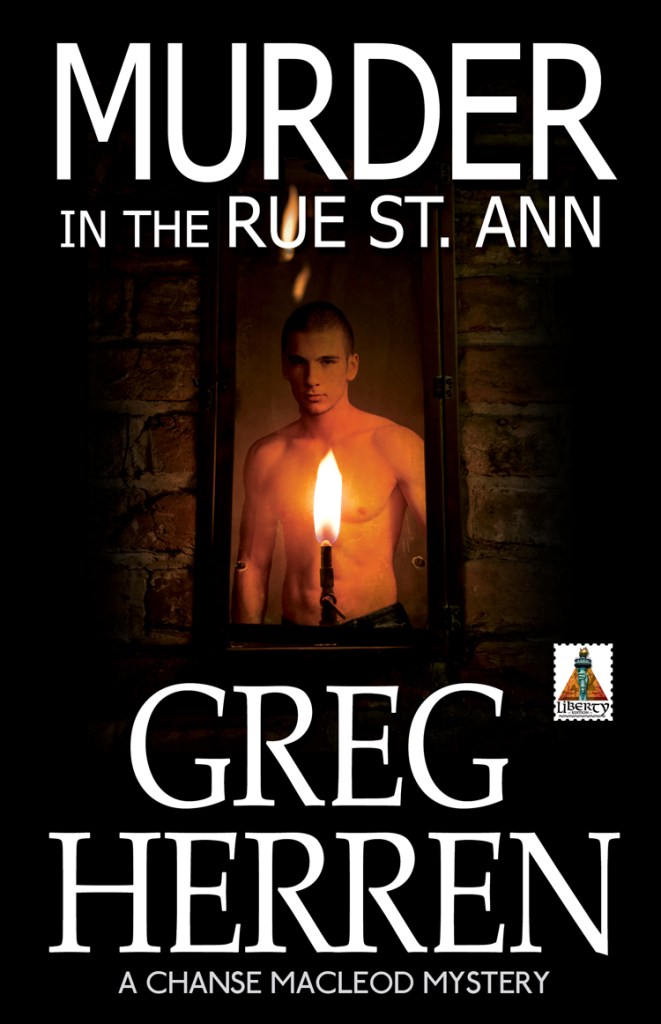
So, I sold Murder in the Rue Dauphine to Alyson in September of 1999–but the pub date wasn’t until February 2002. I saw no point in writing a sequel to the book immediately; primarily because there was a nearly two and a half year wait between signing the contract and when they were able to schedule me in. So, I figured I had about a year and a half before I needed to get it finished (everyone told me it would be released a year after the first, and in all honesty, what was the point of writing two or three books while waiting for the first to come out so the others could be scheduled?), and so, with time to spare and a lengthy period of time to “waste”, I decided to start thinking about the “what ifs”–what if the book sells super-well and is popular? What if this isn’t just a one-off standalone and could be turned into a series? The more I thought about it, the more I liked the idea and I liked letting my mind roam.

So, what would I do if the series took off and I needed to write more?

Being creative and full of energy in my late thirties, and thrilled to death that now I wouldn’t die without having published a novel, I reread the manuscript and my analysis of who Chanse was and why he was who he was, and I started mapping out a personal journey for him, that lasted several books. He was a cynical loner, with a couple of friends, and he was still really not adjusted to being gay when the first book opens. He was estranged from his immediate family of younger sister and brother and his parents; he never returned to Cottonwood Wells after leaving for LSU. He’s ashamed of his family but he also knows they will never accept his sexuality, either, so it’s very easy for him to cut them off almost entirely. So, his journey was going to be like that of the main characters of the show Moonlighting; each case would teach himself something about life and himself, and he would grow from the lesson learned in each book. Each book going forward would have a life lesson for him (Rue Dauphine did as well; the lesson was ‘you can’t just trust someone automatically because they’re queer.’); and the one he’d learn in the second book would be about love and trust (the third would be about sacrifice, the fourth would deal with his family, the fifth would have him fall in love with someone else, the sixth would deal with him dealing with losing his best friend to her husband and realizing he does need other people, and the seventh, the swan song for the story, would find him ready to finally commit to someone and live with them, so the series would be seven books long).

Shortly after I sold the first book, I again learned that lesson myself–the case in the first book was inspired by a gay con artist who’d gotten involved with a non-profit here in the city and then blew out of town overnight, having stolen/embezzled a shit ton of money and leaving a pile of debts behind. I had written to a local color magazine for the gay community (I can’t remember the name!) about writing for them. I wrote something for them, and they hired me to be editor of the magazine, as the business was expanding and it would free up the founder to focus on the new directions while I ran the magazine. It was fun, I got to work with a lot of fun new friends, and…then it all blew up in our faces. It was very similar to the earlier situation–a gay con artist blows into town, makes a lot of promises, runs up a lot of debt and then it just blew up completely. Turns out the guy was a con artist with a record of credit card fraud, and he was on the FBI watchlist so yes, I did get interviewed several times by the local office of the FBI.

The second book, which had the working title Murder in the Rue Royal, was based on that story, but I had already been playing around with a stalker storyline, and then I realized how I could cross the two stories into one seamlessly and write the book. I managed to get another first draft finished when a two-book deal to write the Scotty series for Kensington and Alyson dropped the option for the second book, saying “two mystery series with a gay main character in the same city by the same author are too similar to each other”–which I took as a challenge to make Bourbon Street Blues and Scotty as different as I possibly could to prove them wrong. So, the manuscript went into a drawer and I started happily working on Scotty instead…and again, it was a stand-alone that morphed into a series.

I took a streetcar named St. Charles down to Canal, crossed the street and walked down to Royal.

It was eleven o’clock in the morning on one of those splendidly sunny September days that makes you glad to be alive. Taking the streetcar had been a good idea. The long heat of summer had broken, and the air was crisp and in the mid-seventies. The sky was that blue unique to New Orleans, with wispy white clouds scattered across its expanse. There was just a hint of cool moisture in the air. There were a lot of people milling around the sidewalks on Canal— a good sign for the tourist season. Canal used to be the main shopping drag of the city, with huge department stores like Maison Blanche and D. H. Holmes. Those were long gone. They had either gone out of business or fled to the suburbs— now it was mostly hotels, fast food, and Foot Lockers.

There were hopes that putting the Canal streetcar line back in place would stimulate a recovery for the street. So far, all the construction work had simply made the Quarter difficult to get to from uptown. Add to that the chore of trying to find a place to park that would get me a ticket in two hours or cost ten dollars, and I was kind of glad I was having car trouble—the streetcar down and a cab home was very simple.

Not that riding the streetcar didn’t bring its own set of aggravations.  If the cars ran on any fixed schedule, I’d never been able to figure it out. You could wait for one for half an hour and then three in a row, all packed to the gills, would show up. The streetcar ostensibly operated as public transportation, but was also a de rigeur tourist attraction. There was no way of telling when you’d be able to catch one with a place to sit. But when you did, it was nice to find  a window seat on a sunny day and enjoy the city clacking by.

So, when Alyson chose to drop the Chanse series after I signed with Kensington, Murder in the Rue Royal went back into a drawer, which was fine–it wasn’t a good book–and I moved on with my life. The advance for signing with Kensington paid for our move back to New Orleans from Washington, and moving back here was absolutely worth ending the Chanse series for, seriously. I still didn’t have an agent, but I’d been signed to book contracts by two publishers already, and I figured it might be easier now. We accomplished the move, get our new apartment set up on Sophie B. Wright Place, and started putting our lives back together. I don’t remember the timeline of how it came to be, but I was still working with Alyson on my first and second erotic anthologies (Full Body Contact and FRATSEX), so I was aware when my editor left and a new person, that I knew slightly, moved from assistant editor to senior editor. We were talking on the phone one day about Full Body Contact and she casually mentioned, “I don’t see your second Chanse book here on the schedule, what’s going on?” and I told her the story, “Oh for fuck’s sake, when can you get it done by?” and that became the second contract for Chanse.

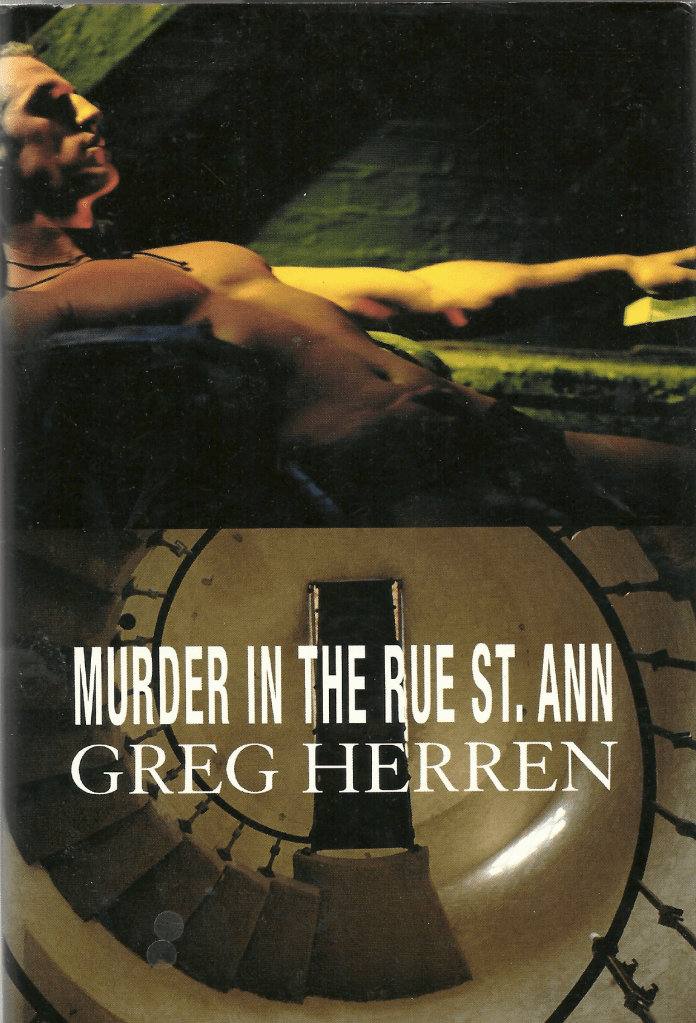
So, after finished Jackson Square Jazz and turning it in, I broke out Murder in the Rue Royal (the title had already been changed on the contract to Murder in the Rue St. Ann; my new editor didn’t like the alliteration) from the drawer, blew the dust off it, and reread the manuscript. I looked at my timeline for the series, and saw that this was the one where he was supposed to fuck up his relationship, but I didn’t see it in the manuscript. I reread the first book, thought long and hard about Chanse and who he was at this point in his life and after several long days of musing it hit me, between the eyes: jealousy. Jealousy would be what fucks up his relationship, and it only made more sense to me that Chanse would be the jealous one. Paul had a loving, accepting family and was more secure in and of himself as a gay man and what he wanted out of life. Paul was considering becoming ground-based at the New Orleans airport so he could settle down and have more of a life with Chanse, which also has Chanse very alarmed and makes the jealousy even more intense….so what would be the thing that would set Chanse’s jealousy off? Something from Paul’s past that Chanse didn’t know but finds out about in the worst possible way?

I had had some issues, believe it or not, with stalkers over the years. I had always wanted to write about a stalker, so what if Paul had a stalker? Why would Paul have a stalker? And then it occurred to me that Paul had a past he wasn’t ashamed of, but had never mentioned to Chanse. Not out of a fear that Chanse wouldn’t understand, but mainly because he had no need to tell him because it wasn’t anything dark. He had done some nude modeling when he was younger and he had also done some soft-core wrestling fetish porn, which is where the stalker came from. And what if I could work the con man he’s been hired by was someone Paul knew from the soft-core fetish porn? What if the guy contacted Paul because he’d been getting threatening notes on top of everything else going on in his life? And what if Chanse ran into Paul when he was leaving the con man’s offices, which brings all this out about Paul’s past? What if it shook a jealous, possessive, insecure Chanse enough for them to fight about it? And what if Paul disappears after the con man is murdered?

That was something I could work with, and so I did.

I’ve always called Murder in the Rue St. Ann my most under-appreciated work. By the time the book had come out, Paul had lost his eye to the muggers and we were in recovery mode. I didn’t do much of anything to promote the book (other than a signing at Outwrite in Atlanta, where I signed all of my books until they closed), and it kind of came and went quickly. I felt it was the most unappreciated of all my books. Jackson Square Jazz had come out earlier in the year before Paul was attacked, and it sucked all the oxygen up that year intended for me–it was the Lambda nominee, not Rue St. Ann–and I didn’t pay much attention to the book after it came out, either. The ‘christians” came for me a few months after the book’s release as well, and then Katrina…so yeah, Rue St. Ann got no press, got no attention, but somehow still managed to sell well.

I did have the next one planned, Murder in the Rue St. Claude, which there was a proposal in for, but Alyson was also going through other, deeply concerning changes that showed how little the higher-ups knew about anything, let alone publishing. But that’s a tale for another time, I think.

Every Day I Write the Book

Okay, that’s technically not true. I don’t write fiction every day, and I don’t work on a book every day. I generally don’t count the blog as actual writing, but it is writing, I suppose, so I do write that pretty much every day. But I’ve never included the blog in daily word counts or anything; just as I wouldn’t (and didn’t) consider emails, text messages, and social media posts as being part of the daily production output (although I suppose I should; I estimated how many words of blog I’ve done since starting this nineteen years ago–twenty in December–and it was a staggering amount, especially since it was probably dramatically under-counted), and never will.

I do think about writing fiction every day, even the days when I am so exhausted and brain dead I don’t think I’m capable of much of anything creative. I am always thinking, and it’s very rare that the brain turns off, unless I go to sleep (thank you, sleeping pills!); as long as part of my mind is awake and alert my mind will eventually wander into creative thinking. It’s just how my mind works.

During the Bold Strokes Book-a-thon last month, I was on a couple of panels, and as usual have decided to turn the questions sent by the moderators as the basis for self-promotional posts. It has been a hot minute–I’ve not done a hell of a lot of promotion since the surgery knocked me off my tracks for a few months–and while I know many other books have come out since and the Greg has a new book excitement amongst my readers has already died down long since, but what the hell, right? I’m nothing if not a narcissist (or have, at best, some narcissistic traits at any rate), and let’s face it, one of my favorite subjects is ME, so why not? No one has to read these self-promotional posts, either. Just scroll on by, if that’s how you feel; my feelings will not be hurt in the slightest, and I no longer have the anxiety of oh my god no one likes me how can I make everyone like me?

Thank GOD.

This is from the Prolific Authors panel1.

How do you ensure that your latest work is not similar to something you have written before? Can you even remember everything you have written before?

After the eighth (?) Scotty book, someone on social media commented on one of my posts asking how many car accidents has Scotty been in? I’d never really thought much about it, but in that moment I realized quite a fucking lot, and that doesn’t include my other, non-Scotty books, either. I realized that I had been in a car accident in 2008 (the first in decades, and I wasn’t at fault) and my car was totaled. It was so weird, and so different from anything I’d ever imagined being in a serious accident like that would be; it took me days to get the taste of chemicals from the airbag out of my throat and my voice was scratchy and husky for about a week or so after. So, of course, I wrote about it in my next book…and then I think I started having a car accident in a lot more of my books. There was also a car accident in one of the earlier Scotty books–Jackson Square Jazz–and so…I didn’t put one in Mississippi River Mischief.

I had never truly worried about repeating myself until that moment of oh my God do I have a car accident in every book? And so now, I try to be really careful. Am I just rewriting a scene I’ve written before? Scotty is on book nine now; I don’t think it’s feasible for me to sit down and reread the entire series every time I am about to write another one. I have always intended to make a Scotty Bible–what all the regular characters look like, their relationships to each other, where they live, little tidbits I’ve dropped over the years that are clues to their personalities–so that I could verify the information in the series and not have to go looking for it (because I am nothing if not lazy, so I’d put it off and forget it and then realize it’s too late to change that now! FUCK!). I also should go back and outline the books, too–just to have something easy to reference when writing another one.

Since I write more than one series and I also write stand-alone novels, I just realized I should probably do this with all of my books…but I am way too lazy to ever get that done. So I will go on trusting my brain and my memory…which is clearly a mistake!

When naming your characters, do you completely avoid names which you have used in the past or do you feel that the characterization alone is enough to differentiate?

I have names I always fall back on–I also tend to like names that start with L’s and J’s for some reason–so I have to be careful with that. I don’t keep track of all character names I’ve used, and I suppose it’s possible that I could “recreate” a character with a name I’ve used before, and even make them the same…but I also re-use characters; they cross over from series to series and back and then to the stand alones. When I was writing Death Drop, I was originally going to have Blaine and Venus be the cops; they were the cops in both of my previous series with a gay male protagonist, so why not keep expanding my New Orleans universe? I eventually changed my mind–I don’t know why, really, or remember, which is probably a more accurate statement–and changed the names; I think I wanted to differentiate the Killer Queen series and make it more distinct from Chanse and Scotty.

I’m worried more about creating characters that are similar to others I’ve written about more so than the name. I was thinking about starting another series–one with a true crime writer as the main character, and he’s already appeared in both the Scotty and Chanse series; I even had an idea for the story. But when I started creating him, I began to realize he was like a mash-up of Chanse and Scotty, so I abandoned the idea. Now that I am thinking about it again, so what if their backgrounds are similar? He’s nothing like either one of them, and it was a good story idea, so…you never know. I try not to ever conclusively rule anything out. I even think about bringing Chanse back every once in a while.

A question I’m sure most of you have received—do you ever worry that you will run out of ideas?

That’s the least of my concerns. I am more worried I won’t live long enough to write everything I want to.

After all these books, do you still enjoy the writing process?

The primary goal of my life has always been to try to surgically remove anything I don’t enjoy from my existence. I am very blessed in that not only do I get to write and tell my stories and people want to read them but I also have a day job that I enjoy and can feel good about the work I do there. So, the only way I would ever stop writing if I stopped enjoying it, and I can’t ever see that happening. Sure, I’ve had times where I had to step away because of burn out or exhaustion, but I always knew it was a break and I would come back to it again. It’s been difficult for me since my surgery in November to get back into it, but I am making progress. I love writing, and am so grateful this childhood dream came true.

  1. I used to bristle a bit when people called me prolific; I just love to write. But I finally stopped that nonsense and accepted the descriptor when I hit my tenth book…which was over thirty books ago. If that’s not prolific, I don’t know what is. ↩︎

Memory

Ah, how I love cats.

I’ve been putting my cats into my books now for quite some time.

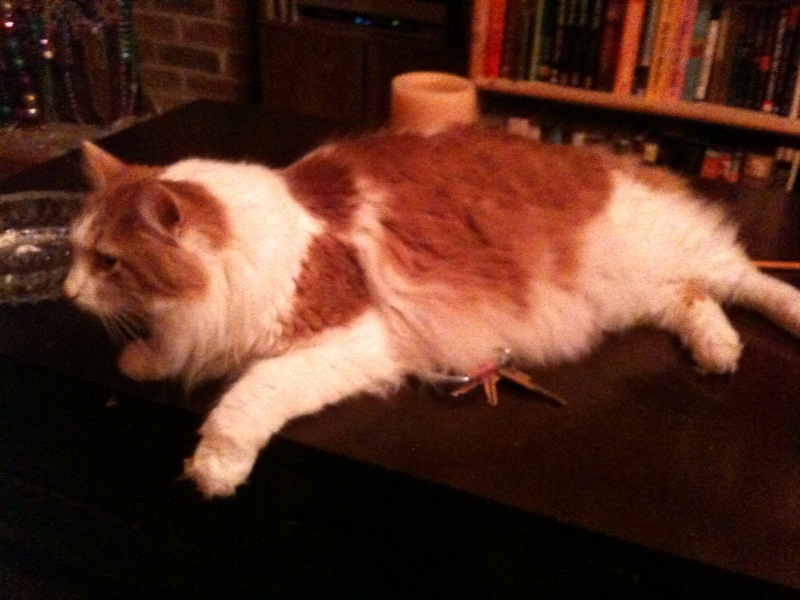
It’s kind of funny, because I never wanted to be one of those people–posting pictures of my pets, writing them into my books–until, of course, I actually acquired a pet. It never occurred to me to put Skittle into any of my books, until we lost him to a very rapidly advancing cancer when he was only seven.

Skittle was such a beautiful cat.

Skittle came to us when he was about six months old, when we were still living in the carriage house. (We’d gotten a mouse, and were advised by friends, neighbors and landlady to just get a cat…to which were both like “Really? We don’t want a cat and we know nothing about them” but after the third mouse sighting, it was, yeah, we need a cat. We got Skittle on Christmas Eve, 2003, as a bit of a Christmas present to ourselves. (We never saw the mouse again.) And cute and tiny as he was, we had no idea what a cat was like or what was normal behavior for them…and he had us completely charmed and under his thumb by the end of the day–head butts, making biscuits, cuddling and a non-stop purr machine. Skittle was beautiful, but was afraid of the outside for a while. He’d been found at about two weeks old in the middle of the road in a rainstorm, so the sound of cars scared him for a long time, and he was terrified of going outside for the first few years. Then one night I was coming home from a party–Paul was staying in the Quarter for the TW Fest, and I was home taking care of the cat–and the front door didn’t latch. When I got up the next morning the door was wide open, and Skittle was nowhere to be found. I called him a few times, and he came out from under the main house and sat down on the walk, nonchalantly cleaning himself as a very-relieved me ran and grabbed him.

After that, we had to watch and make sure the door closed because he’d dash out if he had the chance. He always let us catch him eventually, but he liked to explore and check for vermin and other live toys to torture. He was a great hunter, and could take a palmetto bug out of mid-air with a massive leap. He loved to play fetch, was very affectionate, and loved people, always winning them over by winding through their legs and rubbing against them, begging to be petted. He was also long-haired and I swear he shed that entire coat at least three or four times a year; his hair was everywhere. He also was smart–he trained me to know what four different noises he made were: food, water, litter box to be cleaned, and I either want to be petted and go to sleep on you in your chair. When I had a laptop as my primary computer (from 2003-2010), I had it sitting on a metal tray at eye level while I used a separate keyboard, and Skittle loved to go to sleep up there. When I got an actual desktop computer again, he lost his place to sleep while I worked, and he did. Not. Like. That. One. Bit.

He got sick first over Memorial Day that weekend, and he was dehydrated. The vet rehydrated him again and he was back to his normal self…but over Labor Day he was sick again. It was cancer, and from the first diagnosis that Tuesday after Labor Day and when we took him back a few weeks later….it had spread to all of his organs, and it became just a matter of time. Keeping him alive would require three months in the hospital, thousands of dollars, and no guarantee he would make it through.

We were both devastated when we brought him home that Wednesday night, and we made an appointment to send him over the Rainbow Bridge for Saturday. We spoiled him that Thursday and Friday–treats and tuna, as much as he wanted. Ironically, those last few days, he seemed like himself again to the point that I had to be the monster on Saturday morning and convince Paul it was better to let him go now, rather than watch him decline because he wasn’t getting any better; it was almost like he knew so he wanted us to remember him the way he always was. Paul spent that entire day after we got back in bed, while I was an empty shell of myself, removing all reminders–toys, food, etc. because every time I found one I’d start crying again, so I rounded them all up.

I wanted to get another cat, but Paul was so heartbroken, he wasn’t sure he could handle another so soon. (I was also heartbroken, but I also knew we had to rescue another one.)

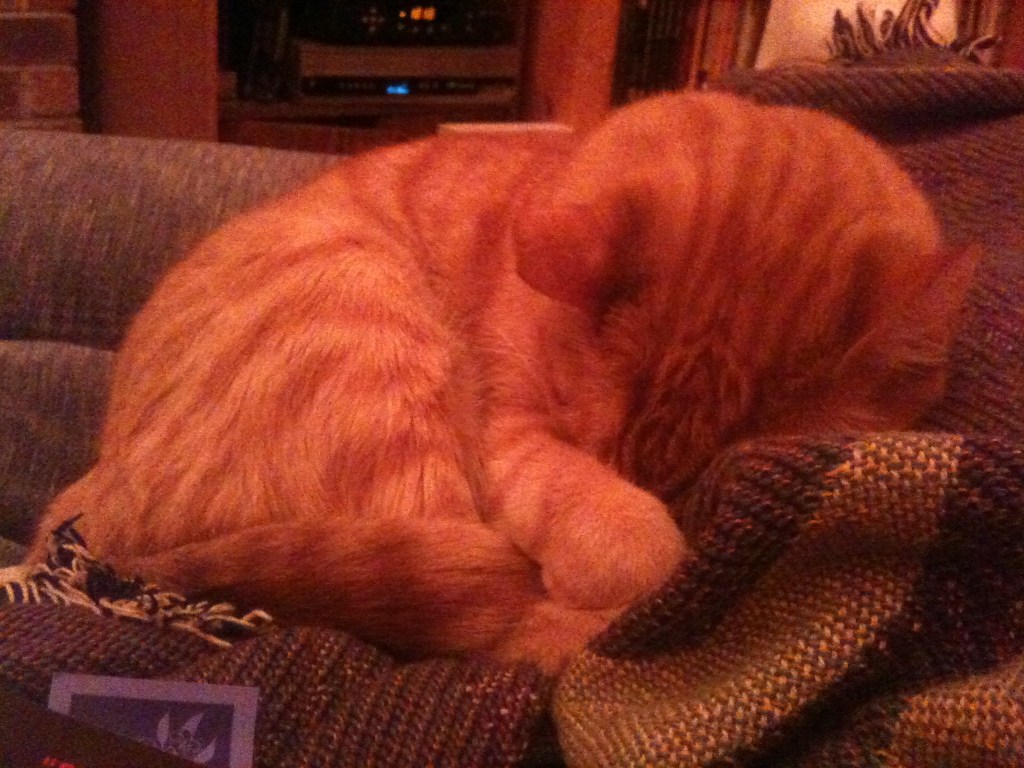
Scooter was such a handsome fellow, too.

Thursday the vet called to let me know Skittle’s ashes were ready for us to pick up, so I went over there on my way to work in the morning and picked them up. They had some cats there for adoption from the SPCA, and there was a beautiful orange boy, named Texas, who was so sweet I wanted to take him home right then. But I didn’t know if Paul would be upset if I brought home a replacement cat, so I didn’t, but I remembered him and thought I’ll talk to Paul about it tonight.

Paul was asleep on the couch when I got home from work that night, and so I turned on the television and thought, “I’ll ask him about Texas when he wakes up.” I read while something was on television–a Real Housewives marathon, I think–and about an hour later, Paul sat up on the couch, completely freaked out that he’d just seen a mouse looking at him from the top of the recycling bin. I hadn’t seen anything. He was just dreaming–and his subconscious was letting him know it was okay to get another cat. Thirteen years later, he still insists there was a mouse. So I told him about Texas, told him to go by and look at home and if he wanted him, to make all the arrangements and I’d pick him up after work. Paul fell in love with Texas, and nothing would do except that I pick HIM up from work and we’d go together to get him.

Scooter jumped out of the crate and hid under the coffee table, which was a bit concerning. But after about an hour of us leaving him alone, he came out, crawled onto the couch and onto Paul, laid down on his chest and started purring and headbutting him, and then he came over to me and did the same. We renamed him Scooter that first night, and for thirteen years, we had this incredibly sweet ginger boy.

Such a sweet boy. Around this time was when I realized that if I started putting MY cats into my work meant they would live forever. So I gave Chanse’s friend Paige (who hadn’t yet appeared in a Scotty book an orange and white cat named Skittle. I gave Scotty a cat named Scooter, and I can’t remember which cat I gave to Valerie in my cozy series; it was either Skittle or Scooter. Jem also has a black cat in Death Drop, but he is fictional–what else but Shade?

We had Scooter for thirteen years. He had a bout with diabetes, but insulin shots cleared that up (thank God; I hated giving him those shots) and he was mostly healthy. One morning last summer before I went to work I noticed Scooter was huffing–and having trouble breathing. I tried to soothe him, but I could tell he was terrified…and thought, Oh no, this is probably it for him, how am I going to break it to Paul? Later that morning he called me at work to tell me we needed to take Scooter in, and we were probably going to lose him. We took him over that morning, and they called us later to let us know it was congestive, and he wasn’t going to make it. They had him comfortable, but whenever they took him out of the oxygen thing he’d start huffing again. It was, alas, fatal, so I walked over there and held him while they put him to sleep and he crossed the rainbow bridge. I sobbed all the way home, and still can’t think about him without tearing up.

The house felt so empty without a cat. But finally we steeled ourselves and headed to the SPCA to pick out a new rescue.

Sparky!

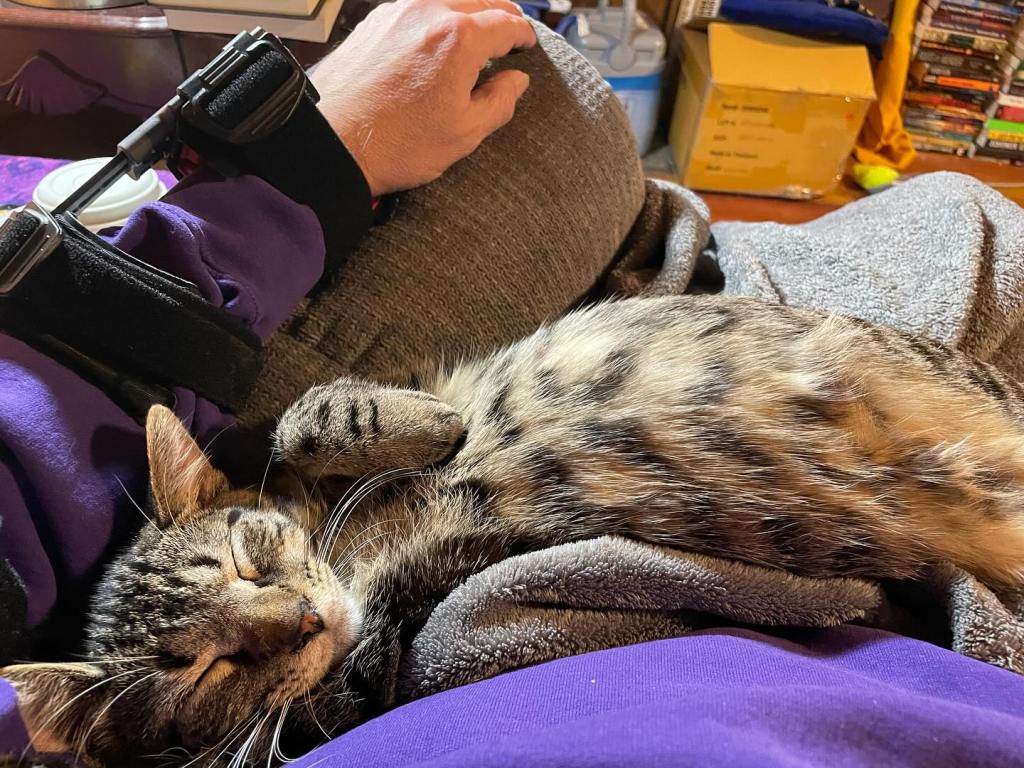
And we brought Sparky home, and I’ve been entertaining you all with tales of the kitten here ever since. He’s a darling, and he’s getting so much bigger than the little kitten with a big voice and adorable energy. He picked us out–just as Skittle did–and I love that he’s got orange coloring, as you can see above.

And I guess I’ll have to start another series so I can immortalize Sparky, too.

Lady Marmalade

He met Marmalade down in old New Or-leenz, strutting her stuff on the street, she said “hello, hey Joe, you want to give it a go?

That classic song by Labelle came out while I was in high school, during the early to mid-1970’s, and there was a lot of prurient young teenager thrill in knowing that the French lyrics translated to “do you wanna have sex with me tonight?” But the song–essentially about a hooker in New Orleans and a man’s experience with her–was an introduction to another side of New Orleans–one you wouldn’t find in the World Book Encyclopedia.

It was very important to me, for a variety of reasons, to make Scotty someone who embraced his sexual orientation and sexuality. I wanted to write someone who LOVED having sex, loved beautiful men, and felt no Puritan-American based shame about enjoying sex. Those kinds of characters were few and far between in gay fiction, let alone in gay crime fiction. After writing the typical miserable cynical bitter gay man with Chanse, I didn’t want to do that again. I wanted Scotty was to be the obverse of Chanse in everything, except their mutual love of New Orleans.

(This was, in part, in response to being briefly dropped by Alyson when I signed the Scotty series with Kensington, being told “two mystery series set in New Orleans would be too alike.” I took that personally, as an insult to my talent, ambition, creativity, and abilities…and I think I proved my point. Once Murder in the Rue Dauphine and Bourbon Street Blues were released–and Rue Dauphine sold super well for them and was nominated for a Lammy–Alyson changed their minds. I’m still mad at myself for not asking for more money.)

But while Scotty was highly sexually active, he never got paid for it. He also never did porn–although I did consider that at one point as an option; I thought a murder mystery built around a porn shoot would be interesting and kind of fun. And of course, in this book he mentions that he and the guys have recorded themselves having sex, and have sexted each other.

Scotty always preferred to keep his status amateur–but he was a go-go boy (stripper, exotic dancer, dick dancer, whatever you prefer to call the guys who dance for dollars in gay bars wearing various kinds of male undergarments), and he was certainly someone who was not averse to having a sexual encounter with a handsome stranger. (There’s a joke about this in Mississippi River Mischief where Frank comments after they’ve met someone, “I’ve been with you for almost twenty years. If you think I can’t tell by now that you’ve recognized someone but you’re not sure from where, which means you’ve probably slept with them, think again”–a paraphrase, but you get the gist; Scotty is often running into men who look vaguely familiar, and that usually does mean he slept with them a long time ago.)

New Orleans, despite it’s rather prim-and-proper high society set (on the surface, anyway), with the Pickwick Club and the Boston Club and the mysterious Mystick Krewes of Rex and Comus and so on, has always been a city of loose morals and freewheeling attitudes towards sex and sexuality. We had a zone where prostitution was legal for three decades or so (Storyville) and I wouldn’t be surprised if there were several bordellos operating within the city limits as we speak. There was the arrest of the Canal Street madam; and of course local author Chris Wiltz wrote The Last Madam, a biography of notorious Norma Wallace–the last well-known madam in the city. (Which I need to reread…) Bourbon Street was known for its strippers and vice for decades; there are still strip clubs on the infamous strip running from Canal downtown to Esplanade–and there are usually men in bikinis or something equally scanty on the bars of the gay clubs down down around the St. Ann/Bourbon queer nexus of the Quarter. When I was starting my deep dive into New Orleans/Quarter history, I wasn’t surprised to find out there were “stag” bars down along the riverfront along the levee; and if someone at one of the fancy houses in Storyville had a predilection for the Greek vice that needed scratching, the madam would send one of her bouncers down there to find someone willing to turn a trick, with a fair share going to the house, of course.

I think that’s fascinating, really; and something I want to explore in a story. I’ve started the story (it’s “The Blues Before Dawn” which I’ve mentioned from time to time) but can’t quite nail down the crime part of it. The set-up is great, though, he typed modestly.

I didn’t intend for Scotty to wind up in what is now known as a throuple–a three way couple, or a relationship of three people–on purpose. I wanted to create the dynamic of two men being interested in him at the same time, and have some fun with that in the first book. I absolutely did, and when I sent Colin away at the end of the first one, that was deliberate. I couldn’t decide who Scotty should wind up with, and I wanted Frank to be really who he logically should end up with–but this bad boy with a mysterious background who was so hot and sexy? I couldn’t NOT bring him back, and so I decided I had three books to wrap up the romantic dilemma. I wasn’t certain what the backstory of the dilemma would be, or how it would turn out, or how it would go–but when I was writing Jackson Square Jazz I found the perfect place and perfect way to bring Colin back. That book ended with them deciding to try a throuple to see how it works out. It was going pretty well until Mardi Gras Mambo–and I tried really hard with that book to not end the romantic story the way it ended in that book…and finally decided, since the series was actually turning out to be popular, that I would finish it by the end of the fourth book.

I’ve also not talked about it in the books or on this blog at all, but….they also have an open relationship. (Someone asked me about this at some point after the last book came out.) Nothing else would work for Scotty–he may not take advantage of the opportunities that pop up now the way he used to, but that’s because he has the freedom to make that choice. If he was forbidden from outside sexual relationships, he would cheat–and he doesn’t want to do that because that’s hurtful and wrong. He never wants to hurt Frank or Colin–but both of them are also away from New Orleans for long periods of time; Colin off doing his international agent stuff, while Frank is on the wrestling tour doing shows and promo events; so they are on their own a lot and temptation is always there–after all, all three of them are gorgeous–so while it is unspoken on the page, it’s an open throuple. And usually, Scotty finds outside sex to be kind of dull, unemotional, and not nearly as much fun as it is with one or both of the guys. That’s a character development arc. I also don’t show Scotty going out to clubs or waking up with hangovers with a stranger in his bed anymore, either. He does still go out–he loves dancing–but the gay bar scene has changed since he was younger and he doesn’t find it to be nearly as much fun as he used to.

Though he won’t say no to a hit of Ecstasy during Carnival or Decadence.

How subtle are the changes in Scotty as he has grown, aged and evolved? I think they are miniscule, but a revisit of the first two books in the series has shown a lot of change and growth over the years for him. He is definitely not that same flighty twenty-nine year old who booked a gig dancing at Southern Decadence all those years ago to make rent and wound up kidnapped by neo-Nazis deep in a swamp–I think he’s a little less flighty and a lot more responsible than he used to be…though he’s not as responsible as most people his age. Turning him into a property owner in the Quarter from a renter–and letting Millie and Velma ride off into the sunset in Florida as retirees–has also made him grow up, as now taking care of the property is his responsibility.

I will always be fond of my Scotty, though, and hope to keep writing him till I can no longer type into a computer or speak into a word-to-text app.

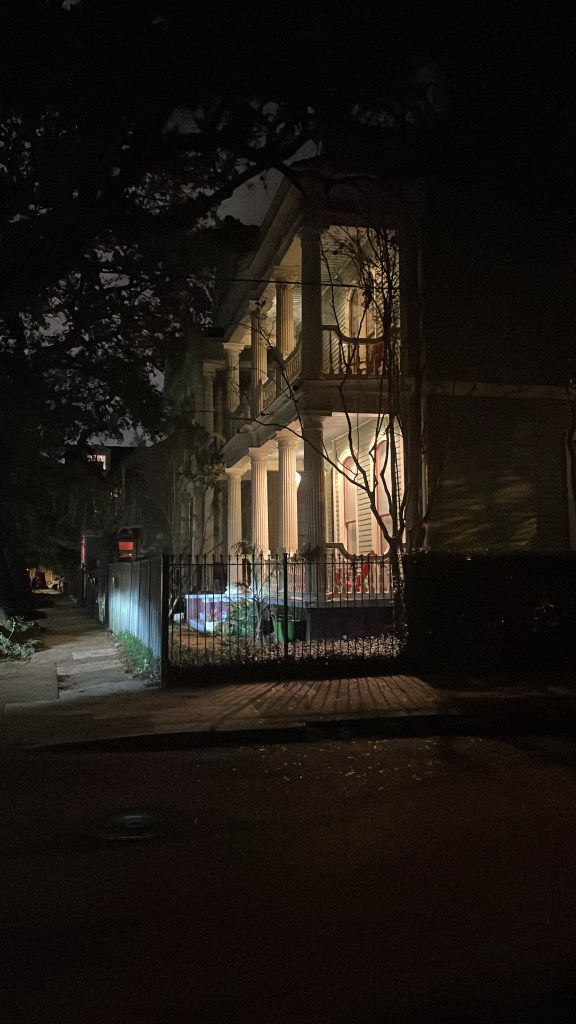
my neighborhood is so beautiful at night, isn’t it?

Things We Do For Love

I love to write.

I do, I really do. I was thinking about this the other night; I was thinking about my trip this weekend to spend time with relatives I’ve not really talked to much over the last forty or so years. Rereading Jackson Square Jazz (I finished last night) has also been revelatory. It’s a pretty good book, and rather ambitious in its scope, but there are some things I’m going to need to revise out of it–primarily words and phrases that have since become problematic. (They were always problematic, but unfortunately we weren’t as aware of these things back then as we are now.) But the purpose of the book overall in the scheme of Scotty’s growth as a person and development of his character definitely played out here, and it definitely worked, so I was rather pleased with the reread.

But it was (is?) interesting to see how I’ve changed and grown as a writer in the ensuing twenty years. I was also a little impressed at how ambitious this book was, in its scope and its story-telling; I don’t remember being that ambitious when I was writing the book. I remember where the idea came from, and how long it gestated in my head before it became Scotty #2; ironically, this was the plot I was going to use to try to write a mainstream mystery with Paige as the main character…at least, that was how I first thought of it. I will have to go back through the manuscript and start making corrections and finding the errors–with the actual finished book on the table beside me to consult for corrections and so forth–and I am also going to need to have the iPad around, so I can do searches in the other Scotty books to verify things. There were also a couple of interesting things I noted in the book as I was rereading it–I did a really good job of setting up the big twist in Mississippi River Mischief that was twenty years in the making–but there were also some things in there that I’ve not followed up on or I’m pretty sure are incorrect; the way I described the apartment on the top floor of Scotty’s building is way off; I am going to have to reread Vieux Carre Voodoo again as well and see what other continuity errors I’ve made with that building over the years. I also kind of liked Scotty’s not-totally-an-adult yet voice; he was a bit of a Peter Pan throughout his twenties, and didn’t start settling down until he was well into his thirties, which was also kind of interesting to me. This book also contains my first car chase (and my first writing about a car accident, for those who keep track of how many accidents Scotty has been in–Chanse has been in a few, too) and some of its geography was wrong; so I am going to need to clean that scene up a bit as well. I guess the best thing to do is reread the version that came out in print next, and put sticky notes in the places where I think I made mistakes in the manuscript to see if it got cleaned up in the edits.

I mean, I really tried a lot of shit in this book, and it actually worked! Good for me!

I ran errands on the way home from work yesterday (mainly so I don’t have to again today) and was a bit tired by the time I got home. I did get started on the chores before Tug decided he needed my lap, and of course, once I was in the chair and he was in my lap it was all over. I did manage to put away the dishes and do another load, as well as get started on the laundry, which I will have to finish tonight. Tomorrow is a work-at-home day, which will be nice. I do need to take the car in for an oil change and tire rotation before I leave on Saturday; whether I do that tomorrow morning or Saturday will depend on a number of things–primarily whether I hear from the dentist that my temporary plates are ready; I really would like to have those before I leave for the weekend because I’d really rather not have to remain on the soft food diet and try to figure out what to stop and eat on the way there and back.

I also picked up two books yesterday, which will come in handy for Halloween Horror Month: Elizabeth Hand’s retelling of Shirley Jackson’s The Haunting of Hill House, A Haunting on the Hill, and the Jonathan Maberry edited Weird Tales: 100 Years of Weirdness. I also got my three Anthony nominee certificates from this past Bouchercon in the mail, which was incredibly lovely and still doesn’t quite seem real to me yet. It still feels like it happened to someone else. I never got the certificates from the previous years–I didn’t know they actually made them for us–and the first time I actually picked one up was at Malice, when they gave out the ones for the Agathas (which was the first time I found out that they make these for the nominees. Just as well–I don’t have that much wall space and boy did that ever sound arrogant!) this past spring. It’s very nice to have these, too, but I am not sure where I can put them. Like I said, I don’t have much open space left on the walls of my kitchen/office. On the other hand, it may be time to mix that all up, anyway, and rehang things or replace things that have been up forever. Do I really need the glamour shots of Joan, Bette and Kate? Probably not.

And on that note, I am heading into the spice mines. Have a lovely day, Constant Reader, and I will check in with you again later.

Tension

Wednesday morning and another good night’s sleep down. I didn’t want to wake up this morning–rather, didn’t want to arise from the comfort of my warm soft bed and the pile of blankets that help me sleep better–but of course there’s Big Kitten Energy in the house now, and Tug wanted breakfast. So, at around a quarter to six Big Kitten Energy launched itself at me and started cuddling and purring and wanting petting as well as feeding. He’s currently galloping around downstairs and just having a marvelous time. Yesterday was his first day at home alone with both of us out at the office; so I wasn’t sure what to expect when I got home. What mischief had the bored little kitty gotten up to on his own–what had been knocked over, knocked off counters and/or tables, what had he found to turn into a kitten toy which probably shouldn’t be a kitten toy, and so on. He didn’t come galloping down the stairs either once I got home, either. But by the time the groceries were put away I heard him coming down the stairs, and then we repaired to my easy chair where we just cuddled and I started rereading Jackson Square Jazz instead of doing chores–which I will now have to do tonight when I get home…but who could resist Tug’s insistent little face that he needed a lap to sleep in?

Yes, in case you were wondering, Tug has indeed taken his place as head of the household.

As the salt intrusion continues to make its way up the river to New Orleans, the panic is getting more realistic. I stopped to make groceries on the way home yesterday, and there was plenty of bottled water. I bought another gallon to go with the case of smaller bottles I got last week–doing what was advised, merely getting water every time I shop–so the initial panic-buying of water has at least some to an end. There’s also a cold front on its way down here, supposedly arriving around Friday–but looking at the weather forecast, all it means is it will be colder at night, dipping down into the sixties while hovering in the high seventies/low eighties during the day. That’s livable, of course.

I was tired when I got home last night, so didn’t do much of anything other than cuddling with the kitty and watching Youtube documentaries about long-forgotten Byzantine emperors (it really is amazing how little history of eastern Europe we learn in school) and the new Matt Baume (probably not new) video about Some Like It Hot, which, while now widely regarded as one of the greatest screen comedies of all time, was highly controversial at the time and went through some serious battles with the censors. (If you aren’t watching Matt Baume’s Youtube channel, you really should; he does some amazingly researched videos about queer rep in film and television throughout the history of both media, and his book Hi Honey I’m Homo is essential reading material tracing queer rep in sitcoms.) Now I want to rewatch Some Like It Hot, which I’ve not seen in decades. I don’t think I’m going to run any errands on the way home today–there’s some things coming in the mail, but they can wait for tomorrow’s drive home (or perhaps even Friday, really; nothing important coming other than maybe some copies of books I’m in or have written); Claiborne heading uptown is a mess after you pass the I-10/Highway 90 spaghetti mess, as the far right lane is closed there where it meets Martin Luther King along with an off-ramp from the highway, so everyone is trying to get over to the left lane from the right ones and of course, the far left lane is also closed, so about five lanes are trying to compress into two or three right at the intersection, which makes for aggravating, patience-challenging snarls. I did find myself losing patience while I was driving uptown yesterday and I wasn’t as able to control the rising anxiety as well as I have been doing since learning that’s what’s wrong with the wiring in my brain. I think that was another reason I was so tired when I got home; the emotional rollercoaster triggered by the rise in anxiety on the drive wore me down…and there’s nothing better for peace and calm than a purring kitten sleeping in your lap.

I am so glad we got Tug.

It was also interesting rereading Jackson Square Jazz last night for the first time in years–I rarely reread my own work from start to finish; usually I just look for information inside an old Scotty that I need for the one I am currently working, and this experience of rereading (okay, I just started rereading it last night) this old book of mine–my third novel–has been revelatory. For one thing, I am a very different writer now than I was then, and wow, has Scotty changed both in voice and character over the last twenty years! Scotty has grown up quite a bit–kind of hard for that not to happen, given everything he’s been through since I first created him–and the book is actually kind of time capsule. I remember deciding not to update any of the Chanse books when it was time to put up the ebooks; it would have been a lot of work for not much return in terms of satisfaction; the books are of their time, and changes in technology and the world happen too regularly to waste time revising and updating old books. I did feel that urge a little bit as I read through the manuscript pages (I am reading the uncorrected and unedited final draft I turned in)–Scotty had just gotten his first computer at the beginning of the book, for example, and while he had a cell phone he hated it and called it his “hell phone,” which mirrored how I felt about cell phones at the time. On-line chats and chatrooms were still a thing when I wrote the book; how would one update or revise that? Have the messaging through Grindr, instead of instant messaging? It’s actually a lovely time capsule of a time long past–showing what it was like to be an unrepentant gay slut with a healthy sexual appetite who lived in or near the Quarter in the years before Katrina…which makes it all the more important that I not only make it available again, but I also have to make sure, as I go through it, that it’s consistent with the books that came later–so I am going to have to work on that long-overdue Scotty Bible, and it’s really past time that I get that done; I certainly have a stack of Scottys with post-it notes all over them that have been waiting for me to do something with them. I’ll keep rereading it when my brain is too tired to process something new, and I think I’ll slowly make my way through all of the Scottys, to make sure the consistency is there.

Maybe I should revisit my old work?

And on that note I am heading into the spice mines. Have a lovely Wednesday, Constant Reader, and I’ll check in with you again tomorrow.

Uncloudy Day

Monday morning and back to the office with me once I’ve woken up, cleaned up, and showered. It was a good weekend for the most part, mostly anticlimactic feeling after the visit with the surgeon on Friday morning; I’d say the best word to describe the weekend would be relief. I slept well last night, and yesterday was a nice, relaxing one. I cleaned and read my own works in progress and made some revising notes; I also started writing the opening of the next Valerie book in my journal, which was kind of fun. There’s a bit of a mess that needs to be cleared up before the book really starts going, but that’s what rewrites are for. At some point this week I’ll need to transcribe what was written into a Word file– I also need to do that with “Parlor Tricks,” a short story I freeform wrote some stuff in my journal for–and I also want to get back to writing again. I’ve been lazy lately–burnout maybe from the back-to-back writing of the most recent two–but I need to start working again.

But it’s always nice to revisit works-in-progress you’ve not progressed on or thought much about in over a year other than the occasional idle thought: oh, I should probably finish that novella or short story or whatever and then make a note or something and promptly forget about it. I’d not realized how far I’d gotten with a Chanse (!) novella until I read it yesterday, and even as i was reading it I was thinking tweak this or this would be a good place to go into this and oh you can restate that paragraph to make it a lot more powerful , which was nice. I also reread the starts of several short stories in progress, several of which I’d forgotten about, like “A Little More Jazz for the Axeman” and “Please Die Soon”–a really fun exploration of gaslighting as well as unreliable narration, and even the main character isn’t sure if she’s being gaslit or if her mind is fucking with her, which is a super-fun concept to work with. I also looked through “Festival of the Redeemer” and “A Holler Full of Kudzu” and “Spellcaster”; all of which have a lot more potential than I remembered or would have thought.

We got caught up on The Morning Show last night–it really is a strong show, kind of like The West Wing about a television network, in some ways, and the cast is simply superb–and then started watching Suspect on Britbox, which I am not sure I am sold on, to be honest. It’s a great concept and has a great cast, but…I’m so tired of “something happens to child of bad/absent father and so angry father must appease feelings of guilt by tracking down killers/rapists/kidnappers/etc. to avenge child they neglected while alive.” I fucking hate this trope because they always portray the dad as some sympathetic hero. Sorry, if you beget children, you need to be a good parent to them and present while they are alive, and “avenging” said child doesn’t make up for it. (I really think S. A. Cosby ended this trope forever with Razorblade Tears; Shawn took a very tired trope, breathed new life into it, and wrote the definitive book on the subject; no one else need bother anymore unless you do better than Shawn…and good luck with that.) Was Liam Neeson not available to play Super-dad in this? Someone needs to do a lengthy critical essay book about the trope of the super-father in fiction, the societal problems they mask, and their unrealism bordering on fantasy to the point of being inadvertent straight male camp. (Which really is what James Bond, Mission: Impossible, and The Fast and the Furious franchises are, just like the Marvel/DC comic book movies are–there’s a dissertation for a PhD in Women’s Studies for someone. You’re welcome.)

I also, in reading the stacks of paper-clipped drafts in one of my stack of inboxes, found another draft of “Whim of the Wind” I’d forgotten about–see what I mean about my shitty memory?–where I’d undertaken a thorough rewrite, and I’m not certain I don’t prefer this opening to the most recent attempt to revise the story. So I am going to compare/contrast the two of them, and see what comes out of it. I also am not certain I like the new ending I came up with, because it doesn’t really work with the tone and voice of the story (it’s also very reminiscent of how I’ve ended a couple of other stories lately, and I don’t like being repetitive, which I find in short stories a lot more frequently than I’d like, to be honest), so I am going to give it yet another old college try to see if I can’t finally whip this damned story into publication strength (after forty years, it’s the least I can do for it). Writing freeform in longhand yesterday in my journal also seemed to unlock something in my mind–the creative stall or whatever you want to call it–but I feel like writing again, and I don’t dread it or even think meh not doing anything today isn’t going to hurt anything, which is incredibly stupid (but one of those lies my brain tells itself to get out of writing).

And on that note I am heading into the spice mines. Have a lovely Monday, everyone, and I’ll check in with you again later.