Killer Queen

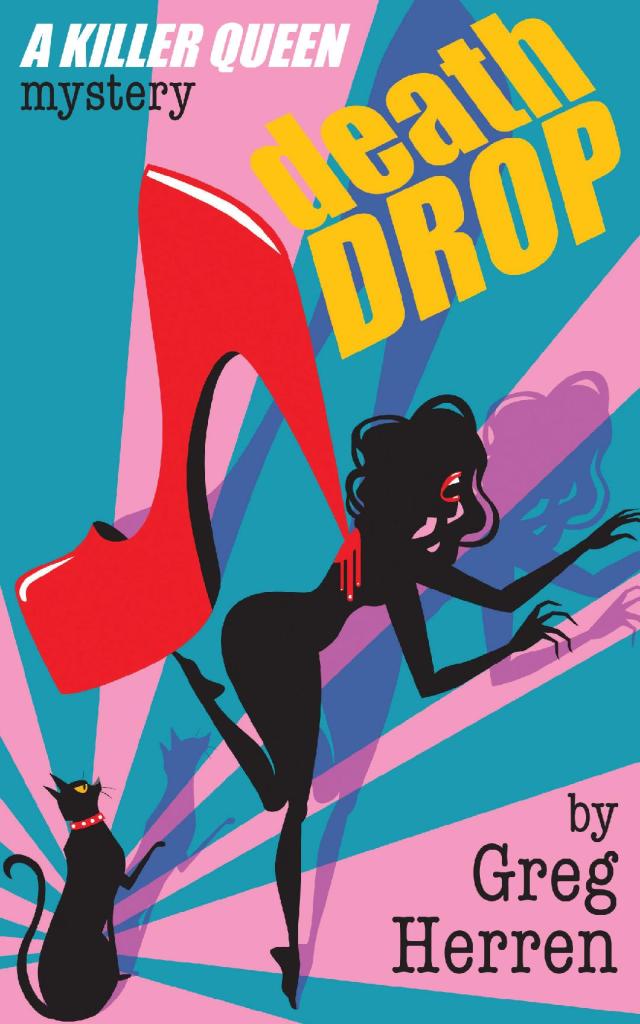
So, Greg, you have a book coming out from a new press in October, and the main character is a drag queen? What the actual hell?

Well, therein lies a tale.

I never thought I would write about a drag queen, in all honesty. It’s not that I’m opposed to drag or anything like that; drag has always been an important part of gay culture (I really wish someone would do a history of drag that’s not academic in tone and therefore accessible to everyone without a PhD) and I’ve always appreciated it as an art form. Yes, some queens are better at it than others, and there are some who are just really tragic…but I admire and respect every single one of them who puts on the dress and wig and heels and make-up and goes out there to perform. My own anxiety manifests itself whenever I have to perform or speak in public (although I managed to successfully control it and get through Boucheron panels swimmingly; I don’t think my stage fright is a thing of the past yet but I’m getting better); I can’t imagine the courage it takes to do drag that first time.

I also never considered doing drag because of my vanity–I wouldn’t look pretty in drag and I would want to be pretty. Shallow, party of one, your table is ready. I’ve seen many performances over the year and even have friends who do it, but my primary interest in drag has always primarily been in it as an art form and political statement critiquing gender roles, masculinity, and femininity; and it holds a very important place in queer culture. I once did drag, for a Showgirls-themed birthday party–I looked like Stockard Channing, which isn’t a bad thing–but it was more of a costume than a real attempt at doing drag. My friend Mark always wanted to make me up for Halloween or Fat Tuesday as Joan Crawford–it was the shoulders, the eyebrows, the narrow hips, and the shape of my face more than any striking resemblance to Ms. Crawford, I think–and while I was interested in being transformed into Ms. Crawford, one of the things I hated the most about doing plays in high school was the make-up. I hated having that shit all over my face, and it never did what it was supposed to in the first place (I inevitably always played old men, so they had to try to age me, and it’s not like we had make-up artists who knew what they were doing in high school.). And the padding? The wig? The dress? Not to mention the lack of pockets and the difficulty in using the bathroom– yeah, not for me. Drag does show up in my work sometimes–not very often–and the most fun thing for me about that is coming up with drag names for the characters. I know I’ve used Floretta Flynn a number of times, to the point where in my New Orleans universe she’s probably one of the bigger and most successful queens in New Orleans. Two of the biggest names in drag came from New Orleans–Varla Jean Merman and Bianca del Rio are both from here. We used to go to Drag Bingo hosted by Bianca and Blanche Debris at Oz on Sundays before she left for New York after Katrina–and Bianca was just as funny and just as big of a bitch then as she is now. She always drew crowds, and of course I met her a few times out of drag (I am quite sure Roy doesn’t remember me).

And believe me, I was very careful not to attract her attention while she was holding a microphone.

I also once wrote a short story that opened with one character saying in the Clover Grill, “You sure see a lot of tragic drag in this town at four a.m.”

Paul and I also were fans of RuPaul’s Drag Race for awhile, too–but like Project Runway, we stopped watching one season when it was obvious that it wasn’t being judged fairly (it was fucking blatantly obvious) and that was it for us. Don’t serve me competition reality when the competition is obviously rigged for a particular competitor. I do love some of the queens we did watch on there–it’s been amazing watching Jinkx Monsoon’s star take flight–and I always liked Tatianna, and just to name a few–Ben de la Creme, Adore Delano, and Manila Luzon are all fabulous. Paul follows a lot of them on Youtube, and of course I do enjoy Trixie and Katya’s We Like to Watch on Netflix.

And naturally, we love Bianca because she’s a New Orleans queen.

But it never crossed my mind to write about one as a main character. It wasn’t my milieu, so to speak (and just typing that made me want to bang my head on my desk. Take risks! I should always take risks in my work!), and so while every once in a while I’d think “maybe I should write a drag queen into this story”, I never did.

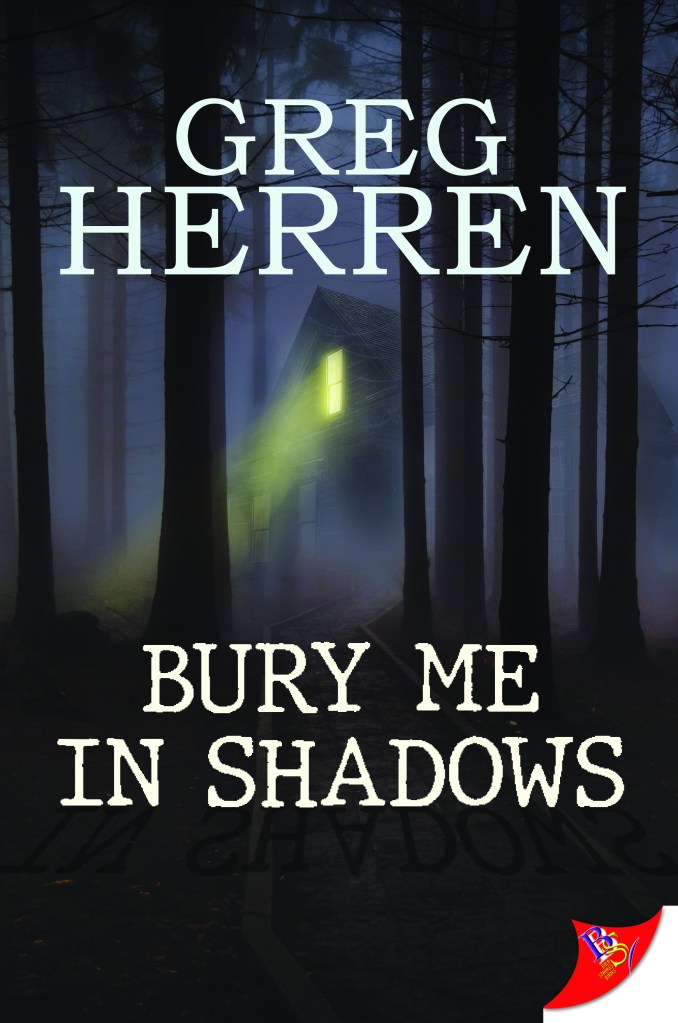
Last summer, I am not exactly sure when (2022 was pretty much a blur of misery), I got an email with a request for a ZOOM meeting with two very dear friends, along with another friend of theirs I may have met once over twenty years ago, James Conrad. He wrote Making Love to the Minor Poets of Chicago back in the days when I was a reviewer/worked for Lambda Book Report, and the purpose of the call was they wanted to talk about a possible project for me. You know me, I am always up for a new project and a new possibility…so you can imagine my surprise to find out what they wanted was for me to write a cozy with a drag queen main character. James owns and operates the Golden Notebook bookstore in Woodstock, and decided to start a publishing company through the store and wanted this to be their first venture into crime. I pointed out that I a) knew next to nothing about drag and b) I’m not really a cozy writer (the Scotty series can be classified that way except for a lot of cozy rule-breaking; and yes, I did write A Streetcar Named Murder, which wasn’t out yet and I wasn’t sure if it was even any good), they pointed out that I am a writer who can write anything (this is true, but there are some things I can’t and won’t ever write–and yes, as I typed that I was thinking there you go limiting yourself again–maybe those are the things you should be trying to take on), and then I also remembered a few things–some of my co-workers at the day job do drag, and in fact, my former supervisor had attend a “drag school” here locally, started by a queen who’d retired here from San Francisco after a lengthy and successful career in drag; Paul even knows the queen who runs it. I sent James an early electronic uncorrected proof of Streetcar, so he could get an idea of my writing style, and waited to hear back.

While waiting, I asked some of my co-workers if they’d be okay with me asking them questions–which of course they were more than happy to do–and the more I thought about it, the more it made sense for me to approach this in the same way I approached writing Streetcar–I knew nothing about antiques, so I made my character the same. So, if I am going to write about a drag queen, I needed to write her origin story first–and I decided to make her an accidental drag queen; forced to step in when a queen doesn’t show for a performance. But how would that work? I realized my character had to already know about hair and make-up, so I decided to make him a glam artist, hired to do make-up for women on special occasions and styling them. How did he wind up doing glam? His grandmother, who was from New Orleans, used to have her own Uptown beauty shop on Magazine Street that was frequented by upper class New Orleans women, who would also hire her for special occasions to style them. He spent his childhood summers in New Orleans; his grandmother was the only family member who had no problem with his sexuality, and she taught him all about hair and make-up (and classic Hollywood). He went to cosmetology school instead of college (his grandmother paid for it) and he worked in a high-end salon in Dallas until his grandmother died, leaving him the house and most of her money.

I also had a great idea for the opening, which I quickly wrote up and James liked it…and so we moved forward with the plans for it. I had a Scotty book under contract, and I knew I could juggle the two and get them both done on time.

Of course, I didn’t realize how much work it would be to turn MWA over to my successor, I didn’t know Mom was going to go into the final decline ending with her death during this time, and….well, hindsight is twenty-twenty, isn’t it?
“I don’t know, Jem,” Lauralee Dorgenois said, frowning and raising a perfectly plucked eyebrow as she looked back over her shoulder into the three-way mirror set-up in her dressing room. “You’re sure that this dress doesn’t make my butt look big?

Okay, I’m going to take a sidebar right here to give y’all some free-of-charge advice that is more than worth its weight in gold. There is only one correct answer to be given without pause or hesitation any time a woman asks you if something she is wearing makes her butt look big: “No.”

You always, always, ALWAYS say no.

If that is, in fact, a lie—you say “I don’t know if that cut drapes right” or “I don’t like what that color does to your skin”.

There are literally a thousand other options besides making the incredibly foolish mistake of saying ‘yes’ or the seemingly safe, non-comital ‘maybe.’ Marriages, engagements, friendships, and relationships have all ended over this question being answered incorrectly—and no, it’s not a trap question. Women are bombarded from childhood with images of what they are supposed to look like and what they are supposed to wear. They are taught to fear fat cells and fatty foods, spend millions on diets and gym memberships and personal trainers. They are gaslit into thinking that being any size larger than zero and not having big firm breasts and not having a wrinkle-free face aglow with the dewiness of youth means they are doomed to grow old alone and unloved. So, they try to fight aging—and the fear of being traded in for a younger model—by having poison injected into their faces, excess skin surgically removed, and their hair constantly colored and touched up. Centuries of societal and systemic misogyny, of telling women they don’t measure up, echo in those sad, simple words: does it make my butt look big?

My heart breaks a little every time I hear them.

However, I get paid to make them look good. My opinion must be honest, but I still need to be delicate. Why be hurtful when you don’t have to be?

I tilted my head to one side and brought my eyebrows together as I looked her up and down yet again. “You’re curvy, Lauralee,” I replied finally, fluffing the peacock feathers on her shoulders to spread them out further. It was true. Lauralee was about five seven, and maybe could stand to lose a pound here and there. Her hourglass figure had thickened a slight bit once she hit forty, but it was barely noticeable. I’d picked out a green silk dress for her because the color made her green eyes sparkle like emeralds. It clung perfectly to her hips and was cut low in the front to shove off the ample bosom, highlighted by an emerald pendant handing from a gold chain just above the cleavage. I’d braided her long auburn hair into a French braid that dropped about half-way down her back. I’d woven some extra pieces of auburn into the braid to make it thicker. “And there’s nothing wrong with that, you know. We’d put Marilyn Monroe on a diet today.”

Several years ago, I tried writing a third series set in New Orleans with a gay male protagonist. It was a character I had already created; he showed up in a couple of Scotty books: true crime writer Jerry Channing, who’d gotten rich on a true crime novel about a child murder case in the Garden District in the 1990’s called Garden District Gothic, (which also became a Scotty title when he and the boys got sucked into that ancient cold case) and wound up solving it. I had wanted to write a fictional story based on the very real Jeff Davis Eight murders, and thought who better to center in the story than a true crime writer researching the case for an article or perhaps even a follow-up book than Jerry Channing? But as I started developing the character out from the sketchy details provided in earlier Scotty books, I suddenly realized what I was actually doing was combining Chanse and Scotty into a single person, so I shelved the story–or at least, the new series, because if all I was going to do was just merge two previous characters into one, there was no point in bothering. I had then gone on to create a new series with a straight woman as the main character (A Streetcar Named Murder), and I was determined that, with this new potential series set in New Orleans, the last thing I needed was to just rip-off previous characters.

So meet Jem Richard, twenty-something glam artist and New Orleans home owner. Jem lives in the 7th Ward (not far from my day job office, actually; over on St. Roch Avenue between Claiborne and St. Claude), and the house flooded during Katrina–Jem remembers coming down with his family to help work on the house for his grandmother, Mee Maw of sainted memory–and I gave him a pole-dancing roommate who also works at Crescent Care. (Another Easter egg is the book opens with Jem being enormously disappointed to be ghosted by someone with whom he had several dates –a Tulane grad named Tradd. Bury Me in Shadows readers may remember Tradd as the asshole who broke up with Jake and sent him into the alcohol/drug spiral that landed him in the hospital when that story opens. I also want to use Tradd again somewhere else…but that is indeed a tale for another time.) Jem does well for himself, but has no health insurance and never is guaranteed work–but he also really doesn’t want to go back to working in a salon again, either. (He also sometimes books gigs with film, theater and television companies.) He’s kind of a lost soul, not really sure what he wants or what he wants to do with the rest of his life–but he also is lucky: he owns his own home, for one, and has several marketable skills. He kind of feels like he’s been spinning his wheels and not getting anywhere since coming to live in New Orleans. Jem has considered doing drag before–he’s very into costuming, and has won the Bourbon Street Award for Best Drag Costume on Fat Tuesday the previous two Carnivals–but he (like me) is haunted by stage fright. He did a play while in high school and the stage fright was such a horrible experience he gave up his dream of being a performer and started working as the make-up and hair person for the school productions.

So, when he’s hired to be a back-up glam artist for a fashion show at Designs by Marigny, only to find out the models were drag queens. A little taken aback, he rolls with the challenge, and when one doesn’t show, Jem gets pressed into service (he can fit into the dress). The show is being managed by the same person who runs the local drag school–a sweetheart named Ellis, whose drag name is Mary Queen of THOTS. Jem has a bad history with Marigny the fashion designer–she’d hired him todo the make-up for a previous show, and her check bounced–so the friend who recruited him to do the show makes sure he gets paid in advance. Of course, since the models are drag queens, the show attracts anti-drag protestors–there’s a suspicion that the designer, Marigny, deliberately used queens hoping to attract a protest and more publicity. Throughout the course of the evening Jem overhears Marigny arguing with several different people, and the next morning wakes up to the news she’s been murdered–and somehow Jem is not only a suspect but he’s also a target.

But why?

Jem also has a black cat named Shade.

As I said, while it had never occurred to me previously to write a drag queen character, the more I thought about it, the more I wanted to do so. Drag queens are currently under attack by the forces of bigoted evil. Part of this comes from the right-wing demonization of transwomen, spear-headed by hateful bigoted lying trash like Libs of TikTok (if you’ve ever retweeted the Axis Sally of the Proud Boys, know that’s why I blocked you and we will never, ever be friends again) and Moms for Liberty, who are both so fucking ignorant and clouded with hate that they think drag queens and transwomen are the same thing. The idea that children need to be protected from drag queens at all costs because it’s somehow sexualizing them is disgusting and ignorant and offensive on its face; merely rephrasing Anita Bryant’s vile claim that queers need to recruit children, i.e. all queers are pedophiles. They prove they’re liars on a daily basis and that it really has nothing to do with “concern” for children and everything to do with bigotry and hatred, because they never go after religious organizations, youth pastors, Boy Scout troop leaders, and Republicans–you know, the ones who are being convicted of child rape and child porn on a regular, almost daily basis –but only the queers are their primary concern. First off, not all drag queens are transwomen and not all transwomen were drag queens. Yes, some transpeople start their transition by doing drag, to get a better idea of whether or not they are more comfortable as a woman than as a man. I work with a lot of transpeople, and have for quite some time. I’ve witnessed people transition and evolve, and I’ve also seen the change in demeanor, confidence, and emotional well-being when they do.

What better way for a writer to fight back against ignorance than writing about it? And I loved the deliciousness of fighting homophobic and transphobic bigotry by writing a cozy series.

It releases on October 10th, and you can preorder it here, if you would be so kind. I am pretty pleased with it, to be honest, and here’s hoping it does well for James and the press.

Eperdu

And it’s a work-at-home Friday, which means we’ve somehow managed to survive yet another week of going into the office whilst living through more heat advisories. Hurray! Hurray! I slept much better and more restfully on Wednesday night, so I didn’t start the day off yesterday dragging and tired. I think I am finally getting used to getting up so early, as I get sleepy earlier than I ever have and even on days off, I wake up at six before going back to sleep for another hour, maybe even two if I am particularly lucky. Paul got his plane ticket to visit his mom, and so he is departing this coming Thursday for ten days. No Paul, no cat? What the hell am I going to do for ten days without Paul or a cat to entertain me? Hopefully, I’ll apply the lesson learned Wednesday night, where I come home and rest for a little while before springing into action. I want to get a lot done this weekend, if at all possible.

Paul and I had a lovely long chat the other night, which was nice. We’re often both so tired and worn out by the time he gets home we generally end up just watching television and not really talking all that much. But it was in the course of that conversation that I had a brilliant insight into the Scotty series and why I’ve been so hyper-critical and tough on myself with the most recent one, which will be coming out this fall. I’m not going to get into that here, but it was yet more evidence of how “not talking about your work in progress or how you feel about it” is bad advice; because in talking to him and saying it out loud and hearing it seemed to unlock some door in my mind where BLAM, now I know the answer, and so my questions over the last few years about whether I should keep the series going or not kind of became moot. Sometimes you really can’t see the forest for the trees, so talking it out, saying things out loud, actually is an enormous help.

I’ve been thinking a lot lately about myself and my work; and it’s been invigorating, really. I was telling Paul, during the course of that conversation the other night, that the main thing I remember feeling over the last few years was defeated; I felt defeated and run down and like I was always behind, which only amplified my own stress and anxiety and made me feel even more defeated to the point where I often felt helpless and paralyzed in the face of everything. Losing Scooter was the final jolt that just kind of made something in my head snap, for want of a better way to describe and/or say it. Everything has just been so miserable for so long, and so much completely out of my control, that it’s very easy to feel defeated, beaten down, and thinking well at least I’m old and have had a good life now that the world and civilization is burning to the ground isn’t really much help in picking up my own spirits, inspiring me and motivating me to get back to work. Reading Megan Abbott’s latest was, as ever, not only an inspiration for me to work harder and do better work but her brilliance was also kind of a kick in the pants for me; the depth of thought and perception she puts into her characters is what, for me, makes her books so powerful and special (the language usage and choices are also exceptional) and made me think I need to dig more deeply into my own characters, and perhaps spend more time carefully crafting sentences. I think I do that in my short stories, but because a novel is so much longer and I am always behind, I may not do it as much in the longer form as I should. (I did, I think, succeed with that in Bury Me in Shadows and #shedeservedit.)

I was tired when I got home yesterday in the broiling heat, but still managed to do some laundry and clear out the sink as well as put away the dishes in the dishwasher. So, I am coming into this weekend slightly ahead of the game. I tried getting to work on the laundry room shelves–which are absolutely disgraceful–but it was too much for me so I gave up on it and went back to the sink to wash everything now that the dishwasher was emptied and I could reload it (and yes, I wash my dishes before putting them in the dishwasher). I also worked on revising an old short story of mine. I hadn’t reread it in quite a while, and the last time I tried to do anything with it was a revision with severe tweaking to fit the theme of an anthology call (it was a terrible attempt I regretted submitting almost immediately after sending the email), and I realized several things. This is the story that never quite worked completely but my professor from my second attempt at taking a college level writing course praised so highly and told me was publishable, finally reawakening the dream and the goal again, made me believe, if only for a little while. I’ve thus kind of always thought of the story as sort of holy in some way; beautifully written and poignant, with a strong voice and so forth that I would always just kind of skim it and think, no, I still can’t think of any way to make this better. Yesterday evening I opened the document again and started reading…and started making changes. It seemed suddenly very bare bones and simple, which worked…but didn’t go deep enough, if that makes sense? Anyway, the story was about 2130 words when I started working on it (much shorter than I remembered as well) and am not even halfway into it and it’s at almost 3000 now, and its actually working. Yes, it’s lovely and simple in its original form, but it didn’t work because of the central core of the story–the late night visit to the graveyard to look for a supernatural occurrence that happens every year but only on that night. The legend, the ghost story if you will, was predicated on a “family history story” that I now know is apocryphal to the point of being trite (having addressed this very issue in Bury Me in Shadows), so I had to change that–and in changing that, the rest of the story started falling into place in my head. I hope to finish working on the story tonight after work. I also have page proofs to finish going over this weekend, and I want to work some more on the book I am currently writing. Hopefully, I can get the laundry shelves taken care of this weekend and the laundry room itself; Paul’s looming visit to his mother and absence for ten days frees up a lot of time for me to purge and clean and get shit done around here.

Excellent timing, too. I’d love to have the place shipshape in time for my sixty-second birthday.

I also want to spend some time reading this weekend. I know I am being overly ambitious and the weekend is only two days–which is how I always end up feeling like a failure; by setting myself up to feel that way by placing unrealistic expectations on myself that I somehow convince myself (I’m doing it right now in my head, even as I type this) that those expectations are not only realistic but feasible. It’s always a fun time inside my head, isn’t it?

I watched a documentary while waiting for Paul to get home (he had a board meeting), and it was about an app I’d never heard of that was apparently a thing but I was completely oblivious to while it was going viral. (You know me, always with my finger on the pulse.) It was interesting but weird; when it finished I wasn’t really sure what the entire point of making the documentary was since there really wasn’t a cohesive story. Some weird shit happened, sure, but nothing that made it stand out so much from the rest of the weird shit that is always happening to deserve a documentary on MAX (which I always pronounce the way Carol Burnett doing Norma Desmond would), but it held my interest for stretches of time, therefore keeping me from doom-scrolling social media. Twitter, er X (I changed my name on there to “Madame X”, just for shits and giggles) is literally burning to the ground right in front of us; I don’t precisely remember what evil thing Facebook did but it’s not much fun anymore, and while I do appreciate visuals a lot, looking at pictures will only hold my interest for so long. In a way it’s kind of good, because the more it bores or enrages or produces any kind of negative reaction from me the less time I spend there…and that time can be better utilized doing things that are productive. I understand its uses–and the continued belief that a presence there can somehow move books for you–but I don’t like how being on there for a prolonged period of time makes me start thinking and reacting. That kind of negativity and toxicity is something I’ve always, since I started recognizing it for what it was, been trying to cut out of my life, so why am I participating in something that not only envelopes me in it, but makes me want to behave or even just think in ways I’ll not be terribly proud of later? There are enough random blows in life that come at you out of nowhere that you have to deal with; so why would you invite more chaos into your life?

It doesn’t make sense. And I really don’t need to waste the time there. I’ll still use it, of course, to check in on friends and post my blogs and about events and things I am doing and books I am hawking, but I am trying to limit it. I’d rather stay in touch with people I genuinely care about in other ways that liking or replying to a post or tweet or x or whatever the fuck it is this week.

And on that note, I am getting another cup of coffee and heading into the spice mines. I’ll probably be back later on at some point; I seem to have gotten into the habit of multiple posts per day somehow lately. Not sure what that is about, either, but rolling with it.

Throughout the Dark Months of April and May

Well, yesterday felt normal–as opposed to all the energy and the fabulous mood I was in on Monday, yesterday I felt more like the way I usually do on a midweek morning coming into the office. It was busy and we did have some odd and unusual issues, like we did on Monday, but it all worked out and I managed to get everything done and get out on time. I wasn’ tired when I got home, but there were men working on the house on our side of the building until about eight o’clock, playing (bizarre) music (choices) really loudly and of course, hammering and drilling and all those other power tool-esque things construction workers use. I’d intended to get some things done, but this successfully irritated me enough to make me lethargic. Then Scooter climbed into my lap and started purring and head-butting me and that was all it took; I was down for the evening. I did manage, however, to do a load of dishes so the evening wasn’t a complete waste. I feel more awake and alert and energetic this morning than I did yesterday, so that’s a step in the right direction, I think. Tomorrow I’ll be working from home, and trying to get caught up on the data entry and quality assurance stuff, as well as doing some yearly, on-line trainings about safety that are due (biohazard, fire prevention, HIPAA, etc.) so I’ll have a pretty full plate tomorrow, which is cool. I hope to spend some time with Megan Abbott’s Beware the Woman this weekend, and I also would like to get some more entries finished–I have a review of Carol Goodman’s marvelous The Seduction of Water to post, and I have more entries about my own books to write. and on and on and on.

We watched more of Red Rose on Netflix last night, and we’re really enjoying it. It’s a horror series about a deadly app teens have on their phones; it’s an interesting modern take on the horror trope of the haunted device, and a very clever use of cell phone technology to base a horror series on. We’ll probably finish it over the course of the weekend, we’re about halfway through with four more episodes to go.

I’m also getting better at figuring out where I am at in my life and getting a grasp on everything I am doing and what needs to be done going forward. I want to spend the rest of this month trying to get one of my in-progress manuscripts finished, or at the very least, a first draft finished. I also am going to start trying to pull together another short story collection, and I want to get these novellas finished and out of the way, too. I am also aware that is a far too ambitious plan for me; there’s no way I’d be able to get all that writing done in twenty-five days. I also have another Alabama book swirling around inside of my head; I keep thinking Beau Hackworth, Jake’s boyfriend in Bury Me in Shadows, deserves his own story and would be the best place for me to continue on with Corinth County tales; I have others in progress (two novellas, in fact, “Fireflies” and “A Holler Full of Kudzu”) and numerous short stories. I have one actually coming out in an anthology this fall, predicated around breaking the Father Brown rules for a mystery story–mine was “include a supernatural element,” natch–called “The Ditch” that I’m rather pleased with. I want to revise my old story “Whim of the Wind” again, too, because I think I’ve finally unlocked the key to solving the problem in the story (with a grateful not to Art Taylor, whose story “The Boy Detective and the Summer of 74”) but have never gotten around to actually, you know, making the changes to the story.

That story, “Whim of the Wind,” is uniquely special to me. After being told by my first creative writing professor that I would never be a published author and to “find another dream” sent me into a tailspin that resulted in my flunking out of college and putting off seriously pursuing writing as a vocation for over a decade (there were flashes of time when I’d put some effort into it, writing stories and so forth before giving it all up as pointless and impossible for me) I took creative writing again when I went to a junior college in California in an attempt to get my GPA up enough to allow me to re-enroll in the California State University system. We were allowed to take that class twice, so I took it in both fall and spring semesters. The first semester my stories were derivative and trying too hard, but the teacher was very encouraging, which I wasn’t used to, so I decided to take it again in the spring–he urged me to do so. One day in class we were talking about stories and structures and writing, and I just had this idea pop into my head and I started writing in my notebook. All throughout the rest of the class I kept writing, and I finished it when I got home that night. That story was “Whim of the Wind,” and not only did the teacher love it (he wrote on the first page, excellent, you should send this out which was a huge thrill for me. The class also loved it and didn’t critique it very much–there wasn’t anything negative anyone had to say about it. But the story was flawed; there was a strong flaw in its premise which inevitably always got the story kicked back from anywhere I may have submitted it; editors would even admit they loved the story but it was missing something–but no one has ever been able to tell me what the story needed…and please remember, what I turned in was a first draft, I’ve never rewritten the story because I didn’t know how–and it’s really one of those “kill your darlings” examples; I can’t change the opening paragraph because it’s poetic and beautifully written and…I can’t bring myself to make any changes to that, and I suspect that’s really what it needs. Maybe I’ll take another look at it this weekend.

I’ve also been going through my journals looking for things–ideas, story fragments, etc.–that I’ve forgotten about, and I must say there’s quite a lot of that. I’ve even started writing short stories in my journal that I never finished and they are just sitting there, minding their own business and waiting for me to remember them so I can finish them. It’s also interesting seeing what I write in those things, too–sometimes I just free-write, which is open it, take a pen and just start scribbling whatever pops into my head, which makes for a kind of interesting (to me) look at how my brain operates when free associating…I am sure some future psychoanalyst (or even current, for that matter) would look and see a need for medication if not multiple psychoses. I also free associate write when I am playing with ideas for stories or novels in progress, so that’s always interesting to see again later.

And on that note, I am heading into the spice mines. Have a lovely Thursday, Constant Reader, and I will be back with you later.

Song of the South

I am both of the South and not of the South.

I was born in Alabama but didn’t grow up there. I was two years old when my parents migrated north in search of work, good jobs, and a better life for our family. My parents, however, were very Southern, so I was raised with their values and beliefs (which were very Southern and of their time) but being confronted with very different values and beliefs at school every day opened up my mind in ways that it may not have been had I grown up in Alabama. Our neighborhood in Chicago, near Lawndale Park (our nearest major cross street was 31st and Pulaski), was the perfect representation of America’s vaunted ‘melting pot’; our neighborhood was filled with first or second generation European immigrants; many from eastern Europe, who fled either before or after the war. There were Czechs, Poles, Austrians, Hungarians, and Serbs; in the fourth grade we even had a Muslim girl from Yugoslavia. She had the most delightful first name which I’ve never forgotten–Zlatiça–even as her last name is lost in the clouds of memory. It was also very confusing trying to figure out where the immigrant kids (either they were born in another country or their parents/grandparents were) came from, given that the maps of Europe had been redrawn barely twenty years earlier. The Czech children I knew didn’t identify as Czech but rather as Bohemian; they also called their language that. It took years of study and reading up on history to realizing Bohemia became Czech after the first world war; for many years I believed Bohemia still existed under that name but had somehow been folded into another country or something; I don’t remember. I do remember being confused. Until I finally wrapped my mind around the post WWI renaming of the region, I always just assumed Bohemia was a German region. Reading history didn’t help much in that regard, as Bohemia was part of the Holy Roman Empire for centuries (in fact, the Thirty Years’ War kicked off in Bohemia).

But there was a lot of racism in our neighborhood too; the white European immigrants detested the brown immigrants from Mexico and Central America; I vividly remember the way our babysitter would sneer the word Mexican when referencing anyone brown. There was also a lot of strife in Central America at that time; I think both Guatemala and Nicaragua were enduring civil wars of some sort, hence the influx of Central American refugees and immigrants. I remember Martha, a girl in the sixth grade, telling me about how soldiers came and shot up her village, killing dozens of people she knew and members of her family. She was very calm and unemotional as she told me about it, which is pretty remarkable for a child who couldn’t have been more than ten or eleven, talking about a trauma she witnessed when she was six or seven. (Now I know she was dissociating; and I do remember her telling me calmly that she felt like she wasn’t even there as it happened; like she was watching it all happen from a distance.) Ironically, we became friends because we exchanged Nancy Drew or Hardy Boys mysteries; this conversation came about because we were reading a Hardy Boys book set in Central America; I want to say Footprints Under the Window, but it may have been something else….but she wanted me to know that the depiction of Central America in the book was nothing like the reality.

My grandmother used to tell me wonderful stories when I was a kid about my family history and the history of the county we’re from in Alabama. As a wide-eyed innocent and naïve child, I believed everything she told me, and always wanted to fictionalize those stories. I was in my early twenties when I wrote a short story based on one of those tales; about the Lost Boys and the evil renegade Yankee soldier who burned the house down and presumably murdered the two boys of the house. The story was called “Ruins,” and while I was pleased with the story I felt the story was too short; there was more to the story than I could fit given the length restrictions. I always thought of the story as a kind of an abstract or lengthy synopsis of the novel I would write someday. But it was also a Civil War story, and I wasn’t sure how I could write a Civil War ghost story without being, frankly, offensive. I tucked it away in a drawer and would think about it from time to time–usually when driving through Alabama on my way north–but still couldn’t wrap my mind around it. I worried and fretted and feared and doubted myself constantly. I told the story once to another writer friend of mine, and she urged me to write it…in fact, she hounded me about it for about twelve or thirteen years before I decided to take a deep breath, put on my big boy pants, and take that risk.

“Was this an accident, or did you do it on purpose?”

I opened my eyes to see my mother standing at the foot of my hospital bed, her heart-shaped face unreadable as always. The strap of her Louis Vuitton limited edition purse was hooked into the crook of her left arm. Her right hand was fidgeting, meaning she was craving one of the rare cigarettes she allowed herself from time to time. Her dove gray skirt suit, complete with matching jacket over a coral silk blouse, looked more rumpled than usual. Her shoulder length bob, recently touched up as there were no discernible gray roots in her rigid part, was also a bit disheveled. She wasn’t tall, just a few inches over five feet, and always wore low heels, because she preferred being underestimated. Regular yoga and Pilates classes kept her figure slim. She never wore a lot of make-up, just highlights here and there to make her cheekbones seem more prominent or to make her eyes pop. Looking at her, one who didn’t know better would never guess she was one of the top criminal attorneys in the country or that her criminal law classes at the University of Chicago were in high demand.

I could tell she was unnerved because she’d allowed her Alabama accent to creep slightly back into her speech. She’d worked long and hard to rid herself of that accent when she was in law school, because she said no one took her seriously when she spoke or else thought she was stupid once they’d heard it. The only times she used it now was when she wanted someone to feel superior to her, or she’d been drinking, or she was upset.

It worked like a charm getting her out of speeding tickets.

I hadn’t been asleep, nor had I been awake either, hovering in that weird in-between state where it seemed like I’d been living for the last three or four days.

“It wasn’t on purpose.” I managed to croak the words out. My throat was still raw and sore from having my stomach pumped. My lips were dry and chapped, and my eyes still burned from the aftermath of the insane drug-and-alcohol binge I’d gone on in the aftermath of the break-up with fucking Tradd Chisholm. “It was an accident.” I shifted in the hospital bed, trying to sit up more, the IV swinging wildly. The memory of that last and final fight with Tradd flashed through my head.

The main character in the original short story was only twelve, and the cousin he shares the adventure with was supposed to be fourteen. I was writing a lot of short stories at the time set in Alabama, with the idea to tie them all together in some ways–and was also reading a lot of Faulkner at the time, so yeah, a fictional county in Alabama where all the stories were set and were interconnected was kind of derivative; I kind of smirk to myself now when I think about the hubris of aspiring to be Faulkner-esque, especially at that time, when everything I wrote was pretty much garbage. Ah, the hubris of youth. But I did write a lot of “Corinth County” short stories back in the day, and while the writing may have been atrocious, the idea behind them and the core themes were good and had potential.

When I started thinking about turning the short story into a novel, I soon realized that the characters were too young, so I aged them. I originally aged them to teenagers, and in the first attempt at a rough first draft, I got about two chapters in with my main character, Jake, being banished the summer before his senior year to help take care of his dying grandmother back in rural Corinth County. The original first line was something like The summer before my senior year my mother ruined my life. Properly self-absorbed, narcissistic, everything’s about me teenager, right? My original thought was he was a student at a Catholic all boys’ school, was openly gay, and had a crush on a classmate…and having just found out said classmate had gotten a summer job lifeguarding, managed to get himself and his female best friend jobs at the concession stand at the pool, so he could be around his crush and see him all the time. His banishment for the summer had to do with his lawyer mother accepting a co-counsel role in a major trial in California and being gone; she has also kicked out her fourth husband (a much younger tennis pro) and so she can’t leave him alone in Chicago for the summer. The other option was staying with his father and his second family in the suburbs, which was equally unappealing, so he choses Alabama…and is picked up at the airport in Birmingham by another teenager who’d been taken in by Jake’s grandmother when his own mother died. This character, Kelly Donovan, was originally meant to become close with Jake and participate in all the mysteries Jake encounters at his grandmother’s. I also wanted to play with Jake’s being strongly attracted to Kelly, who is some kind of distant cousin, and straight.

But I scrapped that beginning, too. Would a young senior in high school in rural Alabama, a star athlete, be so accepting and open to Jake’s sexuality? Probably not…and he would also be worried and nervous about his patron’s grandson coming to stay there. As I delved more deeply into Jake’s character and who he was, I started thinking it made more sense for him to be older. Why not have him be a student at Tulane, and living in New Orleans? But if he was living in New Orleans, what would make his mother exile him to rural Alabama for the summer? And the more I thought about Jake…the more I realized there was underlying trauma in his life. I didn’t want his mother to be homophobic, but her mother, the dying family matriarch? Yes, yes, that worked better. I made him a loner, but someone who didn’t want to be a loner. He didn’t ever feel like he had friends at his Catholic school; and coming to Tulane he met his first, real boyfriend…which ended up being a disaster. And then realized, what if he goes on a binge–easy enough to do in New Orleans–after a bad break-up and winds up in the hospital? And if he had tried once before to kill himself…yes, yes, this is a MUCH better backstory and pulls the actual plot of the book together much better.

I also knew I wanted to touch on themes of homophobia in the rural South, as well as the horrors of modern-day Southern racism and the South’s racist past.

When I started doing research for the book, I soon learned that many of the old family/county stories my grandmother used to enthrall me with were all apocryphal; almost every region of the South has some version of the stories she told me; the story of the Lost Boys, a local legend which was the foundation of the book, pops up all over the old South–almost every state and every region of the old Confederacy has a version of the story, complete with renegade Union soldier (think Gone with the Wind), and so I decided to address that trope in the book while also using it. But I also added another layer to the story–the Lost Boys may not be the only ghosts at the old Blackwood place, which has a tragic and bloody and horrifying history, as does the entire county. I also started lessening Kelly’s importance to the story–he’s still there, he’s still a character who also gets a big reveal later in the book–but Kelly’s behavior to Jake is abominable and homophobic, establishing some conflict between the two of them as well. Part of this was because of the change in the story, but then I needed to partner-in-crime as well as potential love interest, so I came up with Beau Hackworth (the Hackworths are a large and poor family in the county; I’ve used that family before in stories; my main character in Dark Tide was a Hackworth from Corinth County).

And of course, when you’re writing about a Southern rural county and the Civil War, you cannot avoid the issues of race, prejudice, Jim Crow, and enslavement. I wanted to make it very clear that this wasn’t some “Lost Cause” romantic fantasy that perpetuates the lies and mythologies that sprang up in the South decades after the actual war ended. Jake’s mother raised him not to be racist or prejudiced, as she tells him several times, “We do not take pride in the fact our ancestors enslaved people. The heritage is hate, and don’t ever forget that.” I did wonder if I was being too generous to white people with this, but on the other hand I wasn’t interested in writing from the perspective of someone racist. I will be the first to admit that I worried about being offensive in this book; the last thing I would ever want to do is be insensitive on the subject of race. But I also knew and trusted my editor enough to know she wouldn’t let me get away with anything, and I also had to trust myself to handle it all sensitively. There were a couple of things she saw in the manuscript that could potentially be considered problematic–but they were also easily fixed.

I was very pleased with the end result, and I do think it is one of my best books. I was absolutely thrilled when it was nominated for two Anthony Awards last year at Bouchercon.

And it also goes to show that you cannot play it safe, and things that scare you are precisely the things you should write about .

(For the record, I will add Cheryl A. Head’s Time’s Undoing is one of the best crime novels ever written about racism in Alabama. Beautifully written and brilliantly told, it should really be required reading.)

The Tinderbox of a Heart

Yesterday I was very tired. I’ve not been sleeping well this week, but at least on Tuesday I felt rested; yesterday I just felt tired, physically and intellectually. I did get some work done last night on the book, and today I feel very rested; I slept wonderfully last night, which was absolutely marvelous, quite frankly, and am very glad for it. Today is the last day in the office for me until a week from Monday–this is the weekend I’m going north to see Dad (I may not be around on here at all once I leave on Sunday) which is yet another reason why I need to get this revision finished. I feel confident that I can get it done before I go on this trip; I keep thinking that I’m almost done…

I haven’t started reading the new Megan Abbott; I’d hoped to spend some time with her new book last night but I was fried when I finished working on the book and just collapsed into my chair to provide a cat bed for Scooter. It was very cool yesterday morning when I left for the office, but the inferno had returned by the time I got off work. A small but welcome respite from the summer’s heat (Facebook memories reminded me that we’d been in a heat advisory at this time of year several times over the past few years–proving yet again the long COVID of last year did affect my memory. I saw an article I meant to read yesterday that said even mild cases of COVID caused a type of brain damage, or brain rewiring of a sort, which needs to be studied. I know my memory changed during the pandemic, but I also turned sixty during it, too. Was it the long COVID experience I had that rewired/altered my brain, or was that an after-effect of the trauma imposed by the shutdown and everything that followed in its wake? I can’t remember if I was having memory issues before I got sick last summer; but if that was indeed the case, it got much worse after I recovered…and was really bad while I was sick. It’s so hard to tell, so hard to remember, you know?

A case in point about my memory has been these last two manuscripts I’ve been working on since last fall. For one thing, it took me a lot longer than usual to write and revise both of them (I must also provide the caveat that the end of the last year and the beginning of this one was a very difficult time, all things considered) but as I am revising this manuscript I am continually amazed at how little I remember of it, let alone remember writing it. Again, this is very alarming, but at the same time I can also honestly say I’ve never stacked books like this before while writing them; going from one to another and then back and forth again repeatedly; I don’t remember much of the Scotty book, to be honest, either–but I remember more of it than I do this one. It’s a good manuscript, though; I like the characters and I like the story, and it seems like they want me to write a sequel to it, which is also kind of cool; I already have a title for the next one and an idea, amorphous yet still an idea, for what the story would be. After I get back from Kentucky, I’ll tell you a bit more about this project; I realize I’ve been very mysterious about it, but there’s not any reason for it other than my own superstition and fear of jinxing things by talking about them–which is just another symptom of my own neuroses, of course.

There are two tropical systems trying to form in the Atlantic right now. One looks like it’s going to head up the Atlantic coast, or will never come near land and just head north before dissipating; the other looks like it’s heading for the Caribbean Sea and the Yucatan. Yay for hurricane season, he typed sarcastically. I was also thinking last night about future Scotty books; I think I am going to cap that series at ten. I think Mississippi River Mischief is the ninth Scotty, which would only give me one more title for the series. No, scratch that; I will make no promises or any commitments regarding the future of that series, and will leave it the way I always have in the past: if I get an idea for one, I will write another one.

What I have been thinking about lately is that I want to write books I feel passionate about; I want to tell stories and write books that will have some kind of impact, or require a lot of emotional and intellectual work on my part, if that makes any sense. Last night Scott Heim tweeted an excerpt from the opening of Jim Grimsley’s beautiful novel Winter Birds, and I remembered again how much I love Jim Grimsley’s writing and his authorial voice (I inevitably default, when it comes to Jim, to Comfort and Joy, which is one of my favorite Christmas stories of all time; but his other work is also lyrical and poetic and beautiful, too). It also made me think about my own writing and my own authorial voice. Do I have a distinctive authorial voice? Can someone read my work without knowing its mine and be able to tell that it’s mine? I know that I can write beautifully and poetically when it suits the story; I know I can do a voice that can sound haunting and sad. I try to always do different things when I write out of series; I want to write different types of stories and use different kinds of authorial voices and write in different styles. I think my best work inevitably tends to be Gothic in voice and style; those are certainly the favorites of my own works that I’ve written (Timothy, Bury Me in Shadows, Lake Thirteen, Sorceress, The Orion Mask), and whenever I write about Alabama, I seem to lapse into this very lovely, literate-sounding voice. I’m not quite sure why that is, but it’s been mostly in short stories; I do want to write more about Alabama and my complicated relationship with my home state. I am passionate about writing both Chlorine and Muscles, which are on deck for me; I am wavering about whether to leave “Never Kiss a Stranger” as a novella or whether to expand it out into a novel; I can see it working either way. I don’t want any of the novellas to turn into novels, frankly; I don’t have the time necessary left to me to write everything that I want to write in the first place. But am I trying to force novels into novellas because that’s how I decided to write them, or are they better off as novellas? These are the things that make you want to load your pockets with heavy stones and walk into the river.

And LSU did beat Wake Forest yesterday, forcing a third game to determine who plays Florida in the finals of the College World Series. GEAUX TIGERS!

And on that note, I am heading back into the spice mines. Have a lovely Thursday, Constant Reader, and I will check in with you again tomorrow.

But I’m Not

Sunday and I slept late this morning and i am not a bit ashamed of it, quite frankly. The opportunities to sleep in are rare these days–getting up early so often for so long has adjusted and shifted my body clock in ways I’m getting used to but don’t like, and chief among those ways is the inability to sleep in. Yesterday I was up before eight, for example, but this morning it wasn’t even nine when I got up, and I could have easily stayed in bed longer. But there’s spice to mine today, and while there is still a lot of it to get done, I am feeling very good about things this morning. I actually felt really good about them yesterday if I am going to be completely honest. I got two chapters done and finished editing a manuscript (not my own) and turned it in to the publisher, which felt marvelous to be finished with that. Deadlines and juggling projects is something I’ve always done, but something I’ve noticed since the pandemic shutdown is deadlines are much more stressful and demanding on me, and take a bigger emotional toll than they used to. Probably part and parcel of the long COVID rewiring of my brain, but whereas before, I relished the pressure and it drove me to work harder, now it shuts me down and/or depresses me, which has the exact opposite reaction it used to have with me: instead of driving me, I think oh I’ll never get this all done so why bother and I end up blowing things off completely. Depression is quite the bitch, you know.

But I am very pleased with the work I got done yesterday and look forward to today’s work. I also did a load of dishes and laundry yesterday, and some cleaning. But after I was finished with work for the day, my brain was too fatigued to read so I watched movies on television, discovered two gems I’ve been wanting to revisit: Cruising and The Last of Sheila. I wanted to watch Cruising because I remember all the controversies about the movie while it was being filmed (yes, even in rural Kansas we heard about the gays being mad about the movie). I eventually watched it in the mid-1990’s. Paul is a huge Al Pacino fan, and when we moved in together he owned almost the entire Pacino filmography on videocassettes, so one night we watched Cruising. I didn’t much care for it when I watched it the first time, but I’ve wanted to watch it again–when I watched I wasn’t yet a published crime writer–because the story itself is interesting to me. A hot young ambitious cop sent undercover into the gay BDSM/leather community to look for a serial killer? The question of identity and sexual confusion that could arise from playing the part, which entailed going out and picking up (or being picked up) by gay men expecting some sex? I mean, you have to admit that’s a great set-up and concept for story. The Oscar winning director William Friedkin (he won for The French Connection but was much better known for directing The Exorcist) failed and ended up with a deeply flawed film. Pacino was also robbed of a far greater performance due to the homophobic cowardice of the either the director or the studio. Rewatching, the film’s flaws are even more apparent, but it’s a shame. It could have been a great film–and it does remain one of the few Hollywood films that actually depicts gay bar culture of the late 1970s the way it was–but I don’t know what went wrong with it, but it’s still a great idea. I also liked seeing New York as dirty and grimy, the way it was during that time period before gentrification came to Manhattan. It’s also fun seeing old movies where people who went on to greater stardom later had bit parts or cameos; Ed O’Neill popped up on screen at one point, as did several others that made me think, hmmmm.

If I had the time or inclination, I would take that basic framework of an idea and turn it into something stronger than the film. There was also a book it was based on, but it’s rare and used copies are insanely expensive. It also reminded me of a gay crime novel I read as a teenager living in Kansas; I may have been in college, I don’t remember, called A Brother’s Touch by Owen Levy. The book was about a brother who comes to New York to look into his estranged brother’s life after he is murdered–they were estranged because the dead brother was openly gay–and begins to question his own sexuality after being enmeshed into the gay community of Manhattan at the time. It was reprinted recently and I got a copy (by recently I mean in the years since Katrina; I have no concept of time and its passage anymore); I should move it closer to the top of the TBR pile. I wish I could still read as voraciously as I used to…something else that has slowed down with getting older.

After watching this I wanted to rewatch a classic old crime film of the old school, The Last of Sheila, which I’ve always loved. Co-written by Stephen Sondheim and Anthony Perkins and directed by Herbert Ross, it’s a whodunit worthy of Christie herself, in which a widowed producer invites some film community members on hard times for a week on his yacht. Everyone invited was at the party a year before where the producer’s wife Sheila wound up being killed by a hit-and-run driver, and the producer, whose known for loving to play games, has come up with a game for his guests to play. Everyone gets a card, and every day they will stop somewhere they will look for clues to the identity of whoever holds the card of the day–the first is a shoplifter, the second is a homosexual–and of course, the game turns dark and ugly when the producer host–played to sadistic asshole perfection by James Coburn, is murdered…and it turns out the game their host was playing had layers none of the guests knew about going in. The cast is a perfect time capsule of early 1970’s stardom: Richard Benjamin, Raquel Welch, Dyan Cannon, James Mason, Joan Hackett, a beautiful young Ian McShane, and of course, Coburn. It has twists and turns and surprises, and is so markedly clever that it’s hard to describe without spoiling anything…and the surprises are what make it such a great and fun film. This was one of our Sunday movie-after-church movies, I think; I do remember seeing it in the theater and being impressed and amazed. One thing I absolutely loved in the rewatch was the books scattered over every set–they are all mystery novels by Agatha Christie, Ngaio Marsh, Ellery Queen, and Erle Stanley Gardner, which should tip the viewer off that you are in for a mystery influenced by the master crime plotters of the time. It’s really a shame the film wasn’t a success, because it would have been amazing if Perkins and Sondheim had collaborated on more scripts like this one. As I was watching, I kept thinking how much I would love to write a puzzle-type mystery like this one; I’ve always feared such a thing was outside of my wheelhouse so I have always been afraid to try. Who knows? Maybe I will.

I feel very rested this morning and I am not dreading diving into the book this morning, which is nice. I don’t think I have the mindspace and bandwidth to work on multiple things all at the same time anymore, if that makes sense. I don’t know if it has to do with the long COVID rewriting of my brain waves or what, but the last few books I’ve written or worked on–going back to Bury Me in Shadows–have been more stressful than fun for me to write. Writing on a deadline is always stressful, and I rarely, if ever, actually make deadlines. But having multiple projects going on at the same time now feels like I am not devoting enough of my time and attention to any of them, let alone all of them, and that makes me feel uncomfortable about the work. Of course, my last three books–and my last anthology–have all gotten a lot of mainstream award attention, which makes it seem weirder. Which, of course, makes me wonder if the stress and the heavy burden pressure of multiple projects going is somehow making me produce somehow better work than before, and do I really want to mess with that at all? It never ceases to amaze me how neurotic I am about being a writer, and how afraid I am that any change or variation means it’s all over for me now.

I do wonder sometimes if other writers have that same secret fear: that the well will eventually run dry or that we’ll forget how to do what we do. People like to call me prolific; I’ve slowly come to the conclusion that I am and that it’s not a bad thing (I always try to figure out if being called something is bad–which goes back to being called a fairy as a child and thinking he was saying ferry and being very confused). John D. MacDonald was prolific; so were Ellery Queen, Agatha Christie, and Erle Stanley Gardner. I think my insecurities came into play when people started calling me prolific; I am so used to being insulted that I assumed it must be an insult as well, like it was something I should be ashamed of or something. I’ve decided to embrace it as a compliment. I am sure there are literary writers who produce one novel every ten years or so who would think it an insult, but I don’t respect them so don’t really care much what they think. And if I am not as prolific as I used to be–which I am not–it’s nothing to be ashamed of; I’ve gotten older, have gone through some things, and I don’t have the energy that I used to have. My imagination still rages out of control at any and all times, of course, but I don’t have the energy to fool myself into thinking every idea I have will turn into a short story, an essay, or a novel. I certainly won’t live long enough to turn all the ideas I already have into longer works of whatever style and kind.

And on that note, I am diving back into the book. I am getting another cup of coffee and putting some bread in the toaster for later, and I may or may not do another Pride month entry later today. Anyway, you have the loveliest Sunday possible, Constant Reader, and I will check in with you again later.

Blood Bitch

Saturday morning in the Lost Apartment.

The ZOOM thing I had to do yesterday went well; I am always self-conscious about these things. But I got to read from #shedeservedit, which I hadn’t done before, and it was lovely to be able to say that it was nominated for both Agatha and Anthony Awards. As Constant Reader is obviously aware, I don’t really boast or brag or broadcast about good things that happen to me, but damn it, I’m going to for just a goddamned minute. I can’t say for sure that #shedeservedit was the first queer book to get an Agatha nomination, but I can say for sure it’s one of the few that ever have–and I feel very confident in saying it was definitely the first time a book from a queer press has been nominated. Bury Me in Shadows might not have been the first queer book nominated for an Anthony, but it was certainly the first queer one to be nominated in two different categories. Last year’s Best Paperback Original category for the Anthonys was the first time two queer books by two queer writers from two different queer presses were nominated (shout out to the amazing Cheryl Head, who shared the honor with me!). I am also one of the few authors to be nominated in two different categories at the Anthonys in the same year; this year saw me become of the few authors ever nominated in three different categories in the same year.

When I actually take the time to stop and think about it, it’s actually pretty fucking amazing and groundbreaking. I certainly never saw any of that in my crystal ball, or would have ever dared to dream about that happening. I’ve also been nominated for a Macavity, a Shirley Jackson, a Lefty, an Agatha, and a total of seven nominations from the Anthonys (I did win the first time I was nominated, for Best Anthology for Blood on the Bayou), which is a pretty nice resume, really; I’d be super-impressed by those credentials if they belonged to someone else, so why am I so reluctant, cautious, scared to take pride in my own accomplishments? It’s one thing to be self-deprecatory about your writing and your career, but awards are something you have no control over, so why not take pride in them? If the mentality I was raised with was “be humble and let other people acknowledge your work” why can’t I be proud of myself when other people are acknowledging my work?

Heavy heaving sigh.

I slept well again last night. Paul got home late and I spent most of the evening reading nonfiction. I was very tired most of the day yesterday, but got chores done around the work-at-home duties and thus the apartment isn’t a complete and utter disaster area this morning. I do have a load of dishes to put away and have some more things in the sink that need to go into the dishwasher, but overall the kitchen/office is in pretty good shape this morning (the living room is an entirely different story, of course). Today is Gay Pride, and Saints and Sinners has a booth, so Paul will be gone most of the day. Yes, I am not going to Pride again this year, because i have to stay home and get all of this work done, or at least progressed a bit further. It’s going to be hot as hell out there, but I have the entire apartment to myself for almost the entire day, which never happens, so I need to take full advantage of this opportunity. I’d like to get caught up with several chapters revised today; have to look over another manuscript, and I want to get some reading done today. I am probably also going to take some time to answer some emails and try to get the inbox emptied out. I also need to write another Pride post–but I don’t want to write about anything negative, so maybe I’ll go finish one of my “wistful memories about the past” posts; I’ve started several of these and it would be kind of fun to finish them; at least fun for me; I never know if any of my Constant Readers find these entries fun. In a way, it’s kind of like working on my memoirs, and just remembering things the way I remember them–whether I remember correctly or not–is okay for a blog post, methinks. Posts about gay joy are a lot more fun than the ones about what it’s like to be oppressed.

And maybe later I can get caught up on Superman and Lois, which I forgot that I was watching. Whoops! Not sure why this season didn’t grab me the way the previous ones did; the Jonathon Kent recasting kind of threw me off a bit, but that’s really not fair to the replacement actor now, is it? No, not really. And I should spend some time with the book I’m reading today as well, so I can finish it because really great books (the one I am reading is also great, make no mistake) but this is what I have on deck now: Beware the Woman by Megan Abbott; All the Sinners Bleed by S. A. Cosby; The Hunt by Kelly J. Ford; Everybody Knows by Jordan Harper; and Ozark Dogs by Eli Cranor (lots of Southern Gothic there, which is delightful, to say the least) and there’s also these old anthologies I ordered from eBay. I need to write a lot today; I’ll probably did into the next chapter as soon as I finish this and do some filing to clear my mind and get it ready to write fiction.

Writing about my award short-lists had me thinking once again about what to do with my papers. The thought of having to catalogue them myself is unpleasant and means it would never get done (why is there no ebook of Jackson Square Jazz, Greg?), and I had pretty much come around to the point of view that I could easily just throw it all away but thinking about the award recognition made me question that decision all over again. But…while the blog itself only shines a light on a very carefully curated (right?) segment of my life, I also talk about writing and so forth on here, so future scholars (should my post turn of the century career be of any interest to any such future scholars) can always just come here and read to learn about me. My papers are just manuscripts, anyway; marked up and revised and scribbled all over–and I have most of that as a digital record, anyway. So, yes, that makes the most sense, and the project for this summer will be getting rid of all this paper hanging around here and up in the attic and over in the storage place. Besides, I’m not that interesting, really. I don’t think I am an influential voice in queer crime writing, either, and probably within a few years of my mandated-by-will cremation, will be most likely forgotten. I am actually fine with that, to be honest; very few writers from every generation are remembered–probably less than ten percent from every period, really; and whether or not I helped raise the bar for queer crime writers isn’t for me to say.

And besides, the thing I am most likely going to be remembered for is longevity, anyway, and I am fine with that.

Which sounds like a lovely place to segue into the spice mines. Have a lovely Saturday, Constant Reader, and I will be back at some point.

Flowers on the Wall

I love Carol Goodman’s work.

I don’t remember which of her books I read first; I am thinking it was The Sea of Lost Girls, but that may be wrong (probably is; my memory is for shit these days) but I DO know I first met her in person at the HarperCollins cocktail party at Bouchercon in St. Petersburg, and she’s just as marvelous as a person as she is a writer. Since then I’ve delved into her canon of brilliant books–have yet to come across one that is even slightly disappointing–and each one makes my fandom flame burn even more brightly.

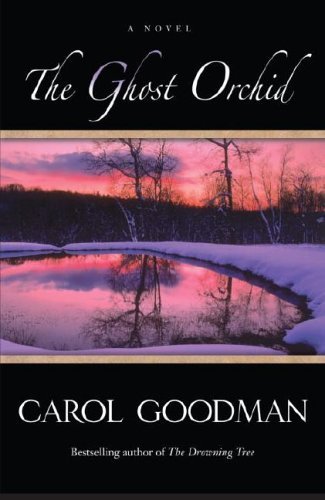
And then in Minneapolis, over lunch with a few friends at that wonderful Irish pub near the hotel, I discovered the clincher: she is also a Dark Shadows fan. She even joked, “I’ve realized that most of my books are really about Barnabas Collins and Maggie Evans”–which made me think even more deeply about how much of an influence the show was on my own writing (Bury Me in Shadows owes a HUGE debt to the show). She has a new book coming out this summer, which is very exciting–I have that weird thing about never wanting to have read everyone’s entire backlist, so there’s always one more book for them to read without me having to wait to get my hands on it–and during my trip to Alabama for the First Sunday in May I listened to The Ghost Orchid, which was so good that when I got home that Sunday night, I grabbed my headphones and listened to the final thirty minutes of the book while unpacking and doing things around the apartment.

I came to Bosco for the quiet.

That’s what it’s famous for.

The silence reigns each day between the hours of nine and five by order of a hundred0year-old decree made by a woman who lies dead beneath the rosebushes–a silence guarded by four hundred acres of wind sifting through white pines with a sound like a mother saying hush. The silence stretches into the still, warm afternoon until it melts into the darkest spot of the garden where spiders spin their tunnel-shaped webs in the box-hedge maze. Just before dusk the wind, released from the pines, blows into the dry pipes of the marble fountain, swirls into the grotto, and creeps up the hill., into the gaping mouths of the satyrs, caressing the breasts of the sphinxes, snaking up the central fountain allée, and onto the terrace, where it exhales its resin- and copper-tinged breath out onto the glasses and crystal decanters laid out on the balustrade.

Even when we come down to drinks on the terrace there’s always a moment, while the ice settles in the silver bowls and we brush the yellow pine needles off the rattan chairs, when it seems like the silence will never be broken. When it seems that the silence might continue to accumulate–like the golden pine needles that pad the paths through the box-hedge maze and the crumbling marble steps and choke the mouths of the satyrs and fill the pipes of the fountain–and finally be too deep to disturb.

Then someone laughs and clinks his glass against another’s, and says…

“Cheers. Here’s to Aurora Latham and Bosco.”

“Here, here,” we all chime into the evening, sending the echoes of our voices rolling down the terraces lawn like brightly colored croquet balls from some long-ago lawn party.

“God, I’ve never gotten so much work done,” Bethesda Graham says, as if testing the air’s capacity to hold a longer sentence or two.

Carol Goodman’s books are, above and beyond anything else you might want to say about them, incredibly literate and smart. She reminds me of Mary Stewart in that way; Stewart’s novels, often dismissed as “romantic suspense” (don’t even get me started on that misogyny), were smart, clever and incredibly literate, with Shakespearean references and quotes and allusions to classical literature. Goodman’s works are also the same; Goodman’s background in classics scholarship is utilized in every one of her books but not in a way that feels intrusive or showing off. It’s all integrated into the story and not only moves the story forward but deepens and enriches the characters as well as the plot, which is not easy to do. Her books are often built around some sort of academic/intellectual backdrop, from boarding schools to small colleges to actual archaeological digs (The Night Villa is absolutely exquisite; superb in every way), and her heroines, aren’t pushovers (as in most “romantic suspense”) but strong and smart and driven, if haunted by their own insecurities and past failures. Goodman is also not afraid to cross the line over into supernatural occurances, either; the previous one I’d read had a touch of the woo-woo, as does The Ghost Orchid, but it’s not intrusive and it actually plays out so honestly and realistically that you don’t question it.

The main character of the book is a young woman named Ellis Brooks. Ellis is a young author-to-be who is working on a novel based on what is called “the Blackwell Affair.” She had already written and published a short story based on an old pamphlet she found; the book research makes her a natural to be chosen for a residency at Bosco, an old estate in upstate New York that has become an artist’s colony, sort of like Breadloaf, but for a much more extended stay and for fewer artists. “The Blackwell Affair” actually took place at Bosco, when the original mistress of the estate, Aurora Latham, brought an experienced medium named Corinth Blackwell to Bosco to hold seances to try to reach the spirits of her dead children–any number of whom were either stillbirths or died shortly after being born; she had four children who lived but lost three of them to a diphtheria outbreak the year before. Corinth Blackwell and the only surviving Latham child disappeared one night after a seance; hence “the Blackwell Affair.” As Ellis does her research and gets to know her fellow artists better, she becomes more and more aware that the past at Bosco doesn’t rest, and the untold stories of the past must be unearthed before everyone at Bosco can be safe.

Goodman is also a master of the dueling timeline; one in the past and one in the present, and weaves the stories together so intricately that I marveled at the mastery, as the present day characters wonder about something and then we get the answer in the past. There are so many secrets, so many lies, so many spirits; but as always with the best ghost stories, the past is finally laid to rest when the truth is exposed.

I loved this book, and it reminded me not only of Dark Shadows (knowing she’s a fan I’ll always see it in her work now) but also of Barbara Michaels’ best along with Mary Stewart. Can’t wait to dig into another Goodman novel!

Deeper and Deeper

Tuesday morning. I slept decently last night, which was lovely, but I did want to stay in bed rather than spring forth from under the covers wide awake and ready to face the day. I mean, I’m not worried about facing the day, but man, I’d rather be back in bed under the covers.

I did make some progress on the book yesterday; every drib and drab helps get me closer to the goal line, so I am taking that as a win-win-win for now. I wasn’t terribly tired when I got home from the office yesterday, either. We started watching The Watchful Eye last night, which is interesting and is obviously from the Only Murders in the Building school of thrillers. There’s all kinds of stuff going on in this building, mostly concerning the family who originally built the building and members of which still live there–and spy on each other and manipulate each other and yeah, it most definitely held our interest until it was time to go to bed. It’s not the greatest thing I’ve ever seen, and it does somewhat come across as a bit derivative (exclusive apartment building in Manhattan filled with rich people! Crime! Money!) but it’s entertaining enough. There seem to be several different storylines running, and trying to keep track of them before they are introduced is a bit of a challenge; apparently our main character, the new nanny, has lied and faked her resume to get the job because for some reason she needs to be in the building. She is working with her boyfriend, who also happens to be a cop, but we don’t find out what that’s about until the second episode. There also appear to be ghosts (or at least one) in the building, too–so it’s maybe kind of a cross between Only Murders in the Building and maybe Rosemary’s Baby?

Overall, yesterday was a good day, I think. I am hoping for a good week, after a bad weekend. I was a little mopey last night, not gonna lie about it, but not as bad as I was over the weekend. I also didn’t get much progress on the book done yesterday either, but what I did was good–it’s interesting how uninspired I can feel and yet still do really good work; I was thinking about this last night actually–how I have really not felt particularly inspired and how the writing itself has felt like drudgery now for going on several years, and yet I am still producing what is probably the best work of my life in this stage of it. How peculiar is that? My last four books (Royal Street Reveillon, Bury Me in Shadows, #shedeservedit, and A Streetcar Named Murder) are works that I am particularly proud of; I am sure at some point when this fucking Scotty I am currently fighting my way through is finished I’ll probably wind up proud of it too–although at the moment that is impossible to imagine or conceive. Some of the short stories I’ve done during this period are also ones of which I am inordinately proud–I am really looking forward to “Solace in a Dying Hour” seeing the light of day in the anthology This Fresh Hell. Go figure, right? I am doing my best work when I am not enjoying doing it? That sounds about like the story of my life, to be sure.

I went down an Internet wormhole over the past few days involving one of my favorite characters from history, Catherine de Medici Queen of France. I’ve always been interested in her and that particular period of French history: the dying out of the Valois branch of the ruling dynasty and the Wars of Religion that sundered France, and especially have always been interested in her Flying Squadron (l’Escadron volant); beautiful women she had trained in the art of conversation and seduction whose primary function was to bed the Queen’s enemies and spy on them, reporting back to her. I’ve always thought it would be interesting to write from the perspective of one of those women–intrigue! Suspense! Danger! Who is a Spanish spy, and who is an English spy? Who is a Huguenot and who is working for the Pope? The French court was rife with intrigue and conspiracy in that period, which would be so much fun to write about.

I still would like to write that popular history of the sixteenth century focusing on all the women who held power in that century, which I would be more than willing to go out on a limb and say was more commonplace in that century than in any other, before or since. (What can I say? When I am down and in the dumps, as I have been these past few days, Internet wormholes about periods of history that fascinate me draw me like honey draws bees) I’ve even been thinking about the introduction to it lately; it’s been in my mind. The more rabbit holes about the sixteenth century I go down the more it interests me, you know?

And on that note, I am heading into the spice mines. I hope you have a lovely Tuesday, Constant Reader, and I will check back in with you again tomorrow.

Hate That I Love You

Tuesday and we survived Monday, Constant Reader–that has to count for something, doesn’t it? Actually, it wasn’t that bad, to be honest. I slept decently and woke up without problem with the alarm, and didn’t feel tired for most of the day. I had a highly productive day at the office, and then I came home and worked some more on the manuscript, which I am really starting to feel good about, believe it or not. I like my characters and I like the story, and I like that it isn’t set in either Uptown or the French Quarter or–where I always go–the Lower Garden District is always the default for me. This time out I set the book in the 7th Ward, on what we used to say was the “wrong side” of St. Claude (this is also the neighborhood where my office building is now, on Elysian Fields); even now people say this neighborhood is “unsafe”; and yes, we’ve had some instances where there was gunfire outside and we went into a code and locked down the office. Maybe I just have a false sense of security–which won’t change until something bad happens to me, as usual–but I never feel all that unsafe either going to or from my car before and after work. (I also love that realtors are trying to rebrand the neighborhood as ‘the new Marigny.” Um, no, it’s not and there’s no such thing as the ‘new Marigny.’)

I also slept well last night, which is great. I feel rested and relaxed this morning, but I also have to see clients today. I’ll probably be a bit tired when I get home tonight; seeing clients can drain you a bit, which is why I don’t see clients four days a week instead of three. I got some more work on the book done yesterday, and hope to get further along today as well–no relaxing until I get my work done tonight. I had a ZOOM meeting last night so I wasn’t able to get as much work done as i would have liked–still behind, of course, as always–but I am pretty happy with the work I am doing and how the manuscript is coming together, which is always lovely. I’m not hating the manuscript as I work on it, which is kind of a nice change, overall. Maybe I have finally gotten less self-loathing about my own work, after twenty-odd years? Nah, that can’t be it! Maybe I just feel centered for the first time in a long time? That is more likely.

It’s been a time, there’s no question about that. Mom’s health had been declining for years, so that was always weighing on the back of my mind, no matter how hard I tried to not think about it or even consider the possibilities inherent in recognizing that her health was failing; there was a pandemic and a dramatic shift/change in my day job; and of course I was doing a lot of volunteering around writing and trying to keep my authorial career going at the same time. I’m surprised I didn’t have more mental breakdowns over the last few years, in all honesty. It’s no wonder I was low energy, depressed, and tired all the time. There were paradigm shifts happening everywhere in my life, and I was completely unprepared for any of them, either physically or emotionally or intellectually. I don’t remember writing the books I wrote since the shutdown three years ago; Bury Me in Shadows, A Streetcar Named Murder, #shedeservedit–I remember the young adults because I’ve been working on them for years before I sold them; but the revision process? The editing? I don’t remember a fucking thing. I do worry some about how my brain works now; one thing that has definitely happened over the last three years is a complete loss of remembering how to deal with the ADHD, so focusing is a lot harder than it used to be. I don’t know if that’s related to the ten-day COVID I had last summer, or if it’s because of all the changes and shifts, or maybe it’s even a combination of all those things. I don’t know, but I know I haven’t been functioning at full brain capacity for quite some time now, and I am starting to feel normal (or what passes for that around here) for the first time in a long time. More like myself, I should say, rather than normal; I’ve always taken great pride in not being normal–once I accepted it.

But I also don’t remember much of my life post-Katrina, either; there are years after Katrina that are foggy memories, if that. It shouldn’t come as a surprise (or a shock) that things that occur during times of trauma and stress don’t go into the permanent memory bank (which isn’t as big and powerful as it used to be). I should be used to it by now, right? But I don’t think you ever get used to traumatic events, and your brain just figures out the easiest way to get through it all without causing more trauma, and if that means not remembering things that happen, well, who am I to question how my twisted brain works and functions?

I’m just glad it’s still functioning, really, even if it is all over the place.

And on that note, I am heading into the spice mines. Have a lovely day, Constant Reader, and I’ll check in with you again later.