I Want to Know What Love Is

It’s been raining pretty much most of the weekend, which is fine. I went to get groceries, pick up a prescription, and get the mail before getting home and starting to work on the mess that is my home; I also finished writing a chapter of one manuscript and started writing another–which was my writing goal for yesterday. Today’s is to do second drafts of two short stories to prepare them for submission. I also have to go to the gym and finish the cleaning of the apartment and organizing my office. I started reading the big y/a best seller One of Us Is Lying by Karen McManus yesterday; I can see why it’s a bestseller and I can also see why it’s being developed into a television series a la Thirteen Reasons Why; it’s a deceptively simple yet surprisingly complex story, and likewise–well, I’ll talk some more about it once I’ve finished.

I’m enjoying writing again for the first time in years, which is a good thing, and I am actually putting a lot of thought and planning into what I’m writing, which is a really good thing. What I’ve written over the last six or seven years has been a lot more organic, coming to me as I wrote it from a basic premise and perhaps knowing what the end was; without putting near as much thought into theme and what I am trying to say, what I am trying to explore with the story, than I used to–I mean, it worked, but it also made the work a lot harder than it needed to be. I think this is particularly true of short stories; I think that’s primarily what I’ve been doing wrong in writing them–my entire approach to short stories has been wrong, and I’ve been, as I said, making it a lot harder on myself than it necessarily needs to be.

Which is, sadly, what I always tend to do for myself: make things harder than they need to be.

Heavy heaving sigh.

In addition to cleaning and everything else I did yesterday, I also managed to start watching Season 2 of Black Sails, which continues to enthrall. I am still liking the idea of finally writing my pirate novel (Cutlass), but not as much as before; it remains one of those dreams that I hold on to for when I am making a living as a writer again and able to not have a day job any longer. (There are several of those; they also require not only making a living but making enough money to travel and do research.)

Some day. I never give up on the dream.

The Short Story Project also continues; yesterday I read a story by Ross MacDonald from The Archer Files and one by Karl Edward Wagner from the gorgeous two volume collection The Best Horror Stories of Karl Edward Wagner, produced by Centipede Press maybe seven or eight years ago.

MacDonald’s story, “The Bearded Lady,” was quite good, as everything written by MacDonald is.

The unlatched door swung inward when I knocked. I walked into the studio, which was high and dim as a hayloft. The big north window in the opposite wall was hung with monkscloth draperies that shut out the morning light. I found the switch beside the door and snapped it on. Several fluorescent tubes suspended from the naked rafters flickered and burned blue-white.

A strange woman faced me under the cruel light. She was only a  charcoal sketch on an easel, but she gave me a chill. Her nude body, posed casually on a chair, was slim and round and pleasant to look at. Her face wasn’t pleasant at all. Bushy black eyebrows almost hid her eyes. A walrus mustache bracketed her mouth, and a thick beard fanned down over her torso.

The door creaked behind me. The girl who appeared in the doorway wore a starched white uniform. Her face had a little starch in it, too, though not enough to spoil her good looks entirely. Her black hair was drawn back severely from her forehead.

Lew Archer, on his way from Los Angeles to San Francisco, decided to stop in the small town of San Marcos and look up an old army buddy, inadvertently stumbling into a murder case. The story is interesting, the writing whipcrack smart, with MacDonald’s trademark, cynical short paragraphs immediately getting to the essence of a character. Don’t we, as readers, already have a strong impression of who that young woman is as a person after those three sentences? I’ve often wondered how one solves a murder in a short story–or writes a detective short story. I’ve tried and failed often enough. But the great thing about the Short Story Project is I am starting to understand how to write them, how they work, and how to make them work; which is a lovely thing. I have several ideas for Chanse short stories that I’ve never written because I didn’t know how; now I rather do, or at least have an idea, thanks to The Archer Files and Kinsey and Me (Sue Grafton). Both books are great learning tools for people who want to write detective stories, and MacDonald’s influence on Grafton is clear. (Although I’d still love to see someone do an essay, or book of criticism, comparing and contrasting MacDonald’s work with that of his wife: The Murderous Millars would be a great title.) MacDonald’s stories usually have to do with damaged and dysfunctional families; “The Bearded Lady” is another one of those, and is very well done. I highly recommend it.

The Wagner story I read was from the second volume of he Best Horror Stories of Karl Edward Wagner, which was titled Walk on the Wild Side, and was titled “The Last Wolf.”

The last writer sat alone in his study.

There was a knock at his door.

But it was only his agent. A tired, weathered old man like himself. It seemed not long ago that he had thought the man quite young.

“I phoned you I was coming,” explained his agent, as if to apologize for the writer’s surprised greeting.

Of course…he had forgotten. He concealed the vague annoyance he felt at being interrupted at his work.

Nervously the agent entered his study. He gripped his attache case firmly before him, thrusting it into the room as if it were a shield against the perilously stacked shelves and shelves of musty books. Clearing a drift of worn volumes from the cracked leather couch, he seated himself amidst a puff of dust from the ancient cushions.

I received both volumes of Wagner when I was judging the Bram Stoker Award for Best Single Author Collection, or whatever it is called; it was so long ago that I don’t even recall who the finalists were or who actually won. My memory is perforated like Swiss cheese nowadays, with holes and gaps; it also works like a sieve as new knowledge, and new books I’ve read, tend to pass through it without catching hold (I used to be able to name every book I’ve read, the plot, the main characters–and even some of the minor; over the years that ability has been sadly lost to time). I don’t, for example, remember the titles or the contents of the Wagner stories I read; but the books are beautiful volumes and I remember being impressed by his writing, so I kept them on my shelves. It was only a week or so ago that I realized, that I remembered, them; and that they might make a good addition to my year-long study of short fiction.

I’ve often said that writing about writers, about the business of writing and publishing, sometimes (often) feels masturbatory to me; only other writers would be interested in such a story. And yet writers pop up in my work all the time; Paige is a journalist and wannabe novelist in the Chanse series (and now that I’ve retired that series she’s migrated, apparently, over to the Scotty); another writer character I’ve created has appeared in several novels of mine–one Scotty, The Orion Mask, and one pseudonymous; he also appears to be the voice I used in several first-person short stories, including “An Arrow for Sebastian.” I have another such short story in process; I’ve not quite worked out how to make the story work, but there you have it. I was tempted to write an entire series about a writer, but as I started to develop my gay male writer character more I soon realized I had turned him into a hybrid of Scotty and Chanse; there was nothing new or original about him other than he was a writer and not a private eye. (I really do want to reread Azimov’s Murder at the ABA, though, and Elizabeth Peter’s brilliant Die for Love and Naked Once More.)

“The Last Wolf” is also about a writer, a writer who firmly believes in himself and his work, and that his work is art, and art should never be compromised for commerce. The world in which he lives is one where he is the last (apparently) person attempting to still write fiction; novels have fallen by the wayside and short stories are no longer published; the world has completely changed and his agent wants him to try to write for television shows–which, as described, sound horrifically awful. The writer refuses, the agent leaves, and he goes back to his typewriter. This story could easily be seen as angry, or even whiny; in the hands of a lesser author, the story would be precisely that. But Wagner paints a picture with his words, and maybe it resonated with me more because I am an author myself, but the sympathy rests entirely with the author. (Although I am one of those whose eyes roll so hard that  they almost unscrew when I hear another author speak of their ‘art’; but that’s a topic for another day.) I am looking forward to digging back into Wagner’s work again this year.

And now, I need to file and organize, perhaps vacuum, before I head to the gum. I want to get some things written today, and I need to revise those stories.

Hello, spice mines.

Sigh.

26196451_321860411641954_3040436925599999815_n

Like a Virgin

Well, it’s a chilly, gray Friday morning in New Orleans, Constant Reader, and we’ve managed to survive yet another week Again, this is a short work day for me at the office, so I’ll be able to make groceries this afternoon and go to the gym this evening before curling up in my easy chair with Karen M. McManus’ y/a bestseller, One of Us is Lying. (I will also continue with the Short Story Project, never fear! I just haven’t decided where I want to go next–whether it’s a single author collection or an anthology I want to dip into; or maybe go back to the Laura Lippman and Sue Grafton collections; mystery or horror.) I’m all caught up on posting about short stories after today’s post, too, so I need to decide, and soon.

Last night I worked some more on the WIP; moving on to Chapter Two. This chapter didn’t flow as easily as the first, and I only got about 1800 words done on it (which made the writing day a bit of a failure) but I also tweaked Chapter One a bit and got another 200 words or so added to it; a two-thousand word day is a win, for me, even if the goal is always to do at least three thousand–particularly considering how just last month I would have considered a hundred words a triumph. So, thus far this year I’ve written four short stories, one and a half chapters of the WIP, and one chapter of the Scotty–and I even know what the second chapter is going to be–which is how Scotty books usually work; no plan, but the next chapter reveals itself as I write the current. I also have tossed out the entire plot as it was; new victim, new everything. But I am hopeful I can get this all finished by the end of February; Mardi Gras notwithstanding. I also solved the problem with another manuscript I’ve been sitting on for a long time, and I know how to make it work as well now, but it’ll have to wait until I am finished with these two projects and another.

It feels so good to have my creativity kicking into gear again.

I also watched Riverdale last night, which has replaced Teen Wolf as the gayest show on television. Oh, sure, like Teen Wolf there’s only one gay character on the show; but all of the guys are fricking gorgeous with amazing bodies that are shown off pretty regularly–you haven’t lived until you’ve seen KJ Apa in a low cut singlet without a shirt underneath–and there was even a locker room scene where Archie was talking to gay Kevin, while in the background between them was some amazing hunk wearing only a towel standing at the sink–yay for gratuitous male bodies!

So, as this weekend looms I hope to get a lot done. We shall see how that works, but…hope springs eternal.

Today’s first short story is Sarah Weinman’s “The Big Town”, from Alive in Shape and Color, edited by Lawrence Block:

You don’t expect to see a portrait of your mother hanging on the wall of your gangster boyfriend’s living room. especially when the portrait shows your mother without a stitch of clothing on but for a pair of green heels.

“Where did you get that painting?” I asked, my voice more querulous than I wished. It was my first time in his house. I hesitated about a return visit even before seeing the portrait, but now I knew. I would not be back.

He turned to face the portrait. I looked at his back, the white collared shirt barely covering dark matted hair. I’d run my fingers through that broad, fleshy forest the few afternoons we’d fucked in a Ritz-Carlton hotel suite. Again I remembered what I found attractive about him: power, status, money. And what I found ugly: body, face, manners.

The story is really quite good and a poignant story about love and loss at the same time. The main character is a rural Canadian girl who ran away to the big city to avoid a prearranged marriage, her only future being a farmwife and having a passel of kids; she’s kind of become a good time girl, doing whatever necessary in order to survive on the fringes of society. But once she sees the portrait of her mother, who died when she was young, she becomes obsessed with getting the portrait away from the vile gangster and learning its history; how it came to exist in the first place.

I’ve read a lot of Weinman’s non-fiction before, and of course, just finished reading her stellar anthology Troubled Daughters Twisted Wives, which was exceptional. Nonfiction writing, however, doesn’t necessarily translate into good fiction writing; but Weinman hits the ball out of the park with this one. That yearning, sense of drifting is captured perfectly, and her main character is the kind of woman I like to read about; transitioning from a woman to whom things happen into a woman who makes things happen. The sense of learning more about her mother, that drive to know and understand her biological mother better, is something that resonates with every reader: how well do we really know our parents? Particularly if one parent died really young? This is a great story, absolutely great.

 The second story I read was the last one in Alive in Shape and Color, Lawrence Block’s “Looking for David.”

Elaine said, “You never stop working, do you?”

I looked at her. We were in Florence, sitting at a little tile-topped table in the Piazza di San Marco, sipping cappuccino every bit as good as the stuff they served at the Peacock on Greenwich Avenue. It was a bright day but the air was cool and crisp, the city bathed in October light. Elaine was wearing khakis and a tailored safari jacket, and looked like a glamorous foreign correspondent, or perhaps a spy. I was wearing khakis too, and a polo shirt, and the blue blazer she called my Old Reliable.

We’d had five days in Venice, This was the second of five days in Florence, and then we’d have six days in Rome before Alitalia took us back home again.

I said, “Nice work if you can get it.”

I’ve not read any of the Matthew Scudder novels Mr. Block has been writing for decades; as I have said before, my education in my own genre is often sorely lacking in many regards. But this story was irresistible to me for several reasons–it’s set in Florence, for one, and of course it is inspired by Michelangelo’s David, which also has inspired me for a novel that I hope to someday write. The story begins as above, with Matthew recognizing someone in the piazza that he had arrested, and soon remembers the gruesome butchery of the case. The man comes over, introduces himself, and then invites them to his villa for lunch the following day. Elaine bows out of the lunch, and over the course of the meal the man explains, at last, why he committed the brutal crime Scudder remembers and never knew the motivation behind (he’d pled guilty, served his time, got out and retired to Italy; would that I could do the same!). It’s a macabre story of a stunted gay life, and how once he fell in actual love with another man he abandoned his old life without a care and took up a new one, that ended in tragedy. It’s actually quite good, and bravo to Mr. Block for taking on such a topic without dealing in tropes, or stereotypes; it was also lovely to read a gay villain, as it were.

And now back to the spice mines.

DSCN6869

Careless Whisper

So, for those of you who are keeping score, I rewrote/revised/edited /redid whatever-the-hell-you-want-to-call-it-Chapter-One of the new Scotty last night and you know what? I found Scotty’s voice again. I don’t know, but when I opened the word document for this next attempt to write this book, I knew what the first sentence was going to be, and when I typed it: I love Christmas…somehow Scotty was there again; I could hear his voice, get into his head, everything I need to do in order to write a Scotty book. My God, I might actually get this thing finished.

Huzzah!

I also made it to the gym yesterday morning before work; without complaining, without once trying to think of a reason or rationale to not go. I just got up, had a couple of cups of coffee, did my morning toilette, and when it was time, I put on my sweats and went out the front door. It’s amazing how much better I feel; how much more energy I have,  I’ve not been sleeping as great as I would like this week–not sure what that’s all about–but maybe I just don’t need as much sleep as I used to? A possibility, no doubt. I’m seeing my doctor again next month; perhaps I can discuss it with her then. I know she’ll be pleased I’m working out more regularly.

I also did some things I’ve been procrastinating about–made an eye appointment, called AT&T because I am paying for cellular service on my iPad and not getting it, called my doctor for a prescription refill, cancelled a digital newspaper subscription–and so I am feeling rather proud of myself.  Yay, me!

I also read some Agatha Christie short stories, from her collection The Golden Ball and Other Stories. I originally read, and enjoyed, these stories when I was a teenager; and they were originally published in the 1920’s. To be honest, while I still enjoyed them, on some levels they bothered me. I’ve actually read criticism of Agatha Christie for being, among other things, classist in her writings; this can be problematic in a present-day reading (I didn’t notice when I originally read her). I also had some other issues with these stories that I didn’t originally; Christie, not only in her short stories but her novels, enjoyed romantic happy endings, which happens in a couple of these stories even though they aren’t a real pay-off and kind of clumsily tacked on.

Listen at me, criticizing Agatha Christie! Some nerve, huh?

The first story in the collection is “The Listerdale Mystery”:

Mrs. St. Vincent was adding up figures. Once or twice she sighed, and her hand stole to her aching forehead. She had always disliked arithmetic. It was unfortunate that nowadays her life seemed to be composed entirely of one particular kind of sum, the ceaseless adding together of small necessary items of expenditure making a total that never failed to surprise and alarm her.

Who hasn’t been there? The St. Vincents are what Christie calls “poor gentlefolk,” essentially, people who used to have money or are technically part of the upper classes but no longer have the funds to live the way they are used to, and are pretty much living hand-to-mouth. Her daughter has prospects–a young man with money–but they are living in shabby place they can’t even afford anymore which won’t “show her off properly.” Mrs. St. Vincent stumbles on a rental advertisement in the paper that seems too good to be true–servants the tenants won’t have to pay; a lovely home with rent so cheap there has to be a catch–but it’s only for the ‘right sort of tenant.’ The St. Vincents qualify; they move in, and everything is wonderful. The daughter, having a proper home that shows her off in the right way, gets engaged to her young man with money. But the son, Rupert, is certain something is wrong about the place and wrong with the deal. The owner, Lord Listerdale, has not been seen nor heard from in quite a while, and Rupert starts looking into things. The ending isn’t quite as sinister as one might think if this were a Stephen King short story, but it’s a pleasant little story. But you see what I mean about the classism; “the right sort of people”…and “poor gentlefolk who suffer in silence” as opposed to the working poor who aren’t the right sort of people and apparently suffer loudly?

“The Girl in the Train” is also quite fun; but again–our main character is a young man whose wealthy uncle has become irritated with him, fired him from his employ, and cut him off financially (shades of Wodehouse!). Our young hero takes this all in stride, and isn’t sure what to do with himself, so he gets on a train to a town that bears the family name: Rowland’s Castle. But before the train pulls out of the station a beautiful young woman leaps into his compartment, begs for help, and dives under the other seat. Thus begins a kind of fun adventure which inadvertently gets him involved not only with the possible kidnapping of an heiress, but with a Scotland Yard investigation into a gang of spies! It’s a fun tale, and all works out in the end….and it very much reminded me of Wodehouse, whom I love.

“The Manhood of Edward Robinson” is also quite fun–if dated. Edward has a good job, good prospects, and everything he could wish for–even if he is a little henpecked by his fiancee who wants to wait several years to get married, which is more sensible. He has won a contest with a prize of 500 pounds–and in a bit of rebelliousness against his fiancee, buys a sportscar, and then lies to her and goes driving out of London one night. He winds up on quite an adventure involving a stolen diamond necklace and a car switch (he winds up with someone else’s car–wouldn’t happen today, but could back then). He comes out of the whole adventure with a whole new outlook on life, and again, the end is quite satisfying.

The fourth, “Jane is Search of a Job,” is perhaps my favorite of the bunch. Jane is poor, needs a job, and finds an interesting advertisement, which she answers and soon finds herself body doubling for eastern European royalty. But all is not what it seems with Jane’s new high paying job, and soon she is off on an adventure all of her own. What makes this story work–along with other Christie novels of the time, like The Man in the Brown Suit–is the female character, who is quite realistic, doesn’t ever get hysterical or lose her head, and greets each new twist in the tale with determination, grit, and a very practical, level-headed  “okay, how do I get out of this” attitude. A very fun read, even if at the end she winds up riding off into the sunset with a man she’s just met and who has fallen madly in love with her. Farfetched as that may seem, though, it is a charming end to the story of Jane’s financial woes–although the message “have a wealthy man fall in love with you” isn’t the most practical of advice.

And now,  back to the spice mines.

IMG_3589


When You Close Your Eyes

Well, Constant Reader, we made it to Wednesday, didn’t we? I’m going to do this blog and then run off to the gym for my second workout of this week; sorry if this is getting tedious, but I worry that if I don’t say anything that’s when I’ll start slipping and NOT doing my workouts; a slippery slope I am reluctant to set my foot on, if you will. It’s so lovely to be doing this again and being motivated to do it; it’s more than a little infuriating that I allowed myself such a long break from taking it seriously, and doing it so little. But there’s no sense in crying over spilled milk at this point, is there? I am just happy that I’m at where I am at with it.

I am also very stoked to be jazzed about writing again. It’s interesting, on every level, how gong back to the beginning (both with working out and writing) has turned out so well, isn’t it? I am really pleased with these short stories I’ve written over the last week or so, the chapter of the WIP I wrote Monday, and the rethinking of the Scotty book I’ve done. I am definitely going to keep moving positively forward; and I am going to keep seeking an agent once I get this first fifty pages of the WIP whipped into better shape. This weekend I plan on rewriting and editing the four short stories I’ve done, plus I need to start working on the Bouchercon anthology, which I am also excited about–how long has it been since I was excited to edit an anthology, well might you ask? It’s been a long frigging time would be the proper answer, I am afraid.

I also finished reading Sarah Weinman’s sublime anthology Troubled Daughters Twisted Wives, and am the better for it. If you’ve not read this collection, you really should; particularly if you’re a writer. These stories hold up incredibly well, with only the occasional dated reference–and none of them so jarring that they take you out of the story. I’ve also added several new-to-me authors to my TBR list; alas, I shall have to track down copies of their works via secondhand dealers and eBay, as so much has sadly fallen out of print. I am also disappointed in myself for waiting so long to read this collection; but now that I have, I am glad. I am also grateful to Weinman for her hard work in pulling this together and shining a light on these terrific writers of the past.

It also occurs to me that a similar volume could be done for gay and lesbian crime writers whom modern readers don’t recall or remember; I doubt, though, that there would be a market for such a thing. That’s the tricky thing, isn’t it? Finding a market?

Sigh.

troubled daughters twisted wives

First up was “Lost Generation” by Dorothy Salisbury Davis:

The school board has sustained the teacher. The vote was four to three, but the majority made it clear they were not voting for the man. They voted the way they had because otherwise the state would have stepped in and settled the appeal, ruling against the town…

Tom and Andy, coming from the west of town, waited for the others at the War Memorial. The October frost had silvered the cannon, and the moonlight was so clear you could the words FOR GOD AND COUNTRY on the monument. The slack in the flagpole allowed the metal clips to clank against the pole. That and the wind made the only sounds.

Then Andy said, “His wife’s all right. She came up to Mary when it was over and said she wished he’d teach like other teachers and leave politics alone.”

“Politics,” Tom said. “Is that what she calls it?”

This was my first experience reading Mystery Writers of America Dorothy Salisbury Davis; despite being aware of her for quite some time. Sara Paretsky wrote a brilliant tribute to her after she died a few years ago; she’d been on my radar before that, but again, this is my first time reading her. This story is dark and amazing. We never know what the teacher’s politics are, but given the time period it’s not too hard to imagine what they were, given the fact that the group of men who gather to take care of him also include police officers–which was an all-too true and horrible aspect of the anti-Civil Rights whites of the South; the men paid with tax dollars and charged with protecting everyone were racists who abused their privilege and power to abuse and kill people of color and civil rights workers. There’s an amazing twist in this story, and the denouement is eminently satisfying and dissatisfying at the same time–not an easy thing to do.

Some of Ms. Davis’ books are now back in print, so snap ’em up, peeps!

“The People Across the Canyon” by Margaret Millar

The first time the Bortons realized that someone had moved into the new house across the canyon was one night in May when they saw the rectangular light of a television set shining in the picture window. Marion Borton knew it had to happen eventually, but that didn’t make it any easier to accept the idea of neighbors in a part of the country she and Paul had come to consider exclusively their own.

They had discovered the sight, had bought six acres, and built the house over the objections of the bank, which didn’t like to lend money on unimproved property, and of their friend, who thought the Bortons were foolish to move so far out of town. Now other people were discovering the spot, and here and there through the eucalyptus trees and the live oajs, Marion could see half-finished houses.

But it was the house directly across the canyon that bothered her the most; she had been dreading this moment ever since the site had been bull-dozed the previous summer.

I’ve written about Millar before; I’ve become an enormous fan of her work, and have been slowly making my way through her canon over the past few years. I do have the wonderful reprinted set of her books Collected Millar; a quick glance over at Amazon shows that many of her books, including the Edgar Award winning Beast in View are available as ebooks at fairly reasonable prices.

This story, about a couple and their young daughter, whose increasing obsession with the new neighbors across the way makes the stay-at-home mother not only jealous but concerned about the intensity of the obsession, strikes several chords: the mother becoming aware that her child is growing away from her and lamenting the ways her own every day life has allowed time to slip away, regretting that she didn’t spend more time paying attention to her child; the growing realization that you can influence and affect your child’s personality, behavior and temperament unknowingly; and ultimately, the exquisite torture and pain of being a parent. Millar only had one child, a daughter; it’s not hard to imagine where the roots and inspiration for this story came from. Quite excellent.

“Mortmain” by Miriam Allen Deford

“I’ll be back on Thursday, Miss Hendricks, and I’ll drop in here in the afternoon. It’s only three days, and I don’t anticipate any change. You know what to do. If anything happens, you can call Dr. Roberts; he knows all about the case. I wouldn’t go away, with Marsden like this, but–well, it’s my only daughter, and she’ll never be married again–at least, I hope not!–and she’ll be heartbroken if her old dad weren’t there to give her away.”

Dr. Staples turned to his patient.

“Good-bye, old man; I’m leaving you in Miss Hendricks’ charge till Thursday. You won’t be sorry to have three days free of me, eh?”

This gem of a creepy short story is straight out of what (thanks to Stephen King) I call the EC Comics playbook. The sad, dying patient has a load of cash in his safe; the nurse in whose care the doctor has left him for three days wants it to start a new life with the cad she’s in love with, and there we have the setup for a most clever game of cat-and-mouse in which each sentence builds the suspense and tension. If you want a great example of how to write suspense, this short little tale is all you need. In fact, if I ever teach writing again, this story is going to be one of the things I teach. It may even be one of those stories, like du Maurier’s “Don’t Look Now,” that I reread every now and again, to savor in its delightful brilliance.

And finally, “A Case of Maximum Need” by Celia Fremlin:

“No, no telephone, thank you. It’s too dangerous,” said Miss Emmeline Fosdyke decisively; and the young welfare worker, only recently qualified, and working for the first time in this Sheltered Housing Unit for the Elderly, blinked up from the form she was filling in.

“No telephone? But, Miss Fosdyke, in your–I mean, with your–well, your arthritis, and not being able to get about and everything…You’re on our House-Bound list, you know that, don’t you? As a House-Bound Pensioner, you’re entitled–well, I mean, it’s a necessity, isn’t it, your telephone? It’s your link with the outside world!”

This last sentence, a verbatim quote from her just-completed Geriatric Course, made Valerie Coombe feel a little bit more confident, She went on, “You must have a telephone, Miss Fosdyke! It’s your right! And if it’s the cost you’re worrying about, then do please set your mind at rest. Our Departmenet–anyone over sixty-five and in need–“

“I’m not in need,” asserted Miss Fosdyke woodenly, “Not of a telephone, anyway.”

The tale of Miss Fosdyke, and why she doesn’t want a phone, is the perfect ending to this wonderful collection of short stories. This story is chilling, surprising, and turns around so brilliantly at the end in a way that you do not see coming, and then everything makes sense. Superb, dark, macabre…you name it, it’s all there in this story…and I’ve added Celia Fremlin to my TBR list. Some of her books are currently in print, and if this story is indicative of the pleasures that await in her novels…well, I just can’t wait.

Well done, Ms. Weinman, well done.

And now, back to the spice mines.

Major Tom (Coming Home)

Tuesday morning.

I made an enormous decision regarding the point-of-view in the WIP; one that I should have made a long time ago: instead of third person point of view, I am going to revise and rewrite it in the first person. It makes more sense; I don’t know why I didn’t do it that way in the first place when I wrote the first draft; but that was so fucking long ago who knows why I did anything back then? I revised the first chapter yesterday, and it seems much more real, much more immediate, and much more involving than it did before. I think this was, indeed, a wise decision–at least until next week, when I am pounding my head against the wall again and wondering why the hell I decided to do it this way?

Why am I a writer again? Because I clearly hate myself.

Sunday Paul and I binge-watched It’s the End of the F**king World, a Netflix original series, and were quite taken with it. We wound up watching the entire season Sunday night–the episodes are only about twenty-one minutes long–and the two young kids who play the leads, Alyssa and James, are really quite appealing. James lives alone with his father and is a self-diagnosed psychopath; when Alyssa first crossed his path in the school cafeteria, he decides she’s interesting and he decides to kill her. He’s been killing animals for a while now, and has decided to move on to people, and she’s as good a victim as anyone. Alyssa lives with her mother and her perfectly awful stepfather, who have two kids of their own, and it’s obvious Alyssa isn’t wanted there, and her mother is too dominated by her new husband to stand up to him or for her. As a result, Alyssa has a bit of an anger issue. She also hasn’t seen her father since she was eight and he left her mother–but even though he doesn’t see her he sends her a birthday card every year. These two oddballs decide to steal James’ father’s car and run away together…but it continues its dark path. James and Alyssa are, if nothing else, oddly compelling and you can’t help but root for them to find some kind of a happy ending, although the events that keep happening to them make that virtually impossible; their crimes gradually get worse and worse, and I couldn’t help but think of them in terms of Bonnie and Clyde (no doubt because I am still reading Pictures at a Revolution) and Natural Born Killers; they didn’t mean to start committing crimes but once they did, they had no choice but to keep committing crimes. It’s all kind of noirish and charming; funny yet disturbing, and incredibly original. We also get to know the two–as they grow closer to each other and start to truly care about each other, they start sharing their childhood traumas and frankly, with all that scar tissue it’s no wonder they didn’t fit in anywhere.

I’ll be very curious to see how the second season turns out.

I also have two more short stories to discuss.

First up, I returned to Lawrence Block’s In Sunlight or in Shadow for Stephen King’s “The Music Room”:

The Enderbys were in their music room–so they called it, although it was really just the spare bedroom. Once they had thought it would be little James or Jill Enderby’s nursery, but after ten years of trying, it seemed increasingly unlikely that a Baby Dear would arrive out of the Nowhere and into the Here. They had made their peace with childlessness. AT least they had work, which was a blessing in a year when men were still standing in bread lines. There were fallow periods, it was true, but when the job was on, they could afford to think of nothing else, and they both liked it that way.

Mr. Enderby was reading The New York Journal-American,  a new daily not even halfway through its first year of publication. It was sort of a tabloid and sort of not. He usually began with the comics, but when they were on the job he turned to the city news first, scanning through the stories quickly, especially the police blotter.

This short story is one of the creepiest things I’ve read during this edition of the Short Story Project. King is always good for creepy stories, but the casual, calm matter of fact way the Enderbys go about their ‘business’ is what sets this story apart. The fact that they sit around and chat, quite normally, about the ‘business’ as though they were talking about nothing more important than the weather is very chilling; the kind of thing that would make a lovely episode of Twilight Zone. Very well done, very creepy.

Next I read “The Splintered Monday,” by Charlotte Armstrong, which Sarah Weinman included in her terrific anthology Troubled Daughters Twisted Wives. This story was originally publishing in Ellery Queen’s Mystery Magazine and was a nominee for the Best Short Story Edgar.

Mrs. Sarah Brady awakened in the guest room of her nephew Jeff’s house, and for a moment or two was simply glad for the clean page of a new day. Then she found her bookmark between the past and the future. Oh, yes. Her sister, Alice, had died on Monday, been buried on Wednesday. (Poor Alice.) This was Saturday. Mrs. Brady’s daughter, Del, was coming, late today, to drive her mother back home tomorrow.

Now that she knew where she was, Mrs. Brady cast a brief prayer into time and space, then put her lean old feet to the floor.

The house was very still. For days now it has seemed muffled, everyone moving in a quiet gloom, sweetened by mutually considerate behavior. Mrs. Brady had a feeling that her own departure would signal a lift of some kind in the atmosphere. And she did not particularly like the idea.

I first discovered Charlotte Armstrong when I was in junior high school; she was still alive and still being published, and was still rather popular. I got a Charlotte Armstrong Omnibus from the Mystery Guild; the novels included were The Witch’s House, Mischief, and The Dream Walker. I read and greatly enjoyed the first two–Mischief was made into a movie starring Marilyn Monroe, retitled Don’t Bother to Knock–and they weren’t like anything I’d ever read up to that point. I did read some more of her books back then, and I never forgot her. I was quite pleased when Sarah, along with Jeffrey Marks, began shining a light on Ms. Armstrong and bringing her back to her proper place in the history of the genre.

“The Splintered Monday” is a great example of Ms. Armstrong’s gifts as a writer. The premise, as seen above in the opening paragraphs that set the stage for the story, is quite simple. A woman, who was a hypochondriac but also ill–she was, as we learn as the story progresses, a narcissist as well who insisted on being at the center of everything, and everything was all about her–has died. Her sister was visiting and her sister is quite aware of what the deceased Alice was like. But something is off, something is wrong, and Mrs. Brady can’t quite put her finger on it…so she decides to find out for herself. At first, she doesn’t learn anything useful; and it’s more along the lines that everyone is coddling her, protecting her from the truth about her sister’s death for ‘her own good’ which annoys the crap out of her. But someone in the house has a very good reason for keeping things from Mrs. Brady…because if Mrs. Brady knows everything, she’ll put the truth together and will catch a very clever killer. Armstrong’s mastery is evident in every paragraph; there is a sweetness to her writing and a sweetness to her main characters, but there’s also a very strong sense of right and wrong, of common sense, and a heroic purpose to their investigations. This is why I love Armstrong so much…and was thrilled to read this story.

And now, back to the spice mines.

13233127_1085752474819105_4062313888774090464_n

New Moon on Monday

I made it to the gym again yesterday, which felt fantastic–despite the fact that I added a set to everything, and upped the speed of the treadmill by .2 miles per hour. The stretching helps; I can’t believe I worked out all those years without bothering to ever take the time to stop and stretch (okay, yes, I was naturally flexible, but I wouldn’t have lost the level of flexibility I had if I’d been stretching all those years). I also organized a bit, did some chores around the house, and wrote the first draft of a story for an anthology with a deadline of February 15th. The story’s not quite there yet, but I think it’s not only a good idea but one that revisions and rewrites will only make stronger. Huzzah! And yay for me!

It was also in the seventies (!!!) yesterday; considering just three days ago we had a hard freeze…yeah, the weather in southeastern Louisiana might be a bit bipolar. I also had a breakthrough on how to revise the first chapter, not only of the WIP but of the Scotty as well. Hallelujah! I really think this focus and positivity mantra might actually be working. Granted, it’s still only January, but between the working out, and the writing…yeah, this is turning into a much better year already than last.

I also read some short stories!

First up was “Music for Chameleons.” by Truman Capote, from his collection Music for Chameleons:

She is tall and slender, perhaps seventy, silver-haired, soigne, neither black nor white, a pale golden rum color. She is a Martinique aristocrat who lives in Fort de France but also has an apartment in Paris. We are sitting on the terrace of her house, an airy, elegant house that looks as if it was made of wooden lace: it reminds me of certain old New Orleans houses. We are drinking iced mint tea slightly flavored with absinthe.

Three green chameleons race one another across the terrace; one pauses at Madame’s feet, flicking its forked tongue, and she comments: “Chameleons. Such exceptional creatures. The way they change color. Red. Yellow. Lime. Pink. Lavender. And did you know that are very fond of music?” She regards me with her fine black eyes. “You don’t believe me?”

During the course of the afternoon she had told me many curious things. How at night her garden with filled with mammoth night-flying moths. That her chauffeur, a dignified figure who had driven me to her house in a dark green Mercedes, was a wife-poisoner who had escaped from Devil’s Island. And she had described a village high in the norther mountains that is inhabited entirely by albinos: “Little pink-eyed people white as chalk. Occasionally one sees a few on the streets of Fort de France.”

I love Truman Capote’s work–I reread In Cold Blood every few years or so, and his short fiction is also pretty compelling. I started reading this story before, but never finished; but in reading it now I realize I kind of borrowed the opening of this one for the opening of a chapter of Garden District Gothic, when Scotty goes to see Vernita Godwin, who is sitting on her front gallery in the Garden District sipping absinthe. I really love that image, of two people on a gallery sipping absinthe while ceiling fans turn overhead. The story isn’t really a story, in the classic definition of what comprises a story; this is more of the slice of life school of short stories, because it’s really just about a conversation between two people after dinner, about life in Fort de France, Guadeloupe. Part of the conversation is about a homophobic hate crime that had occurred on the island in the past; surprisingly, justice was actually served because, as the lady puts it, ‘we don’t tolerate murder here.’ But the strongest image of this poetically written story is the lady, sitting at the piano playing classical music for the iguanas, who listen in the doorway to the terrace and bob their colored heads in time with the music. That’s what I read Capote for–those poetic images.

Next up was “The Intoxicated” by Shirley Jackson,  from The Lottery and Other Stories:

He was just tight enough and just familiar enough with the house to be able to go out into the kitchen alone, apparently to get ice, but actually to sober up a little; he was not quite enough a friend of the family to pass out on the living-room couch. He left the party behind without reluctance, the group by the piano singing “Stardust,” his hostess talking earnestly to a young man with thin clean glasses and a sullen mouth; he walked guardedly through the dining-room where a little group of four or five people sat on the stiff chairs reasoning something out carefully among themselves; the kitchen doors swung abruptly to his touch, and he sat down beside an enormous white enamel table, clean and cold under his hand. He put his glass on a good spot in the green pattern and looked up to find that a young girl was regarding him speculatively from across the table.

“Hello,” he said. “You the daughter?”

“I’m Eileen,” she said. “Yes.”

I’m also a huge fan of Shirley Jackson who, as Stephen King once said, ‘never had to raise her voice.’ This story, like the Capote, is a slice of life type story, with a bit of a bizarre twist to it. The drunk party guest and the teenaged daughter have a lengthy conversation about how his generation has ruined the world and how it is up to hers to burn everything to the ground so it can start over, and be the better for it. It’s unsettling, but the end–when he returns to the party a little more sober than when he left it–leaves you to wonder what is going to become of Eileen–and what that story would be like.

I haven’t read a lot of Jackson’s short fiction–I’ve not read “The Lottery,” although I’ve seen the short film made of it in grade school and in an Acting class in high school we did the play, but I intend to remedy this grave error and lack in my reading history during this Short Story Project.

The third story I read was “Pastorale” by James M. Cain,  included in Best American Noir of the Twentieth Century, by editors  James Ellroy and Otto Penzler;

Well, it looks like Burbie is going to get hung. And if he does; what he can lay it on is, he always figured he was so damned smart.

You see, Burbie, he left town when he was about sixteen years old. He run away with one of them traveling shows, “East Lynne” I think it was, and he stayed away about ten years. And when he came back he thought he knowed a lot. Burbie, he’d got them watery blue eyes what kind of stick out from his face, and how he killed the time was to sit around and listen to the boys talk down at the poolroom or over at the barber shop or a couple other places where he hung out, and then wink at you like they was all making a fool of theirself and nobody didn’t know it but him.

This was Cain’s first published story, and it is not only a macabre, dark little story but it also, as the editors point out, contains themes Cain would return to again and again in his short novels; amoral man has affair with beautiful woman and they plan together to kill her husband. “Pastorale” though, isn’t told from the point of view of the amoral man, like The Postman Always Rings Twice or Double Indemnity; the story is told by a third party, someone who knows what happened and is telling the story to someone–the reader, but it’s told almost entirely in vernacular and in that man’s voice, which is arresting and very strong and very rural; the voice reminded me a lot of his Appalachian saga of incest and murder, The Butterfly, and it also reminded me of Faulkner. The tale teller passes no judgment on Burbie or his lady love for their adultery and murder; if anything, he thinks they were fools because Burbie’s own vanity is what wound up bringing them down. It also gave me some thoughts about voice, and point of view, and story-telling.

If you cannot tell, Constant Reader, I am greatly enjoying my self-education in The Art of the Short Story, and I hope you are enjoying following me on this path half as much as I am enjoying going down it.

And now, back to the spice mines.

On the Dark Side

Sunday morning. I didn’t get as much done as I would have liked yesterday, but I did get some things checked off my to-do list, so i call that a win. I finished a first draft of my short story “The Trouble with Autofill,” which will need some serious revision and work–not a problem–but while I am displeased with the result, I am pleased that I got the first draft done. As I always say, you can always fix what you wrote–but you have to have something to fix. 

We finished watching Broadchurch last night, and my, was that series finale, wrapping up not only the story of the Latimers–whose son was murdered in Season One–but also the rape case that opened Season 3. I have to say, the show was really terrific; I greatly enjoyed it, and I thought it did a great job of putting real human faces on terrible tragedies. As I processed what I’d seen once it was finished, I realized that probably the reason I enjoy crime fiction so much is precisely that; it’s exploration of humanity through dealing with the unimaginable; and that’d also kind of what I’m doing with my short stories. I’m also really glad that I made the Short Story Project a year-long thing; I’m learning so much about short stories by reading so many different ones by so many different writers.

I also have to correct myself; I  do have a hard copy of Lawrence Block’s anthology In Sunlight or in Shadow. I was moving books around in the bookcases yesterday–and uncovering more anthologies and single-author collections as I went–and even though I’d spent a lot of time trying to find it over the past week to no avail, yesterday there it was, right next to Cary Elwes’ memoir of filming The Princess Bride, As You Wish. Why I hadn’t seen it or noticed it prior to this moment in time is one of the unsolved mysteries of my life and brain.

We also watched the first episode of American Crime Story: The Assassination of Gianni Versace, and I wasn’t overly impressed with it beyond the surprisingly strong performance of Darren Criss as Andrew Cunanan. Visually, it’s splendid, but…I’ll give it another episode or two before consigning it to the scrapheap. The beauty of our streaming society is I can always give it another shot later; maybe I’ll like it better at another time. Black Sails, for example, continues to be something I really am enjoying; I watched half of Episode 3, Season 1, on the treadmill Friday and yes, I can’t help but keep asking myself why on earth did you not like this the first time?

The only problem I’m really having with the Short Story Project is that I am not reading any novels; so my TBR pile is not being reduced in any way. I want to read John Morgan Wilson’s Moth and Flame, and it’s been sitting on my side table next to the easy chair for over a week now; but I’m in such a short story groove…anyway.

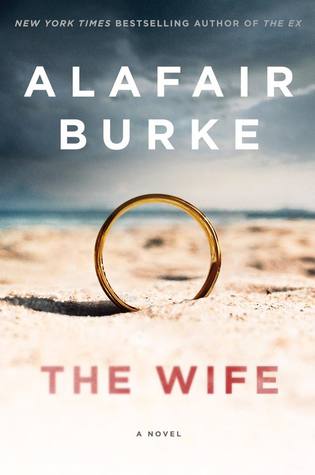
Tomorrow is the release day for a book I read in ARC (advanced reader copy) form months ago, The Wife by Alafair Burke.

34971475

In an instant, I became the woman the assumed I’d been along: the wife who lied to protect her husband.

I almost didn’t hear the knock on the front door. I had removed the brass knocker twelve days earlier, as if that would stop another reporter from showing up unannounced. Once I realized the source of the sound, I sat up straight in bed, hitting mute on the TV remote. Fighting the instinct to freeze, I forced myself to take a look. I parted the drawn bedroom curtains, squinting against the afternoon sun.

I saw the top of a head of short black hair on my stoop. The Impala in front of the fire hydrant across the street practically screamed “unmarked police car.” It was that same detective, back again. I still had her business card tucked away in my purse, where Jason wouldn’t see it. She kept knocking, and I kept watching her knock, until she sat on the front steps and started reading my paper.

Alafair Burke’s The Ex made my Top Ten list of 2016; it was the first of Alafair’s books I’d read (I have a bunch more in the TBR pile) and it absolutely blew me away. I wasn’t sure what to expect, and having met and liked Alafair, there was an element of worry; what if I don’t like her book? But it wasn’t an issue; from page one on, I was hooked and it was a book I deeply resented having to put down to do other things. Obviously, I was really looking forward to The Wife–maybe I’ll focus this year on reading the rest of her canon–and was thrilled when I got an ARC at Bouchercon this year.

The Wife does not disappoint, either, and boy is it ever timely! Angela Powell, the wife of the title, has a pretty terrific life; married to a very successful man who is getting even more successful every day, a beautiful home in Manhattan, good friends she can rely on, and a son she dotes on. Angela’s almost too-perfect, too-good-to-be-true life slowly but surely begins to unravel when one of her husband’s interns goes to the police and files a criminal complaint for sexual harassment against him. But Angela is not only rocked by the charges against her husband–she’s also worried about any investigation into their lives, particularly by the press…because she has some dark secrets in her own past that she doesn’t want seeing the light of day. No one, other than her husband and her mother, knows anything more about her past other than she was a catering service waitress who eventually started her own business and is a great chef–she met Jason at a party she was working at–but there is a lot more there. And as the truth about Angela’s past slowly is revealed to the reader, each revelation is even more shocking than the last.

The book has a powerful enough story, with just Angela dealing with this assault on their life and having to wonder if her husband has done what he’s being accused of, and if so, how did she not see it–or whether she should believe in his protestations of innocence and stand by his side? The exploration of what does a woman do in this instance might have been enough for a lesser novelist, but it’s not for Alafair Burke; there’s a reason why she has moved onto my ‘must-read’ list.

The Wife is going to be one of the best books of the year, and will be surely nominated for every crime writing award in 2019. I urge you to read it. You won’t be sorry.

Undercover of the Night

I didn’t get as much done this afternoon as I would have liked, alas. I am getting laundry done, and have pretty much cleaned out my email inbox, and I did finish the first draft of “The Trouble with Autofill”–it’s not good, but it will be, and I am going to work on another short story for a bit while vacuuming and preparing dinner and finishing the laundry. Tomorrow I want to get a lot more done, and tomorrow is also a go to the gym day; and since it’s the fourth workout, that means moving up to two sets of everything rather than one. Next week will be three, and then after that it remains at three, with weight increases every week. I haven’t had any issues with going to the gym–I even went when it was so cold on Wednesday morning–so I think I’m getting back into the swing of things. Let’s hope I stay motivated; I think I will.

I am also learning a lot from the Short Story Project! Once I get this second short story finished, and revise the other, I am going back to the WIP and some other manuscripts that need my attention. It’s great because I am reading all these different styles and types of short stories and writers, and I am learning a lot about how to construct a short story, and suspense building, and so forth.

An excellent example of building suspense is the first one up today, “The Stranger in the Car” by Elizabeth Sanxay Holding, from Troubled Daughters Twisted Wives, the fabulous anthology of post-war stories by the terrific women writing suspense back then.

Carrol Charleroy leaned back in his chair and closed his eyes; a big, stout, handsome man, olive-skinned, with a black mustache; a flamboyant look about him, in spite of his correct and conservative clothes. Miss Ewing was playing the piano for him, and he tried to relax, to enjoy this music, but a peculiar restlessness filled him. He frowned, opened his eyes, and took out his cigar case.

He and his wife Helen never sat here in the drawing-room unless they had guests; then the room would be pleasantly lighted, there would be people moving about, the sound of voices. Now the only light came from the gold-shaded lamp beside the piano at the other side of the long room, and, in spite of Miss Ewing’s music, he was aware, as never before, of the sounds from the New York street outside, the rush of wind, a car streaking past, the frantic piping of a doorman’s whistle, a man’s voice, hoarse and furious. This made him feel vulnerable, not comfortably shut away from the world in his own home.

“I don’t like this sending Helen off to the hospital,” he thought. “The flu is a treacherous disease, I grant you that. But Helen and I, and the children, and the servants, too, have all had it, at one time or the other, right here in the house, and we did very well. Can’t say I care much for Dr. Marcher. Too quizzical…”

The Holding story is one of the longest I’ve tackled during the Short Story Project thus far; and it’s a slow burn, and it’s so worth it. The story opens with our point of view character, a successful businessman, being entertained by the piano playing of a family friend; concerned about his wife’s hospitalization for the flu; and later that evening, his daughter arrives home under mysterious circumstances; with a black eye and several strange stories being told to him from other people who saw her out that evening, and were concerned. Before long Mr. Charleroy is convinced something terrible has happened to his daughter…and that she may have taken the law into her own hands. The best part of this slow burn of a story is that Mr. Charleroy literally has no idea what’s going on around him, but only sees and hears enough to make him worried and suspicious; but all of the women in the story are taking care of everything around him, and finally, at the end, very kindly let him know what the truth was once it’s all wrapped up rather neatly, in a slightly macabre fashion, but wrapped up nonetheless. Holding is best known for her novel The Blank Wall, which Weinman included in the Library of America omnibus of post-war female suspense writers, and now I am positively looking forward to reading it.

The second story for this entry is an Edgar nominee for this year’s Best Short Story statue, from Montana Noir, capably edited by Keir Graff and James Brady, is Eric Heidle’s “Ace in the Hole.”

Civic-pride billboards and the drab county jail swept past the chilly Greyhound’s windows as it dropped down the hill into the night of Great Falls. Through frosted glass, Chance watched the town pull him in as the Missouri passed below, the bus thrumming over dark water and skiffs of ice. Beyond the bridge he saw the OK Tire sign was gone; it’s cinder-block building was now something new.

The bus pulled a lazy turn toward downtown, rolling through blocks of low brick warehouses before banking hard into the alley behind the depot. It settled with a hiss in the garage as the passengers roused and began filing off.

The snap of deep cold hit him at the door. The driver’s breath huffed with each suitcase he tossed from the coach’s gut. Chance had only his green duffel. He split off from the line shuffling into the warmly lit lobby. Ducking under the half-open bay door at the front of the garage, he stepped onto the street and walked toward Central Avenue.

This is a terrific story, and it’s easy to see why it’s an Edgar finalist. Chance went to jail for possession with intent to sell, managing to get rid of most of the bales of marijuana before the cops caught up to him–but one bale didn’t land in the river but rather on a bridge support; bad luck for Chance. Even worse luck for Chance is that the supplier he got the marijuana from is still around and still wants his money for the lost shipment of weed. There doesn’t seem to be any way out for Chance–but it turns out that he does, indeed, have one ace up his sleeve, after all, and decides to play it in one last stand.

This is a great example of a dark, noir story; although whether it fits the actual definition of noir as I personally have come to understand it is questionable. But the thing about noir is that it defies labels and definitions, and this story is the best example of I can’t say what it is but I know it when I see it. This story is totally noir; I can even see it as a film, with its bleak but beautiful Montana landscapes, the cold, the mermaids swimming behind glass in the bar, the brutality of the violence; this would be a great role for a mid-to-late twenties actor–maybe even a career-making role. All kinds of awesome, really.

montana noir

Dancing in the Sheets

The sun is shining, and the temperature has climbed to 49 degrees. The boil-water advisory ended finally last evening–it’s just not a crisis in New Orleans unless we have a boil-water advisory!–and here I sit this morning, ensconced at my desk with a cup of coffee, a load of laundry tumbling in the dryer, with great expectations of the day. I went to the gym last evening after work, and my muscles, while a bit tired, still feel stretched and worked and supple, if that makes sense. Probably the best thing about rededicating myself to physical exercise again is how much better I feel; I don’t ache or feel tired the way I did just last week, and the stretching and the treadmill are also making me feel ever so much better. Today, I am going to clean (if it’s Saturday I must be cleaning) but I am also going to write, edit and read today. Paul is going into the office to work (it’s that time of year again) and so I have the day to myself. I want to finish the first draft of “The Trouble with Autofill” and I want to edit “Cold Beer No Flies.”

Among many other things; my to-do list is ridiculous, quite frankly. But the only way to make progress is not to get overwhelmed by the enormity of the list but rather to keep plugging away at it.

I finished reading Miami by Joan Didion earlier this week, and it was quite good. Didion’s writing style is quite amazing, actually, and while the story of the book might seem, at first glance, to be rather dated; the truth is it is still very much appropriate to our modern times. Miami is a look at the Cuban exiles in the city, how they relate to each other, and how they impact south Florida politically; and to a lesser extent, the relationship between the US government with them as well as with Castro’s Cuba. During the Cold War Cuba was a much more terrifying apparition, close as it was to Florida, and it’s amazing how people do not realize the political clout, as a result of their sheer numbers, that the Cuban immigrants weld in that part of the state, and in the entire state as well. The importance of Florida as a swing state cannot be discounted; and therefore the Cuban-American community’s influence on national politics is something that has to always be considered. (A present day comparison would be the Puerto Ricans moving to Florida today in great numbers as a result of the hurricane destruction of their island; the difference being those Puerto Ricans are already American citizens who can register to vote and can impact 2018 already.) Didion’s look at Miami in the 1980’s, as a Caribbean city on the mainland, is also reminiscent of descriptions of New Orleans as the northernmost Caribbean city; the thing I love the most about Didion’s work is how she makes you think. Reading Miami made me want to write about Miami; I’ve been wanting to write about Florida for a long time, as Constant Reader already knows. Something to ponder.

miami

I also started reading Mark Harris’ Pictures at a Revolution, which is a look at the film industry through the lens of the five films nominated for the Academy Award for Best Picture in 1967, and how they were made. Harris’ thesis is that was the year that bridged the gap between old and new Hollywood; and the five Best Picture nominees illustrated that perfectly: an expensive musical flop (Doctor Dolittle); two old style Hollywood pictures about race (Guess Who’s Coming to Dinner and In the Heat of the Night), and two films that illustrated new Hollywood and its influence by European filmmakers like Truffaut and Fellini and Antonioni (Bonnie and Clyde and The Graduate). I, of course, have always been fascinated by Hollywood history and have been ever since I read Garson Kanin’s Tracy and Hepburn and Bob Thomas’ Selznick as a kid; this book is right up my alley, and since it’s been awhile since I’ve read any Hollywood history, I am looking forward to reading this (and his Five Came Back–I’ve already watched the documentary based on it).

The Short Story Project also moves apace; I am frequently surprised as I look through my shelves for something to read how many single author collections and anthologies dot them. My Ipad also has quite a few loaded onto the Kindle app; I often buy them when they are either free or reduced in price, and so my Kindle app is filled with books I’ve not yet read, primarily because I don’t like to read on it (which I realize is nothing more than stubbornness; if I can watch movies or television programs on it, why resist reading books there?) Yesterday I found my battered old Dell paperback of Agatha Christie’s The Golden Ball and Other Stories, which I remember loving as a child. I was looking for my copy of Lawrence Block’s first anthology inspired by paintings–those of Edward Hopper– In Sunlight or in Shadow, which I would have sworn I’d purchased in hardcover; yet it wasn’t anywhere on the shelves or in any of the TBR piles, before remembering I’d bought it as an ebook when the Macavity nominations come out; Block’s story “Autumn at the Automat” was a finalist, along with mine (I still can’t believe it) and I wanted to read all the other nominated stories for an entry, so the immediacy of the need required buying the ebook. It is a handsome volume, though, so I’ll need to buy a hard copy to pair with the new one. (New bucket list item: write a story for one of these anthologies by Lawrence Block)

Once I’d located it on the iPad, I scoured the table of contents and landed on a Joyce Carol Oates story, “The Woman in the Window.” I have to confess I’ve not read much of Ms. Oates; I am not even remotely familiar with what she writes. But she, too, was a Macavity finalist last year, for her story “The Crawl Space” (which also won the Stoker Award), and that story creeped me the fuck out. I know she’s been a Stoker finalist before, but I also think she tends to write across genre a lot and therefore isn’t pigeon-holed in one way or the other.

Beneath the cushion of the plush blue chair she has hidden it.

Almost shyly her fingers grope for it, then recoil as if it were burning-hot.

No! None of this will happen, don’t be ridiculous!

It is eleven A.M. He has promised to meet her in this room in which it is always eleven A.M.

This story, frankly, isn’t as strong as “The Crawl Space,” but it’s an interesting exercise in how thin the line between lust and loathing is; the woman of the title is a secretary having an affair with a much wealthier man, and as she gets older and older she is feeling more and more trapped in the relationship; he is married and he often has to break plans with her for his wife. There is also a shift occasionally to his point of view, and he’s not so fond of her anymore, either. Passion has cooled but habit has set in; and the way those lines can get crossed is chilling–and how destructive such a relationship can be to both parties, emotionally and mentally, is explored in great detail yet sparse language by Ms. Oates. The story’s not as creepy, as I said, as the other; but the end–which she leaves kind of hanging–you do feel that something awful is going to happen; maybe not today, maybe not tomorrow, but eventually.

I’ve not read Joe Hill before, and there are several reasons for that; none of which would make any sense to anyone who is not me; I am nothing if not aware of my own eccentricities, which is why I generally don’t share them with people; I don’t need someone else to point out that something doesn’t make sense. But I do have a copy of his short story collection 20th Century Ghosts, which I spied on the shelves as I looked for my copy of the Block anthology. Aha, I thought, perfect. I can read a Joe Hill story for the Short Story Project. So, I curled up under a blanket in my easy chair, waited for Scooter to get settled in my lap, and started reading “Best New Horror.”

A month before his deadline, Eddie Carroll ripped open a manila envelope, and a magazine called The True North Literary Review slipped out into his hands. Carroll was used to getting magazines in the mail, although most of them had titles like Cemetery Dance and specialized in horror fiction. People sent him their books, too. Piles of them cluttered his Brookline townhouse, a heap on the couch in his office, a stack by the coffee maker. Books of horror stories, all of them.

No one had time to read them all, although once–when he was in his early thirties and just starting out as the editor of America’s Best New Horror–he had made a conscientious effort to try. Carroll had guided sixteen volumes of Best New Horror to press, had been working on the series for over a third of his life now. It added up to thousands of hours of reading and proofing and letter-writing, thousands of hours he could never have back.

He had come to hate the magazines especially. So many of them used the cheapest ink, and he had learned to loathe the way it came off on his fingers, the harsh stink of it.

I did not mention the elephant in the room; said elephant, of course, being that Joe Hill is Stephen King’s son. (The Kings are a very literary family; Mr. King’s wife Tabitha is a poet and a novelist; their other son Owen also writes, as does Owen’s wife, Kelly Braffet; I read a novel by Ms. Braffet sometime in the last couple of years–not aware of the King connection–and greatly enjoyed it.)

But simply based on a reading of “Best New Horror,” I have to say Joe Hill is also a terrific writer. And while it, like some of his father’s work, bears a strong resemblance to something I would have read in an Tales from the Crypt or House of Mystery comic book–that is not a criticism. I loved those comics, and the stories I read in them; they had a deep influence on me not only as a writer but as a reader. “Best New Horror”, as you can tell by the opening, tells the tale of Eddie Carroll, a writing teacher and a long-time editor of the Best New Horror series, a chore he has learned to loathe and, basically, phone in every year for the money. This resonated with me; as an anthology editor myself, one of the reasons I stepped away from editing them–or took a break from doing it–was because it was becoming rote; a chore rather than something I found joy in doing. Eddie is an example of why I stopped–I didn’t want to become like him; embittered by the experience and tired of not finding anything fresh or new (unlike Eddie, I was able to keep the experience fresh because each anthology I did was a new topic; if I had done twenty anthologies with the same theme I would have gone on a killing spree). But in the mail comes a story from a new writer that is simply brilliant; original and fresh and resonant and horrifying in its reality; the story reinvigorates Eddie and makes the editing job no longer a chore; he has to have this story, and will do whatever he has to in order to track the writer down…but as with any horror  tale of obsession, it’s not going to end well. But Hill brilliantly keeps stringing the reader along, and the ending is just absolutely brilliant and clever. I am really looking forward to reading more of these stories.

And now, I must get back to the spice mines. There are clothes to fold, dishes to wash, floors to clean, stories to write and edit; I am probably coming back here for another entry later as I am trying to get caught up on posting the stories I’ve read–but I make no promises. I have another story to write as a call for submissions crossed my computer screen on Thursday; I have an unfinished story that I can repurpose, but I also need to get a first draft done so I can work the story out.

Until later, Constant Reader.

Got a Hold on Me

Friday morning, and a short day at the office. I am very pleased to report that looking out my windows this morning I see no snow and ice, so I think perhaps this cold snap has finally come to its bitter end. We’re now having water pressure problems in the city, a boil water advisory, etc. etc. etc. Heavy heaving sigh. But other than that, things are going well. Like I said, I have a short day today; I am going to go to the gym this afternoon when I get home from the office, and I am going to spend the weekend writing and editing and reading. I started writing another short story yesterday, “The Trouble with Autofill,” which I think is kind of clever, and have lots of other editing and writing to do. Woo-hoo! Exciting weekend, no? I also want to get some reading and cleaning done. But I think as long as I keep going–sticking to my goal of positivity and focus, things will go well.

Maybe today’s blog should be titled When You Believe.

So, my agenda this morning is to get my kitchen cleaned up, get better organized, clean out my email, and do some writing. I’m going to get the mail before heading to the office, and I also need to pack my gym clothes so I can just ran in, grab the bag, and head back out the door. I also have lost three more pounds this week, finally breaking through that pesky 214 pound plateau I was at–I haven’t weighed 211 in years, so huzzah for working out! Now to keep going.

I started watching Black Sails again this week. I tried it several years ago, and just couldn’t get into it, even going so far as to think it kind of boring. I don’t know why; it has everything I love–pirates, beautiful locations, great period costumes, hot sweaty men in buccaneer outfits–but for whatever reason I just didn’t get into it. Maybe I wasn’t paying close enough attention? Something. Anyway, I am enjoying it a lot more this time around, so I am in for all four seasons. I love pirates–always have–despite having given up on the Pirates of the Caribbean franchise after the second movie–and while I am not sure why that is the case, I just have. I’ve always wanted to write a pirate novel; and I still have a Scotty adventure having to do with Jean Lafitte’s treasure still floating around in the back of my  head. I’m making all kinds of notes as I watch this show–reread Treasure Island, do some research on pirates, reread The Deep–so who knows? My creativity is certainly flowering these days; and I do think this go back to your roots thing is really working for me. I am doing that with my workout program–all the way back to how I got started, in 1994/1995; and carrying my little blank book around has certainly kick-started my creativity. How cool is that?

I’ve also added a lot of fun Alfred Hitchcock movies to my watchlist on Amazon Prime, some I haven’t seen and others I already have: Saboteur, The Birds, Shadow of a Doubt, Topaz, Frenzy, Psycho, Family Plot, and Vertigo.

The Short Story Project is also continuing; I read a shitload of short stories on my Snow Day Wednesday, but am still doling them out two at a time here. 😉 First up today: “Lord of Madison County by Jimmy Cajoleas, from Mississippi Noir, edited by Tom Franklin:

“Are yall ready to worship?” says Pastor Jerry. He’s got his eyes shut, one arm raised high to Jesus in some weird half-Nazi salute. Frosted hair slicked back, bald spots barely showing. Graphic T-shirt that says, Lord’s Gym, and has Christ bench-pressing a cross on it. Cargo shorts that he still thinks are cool.

I’m a little ways back in the youth room, chewing on a pen cap. The worship band kicks in; it’s all reverbed guitar and concert lights and the bullshit praise lyrics projected onto a screem behind them. You know, the songs that are the kind of crap you say to your girlfriend but it’s supposed to be about God? You are beautiful. You alone are my rock. You alone are my one and only. Oh, Jesus, baby!

Out in the crowd of youth-groupers are my customers. The girl with her hands up in the air giggling, singing louder than anyone? That’s Theresa. Everyone thinks she’s weird, that maybe she’s one of God’s holy fools, but they all agree that she’s on fire with Jesus.

Nah, she just popped a molly.

This is a great opening; I had wondered if anyone was going to address the Southern relationship with religion, and Christianity, in particular. My own psyche has been deeply scarred by a love-hate relationship with the Southern brand of Christianity; the entire nation was recently stunned by the Alabama evangelical embrace of pedophile Roy Moore–which was something that neither surprised nor shocked me. I need to write about religion; I do wish someone with a book called Religion in America: A History of the Turbulent American Relationship with God. Writing is very therapeutic, and I do have such a story that I’ve been working on for going on thirty years; I seriously doubt anyone would publish it. Anyway, I digress. This story, about a young drug dealer who has a fraught relationship with his mother, his father, and his mother’s boyfriend, is very clever and tightly written, with surprise twists and turns that take it in directions I didn’t see coming. Doug, kicked out of his wealthy private school where he was making money dealing to the rich kids, realized the best new market for his merchandise was the youth group at a local church. His dealing increased the youth group’s membership, and he has his own fraught relationship with Pastor Jerry, whom he rather despises, while dating Jerry’s daughter Kayla. Kayla is the big surprise here, a femme fatale right out of the James M. Cain classics, and a true delight. I’d love to read more about Kayla.

After Mississippi Noir, I took down The Best Horror of the Year Volume Four, edited by Ellen Datlow, and the first story there was Stephen King’s The Little Green God of Agony.”

“I was in an accident,” Newsome said.

Katherine MacDonald, sitting beside the bed and attaching one of the four TENS units to his scrawny thigh just below the basketball shorts he now always wore, did not look up. Her face was carefully blank. She was a piece of human furniture in this big house–in this big bedroom where she now spent most of her working life–and that was the way she liked it. Attracting Mr. Newsome’s attention was usually a bad idea, as any of his employees knew. But her thoughts ran on, just the same. Now you tell them that you actually caused the accident. Because you think taking responsibility makes you look like a hero.

“Actually,” Newsome said, “I caused the accident. Not so tight, Kat, please.”

There’s a reason why Stephen King is one of my favorite writers. One of the reasons is his uncanny ability to get into the heads of his characters, turning them into three dimensional beings that sound like someone you know. Kat, the physical therapist for an incredibly wealthy man–“the sixth wealthiest man in the world’–is tired of her job and tired of her patient. He won’t do the work required to get better and she is tired of watching him waste money and time on quick-fix quack cures that don’t do anything. This time, he’s brought in a small-time preacher from Arkansas who is going to exorcise the demon of pain from Newsome; it’s all she can do to keep a straight face and not say anything. Finally, she can’t resist and the preacher, Rideout, calls her out on a lot of things, seeing deep into her soul and telling her truths she doesn’t want to face herself, let alone share with anyone. And then the exorcism begins…in Danse Macabre, his later 1970’s/early 1980’s study of the genre, King talks about how horror comics of the 1950’s influenced his writing; as I was reading this story I could easily see it illustrated in Tales from the Crypt or House of Secrets. It’s terrific, absolutely terrific, and I was reminded again of why I love nothing more than curling up with Stephen King’s writing. It also vaguely reminded me of his novel Revival; I think this story may have triggered his creativity in that direction.

And now, I have spice to mine. Have a great Friday, Constant Reader!

IMG_3588