Sunday morning and I slept pretty well. Sparky of course annoyed me out of bed to feed him around six, and then I did go back to bed for two more hours. Our big day of errands wore us both out yesterday, and I also just realized the primary thing I went to Costco for? I didn’t get. AUGH. Oh, well, it’s just sweet-and-low packets; I can get some anywhere and then go for the three year supply the next time we head out there. Still irritating, though. After we got home and put everything away, we settled in to finish Vigil, which I greatly enjoyed, and then we moved on to a rather clever slasher flick called Bodies Bodies Bodies, and then we tried Baby Reindeer, which was very strange and really just kind of sad. I don’t think we’re going to continue with it, but it was something different, to be sure.
Yesterday wasn’t a total wash, just as today won’t be. It may be Paul’s birthday–I’m going to get us a pizza for dinner, and maybe rent something to watch, lie Dune Part II–but I can get some things done this morning before he gets up. I’m also not going to wake him up until he wants to get up, and I also promised to make him waffles, which I’ve not done in so long it’s almost shameful, frankly. Paul is 61 today, and I will be sixty-three in a mere four months. I did make some writing notes yesterday, and of course I was also thinking a lot most of the day about the things I’m working on. I also recognize my incredible skill at rationalization here as well…no one can rationalize or justify the way I can when it comes to excuses for not writing. I also downloaded some biographies of King James I–the influence of Mary and George, no doubt–but I am not entirely sure why I’ve avoided biographies of King James before. I have a lifelong interest in both his mother (Mary Queen of Scots) and his predecessor (Elizabeth I), as well as his Stuart descendants; yet have always avoided King James. I’m not sure why that is; but other queer kings and royals have often been of interest to me, but James didn’t come to a bad end the way most of the others did and so can be considered a successful queer King. (Frederick the Great is another.) It also seems like this Elizabethan/Jacobean era was rife with sodomy all the way through to the eighteenth centiury, both in England and France. The last son of Catherine de Medici, and the last Valois king of France, was gay (Henri III); so was the brother of Louis XIV and one of his illegitimate sons, the Duc de Valentinois; and of course James I’s great-granddaughter Queen Anne was a big ole lesbian. The queers disappear from European royal history for a while, certainly in England and France in the eighteenth century. I’ve always wanted to write about Louis XIV’s brother, and it may be interesting to write about Henri III from the point of view of one of his mignons. The French court in the 1580’s was a hotbed of intrigue, conspiracy, and murder; a very turbulent period I’ve always wanted to write about.
I’ve also come to realize that I need to be more ambitious with my writing rather than saying oh that’s too complicated or too hard or too difficult for me to write. I’ve been putting off my historical interest writing for quite some time, always thinking that someday I’ll feel competent in my skills to try it. It’s actually a cop-out; I should have written some of these years ago, or at least got started. My Sherlock story (still so incredibly proud of it) was my first real historical story (one written in a period of time I was not alive and cannot remember), and all of my fears about it were so clearly misplaced. You don’t have to know a period so intimately that you might as well have lived then in order to write about it. How much research is too much research? The difference between a short story and a novel, of course, are significant–clearly, you don’t need to know as much with a short story as you would with a novel–but again, how much is not enough and how much is too much? The problem (for me, at any rate) is research is like planting seeds–more ideas grow the more research I do, it’s an ADHD thing, I’m pretty sure. But I am definitely going to start the research for my seventeenth century novel, methinks; I love history, so why not? I can scratch two interests at the same time.
Saturday morning I will leave for Alabama for Decoration Day, or what I always thought it was called, The First Sunday in May. That’s what it’s always been called, it’s definitely what my grandmothers and mother called it, and that’s how it’s lodged in my memory banks. I’m going to help my dad put out the flowers and clean the graves, and then on Monday morning I’ll follow him north to Kentucky. It’ll be a nice week away, and I am going to try to get some work done and a lot of reading done while I am there. (Dad called it Decoration Day in an email the other day, and I thought, well, that makes a better name for it but for me, it will always be called The First Sunday in May.) I did notice last year that the only people out doing it were my age or older, so it’s probably one of those county customs that is dying out in these modern days of the Internet, cell phones, and streaming. A pity, to be sure, but sometimes traditions do die out. “The old ways”, as they say in creepy tones in Gothic novels that I love so much. I also imagine my creativity is going to explode while in Alabama as it always does.
And on that note, I am going to eat breakfast, get cleaned up, and head into the spice mines for the day. I may be back later, one never can be certain–but if not, have a lovely Sunday, Constant Reader, and I’ll check in with you again later.
Lonesome is a great word that doesn’t get as much use as it used to; it was a very popular emotion/feeling for songwriters (especially those in the genre then known as “country and western”) to write about back in the 50’s and 60’s. It’s a very evocative word, and I am not sure why I don’t hear it as often as I used to. I love the word, and one of my ideas is to write a book called Kansas Lonesome at some point. The premise would be that there’s a podcast called that, which covers Kansas true crime stories throughout the state’s history; I am not sure how that podcast will play into the story I want to write, but that’s the foundation of that book, whatever it turns out to be. I am currently in the process of writing a short story (one of many, by the way) with a college student investigating a crime site out in the countryside to sus out background information for a podcast episode for the producer/star of the podcast. I do think the book may be inspired (Kansas Lonesome) on a homophobic incident that occurred in my old school district in Kansas; a young lesbian was put off the bus and banned from riding for saying she was a lesbian. The school district tried to cover up everything, but it turned out the girl was the only one telling the truth, the bus driver was fired, and the superintendent lost out on a big career move…and a few months later, she disappeared. Her name was Izzy Dieker, and as best as I can tell, she’s not turned up yet and it’s been over two years since she went missing. There are just some articles noting her disappearance, and then….nothing.
That is a great premise for a crime novel, isn’t it? Kansas Lonesome is becoming what I will soon probably be referring to now as “the Kansas book,” now that the other one was finally finished and published. But I think I will probably write The Crooked Y first; there is so much material in Kansas for prairie noir, isn’t there?
It really is amazing how much crime–specifically brutal murders–have happened in such a sparsely populated, deeply Christian red state. (“But crime only happens in those scary big cities!” Fuck off, trash. And by the way, immigrants aren’t coming for your women or your jobs.) The Benders are another grisly story from Kansas’ blood-drenched past, and I’ve always wanted to write about them, too; and hope to do so before I run out of time on this mortal coil.
And last week I stumbled across another fascinating tale of corruption and illegality involving a district attorney, a judge, and a police chief…a truly horrifying tale about how justice can be (and is all too frequently) twisted to fit the agendas of people who are evil but so convinced of their own righteousness that bending rules and not turning over evidence to defense attorneys, suborning perjury and coercing confessions from people?
Sidebar: Yes, Sarah Palin, that’s the real America, you charlatan snake-oil salesperson. Hope you’re enjoying being completely forgotten, grifter and Grandmother of Bastards.
Anyway, that’s a lot of words to talk about how Kansas is actually a horrific true crime state, with lots of examples of horrible murders and desperate people. I sometimes wonder if has anything to do with how flat the state is, and how sparsely populated. I know sometimes those winter winds off the prairies are brutal, whistling around the house and rattling the windows, trying to find a way into the warm cozy inside. Sometimes that wind can whistle, too–and I can imagine in a time without electricity or much entertainment, listening to that wind and being so lonesome out on the prairie could easily drive you mad1. I could write a book of short stories and simply call it Kansas Lonesome, with the premise that the podcast host and researchers are doing the background research into these old crimes or something. That could be an interesting way of bringing those stories together…but I also think Kansas Lonesome is too good of a book title to not use it for the novel I was thinking about earlier in this entry–the one about Izzy Dieker.
Loneliness, though, while sad and depressing, is a writer’s friend. When you’re lonely, you have to entertain yourself, and I always drag out the journal at those times, or warm up my computer and start writing away. I think a lot of my creativity came from being lonely as a child, the recognition I clocked early that I wasn’t like other kids in many ways so I stayed away from them because I didn’t know if they were going to make fun of me or bully me. and so I retreated very often into my own mind. I read a lot, obviously, and watched a lot of television and movies (while reading), and I just kind of lived in my imagination for lengthy periods of time. I preferred my own world, frankly, and still do; I hate leaving my own world for the real one.
I do wonder sometimes if I would have still wanted to be a writer if I had felt like I belonged, if I was like every other little boy. But even when I was a kid, I looked at the future that was expected of me and found it wanting. A Lot. I hated the very idea of fitting into one of the ticky-tacky houses in the suburbs and the day job that was all-consuming and the wife and the kids and the lawn work and upkeep on the house and…yeah, that sounded always terrible to me, and the older I got the more I resisted that future. Had I followed the path laid out for me by society and family I would have been absolutely miserable by now. Would I have been so attached to books if I had friends, kids in the neighborhood and the comfort of knowing people did actually like me? It was the love of books and wanting to give other people the feeling I got when I read one I enjoyed that made me want to be a writer in the first place, and the more I read the more I wanted to write. I used to write all the time when I was a kid–things I didn’t take seriously at the time, and would completely dismiss…but I was always writing. I made up a world once, with its own countries and lineages and so forth, kind of a fantasy alternate kind of history. I wrote my own versions of the Hardy Boys and Nancy Drew. I wrote short stories in high school. I started writing a novel when I was seventeen, and while I might have gone months without writing at times, I always was writing, always coming up with titles and ideas, and I was always happiest when I was creating.
And now, here I am hurtling toward my sixty-third birthday with a lot of publishing credits to my name and boxes and boxes of ideas…that I want to digitize and throw away the paper files in an attempt to cut back on clutter. I have my next two years’ writing schedule pretty much figured out already. I’m happy. That’s the bottom line of everything, isn’t it? Being happy? I love my life. I love writing. I love connecting with readers and other writers. And I think I am continuing to grow and develop as a writer. I don’t ever want my best work to be behind me, and I don’t think it is. I’m feeling good and optimistic again, and that’s always a good thing.
There was a really great chapter in James Michener’s Centennial that talked about this very thing; how on the prairies in the winter the wind could drive one mad. After I read that book I could never listen to the wind again without remembering that. ↩︎
Well, it’s back to the office Monday and I am feeling pretty good about the weekend. Did I get everything done I needed to get done? Of course not, I never do. But the house is in good enough shape that if I maintain it every night then next weekend I can move on to some further cleaning/organization/declutter project because I don’t have to start over catching up on the the basics yet again. I also made dinner last night for the first time in forever, actually cooking, and it was kind of nice and the meal was actually quite good. I also was creative this weekend, and maybe very little actual writing was done but a lot of planning and thinking about the projects and so forth that need to be worked on and I also had a lot of really good ideas. I started thinking about the projects in terms of what I was trying to do, what the point of the story was, and how best to get the message across to the readers while also telling a compelling story. This is the kind of thing I miss doing, and am usually so rushed with impending deadlines and so forth that I don’t have enough prep time before I start writing, if that makes any sense? It did to me, and I think that’s another reason I have Imposter Syndrome on a regular basis; I kind of leap blindly into the project and hope that it works out all right.
I slept very well last night and didn’t want to get up this morning (or at least out of bed, which was warm and comfortable), but as I swill this first cup of coffee I am starting to come to life and that’s a good thing. I am not patient-facing today–it’s my in-office administrative day, and I am pretty caught up on my work. The downstairs looks nice and neat and orderly this morning; there’s dirty dishes in the sink, of course, but that’s easily rectified. On the way home tonight I have to stop and get the mail and pick up a prescription. I am leaving for Alabama/Kentucky the week after next, and so that’ll be nice. I’ll take some books to read, and I imagine we’ll do some sight-seeing in Kentucky while I am up there this year. It’s nice visiting Dad, and seeing my sister. Mom’s death brought the survivors closer together, which is nice. They still live too far away for regular visits, but it’s nice to be closer to them both.
Overall, it was a nice weekend. I got some rest and recovery time, and feel much better this morning than I did any morning this weekend–which might be related to staying in bed longer–and we started watching a terrific new show last night called Vigil, which is from the same team that did Line of Duty, which was exceptional. Vigil, which isn’t something I thought I’d be too keen on–a murder mystery on a nuclear submarine that also includes international intrigue on top of the crime–but always trust people who’ve produced another show you liked, really; Vigil is superb (submarines absolutely terrify me–my claustrophobia would drive me insane within an hour of getting on board, and if it didn’t before, it would definitely happen once we submerged; this is why that novel The Chill by Nick Cutter was so unsettling–underwater in a submarine in the dark. No fucking thanks) and absorbing. I cannot wait to watch more of it tonight after writing and doing some more clean-up around here. My writing goals for this week are to make more progress on the book, finish revising “Passenger to Franklin” and “When I Die,” and get a good night’s rest. I also have some emails to reply to, as well as some others I need to generate. I did make progress on finishing some of these draft posts I’ve had in the files forever–some going back as many as four years (I wrote down my initial impressions of January 6, which I do need to finish since we are heading for another precipice)–and it’s nice to get some of this stuff cleaned out. I still have more drafts back there than needed; I think there are numerous ones that can be actually combined, since I started a related topic more than once, methinks–usually because something makes me angry or frustrated enough to forget oh yes, started something on this very subject several times already, maybe should combine them all into one.
I also want to finish the blog posts about my books already published. I am not sure where I left off–I know the last one I did was for Dark Tide, but I think I’ve already done The Orion Mask, which leaves Timothy because I know I did a lot of promotional posts for both Bury Me in Shadows and #shedeservedit. I’ve also already done the most recent Scotty books, too–I think I’ve covered that entire series already. I know the last Chanse book is still there in the drafts, too–I thought I’d need to reread it since it’s been so long since I wrote it, which isn’t a bad idea. I don’t really remember Chanse’s voice, and am not sure I can still hear it if I want to. I know I’ve written a Chanse short story since the series ended, and I have a Chanse novella in progress that went off track and needs to be steered back onto the tracks. I do have another idea for a Chanse book, but I am thinking he might just be a supporting character and I can center the book from another point of view, which could be interesting. See what I mean? My creativity has really come roaring back.
And on that note, I am going to bring this to a close and get cleaned up to head into the spice mines. I hope you have a lovely day, Constant Reader, and I’ll check back in with you again a little later.
Doesn’t look like he likes the photographer’s direction to “arch your back a little and stick your butt out”, does he?
I am a bit tired this morning. All those errands I ran yesterday? Apparently I have not recovered my stamina yet, because I am feeling it this morning. My legs are very tired, and I did not want to get out of bed this morning…which was also partly because Sparky turned into a purring cuddlebug while trying to get me to get up–lying on me and rolling and purring and head butts and making biscuits. It was actually kind of lovely, really, but now I am up, a load of laundry is started, and I am drinking and loving my coffee. LSU is competing for the national championship in Gymnastics at 3, which is probably going to suck all the oxygen out of the day, so I’ll need to get a lot of things done today before three, won’t I? GEAUX TIGERS!
Yesterday was a rather interesting day, social media-wise. After I posted yesterday morning and as I was getting ready to dive into the day, I shared the post on my social media as I always do, and I had some extreme irritations, all related to my years in Kansas, of all things; like all this writing and thinking about Kansas and ideas for books/stories there manifested some people I went to high school with, as well as some other unpleasantness. For the record, straight white cisgender, this is the sort of thing we’re talking about when we talk about microaggressions and safe spaces. The first thing that popped up at me on Facebook was some tired old bitch of a white woman’s post sharing an interview with Dawn French, in which she not only defended the Chatelaine of Castle TERF, but chastised everyone. After all, as a straight cisgender white woman, it’s our responsibility as queer people to explain it all to HER, and if we’re not willing to do so, their lack of understanding is on US.
Fuck off, Dawn French. Queer people don’t have to explain their humanity to you, you miserable fucking bigoted bitch. “Well, I don’t understand this, so please explain to me why you deserve to be treated like a human being.” That’s it right there. Doesn’t sound so nice when it’s put that way, does it? Is it really too much for you to treat other people with respect and kindness even if you “don’t get it”? And when exactly do I get my fucking paycheck for explaining our HUMANITY to someone with a blackened, dead soul and no empathy for anything outside their own experience? The arrogance!
Anyway, this former Facebook friend shared this and said, “I agree.” Someone else, another former Facebook friend, commented “Yes, absolutely.” I unfriended and blocked both, and then posted in my anger “If you are a defender of the Chatelaine of Castle TERF, just unfriend me now.” Another former Facebook friend then announced his departure. He only unfriended, so I blocked his homophobic ass, too.
As if that wasn’t enough, someone I went to high school posted a funny meme I was going to comment on, when a homophobic piece of trash from high school tried TAGGING me on it because I had unfriended her after getting sick and fucking tired of her MAGA posts and remembered the time I heard my “friend” mocking me with other people in the high school cafeteria for being gay. Again, I don’t owe anyone any explanations for cutting you out of my life because I fucking refuse to explain why I deserve to be treated like a human being and not as the butt of a joke or something to hate and despise because a verse in Leviticus says so.
Jesus, right? It’s so tiring.
And then, in the biggest irony of ironies, another person I went to high school with–who is always posted queer ally stuff, which I’ve always appreciated–did so again yesterday further down on my feed, and of course someone had to come in waving their cross and Bible, but what was truly nice was seeing how many people went after the Bible-thumper, quoting the Bible and the Sermon on the Mount back to her, and it was on that thread I discovered she had a younger sibling that is gay (I wasn’t the only one to graduate from that school, apparently) and then someone else from high school commented “My brother is gay, too”–and the irony of that was almost too delicious to savor. You see, the second “my brother is gay” poster? She and her troglodyte best friend loved called me a fag quite often and quite happily my senior year…and while that was satisfying enough, I then remembered that she and her bitch friend would say it and laugh…in front of her brother….so his situation was worse than mine, and I went from smug to sad. Her brother was also an asshole to me (which I understand; I avoided other kids who got slandered and mocked and called that), but knowing that he was gay and was listening to his sister and that other bitch call me that? How he must have hated himself every time she said it. I wonder how suicidal he was? And truly, how sad was it that we are so socialized to avoid other kids with that same stigma and shame we experience rather than supporting each other? I think that’s also one of the many reasons I have trouble trusting gay men as I do straight people–another kid who was gay-presenting at my high school in the suburbs and was friends with people who treated me like shit….out of curiosity I looked him up and he too is out and proud now. How sad he joined in so his friends wouldn’t think he was a fag, too.
But at the same time, it’s giving me an insight into Kansas that I didn’t have before. The state, which I should have known, isn’t full of homophobic MAGA trash, and neither is the area I lived and suffered through for five years. And that could make for an interesting approach to another book. I had thought Sara, with my out gay character in a rural Kansas high school, was a bit much–I didn’t think kids could be out there–and turns out that while it’s not appreciated, those brave kids are facing it all down and defiantly throwing it back in their tormenters’ faces. I actually even thought for a moment last night that it might be worth it to go back sometime, to just look around and see how different everything is from my old memories.
And on that note, I am going to get cleaned up and going on my day. I may be back later, I really do want to get all of these draft posts finished and out of the drafts file at some point, but I also don’t know how the day will play out so we’ll just have to see, Constant Reader. Have a great Saturday regardless.
Summers used to be different when I was a kid, or that’s how it seems now when I look back over the decades to those fuzzy and foggy and out of focus memories of my childhood. Of course, my memories are also my impressions, and I am not sure how those were formed. But back when I was a kid, I have this memory of people going away for summer vacations, and sometimes the really lucky ones went away for the entire summer. All that was required for this was a stay-at-home Mom and Dad who had enough money to rent a summer home to send them off to, joining them on his own vacation. Or maybe I am just remembering it from what I read in books during those years, and our own summer excursions to Alabama (I still would be willing to swear my sister and I spent the entire summer down there, even though I know we didn’t). But beach houses and books about teenagers coming of age while spending the summer at a vacation house on an island or near the beach was a popular subject for writers to explore. I can only think of three of them off the top of my head: Summer of ’42, Last Summer, and A Summer Place. I think I read them all over the course of a single summer, and maybe that’s why my brain defaults to thinking that way about summer breaks and vacations.
I don’t remember why I remembered Last Summer recently. It was written by Evan Hunter, and I also read its sequel, Come Winter, and I remembered both books as being rather dark, with a vague memory of their endings. But I wanted to read it again–I also remembered that John-Boy Walton himself, Richard Thomas, played the male lead in the film of Last Summer when he was a young actor, years before being cast on The Waltons. I’d be curious to see the film again, too.
We spent last summer, when I was just sixteen, on an island mistakenly called Greensward, its shores only thinly vegetated with beach grass and plum, its single forest destroyed by fire more than twenty years before. There were perhaps fifty summer homes on the island, most of them gray and clustered safely on the bay side, the remainder strung out along the island’s flanks and on the point jutting insanely into the Atlantic.
It was there the sea was wildest. It was there that we first met Sandy.
She was standing close by the shoreline as David and I came up the beach behind her, spume exploding on her left, pebbles rolling and tossing in a muddy backwash, a tall girl wearing a white bikini, her hair the color of the dunes, a pale gold that fell loose and long about her face. Her head was studiously bent. Hands on hips, lefs wide-spread, she stood tense and silent, studying something in the sand at her feet. It was a very hot day. The sky over the ocean seemed stretched too tight. An invisible sun seared the naked beach, turning everything intensely white, the bursting waves dissolving into foam, the glaring sky, the endless stretch of sand, the girl standing motionless, her pale hair only faintly stirring. We approached on her left, walking between her and the ocean, turning for a look at her face, her small breasts in the scanty bra top, the gentle curve of her hips above the white bikini pants, the long line of her legs.
The thing lying at her feet in the sand was a sea gull.
Last Summer is what would probably be considered y/a fiction today, despite being written by a highly respected author of both crime fiction (as Ed McBain) and literary fiction, as Evan Hunter. It’s also from that strange period of time that followed the end of the second World War, as the American economy boomed and both the working and middle class were better off than they had ever been before. Matt Baume, a delightful queer culture historian (his book about queer representation in film and television, Hi Honey I’m Homo, is currently a Lambda finalist, deservingly), made an excellent point on his video essay on Rebel Without a Cause, which pointed out the rise of teenage consumers–kids with lots of time on their hands due to the shift in the economy because they didn’t have to have jobs like they did before the war (only upper middle class and rich kids didn’t have to before the war) and the rise of home-ownership in addition to educational opportunities and suburban culture. Adults became quite alarmed at what this new breed of teenagers were up to, even more so than the usual tired worrying about the kids that has never gone away. Many of them were disaffected, and what they were allowed to watch and/or read became even more restricted. Many of them discovered the joys of alcohol and marijuana in greater degrees than ever before, which led to even more rebellion and concern. Parents went after comic books and magazines as corrupting influences–rather than recognizing their own failures as parents, which also gave rise to the modern mentality of uncontrollable children who needed to be protected from pernicious influences. There was, for example, a significant difference from “youth” movies like Rebel Without a Cause and Frankie/Annette in Beach Blanket Bingo. Check out his video here!
Last Summer reads very much as being about its time. “Serious” books about teenagers, many with dark themes, were in demand around this time–and they read very differently to modern readers. This book is about three friends spending the summer on an island somewhere off the Eastern seaboard, but few clues are given to its actual location, or the seaside town where the ferry operates from. The two boys, David and Peter (Peter is the first person voice of the story, remembering back to last summer) meet a girl named Sandy at the beach, and the first part of the book, about them nursing the gull back to health and trying to teach it tricks, bonds them more closely together. We don’t get very in depth about either David or Peter, Peter’s voice is calm and nonchalant, which lulls the reader into a sense of complacency. You begin to wonder where it’s going, but the boys are also becoming more and more aware of Sandy–and her body. Their closeness dances very close to crossing lines several times–she takes off her bikini top more than you’d think a teenaged girl in that time period would–but Sandy eventually bores of the gull and grows more and more annoyed by it until she kills it, and once the boys know, they destroy the gull’s body, which is very odd but telling.
And then they meet Rhoda, a shy girl with some issues of her own, and they kind of adopt her into their group the same way they adopted the seagull, and that’s when the creepy tension turns the book from being about bored teens into a horror. What they do to Rhoda is even more horrific now than it was when the book was originally published in the late 1960’s, and that blasé mentality about their assault on Rhoda–in which Sandy participates, making the horror even worse somehow–reveals them to be sociopaths, which makes the rest of the book make so much more sense, and even more chilling than it was originally.
There’s also some casual homophobia in the book–a gay couple on the island are mostly referred to as “the fags”, a horrible reminder of how prevalent that casual use of such slurs were in this country at the time.
I did enjoy the revisit, and it gave me some things to ponder and think about–and it’s still sticks in my head a week or so after finishing, so that’s a testament to Mr. Hunter.
I hadn’t been sure that I would keep writing young adult novels after I revised, rewrote and published the first three (Sorceress, Sleeping Angel, and Sara) I didn’t know if it was a direction I wanted to keep going in. I knew I wanted to do stand-alones–always have wanted to do stand-alones–and I also like writing about teenagers and young adults.
You may remember (doubtful) me talking about a horror novel a while ago that I started writing in the 1980’s called The Enchantress that I only got about three or four chapters into before abandoning (because I didn’t know where to go next with it; and the first chapter I specifically remember rereading at some point in the decades since and shuddering in horror at how badly it was written), but one of the places in the book really stuck in my head–an old family-owned hotel called Mermaid Inn, which sat on the shores of Tuscadega Bay (which was my stand-in for Choctawhatchee Bay–my grandparents retired to a house on that bay and I’d always wanted to write about that area; still do–it’s where “Cold Beer No Flies” was set). After shelving The Enchantress (which I do think about from time to time, and wonder if I should revisit the idea) I kept thinking, you should write a book and call it Mermaid Inn because that is a great title!
I made a folder for it, wrote a few sketchy notes, and then… it sat in my files for a very long time.
If you will remember, I had originally planned to write an entire series of interconnected young adult novels, a la the Fear Street series by R. L. Stine, and one of the varied locations they would be spread out over would be Tuscadega, Florida, in the panhandle on a fictional bay. That was part of the note I scribbled for the folder–set this in the panhandle of Florida, and somehow connect it to the fictional Alabama county you’re going to write about someday.
I decided to write Mermaid Inn sometime after Hurricane Katrina, when I discovered yet again my own ignorance of geography. I was beginning to realize that the panhandle wasn’t the right setting for this book and decided to set it on the Alabama Gulf Coast, which made me realize I had absolutely no clue about that part of Alabama’s geography. I’d just never really given it much thought, to be honest; I knew Mobile was on the bay, and I knew that when you drive on I-10 through Mobile you have to take a tunnel below the Mobile River. I just had always assumed there was nothing south of Mobile in Alabama–I mean, it’s ON the water–and figured that those lower prongs of Alabama that reach down along the sides of the bay were uninhabitable wetlands. I discovered this to not be the case when visiting friends for the first time who lived in Alabama south of Mobile. They told me to take an exit off I-10 and drive south, which I didn’t think was possible.
Turns out it was–and I realized…this will work for my book! So I filed it away and forgot about it again.
I don’t remember precisely why I decided to write Mermaid Inn, but I did, and set in a small town on the prongs, south of Mobile; my friend Carolyn Haines helped me with some background and I know she told me some stories about closeted society men in Mobile and their hijinks and I thought, I could use this for the book and I think that may have been the impetus? And then I created my character, Ricky Hackworth, from Corinth, Alabama–po’ white trash who needs a swimming scholarship to attend the University of Alabama. (Sidebar: alert readers will recognize that Beau’s last name in Bury Me in Shadows–and at one point in the story he mentions he’s only the second Hackworth to go to college; “besides my cousin who got a swimming scholarship.”)
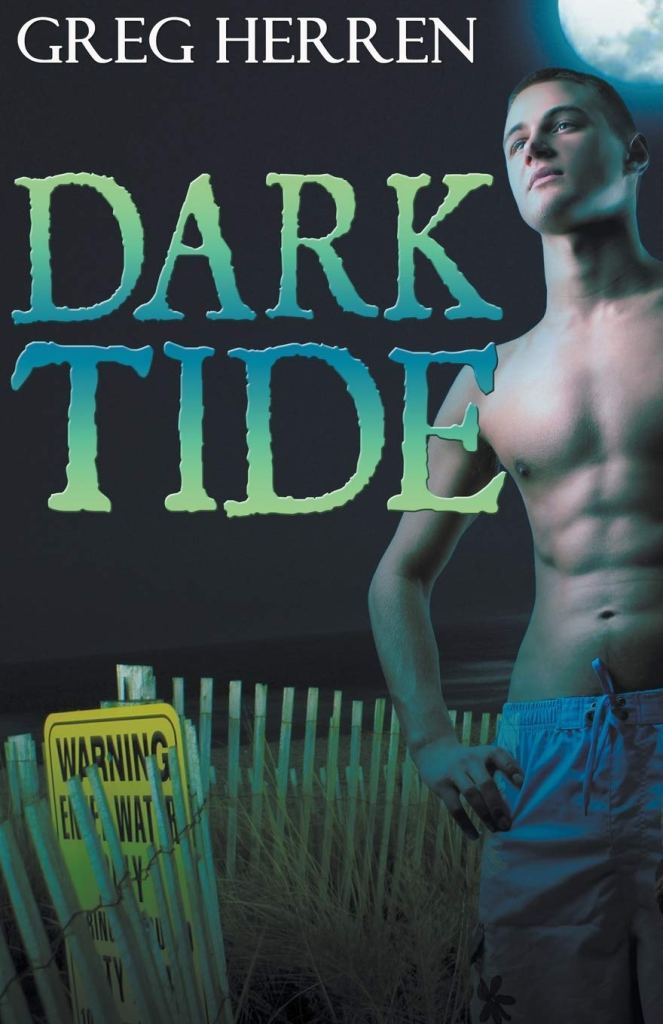
Bold Strokes didn’t like the title, and for perhaps maybe the fourth or fifth time in my career my original/working title didn’t make it on the cover. They recommended Dark Tide, which I really liked because it gave the sense of the book’s mood and tone and voice…and darkness.
The engine of my pickup truck made a weird coughing noise just as I came around a curve in the highway on the Alabama Gulf Coast and I saw Mermaid Inn for the first time.
My heart sank.
That’s not good, I thought, gritting my teeth. I looked down at the control panel. None of the dummy lights had come on. I still had about a half tank of gas.I switched off the air conditioning and the stereo. I turned into the long sloping parking lot of the Inn, pulling into the first parking spot. I listened to the engine. Nothing odd. It was now running smooth like it had the entire drive down. I shut the car off and kept listening. There was nothing but the tick of the engine as it started cooling.
Maybe I just imagined it.
Hope springs eternal.
The last thing I needed was to spend money on getting the stupid old truck fixed. Maybe it just needed a tune-up. I couldn’tremember the last time it had one.
Dad gave me the truck when I turned sixteen. It had been his work truck since before i was born–it was two years older than I was. He’d finally broken down and bought himself a new one. This old one was dependable and had almost two hundred thousand miles on it. Dad had taken good care of it. He’d babied it, gotten an oil change every three thousand miles without fail, and I could count on one hand the number of times it had been in the shop to be repaired.
It still had the original transmission.
It might not have been the nicest or prettiest car in my high school parking lot, but it got me where I needed to go and got good gas mileage. Since I was saving every cent I could for college, that was a lot more important than horsepower and cosmetics and a loud stereo that rattled your back teeth. The swimming scholarship I’d accepted from the University of Alabama wasn’t going to remotely cover anything close to the lowest estimate of what my expenses might be, but it was the best offer I’d gotten.
And I was grateful to have it. If they hadn’t offered, I wouldn’t be going at all.
Swimming was my ticket out of Corinth, Alabama.
That opening scene!
Dark Tide was probably my most hard-boiled young adult title published to that point. It was a dark story, and Ricky was poor–an economic condition I’d touched on with Sara, and something I generally try to avoid when writing. I’ve been poor, and I know how it feels; I don’t like remembering those days of checkbook mistakes and bounced checks and not having enough money from one paycheck to another. Ricky has taken a summer job as the lifeguard at Mermaid Inn in Latona, Alabama (Latona is another name for Daphne, which is actually a town on the prongs below Mobile), to save money to pay for college expenses his swimming scholarship to the University of Alabama wasn’t going to cover, and the water being there meant he could continue training. Once he arrives and is shown to his room on the uppermost floor of the building and meets the owner’s daughter, he learns that his predecessor from the summer before had simply disappeared–and young teenaged boys disappear with an alarming regularity over the past few years. He starts asking questions, mostly out of curiosity, and also starts having horrible dreams, about vicious mermaids beneath the water, and there are a lot of stories about killer mermaids from the days of the indigenous people and the Spanish. I wrote some terrific scenes in this book that I was really proud of–one particular dream sequence was especially chilling–and I was also trying something with the rhythm of the words, which I hadn’t done in a very long time, and I think it worked.
Writing Dark Tide was important to me because this was the book that reminded me again that I was writing stand-alones to help keep the series books fresher, more creative, and less paint by the numbers, too.
Monday and back to the office blog this morning, and I didn’t want to get up this morning. But now that I am, I feel fine and ready to get on with this day. I did not have the productive weekend that I wanted to have, but I got rest and that’s really the most important part of the weekend for me now. I did get some reading done–I am loving The Cypress House, more on that later–and I did assemble the new barbecue grill (which took much longer than it needed to and was much more complicated than it needed to be, but it’s done and I most pleased with myself for not only doing it, but redoing it when I had done something wrong, as opposed to just leaving it and making it work); it was cool outside but incredibly muggy, so I got overheated and super sweaty while doing it, with the end result that I was really tired when it was finished…and my appetite was gone. Ah, well, at least it’s done and ready for next weekend, right?
We started watching the final season of Young Royals yesterday, and it’s interesting. What’s even more interesting is seeing how the main characters have grown and changed in real life; the prince is now taller than Simon, which he didn’t used to be. They also look more mature in the face, if that makes sense? But watching them kissing now doesn’t feel as uncomfortable as it did in earlier seasons, so they’ve clearly gotten older in real life. I don’t know the ages of the actors and I don’t know if I care enough to go look and see how old they are, but one of the things that always makes me squirm a bit in shows with age appropriate (or appearing) actors is you feel a bit icky watching them be intimate with each other…which is one of the reasons why most teens in film and television are played by actors in their twenties. This, however, gives us all–especially those of us not around teenagers very often–the wrong idea about how adult teenagers look, especially when they’re sexually active…so it’s shocking when you run into actual teenagers and you see how young they really do look. This is something I’ve been wrapping my mind around since Heartstopper, and trying to write about. Maybe now I can finish those thoughts all the way through? Stranger things have happened…
The eclipse is today, and we won’t get full coverage of the sun here in New Orleans, but about 85%, but that doesn’t mean people aren’t going to be weird. I love that people think the eclipse is going to be the rapture (if only), or an omen/sign from God…because that’s just how the universe and space and time work. One shouldn’t be surprised that Marjorie Taylor Greene, who would have been screaming about witchcraft had she been alive in Salem in the 1690’s, would go all Old-Testament in the face of a celestial event science has explained for centuries now. I’d love to see someone do a deep dive on her life–what are her parents, that raised such an inbred moron, like? Siblings? Where did she go to school, if she did? There really is nothing worse than an idiot who thinks God speaks to them. I wonder if she thinks she’s the second coming of some Biblical character, like the idiot Speaker of the House (Louisiana does NOT elect its best people) thinks he’s Moses? Queen Jezebel would be my best guess as to which Biblical POS harlot she would be–or Herodias, mother of Salome.
In a few weeks I’ll be off to Alabama to meet Dad, after which we will drive up to Kentucky where I’ll stay for a few days. I’ve not seen Dad since October, so it’s well overdue, but of course I also had surgery in the meantime and therapy and so forth. I’ll be packing plenty of books to try to get caught up on my reading–and of course, I’ll be listening to audiobooks in the car while I drive. I’ve downloaded quite a few books to listen to in the car, and I’m really looking forward to the drive and letting my creativity roam as I drive. I am dreading that lengthy drive back to New Orleans, as always, but it could also be a but fun. I always love coming home to Paul and Sparky after being away for a while. The only traveling I’ll be doing for the rest of the year will be going to see Dad, so I am hoping to use the rest of the year to pay down some debt so I can make it to Left Coast Crime next year without a problem or worries.
And on that note, I am going to bring this to a close and head into the spice mines. Have a lovely Monday, Constant Reader, and I will talk at you again probably later.
Saturday morning and I was exhausted, not rising up out of bed until well past eight. Sparky tried to get me up (five a.m. for food; he doesn’t recognize Daylight Savings Time) several times–I did get up to feed him at six–before giving up and curling up to my side and going to sleep. I could hardly disturb him by getting up, could I? Plus I still felt very tired, exhausted, until I finally did get up. PT was particularly intense yesterday–I had a new therapist who was filling in for my regular–and she was just stunned, repeatedly, at how well I was doing and how strong I was, which was really nice. She kept commenting on it the entire time, which was a lovely thing for my ego and only encouraged me to keep pushing harder. I came home, worked, did some chores around here. and then ran a couple of errands after the work was done. I was exhausted (I think I did seven loads of laundry? It had built up and Friday is when I do the bed linens), and just collapsed into my chair. I finished watching Feud–I didn’t think last week’s was the final, if it did indeed end with him dying–and then watched LSU’s gymnastics team trounce North Carolina in their last meet of the season (SEC meet is next weekend) before watching this week’s Abbott Elementary and retiring to bed, exhausted. I have a busy day ahead of me–reading, writing, errands, other chores–and my house is also a mess, sigh. But I’m not going to allow all the things I need to get done to overwhelm me and thus guarantee none of it will get done.
And I definitely need to make groceries.
But I do feel tired–fatigued–in my muscles. The shoulders are fatigued, and so are my legs and my lower back feels a bit tight. Fortunately I bought that hand-held massage device (which can’t be used as a vibrator, get your head out of the gutter), so I think I am going to use it and that foam back roller today, maybe stretching a bit will help the leg fatigue. I also am going to get cleaned up this morning–shaving the face and head, which I don’t keep up with as much as I should, bad Gregalicious, bad Gregalicious. I need to get to work on myself more than anything else, and need to stop thinking “meh, good enough”. I think later on this year I’m going to have to make a trip to the outlet mall in Gonzalez and get some new clothes–dressier pants and shirts, at any rate–to go with the fancier shoes I have; I’ve never matched outfits to a couple of pairs of Oxfords, which makes wearing them more difficult–bothering my OCD–because the outfits have to be made to somehow match the shoes, and I don’t always succeed. I usually am bored by shopping for clothes; but now that I am thinking about experimenting with style, it actually sounds a bit more intriguing than it ever did before, frankly…and now that I am thinking about it more, that was undoubtedly triggered by my anxiety.
And now that I no longer have the anxiety anymore, maybe shopping for clothes will cease to be an ordeal for me. And I do love argylle.
It’s a very bright and sunny morning here in New Orleans, too–which reminds that I need to size the windows and order blinds, so I should also check on office supplies and maybe order for pick-up or delivery–and so I am feeling like I should be able to get things done today (or it’s the coffee kicking into gear here); we’ll see how it goes and how long my energy lasts–it should be a major grocery run today, but then again Paul won’t be home after Wednesday so…probably not? Heavy sigh. I guess I’ll NOT do a major grocery run today and then add things during the week that we need. I also bought a half-gallon of milk thinking we were out and SURPRISE! There was a half-gallon in the refrigerator already. AH, well.
And on that note, I am going to head into the spice mines. I have things that I need to get done this morning, and I also want to read a little bit before I dive into the day headfirst. May your Saturday be amazing and wonderful and cool, Constant Reader, and I’ll check in with you again later.
TRIGGER WARNING: Racism, homophobia, and archaic racist terms.
I learned long ago that the best way to deal with assholes was to develop a razor-sharp quick wit. I don’t know how I trained myself to be snarky and fast with my sense of humor, but at some point in my teens—in college, I think—I realized that not being filtered, and not being able to recognize most social cues, could actually prove to be a powerful defensive tool, if controlled. It has worked marvelously for me ever since. I also learned that a really good thing to do was say things to people I disliked that could be taken as either a compliment or shade, leaving it up to them to decide what I meant.
A few years ago, I had an experience at Left Coast Crime in Albuquerque where my usual biting sense of humor deserted me when I really needed it the most. I’ve grown used to dealing with homophobes and contemptuously cutting them off at the knees; I even relish doing it at times. But this? I’d never dealt with this kind of bigotry before, and my only excuse is that I was caught completely off-guard. I’ve also turned what happened over and over again in my mind in the time since, wondering how I should feel about it. It still hasn’t finished processing yet, and I’ll probably keep processing it for a few more years.
This was my first (and so far, only) time attending Left Coast Crime (unrelated; I want to go again but it just hasn’t worked out). I had always heard wonderful things about it, but the timing was always difficult for me to actually attend; all too frequently it is around the time of the Festivals here. I’d come home to the locks changed, methinks, were I to go away at that time.
At the time, I was still serving as Executive Vice-President of Mystery Writers of America. It was 2021, we hadn’t had any kind of crime publishing events since March 2020, and the events were just starting to slowly to come back. MWA had signed on to sponsor the Lefty banquet, and I felt someone should be there to rep the org at the event, and it wound up being me. I felt a bit uncomfortableabout registering and agreeing to do panels; we were a sponsor, and I didn’t want Programming to feel pressured to give me anything because of that (I tried very hard not to use the position to promote myself; I may have been a bit over-zealous on that score, but better safe than sorry). I arrived in Albuquerque on Thursday, had a quiet dinner with a friend, and the next day I went to panels, ran into people, and had a lovely time. I also had dinner plans for Friday that I was excited about–I was having dinner with Marco Carocari, whom I had just met at Saints and Sinners; John Copenhaver, whom I was starting to get to know better; Oline Cogdill, a dear friend of well over a decade; Mia Manansala, whom I met at New Orleans Bouchercon before she was published and I’ve always felt a bit protective of her (my neuroses, not hers) and someone new to me–Wanda Morris, whom I had neither read nor met before.1
Constant Reader, that was such a fun dinner, the kind I always dreamed of being a part of when I was that lonely kid in Kansas wondering what his future would be. We talked about books, writing, gossip, and I believe everyone, other than Oline and I, was up for a Lefty. We toasted their nominations, and when we headed back to the hotel I felt marvelous; giddy almost. I was having a good time and was excited to be around writers again, and I wanted it to keep going. I didn’t want the evening to end…
Little did I know what I was in for as we walked back into the hotel lobby, and we three gays decided to go have a drink at the bar, while the women wisely all went up to bed.
It started with a chair.
So innocuous, so nothing, just a little thing that happens in hotel bars all the time; you join a table without enough chairs so you grab a free one from the next table…but this time? Very different.
Basically, we had decided to join friends at a high-top table with room for eight, with all the chairs already taken and some others pulled up. There was a tall bar chair standing at the next table–a low table, so it didn’t really belong there in the first place–and several people were sitting around that table. I smiled, said, “is anyone using this?” and one of the three people shook their head no, so I took the chair…which bothered the woman who was sitting closest to me and who decided, in her inebriation, that I shouldn’t have the chair.
DRUNK WHITE WOMAN (Henceforth, DWW): You can’t take that chair because you have to sit here and talk to me.
I’d never seen her before in my life, but I’ve also been drunk in public before, so I just smiled as I sat down at the other table, and said politely, with no idea of what I was letting myself in for: “Can’t you talk to me if I sit here?”
DWW: Great!
I nodded to her, hoping that was the end of the interaction. I’d had two drinks at dinner, but wasn’t even slightly buzzed. I had a glass of Pinot Grigio in my clutches, I’d had a marvelous evening already, and I was looking forward to catching up with the others at the table. I started to turn back to the table to talk to my friends, when…she leaned towards me, narrowing her eyes, and saying, in a very low tone, “Are you a mulatto?”2
Needless to say, I was taken aback–not by the assumption, but the language.
I literally thought, are we really still using that word in this year of our Lord 2022?
I didn’t know what to say, I was so stunned and shocked that my ability to lobby back an icy, conversation ending retort, something of which I was so so proud, had deserted me. I just smiled and said, “no,” which she countered with a scoff, “Well, you’re at least a quadroon.3“
And rubbed each side of her nose with an index finger, adding with a knowing smirk, “Especially with that nose.”
I said, rather sharply, “I know who all my grandparents were, so no.”
Again, it wasn’t the racial profiling that bothered me, but it was the entitlement and the language she was using.
First and foremost, my racial heritage–anyone’s, really–is no one’s business.
She was being racist to me, but even as I floundered, I couldn’t figure out why I was so flustered and having trouble figuring out what to say next. It didn’t bother me in the least that she thought I was part Black (more on that later), but she was using racist language to inquire, which I was offendedby, and I was more than a little insulted by her condescending assumption that I’d lie about it? And again, what business was it of hers if I was or wasn’t? (I’m still not sure how to wrap my mind around this; two years later I am blogging about it in order to process it in my brain.)
DWW: (waving her hand, poo-pooing me) Oh, everyone’s mixed there.
Hoping this ordeal was over and still in shock, I turned back to my friends…only to hear her voice loudly asking me, “Are you gay?” I confirmed that yes, I was–and then she went on a long, incredibly tiresome (and repetitive) monologue about how she’s always been good with the “L and the G and the B and the T”, tried bonding with me over hot male asses (in horrific terms: think locker room talk), and just kept on until finally I was able to finally excuse myself. I got up and left my friends, never to return. Definitely made me uncomfortable, so yeah, it also counts as sexual harassment–what I do or don’t do in my bedroom, DWW, is none of your fucking business.
I still can’t believe that happened, that someone felt comfortable using that kind of language to, and about, me about my racial heritage (when I was a child in the 1960’s I knew you don’t use those words, and they usually only appeared in old racist books, like Gone with the Wind), not to mention trying to get into my bedroom and what I do there. It’s not okay for anyone to use those horrible, archaic old terms that were humiliating and degrading even when they were in common use…and I also felt like I’d failed. I should have stopped her, I should have called her out for using racist and homophobic language, not to mention the fact that she felt, in her drunken stupor, perfectly okay to treat me not as a person but as a thing.
That is the real shame I feel. Not that she used such language to me, but I allowed it. I have to do better than that. My silence was complicity.
And yes, I should have filed a complaint with the conference. I’m still ashamed that I didn’t correct her or say anything before I made my escape. But I sensed it also wouldn’t do any good. Alcohol brings your barriers down, after all.
It also wasn’t the first time this has happened–but at least the first time, it wasn’t so offensive.
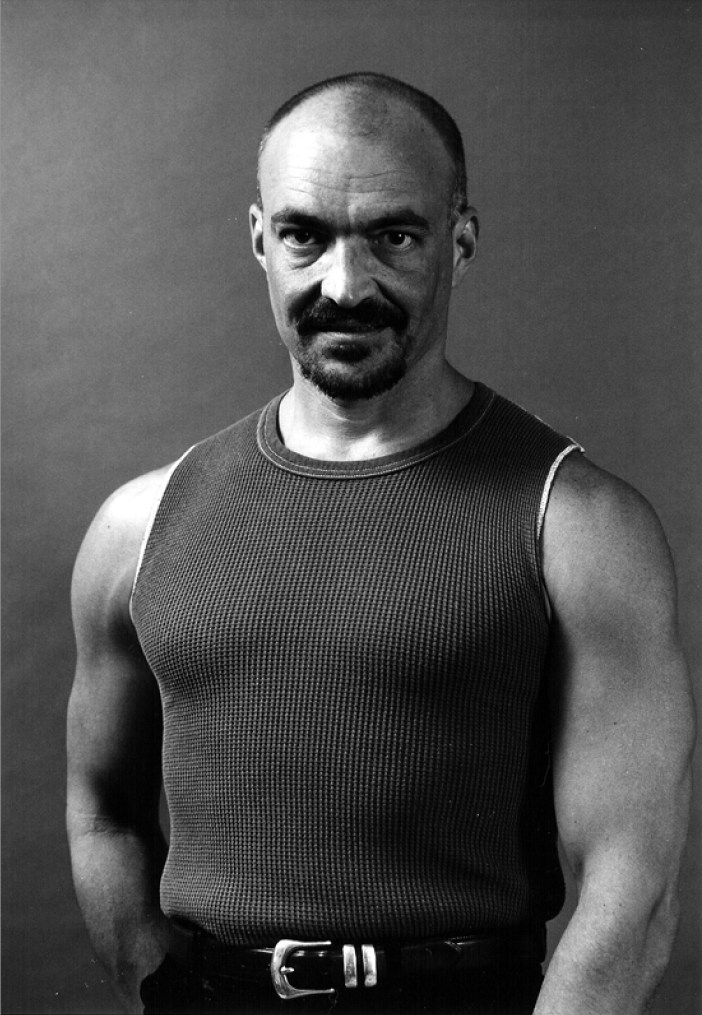
This, for an illustration, was my second author photo.
Taken by Sylvester Q, a photographer in New York, he also loaned me the shirt and some other clothes for the shoot. It was my first professional author photo shoot, and this was the best image, in my opinion, to come out of the session. I used it for Jackson Square Jazz (when I got the book down to reread it for the new edit for the 20-year anniversary edition, I noticed the picture) and for several other books. I don’t remember which image I used to replace this one–I think it’s the black and white one of me sitting and hugging my knees–but I am very well aware that I need new author photos. The one I just referenced was taken in either 2008 or 2009; the one of me with my stack of books is from around 2013 or 2014 (and yes, old age has hit me very hard since those last ones were taken). I did a shoot at Sleuthfest with Morgan Sophia in the summer of 2022; the pictures look like me but I don’t like the way I look in them, so I’ve not really used them.
Anyway, this was the image I provided to the Louisiana Book Festival when I was on a New Orleans Noir panel for their program in 2007 (I think). I don’t remember everyone else that was on it, other than editor/moderator Julie Smith and the person I am about to mention.
I was a little taken aback when said contributor sat down next to me, and exclaimed after we were officially introduced, “But I thought you were Black!”
She’d only seen my photograph in the program.
I was more amused than anything else, and perplexed. But when I looked at my image in the program later, it had printed even darker than the image above, which was already pretty dark. I think it had to do with how the shot was lit more than anything else. It was kind of funny, and it became a story that I told sometimes over drinks.
That wasn’t the first time my genetic heritage has been questioned by someone.
White people have this strange curiosity thing about people’s backgrounds, always trying to figure out where you’re from. “Are you German?” “Are you Italian?” That sort of thing. I will comment on a name–“oh, is that French/Spanish/German etc.”–but I would never ask anyone what are you?
I’d never really thought about it before the LCC incident, but people have very often wondered–and asked–what I am.
And in all honesty, I’ve never liked being asked, mainly because I wasn’t entirely sure.
I guess I am what is I’ve sometimes seen referred to as “ethnically ambiguous5“; in other words, had I been a movie star in Hollywood back in the golden age I probably would have been cast in roles that today would be considered offensive for me to play. People have often–again, this weird thing white people have about trying to figure out “what” I am–taken me for everything from Greek to Italian to indigenous to Syrian to Persian to Latino. I’ve never given it much thought, and I don’t really see it. My skin tone is what is called olive, and I’ve always tanned easily, a very dark brown with some red mixed into it (I’ve only been sunburned twice in my life). My facial features are a curious mix of my family; I look like both my parents, and my nose was broken in high school, with the cartilage never reattaching to the bone. I also shave my head, which apparently adds to the confusion.
Almost all of the ancestors (that I’m aware of, but I only know my father’s side, and there’s not anyone left on Mom’s side who’d know more) were British (Scots, Irish, English and possibly some Welsh) but white people have this weird need to classify people. I don’t know if it’s an American thing, or what, but it happens. Not so much anymore as it used to–maybe people are finally starting to realize that it’s offensive or that it doesn’t matter or some combination of the two.
But still. Basically, the woman in Albuquerque othered me. She looked at me and was confused, so she just had to find out what I was.
What I am. “What ARE you?”
And for the record, what happened to me at Left Coast is the kind of horrifically racist and offensive behavior that racialized people have to deal with multiple times every damned day. In some ways I’m glad it happened; that I got to experience racism targeted directly at me, but at the same time…it shouldn’t happen. To anyone, regardless of who they are or how they identify. It also made me very aware of my own privilege, which is something I do need a reminder about periodically; I get so wrapped up in being marginalized as a gay man that I forget how horrible it is to be a person of color in this racialized country and society and culture.
And ultimately, white people? It’s really none of your fucking business in the first place!
And would people have considered me white in the antebellum South? is a question we might have to revisit at another time.
Part of the struggle in writing this all down and sharing it with you, Constant Reader, comes from not wanting to make myself seem like either a martyr or center the conversation about racist bigotry on me. Unsettling as this all was–the privilege on display, the language used, the shame in not putting her in her place–it was momentary, something that didn’t impact or effect my life in any way; another anecdote for cocktail parties or dinner conversation. The sexual harassment aspect of it, had that been all there was (oh yes, during the ass conversation she also talked about mine), would have merely been something I would have laughed about with friends later, but the racial component was horrible. All I could think about was, really, how lucky she was that I wasn’t biracial.
Which makes me squirm more for not reporting it to the conference–what if she does this to authors or readers of color at one of these events? Was I coward for not only not stopping her but not reporting her? It’s been two years now, and I still am not entirely sure what I think or feel about this, which is very unusual for me; it’s very rare that I am unsettled this way.
But putting it all down has helped somewhat. I probably should have written this years ago.
I did buy her book that weekend, and once I read it became a fan. ↩︎
If you aren’t aware of this word, it’s an old, ugly, and pejorative term used for biracial people during the human trafficking era and the Jim Crow time that came after it. I’ve not heard anyone say the word aloud in at least fifty or so years. AT LEAST. If you want to understand just how offensive it is, it’s root word is mule–the product of interspecies breeding. Go fuck yourself, you horrible racist. ↩︎
Again an archaic deeply problematic word that actually comes from antebellum New Orleans, indicating how much Black blood someone had. These were the days of the “one drop” rule, which meant any Black ancestry, no matter how remote, made you Black in the eyes of the state and the law. Quadroon means one quarter, so the person had a single Black grandparent, the “roon” comes from “maroon”, which is another old and archaic racist term for Black people. Despicable, really. ↩︎
Credit where it’s due, she was using racist language that originated in New Orleans. ↩︎
Thursday last morning in the office this week blog. I get to go in a little later because I have to stay until five tonight; and of course tomorrow morning I have PT at the ungodly hour of seven a.m. Gah. But it’s okay, really. I slept super well last night–probably the best night’s sleep of the week–and I finally got my keyboard for the iPad yesterday: huzzah! It works beautifully, too…which is the last excuse I had for not getting any writing done (or as much as I would like). Now I have a functional laptop and a functional iPad for writing anywhere in the house, which is kind of fun. I can get my iPad in the morning and write in bed if I want, or I can take the laptop up there, or…so many plethoras of options, and NO MORE EXCUSES.
Oh, I’ll still make excuses, of course, to get out of doing the day’s writing. And I did do some yesterday–I wrote about seven hundred or so words on “Passenger to Franklin” (an Agatha Christie title homage that really pleases me far more than it probably should)–but very little of anything else other than watching Part II of The Real Housewives of Beverly Hills reunion (Kyle Richards remains a disgusting piece of shit bitch who doesn’t need to be on my television screen anymore). I then spent the rest of the evening watching the news (or clips from the news) and despairing further about the future of the country and grateful again that I am old. It’s about the only benefit to being old, really, and not having children: the future isn’t really my problem, but at the same time, I also don’t want the adults of the future to have to deal with a destroyed and/or increasingly hostile and damaged planet, either, because I am not a monster. Sometimes I think I worry about the future more than people who actually do have kids, or are young.
I watched a really interesting conversation between Rachel Maddow and Nicolle Wallace last night–and they were both right: the Republican Party of today wants to eliminate our democracy and set up an authoritarian state where they are always in charge and they can get rid of everyone they don’t like. Sound familiar? See Berlin, 1933. It’s scary to contemplate, and even scarier to realize The Handmaid’s Tale was actually very prescient. I became worried about authoritarianism coming to the US during the Reagan years and what followed, when the Republican party became convinced that they had a divine right and mandate to always be in power. As I watched people get subsumed by Fox Propaganda in the 1990s (when the character assassination of Hilary Clinton truly began), I saw it for what it was: definitely not a news organization, and it’s partisan nature had everything to do with the rollback on rules about what is and isn’t news…during the Reagan administration. It’s astonishing how little people think about the recent past, or even try to put the present in the context of the recent past.
Let alone thinking about the older history, which no one knows1. Then again, I am from a part of the country that proudly claims hatred and bigotry as their heritage, so maybe knowing history might not help as much as I would like to believe.
Heavy heaving sigh.
Those who don’t know history are doomed to repeat it.
I’m doing a panel for a Sisters in Crime chapter on-line event this weekend, do tune in to any or all of the antics this weekend. It’s called Murderous March, and it’s being put on by the Upper Hudson Sisters chapter, and you can register to view the panels here. My panel is at 2:30 eastern, it’s called “It Was a Dark and Stormy Night,” and is being moderated by the wonderful Richie Narvaez. My co-panelists are the amazing Carol Pouliot, Edwin Hill, Tina Bellegarde, and M. E. Browning. It should be a pretty good time, I think.
And on that note, I think I’ll head into the spice mines. Have a lovely day, Constant Reader, and I’ll probably be back later.





 Queer and Loathing in America