Are You Lonesome Tonight?

Lonesome is a great word that doesn’t get as much use as it used to; it was a very popular emotion/feeling for songwriters (especially those in the genre then known as “country and western”) to write about back in the 50’s and 60’s. It’s a very evocative word, and I am not sure why I don’t hear it as often as I used to. I love the word, and one of my ideas is to write a book called Kansas Lonesome at some point. The premise would be that there’s a podcast called that, which covers Kansas true crime stories throughout the state’s history; I am not sure how that podcast will play into the story I want to write, but that’s the foundation of that book, whatever it turns out to be. I am currently in the process of writing a short story (one of many, by the way) with a college student investigating a crime site out in the countryside to sus out background information for a podcast episode for the producer/star of the podcast. I do think the book may be inspired (Kansas Lonesome) on a homophobic incident that occurred in my old school district in Kansas; a young lesbian was put off the bus and banned from riding for saying she was a lesbian. The school district tried to cover up everything, but it turned out the girl was the only one telling the truth, the bus driver was fired, and the superintendent lost out on a big career move…and a few months later, she disappeared. Her name was Izzy Dieker, and as best as I can tell, she’s not turned up yet and it’s been over two years since she went missing. There are just some articles noting her disappearance, and then….nothing.

That is a great premise for a crime novel, isn’t it? Kansas Lonesome is becoming what I will soon probably be referring to now as “the Kansas book,” now that the other one was finally finished and published. But I think I will probably write The Crooked Y first; there is so much material in Kansas for prairie noir, isn’t there?

It really is amazing how much crime–specifically brutal murders–have happened in such a sparsely populated, deeply Christian red state. (“But crime only happens in those scary big cities!” Fuck off, trash. And by the way, immigrants aren’t coming for your women or your jobs.) The Benders are another grisly story from Kansas’ blood-drenched past, and I’ve always wanted to write about them, too; and hope to do so before I run out of time on this mortal coil.

And last week I stumbled across another fascinating tale of corruption and illegality involving a district attorney, a judge, and a police chief…a truly horrifying tale about how justice can be (and is all too frequently) twisted to fit the agendas of people who are evil but so convinced of their own righteousness that bending rules and not turning over evidence to defense attorneys, suborning perjury and coercing confessions from people?

Sidebar: Yes, Sarah Palin, that’s the real America, you charlatan snake-oil salesperson. Hope you’re enjoying being completely forgotten, grifter and Grandmother of Bastards.

Anyway, that’s a lot of words to talk about how Kansas is actually a horrific true crime state, with lots of examples of horrible murders and desperate people. I sometimes wonder if has anything to do with how flat the state is, and how sparsely populated. I know sometimes those winter winds off the prairies are brutal, whistling around the house and rattling the windows, trying to find a way into the warm cozy inside. Sometimes that wind can whistle, too–and I can imagine in a time without electricity or much entertainment, listening to that wind and being so lonesome out on the prairie could easily drive you mad1. I could write a book of short stories and simply call it Kansas Lonesome, with the premise that the podcast host and researchers are doing the background research into these old crimes or something. That could be an interesting way of bringing those stories together…but I also think Kansas Lonesome is too good of a book title to not use it for the novel I was thinking about earlier in this entry–the one about Izzy Dieker.

Loneliness, though, while sad and depressing, is a writer’s friend. When you’re lonely, you have to entertain yourself, and I always drag out the journal at those times, or warm up my computer and start writing away. I think a lot of my creativity came from being lonely as a child, the recognition I clocked early that I wasn’t like other kids in many ways so I stayed away from them because I didn’t know if they were going to make fun of me or bully me. and so I retreated very often into my own mind. I read a lot, obviously, and watched a lot of television and movies (while reading), and I just kind of lived in my imagination for lengthy periods of time. I preferred my own world, frankly, and still do; I hate leaving my own world for the real one.

I do wonder sometimes if I would have still wanted to be a writer if I had felt like I belonged, if I was like every other little boy. But even when I was a kid, I looked at the future that was expected of me and found it wanting. A Lot. I hated the very idea of fitting into one of the ticky-tacky houses in the suburbs and the day job that was all-consuming and the wife and the kids and the lawn work and upkeep on the house and…yeah, that sounded always terrible to me, and the older I got the more I resisted that future. Had I followed the path laid out for me by society and family I would have been absolutely miserable by now. Would I have been so attached to books if I had friends, kids in the neighborhood and the comfort of knowing people did actually like me? It was the love of books and wanting to give other people the feeling I got when I read one I enjoyed that made me want to be a writer in the first place, and the more I read the more I wanted to write. I used to write all the time when I was a kid–things I didn’t take seriously at the time, and would completely dismiss…but I was always writing. I made up a world once, with its own countries and lineages and so forth, kind of a fantasy alternate kind of history. I wrote my own versions of the Hardy Boys and Nancy Drew. I wrote short stories in high school. I started writing a novel when I was seventeen, and while I might have gone months without writing at times, I always was writing, always coming up with titles and ideas, and I was always happiest when I was creating.

And now, here I am hurtling toward my sixty-third birthday with a lot of publishing credits to my name and boxes and boxes of ideas…that I want to digitize and throw away the paper files in an attempt to cut back on clutter. I have my next two years’ writing schedule pretty much figured out already. I’m happy. That’s the bottom line of everything, isn’t it? Being happy? I love my life. I love writing. I love connecting with readers and other writers. And I think I am continuing to grow and develop as a writer. I don’t ever want my best work to be behind me, and I don’t think it is. I’m feeling good and optimistic again, and that’s always a good thing.
  1. There was a really great chapter in James Michener’s Centennial that talked about this very thing; how on the prairies in the winter the wind could drive one mad. After I read that book I could never listen to the wind again without remembering that. ↩︎

Hawaiian Wedding Song

I am a bit tired this morning. All those errands I ran yesterday? Apparently I have not recovered my stamina yet, because I am feeling it this morning. My legs are very tired, and I did not want to get out of bed this morning…which was also partly because Sparky turned into a purring cuddlebug while trying to get me to get up–lying on me and rolling and purring and head butts and making biscuits. It was actually kind of lovely, really, but now I am up, a load of laundry is started, and I am drinking and loving my coffee. LSU is competing for the national championship in Gymnastics at 3, which is probably going to suck all the oxygen out of the day, so I’ll need to get a lot of things done today before three, won’t I? GEAUX TIGERS!

Yesterday was a rather interesting day, social media-wise. After I posted yesterday morning and as I was getting ready to dive into the day, I shared the post on my social media as I always do, and I had some extreme irritations, all related to my years in Kansas, of all things; like all this writing and thinking about Kansas and ideas for books/stories there manifested some people I went to high school with, as well as some other unpleasantness. For the record, straight white cisgender, this is the sort of thing we’re talking about when we talk about microaggressions and safe spaces. The first thing that popped up at me on Facebook was some tired old bitch of a white woman’s post sharing an interview with Dawn French, in which she not only defended the Chatelaine of Castle TERF, but chastised everyone. After all, as a straight cisgender white woman, it’s our responsibility as queer people to explain it all to HER, and if we’re not willing to do so, their lack of understanding is on US.

Fuck off, Dawn French. Queer people don’t have to explain their humanity to you, you miserable fucking bigoted bitch. “Well, I don’t understand this, so please explain to me why you deserve to be treated like a human being.” That’s it right there. Doesn’t sound so nice when it’s put that way, does it? Is it really too much for you to treat other people with respect and kindness even if you “don’t get it”? And when exactly do I get my fucking paycheck for explaining our HUMANITY to someone with a blackened, dead soul and no empathy for anything outside their own experience? The arrogance!

Anyway, this former Facebook friend shared this and said, “I agree.” Someone else, another former Facebook friend, commented “Yes, absolutely.” I unfriended and blocked both, and then posted in my anger “If you are a defender of the Chatelaine of Castle TERF, just unfriend me now.” Another former Facebook friend then announced his departure. He only unfriended, so I blocked his homophobic ass, too.

As if that wasn’t enough, someone I went to high school posted a funny meme I was going to comment on, when a homophobic piece of trash from high school tried TAGGING me on it because I had unfriended her after getting sick and fucking tired of her MAGA posts and remembered the time I heard my “friend” mocking me with other people in the high school cafeteria for being gay. Again, I don’t owe anyone any explanations for cutting you out of my life because I fucking refuse to explain why I deserve to be treated like a human being and not as the butt of a joke or something to hate and despise because a verse in Leviticus says so.

Jesus, right? It’s so tiring.

And then, in the biggest irony of ironies, another person I went to high school with–who is always posted queer ally stuff, which I’ve always appreciated–did so again yesterday further down on my feed, and of course someone had to come in waving their cross and Bible, but what was truly nice was seeing how many people went after the Bible-thumper, quoting the Bible and the Sermon on the Mount back to her, and it was on that thread I discovered she had a younger sibling that is gay (I wasn’t the only one to graduate from that school, apparently) and then someone else from high school commented “My brother is gay, too”–and the irony of that was almost too delicious to savor. You see, the second “my brother is gay” poster? She and her troglodyte best friend loved called me a fag quite often and quite happily my senior year…and while that was satisfying enough, I then remembered that she and her bitch friend would say it and laugh…in front of her brother….so his situation was worse than mine, and I went from smug to sad. Her brother was also an asshole to me (which I understand; I avoided other kids who got slandered and mocked and called that), but knowing that he was gay and was listening to his sister and that other bitch call me that? How he must have hated himself every time she said it. I wonder how suicidal he was? And truly, how sad was it that we are so socialized to avoid other kids with that same stigma and shame we experience rather than supporting each other? I think that’s also one of the many reasons I have trouble trusting gay men as I do straight people–another kid who was gay-presenting at my high school in the suburbs and was friends with people who treated me like shit….out of curiosity I looked him up and he too is out and proud now. How sad he joined in so his friends wouldn’t think he was a fag, too.

But at the same time, it’s giving me an insight into Kansas that I didn’t have before. The state, which I should have known, isn’t full of homophobic MAGA trash, and neither is the area I lived and suffered through for five years. And that could make for an interesting approach to another book. I had thought Sara, with my out gay character in a rural Kansas high school, was a bit much–I didn’t think kids could be out there–and turns out that while it’s not appreciated, those brave kids are facing it all down and defiantly throwing it back in their tormenters’ faces. I actually even thought for a moment last night that it might be worth it to go back sometime, to just look around and see how different everything is from my old memories.

And on that note, I am going to get cleaned up and going on my day. I may be back later, I really do want to get all of these draft posts finished and out of the drafts file at some point, but I also don’t know how the day will play out so we’ll just have to see, Constant Reader. Have a great Saturday regardless.

Drop Me Off In New Orleans

Ah, some more blatant self-promotion! I’ve done some on-line panels so far this year, which has been terrific. Here are the questions from one I did, turned into an interview so I can promote myself! I believe these questions were for a queer crime panel, and the credit for the questions goes to the one and only J. M. (Jean) Redmann; you can order her books here.

Why did you choose your characters and their professions? What drew you to them?

Hmmm. This is tough, because I have so many books and so many different main characters…I think I’ll stick to my two primary series to answer the question. I wanted to write about a gay private detective in New Orleans, and I wanted him to be a big man, a former college football player who may have been able to be a journeyman NFL player had he not been injured in his final college game. I wanted him to be uncomfortable in his gay skin, and the point of his journey throughout the series was to grow and learn until he was finally comfortable in that skin, and able to be loved and give it.

Scotty, on the other hand, was created as a stand-alone character and I wanted him to basically be the antithesis of Chanse; in which he had few if not hang-ups, was completely comfortable being a sexually active gay man with a snarky sense of humor covering an incredibly big and kind heart. He didn’t really need to grow much–he usually is the catalyst for other characters’ growth–but as he’s aged, I’ve really enjoyed his journey.

What attracted you to writing mysteries?

I always liked them. As long as I can remember, my two biggest reading passions were history and mystery, with horror/Gothics close behind. I would check anything out of the library with mystery, haunted, ghost, phantom, secret, or clue in the title. Then I discovered the series books–The Three Investigators, Trixie Belden, et al–and after that there was no turning back.

What does being queer/gay/lesbian bring to your story?

I think queer people have the outsider point of view down to an art form because that’s how we see the world–from the margins. The easiest way to critique society, the culture, and how people interact with each other is from a remove–and queer people see all of those things from a remove through no fault of their own. I didn’t have role models when I was growing up, at least to teach me how to be a decent adult gay human being, so I had to learn it all on my own for the most part. I’ve also been confused and mystified by American culture, philosophy, and society, because it wasn’t designed for people like me. When I came out, I was just at sea in the queer world as I always had been in the straight one, and I’ve never forgotten those experiences, either, and they also inform my work.

How do we deal with how the wider world deals with queer characters? Especially in these times?

It can be depressing, which is emotionally and psychologically dangerous. It’s bad enough experiencing homophobia, but then to immerse yourself in it in order to write about it? Even more horrific. Watching Pray Away this weekend made me furious with the ex-gay movement all over again; listening to queer people hating themselves and their desires in order to be at peace with God in some twisted way? But if God is infallible…this is the doctrine Christianity gets hung up on. They think we’re mistakes, but if their God is infallible, He had to have made us perfect and its willful sin or the devil whispering in our ears. This is their incredibly harmful and dangerous rhetoric. If God tests humans, perhaps he made queer people to test the faithful–and they are failing.

But they can never admit to that.

How do you deal with diversity? No author can be everything their characters need to be, how do you handle reflecting the wider world?

I write mostly about New Orleans, and beyond that, mostly the south with occasional forays into other areas of the country–upstate New York, Kansas, California–and you cannot write about a city like New Orleans realistically without having Black characters, period. New Orleans is a majority Black city. You also can’t write about the South without touching on the issues of race and a problematic history. I’ve always included diverse characters in my books. I don’t like to describe skin color, frankly, and most white writers do it in the form of food, which I find unsettling–do you want to eat them? Cinnamon skin, cocoa, cafe au lait, eggplant, dark chocolate, etc.–I’ve seen all of those used to describe skin color and it always makes me recoil because it’s so damned lazy. I don’t think I would ever write from the perspective of a Black character–there are plenty of Black authors who can do that more authentically, and given how most diversity pledges by major publishers also inevitably end up in quotas, I don’t want to take a spot from a Black creator. I do love reading work by racialized authors, but I would never try to write from that perspective.

How do you use setting? What does it bring to the story?

Setting is one of my strengths, I think, so I always use it to enhance my story. I am also very lucky in that I live in New Orleans, where anything can happen on any given day and you can never go too far over the top about anything–if anything, you have to tone things down to be believable. I think setting is important because it tells you so much about the characters–why do they live there, how has it shaped them, did they live somewhere else, how do they deal with the challenges, what annoys them, what do they love–and is an important foundation for your story.

How do your books start—not the book beginning, but the start of the process of writing the book. Where do the ideas come from and how does that coalesce into a book?

It usually is something I find interesting and I think I should write about that. Sometimes the ideas take years to coalesce and come together, sometimes they are immediate. The Scotty books inevitably begin with three disparate things I want to address in one book, and then I have to figure out how to combine them all into a story. The next Scotty’s prompts are evacuation, statute of limitations, and obsession. It’s coming together in my head enough that I think I’ll be able to write it this fall.

Once you’re writing, what’s your process? Outline? Write from start to finish?

I used to outline, but now I kind of have it in my head and then will only go back and outline when I am stuck, so I can see where I went wrong in the manuscript. I always write from beginning to end. I don’t know how people can write backwards! I’ve thought about trying it sometime, though.

What are the hard parts of writing for you? The parts you enjoy?

Definitely the middle. The middle is soul-destroying, and always triggers Imposter Syndrome. I also hate copy edits, but recognize them as a necessary evil.

I love the actual writing and revising and all of that. There’s nothing like putting down a good word count for the day, regardless of how bad those words might be. I think revising is magic: you take garbage and turn it into something terrific.

Which writers influenced you?

All of them, in one way or another. I especially love Shirley Jackson, Patricia Highsmith, Daphne du Maurier, and John D. MacDonald. Currently? Alison Gaylin, Megan Abbott, Laura Lippman, Michael Koryta, Alex Segura, Michael Thomas Ford, S. A. Cosby, Kellye Garrett, and Alafair Burke–there really are so many. I always take something away from everything I read, whether good or bad.

What are you working on now?

Right now I am writing a sequel to Death Drop, in the Killer Queen series. I also have a ton of short stories and novellas in progress, and I already have ideas for the next three or four (or more) books.

Any advice for newer writers?

Keep writing and keep believing in yourself, and keep reading.

Last words of wisdom?

If you want to be a writer, read Benjamin Dreyer’s Dreyer’s English and Stephen King’s On Writing.

Gotta Travel On

The Ides of April and Tax Day, huzzah. I’ve filed for an extension for mine because I just couldn’t deal with it before, which is kind of childish and more than a little immature; the key word here is avoidance. But I plan to get it all finished this week, God willing and the creek don’t rise. I am going into the office a little later than I usually do, because I have to swing by the Cat Practice to get Sparky’s food on the way to the office. It’s an Admin Day, so not a big deal for me to not be there as early as usual.

I feel rested and good this morning, which is a very pleasant change and surprise. I did go to bed a little early last night, but I spent most of the day writing in my journal, watching documentaries, and later on in the evening we watched more episodes of The Gentlemen. I also finally looked up the name of the star, Theo James, because it was bothering me that I recognized him and couldn’t place him. I am liking it a lot more than I would have thought, frankly; not being a big fan of producer/showrunner Guy Ritchie, but it’s actually quite fun. I also went down some rabbit holes of research yesterday, which is always a lot of fun for me. I also started reading Paul Tremblay’s The Pallbearer’s Club, which I had a little trouble getting into at first, but I remembered having this issue with A Head Full of Ghosts, too–like the latter, he’s playing with form and style and point of view in the former, which is a bit hard to get used to it, so it’s slow going (for me) at first, but as always, there’s such depth and compassion in his writing it’s easy to see why his career has taken off. I’ll try to read some more of it when I get home from work tonight, after I do the day’s writing. I am definitely planning on writing every day now, even if it’s just a little something. I made lots of notes yesterday in my journal, too, which was very cool.

I decided yesterday, when watching a lengthy documentary of LSU football highlights (I was doing this around chores, listening to the documentary while Sparky and Paul slept on the couch) that one of the problems I’ve been facing with writing lately, something I’ve talked about on here a lot, is how I’ve not really been able to focus all of my creative energies on anything that I am writing, but have any number of things in-progress that my mind keeps attention-deficiting between, skittering around between projects and ideas without really landing effectively on anything for long enough to get very far. Yesterday I decided, as I grabbed the journal and hit play on the documentary that I was going to free-form take notes and scribble out ideas as they came to me, regardless of what they were about or for, even if they were entirely new project notes. I did a lot of scribbling, and most of it focused on one project, which really needs to get done by the end of the year, as well as some others I was a bit surprised still were there and fresh in my mind. I also know now that if I rewrite at least three of these short stories drafts that I have on hand, that collection will be complete.

I also found the voice for a new project idea I’ve had in the front of my mind for a while, primarily because we watched those ‘troubled teen cure’ documentaries at the end of the previous week. I had an idea for one set in Kansas, based on a foster home where the kids went to my high school. I didn’t think much of it when I was in high school–other than how much harder those kids had it than the rest of us–and sometime in the years since high school I thought, I could write a crime novel around that story even though it would entirely be fictional and the real place was simply a starting point for my fictionalization. The title came to me this weekend–The Crooked Y–and so that’s definitely moving up the list of “what to write next.”

As you can tell, writing is becoming more important to me and it feels good for my mind to be creating again, even in this current ADHD way, which is so much better than the dry well experience I’ve been having since…well, since Mom died, really. 2023 was a lot of personal trauma; and relentless from January on, which makes it not surprising, I suppose, that my brain has been fallow for so long.

And on that note, I am going to start getting ready to head into the spice mines for the day. Have a great Monday, Constant Reader, and I may be back later.

Floridays

Michael Koryta is one of my favorite writers.

I may not have discovered him had I not been an award judge one year, and his book So Cold the River was entered. I absolutely loved the book, that perfect hybrid of crime and horror that is so often far too hard to find, let alone have it be done well. The Prophet and The Ridge cemented his place as one of my favorite writers. I had bought The Cypress House when it was new, but somehow had never gotten around to reading it–there are several volumes of unread Koryta books that I am looking forward to getting to at some point. I know I picked it up and started it at one point, but something happened to distract me and I never got back to it. Last weekend, I finally decided it was time.

And I am very glad I chose it at last.

They’d been on the train for five hours before Arlen Wagner saw the first of the dead men.

To that point it had been a hell of a nice ride. Hot, sure, and progressively more humid as they passed out of Alabama and through southern Georgia and into Florida, but nice enough all the same. There were thirty-four on board the train who were bound for the camps in the Keys, all of them veterans with the exception of the nineteen-year-old who rode at Arlen’s side, a bou from Jersey by the name of Paul Brickhill.

They’d all made a bit of conversation at the outset, exchanges of names and casual barbs and jabs thrown around in that way men have when they are getting used to one another, all of them figuring they’d be together for several months to come, and then things quieted down. Some slept, a few started card games, others just sat and watched the countryside roll by, fields going misty with late-summer twilight and then shapeless and darl as the moon rose like a watchful specter. Arlen, though, Arlen just listened. Wasn’t anything else to do, because Paul Brickhill had an outboard motor where his mouth belonged.

What a great opening.

Koryta is an exceptional writer. He doesn’t always blend the supernatural/horror into his crime novels, but I love it when he does–very few authors (Paul Tremblay being one of them) who can deliver such extraordinary hybrid work. I’ve loved every Koryta novel I’ve read–there was one about caves that absolutely terrified me, being claustrophobic and afraid of the dark, so much so that I never did read the sequel–it got under my skin that much. (I will read the sequel, never fear!) He has also started using the name Scott Carson for these hybrid books, to differentiate them from the straight-up crime novels.

The Cypress House is a historical novel, hard-boiled and noir to its core. Set in the 1930’s during the Depression, Arlen and Paul’s journey is about finding work at government projects–they are heading for the Florida Keys to build a highway connecting the keys to mainland Florida. Arlen is a WWI veteran, a survivor of the horror that was the Belleau Wood..and it was during his service in the war that he began seeing premonitions of death in people–their eyes are filled with smoke, and he knows they are going to die. As they speed through the night in Florida, he starts seeing smoke in the eyes of everyone on the train, and knows they have to get off the train, which they do at the next stop. Paul isn’t sure he believes Arlen, but he’s attached himself to the older man like a puppy, so he also doesn’t get back on the train.

They later learn a hurricane swept through the Keys and killed everyone on the train.

The two men accept a ride to a work camp in Tampa, which winds up with them at the Cypress House, a beachfront “resort” on an inlet in the middle of the swamp jungles which is a mob front…and meet the beautiful Rebecca Cady, who runs the place. When their driver’s car explodes, they are now stuck there–and are thrown in jail for their trouble by the corrupt local sheriff and judge, Solomon Wade, who is connected to the mob all over the country and runs drugs in through the inlet. Arlen decides to help Rebecca, whom he is falling in love with, and then all hell breaks lose.

Koryta is a master of building suspense and tension, and the chapters where the three of them are riding out a hurricane/massive storm surge was absolutely chilling and terrifying, especially when you’ve done that yourself. The historical setting is apt, and as I have said before, a lot of remote places in the South are still run this way–an authoritarian sheriff and other politicians who are essentially tin-pot dictators. This book reminded me of great Florida novels of the past–John D. MacDonald and Robert Wilder’s Flamingo Road spring to mind–and this would also make a great movie.

The Cypress House is yet another feather in the cap of Koryta’s canon. Highly recommended. You should be reading Koryta/Scott Carson. Fix that if you’ve not.

Turn Me Loose

Sunday morning blog after an uneventful yet sort of productive day yesterday. Our Internet went out around one yesterday afternoon, and was essentially in and out (mostly out) until about eight o’clock last night. I did finish reading my book, which was superb (more on The Cypress House later) and I did get two more blog post drafts finished, which felt great. I ran my errands, cooked outside last night, and did some cleaning up around here as well. When it came back and we could watch television, we finished Pray Away and moved onto The Gentlemen, which we are really enjoying, on Netflix.

It was actually nice not having Internet, if odd–you never realize how much you depend on it until you don’t have it, seriously–because I was able to relax all day, instead of getting caught up on the news (rage-inducing, as always) or watching old LSU football highlights (always a joy) or finding new documentaries to watch. Pray Away was the final step in our “teenager abuse programs” watching, following The Program and Hell Camp, and what’s truly frightening is the gaslighting involved, for both kid and their parents–and that the troubled teen industry is still chugging along, abusing kids and bilking their parents of money. I’ve never wanted to do a conversion therapy story–I briefly touched on this in Baton Rouge Bingo and again in Royal Street Reveillon; that Taylor’s parents wanted to send him to one in Mississippi. I had also talked about a conversion therapy camp in Mississippi before in other works, some of them my Todd Gregory stuff, and maybe someday that will come to fruition in some way. Watching all these documentaries has put me in mind of how to write about one in a Scotty book or a stand-alone; there’s also another idea for a mystery/crime novel I’ve been thinking about a lot as I watched these horrific documentaries, only set in Kansas. (Oddly enough I find myself thinking about Kansas a lot more and more these days, not sure what that’s all about.)

I also was looking through books yesterday after I finished the Koryta to decide what to read next, and I was having trouble deciding; mainly because I have so many damned fine books to read in the TBR stack. I also ordered two more books yesterday morning–poems by Mary Oliver, recommended by the fabulous Carol Rosenfeld (me trying to learn more about poetry and start appreciating it) and the newest Scott Carson (which is a pseudonym for Michael Koryta). I think I am going to read The Pallbearer’s Club by Paul Tremblay (I’m a huge fan) while also embarking on a reread of Thomas Tryon’s The Other, which was probably one of the most influential books I read when I was a kid. I am still reading Rival Queens as my current non-fiction, and I am thinking that The King’s Assassin, the basis for the incredible new Starz series Mary and George (which you should be watching) and again, a period of history I’ve always been fascinated by, and watching the show has given me an idea about how I could approach another project that’s been in the files for almost two decades.

Today I intend to write and read and clean and organize for most the day, although I am sure once Paul gets up we’ll start streaming The Gentlemen again. I have some blog entries I also want to finish writing, and of course, there’s all kinds of writing that I need to get done today as well. I’ve been really scattered with my writing this year, and part of it has been an inability to focus on just one project with my usual laser-like focus, and that’s why I’ve not been able to get anything much done this year. This morning I feel more awake and focused than I have in a long time, which is great. Once I finish this and my review of The Cypress House I’ll get cleaned up, read for a bit, and pick up around here before focusing in on what I want to get written today. Being organized helps, and if I could simply manage to stay organized rather than just letting things pile up everywhere, I wouldn’t have to do as much cleaning and straightening and organizing as I always do on the weekends.

The Lefty Awards were presented last night in Seattle at Left Coast Crime, and I was very delighted to see the results this morning–Tracy Clark, Best Novel, Hide; Nina Simon, Best Debut, Mother-Daughter Murder Club; Naomi Hirohara, Best Historical, Evergreen; and Best Humorous, Wendall Thomas, Cheap Trills. I don’t know Nina, but the other three winners are friends, which is delightful, and I couldn’t be happier for Naomi, Tracy, and Wendall–who was on that Humor panel I had to step in to moderate at Bouchercon in San Diego last year, and was wonderful. Kudos to all winners and nominees!

And on that note, I am heading into the spice mines. Have a great Sunday, Constant Reader, and I will chat with you again later!

The hunky Alan Ritchson, starring in Prime’s Reacher, did an interview recently calling out evangelicals and Trump supporters, who got all in their feelings and have decided not to watch the show anymore. Sounds like ‘cancel culture’ to me. How woke!

Lonely Teardrops

Well, good morning, Constant Reader, and I do hope everything is going well for you on this lovely Saturday. I slept deeply and well (and a little late), and feel pretty good this sunny morning. My primary priority for this weekend is to get my taxes finished and to my accountant (we’ve already filed an extension because I couldn’t get my shit together last weekend), do some writing and cleaning and run some errands, and relax as much as I can. Last night after getting everything done that needed doing, I ordered us a pizza for U Pizza (formerly Slice) on St. Charles Avenue, and we watched some more documentaries about child abuse reform schools for “troubled” teens, The Program. It’s very chilling to see how these kids were treated both in these schools and in those camps (Hell Camp), and I imagine we are also going to have to, at some point, watch the documentary about conversion therapy camps, too. Watching these has given me an idea for another Kansas book (I already had the idea, but this was excellent research for it), which made me think about some other things about my writing: what inspires it, and what issues do I take on in my work? I think part of the issues I am having with really getting back into the writing (where I’m writing three thousand words or more every day) is because I am not addressing issues I am passionate about, things I write about and learn more about and should be more concerned about.

And now that uneducated white supremacists are now in power in Louisiana, I’m going to have a lot of issues here to take up. So far, Governor Landry is unchecked in his attempts to turn Louisiana into an authoritarian state, and I doubt very seriously any Louisiana politician is going to oppose his horrific agenda for Louisiana–he’s actually worse than Jindal ever dared to be, and he was a monster who left the state in shambles. It’s kind of scary knowing our governor is someone who wouldn’t agree to be Klanmaster because the position wasn’t racist and homophobic enough for him. As much as I love New Orleans, retiring out of state is beginning to look like the best option.

Sigh. But there won’t be anywhere safe for us if we don’t win the November elections.

I did manage to finish two pending blog entries yesterday on top of the daily entry, and so that made me feel a bit better. I’ll probably spend some time this weekend cleaning out the drafts–getting rid of the duplicate ones, or trying to combine them all into one and getting rid of the others. I’d love to finish my Saltburn essay, too, but that may not be in the cards this weekend, either. I’m going to go run errands later this morning, and I also have some more cleaning and filing and organizing to do around here as well. Like always. But I really do feel like I made some great progress on all of this lately, but the floors need to be done, and the rugs need to be reorganized. I also want to spend some time with Michael Koryta’s The Cypress House, which I should be able to finish reading this morning…which will lead to me having to pick out something else to read next. I do have some good choices–piles and piles of great potential reads–and I did go through them a bit last night while making some choices. I should also read some more short stories while I am at it; the Short Story Project has definitely dropped off, and I’d also like to revise one of my in-progress stories this weekend, too, but we’ll see how that goes.

I’ve also been doing some casual research for The Summer of Lost Boys, which I am hoping to start and finish by the end of the year. All I am doing is listening to the Top 100 hits of the year for (so far) 1973 and 1974, and that in and of itself is bringing back memories. I do think this is going to be a really good book and I’m getting kind of amped to write it. I know immersing myself into the history of current events as well as popular culture in those years will trigger my memories, not all of them good, of course, but definitely its helping me to remember what it was like to be a tween in those years, going through puberty and truly realizing how different I was from everyone else I knew as well as getting ghosted, bullied and mocked for being different, which I didn’t really understand other than knowing the truth–that the horrible things they were saying was right, and that made it even more shameful and awful. The only thing that kept me going sometimes was dreaming of being a writer and reading books, escaping from an existence I neither asked for nor wanted.

And on that note, I am heading into the spice mines. I’ll be back later without a doubt, and so hang in there until I wind up posting again. May your Saturday be marvelous, and thanks for stopping by yet again this morning!

Summer Breeze

Summers used to be different when I was a kid, or that’s how it seems now when I look back over the decades to those fuzzy and foggy and out of focus memories of my childhood. Of course, my memories are also my impressions, and I am not sure how those were formed. But back when I was a kid, I have this memory of people going away for summer vacations, and sometimes the really lucky ones went away for the entire summer. All that was required for this was a stay-at-home Mom and Dad who had enough money to rent a summer home to send them off to, joining them on his own vacation. Or maybe I am just remembering it from what I read in books during those years, and our own summer excursions to Alabama (I still would be willing to swear my sister and I spent the entire summer down there, even though I know we didn’t). But beach houses and books about teenagers coming of age while spending the summer at a vacation house on an island or near the beach was a popular subject for writers to explore. I can only think of three of them off the top of my head: Summer of ’42, Last Summer, and A Summer Place. I think I read them all over the course of a single summer, and maybe that’s why my brain defaults to thinking that way about summer breaks and vacations.

I don’t remember why I remembered Last Summer recently. It was written by Evan Hunter, and I also read its sequel, Come Winter, and I remembered both books as being rather dark, with a vague memory of their endings. But I wanted to read it again–I also remembered that John-Boy Walton himself, Richard Thomas, played the male lead in the film of Last Summer when he was a young actor, years before being cast on The Waltons. I’d be curious to see the film again, too.

We spent last summer, when I was just sixteen, on an island mistakenly called Greensward, its shores only thinly vegetated with beach grass and plum, its single forest destroyed by fire more than twenty years before. There were perhaps fifty summer homes on the island, most of them gray and clustered safely on the bay side, the remainder strung out along the island’s flanks and on the point jutting insanely into the Atlantic.

It was there the sea was wildest. It was there that we first met Sandy.

She was standing close by the shoreline as David and I came up the beach behind her, spume exploding on her left, pebbles rolling and tossing in a muddy backwash, a tall girl wearing a white bikini, her hair the color of the dunes, a pale gold that fell loose and long about her face. Her head was studiously bent. Hands on hips, lefs wide-spread, she stood tense and silent, studying something in the sand at her feet. It was a very hot day. The sky over the ocean seemed stretched too tight. An invisible sun seared the naked beach, turning everything intensely white, the bursting waves dissolving into foam, the glaring sky, the endless stretch of sand, the girl standing motionless, her pale hair only faintly stirring. We approached on her left, walking between her and the ocean, turning for a look at her face, her small breasts in the scanty bra top, the gentle curve of her hips above the white bikini pants, the long line of her legs.

The thing lying at her feet in the sand was a sea gull.

Last Summer is what would probably be considered y/a fiction today, despite being written by a highly respected author of both crime fiction (as Ed McBain) and literary fiction, as Evan Hunter. It’s also from that strange period of time that followed the end of the second World War, as the American economy boomed and both the working and middle class were better off than they had ever been before. Matt Baume, a delightful queer culture historian (his book about queer representation in film and television, Hi Honey I’m Homo, is currently a Lambda finalist, deservingly), made an excellent point on his video essay on Rebel Without a Cause, which pointed out the rise of teenage consumers–kids with lots of time on their hands due to the shift in the economy because they didn’t have to have jobs like they did before the war (only upper middle class and rich kids didn’t have to before the war) and the rise of home-ownership in addition to educational opportunities and suburban culture. Adults became quite alarmed at what this new breed of teenagers were up to, even more so than the usual tired worrying about the kids that has never gone away. Many of them were disaffected, and what they were allowed to watch and/or read became even more restricted. Many of them discovered the joys of alcohol and marijuana in greater degrees than ever before, which led to even more rebellion and concern. Parents went after comic books and magazines as corrupting influences–rather than recognizing their own failures as parents, which also gave rise to the modern mentality of uncontrollable children who needed to be protected from pernicious influences. There was, for example, a significant difference from “youth” movies like Rebel Without a Cause and Frankie/Annette in Beach Blanket Bingo. Check out his video here!

Last Summer reads very much as being about its time. “Serious” books about teenagers, many with dark themes, were in demand around this time–and they read very differently to modern readers. This book is about three friends spending the summer on an island somewhere off the Eastern seaboard, but few clues are given to its actual location, or the seaside town where the ferry operates from. The two boys, David and Peter (Peter is the first person voice of the story, remembering back to last summer) meet a girl named Sandy at the beach, and the first part of the book, about them nursing the gull back to health and trying to teach it tricks, bonds them more closely together. We don’t get very in depth about either David or Peter, Peter’s voice is calm and nonchalant, which lulls the reader into a sense of complacency. You begin to wonder where it’s going, but the boys are also becoming more and more aware of Sandy–and her body. Their closeness dances very close to crossing lines several times–she takes off her bikini top more than you’d think a teenaged girl in that time period would–but Sandy eventually bores of the gull and grows more and more annoyed by it until she kills it, and once the boys know, they destroy the gull’s body, which is very odd but telling.

And then they meet Rhoda, a shy girl with some issues of her own, and they kind of adopt her into their group the same way they adopted the seagull, and that’s when the creepy tension turns the book from being about bored teens into a horror. What they do to Rhoda is even more horrific now than it was when the book was originally published in the late 1960’s, and that blasé mentality about their assault on Rhoda–in which Sandy participates, making the horror even worse somehow–reveals them to be sociopaths, which makes the rest of the book make so much more sense, and even more chilling than it was originally.

There’s also some casual homophobia in the book–a gay couple on the island are mostly referred to as “the fags”, a horrible reminder of how prevalent that casual use of such slurs were in this country at the time.

I did enjoy the revisit, and it gave me some things to ponder and think about–and it’s still sticks in my head a week or so after finishing, so that’s a testament to Mr. Hunter.

Under the Boardwalk

I hadn’t been sure that I would keep writing young adult novels after I revised, rewrote and published the first three (Sorceress, Sleeping Angel, and Sara) I didn’t know if it was a direction I wanted to keep going in. I knew I wanted to do stand-alones–always have wanted to do stand-alones–and I also like writing about teenagers and young adults.

You may remember (doubtful) me talking about a horror novel a while ago that I started writing in the 1980’s called The Enchantress that I only got about three or four chapters into before abandoning (because I didn’t know where to go next with it; and the first chapter I specifically remember rereading at some point in the decades since and shuddering in horror at how badly it was written), but one of the places in the book really stuck in my head–an old family-owned hotel called Mermaid Inn, which sat on the shores of Tuscadega Bay (which was my stand-in for Choctawhatchee Bay–my grandparents retired to a house on that bay and I’d always wanted to write about that area; still do–it’s where “Cold Beer No Flies” was set). After shelving The Enchantress (which I do think about from time to time, and wonder if I should revisit the idea) I kept thinking, you should write a book and call it Mermaid Inn because that is a great title!

I made a folder for it, wrote a few sketchy notes, and then… it sat in my files for a very long time.

If you will remember, I had originally planned to write an entire series of interconnected young adult novels, a la the Fear Street series by R. L. Stine, and one of the varied locations they would be spread out over would be Tuscadega, Florida, in the panhandle on a fictional bay. That was part of the note I scribbled for the folder–set this in the panhandle of Florida, and somehow connect it to the fictional Alabama county you’re going to write about someday.

I decided to write Mermaid Inn sometime after Hurricane Katrina, when I discovered yet again my own ignorance of geography. I was beginning to realize that the panhandle wasn’t the right setting for this book and decided to set it on the Alabama Gulf Coast, which made me realize I had absolutely no clue about that part of Alabama’s geography. I’d just never really given it much thought, to be honest; I knew Mobile was on the bay, and I knew that when you drive on I-10 through Mobile you have to take a tunnel below the Mobile River. I just had always assumed there was nothing south of Mobile in Alabama–I mean, it’s ON the water–and figured that those lower prongs of Alabama that reach down along the sides of the bay were uninhabitable wetlands. I discovered this to not be the case when visiting friends for the first time who lived in Alabama south of Mobile. They told me to take an exit off I-10 and drive south, which I didn’t think was possible.

Turns out it was–and I realized…this will work for my book! So I filed it away and forgot about it again.

I don’t remember precisely why I decided to write Mermaid Inn, but I did, and set in a small town on the prongs, south of Mobile; my friend Carolyn Haines helped me with some background and I know she told me some stories about closeted society men in Mobile and their hijinks and I thought, I could use this for the book and I think that may have been the impetus? And then I created my character, Ricky Hackworth, from Corinth, Alabama–po’ white trash who needs a swimming scholarship to attend the University of Alabama. (Sidebar: alert readers will recognize that Beau’s last name in Bury Me in Shadows–and at one point in the story he mentions he’s only the second Hackworth to go to college; “besides my cousin who got a swimming scholarship.”)

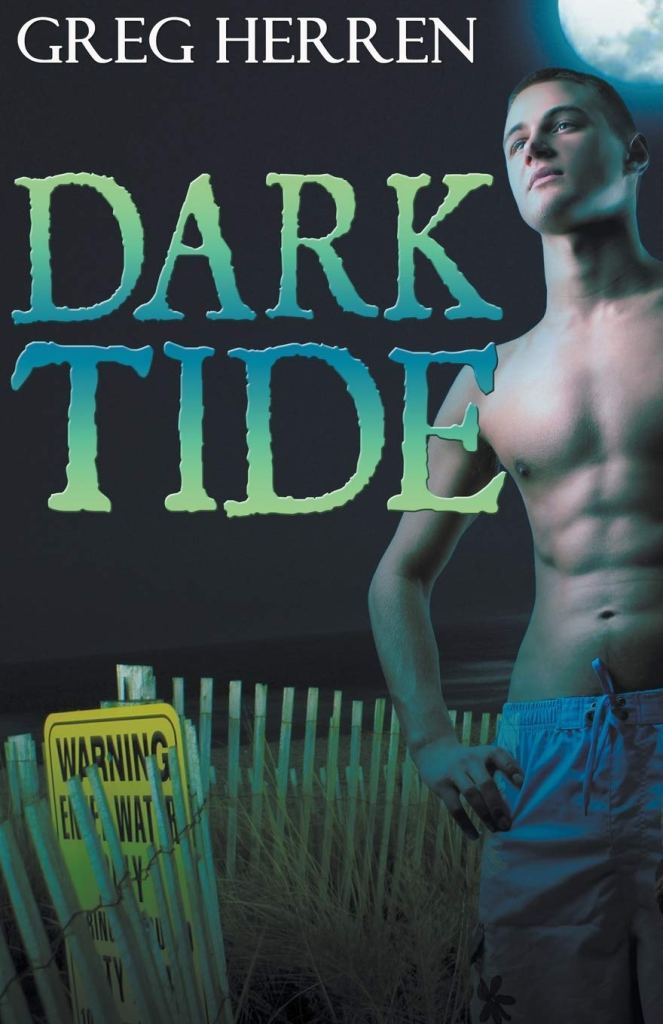
Bold Strokes didn’t like the title, and for perhaps maybe the fourth or fifth time in my career my original/working title didn’t make it on the cover. They recommended Dark Tide, which I really liked because it gave the sense of the book’s mood and tone and voice…and darkness.

The engine of my pickup truck made a weird coughing noise just as I came around a curve in the highway on the Alabama Gulf Coast and I saw Mermaid Inn for the first time.

My heart sank.

That’s not good, I thought, gritting my teeth. I looked down at the control panel. None of the dummy lights had come on. I still had about a half tank of gas. I switched off the air conditioning and the stereo. I turned into the long sloping parking lot of the Inn, pulling into the first parking spot. I listened to the engine. Nothing odd. It was now running smooth like it had the entire drive down. I shut the car off and kept listening. There was nothing but the tick of the engine as it started cooling.

Maybe I just imagined it.

Hope springs eternal.

The last thing I needed was to spend money on getting the stupid old truck fixed. Maybe it just needed a tune-up. I couldn’t remember the last time it had one.

Dad gave me the truck when I turned sixteen. It had been his work truck since before i was born–it was two years older than I was. He’d finally broken down and bought himself a new one. This old one was dependable and had almost two hundred thousand miles on it. Dad had taken good care of it. He’d babied it, gotten an oil change every three thousand miles without fail, and I could count on one hand the number of times it had been in the shop to be repaired.

It still had the original transmission.

It might not have been the nicest or prettiest car in my high school parking lot, but it got me where I needed to go and got good gas mileage. Since I was saving every cent I could for college, that was a lot more important than horsepower and cosmetics and a loud stereo that rattled your back teeth. The swimming scholarship I’d accepted from the University of Alabama wasn’t going to remotely cover anything close to the lowest estimate of what my expenses might be, but it was the best offer I’d gotten.

And I was grateful to have it. If they hadn’t offered, I wouldn’t be going at all.

Swimming was my ticket out of Corinth, Alabama.

That opening scene!

Dark Tide was probably my most hard-boiled young adult title published to that point. It was a dark story, and Ricky was poor–an economic condition I’d touched on with Sara, and something I generally try to avoid when writing. I’ve been poor, and I know how it feels; I don’t like remembering those days of checkbook mistakes and bounced checks and not having enough money from one paycheck to another. Ricky has taken a summer job as the lifeguard at Mermaid Inn in Latona, Alabama (Latona is another name for Daphne, which is actually a town on the prongs below Mobile), to save money to pay for college expenses his swimming scholarship to the University of Alabama wasn’t going to cover, and the water being there meant he could continue training. Once he arrives and is shown to his room on the uppermost floor of the building and meets the owner’s daughter, he learns that his predecessor from the summer before had simply disappeared–and young teenaged boys disappear with an alarming regularity over the past few years. He starts asking questions, mostly out of curiosity, and also starts having horrible dreams, about vicious mermaids beneath the water, and there are a lot of stories about killer mermaids from the days of the indigenous people and the Spanish. I wrote some terrific scenes in this book that I was really proud of–one particular dream sequence was especially chilling–and I was also trying something with the rhythm of the words, which I hadn’t done in a very long time, and I think it worked.

Writing Dark Tide was important to me because this was the book that reminded me again that I was writing stand-alones to help keep the series books fresher, more creative, and less paint by the numbers, too.

The All American Boy

I was a bit productive last night after work. I got off later than usual–after five–and we’d been busy all day as well, which was lovely. We’ve not seen that many people in a day in quite some time, and I’d forgotten what that felt like. I chose to take the highway home again after work, and it wasn’t terrible, to be honest. Yes, the ramp to 90/Westbank was backed up as always, and so was the twin spans over the river, but it was better than driving through the city and dealing with all the idiots and stupidity–which I was definitely not in the mood for. I came home, hung out with Sparky for a while, and then started working. I finished a load of laundry and started another. I emptied the dishwasher and refilled it. I cleaned off my desk and filed stuff (I really need to get the overall organization in this corner revamped, revised, and made more efficient and less clutter-prone). I have a meeting this morning on-line, after which I will do my work-at-home duties and do some writing. I was going to run some errands later, but I think they can keep until tomorrow, as I’d rather be around here all day and get things done. It’s a good plan, at any rate. We’ll see how well I obey those dictates.

I also slept well before Sparky decided it was time for me to get up and feed him. I went back to bed, and then of course that started his passive/aggressive ways of getting me up. I do like having a cat alarm–I’d missed that in our cat-free months last year. Sparky still has a lot of extra energy, but I like that about him, and I like that he has his own way of being affectionate. Such a completely different kind of cat personality than Scooter, but all cats are different and getting to know them is part of the joy of having one.

Mmmm, my coffee is quite marvelous tasting this morning.

I was checking my blog drafts page and was stunned to see how many drafts of entries I’ve started and not completed; several books, movies, and topics I wanted to write about, and of course, I need to either finish them or abandon and delete them. Some were kind of similar and started months (years) apart, so I need to get that figured out, and I really should finish writing about the things I started writing about. It was also startling to see that now my blog has become like everything else I write about–drafts and ideas and notes that aren’t completed. Heavy heaving sigh. In the olden days of live journal, I never did this; I always finished every entry I started (probably because I didn’t know whether you could save unfinished drafts there; I discovered the feature when I moved it over here). As a completionist, you can imagine how much this gets under my skin. I’m trying not to let it bother me, but it’s not working so far.

Sigh.

It’s been a weird week, really. I lost my respect for some people–looking at you, Dwayne Johnson, but I always preferred John Cena anyway, and turns out he’s an actual ally–and my concerns and worries about the decline in freedom for everyone (except straight white cisgender men) and the establishment of the 4th Reich in this country, depending on how the election turns out this fall. All of us who tried to warn you back in 2016 (and earlier, in my case) were 100% right about everything, so by all means don’t listen to us again now. I don’t understand the nihilistic mentality of voting third party to “teach us a lesson about progressive purity”–but it’s usually people too young to understand (and they don’t want to understand) how everything works. The irony that they think the Constitution and the system will protect them from a right-wing autocracy is so misinformed to the point of willful ignorance shows me, at any rate, why they shouldn’t be taken seriously or listened to. Back in 2016 I worked with two young cisgender white girls who couldn’t bring themselves to vote for Hillary because “she didn’t leave her husband for cheating on her” and “she’s corrupt and gross.” How does your loss of reproductive freedom feel, you willfully ignorant bitches? Thank God you proved your feminist and progressive purity! I, for one, will never forgive anyone who refused to see the danger we were facing in 2016, and I especially will never forgive people who mocked me for my concerns. Hope you need an abortion this year, bitches.

There’s been a lot of talk over the last decade or so about the art v. the artist; the first time I think I heard about this was the issue of H. P. Lovecraft’s deeply rooted racism in the speculative fiction community. I’ve not read much Lovecraft, if any, and that was something I felt I was missing in my education in speculative fiction, and probably why I never really have thought of myself as a specfic writer–I’d never read Lovecraft, and hadn’t reread or revisited Poe since high school. I still intend to at some point–thank you, Project Gutenberg, so I didn’t have to pay for them–but that will certainly effect my opinions whenever I can bring myself to read some of the stories. I used to read things all the time when I was growing up and throughout my adult life that don’t hold up now on rereads that went right past me on the first read because that was how things were in society and the culture at the time. I loved Gone with the Wind, both book and film, for decades before I began to realize how incredibly problematic both were. I keep meaning to go back and read it again now, but I don’t know that I can handle the idyllic portrait it paints of the old South, the war, and Reconstruction. (By the way, you know those white lady Trumpers? They are in this book as the ladies of Atlanta, and saintly Melanie was the worst of them…although a retelling as a Real Housewives of Reconstruction would be interesting. I know a Black writer retold the story from the perspective of a biracial half-sister of Scarlett’s, which I’ve always wanted to read.) Even Margaret Mitchell herself has some issues with the movie’s depiction of Tara because, in her words, it was a “working farm.”

The reason I am bringing this up is because the Chatelaine of Castle TERF showed her flat ass again this week. I did read the Harry Potter series and I did see all the movies, and I did enjoy them, even if I never had any desire to revisit them. The longer the series went on, the worse the books got, in my opinion, longer and more convoluted the stories got and she often never wrapped up anything; there were a lot of subplot false starts that looked promising that she abandoned. There was veiled anti-Semitism and fatphobia in the books that I marked as I read them as well as in the movies–straight from her hard drive. There were no queer people in her books until she retconned Dumbledore long after the fact–something all queer people should have been so fucking grateful for that we (in her mind) should have fallen on our knees in front of her and kissed the hems of her skirts for all eternity. She is the perfect example of how money corrupts weak minds. This week her TERFdom showed itself in announcing she would never accept apologies from Emma Watson and Daniel Radcliffe for daring not to agree with her hateful stance against transpeople, that she veils in worries about bathroom/changing room rapes…which basically comes from her assumption that all men want to do is rape women, to the point they’ll pretend they have gender dysmorphia merely to gain access to women only spaces for ease of rape/sexual assault. That’s kind of anti-male misogyny on top of the transphobia. All men are rapists, transwomen are actually men, and therefore all transwomen are rapists…and her wealth, like Elon Musk’s, have convinced her somehow that she is special and therefore her opinions have more value and weight than anyone else’s. Seriously TERF Queen, I am so sorry you had the entire world at your feet and your dark and twisted soul made you Housemaster of Slytherin and Voldermort’s mistress. I take a lot of pleasure in knowing how miserable your money and success have made you…and that you’ve decided the message of your Harry Potter series–everyone is equal, no one is better than anyone else and love is the key–was as phony as she is.

So, yes, it’s hard for me to enjoy art when I know the artist is a horrible person. And I don’t have to consume or pay for their art, just as I wouldn’t expect people who don’t like my values and beliefs to buy and consume mine.

Whew! I think I better get going on my day–this turned out longer than intended! Have a great Friday, Constant Reader, and I may be back later. Stranger things have happened on a Friday!