Superman

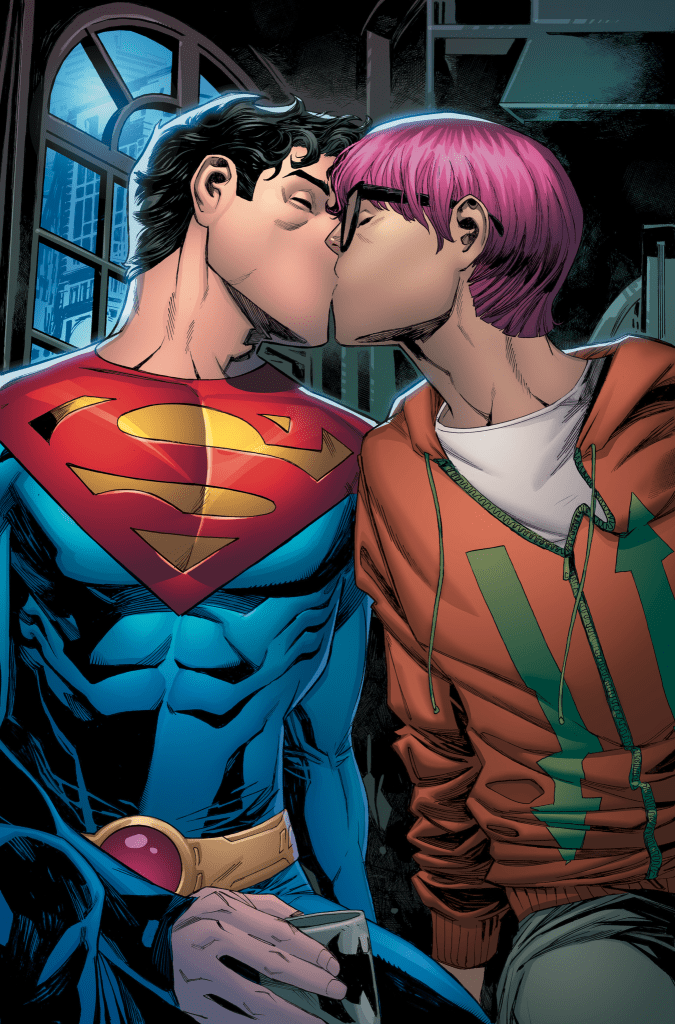
So, on National Coming Out Day this past week, October 11th, the current Superman—Jonathon Kent, son of Lois and Clark—came out as bisexual. When I saw the New York Times piece I literally gasped out loud. This wasn’t some minor character in a team comic; this wasn’t even a second-tier lead of a less-popular title. This was fucking SUPERMAN, the Big Blue Boy Scout, the tentpole character on whom all of DC Comics, and the DC television and film franchises, are built around.

I literally had tears come up in my eyes. This was So. Fucking. HUGE.

I cannot even begin to tell you how much that would have meant to me as a deeply closeted and terrified gay teenager in the Chicago suburbs and later, small town rural Kansas. I really don’t know how best to explain what this meant to me as a sixty-year-old gay man, but here goes.

Oh, Superman. You are the ubiquitous comic book character; since your debut back before the second world war you have become the default; the super-hero every other super-hero is judged against. It’s even right there in your generic name: you are the super man, hence you are Superman.

Superman is kind of the Bill Jones or Joe Smith of comic book heroes: basic, simply named, and the best of them all.
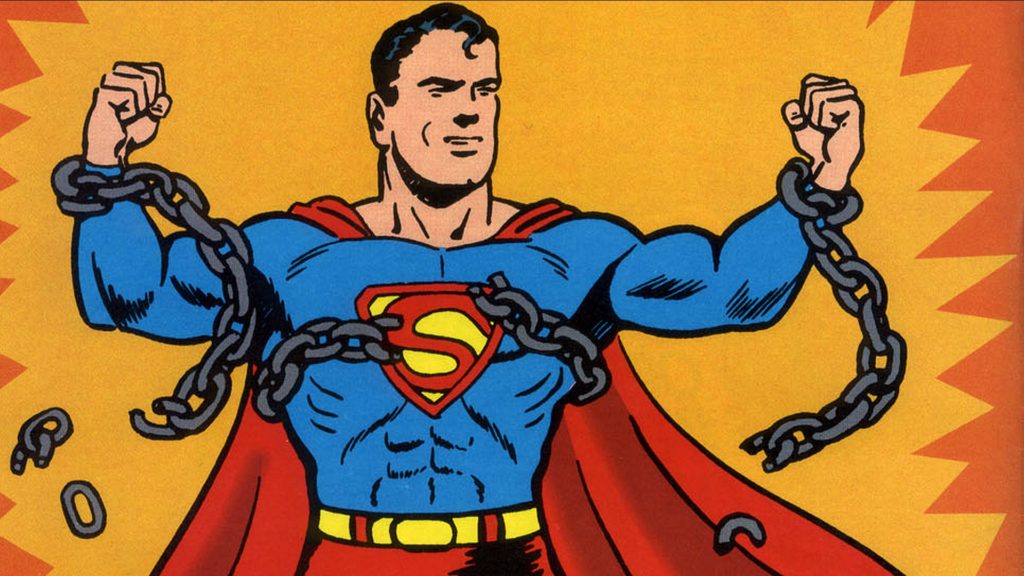
I was a kid when I first started reading comic books about super-heroes. Before I bought my first Action Comics (all I remember is that Lex Luthor was the issue’s villain), I read Archie in all of its iterations; I also read Millie the Model, Dot, Little Lotta, and some others that have faded from memory. The Jewel Osco where my mom used to buy groceries when we lived in Chicago had a comic book vending machine near the entrance, right next to a soda machine dispensing cans of Pepsi and its variants. You put in a dime and two pennies into the appropriate slots, and pushed the appropriate buttons for the comic you wanted; the metal spiral thing holding the comics would spin and drop your comic down, so you could reach in through the door and pick it up. That particular day I wanted a Betty and Veronica, which was A5 but I was in a hurry and accidentally pressed B5 instead; voila, I got an Action Comics instead, much to my bitter disappointment. One of the local independent stations, Channel 32 (which also showed repeats of The Munsters, among other black-and-white classics) aired reruns of the old Superman television show; which I thought, even for my unsophisticated childish palate, was cheesy and silly. I remember grousing about it to my mother—whose response, “Boys read super hero comics anyway” was the kind of thing that usually would guarantee that I would never read a super hero comic book, but I picked it up after we got home and I started reading, certain that I would hate it.

It probably should go without saying that I didn’t hate it.

And it opened an entirely new world for me. Sure, it got a little frustrating from time to time for me (Superman was such a goody two-shoes, but that was kind of his job) and Lois being so desperate (and jealous) to either marry and/or expose his secret identity was annoying; especially because Lois otherwise was such a kick ass woman. There were any number of Superman or Superman-adjacent titles, Lois Lane and Jimmy Olsen had their own titles; Superman often appeared in (and was definitely a charter member of) Justice League of America; there was also Superboy (“Superman as a teenager!”) and Supergirl…it was like the comics readers couldn’t get enough of Superman and his world. I eventually moved on to other DC Comics titles, too—everything Batman (Detective Comics was always my favorite, because there was a mystery to solve) and Flash and Green Arrow and Green Lantern and…yes, my dollar allowance every week for a long time went to comic books (Nancy Drew and the Hardy Boys were $1.50 and my allowance was $1 per week; and no, I couldn’t wait until I had two dollars to get one; I always needed to spend my money as soon I got it on Thursday—Mom’s payday—at either Jewel Osco or at Woolworth’s…because I could always talk Mom into buying me a book if there were Hardy Boys or Three Investigators to be had). When we moved to the suburbs the Zayre’s didn’t carry comics, nor did the grocery store in town; the 7/11 only carried Marvel (I tried with The Mighty Thor, but the continuing story aspect Marvel used irritated me because I would inevitably miss an issue), and when Zayre’s finally started carrying comics, things had… changed. Wonder Woman was no longer an Amazon, and was just an every day modern woman running a boutique (somehow she’d given up her powers). Supergirl had been poisoned, which meant her powers came and went without warning; one moment she’d be super, the next she wouldn’t. It was an attempt to modernize the books, of course, make them appeal to the newer, more sophisticated modern audience of the 1970’s; some of them started addressing social issues and became a lot more adult in theme. (Green Arrow actually became my favorite book during this time; he was drawn naturally—had curly chest hair AND nipples—and he had no powers other than being an expert archer and skill at hand-to-hand fighting). I eventually moved away from comics because I started spending my money on novels—Agatha Christie, Ellery Queen, etc.—and comics were, I thought, really for kids.
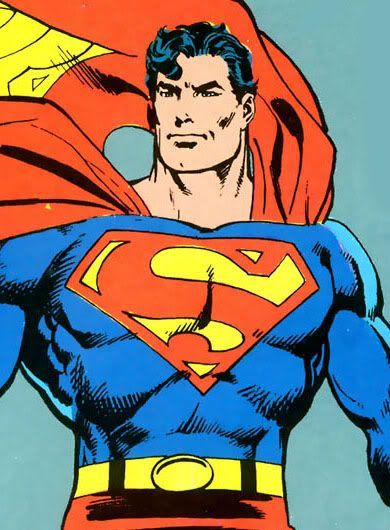
Later on, when we moved to Kansas, I got back into comics again, and things had changed yet again. Some of the Legion of Super-Heroes’ costumes made them look like strippers (male and female); the drawing of the characters had become more natural and realistic (Superman, for example, went from being barrel-shaped to having a narrow little waist and abs showing through his skintight costume), and Wonder Woman was an Amazon again. This was my Howard the Duck period, when I also started delving into Marvel a bit more. Comics always remained of interest to me throughout my life, with me going through periods of collecting and reading in large volumes at different times…before moving on from them again. I am not an expert on comics by any means; I know the names of some artists and some writers, but for the most part, I always paid more attention to story and character (go figure). But I’ve always maintained a love for the characters; and yes, the original Christopher Reeve Superman movie (which I rewatched recently for the Cynical 70’s Film Festival) indeed made me believe a man could fly.

I’ve always had, and always will have, a soft spot for Superman.
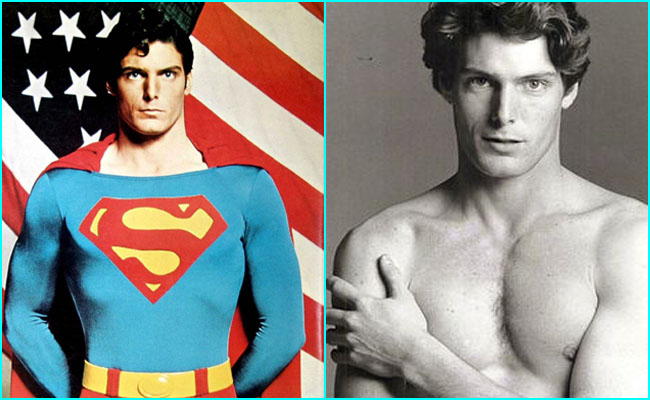
To me, Christopher Reeve was Superman–the prior versions of the character, including the popular television show (which I watched religiously) always seemed, to me, to be an actor playing the part; Reeve somehow just was the character. He was so insanely and ridiculously handsome; the body was just right, and he had the right mix of charm and charisma the part demanded. Reeve’s Superman could never be seen as a threat–and he also made it completely believable that no one could tell Clark was him, with different hair, glasses, and street clothes; he physically changed how he stood, his posture, everything about him that was Superman, when he was playing Clark.

Reeve never got enough credit as an actor, frankly.

And while my memories of Margot Kidder as Lois Lane aren’t fond ones–I thought she was a fine actress, but miscast–overall, the first two Reeve films were good ones. They could have stopped there, but didn’t–and the last two weren’t good. I enjoyed Lois and Clark (despite what Dean Cain turned into) and Paul and I eventually succumbed to the simple pleasure that was Smallville…but I wanted to see Superman back up on the big screen, where he belonged. I was very excited when they cast Henry Cavill in the part (I’ve been crushing hard on Cavill since first noticing him on The Tudors)….and then came the movies. I enjoyed them for what they were, and I did think some of the changes made to update and modernize the story (how would Americans today react to the discovery of a super being from another planet?)–and you can never go wrong with Amy Adams, either.
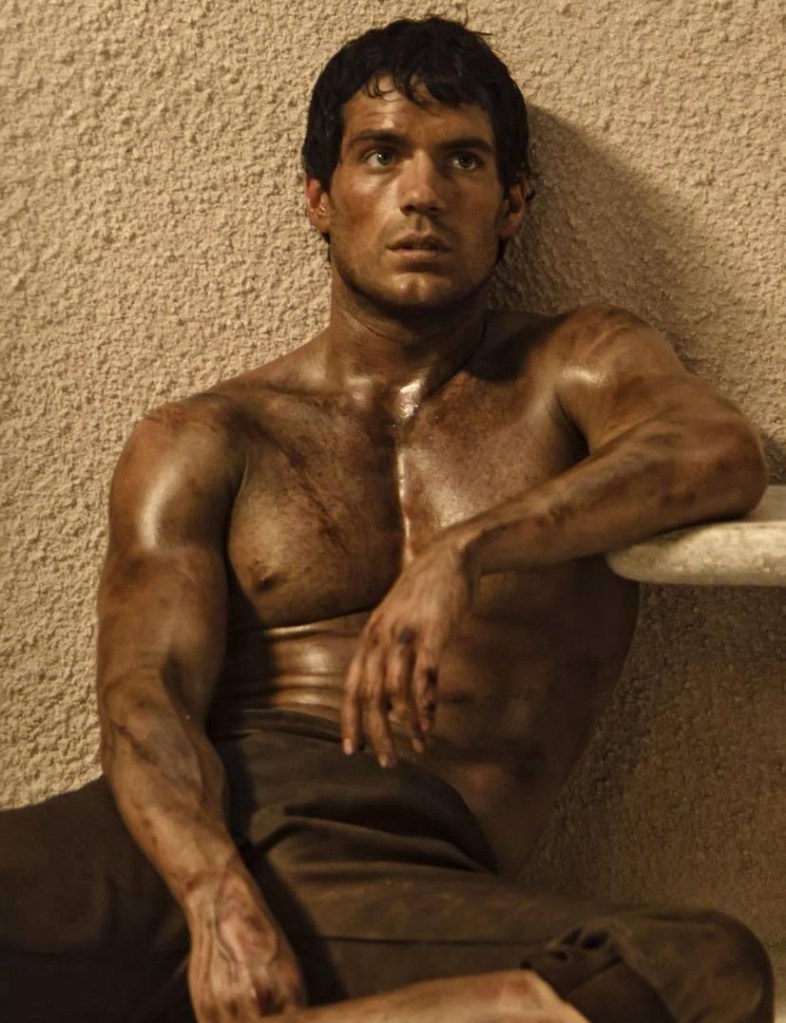
But…they forgot the most important thing about Superman: his kindness and genuine concern for people. In the quest to make the DC Film Universe of all that is dark and angsty like the Batman movies–the direction Batman has gone in since the comic mini-series The Dark Knight Returns–was a bad one. Patty Jenkins got Wonder Woman so fucking right–and it was the same basic formula as Superman. Superman used to be derisively called “the world’s oldest Boy Scout”, but that can work with the character, and with the right actor. I think Cavill has the charisma and the charm–and the extraordinarily gorgeous smile–to pull that off; I just wish they would have let him have the chance.

The new show on CW, Superman and Lois, is also excellent; I absolutely love it, and I do think that Tyler Hoechlin is one of the best Supermans of all time, frankly. (The entire cast is stellar, frankly.)

So, as I said earlier, I was pretty fucking jazzed the other day to see the piece in the New York Times earlier this week about Superman “coming out”–on National Coming Out Day, no less–and even if it turned out to not be Clark Kent, but Lois and Clark’s son Jonathan (in the comics they have the one son; on Superman and Lois they have twin sons, one of whom is named Jonathan), and while I, in my white gay male privilege assumed this meant that he was gay–he’s actually bisexual. But he is attracted to other men, and even has a boyfriend.
There was one particularly noxious piece posted on Medium, which the homophobic piece of trash who wrote it proudly posted on Facebook (I reported his post on Facebook as well as the piece on Medium as hate speech; the Medium piece came down, but the last time I looked, of course Facebook had done nothing about it). I read the whole thing–poorly worded, not grammatical, would have given a C- grade on the construction basics level alone–but the part that I couldn’t get past, the part I can’t forget, was him saying this: But why take one of the few heroes left for the “Straight World” and make him abnormally offensive to us?

Abnormally. Offensive.

I guess I missed the massive closet exodus for the DC and Marvel Universes? Let me see–right off the top of my head, at DC aren’t Batman, Green Lantern, Green Arrow, Nightwing, Cyborg, Aquaman, the Flash, the Martian Manhunter, the Question, Beast Boy, the Elongated Man, and Shazam, all straight? (And that is just off the top of my head., and only DC.) But you know those people who are so afraid of the queers–you know, like the piece of shit who wrote the Medium piece–they just can’t help themselves or keep their fucking mouths shut. Oh, no, Mr. I’ve Never Brought a Woman to Orgasm just can’t let us have anything without letting us know how much it offends their delicate, needle-dicked sensibilities. You know, the same kind of guy who undoubtedly always complains about “cancel culture” and “social justice warriors” and “wokeness” and I don’t have a problem with gay people but why do you have to exist? Those kinds–sad, bitter little men with so little joy in their lives they have to spend their precious time on this planet letting everyone else in the world know how much they object to our existence.

But he has a right to his opinion and we are oppressing him if we call it out for the hateful trash it is…and him for the piece of shit he is.

As my editor at Kensington wrote on a note he included with a copy of a bad review of one of my books, this just reeks with the stench of failed author.

This guy claims to be a crime writer, and claims to work for a publisher (I’ve never heard of it or him before this moment)…but after reading this piece and another one he published on Medium, the real crime is his actual writing.

Fuck off, dude. And know that bisexual Superman is going to have way better sex than you could ever pay for, no matter how long you live.

God knows I have.
Oh L’Amour

Well, we made it to Wednesday again, Constant Reader, and it’s Pay-the-Bills Day. Huzzah!

Yesterday was a very good day, overall–maybe a little too low energy for what all I need to get done, but I really cannot complain. I was a little distracted for most of the day–the inability to focus was almost Olympic level, seriously–but I’ve certainly had worse days. Paul was late last night–board meeting–so I sat in my chair with the purr-kitty in my lap and watched Youtube documentaries about a historical woman who has always fascinated me since I read about her in a biography of Charlemagne: Irene of Athens, the only woman to rule as Roman Emperor (she took the title of Emperor rather than Empress) in Constantinople. She was ruthless and cruel–she had her own son blinded for daring to challenge her for power (it was his throne)–and she was later sainted by the church for her belief in and promotion of icons; after several emperors, including her late husband, violently opposed as idol worship. (Icons are images of holy figures, whether paintings, statues, etc.; despite the 1054 schism, both Orthodox Christians and Catholics continued to worship them. The Eastern Roman Empire (forever branded as Byzantine by western Europeans, to deny them the Roman title which they felt they inherited rather than the actual, continuing Roman empire based in Constantinople) is fascinating to me; the court intrigues and palace revolutions; the murders and conspiracies and plots would make the basis for great historical novels. It’s very strange to me that we don’t have more of those, really; an indication of how the West has very determinedly erased and forgotten the East.

We watched the latest episode of Only Murders in the Building, which we are continuing to greatly enjoy; and it’s also nice to see Steve Martin and Martin Short both working on something high quality. I’m sorry there’s only one more episode; but I am sure it’s successful enough that they’ll try to do a second season–which is rife with the possibility of enormous disappointment, but could also have a lot of potential. (Obviously, there can’t be another murder in the same building.)

I slept really well last night–at any rate, without checking the Fitbit (which, seriously–if I feel rested, is there any need to actual check the sleep statistics? Probably not) I think I had a really good night’s sleep; I certainly feel more rested and a-rarin’-to-go than I did yesterday–which, granted, was a pretty low bar. But feeling rested rather than tired really makes a difference; my fuse is much shorter when I am tired, and it’s also much easier for me to give in to meh I don’t want to deal with this now…which is definitely not a good thing. But tomorrow is a work-at-home day and I can sleep later, there’s also a lot less stress when I am working at home, and I have a lot of trainings to get done tomorrow while I am at home, which will certainly make the time pass a lot easier. I didn’t go to the gym last night because I felt so drained; I cannot go tonight because of my event tonight at Murder by the Book, click here to register!

So, I will go after work tomorrow. It’s Leg Day anyway. Sigh.

Bury Me in Shadows had a lovely release day yesterday, which wasn’t easy because a shit ton of new books by terrific authors dropped either yesterday or on Monday: The Savage Kind by John Copenhaver; Death at Greenaway by Lori Rader-Day; Tara Laskowski’s The Mother Next Door; and of course, the newly launched Best American Mystery and Suspense 2021, edited by Steph Cha and guest editor Alafair Burke (yours truly made the “other works of distinction” list in the back of the book; cannot wait to get a copy–the stories included sound fucking fantastic). Yeah, that’s a lot of noise at the same time–it’s easy to see how my book could get lost in all the noise and thunder there. It’s going to be a lot of fun talking to John at Murder by the Book tonight, along with David Slayton (whose Trailer Park Trickster also dropped yesterday; so much goodness out there in such a short period of time!); I just hope I don’t, as always, talk too much and babble like a moron.

And on that note, I am going to head into the spice mines. Have a lovely Wednesday, Constant Reader, and I will see you again tomorrow.

Heavenly Action

I’ve always been—undoubtedly in part because I love history so much—an enormous fan of books where secrets from the past (even the far distant past) play an enormous part in the present lives of the characters in the story, and that solving those mysteries, learning the truth about the past, is necessary in the present for conflict resolution. As a history buff, the lack of a lengthy history as a nation is something I’ve always thought unfortunate; without ancient buildings and the way that history isn’t sort of always there in our faces the way it is in Italy or other older nations, it’s difficult for many Americans to either grasp, be interested in, or give a shit about our history—we have as a nation the attention span of a goldfish (thanks, Ted Lasso, for that reference).

To make a side by side historical comparison, for example, the Habsburg dynasty dominated central Europe for almost six hundred years, whereas the first European to actually arrive and establish a colony were under the aegis and flag of the Habsburg king of Spain—and that was in the early sixteenth century.

Secrets of the past casting a shadow over the lives of the living is often a theme in Gothics, my favorite style of novel/writing (noir is a close second). Rebecca is of course the master class in secrets of the past; the first Mrs. deWinter might not actually be haunting the halls of Manderley literally, but her ghost is definitely there. Victoria Holt’s romantic suspense novels inevitably were set in some enormous old mansion or castle, with potential ghosts a-plenty everywhere you turn. Phyllis A. Whitney’s one novel set in Britain—Hunter’s Green—also has a classic old British mansion with a potential ghost in it. Maybe it was the childhood interest in kids’ series, with the reliance on secret passages, hidden rooms, and proving that ghosts were frauds; every episode of Scooby Doo Where Are You? had the gang proving something supernatural was quite human in origin.

One of my favorite Nancy Drew books when I was a kid was The Ghost of Blackwood Hall; I don’t really remember much of the story now, other than a fraudulent haunting was involved and a woman—Mrs. Putney—was being swindled by a medium? (Reading the synopses on a Nancy Drew website, apparently part of the story involves Nancy and the gang coming to New Orleans, which I absolutely do not remember; my only Nancy Drew-New Orleans memory is The Haunted Showboat—involving yet another haunting. Interesting.) When I was writing the original short story (“Ruins”) I needed a name for the old burned-out plantation house; I decided to pay homage to Nancy Drew by naming it Blackwood Hall, and naming Jake’s maternal ancestor’s family Blackwood (his grandmother was a Blackwood, married a Donelson; Jake has his father’s last name, which is Chapman). I did think about changing this from time to time during the drafting of Bury Me in Shadows, but finally decided to leave it as it was. It might make Nancy Drew readers smile and wonder, and those who didn’t read Nancy Drew, obviously won’t catch it.

Hey, at least I didn’t call it Hill House.

But writing about ghosts inevitably makes one wonder about the afterlife and how it all works; if there is such a thing as ghosts, ergo it means that we all have souls and spirits that can remain behind or move on after we die. So what does writing about ghosts—or writing a ghost story—mean for the writer as far as their beliefs are concerned?

Religion primarily came into existence because ignorant humans needed an explanation for the world around them, combined with a terror about dying. It is impossible for a human mind to comprehend nothingness (whenever I try, I can’t get past “there has to be something in order for there to be nothing, you cannot have nothing unless you have something” and that just bounces around in my head until it starts to hurt); likewise, whenever I try to imagine even the Big Bang Theory, I can’t get past “but there had to be something to explode” and yeah, my head starts to hurt. Even as a kid in church, studying the Old Testament and Genesis, I could never get past “but where did God come from?” I don’t begrudge anyone anything that gives them comfort—unless it starts to impede on me. I’ve studied religions and myths on my own since I was a kid; the commonalities between them all speak to a common experience and need in humanity, regardless of where in the world those humans evolved; a fear of the unknown, and an attempt to explain those fears away by coming up with a mythology that explains how everything exists, why things happen, and what happens when you die. (I am hardly an expert, but theology is an amateur interest of mine, along with Biblical history, the history of the development of Christianity, and end-times beliefs.)

Ghosts, and spirits, have been used since humanity drew art on cave walls with charcoal to explain mysterious happenings that couldn’t be otherwise explained. I am not as interested in malevolent spirits—ghosts that do harm—as I am in those who, for whatever reason, are trapped on this plane and need to be freed. This was a common theme in Barbara Michaels’ ghost stories (see: Ammie Come Home, House of Many Shadows, Witch, Be Buried in the Rain, The Crying Child) in which the present-day characters must solve the mystery from the past; why is the ghost haunting this house and what happened to them that caused them to remain behind? I used this theme—spirits trapped by violent deaths in this plane whose truth must be uncovered in so they can be put to rest—in Lake Thirteen and returned to it with Bury Me in Shadows. I did, of course, worry that I was simply writing the same book over again; repeating myself is one of my biggest fears (how many car accidents has Scotty been in?), but the two books, I think, are different enough that it’s not the same story.

At least I can convince myself of that, at any rate.

There’s a few more ghost stories I want to write, actually; (it also just occurred to me that there was a ghost in Jackson Square Jazz, the second Scotty book) any number of which come from those legends my grandmother used to tell me as a child. I have this great idea for one I’ve been wanting to write set here in New Orleans for a very long time called “The Weeping Nun;” I have the entire ghost’s story written in my head, I just don’t have a modern story to wrap around it (same issue I have with my New Orleans ghost story book, Voices in an Empty Room) and of course there’s “The Scent of Lilacs in the Rain,” a short story about another Corinth County ghost I started writing and got to about five thousand words before the ghost even made an appearance. That great length is why I shelved the story—and now, of course, I realize I can do it as a novella, which is amazing news and life-changing, really. “Whim of the Wind,” the very first Corinth County story I ever wrote, is also kind of a ghost story, and maybe someday I’ll find the key to making it publishable (although I think I already did figure it out, thanks to the brilliance of an Art Taylor short story).

I’ve always believed part of the reason I was drawn so strongly to New Orleans is because the past is still very much a part of the present here—though not so much as we New Orleanians would like to believe, as several Facebook groups I belong to about the history of New Orleans often show how often and rapidly the cityscape has changed over the years—and you can sometimes even feel here, at times, under the right conditions (fog and/or mist are usually involved) like you’ve gone back in time, through a rip in the time/space continuum; which is something I’d actually like to write someday here—but that’s just an amorphous idea skittering through my brain.

And of course, I have an idea for a paranormal series set in a fictional parish here in Louisiana. I think about it every now and again, but am really not sure how I want to do it. I know doing a paranormal Louisiana town series will get me accused of ripping off Charlaine Harris’ Sookie Stackhouse novels, but that’s fine. I don’t think I would be doing vampire kings or queens or any of the directions Ms. Harris went with her series. (Monsters of Louisiana and Monsters of New Orleans—paranormal/crime short story collections—may also still happen; one never knows, really.)

As hard as it was sometimes to write, I think Bury Me in Shadows turned out better than I could have hoped. I think it captured the mood and atmosphere I was going for; I think I made my narrator just unreliable enough to keep the reader unsure of what’s going on in the story; and I think I managed to tell a Civil War ghost story (it’s more than just that, but that’s how I’ve always thought of it and that’s a very hard, apparently, habit for me to break.

I hope people do read and like it. We shall see how it goes, shall we not?

Something’s Wrong

At some point over the past decade, a movement started on-line to promote the voices of minority writers writing about their experience in fiction, called “#ownvoices”. The focus of the tag was primarily for non-white writers, whose work has been so long marginalized and kept out of the mainstream of publishing; forcing those writers to either not see print or go with either a small press or self-publishing. It brought up some interesting conversations about who gets to tell what story, the importance of representation in fiction, and the need for greater diversity in the popular culture.

Recently, the “who gets to tell what story” debate took on an entirely new meaning and went in an entirely different direction with the publication of a piece in the New York Times that became known as, for simplicity’s sake, “Bad Art Friend.” Who owns a story, and who gets to tell that story? Both women on either side of the conversation appeared, to me, to be kind of assholes; but when it comes down to brass tacks, I strongly believe that if you feel your own story—the story of your own life—belongs to you and only you, then you need to write it; not tell the story to other writers (or other people in general, really) and expect them not to use it. Writers are thieves, every single one of us; anything we ever are told, read, see, and hear goes into the computer of our mind and at some point, might come back out in a fictional form. The fact that the “kidney story” was used as a jumping off point for a short story by a writer fascinated by the story of the woman who donated said kidney—and her need for attention predicated on the ownership of that story—shouldn’t surprise any writer; as I read the piece in the Times myself I kept thinking, I don’t know that I could have resisted writing about this woman either—it’s such a fascinating place to start an examination of both altruism and narcissism, how could anyone resist? I also started, in fairness, to think of the story in terms of crime fiction—how would I build a crime story out of this?

I do know, however, how shitty it feels to have my story taken and told in a way I didn’t much care for; yet that doesn’t mean I couldn’t tell my story how I wanted to, if and when I choose to. Everyone’s take on this has been interesting to watch on social media–you can certainly tell how personal experience effects other writers’ opinions on things–but I think the bottom line of it all is, don’t be a shitty person. Everyone involved in that whole mess was kind of a shitty person, at least in how it was reported–and again, those people involved in the group chat/email or text chain or whatever the hell it was and were actually named in the Times piece? Their story is now being told by someone else. Karma? Serendipity? The arc of justice? Who knows? Who gets to decide?

So, who does get to tell whose story?

Most of my work is fiction, and the majority of it is also set in New Orleans. New Orleans is one of the few cities in the United States with a majority minority population (at least it used to be; I’m not as certain post-Katrina of that fact as I was pre-Katrina) and it would be impossible to write about New Orleans without including non-white characters; that would be science fiction. It might be possible to live in New Orleans and never, ever come across a non-white person; I don’t see how, frankly, but, on the other hand, I’ve read any number of lily-white books set here. The casts of my two series contain one person who is non-white; police detective Venus Casanova, a character I love deeply and have always wanted to write more about. I had two ideas for Venus novels over the years—Stations of the Cross is one, and more recently, Another Random Shooting—but I always held back from writing either of them because I am not a Black woman. I don’t know what it’s like to grow up as a Black woman in New Orleans or in the South, let alone the struggles faced with being a Black woman working for the New Orleans Police Department—the racism, the micro-aggressions, the misogyny—and while I still believe both books would be good ones, I still am not entirely comfortable writing from that point of view—nor am I comfortable taking a publishing slot (if it came to that) from an actual Black woman crime writer, of which there aren’t enough as it is.

Bury Me in Shadows didn’t present the same kind of issue that I have with writing from Venus’ perspective (I also started writing a short story once with her as the main character; I revised it to be from the point of view of her white gay partner on the force, Blaine Tujague), the issue here was that I was going to be looking at and examining the racist history of the South and issues of race themselves…from the point of view of a twenty year old white gay kid. Just what the world needs, right, another white take on racial injustice in the southern United States? The possibilities for offending people were endless; do I have blind spots in my white privilege when it comes to racial injustice? Would those blind spots come across in the book? (I don’t care if I offend Confederate apologists, none of whom would be reading anything I write to begin with for fears of gay contagion.)

One thing my main character Jake’s mother always emphasizes to him is “the heritage is hate, Jake—never forget that.”

Jake has no pride in the fact his ancestors enslaved people, or in the family history of what was once a plantation that has now dwindled to a small amount of acreage that is mostly wooded; his mother refused to raise him that way, and I wanted to show how possible and effective—and important– breaking the generational link passing white supremacy along for centuries can be. Like most white people, Jake really hasn’t thought much about the history or his own privilege—there’s a part in the book where he thinks about how many students of color there were in his elite, private Catholic school—and being there, on the ground soaked in blood and perspiration and oppression, he has no choice but to face up to it, think about it, and be appalled by it all. I didn’t want to write something that could be called, or considered, an oh look another white guy explains racism or even worse, oh look another white person discovers racism is actually a thing and is horrified book; but the land is definitely haunted by its past.

Another theme I worked on within the book is the history of this county is written in blood. That’s a recurrent theme within any of my Alabama fictions; I tend to always write about my fictional Corinth County, and its history is actually very heinous. There’s a short story I’ve been working on for years called “Burning Crosses,” about a lynching that happened there many years ago; during the horrors of the Jim Crow era—in which a young white girl, a student at the University of Alabama, comes to Corinth to research the lynching for the Justice Project—a fictional group at the University that researches all racially motivated killings in the South since Appomattox, to name the victims and so the memories never fade with time. Again, not sure if I am the right person to tell this story, and the possibilities for giving offense with it are endless; so, I continue to work on it, tweaking here and there, and maybe someday I will try to get it published. But Corinth County’s bloody history is very real in my mind, and there are countless book and story ideas (and in-progress stories) I have for continuing to write about it.

Whether I will or I won’t remains to be seen, of course, but there are files and files and files…

Because of course there are.


Take Good Care of Her

As the launch date for my book draws nearer and nearer, I find myself not experiencing the kind of stress and anxiety that I usually feel as the clock winds down. Maybe it’s because I am making the effort to promote the book this time around? Finding the time to do so? Paying more attention than I usually do when I have a book coming out? I don’t know why I am feeling so much more relaxed than I ordinarily do in the final days before this release, but it’s nice to have some awareness—other than the usual stopping in the middle of something to think, oh yes, I have a book coming out—is it today or tomorrow? I should probably do something about that, shouldn’t I?

It really is a wonder that I have any career of any kind, seriously.

And maybe it’s just the swing back from the twenty months or so of nightmarish existence, but I do feel like I am doing good work when I am writing these days. I don’t really remember much of the final push to get Bury Me in Shadows finished and out of the way, but I do remember doing the page proofs and thinking, you kind of did what you wanted to with this, well done! One of my big worries whenever I start writing something new is the fear I’ve already written the story, albeit in a different form; I was worried, almost constantly, that I was plagiarizing Lake Thirteen, my other ghost story, in this book. But the stories are very different, and the main character in each are quite different from each other. I think the mood in both books—the atmosphere I was creating—are very similar to each other, but I was trying to do something Gothic and almost dream-like with both.

As I mentioned the other day, I’ve always worried about writing about the South, and Alabama, in particular. How does one write about the South without dealing with the racism, present and past, of the region? How do you write honestly, with realistic Southern characters, without touching on that third rail of enslavement and war? Not all Southerners are racists, of course, just as not all Southerners are homophobes (I do make that point—about them not being all homophobes—in the second or third chapter of the book). But you cannot write about the South without mentioning that whole “Lost Cause/states’ rights” nonsense; that misplaced pride in something that was, at its core, evil. I was not educated in the South; I started school in the Chicago public education system; we moved out to the suburbs for junior high and my first two years of high school, finishing in Kansas. I was never taught in school that the root cause of the Civil War was anything other than slavery; and in all my extensive outside reading of American history, I never came across any of that. (I knew that the Southern politicians were all shouting “states’ rights!” in the lead-up to secession; but this was subterfuge. They couldn’t win the argument about slavery on moral grounds, so they fought against emancipation on Constitutional grounds. And, as I often note whenever someone trots out the tired states’ rights canard, the only right they cared about was the right to own slaves, and they sure as hell wanted the Fugitive Slave Act enforced against the will of the free states, didn’t they?)

I also like to point out that all those lovely, wonderful society ladies in Gone with the Wind—Melanie, Mrs. Meade, Mrs. Elsing, Mrs. Merriweather, etc.—would all be full-on Trump voters today. (I’ve not read the book in years, but while I do remember that in several places, Ashley talks about how he would have freed the enslaved people at Twelve Oaks had the war not come; but Melanie talks about the Lost Cause with all the fervor of a believer at a revival meeting in a tent…which makes Melanie, theoretically the moral center of the book, the biggest racist of the main characters in the story—and yes, I know, Margaret Mitchell did a great job of propagandizing the “Cause” as the Confederacy rather than slavery; but there’s an awful lot of racism and “they were better off enslaved” in that book, which, along with the movie, has done a great job of romanticizing something hideous and ugly )

I could write volumes about Gone with the Wind and how problematic both book and movie are (not the least of which is that Rhett rapes Scarlett but she enjoys it), but that’s an entirely different subject, deserving of its own entry (or two or three) or an essay—but I will say this one last thing on the Gone with the Wind subject: since the movie was released, for decades it imprinted on the minds of white Americans “this is what the antebellum South, and enslavement, was like”—when it was actually nothing of the sort and bore no resemblance to anything true or right.

One of the things I wanted to make clear with Bury Me in Shadows is that the shadow of white supremacy can be overcome and the continuing link, from generation to generation (parents teaching it to their children, who teach it to their children) can be broken by a person not blinded to realities or brainwashed by romantic fantasies; that character in this book for me is Jake’s mother, Glynis Chapman. Glynis rejected the white supremacy/racism she was raised with and did not pass that on to her son. I’ve always felt—and this was best exemplified with that Miss California who all those years ago blamed her homophobia on “It’s how I was raised”; it’s how I was raised is perhaps the laziest, most disgraceful, and embarrassing excuse ever given for perpetuating hatred and discrimination. It essentially states that you are incapable of thinking logically and rationally for yourself; you are incurious, and your parents are God-like, with beliefs and values that are above question. At least own your bigotry and don’t blame it on your parents because at some point, you must become your own person; you either continue to blindly believe everything your parents told you, or you actually become a functional human being capable of making up your own mind rather than simply blindly parroting what you were taught. I began questioning everything quite young, frankly; more so than most, but still to a far lesser degree than I should have. I didn’t question American mythology as young as I should have, but I did start questioning religion quite young–and I am also happy that I never fossilized my beliefs and values but rather kept them fluid and receptive to change based on new information, or more in depth thought.

Racism, and white supremacy, are evil. Period. Race theory has no validity or origin in actual science—the genetic differences between white people and non-white people are so infinitesimal as to be practically non-existent—and were created for no other reason than to justify western European colonialism, exploitation, and looting the resources of the rest of the world for power and money. Originally cloaked in religious fervor (if there was gold and riches for the crown, there were souls to be won for the cross), even American expansionism at the expense of the indigenous people of this continent was called manifest destiny, which gave mass genocide and the theft of land a cloak of holiness: it is the destiny of the white man to rule over others and expand his empire.

And it can’t get more white supremacist than that, can it?

I’ve never understood the notion of racial pride, frankly; likewise, I’ve never really grasped the mentality behind ancestor-worship, as evidenced by Confederate apologists. Regardless of reason, the truth is, and always has been, that the Southern states tried to destroy the union, period. They fired on the flag. The great irony that the Confederate apologists also consider themselves to be more patriotic Americans than those who think the Confederates were traitors–talk about cognitive dissonance–is something that always amuses me. How do you chant USA! USA! during the Olympics or other international sporting events of any kind when you have a Confederate flag decal on your car? Why are you do defensive about the crimes of your ancestors, when you have no more control over what they did during their lifetimes than they have over yours? No one can help who they are descended from and no one pays for the crimes of their ancestors. Confederate monuments never should have been erected (again, the groups that raised the money for them and put them up were run by women like Melanie Wilkes and Mrs. Meade and the other society women from Gone with the Wind) so there should have been no need for discussion, debate, or confrontation over their removal; as I always say, “Where are the statues of Benedict Arnold or the other Tories from the Revolutionary War? Weren’t they just standing behind their values and beliefs? They also saw themselves as patriots–just for the King.” I am incredibly happy not to see the statue of traitor Robert E. Lee every time I drive home from work–I hated having to try to explain the existence of the statue and the circle named for him to visitors…I used to say, “And here’s one of our monuments to treason, Lee Circle” every time I drove around it with a visitor in the car.

So, no, Bury Me in Shadows is definitely not a Lost Cause narrative that romanticizes the antebellum Southern states or the Civil War–and is definitely not the place to look for one.

Friend and a Lover

Thursday and working at home on this glorious morning. Huzzah! (I really hate leaving the house–something I battle with almost daily; my desire to be an anchorite or a shut-in; which makes it a really good thing that I work outside the home. If I could work at home, I’d have everything delivered and would never leave the house except for the gym. Seriously.)

I was tired yesterday–as I always am on Wednesdays; I’m not sure why the getting-up-at-six thing is such an issue when I go to bed at ten, but I also suppose it has to do with the quality level of the sleep. I am trying not to look at my Fitbit to get the breakdown of deep vs. light vs. awake, to be honest, as I don’t need another thing to obsess about. But I don’t think being tired on my third consecutive morning of getting up early is unusual, and I wasn’t nearly as tired as I remember being on Wednesdays. It’s more that it’s harder for me to stay focused when I am tired, and therefore harder for me to complete tasks.

And man, was it ever hard to make myself go to the gym last night when I got home from work. BUT I DID IT, AND IT WAS LEG DAY, AND MAN OH MAN HOW MUCH DO I HATE LEG DAY? With the white hot intensity of a dozen burning suns, that’s how much. (Leg Day is always rough for everyone, because your legs are half of your body, and while yes, of course, your upper body is the other half, but Upper Body can isolate actual muscle groups, whereas most leg exercises inevitably require usage of the entire leg; even calf raises require your entire legs’ muscles to be engaged, plus you don’t walk on your arms…) This morning my legs feel good tired, which means the initiation into Leg Day after so long was the right amount of work–I always worry about overdoing it, and it was Leg Day, in fact, where I injured my back all those years ago, which forced me out of the gym, and I’ve never really had a consistent workout program ever since. I also fell asleep in my chair around eight thirty, eventually crawling into bed before ten and sleeping like a stone, which was marvelous.

So, overall a good day. I managed to get the revision of my short story done (“The Sound of Snow Falling”), and it needs probably one more coat of gloss on it; I started writing another short story (“He Seemed Fine”) but didn’t get very far into it, and also started planning the revision of the first few chapters of A Streetcar Named Murder, which I need to work on adapting to the new backdrop of the series. I was too tired after the gym to focus on reading, so hopefully today after my work-at-home time I can finally finish reading it. Paul was working on another grant proposal last night when he got home from the gym, so I was watching Youtube videos on French history–the 16th and 17th centuries in France are like catnip to me–so we weren’t able to watch anything last night.

Today, I am going to watch some horror films while I do my work-at-home chores; it’s October and Halloween season, after all. I was really pleased to get some watched last year during October–horror classics I’d never seen before, as well as some I had and rewatched–and I think this week I am going to focus on sequels; namely Friday the 13th. I’ve seen the first a couple of times–rewatched it last year–but I’ve never watched any of the sequels. I think when I’ve made it through all the myriad of Friday the 13th movies, I may try Halloween. I think I’ve seen most of these movies at some point or another, but it would be interesting, I think, to watch them all in order.

Or perhaps…perhaps a John Carpenter film festival is in order. It could be fun to watch Prince of Darkness again, which I saw in the theater and was terrified; I’ve always enjoyed it on rewatches–but the fact that all the college students are played by actors well into their thirties is always a bit amusing. (I also think the score for that film is terrifying; Carpenter’s scores are always pitch perfect for his movies.)

I am feeling like myself again these days–like some dark cloud has lifted out of my brain; I’m not sure how or why, but I am glad it’s gone, even if it’s merely a temporary thing. The house is a mess, of course–as always–but I am going to try to work on getting it all cleaned up this weekend. The LSU game is Saturday night, so I have all day–if I can avoid the easy temptation of the other games airing–to clean. Or I can clean with the television on–or (gasp) I can have the games playing on my computer while I clean the kitchen.

Stop the insanity!

And on that note, I am going to finish this coffee and start a load of laundry. Have a lovely Thursday, Constant Reader.

It’s One of Those Nights (Yes Love)

So, for today’s BSP about Bury Me in Shadows, I am going to talk about where the actual story that goes to the heart of the plot came from.

My grandmother was probably one of the biggest influences in my life, for both good and bad. I won’t talk about the bad—I was raised to believe you never bleed in public—and there was quite a bit of it; I didn’t speak to her the last thirteen or so years of her life. But the good was good, really. She loved old movies and passed that love of the glory days of Hollywood on to me; she always encouraged me to read and to be a writer; and she was the one who instilled in me my love for crime films and (to a lesser degree) horror ones—what she used to call “scary movies”; I watched The Haunting for the first time with her, and sometimes when I rewatch an old classic, like The Strange Love of Martha Ivers or The Letter, I remember watching it with her on the couch. She was also the one who introduced me to some authors I love, Victoria Holt (The Secret Woman) and Mary Stewart (The Ivy Tree), and she also encouraged my interest in history, which she also really enjoyed. She used to tell me stories about the past all the time when I was young—stories that at the time, and for most of my life, I remembered as being “family history” and was very surprised as an adult to find out they were fairly common legends and stories from all over the South, as well as from books and movies. In other words, none of the stories were true…but when I was thinking about this again the other day it occurred to me that it was entirely possible I was remembering it wrong—it was a long fucking time ago, after all, and my memory has been wrong before. It’s entirely possible she was just telling me stories, that I assumed were family histories…anyway, there were a lot of them, and when I was in college I started writing a lot of the ones I remembered down. They were often tales of blood and murder and crime; sometimes ghost stories.

The Lost Boys, the legend I used as the basis for the book’s background, is one of those stories.

And yes, bits and pieces of the story are apocryphal; sewn together by my grandmother into one story to entertain me.

Long story short: before the Civil War the county where my family comes from (again, not sure if this is true or not; the histories of the area I’ve read indicate that it’s not; so she either was weaving a story for me or I misunderstood the story or altered it in my memory as I got older) used to mostly belong entirely to one family—from which I am theoretically descended from (my grandmother also had a lot of delusions of grandeur)—and after the war, they lost nearly everything, except for a small tract of land that still remains in the family to this day. Anyway, the father and the oldest son went off to war, leaving his wife and two younger sons behind. The father was killed in the war. When the son came home after the war was over, the house had burned to the ground and there was no sign of wife or the two youngest sons anywhere; they’d vanished without a trace. No one ever knew what became of them; and the story, according to my grandmother, was that a deserting Union soldier burned the house and killed them (yes, the same story as appeared in Gone with the Wind, among others; my grandmother also told me another story about a Union deserter committing murder of a defenseless Southern woman—which I also turned into a short story that collects dust in my files), and that on or around the anniversary of their deaths, you could hear the younger boy calling for his mother in the woods near where the old house had been. Good stuff, right? I certainly thought so, and what a great basis for a story.

Of course, when I started researching the history of the county, none of this appeared to be true—the Union army never came any closer to the county than Tuscaloosa, for one, so the odds of a deserter making it all the way there on foot are pretty slim, and especially if no one else saw him—and of course, none of my ancestors owned most of the county. But it was a good story, even if not true, and I felt that writing about it could make for an interesting tale. My main character, Jake, is aware of the old family legend; he wrote a paper about it in high school, but doesn’t believe it’s anything more than a legend. I thought it would be cool to leave the ruins of the original house there, deep in the woods, far from the county road and the current domicile of the family, the crumbling house on the dirt road just off the county road. I also brought in a team of archaeologists from the University of Alabama, excavating the ruins—one of the few sites left that haven’t been excavated—and the professor leading the team, Dr. Brady (named after a historian friend), while intrigued and interested in the legend, isn’t trying to find proof one way or the other; he’s simply interested in what information about how the family lived can be unearthed.

The book is more than this, of course; but the Lost Boys legend was the starting point from which the rest of the book grew. I have a very complicated relationship with Alabama, to be honest; it’s my homeplace and I love the state. It’s stunningly beautiful. Even the poor rural county we came from is beautiful, with rolling hills and small mountains covered in pine forest, hollows filled with kudzu, muddy orange streams and rivers, riotously colored flowering bushes, and the air…oh, how wonderfully clean and fresh and pure the air smells. I love the orange dirt, and how round and smooth the gravel can be. The sky is a gorgeous cerulean, and of course, when it rains, it really rains. I can remember how still and heavy and damp the hot summer air was, the gnats and mosquitoes and dirt daubers and wasps and hornets and bees and horseflies. Whenever I stop as I drive through on my way somewhere else (usually Kentucky or Atlanta), I am always amazed at how lovely the young people are working in the small highway-side town’s fast food places. I remember screen doors with a coil so they’d always shut (or slam, if you just let go), and the big red Coca-Cola coolers with the bottle opener on the side in the general stores—and of course, the big old style Dr Pepper signs, that looked like a clock with only the numbers 10, 2 and 4—because that was the time for a Dr Pepper. (I also remember it was considered a cure-all when you were sick; just heat some Dr Pepper on the stove and add lemon; just like 7-Up was a cure for an upset stomach.)

But the state’s history– enslaved people, what happened to the indigenous tribes, Jim Crow, Selma, the institutionalized racism–is also deeply problematic. How does one write about the problematic history of the state? How do you point out how wrong all of that is without becoming preachy? I’ve often taken issue with white-written narratives about the pre-Civil Rights era in the South, as well as those set during that era and after; I remember reading one book where the heroine was doing research about the history of an incredibly racist town where a race-related murder had occurred, driven by the Klan–but focusing on the good, non-racist, non-Klan members of the town–what I call the see? We aren’t all bad take. I definitely didn’t want to write one of those stories. A few years back, I found a copy of a book I read when I was fairly young–it belonged to my uncle, actually–about the Civil Rights era in Alabama, called The Klansman by William Bradford Huie, whom I believe was actually a journalism professor at the University of Alabama…and it was different than I remembered, yet still chilling. I’m not sure what Huie was trying to do with the book, to be honest; the Klan sympathizers really came across badly, and even those who weren’t out and out members of the Klan were still racists who saw the Klan as a necessary “evil”–the sheriff couldn’t get elected without the support of the Klan, and he spends the book trying to walk the line between pleasing the Klan and not doing anything illegal…but you lie down with dogs, you wake up with fleas. (I read it the same summer as I read To Kill a Mockingbird, which also belonged to my uncle; the two books are forever linked in my mind.)

Bury Me in Shadows may be many things, but it’s not a Lost Cause narrative, nor is it a “look at the nice white saviors” novel, either.

And I think that’s enough about that for today.

Every Song Is You

Wednesday morning!

Yesterday was a really good day. I was productive again–not as much as the previous two days, but still, I’m counting it as a win. I even wrote. I worked on a short story and an essay–granted, the short story was a revision, so somewhat easier than actually writing something from scratch on a blank page–but it was still pretty awesome to be flexing some creative muscles again. I also think my editorial eye has become a lot more clear than it’s been in over twenty-one months; I definitely think I am going to be tweaking this story perhaps one more time. But it felt amazing to be writing again–rewriting, as it were–and so my new plan is to try to get this three short stories I’ve been trying to revise forever revised this week, and start working on A Streetcar Named Murder in earnest this weekend.

Tonight after work I am going to go to the gym for Leg Day, and try to get some more editing done. I also want to finish reading Velvet Was the Night so I can start my Horror for Halloween reading, beginning with the annual reread of The Haunting of Hill House. I had also planned to read one of the Stephen Kings I have on hand but not yet read–probably The Institute–and another Paul Tremblay at the very least; but I’ve got to finish what I am already reading before I can move on to anything else. I think this decommitment to watching college football all day on Saturday will help, and just the occasional check-in on the Saints on Sunday should also help free up some of my time. I think today’s lower energy mode is probably just the usual oh I’ve gotten up at six for three straight mornings tired; even now as the coffee kicks into gear I am starting to feel more alert and more on top of things–which is pretty fucking cool. Yay!

I’ve also been writing blog posts to promote Bury Me in Shadows; I wrote a rather lengthy one about the backstory behind the book–where the Civil War ghost story aspect of the book came from, and why it was kind of difficult to write such a thing in the present time, knowing that the rebel side was wrong and problematic–and the underlying root cause of all the racial tension and problems we still face as a country today (I’ve preordered The 1619 Project, and can’t wait to read it). One of my primary worries/concerns with writing this book was how easy it would be to step wrong and write something offensive. I still worry from time to time that I did exactly that, and when the book is released there will be controversy. But if I got something wrong, or wrote something that is offensive, I will own my mistakes, apologize for them, and try to do better going forward.

I don’t understand when admitting you were wrong or made a mistake became a sign of weakness in this country. I also don’t understand it. I don’t like being wrong, but I am also not going to double down on being wrong. Not meaning any offense doesn’t mean you won’t offend someone, and for the record, I’m sorry you were offended is not the same thing as I’m sorry I offended you. The first is a non-apology, and the speaker isn’t really sorry for what they said, they are only sorry you were offended by it. The second takes ownership of the situation and doesn’t let the original speaker off the hook, and personalizes the apology. I also don’t understand why this is so hard for people to understand.

Yesterday Twitter was all abuzz about the Kidney Woman story in the New York Times, which tried to stir up the whole argument about drawing inspiration from someone else’s life or story. I’ve always believed that it’s impossible for any writer to create either a character or situation lifted from real life; if anything, it’s only a starting place, because a writer cannot know everything about any real life person–you don’t know their every experience, you don’t know what the seminal experiences that created who they are and how they react to things, you don’t know how their mind works or how they even think; at best, all you really see if how they outwardly react to a person or a situation–you don’t know what they are thinking, you don’t know their triggers, you don’t know anything, really–so you have to make up a lot of it, and you base it on your observations of how that person behaves and reacts. Observation is very key, yes, and an understanding of psychology, but again, everyone is different and no one can predict how anyone else will think or react or behave in any given situation. Which is why we are always surprised by the behavior of people we know; we don’t really know them at any great depth so of course we are always going to be surprised and caught off guard by their actions. Nobody likes to think people talk about them behind their back; no one really wants to know what people that dislike say about them. But you have to understand that it’s very human–friends tell each other things, and everyone talks about everyone else (it always amazes me that this salient fact of life is always addresses so insanely on reality televisions shows–“don’t talk about me behind my back!” Um, everyone does it, hello? And most of the time it means nothing. If someone has pissed me off, I will inevitably talk about it to a mutual friend–just to get it off my chest and out of my system. Usually, I am over it once I talk it through with another person–everyone needs to vent, why is this so hard to understand? And it doesn’t have to mean anything more than that…”yes, I was mad at you, but once I talked it through with X I realized it wasn’t anything, I was over it, and why hurt your feelings or start a fight with you when it really wasn’t anything?”). I certainly don’t want to know what people say about me when I’ve irritated them or pissed them off; I’m perfectly happy being oblivious.

With the caveat that if I behave in a way that really gets on someone’s nerves regularly, I would like to know so I can decide to change the behavior or not.

Then again, I’ve never understood the rules of friendship, either.

We finished Midnight Mass last night, and thoroughly enjoyed it. Mike Flanagan, who also did The Haunting of Hill House (which I was able to enjoy as I merely viewed as fan fiction rather than a straightforward adaptation of the classic novel–one of my favorites), did an excellent job here. It’s a deep meditation on religion and the power of belief, juxtaposed with some serious horror. The acting is superb; the characters deeply drawn and compelling, and it’s hard to look away. I prefer this kind of creepy, unsettling horror to jump scares and gore, frankly. I do recommend the show, but prepared to think some heavy thoughts about the power of religion and its potential for abuse–as well as how easy it is to misinterpret something as holy when it most certainly is not.

And on that note, tis off to the spice mines with me. Have a lovely day, Constant Reader.

Maybe Someday

Well, we managed to survive Monday, did we not, Constant Reader?

Always a plus, don’t you think?

Yesterday morning I got up without much of a problem—but I really need to stop checking my Fitbit every morning to see how well I slept; it’s rather silly, actually, and doesn’t change whether I feel rested or not when I do get up. I went to the gym Sunday afternoon (why do I always forget how good it feels to stretch and work out?) and am hoping to have the energy to go for Leg Day after work tonight. This month—looking ahead—is going to be a bit on the crazy side: I have an on-line training for work; I’m doing a library event in the evening this coming Monday; my book drops officially next week; I’m doing an event with David Slayton (author of White Trash Warlock) with Murder by the Book on the 13th; and I am having a colonoscopy on the 21st. Woo-hoo! That’s me, living large everywhere I turn around. And then it’s Halloween, and then it’s November, and I am taking two trips: one to New York/Boston (for Crime Bake), and to visit my family for Thanksgiving (note to self: buy plane tickets and make arrangements for New York/Boston trip). After that, it’s pretty much just Christmas and New Year’s, and suddenly it’s Carnival again—not sure what it’s going to look like, to be completely honest, or how much I plan to be involved or participate with it. I will also be doing some traveling in the new year—New York again in January, Birmingham in February, Albuquerque for Left Coast, whenever that is—and here’s hoping the pandemic has calmed down and/or finally ended by then. PLEASE? Is it too much to ask?

There really is something to be said for doing things that were normal before the pandemic again. I do think going to the football game Saturday night, which I was so concerned about—and I wasn’t entirely comfortable around all those people—helped reset my brain a bit; I felt so much better about the world and life and everything in general when I woke up Sunday morning—after the first cup of coffee cleared some of the bleariness away—and Sunday night, after watching two more episodes of Midnight Mass (which is extraordinary, by the way; you should watch, Constant Reader—the writing and acting and production values are truly stellar—I had no problem going to bed and sleep. I did hit snooze a few times yesterday morning, as always—the alarm is set fifteen minutes ahead; which may seem kind of dumb to me at times (what good does it do you if you always remember its fifteen minutes fast?) but I do like to gradually wake up and acclimate a bit before I throw aside the covers and put on my morning pre-shower attire of LSU sweats, socks and house slippers. (Note to self: need a new pair of LSU moccasins to wear around the house)

I was also fairly productive yesterday, which was most pleasing to me. I did start getting sleepy and tired in the afternoon while at work, but powered through. I got a lot of emails taken care of, paid some bills, and spent a lot more time than I probably should have on Twitter being amused about the Facebook crash. (although I did find myself more than slightly amused at how often I would automatically start to go to the Facebook tab on my browser before thinking sorry, Dave, I’m afraid I can’t let you do that right now)

Old habits die hard, and it does kind of bother me that it’s become so habitual for me to check Facebook. (We pause briefly now to look back and remember the days of MySpace, with a bit of nostalgic fondness)

Honestly.

But I am getting better organized, and working more efficiently these days than I have for, oh, say about the last two years, give or take? I am also—now that I no longer feel the need to spend all day Saturday glued to the television watching college football—going to start cleaning projects, weekend by weekend, until I have gradually cleaned the entire apartment. Ambitious plans, to be sure, but it’s not like I haven’t done it before. And included in this is cleaning out the crawlspace above the laundry room; there’s a lot of stuff up there that can probably be donated—boxes and boxes and boxes of books that I most likely will never look at again because they are in boxes in the crawlspace. The ultimate goal for me would be to not only clean out the crawlspace but clean out the storage unit—there’s room in there now, but there could be a lot more. (There’s also a chance that things in there got ruined during Ida as well—I know at some point since I rented the unit some water got in there somehow, because a couple of boxes had gotten wet and were thus ruined and needed to be thrown out.) I was also thinking about the whole “keeping my papers to have them archived somewhere”—which I really need to either do, or throw them in the garbage because they take up so much space—because what really is going to be interesting is the electronic files; those may not show the notes I’ve made on manuscripts themselves for edits and so forth, but you can trace the progression of the writing and rewriting through each different version of the story/book/file. (And of course, I am rolling my eyes at myself for thinking any future scholar of queer mysteries from this time period would be interested in me and my work. Ten years after I am dead, cremated and my ashes scattered in the various places I want them scattered, I won’t be remembered, and I am perfectly fine with that.) I mean, it’s interesting to me to look through because it triggers memories long dormant in a corner of my brain, but I honestly cannot imagine being the subject of anyone’s dissertation or thesis; unless someone wants to look at my stuff as a reference to gay white male life in New Orleans before and after Hurricane Katrina.

Ah, well.

I also realized I’ve been writing this for quite some time and haven’t mentioned Bury Me in Shadows yet, and I was going to try to talk about this book a bit every day as a bit of a tease to encourage people to buy it. It really is a wonder I have a career, isn’t it?

So, if you’ve stuck with this entry so far, let me promise you this: tomorrow I will talk about Bury Me in Shadows. You’ve been warned.

Until tomorrow, Constant Reader.

Together We’re Better

Yesterday actually turned out to be quite lovely.

I was a little bleary when I got up yesterday morning (my Fitbit advises me I only slept deeply for 3 hours, 48 minutes; the rest was “light sleep” and I woke up three times), but for whatever reason, I decided to start getting to work on things. I started answering emails (I am very careful with email. I refuse to let it control my life, which it easily can; so I answer emails over the weekends and in the mornings, save my responses as drafts, and send them all after lunch. I do not send emails after five pm CST; I do not read them, either. Email at one point took over my life, which made getting anything done impossible and raised my stress levels to unbelievable heights. I realized anyone who absolutely, positively needs to reach me has my cell phone number…and if I don’t trust you with my cell phone number…you don’t really need an answer right away. And guess what? The world didn’t end, I didn’t miss out on anything, and nothing became harder) while reading coverage of the LSU debacle from Saturday night (one thing I did mean to mention and didn’t yesterday; I try not to be overly critical of college athletes because they are basically kids. It’s easy to forget that when you’re watching on television, but when you see them on the sidelines with their helmets off, or while walking down Victory Hill to the stadium in their suits and ties…you see a bunch of teenagers and young men in their early twenties. They are kids—and those baby faces on those big muscular bodies is a very strange juxtaposition sometimes). I decided on the way home from Baton Rouge that while I do, indeed, love football, I really shouldn’t give up my weekends to it all fall. Now that LSU is definitely out of the running for anything, I’ll probably not watch as much football as I would if they were still in contention for anything. I’ll still watch LSU, and occasionally I may spend an afternoon watching a big game—the SEC title game, the play-offs—I am not going to spend every Saturday pretty much glued to the television all day, flipping between games all day. And I also rarely enjoy watching the Saints—I love them, they’re my guys, my team, my heart—but their games are so damned stressful it’s hard to enjoy them, and when the games is over I am always, win or lose, emotionally and physically and mentally exhausted. So, I decided it made more sense to get things done, check in on the score periodically, and not sweat it too much. (Good thing. Like LSU, the Saints led the entire game, folded like a newspaper in the fourth quarter and wound up losing.) I made groceries, filled the car’s gas tank, and before going, I started weeding shit out of my iCloud and saving it all to my back-up hard drive.  I wound up freeing up over four hundred and seven gigabytes in my flash storage, and suddenly my computer was running very quickly again.

And yes, it’s my fault.* I have a gazillion pictures files, going back to digital camera days. I used to back up my hard drive and my flash drives regularly to the cloud—and those folders are enormous. I don’t probably need all of it—I was weeding through bits here and there as I moved the files over to the back-up hard drive (eventually planning on copying them up to Dropbox), and started finding all kinds of interesting things. Story fragments I’d forgotten, book ideas and anthology ideas and essays I’d started; some of these things are in very rough, first draft form—and got left behind as my addled, AHDH-like brain moved on to the next thirty or forty ideas for all of the above. I also was kind of amused to see how I often I plagiarize myself; I had a completely different idea for the book I wanted to call A Streetcar Named Murder fifteen years ago—which I can still use at some point, just have to come up with a new title. I’d forgotten that all the way through the process Need was called A Vampire’s Heart; my editor suggested changing it after I turned the book it. It was a wise choice; my title was very romance sounding and Need was hardly that. It was also interesting seeing, over the years, how many different ideas I’ve had for a gay noir set in the world of ballet (damn you, Megan Abbott!). I discovered that Murder in the Garden District actually began as Murder on the Avenue (a title I can repurpose for an idea I had last week); I found the original files for Hollywood South Hustle, the Scotty book that turned into a Chanse MacLeod, Murder in the Rue Ursulines; I found the files for the Colin book that tells us what he was doing and where he was between Mardi Gras Mambo and Vieux Carré Voodoo; I found the original Paige novel I started writing in 2004, in which an Ann Coulter-like pundit from New Orleans is murdered; I found the first three chapters of the Scotty Katrina book, Hurricane Party High,  in which they don’t evacuate during a fictional hurricane, and the chapters where I rewrote it, had the, evacuate to Frank’s sister’s in rural Alabama (and we meet Frank’s nephew Taylor for the first time—and I also remembered that they belonged to some weird kind of religious cult and that Taylor was going to come to New Orleans in the future to visit during their version of rumspringa, but eventually abandoned the idea completely and never did a Scotty/Katrina book; was reminded that Dark Tide began as Mermaid Inn; that I wrote the first chapter of Timothy during the summer of 2003; and if I even tried to list all the iterations that wound up being #shedeservedit, we would be here all day (Sins of Omission, I think, was my favorite earlier title; again, a completely different book with some slight similarities…I may have to take a longer look at some of those iterations because being reminded of them all, I also remembered that I really liked all the versions).

I also found many, many nonfiction pieces I’ve written over the years—many of which I’d long since forgotten about—so maybe that essay collection won’t take quite as long to pull together as I had originally thought. Huzzah!

And I also discovered something else that I knew but had slipped out of my consciousness: that Bury Me in Shadows was called, for the first and second drafts, Bury Me in Satin—which gives off an entirely different vibe, doesn’t it? I wrote a very early version of it as a short story while in college, called it “Ruins,” but never wrote a second draft because I knew it wasn’t a short story; it needed to be a book, and one day I would write it. I was never completely comfortable with the story, to be honest; I wasn’t sure how I could write a modern novel built around a Civil War legend in rural Alabama. I absolutely didn’t want to write a fucking Lost Cause narrative—which is what this easily could have become, and people might come to it thinking it is, and are going to be very angry when they find out it is not that—but I really wasn’t sure how to tell the story…and in my mind, I thought of it as Ruins—which I freely admit is not a great title, and has been over-used.

As luck would have it, I was watching some awards show—I can’t begin to try to remember what year—and one of the nominated groups performed. I’d never heard of The Band Perry before; and the song they performed, “If I Die Young,” absolutely blew me away. (I just remembered, I kind of used the title as guidance when writing Need—always trying to remember he became undead very young) The first two lines of the chorus are this:

If I die young,

Bury me in satin

And I thought to myself, Bury Me in Satin is a perfect title for the Civil War ghost story! Melancholy and sort of romantic; I’ve always thought of hauntings as more about loss than being terrifying (you do not have to go full out jump scare, use gore or blood or violence to scare the reader, and if you doubt me, read Barbara Michaels’ Ammie Come Home), which is why I’ve always loved the Barbara Michaels novels that were ghost stories. That was the feeling I wanted to convey, that sad creepiness, and longing—I wanted a Gothic feel to the book, and I felt that line captured what I wanted perfectly. But as I wrote it, it didn’t quite feel as right as it did in that moment (I still love the song—and the video is interesting and kind of Gothic, doing a Tennyson Lady of Shalott thing), and then one day it hit me: changed ‘satin’ to ‘shadows’, and there’s your perfect title.

And so it was.

Oh dear, look at the time. Till tomorrow, Constant Reader! I am off to the spice mines! Have a lovely Monday!

*I will add the caveat to this that anything stored in the Cloud should not affect the flash storage in the actual computer and its operating system, and yes, I am prepared and more than willing to die on that hill.