There are few things more Louisiana than rooting for LSU…unless its rooting for the Saints, maybe. Southern people love their football, especially the college variety.
Paul and I have not been to a game since 2021, when our “never saw the Tigers lose in person” streak, which began with the Mississippi game in 2010, came to an end with the only loss to Auburn in Tiger Stadium this century. We managed to make it through twelve seasons without ever seeing the Tigers lose while we were at the stadium, which is a pretty good run.
Chanse was an LSU alum–he even played football there–and I think I’d idly mentioned in the first book that he’d been injured in the Sugar Bowl in the last game of his senior year, and never elaborated more than that on his past at LSU. I think there were some more reflections in the second book in that series, but I know I never brought it up again after the second book in the series. I have an in-progress Chanse novella, which is set on the LSU campus at his old fraternity, but I don’t know if I’ll ever finish the story of the fraternity murder. As for Scotty, his background was so vastly different from Chanse’s that I couldn’t really send him to LSU. Men in his family on his mother’s side all go to Vanderbilt; his sister Rain went to Baylor. Storm did his undergrad at Vanderbilt but went to Tulane Law. Scotty of course flunked out of Vanderbilt (his parents rebelliously chose UNO), but the whole family on both sides root for LSU.
And of course, Valerie’s twin sons go to LSU in A Streetcar Named Murder.
I also make the point that the murder victim–a cousin of Scotty’s–in Mississippi River Mischief, along with his wife and kids, went to LSU; the wife was even a Golden Girl with the marching band (the kids are current students there). I built an entire Scotty mystery around the kidnapping of Mike the Tiger, the live mascot who lives on campus (Baton Rouge Bingo) and while I’ve not really done a lot of referencing of LSU in the Scotty series since that particular book, that is probably going to change with one of the upcoming books in the series. I roughly have plans for three more–one set during the summer of 2019, while the boys are living in the dower house on Papa Diderot’s estate in the Garden District; another during the cursed Carnival of 2020, and then a pandemic shut down book…and that just might be the end of the series. It may not be–I will probably keep writing Scotty books as long as I can type and the synapses in my brain still fire–but I am not going to rule out ending the series, either. Depending on what happens with my surgery and my recovery, I hope to write the next Scotty this coming spring.
And there are some things from this current book I’ll have to deal with in the next as well–as well as Scotty’s grandparents and parents aging. I’m thinking the cursed Carnival book will deal with a death in the Bradley family and the fall-out from Papa Bradley’s will. (I’ve only really gone into the Bradley side of the family once; and there’s a lot to unearth and explore there.)
I’m also toying with the idea of writing a book from Taylor’s perspective, and there’s always that Colin book I’ve been wanting to write forever.
So, if you want the series to continue, it will help if you order a copy of it!
As I was saying in my other blatant self-promotional post of today (for Mississippi River Mischief) I rather jokingly mentioned that perhaps my childhood fandom of celebrities like Cher, Bette Midler, Liza Minnelli, Katharine Hepburn, Bette Davis, Joan Crawford and Barbara Stanwyck was an early sign of my destiny as a gay man; and yes, I know that’s a stereotype but as I always say, “stereotypes have to start somewhere“–there’s occasionally some kernel of truth in a gay stereotype. (Example: Jack on Will & Grace got some grief for being a stereotype–but I’ve known any number of gay men who were very similar to Jack; imagine being told you’re a stereotype.)
RuPaul’s genius idea to kind of create a Project Runway and American Idol hybrid reality show started out very slow–it was on Logo, I believe, and the budget was incredibly bare bones that first season or two or three; part of the fun of the show was how much it looked like a cable-access do-it-yourself reality show. And as usual with any art form created by gay men, it was popular with gay men and straight women; the show slowly started building an audience and then WHAM! One day it seemed like drag had taken over the world.
Katya from RuPaul’s Drag Race, whom I find hilarious–and beautiful.
Paul and I lost interest in the show after the Bianca-Courtney-Adore season, because that season was so good we both felt that anything after that would be anti-climactic. I know there have been other good seasons and incredibly fierce queens since then, but we came back for All Stars Season 2 (when I became a fan of Katya, actually) and were bitterly disappointed at how scripted, staged, and unfair the entire season was to everyone who wasn’t Alaska, Detox, or Roxxy. And just like with Project Runway, once we saw a season that was clearly predetermined from the start, we stopped watching.
I have zero interest in watching a “competition” with a predetermined winner, which is kind of why I don’t watch WWE much anymore. (it’s also very cartoonish, but that’s a subject for another time.)
I know there are cisgender women who have issues with drag, and I know there are transwomen who do as well; I think the transwomen’s issues primarily have to do with the conflation between the two–which was clearly prescient, given the rise of the raw sewage known as LibsofTikTok and “Moms4Liberty” (how’d that election go for you on Tuesday, you miserable soulless contemptible bigoted shrews? CRY MORE BITCHES, your tears are like Mimosas to us gays), who see no difference (because the harpies are as ignorant and uneducated as they are bitter, soulless, and unChristian). I’ve never seen a lot of criticism for drag from the straight cisgender women as a general rule, but I know there are concerns and critiques from the feminist community, which I do not dismiss or take lightly.
But since the primary straight cisgender woman who used to scream at me about the “misogyny of drag” also has turned out to be a sociopathic TERF who is dead to me (shocker, I know; a feminist who hates drag is a bigoted disgusting piece of shit TERF? Who could have seen that coming?), I don’t necessarily take those feminist critiques as seriously as I used to. If your feminism is about cisgender white women only, go fuck yourself. (This is the same woman who claimed to be a gay ally because she loved going to gay bars where gay men made much of her…the irony that it was primarily because she acted like an over-the-top drag queen completely escaped her–but then, drag queens competed with her for attention in gay bars, and I’ve also come to recognize that the poor bitch is so fucking thirsty for attention that she probably needs intense therapy for at least a decade.)
I’ve always seen drag as a critique of the societal notions of what a woman is supposed to be; drag is that expectation taken over the top to the nth degree. This is why they have the exaggerated everything–from wigs to shoes to gowns to make-up to hip padding and fake boobs. (I also think that the reason drag kings never attained the same level of popularity and mainstreaming as the queens is because it’s harder to over-exaggerate masculinity; it’s not as easy to create the illusion of a thickly muscled body, a super-deep baritone voice, and thick body hair–and besides, who wants to watch women performing toxic masculinity? And as a general rule, men don’t wear make-up when they are cosplaying masculinity.) They’re also loud, funny, and crude–all the things women aren’t supposed to be in proper society–and when they are hyper-sexualized, it’s to make a point about the hyper-sexualizing of women by the dominant culture. Women aren’t supposed to have control of their bodies and sexuality; they aren’t supposed to be crude and crass and vulgar. They aren’t parodying women; they are parodying the cultural expectations (that still exist) for women by over-exaggerating everything and reflecting back to the overall societal culture about how we limit and control women.
I tried explaining this several times to my former friend, but she was also sociopathic in her narcissistic belief that she was never wrong. She was exhausting, frankly, and when I cut her out of my life like the cancerous tumor she was, it was amazing how much better I felt knowing I would never see any of her ignorant bigotry anywhere on my social media ever again, and sorry–you come for transpeople, you’re coming for all of us.
Keep your conditional allyship, bitch.
It’s called intersectionality, use the Google.
And yes, there are misogynistic gay men and drag queens. Some of the common language of drag is misogynist; “fishy” and so forth are questionable–but again, it plays into that critique of societal feminine archetypes; women would never talk about themselves that way and would be furious if a straight man did; so why is it okay for gay men and drag queens to do so? It’s not really; but if you’re going to come for drag with honest concerns about misogynist anti-woman language, that’s one thing; when you come for the entire community because of it, fuck you with a cheese grater.
So, part of the reason I wrote Death Drop was for the same reasons I write y/a about rape culture and homophobia and racism; to put a human face on an issue that might help the reader develop more empathy about the subject than they may have felt before reading my book. Death Drop is not going to convince drag-haters or TERFs that their beliefs and values are trash and they need to rethink and reevaluate; but maybe, just maybe, someone who doesn’t know much about the subject and the issues around it might learn something.
That may be hubris, but you can’t be a writer without some level of hubris in your personality.
The fortune queen of New Orleans, stroking her cat in her black limousine…
Ah, Cher’s 1970’s musical career. This one was always a big hit at Tea Dance at both Cafe Lafitte in Exile and the Pub on Sundays; there’s really nothing like a gay sing-along, is there?
I suppose being a fan of Cher as a child was kind of a sign? What is it about performers like Cher and Bette Midler and Liza Minnelli that draws young boys into their fandom who are going to wind up gay? Why was I drawn to actresses like Joan Crawford, Bette Davis, Barbara Stanwyck, Katherine Hepburn, and Doris Day before I knew I was gay? It’s something I’ve often wondered about–what is it about those women that draw us in like Formosan termites to a lit chandelier on a Monday night after Mother’s Day?
Ah, Formosan termites. That brings me around to today’s blatant self-promotional post for Mississippi River Mischief.
Isn’t this a cool, spooky looking shot? I took this out one of my kitchen windows one Sunday afternoon during a mighty New Orleans-style thunderstorm, and love how spectral and haunted-looking it turned out.
I still can’t believe that it took me this long to write about the swarming termites.
No one warned Paul and I about them, for the record. We had no idea that first May we lived here on Camp Street that the city was infested with swarming Formosan termites whose breeding season was the few weeks past Mother’s Day every May, and they are a scourge. We were swarmed, and had no idea what to do with them or how to handle the situation, or anything. We were running around the apartment spraying Raid everywhere, swinging at them with brooms, and they were everywhere. When the swarm finally passed, the apartment was filled with wings and corpses. It was horrible. We talked to the property manager, who apologized for forgetting to warn us–and the primary problem with the apartment on Camp Street (which was where Chanse also lived) was we had a very bright security light mounted on the front corner of the building–which drew them, and our apartment was right there. We learned to turn off everything that gave off light–including the television–when the first scout flew into the apartment, the mad dash around turning off everything, and then sitting there in the dark with maybe a couple of candles lit, waiting for the fury of the swarms to die down.
But that damned outside security light…ugh.
They are quite literally like one of the Biblical plagues of Egypt, and you see why the Egyptians constantly cried to Pharaoh to let the Israelites go.
But now that we live in the back of the house, we’ve been pretty insulated from dealing with them. Sometimes when I walk the garbage out in May, I can see a small swarm around one of the street lamps, but all the lights in the front of the house are off. We usually turn everything off if and when a scout flies into the television screen and immediately light candles and sit in the dark until we feel the coast is clear.
So when I started writing Mississippi River Mischief, I thought the best way to open the book was with the line It was the Monday after Mother’s Day and the termites were swarming. I posted this on Twitter, and local meteorological icon Margaret Orr replied “what a great opening line!” which kind of made my week (I am a big Margaret Orr fanboy) and helped me realize I was on the right track in writing something about New Orleans that rarely makes it into fiction. (Author’s note: That isn’t the opening line anymore; I added Scotty asking the guys a question about the renovation, and then after he talks, that’s where the line is. I just couldn’t get the prose to work with that as the first sentence; it read awkwardly, so I moved Scotty speaking up.)
Nature, and the natural world, is all around us here in New Orleans; the occasional alligator will sometimes lumber into the city limits; snakes and nutria and squirrels are all over the place, and of course there are the insects–the flying cockroaches (aka palmetto bugs), the swarming Formosan termites, the stinging caterpillars–peculiar to here. The tropical climate makes everything over-bloom and grow and expand and try to reclaim the natural balance of the region before it was settled. This is NOT the place for you if you have pollen allergies or have sinuses sensitive to the air pressure (I do); and I swear by Claritin-D for allergy and/or sinus relief (not the over-the -counter kind, but the kind you have to ask for at the pharmacy because you can make meth with it). OH–and the gecko lizards, always darting around and running up the side of buildings or fences or trees.
So, yes, since Scotty had finally bought the building he’s lived in all these years, I thought it was time to talk about termite swarms, as they would be an enormous headache for a property owner, and what better way to start a book where Scotty is now a landowner than with swarming termites?
Saturday morning in the Lost Apartment, and all is well. I went into the office for a meeting and stayed there to get my Monday work done, since I have appointments that morning. It was weird, like the world had tilted on its axis or something; it felt very odd being in the office (and it also freaked out co-workers, too) and while it’s the kind of thing that generally undermines my equilibrium, it was all fine. Today I am going to run to the library sale, pick up the mail, and wash the car before coming home and settling in for some reading and writing with college football on in the background. I also have to run Paul over to Costco to pick up his new glasses, so I need to figure out if there’s anything else we need from there since we will actually be there. (I can always use more K-cups for my Keurig, and since in a couple of weeks my driving will be severely restricted for three weeks, yeah, it’s better to prepare now.)
In a surprising turn of events, yesterday morning I was digging through the closet looking for a shirt I hadn’t worn in years (there are many, and it’s been a few years) when I stumbled across a pair of pants that I used to love. They were so comfortable, but they stopped fitting about twelve years ago–they were transitional pants, a pair I had bought when I realized I needed to go up a size to 32’s, which was concerning at the time, and then they became too small within a couple of years, so I thought, well, if they don’t fit I’ll take them to work to the clothing closet and showered. Lo and behold, they fit comfortably! So I guess I’ve dropped down to that size again, which is delightful, and probably a side effect to the soft food diet. But it’s delightful to be able to comfortably fit into size 32 waist pants again–I didn’t think that would ever happen, and the fact that it did while I still am above my goal weight by eight or nine pounds is very cool.
I got home from work in the mid-afternoon and the construction guys were here again, working on the deck, which meant they were right outside my windows, so there was no way with all that pounding, drilling and other miscellaneous construction noises that I could focus and do some either reading or writing, so instead I focused on chores. I got the laundry done, did some picking up around here, and also did another load of dishes. It’s really quite remarkable how much garbage and dirty laundry and dirty dishes can accumulate around here during a week. But I eventually made it to the chair so Tug could be a purring kitty donut sound asleep in my lap while I doom-scrolled social media and watched history documentaries on Youtube–more about the Byzantine Empire (which really was the Roman Empire; the West made sure they rebranded the Roman Empire while talking about it and erasing it from history–Western Europe saw themselves as the true heirs to the Romans and their civilization, even as it went on in Constantinople for another thousand years after Rome fell. The West even went so far as considering eastern Europeans uncivilized barbarians, hence the Hapsburg hegemony), and some more stuff about the Crusades. There was also an interesting documentary about what city and culture is truly the “third Rome”–was it the Ottomans with Istanbul, the Russians with Moscow, or the Holy Roman Empire with the Pope’s endorsement? (Interestingly enough, the Nazis and their Third Reich was predicated on them being the heirs of Rome and the Holy Roman Empire, with Berlin as the third Rome, so yes, that Roman influence continues on up through the twentieth century.)
I also read some more of The Rival Queens by Nancy Goldstone, the dual biography of the mother-daughter team of Catherine de Medici and her daughter Marguerite de Valois; I’ve always known and have studied up on the French wars of religion before, but I never really understood how it really all came about under Charles IX and his mother’s regency (I always focused more on the reign of Henri III, his younger brother and the end of the Valois dynasty; Henri III was also openly gay, so of course I’ve always been interested in writing about him even though he was hardly a heroic king or a good role model for future gay kings), so it’s interesting to see how Catherine, who had little to no popular support, played the two opposing parties of the Huguenots (led by her son-in-law Henri de Bourbon and his mother, Jeanne d’Albret Queen of Navarre) and the Guises (ostensibly the more popular Catholic leaders) off against each other to maintain her own power and control of the government–which in trying to keep the peace and herself in power and her son on the throne, generally tended to make things worse. She was smart, though–very smart, and she played a very dangerous game but died in power and in her bed. The French, of course, hated her because she wasn’t of Royal blood and felt their royal family had demeaned themselves by allowing her to marry into them. They called her “The Italian Woman” or “Madame Serpent” or “Queen Jezebel”–all of which were used as titles for Jean Plaidy’s romantic biographical trilogy about her life. The general French distaste for Italians also played a part in her demonization by the people, and of course her having truck with the Huguenots didn’t sit well with her Catholic subjects, despite her being the niece of a Pope and cousin to two more. As I have said before, 1559-1594 was a very interesting period in French history, and the religious question/problem also continued through the next century–leading to the fascinating period of the 1620’s, when Dumas set his The Three Musketeers.
Ah, maybe someday. Reading The Rival Queens is certainly whetting my appetite to write some French historical fiction.
We also watched another episode of Karen Pirie last night, which we are both really enjoying, but alas, I was tired and sleepy and fell asleep a couple of times during the episode. (I also had Tug sleeping either next to me or on me, so of course I kept dozing off; if they could somehow get sleeping cat/purring energy into a sleeping pill form, it would sell like crazy. Nothing puts me to sleep like that, nothing. (I also continued my rewatch of Moonlighting, with an episode that featured and centered Miss DiPesto, “North by North DiPesto”–which was cute and sweet and fun, but ultimately a subpar episode. This was when the filming and writing of the show had started falling behind, and they would give the writers a chance to catch up by doing an episode without much David and Maddie–which meant a lot less dialogue and no talking over each other. I’d forgotten they did things like this to try to catch up on their schedule, and it’s also why there were never twenty-two episodes in a season, which was standard back then; I’d also forgotten that the filming of the show–and all its behind-the-scenes trouble–only spurred on more interest in the show; I don’t think backstage drama and production issues on a television program had ever been news before Moonlighting, which tells you how important the show was culturally.)
So I am hoping to get a lot finished today before it’s time for errands and things. I will probably pay more attention to football today than I need to–LSU plays Florida tonight at home, trying for a fifth consecutive win against the Gators; Mississippi is at Georgia in a clash of Top Ten teams; and Tennessee plays Missouri in another top 25 showdown. Alabama is also at Kentucky, Auburn at Arkansas, and Texas A&M at Mississippi State, so yeah, there are some interesting games on today, so it will probably be more than background noise I have on, alas.
And after I get some things done around here in the kitchen this morning, I am going to curl up with Lou Berney’s Dark Ride and give it all my attention.
Today’s blatant self-promotion for Death Drop image is of one of my favorites from the world of Drag Race–Manila Luzon. I fell in love with her during her initial run on the show, and wanted her to win. (She didn’t, alas, but I also like Raja, who did win that season.)
When I was a personal trainer, I always asked new clients what their fitness goals were. Straight women inevitably wanted to lose an average of ten pounds or so; gay men always wanted to look like underwear models or Olympic athletes; and lesbians generally just wanted to be healthier. I tried to educate the women on the fallacy and dangers of “dieting”, and that the best thing to do was restructure and rethink how and what they ate and when. I used to always tell the gays, “can you afford a personal chef and nutritionist, and can you exercise three to four hours a day every day? Because they don’t look like their photos most of the time…they usually maintain their bodies regularly but go on ridiculously limited diets that aren’t healthy and also dehydrate themselves to look more cut for pictures. And it’s also their full time job to look like that. Now, let’s realistically talk about a plan that can make your body fit and toned in a healthy way that will be easier to maintain.”
Jem, my main character in Death Drop, is a professional hair stylist and make-up artist, and also has a good eye for fashion. His job is to make women, as he says, feel beautiful and confident, and as a gay man, he also can see the endless pressures from every direction that are put on women. Part of his issue with Marigny Mercereau, whose fashion show he is hired to work in the book, is that he hates the clothes she designs because the silhouettes are unattractive and they don’t flatter women’s bodies. Add to that the fact that the last time he worked for her, her check bounced, and yeah, she isn’t one of his favorite people. But so much is going on that night of the fashion show that Marigny’s clothes–and his dislike of her–aren’t in the forefront of his mind.
I mean, he does have to do drag for the first time that night–in front of a bunch of wealthy or upper middle class women he would love to have as glam clients. And Jem has stage fright.
That is one of the keys for me with Jem and the whole drag thing: he has stage fright, like I do. I’ve never really written about that much in my fiction–I know I’ve talked about it on here ad nauseum ad infinitum–but despite mining almost every experience I’ve ever had in my life into my fiction at some point, it’s kind of odd that I’ve never written about stage fright. I have it, bad. I am sure it’s a symptom of my anxiety–as everything is–but I have it, and I’ve always had it bad. When I was in plays in high school, it was torture. I liked being in the plays–I used to dream, as a kid, of being in show business, and yes, practiced award acceptance speeches in the mirror while clutching a shampoo bottle–but the actual performances? Absolutely not. I generally shake so much when on panels that I usually try not to use my hands when I talk–which I always do–because I don’t want anyone to see that I’m literally trembling in terror; I am also usually sweating a lot and my heart is racing and there’s a massive adrenaline rush…panels aren’t as bad as moderating one is; but now that I know it’s anxiety I try to handle it. Before I moderated that panel at Bouchercon this past year, I walked around a lot before the panel to burn off the adrenaline and try to get my heart rate down to something passing as normal. Also knowing it was based in anxiety gave me a handle on it; when I know what is going on I can try to cope with it better than what I did before–which was just grit my teeth and get through it.
Jem didn’t have stage fright while walking in the fashion show–and he also knew it was because of the lighting and it being after dark, he couldn’t really see the people in the audience. He knew they were there, but as long as he couldn’t see them it didn’t phase him. His fears of performing, of getting on stage, is going to be something he is going to have to work on in future books–of which I am hoping there will be at least three, if not more. He probably won’t have to deal with it in the second book either–because while he has graduated from drag school and performed in the graduation show, that was for friends and family and not the general public–because the second book takes place at a national drag pageant…which is being protested by a hideous hate group called Moms4Freedom…which I am having a lot of fun with, rest assured.
And on that note, I will bring this to a close–there will be more blatant self-promotion to come!
The state’s nickname is “sportsmen’s paradise,” because all of the macho male outdoor sports–hunting, boating, fishing–are available here in abundance. We’re also called the Pelican State (most prevalent) and several other nicknames, not all of which are complimentary.
Louisiana has always been a conservative state, despite the existence of New Orleans. Originally French then Spanish before becoming American, Louisiana also was a part of the Confederacy and had an economy based on enslavement. We weren’t that far removed from David Duke’s gubernatorial bid (which came all too close to succeeding), and I remember Paul had gone on site visits with his boss at the Arts Council south of the city, and came home saying, completely in disbelief, that “people had yard signs saying ‘this is Duke country’–and me replying, sadly, “in the South they don’t bother to hide the racism–they see it as a positive.” But you cannot really go anywhere in Louisiana without being awed by the natural beauty on display here. I love Madisonville, and the Tchefuncte River area. It’s always a lovely drive to take 90 east when you head north (yes, I am aware I am saying you take an east-west highway to go north; welcome to New Orleans), and head out through the Venetian Isles area and drive along that narrow strip of land separating the lakes, crossing the Rigolets bridge and heading into Slidell.
A while ago, I was following a Twitter conversation about Burt Reynolds movies from the 1970s. Mind you, when I was living in Kansas our movie options were limited. There was a drive-in movie theater on the way from our little town Americus to the county seat of Emporia, and there was a small twin cinema on Commercial Street. The summer before my senior year Smokey and the Bandit opened on a Friday, and the following Friday Star Wars opened in the other theater. Both movies ran for about three months….so I saw them both repeatedly as there was very little else to do. The 1970’s were an interesting time for depictions of rural Southern sheriffs; Jackie Gleason hamming it up and going completely over the top. This was also the same time period that gave us corrupt politician Boss Hogg and the inept sheriff and deputies he controlled. These were always played for laughs, but the thing is–there really wasn’t anything funny about these types of characters in real life. Political and police corruption have always gone hand-in-hand in the Southern states; the police merely existing to enforce and enable the existing power structure. That Twitter conversation, along with reading Ethan Brown’s Murder on the Bayou and the various true crime documentaries about the Jeff Davis 8, put me in mind of writing about that kind of corruption. But I also kept wondering, but is this still true in the South? Do these kind of corrupt power structures still exist in the South? Would this read like a period piece?
And then the Murtaugh scandal broke.
Guess what? It IS still like this in the rural South. Thanks, Murtaughs!
I already had an idea for the next Scotty, and was pulling it all together, using a relatively minor political scandal here locally as the starting point for the story–which involved a conservative politician getting involved with a teenaged boy who worked at the food court at a mall, mostly buying him presents–clothes, underwear, swimsuits–and having the kid send him pictures wearing it. The age of consent in Louisiana is seventeen, and the kid was over seventeen, but while still being an icky thing, it wasn’t illegal–and they never did anything beyond that. It was mostly a harmless flirtation, until the kid, who was gay, realized that the nice man buying him gifts was actually a hardcore far right family values politician, so he went public. I still needed a murder, but I thought it would be simple to come up with one–the politician would have every reason in the world to kill to protect his secret, and he had his parish sheriff’s department to help commit and/or cover up the crime.
I did borrow two of the Murtaugh crimes for the book, but as starting points more than anything else, and came up with my own theories of said crimes for my own story–I wasn’t writing true crime, after all, and I wasn’t interested in proving the guilt of the Murtaughs. What I was interested in was exploring the decline and fall of a politically powerful family that had controlled a parish in Louisiana for well over a hundred years, almost like an absolute monarchy with primogeniture. I had also originally started the story with the kid coming to Scotty and Frank (through Scotty’s old buddy and former workout partner, David, who now teaches at NOCCA) because he gets a text from an unknown number which contains one of the pictures he has sent his older male friend (that he doesn’t know is a family values politician), and is worried about his own future if the information comes out. I wrote an entire draft of this story, but it didn’t work and I didn’t care for it…which was when it clicked into place: use two of the Murtaugh crimes to start with, and built it out from there. I decided that the kid at the mall wasn’t the original target of the politician, and that the original target was killed in a hit-and-run accident the year before; I also used the boat crash, turning it from a boat hitting a bridge to a pick-up truck hitting a bridge and pitching the passengers in the back into the bayou.
I also liked the teenager/older man dynamic, because it had played out with Taylor in the previous book–and Scotty had his own past with an older man when he was a teenager, which I was finally able to circle back around to.
I also invented the parish–surprisingly enough, there is no St. Jeanne d’Arc Parish in Louisiana–but it’s based loosely on what are known as the bayou and river parishes (Terrebone, Lafourche, St. Charles, St. John the Baptist). I already had a fictional parish on that side of the river (Redemption), but I decided Redemption wouldn’t work for this book, so I made it a neighboring parish.
Well, I didn’t get my blatant self-promotion done yesterday, so I will have to work extra hard today to make sure it does get done; cannot go two days without any, after all. I do feel tired this morning, and I am going into the office tomorrow. I have appointments for the surgery all morning on Monday, so I am going to take the day off–which means staying at the office after the department meeting to get all the things done for the next week that I would ordinarily do on Monday. I keep hoping the dentist will call about my dentures; it would be so awesome if I could get them on Friday, but surely they will come in by next week. I know things have slowed down with deliveries to New Orleans thanks to the visibility issues we’re having down here in the mornings. There’s a swamp fire in the East (which is why the whole city smells like burning rubber), and that mixes in with the heavy fog and visibility is relatively non-existent. Yesterday morning every bridge into New Orleans was closed except for the causeway, and there were some bad accidents before the bridges were closed. I-55 still hasn’t recovered from that insane massive pile-up in the same conditions last week, and I think it still closed southbound. As you cannot get into New Orleans from anywhere else in the state (other than Metairie and Kenner) without having to cross a bridge, you can see how closing all the bridges1 could cause delays in deliveries to the city–which is also probably why the grocery stores all look so picked over all the time.
I did manage to do some chores last night when I got home–finished a load of laundry and started another; emptied the dishwasher and reloaded it to run again, with another load waiting to go–and I made groceries on Carrollton before heading uptown to get the mail. My new copy of Chris Wiltz’ The Last Madam2arrived yesterday, along with shaving accoutrement that I’d ordered, which was lovely. I think I am probably going to come straight home from work today. I’ve picked up the mail every day this week so far, it can wait again until Saturday when I take books to donate to the library sale. I really need to get back to work on the book and some of the other writing I am trying to get done before the surgery knocks me out for a while. I don’t know how much writing I am going to be able to do during the three-week post-operative hard cast to keep the arm immobile period, but in a worst case scenario, I should be able to sit in my easy chair and read and watch movies, right?
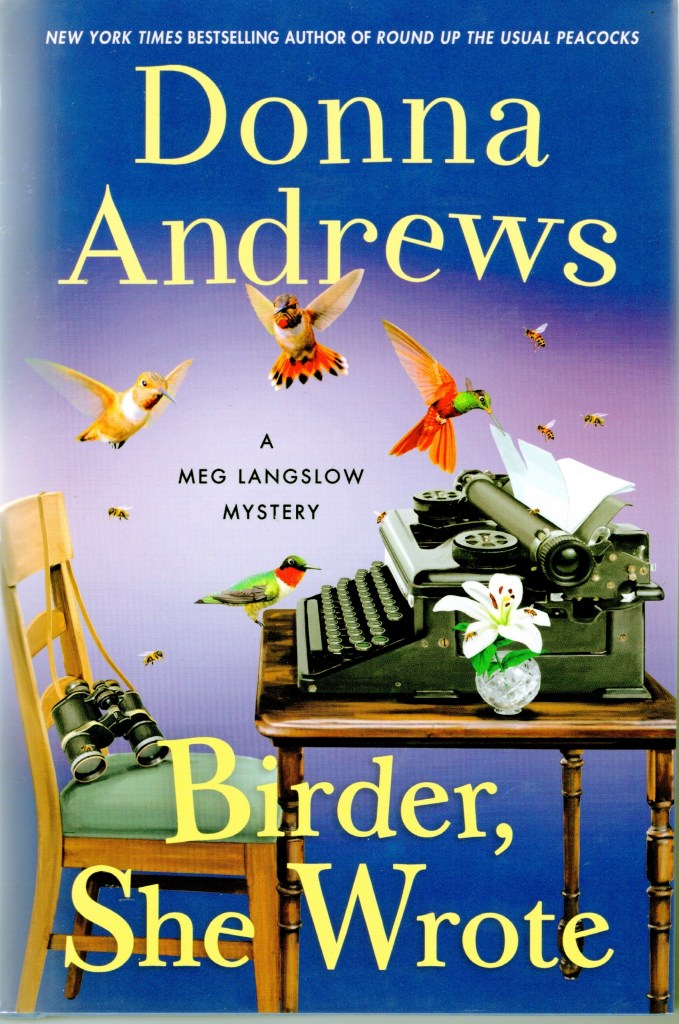
I watched a documentary last night on Youtube about how Egypt survived the Bronze Age Collapse (which is a period which really interests me–all the civilizations crumbled around the same time but we don’t really know why), and I also watched another episode of Moonlighting, and it just so happened that my all-time favorite episode was on deck, “Twas the Episode Before Christmas”–which also is one of my favorite series Christmas episodes of all time. This was the episode where the show fully committed to breaking the fourth wall regularly (they’d flirted with it before, with the occasional joke about the run time of the show or the viewers), but this is the episode where Miss DiPesto finds a baby in her apartment right before Christmas, and from thus the mystery was sprung. I also absolutely loved that the three FBI agents looking for the baby were all named King (hence the Three Kings looking for the baby at Christmas), and other little clever touches like that. It’s also an incredibly well-written episode, anchored by a truly beautiful and sensitive performance by Allyce Beasley as Miss DiPesto–who was robbed of an Emmy for this episode. This also, along with getting the new Donna Andrews Christmas mystery (Let It Crow!Let It Crow!Let It Crow!) and David Valdes’ new y/a romance Finding My Elf, had me thinking about Christmas again, and my weird bipolar feelings about the holiday, and also had me thinking about how little I’ve written about Christmas in my vast array of work; as far as I can remember there’s one short story (“The Snow Globe”) and one book (Royal Street Reveillon), but that’s really it. I’ve written other Christmas short stories, but have never shown them to anyone or wrote additional drafts, because they were gushingly sentimental, and I despise cheap sentiment. (Oh yes, years ago I edited an anthology of gay Christmas stories, Upon a Midnight Clear, which has been out of print for at least fifteen years, if not more.) I am going to try to read more Christmas-set books this year during the holiday season, much as I read horror the entire month of Halloween.
I’m also thinking I should write more about Christmas, and another Christmas book isn’t a bad idea, either.
I just wish I could get my mind to focus on something, you know? But I suspect that has to do with the looming surgery. This weekend, LSU plays Florida on Saturday night, and I am not sure I’ll watch much else–I’ll have the games on in the background but fully intend to get shit done around the house, and read, and write. I am not going to be able to do much around the house for at least three weeks, which has me a little concerned about the laundry–but I’ll cross that bridge when I come to it. One nice thing about football season is that once LSU is out of contention for anything, I don’t really have to pay much attention to anything else other than them for the rest of the season. I do love football, but not enough at this point to justify wasting an entire day watching games.
And on that note, I am heading into the spice mines. Have a lovely day, Constant Reader, and I am going to try to get some more blatant self-promotion out today, too.
Ironically, I talked about how you always have to cross water to get into or out of New Orleans in Mississippi River Mischief; and here we are. ↩︎
More research into gay prostitution and the history of sex work here. ↩︎
He met Marmalade down in old New Or-leenz, strutting her stuff on the street, she said “hello, hey Joe, you want to give it a go?“
That classic song by Labelle came out while I was in high school, during the early to mid-1970’s, and there was a lot of prurient young teenager thrill in knowing that the French lyrics translated to “do you wanna have sex with me tonight?” But the song–essentially about a hooker in New Orleans and a man’s experience with her–was an introduction to another side of New Orleans–one you wouldn’t find in the World Book Encyclopedia.
It was very important to me, for a variety of reasons, to make Scotty someone who embraced his sexual orientation and sexuality. I wanted to write someone who LOVED having sex, loved beautiful men, and felt no Puritan-American based shame about enjoying sex. Those kinds of characters were few and far between in gay fiction, let alone in gay crime fiction. After writing the typical miserable cynical bitter gay man with Chanse, I didn’t want to do that again. I wanted Scotty was to be the obverse of Chanse in everything, except their mutual love of New Orleans.
(This was, in part, in response to being briefly dropped by Alyson when I signed the Scotty series with Kensington, being told “two mystery series set in New Orleans would be too alike.” I took that personally, as an insult to my talent, ambition, creativity, and abilities…and I think I proved my point. Once Murder in the Rue Dauphine and Bourbon Street Blues were released–and Rue Dauphine sold super well for them and was nominated for a Lammy–Alyson changed their minds. I’m still mad at myself for not asking for more money.)
But while Scotty was highly sexually active, he never got paid for it. He also never did porn–although I did consider that at one point as an option; I thought a murder mystery built around a porn shoot would be interesting and kind of fun. And of course, in this book he mentions that he and the guys have recorded themselves having sex, and have sexted each other.
Scotty always preferred to keep his status amateur–but he was a go-go boy (stripper, exotic dancer, dick dancer, whatever you prefer to call the guys who dance for dollars in gay bars wearing various kinds of male undergarments), and he was certainly someone who was not averse to having a sexual encounter with a handsome stranger. (There’s a joke about this in Mississippi River Mischief where Frank comments after they’ve met someone, “I’ve been with you for almost twenty years. If you think I can’t tell by now that you’ve recognized someone but you’re not sure from where, which means you’ve probably slept with them, think again”–a paraphrase, but you get the gist; Scotty is often running into men who look vaguely familiar, and that usually does mean he slept with them a long time ago.)
New Orleans, despite it’s rather prim-and-proper high society set (on the surface, anyway), with the Pickwick Club and the Boston Club and the mysterious Mystick Krewes of Rex and Comus and so on, has always been a city of loose morals and freewheeling attitudes towards sex and sexuality. We had a zone where prostitution was legal for three decades or so (Storyville) and I wouldn’t be surprised if there were several bordellos operating within the city limits as we speak. There was the arrest of the Canal Street madam; and of course local author Chris Wiltz wrote The Last Madam, a biography of notorious Norma Wallace–the last well-known madam in the city. (Which I need to reread…) Bourbon Street was known for its strippers and vice for decades; there are still strip clubs on the infamous strip running from Canal downtown to Esplanade–and there are usually men in bikinis or something equally scanty on the bars of the gay clubs down down around the St. Ann/Bourbon queer nexus of the Quarter. When I was starting my deep dive into New Orleans/Quarter history, I wasn’t surprised to find out there were “stag” bars down along the riverfront along the levee; and if someone at one of the fancy houses in Storyville had a predilection for the Greek vice that needed scratching, the madam would send one of her bouncers down there to find someone willing to turn a trick, with a fair share going to the house, of course.
I think that’s fascinating, really; and something I want to explore in a story. I’ve started the story (it’s “The Blues Before Dawn” which I’ve mentioned from time to time) but can’t quite nail down the crime part of it. The set-up is great, though, he typed modestly.
I didn’t intend for Scotty to wind up in what is now known as a throuple–a three way couple, or a relationship of three people–on purpose. I wanted to create the dynamic of two men being interested in him at the same time, and have some fun with that in the first book. I absolutely did, and when I sent Colin away at the end of the first one, that was deliberate. I couldn’t decide who Scotty should wind up with, and I wanted Frank to be really who he logically should end up with–but this bad boy with a mysterious background who was so hot and sexy? I couldn’t NOT bring him back, and so I decided I had three books to wrap up the romantic dilemma. I wasn’t certain what the backstory of the dilemma would be, or how it would turn out, or how it would go–but when I was writing Jackson Square Jazz I found the perfect place and perfect way to bring Colin back. That book ended with them deciding to try a throuple to see how it works out. It was going pretty well until Mardi Gras Mambo–and I tried really hard with that book to not end the romantic story the way it ended in that book…and finally decided, since the series was actually turning out to be popular, that I would finish it by the end of the fourth book.
I’ve also not talked about it in the books or on this blog at all, but….they also have an open relationship. (Someone asked me about this at some point after the last book came out.) Nothing else would work for Scotty–he may not take advantage of the opportunities that pop up now the way he used to, but that’s because he has the freedom to make that choice. If he was forbidden from outside sexual relationships, he would cheat–and he doesn’t want to do that because that’s hurtful and wrong. He never wants to hurt Frank or Colin–but both of them are also away from New Orleans for long periods of time; Colin off doing his international agent stuff, while Frank is on the wrestling tour doing shows and promo events; so they are on their own a lot and temptation is always there–after all, all three of them are gorgeous–so while it is unspoken on the page, it’s an open throuple. And usually, Scotty finds outside sex to be kind of dull, unemotional, and not nearly as much fun as it is with one or both of the guys. That’s a character development arc. I also don’t show Scotty going out to clubs or waking up with hangovers with a stranger in his bed anymore, either. He does still go out–he loves dancing–but the gay bar scene has changed since he was younger and he doesn’t find it to be nearly as much fun as he used to.
Though he won’t say no to a hit of Ecstasy during Carnival or Decadence.
How subtle are the changes in Scotty as he has grown, aged and evolved? I think they are miniscule, but a revisit of the first two books in the series has shown a lot of change and growth over the years for him. He is definitely not that same flighty twenty-nine year old who booked a gig dancing at Southern Decadence all those years ago to make rent and wound up kidnapped by neo-Nazis deep in a swamp–I think he’s a little less flighty and a lot more responsible than he used to be…though he’s not as responsible as most people his age. Turning him into a property owner in the Quarter from a renter–and letting Millie and Velma ride off into the sunset in Florida as retirees–has also made him grow up, as now taking care of the property is his responsibility.
I will always be fond of my Scotty, though, and hope to keep writing him till I can no longer type into a computer or speak into a word-to-text app.
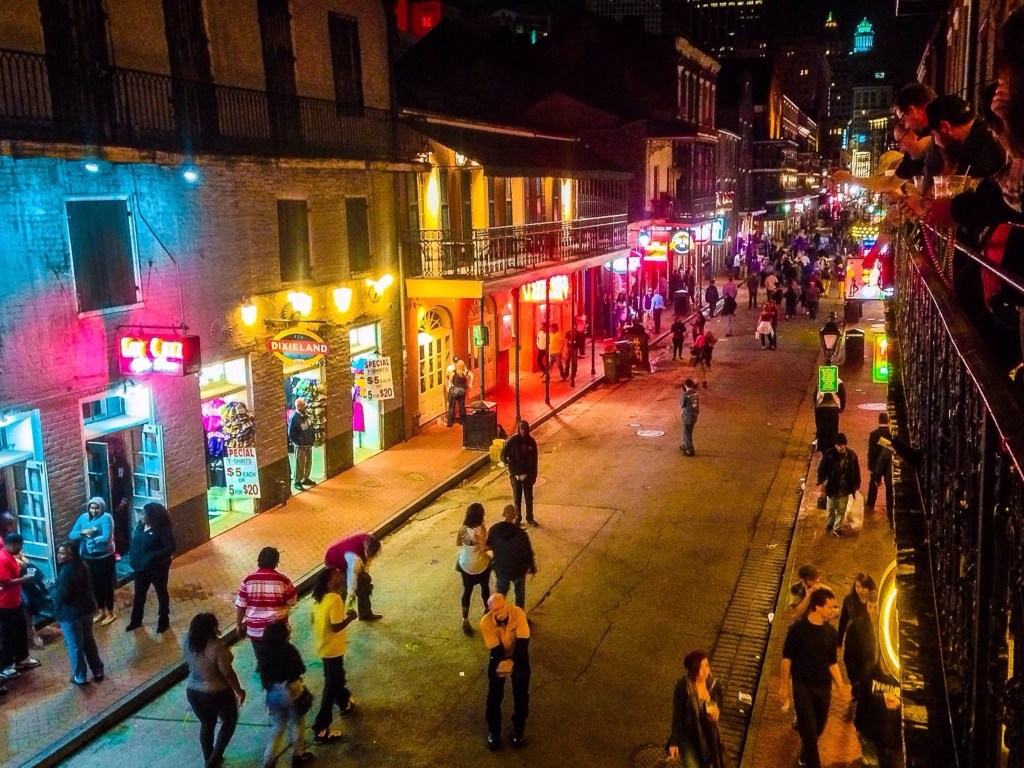
my neighborhood is so beautiful at night, isn’t it?
RuPaul likes to say we’re all born naked–everything else is just drag, and she isn’t wrong here.
Everything we wear is a form of drag. We always try to dress properly for whatever occasion, but yes–there’s work drag and formal drag and casual drag and gym drag and sports drag and around-the-house drag and pretty much any way you want to look at clothing…it’s all kind of a costume, really. And those costumes also depend on the time period.
I used to always think that I had no fashion sense–straight women and other gay men have often been astounded at how little I care about clothes or fashion or style. I have slight color-blindness, too–it’s hard for me to differentiate between darker shades; the darkest shades of blue and purple and brown and gray and green all look black to me. I also have some difficulty determining whether colors actually go together or not–which is why when it comes to formal/dressier clothing I tend to stick to black, white and red; I have so many red dress shirts, Constant Reader, you have no idea–so as I got older, I tend to go with what is easiest and less anxiety-inducing for me.
Of course, I also worked at an airport and had to wear a uniform for over two years: airline work drag. And after years of being a personal trainer, where all I wore was workout clothes or sweats, so yeah–my fashion sense has always been untrained and severely lacking for the most part.
Louis XIV, the Sun King–but those tights! That wig! Those shoes! More like La Reine Soleil, am I right?
I also always used to deplore the fact that men’s clothes gradually became so incredibly boring from the heydays of Beau Brummel-type male fashion icons. Look at the above painting of Louis XIV. Now imagine a man wearing that outfit to an awards show or a film premiere. Even our own Founding Fathers wore tights, powder, wigs, and heeled shoes.
But somehow, those clothing items became feminized and gender swapped–of course, women in the past also wore heeled shoes, wigs, powder and tights beneath their skirts and bustles and hoops. But even in the 1930’s and 1940’s, men’s clothes were far more stylish–trench-coats and linen pants, fedoras and other hats, spats and Oxford shoes, argyle socks. I hated the “traditional” styles of dress for men that developed in the post-war period. and the utter rejection of those same styles in the 60s and 70s. Men’s clothing began to evolve a bit more during this period–and some serious fashion faux-pas were prevalent during the last decades of the century.
As I said the other day (and as so many others have pointed out), men have always dressed as women for one reason or another that had nothing to do with gender expression or identity for years. The Sun King’s gay younger brother (he also had a gay bastard son by Louise de la Valliere; homosexuality was rampant at the Sun King’s court) Philippe duc d’Orleans (whose son was the namesake for New Orleans) had many male lovers and often dressed as a woman for appearances at court. I’ve always wanted to write about Philippe, who has always fascinated me–the young gay bastard son of Louis XIV, who died young, was Louis duc de Valentinois; I’ve also had some minor interest in writing about him as well, or just gay life at Versailles in general.
There is a long-standing drag tradition in New Orleans as well. The Red Dress Run, for example, may not be full drag as we know it, but it’s essentially all about men in red dresses for charity.
One of the things I really enjoy about the modern young generation is they don’t subscribe to the antiquated rules of fashion for men and women. I love seeing young actors and celebrities showing up at red carpet events in daring outfits instead of that tired old tux look. Yes, men look dashing in tuxedos; I’ve always wanted to go full tuxedo with hat, cane, tails and gloves–but again, not the ordinary or expected.
I wore a kilt twice when I went to the Edgars, and wore it again at Bouchercon in Albany for our Real Housewives of Bouchercon panel. I loved wearing it–skirts are sooooo much more comfortable than pants–and it was definitely a fashion risk; people who didn’t know me but saw me wearing it undoubtedly thought ah, that one must be gay. I love the way the Musketeers dressed in The Three Musketeers–I think the seventeenth century was probably my favorite era for men’s clothes; I also love a pirate look from the early eighteenth as well.
One thing I definitely need to explore more with Jem is not only his sense of fashion for his clients, but for himself–both in and out of drag. Those are critical decisions for a queen–because while a particular look or style for a queen can evolve over the years, it’s very unusual for them to do something radically different than their usual; again, it probably has to do with ease more than anything else; it’s much easier to fall back on a regular look and color palette than to reinvent yourself every time or to come up with something new every time. I do think I am going to have Jem do the Madonna constant reinvention thing–mainly because it’s more interesting that way for me–because it is part of who he is as a person; Jem thinks he’s boring but he’s actually quite adventurous. Jem has very little confidence in Death Drop, which is easy for me to write because I know how that feels. One of the goals of the series is to show him develop self-confidence and self-assurance and becoming more comfortable with himself, and part of that is going to come from performing in drag and another part from actually solving crimes…which makes him start believing in himself more.
And that is always fun to write–character growth and development.
I am always delighted when people think I capture New Orleans perfectly in my work.
I love New Orleans, and while I, along with everyone else who lives here, reserve the right to be irritated, exasperated, and annoyed with the city–God help you if you talk shit about the city if you don’t live here (“bitch, you live in Metairie”) in front of people who do.
Trust me, it won’t end well.
I fell in love with New Orleans officially when I came here to visit for my thirty-third birthday, which was a lot of fun and probably one of the best birthday weekends of my life, if not the best one pre-Paul (we had yet to meet at that time). I do sometimes wonder when I think back to visiting, and then living, in New Orleans in the 1990’s, if there’s nostalgia involved in my memories. That New Orleans no longer exists; the flood waters from the levee failure after Hurricane Katrina ended that time with a very firm line of demarcation so that everything was thus defined ever after as before and after. There were also the post-flood years in which the city was being rebuilt and rescaled and rethought and repopulated, but it’s never been the same as it was before the flood and it never will go back to that. There was a definite sense before that New Orleans was stuck in time and nothing was going to change anything–something drastic was needed to solve all the problems. It was thought at the time that the one positive was that maybe New Orleans would rise from the ashes like the mythological phoenix; a hard reboot that could fix everything.
It didn’t. Some of the old problems remained, some of them were eliminated, and new ones arose. The streets still collapse into potholes and constantly need repair; the sidewalks still tilt and get broken up by ground subsidence and live oak tree roots. There’s always something for the locals to complain about when it comes to life and living here in New Orleans. When Paul and I first moved here all those years ago, we had no idea what we were in for–but the nice thing was it was the first place I’d ever lived where I felt like I chose it; Mom and Dad chose where I lived for most of my life. I chose Tampa over Houston, but it wasn’t from an overwhelming decision that I desperately wanted to live in Florida (I didn’t; I moved for my job). But New Orleans–New Orleans was the first place I ever visited that I wanted to live. It’s really the only place I’ve ever wanted to live, or had an opinion about, or actually felt anything for; I am a New Orleanian, and a Louisianan by extension.
It’s really beautiful here, and I thought so when we moved into this crumbling neighborhood in a decaying city whose best days looked to be past already. In the daylight the city’s scars and wounds and damage is clear; but in the night, with shadows dancing and the light limited, it was still so gorgeous it can steal your breath away–and great apartments were enormous, high-ceilinged, hardwood floored, and cheap.
1996 was a whole different world; Bill Clinton was about to be reelected, gay sex was still a crime, and “don’t ask don’t tell” didn’t solve anything; it just made the realities of being a queer in military service even more difficult. There was still the remains of the Camp Street on-ramp to the Crescent City Connection on the neutral ground on the other side of Martin Luther King Drive; the Coliseum Theater was still there–closed and shuttered, but still existing, and there was this incredibly beautiful old house that was a ruined, crumbling wreck that looked haunted and absolutely fascinated me; I wish I’d taken pictures of it. (It has obviously been renovated.) Paul and I moved into the Lower Garden District right before it’s renaissance and gentrification. We lived on the Square; the park was just outside our front door and down the walk and across the street. Coliseum Square was dark at night then; all the streetlights in the park were either shot out or burned out, and the fountains were dry and rusted. The beautiful, graceful live oaks were there, of course, resting some of their heavy branches on the grass. All the big gorgeous houses around the park were derelict and run down, gorgeous ruins waiting for a buyer with money and a love for old houses. A gay couple bought one of them and spent the next year renovating it; it’s still a stunningly beautiful house. One by one those old houses were bought up and remade–and now Jennifer Coolidge lives in a house fronting the park (she sometimes comes to our corner at St. Charles for parades during Carnival).
I always think of Scotty as kind of a gay personification of New Orleans; the two are always entwined in my brain. Uninhibited, unashamed, unabashed, and always up for a good time–you could say that easily about them both. It’s really funny that back when I created him I didn’t think there was enough story in him to be a series–and here we are, on the eve of the ninth being released. Obviously, people responded to him in the way that I wanted them to; they’ve embraced his weirdness and eccentricity, and that of New Orleans as well. I couldn’t create a character like Scotty who lived anywhere else; anywhere else he wouldn’t work, would be judged harshly and looked down on by people for his hedonistic attempts to suck all the juice out of life as he can.
And I’ll probably still be writing him when I die–which, hopefully, won’t be for a long time yet.