I am always delighted when people think I capture New Orleans perfectly in my work.
I love New Orleans, and while I, along with everyone else who lives here, reserve the right to be irritated, exasperated, and annoyed with the city–God help you if you talk shit about the city if you don’t live here (“bitch, you live in Metairie”) in front of people who do.
Trust me, it won’t end well.
I fell in love with New Orleans officially when I came here to visit for my thirty-third birthday, which was a lot of fun and probably one of the best birthday weekends of my life, if not the best one pre-Paul (we had yet to meet at that time). I do sometimes wonder when I think back to visiting, and then living, in New Orleans in the 1990’s, if there’s nostalgia involved in my memories. That New Orleans no longer exists; the flood waters from the levee failure after Hurricane Katrina ended that time with a very firm line of demarcation so that everything was thus defined ever after as before and after. There were also the post-flood years in which the city was being rebuilt and rescaled and rethought and repopulated, but it’s never been the same as it was before the flood and it never will go back to that. There was a definite sense before that New Orleans was stuck in time and nothing was going to change anything–something drastic was needed to solve all the problems. It was thought at the time that the one positive was that maybe New Orleans would rise from the ashes like the mythological phoenix; a hard reboot that could fix everything.
It didn’t. Some of the old problems remained, some of them were eliminated, and new ones arose. The streets still collapse into potholes and constantly need repair; the sidewalks still tilt and get broken up by ground subsidence and live oak tree roots. There’s always something for the locals to complain about when it comes to life and living here in New Orleans. When Paul and I first moved here all those years ago, we had no idea what we were in for–but the nice thing was it was the first place I’d ever lived where I felt like I chose it; Mom and Dad chose where I lived for most of my life. I chose Tampa over Houston, but it wasn’t from an overwhelming decision that I desperately wanted to live in Florida (I didn’t; I moved for my job). But New Orleans–New Orleans was the first place I ever visited that I wanted to live. It’s really the only place I’ve ever wanted to live, or had an opinion about, or actually felt anything for; I am a New Orleanian, and a Louisianan by extension.
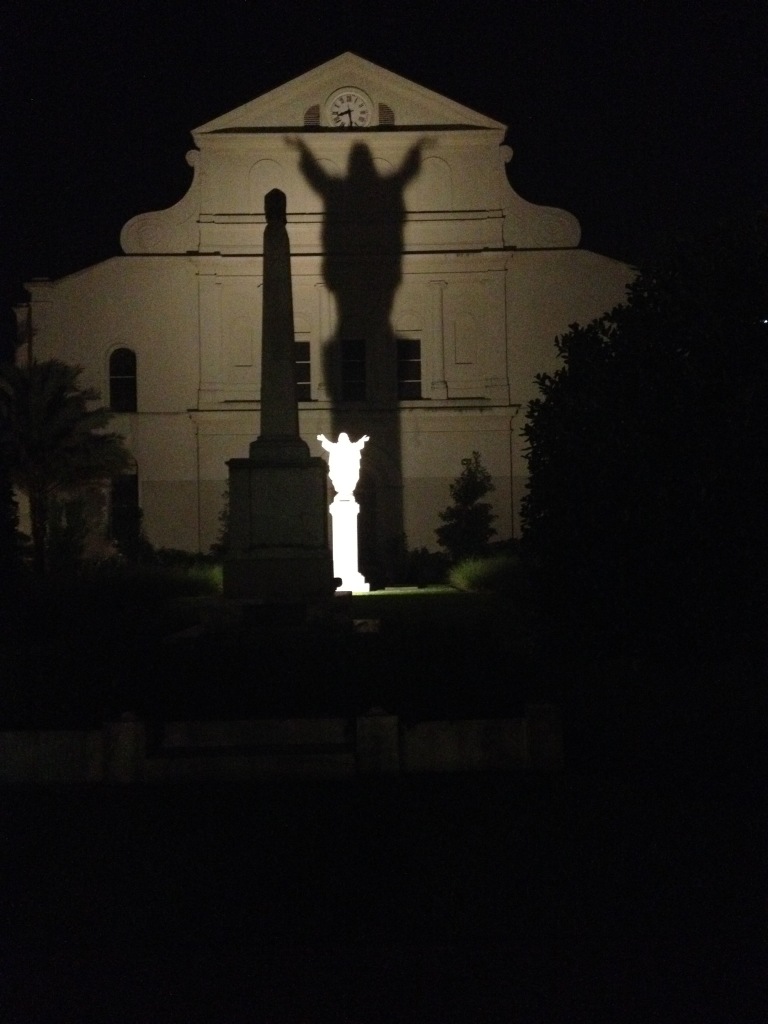
It’s really beautiful here, and I thought so when we moved into this crumbling neighborhood in a decaying city whose best days looked to be past already. In the daylight the city’s scars and wounds and damage is clear; but in the night, with shadows dancing and the light limited, it was still so gorgeous it can steal your breath away–and great apartments were enormous, high-ceilinged, hardwood floored, and cheap.
1996 was a whole different world; Bill Clinton was about to be reelected, gay sex was still a crime, and “don’t ask don’t tell” didn’t solve anything; it just made the realities of being a queer in military service even more difficult. There was still the remains of the Camp Street on-ramp to the Crescent City Connection on the neutral ground on the other side of Martin Luther King Drive; the Coliseum Theater was still there–closed and shuttered, but still existing, and there was this incredibly beautiful old house that was a ruined, crumbling wreck that looked haunted and absolutely fascinated me; I wish I’d taken pictures of it. (It has obviously been renovated.) Paul and I moved into the Lower Garden District right before it’s renaissance and gentrification. We lived on the Square; the park was just outside our front door and down the walk and across the street. Coliseum Square was dark at night then; all the streetlights in the park were either shot out or burned out, and the fountains were dry and rusted. The beautiful, graceful live oaks were there, of course, resting some of their heavy branches on the grass. All the big gorgeous houses around the park were derelict and run down, gorgeous ruins waiting for a buyer with money and a love for old houses. A gay couple bought one of them and spent the next year renovating it; it’s still a stunningly beautiful house. One by one those old houses were bought up and remade–and now Jennifer Coolidge lives in a house fronting the park (she sometimes comes to our corner at St. Charles for parades during Carnival).
I always think of Scotty as kind of a gay personification of New Orleans; the two are always entwined in my brain. Uninhibited, unashamed, unabashed, and always up for a good time–you could say that easily about them both. It’s really funny that back when I created him I didn’t think there was enough story in him to be a series–and here we are, on the eve of the ninth being released. Obviously, people responded to him in the way that I wanted them to; they’ve embraced his weirdness and eccentricity, and that of New Orleans as well. I couldn’t create a character like Scotty who lived anywhere else; anywhere else he wouldn’t work, would be judged harshly and looked down on by people for his hedonistic attempts to suck all the juice out of life as he can.
And I’ll probably still be writing him when I die–which, hopefully, won’t be for a long time yet.
The time change is always so weird to me, really. I always understood it had something to do with kids and not catching the bus in the dark in the mornings or something like that, but if they’re all walking home after school in the dark, how does that make sense? I always appreciate the extra hour, but always resent giving it back (or having it taken away?) in the spring. I kept finding clocks I hadn’t reset in the apartment (after thinking, wow, time has flown–wait a minute), and I did do some things. I did manage to make it to the West Bank, but it was really a wasted trip; Sundays are clearly not the day to do shopping over there as almost every place was out of almost everything. I got my wagon but couldn’t get the wheels to lock in place (I am so not handy) and I also got the wrong size blinds–so I get to go back. Hurray. But I did get some things for lunch this week, and I made ravioli last night for dinner for something different (I even managed to eat some bread softened with red gravy), which was nice. I watched the end of the Saints game–which they tried very hard to lose–and then another episode of Moonlighting. I found a much later and much more revised version of one of the novellas, “Fireflies”–which needs a lot of work, but is a very good idea and the kernel of a terrific novellas is there, if I can stick the landing–and also was put in mind of Chlorine yet again by coming across Matt Baume’s Tab Hunter1 documentary on Youtube (another great job, Matt!)–and I had a germ of an idea for how a part of the plot would work–another piece fell into place, as it were, and so I scribbled it down in my journal (huzzah for journals!) to wait for the day and time I can get back to work on it and give it my full attention.
I realized yesterday–once again astonishing myself with my own obtuseness–that part of what’s going on with me lately–the moodiness, the surliness, the self-destructive inability to get anything done, and the anxiety that comes with all of the above–has everything to do with my coming surgery. The compartmentalization doesn’t always work, you see, when something is creating a lot of anxiety for me. I have very little idea of what to expect and what it’s going to be like–or how restricted I am going to be as far as movement and so forth or for how long. I know I shouldn’t consult Dr. Google, but in lieu of any other information that I can recall, what else is there to do? And Dr. Google was right when I looked up the information on the injury when it was finally correctly diagnosed, after all. So I can look at about three weeks out of the office on medical leave, and then possibly some limited mobility after that. It sounds like if I am going to be able to type at all it will be one-handed, which is limiting, so I am hoping that if I am not drugged out to the gills I can spend time getting caught up on my reading as well as doing a lot of editing work on my own stuff. I am not going to be able to lift or carry things, which is going to make the whole grocery situation interesting for a couple of weeks, but I guess I can have things delivered. Probably the best way to compartmentalize all of the concern and anxiety about the surgery would be to start planning and preparing so I can be as ready as I can, right? It’s been a year, really. I suppose my end of the year round-up blog post on New Year’s Day will be a bit morose and melancholy.
I think one tends to be a bit more morose and melancholy as one gets older.
I also started watching A Haunting in Venice and while it was shot beautifully and had a great cast–it didn’t really hold my interest. The Agatha Christie novel it’s loosely based on–and I do mean loosely–is not one of the more better known ones; Halloween Party was a perfectly adequate Christie novel but it wasn’t anything spectacular. I do remember it, and I do have a hardcover book club edition of it, too. It probably belonged to my grandmother, or else I picked it up at a second hand store or a flea market or somewhere like that. I took a break about halfway through and then went back…and kind of dozed a bit through the second half. It’s a shame; I watched because I had Venice on the brain after rereading “Festival of the Redeemer” Saturday afternoon, and rethinking how to rewrite and revise and improve it. But it was beautifully shot, and made me wish I could live, even if for a brief month or so, in Venice for a while. I did go back and finish it–but I found it disappointing. Beautifully shot, yes, and Venice is always beautiful on film, but such a waste of so much remarkable talent.
I went to bed early–it was a struggle staying up until ten, which felt like eleven, and slept really well. I feel rested enough to actually face the day and potentially be productive–crazy, I know–but I generally feel well rested on Monday; it’s the rest of the week when my ass starts dragging. I also have to keep pushing forward on some things, too–progress must always be made, even when I don’t feel like making progress on anything. (Watching Tug get used to having his nails trimmed and not being able to use thing to climb–me, in particular–has been rather cute, but then again he is world’s most adorable kitten.) I didn’t read very much this weekend, either, more’s the pity; but I am thinking I’ll be doing a lot of reading once the surgery has taken place and I am no longer living on pain medications–maybe I can even read while on painkillers; I know they are going to give me oxycontin or some version or derivative of it, which makes watching all those movies and documentaries and mini-series based on the crimes of the Sackler family against the American public perhaps not as smart as it seemed at the time; I am terrified of becoming addicted to a pain medication–but that’s also an excellent time to wean myself off the Xanax, too.2
And on that note I am heading into the spice mines for the morning. Have a great Monday, Constant Reader, and I’ll be back to check in on you again later with undoubtedly more blatant self-promotion.
I actually met Tab Hunter, which is something that amazes me to this very day; I actually met him and his husband several times. How cool is my life, really? ↩︎
While I’ve been taking it to control mood swings all these years, it’s really not something you’re supposed to take on a daily basis but rather as needed; now that I know it’s anxiety I can treat it appropriately. Most of my medications are now wrong, and need to be changed. ↩︎
Wednesday morning and it’s cold outside this morning. It’s currently in the forties, and I turned on the heat once I came downstairs. This isn’t going to last long–I believe it’ll be back in the eighties for the weekend–but this morning going outside is going to be more than just a little painful, methinks.
I got off work yesterday and swung uptown to pick up the mail–the pothole at the end of the street finally resurfaced, and so my street is being resurfaced at the St. Charles end and is closed to access from that way, which makes getting home a bit more challenging than usual. I have to go uptown on the way home again today–long story short, I ordered a new lunchbox because Tug broke the strap on the old one, and it was overdue anyway; I should have ordered a new one long ago, and the new one is being delivered today in theory. It’s also the first of November, which kind of feels weird. This year has lasted an eternity already and yet here it is almost the end of the year already. I kind of feel in some ways like I’ve frittered the year away–and let’s be brutally honest, most of this year was spent working on things that were supposed to have been finished last year, and somehow nothing since those were both completed. Blame it on what? The heat, a difficult year, the injury, and everything else that seemed to go off the rails for me this year. Paul was working last night so I didn’t get a chance to do much of anything last night. I was too tired to read, and I also had an operating system upgrade to finish on the computer. It’s working in a most lovely fashion this morning, which is super awesome; upgrades have always worried me since the Great Data Disaster of 2018.
Which reminds me, I need to back up the back-up, as it has been a moment.
I honestly don’t know why I was so off last night, or how I managed to waste most of the evening. I started reading the new Lou Berney (Dark Ride) yesterday morning at the dentist’s office (oh wait, that explains the entire day being off, doesn’t it? I hate being so immured in my ruts of routine) and it’s quite good, although I didn’t get very far into it before it was my turn to get in the chair for the dentist. It was the final fitting for my new dentures, which fit snugly and tightly and look marvelous in my mouth. The next time they call me, I will come out of their office with my new teeth, which is very exciting. I am quite delighted at the thought of eating solid foods again. I also had to go out to the UNO campus to record “My Reading Life” with Susan Larson, who is always a delight and is one of the few promotional things I actually enjoy doing. And duh, that is why I was tired and off all day long; the usual daily routine was disrupted. I had to drive out to Jefferson Highway almost to Harahan for the dentist appointment, drove back into the city for work, then had to go out to the lakefront to UNO and back. That’s a serious disruption to my routine, and as I am learning, that’s the sort of thing that drains my batteries now.
But I greatly enjoyed this year’s Halloween Horror Month, even if the bad quality of the videos of Friday the 13th the Series on Youtube caused me to abandon the rewatch of that show for the month. We’ve been watching The Fall of the House of Usher, which has been a lot of fun and very well done, too–hopefully we can get that finished tonight or by the weekend. It was fun revisiting The Dead Zone, and the other reading I did this month was pretty awesome too. I am going back to crime fiction reading again, because the horror reading has been making my brain go into the horror direction, and I’m not really a good horror writer.
Yesterday Death Drop launched into the world–I’m going to do some more promotional posts about the book as well as some for Mississippi River Mischief, which is also dropping next week (this is what happens when you don’t make your deadlines, people–don’t be a Greg)–and it’s always nice when that happens. It sometimes feels a bit anticlimactic, and I am terrible about promotion anyway (doing it always makes me feel very self-conscious, which is something else i need to work on, because it’s also rooted in my anxiety). My anxiety has also been off the charts lately, and I don’t know why that is. The lack of an LSU game last weekend, perhaps, which served as another disruption to routine? I’ve also been studiously not answering my emails since last week sometime, as well, which is also not like me and another sign that the brain chemistry isn’t working properly again. But now that I know what the problem is with my brain chemistry (better late than never, right?) we are going to change my medications because I’ve been on the wrong ones, and come up with a different coping plan. I feel like I’m in the middle of yet another reboot of my life–new teeth, surgery on my arm, writing cozies, thinking about exercise and eating right again–which might be needed. It just feels like everything has been a slog for so long now; I do think it goes back to the Great Data Disaster of 2018, which started the whole mess. Or maybe it was the expense of buying a new car and having a car payment every month, which kind of did me in financially for a while (starting to see daylight again)–there’s no stress like financial stress, after all. Anyway, I’ve not really felt centered or in any semblance of control over my life for quite some time now, and I’m kind of tired of letting my life happen to me–which was where I was at when I was thirty-three and did the first hard reboot of my life.
I feel good this morning, rested and awake and alert and energetic and ambitious, and it’s been awhile since I felt that way. I may run out of steam at some point today–it does happen, after all–but I am starting to feel good again about a lot of things and when I can look at positives rather than be overwhelmed by the negatives…I’ll take that as a win gladly and keep going.
And on that note I am heading into the spice mines. Have a marvelous mid-week, and I will check in with you again later.
I love Daphne du Maurier, and I love Venice, so it is no surprise that one of my favorite works of fiction is her long story, “Don’t Look Now.”
I know I’ve talked about this story endlessly already, numerous times, but you can also close the browser window now if you don’t want to read me talking about the story more. If you’ve not read it and would like to, this is a good time to navigate away–because I am going to give spoilers aplenty in this entry–because part of the great pleasure of reading “Don’t Look Now” for the first time is all the surprises and twists and shocks.
Du Maurier was a master of the plot twist.
“Don’t look now,” John said to his wife, “but there are a couple of old girls two tables away who are trying to hypnotize me.”
Laura, quick on cue, made an elaborate pretnse of yawning, then tilted her head as though searching the skies for a non-existent aeroplane.
“Right behind you,” he added. “That’s why you can’t turn round at once–it would be much too obvious.”
Laura played the oldest trick in the world and dropped her napkin, then bent to scrabble for it under her feet, sending a shooting glance over her left shoulder as she straightened once again. She sucked in her cheeks, the first tell-tale sign of suppressed hysteria, and lowered her head.
“They’re not old girls at all,” she said. “They’re male twins in drag.”
Her voice broke ominously, the prelude ton uncontrolled laughter, and John quickly poured some more chianti into her glass.
“Pretend to choke,” he said, “then they won’t notice. You know what it is–they’re criminals doing the sights of Europe, changing sex at every stop. Twin sisters here in Torcello. Twin brothers tomorrow in Venice, or even tonight, parading arm-in-arm across the Piazza San Marco. Just a matter of switching clothes and wigs.”
“Jewel thieves or murderers?” asked Laura.
“Oh, murderers, definitely. But why, I ask myself, have they picked on me?”
It had been a hot minute since I’d reread “Don’t Look Now,” and rereading it this time was an incredible pleasure, as it always is. I originally discovered this story in her collection Echoes from the Macabre: Selected Stories, and was completely enthralled when I read it as a teenager.
This is the copy I found at Zayre’s when I was about twelve, and discovering duMaurier for the very first time.
That opening sequence between John and Laura is a masterclass in opening a long story, frankly. (Now, by the way, is the time to navigate away from the entry if you’ve not read the story but want to–I can also highly recommend the Nicholas Roeg film adaptation starring Donald Sutherland and Julie Christie.)
What do we see in that opening sequence? A couple, probably married and in love, having dinner at a restaurant in Torcello–and playing a delightful couples game in which you pick random diners at a different table and make up stories about them. I myself do this all the time whenever I am in public and alone; I just start looking around and making up stories about people based on their appearance and where they are and so forth. (This is an excellent exercise for new writers trying to hone their art and craft, by the way; take a notebook with you, have a meal by yourself, and pick out a table to observe, then start creating character and story based on what you’ve observed. I love doing this, frankly.) I also love that the opening three words of the story itself are also the title–as though “don’t look now” is actually what they call the game, and this innocent game actually is the first domino to fall in a series that results in tragedy. But du Maurier has already hooked us into this couple and their story, and we eagerly read on. What is this story about? Who are John and Laura? Why are they in Torcello? (When I originally read the story I didn’t know that Torcello is one of the smaller islands in the Venetian lagoon; but that soon becomes obvious.) One of the twins-in-drag gets up and goes to the restroom, and Laura, all in on the game now, follows her into the bathroom to see if she really is a man in drag, and there is much hilarious conversation between them about what might happen if it truly was a man in drag (and with all the bathroom battles currently being waged in this country, this scene took an an entirely different resonance in this reading), and we are left alone with John.
And once we are alone with John, we find out a lot more about the couple. They’re British, for one–safe to assume in a duMaurier tale–and as he sits there waiting for her to come back, he remembers why they are there; they’re touring Europe as a getaway as well as an attempt to help Laura (and John) get over the loss of their daughter Christine, who died of leukemia (this was changed in the movie to great effect) and Laura hasn’t been able to shake her sorrow, so John thought this trip would help, and this entire conversation–the resurrection of this game they used to play in happier times–has given him glimpses of Laura before the loss, giving him hope that the wound is finally beginning to heal. They have a son, too, who is off at school, but Christine was Laura’s darling and her favorite (I love that du Maurier would have none of that sentimentality about parents loving their children equally; she dismisses that nonsense out of hand. Of course parents have favorites. They’re human.) and so the loss is even more felt.
But then he notices that Laura has been gone a while…far too long for a quick trip to the restroom. And when she returns…
He could tell at once there was something wrong. Almost as if she were in a state of shock. She blundered towards the table he had just vacated and sat down. He drew up a chair beside her, taking her hand.
“Darling, what is it? Tell me–are you ill?”
But Laura shakes off the shock, and is radiant with joy as she explains to John the incredible encounter she had with the old woman in the restaurant rest room. One of the old women–the one who was staring–is blind but also psychic. She saw their daughter, Christine, sitting with them at the table laughing happily. John, of course, is delighted that his wife is happy but at the same time he’s aggravated at the woman–how very dare she say such a thing to his wife! He doesn’t believe in any of this nonsense and he is deeply irritated and annoyed that his wife–not really fully recovered from her loss–is so quickly taken in and ready to believe the story.
The desperate urgency in her voice made his heart sicken. He had to play along with her, agree, soothe, do anything to bring back some sense of calm.
Before, when reading this story, I always kind of felt John was kind of a dick. His wife is deeply saddened and depressed over the loss of a child, and he doesn’t seem to much care that he, too, has lost a beloved child. But this time through, I felt a pang of recognition there in John’s behavior; he was actually sublimating his own grief in that time-honored way men historically have–by ignoring it and pushing it away and focusing on taking care of his (so-believed) much more delicate and emotionally fragile wife; he has to be the MAN and take care of things, which is du Maurier’s sly way of inserting a critique of societal mores and expectations of straight white men. So, rather then processing his own grief, he buries it beneath concern and worry for wife, which isn’t healthy for either of them.
As John listens, horrified and appalled and even a bit angry, his wife explains to him that their daughter also is worried about them, that they are in danger in Venice and must leave right away. (There’s also a throwaway line that the psychic twin also mentioned that John is also psychic “but doesn’t know it.”) Naturally, she wants to leave while John, confounded and horrified by this turn of events–completely dismissing her out of hand, without the slightest bit of even trying to understand–will have nothing to do with their holiday plans being changed. Laura’s improvement in mood and spirit fades away and as they walk to have dinner, they become separated briefly, and he hears a cry from across a canal in the dark, and sees a child fleeing in a red hooded jacket, jumping from boat to boat until she escapes the sound of running footsteps behind her by crossing the canal by crossing over the boats. He and Laura are reunited, and he thinks no more of it. They have dinner, return, and discover that their son has fallen ill with appendicitis, and perhaps they should return. Laura sees this as the vision of the “danger” and even as John thinks about it, she goes about making the arrangements for them to get back to England. She gets an open seat on a chartered flight, and he will collect their things and their car and drive back. She takes off, he checks out, makes the car arrangements, but as he is coming back to the hotel he sees Laura and the twins, passing him by on another vaporetto. Disturbed by this change in plans, he decides to go looking for the twins, find out what happened and how they convinced her to stay, etc. eventually going to the police to try to track down the twins.
While at the police station, another British couple–there to report a stolen purse–tells him about all the murders going on in Venice that have the police so worked up; he thinks nothing of it, and then of course they find the twins who’ve not seen Laura–who also calls him once she has arrived in England.
Confused and upset and uncertain of what is going on, he goes out for another late night walk and once again sees the child in the red jacket running away. He himself chases after her to try to help her–only to catch her, find out it’s actually a demented little person armed with a powerful knife, who slashes his throat–and as he sinks to the ground dying, puts it all together–he’s psychic; he saw Laura and the twins together in the future when Laura has returned after his death to claim the body; and all along it was all right there in front of his face, only he refused to see it, thinking, as he last thoughts, as he hears shouts and people running towards him, what a bloody stupid way to die and proceeds to do so.
Du Maurier’s prose is, as always, literate and smart and brilliant; her characters seem absolutely real, and Venice springs to magnificent life in her hands. The structure of the story and her remarkable job at misdirecting the reader into missing, along with John, what is really going on around him in this Venice holiday is fucking brilliant. She gives John, and the reader, all the hints they need to piece it all together, but she is so completely into John’s head, his inner monologue, that the reader sees only what John sees, until it’s too late, and you realize this story never was what you thought it was in the beginning, or along the way; or that it is just not the way you expected it to be.
I’m already excited to read it again, and watch the film–a masterpiece–as well.
I love Stephen King, and have since I first read Carrie when I was thirteen.
I will also go out on a limb and say that while he has written some amazing fiction and novels in the last forty years, the run of novels between (and including) Carrie and Misery in the 1970s and 1980’s was probably one of the greatest runs of incomparable work ever accomplished by any writer in any sub-genre or genre of fiction, period. There wasn’t a single stinker in that run, and even the one I personally dislike ( Pet Sematary) isn’t bad–it’s actually a testament to King’s skill that I’ve refused to reread it since that first time; it made me incredibly uncomfortable in so many ways viscerally that I’ve really never wanted to read it again.
And isn’t that the real point behind horror?
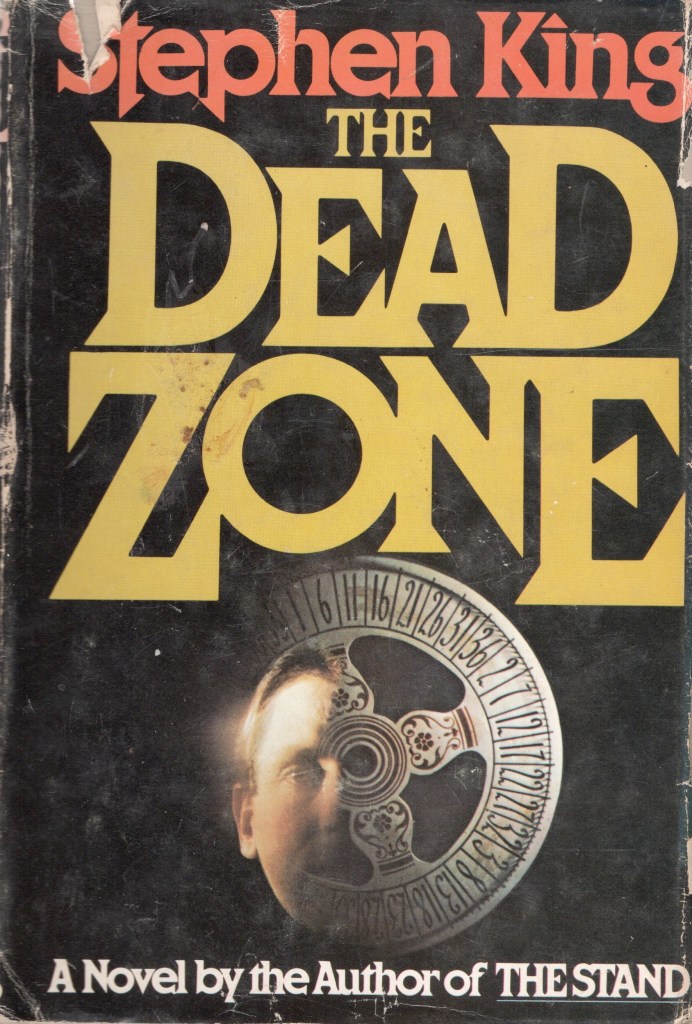
I also saw something recently about how people who suffer from anxiety often rewatch movies/television shows and reread books when they are anxious because there’s comfort in knowing how something ends. It had never occurred to me that this was a thing, but I used to reread books all the time when I was younger, often picking one up and just opening it at random and diving into the story again. I reread most of the earlier Stephen King novels countless times, as I have also reread books like Gone with the Wind and kids’ series books and other particular favorites. I still reread some periodically, like Rebecca and The Haunting of Hill House. When I picked up The Dead Zone to reread it–I realized that I don’t really reread the way I used to when I was younger. On the rare occasions when I thought about it, I figured it was because I don’t have the time and there are so many unread books around the house that I shouldn’t revisit something when I have unread books collecting dust and moldering on the shelves. But reading that about people with anxiety made me recognize myself and I also realized that I don’t reread as much as I used to (or rewatch) because I don’t have as much anxiety as I did when I was younger. (Don’t get me wrong, I still have too much of it for me to be comfortable going forward without doing something for it, you know.)
I’d thought about rereading The Dead Zone in the wake of the 2016 election; I had posted on social media early on during that campaign season, “Is anyone else reminded of Greg Stillson?” But I couldn’t, just as I couldn’t go back and revisit Sinclair Lewis’ It Can’t Happen Here or The Handmaid’s Tale or any of the other great collapse of American democracy novels. But this reread…made me truly appreciate all over again what a literary genius Stephen King actually is–and an American treasure.
By the time he graduated from college, John Smith had forgotten all about the bad fall he took on the ice that January day in 1953. In fact, he would have been hard put to remember it by the time he graduated from grammar school. And his mother and father never knew about it at all.
They were skating on a cleared patch of Runaround Pond in Durham. The bigger boys were playing hockey with old taped sticks and using a couple of potato baskets for goals/ The little kids were just farting around the way little kids had done since time immemorial–their ankles bowing comically in and out, their breath puffing in the frosty twenty degree air. At one corner of the cleared ice two rubber tires burned sootily, and a few parents sat nearby, watching their children. The age of the snowmobile ws still distant and winter fun still consisted of exercising your body rather than a gasoline engine.
Johnny had walked down from his house, just over the Pownal line, with his skates hung over his shoulder. AT six, he was a pretty fair skater. Not good enough to join in the big kids’ hockey gamesyet, but able to skate rings around most of the other first-graders, who were always pinwheeling their arms for balance or sprawling on their butts.
Now he skated slowly aruond the outer edge of the clear patch, wishing he could go backward like Timmy Benedix, listening to the ice thud and crackle mysteriously under the snow cover farther out, also listening to the shouts of the hockey players, the rumble of a pulp truck crossing the bridges on its way to U. S. Gypsum in Lisbon Falls, the murmur of conversation from the adults. He was very glad to be alive on this fair, winter day. Nothing was wrong with him, nothing troubled his mind, he wanted nothing…except to be able to skate backward, like Timmy Benedix.
So begins the prologue to The Dead Zone, a King classic that doesn’t get nearly the respect it probably should–especially in wake of the 2016 election. Johnny does, in fact, learn how to skate backwards, but is so excited about it he doesn’t notice he is heading right into the hockey game, where he gets hit broadside by a teenager and sent sprawling, hitting his head on the ice and knocking himself out. As he slowly comes back to consciousness, he starts muttering things that make no sense to the worried kids and adults gathered around him, including saying to “stop charging it’ll blow up”. But then he wakes up, is fine, goes home and doesn’t even tell his parents what happened (imagine a child knocking himself out and the parents not even being told today–never happen). A few days later one of the men’s car battery is dead, he jumps it–and it blows up in his face; only no one remembers the things Johnny was muttering; everyone’s forgotten about it.
The second part of the prologue introduces us to the other main character of the book, or the person who is fated to have the biggest impact on John’s existence, which also begs the question of fate and destiny; these two men’s lives are going to intersect, and the rest of the book follows their lives–primarily focused on Johnny’s, with the occasional swing over to see what’s going on with Greg Stillson and his climb to power and success. That prologue introduction to the traveling Bible salesman in Oklahoma who kicks a dog to death lets us know who he is right from the very start–he’s the bad guy, the reason all these things are happening to Johnny so their lives will cross.
Johnny’s story has three acts: first, the car accident that leaves him in a coma for five years (and introduces us to him, his love interest Sarah, and his parents) and inevitably ends with him catching the Castle Rock Strangler, using the abilities that he woke up from the coma with; the second, which concludes with the vision about the graduation party ending in fire and mass death; and the third, where he realizes he is the only person who can stop Stillson’s political rise, the country’s descent into fascism and a final cataclysmic nuclear war (which was an every day reality for us all back when this book was written, by the way).
The most interesting character to me, always, from the story of The Trojan War (I loved mythology and ancient history as a child) was Cassandra, the princess who was given the gift of prophecy accidentally (her ears were licked by one of Apollo’s temple snakes; he cursed her by having no one believe her and this frustration drove her mad); I always wanted to write from her perspective. John Smith is a modern-day Cassandra, a young man who unwillingly was given the gift to see the future as well as have psychic visions, and his story plays out very similarly to Cassandra’s, and asks the big question: if you had the knowledge and foresight to stop Hitler in 1932, even if it meant killing him, would you do it? The personal good vs. the collective good?
I thoroughly enjoyed this reread, and it definitely holds up, even if it is a time capsule of the 1970s, which also made it a big more fun.
(Oh, and that fall he took as a child? While it is never really explained where his abilities come from, King implies that that first head injury awakened the talent in him; the later head injury and coma woke it up again and gave it more power.)
As Constant Reader is aware–because I am nothing if not repetitious–I spent ages two to nineteen in the midwest, and the last five of those in rural Kansas. I’ve blogged endlessly about it, have written several books set there, and often blame (some of) my emotional scarring on the experience. It’s one of the reasons that stupid fucking song from earlier this year (“Try That in a Small Town”) was so ridiculous and offensive; yet another tired round of ammunition from people who equate cities with evil and rural life with purity and goodness–to which I always say “Someone’s never read Peyton Place, let alone lived in a small fucking town.” Big cities certainly don’t corner the market on crime and sin and lawlessness; small rural communities can be just as vile and horrible as any metropolis.
Shirley Jackson didn’t set “The Lottery” in Times Square for a reason.
There’s an entire essay to be written about the moral rot of the Bible Belt and rural America–and make no mistake, rural America is every bit as corrupt, sinfully evil, and dangerous as the worst neighborhood in any big city–but this is not the time, as I am here to talk about this marvelous novel I read very quickly last night.
“Can you see me?” Cole yelled over to them. He was standing on the south shore of the reservoir, barefoot and facing the water. He looked like he was thinking, but Janet knew better. The scrunch in Cole’s expression came from trying to keep his belly in a six-pack.
“I’ve got you,” Victoria yelled back as she framed her brother. She was using his phone and struggling with the device. “How do you zoom on this thing?” she asked as she shuffled to the edge, not looking at her feet and focusing on Cole. Janet could see a pink stamp of tongue at the corner of Victoria’s mouth as she tried her best to get the shot her brother wanted.
“You’ve got to be in portrait mode when you go live.”
Janet meant it as a polite pointer, but as the words came out of her mouth, they sounded like a dig. SHe didn’t mean it to be a dig, but she couldn’t help it, either. Her tone was why people thought she was such a bitch. Her tone and that she kind of was. Whatever–it was fun to watch the sheep quiver.
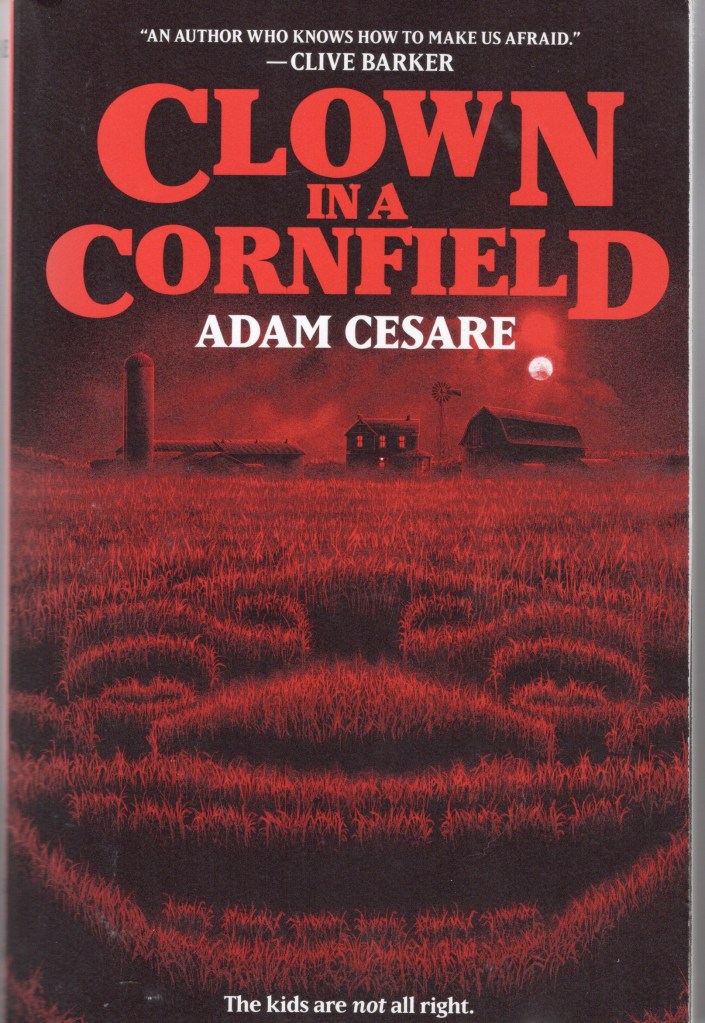
I don’t remember how Adam Cesare and his y/a horror thriller Clown in a Cornfield first came to my attention; if it was a suggestion from a website or if I saw someone talking about it on social media or I don’t know where, but I am very glad it did. The book is absolutely right up my alley–young adults, horror, small town Midwestern America (you know, “the REAL America,” right, Sarah Palin?), and terrifying clowns. I’ve never been afraid of clowns–although many people are, and I can respect that. The white greasepaint, the garish hair and eye make-up, the clothes–it’s not hard to see how something intended to entertain children (remember, fairy tales in their original form are horrifying) can easily become something that is absolutely terrifying. John Wayne Gacy, notorious serial killer who preyed on children, worked as a clown for kids’ parties–which is very unsettling, and of course, who can ever forget Stephen King’s masterclass of clown horror, It? Killer clowns have become kind of a cliché…but they still work.
Clown in a Cornfield works on its basic surface level–it’s a scary story that reads quickly and raises the adrenaline and is chockfull of surprises and twists; like the novel version of a slasher movie. (Something I’ve always wanted to do, frankly.) It takes place over the course of a couple of days, and is set in the small dying town of Kettle Springs, Missouri, where main character Quinn Maybrook and her father have just moved from Philadelphia; it’s hinted early on that the tragic death of her mother is why they moved during her senior year: a fresh start in a wholesome rural small town in the REAL America…which turns out to be all too real. The town is dying because the corn syrup processing plant shut down, and the town is losing population. The above few paragraphs are from the prologue–which sets up the rest of the book. There’s a tragic death at the reservoir that day, which changes the kids and changes the town–as though they’ve finally crossed a line they were dancing very close to the edge of and there isn’t any turning back.
The willful and wild teens of the town have planned a surprise during the Founders’ Day parade which Quinn witnesses when the prank goes haywire, and she learns there’s a lot of anger directed at the town’s teenagers–the kids from above who have a Youtube channel where they film themselves playing pranks on people around town–and the idea is that the pranks have become dangerous and the kids are out of control. The next night there’s a party out in a cornfield, and that’s when the corn syrup company’s mascot, Frendo the Clown, shows up with a crossbow and the body count starts to rise.
I really enjoyed this book. It was well written and works very well on all of its multiple layers, from the basic story which is well paced and exciting, to the layers of social critique, satire, and politics that it also manages to be. I found myself caring about the main characters and rooting for them, and while I saw one major surprise coming way ahead of time, there were a lot of other shocks and surprises along the way that made up for the telegraphing.
There’s also a sequel now, and I am looking forward to the second installment. I think you’ll like it, too, Constant Reader, so give it a whirl–thank me later.
Yesterday afternoon’s doctor visit went fairly well, all thing considered–I certainly feel much better after that visit than I ever felt after visiting my former primary care physician, who should lose his license (more on that later at another time, but I will share that story at some point not to shame my former physician but as an example of precisely why we have to advocate for ourselves with medical professionals)–and I have to say I am in a good place about everything medical this morning. I don’t have gout (yay!), but rather have psoriatic arthritis in my toe, which isn’t great–but it’s not so painful that I need medication for it. I just know that the toe joint hurts whenever I bend it. Better that than gout, right? And my blood sugar is high, but not quite pre-diabetic, so I do need to cut back on rich and fattening foods (which I should do anyway) and increase my exercise (well, once the arm is healed I will be all over that, thank you very much). On Halloween I have an early fitting at the dentist’s–meaning the day when the soft food diet becomes history and a bitter memory is nigh, and eventually the surgery will be here and then it’ll be recovery time.
Nothing like spending the holidays recovering from a surgery.
I spent some more time with The Dead Zone last night, and got through the part where Johnny’s psychic gift is actually exposed to the world at last, even as he is still recovering and going through horribly expensive surgeries (King was also ahead of the curve in that he was writing about how medical bills can bankrupt people long before it was in the public discourse). This was when he touched his physical therapist and saw that her house was on fire; it was witnessed by several people at the hospital and of course, someone leaks it to the press and reporters descend on his hospital. I am really enjoying this book this time around–I always do–but the days when I could just pick up an old favorite and revisit it are in the past; now I always think about the others in the piles and on the bookshelves that I’ve not gotten to quite yet. I also saw yesterday that rereading books was yet another example of anxiety functioning; drawing comfort from the familiar–you know how the book is going to end already, so the anxiety that comes from not knowing how it will end–which makes me read faster and unable to put a book down–is absent and you can just enjoy it. This is precisely why Paul and I used to always rewatch the rebroadcast of LSU football games on Sunday–so we could actually watch the game without the stress of worrying about the outcome; and there were often things we’d missed in the heat of the moment.
I also watched another episode of Moonlighting, which I am enjoying very much the second time around. It’s held up pretty well, outside of the occasional misogyny; and there’s a lot less of that than you’d think, given it was the 1980’s and misogyny was still rampant everywhere (not that it’s ever stopped, but shockingly things are better now than they were forty years ago). The chemistry between young Bruce Willis and a gorgeous Cybill Shepherd was off the charts–even if her character was a bit over-the-top angry sometimes; it’s easy to see why Addison was a fan favorite, even though she came into the show as the bigger name and no one knew who Willis was. But the show was going for the rapid-fire dialogue of the great screwball romantic comedies of classic Hollywood–His Girl Friday, The Philadelphia Story, Bringing Up Baby, My Man Godfrey–that I absolutely have always loved.
Paul got home after I went to bed, and I was so dead to the world I couldn’t tell you when that was or what time, which is my way of saying I slept super well last night. We have a relatively light schedule at the office today so I should be able to catch up on all my work. Tomorrow I have an appointment at the pain management clinic–more surgery prep–but it’s also my work-at-home day, which means I made it through the week and to the weekend again. There’s also not an LSU game this weekend (it’s the pre-Alabama bye week) and I also looked at what games there are this weekend and yeah–nothing I particularly want to watch, so I should be productive this weekend, even if that means just reading.
I also watched the season premiere of The Real Housewives of Beverly Hills, and doing some more thinking about my reality television viewing and why I am drawn to these shows about horrible people behaving badly. They used to be just a pleasurable, turn my mind off kind of entertainment; much as soaps used to be (and I watched plenty of those back in the day, which is a topic for another time as well) but something’s changed in the last few years, even before the pandemic, really; my mentality about these kinds of people has shifted in some ways that I can’t quite put my finger on. I mean, I know they’ve always been terrible people–even the ones I liked–but I guess before I was able to just see them being horrible to each other and it was entertaining in a weird, performative way–like how you can’t help but look at a car crash when you pass one. The 2016 election and all that followed in its wake made me realize that these are terrible people and that probably spills over into other parts of their lives as well–including things like politics and social justice.
And do I really want to spent my off-time encouraging and feeding into the machine that makes these terrible people famous? And what does it say about me that I watch these shows so I can sit in judgment on them and their behavior and feel morally superior to them? It’s one thing when they’re fictional characters designed specifically to prey on your emotions–judging Monica Quartermaine on General Hospital for bad choices is one thing because she’s fictional. Her trials and tribulations are scripted for maximum drama, nor do they matter outside of the context of the program…it’s not real. It’s an entirely different thing to watch Real Housewives of BeverlyHills and judge Erica Girardi (which I’ve done plenty of, believe you me) when her life and behavior actually have real life consequences. She’s a real person, and what we watch on television is some of her reality but not all of it; we only see what the producers want us to see as they shape her narrative and influence how she is viewed. “Blaming the edit” has become widely mocked–you can’t get a bad edit, really, if you haven’t said or done something that can be used to make you look bad, but the reality is anyone can cherry-pick anything to make someone look bad–Fox, Newsmax, and OANN made a fortune doing that very thing. Don’t get me wrong; I have judged her many times and found her wanting, but at the same time…there is that element of well, she put herself out there to be criticized and judged, but does that make it okay? Does she deserve it?
So sometimes, even as I judge and roll my eyes, I do feel a bit squicky about watching. And that doesn’t even take into consideration the lie that the shows are real. They remind me of professional wrestling before Vince McMahon outed the sport as entertainment with predetermined results (to avoid the federal regulations of actual competitive sport and escape culpability for steroid abuse); fans swore it was absolutely 100% real, when those who weren’t fans could clearly see it was not.
And on that note, I am heading into the spice mines. May your Thursday be as marvelous as you are, Constant Reader, and I’ll check in with you again tomorrow.
I’ve always loved The Haunting of Hill House, and Jackson has always been one of my favorite writers. I’ve long ago lost count of how many times I’ve reread the book, and of course I love the original film version from 1963, directed by Robert Wise and starring Julie Harris in one of her best screen roles as Nell. The sense of dread and fear contained within the pages of that incredibly short novel are astounding. I’ve always believed that one of the book’s greatest strengths was its lack of explanation; horror novels, or ghost stories, or whatever you want to call Jackson’s novel, inevitably always get hung up on explanations of who or what caused the place to become haunted and/or accursed. Jackson never bothered, knowing instinctively that the unknown is far more unsettling and terrifying than any understanding or explanation she could provide to her readers; she just never explained. “The Lottery” offers no clues as to why the villagers have developed this annual ritual, it simply happens and she shows it to us without explanation…which again makes it that much more unsettling. In the years since I originally discovered and read a very cheap copy of The Haunting of Hill House at a used book store, with its Gothic-style cover depicting a beautiful Nell with long flowing hair and a long flowing gown, holding a candle while climbing the horrible spiral staircase in the library, I’ve read more of Jackson and become an even bigger fan of her work than I already was. The Haunting of Hill House and “The Lottery” firmly cemented Jackson’s deserved place in American literature; the rest of her equally brilliant, disturbing and unsettling work serve to heighten that place and elevate it even more.
I am not a purist. A long time ago I realized that films and television programs adapted from books would almost always be disappointing for a fan of the book; ones that are actually better than the book (The Exorcist, The Godfather) are few and far between. I stopped getting irritated by these changes a long time ago. I also learned to stop being bothered by such things; it’s an adaptation, after all, and that means changes because it’s now a different medium. (I have already mentioned my amusement at how militant fans can be about these things; particularly when it comes to things like Nancy Drew or the Hardy Boys.) I hated the 1999 remake of The Haunting; it was special effects nightmare that made little to no sense; the whole point of the story was you never see what it is that’s going on and never are really sure; this second film version ignored that and therefore, it wasn’t The Haunting but just another haunted house movie. I greatly enjoyed the Netflix adaptation mini-series by Mike Flanagan; it was a different interpretation–again, you never see anything–and I thought it was a brilliant modernization/adaptation.
But I did approach this book, said to be a retelling of the story, with a bit of trepidation. I’d heard of Ms. Hand before, of course–I have a copy of Curious Toys, which I bought when she on the Shirley Jackson Award for it, and had been meaning to get to her work at some point.
I left the rental just as the sun poked its head above the nearby mountains, and golden light filled the broad stretch of river that ran alongside the little town. Nisa was still curled up in bed, beathing deeply, her dark curls stuck to her cheek. I brushed them aside but she never stirred. Nisa slept like a child. Unlike me, she was never troubled by nightmares or insomnia. It would be another hour or two before she woke. Longer, maybe. Probably.
I kissed her cheek, breathing in her scent–lilac-and-freesia perfume mingled with my own Jasmin et Tabac, one of my few luxuries–and ran my hand along her bare shoulder. I was tempted to crawl back in bed beside her, but I also felt an odd restlessness, a nagging sense that there was somewhere I needed to be. There wasn’t–we knew no on around here except for Theresa and Giorgio, and both would be at work at their home offices overlooking the river.
I kissed Nisa again: if she woke, I’d take it as a sign, and remain here. But she didn’t wake.
I scrawled a note on a piece of paper–Nisa often forgot to turn her notifications off, she’d be grumpy all morning if a text woke her. Going for a drive, back with provisions. Love you.
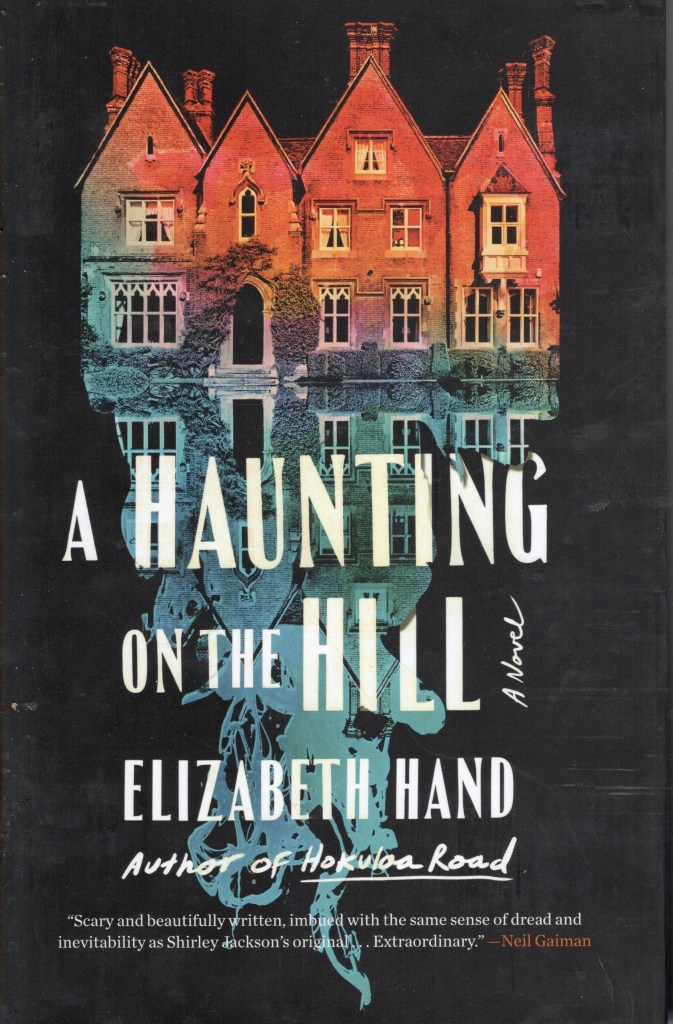
This book isn’t a retelling of the Jackson novel, but rather a kind of sequel, picking up at Hill House some sixty years after poor Nell drove her car into the tree after the turn in the driveway as she realized she’d been wrong about everything but only too late. This is a new story of Hill House, and our main character, Holly Sherwin, is staying upstate with her lover Nisa in an Air BnB, and bored, wakes up early and goes for a drive. A playwright, she’s recently won a grant to help cover expenses while she works on her play, Witching Night, which is based on an old sixteenth century manuscript she came across by chance. It’s the story of an old woman accused of witchcraft and burned at the stake, based on a real event; her girlfriend Nisa is an accomplished rising singer/songwriter, who is rewriting old murder ballads to use as the soundtrack/backdrop of the play. She goes for a drive and finds herself at Hill House…which draws her in much as it did Nell in the original Jackson and she decides to rent the house for two weeks, move in with her cast (her bisexual friend Stevie, a former child star molested on set and now an amazing sound tech) and Amanda, a brilliant aging actress whose career took a turn when a costar fell to his death–and of course people wondered if she pushed him. Holly herself has a bit of a checkered past; someone had told her a story that she adapted into a play; the original person threatened to sue her but before anything can be done that person commits suicide. That derailed her playwriting career–and believe me, Hand does an excellent job of depicting what the excitement that a burnt-out creative experiences when inspiration, an opportunity to flex those creaky muscles and create again, feels like.
All four of the characters are beautifully rendered and are completely real, and one of the things I liked was how Hand slyly also referenced the Flanagan mini-series as a part of the Hill House continuity. Hand’s Hill House has similarities to Jackson’s, and there are more than enough nods for the Jackson fan to recognize and smile about. Hand also does an incredible job of creating that claustrophobic dream-like feel Jackson used for her book, but Hand doesn’t mimic Jackson’s style; the style of this novel is entirely Hand’s, but one has to marvel at Hand’s mastery of creating that same feeling in her reader but in an entirely different way. The language she uses is flawless and rhythmic, just like Jackson’s was, but again completely different. There are also moments that mirror the original novel beautifully; call backs to the original story that I personally felt like little secrets Hand was sharing with me the reader. It’s a very intimate story, and I felt like I was there with them, the characters were people I understood and knew and cared about. Hand also tells the story in alternating points of view, which helps create the off-balance slightly skewed perspective the story needs; Holly tells the story in the first person, but the others are from a third person point of view.
It was terrific, and I look forward to reading more of Hand’s work.
Yesterday was a little frustrating, I am not going to lie. The day went off the rails early and just never seemed to get back on track. Frustrating news, irritation, depression, and high anxiety all combined to make yesterday a challenge for me to stay on track and balanced, so much so that I just felt overwhelmed and didn’t even try to cope or stay centered because I felt tired all day on top of everything else that was going so irritatingly wrong yesterday.
I did sleep well Sunday night, but I was still worn out from the driving and so forth from the weekend.
So yeah, I was channeling some Major Bitch Energy yesterday, but managed to keep it all inside and not inflict it on anyone else. This was the big win of the day–because I used to just give rein to it and everyone else would just need to get out of my way or else. But I didn’t snap at anyone, I didn’t swear at anyone when I was driving home after work–but I did drive straight home after work, despite needing to run errands. I was smart enough to realize how close I was to snapping at someone or just being a dick in general, so I went home to spare the world and some unsuspecting person my foul mood.
Sigh.
And then I got home to find out that they’d started working on the house today–not really sure what they are doing but it’s an old house in New Orleans so it literally could be anything–and didn’t give any warning–as evidenced by the kitchen wall clock lying in pieces on the kitchen floor (it’s easy to put back together), and then I noticed a lot of the framed pictures in the laundry room were on the floor. The workers didn’t give any warning nor did our landlady; but Sam the handyman knew there were things on the walls so he called Paul. He got five minutes notice, but didn’t think about the clock in the kitchen–and why would he? It’s a whole different room, even if it is connected to the laundry room and one wall is also the back wall of the house.
I also slept wrong or something either Saturday or Sunday night so my neck was sore yesterday (still is this morning, in fact)–turning my head to the left hurt, which of course made driving an absolute joy. I do remember taking good health and not always hurting for granted for way too long. Sigh, I guess there is some truth to that saying you really don’t know how much you’ll miss something until it’s gone; it never even crossed my mind to be grateful I was in good physical condition. I didn’t even know how lucky I was; but I certainly am very well aware that I am a physical wreck at sixty two. Heavy heaving sigh. My neck is still sore this morning, but Ben-Gay has been doing the trick and it’s not quite as bad this morning as it was yesterday.
So, by the time I finally got the laundry started last night, I was already in a mood and said fuck it and repaired to the living room with Tug for some lap time. A purring sleeping kitten in your lap is the best thing for anxiety and stress after a bad day.
Hopefully today will be a good day. I am going to attempt to start eating more “not soft” foods this week at some point. I do still have a lot of that soft food stuff to get rid of anyway, so its just as well I was wrong about how long it would take to get my dentures (I don’t think I ever really told a timeline, which was why I got confused) because all this remaining soft food I’ve not gotten to yet will get used and it won’t just sit in the cabinet for months (years) waiting for me to get fed up at last and start pitching things, right? And I don’t need to have the expensive ice cream–it just has a high calorie count and is very filling and I like it, so I can probably start doing without that; maybe switch to something less expensive and with chunks of stuff in it. I don’t know that I can’t chew so much as I can’t bite into things, which is why I am going to start practicing with other foods. Most of this soft stuff is just carbohydrates, which my body is turning into sugar which is making me pre-diabetic which is also building up my uric acid which is manifesting as gout (everything is connected in your body–everything). I did make it into work, only had to use two hours of my sick time (I get to use two more on Wednesday when I get my sonogram), and managed to get some things done both there and on the home front.
As I was driving both to and back from Panama City Beach over the weekend, I also went down memory lane back to my childhood again. I hadn’t been back to Panama City Beach since the summer I graduated from high school, back in 1978; we went on a trip to visit the relatives and the beach and all for about three weeks that summer, right after I graduated. We never used I-10 back then–was there an I-10 then? Probably–but once I took the exit for 331 south, I knew exactly where I was; Defuniak Springs, and 331 was the road to my grandmother’s old place on Choctawhatchee Bay. And sure enough, 331 took me to the bridge over the bay–no longer a draw bridge or a two lane bridge; now it’s two separate bridges with two lanes crossing in either direction–and the gas station at the corner where you’d turn to go to my grandmother’s is now a park, which I didn’t catch until I was past it. I was going to turn and drive down there on the way home, just to take a look, but by the time I got across the bridge I was deep into The Only Good Indians and I was tired and just wanted to go home. But these old sites–and the incredible beauty of the beach at Panama City Beach–brought back a lot of memories and thoughts about me, my life, and my writing; as did spending time with my aunts and uncle on my father’s side of the family–none of whom I’d seen outside of weddings or funerals since that last trip down there before we moved to California in the the first months of 1981, and that made me go down that road. We spent most of Saturday after I arrived watching football games–Alabama-Texas A&M, and then Notre Dame-Louisville–which reminded me again of how deeply rooted football is as a family thing; we bond over watching football games, pretty much rooting for the same teams while hating the same ones. (They all overlook my LSU fandom, but they’re all Auburn fans who hate Alabama with a passion–my dad and mom and our little branch were the exceptions; rooting for Alabama unless they were playing Auburn. For me, the SEC is now LSU–with Auburn a distant second and Alabama just behind them in third. We all hate Tennessee and Florida–but they hate Georgia; I don’t. Even Dad hates Georgia.) But it made me think more about the panhandle books and the Alabama books I still want to write–and I was also laughing at myself for trying to make the books set there (like the ones in Kansas) so based in fictionalized reality that I feel tied to making the towns almost exactly the same; it’s fiction, lunkhead, so you can change things; it’s okay. (This also kind of dovetails with my “NOLier than Thou” post; because I realized I’ve always created fictional places in New Orleans while still trying to get the city right…it’s really about the mentality than the actual geography.)
But I would like to go back and explore; perhaps Paul and I can find a place over there to rent for a few days–a condo or something so we can eat at home and so forth; Paul would be more than happy to just be given beach access 24/7–and then I could think about the two or three books I want to set there. (I also want to set some books and more stories in the fictional town of Tuscadega, which I invented and based on Freeport, where my grandmother lived. “Cold Beer No Flies” was set there, for example. And driving through Mobile made me think of Dark Tide, too.) It was also interested because the Google Earth views I’d looked at made Panama City Beach look a lot different. It is a lot different than it used to be–more built up, no vacant lots, and yes, there are condos and massive resort hotels built on the beach side of Lower Beach Road (there was only a Beach Road back in the day–now there’s Lower, Middle, and Upper Beach Roads), but there are still public beaches where you can drive up and park right by the dunes and walk a very short distance to the beach, and those tourist-serving little shops that sell gimcracks and souvenirs and beach towels and inflatable rafts and suntan lotion are still there–not as many, but there are some, bearing names like Surfin’ Safari and so forth. I also took some pictures to help me remember things if and when I write about the area again. (It’s where I want to set my Where the Boys Are/slasher novel mash-up that I am calling Where the Boys Die. )
And another story–another one of the ones from back in the day when I was still in college and trying to figure out how to become a writer (which is what I thought those classes were for; they were not) I had written another one that I had turned in with “Whim of the Wind” (the first semester with a good teacher, I had started to feel like I could be a writer again, and by the second semester when I took the class a second time–you were allowed to take it twice–I decided to write a lot of stories to turn in….which was when I first started writing fast, I suppose. Anyway, when I turned in “Whim of the Wind” I turned in another story called “Thunder Island,” which was also set in the panhandle. It was also well received by the class, but not as well as the other, and so I’ve never really thought much about the second. I tried rewriting it once, but to no avail, and since then it’s just kind of been languishing in the files. Ironically, the story was about someone who was returning, after a long time, to the area after a funeral and was remembering a summer when he was a kid, staying on the bay with his grandmother…but while the story was good and worked, now it’s problematic. I’d have to update the story and change some things, and it’s not a crime story at all–although technically in its original problematic form it was an inadvertent crime story. Funny that I completely had forgotten writing a story set in the panhandle almost forty years ago that actually predicted the drive I just took. Maybe I should look it over again? May not be a bad idea.
But the most important thing for me to do today is assess my situations and figure out where I am at with everything, and what I need to get done. I am still in the midst of medical processes–part of yesterday’s problems stemmed from me either never being told or misunderstanding the denture process, which is much longer than I thought and I won’t be getting the final ones for another four to five weeks–and tomorrow morning I am having a sonogram on my heart and Friday an MRI on my shoulder. I need to get a handle on things because all the medical stuff keeps pushing everything else out of my brain; how do people prepare for surgery when they have a gazillion other things to do on top of that? I guess you just endure. I have no control over the situation–which is probably part of my problem with the whole thing–and just have to put my fate in the hands of others, which is something I never like doing and always chafe at; it’s part of the reason why flying is such an issue for me (one of the many reasons, all of which have to do with my faulty brain wiring)–I have no control over anything. You have to surrender control of your fate to the airline once you walk into the airport until you walk out of the airport at your destination and that really chafes at me. Anxiety, of course–on the one hand I know what the general disorder is and that everything else I thought was wrong with my brain’s wiring is just a symptom of the macro disorder, and I am better about controlling it now that I know what it is…but yesterday was one of those days where I felt no control at all over my life and situation and so that started the spiraling and it just got out of control.
But I am happy that I’m better and more balanced (and better rested ) this morning–the neck is still stiff and sore–and on that note, will head into the spice mines. Have a lovely day, Constant Reader, and I will be back later, probably.
I know very little about the culture, history, values, and faith of the native American population of this continent. Most of what I do know isn’t reliable; being gleaned from books and histories and television shows and movies and other media, most of which were steeped in racism and white supremacy, and cannot really be depended upon for any kind of accuracy whatsoever.
If anything, it should be looked at with a highly jaundiced and very critical eye.
I’ve been trying to educate myself more about the indigenous natives of Alabama, for example; as I delve more deeply into writing about my fictional Corinth County, I need to learn more about the area and the natives who originally lived there–and what they believed and their spirituality. I do not want to write–or even imagine– anything rooted in white supremacy and racism. I never played “cowboys and Indians” when I was a child–I was never into little boy things, ever–and was never terribly interested in Westerns, but was aware that white people wore thick make-up to play Native-Americans on film and television…which even as a child made me wonder why they didn’t just find Native-Americans who wanted to be in show business (because I found it incredibly hard to believe there weren’t any). I always assumed Cher was at least part Native because of “Half-Breed,” so you can imagine my shock and surprised to find out she’s actually of Armenian descent. The Village People had a non-native in native garb as part of their nod to gay masculine archetypes (probably this came from the book and movie Song of the Loon, plus decades of Hollywood’s sexualization of the loin-clothed Native warrior).
And as you get older, and do more reading and studying on the subject, you begin to see things that were plainly obvious all along, but somehow you never really connected the dots.
The first time I ever read anything that treated the native population with dignity, respect and understanding was James Michener’s Centennial*, which remains my favorite of his works and one of my favorite books of all time. The hit movie Billy Jack, which came out while I was in junior high school, was also about mistreatment of modern-day Natives by bigoted white people and their government, but I think the social message of the movie got lost in white tween boys’ fascination with Billy Jack’s fighting skills, because that was all they talked about. I don’t think I ever heard anyone ever say “It’s terrible how we treat the natives.” The late 1960s and 1970s began to see a change in how we see the native population, as well as the history of the European conquest of the continent–not everyone, of course, but at least with those who were trying to be better about racism and racial issues and the long history of oppression of the native populations.
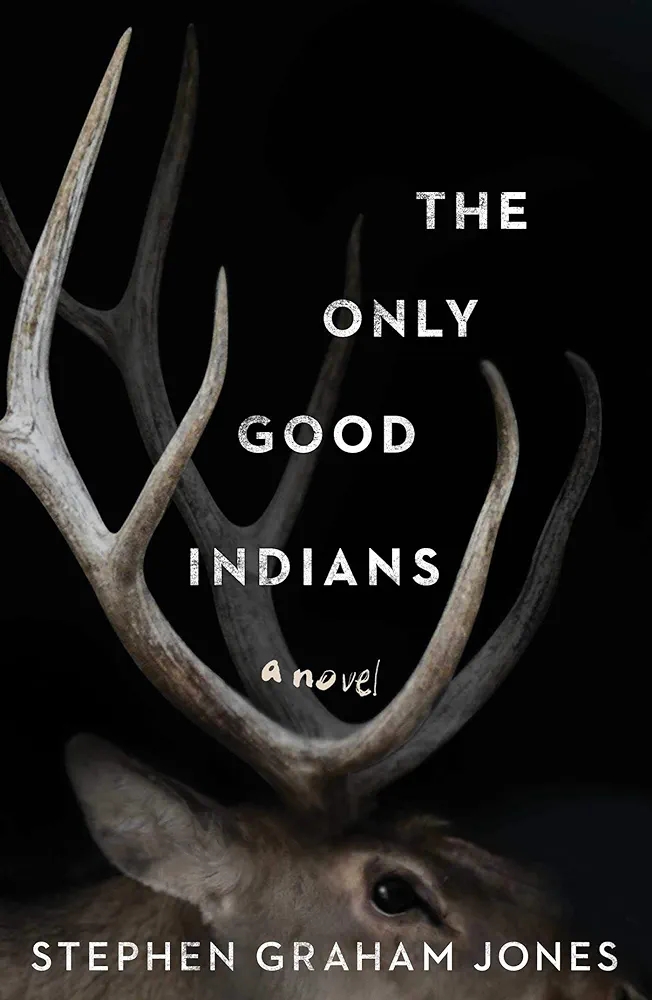
I had heard a lot of great things about Stephen Graham Jones, a native American horror writer who has taken the genre by storm. I’ve been wanting to read him for quite some time, and so I decided to listen to The Only Good Indians on my drive to Panama City Beach and back this past weekend.
And it did not disappoint.
The headline for Richard Boss Rivs would be INDIAN MAN KILLED IN DISPUTE OUTSIDE BAR.
That’s one way to say it.
Ricky had hired on with a drilling crew over in North Dakota. Because he was the only Indian, he was Chief. Because he was new and probably temporary, he was always the one being sent down to guide the chain. Each time he came back with all his fingers he would flash thumbs-up all around the platform to show how he was lucky, how none of this was ever going to touch him.
Ricky Boss Ribs.
He’d split from the reservation all at once, when his little brother Cheeto had overdosed in someone’s living room, the television, Ricky was told, tuned to that camera thay just looks down on the IGA parking lot all the time. That was the part Ricky couldn’t keep cycling through his head: that’s the channel only the serious-old of the elders watched. It was just a running reminder of how shit the reservation was, how boring, how nothing. And his little brother didn’t even watch normal television much, couldn’t sit still for it, would have been reading comic books if anything.
First of all, I want to address what a terrific writer Jones is–although this is hardly ground-breaking news. For me, the strongest part of the story was the authorial voice and the tone set by it. I can’t say whether something like this–like anything written by people outside of my own experience–is authentic or not, but it was completely believable. I truly got a sense of what it is like to be a Native-American living in North America in the present day; the mind-numbing poverty and dealing with the incessant racism from white people. His characters were three-dimensional and fully realized; the dialogue sounded right, the rhythm of the words he used to create a melody of syllables and sounds sang from the page. I felt like I was there in every scene, in the room with the characters and bearing mute witness to what they were experiencing, and what they were going through and experiencing, with the fully-realized life experiences coming into play with every word they said and every action, every thought, every movement. The deceptive simplicity of the prose was powerful and resonated; it sounded like poetry coming through my speakers.
I also found myself really interested in basketball–which is very unusual.
I also realized, as I was listening, spellbound behind the wheel of my car, that there was also commonality of human experience here; the poverty, the worries about money and the future and the bleakness of the helpless acceptance of despair–this is definitely a horror novel, but it’s also a stinging indictment of poverty and societal inaction in the face of it; their resigned acceptance of their fate mirrors the more callous resignation most people feel when thinking about poverty in these United States–“nothing I can do about it.”
While telling a strong story that is almost impossible to step away from, Jones also educates us cleverly with a sentence here and there–I’d never thought about where the term buck naked came from, and there are so many of these sprinkled throughout the book; terms and phrases that white people use without a second thought but come from a long history of racism and prejudice; the title itself is taken from the horrific saying “the only good Indian is a dead Indian.” I myself am always careful not to refer to the native population by the colonizing name assigned to them by the lost Spaniards looking for spices; it was jarring hearing it over and over again, and made me a bit uncomfortable–but I suspect that was the entire point. (I think the worst was when the junior high school basketball prodigy Denora was thinking about playing a game against white schools, and the horrible signs and things their students yelled at her and her teammates–the one that was particularly offensive was Massacre the Indians!, which reminded of the trash Chicago Bears fans holding up signs when playing the Saints in the NFC title game after the 2006 season: “FINISH WHAT KATRINA STARTED!”, which turned me from someone with a nostalgic affection for the NFL team in the city where I spent most of my childhood into someone who wants them to lose every fucking game they play.
Massacre the Indians.
There’s no doubt in my mind reservation kids have to deal with this kind of bullshit all the time, and its embarrassing and infuriating at the same time. The cruelty is always the point.
But I digress.
I really enjoyed this book. I felt like reading it somehow helped me reach a better understanding of a situation I was already aware of, while being incredibly entertaining at the same time. I cannot state that enough: what a great experience this book was from beginning to end. The tension and suspense were ratcheted up with every chapter and sentence; the monster was terrifying and horrifyingly relentless, and the characters were all strongly rendered in both their strengths and their flaws.
When I finished the book, I couldn’t help but wonder if this book, and others by Jones, were being pulled from library shelves because reading them might make white people feel bad. The book made me remember again why controlling access to what anyone can read is about control more than anything; we can’t let people read diverse points of view or see opposing opinion is the underlying message of the banners, and quite frankly, grow a fucking pair already! Seriously, who is calling who a snowflake?
Read this book! You can thank me later. And now I want to read more of Jones’ work.
*Centennial may not have been historically accurate in its depiction of the Arapahoe tribe, but I feel that it showed how the US government broke promise after promise to them, and the depiction of their systemic extermination was not done in a “manifest destiny” way. The ugliness of the US and its racism was right there on full display.





 Queer and Loathing in America