Midnight at the Oasis

…so put your camel to bed.

Work at home Friday, and I am delighted to have made it through another week, which was at the least bizarre and at most a really screwy one. Next week will be screwy, too, because of July 4th, but oh, well. I am taking the 5th off too so I can have a four-day weekend next weekend, which means more organizing and getting rid of things. I am going to do some more book pruning this weekend, and am going to dump more files, too. My end goal is to stop using the shelves in the laundry room for book storage and turn it into an overflow pantry, with extra stuff moved in there to clear out cabinets and so forth. I have some errands to run later today and more errands to run tomorrow; but I am hoping to make progress.

Paul was late getting home last night–he had meetings, and then stayed at the office during the massive thunderstorm that rolled through here last night. I didn’t get much done last night after I got home because I got very tired in the late afternoon and after getting the mail, I just basically collapsed into my easy chair and played with Sparky. Again, I couldn’t focus on reading, but I am hoping to finish Horror Movie this weekend and start Hall of Mirrors. The US Gymnastic Team Trials for the Olympics are this weekend, so we’ll be spending some time watching that, of course–I keep forgetting the Olympics are this summer–and I had another breakthrough on the new book last night, so I guess I can claim that I wrote last night–thinking and planning counts as writing, after all, and am getting a bit more excited about what I am doing with it, and the imposter syndrome seems to be taking a back seat at long last. I also have to do one more pass on that short story, which is due on Sunday.

I also need to bang out some more Pride Posts, which will finally come to an end on the 4th of July, and I have some plans and thoughts for that final post, too.

Something I just realized last night during my thinking session in my chair was that this weird nostalgia kick I’ve been on since Mom passed was naturally triggered by that (and all the conversations I’ve had with Dad about their early life together and his childhood) and of course, by the fact that I am writing two “historicals” in a row, both set in periods I lived through so I am trying to remember what it was like; how it felt to be gay in New Orleans during the early 1990s, and of course a lot of immersion into the early 1970s. I’ve already decided to set the book in 1994–the year my life actually truly began–so trying to remember what was where and what the city was like back then has also been flooding me with memories. The kids at work have also been asking questions about my life and past.

That, along with some other things I’ve been noticing lately, also has had me thinking deep thoughts. There was a social media post about becoming a daddy, and how people in my generation and the one right after…well, we didn’t really have a lot of men a lot older than me that were out in the 1990s to serve as mentors and/or guides to the community. HIV/AIDS had killed off a good number of them, leaving a void amongst the survivors without that oral history of the community being passed from generation to generation. There was a conversation about “role models” somewhere the other day, which is something I never wanted to be or ever thought I could be, and I’ve actively avoided it. Hanging out with and bonding with the Queer Crime Writers at conferences over the last few years was marvelous, and I actually started feeling like a part of the queer writing community again. That has also made me realize that while twenty years or so may have passed since my first publication–twenty-four in August, actually–I have done a lot, written a lot, and been nominated for a shit ton of awards, both queer and mainstream. (Hell, next year will be the twentieth anniversary of Katrina; which means it’s been almost as long ago as Betsy was when I started coming here) I’ve lasted a long time, if nothing else, and that longevity has to count for something, right? I don’t think I am the most prolific queer writer (I think Neil Plakcy and Mark Zubro are more prolific than I am, at least with the crime writers, anyway), but I have been around for a very long time, with minor breaks of a year or so here and there. Like it or not, I’ve become a community elder, and I intend to try to be better about helping out queer writers and lending a hand when I can.

And on that note, I am going to head into the spice mines. Have a lovely Friday, Constant Reader, and I’ll most likely be back later on.

Hollywood Swinging

Everybody is a star in Hollywood!

Or so the song by the Village People would have us believe, at any rate.

I’m not sure what it is about Hollywood, movies, and stars that draws gays like moths to an outdoor night light, but there you have it. We’ve fallen in love with movie stars and made them into icons–and interestingly enough, we always seem to like the same ones for the most part–Joan Crawford, Bette Davis, Katharine Hepburn, Judy, Liza, Barbra, Cher, Madonna, Lady Gaga, and so on; almost like there’s some kind of weird genetic link between the majority of gay cisgender white men that draws us all to the same things, so much that even straight people know who the women are that we idolize.

Why this is the case, I have no idea. But gay men have also significantly impacted how we as a society and culture look at men’s bodies, too–see previous post about how what was considered sexy in a man began changing in the 1970s, and continued evolving until what gay men (theoretically) found hot was what everyone considered hot for a man.

When I was a kid it was also believed that bodybuilders were mostly gay, too–because only gay men had the free time to develop and work their bodies…so the gay male attraction to muscular fit men was enough for society to say that about bodybuilders. (I have always appreciated bodybuilders aesthetically, but they leave me cold. They are so not sexy, despite the skimpy bikinis they pose in (gay men were also, for a long time, the only ones who weren’t competitive swimmers who wore speedos), and they never really have been.

But gay photographers began making bank in the late 1940s and 1950s by launching “physique magazines” as a cover for gay eroticism; they would find incredibly handsome men with worked out bodies and photograph them in “classical” poses. This dodge was how they got around pornography and postal obscenity charges; no visible penises, and the men were always posed like classical paintings or statuary to “show off their physiques”. Some of the men who posed for these photographers often did so early in their careers (Yul Brynner was one of many who did these kind of photo shoots to pay the bills), and never really hid their past as physique models–but they also didn’t bring it up much. Nudes for a male (or scantily dressed at least) weren’t as big an issue as they were for women; but male nudes weren’t exactly a boost to one’s career.

The gorgeous Ed Fury, who did some Hercules/hero type roles in movies in the 50s/60s

These old photos–and 8 mm physique films that were sold to private viewers–are astonishing to come across in the modern day and leaves so much to be explained1. Hollywood has always done a great job about covering up the same-sex attractions and predilections of movie stars; look at Randolph Scott and Cary Grant’s five years living together, or any number of other male stars. I’ve started looking into this a bit more because it’s all research for Chlorine, and it’s a plot point in the book. (It also gave me an idea for another noir, called Obscenity.) It’s very fascinating to me. The more I learn about Hollywood, and how things worked, and how rife with homosexuality that the studio assiduously kept secret, the more interested I am in those decades when studio bosses held all the power, when their fixers went around cleaning up after their stars, and the secret homosexuality just out of view there. Tab Hunter, Rock Hudson, and of course, the agent who represented all the beautiful boys: Henry Willson, who more than anything else is a tragic figure that I can’t help feeling sorry for, despite how awful he actually was…I am more willing to give queers forgiveness because of the toxic times they lived in and how they had to survive. (Roy Cohn, on the other hand, can burn in hell right next to J. Edgar Hoover and Clyde Tolson) Reading The Man Who Made Rock Hudson, a very well written biography of Willson, really made me feel sorry for him in many ways and understand perhaps why he was so damned awful.

It was also the times.

William J. Mann, by the way, has done some excellent queer Hollywood history non-fiction, if you want to a good place to start reading up on it.

I’m really looking forward to doing more research on physique magazines.

  1. This was the birth of gay porn, really, which makes it all the more interesting to me. ↩︎

Seasons in the Sun

Tuesday and back to the office this morning with me. It feels right, you know? Yesterday I was kind of bored and low energy. I did some chores, worked on the files some, did some writing, and reading (Horror Movie is terrific; Paul Tremblay is really a spectacular writer), but overall I was feeling pretty low energy by the time the late afternoon rolled around, and I didn’t have a problem with it, really. I got up early, after all, to get used to it, and I’d done a lot over the previous two days; and everything else that needs to be done in here can be broken down into separate small chores, which is far easier to scratch off the list and a lot more satisfying. Paul had to go out for the evening last night to go to a reading, and didn’t get home until after I went to bed. I slept very well, too.

So I am feeling up for going back to work this morning; I feel very rested and relaxed, and I only have to be in the office for three days this week, and three days next, too. I think I am going to take Friday the 5th off, might as well have another four day weekend when it presents itself this way, don’t you think? I thought it would take much longer to get through the filing, in all honesty, and to be sure, it’s not exactly finished either. But I would have never dreamed I could get so much done so quickly, either. I have another drawer to go through, and then everything needs to be alphabetized…but most of the duplicates have been combined, all the files pertaining to a certain book have been also gathered togetherm and now I have to start finishing books, you know? Tonight I have to get the mail and go to the gym before I get home, which will be nice. There are a couple of chores I started and need to finish–laundry and dishes, as always–before I can settle in to write and/or read tonight. (I suspect I’ll be tired and reading is the most likely option. I do want to get Horror Movie finished so I can start another one.) It also rained overnight–more rain later in the week to come–and so I can probably put off washing the car for another weekend.

We’re also running out of Pride Month, and I have a lot of entries left to complete. Heavy sigh. It’s not easy when you don’t really have a plan. The ones that are left will wind up lengthier than the ones I’ve already done, and I don’t think I’m necessarily the best at winging it, you know? There are a couple that I’ve been wanting to finish for several years now–including one about masculinity, one about old Hollywood and physique magazines (which I want to write a book about eventually), and one about The Children’s Bible, because I looked upon those images inside with desire when I was a child. I should also probably do Playgirl magazine as well. So many potential entries, so few days. Heavy heaving sigh.

But I like the uncluttered look the apartment is now getting. I still want to do the drawers and the cabinets, and of course the attic is a big project I may save for Labor Day weekend. It’s so lovely to be making progress again.

It was also kind of nice that I really did take most of the day off yesterday because of the low energy and it seems to have worked its magic, so on this note, I am heading into the spice mines. Have a lovely Tuesday, Constant Reader, and I’ll check in with you again later.

Whole Lotta Trouble

Be gay, do crime.

I don’t remember the first time I saw that phrase somewhere, and I don’t know where it originates from, but actually–being gay used to be a crime (and our “supreme court” seems determined to make that so again), so I’ve always wondered if that was where it started from. I do like the phrase, though.

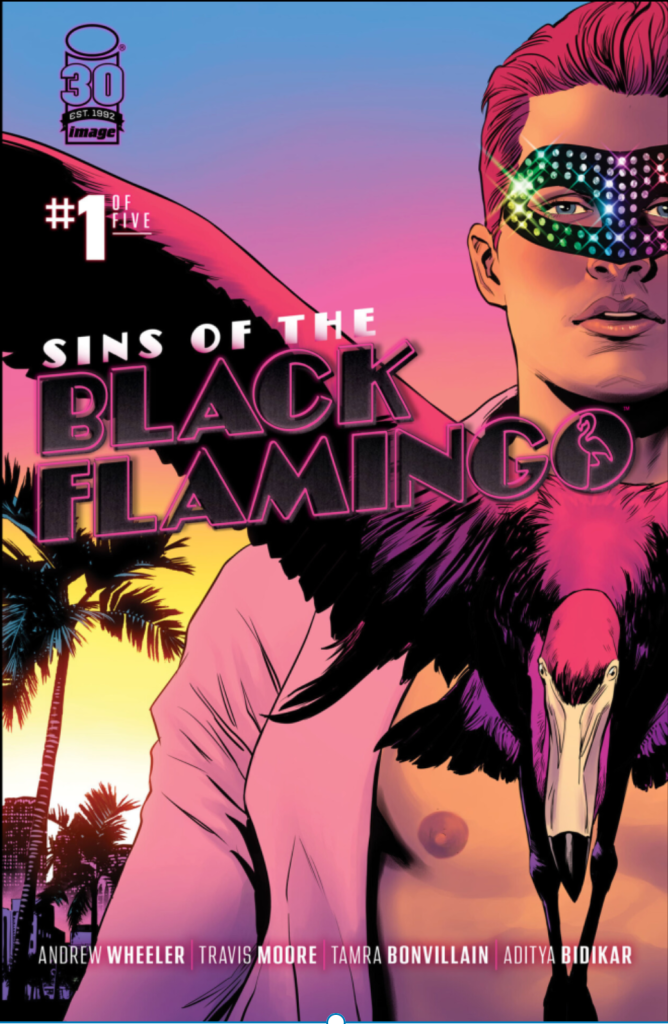
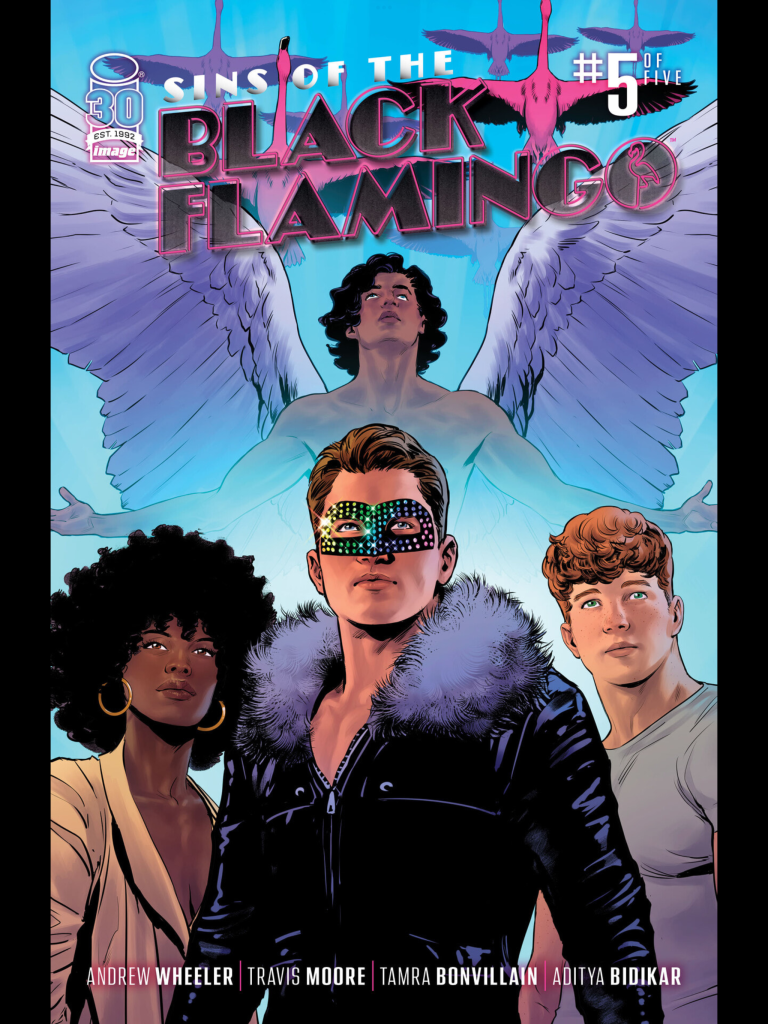
I also don’t remember how Sins of the Black Flamingo came to my attention, but it did. I subscribed so as not to miss an issue, and intended to read it all in one sitting so I could write about it…but never got around to it, like a loser, and as I was looking through the draft entries for the blog the other day, I saw that I’d started an entry after reading the first issue…but never finished reading the book nor, obviously, finished writing the entry.

the book nor, obviously, finished writing the entry.

And since the main character is gay…what better time to finish reading it, and blogging about it, then during Pride Month?

It did make sense to me.

I’ve read comic books for most of my life (in fact, comics are why I bought an iPad in the first place), but I’ve also taken long breaks from them, so am neither an expert nor even a super fan (although I would love to do a crime novel set in and around a comic books store; which could be fun and comical). I remember comics I read as a kid, and have some vague memories of other times when I dipped into the comics world as an adult. My iPad is filled with comics that I’ve never gotten around to reading—but what a lovely long weekend reading them all would make! Or maybe just take the iPad with me on a trip and read comics the whole time?

Anyway, I digress. I do need to do a longer form essay about my comics history while stressing the importance of how little I do know about my beloved comics…maybe for Pride next year, since it would take some serious rereading and research to do properly…and it could tie into one of the books currently in progress…but I am getting away from the purpose of this post: Sins of the Black Flamingo.

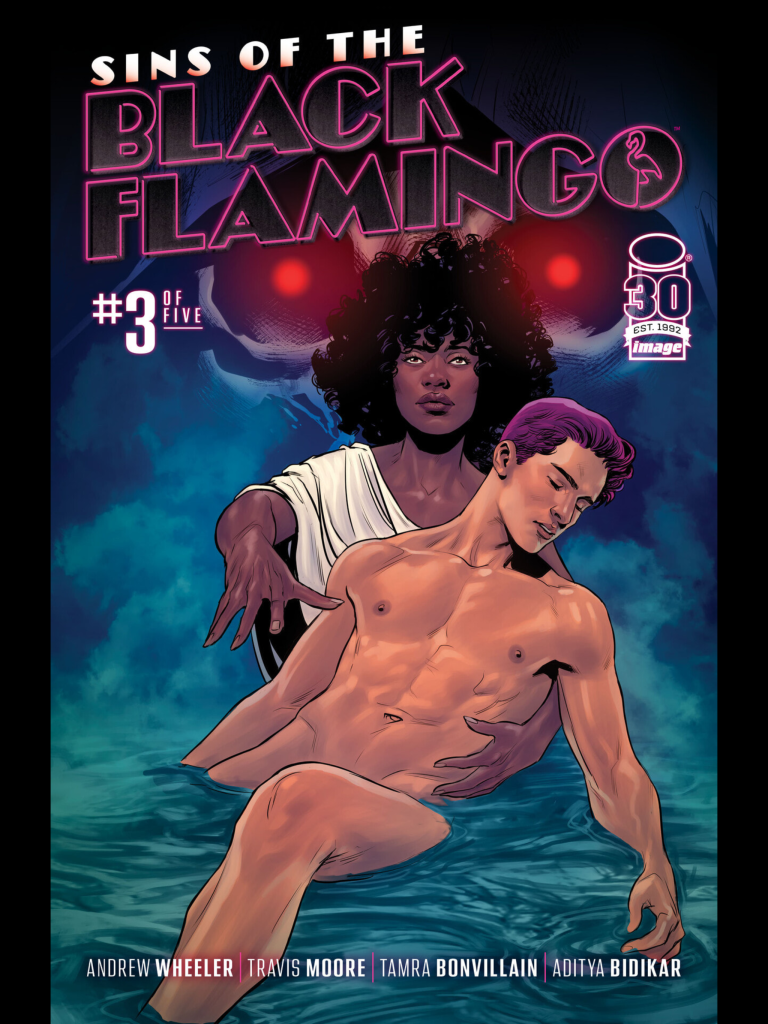
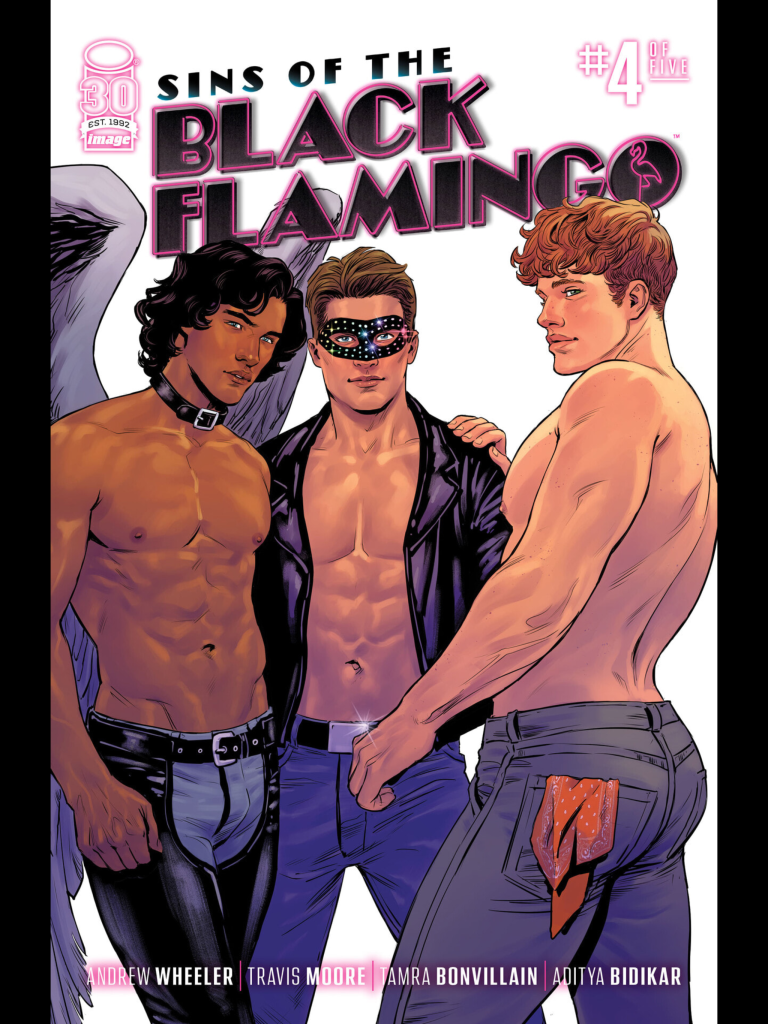
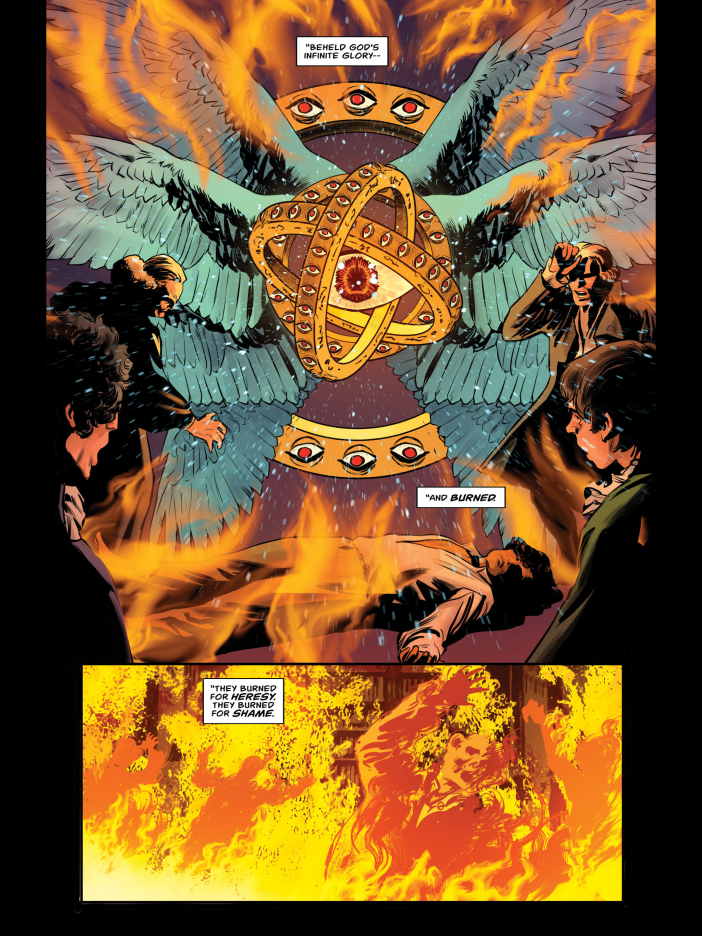
I mean, isn’t this art amazing?

Comic books helped shape me and my tastes. The original DC superheroes I followed were still drawn as ideal men of the past, like the 40s and 50s, big with a  barrel torso, and muscular but not defined. DC Comics hadn’t really updated its characters from their early days much; but it was during my childhood at the end of the 60s and early 70s that they began modernizing their comic characters, their costumes, and how they looked—which I also noticed. This was also around the time that men’s bodies became more sexualized, and what was hot and sexy for men began to change. The women super-hero’s costumes also became more sexualized, as were their bodies (the Legion of Super-Heroes ALONE had some of the more revealing sexy costumes. Queer super-heroes (although why I never made the connection about Wonder Woman and the Amazons with their island of women only is a mystery to me) were non-existent and wouldn’t start showing up until the late 1980s and early 1990s—and it’s still a few and far-between kind of thing (the Will Peyton Starman run always seemed queer to me, which I’ll need to explore at another time).

So, you can imagine my delight to find this run with a gay burglar as the main character, who wears a costume and is extremely good at his job (I’ve always had a soft spot for burglars in fiction) and that was why I subscribed to the series. (Still shaking my head at how long it took me to finally read them all, and there was an pretty amazing cliff-hanger at the end of #1.)

But when I was a kid, the characters and story interested me more than the artwork, and even with my love of the characters and stories, I never followed either artists I enjoyed or writers, either. Which is probably not the best way to enjoy them, really; it was a friend who was an exceptional artist and comics fan in the 1980s who made me aware I should be paying attention to the artists and the writers…and I did find some extraordinary comics by looking for artists and writers of books from there on. The two I remember the most from that time are Todd McFarlane and John Byrne.

Sins of the Black Flamingo is self-classified as “occult noir,” which is a term I absolutely love and now can recognize that occult noir is something I absolutely love and probably writeand will most likely explore more in my own work going forward, since I now know what to call it, because supernatural never really fit in the same way and I don’t feel like the books I write are actually full-fledged horror, but occult noir? Oh, hell, yes.

Anyway, the Black Flamingo is the alter-ego of our hero, Sebastian Harlow. The Flamingo is probably one of the top cat burglars in the world (as you may know, I love cat burglars and originally made Colin one in Bourbon Street Blues), and Sebastian is this interesting combination of my two series characters, of all things; he looks and is built like Scotty, with the same approach to sex as he did before he met the boys, but has the dark worldview and cynicism of Chanse MacLeod…so naturally, I was going to be drawn to the character. IN the very beginning of Book One, he is hired to steal something from a right-wing museum—basically a museum dedicated to honoring white supremacy. It isn’t until he steals the item they’ve hired him to find that we learn the backstory behind the item…and a golem named Abel is brought to life, and Abel is hunky AF, I might add.

We also meet Sebastian’s close friend and ally, Ofelia, a Black witch—and yes, this is very much occult noir. The art is fantastic, and done by Travis Moore, with Tamra Bonvillain as colorist, Aditya Bidikar, and editor Andy Khouri, and Andrew Wheeler was the writer.I highly recommend this—if for no other reason than it’s a great gay story with an interesting main character, and who would have ever thought they’d see a gay circuit party within the pages of a comic?

I do hope there’s more adventures in store for the Flamingo in the future. Highly recommended.

Go West

I was never a fan of Westerns.

They were everywhere when I was growing up—movies and television shows—and my father has been a lifelong fan, so whenever there was a Western on TV, our set was tuned to it. Gunsmoke, Bonanza, The Rifleman—you name it, we watched it. Looking back, my dislike of Westerns was rooted in several things: toxic masculinity, racist depictions of indigenous peoples, and how entertainment in this genre was primarily used to create a mythological portrait of the settling (colonizing) of this continent and make it seem as though Europeans were doing the right thing (even using religion) even though they really weren’t. I never saw the natives as villains, and I didn’t like how easily Westerns picked up the trope of heroic white people and savage natives. Even as a child I could see it was all bullshit and I didn’t buy into it. I was about eleven or twelve when indigenous people occupied the massacre site at Wounded Knee, bringing attention to those false narratives and trying to change what was then culturally-accepted racist viewpoints on the indigenous Americans.

Look at the words used for the indigenous people–“savages”, “redskins”, “braves”, etc.; all dehumanizing and differentiating; “they are not like us so have no rights or privileges and we need to kill them all” was pretty much the US government’s policy to the natives.

Many sports teams still perpetuate this—how many teams still used these offensive names until recently? How many still do? And how upset do people get when those names are changed?

Anyway, I also mentioned in passing on another post that I’d like to explore Western tropes and why I’ve never been terribly interested in them as a genre. When I was in Kentucky the last time visiting Dad some movie channel was having a John Wayne film festival, which kind of made my heart sink. I’ve never really been much of a John Wayne fan (although I do love both True Grit and Rooster Cogburn) and generally avoid his films. The first movie was Hondo, with Geraldine Page (of all people; I wonder what she thought of the experience), and you know, I actually enjoyed it…and it made me think maybe I should revisit John Wayne and check out some of his other, better films. But Christa Faust, who is one of my favorite people in this community, commented she’d love to hear my thoughts on Westerns and their tropes.

She also turned me on to this:

If you aren’t aware of Christa Faust and her work by now, you really should be ashamed of yourself.

Redemption is an amazing Western graphic novel she wrote, and I very happily downloaded it as soon as she let me know of its existence. It also made me recognize and understand my own comics-fandom to a degree, too, and I may need to reevaluate that and explore it. I had thought about doing a Pride post about comic books and super-heroes, but it might need to be a longer form personal essay. Anyway, I don’t read enough graphic novels. I’d known that Christa had done scripts for comics before, but it never occurred to me that I should read them as well as be supportive of my friends who create this way. It is just another form of writing, really.

Christa is one of my favorite writers, and Money Shot remains to this day one of my favorite American noir novels. She’s also one of my favorite people; I love just sitting around shooting the shit with her.

And what she does with Redemption is absolute feminist magic.

You see, the thing about Western tropes is they can often be adapted to other genres–including literary (Lonesome Dove is my father’s favorite novel)–and the first Star Wars movie (I will never call it anything other than Star Wars) borrowed heavily from Westerns, as does The Mandalorian. You can see the influence of Westerns on pop culture almost everywhere you look, really (and really, Western tropes are often influenced by medieval tales of lone knights and paladin, which in turn were influenced by Greek mythology), and Redemption isn’t a classic Western set in the 1800’s; this Old West is the result of some kind of apocalyptic happening, with the end result that the town of Redemption has walled itself off from the rest of the world (for their own safety) and is being run by your typical right-wing doom-and-gloom Christian type, who uses God and the Bible for control rather than for inspiration. The town’s doctor, who is not only a Latina woman but a fierce feminist, has been tried and convicted for providing an abortion to a woman whose child died in the womb and was endangering her life.

She has also been sentenced to death.

If you are seeing parallels between this and our modern world, well, I am pretty fucking sure that’s entirely intentional.

The doctor’s daughter’s only hope to save her mother is to find a legendary gunslinger called the Butcher–who had a past with the doctor when they were young. No one is even sure if the Butcher is real, or if she’s merely a legend.

And in the character of the Butcher, Faust sets Westerns on their ear by taking the typical closed-mouth gunslinger (think Clint Eastwood in all those movies about the Man with No Name) and made her a woman, but without stripping any of the gender expectations for men in Westerns. She’s old, she’s tired, and she’s done with bullshit–but she can still outdraw and outshoot any and every man she runs up against.

The art by Mike Deodato is also incredible.

Highly recommended; and again, check out her other work if you’re not familiar with it. You can thank me later.

Born This Way

I was a voracious reader from the moment I learned how to read–all things considered, my favorite waking activity was reading. I loved nothing more than those enormous doorstops of books that used to get published (apparently when the cost of ink and paper was considerably less), and during the Bicentennial madness, James A Michener released a book called Centennial, the history of a small town on the Platte River in Colorado that was renamed Centennial in honor of Colorado becoming a state in 1876–the nation’s centennial year. (I’ve always thought it odd that we trace our nation’s birth back to the Declaration of Independence, rather than the ratification of the Constitution, which created the United States government.) I really loved the book, even the several hundred pages about dinosaurs and how the ancient swamps gave way to the Rocky Mountains and the plateaus. Another thing that was big in the 1970’s was the “mini-series”–although at first they were all adaptations of novels and sometimes were called “books for television.” NBC, I believe, filmed Centennial, and I watched and enjoyed it thoroughly.

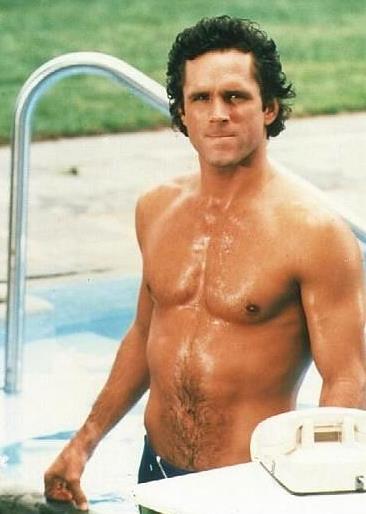
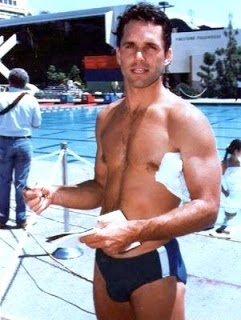
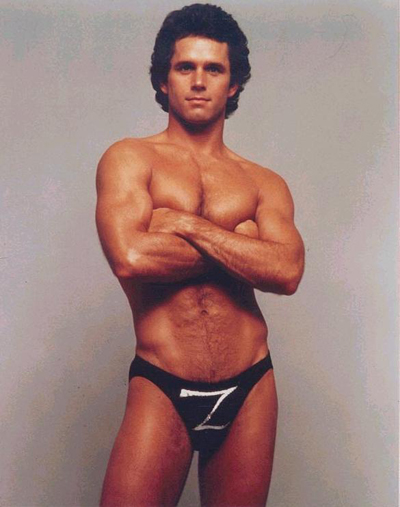
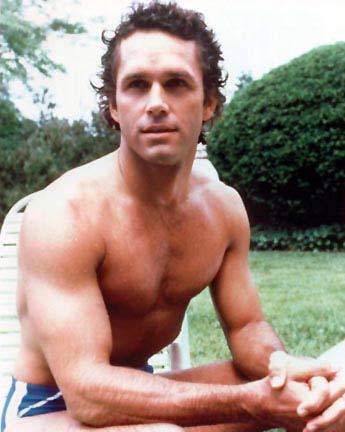
But the standout for me was Gregory Harrison, a young new-to-me actor who played the pivotal character of Levi Zendt, who actually founded the town (it was called Zendt’s Farm before the renaming in 1876) and I could not get over how good looking he was. There was also a shirtless scene, and I became a big fan. He was, looking back, absolutely one hundred percent my type; how many characters have I written about a hot lean muscular man with blue eyes and curly dark hair? Okay, his eyes were gray but that’s close enough for atom bombs and hand grenades, is it not? He then was on Trapper John, MD, which I didn’t watch (outside of General Hospital, I’ve never really watched many medical shows, and not sure why that is), and then he made a made for TV movie in which he played an actor who becomes a successful Chippendales-type dancer, For Ladies Only. It wasn’t a great movie, but he danced in thongs and bikinis and quite lustily, I might add, and that was really all I was watching for–but Marc Singer, player an older, mentor type, kind of stole the movie out from under him (more on Marc Singer another time)

For Ladies Only was an attempt to cash in on the Chippendales craze, and they were everywhere in the early to mid 1980’s–Donahue, Oprah, every talk show during daytime you could imagine–the entire concept of women appreciating men as sex objects, the way they’ve always been seen by men historically–and even The Young and the Restless had a regular cast member who was a male stripper (who mentored Nikki when she became a stripper; yes, Nikki had a rather sordid past on that show). It was the time period when what I call “the gay gayze” really kicked into gear.

The movie For Ladies Only wasn’t the greatest movie ever made, but Harrison was one of the few actors at the time who could pull off playing a male stripper and actually not need a body stand-in or anything (neither did Marc Singer–and if you need to know anything else about Singer, google image search “Marc Singer the Beastmaster”; he was also a big crush of mine after I saw this film). It was one of those sad morality plays that always wins big in the end. Harrison’s character was a struggling actor who gets recruited to join a Chippendales type show, his popularity begins to grow but now when he goes on auditions, no one will cast him because he was a stripper (how did that work out for Channing Tatum, you ask? Three smash hit films about Magic Mike, that’s how). I recorded For Ladies Only, and kept that videocassette for many years, finally discarding it in a purge before leaving California.

Thank you again, Mr. Harrison, for helping to define my taste in men–especially fictional one; how many characters have I written with curly dark hair and blue eyes?–as well as realizing for sure just how not straight I was at heart.

Macho Man

Hey! Hey! Hey! Hey! Hey! Macho macho man…I’ve got to be a macho man….

Sadly, this entry isn’t really about Macho Man Randy Savage, but I did meet him once, and yes, I always did think he was sexy; that body, the wild hair, the voice–the skill in the ring, and that amazing ass…yes, I was a fan of his. How I met him was when I worked at the airport–a lot of pro wrestlers lived across the bay from Tampa in either St. Petersburg or Clearwater or any of the communities on the peninsula, which means they had to fly in and out of the airport. One night I was covering Baggage Service, and was doing the fun thing of sending messages through the system about whatever bags were misdirected to us, or were simply late arrivals that needed delivering. I was by myself and merrily typing away at my keyboard when I heard the door open and before I looked up heard that unmistakable voice asking if a flight had arrived. Startled and wide-eyed, I gave him the information, and I could see he knew I recognized him–he scribbled his name on a ticket envelope, I babbled out that I was a fan, and he was very kind, friendly and gracious…which is why what eventually became of him was very sad to me. We never know what demons people are battling inside, do we?

The word macho is Spanish, and el macho or la machismo are Spanish terms that bled over into, and was appropriated by, American English, and it’s something, in all honesty, I’ve never cared for; it isn’t Spanish for toxic masculinity, but it might as well be. I first became aware of the term in the 1970s, which was also the time when the women’s movement was getting underway and feminism became a thing. Suddenly, all the things that were “manly” were under review (some straight white men certainly felt they were under attack instead; words matter); and the established protocols of what was and wasn’t ‘manly’ began to be reexamined and frankly, found wanting. Macho, or toxic masculinity, also wasn’t good for men either; they are trapped in a gender role that is kind of outdated but at the same time they may not fit into comfortably, either. The strong, silent type–remember that? That was the definition of manly; no emotions, no feelings, the provider and protector of the nuclear family…which begs the question, isn’t that emotionally crippling in some ways?

And where do gay men fit into this?

I sometimes think queer equality also threatened the role of the ‘macho’ male in our society and culture; straight men were supposed to be so deadly dull in real life, in the way they dressed and played and wore their hair and did all their manly things in that John Wayne/Gary Cooper mold…but gay men? Gay men could dress to accentuate their positives and look good. They cared about their hair and how they presented themselves to the world. There were some professions or sports that weren’t considered ‘manly’ enough–despite the fact that those things might actually demand more from the male body than other sports–football is manly because it’s violent and involves hitting other men with great force; while figure skating and ballet are not manly because it requires beauty of movement, and being graceful: men aren’t supposed to be grateful.

And that freedom to be ourselves was something to be envied by men trapped by conditioning, both socially and culturally, to be unemotionless drones with no way to express themselves other than through violence and anger.

I’ve always theorized that homophobia is subconsciously rooted in envy (of course, most people immediately zero in on ‘rejecting their own attraction to men’, which is also probably accurate in some cases). The stereotyped gay man has a lot more sex with a lot more different partners than straight men (not always the case, of course) and the idea of gay sex clubs (bathhouses, backroom bars, that sort of thing) where someone can go and have their fill of anonymous sex as long as they are capable and willing drives straight men crazy because most of them don’t have anything like that in their lives. Gay men were free from responsibility, from being what society sees as manly, and didn’t have to have kids or any of the other responsibilities that weigh down straight men and keep them, sometimes, from chasing dreams and living their life the way they want to; to paraphrase, ‘forced into a life of quiet desperation with no way out.’

I always found it amusing that the Village People, who had their moment in the sun during the disco years, always recorded gay-flavored songs cheerfully that were also dance hits that infiltrated the pop charts and the straight dance clubs, songs alluding to the gay world simmering just below the surface of American culture at that time.. They wore outfits that featured male images that gays saw as sexy icons of masculinity–the Native American, the cop, the sailor, the biker–and had hit songs that hinted about the pleasures of gay life. Some members of the band were gay, and the Village in their name referenced one of the more famous gayborhoods in the county, Greenwich Village in Manhattan.

Come on. I lived in Kansas during the heyday of the Village People–they were already out of fashion by the time we moved to California; but even I knew what their songs meant and what their costumes meant.

And the songs? Please. “Macho Man” was about hyper-masculinity, which was a gay fetish; “In the Navy”–well, everyone has always considered the Navy, going back to the British Empire, as a hotbed of homosexual activity (what with them being at sea for months at a time only in the company of other men; “YMCA” was about all the endless possibilities for.gay sex at the Y–also a notorious cruising spot for gays; “San Francisco” was of course the motherland for gays; and so on). I have always found all the straight people at sporting events, dancing and singing along to “YMCA” hilarious–because they don’t know they are singing and dancing to a song about the availability of gay sex there. I also found The Traitor dancing to “Macho Man’ at campaign rallies hilarious because of how much more stupid he looked because he and no one around him had any idea of what that song was about.

Straight people can be so clueless sometimes–but it’s always good to have the occasional hearty gay laugh at their expense, isn’t it?

Down by the Lazy River

Happy Father’s Day to all who celebrate. As for me, I’m meeting Dad in Florida on Friday for a nice weekend in Panama City Beach, although I seriously doubt that I’ll be going outside very much. The older I get, the less I can stand to be in the heat–which is something younger Greg would have laughed at very hard. I no longer care about being tan, either, as yet another fragment of vanity disappears from my head. Today I have to go out into the heat to make groceries, but other than that I am staying happily indoors and trying to get some more work done. We also have Wednesday off, of course, for Juneteenth, which is going to make for an odd work week, methinks, which is also payday.

I am feeling a bit groggy this morning but I haven’t had my first cup of coffee, either. Ah, there’s that first sip, sending warmth and energy through my system. I plan to do some writing today; I had a really good time yesterday unpacking and deconstructing the 20k+ words I already have done for this project, and I do think expanding it out into a novel is a good idea; I think it will make for a very good book if it accomplishes what I am setting out to do with it–and of course, as soon as I have those ambitious thoughts good old Imposter Syndrome rears its ugly head. AH, well, but feeling like I’m back inside my writer’s skin inevitably was going to trigger that, wasn’t it? Sadly, it’s all part and parcel of being a writer, and I just need to shrug it off entirely and focus on the work. So, while I generally despise Imposter Syndrome, I welcome it now because it’s a signpost on the way to getting back to being a full time writer after several years of being swamped and stressed and everything else that went on since 2016, really. It’s been almost a decade since Mom’s first stroke and she started living, essentially, on borrowed time. I think that was the start of the cloud in my brain, and that odd sense that time is running out. It feels lovely to be out of that; I’ve not experienced it for quite some time now, and I think the rest of this year might actually turn out to be incredibly productive for me. Here’s hoping, anyway.

Yesterday was lovely. Sparky got me up before eight, which was fine (he let me sleep until eight this morning), and I got up and started working. I did some cleaning, and I also did some writing, and some planning. Last night I scribbled away merrily in my journal, listing characters and figuring out backstories for them, so that they can be fully realized when I write about them. I do think this one, and the one after, are going to be some of my best work, which feels great, you know? I was also looking over the prologue to The Summer of Lost Boys, and rewrote some of it in my head, which I will need to transcribe at some point today as well. I didn’t really leave the house yesterday, which was great. I spent some time reading the new Paul Tremblay, Horror Movie, which I am really enjoying. (I always enjoy reading Tremblay; he’s one of the best of the new crop of names in the horror community, and not a single book or story of his that I’ve read wasn’t an incredibly enjoyable experience.) We finished getting caught up on The Boys (it cracks me up that the right-wingers are suddenly realizing that the show actually makes fun of them, and the ‘heroes’ they were rooting for were actually the villains. Sucks to be MAGA), and then we dove back into After the Flood, which is absolutely terrific and interesting.

Oh! And House of the Dragon returns tonight. Huzzah!

I slept well again last night, so getting up to Sparky’s determination to get fed was fine with me this morning. The first cup of coffee is currently working its magic in my bloodstream and I am waking up, which is marvelous. I do have some things I need to do this morning–the kitchen is a bit of a wreck this morning, and the floors need to be done–but I am hoping to spend the day, outside of the grocery store, inside working on the book and getting my shit together for the week. Make a to-do list, try to remember all the things I want to submit to, and get organized. I never feel organized, and haven’t in a while, which is part of the off-balance thing that’s been going on since 2016 or so.

And on that note, I am heading into the spice mines. Have a lovely Sunday/Father’s Day, and I may be back later with some other posts about being gay and Pride and other great moments from my gay life.

Rocky Mountain High

I was really into soaps in the late 1970s and up until the mid 1990s or so. My fandom, how it came to be, and how much of an influence soaps were to me as a writer is a topic for another time, perhaps after Pride Month is over because it’s really not Pride related, except for how they related to me as a gay man. But by the late 70s, I was strictly an ABC guy: All My Children, One Life to Live, General Hospital and Edge of Night, with me having a special attachment to Edge, which will also be a subject for another time. But soaps were strictly a daytime medium for a very long time–at least until Dallas premiered. Originally, each episode was a stand-alone but the show very quickly moved to the serial format, and the ratings went through the roof–and of course, “Who Shot J.R.?” was a global phenomenon (I figured it out early on–when I saw that Mary Crosby was only contracted for four episodes in the following season and the reveal that the shooter’s identity would be revealed in episode 4…it wasn’t too big of a leap from there to “it must have been Kristin”. I was right.), and Dallas ruled the ratings from there on out..

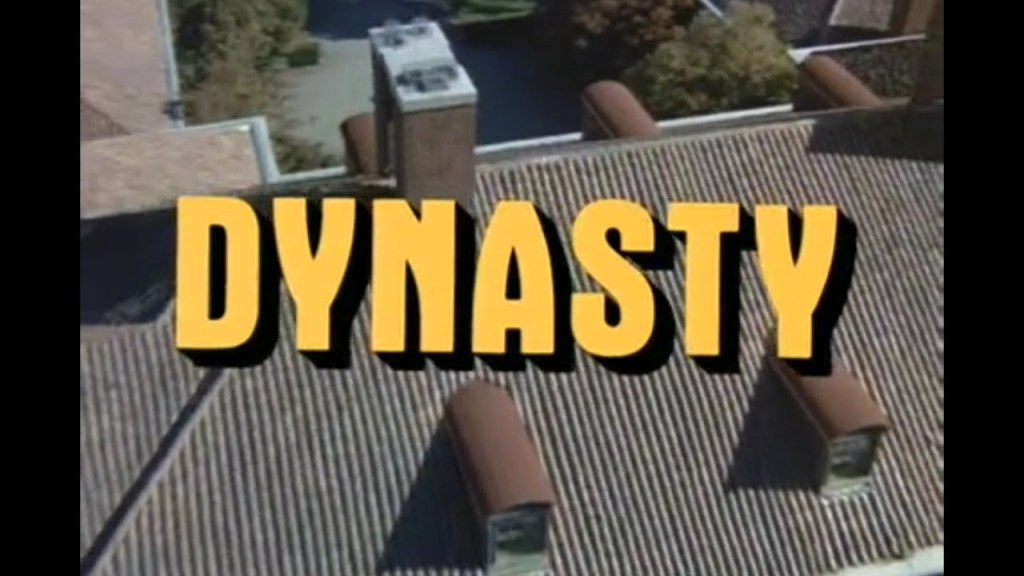
The success of Dallas, of course, lead to copycats from other networks trying to cash in on the new craze; television is nothing if not a place where imitating success is seen as a no-brainer; the irony was that so many of the other soaps that launched at night in the wake of the huge success of Dallas…failed for the most part. The only post-Dallas night time soaps that enjoyed long runs were Knots Landing, Falcon Crest, and Dynasty.

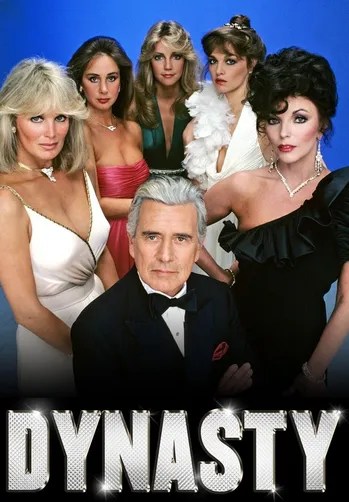
I first learned of Dynasty in a People magazine profile on Linda Evans, who at the time was best known as the woman John Derek left for Bo (who was a huge star at the time), and it mentioned she’d done a two hour pilot for a night time soap called Oil. By the time the fall previews started dropping, the show’s name had been changed to Dynasty, and there was going to be a gay character on the show. Once I read that, I knew I was going to watch. And then the premiere of the show was delayed months because of a strike. The show also had some other cast members I knew of and was interested to see–Wayne Northrop, who’d played Roman on Days of Our Lives; Pamela Sue Martin, of Nancy Drew and The Poseidon Adventure fame; and of course long-time television star John Forsythe as Blake Carrington, the patriarch of the family.

The first season was interesting enough, but the show didn’t really catch fire until the second season, when Joan Collins joined the cast as Blake’s first wife and mother of his children, Alexis. By the end of the season Dynasty had climbed from middling ratings to the Top Five, and it had become must-watch television.

But my primary interest was the character of Steven.

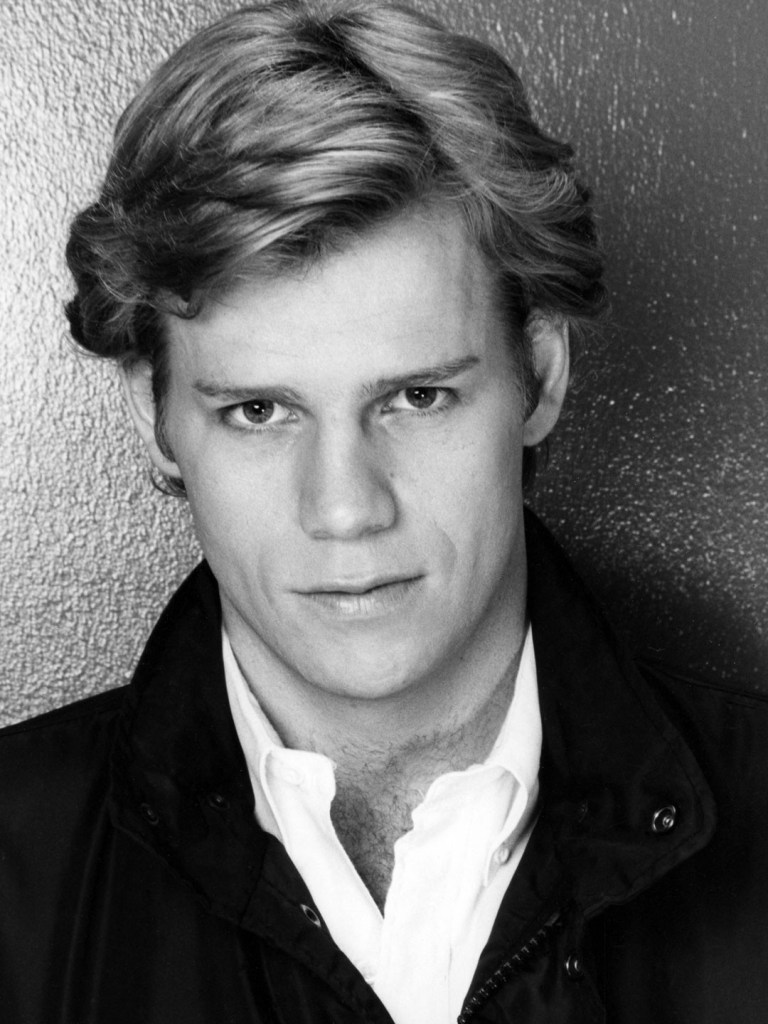
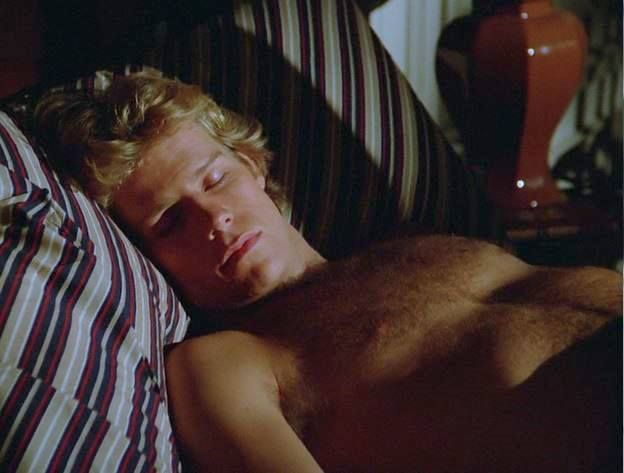
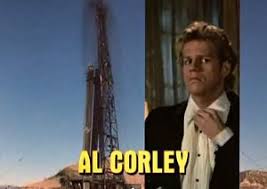
Originally played by Al Corley, Steven’s storylines were made clear in the pilot; Steven is coming to terms with his sexuality, coming back to Denver for his father’s wedding despite the fact that Blake is homophobic and he’s been living with a man (Ted Dinard) in New York for the past few years. Steven still isn’t entirely sure of his sexuality (it never occurred to anyone in production that he could be bisexual; he only had a binary choice during the entire run of the show), and decided to go to work on an oil rig to “become a man.” His co-workers pranked and hazed him for being gay at first, and then tried to “straighten” him out by buying him a hooker, which doesn’t go well. He then embarks on an affair with his boss’ wife Claudia (played by Pamela Bellwood, who was probably one of the best actresses in the cast), who was also mentally ill and her sanity wavered throughout the run of the show. Ted comes to Denver to get Steven to come home, but Steven’s decided to stay in Denver and try to get on with his life and ends things with Ted. Unfortunately, Ted comes to the Carrington estate (which was ‘played’ by Filoli, gorgeous place that was also the ‘setting’ for Laurie R. King’s superb Back to the Garden) to say goodbye, Blake comes home already angry, becomes angrier to learn Ted is in the house, rushes upstairs to see them hugging goodbye, and in a homophobic rage pulls Ted off Steven, punches him and knocks him down–only he is killed when he hits his head on a fireplace guardrail–and now Blake has to go on trial for murdering his son’s gay lover; and now the entire world nows.

Alexis returned for the trial, entering the courtroom wearing a veil, and Fallon gasps, “oh my god that’s my mother” setting the stage for season two, and night time television’s greatest villains, Alexis.

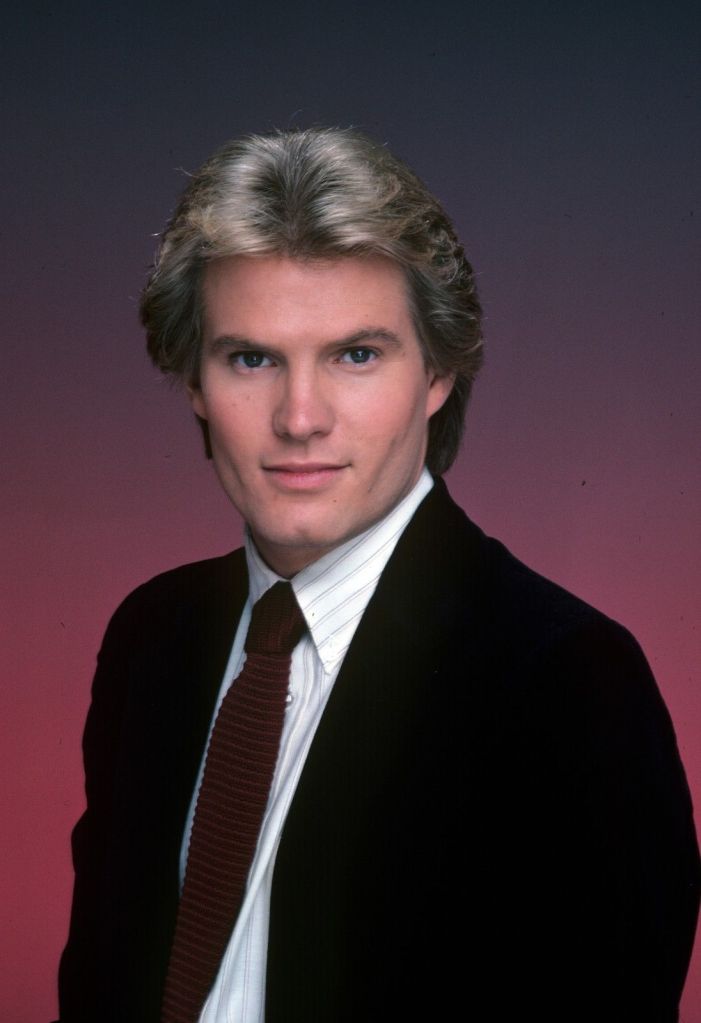
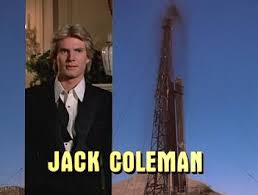
Season 2 was disappointing in terms of Steven as he spent season two trying to be straight, getting involved with and marrying Sammie Jo (Heather Locklear in the role that made her famous), but eventually telling his entire family that he’s gay, he’s tired of trying to be someone he’s not, and leaves Denver. He is reported killed in a oil rig explosion in the south China Sea in season three, which was their way of recasting–“plastic surgery so he doesn’t look the same”–and he was replaced by Jack Coleman (at the time best known for playing a serial killer on Days of Our Lives).

Coleman was fine, but he was different, and the character changed to match the actor. His entire storyline for the rest of the series involved him getting married, ruining that by getting involved with another man–before deciding what to do with him again for the sake of storyline; showing how hard it was to actually integrate someone with a same sex attraction into the cast of a soap. Every man he was involved with was a new character, and soaps–whose mainstay bottom line is thwarted romances, marriage and divorce–really didn’t know what to do with a non-straight character, other than throwing him into relationships with women (???) to have them end badly and so on.

When the reunion film was done in the 1990s, Al Corley returned as Steven (no explanation of why he looked the way he did before the surgery) and he’d made peace with his sexuality, again living in New York happily with another man and raising his son (oh yes, the gay character also impregnated one of his ‘women’)…while never once raising the possibility of bisexuality; I guess getting the 1980’s home audience vested in a gay character was risky enough without bringing in bisexuality–which tells you where we were as a country in the 1980’s…and we shouldn’t also overlook the fact that it was Dynasty that brought HIV/AIDS to the forefront of conversations in this country. Rock Hudson’s AIDS diagnosis became public shortly after he appeared on the show, and there was a lot of panic because he’d kissed the Linda Evans character–had he infected her? (We didn’t know as much then as we do now; now that fear is laughable but it was palpable back then because there was so much ignorance about it then, thanks to the Reagan Administration and the deeply embedded homophobia in post-war American culture.)

I started rewatching the original show once it was available for streaming, and that first season really is a slog; Blake was the primary villain in the first season (Alexis took his place, turning him into a more traditional soap hero–flawed but a good person at heart) and he just didn’t have the gravitas to relish being evil the way Joan Collins jumped in with both hands and feet), so while I was enjoying seeing the more honest and realistic to life way Steven and his dilemma was displayed in that first season–even the affair with Claudia made sense the way it was written–they really didn’t know what to do with him after the recast, and he descended from the fully developed realistic character Corley played to the two-dimensional soap hero he devolved into after the recast.

But…it was still pretty daring for the 1980s, and I did appreciate the attempt at representation. I know the reboot, which I didn’t watch, made Steven straight up gay; even gender swapping Sammie Jo by turning her into Sammy Joe. Progress is progress, and we cannot ever dismiss out of hand the brave attempts at using homosexuality and familial homophobia as a source for story; they were fighting the network censors, the right wing, and most of the country was homophobic, too.

They did the best they could and it was important at the time…even if it doesn’t hold up well under modern understanding.

Roll Away the Stone

Saturday morning and Sparky flatly refused to let me sleep in this morning, but in fairness, I got a little more than an hour of extra sleep. My back feels a bit stiff this morning, but I do feel rested, and the coffee will most likely clear the cobwebs. I have to run to the grocery store today, and that may be all I need to leave the house for today, which is perfectly fine with me. It looks beautiful outside, but I am sure it is the usual forecast for New Orleans: hot, humid, chance of rain. I haven’t looked at the hurricane center yet to see what’s going on with the tropical systems trying to form, but I’ll most likely do that once I’ve finished this.

Yesterday was a nice work-at-home day. I did pick up the mail (got my copy of James Polchin’s Shadow Men, a queer true crime case from the 1920s, which is all kinds of awesome). After I finished working for the day, Paul and I finished watching season 3 of Bridgerton, which we both greatly enjoyed, before moving on to The Acolyte and the new season of The Boys, which is its last. I did some writing–I started pulling the novella apart, in order to do an outline and get a better idea about how to expand it; I actually want to start writing today, if I could be so lucky, I also intend to spend some time reading today; I need to reread some things I have in progress, and would also like to get started on my next read, Horror Movie by Paul Tremblay, which I am really looking forward to; Tremblay is one of my favorite writers. I also want to get the house cleaned up some, as well as make a grocery run at some point in the afternoon. (We don’t need much, really, but really need what I have to get.)

I also worked on my body culture pride post, which actually has now turned into quite a lengthy personal essay; so much so that I may not ever post it here. The essay itself can go on my Substack; I’ve been putting the Pride posts there as well as here because, I don’t know, it just seemed like a better place for them–which seemed silly to post them in both places. Last night, the recognition that the essay was probably a Substack only post made me think about what I am doing with a Substack and a blog, and last night I realized that I should use the Substack for longer form personal essays and keep the blog as it has always been; a daily report on my life and the occasional discussion of a book, television show, or film I’ve greatly enjoyed; the reviews might go in both places, too. I think I can still make the body culture post, but the essay will have to be whittled down and revised; maybe I should do it from the perspective of life lessons learned from getting in shape and actually working as a personal trainer. (Again, seeing that turn into a longer form essay even as I talk about it here and think about it as I type.) Writing these is also an exercise in memory for me, which also is kind of helpful as I am researching the early 1970s in the Chicago suburbs.

I have to admit I greatly enjoyed season three of Bridgerton. Penelope has been one of my favorite characters since the show started, and I’ve always deeply empathized with her as she was ignored, made fun of it, and made to feel invisible. It made sense for her to be Lady Whistledown, and the choice given to her by the show–either Lady Whistledown or the love of her life–was very cleverly done. I wanted her and Colin to resolve everything and get their happily ever after, but I didn’t think it was fair she had to give up who she was in order to get it, you know? This season really emphasized how shitty life really was for these society women during that period, and I’ve always been fond of the actress who plays her mother (she was magnificent in Rome as Atia of the Julii), and this season gave her a chance to really shine as well, as she realized the daughter she always overlooked and never thought would amount to anything was actually the true jewel of her children–and who made the best match in the end. (I also predicted the end several episodes in, involving the Featherington money and title.) It was, all in all, very well done, and I think it may be my favorite of all the seasons, and precisely because Nicola Coughlin is such a compelling actress. It’s nothing serious, of course; Bridgerton is a light fluffy confection, meant to look beautiful and present this wonderful tapestry of what Regency England could have been like, and who doesn’t love a tricky romance with obstacles that must be overcome?

I’ve always wanted to write a romance, but in all honesty am not really sure if I can. I think I’ll put that on the writing agenda for 2025. Why not try? It would most definitely be a challenge to write, and I always prefer challenges.

And on that note, I am going to finish this, get another coffee, and get my day underway. Have a lovely Saturday, Constant Reader, and I’ll probably be back later on. I’m tricky like that. 🙂
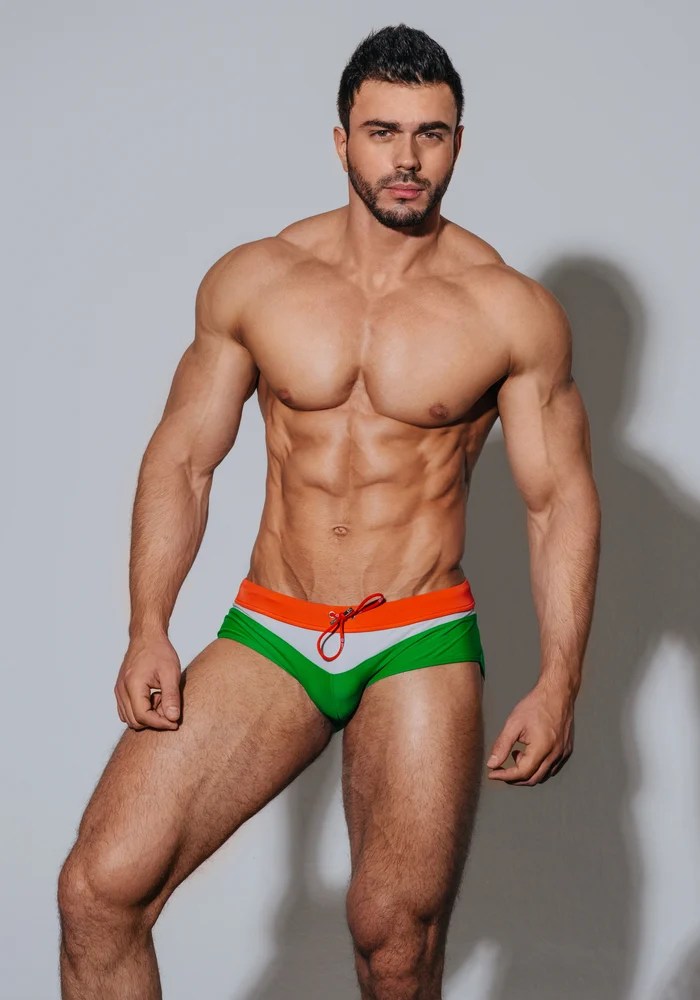
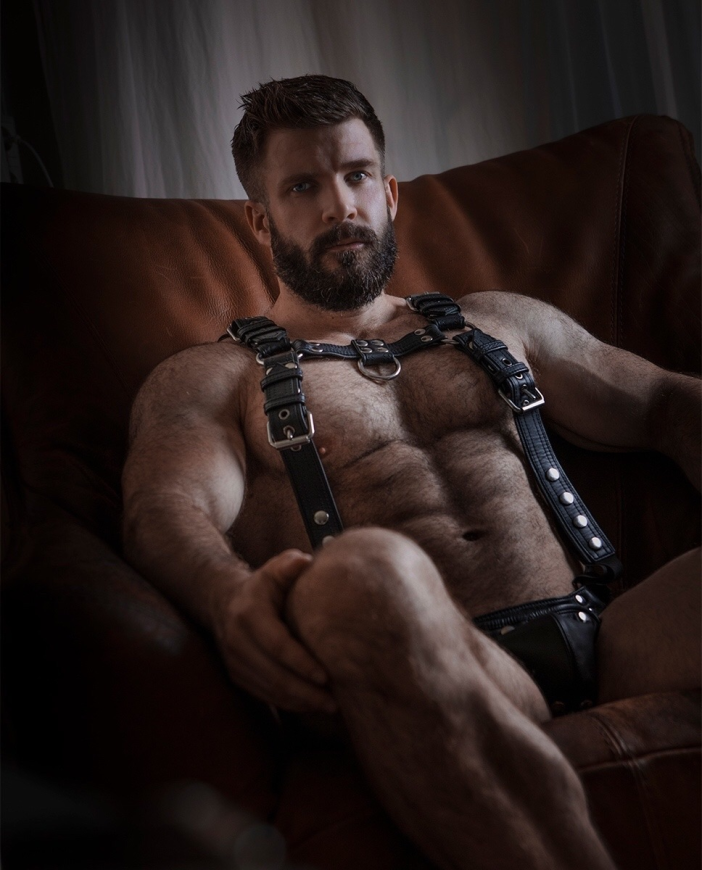
This is NOT why I am a football fan, but it certainly doesn’t hurt. 🙂