It’s All Over Now

Well, it’s Tuesday morning and all I have to say about that is good. Monday was a dreadful day, and the less said about it the better. I woke up feeling ill, and it was just all downhill from there. The only good thing I can say about yesterday was I got to spend the entire morning lying down, covered up in blankets, reading Wanda M. Morris’ Anywhere You Run, which is fantastic. I didn’t get to finish reading the book–hopefully that glorious day will come soon–and losing yet another day of work on the book was quite a savage blow. Tonight after work I have to do an on-line event for Murder by the Book with the always delightful Ellen Byron, which will leave me exhausted as those things always do, so tonight is pretty much out. Heavy heaving sigh. But at least college football is over, which frees up my entire day Saturday, which is nice. And I feel well this morning–I knew taking Claritin and resting all day (sort of) would stave off the coming sinus infection (but I’ll take another one today just to be on the safe side). We also started watching the Victoria’s Secret documentary–I think it’s called Victoria’s Secret: Angels and Demons–because the owner of the company was weirdly involved with Jeffrey Epstein? It’s interesting enough. I vaguely remembered the collapse of the brand–and who knew there were so many other stores, all belonging to the same person? Remember Structure?–but I didn’t remember that there was an Epstein connection.

Oh! I am also guesting at Mystery Lovers’ Kitchen, with my slow cooker meatball recipe. Today is also the official release day for A Streetcar Named Murder, so happy release day to me!

It still seems a bit weird to me to have this book out in the world at long last. It feels like I’ve been waiting for this release date for a very long time, and now it is here. Will people like it? Will people buy it? Will my regular readers like this completely different (not really, but you know what I mean) type of book from me? Naturally, I hope so; I’ve been really surprised and delighted by the unexpectedly and overwhelmingly positive response to the book thus far. I’m not used to it.

But just as it occurred to me the other day that my perceptions of New Orleans have changed–i.e. that all the little oddities and eccentricities that used to amuse me and give me things to write about now seem commonplace and normal to me now–I think my perception on my writing has also started changing a little bit–which is really lovely and nice and long overdue. I’ve talked about this before–the dichotomy of how I was raised to always be humble and never, ever brag about myself–and how its really the exact worst way to raise any kind of artist. Being an artist (or writer) is difficult enough with those constant self-doubts and “do I really know what I am doing here” and everyone’s favorite, Imposter Syndrome. If you don’t know what Imposter Syndrome is, consider yourself very lucky. For me, it manifests itself in “I’m really just faking it and don’t really have any insights because I literally don’t know what I am doing, but as long as I can keep fooling people I’ll keep going until they realize the Empress has no clothes.” My perception of my own writing and my own work is slowly starting to shift–yes, Constant Reader, after twenty-odd years and over forty books, etc etc etc, I am starting to feel some confidence in my actually work. Rereading A Streetcar Named Murder the other week–I had to do so because I’d forgotten a lot about the book in the meantime, so I could do some more Blatant Self-Promotional blog entries–and realized it wasn’t, in fact, terrible but was actually an enjoyable read. (This may not seem like much to you, Constant Reader, but for me this was huge.) I do think that this book, along with my last three (Royal Street Reveillon, Bury Me in Shadows, #shedeservedit) is some of the best work of my career thus far. And when I was rereading the old Scottys to prepare me for writing the new one, I was impressed with them rather than wincing. I think maybe I’ve managed to flip the “editorial” switch off when I read my books again? So rather than rereading them and catching errors or thinking oh I could have said this or that better, I read them as they were and for what they are. It was definitely some major progress, methinks, towards a better mental attitude for me, not only for my work but for my life in general.

It only took me over sixty-one years to start getting there.

A lot of it, I think, comes from my determination to not take myself seriously, which probably goes back to my childhood. I know the self-deprecatory shit comes from a mentality of if I make fun of myself I can beat everyone else to it which was a self-defense mechanism I developed to shield myself from being mocked, made fun of, and insulted by other kids. I can’t claim it as a gay experience because I would imagine every queer kid’s experience is different and there are probably some who never were bullied, were never made fun of, were never the butt of everyone else’s jokes as an easy target because I didn’t fit the societal image of what a little boy was supposed to be. I think I was seven or eight the first time someone called me a fairy? (At the time, I didn’t realize they meant fairy as in Tinkerbell and not ferry as in a boat that conveys cars over water; I couldn’t understand the ferry reference until a few years later when it was accompanied by such lovely terms as fag, faggot, femme, homo, cocksucker and so forth; when I was conditioned to be ashamed of myself and of who I was, through no fault of my own….and well, if I make fun of myself I can head them off before they go down that road.) This of course presupposed that people were going to make fun of me or call me names–and I can now see how toxic and self-destructive that actually can be. You should never default to the idea that other people will make fun of you.

You can see how that mentality can be damaging to a writer.

I carried a lot of baggage into this career that I should have discarded a long time ago.

I am, if nothing else, always a work in progress.

And on that note, I am heading into the spice mines. Have a lovely day, Constant Reader, and I will check in with you again tomorrow.

You Better Move On

I woke up not feeling so hot this morning. There was a touch of fever, a lot of sinus, and just over ickiness. I did take a COVID test that came back negative–praise the Lord–but I am achy and not feeling myself, so I bit the bullet and called in sick. Yay. And then to add insult to injury, my Internet went out. Grrrreeeeeeaaaaattttt. I turned my phone into a Hotspot, and Cox is quite generously sending someone out today between 5 and 7 because unplugging it and resetting the modem simply isn’t doing the trick the way it is supposed to. In fairness, I think we’ve had this modem since we moved back into the Lost Apartment just before Christmas of 2006, so I suppose it has lasted a really long time. But it is still fucking irritating to risk a data overage on my phone simply because Cox has a shitty customer service mentality. I’d switch to another provider but…I’ve heard terrible things about all of them, so maybe this is yet another case of the devil you know. I expect Cox to suck, so it’s frustrating but not a surprise.

My Apple TV router is also getting up there in years, too. Probably will need to replace it sooner than I’d prefer as well. Heavy heaving sigh.

I feel a little better now than I did this morning–I took a Claritin and it seems to have helped some–but I still have stomach upset and everything feels a little more tired than it should. I also have a mild headache–it was a major one before I took the Claritin, so it’s sinus-related. Our weather has been weird the last few days–very humid but not super-hot, even coldish–so we’ve had a lot of foggy mornings and nights which are never good with my sinuses. So I am assuming I’ve developed yet another sinus infection (hurray!) which hopefully the Claritin will spare me the worst of. But at least I didn’t feel good this morning, so I was at home for the Internet shenanigans. Imagine if I had gone to the office, come home to this after their hours, and had to deal with it? Who knows when they would deign to come fix is? I probably would have had to call out for work on another day, so at least this is all going to be handled today.

Sigh.

I’ve spent part of the morning under my blanket in my easy chair reading Wanda M. Morris’ Anywhere You Run and Constant Reader, it is marvelous. It’s even better, I think, than her debut All Her Little Secrets and if I’m not mistaken, I believe the two books may actually be connected, which is super cool. I had the great pleasure of meeting Wanda this year, and she’s just as kind and warm and lovely in person as she is a talented writer, which is amazing.

I was feeling off yesterday–which I guess was the start of this whatever the fuck it is–and so I wrote for a while yesterday morning before collapsing into my easy chair around three yesterday afternoon. We watched Kiss Kiss Bang Bang, which has been recommended to me by several people whose opinions I respect, but I didn’t enjoy it as much as I would have hoped, predicated on the enthusiasm with which it was recommended to me. I do love Robert Downey Jr. (pre-Iron Man; I never cared for his Tony Stark but hey, congrats, it made you richer than you could have ever imagined) and I thought the story was clever. I don’t really care for the breaking of the fourth wall so much, but I also loved that it was sort of based on a Brett Holiday novel (i’ve never read Holiday; I should rectify that sometime but I am not really a huge fan of the tough-guy books that proliferated in the pulpy post-war era. I absolutely hated I the Jury, and there’s not enough money in the world to persuade me to read another Mickey Spillane novel, and I suspect his Mike Shayne books fall into that category–the hard-nose tough guy, sexy two-dimensional “broads” who are devious, and so on) and it did have a lot of clever things that I appreciated. We then moved on to watch another episode of Welcome to Chippendales, which is interesting but could be better, and last night we watched The Texas Killing Fields docuseries about the I-45 murders between Houston and Galveston, which I vaguely remember from when my parents lived in Houston. (I also thought it was interesting that the first batch of killings, mostly young girls, teenaged or younger, was going on at the same time the Candyman was killing teenaged boys in another part of Houston. Houston: serial killer capital of Texas, clearly.) I was dozing off during the docuseries, so I missed a couple of important pieces to the story, but it wasn’t hard to stay up on the story and get caught up when I’d wake. We also got caught up on Andor and some of the other shows we’re watching.

Okay, I am feeling a bit woozy again so I am going to go back to my chair and Wanda’s book. Hope you have a better Monday than me, Constant Reader.

Come On

Yesterday was World AIDS Day, something I didn’t mention on yesterday’s blog because well, it was early in the morning and I literally forgot about it until I got to work yesterday morning (I probably should have prepared a post ahead of time to memorialize and commemorate those we lost; next year–I will put it on my calendar so I won’t forget).

To be fair, I was also all aglow from that terrific review Oline Cogdill gave A Streetcar Named Murder (you can still preorder! Release date is 12/6!). And this morning, I am the guest blogger over at The Wickeds, talking about orange cones and a particularly vexing New Orleans problem, the perennial and pesky potholes.

I slept really well last night, not alighting from the arms of Morpheus until seven thirty this morning. I felt absolutely like a lag-a-bed, a lazy swine, for sleeping so late when my eyes opened to see the red digital numbers glowing in the morning light. I’ve been getting up at five or five thirty all week, so was kind of wondering whether or not I’d sleep late this morning. (I did wake up at three, but went back to sleep almost immediately.) Today I am working from home. I do have some errands I must do at some point, and there’s data to enter and so forth, and oddly enough I feel rested this morning. Usually on Fridays I am a bit worn down from the week, low energy and so forth (which makes the data entry perfect as a job duty for the day), but I don’t feel that way this morning. I don’t feel like I can conquer the world, but I do feel like I can get some things accomplished today. The sink is filled with dirty dishes and of course, there’s always laundry (it never ceases to amaze me how much clothing Paul and I can dirty up all week). I was also very tired when I got home from work last night. Paul didn’t come home until after I groggily climbed the stairs around ten to go to bed, so I spent much of the evening with Scooter purring in my lap while I watched some documentaries on Youtube. James Somerton has a great new one about gay body culture and its origins in Nazi Germany (!), and how the ubermensch Nazi culture of the perfect body was brought home by GI’s after the war. It was fascinating–and it’s been something that’s been on my mind a lot lately (well, over the last few years since the pandemic started) as I’ve looked into gay history and have thought about writing historical gay noirs set throughout the twentieth century (Chlorine, Peplum, Obscenity, Indecency). Watching the Somerton documentary reminded me of Michelangelo Signorile’s Life Outside, which spent some time examining gay body culture, and 2001’s The Adonis Complex, which was a look at the development of male body culture that couldn’t be taken seriously as they erased the gay male experience completely (by not mentioning or acknowledging its existence) which completely invalidated almost everything they wrote about in the book; you cannot talk about male physical perfectionism and only talk about straight men. As Somerton points out in his video–being in good physical condition as a male after your teens used to be a tell about not being straight, as I also mentioned recently on here (when I was talking about using pictures other than of shirtless men).

I don’t always agree with Somerton, but I always enjoy his videos. They make me think, even when I agree with him, and I do enjoy hearing different perspectives.

Progress on the book is being made. It’s been slow going this week, but I am hopeful to make all kinds of progress this weekend. I do have some errands that must be done this weekend, not the least of which is making groceries, and of course I’ll have to watch the SEC Championship game since LSU is playing Georgia, but the loss last week took most of the urgency out of this game, so I can just watch and not mind how it turns out. As I said the other day, finishing the regular season at 8-3 with a trip to the conference championship was something I couldn’t have imagined in August or September–so it’s wonderful to see LSU relevant again after the tragedies that were the last two seasons. Who knows what the future may hold for the Tigers? But it’s nice to be competitive again with the big boys. Like I said, last summer I would have never believed LSU would beat Auburn, Florida, and Alabama this season, yet here we are. GEAUX TIGERS!

I need to get my act together today. It’s been nice (seriously) getting up this week when I wake up; I’ve loved having that extra hour (or half hour, depending on which day it was) to get things done before heading for work. And while I was tired in the evenings when I got home, realistically I was able to get some things done in the evening as well. I need to check my to-do list and clean some, as already mentioned; I also have errands to do and I want to get some work on the book done as well as some more Blatant Self-Promotion posts. The book comes out on Tuesday officially, which is terribly exciting.

And on that note, I am heading into the spice mines. Have a lovely Friday, Constant Reader!

Silver Girl

And now it’s Thursday, my last in the office day of this week and I surprisingly have made it through without much complaint. I am awake again this morning, not feeling particularly tired (I don’t think I slept that well last night, to be honest) but I feel better than I usually do on Thursday mornings, so I will take it.

Yesterday was a marvelous one when it comes to work. I managed to get some more work done on Mississippi River Mischief, and not looking at it for almost a week was the smart thing to do. I removed myself from the agony of forcing myself to write it and thinking it was completely crap, and was able to see it for what it is, while also realizing what I was trying to do with the story. I regained my confidence by stepping away from it and asking for an extension, and now I feel like not only will I get it done but it will be what I actually want it to be.

And then this morning, what do I see on my social media but this marvelous review from Oline Cogdill. Talk about a confidence boost!

Ironically, as I was writing another Blatantly Self-Promotional post last night after finishing working on my new book and I thought, you know, you should do what you never do and reread the book–which could help you come up with other blatant self-promotional post ideas. So, since Paul had a meeting last night, I curled up in my chair and opened one of my author copies of A Streetcar Named Murder, and I’m really glad I did. It may surprise you, Constant Reader, to know that one of the hardest parts of being a writer for me is promoting myself–there are many reasons for this, but the one I want to talk about right now is one in particular; I may circle back around to examining my discomfort with self-promotion later or save it for another post because it may take a lot on unpacking.

But for now, one of the reasons I find promoting myself to be difficult is usually I’ve almost completely forgotten almost everything about the book by the time it’s released. As I have said ad nauseum, I rarely go back and read something I’ve written once it is in print. And usually by the time the book has come out, I have written at least one more or am in the weeds writing another–for example, I am very deep inside of a new Scotty book (which is another New Orleans book, of course) which makes it even harder for me to remember details about the book being released. (I’ve also had to dig into some of the old Scottys for this one I am writing as well–and have been very pleasantly surprised rather than embarrassed and/or disappointed, which is always my fear about reading old work)

And…I liked it. I actually reread my book and liked it. I never cringed, I didn’t slip into editorial/critical mode (“why didn’t you word that better? What is up with this paragraph?” etc etc etc.), and I found myself actually enjoying the ride. Rather than being critical and self-deprecating and all of that shit I usually fall into when rereading my own work, I had a breakthrough of sorts. It’s only taken over forty books and over fifty short stories–even typing the first part of the sentence out makes me feel ridiculous, but it’s how my brain works–but I may have finally broken down the wall and achieved confidence in myself as a writer. It’s been a whirl, really. Last night after I finished reading I thought, “you know, you were really proud of Royal Street Reveillon, and over the last eighteen months you released Bury Me in Shadows and #shedeservedit and you were proud of them, too. And now you’re proud of this one already! Well done, you!”

ANd yes, pride goeth before a fall and I always find myself waiting for the next shoe to drop, but for now, I am going to relish and enjoy this feeling. I may wake up tomorrow and hate everything I’ve ever written again, who knows? But it feels good to take pride in my work, to finally be able to feel proud of what I’ve accomplished over the last twenty years instead of just shrugging it off.

I’ve written over forty books.

I absolutely should be proud of myself.

And on that high note, I am heading into the spice mines. Have a lovely Thursday, Constant Reader, and I will talk to you again tomorrow morning before my work-at-home duties.

Come

I woke up this morning to a marvelous thunderstorm, complete with pyrotechnics and thunder so close and loud that the house shakes a little bit. These are the kinds of mornings where you want to turn off the alarm, curl back up and go back to sleep again, but alas and alack, I had to get up for work this morning. I think I slept pretty decently last night; I don’t feel tired this morning and I did wake up at five as has been my wont lately. I was a bit tired when I got home from work yesterday; Paul didn’t get home until later and so I worked on the book for a little while until my mind gave out. I tried to read but was tired, so I just watched some history documentaries about the French royal family until I decided to go to bed and be done with it all. It was a pretty decent day yesterday overall; I managed to get through the day and get all caught up on my day job duties without any issues. Which was nice, of course.

It’s hard to wrap my mind around the concept that today is the last day of November already and December is practically here. Christmas already? I’m not ready for it in the least. We don’t decorate anymore since Scooter came to live with us–he sees the tree and decorations as Disneyworld and Epcot–so it never really feels like Christmas completely to me. Maybe this year I should watch A Charlie Brown Christmas? That always used to put me in the Christmas feels. I need to do my Christmas cards this weekend, and I need to ship a box out, as well as try to figure out what to get my parents for the holiday. Paul and I have already discussed and decided our Christmas present will be a major appliance purchase, if our landlady signs off on it; we’ve needed a new refrigerator for quite some time now and I really want to get one with the freezer on the bottom; it makes more sense to have to bend down for the freezer–something you don’t do very often–rather than to get things from the bottom shelves of the refrigerator. Getting old is kind of a bitch. you know? My parents have two refrigerators with the freezer on the bottom, and it really is so much easier on my back and knees….

I did ask for and receive a month’s extension on the book, which is a huge relief and took away a lot of my stress. I still have a lot to do, but at least the pressure valve was turned on and the internal pressure in my brain sort of released a bit. Huzzah? Huzzah. I still want to finish reading Wanda Morris’ book–it’s so good and so well done that whenever I am sort of tired I put the book back down because I want to give it my full and not-tired attention so I can appreciate the writing the way it deserves (check her books out, if you haven’t already. Wanda is fantastic.); maybe this weekend, after errands and editing work on the book, I can curl up in my easy chair and while away a few hours with Wanda.

I was a bit amused to see some reactions to my questioning yesterday about whether I should continue to use pictures of men with amazing bodies or just pictures in general–no one said to stop using the hot men pictures, so I am going to continue to use them. I may start mixing in some other type pictures, of New Orleans or Louisiana; there are some fantastic local photographers who do amazing work that I would like to promote here, with buy links to websites and so forth, to help support local artists, but at the same time I am not certain if that would be a copyright violation or not? I think it’s okay as long as credit is given and I am not using the images to sell something? Of course, I have a gazillion pictures I’ve taken that I own the rights to, so maybe I could just use those. I don’t know. I’m not entirely certain why I am even worrying about the hot guy pictures now when it never bothered me or even occurred to me that I should change my ways before. I also don’t want to keep doing the same thing simply because it’s what I have always done, either; that kind of thinking has always annoyed me. Change isn’t always a bad thing and sometimes its necessary for growth. As someone who would like to keep growing in every way (except for weight) rather than atrophying in my sixties, I like to keep my options open at any rate. But at least for now, I will commit to using the hot-guy images through the end of the year; I do need to find my archive of Christmas themed hot men, though. Tis the season and all that. I also need to gather a list of Christmas song titles to use for the holiday posts. Heavy sigh, my work here in never done.

And on that note, I am heading into the spice mines. Have a lovely Wednesday, Constant Reader, and I will check in with you again tomorrow morning.

Bleed to Love Her

Monday morning and all is well in the Lost Apartment as I swill coffee and brace myself for the day (and week) ahead.

I returned from Kentucky on Friday. Both the voyage up and back–despite their great length and the brittle stiffness of my aging body–didn’t seem quite so bad or to take as long as they usually do. I did make great time in both directions, while listening to two audiobooks (Ruth Ware’s The Woman in Cabin 10 on the way up, Carol Goodman’s The Disinvited Guest on the way back; both are superb and highly recommended) but of course once I got home on Friday night I was quite exhausted. I spent Saturday trying to get caught up on the apartment itself while football games played in the background (more on that later). I did a lot of laundry, a lot of dishes, ran errands and made groceries, before finally settling in to watch the LSU/Texas A&M game, which was disappointing (more on that later). Yesterday I got up early (I’ve been getting up early a lot lately) and chose to stay off-line for the most part. I did clean out the junk out of my inbox, wrote up the books I read while on my trip for blog entries, and wrote another blatant self-promotion post for A Streetcar Named Murder while also trying to get a handle on everything I need to get done for this coming week. I felt very well-rested yesterday at long last. I didn’t have as much trouble sleeping while I was away as I usually do, which was cool–I found another sleep-aid that seems to be working very nicely–but Friday night I didn’t sleep as well as I thought I would, given how worn out I was from the drive. Saturday night’s sleep, however, was quite marvelous.

Ah, the Insomnia Chronicles. How I long for the day when my sleep isn’t of concern (or at least as not as much interest) to me.

The weather was also kind of terrible when I got back–raining and humid, but cool; the kind where you aren’t sure if you need to turn on the heat or the air, and yesterday there were tornadoes and high winds in the river and bayou parishes outside of New Orleans. Yesterday however was beautiful; sunny with blue skies with the low in the mid-sixties and the high in the mid-seventies. Not bad for Christmas season, is it? It’s also hard to wrap my mind around the idea that it’s Christmas already, to be honest. I got a great Kindle deal on a collection of Christmas crime short stories, which I am really looking forward to digging into–perhaps a story a day for the season? The Christmas Murder Mystery project? (You know I love me some projects to work on.) It’s also weird that it’s the holiday season again, which means Carnival is also right around the block. YIKES. This also means I need to start planning around the parade schedule and when I need to leave work and so forth. Ugh, much as I love Carnival, it’s always stressful and exhausting, if fun and delightful.

It was an interesting weekend of college football. The Mississippi-Mississippi State game on Thanksgiving was a lot of fun, right up to its crazy end; South Carolina somehow managed to beat Clemson; and of course, Michigan blew out Ohio State in Columbus. This kind of set the stage for the LSU game on Saturday night–I had a very queasy feeling about the game, partly because it seemed as though everyone was looking ahead to next week’s SEC title game with Georgia and the possibility of a play-off berth for the Tigers; but Texas A&M always plays LSU hard, no matter how bad their record is, and for some reason they’ve decided LSU is their big rivalry in the conference. The game looked awful; LSU was playing very sloppy on both sides of the ball and my heart and spirit continued to flag with each missed tackle and each missed opportunity. It was disappointing, to be sure, but on the other hand, I am thrilled to death with how the season went. No one gave LSU a shot at having a winning record, let alone beating Alabama and winning the West division, so I am choosing to be grateful for a wonderful winning season after two seasons of mediocrity and looking forward to an even better, more glittering future for the Tigers. I have faith in Coach Kelly, I have faith in what he is building there, and who knows? In a year or two we may win it all again. GEAUX TIGERS!

In other blatant self-promotional news, I also appeared recently on Alexia Gordon’s The Cozy Corner, which was a lot of fun, and I also appeared on Dru’s Book Musing, and how lovely that she gave me such a wonderful view. Thanks to both Dru and Alexia, both being lovely people who have gone out of their way to be kind to me and A Streetcar Named Murder, for which I will always be eternally grateful. It’s hard to believe the book is going to be published soon! And don’t worry, there will be plenty more blatant self-promotion to come.

PLENTY.

I also spent some good time with the book yesterday and it’s not nearly as bad as I thought it might be, as I feared it would be. Yes, the first half needs some work, but not nearly as much as I had thought and I also went through and made a character list as well as outlined the first half. Tomorrow I am going to work on the edits and finishing the outline for the rest of the book; and I am also going to write in and ask for more time. I never finish on time, do I? But the book is good, there’s lots of material for the second half, and I am kind of excited about getting this one completely under control at long last. Huzzah!

We also binged 1899 yesterday; it’s from the same people who did the superlative German series Dark, and had the added bonus of having one of our favorite actors from Elité, Miguel Bernardeau, in the cast as well. It’s delightfully creepy and strange, and you never have a very good sense of what is going on (like Dark), so of course we were glued to the set the entire time. It’s quite good, actually; I’m not sure how I feel yet about the final episode other than curiosity about how that is going to lead into a second season–because the finale raised more questions than it answered (like a good finale), but I’ll be happy to continue watching.

I feel rested this morning, though, which is lovely. I am sure by the middle of the week I’ll be tired and short of temper again, but for now, for this morning, I am going to just enjoy myself feeling rested and relaxed in the meantime. I have, as always, an insane amount of work to get done this week, but right now I am going to enjoy the peace and quiet of this morning before I have to start getting ready to leave for work; I even got up earlier than I usually do on Mondays.

And on that note, I am heading headfirst into the spice mines. Have a lovely Monday morning, Constant Reader, and I’ll chat at you again tomorrow morning.

Come Sail Away

Nothing will get my attention more quickly than a Daphne du Maurier comparison.

I’d been meaning to get around to reading Ruth Ware since her The Woman in Cabin 10 broke her out in the crime writing community. I’d heard lots of good things about her work from reviewers and people on social media, and as her career continued to grow and develop it seemed like all of her books–while similar, in some ways, to each other–were rather dramatically different from each other. I began acquiring copies of her books, unable to decide where to start while each new one joined the TBR pile and began collecting dust. When I saw someone had compared her The Death of Mrs. Westaway to du Maurier and Rebecca, that got my attention and I decided to start there. I listened to it on one of my drives to Kentucky and loved, loved, LOVED it.

So, while planning for my recent trip up, I decided to listen to The Woman in Cabin 10, and have been admonishing myself for the lengthy delay in getting to it ever since finishing. It is quite excellent, and I am finding myself becoming quite a fan of Ruth Ware.

The first inkling that something was wrong was waking in darkness to find the cat pawing at my face. I must have forgotten to shut the kitchen door last night. Punishment for coming home drunk.

“Go away,” I groaned. Delilah mewed and butted me with her head. I tried to bury my face in the pillow but she continued rubbing herself against my ear, and eventually I rolled over and heartlessly pushed her off the bed.

She thumped to the floor with an indignant little meep and I pulled the duvet over my head, but even through the covers I could hear her scratching at the bottom of the door, rattling it in its frame.

The door was closed.

I sat up, my heart suddenly thumping, and Delilah leaped onto my bed with a glad little chirrup, but I snatched her to my chest, stilling her movements, listening.

I might well have forgotten to shut the kitchen door, or I could even have knocked it to without closing it properly. But my bedroom door opened outward–a quirk of the weird layout of my flat. There was no way Delilah could have shut herself inside. Someone must have closed it.

I sat, frozen, holding Delilah’s warm, panting body against my chest and trying to listen.

How’s that for a beginning?

I defy anyone to stop reading after those opening paragraphs, seriously.

Our main character turns out to be Laura Blacklock–nicknamed Lo–who is an aspiring travel journalist working as an assistant at Velocity magazine. Usually her boss is the one who gets to go on trips to write about the experience, but pregnancy has forced her to turn over a rather plum assignment to Lo; taking a cruise on a luxury ship through Scandinavia, including a look at the Northern Lights and exploratory visits to fjords. But as she is preparing for the trip, her flat is broken into while she is in it. This understandably causes her some trauma, and she is already taking medication for anxiety. Shaken up and still having nightmares, she boards the Aurora Borealis in a determined attempt to fulfill her job responsibilities well enough to get a promotion or better assignments. Easier said than done, really; on the first night she hears the toilet in the next cabin–Cabin 10–at the same time realizing she doesn’t have any mascara. She goes to Cabin 10, borrows mascara from a beautiful young woman, and returns to her cabin. Having a few drinks at dinner to calm her nerves even more, she keeps an eye out for the young woman, who never shows. In the middle of the night a sound in the next cabin wakes her, and she goes out onto her veranda to glance around the privacy screen. Before she can get out there she hears a cry, a clank, and a splash; once she is out there she thinks she sees a human hand disappearing into the water, and smear of blood on the glass screen next door. She gets the ship’s security, but Cabin 10 is empty. The man who was staying in there cancelled at the last minute. There is no trace of the girl she met, no trace of anything exceptional having happened in Cabin 10–and the only proof of her story is the mascara tube, which she still has.

No one believes her–and her recent break-in and the anxiety medications, along with the drinking she’s done, make it relatively easy for her claims to be dismissed. Certain she’s a peripheral witness to a murder, Lo starts poking around–eventually finding herself in danger.

I really enjoyed this book. Ware makes you care about Lo, and you root for her to get to the bottom of what’s going on aboard the Aurora. Ware is, indeed, a modern day writer of Gothics in the mid-to-late twentieth century traditions of duMaurier, Victoria Holt and Phyllis A. Whitney, with a generous dash of Mary Stewart as well. Is she being gaslighted, and if so, by whom and why? Who was the woman? What was she doing on board? Why was she murdered? The reader knows Lo is telling the truth, which is a brilliant way of getting reader buy-in for both the character and the story, and the gaslighting is done so well that even the reader sometimes has to question Lo’s sanity; was it alcohol and drug-related PTSD? But as the story progresses and Lo learns more and more about her fellow passengers–this is a press junket, so everyone on board is a professional travel journalist of some sort–she starts putting together the pieces and fragments of information she gathers that gradually reveal the picture of a very clever murderer who won’t stop at anything to get away with their crime, even if it means killing Lo.

Highly recommended–especially if you, like me, love the old books with the woman in a nightgown running away from a scary looking house with a light on in one window on the cover. Cannot wait to read some more of Ruth Ware.

Sidebar: the story itself is very Hitchcockian in style, and of course the gaslighting made me think of the great film Gaslight which defined the word into the vernacular…and made me also think, sadly, of what a greater masterpiece Gaslight might have been had Hitchcock also directed it.

For All We Know

The world shut down in March of 2020, in the face of a deadly new virus that was spreading around the world, and spreading quickly. It was a major paradigm shift; everything changed and the world would never be the same as it was before. As everyone locked down and adapted (or decided it was all a hoax and chafed against the intrusion), the question began being asked of writers: how will you handle the pandemic in your work, or will you address it at all? A lot of authors said that they wouldn’t address it, because they couldn’t imagine anyone wanting to read about it, or revisit it again after it was over. I came down firmly on the side of “we have to address it”; pointing out that Hurricane Katrina was a paradigm shift for New Orleans and Louisiana authors, and we all had faced the same issue and question. Some writers chose not to deal with it at all, some stopped writing entirely, and others–like me–addressed it. I found it incredibly cathartic to write about the disaster by viewing it through someone else’s eyes, and of course, much of what Chanse saw and dealt with was taken directly from my own experience. Writing the book in some ways helped me to heal from the emotional trauma and deep depression I was experiencing, and I don’t think I would have possibly gotten over it had I not written it out of my system. I will undoubtedly deal with the pandemic in a Scotty book at some point–I already have the title for it picked out and a folder created to keep my notes and ideas in–but I am not quite there as yet.

Leave it to Carol Goodman to not only do it, but do it incredibly well.

“We’re here.”

Reed’s voice wakes me from the fitful sleep I’d fallen into somewhere north of Portland, the slap of wipers and the sluice of tires accomplishing what bourbon and sleeping pills had failed to do for the past two weeks. I open my eyes to a wall of sodden gray the color of wet cement. I can feel it pressing down my throat–

I cough.

Reed swivels his head toward me, blue eyes feverish in the gloom above his white surgical mask.

“I’m fine.” I reach for the water bottle and swig lukewarm water that tastes like copper. “The others–“

“Behind us. Crosby’s driving like an old woman, trying to protect his precious Volvo’s paint job. Honestly, for a supposed socialist he likes the trappings of the bourgeoisie.” He grins, his bones sharpening under sallow skin. With all the stress of the recent news and preparations to come to the island, neither of us has been eating much for the past few weeks.

“They could have gotten lost.”

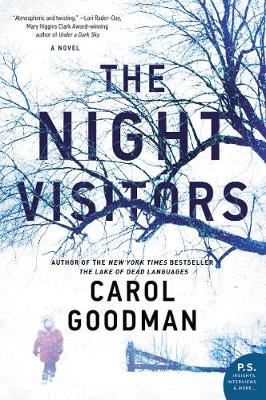
I’ve been a huge fan of Carol Goodman’s since my first dip into her canon, The Sea of Lost Girls. I have since been dipping back into at times as a reward to myself; she’s easily moved into my top ten list of current writers and won’t be dislodged anytime soon. She’s won numerous awards–deservedly–and is, to me at least, the modern incarnation of the great Mary Stewart. Goodman’s novels are decidedly Gothic and extremely smart and literate, with strong characters that are sharply defined and well rounded that the reader can easily identify with as well as like or dislike.

The premise of The Disinvited Guest is that another pandemic has descended upon the world after the 2020 COVID-19 one. Wealthy Reed Harper has decided to quarantine on an island his family owns–Fever Island, off the coast of Maine and near the mouth of the St. Lawrence River–since his wife Lucy has residual health problems since the first pandemic. Invited along are his lesbian sister Liz, a painter; Nico, Liz’ partner, a photographer; Ada, an old college friend of both Reed and Lucy who works now as an ER nurse; and her husband, also a medical professional in hospital administration, Crosby–who’s a bit of a dick. The remaining character is Mac, whose mother was a housekeeper for the Harper family working on the island. Mac knew Reed and Liz as children, and now he lives on the island as a caretaker. Reed, who also suffers from OCD, has carefully planned out every last aspect of this quarantine adventure–and while the quarantine and safety is the primary issue at stake here, any reader of crime or suspense knows that having seven people living together on a remote, isolated island is the perfect set-up for personality clashes and battles and intrigues and, of course, for murder. How many horror films or murder mysteries are set in such locales? (Goodman of course is wise enough to make an Agatha Christie/And Then There Were None reference in the text; the geographic elements of the island–the Dead Pool, the bog, Dead Man’s Cove, etc.–also sound like something out of the Hardy Boys, and she acknowledges that several times as well.)

There’s also some excellent backstory. Fever Island is named this because during the Irish immigration period of the late 1840’s–the potato famine and typhus epidemic–the ships with ill passengers were sent to Fever Island to quarantine before being admitted into Canada. A makeshift hospital is set up on the island, nuns come out to operate it along with several doctors–including a Harper ancestor–and so there is also a makeshift cemetery on the island. There’s also another legend, going back even further than the quarantine days; the earliest settlers believed a woman was a witch and essentially buried her alive on the island. The story claims she placed a curse on the island and summoned the devil. This is enough of a horrible backstory to make easily the possibility of supernatural forces at work on the island completely believable, which only adds to the suspense. There’s also the backstory of Reed and Liz’s own experiences spending their summers on the island with their horrible father and alcoholic mother; Reed’s dead former girlfriend, who died on the island during the first pandemic, along with his parents; and of course the diary of Dr. Nathaniel Reed Harper, who details life on the quarantine island and the growing suspicion amongst the superstitious fever victims and a group of sailors stranded their by a shipwreck that the witch’s curse is haunting them and that maybe even one of their party has been possessed by the witch and has summoned the devil.

Ada and Lucy were best friends and roommates in college, with Reed as the third side of their triangle. Lucy has also written one well-received novel, but hasn’t written anything since…and her discovery of the diary begins to inspire her to write about the island. Goodman is quite excellent at weaving the multiple storylines and multiple time-lines–Lucy is flashing back to the original pandemic, which is what brought her and Reed together as a couple; the incidents from the 1840’s as revealed in Dr. Harper’s journal; and of course, what happened on the island during the original pandemic.

Strange things start happening once they are all safely ensconced on Fever Island, and of course there are the inevitable personality clashes, which amp up the tension and then, of course, the deaths begin. At first Lucy can’t help but wonder if the island is indeed cursed–but slowly begins to realize that there is a very clever murderer on the island pursuing a definite agenda, but who?

And I love how Goodman chose to deal with the COVID-19 pandemic. Rather than setting the book during that shutdown, she instead chose to write about a future quarantine/shutdown, with the COVID-19 one in the distant past (ten years or so) but having a lot of impact on what is happening in the present.

I loved every minute and every word of The Disinvited Guest, and I cannot recommend it highly enough.

My Little Town

It is quite impossible to have heard of every writer and every book, even in a subgenre; there are simply too many books published in the past, with new ones coming out every day and new ones getting signed for future release every day. When it comes to my own reading, I like to draw from a wide and deep pool of styles, genres, and authors. Most of my reading is generally confined to the crime genre–and I do confess that I need to broaden that pool even further. I need to read more literary fiction, science fiction, horror, romance, and fantasy; more true crime and biography and criticism; and even within my own crime genre I tend to not read as much of some sub-genres as others.

I’ve always liked cozies, and have never understood why they get so much grief and are so readily dismissed by those who neither write nor read them. I don’t read enough of them, to be honest, but again, there are so many terrific cozy writers and there’s only so much time. But recently in a review of my A Streetcar Named Murder, the reviewer mentioned that it was perfect “for fans of Katherine Hall Page.” This intrigued me, because I didn’t know her nor was I familiar with her work. I quickly checked in with some cozy writer friends, who all assured me it was a great compliment, so I decided to check out her Faith Fairchild series.

Faith Fairchild, recently of New York City, paused to catch her breath. Benjamin, her five-month-old son, was sound asleep, securely strapped to her chest in his Snugli. Her aching shoulder blades and the fact she has been focusing on the own path beneath her feet instead of the autumnal splendor to either side reminded Faith that Benjamin was definitely getting a bit too chunky for this mode of transportation. She straightened up and looked around.

It was New England with a vengeance: riotous orange and scarlet leaves beneath enormous, puffy white clouds suspended in a Kodacolor blue sky. A calendar maker’s dream. And of course brisk, clear air as crisp as a bite of a McIntosh apple just off the tree.

Faith hated McIntosh apples.

She walked up the Belfry Hill path a bit farther to a small clearning, which gave her an unobstructed view of the Aleford village green far below. She sat down and sighed heavily.

Her life was becoming terribly quaint, Faith thought. Time was when “village” meant “the Village” and “town” was up or down. And when did she start using phrases like “time was”? She let another sigh escape into the pollution-free landscape and longed for a whiff of that heady combination of roasted chestnuts and exhaust fumes that meant autumn to her.

It didn’t take me very long in reading the book to realize just what an incredible compliment that comparison actually was.

I pointed out in one of my entries about cozies–probably a blatantly self-promotional entry, if I recall correctly–that often-times there’s a “fish out of water” element to a cozy series; the main character is often someone from the big city who has, for whatever reason, found him or herself in a new small town environment that has its charms but at the same time they miss their big city. Faith Sibley Fairchild is no exception to this. Born and raised in Manhattan as the child of a minister and a wealthy heiress, Faith has her own trust fund and her interest in food led her to start her own, hugely successful catering company, Have Faith. But she has since fallen in love with a small-town minister, married him, temporarily shuttered her business and moved to pastoral Aleford in Massachusetts, having now had a baby and is trying to adjust to small town life as the minister’s wife. (I was reminded frequently of the Vicar’s wife in St. Mary Mead in Agatha Christie’s Murder at the Vicarage; the younger woman whom the villagers aren’t quite sure what to make of other than she’s not like any vicar’s wife they’ve ever known.)

On this particular morning she is heading up to the town belfry to just relax and have a little picnic with her baby son–only to discover the body of Cindy Shepherd, a perfectly awful young woman whom no one in the village of Aleford likes very much. Suspicion immediately falls on her long-suffering fiancé, who doesn’t have much of an alibi–and Faith finds herself intrigued by the case and starts asking around. She found the body, after all, and as she starts asking questions and bouncing from villager to villager, she finds herself learning more about her town and the intricate yet almost invisible threads that tie everyone in Aleford together–and soon finds that not only was Lucy unpleasant, she was an outright villain, who only cared about herself and was not above using whatever means at her disposal necessary to get what she wants. The investigation itself is also an excellent way for Page to introduce Aleford (as well as Faith’s own backstory) to the reader in a very organic way that is not only easy to follow but keeps the reader turning the page. Ms. Page also has a lovely, easily accessible and slyly witty voice that engages the reader, and you can’t help liking Faith and rooting for her–as well as looking forward to your next visit. There are currently twenty-six volumes in the series–daunting, to be sure–but I’m excited about that lengthy canon; I won’t be running out of Katherine Hall Page novels to read any time soon.

The Irish Channel

Writing a cozy set in New Orleans seemed, at first, to be a little daunting.

One of the key tenets of a cozy is the sense of community one gets while reading it (see Donna Andrews’ Meg Langslow series for the perfect example; I love Caerphilly, Virginia, and enjoy revisiting twice a year to see how everyone is doing), and it took me a moment to readjust my thinking from “community means a small town” to “no, you moron, anything can be a community; and you can certainly find community in New Orleans.” And then I remembered Leslie Budewitz’ superlative Spice Shop series, which is set in Pike’s Market in Seattle. Seattle is a city, just as New Orleans is; and sure, it might be easier to just invent an entire new fictional small town to set a cozy series in, but if anything, there’s more sense of community in New Orleans than I’ve ever felt in other cities…and it was really about creating a community around my character, Valerie, and picking a neighborhood for her in which to live took me a while as I weighed pros and cons; the only thing that was definite was she was NOT going to live in the French Quarter (there’s a throwaway line where she thinks about how long it’s been since she’s been to the Quarter, and maybe she and her two best friends should arrange to have dinner at Galatoire’s or Antoine’s–yes, I used two of the better known restaurants in the city and the Quarter for the examples, but I also knew I could mention them without needing to explain them to the reader). I did go back and forth about the Marigny or Bywater, but finally decided to put her into a neighborhood that did not flood during Katrina, which narrowed the choices dramatically.

New Orleans is a city of neighborhoods, and those neighborhoods used to be so distinct that knowing what part of the city someone lived would automatically create some assumptions–just as how the ever-popular question of where’d you go to high school used to be another way to connect with someone you’ve just met–there are any number of differences between those who went to Newman or Jesuit or Holy Cross or Ursulines or Ben Franklin or Warren Easton or McMain Magnet. New Orleans is a small enough city that chances were, you’d also know (or ar related to )someone else who’d gone to that high school at the same time, or you also knew other people who lived in their neighborhood. Obviously, the French Quarter is perhaps the most famous neighborhood in New Orleans, followed by the Garden District, working down through the Marigny, the Bywater, Mid-city, Gentilly, Lakeview, Broadmoor, etc. (With the gentrification of the city over the past sixteen or so years, realtors have also started creating new neighborhoods–which can be confusing. For example, they are trying to rebrand the Central Business District–the CBD–into SoMa, South of Market, which makes no fucking sense whatsoever as there is no market for the area to be south of; I often will have someone mention one of these new neighborhoods by name to me and I have no idea what they are talking about. They are also trying to rebrand the 7th Ward as the “new Marigny”…good luck with that.)

Scotty lives in the Quarter, and Chanse lives in the Lower Garden District–I’ve also written a lot of stories set in that neighborhood, which is also where I’ve always lived, and is quite distinct from the actual Garden District–I used to joke that we lived four blocks and three decimal points from the Garden District. So having done those neighborhoods already extensively, I wanted to pick a new place for Valerie to live and for me to write about.

I’ve always kind of been partial to the Irish Channel, although we’ve always lived in the Lower Garden District (distinct from the Garden District). I wrote one book about the Irish Channel already (aptly titled Murder in the Irish Channel), and of course, when I needed a place for Valerie to live, I decided the Channel would be the perfect place for her. Twenty years or so ago there will still blighted and crumbling houses in that neighborhood just waiting to be purchased, renovated and gentrified. The stretch of Magazine she lives near used to be one of my favorite parts of the city–I met any number of people for coffee at the Rue de la Course that used to be there, I used to really enjoy the Semolina’s restaurant as well as the Middle Eastern place whose name I can’t remember now (Byblos? it was the last restaurant meal in New Orleans before Hurricane Katrina), and of course I sometimes shopped at the A&P or the Walgreens–before I realized Prytania and Tchoupitoulas were the easiest and quickest ways to get uptown; I wasted a lot of time stuck in Magazine Street traffic back in the day. Our friends Carrie and Lisa used to rent half of an enormous Victorian house near Third and Constance; I loved that enormous, drafty and dusty old house (it’s actually where my main character in my in-progress novella Never Kiss a Stranger lives), and was very sorry when they moved further uptown. Paul and I used to have a lot of fun looking for costumes and other home decor in the numerous thrift shops on Magazine; the one for St. Vincent de Paul (at the corner of Robert and Magazine, which eventually closed and became a Vitamin Shoppe; I don’t think the space is currently in use) was amazing. They used to sell handmade wooden tables and bookcases, made by monks in a monastery somewhere in northern Louisiana, and this furniture was not only solid, but it was inexpensive. We still have the bookcases and tables–one of them is my desk, the other is Paul’s–and I don’t think we spent much more than a hundred dollars on the two tables and the four bookcases. We must have bought that all after we moved back here after the year that should be forgotten; we didn’t move much furniture there or back.

But oh, how I would love to get some more of those bookcases. They are sooooo solid…

Plus, putting Valerie in the Irish Channel gives me the opportunity to write about St. Patrick’s Day–which I’ve never done with either of my other series–at some point in the future.

The Irish Channel obviously takes its name from the fact that many Irish immigrants settled there when they came to New Orleans. The Historic Landmarks Commission defines its boundaries as Jackson Avenue to Delachaise Street and Magazine Street to Tchoupitoulas. However, the New Orleans City Planning Commission defines the boundaries of the Irish Channel as these streets: Tchoupitoulas Street, Toledano Street, Magazine Street, First Street, the Mississippi River and Napoleon Avenue.

See what I mean about how confusing the city can be? We can even properly define the boundaries of our neighborhoods. I’ve always considered the Channel to start at Jackson (as does the Garden District proper) and end at Louisiana; with the other boundaries Magazine and Tchoupitoulas.

But I did think having her live so close to Louisiana Avenue–between Seventh and Harmony–would put her right smack dab into the heart of that neighborhood and in walking distance of practically anything she might need. I wanted her to be able to be able to do her errands most of the time on foot, because that also (in my mind) cemented the sense that it was a neighborhood and a community, if that makes sense? And once I’d picked where she lived, I was able to start building her community around her.

But that is a tale for another time.

I love these kinds of double houses!