Part-Time Lover

Friday! I wasn’t feeling well last night, and was worried I was getting sick, to be completely honest. But this morning I feel much better and well-rested (at least for now) and it’s a short day, so there’s that. Huzzah!

Yesterday I managed to get two more chapters sort-of-revised for the WIP; I think I now have enough material for the agent search; I’ll be double checking that today and perhaps getting it together. I also want to work on the new Scotty today; it’s going in a completely different direction than it originally did, and I am really liking it. While I was lying in bed this morning before getting up, I had some really terrific ideas about where to take this–and while it might be a little on the risky side, I am going to do it, I think.

We watched the skating last night, and while it was terribly sad to see Nathan Chen skate so poorly, he’s also very young. He could come back tonight and have the skate of his life, or be so rocked that he skates terribly again tonight. I do think he’s going to win the World title though next month, and this will set him up for the next Olympics as well. He is very young.

Adam Rippon was terrific last night; I am so delighted to see that all the hate being slung at him from the homophobes on the right wing (American patriots my ass; nothing says patriotic American than hoping an American athlete will fail at the Olympics. Trash.) is just bouncing off him and he is having the Olympic experience he’s always dreamed of. I had a geek moment yesterday when I tweeted at him and his mother and she liked my tweet; yes, I may be 56, but I can fanboy with the best of them. I am looking forward to tonight, let me tell you.

I also started reading the stories in the MWA anthology Manhattan Mayhem,edited by the amazing Mary Higgins Clark. The first story is by Clark herself, “The Five-Dollar Dress”:

It was a late August afternoon, and the sun was sending slanting shadows across Union Square in Manhattan. It’s a peculiar kind of day, Jenny thought as she came up from the subway and turned east. This was the last day she needed to go to the apartment of her grandmother, who had died three weeks ago.

She had already cleaned out most of the apartment. The furniture and all of Gran’s household goods, as well as her clothing, would be picked up by five o’clock by the diocese charity.

Her mother and father were both pediatricians in San Francisco and had intensely busy schedules. Having just passed the bar exam after graduating from Stanford Law School, Jenny was free to do the job. Next week, she would be starting as a deputy district attorney in San Francisco.

A very simple set-up–granddaughter cleaning out grandmother’s apartment–leads her to find news stories and information about the brutal murder of her grandmother’s best friend many years earlier…and the story takes some startling twists along the way. I’ve not read any of Ms. Clark’s short stories before, and I’ve not read any of her books since A Stranger Is Watching when I was a teenager; I’m not sure why, to be honest. I loved both it and Where Are The Children? Meeting her at the Edgar banquet the first year I went was one of the biggest thrills of my life, and what a gracious lady she is, too.

The next story was by Julie Hyzy, titled “White Rabbit”:

The young woman sitting on the bench stopped fingering a strand of her white-blonde pixie cut. Startled, she looked up, shielding her eyes from the sun. “Excuse me?”

“I asked you if you were recapturing your childhood.” The man who had spoken reached down to tap a corner of the book lying on her lap. He had a round face and the sort of little-boy haircut most men ditch long before they hit thirty. Wearing black-framed glasses and a bushy brown beard, he carried a soft paunch and a beat-up messenger bag.

“Interesting reading choice,” he said. “Especially considering the view. My name’s Mark, by the way.”

They are sitting near the Alice in Wonderland statue in Central Park, and she is reading Alice in Wonderland. As the two begin talking, the story appears to be going one way, then turns abruptly into another direction, and makes yet another turn. Very gripping, the suspense building as the story goes along, with a most satisfying denouement.

Ah, and now back to the spice mines. Happy Friday everyone.

tumblr_p2iqqx41tz1sh6rbgo1_540

Shout

It doesn’t seem like Thursday; this short post-Mardi Gras week has messed up my inner clock and pretty much everything else you can think of; Carnival messed up my sleep and workout schedules as well. I was going to go to the gym this morning, but I am worn out still and have little to no energy; so I am going to wait and get back on track this weekend.

I did manage to start writing a short story yesterday (2800 words of it) and finish a chapter of the new Scotty (1800 words) for a grand total of 4600 words written yesterday, which is pretty freaking awesome, and I am going to count that as a major win. The writing muscles were, frankly, rusty, but I’m hoping I was able to shake the rust out some. I’d say I managed to do just that; it was difficult at first, but then the words started coming so I took it and ran with it.

I was also commenting yesterday to a friend and fellow writer yesterday about how crazy this business is; we are so constantly beaten down by not only the industry but by readers and reviewers that even little things like an email I found yesterday–I am still digging out from under–rejecting a story I’d submitted but read You’re too good of a writer to get a standard form rejection letter; this story was too slow for us, but please send more of your work–can make your day.  Heavy sigh.

I also saw a lot of chatter on social media–before the mass shooting–about charity anthologies and writers needing to be paid for their work. I have some thoughts about that as well, but I’ve not had enough coffee yet this morning to coherently put them together; although I found it interesting that one of the people talking about not writing for free and needing to be paid said I hate writing, so…

Wow. That one caught me off guard. Maybe he/she was simply being flippant in the moment, but no matter how hard it is sometimes, how stressful, and how much I loathe doing it, I never really hate writing, and would never say that I do. I love writing. I have a love/hate relationship with the publishing industry, but the writing itself? I love doing it. I enjoy it. It gives me pleasure. I wouldn’t do it if I hated it because I don’t have to do it. I miss it when I’m not doing it; and not writing definitely affects my moods; not for the better. To each their own, I suppose.

Over the weekend, between parades, I read a shit ton of short stories for The Short Story Project. It really is amazing how many anthologies and single-author collections I have here on hand.

For example, I have Flannery O’Connor’s National Book Award winner The Complete Stories. I read the first story in the book, “The Geranium,” Monday afternoon, I think it was.

Old Dudley folded into the chair he was gradually molding to his own shape and looked out the window fifteen feet away into another window framed by blackened red brick. He was waiting for the geranium. They put it out every morning about ten and they took it in at five-thirty. Mrs. Carson back home had a geranium in her window. There were plenty of geraniums at home, better-looking geraniums. Ours are sho-nuff geraniums, Old Dudley thought, not any er this pale pink business with green, paper bows. The geranium they would put in the window reminded him of the Grisby boy at home who had polio and had to be wheeled out every morning and left in the sun to blink. Lutisha could have taken that geranium and stuck it in the ground and had something worth looking at in a few weeks. Those people across the alley had no business with one. They set it out and let the hot sun bake it all day and they put it so near the ledge the wind could almost knock it over. They had no business with it, no business with it. It shouldn’t have been there. Old Dudley felt his throat knotting up. Lutish could root anything. Rabie too. His throat was drawn taut. He laid his head back and tried to clear his mind. There wasn’t much he could think of to think about that didn’t do his throat that way.

Many authors whom I respect often speak reverently of Flannery O’Connor. Many years ago, I read A Good Man Is Hard to Find and wasn’t overly impressed with it, to be honest. I bought this collection after reading a list of great Southern Gothic classics. I honestly think back when I first tried to O’Connor I was not in the kind of place where I could appreciate her work–similar to reading Carson McCullers and not getting the big deal and recently reading Reflections in a Golden Eye and getting it–because “The Geranium” is a really great story; and a very Southern one, at that, about family responsibility. The story is basically about old Dudley, whose family has now judged him too old to live by himself or to take care of himself, even in a boarding house, so he has to move in with one of his children. The daughter who takes him in lives in New York, and she doesn’t take him in out of love and wanting to help out; it’s done out of responsibility and a desire to show her siblings that she’s a better daughter than they are. That responsibility clearly chafes at her (Southern child martyr syndrome; I’ve seen it in my own family), and he is very unhappy to be there as well. He focuses on two things–the geranium across the alley in the window, and the fact that a man of color has moved into the apartment next door. The daughter and her family think nothing of it; he, as a Southern man, is horrified by it (he doesn’t say ‘man of color,’ either, FYI) and the two obsessions juxtapose against each other. It’s more an in-depth character study than anything else; one that you can’t stop thinking about after it’s over, and it’s kind of awful and true and sad all at the same time.

I definitely wasn’t in a place to appreciate O’Connor when I tried before.

I then went back to Alive in Shape and Color, Lawrence Block’s second anthology of stories inspired by paintings, and read Michael Connelly’s “The Third Panel.”

Detective Nicholas Zelinsky was with the first body when the captain called for him to come outside the house. He stepped out and pulled the breathing mask down under his chin. Captain Dale Henry was under the canopy tent, trying to protect himself from the desert sun.  He gestured toward the horizon, and Zelinsky saw the black helicopter coming in low under the sun and over the open scrubland. It banked and he could see FBI in white letters on the side door. The craft circled the house as if looking for a place to land in tight circumstances. But the house stood alone in a grid-work of dirt streets where the planned housing development was never built after the big bust a decade earlier. They were in the middle of nowhere seven miles out of Lancaster, which in turn was seventy miles out of LA.

“I thought you said they were driving out,” Zelinsky called above the sound of the chopper.

Michael Connelly is one of the most successful and prolific crime writers of our time. I read his first Bosch novel several years ago and absolutely loved it; but as much as I loved it the thought of even trying to get caught up on his canon is overwhelming–so many books! It would almost be like a year-long project, a la the Short Story Project, to read the entire Connelly oeuvre. But this story–which is quite short, actually–is taut and suspenseful and well-written; a team of detectives and crime scene techs are investigating a meth-lab murder when the FBI agents show up, with a rolled up copy of a Heironymous Bosch painting, and reveals that there’s a group going around killing ‘sinners’ in ways based from images from the painting. Very clever, and the twist at the end is also really well done.

And now, back to the spice mines.

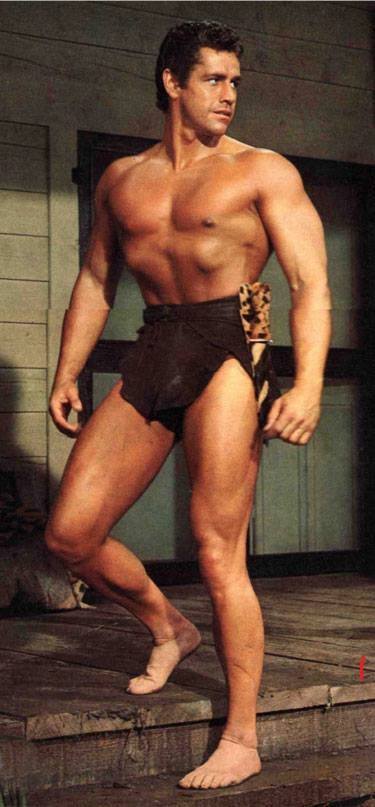
Here’s a Throwback Thursday hunk for you, actor and physique model Gordon Scott:

20728242_10212670337849946_4851579278645951324_n

The Heat Is On

Ash Wednesday, and Valentine’s Day, to boot.

Another Carnival is in the books, and a good time was had by all. We didn’t do as much parading as we usually do; me being in Alabama for the first weekend had a lot to do with that, and I was a lot more tired, physically, than I usually am during parade season. I suspect I am getting to that sad place in life where I am too old to handle the walk to and from the office all of those days in a row. I am, however, going to continue with my new workout routine and hopefully that will make a difference the next time Carnival rolls around.

Fingers crossed, at any rate.

Today an anthology I contributed a story to drops; The Trouble with Cupid. I was very happy and thrilled to be asked to contribute a story–I always am thrilled and happy when I’m asked to contribute to anything, frankly–but therein lay a conundrum for me: what would I write about? I still struggle to write crime short stories, and this call was for romantic suspense, or some combination of romance and crime, possibly; and I was frankly absolutely clueless what to write or how to go about writing something.

So, I decided instead to write a sequel to my story “Everyone Says I’ll Forget In Time,” which I wrote a long time for the Fool for Love anthology, edited by R. D. Cochrane and Timothy J. Lambert. In that story, Terry, my main character, was still coming to terms with the death of his partner; his best friends have decided it’s time for him to move on and set him up with a sort-of-blind-date thing; and the blind date turns out to be a guy he had a crush on before; that he met when he and his partner had briefly separated during a rough patch. I’d always wanted to do a sequel to the story, and even had the title picked out: “Passin’ Time,” which is a phrase we here in New Orleans use to describe waiting when you have no other choice; it’s most frequently used to talk about waiting for a parade during Carnival; what we do on the street while waiting for a parade to show up is passin’ time.

the trouble with cupid -%0D%0A final2.jpg

I OPENED THE front door and Trouble wasn’t there.

The food bowl I’d set out for him was empty. The water bowl was upside down next to the cement step. He had a habit of doing that, I’d noticed. I wasn’t sure why, but it was just one of his quirks. I picked it up and walked it over to the sink and refilled it. I set it down and sat down on the step, looking around. This was the first morning since he’d shown up that he wasn’t out there, waiting for me with his eager eyes and twitching black tail.

And it made me sad.

You need a pet of your own, I said to myself, looking up at the blue sky. It was a gorgeous morning, not even ten yet, and already warm. The ladies of Iris and the gentlemen of Tucks had lucked out this fine Saturday before Fat Tuesday. Fat Tuesday was early this year, so I’d worried my favorite parade day might be cold—or worse, rainy. There had been a downpour on Iris Saturday a few years earlier, but the parades still rolled—the floats speeding past at breakneck speed, the marching bands and dance groups sitting out the parades—and I’d stood out there, soaked through and having the best time, even if my glasses were covered with beads of water and it was also cold out there. It had taken me a while to warm up again after that, curled up on my loveseat under woolen blankets and drinking hot chocolate spiked with peppermint Schnapps while I watched Endymion roll through mid-city on television.

Endymion.

I hadn’t been to Endymion since Paul died.

Trouble is a crime-solving black cat, I should probably add; Carolyn Haines has gathered an extraordinary group of writers together to write a series of books about Trouble; I hung out with the Mad Catters in Alabama at Murder in the Magic City and Murder on the Menu, and even agreed to try my hand at writing a Trouble book, when I have the time. Every story in the anthology had to include Trouble (hence the title The Trouble with Cupid), and all proceeds from the book are going to the Best Friends Animal Sanctuary; if you know Carolyn, you also know she’s all about helping the animals, and I can certainly get behind that–given that we have somehow wound up with five outdoor cats and one indoor rescue.

I hope you’ll check out the anthology, Constant Reader, and I also hope you like my story.


Think of Laura

Zulu is passing now; I can hear the drums of the marching bands. It’s a gorgeous morning, the sun is shining and I am betting the crowds up at the Avenue are deep; they certainly were last night for Orpheus. Paul and I both have to work tomorrow, so we’re ending our Carnival early; taking today to rest and recover so we can hit the ground running on Ash Wednesday. I also have a lot of things to do today; emails to answer, things to write, things to edit, things to read, a kitchen to clean. Even though it was abbreviated this year (I was in Alabama for the first weekend of parades), I enjoyed every bit of Carnival this year; and am already melancholy to see it end as always.

I’ve also been enjoying the hell out of the Winter Olympics, and like millions of people worldwide I am–what’s the word kids use now? Oh yes–stanning Adam Rippon. As a long time figure skating fan, I’ve known of Adam long before these games; I remember when he had a mop of floppy curls; when gossip websites were pairing him and Ashley Wagner as a couple (I rolled my eyes every time I saw the photos), and I remember when he came out. I blogged about homophobia in figure skating a while back; when Adam came out while still on the Olympic eligible circuit I thought to myself you’re never going to win anything now; so I was pleasantly surprised to see him win US Nationals and make the world team in 2016; he missed last season with a broken foot, and this season he is full-on out: his short program is to gay club music, and his long program, as everyone saw the other night, is breathtaking. I’m so happy for both him and Mirai Nagasu, who became the first American woman to land a triple axel at the Olympics that same night; they earned bronze medals as part of the team competition, and I couldn’t be happier for both of them–all of the Americans on the team, to be honest. Adam is so funny and refreshingly himself; a big personality and a natural wit he doesn’t try to hold back, and that honesty…I just can’t get enough. I had tears in my eyes when he finished his long program the other night; Paul and I both screamed when Mirai landed the triple axel. Seeing the trashy homophobes on Twitter trashing him or going after him makes my blood boil; I’ve resisted the urge to reply to them He’s got an Olympic medal and you’re a fifth-rate Twitter troll. Congratulations.

So. There’s that.

And in other news of the fabulous, the lucky world of readers can look forward to the upcoming release of a new Laura Lippman novel, Sunburn. I got an ARC at Bouchercon and read it in one sitting on a rainy Saturday back in October.

sunburn

It’s the sunburned shoulders that get him. Pink, peeling. The burn is two days old, he gauges. Earned on Friday, painful to the touch yesterday, today an itchy soreness that’s hard not to keep fingering, probing, as she’s doing right now in an absentminded way. The skin has started sloughing off, soon those narrow shoulders won’t be so tender. Why would a redhead well into her thirties make such a rookie mistake?

And why is she here, sitting on a barstool, forty-five miles inland, in a town where strangers seldom stop on a Sunday evening? Belleville is the kind of place where people are supposed to pass through and soon they won’t even do that. They’re building a big by-ass so the beach traffic won’t have to slow for the speed trap on the old Main Street. He saw the construction vehicles, idle on Sunday, on his way in. Places like this bar-slash-restaurant, the High-Ho, are probably going to lose what little business they have.

High-Ho. A misprint? Was it supposed to be Heigh-Ho? And if so, was it for the seven dwarfs, heading home from the mines at day’s end, or for the Lone Ranger, riding off into the sunset?  Neither one makes much sense for this place.

Nothing about this makes sense.

Laura Lippman has been one of my favorite writers since I read Baltimore Blues years and years ago. I tore through her Tess Monaghan series, and she very quickly became one of my buy in hardcover authors. I’ve never regretted making that switch, and as she has expanded her skills and pushed herself with her exceptionally brilliant stand alone novels, I’ve never once quibbled but I want another Tess novel! (I do, always, but the stand alones are so fucking fantastic that it doesn’t matter–I really just want a new Lippman, and wish she was on a yearly schedule rather than an eighteen month one.)

Laura’s career trajectory has been most impressive from a writing perspective; because as a writer of stand alones, she has gone from being a literary crime writer to a literary writer about crime, if that makes sense. Each of her stand alones are unique and different from the others; about as far removed from her series as any novels can be and still be by the same author. Each one of these novels are rare pearls, individual and vastly different from the others; different themes, different explorations, different everything. The one common thread that runs through these novels is that they are, for the most part, about women, and what women face in their lives; how they deal with crimes and tragedies that take them out of the ordinary and into the extraordinary. Laura also regularly experiments with form and voice and tense; enormous, dangerous risks as a writer that she somehow always manages to pull off, make engaging and enjoyable, and always manages to tell a story that makes a very compelling point.

Sunburn,  her latest, is as different from anything she has done before as it could be unless she decided to write about vampires or a zombie apocalypse; but she also brings her incredibly powerful sense of empathy to this tale of murder, vengeance, and oh-so-careful planning. The book opens with the main character, Polly Costello, walking away from her husband and child on a beach vacation and winding up in the hard-knock town of Belleville; she is being observed by Adam, who is being paid to keep an eye on her, follow her–but not to become obsessed by her, which is what happens. Their story is told in a very limited third person point of view, alternating between them, and as we slowly get to know them, watch their physical attraction expand and develop into something more, the questions remain: why did Polly walk away from her family and child? How could she do such a thing? Who is this enigmatic redheaded bar waitress?

And just how fucking good does Adam’s grilled cheese sandwich taste?

The prose in this book is lean; not an extra word to be found anywhere, and it is an homage of sorts to the kind of lean, tight, dark noir that the great James M. Cain wrote. (Cain is a hero of mine, and I have always wanted to write something that dark and lean and tight…ironically, one of the ideas I had for such a noir–gay, of course–was also titled Sunburn) I’ve seen, in some of the early reviews, comparisons to Cain’s Double Indemnity and The Postman Always Rings Twice, which seem obvious; there’s an insurance scam buried deep in the plot, it’s set in a bar/diner, it’s about an unexpected, explosive attraction between a man and a woman; there are side plots that end in mysterious deaths… but if anything, I’d say Sunburn is more reminiscent of Cain’s The Cocktail Waitress than anything else.

The book is extraordinary, and probably Laura Lippman’s best work to date; that wisecracking, tight prose; a complicated and complex plot that grows even more complicated as you read another page; fully developed characters you can help but root for, even if their motivations aren’t exactly pure; and ultimately, the book is about a woman with everything stacked against her all of her life, who  never gives up, and makes plans…risky plans; where she gambles everything, including her own happiness and desire, for her future, yet is flexible and smart enough to always adapt.

Polly Costello is a heroine Cain would have been proud to call his own.

St. Elmo’s Fire (Man in Motion)

Lundi Gras, and the downward slope of the marathon. Huzzah! I have a lot to do today; all trying to get it finished in the window before the streets close for tonight’s parades, Proteus and Orpheus. I need to run to the grocery store, get the mail, and am also hoping to get to the gym as well; I’ve not been since last Sunday, but the combination of all the cardio involved with the walking to and from the office, as well as shortened hours because of the parades, has conspired to keep me from my workouts. I cannot go Wednesday morning, either, because the gym is closed until noon; by then I will be at work. So, if I don’t work out today I can’t get to the gym again until Thursday morning, which would be most inopportune. But I am confident I will get back into the swing of my workouts again; despite the Mardi Gras interruption–that always happened in the past, after all, and I was always able to get back to it.

Exhaustion has also precluded me from writing and/or editing over the last week or so; I have plans to get some writing done today as well as some laundry. I have to decide on a story to write for two anthologies, and I desperately need to rewrite/revise/edit another that is due by the end of the month. I am also behind on revisions of the WIP, and I need to get moving on the Scotty book as well. This will, of course, be a short work week; Wednesday thru Friday, so I am hopeful that I can get a lot accomplished in this time period. I should probably get dressed and head out for the errands; the later I wait, the more likely there won’t be a place to park when I get back.

I started reading Killers of the Flower Moon before bed, but it just didn’t grab me right away; I’ll go back to it, I am sure. Instead I started reading The Black Prince of Florence by Catherine Fletcher (Florence! Medicis! History!), and am loving it so far. I doubt that I’ll ever tire of either Italian history, or the Medici family.

I did manage to get back to reading on The Short Story Project as well this weekend, between parades and physical exhaustion. The first was the title story of Joe Hill’s collection, 20th Century Ghost:

The best time to see her is when the place is almost full.

There is the well-known story of the man who wanders in for a late show and finds the vast six-hundred-seat theater almost deserted. Halfway through the movie, he glances around and discovers her sitting next to him, in a chair that had moments before been empty. Her witness stares at her. She turns her head and stares back. She has a nosebleed. Her eyes are wide, stricken. My heart hurts, she whispers. I have to step out for a moment. Will you tell me what I miss? It is in this instant that the person looking at her realizes she is as insubstantial as the shifting blue ray of light cast by the projector. It is possible to see the next seat over through her body. As she rises from her chair, she fades away.

Then there is the story about the group of friends who go into the Rosebud together on a Thursday night. One of the bunch sits down next to a woman by herself, a woman in blue. When the movie doesn’t start right away, the person who sat down beside her decides to make conversation. What’s playing tomorrow? he asks her. The theater is dark tomorrow, she whispers. This is the last show. Shortly after the movie begins she vanishes. On the drive home, the man who spoke to her is killed in a car accident.

This is a great short story; a ghost story about a haunted movie theater. It moves very quickly, and I love how Hill sucks you in almost immediately. I am greatly enjoying reading Hill’s short stories; and am looking forward to getting back into this collection. It also wraps up perfectly. I’ll be honest; I tried reading two of Hill’s novels and simply couldn’t get into them–which is probably more on me than on him–but as I said, I am loving the short stories, and will undoubtedly go back to the novels; I often find something that didn’t grab me the first time will wind up being something I love when I try it again later.

Then I moved back to Lawrence Block’s Alive in Shape and Color, and the next story up was “Girl with a Fan” by Nicholas Christopher.

On the fifth of June, 1944, a young man stepped off the 9:13 train from Lyon, squinting into the morning light. Tall and slender, he had an asymmetrical face: the right eye higher than the left, the left cheek planed more than the right. He was wearing a brown suit, black shirt, yellow tie, and brown fedora. His suit was rumpled, his boots scuffed. He was carrying a leather briefcase with a brass lock. His pants cuffs were faintly speckled with yellow paint.

He cast a long shadow as he walked down the platform. Halfway to the station, two men in leather coats came up from behind and gripped his arms. One of them pressed a pistol in his side, the other grabbed his briefcase. They veered away from the station, guiding him roughly down an alley to a waiting car. A man in dark glasses was behind the wheel. He was bald, with an eagle tattooed at the base of his skull.

At first, this story seemed a bit off to me; it didn’t really fit with the rest of the stories I’ve read in Block’s ‘inspired by a painting’ anthologies. For one thing, it jumped around in time and place, going from Nazi-occupied France to the south seas back to France in the late nineteenth century again; but linking these three different narratives was Gauguin’s painting, “Girl with a Fan”: where the fan came from, when the work was actually painted, and what happened–was happening–with the painting under the Nazi pillaging of the occupied country. Once I grasped what Christopher was doing with his story, I began enjoying it; it’s not easy to juggle three different stories, locations, and time-lines in the space of one short story. Well done, Mr. Christopher, well done indeed!

I also read some others, and will probably continue reading some more today; but I shall save those for a future entry.

And now, back to the spice mines. Here’s a hunk to get you through your own Lundi Gras.

26239311_1968685823379963_6551530354373772271_n

Cherish

I was a little boy in the 1960’s; I was eight when the decade came to an end. The world was a very uncertain place for a kid during that time period; people really believed the country was falling apart, or being pulled apart. The divide between the generations, the divide between left and right, the concept of American exceptionalism vs American responsibility; the Vietnam War and the opposition to it; the rise of the civil rights movement and the struggle to end Jim Crow once and for all; the rise of the women’s movement; and even the beginnings of a queer rights movement–all in the 1960’s. A president was murdered and men landed on the moon. There was a huge societal upheaval that changed everything that people had come to know and expect; television also began to change and grow up some, which led to some groundbreaking series in the latter half of the decade as well as set the stage for what was to come in the 1970’s. The after shocks from the 1960’s are still being felt today.

It was also a strange time for films; at the beginning of the decade the big studios and the old systems of American filmmaking were starting to erode away. The best picture Oscar winner in 1961, for example, was West Side Story, the film version of a hugely successful Broadway musical that recast the feuding Montagues and Capulets from Shakespeare’s Romeo and Juliet into juvenile gangs–one white, one Puerto Rican. (I rewatched this film shortly after the 2016 election, and was amazed at how differently I saw it then I did before) The Academy Award for best picture in 1969 was Midnight Cowboy, to date the only Oscar winner to have an X rating (although by today’s standards the film is remarkably tame), a movie which would have never been made in 1961. (Midnight Cowboy is another film I need to see again, quite frankly; I also would like to read the book it was based on again.)

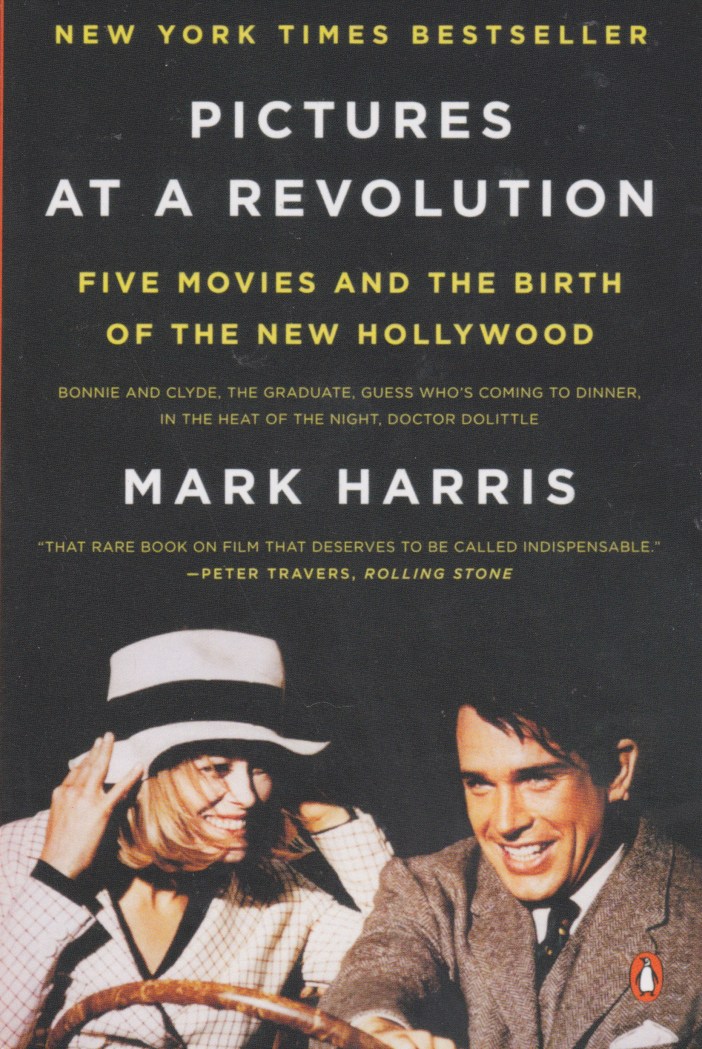
Mark Harris, a Hollywood historian whose book Five Came Back was made into a documentary which I enjoyed, wrote a brilliant book called Pictures at a Revolution, which looked at how film, and the film industry, changed during that decade through the framework of the five films nominated for the Academy Award for Best Picture in 1967; which, if any year was indicative of the changes being made and the changes to come, was indeed the perfect illustration. Two of the films were old style Hollywood–Guess Who’s Coming to Dinner and Doctor Dolittle–two were of the new Hollywood–Bonnie and Clyde and The Graduate–and the fifth, and ultimate winner  (In the Heat of the Night) seemed to straddle the line in some ways, and whose win–and other four wins–seemed to be a compromise between the old and the new.

Harris’ book, which follows all five films from conception to script development to production and then release, culminating in the Oscar ceremony itself, is riveting and informative. You learn who all the players in each case were; you follow along the studio politics and behind-the-scenes deal-making that went into the making of each film, and in each case, Harris brilliantly illustrates how each film represents an aspect of his thesis. Guess Who’s Coming to Dinner and In the Heat of the Night both dealt with the current issues of race; one as a gentle family comedy and the other through the darker lens of a murder investigation in a small Mississippi town, Dr. Dolittle represented the beginning of the end of the big Hollywood musical; the early part of the 1960’s gave the world the Oscar winners West Side Story, My Fair Lady, and The Sound of Music; the immense musical flops of the second half of the decade were ushered in with this epic disaster (there’s also a book in tracing the rise and fall of the big Hollywood musical in the 1960’s).

I greatly enjoyed this book, and if you’re a fan of movies, or have an interest in the industry, this is a great read for you. I’m not so interested in the film industry of today, but I am interested in its past, to be honest; I don’t really care about the Academy Awards anymore and often change the channel while it’s on–there are no surprises anymore, and the ridiculous amount of awards leading up to the Oscars, from the Golden Globes to the SAG Awards to the Writers’ and Directors’ Guild awards, have taken away any mystery or suspense as to who is going to win; it’s much more interesting to read about the old days when they were always kind of up for grabs, and hadn’t become the expensive, overblown spectacle they’ve become today.

The book also made me want to watch these films again; it’s been years since I’ve seen any of them, and in most cases, I only saw them in their edited-for-television versions.

pictures at a revolution

Don’t You (Forget About Me)

I hit the wall yesterday during Iris. I came back home to rest for a bit before Tucks arrived, and was so exhausted from everything that I decided that it was wiser to just stay in the house and rest, otherwise there was no way I’d make it to any of today’s parades. There are four today; Okeanos, Mid-City, Thoth, and Bacchus. I usually make Okeanos and Mid-city; but am too tired for Thoth and Bacchus. I’ve never seen Thoth; we used to go to the Quarter in the afternoon on Sundays, and then I worked outreach during Thoth. The last few years I’ve not done outreach on Sundays I’ve been too tired; and I don’t think I’ve seen Bacchus since Drew Brees reigned. I’m going to give it my best shot today.

The rain held off yesterday until Endymion; I was ensconced in my easy chair streaming Spiderman Homecoming when the thunderstorm arrived and it was a beaut. The thunder was so loud and long the house shook; and the downpours so intense that there was some street flooding (nothing major, like in August; but still it sucked for both the Endymion riders and the folks out there watching).

I also watched, in my ongoing quest to rewatch as many of the disaster movies of the 1970’s as possible, Earthquake, which was, without a doubt, one of the worst movies ever made. The whole point of the disaster formula was to see how people–character archetypes, really–placed in extraordinary circumstances having to experience physical difficulties and hardships and emotional distress, to see if they can overcome this and survive; and at the end, some do: the damaged plane lands safely, the fire is put out, they get off the sinking ship. But by it’s very nature, making a film about an earthquake doesn’t end with the characters getting to safety; therefore there is no way to end the film on a satisfying note for the viewers. So, Earthquake merely ends with the camera pulling away from the characters who’ve just escaped the flooding tunnel, showing a ever expanding view of the ruins of Los Angeles, where many fires are still burning; a most unsatisfying end to the film. But it’s not like we cared about any of the characters in the first place, particularly the main character, played woodenly by Charlton Heston. Heston was never the best of actors to begin with; his idea of acting was over-acting under the best of circumstances and at worst, woodenly reading his lines with absolutely no emotion whatsoever. The casting choices made for the movie were also curious; Lorne Greene was playing Ava Gardner’s father and Heston’s father-in-law, despite being only seven years older than the former and eight years older than the latter; his current love interest was played by Genevieve Bujold, who was only thirty. I’m a fan of Gardner, to be honest, but she’s terrible in this film. Everyone is terrible in this film, from the afore-mentioned stars to the rest of the cast, which includes Richard Roundtree, George Kennedy, Victoria Principal, and Marjoe Gortner. Even by 70’s standards, the special effects are particularly bad; and there really isn’t a cohesive story for any of the characters, so the actors have no center for their performances. It was just an attempt to cash in on the success of the Airport movies and the disaster movie craze of the time; with the end result that it’s a terrible, terrible film.

Spiderman Homecoming, however, is just as charming on a second viewing as it was on the first; and Tom Holland is so appealing, as are all of the diverse young actors who play his friends, or frenemies, at his high school. Michael Keaton makes a great bad guy, and the guest appearances by the other Marvel heroes–Iron Man and Captain America–successfully weave the character of Spiderman into the Marvel/Avengers universe. Also, by not  making it an origin story–we already see Peter with his powers, his uncle is already dead–and instead making it about him trying to adapt to his powers while juggling his life as a high school teenager, made it a much stronger film. Well done, Marvel.

After that, we watched the Olympics. I also did some reading, getting back to the Short Story Project, and then I slept deeply and well; I even allowed myself to sleep in, and this morning other than some slight aches in my lower back I feel terrific. Okeanos starts in fifteen minutes; I am not sure which parades I’ll be watching today. There’s rain again in the forecast, and this morning the windows are covered with condensation, just like yesterday. It does seem bright out there, but there’s an awful lot of cloud cover as well. Paul is still sleeping, so there’s that as well. 😉 I don’t like waking him up on the weekends, and besides, Okeanos won’t be here for another hour at least. Iris kept stalling yesterday; despite moving up an hour it still wasn’t finished passing here until almost one thirty.

I don’t have to work tomorrow; Paul’s going into the office for a bit, so I will most likely make a grocery run in the morning and try to get some work done around here as well. I need to get back to work on everything; just because everything in New Orleans comes to a screeching halt for Carnival, we sometimes forget that the rest of the world does not.

Ah, well. And I need to clean the kitchen again; I’m hoping to cook out today, should the weather hold.

Here’s a hunk for your Sunday:

IMG_3587

The Power of Love

The sun is shining. I haven’t checked the weather yet, but both Iris and Tucks were moved up an hour today due to thunderstorm forecasts. It may rain, despite the sunshine this morning; my windows are covered in condensation so it’s definitely humid out there.

A quick perusal of the weather forecast, however, shows a possibility of a thunderstorm this afternoon around 2–although the little image of the cloud with a lightning bolt on it also says, right above it, “0% chance of rain.” It’s also going to be in the 70’s today; beautiful weather for Iris and Tucks; though it might rain on Endymion tonight. I’m not concerned–Endymion doesn’t go down St. Charles so we never watch it. We used to go out dancing on Endymion Saturday, so we would walk down the parade route to get to the Quarter, and be buried in beads on the way (it does follow St. Charles in the CBD, and goes around Lee Circle before heading back up to the Superdome). But we don’t go dancing during Mardi Gras anymore–I don’t think  my old legs could handle it; they are very tired and sore this morning from all the walking and the outreach yesterday.

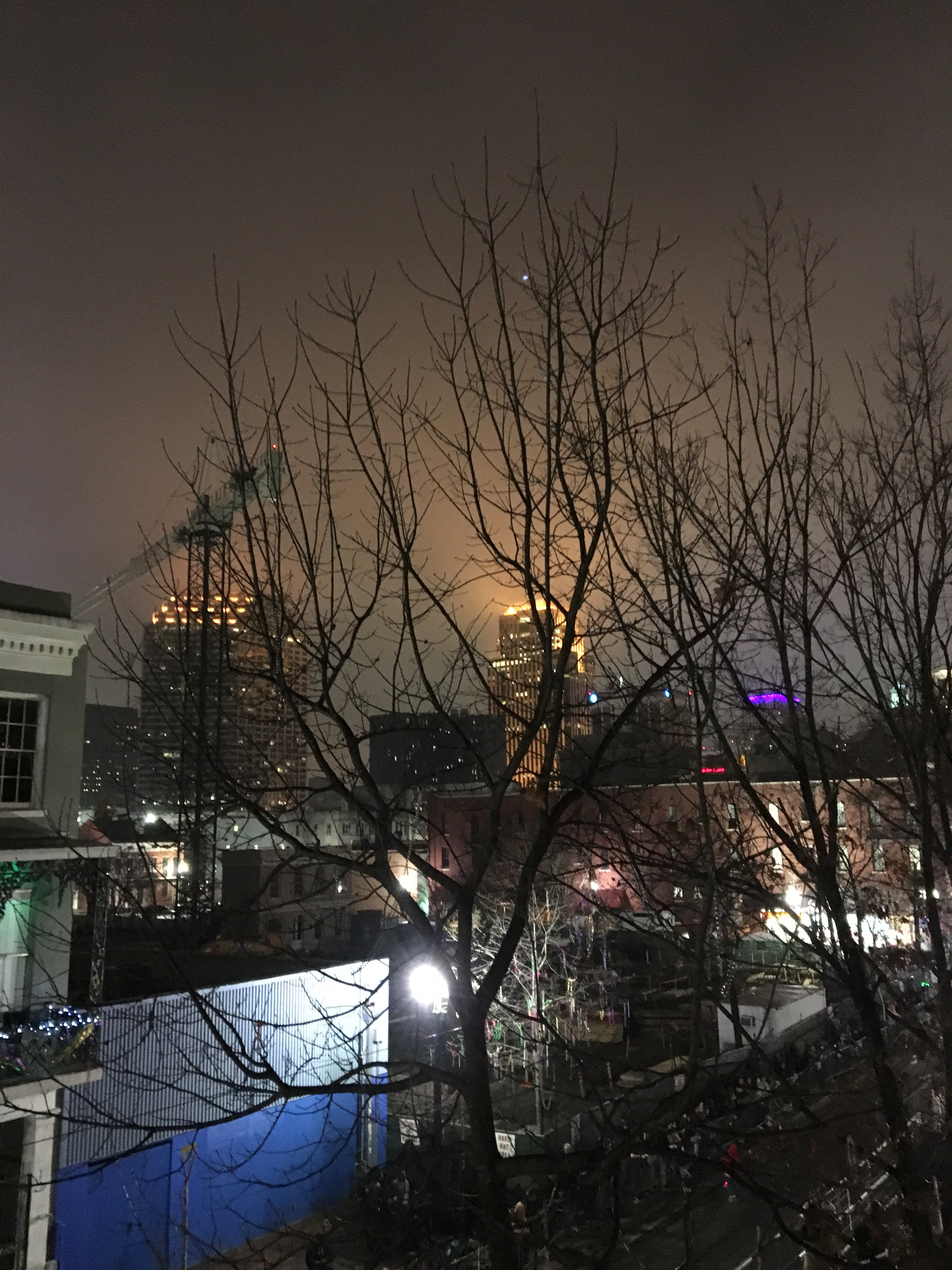
Yesterday was beautiful; I walked to work around one o’clock and took lots of pictures along the way. The Quarter was a madhouse; second lines and marching bands everywhere. We gave away 4500 condoms yesterday; we started at 3:15. I was supposed to work the second shift as well as the first, but at 6:00 when the others showed up we were down to less than 200 condoms, so I wished them well and walked home. Paul had been invited to a parade party at the New Orleans Advocate office on St. Charles; I couldn’t go because of outreach. But as I walked home, and walked past their office, I glanced in through the entry way and saw Paul; so I called his name and I got in. Their building, which used to house Michaud’s Cajun restaurant for years, are gorgeous; it’s where I saw Colson Whitehead speak last year. But I had never been up onto their balcony, which is way up there. We went up and watched the start of the Hermes parade, and the decided to walk home. I got some great pictures from up there as well.

This one is a particular favorite:

IMG_3865.JPG

Gorgeous, right?

We came home, fed the cats, and I took a shower while Paul watched the end of the LSU-Missouri gymnastics meet on-line, and then we headed out to the corner for Krewe d’Etat and Morpheus. We caught a shit ton of stuff out there–Morpheus is a great parade, but by the time it arrives the crowd has thinned out so much it’s easy to catch things, and they throw a lot. Then when it was all over, around 11:36 last night, we came inside and chilled. I finished reading Pictures at a Revolution last night, which I’ll blog about at some point after all the madness is over–just a few more days!

But now I have to pick another non-fiction book to read before bed, and I am leaning towards some true-crime-ish; perhaps the Edgar nominated Killers of the Flower Moon: The Osage Murders and the Birth of the FBI. I don’t read near enough true crime, and I also just realized I am not reading anything fictional, either; between the trip to Alabama, working on the anthology, and Carnival, I’ve not really sat down and picked something out to read. And I am also behind on the short story project. Heavy heaving sigh.

But I did take Monday off–tomorrow is going to be insane, four parades on the Avenue–so I am hoping to be able to use that day to get some rest, get back to the gym, and get caught up on things I am too tired to do over this weekend.

And now, back to the spice mines. Iris rolls in a little over half an hour!

We Built This City

Mardi Gras is a marathon, not a sprint.

I am already tired and achy, and we’re only on Friday. I live inside the St. Charles parade route–the parades pass by the corner at my house–which can make Carnival a challenge. I can’t get my car home from work–even if I dared brave the horror of parade traffic, I can’t get across St. Charles anyway–so I generally have to walk to and from work (the streetcar isn’t reliable during Carnival, and it’s always packed with tourists like a can of sardines), which is about 2.5 miles in each direction. On the way home, of course, the parades are already rolling which means mobs of people to try to get through, many of them already intoxicated and the rest well on their way. Right now, on Friday morning of the home stretch, my lower back is already sore and I have a blister on one of my toes; my hip and knee joints are achy and tired, and my shoulders are sore from holding them up in the air to try to attract the attention of riders. Heavy sigh. And living in the parade route also means routine chores–grocery store, etc.–require about the same amount of planning and attention to detail as the Normandy invasion. I managed to get that taken care of yesterday morning before heading to the office; and I sure hope we’re good for the weekend, because the next window of opportunity is Monday.

But I love Carnival, I do; I just wish I had the energy and the fit body of my younger self. It does take a toll on you; when I got home from work last night I was so tired and achy and mentally fatigued I seriously considered skipping Muses, which is one of my favorites. But once I was out there and caught my first throw, I forgot about everything and felt like a kid again; laughing and dancing to the marching bands, running out into the street and yelling with my hands up, jumping up and down with a big ole silly grin on my face. We caught everything that makes Muses special: a shoe, a shoe bracelet, a shoe medallion, duck medallions, and the inevitable go-cups. At one point a go-cup landed at my feet and a woman asked me if I minded if she took it: “I have a Muses cup from every year but I haven’t gotten one this year yet.” Not only did we let her have it, but I gave her the ones I’d already caught.

Carnival is about many things, but not the least of them are generosity, civility, and community; I got so annoyed at people who are bitchy or greedy during parades. You’re missing the point of Carnival, I want to say to them, it’s not just about catching things; it’s about our sense of community and that we all have to get along together; a reminder that we’re all in this together.

There’s not enough of that in this country anymore.

The Lost Apartment is in ruins as well; I need to spend this morning creating some semblance of order before the madness of the weekend. If I don’t do it today, it will take the entire day Monday.

Heavy heaving sigh.

And now back to the spice mines.

f309b4fe5192fe5bb79c967294ef344b--hot-hunks-sexy-men

I Feel for You

Adam Rippon is going to the Olympics as the first openly gay American figure skater to compete in Olympic history.

1516475432004

Let’s not be coy, though–there have been plenty of gay male figure skaters throughout the history of the sport–but most came out (or were outed) after their Olympic-eligible careers were over. (And Adam Kenworthy–not a figure skater– is also out this year, but he wasn’t out when he competed in Sochi.)

One of the things that has always fascinated me about figure skating is the contradiction evident in its gender roles. Men are, while being artistic, also supposed to read as masculine and not feminine; likewise the women (it’s still called Ladies’ Figure Skating, for the record) are supposed to be feminine, graceful and lady-like, rather than athletic; a feminine and graceful skater would always win over someone who wasn’t as graceful but was more of an athlete than a ballet dancer. This bipolarity at the heart of figure skating kept gay male skaters deep in the closet, particularly if they were American men; Russian men had no problem with wearing gloves and performing ballet on the ice–but at the same time, those Russian men (Viktor Petrenko, Alexei Urmanov, Ilia Kulik, Alexei Yagudin, and Yevgeny Pluschenko won every Olympic gold medal between 1992 and 2006) clearly were athletes, flying across the ice in footstep sequences with their feet and blades changing directions and edges as rapidly as a machine gun fires; dizzying fast spins with beautiful positions; and of course, landing quad and triple jumps with the greatest of ease, and almost always on the beat of the music they were performing to.

There was also an unspoken understanding that being openly gay would hurt a skater in the marks, which were often subjective, frequently unfair, and, according to the ISU, above reproach. Rudy Galindo was the first openly gay American skater to win US Nationals in 1996, and went on to win a bronze medal at worlds that year; the next openly gay skater to win the US title was Adam Rippon, some twenty years later. Between them was flamboyant Johnny Weir, who didn’t come out until after his Olympic-eligible career was over… (I might add that, despite being US champion and a world medalist in 1996, the USFSA chose not to send Rudy to any of the Grand Prix events the following season; a clear indication to him that his Olympic-eligible career was over, and he went pro.)

Rippon, incidentally, finished fourth at the Olympic trials this year, but was chosen to go to the Olympics anyway; selected over a heterosexual skater who finished with the silver medal. Have things changed with male figure skating since Rudy’s big win in 1996?

As a long time figure skating fan, I’ve always wanted to write a book about a gay figure skater. I did in Jackson Square Jazz, with the character of Bryce Bell, a US Olympic hopeful who is introduced to the reader as someone a very drunken Scotty picked up at a French Quarter gay bar, only to see him competing that same night at Skate America, being held in New Orleans for the first (and clearly fictional) time. (As a joke, I also had Bryce become the first skater in history to land a quad axel; this has still not happened in real life, and may not ever happen.) But Bryce’s skating was relatively unimportant to the story and plot of the book; although his remaining closeted as a skater was.

I never felt that I was able to truly explore the issues of being a gay, Olympic-eligible, American figure skater in the book; Bryce was a supporting character, and the story wasn’t told from his point of view (I’ve been tempted to bring him back, but can never figure out a way to do it organically; just forcibly grafting him onto a story because I want to just feels wrong).

Screen-Shot-2017-07-11-at-11.48.49-AM

Ironically, Adam didn’t win Nationals until after he came out. Coming out–and being able to truly be himself for the first time–paid off. He’s a much better skater than he was before; but I do remember thinking at the time he came out, well, you’re never going to win nationals now. But by embracing himself for who he really is, he changed; he found a look and costumes that work for him–he used to have this mop of blonde curls–and his short program this year, to what Paul and I immediately recognized as a gay techno dance remix from back in the day–is one for the ages.

So, does the central premise of the noir figure skating novel I’ve wanted to write–a skater being forced into the closet and not allowed to be himself so that I can explore not only the dynamics of what masculinity is but the class issues inherent in figure skating (I still haven’t posted about my thoughts on I Tonya, which have everything to do with femininity vs. athleticism and class); the masks skaters are forced to wear in order to play the game and get the marks they deserve to win–does that premise still exist today? As far as I know, Adam and Rudy are the only American skaters to come out and skate at the Olympic eligible level; are there others? Is coming out still a risk to your career as a male skater?

Probably so.

And on that note, back to the spice mines.