Rhythm of the Night

Wednesday!

I decided to postpone this morning’s workout until tomorrow, as I was ridiculously tired both last night and this morning. It’s so lovely, though, to be back into a regular routine; because I know that skipping this morning doesn’t mean it’s a loss. I can switch days without worrying or stressing that I am sliding down that slippery slope to not going to the gym again. Huzzah! Definitely making progress.

I checked off another BIG item off the to-do list yesterday; HUZZAH! This morning I have some loose odds and ends to tie up in addition to that, and then I am very excitedly going to get it all together. Yay!

I also reread the short story I wrote Sunday last night, and as opposed to my usual reaction (which is to recoil in horror from something I’ve written) I actually was rather pleased with it. It’s rough, of course, and it needs some things to be added to it, some language needs to be cleaned up, etc, but over all I am rather pleased with it. I have a couple of other short stories in progress that also need to be cleaned up; I am hoping to get all of that finished this week so I can dive headfirst into my March project. While March actually begins tomorrow, I am going to spend the rest of the week tying up odds and ends–but I am actually going to slowly start putting my feet into the water of the March project tomorrow, then hit the ground running once all this other stuff is finished.

Must. Stay. Focused.

If I stay focused, I can get everything done, and done well.

I also submitted a short story to an anthology call; the deadline is this coming Monday, but hey–look at me turning in something early. Madness, right? I don’t know if they’ll use my story or not, but I am pretty pleased with it. It may not be up their alley, but I certainly am not going to be offended if it doesn’t get accepted, you know? (Right? I don’t even recognize myself anymore.) But it feels good. I want to get so much stuff out of the way before this weekend so I can totally immerse myself in the new project.

Altered Carbon continues to enthall, and so does The Black Prince of Florence. I am way behind on the Short Story Project, but am hoping to get my act together on that score soon as well.

And on that note, I should get back to the spice mines.

IMG_1924

Oh, Sheila

Tuesday!

As February winds to a close, and March lingers there on the horizon, I can’t believe that we are nearly three months into 2018 already. I’ve done quite a bit of writing so far this year; so much so, that in fact, I’ve already written more than I did all of last year. How scary is that? The next few months are going to be a bit on the insane side for me, as I have much to write, the Williams Festival/Saints and Sinners is also coming up quickly, and many many deadlines are looming as well. Which is cool, but stressful. I’m getting a lot done, though, and I am making progress on the goals I set for the  year. I’m not as consistent with the gym and working out as I would like, but I am already on pace to have been to the gym more times this year than last already, and that watershed is coming up soon.

We started watching Altered Carbon on Netflix this week. I’ve seen a lot of people trashing the show on social media; so I didn’t have high hopes going into it, but we’re enjoying it so far. Visually it’s stunning; it sort of reminds me of Blade Runner (which I haven’t seen in over thirty years; should probably rewatch that soon). It’s kind of a cross between sci/fi and a hardboiled detective story; which is part of why I find it intriguing. I also like the lead actor, Joel Kinnaman; I enjoyed him in the American version of The Killing, and you can’t go wrong with James Purefoy. And while there is a lot of nudity, for a change it seems pretty equally distributed between males and females, and they actually show full frontal male, which is extremely unusual. The show has also intrigued me enough to go back and read the books on which the show is based; and I am relatively certain the books are most likely better than the show.

I’m a little behind on the Short Story Project, as I try to wind down the Bouchercon anthology, but I did read “Three Little Words” by Nancy Pickard, from the MWA Anthology Manhattan Mayhem.

Priscilla laughed hysterically when her doctor told her she had only a few weeks to live.

When she saw the shocked dismay on his handsome face, she waved away his worry and kept guffawing like a four-year-old who had just heard the funniest knock-knock joke on earth. And, being a preschool teacher, she knew knock-knock jokes and four-year-olds.

Nancy Pickard is one of my favorite crime writers: her stand-alones, The Virgin of Small Plains and The Scent of Rain and Lightning are two of my favorite crime novels of all time (both are sorely in need of a reread). I also loved her Marie Lightfoot series; Marie being a true-crime writer, so her adventures were always interspersed with excerpts from the book she was writing about the case she was looking into in the book; a book within a book, and it was terribly clever. This short story is evidence of why I enjoy Pickard’s work so much. Poor Priscilla is a wealthy young girl who’s estranged from her family; she creates a bucket list when she finds out she had little time left to live: it consists of three little words, tell the truth. And that’s what she does; she goes around telling everyone the truth, whether they want to hear it or not. Then she is murdered, but why? The story is told from the point of view of her doctor, who is also her friend, and as the story moves on, each sentence makes the plot and mystery of who murdered Priscilla and why even more complicated and layered; this story is definitely a classic.

And now, back to the spice mines.

27658062_1803481379946097_4518429655433083893_n

Lovergirl

I wrote a short story yesterday, which was kind of fun; I can’t remember the last time I sat down and wrote 4500 words in three hours, and a short story from beginning to end, to boot. I am very pleased with myself, as I am wont to be. It needs work, of course; but I am very happy that I was able to write it from beginning to end. I can now put it aside for awhile to get back to work on other things; but as its deadline approaches I won’t be pushing to get it written–and then giving up as happens so often.

Today I need to get some things accomplished; I am going to the gym this morning before heading into the office. I am doing happy hour bar testing this evening; so I don’t have to go in until later; which now provides me with a Monday, Wednesday, and Saturday weight lifting schedule, with room for replacement days if that becomes necessary. (I can always, for example, go on Friday evening after work if I don’t want to do Saturday; I can go on Sunday to replace Monday, ,etc.) Flexibility in one’s workout schedule is important, and makes success more likely than rigidity.

I need to get my taxes together this week as well; that’s one of the major things on my schedule this week. Ideally, I would love to have everything to my accountant by Friday, so I can get everything filed next week. I also have to get some work done on the Bouchercon anthology; and I need to finish a grant application by Wednesday. There’s a contest I am considering entering as well; we shall see if I decide to pay the entry fee for that (it’s only thirty dollars, but….thirty dollars is thirty dollars. Before I bought the car I would have thought nothing of spending the money; but now I am watching every cent I spend). So, I definitely have my work cut out for me this week; we’ll see how it all works out. This morning I feel energetic, and I know after I work out I’ll have that lovely endorphin rush going. Huzzah! Everyone wins.

I am on the final season of Black Sails, and it continues to enthrall, although I am very well aware that it won’t end happily; but I also have some idea of who will survive the season and who will not.

All right, I need to get my act together and get to the gym. Till later, Constant Reader.

IMG_2279

Loverboy

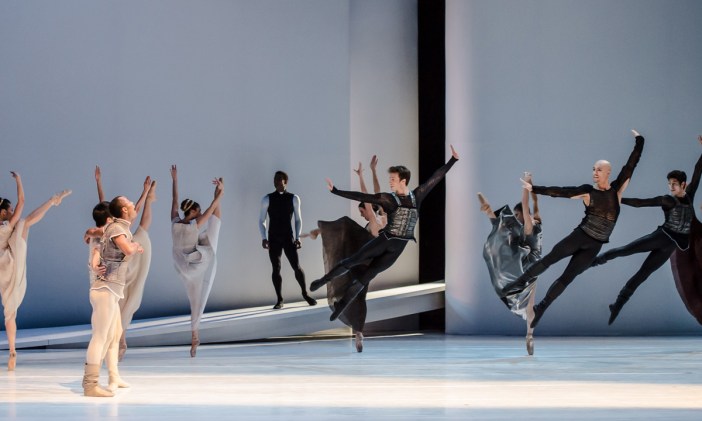
The ballet last night was exquisite.

I’ve seen ballets–or parts of them–on television or Youtube; and I remember, as a child, being taken to see The Nutcracker (isn’t everyone dragged to that as a child?), which I hated (interestingly enough, many things that most children love are things that I didn’t; The Nutcracker is one; The Wizard of Oz another). But as lovely and awe-inspiring as seeing ballets on Youtube or on television can be, there is nothing like being in an auditorium and watching one being performed live on the stage in front of you. I liken it to the difference between watching figure skating on television and then watching it in person; it’s very different, and you never watch it on television in quite the same way again. Romeo and Juliet is, of course, an ubiquitous story; everyone knows it, to the point that it has become almost trite and hackneyed; it’s been adapted for everything imaginable–opera, ballet, film, and of course West Side Story–but, at its heart, it is still a beautiful and sad story.

The opening sequence of the ballet reminded me so much of the opening of West Side Story that I couldn’t help wonder how much the ballet influenced the musical’s choreography, or vice versa.

sw-romeo-george-oliveira-alexis-oliveira-alvaro-prieto-taunt_1000

I read Romeo and Juliet when I was a sophomore in high school. I’d taken a class called Dramatic Literature; a class in which we read plays. Romeo and Juliet was paired with West Side Story (it’s also the class where I first read Tennessee Williams; A Streetcar Named Desire and Cat on a Hot Tin Roof, to be exact); we even watched the films (the version of Romeo and Juliet was the 1968 Franco Zeffirelli production, with Leonard Whiting and Olivia Hussey with the gorgeous score by Michel Legrand). Shakespeare’s language was, to me at fourteen, a mysterious puzzle I couldn’t unlock; archaic references I didn’t understand written in verse, yet somehow beautiful in how the words were put together. At the time, I didn’t understand how two families could feud so bitterly and violently in an Italian city during the Renaissance; of course, now that I’ve read so many Italian histories (I am still greatly enjoying The Black Prince of Florence), I am more than a little surprised that the feud between Capulet and Montague was so bloodless (see the Pazzi-Medici feud, circa fifteen century).

Yet, despite the overwhelming familiarity with the story, it was impossible not to be drawn into last night’s version of it; despite there being no dialogue, no words. The entire story was, as is typical with the ballet, acted out without words and through dance. The choreographer’s choices in telling the story were quite interesting; the stage setting was incredibly minimalist, with emotions and passions being evoked through the movement of the two curved walls that served as set pieces; the long rising ramp that served as not a way to exit the stage but as Juliet’s fabled balcony; and the use of costume and lighting.

sw-romeo-noelani-pantastico-lucien-postlewaite-balcony_1000

The friar was used as a connective device throughout each scene; he was, if anything, the true star of the show, and its emotional heart. The dancer who played the role was magnificent. The ballet was a thing of beauty; I couldn’t stop marveling at how fantastic the dancers were, the exceptional shapes and lines they could form with their bodies, the almost super-human stretches and leaps and twirls and spins, the intimacy of their lifts and how they could mold their bodies around one another’s.

Les-Ballets-De-Monte-Carlo-London-Coliseum-dance-review-Jeffery-Taylor-574512

It was also my first time inside the Mahalia Jackson Theater for the Performing Arts since Katrina; ironically, it was also the first time the Ballet des Monte-Carlo performed there since 2005. Both the outgoing and incoming mayor were there; the Honorary Consul for Monaco, and the ambassador from Monaco were all introduced and thanked from the stage.

_dsc3014cab_0

And yet, as a crime writer, and someone with a vested interest in group dynamics and politics, who has viewed documentaries about ballet companies, with a knowledge of human nature and interaction,I couldn’t help wondering, as the company took its well-deserved bows to a long standing ovation last night,  what turmoils and temperaments boiled beneath the surface of the linked hands and bowing bodies; what slights and grudges boiled behind the smiling faces; which members of the company were friends and which were enemies; who were lovers and friends and who were enemies and rivals, who was gay and who was straight.

I definitely want to write a ballet noir.

And here are two short stories, for the continuation of the Short Story Project.

First up is “Split Second” by Daphne du Maurier,  from the New York Review of Books collection of Don’t Look Now and Other Stories:

Mrs. Ellis was methodical and tidy. Unanswered letters, unpaid bills, the litter and rummage of a slovenly writing-desk were things she abhorred. Today, more than usual, she was in what her late husband used to call her “clearing” mood. She had wakened to this mood; it remained with her throughout the morning. Besides, it was the first of the month, and as she ripped off the page of her daily calendar and saw the bright clean 1 staring at her, it seemed to symbolize a new start tom her day.

The hours ahead of her must somehow seem untarnished like the date; she must let nothing slide.

“Split Second” is an exceptional exercise in character. Du Maurier thoroughly examines and exposes Mrs. Ellis’ character from beginning to end, and while she doesn’t go into a great amount of detail, it isn’t hard to figure out exactly whom she is from what we are told as readers. She’s a widow and her entire world revolves around her daughter, who is off at school; she decides, after a thorough cleaning of her home to go for a walk and is almost run down by the laundry truck as she walks back home. But when she gets back to her house, things are different. It is her house, but it’s no longer the house she left behind; other people are living there, her neighbors are gone–the entire world has changed and shifted as she walked home. It’s a horrifying story, even as the reader begins to glean what has actually happened long before Mrs. Ellis does; not that she ever does, even by the end of the story, and that is part of what makes it so sad, so effective, so powerful; no one has ever quite captured that elegant, melancholy sadness the way du Maurier does.

I then moved on to “The Picture of the Lonely Diner” by Lee Child,  from the Mystery Writers of America anthology, Manhattan Mayhem:

Jack Reacher got out of the R train at Twenty-Third Street and found the nearest stairwell blocked off with plastic police tape. It was striped blue and white, tied between one handrail and the other, and it was moving in the subway wind. It said: POLICE DO NOT ENTER. Which, technically, Reacher didn’t want to do anyway. He wanted to exit. Although to exit, he would need to enter the stairwell. Which was a linguistic complexity. In which context, he sympathized with the cops. They didn’t have different kinds of tape for different situations. POLICE DO NOT ENTER IN ORDER TO EXIT was not in their inventory.

Lee Child is one of the most successful writers in our genre today; everything he publishes is a New York Times best seller, and his character, Jack Reacher, is one of those ubiquitous characters that will go down in the history of the genre, like Poirot, James Bond, and Kinsey Millhone. I am years behind on Lee’s novels; but if you’ve not read Lee Child, you simply must read The Killing Floor, the first Reacher novel. It is quite superb. This story isn’t Child at his best, but Reacher the character is at his best at novel-length, with the labyrinthian plots Child somehow concocts and manages to keep track of (one of my favorite fanboy moments was having lunch with him and Alafair Burke at the Green Goddess here in New Orleans several years ago; while I just sat there wide-eyed and listened to the two of them talk about writing and publishing, praying that I didn’t have sauce running down my chin), but this story does evoke the melancholy that Child evokes in his novels; the inevitability of fate and the powerlessness of humans to counteract it once the gears are moving. I do recommend the story; there is some amazing imagery in it as well.

And on that note, I am back to the spice mines. There are bed linens to launder, and short stories to edit, and a chapter to write; it is rainy and gloomy outside my windows this morning but I am well-rested and ready to work.

Or maybe it’s just the caffeine kicking in. Who knows?

You Belong to the City

Saturday morning and I have sooooo much to do it’s terrifying. Tonight we have tickets to the ballet; Les Ballet de Monte-Carlo, to be precise. They are performing Romeo and Juliette. I have, as I have said before countless times, never seen ballet performed live. I am very excited, obviously. I have an idea for a ballet noir–I have so many ideas, really–and I love that I merely mentioned this one night while watching the superb ballet documentary Bolshoi Babylon, and that he remembered, with the end result we have the tickets for tonight.

He really is quite a dear.

sw-romeo-noelani-pantastico-lucien-postlewaite-balcony_1000

I am writing so many things right now, and working on so much, that it can overwhelm me a bit when I stop to think about it; therefore it’s best not to think about it. The Scotty novel is going to be the most complex plot I’ve written since Mardi Gras Mambo, which means I have to really be careful and pay attention in order to prevent enormous mistakes and errors as I go along. The short stories I am writing…it’s interesting, but in some cases it’s so much easier to just have an idea and then write to figure it out; sometimes when I finish the first draft and get to the end I know what has to be fixed, added, and changed; in other cases, I literally have no idea. My writing process is so bizarre and different than anyone else’s, and I cannot say I honestly recommend the way I do things to any beginning writer.

Take, for example, a story I wrote and submitted to the MWA Anthology Ice Cold numerous years ago. The anthology was for stories set during the Cold War, and I decided to risk writing a story with a gay theme, even if that theme was buried deep inside the story until about the middle. I also started with an image; a man in the depths of winter, standing on a stone bridge over Rock Creek in Rock Creek Park in Washington DC, dropping a gun into the cold, gray water. Stubbornly,  I held onto that image as the opening of the story through numerous revisions and rewrites. The story was rejected; and I’ve tried revising it again and again. It was recently rejected by another market, with a lovely note: You’re too good of a writer to get a standard rejection letter. This story moved too slow, but do send us more of your work. (And it is a sad indication of this ego-destroying business that said email made my day: they like me! They like my work!) And yet the best part of that rejection email was this minor, five word piece of feedback: this story moved too slow. As soon as I read that I realized that the structure of the story was its ultimate failing: the dropping of the gun into the creek wasn’t where the story began, so I am going to revise the story another time, reordering the events of the story. Maybe it doesn’t even begin where I’m thinking it does now; but I won’t know until I start working on it again.

Likewise, another story I am in the midst of writing right now opens with the sentence The ID’s were fake but no one seemed to care. It’s a great opening line, and it was the first thing to come to mind when I started writing the story, and it just evolved from that opening line; I wasn’t really sure what the story was, but I wanted to use that as an opening line, and so I started writing there. Am I tied to that as the opening line? I tend to be a bit stubborn about these things…which is definitely a fault of my own. I was so determined, for example, that the WIP must begin at a certain place that I was trying to make it work–but soon realized that its Chapter One was really Chapter Three, and a lot of the things I was doing were trite and cliche; so I moved the timing of the story back a few weeks. Sometimes, being stubborn is not a plus for a writer.

I am also going to, in today’s edition of the Short Story Project, talk about two Daphne du Maurier short stories that I read for the first time this week, from the New York Review of Books collection Don’t Look Now and Other Stories. As I have said before, I’ve not read all of du Maurier’s work; I hold back because I don’t ever want to run out of things of hers to read. I have several of her short story collections on hand (my favorite, of course, being Echoes from the Macabre, which I read first when I was a teenager, shortly after I read Rebecca for the first time–which also reminds me, I am terribly overdue for a reread of Rebecca), but unfortunately the problem with du Maurier collections is they often overlap; stories tend to appear in more than one collection: “Don’t Look Now,” for example, not only is in Echoes from the Macabre but headlines this particular volume; “The Birds”, which I talked about the other day, also appears in both.

Today’s stories, though, are of a type: “Indiscretion” and “Ls Sainte-Vierge” are both relatively short, and, like several of her other stories, wait until the very end to twist and shove the knife into your throat. This is not easy to do, and I’ve tried it with stories with little to no success; I think my best successes with these style have been “Keeper of the Flame” and “Annunciation Shotgun.”

“La Sainte-Vierge” doesn’t even seem all that dark, through most of it:

It was hot and sultry, that oppressive kind of heat where there is no air, no life. The trees were motionless and dull, their drooping leaves colorless with summer dust. The ditches smelt of dead ferns and long-dried mud, and the grasses of the fields were blistered and brown. The village seemed asleep. No one stirred among the few scattered cottages on the hill-side; strange, uneven cottages, huddled together for fear of loneliness, with white walls and no windows, and small gardens massed with orange flowers.

A greater silence still filled the fields, where the pale corn lay heaped in awkward stacks, left behind by some neglectful laborer. Not even a breeze stirred the heather on the hills, lonely treeless hills, whose only dwellers were a host of bees and a few lizards. Below them the wide sea stretched like a sheet of ice into eternity, a chart of silver crinkled by the sun.

It’s set in a small fishing village on the coast of Brittany; the point-of-view character is Marie, a fisherman’s wife who is very young and desperately in love with her husband. He is about to go out on another fishing voyage, and she has these terrible premonitions that something terrible is going to happen. He brushes aside her concerns repeatedly, telling her she’s completely foolish and superstitious (never a good sign in any story, let alone a duMaurier), so after he leaves in the evening to get the boat ready, she creeps out of the house to a local church to pray to a statue of the Virgin. Du Maurier’s description of the poor village’s cheap and tattered statue and the church is which it resides is morbid, sad and a bit tragic; yet as Marie prays the moonlight comes into the church and transforms the statue before her believing eyes, and she is shown a vision in her religious ecstasy. Happy and content, she returns to her home…but that something terrible the story has foreshadowed all along does occur, just not what she, or the reader, could have possibly seen coming.

The other story, “Indiscretion,” is equally marvelous in the same way but different; this story, in structure and ending, reminded me a lot of de Maupassant’s “The Necklace.”

I wonder how many people’s lives are ruined by a momentary indiscretion? The wrong word at the wrong time–and then finish to all their dreams. They have to go on living with their tongues bitten a second too late. No use calling back the spoken word. What’s said is said.

I know of three people who have been made to suffer because of a chance sentence flung into the air. One of them was myself; I lost my job through it. The other fellow lost his illusions. And the woman…well, I guess she did not have much left to lose, anyway. Maybe she lost her one chance of security. I have not seen either of them since. The curt, typewritten letter came from him a week later. I packed up then and came away from London, leaving the shreds of my career in the waste-paper basket. In less than three months I read in a weekly rag he was claiming a divorce. The whole thing was so needless, too. A word from me–a word from her. And all through the sordid little street that runs between Shaftesbury Avenue and Leicester Square.

This story basically is about fate and coincidence conspiring to wreck the lives of three people who, again, never saw it coming; and how happiness can be destroyed in just a matter of seconds. It’s bitter and sad and melancholy, like most of du Maurier’s work; but it also works beautifully, and her gorgeous writing style contributes to its terrible beauty.

And now, back to the spice mines.


Miami Vice

This wasn’t one of my better weeks, to be frank. I had issues with sleep and motivation; being tired had something to do with that. I didn’t get up Wednesday morning and go to the gym like I should have; I am hoping to go tonight, Sunday, and Monday, so as to get back on track. I did get a horrific transitional chapter on the Scotty book finished, though–and I also did some major brainstorming about the plot and how to make it work. It’s probably going to be longer than Scotty books usually are; it may come in somewhere between 90 and 100k. I am also being rather ambitious with this plot, too. It’s going to be complicated, and I am also going to take on some issues, which I generally do not do in the Scotty books. Here’s hoping it plays out the way I want it to.

I also have some deadlines coming up this coming week, which has me petrified with fear. I have several short stories in process…no, I’m not going to think about it. That will just paralyze me some more. Instead, I am going to think good thoughts about how wonderful the stuff I am working on is, rather than freaking the fuck out about everything I have to get done. Tomorrow night we are going to the ballet; I am very excited about this as I’ve never seen one live before. This was one of my Christmas presents from Paul, and I can’t wait…although it is probably going to make me want to write about the ballet and push everything else to the side.

Because the stuff I need to work on is never the stuff I want to work on.

I did read a lot of short stories yesterday, after several fallow days of not reading any. I had to do testing at Nicholls State University yesterday afternoon, which is about an hour and a half drive from the office. I didn’t drive; I rode in the backseat and read stories on my way to and from there, and then last night as I watched the Olympics I read some more. That’s the beauty of short stories; you can read a lot of them in a very short period of time. I think I may have read six or seven yesterday, so I’ve got them stockpiled for the Short Story Project. Huzzah!

And sorry to be so brief this morning; but I’ve got to get to the office.

Here’s a hunk for you as I head back into the spice mines.

s-l1000


Cool It Now

I still have that horrible throaty cough periodically, but my voice is more normal and I don’t feel off, which I am counting as a win. I also think that my body has changed on me again; my eating habits are bad–I often forget to eat and rarely, if ever, get hungry–but now my blood sugar will drop, leaving me feeling tired and ill. I need to start making sure that I fuel my body properly; gallons of coffee in the morning aren’t the way to go, and that is also inhibiting my sleep at night.

Heavy sigh.

But once the Olympics are over, I can go back to getting in bed at ten and reading for a half an hour or so before going to sleep; I am greatly enjoying The Black Prince of Florence, as well as my other current non-fiction read, Joan Didion’s essay collection After Henry. Didion is amazing; the way she crafts sentences and paragraphs is both lyrical and beautiful. I wish I had one tenth of her skill. I also made some progress with the Short Story Project, and am thinking I may write a Chanse short story. Reading all these Tess Monaghan (Laura Lippman) and Kinsey Millhone (Sue Grafton) and Lew Archer (Ross Macdonald) short stories are showing me how it’s possible to write and craft a private eye short story; and I have an idea in my head about one where Chanse goes back to LSU for a fraternity reunion that might turn deadly. It’s just a thought; I’ve always wanted to do that in a novel, but it might just be a short story, you know? One of my problems has always been that I think in terms of novels as opposed to short stories; I’ve certainly turned short stories into novels (Sorceress and Sleeping Angel come to mind), and am even thinking of turning another one into a novel. Reading all these short stories has been inspiring me to write short stories, which is incredibly cool. I have several in progress right now; I’ve been asked to write for two anthologies where the story is inspired by a song; which is something I have certainly done before, and I’m having a lot of fun with those. I also want to write something for the MWA anthology, and I have another I am writing to submit to another anthology as well. I am still working on the WIP and the Scotty, never fear–the Scotty is taking a timely and dark turn, which is kind of cool–but I have all these short stories dancing around in my head!

Bitchin’.

I also read two short stories over the weekend. The first was Sue Grafton’s “Long Gone,” from her Kinsey and Me collection.

September in Santa Teresa. I’ve never known anyone yet who doesn’t suffer a certain restlessness when autumn rolls around. it’s the season of new school clothes, fresh notebooks, and finely sharpened pencils without any teeth marks in the wood. We’re all eight years old again and anything is possible. The new year should never begin on January 1. It begins in the gall and continues as long as our saddle oxfords remain unscuffed and our lunch boxes have no dents.

My name is Kinsey Millhone. I’m female, thirty-two, twice divorced, “doing business as” Kinsey Millhone Investigations in a little town ninety-nine miles north of Los Angeles. Mine isn’t a walk-in trade like a beauty salon. Most of my clients find themselves in a bind and then seek my services, hoping I can offer a solution for a mere thirty bucks an hour, plus expenses. Robert Ackerman’s message was waiting on my answering machine that Monday morning at nine when I got in.

One of the things that rarely gets mentioned in discussion about Sue Grafton’s work is how funny she can; and this particular story, with Kinsey having to interview a husband who wants to hire her to find his wife, and having to deal with his three children, all under five, is actually, despite its dark tone and subject matter, kind of breezy and funny. Kinsey’s droll sense of humor, and her sympathy for the missing wife–which comes from her own dour outlook at marriage and family–made me laugh out loud several times during the course of reading the story. It’s a pity that Grafton didn’t write more short stories, because these are gems.

I then moved on to “The Barber” by Flannery O’Connor, from The Complete Stories.

It is trying on liberals in Dilton.

After the Democratic White Primary, Rayber changed his barber. Three weeks before it, while he was shaving him, the barber said, “Who you gonna vote for?”

“Darmon,” Rayber said.

“You a n*****r-lover?”

Rayber started in the chair. He had not expected to be approached so brutally. “No,” he said. If he had not been off-balance, he would have said, “I am neither a Negro- nor a white-lover.” He had said that before to Jacobs, the philosophy man, and–to show you how trying it is for liberals in Dilton–Jacobs–a man of his education, had muttered, “That’s a poor way to be.”

A writer friend of mine–probably one of my closest friends who is also a writer–is a huge Flannery O’Connor fan. As I mentioned when I talked about reading her story “The Geranium,” I had read her A Good Man Is Hard To Find and wasn’t overly impressed with it. Also, as I said when I read “The Geranium,” the racism and use of the n-word is kind of hard for me to see. And yet…in this story, it fits and has to be used, even though it fills me with distaste to see it on the page and to read it. “The Barber,” you see, is the perfect personification of what it’s like to live in the South and be confronted by in-your-face racism all the time. This doesn’t excuse it by any means, or say it’s okay; but wow, how honest and true this story is.

Rayber is a liberal, who clearly believes in racial equality; he is a teacher at the local college and when he is confronted with the racism from his barber and some of the other men in his shop, he is startled, shocked; doesn’t know what to do. Part of his white privilege comes from being surrounded, he believes, by people who believe the same way he does; that racism and bigotry and segregation is wrong and a moral evil. He doesn’t know what to do when he is confronted by it in the face of his barber, someone whose chair he has sat in for years, presumably, and allowed to apply a straight razor to his face and neck. Now, this pleasant person whom he has never really paid a whole lot of attention to and has never really given much of a thought to, other than he provides a service well that Rayber needs, is confronting him with a hideousness that is quite horrifying while holding a sharp razor at his throat. What makes this all the more brilliant is how O’Connor doesn’t even make that connection for the reader; she just puts it out there and lets the reader come to his own realization. And afterwards, after being mocked by the barber and his friends in the shop for how he chooses to cast his vote, he spends the next week angry and bitter about the experience, and preparing to explain his vote logically and rationally the next time he gets shaved; to reason with the barber and tell him how wrong racism is…and inevitably, when that times comes, as the barber jovially mocks him for his vote, he eventually becomes frustrated and physically lashes out.

This story resonated strongly with me. Whenever I am confronted with something I find morally abhorrent, to my face, it catches me so off-guard that I can’t really respond logically and rationally–sometimes even at all– because it is hard for me to understand that there are people out there who actually can hold positions I hold morally abhorrent; I’ve never been able to wrap my mind around, for example, homophobia. I don’t get it. I do not understand how anyone can simply devalue and deny another human being their humanity. It’s hard for me to write homophobic characters because I cannot fully flesh those characters out and make them anything other than one-dimensional; I cannot grasp hatred like that. But, as one editor told me early in my career, even Hitler loved his dogs. I could relate to O’Connor’s character, and his inability to understand, to realize, what he was dealing with; that behind the friendly face and jovial attitude is someone whose core values and beliefs are so repugnant to him that they didn’t seem POSSIBLE.

And that is the mark of a truly gifted writer.

I haven’t been able to stop thinking about that story since I read it, and again, the mark of a great writer. Ms. O’Connor made me think, made me reflect, got under my skin and made me question my own self, not only as a person but as a writer.

Wow.

And now back to the spice mines.

RyanPaevey14

Everything She Wants

I am ill.

It’s been threatening since last Thursday morning, when I woke up with a nasty, periodic cough that hurt at the base of my throat; I hoped it was sinus-related since the weather went through one of its typical New Orleans bipolar moments and went from cold and damp to warm and humid overnight; but this morning I woke up with a croaking voice, a slight headache and a mild fever. I chose to stay home from the office today and nurse it, hoping to head off something even worse. I am going to be drinking hot tea with lemon and honey, and chicken noodle soup. I do not wish to be sick in any way, shape or form. I cannot be sicker. I have too much to do.

The odd thing is I felt good enough yesterday to go to the gym for the first time in weeks, and even felt fantastic the rest of the day. Oh, I still had the periodic cough that hurt, but my body felt terrific. I didn’t even wake up feeling sore this morning. But my throat hurts, and coughing feels like gargling acid. And then there’s the damned fever. Sigh.

Although now I wonder if the energy I used at the gym is what opened the door for the illness to take over? BASTARDS.

All right, I am going to go dose myself and try to feel better. Ugh, I hate being sick. And this is twice in less than three months.

So, here are today’s short story offerings.

First, we have “The Shoeshine Man Regrets” by Laura Lippman, from Hardly Knew Her.

“Bruno Magli?”

“Uh-uh. Bally.”

“How can you be so sure?”

“Some kids get flash cards of farm animals when they’re little. I think my mom showed me pictures of footwear cut from magazines. After all, she couldn’t have her only daughter bringing home someone who wore white patent loafers, even in the official season between Memorial Day and Labor Day. Speaking of which–there’s a full Towson.”

This is a Tess Monaghan story, which opens with Tess and her old friend Whitney bored while waiting for their car from the valet service, so they start playing a game: identifying the shoes of the other people waiting for their cars. A laundry truck has the parking lot blocked so everyone has to wait. The ‘full Towson’ is approached by an elderly man of color, who points out his shoes have a spot of mayonnaise on them and asks if he wants a shine. The ‘full Towson’ is a typical asswipe, an altercation eventually ensues, and the old man is arrested–and confesses to a forty-year-old murder….and this is when Tess gets involved. Very satistfying, and a most excellent denouement.

Next, I pulled out the MWA anthology Ice Cold: Tales of Intrigue from the Cold War, edited by Jeffrey Deaver and Raymond Benson, and read the first story, Deaver’s own “Comrade 35.”

To be summoned to the highest floor of GRU headquarters in Moscow made you immediately question your future.

Several fates might await.

One was that you had been identified as a counter-revolutionary or a lackey of the bourgeoisie imperialists. In which case your next address would likely be a gulag, which were still highly fashionable, even now, in the early 1960s, despite First Secretary and Premier Krushchev’s enthusiastic denunciation of Comrade Stalin.

Another possibility was that you had been identified as a double agent, a mole within the GRU–not proven to be one, mind you, simply suspected of being one. Your fate in that situation was far simpler and quicker than a transcontinental train ride: a bullet in the back of the head, a means of execution the GRU had originated as a preferred means of execution, though the rival KGB had co-opted and taken credit for the technique.

As I read along, the story seemed familiar, and yet at the same time I couldn’t remember much about it. When I finally reached the end, I realized I had read the story before, but it’s a good story and I enjoyed it very much. Deaver is of course a bestselling author; and I’ve read many of his Lincoln Rhymes novels–years behind on him, of course. I actually submitted a story to this anthology, and was rejected. I still haven’t placed that story anywhere, either–but I think I finally know how to fix what’s wrong with it.

And now, to my reclining chair and some soup.

IMG_3957

Heaven

So, I survived my voyage out to Metairie. I like the new eye doctor–Dr. Moses at Target–and I am trying out progressive contact lenses. I never really got the sense from my previous eye doctor of how they worked–basically, it sounded like witchcraft–but Dr, Moses very patiently explained how they work in a way which was incredibly easy for me to understand–and it wasn’t that hard. Basically, the pupil expands to see far away and contracts to see up close; so the progressive contact lenses are for distance viewing with a small spot in the center for reading; the pupil will contract and see through that small spot for reading, etc. Was that really that hard to explain? But they are…odd. I have a tester pair, for me to try out and get used to; and they are definitely going to take some getting used to. I can see fine for working on the computer and pretty much everything else, but reading things on say, the television–I can read it but it’s blurry. I’m assuming this is part of the adjustment process; or if it’s not, I need to have the prescription altered. I also tried reading with them in–a couple of books–and I couldn’t. I doubt that is part of the adjustment process. Heavy sigh. But I’ll have to go back in  have my eyes looked at again, I suppose, if these issues aren’t part of the “getting used to them” process.

I was very tired yesterday; I didn’t sleep as well as I should have on Friday night, so I really knocked myself out last night and feel very rested this morning, which is great. I think part of the sleep issue I’ve been having has to do with both not working out in a couple of weeks in addition to drinking more caffeine–I’d cut back dramatically on both coffee and Coke–and so today I am off to the gym and I am going to try to not drink as much caffeine. I need to drink more water anyway.

I didn’t get as much writing done yesterday as I had wanted to; I hadn’t originally planned to even try–errands and so forth generally don’t put me in a very good hey let me write place; and I was right. Plus the contacts made it seem weird, if that makes any sense? I’m sure it doesn’t. So I tried to get chores done–I laundered the bed linens, cleaned the kitchen, etc. I also got caught up on Real Housewives of Beverly Hills and Riverdale; when Paul finally got home last night we got caught up on How to Get Away With Murder. I also did some serious thinking about the things I am working on–a recently rejected short story, for example, that I’ve been having trouble figuring out how to fix for years and it finally hit me last night; the Scotty book and where it’s going; the WIP and where it’s going; a couple of other short stories I am working on (Christ, I am working on a lot of shit, aren’t I).

So, this morning, after sleeping in for a bit, I am going to get some filing done, do some writing in my journal (to work around some thought about what I am writing now) and then I am going to go to the gym, come home and get cleaned up, and then I am going to write/edit for a few hours before it’s time for the ice dancing tonight on the Olympics (I already miss Adam Rippon).

And of course, I read some more stories for the Short Story Project.

First up was “Black-eyed Susan” by Laura Lippman, from Hardly Knew Her:

The Melville family had Preakness coming and going, as Dontay’s Granny M liked to say. From their rowhouse south of Pimlico, the loose assemblage of three generations–sometimes as many as twenty people in the three-bedroom house, never fewer than eight–squeezed every coin they could from the third Saturday in May, and they were always looking for new ways. Revenue streams, as Dontay had learned to call them in Pimlico Middle’s stock-picking club. Last year, for example, the Melvilles tried a barbecue stand, selling racegoers hamburgers and hot dogs, but the city health people had shut them down before noon. So they were going to try bottle water this year, maybe some sodas, although sly-like, because they could bust you for not paying sales tax, too. They had considered salted nuts, but that was more of a Camden Yards thing. People going to the track didn’t seem to want nuts as much, not even pistachios. Candy melted no matter how cool the day, and it was hard to be competitive on chips unless you went off-brand, and Baltimore was an Utz city.

Parking was the big moneymaker, anyway.

Every fall, Paul and I try to attend as many LSU games as we can at Tiger Stadium. It’s so much, frankly, to be in the stadium and being in a crowd of like-minded LSU fans, yelling and screaming and jumping up and down. The first two years we went to games we parked in an African-American church’s parking lot–they were so nice, and would give us cans of soda as well as letting us park there–because it was very easy to get out of there with post-game traffic. The church sold its property, alas–no idea why, but then we needed another place to park. About a block or two closer to the stadium we found a place–Miss Fay’s. Miss Fay is an older woman of color who owns a vacant corner lot next to her house and can fit about twenty cars in there for twenty dollars each; not a bad haul for a Saturday. She’s very friendly and nice, as are the rest of her family, and so we’ve been parking there for about seven years now–and they also keep watch over the cars. The walk is a little less than a mile to the stadium from there, and even on the hottest days (that Auburn game in 2015, Jesus!) it kind of gets you in the mood for the game to walk there, and after the game–we always stay to the end–the walk back allows the traffic to thin out a bit so it’s not so bad. I’ve always wondered about Miss Fay and her family; as well as the other families renting out parking spaces in the yards we walk past on our way to the stadium.

That’s what this Lippman story is about; it’s from the point of view of a teenager whose family rents out spots in their yard for parking during the Preakness, and the myriad other ways they try to think of to make bank from the race-goers. The young man works as basically what we called at the airport a skycap; helping people lug their full coolers and so forth to the track. On this particular day he helps a really pretty woman who looks like a black-eyed Susan; and the next day he also works to  help clean up the mess at the track. Her coolers are still there, and therein lies a tale. This story is filled with social commentary and it’s done in an incredibly easy way; it’s about the reality of being lower income and scrambling to find ways to make money; and of course, it takes a turn that has nothing to do with the young man who was only peripherally involved. I was worried he might get pulled into the investigation, but I was very pleased with how Lippman handled the story, and I haven’t been able to stop thinking about it since.

I also read Lippman’s “Ropa Vieja”, from the same collection.

The best Cuban restaurant in Baltimore is in Greektown. It has not occurred to the city’s natives to ponder this, and if an out-of-towner dares to inquire, a shrug is the politest possible reply he or she can expect.

On the fourth day of August, one such native, Tess Monaghan, was a block away from this particular restaurant when she felt that first bead of sweat, the one she thought of as the scout, snaking a path between her breasts and past her sternum. Soon, others would follow, until her T-shirt was speckled with perspiration and the hair at her nape started to frizz. She wasn’t looking forward to this interview, but she was hoping it would last long enough for her Toyota’s air conditioner to get its charge back.

Lippman created the character of Tess Monaghan, an accidental private eye who works the mean streets of Baltimore, in her first novel, Baltimore Blues, and continued writing about her for years before branching out into her brilliant stand alones. The Tess novels are amongst my favorites in private eye fiction, and Lippman began winning awards and making short lists left and right from the very beginning. “Ropa Vieja” is a Tess story; and a good one. It’s been several years since the last Tess novel, Hush Hush, and despite that I slipped easily right back into the rhythm of her voice and her world without issue; it was remarkably easy, like putting on a comfortable old baseball glove or a pair of slippers. This is an interestingly twisted little tale, about a pitcher for the Orioles who got sick on the mound in a late season game; and it had to do with the traditional pre-meal dish of ropa vieja he’d eaten from the afore-mentioned restaurant. The owner hires Tess to somehow prove that it wasn’t the restaurant’s fault–and boy, does this story take some serious turns on its way to its ultimate denouement.

As I’ve mentioned before, Lippman is an extraordinary writer–she’s one of my favorites–and her effortlessly brilliant short stories always are surprising, clever, and smart. I am starting to get a better idea of just how one writes a private eye short story from reading hers; there may actually be a Chanse MacLeod short story brewing in my head–or at least, one featuring his partner that has to do with the recent shutdowns/raids of strip clubs in the Quarter. It would certainly be an interesting experiment to try.

And now, back to the spice mines.

Have a great Sunday, Constant Reader!

tumblr_ololkyEQSm1u3ef6to1_500

Saving All My Love For You

Saturday morning. I have an eye appointment in Metairie this afternoon, but I definitely need new glasses. I also have to get groceries this morning (ugh), and I should probably figure out some time to go get the mail as well. Heavy sigh; the house is also a mess and this kitchen needs a-cleanin’. Paul’s going into the office today, so I’ll be alone; I am hoping, after I get home, to spend some time writing. I was very tired and didn’t feel good yesterday; my throat’s kind of sore this morning as well; I woke up a lot last night, but I did sleep. Tomorrow I am going back to the gym to get my workouts going again, so hopefully that will help in the sleep department. I’ve noticed that I’m not sleeping as well since Carnival started and I stopped having time for working out.

I can’t not sleep. I have too much to do and I can’t be tired. Yesterday was my short day at the office and after I got home, I didn’t feel well and was too tired to do anything besides sit in my easy chair and watch Adam Rippon videos on Youtube. (I told you I was stanning.) Then it was time to watch the Olympic figure skating, which was terrific. Very proud of our US skaters! Nathan Chen had six quads in his program, and made Olympic history, and young Vincent Zhou skated magnificently as well. All three of our skaters wound up in the Top Ten, which was terrific, and Nathan came close to medaling. If only he’d turned that second quad in his short program into a combination jump and gotten points for it, he would have. He had the highest score in the long program. Had they both skated clean short programs, they both would have medaled. So, there’s a lot of hope there for the future. Part of the fun of the Olympics is also seeing the future of the sport out on the ice as well–the silver medalist, Shoma Uno, is very young as well, and there was a young Russian who is very artistic. Worlds this year will be very fun to watch.

Oh, Adam. What would it have meant to fifteen year old me, deeply closeted and terrified someone might find out who I really was, to see you skate at the Innsbruck Olympics in 1976? Watching you this past week brought tears to my eyes every time; my heart was in my throat every time you went into a jump. You made me laugh in your interviews, you made me cry with your oh-so-beautiful skating. I can’t remember the last time I was so emotionally invested in seeing a skater do well? Michelle Kwan, whom I loved and still miss? Rudy Galindo in 1996? And how happy and proud to see all the love for you, to the point where even the trash tweeting shit about you could just make me smile and think he has a bronze medal, and you have your phone and bitterness. I feel SORRY for you that you can’t find joy in this, what a sad, bitter, pathetic life you must lead. Especially the gay Republicans, so desperate for the love and acceptance they’ll never get from their abusive relationship with a party that hates them. Adam is a star; will be a star, and he’ll always, always, have these Olympics, three gorgeous performances, and a bronze medal. No one can ever take that away from him with petty nastiness.

Watching Adam and his great joy in his sport and doing his best also made me realize something; it’s about doing something you love, and doing your best. I had already realized that I had lost my joy in writing sometime ago; I’m not sure when it went from being something I loved doing to an odious chore. But this year I’ve rediscovered how much I love it, how much I’ve missed it; how I love creating characters and telling stories and expressing myself on the page. I was already getting there on my own, but watching Adam, seeing him, took me to that final place. It’s not about medals, it’s not about awards, it’s not even about money; it’s about joy in doing something you love.

Thanks, Adam, for that–and for making me realize how I’ve been neglecting my eyebrows.

DVzJ3fZVoAADMDi

I also read some more short stories.

To be fair, I had already read Daphne du Maurier’s “The Birds”; her Echoes from the Macabre: Selected Stories is one of my favorite single-author collections of all time. But it had been awhile since I’d read this story; I knew it was vastly different from the Hitchcock film based on it, so I read it again.

On December the third the wind changed overnight and it was winter. Until then the autumn had been mellow, soft. The leaves had lingered on the trees, golden red, and the hedgerows were still green. The earth was rich where the plough had turned it.

Nat Hocken, because of a wartime disability, had a pension and did not work full-time at the farm. He worked three days a week, and they gave him the lighter jobs: hedging, thatching, repairs to the farm buildings.

Although he was married, with children, his was a solitary disposition; he liked best to work alone. It pleased him when he was given a bank to build up, or a gate to mend at the far end of the peninsula, where the sea surrounded the farm land on either side. Then, at midday, he would pause and eat the pasty that his wife had baked for him, and sitting on the cliff’s edge would watch the birds. Autumn was the best for this, better than spring. In spring the birds flew inland, purposeful, intent; they knew where they were bound, the rhythm and ritual of their life brooked no delay. In autumn those who had not migrated overseas but remained to pass the winter were caught up in the same driving urge, but because migration was denied to them followed a pattern of their own. Great flocks of them came to the peninsula, restless, uneasy, spending themselves in motion; now wheeling, circling in the sky, now settling to feed on the rich, new-turned soil, but even when they fed it was as though they did so without hunger, without desire. Restlessness drove them to the skies again.

One of the best parts of the film is that there’s no explanation why the birds have turned on humans; they just have, and there’s no way of knowing if they’ll ever go back to normal. The end of the movie is kind of left hanging; when I saw it the first time when I was a kid I was deeply dissatisfied with how the film ended. But there wasn’t really any way to end the film, and du Maurier herself gave no clues to what was going to happen at the end of her story. The story ends much the same as the movie; no end to the menace in sight, and even more chilling–I don’t remember if this was in the movie–but the BBC had stopped broadcasting; the horrifying part of this story is the incredible sense of isolation the family feels–are they the only people left alive in the world? On that level, the story is even more disturbing than the film; in the movie there are other people all around in the town. The story is set out in the country…and du Maurier never lets the reader know. The way the horror builds is almost unbearable; her mastery is truly amazing.

I also went back to the Laura Lippman well for “Easy As A-B-C’, from her collection Hardly Knew Her.

Another house collapsed today. It happens more and more, especially with all the wetback crews out there. Don’t get me wrong. I  used guys from Mexico and Central America, too, and they’re great workers, especially when it comes to landscaping. But some contractors aren’t as particular as I am. They hire the cheapest labor they can get and the cheapest comes pretty high, especially when you’re excavating a basement, which has become one of the hot fixes around here. It’s not enough, I guess, to get the three-story rowhouse with four bedrooms, gut it from top to bottom, creating open, airy kitchens where grandmothers once smoked the wallpaper with bacon grease and sour beef, or carve master bath suites in the tiny middle rooms that the youngest kids always got stuck with. No, these people have to have the full family room, too, which means digging down into the old dirt basements, putting in new floors and walls. But if you miscalculate–boom. Nothing to do but bring that fucker down and start carting away the bricks.

The premise of this story; a guy who owns a construction company is hired to renovate his grandparents’ old house for a young woman he finds attractive, despite his many years of marriage–is pretty clever. It also has a lot to say, in a very sly way, about gentrification and how old neighborhoods and their character are ruined by it; this is something going on to a very large extent in New Orleans, and has been for quite some time, and there’s a strong sense for us locals that with these changes, some of what made New Orleans so special, unique and different, is also being lost. Lippman inhabits the voice of this middle-age blue-collar man perfectly; she never once slips and makes an error that jars the reader out of the voice. And as the story builds to its own inevitable dark climax, you really can’t stop reading because you really aren’t sure how she is going to finish playing her cards. That’s the great joy of Lippman, and what makes her special and unique as a writer; you’re never really sure how this is all going to play out, but she never deliberately misleads you, ever–she doesn’t cheat, and once you get there, you think, yes, that’s the only way this could end.

Seriously, her new novel dropping this week, Sunburn, is definitely one of her best; check it out, if you haven’t already.

And now, I’ve got a jam to get Scotty and the boys out of.