We Found Love

I’ve always1 been interested in Weimar Germany, and Berlin during that period particularly. My interest grew, obviously, as it became more and more aware of how tolerant and progressive the period was; one of the first periods of true freedom for queer people in history. I’m sure there was still homophobia, but the culture and intelligentsia of the period were more interested in examining and studying queerness than eradicating it. This was part of what the Nazis sneeringly referred to as “decadence2” and opposed; everything began changing (for the worst) after 1933.

Sometimes I wonder if the more time passes after the fall of Berlin in 1945 and new generations come along that are farther away from the horrors of the second World War also make it seem less real and more history? It was very recent history when I was a child. My paternal grandfather served in the Pacific theater in the south Pacific, people on the street where we lived in Chicago when I was a kid was chock full of veterans and war refugees, people who lived through the war in Europe. A friend’s father had numbers tattooed on his forearm, and wasn’t Jewish, just an ethnic undesirable. We watched documentaries about the war and the camps as far back as I can remember. There was also an amazing PBS documentary that aired all the time–it was a series, The World at War. War fiction and non-fiction were still being published, still new, and still horrifying. I was a teenager when I read Herman Wouk’s definitive war novels, The Winds of War and War and Remembrance, which became mini-series in the 1980s and I still think should be required reading for US History classes. (Granted, the two books are about three thousand pages long in total; it would take most students the entire class year to read them both, but putting a human face on the war by showing it through the eyes of people who were living through it has always been the best way, in my opinion, to teach history; by putting the students into the place and minds of the people who did experience it.) Anyway, clearly the history of the period isn’t taught correctly in this country else we wouldn’t be facing the rise of fascism here not even a hundred years after defeating it so thoroughly in the 1940s3.

Liebestrasse4 was suggested to me by Kindle Unlimited after I read Sins of the Black Flamingo, and I’m always up for a compelling queer story. My German isn’t good anymore, but I could read the title of this as “Love Street,” and given the nervous way the two embracing men are looking around, I gathered it was a Weimar Republic story.5

How could I pass that up?

And it didn’t disappoint.

It is, as always, both heartening and disheartening to see how open and inclusive Berlin was in those years leading up to 1933; how queer people could be open and live their best lives. Sure, there was oppression–there always has been and probably always will be–but it was easily skirted and just part of the risk expressing yourself has always held for queer people (I was explaining to a co-worker the other day how freeing going out to gay bars used to be for all of us, an escape from the stifling heterosexual world we are all trapped in, all the while knowing a police raid could, at any moment, possibly destroy your entire life.)

Leibenstrasse has no happy endings. Queer lives didn’t have them back then as a general rule, and those who managed it somehow didn’t broadcast it, either–because that would have ruined the happy ending. The main character is a deeply closeted American businessman, one of those alpha sharks we are always taught to respect, admire, and aspire to be–but he’s single, dodging all attempts to avoid being set up with women and dates, parrying all commentary about his private life–and finally decides to take an opportunity to go to Berlin to look for business opportunities for his company as well as to establish the company in Berlin. He does this not only to escape the stifling world he is living in, but also because he’s heard about the freedoms in Berlin, and that is very appealing to him. The story is cast several years after the war, with him returning to Berlin again, and remembering that lost time, and falling in love with an anti-Nazi gay activist and becoming a part of his circle. He gets arrested, and fired, from his company, and decides to go back home to escape the coming Nazi storm. He wants his love to come with him, but he wants to stay in Germany and keep fighting the Nazis…and they lost touch. Is his love still alive? DId he make it through the Nazis and the war?

Or did he die in one of the camps?

It’s a very heavy subject, and it is also one I would love to see more fiction and non-fiction about; how do you handle the guilt for fleeing and leaving your great love behind to potentially die horribly? What does that say about you?

This was an excellent read, and the art is also fantastic. Highly recommended.

  1. Always is an interesting word choice; obviously I didn’t come out of the womb with an interest in Germany between the wars. But as I grew up and became more and more aware of the period, the higher my interest. ↩︎
  2. Decadence, sin, sodomy: it’s all the same thing, so you see why it’s irritating when modern American fascists lie about the Nazis to fool people into thinking they don’t, you know, share beliefs and values with the most disgusting and horrific political ideology of all time. ↩︎
  3. Or maybe not. There’s always been a pro-fascist element in this country–look up “America First 1940” and see what comes up. They were pushing for us not to enter the war at all, or if we did, our natural ally was Hitler against the Soviet Union because communism. ↩︎
  4. In actual German, it would be spelled with a scharfes s, but I don’t know how to make that symbol on here…ß! There it is! ↩︎
  5. I recently bought a copy of Stephen Spender’s novel of the time, The Temple, and intend to reread Isherwood’s Berlin Stories and Christopher and His Kind. ↩︎

Evangeline

One of the great joys of my life has always been history. One of the many reasons I love New Orleans so much is because the city has never completely paved over and replaced its history; on a foggy night in the French Quarter, the sound of mules pulling tour carriage clopping on the streets can make you feel like you’ve somehow stepped through a window into the past, and I love that. I’ve never known much beyond some basics of New Orleans and Louisiana history; and I’ve been going down rabbit holes since right around the start of the pandemic, learning more and more about the history here. It’s humbling to realize how little I actually did know. I knew when the French arrived; I know how English Turn got its name and when Louisiana was turned over to Spain (1763, to be exact) and when it became American (1803). I also know Napoleon sold Louisiana to the Americans before he succeeded in forcing the Spanish to return it to France….so he could sell it to the Americans. I know New Orleans fell to the Union in 1862 during the Civil War; I know a little bit about Storyville and Huey Long; and I know that the landing boats used for the Normandy invasion in World War II in 1944 were built here. I know a smattering of things post-war about New Orleans–but the gaps in my knowledge are staggering, and I know even less about the rest of the state’s history.

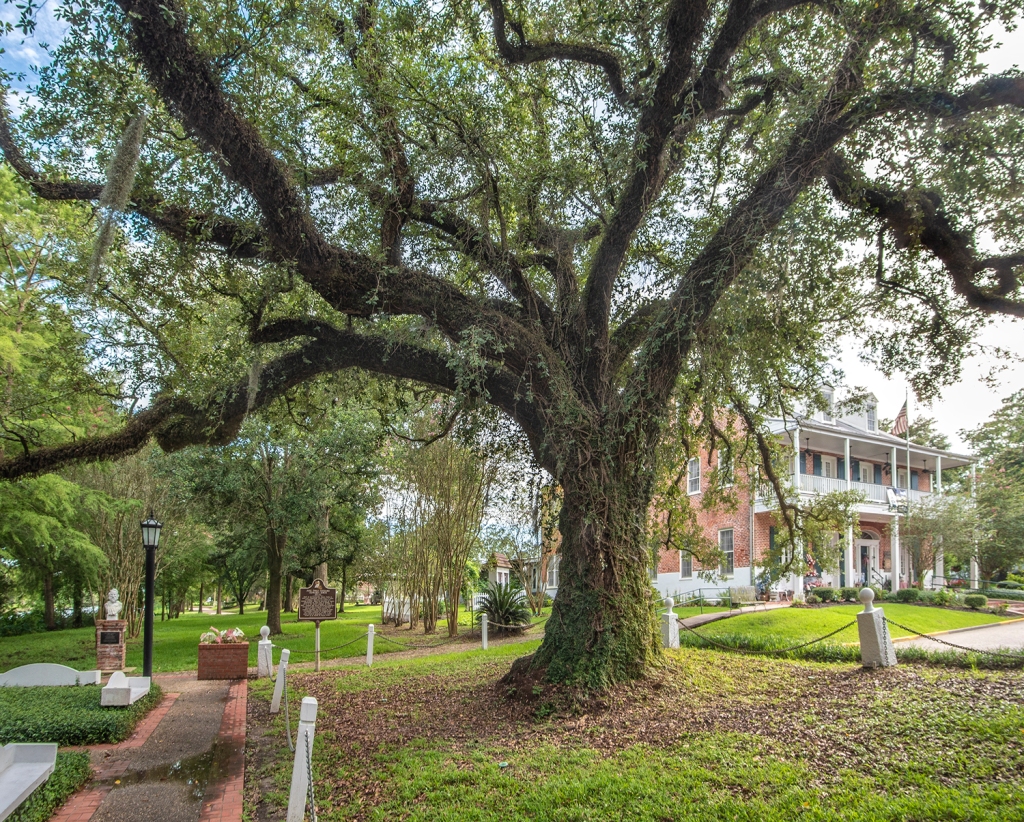
I know that the Cajuns are actually Acadians, from French Nova Scotia, kicked out after the French and Indian War and forced to resettle elsewhere–many of them, after a long and mostly horrific journey, arrived in the swampy wetlands of Louisiana and made their home here. I know that Longfellow’s epic poem “Evangeline”, about two lovers tragically separated during what is called le grande derangement–the Great Expulsion–who promise to find each other once they reach Louisiana. It’s a tragic poem, and of course the Evangeline Oak in St. Martinsville is supposedly the”place” that the fictional lovers finally found each other after so many years, but their pairing was simply not meant to be–the story is a tragedy, after all–but that was how the “Cajuns” came to be Louisianans, and even after they arrived it wasn’t easy for them here. The Creoles of New Orleans looked down their aristocratic noses at the lower class farmers, and so they settled in the part of Louisiana still known as Acadiana to this day.

I have a copy of Evangeline somewhere. I really should read it.

One of these years, I am going to explore my state more. I’ve lived in Louisiana now for almost twenty-seven years, and I’ve never done much in terms of exploration, sight-seeing, and research. The Atchafalaya Basin fascinates me, as does Acadiana. The more I read about the history of both New Orleans and Louisiana, the more I realize how little I know (I always laughed off being called a “New Orleans expert,” because there’s literally a library filled with information about the past of both the city and the state to completely humble me and make me realize I know actually very little about either, and definitely do not qualify to be called expert on anything Louisiana.

I’ve slowly started writing about the rest of Louisiana, but I often fictionalize the places I write about; they are loosely based on the reality but I get to play around with that sort of thing and that’s better for me than trying to write about the real places and making it all up. My first time outside of New Orleans writing about Louisiana was really Bourbon Street Blues, when Scotty is kidnapped by the bad guys and winds up deep in a swamp. “Rougarou” was when I came up with a fictional town and parish outside of New Orleans, which I’ve used since then again. Need had portions that were set in the rural parishes outside of the New Orleans metropolitan area. The Orion Mask and Murder in the Arts District also were heavily reliant on being set (at least partially) in a fictional parish between New Orleans and Baton Rouge. “Solace in a Dying Hour” is another one of these stories. Oh, and Baton Rouge Bingo also had a lot of action outside of New Orleans as well.

I probably should have majored in History for college, but what would I have done with that kind of degree other than teach? Ah, the paths not taken, since I never had any desire to be a teacher, probably my subconscious saying um, you cannot be a teacher because of who you really are which was probably smart. Besides, I wouldn’t have ever been able to pick a period to specialize in; I would have had to be like Barbara Tuchman, interested in everything and picking certain periods that intrigued me for study. How could I ever choose between the Wars of Religion and seventeenth century France, or the Hapsburgs in Spain and Austria? Although I suppose I could have specialize entirely in the sixteenth century, primarily because it was such a tumultuous transitional century. I wish I was a trained researcher, but I suppose I could still learn how to do research properly despite my great age; the problem is time. Fall Saturdays are given over to college football (and I am not giving up one of the great joys of my life) and of course Sunday I watch the Saints. But if I am going to write historical fiction set in New Orleans or Louisiana, why wouldn’t I avail myself of all of the magnificent research facilities here in the city? UNO, Tulane, Loyola and I’m sure Xavier all have archives in their libraries documenting the past here; there’s the Historic New Orleans Collection and the Williams Research Center and really, so so very much. I also need to explore the bayou parishes and the river parishes, and make my way further north to explore Acadiana…and if I ever want to write a book based on the Jeff Davis Eight, I would need to go visit that parish and look around, get a grasp for how it feels and looks there.

So much to do, so little time…and one of the great problems about Louisiana and New Orleans history is trying to decipher what is fact and what is fiction; as so many “historians” and “writers” (looking at you, Robert Tallant and Harnett Kane) often wrote legends and lore as historical fact. I’m not sure how much of Gumbo Ya-Ya is actually true or not, but for writing fiction…perhaps it doesn’t matter as much how right it is? I have this idea for a story, predicated on something I recently discovered again–I have a tendency to forget things–but there was a community just outside of New Orleans called St. Malo, which was settled by Filipinos who’d escaped bondage on Spanish sailing ships. Filipinos in Louisiana in the eighteenth century? But it’s true; and the community was mostly houses and buildings built over the water; the 1915 hurricane destroyed it completely and it was never resettled, with those who survived moving into the city proper. I have an idea for a story called “Prayers to St. Malo” that would be built around that, but the story is still taking shape. There is always more to learn about regional history here…and since I am doing such a deep dive into Alabama history, why not continue diving in regional here?

Louisiana is unique and special and different–which is why I think I felt at home here that fateful thirty-third birthday when I came to New Orleans to celebrate it. New Orleans was the first place I ever felt like I belonged, and I’ve never regretted moving here. I just wish I’d started diving into the local history sooner.

The World Turned Upside Down

Happy Second Class Citizen Independence Day, Constant Reader!

I am so tired of being Cassandra on the walls of Troy, warning people of the impending doom from the consequences of their narcissistic privilege, only to be either ignored or patted on the head condescendingly and told I don’t understand or am being terribly overdramatic. Well, too many of you didn’t listen and here we are.

But I am not going to talk about the fraud perpetrated on this country recently by six illegitimate and corrupt justices on the Supreme Court. This is the date designated as the nation’s birthday, and it’s a day of celebration as well as contemplation.

Despite its flaws and faults; its checkered history and immoral lapses in policy; and the current turmoil of bigotry and hatred and divisiveness, I still love my country. Despite the slanders and slurs hurled against people like me, I am a citizen just like anyone else in this country. I pay taxes like everyone else. There is nothing in the Constitution prohibiting my existence or my life or my reality; yet religious zealots, over and over again throughout our history, keep trying to seize control of the government in order to legislate their version of morality, theoretically based in their religion. I was raised in that religion, read the Bible and went to worship and prayed and Sunday school and all of that–as a child and without my consent. I know the Bible. I’ve read it, many times. I’ve studied it, read religious philosophy and religious studies. I’ve studied and read up on the history of Western civilization, which is forever yoked to the history of the rise of Christianity. I know when doctrine was decided as legitimate and what was heresy; what texts were left out of the Christian Bible and why; as well as the relationship of the New Testament and law to the Old. I’ve read up on the basic messages of many religions, from Islam to Hinduism to what most would call “voodoo” to the mythologies of ancient civilizations. The conclusion that I came to, from my reading and studying and so forth, was that the modern religions I considered all have, at their core, the same fundamental principle: be kind, be helpful, have empathy and compassion for others, and most importantly, do not judge. Judgment is reserved for God, however you choose to see him, and He is very jealous of that privilege. None of us are perfect and we are all sinners–but our sins are between us and God and are none of your fucking business.

Winston Churchill once said about the United States, “You can always count on Americans to do the right thing–once they’ve exhausted every other possibility.” It’s true. In his farewell address George Washington warned of our nation being dragged into “the broils of Europe” (which would make a great title), and that was the cornerstone of our foreign policy for generations. American soldiers did not fight a war in Europe until the first World War–and even then we only came in during the third year of the conflict. Likewise, we stayed out of the second World War, as the world erupted into flames, until we ourselves we attacked two years into the war, and the European allies of Japan also declared war on us. We have been participating in the broils of Europe ever since.

Those are realities. But our entrance into each war changed its course, and enabled the Allies to emerge triumphant. Defeating the Nazis is something we can be proud of, even as we essentially had an apartheid system of our own at home. Defeating the Japanese and putting an end to their war crimes is something we can also take pride in–even though there was a very strong element of revenge to the war–but using nuclear weapons on civilians to bring a close to the war is still morally and ethically questionable. (The horrific racism against the Japanese during the war was also abominable, and that’s doesn’t even take into consideration the horror of the unconstitutional incarceration of thousands of Japanese-Americans, while also robbing them of their belongings and destroying their businesses.)

But the ideals on which this country was founded–freedoms essentially from the potential tyranny of the Federal government–are very high-minded and noble. We have not lived up to those ideals too many times, and the fact that people who are straight, white, and cisgender have always been given priority over everyone who doesn’t fit into that demographic isn’t something we should be proud of–our system is flawed because human beings are flawed. Loving your country doesn’t mean turning a blind eye to its faults and problems, and critiquing and discussing moral, legal and ethical failures in our history, in my mind, is further proof that you do love the country and want it to live up to its ideals of equality and justice for everyone regardless of any adjectives that can be placed in front of the word American. My country has disappointed me, never more so than recently with a renegade Supreme Court discarding precedent, accepted law, and essentially pissing on the very idea of equality while pursuing what can be best be called a completely unAmerican agenda to undermine the basic principles of justice and liberty for all. Patriotism doesn’t require blind obedience and loyalty; which is why the Founding Fathers tried very hard to protect dissent.

I seriously doubt Benjamin Franklin or John Adams would ever agree that corporations are people, entitled to all legal protections of the individual while also not being held accountable legally than the individual; therefore the “citizenship” of corporations is also higher class than that of the individual.

But how can you not love and admire and respect the ideals the country strives to achieve? We haven’t always lived up to those ideals; many times we have failed, horribly.

I have always believed that the arc of justice always bends towards justice, and that we as a country can and should always be looking for ways to make things better, pass legislation to correct flaws and defects in the system, and always keep a wary eye out for corruption. The Founding Fathers also could not conceive of anyone making a career out of politics, either, which is why they established no term limits, which was a huge mistake. We have a presidential term limit now, but none for either house of Congress or the Supreme Court, or any federal bench for that matter. That was a major flaw and oversight in the drafting of our remarkable Constitution, with the end result we have a corrupt system where our politicians are often up for sale, and aren’t even ashamed. How does someone middle class or from a poor background go into politics and retire wealthy?

But, like Churchill, I have faith that my fellow Americans will always, inevitably, do the right thing–once every other possibility is explored and exhausted.

May you have a fabulous fourth of July, Constant Reader. I’ll probably make several posts today; who knows?

Causing a Commotion

Good morning, Thursday, how are you doing today?

We’ve been having a bit of a cold spell this week–cold for New Orleans in April, at any rate; the temperature has not gone over seventy this week. It’s also not gone below sixty, either–but these are unusual temperatures for this time of year here. April is usually our spring, with mid-seventies and no humidity–that doesn’t start until May and builds daily until September. I am a little worried about this hurricane season and how hot it’s going to be here this summer., but…don’t stress over things that you can’t control, Gregalicious. It’s not going to even make it out of the sixties and into the seventies today.

I was thinking the other night about how many wonderful books I’ve read this year, and was trying to remember the last time I read one I didn’t really like or enjoy very much (Nelson Algren’s A Walk on the Wild Side, absolutely hated it, but kept reading because I felt like I should). There’s so much good work out there from phenomenal writers that it’s kind of a good time to be a mystery reader. I mean, Bobby Mathews’ Living the Gimmick, Cheryl A. Head’s Time’s Undoing, and this Margot Douaihy debut alone are some amazing stories with terrific, mind-blowing language use. And that’s only three; I’ve read so many others that are great this year–and one can never go wrong with Carol Goodman.

The other day when I was driving home from work down Howard Avenue down to Harmony Circle, I was stopped at the light at Carondelet. Usually, I just keep my eyes on the light waiting for it to change, but this time I wanted to see who was driving the car beside me in the right lane (because they’d been driving erratically ever since we merged onto Howard off Loyola). I don’t remember anything about the driver or the car now (it was of no import, really) but I noticed something I’d never seen before: The Museum of the Southern Jewish Experience (https://msje.org/)! Over the years, studying and reading up on New Orleans history, I was always struck by how important the Jewish community in New Orleans was, and by the fact that there were very few books (if any) I could find about the rich and varied history; the first King of Rex was Jewish (Rex restricted the Jewish community from membership shortly thereafter), and there were so many that were philanthropists and did a lot of good for the city–and the Jewish experience in New Orleans had to be vastly different than that of those who settled in New York; most of the Jewish community here (I believe) were Alsatian or German in heritage. But it was very exciting to discover that there’s a new museum about that very thing! Tickets are only $15; so I think once this revision is finished and off my desk I might spend fifteen bucks to go check it out–it’s also walking distance, so even better. What better way to start looking into the history of the Jewish community in New Orleans than a visit to a museum that focuses on that very thing?

And I should also check out the World War II museum, which is also a short walk. And twice as expensive! But I could also make a day of it and have lunch there at the restaurant, which is obviously 1940’s themed. That would make a lovely day, wouldn’t it? And World War II just fascinates me so much. I should reread Christopher Bram’s debut novel, Hold Tight–it’s been a hot minute and I of course don’t remember anything about it except undercover gay man looking for spies in the queer underground in San Francisco during the war.

Despite my good night’s sleep, I started flagging a bit in the afternoon, and was terribly tired after I ran the errands and did some chores once I got home before collapsing into my chair to provide a lap for Scooter to sleep in. (Never ever underestimate the power of a cat purring in his sleep in your lap for relaxation and comfort.) My sleep was continually interrupted by having to get up to go to the bathroom several times in the first few hours of sleep–not entirely sure what that was all about, to be honest–but was able to get up out of the comfort of bed gradually (I do feel like the bed and the blankets are kind of calling to me now to come back). Tomorrow instead of getting to sleep later than usual, I still have to get up to go in for a health fair (required for our health insurance) and then have a staff meeting before getting to come back home. I did manage to buy early check-in for my flight to Malice Domestic in a couple of weeks, and made the parking reservation at my preferred off-airport lot. So that’s all taken care of, huzzah! And and it’s kind of Thursday already, isn’t it? I don’t feel like I got as much done this week as I should have, but that just means I really have to dive into the book this weekend–which is fine, really. I’ve been super productive on weekends lately, which is actually a very good thing, and I am already falling behind on this one as it is. I don’t think I have to go make groceries this weekend, either; I probably should anyway, just to get some odds and ends that we’ll probably need to replenish.

And on that note, I am heading into the spice mines. Have a lovely day, Constant Reader and I will check in with you again tomorrow.

She’s So Cold

I was tired last evening when I got home from work, so didn’t get a lot of anything done; in fact, I’m not really sure I remember what I actually did last night when I got home from work? I must have been really tired, don’t you think? Scooter kept waking me up throughout the night howling; it was kind of annoying and he’s taken to howling pretty regularly. I am not sure what is wrong with him per se; it does concern me that something might be wrong with him, but there’s no rhyme or reason to it. It’s the same howl when he’s hungry or needs water and sometimes, he just stands in the living room and howls.

I made the appointment yesterday finally with my doctor to get my toe looked at; it’s almost completely better now and will probably be fine by the time I get in to see him. Not to worry, though; I took a picture of it at its worst. I also made another crucial medical appointment, and now still have to make the appointment with the ENT and my dentist and my eye doctor; I’m going to try to get as much taken care of as I can this year. I’m a bit groggy this morning, and I know we have a full schedule at the office today, which is cool–the day will fly by–but I will probably be exhausted when I get home; seeing that many clients tends to wear me out and run me down, but I should swing by and get the mail on my way home. Hopefully I won’t be too tired to get some things done tonight, either. The sink is full of dirty dishes from Sunday night, for one thing. Sigh. I didn’t even read when I got home, either. I don’t know what was going on with me last night when I got home from work, seriously–or why I can’t remember what I did last night, either.

Oh, yes, now I remember. I had a phone call last night with someone and it lasted for over an hour, and that exertion of extroversion was what completely did me in last evening once I was home. I collapsed into my easy chair, watched videos about World War II on Youtube for a couple of hours, and then went to bed relatively early–around nine, to be exact. I slept decently, or would have, had Scooter not been in a mood last night, and that consistently interrupted night of sleep is why I am a bit out of it this morning. Hopefully my morning coffee will do the trick and snap me out of this whatever it is I am feeling this morning. It certainly is going down well this morning–and it was last night when I was messing with my medical apps and making appointments for myself. Mystery solved! And, in fairness, not really a terribly memorable night at all; no wonder I couldn’t remember what I did last night at first. I also started rereading a story for an anthology, editing it to make it cleaner, tighter and more concise–always a help when you’re working on a short story–and that actually felt kind of good to me to do, in all honesty. I also got my panel assignments for Saints and Sinners as well as the panel I am moderating, which I am going to need to be prepared for–preparation always helps with the horrible stage fright i always have before a panel, or the exhaustion that comes after said panel has finished.

But I am actually looking forward to it this year, which I didn’t last year because I was in the weeds with a book and being EVP of MWA and….so much, really. I will be commuting between our suite at the hotel and the Lost Apartment so we won’t have to board Scooter, and lots of friends are coming in this year. We were also still in that weird pandemic place last year, too–not that it’s over now by any means, but people still cared about it then–so running down and coming home wasn’t really as disappointing as it ordinarily would have been in a more “normal” year.

I am also feeling a little tired today and will probably have to be a vegetable when I get home from work tonight. I don’t have to make any stops other than to pick up the mail, and I probably should make something that I can bring for lunch the rest of the week. If I have the energy to clean the kitchen I might go ahead and just make a big bowl of salad that I can take for work the rest of this week. I kind of need to start changing my diet gradually if this issue with my toe is actually gout; exercise won’t solve that problem but diet will–exercise will help with the other issues I have, blood pressure and cholesterol, and the change in diet will help those issues as well. I basically am going to have to primarily be a vegetarian and avoid meats, especially red meats–which of course are my favorites. But if I recall what I read correctly, I think even turkey and chicken are problematic, too. I guess eating salads for lunch and more greens in general is a step in the right direction, at any rate.

I still can’t wrap my mind around the idea that I may have gout.

I suppose that’s better that psoriatic arthritis.

And on that note, I am heading into the spice mines. Sorry to be so brief and dull today; that’s what happens when Greggy is feeling groggy. Have a terrific Tuesday and I will see you again tomorrow.

If Anyone Falls

I absolutely loved the tag line for the marvelous television adaptation of Megan Abbott’s equally brilliant novel Dare Me: “There’s something dangerous about the boredom of teenaged girls.” It’s also incredibly accurate; our teen years often impact and influence who we become and can color the rest of our lives. I loved Dare Me; it was lyrically, hauntingly written, and the story it told, while actually pretty simple, showed how the intricacies of relationships between young girls and authority figures who aren’t much older than they are, can become so complicated and complex; layers of love intermingling with hate and jealousy, the power dynamic shifting and changing as the characters themselves shift, change, and grow from their experiences.

I write, sometimes, books where the main characters are young–teenagers, either in high school or college or having just completed college–and those books are often labeled and marketed as “young adult” fiction, even though I generally just consider them novels about young people. I mean, technically novels about young people are young adult novels, and yet while I am resigned to this marketing label I am never certain if my books truly qualify or not. Perhaps that’s some kind of internalized arrogance and a sense of subconscious superiority to what I consider something lesser; it’s definitely something I should unpack at some point. But I think it is also an interesting starting point for one of my endless essay ideas, and perhaps someday–when I am less scattered, less all-over-the-place mentally and creatively–I’ll be able to sit down and write all those essays I want to write.

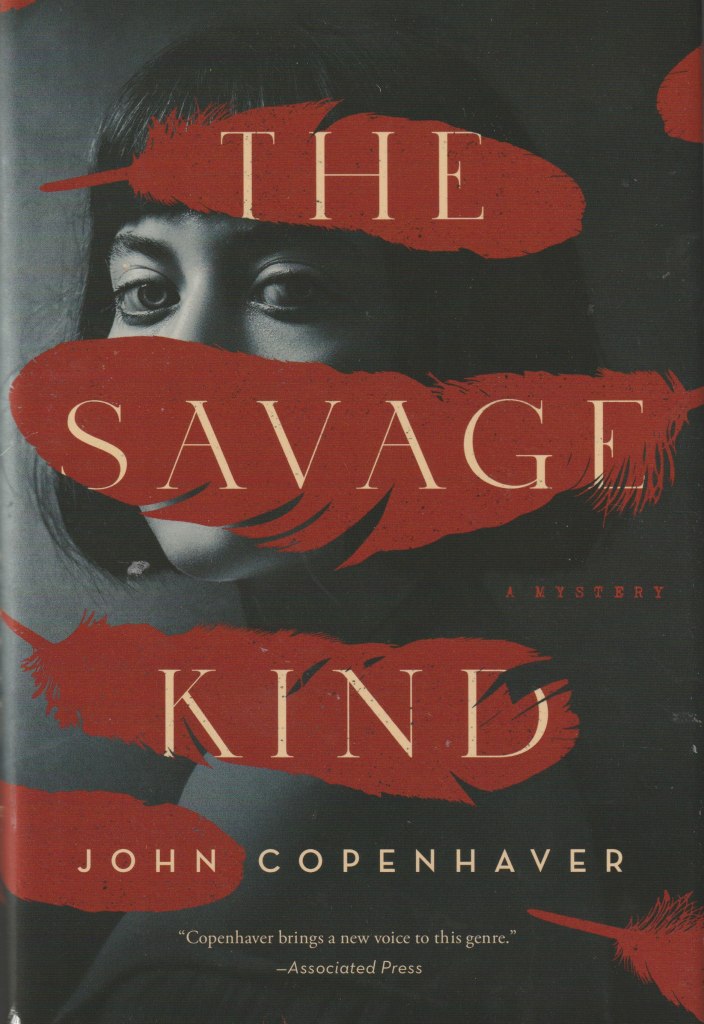
Which brings me to John Copenhaver’s second novel, The Savage Kind, which I just finished reading yesterday.

If I tell you the truth about Judy and Philippa, I’m going to lie. Not because I want to, but because to tell the story right, I have to. As girls, they were avid documentarians, each armed with journals and buckets of pens, convinced that future generations would pour over their words. Everything they did was a performance. Everything they wrote assumed an audience. After all, autobiographers are self-serving, aggrandizing. Memoirists embellish. It’s unavoidable. To write down your memories is an act of invention, to arrange them in the best, most compelling order, a bold gesture. Some of the diary entries that follow are verbatim, lifted directly from the source, but others are enhanced and reshaped. I reserve my right to shade in the empty spaces, to color between the lines, to lie.

You may balk, dear reader, but I don’t care. I need to get this right.

I could take different approaches. I could contrast the teenage girls: the black hat and the white, the harpy and the angel, the cunning vamp and the doe-eyed boob. Or I could draw them together, a single unit: Lucy and Ethel, Antony and Cleopatra, Gertrude and Alice, Holmes and Watson, or even, I dare say, Leopold and Loeb. But neither of those angles would work. The complicated facts are inescapable. These girls are both separate and together, but many times, they followed their own paths and even crossed one another. Things are never that simple, never that black and white, that good or evil, or that true or false. I’m not writing this to assign blame, or to ask forgiveness, or to tie it up in a bow for posterity. It’s not that kind of book.After all, an act of violence committed by one may have originated in the heart of the other. That’s to say, this is a story about sisters, and like many of those dusty and gruesome stories from ancient literature, here sisterhood is sealed in blood.

I should know. I was one of them.

Great opening, right?

John’s debut Dodging and Burning won the Macavity Award*, and was quite the impressive debut. II was completely blown away by the book myself–it showed a maturity and sophistication in theme, writing, and characters that one rarely sees in a debut novel. One of the things I thought was very interesting about the book was that while it did focus on a gay story, the main voices in the book were young straight women; I thought that was a risky thing to try to pull off, but he did a really excellent job.

As good as Dodging and Burning was, I wasn’t prepared for how good The Savage Kind would be.

The heart of the book is the friendship/relationship between two damaged young women in the post-war afterglow of the late 1940’s in Washington DC. (Both of John’s novels are set in the post-war period, when the world was trying to go ‘back to normal’ after the massive paradigm alteration of a global war that left most of Europe and significant parts of Asia in ruins; tens of millions dead, billions in property damage, and the world needed to rebuild from the rubble–and normal was also being redefined; the paradigm shift caused by the war made going back to “the way things used to be” practically impossible–which makes it a very interesting time to write about.) Philippa’s mother died giving birth to her and she has a slightly adversarial relationship with her stepmother, Bonnie. Judy was raised in an orphanage and adopted by a wealthy couple who had lost a daughter in a particularly brutal way–Judy was adopted to replaced their raped and murdered daughter, but her adoptive parents are still too scarred and damaged from the lost of their own child to raise and love another, and this history also colors Judy’s personality and who she is. The two girls find each other and become very close friends; so close that their love for each other might go even deeper than the Platonic ideal of friendship–their teenaged hormones raging out of control, are romantic/sexual feelings also developing between the two of them?

They are also playing girl detectives, trying to get to the bottom of a mystery that they don’t know has anything to do with them beyond the idle curiosity (and their dangerous boredom) but as they look further into the mystery revolving around a classmate, a favorite teacher, and that classmate’s family–as well as their own–they become more and more deeply enmeshed in danger and cling even tighter to each other.

As if that juggling act isn’t tough enough, Copenhaver makes all of these characters realized, fully developed and realistic in their emotions, their feelings, and their reactions. He also tells the story in alternating points of view between the two girls while they are experiencing the events, as well as a narrator voice from the future, telling the story in retrospect as well as talking directly to the reader. This is hard to pull off, particularly the omniscient future narrator–the last time I saw this used so effectvely and memorably was in Thomas Tryon’s The Other (at least, this is the book that popped into my head as I was reading, and it’s a favorite of mine).

The Savage Kind was nominated for a Lefty Award, and it very deservedly won the Lambda for Best Mystery recently. I highly recommend it!

*I may be wrong here, but I think he might be the first openly gay author of a book with gay characters and themes to win the Macavity Award; I know I was nominated once for a short story–but my characters and themes weren’t queer.

Nightbird

Tuesday and back to the office. Huzzah?

I guess. It doesn’t feel like I accomplished much this weekend, but that’s nothing new. I always feel like I should have done more when the weekend–especially a long one–has ended; but I am trying not to beat myself up as much over stuff like this as I used to. It’s not good for my mental health, for one–always a shaky thing at the best of times–and it’s counter-productive. I feel very strongly that one should never regret things–no regrets is kind of a mantra of mine–because regret is really a waste of time and energy. You can’t change it, after all. (I am not saying this rule should apply to everything–murder, for example–but for anything that isn’t a crime, you should have no regrets. All you can do is change the behavior and not repeat it if you feel regret but wallowing in the regret is counter-productive and kind of self-defeating. I think you get the point. I’ve not had enough coffee to be certain I am making the point properly.) I didn’t finish reading my book, I didn’t write nearly as much as I could have, and I certainly didn’t get the apartment as clean and organized as I would have preferred. But it’s also a short work week, we have a regular weekend coming up and then another three day holiday after that; and then I am off to Florida for Sleuthfest–which makes that an even shorter week than usual. And since yesterday was a holiday, I actually get to use my Friday as my work-at-home day of the week. Huzzah! That will be nice, and I have all kinds of things I can take home and do this Friday.

We finished watching The Defeated last night and it’s really quite good. It was originally released in 2020 and approved for a second season, but the pandemic interfered and it looks like they went into production sometime last year, but where is the second (and final) season? It’s really good–if you enjoy Babylon Berlin or have any interest in the second world war and it’s aftermath, you’ll really like this show.

Well, yesterday I ran my errands–Metairie and the North Shore–and after I was finished and heading back home, I realized something: you can actually tell where an area falls on the political landscape based on the length of the drive-thru line at a Chik-Fil-A. The one in Metairie on Veteran’s Boulevard yesterday, for example–was so long it backed out onto Veterans and was blocking a lane of traffic. No offense to right-wingers, but there’s really no fast food in the world good enough for me to sit in a drive-thru line that would take that long (although now it occurs to me that it could also be an indication of how slow the line moves, which again–no fast food is so fucking good that it’s worth waiting in line for a minimum of twenty minutes for).

It was exhausting, of course–the heat index was well over a hundred yesterday–but it was also a beautiful day for a drive across the lake. I used to loathe driving over the causeway bridge, and it’s still not a favorite thing for me to do (the five dollar toll to come back to the south shore doesn’t help; yes, it’s free to go to the north shore but you have to pay to come to the south; just like when the Crescent City Connection was a toll bridge going to the West Bank was free but you had to pay to come back to New Orleans), but I’ve adapted and can now relax (depending on the idiot drivers, of course; there are always a few) as I drive across and enjoy looking at the beautiful expanse of water. The bridge is twenty-four miles long, so you can reach a point where you can’t see land in any direction, like you’re out there in the middle of the water with no end to it in sight–I think that was what always used to bother me about driving across the bridge. The north shore is also actually quite beautiful, too–you really feel like you’re in the South on the North Shore, more so than on the south shore, where it feels like Louisiana, if that makes sense? (although it would make for an interesting thing to write about in a Scotty book, hmmm) I do wish I had more free time, because I would like to go exploring around the city a bit more–the north shore, the river and bayou parishes–but the cost of gas is also making such explorations prohibitive. Maybe over the 4th of July weekend I can head down to the river parishes….I kind of need to for this new Scotty book. Then again, I am inventing a parish out of my imagination, but it also doesn’t hurt to ground a fictional parish in reality, either.

And on that note, I need to head into the spice mines. Happy Tuesday and will chat at you again tomorrow, Constant Reader.

Beauty and the Beast

Holiday Monday, which is celebrating Juneteenth (if you want to know more about the holiday, this is a great place to start). It’s hard to believe, and more than a little sad, that it took until recently for this to become a federally recognized holiday. Honestly.

Better late than never, I suppose–which is hardly any consolation, really.

But it’s nice to have another three-day weekend (I can’t remember which holiday we gave up for this one at my dayjob, but we only are allowed no more than eight holidays for some reason), and I slept late again this morning. The cappuccino yesterday morning had no effect on my sleep, so I am having another one this morning, which is lovely. I really do love the way they taste; I just wish making them wasn’t so complicated and dirtied up so much stuff. I made Swedish meatballs yesterday afternoon and that mess still needs to be cleaned up as well. Heavy sigh. What can I say? I got caught up in watching television once the meal was ready and stayed in my easy chair until it was time for bed. We watched the new episode of Becoming Elizabeth, which isn’t bad but it’s not overly compelling either–which is weird, because the period between Henry VIII’s death in 1547 and Elizabeth’s accession to the throne in 1558 was very fraught and very dangerous (Anya Seton brilliantly captured this period in her seminal novel Green Darkness, which I highly recommend along with the warning “it’s quite long”); but it’s not really translating to the screen very well in this production. I also spent some more time with John Copenhaver’s marvelous The Savage Kind, which I hope to do again today.

We also started watching an amazing show on Netflix that originally dropped in 2020 and whose second season was endlessly delayed by the pandemic (I checked it out on-line as we watched) called The Defeated starring Taylor Kitsch as a Brooklyn homicide detective who is “loaned” to a small precinct in the American sector of Berlin in 1946 to help rebuild their station along American police standards; which is a challenge. None of the people working as cops there have any experience in being police officers; some are young boys while the majority are women. The Germans aren’t allowed to have guns, so they have an “arsenal” where they keep their bedposts and other wooden sticks; the Russians are horrible; and Kitsch himself is looking for his brother, a soldier with mental problems who’s gone AWOL and whom Kitsch suspects is targeting and murdering Nazis. It’s extremely well done–think Babylon Berlin but only in another twenty years–and it also asks a lot of ethical and moral questions that really don’t have answers. The woman who runs the station, is the “superintendent” or captain of the squad–wasn’t a Nazi but her protestations about “we weren’t all Nazis” have the same credibility of a prisoner at Angola claiming innocence: no one admits to being a Nazi once the war was lost, after all. At one point she says, very poignantly, “The war is over and the entire world hates us because of what we did, or allowed, and who can blame them?” This seems particularly poignant given the current political climate in our country; I know it seems extreme, but I’ve seen other people comment on Twitter and other social media about how they feel sometimes like “they are living in Weimar Germany and it’s just a matter of time.”

I know I’ve certainly felt that way at times.

We also watched a classic old Bette Davis film, The Letter, which I’d realized I’d never seen yesterday so I pulled it up and started watching. I had read the original short story by Somerset Maugham a few years ago for the Short Story Project, and enjoyed it tremendously. The story is told from the lawyer’s point of view, while the movie certainly shifts the focus over to Leslie Crosbie, wife of a Malaysian rubber plantation owner, who shoots and kills a man she accuses of trying to rape her. Everyone believes Leslie…but you see, there is this letter that exists that contradicts her story, and the more lies she tells, the less her lawyer believes her–although he ultimately pays a blackmailer to get the letter back so she escapes conviction. In the story it’s all from the lawyer’s point of view; she’s merely the wife of a friend he is taking on as a favor, and he doesn’t know her well…but as he (the lawyer) discovers the existence of the letter and recovers it, he slowly begins to see through her lies and to see her as she really is. He doesn’t expose her–he allows her to escape her punishment–but he confronts her with the letter after the verdict and she confesses everything…only to return to her loveless marriage at the rubber plantation. The story and the movie both are steeped with the Imperialistic and racist overtones of the time the story was written and the film made; the ending of the movie is different than that of the story because of course, for the Hays Code of the time she couldn’t be seen as not being “punished” for her crime; she is murdered at the end by the Eurasian widow of the man she killed (his marriage to this mixed-race woman is what sets the tragedy in motion) during a party celebrating her verdict. There was one scene in particular that really made me shake my head: after she has told her story of being almost raped and committing murder to protect herself, she makes dinner for her husband, a friend of the family, and the local police magistrate and they sit around eating and talking about things like nothing’s happened. As we watched this season, Paul–who had no idea of what the movie was about–said, “Oh, he didn’t try to rape her, did he? She’s a cold-blooded killer.” GREG: “It’s Bette Davis, what do you think?”

Although it did make me think about false accusations of rape again, which is one of the myriad of reasons women generally tend to not be believed about being assaulted. There’s probably a really good essay to be written about that.

I also wrote yesterday, which was really lovely. I managed to get the first chapter of that manuscript written; I plan to look at it again today and tweak it a bit. I have a lengthy errand to run–must go over to the North Shore–and when I get home, I plan to write for a while before retiring to my easy chair with my Copenhaver book (I am really enjoying it, y’all) before we finish watching The Defeated (y’all, it’s really good). I’m not sure if what I wrote yesterday is actually any good or not; it remains to be seen, I suppose, and let’s face it, I am not (nor have I ever been) the best judge of my own work. But we shall see today, I suppose. It felt good to be creating again and it felt good to be finishing something, even if it’s just a shitty draft. I’d like to be able to get a lot more written today, if I can…

And on that note, I am heading into the spice mines. Talk soon, Constant Reader!

Won’t Get Fooled Again

I am classified as a baby boomer because of the year I was born (1961) but I kind of think I am an exception to that rule, or should be, at any rate. My parents just missed being boomers, being born in 1942, but they don’t remember the war, and I think the war is the real defining generational moment. But I grew up around older people (they seemed ancient!) who had served. Our neighborhood in Chicago was a melting pot of various eastern/middle European refugees who came after the war, and for me that made the war seem very real as opposed to a historical event. We saw all the films in elementary school about the war–along with some extraordinary pro-American anti-Communist patriotic propaganda–and as very young children we were exposed to the films of the camps. The Holocaust was real, it was recent, and it was still absolutely horrifying. (We were also taught why using atomic weapons on Japan was the right, moral decision and hey, they started it after all–but that’s a topic for another day.) I remember watching a documentary series on PBS called The World at War, and of course, old war films were being shown on television all the time. (And somehow, Hogan’s Heroes was also on the air when I was a child–and then rerun in syndication for quite a while.) I read a lot of war fiction growing up–From Here to Eternity to The Caine Mutiny to War and Remembrance to The Young Lions to Tales of the South Pacific. I read a lot of World War II books–and there were even more books where it was a major part of the plot but it did affect the story and the characters in some way. (You can even stretch and include The Godfather–both book and movie–because Michael Corleone was a war hero at the beginning.)

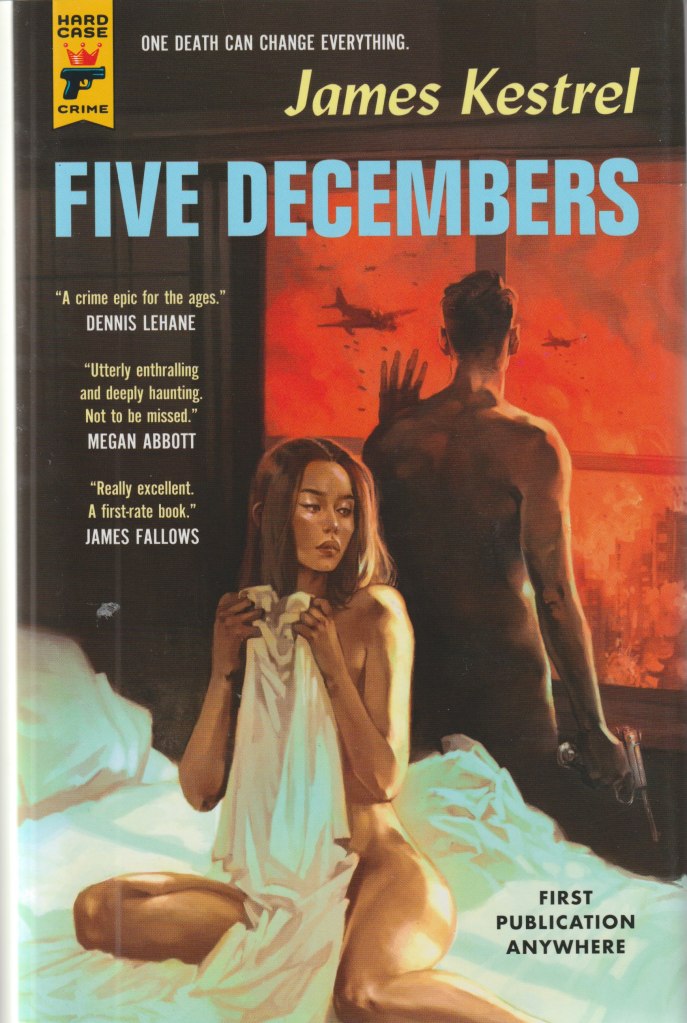
I also fell in love with Hawaii the first time I went in 1991; I went every year after that until 1995 (thank you, flight benefits!) and I miss it. I would love to go back again, and I would imagine it’s very different there now than it was the last time I was there. But on one of those trips to Hawaii–I don’t remember which one–I came up with a very basic idea for a book, that would open on December 8, 1941. The wrecks in Pearl Harbor were still smoking and the entire island chain was on high alert. My idea was to then have an Army brass’ wife call the local police station to report a murder: she found the young Japanese man who worked for her doing yard work and odd jobs with his throat cut in her rose bushes. That was as far as the idea ever progressed, and I never have had the time to sit and think it through. But I love that opening idea, and that set-up; even as I type these words now characters are taking shape in my head (KNOCK IT OFF, CREATIVITY)…anyway, so it was a no-brainer that I wanted to to read Five Decembers by James Kestrel the first time I learned of its existence.

Joe McGrady was looking at a whiskey. It was so new the ice hadn’t begun to melt, even in this heat. A cacophony surrounded him. Sailors were ordering beers ten at a go, reaching past each other to light the girls’ cigarettes. Someone dropped a nickel in the Wurlitzer, and then there was Jimmy Dorsey and his orchestra. The men compensated for the new noise. They raised their voices. They were shouting at the girls now, and they outnumbered them. The night was just getting started, and so far they weren’t drinking anything harder than beer. They wouldn’t get to fistfights for another few hours. By the time they did, it would be some other cop’s problem. So he picked up his drink, and sniffed it. Forty-five cents per liquid ounce. Worth every penny, even if a three-finger pour took more than an hour to earn.

Before he had a taste of it, the barman was back. Shaved head, swollen eyes. Straight razor scars on both his cheeks. A face that made you want to hurry up and drink. But McGrady set his glass down.

“Joe,Tip said.

“Yeah?”

“Telephone–Captain Beamer, I guess, You can take it upstairs.

He knew the way. So he grabbed the drink again, and knocked it back. The whole thing, one gulp. Smooth and smoky. He might as well have it. If Beamer was calling him now, then he was going to be pulling overtime. Which meant tomorrow–Thursday–was going to be a bust. Molly was going to be disappointed. On the other hand, he’d be drawing extra pay. So he could afford to make it up to her later. He put three half-dollars on the bar, wiped his mouth on his shirtsleeve, and went upstairs.

I had heard great things about this book–it literally won the Edgar for Best Novel last month–and of course, it’s time and setting (a murder mystery set in Honolulu just before, during and after December 7? Oh hell yeah) made it a must-get. I didn’t read it as soon as I got a copy of course; it went into the TBR stack and moved up quite a few places after it won the Edgar. On the one hand, I’d heard nothing but great things about the book (and it won the Edgar)…but on the other hand, I also was worried about how this Pearl Harbor noir might affect my potential write-sometime-in-the-future-but-before-I-die Pearl Harbor murder mystery; namely, would I simply think oh this is so fucking good I can’t bear to write something that would be compared (unfavorably) to it because mine would inevitably be the weaker of the two? (I know how unhinged this sounds, but I’ve never pretended that anything that goes on inside of my brain is anything other than that.)

Yes, the book is that good, and no, it didn’t leave me thinking that I could never write my own book idea. If anything, it made me think, oh, I should try mine at some point but I am going to have to do a shit ton of research–which was something I already was aware of, to be fair–but its a good idea and could be interesting and fun to work on.

So, yeah, there was clearly no need to wait to read this outside my own neuroses.

Joe McGrady is the hero of this tale, which does indeed open in late November/December 1941 and finally wraps up the case in December 1945–the “five Decembers” of the title. Joe is ex-military and wound up in Honolulu on the police force, where he is neither liked nor trusted because he didn’t come up through the ranks; the thin blue line in Honolulu considers him to be an outsider. The case he catches while having a drink in the bar involves two bodies found butchered in a hut on a pineapple plantation; a young white male and a young Japanese female, stripped nude and essentially gutted. The case has wider implications other than the apparent (“my god, someone butchered two people in an extremely violent and gory way!”) as the young man is the nephew of Admiral Kimmel, the commander-in-chief of the Pacific Naval Fleet. As tensions between the United States and Japan are heating up to the inevitability of war, the murder of someone related to a person so high up in the chain of command could be espionage, could be any number of things that could have an effect on the security of the country and the Pacific fleet–and we, as readers, are also very aware of what’s around the corner in just a few days. Joe does note that his boss seems a bit weird about the investigation, and he’s paired with a bruiser detective who likes to beat information out of people and confessions out of possibly innocent people. He’s dating a young woman who attends the University, and may even be falling in love with her. We don’t get a lot of backstory on Joe, but the strength of the authorial voice makes unemotional, mostly internal Joe a hero you can root for. The trail of the murders eventually leads to Hong Kong, and Joe sets off on the transoceanic flight, which includes stops at Guam and Wake Island, where he picks up more clues and the trail of the possible killer–and there’s a murder victim on Wake kind of similar to the ones in Hawaii. But once he arrives in Hong Kong he decides not to immediately go to the police department there and ask assistance; rather he decides to follow the trail himself at first…a mistake, as he winds up getting arrested and framed for a rape. He is in the Hong Kong jail hoping that the US Embassy will get him out when the bombs start falling. He is taken to Japan as a prisoner of war, and the case–and the book, take a completely surprising twist and turn once he is there.

Anything else would be a spoiler, so I can’t really talk about the story anymore–but it’s compelling, convincing, beautiful and tragic and sad all at the same time. We see a lot of things through Joe’s eyes–both inhumanity and humanity; the absolute horrors of war (there’s a horrifyingly grim account of the fire bombing of Tokyo), and finally, the war ends, he returns to Hawaii, and is able to at long last close the case in a way that is enormously satisfying.

I really really enjoyed this immersive book which used a hardboiled crime story to talk about the horrors of war and the inhumanity that xenophobic and racist values and beliefs can create. It was riveting and very hard to put down once I started.

Highly, highly recommended.

It’s So Hard For Me to Say Goodbye

That isn’t really true. At least not completely, at any rate. I have walked away from a lot of people in my life, nearly all of them toxic in one way or another (in some cases, multiple ways). It sometimes takes me much longer to get rid of toxic people than it might–I will inevitably always excuse behavior, because I always think I deserve on some level to be treated like garbage (thanks, homophobic world in which I grew up! Hugs and kisses!) and so I always take the blame whenever there’s an issue.

But I do inevitably wake up, the proverbial scales falling from my eyes, because that toxic behavior will eventually continue until I’ve been pushed too far, and then–you’re dead to me. Literally. I mean, when you’ve pushed me that far there’s really nothing to discuss, and your behavior has to be pretty heinous, repeatedly, for me to walk away. It also means you’ve probably apologized for that behavior several times before–but you don’t change that behavior, and I no longer want to deal with it.

In other words, when the aggravation you provide outweighs whatever pleasure I get from knowing you–and I’ve also reached the point where I no longer care what you think about me, or what you say about me to people we both know, it’s time for you to go. PAST time for you to go.

I slept very well last night, which was marvelous. I stayed in bed an extra hour after waking up this morning, napping on and off until the call of the coffee became simply too strong to ignore anymore. The coffee also really tastes good this morning, which is weird–it’s not like it could be stronger or anything, since I have a Keurig and every cup is theoretically the same, the only difference being the kind of roast or whatever I use–do you call different kinds of coffee flavors, even though they have flavored coffee? I actually like Starbucks brand, to be honest–their French and Italian roasts, Cafe Verona, and Sumatra, as well as Folger’s Black Silk, and some generic store brand darks aren’t bad, either. I usually alternate between them all morning so as to never get burned out on a taste I like. But for some reason–the rest? –the flavors are more noticeable this morning. I knew–or was pretty certain–I was going to sleep well because I got very tired at the office yesterday afternoon. I felt fine all day, but right around three o’clock I hit the wall and was very exhausted. I came straight home from the office, did some chores around the house, and then retired to my easy chair to watch some World War II documentaries on Youtube before switching over to Ukraine war coverage on MSNBC. The eerie similarities between this conflict and the start of World War II are, while not exact, still troubling: Russian takeover of Crimea=Nazi takeover of the Sudetenland (a brazen land grab the rest of Europe allowed to “keep peace”); the invasion of Ukraine=invasion of Poland (but it’s not going as well and as easy for Putin as it did for Hitler, obviously). The US armed and loaned money to the Allies for over two years before being drawn into the conflict; we are currently supplying and loaning money to Ukraine.

And while Putin and his “intelligence” clearly underestimated the resistance and will of the Ukrainian people, they also didn’t count on Volodymyr Zelenskyy becoming, in the face of one of the greatest crises any leader can face, the true heart and soul of his country. Talk about rising to the occasion! We all like to believe we would stand up in the face of such a crisis…but would we?

Today is my work-at-home Friday. There is data to enter, condoms to pack, and chores to be done around the house. I need to finish editing a manuscript, I need to work on a short story and perhaps edit a few more, and of course there are the general weekend errands that need to be run. It’s kind of gray outside today, and the forecast is for really horrible weather later this evening–tornados and high winds and heavy rains–so tonight is going to be the perfect night to curl up with the new Alex Segura novel. I am saving it as a reward for getting everything done this weekend that I need to get done; although I will probably crack it open to get started tonight. Yay!

And on that note, tis time for me to head into the spice mines. Y’all have a great Friday, and I will talk to you again tomorrow.