Step by Step

How on earth is it Pay-the-Bills Wednesday again already? As my grandmother used to day, “lord, have mercy” (it sounded like lawd-a-mersuh) But the week has gone rather well thus far, so no complaints on that score. I did feel a bit tired yesterday afternoon at work, but I just keep my head down and keep plugging away. I was very organized and efficient at work yesterday, too, and I have some catching up to do this morning but that shouldn’t be much of a problem. We’re aren’t terribly busy today, either, which is nice. We also started watching a new series on Netflix, Unchosen, which is about a British cult (fictional), but it’s incredibly well done and chilling–and like Trust Me: The False Prophet, focuses on a woman victim of the cult who is starting to think the cult may not be what it’s presented to be. (Watch Trust Me–you literally can trust me on this.) I’ve always had a mild interest in cults; I remember when they found the corpses at Jonestown when I was in high school. There was also a cult in the county seat where we lived in Kansas. They had purchased the campus of a defunct religious college and taken it over as a “religious college”–but only the religion was their cult. Those people were creepy as fuck, and it was even scarier the way they would corner people to proselytize; it happened a few times to me at places as varied as McDonalds, a gas station, and the grocery store. I looked the cult up a few years ago, when I remembered how weird that was–for a religious, deeply conservative Midwestern state, a lot of weird fucking shit goes on there–and they’re declining. The campus was sold to a local land-grant university, and I even found a book by someone who had left the cult. that I ordered but haven’t read yet.

There are still so many Kansas stories I want to tell.

I was also thinking about the hypocrisy of the entire “tradwife” thing. For one thing, traditional farm wives who baked their own bread and churned their own butter generally didn’t have running water in the house or electricity; so these grifters trying to sell this brand shouldn’t be using what the women they are emulating would have called witchcraft. Just a thought. And isn’t it interesting that conservative women are trying to sell women on the notion that it’s better to be so fucking busy in the kitchen and the daily chores to think about what they actually want from life. There’s a harrowing passage in Robert Caro’s first volume of the LBJ biographies he’s writing about what a day in the life of a rural farm wife was like, and I’ve never forgotten how awful and hopeless their lives were when they had to boil clothes and run them on a washboard to clean them–and having to cart the water from the well, which took multiple trips, not to mention trying to keep the house clean and the larder stocked and cook and take care of the children. (Loretta Lynn remembers those hard times with love and through rose-colored glasses in her song “Coal Miner’s Daughter.”)

It’s so patriarchical, isn’t it? “Keep your woman busy so she won’t have the energy to think about how much inequity exists in her life. She’ll be happier.1

Remember when I was talking about how some show business people decided to turn Colton Underwood into THEE GAY of the moment, and gave us a reality show where Gus Kenworthy tried to show him how to be gay? I think it was called Coming Out Colton. I didn’t watch, and kind of thought it wasn’t very well thought out–“oh, look, an NFL player and former Bachelor has come out, and is a beautiful blonde blue-eyed young man, let’s give the gays a star”–but may watch it someday2. ANyway, the other example of not knowing what the queers want (her reality show revealed how horrible she was), Caitlyn Jenner, was interviewed by the unspeakably vile Tomi Lahren the other day and was whining about her passport being renewed with an M gender marking–entirely due to the policies she actually voted for.3 And of course, being a true piece of confused moronic trash, she “still loves Trump.” Yeah, he ain’t helping you with the passport thing. You’re no use to him anymore. I’d say maybe she’d wake up and pull her head out of her ass, but she’s been in that horrific Kardashian universe for so long it’s undoubtedly broken her brain.

I also did some chores last night; I thought I had turned the dishwasher on before I went up to bed last night, but apparently I didn’t; so I’ll have to empty and reload again when I get home tonight. I also think I’m going to do a load of laundry, too–or maybe that should wait until tomorrow night after work, so I can get another day’s worth of dirty clothes in there and only have the bedding to do on Friday.

I didn’t write anything fictional yesterday; I’m trying to figure out the best way to get the information I need my main character to get in this chapter. I’ll probably go over the nearly two thousand words I’ve already done to edit and revise and add some layers to, which should get me back into the story. It was a struggle yesterday, so I gave up and worked on some essays instead. (I started to say write anything, but caught myself and remembered–nonfiction counts. Rather proud of myself.)

The MAGA civil war continues to entertain. The Candace Owens/Laura Loomer war is hilarious; they are both monsters, but it’s lovely seeing them using their vitriol on each other instead of others. I love that The Onion bought Infowars and Alex Jones is financially ruined, which isn’t everything he deserves but is a good start. He and his followers are clearly heartless and soulless ghouls. I cannot imagine telling parents grieving their murdered children they are liars, or defiling the children’s tombstones. And I am not buying into any MAGA regrets or apology tours either, that take no responsibility or accountability, and then think we owe them forgiveness? I’m more likely to forgive and financially support Westboro Baptist than forgive them without atonement because they are still awful and are just trying to get ahead of the inevitable eventual collapse.

The ebook of Sinclair Lewis’ It Can’t Happen Here was on sale yesterday for $1.99, so I snapped it up because I was thinking about rereading it again. I originally read it during the second Bush term because I could see it coming then. The rise of Rush Limbaugh and Fox News in the early 1990s was the canary in a coal mine, and I saw the signs of this current situation already starting to fall into place. I don’t think our current situation is going to end up in the Turd Reich–we are perilously close right now–because it’s all blowing up, and I don’t think a Fascist takeover with all the reins in the small hands of an insane tyrant whose cognitive dissonance must inevitably cause a complete mental collapse, and I have a lot more confidence now that we can somehow come back from the brink. But there’s so much work to be done after, to even get back to where we were before, let alone make things better.

And on that note, I am heading into the spice mines. Have a lovely Wednesday, Constant Reader, and I will check back in with you again tomorrow.
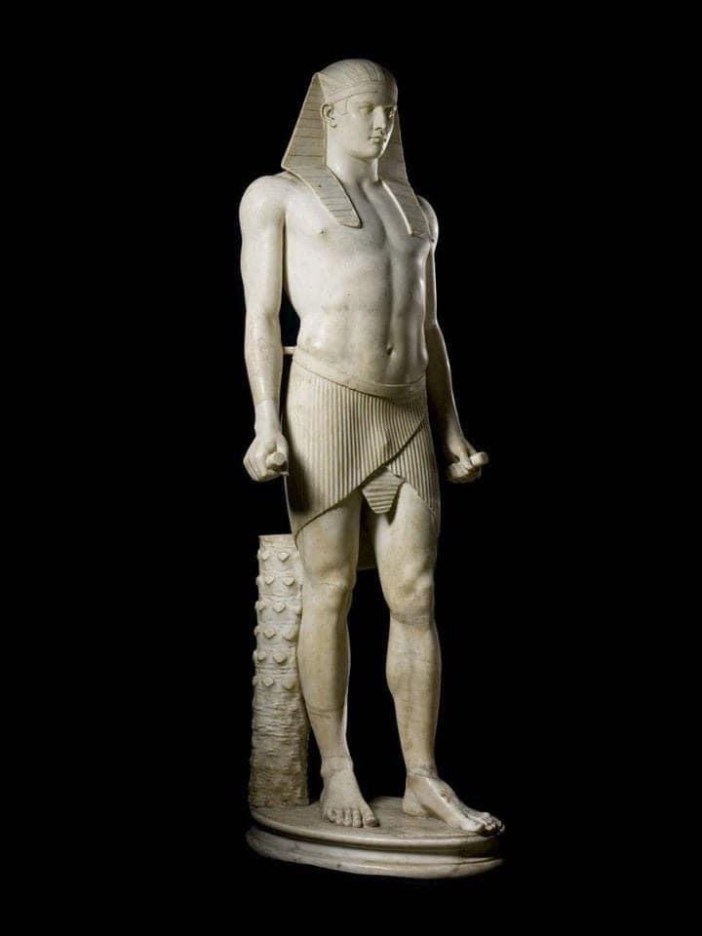
The beautiful Antinous, lover of Roman Emperor Hadrian, depicted as the Egyptian God Osiris
  1. Paul asked me, as we watched the show last night, “why do these cults exist” and I replied, “as a means of controlling and subjugating women. All cults seem to have that in common.” ↩︎
  2. Since I love reality television, I’ve been thinking about doing an essay on gay reality shows, and another on queer people on mainstream reality shows. ↩︎
  3. I was also rather interested to hear her mention her driver’s license–didn’t she kill someone in a vehicular homicide? How does she still have one? ↩︎

Season of the Witch

I read a lot of Norah Lofts when I lived in the suburbs of Chicago.

I originally found her through her historical fictional biographies of royal women, or royal-adjacent. I was in a Henry VIII phase–the whole six wives thing–and I saw a copy of her book about Anne Boleyn–The Concubine–on the wire racks at Zayre’s, so I bought it. It was very well done, and Lofts tried to get into the head of Anne and who she was, the reasons she basically changed Western civilization, and gave me an entirely new perspective on the infamous Anne. From there I went on to A Rose for Virtue (Napoleon’s stepdaughter/sister-in-law Hortense de Beauharnais, Queen of Holland), The King’s Pleasure (Katherine of Aragon), Crown of Aloes (Isabella of Castile), The Lost Queen (Caroline Matilda of Denmark), and Eleanor the Queen (Eleanor of Aquitaine)1. I also read, from there, some of her historical fiction, which I greatly enjoyed (Nethergate comes to mind). What I liked most about Lofts was she was not, in any way, a sentimental writer; her stories didn’t end happily all the time (especially her books about royal women; they all died miserable). I always wanted to read her Nativity novel, How Far to Bethlehem?, or her book Esther (obviously, the Bible’s Queen Esther). I remembered Lofts sometime within the last four or five years, and got a copy of her ghost story collection, which I enjoyed.

And then I remembered one whose plot I really couldn’t recollect–The Little Wax Doll, and got a second hand copy on-line.

It was like reading an entirely new novel, and I am glad I revisited it, believe you me.

The interview had been arranged to take place in London at half past three on a Saturday afternoon. This was a time so extremely convenient to Miss Mayfield that she was disposed to regard it as providential. It had saved her from the embarrassment of having to ask for time off to attend an interview in which she might not be successful, and from which she might be obliged to return to face her present Head’s resentment. In her diffident attempt to maintain secrecy she had left Alchester without the precaution of obtaining a testimonial. This she recognised as the action of a fool, but she had taught in the ugly Midland town for a bare two years, and she carried in her shabby handbag a coolly eulogistic report of her twenty years’ work in Africa, If that did not suffice, and if the interview showed any sign of leading to a new appointment, then would be time enough to approach Miss Stevens and break the news she was contemplating a move,

Canon Thorby had written, “Claridge’s Hotel would be convenient for me, since I have another appointment there earlier in the day. I shall be waiting for you and if you ask at the desk someone will will point me out to you.”

He wrote on thick smooth paper which justified the term “cream-laid.” His writing was small, elegant, meticulously legible. It called up an imaginry vision of the writer, plump, rubicund, with a fringe of silvery hair and tranquil blue eyes. Kindly, perhaps a trifle pompous.

As I said earlier, I didn’t really remember much of this story, other than the main character was an older schoolteacher moving to an idyllic village in East Anglia to teach at the village school, and the little rural village has some pretty dark secrets that she’s going to stumble into. Another thing I’d forgotten–although I should have remembered from reading her ghost story collection–was how compelling a writer she was. There are beautiful turns of phrase everywhere, as well as observations about life–particularly in a small village–that are really spot on, clever and insightful.

I also love that her heroine is a woman many people would overlook–particularly in the time in which this book was written (originally published in 1960)–a dowdy, plain spinster in either her late thirties or early forties. I wouldn’t have thought much about it when I first read the book, but the deep devotion of her attachment to a woman named Ruth, with whom she built a school and hospital in Kenya and worked there with her for forty years, and her determination to save enough money so she and Ruth can retire together and share a cottage blissfully for the rest of their lives?

In this read, this friendship just screamed lesbian to me.

Deborah Mayfield could easily have turned into a stereotype–the old maid schoolteacher–but Lofts isn’t interested in stereotypes; she created a character who is interesting by virtue of the journey she takes over the course of the story. She is a bit unsure of herself at the beginning of the book, always afraid of calling attention to herself and just keeps her opinions to herself. But as she falls in love with this interesting little village and blossoms with not only her students but the other villagers–she still sees herself as a nonentity, not really seeing herself as the others see her–she also, slowly but surely, finds herself being pulled into a strange situation which makes her, always questioning herself, question herself further. Surely, what she suspects cannot be? There can’t be people who believe in the dark arts and witchcraft in this town? But it’s really the only explanation, and as she gets pulled further and further into the odd circumstances regarding her student Ethel and her grandmother Granny Rigby–to the point where she is willing to give up her comfy little home and job to try to call out what’s going on in Walwyk–she begins to get a sense of her own power; the inability to stand by and do nothing while something untoward is going on strengthen her resolve and makes her stronger.

Then about halfway through the book there is a huge plot twist, which throws everything into a different, just as suspenseful and thrilling, direction–and one in which Deborah finally comes into her own, managing to get her way back to Walwyk in order to stop a horrible outcome that isn’t predestined.

One of the other things I like about the book is Lofts’ lack of sentimentality. The ending of the book makes it seem as though the day has been saved…but has it, after all? I also love that we never really know if there is actually witchcraft going on in the town–or maybe it just looks like it? Lofts leaves this up in the air as well–which she probably wouldn’t get away with today.

A terrific reread, and a terrific author I am very happy to rediscover.

  1. She also wrote The Lute Player, about Richard the Lionhearted, his wife Berengaria, and the minstrel Blondel–which was my first exposure to the idea that Richard, the great English hero, was queer. That revelation was a bit life changing, as I began looking for hints of homosexuality being covered up in history books. ↩︎

Rhinestone Cowboy

I do love witches. What would Halloween be without them? Of course, the caricature of witches that we see at Halloween–green skin, pointed hat, riding a broom, warts, huge crooked nose–was popularized into modern culture by The Wizard of Oz (if not, the Wicked Witch in that film was the personification of the popular culture’s conception of a witch); but, alas, my knowledge on the history of the perception of witches is not that terrific. I know that the concept of witchcraft has been around for a long time–witches are mentioned in the Bible–and have been around in the popular culture for quite some time; I watched Bewitched as a child; there’s Bell, Book, and Candle, and so much fiction about witches…and of course, I’ve read up on the Salem witch trials–and hasn’t everyone been forced to read Arthur Miller’s The Crucible in high school? I am hoping that Lisa Morton, who has already co-authored a graphic novel with the late lamented Rocky Wood and illustrated by Greg Chapman called The Burning Times as well as definitive histories/non-fictions studies on both Halloween and ghosts, will also tackle witches.

But today, I am going to talk about Anne Rice’s The Witching Hour.

220px-thewitchinghourcover

The doctor woke up afraid. He had been dreaming of the old house in New Orleans again. He had seen the woman in the rocker. He’d seen the man with the brown eyes.

And even now in this quiet hotel room above New York City, he felt the old alarming disorientation. He’d been talking again with the brown-eyes man. Yes, help her.  No, this is just a dream. I want to get out of it.

The doctor sat up in bed. No sound but the faint roar of the air conditioner. Why was he thinking about it tonight in a hotel room in the Parker Meridien? For a moment he couldn’t shake the feeling of the old house. He saw the woman again–her bent head, her vacant stare. He could almost hear the hum of the insects against the screens of the old porch. And the brown-eyed man was speaking without moving his lips. A waxen dummy infused with life–

No, stop it.

He got out of bed and padded silently across the carpeted floor until he stood in front of the sheer white curtains, peering out at black sooty rooftops and dim neon signs flickering against brick walls. The early morning light showed behind the clouds above the dull concrete facade opposite. No debilitating heat here. No drowsing scent of roses, of gardenias.

Gradually, his head cleared.

I had read Interview with the Vampire when it first came out, back in the 1970’s, and honestly didn’t care for it. I had just read ‘salem’s Lot, and the concept of the vampire as hero didn’t appeal to me; it was just too foreign for me to wrap my head around (which is ironic, given my love for Dark Shadows, but I didn’t make the connection then between Louis and Barnabas). I picked it up again in the mid-1980’s, and felt the same way about it. I didn’t read anything else Mrs. Rice published, either, simply because I didn’t care for  Interview; then a friend who was a fan had me read The Mummy, which I greatly enjoyed. I had a hardcover copy of The Witching Hour–I don’t know why, to be honest–but after reading The Mummy I wanted to read something else by Mrs. Rice and remembered that I had a copy of this other one…

And could not put it down.

anne-rice-house

The Witching Hour ostensibly tells the story of Rowan Mayfair and Michael Curry. Rowan is the latest in a long line of witches going back to the seventeenth century (but doesn’t know it), and she saves Michael from drowning, bringing him back to life. He comes back to life with a strange power–the ability to see things when he touches them; he starts wearing gloves. He also had a vision while he was dead that is somehow connected to Rowan–so he tracks her down and they begin a relationship that eventually leads them back to New Orleans and the Mayfair house, a decayed, ancient mansion in the Garden District when her mother, Dierdre, dies. Dierdre has been in a vegetative state for years; every day she was placed on a side porch of the mansion with the great Mayfair jewel around her neck that always belongs to The Mayfair; the woman who, in each generation, has the power. The brown-eyed man the doctor sees in the opening is Lasher, a spirit whose relationship to The Mayfair is sometimes in question; is he the source of their power, or is he playing some other type of game that The Mayfair is unaware of? The narrative flashes back and forth in time, telling the history of the Mayfair witches along with the romance of Michael and Rowan as they, with the help of the secret order of the Talamasca, try to determine what the truth about the Mayfair witches–and Lasher–is.

I loved this book so much; I always recommend it to people who want to read books about New Orleans, and always include it on lists of the best books set in New Orleans. It was this book that made me want to come back to New Orleans again; and you can imagine the thrill I got when a friend who lived here drove me to the corner of First and Chestnut and showed me the Mayfair house, which was actually where Mrs. Rice and her family lived. And it was exactly as she described it in the book; Dierdre’s porch was even there.

I’ve read every Anne Rice novel since then, and she also became one of the authors I always buy in hardcover. She is one of those writers you either love or you hate; those who love her work can be very rabid. It was when I was reviewing one of her later Vampire Chronicles (Blood and Gold) that I realized–it’s different when you read for review than when you read for pleasure–that so many reviewers/critics actually got what she does in her books wrong. Mrs. Rice writes about supernatural creatures–vampires, witches, werewolves, etc.–but she isn’t writing horror; she is writing romances in the classic sense of the word. In modern literature romance has come to mean something greatly different than what it meant classically; a romance novel was not a love story, per se, but a big sweeping epic tackling huge themes like life and death, war, peace, humanity, faith, spirituality; what Mrs. Rice was doing was using supernatural characters to expand and explore those themes, and she was writing in the style of the great romance writers of the nineteenth century, like Dumas and Hugo.

I’ve always meant to go back and reread all of her work with this in mind–which is how I’ve read her novels since that realization–but again, time. I am actually several novels behind on her work now–I’ve not read The Wolves of Winter or Prince Lestat, and she has another coming out this year as well.

I will never catch up.

And now, back to the spice mines.