Somehow I’ve made it to Wednesday this week, so praise the Lord and pass the ammunition, thank you very much. I was very tired yesterday–muscle fatigue more than anything else, thank God no brain fog–but there have been worse days than yesterday. I got almost completely caught up on all the work I was behind on, and can head into the office today knowing that I will be caught up and current on everything by the end of the day, which is marvelous. Yay me! I also updated all bills and made a to-do list yesterday, which should work for the rest of the week. I also get to start reading a new horror novel when I get home from work tonight–either Scott Carson or Elizabeth Hand, which should be awesome.
We finished Boots last night, which I enjoyed very much. I have seen some people complaining about the lack of romance on the show–it’s boot fucking camp, hello?–which seems kind of a ludicrous complaint, really. Were they expecting soft-core gay porn? Wasn’t all the eye candy enough? Honestly. I enjoyed the writing, the acting, and the story itself. I may go into more deeply at some point, after I’ve digested it a while and thought about it some more. I also enjoyed Miles Heizer in this, and given how much he annoyed me in Thirteen Reasons Why, and that is saying something. But I will say this–I think Max Parker is the breakout star from this show. Gorgeous, gorgeous, gorgeous man, and his performance as a decorated (and closeted) drill instructor during those horrible times when homosexuality was a crime in the armed forces, and yeah. There was a part of me that hoped the characters of Miles and Max would end up together–but I wasn’t terribly disappointed (SPOILER) that they didn’t. It was the story of Miles getting through boot camp with his platoon brothers, the relationships they built with each other, and literally maturing and growing up; and while the notion of ideal Marine masculinity can be troubling…they are being trained to work as a unit and for war.
Something to ponder there. Was modern-day toxic masculinity developed during war-time service in the Pacific and Europe, only to have the returning soldiers seep into the popular culture? Yeah, I’ll probably write longer-form about Boots, because it will easily play into my essay series about masculinity that I am planning to write.
Also, very nice to see openly gay actors not only getting work but getting to play gay characters in something as well done as this.1 It also reminded me that my dad thought it might be a good idea for me to go into the military for two years before going to college–and I wanted absolutely nothing to do with that idea. I don’t regret that decision, but you always have to wonder how different everything would be had I went along with that idea.
Must be my old age that has me going down these alternate history paths.
I did make a to-do list yesterday and I plan on getting started on that today. I am going to fetch the mail on my way home from work tonight, and then probably again on Friday afternoon. Since the LSU game is so early on Saturday, I’ll try to get all errands done either on Friday or Sunday morning. I also started writing a longer-form essay on Frendo Lives, too; what’s the point of Halloween Horror Month if I don’t write about the horror media I am consuming this month? I also seriously want to write about the whole concept of the slasher story, which is what Adam Cesare’s “Frendo” trilogy basically are. I have to say I’ve always wanted to write a slasher novel.
Still not completely caught up on everything that’s been going on in the world, and not really sure that I actually want to, either. Ah, well.
And on that note I am heading into the spice mines. Have a lovely day, Constant Reader, and I’ll be back tomorrow morning, methinks.
The adorable Freddie Stroma, who plays Vigilante in Peacemaker
Sunday morning where we’ve sprung forward (I hate Daylight Savings Time) and I feel off, like always when this happens. I’ve never cared for the spring part of it, but must admit I do enjoy the “extra” hour in the fall. I did go to bed early last night, and slept well–it apparently rained overnight, which undoubtedly helped with that. Of course, Sparky’s body clock didn’t change, so he wasn’t hungry enough to bother me until it was actually time for me to go ahead and get up, which was nice. (It’s this fall when he’ll annoy me early, isn’t it?) I have some things I need to get done today, which should be easy enough to do. I finished reading The Bell in the Fog yesterday (my thoughts are posted here) and really enjoyed it; and I am going to revisit an old Ian Fleming James Bond novel, Moonraker1next I think. I may read something new alongside of it, but I haven’t decided which yet. Revisiting the original Fleming Bond novels will also give me something to think and write about on the subject of toxic masculinity and sociopathy. (So many post-war “heroes” defined masculinity so narrowly–and dangerously; Mike Hammer, James Bond…and yes, reading The Bell in the Fog put me in mind of post-war crime fiction.)
I am kind of working on a long essay–I have been since last spring, actually–about gay men and masculinity, and how societal norms and mores about them impact/twist our lives and makes it harder for us to just, I don’t know, be. I just read a great piece on the taboo of the male body that also plays into the paradigm I’m writing about. The societal reticence about the male body, and male nudity, is almost always centered on the groin area; you could depict a male completely nude as long as there was a fig leaf over the genitals. A lot of Renaissance paintings and sculptures at one point had “modesty leaves” placed over make genitals–and why is that? (Don’t even get me started on women…I’d be here for the rest of the year) Because whenever someone sees a limp penis resting on a pair of testicles they go mad with desire and sexual lust? (Although the way websites for gays drool and get “parched” over revealing pictures of influencers, actors, musicians, and other celebrities has always turned my stomach a little bit. I know, I know, but at the same time there’s something a little ‘junior high locker room” about that I find personally distasteful and almost cringe-y. Your mileage might vary and I am only speaking for myself. I enjoy looking at gorgeous men as much as the next gay man or cishet woman; I post one on here with every entry that isn’t about a book, movie or TV show. I like eye candy! There’s nothing wrong with it! I just feel the way the links and emails and so forth are shared, and the language used, is kind of juvenile and pandering and Tiger Beat-esque.)
You see how reading can influence my work? Lev’s got me thinking about writing queer historicals again–not that I was ever not going to write Chlorine, and I am hoping to get that done this summer or fall, finally–but the next book I am writing is Never Kiss a Stranger, which is also kind of a historical, since it is set in New Orleans in the summer of 1994. (An excerpt from it will be published in an upcoming anthology, which is very exciting for me. I also sold an excerpt from Chlorine recently also as a short story, so guess what, Constant Reader? You’ll be able to get a preview of both books soon! How fucking fun is that?) I often think of all the things I want to write–books, essays, short stories–and get overwhelmed because I know I’ll never get to them all before I expire. It doesn’t look like I will ever be able to retire now (fuck you again, MAGA, now and forever and ever, amen), so it really is going to be about managing my energy, being selfish, and being able to continue to write in my free time. It’s also going to make doing research no easier. Sigh. I am starting to resent all the volunteer time I’ve done over the last twenty years or so–not for Saints and Sinners, but pretty much everything else. I used to think I was making a difference, not only in the world but in various writing communities, but the truth is I wasn’t.
I’ve always wanted to make a difference in the world, and the reality is I should have realized that difference I could make would be best served from my writing, not from anything else. I think that comes from a lifetime of never taking myself seriously because no one else ever did. I did learn things about myself, the community, and other people from the volunteering; so that was something gained, and while I hardly consider myself to be a “sage” or even a “community elder” 2, I have been around a long time. I always thought I got started in publishing way too late, but the number of people who published their first novel before forty isn’t that long, actually. But that also means I’ve been doing this now for almost thirty years (I started writing for a queer paper in Minneapolis in 1996, and my how things have changed over the years. I also never really had any desire to be famous; sure, when I was a kid I fantasized about being a movie star or a singer (alas, couldn’t act or sing), but writing was what I always wanted to do, hungered to do, and basically that desire subsumed every other ambition or fantasy. I also never wanted to be a celebrity author, or have the kind of success others have. All I ever wanted was to just write and make a living from that. I don’t need to be rich; I’ve never needed that. I’d prefer to be comfortable, and never have to worry about bills and things.
But the thing with money and success is most people never think they have enough, isn’t it?
Look at Space Nazi, for example. Isn’t he about the right age to be a boy from Brazil?
And on that note, I am heading into the spice mines. Have a lovely Sunday, Constant Reader, and I will chat at you again soon, most likely tomorrow morning.
I saw a meme on-line that pointed out how dated Moonraker was–since it’s about a billionaire who moves to England and gets involved in the government with an ulterior motive… ↩︎
I can’t deny I am old, so therefore it stands to reason I am, in fact, an elder. But I don’t think I’m a sage at all. ↩︎
Wednesday Pay the Bills Day blog! And it’s also the middle of the week, and the three day weekend looms large. I don’t feel tired or groggy this morning, which is odd, but hey–what can I say? I slept well and feel good. The coffee is also good this morning, and I had the last piece of king cake this morning (yes, it’s all gone already and no, I didn’t have more than three smallish pieces); I’ll pick one up on the way home from work tonight, as I have to make some groceries to get us through until the weekend. I can’t wait for next week, when miraculously all prices will suddenly drop by at least 75% and gas will be back to a dollar. Woo-hoo, life-changing! As if. The presidential troll has already walked that lie back, as he is walking all of his campaign lies back, and things will just be worse, and of course, it’ll be the fault of Democrats somehow, despite the Right controlling all three branches of government and are going to overplay their hand (they always do)–but they will not give up power voluntarily so we’re looking at violence in the next election (should there be one) as the republic continues to limp on and try to recover from the latest Republican attempt to turn the entire country into Alabama. (And I say that as someone from Alabama–although Mississippi, Arkansas, and Tennessee would work just as well.) I mean, if you want to get a sense of what one-party Republican rule looks like, pick a fucking red state and see how it’s doing on every scale of quality-of-life metrics. Funny how regularly blue states aren’t on government welfare, isn’t it? So why would a view of politics and government clearly doesn’t work on a state level work on a national one?
Oh yes, Black and Brown people. You can never go wrong boiling everything right-wing to bigotry and prejudice of some sort. People will always vote against their best interests if you consistently tell them they are oppressed and play to their most basic instincts–it’s not YOUR fault, it’s Black/Brown/gay/trans people’s fault! THEY’RE TAKING AWAY YOUR BIRTHRIGHT!
Ironically, the “party of personal responsibility” loves to blame everyone else for their utter and complete failures.
The Internet continued to roil yesterday over the latest publishing scandal, and it’s even more amazing how many people “just had that vibe about him” and “everyone at his publisher knew not to leave female interns around him” and so on–to me, the latter goes to show how people in power covered for their cash cow, and while I know it’s generally not smart to take shots at big name people who are generally beloved, some of this anger should be directed at the institutions that covered for him and allowed him to get away with it for so long? There’s absolutely nothing wrong with trusting someone who has been kind or generous or supportive of you; I tend to not ask people who are that way with me whether or not they have problematic behaviors or values or beliefs; no one does. When you get a good impression of someone you tend to not look for reasons to not like them. Abusers are generally masters at gaslighting, and sadly, you can’t tell by looking at someone that they are a predatory abusers with a trail of victims in their wake. I also don’t feel like the gaslit people an abuser fooled need to publicly made statements or so forth to distance themselves. I get that the natural instinct is to make sure no one thinks you sympathize with them, or are a collaborator or are complicit, but I also don’t think it’s necessary, either. I also get that it’s hard when your hero takes a fall–which is why I think hero-worshipping is usually a mistake. People are fallible; that design flaw is baked in. You’re always going to be disappointed when someone you’ve given your money and your affections to do something that is against your values and system. But…no one’s values or beliefs are going to perfectly align with yours, and sadly, art doesn’t discriminate–people who do bad things can create amazing (and influential) art. Can you enjoy the art after (or already) you know the artist is a problem? I think that’s up to you. Caravaggio was deeply problematic, but his gorgeous art has lasted for centuries. And granted, someone who’s been dead for centuries is a bit different than a rapist who is still alive. Personally, having the works of a problematic current day artist in my house makes me a bit uncomfortable, but your mileage may vary.
This recent public rending of garments and gnashing of teeth in the wake of the latest “good guy turns out to be predator” publishing news seems funny (in the weird/strange meaning way, not haha funny) to me. For one, I’ve never completely trusted men who claim to be feminists; maybe it’s because I learned feminism from lesbians, but I refuse to identify as a feminist–as a male, I can’t truly be a feminist because I will never completely understand or appreciate the experiences of being a woman. I call myself a feminist sympathizer–please note I don’t say “ally” for the simple reason that I grew up in a society and culture of toxic masculinity, and no matter how much I think I’ve recalibrated that out of my system, every once in a while I’ll have a thought, immediately followed by man, it’s so hard to break that programming, isn’t it? I’m not sure why people feel guilty simply because they knew a predator and thought he was nice. The reasons predators succeed for as long as they do is because their carefully constructed persona is camouflage for the darkness within. Last spring someone I knew in the crime community1–well enough that I not only had his email address but I also had his cell number stored in my phone (if I have your cell number saved in my phone, I consider you a friend and have let you inside a bit). Was I surprised when he was arrested and charged with possession of (an incredible amount of) child pornography? Absolutely. Had I ever seen any sign of such a possibility at any time in any of my interactions with him over the last fifteen or so years? No. I didn’t berate myself for not seeing it sooner, or not having my primordial instincts triggered by his badness. There weren’t many, if any, kids around at writers’ conferences and award ceremonies and other professional environments where I ran into him. Granted, he also wasn’t a hero of mine, either. But…Stephen King’s support of J. K. Rowling was disappointing, and I don’t read him anymore. I didn’t get upset about it, nor did I mind donating all my copies of his books to the library sale. I didn’t know him personally; we met once and had a lovely, if brief, conversation. I don’t know if I have an equivalence for Neil Gaiman in my life?
But it does make me think that I am right to be so guarded with straight white men.
Which reminds me of another book I’ve wanted to write. Sigh.
And on that note, I am heading into the spice mines. Have a lovely day, Constant Reader!
An anthology I was in with him is being reissued with his story removed in a week or so; more to come on that. ↩︎
Hey! Hey! Hey! Hey! Hey! Machomacho man…I’ve got to be a macho man….
Sadly, this entry isn’t really about Macho Man Randy Savage, but I did meet him once, and yes, I always did think he was sexy; that body, the wild hair, the voice–the skill in the ring, and that amazing ass…yes, I was a fan of his. How I met him was when I worked at the airport–a lot of pro wrestlers lived across the bay from Tampa in either St. Petersburg or Clearwater or any of the communities on the peninsula, which means they had to fly in and out of the airport. One night I was covering Baggage Service, and was doing the fun thing of sending messages through the system about whatever bags were misdirected to us, or were simply late arrivals that needed delivering. I was by myself and merrily typing away at my keyboard when I heard the door open and before I looked up heard that unmistakable voice asking if a flight had arrived. Startled and wide-eyed, I gave him the information, and I could see he knew I recognized him–he scribbled his name on a ticket envelope, I babbled out that I was a fan, and he was very kind, friendly and gracious…which is why what eventually became of him was very sad to me. We never know what demons people are battling inside, do we?
The word macho is Spanish, and el macho or la machismo are Spanish terms that bled over into, and was appropriated by, American English, and it’s something, in all honesty, I’ve never cared for; it isn’t Spanish for toxic masculinity, but it might as well be. I first became aware of the term in the 1970s, which was also the time when the women’s movement was getting underway and feminism became a thing. Suddenly, all the things that were “manly” were under review (some straight white men certainly felt they were under attack instead; words matter); and the established protocols of what was and wasn’t ‘manly’ began to be reexamined and frankly, found wanting. Macho, or toxic masculinity, also wasn’t good for men either; they are trapped in a gender role that is kind of outdated but at the same time they may not fit into comfortably, either. The strong, silent type–remember that? That was the definition of manly; no emotions, no feelings, the provider and protector of the nuclear family…which begs the question, isn’t that emotionally crippling in some ways?
And where do gay men fit into this?
I sometimes think queer equality also threatened the role of the ‘macho’ male in our society and culture; straight men were supposed to be so deadly dull in real life, in the way they dressed and played and wore their hair and did all their manly things in that John Wayne/Gary Cooper mold…but gay men? Gay men could dress to accentuate their positives and look good. They cared about their hair and how they presented themselves to the world. There were some professions or sports that weren’t considered ‘manly’ enough–despite the fact that those things might actually demand more from the male body than other sports–football is manly because it’s violent and involves hitting other men with great force; while figure skating and ballet are not manly because it requires beauty of movement, and being graceful: men aren’t supposed to be grateful.
And that freedom to be ourselves was something to be envied by men trapped by conditioning, both socially and culturally, to be unemotionless drones with no way to express themselves other than through violence and anger.
I’ve always theorized that homophobia is subconsciously rooted in envy (of course, most people immediately zero in on ‘rejecting their own attraction to men’, which is also probably accurate in some cases). The stereotyped gay man has a lot more sex with a lot more different partners than straight men (not always the case, of course) and the idea of gay sex clubs (bathhouses, backroom bars, that sort of thing) where someone can go and have their fill of anonymous sex as long as they are capable and willing drives straight men crazy because most of them don’t have anything like that in their lives. Gay men were free from responsibility, from being what society sees as manly, and didn’t have to have kids or any of the other responsibilities that weigh down straight men and keep them, sometimes, from chasing dreams and living their life the way they want to; to paraphrase, ‘forced into a life of quiet desperation with no way out.’
I always found it amusing that the Village People, who had their moment in the sun during the disco years, always recorded gay-flavored songs cheerfully that were also dance hits that infiltrated the pop charts and the straight dance clubs, songs alluding to the gay world simmering just below the surface of American culture at that time.. They wore outfits that featured male images that gays saw as sexy icons of masculinity–the Native American, the cop, the sailor, the biker–and had hit songs that hinted about the pleasures of gay life. Some members of the band were gay, and the Village in their name referenced one of the more famous gayborhoods in the county, Greenwich Village in Manhattan.
Come on. I lived in Kansas during the heyday of the Village People–they were already out of fashion by the time we moved to California; but even I knew what their songs meant and what their costumes meant.
And the songs? Please. “Macho Man” was about hyper-masculinity, which was a gay fetish; “In the Navy”–well, everyone has always considered the Navy, going back to the British Empire, as a hotbed of homosexual activity (what with them being at sea for months at a time only in the company of other men; “YMCA” was about all the endless possibilities for.gay sex at the Y–also a notorious cruising spot for gays; “San Francisco” was of course the motherland for gays; and so on). I have always found all the straight people at sporting events, dancing and singing along to “YMCA” hilarious–because they don’t know they are singing and dancing to a song about the availability of gay sex there. I also found The Traitor dancing to “Macho Man’ at campaign rallies hilarious because of how much more stupid he looked because he and no one around him had any idea of what that song was about.
Straight people can be so clueless sometimes–but it’s always good to have the occasional hearty gay laugh at their expense, isn’t it?
I’ve always been interested in wrestling. I wanted to go out for the wrestling team in high school, but enough people were already bullying me and calling me a fag, and as painful as those words were, they were made worse by the knowledge they were true–and absolutely godawful knowing I wasn’t entirely sure what it meant….but I knew by their faces and the tone of voice it was spoken in that it wasn’t a good thing. The last thing in the world I wanted was to wear one of those skintight singlets and get aroused for the world to see (although I learned, much later, that it was so common no one ever said anything about it; but even now I am not certain I would have been given that same grace as a sexual suspect); that would be the end of the world as I knew it…so going out for the team wasn’t an option for me, and I kind of regret that fear kept me from something I’d enjoy.
But as I was figuring out my sexuality and trying to figure out what all was entailed by being an object of scorn and disgust by everyone, I started being drawn to professional wrestling. The heyday of pro wrestling was long in the past in the late 1960’s and 1970s, and the WWE boom was yet to make it mainstream once again. But the body contact and domination/submission aspects were the closest thing I could actually find on television that was sort of like a male/male sexual experience–which made my liking for pro wrestling even more suspect and something I couldn’t really talk about with anyone because of course he likes pro wrestling, the fag.
So, I was closeted in that way, too.
But one day when I was a teenager I was in a store–a Walgreens or something–and I saw a professional wrestling magazine with a cover story on Kevin Von Erich, and he was like nothing I’d ever seen before–a tall, long, lean and muscular body in white trunks and barefoot, and handsome in a rugged kind of way. I bought the magazine, and became a fan of the entire Von Erich family…and also was aware of how tragedy haunted the family. When I first heard about this movie, I had to see it…although I wasn’t sure how telling this story would have a beginning, a middle, and an end.
But…I did enjoy it. A lot.
It’s actually very well done, but it’s also kind of sad to watch almost from the very beginning. The movie also cut out one of the brothers, but seriously, another death in this grim film might have been too much for any viewer to handle or take.
The film is very well done, and the story is sad–one about toxic masculinity, distant and emotionally unavailable parents, and how the dream, the drive, of being at the top of the wrestling game caused so much damage. Afraid to admit weakness, not really able to ask anyone else for help when struggling emotionally, the suicides make complete sense. The Von Erich brothers were so tightly bonded they didn’t have room for much else in their lives–friendship, love, etc.–other than the grind of training and wrestling and tightening the bond with each other. The cast is brilliant–great casting, but ultimately flawed in the physical side of things; the Von Erichs were taller than the actors playing them, and of course Kevin was never as jacked as Zac Efron; those kinds of bodies were extremely rare during those decades. Kerry was big and muscular and defined, but he’d also been an Olympic wannabe in discus and javelin.
There’s a particularly moving scene towards the end of the film where Kevin finally breaks down from how overwhelming all the tragedies have been and the toll on his soul and psyche, and his young sons come to comfort him…and he tells them how much he misses his brothers and misses being a brother; the boys tell him they’ll be his brothers, and he apologizes to them because “men aren’t supposed to cry.”
Maybe if the Von Erich brothers had been raised to not believe in toxic masculinity and the narrow definition of what a man is, and allowed themselves to be vulnerable and get help for their demons, the story may not have been as tragic.
Kevin’s sons now wrestle professionally, and Kevin himself doesn’t believe in a curse on the family–though he did for a number of years, but he’s made peace with the past and focuses on his family.
I really enjoyed the movie, but it’s depressing. Four out of five stars.
Three of the actual Von Erichs, with Kevin in the center
Friday work at home day blog, in which I have PT in a little while and all kinds of things on the agenda to get done. I was productive last night, chore wise, and while I still have some chores to do, I am further ahead than I usually am when I wake up on Friday morning. The weather turned cold yesterday afternoon, and I came straight home. Sparky was feeling needy when I got home, so I had to spend some time cuddling and playing with him (he managed to get the hanging mouse toy off it’s string…but this morning he is playing with the string, and the mouse is nowhere to be found). I watched some news–always a downer–and then the Staged Right Youtube channel’s history of Ethel Merman’s career; from which my primary takeaway was Helen Lawson in Valley of the Dolls was so clearly based on Ethel that I can’t believe she didn’t sue…and it made me want to reread the book again. There was a downpour that started right before i went to bed–and it was even colder when I slipped under the covers. Although a quick check tells me it’s 58 outside…sigh.
But I am awake. My arm feels a bit fatigued, but that’s okay, I just need to monitor myself more at PT and at the gym. I am definitely mentioning it this morning, though–even if it makes me feel like a whiner. This is my arm, that had a serious injury and a major surgery, so I need to get past that kind of self-defeating mentality and understand that they need to know if it’s been tired, hurting, fatigued, etc. If I don’t tell them what I am feeling accurately because I want to please them (a problem my entire life, which has created more issues than its resolved, frankly), this could be bad for my arm.
It’s funny, because the other day I was emailing a friend who’d said something kind to me, and one thing I said in response was Oh, good. I always worry that I am a pest or am too much. He replied that he toned himself down sometimes, too, for the same reason: being too much. After I got his response, I started thinking about it, worrying that phrase and that feeling that both of us, gay men in their sixties, have to tone ourselves down because people think we’re “too much”, and parsed it some more during Ethel Merman’s career history and some other Youtube videos last night. Too much. How many times have I been told I am “too much,” that I’m not “masculine” enough1, that I need to change who I was and how other people saw me (narrator voice: you cannot control other people’s perceptions of you. All you can do is hope for the best) and that has impacted how I feel about people and how I act and behave, and how much of myself I reveal and share with them. Sigh. Keep unpacking that shit, Gregalicious, and remember, you are who you are and never let anyone dim your bright queer light.
And remember–no one ever tells a straight man he’s “too much”–even when they sexually assault women, so…maybe fuck all the way off?
All right, I am now home from PT. The sun has come out, but it’s supposed to rain all day and most of the weekend. I’ve decided to wait until Sunday morning to go to the Apple Store in Metairie. I don’t really want to deal with evening traffic to get there and back–traffic back into the city is always a nightmare around that time–and they open later, so I can get up later and go later and not have to worry about traffic and so forth. PT was a bit harder this morning, but some things were easier. I am going to make a to-do list for the weekend, as well as a list of all chores I want/need to get done this weekend, and figure out some other things.
And on that note–several hours later, my bad–I am heading BACK into the spice mines. Have a great Friday!
I am writing another essay–which I hopefully will finish someday–about this very thing; the strait-jacket of toxic masculinity I was raised with and conditioned by education, school, and culture to think and believe was the only “normal” way to be a man. It’s called “Are You Man Enough.” ↩︎
I slept well last night but my blankets were all tangled up this morning, indicating the sleep was more restless than it has been for weeks. I also wasn’t in the mood to write my blog when I first woke up, so I decided to read, drink my coffee, and maybe have some breakfast before getting cleaned up. I usually write this over my morning coffee, and since I don’t reread or re-edit once it’s written, that could explain the run-on sentences, word repetitions, and occasional poor grammar no one ever points out to me. This blog began nineteen years ago (!!!) on Livejournal (the anniversary was 12/26), migrated over here in about 2016 or so, and still somehow keeps chugging along. It always surprises me that people read it, to be honest. It was always meant mainly for me, and was originally intended as a daily exercise to get me writing again. I guess it worked. When I started I had published four novels, a few anthologies, and some short stories. Nineteen years later, I’ve way surpassed that total, despite some fallow years in which I produced nothing.
I did some more picking up around here yesterday while watching football games. It was fun watching Mississippi beat Penn State, and don’t even get me started on the Florida State-Georgia game. I get the disappointment at not making the play-offs, but you also knew you were scheduled to play Georgia, another team disappointed in not making the play-offs, but instead of showing everyone that the committee was wrong and showing up to beat Georgia…and Georgia also had star players injured and over a dozen opting out and even more entering the transfer portal. This would have been a play-off game had either Auburn or Georgia beaten Alabama this year, but that’s how things go. Auburn went 13-0 in 2004 and wasn’t invited to the BCS title game. You don’t always get what you want in life or sport, and the question is how you handle that. If this was going to be the case, don’t accept the damned bowl bid. Your fans spent a lot of money to go to that game, and it was incredibly disrespectful to the team, the fanbase, and the university to show up and get embarrassed like that. After Coach O was fired in 2021, LSU went to its bowl game with 39 scholarship players and got trounced by Kansas State….but how does it appear in the record books? KSU 42, LSU 21. Twenty years from now when people look back at the history of college football and bowl games, it will read Georgia 63, Florida State 3. It’s a program and culture problem, and all the FSU fans apologizing for this disgraceful beating–do you quit when you don’t get a raise or promotion you worked hard for and feel like you deserved? The word for that is quitter…and for the record, Georgia played it’s back-ups, walk-ons and so forth in the second half and still beat your ass 21-0.
And if LSU went 12-0 and didn’t get picked for the play-offs…and pulled the same shit? Sure, I’d be angry about the play-offs but I’d also call out the Tigers for embarrassing the state and the university that way.
I’m really enjoying Danielle Arsenault’s Glory Be, and am savoring every word. What a fresh and unique voice! I have to say I am so glad I realized I needed to be better about my reading choices and should read more diverse writers. It’s been a great education for me as a reader, a writer, a person and a citizen. I’m still learning how to be better about race and gender and gender identity and sexuality; and I strongly encourage other readers to do the same. Crime fiction is so much stronger and healthier when it represents everyone, I think, and while I don’t consider reading diverse writers to be the total education I need on any social issues facing the country–I need to read more non-fiction and theory.
I rewatched The Birds yesterday after the football games, and it was pretty much as I remembered it. I’d only seen it twice before; originally as a child edited for television, when it frightened me so badly that I had nightmares (I was prone to them growing up) and for years could never see crows on a jungle gym or a wire without feeling uneasy and then again as a rental in college after I’d read the short story again and wanted to see how faithful the film was to the story. I didn’t care as much for it the second time around–the acting is really terrible and so is the script–but the suspenseful parts still held up and were scary. This third time around confirmed my second viewing; and I noticed some other flaws in the picture. Rod Taylor’s mother isn’t much older than he is, and why is there about a thirty year age gap between him and his sister? I think the short story is better than the film, but I can also see why people like it. I do consider it one of Hitchcock’s lesser films.
Since tomorrow is a day for thinking ahead and coming up with some goals for the new year, I suppose today should be a recap of sorts of this past year. It was, as I mentioned in a previous entry, a rather up-and-down rollercoaster of highs and lows with very little level ground in the middle. The recognition of mainstream award nominations for my work–even queer work–was a delightful surprise this past year. But even more important than that is I think my work is getting better. I had felt, some years ago, that my writing was becoming stale and that I wasn’t growing as a writer anymore; I’d become stagnant and that was one of my biggest fears. I wound up deciding to take some time away from writing books on deadline and write things just for me, things that I wanted to write but also wanted to take the time to do correctly. It was during this time that I worked on both #shedeservedit and Bury Me in Shadows in early drafts, and also started the novellas and working more intently on my short stories. I accepted the challenge of writing stories to themed anthologies, and produced some terrific ones of which I am really proud. When I dove back into series work with Royal Street Reveillon, I wanted to write something non-formulaic for the Scotty series. I also wanted to shake things up with Scotty a bit, as the series was getting a bit too comfortable and safe for me. Royal Street Reveillon certainly was neither comfortable nor safe, and neither was Mississippi River Mischief.
Bury Me in Shadows was not easy for me to write. When I went back to the book after setting it aside for awhile, I realized several things: I couldn’t ignore race and racism, I had to address the Lost Cause narrative, and I also had realized while doing more reading and research that the stories my paternal grandmother used to tell me about the Civil War and Alabama and the family were apocryphal stories you can turn up about almost everywhere in the rural South. The book wasn’t working, in fact, because I was trying to elide those issues because I was afraid of doing it wrong…so it pushed me to do better. And actually addressing those issues made the book easier to write. The same thing was true of #shedeservedit; I’d been working on this book in one form or another since I actually lived in Kansas. But again, I realized when I went back to it that what I was doing didn’t work because I wasn’t going there with toxic masculinity and rape culture because it wasn’t personal enough for my main character, and so I bit the bullet and made it more personal for him. It dredged up a lot of memories, some of them painful, but it also made the book better and stronger. I had been wanting to write a cozy for the longest time, and decided to try it for something different and new–and that became A Streetcar Named Murder. I was also very pleased with it, even though the deadline and the turnaround on it was a bit insane…but I still managed to take my time and turned it into something I was proud of when I got the final author copies.
My two releases of this year–Death Drop and Mississippi River Mischief–are also books of which I feel proud. I also published three terrific short stories this year: “Solace in a Dying Hour” in This Fresh Hell; “The Ditch” in School of Hard Knox; and “The Rosary of Broken Promises” in Dancing in the Shadows.
I think I’m settling finally into an acceptance that I am pretty good at what I do. I may not have the master’s or PhD in creative writing or literature of any kind; but I’ve never really wanted to be an academic writer. I never wanted to be Faulkner, but Faulkner did inspire me to interconnect novels and stories in my own fictional world (also Stephen King). I would like to do some non-fiction studies of genre and writers I enjoy, but in an accessible rather than academic way. Academics used to make me feel stupid and uneducated, and I also used to envy those writers who had that kind of background because I felt it made their work stronger than mine, or gave them insights into writing and building a novel that I’d never had, which made me and my work somehow lesser. But that wasn’t on them; that was on me. I was the one who felt inferior and lesser, not talented or good enough. That chip was on my shoulder and I was the one who put it there. My peers actually consider me a peer, and newer writers look at my longevity and my CV and are impressed by the prodigious output, if nothing else. I used to think all the award nominations were kind of hollow because I so rarely won; which was incredibly ungracious because some writers are never nominated for anything…but it doesn’t mean their work isn’t good. Now, I just find myself grateful to make a short-list of five out of all the possibilities for that slot, you know? I’m lucky, and I’m blessed.
I’ve reflected a lot on my life and my career this past year–Mom’s death had something to do with that–and I’ve identified, in many cases, why I am the way am by remembering the event that triggered the response in my brain of “okay, never want to experience that again” which led to so many self-toxic and self-defeating behaviors. But the bottom line of it all is I’ve finally accepted myself for who I am, have determined to stop self-deprecating, and take some pride in myself and my career and my life. I know the most amazing people and have the most incredible friends. I have a day job where I make a difference in people’s lives. I have an awesome life-partner, an enviable writing career, and I get to live in New Orleans.
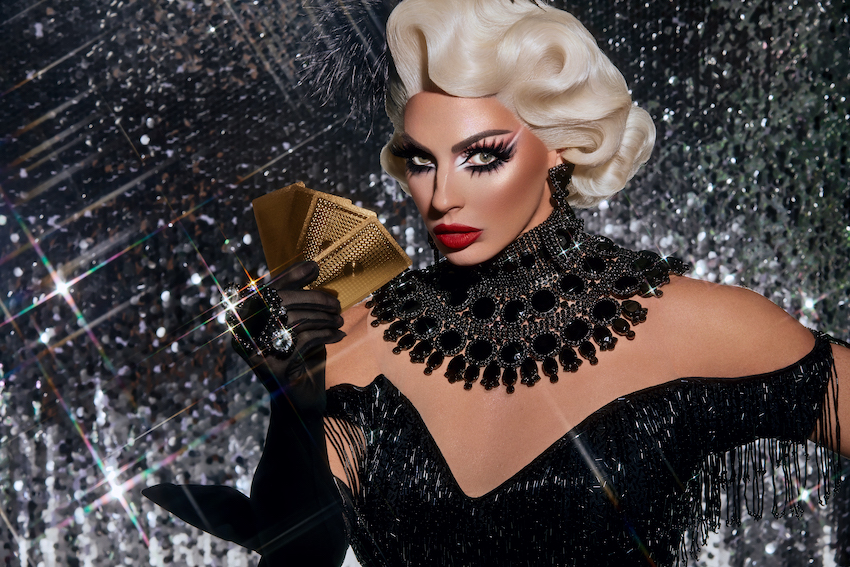
I love Alyssa Edwards. She’s the perfect reality star; a completely delusional human living in her own reality, yet also funny and witty with a highly expressive and thoroughly meme-able face, and basically harmless. I’ve always meant to catch her reality show on Netflix about her dance studio–which is so fricking cool that she does that–but have never gotten around to it. I was amused by her on her initial season, but really hated her feud with Coco Montrese, and of course that was also the season won by the marvelous Jinkx Monsoon. Alyssa was also terrific on All Stars 2, which made the rigging of the season all that much more disappointing. (We also gave up on Project Runway after one season where it was clear they’d already decided who was going to win at the start of the season. Don’t give me a rigged competition, thank you very much; if I want that, I’ll watch professional wrestling, thank you very much.)
Which makes it interesting for me to write a book about a drag pageant. I already have tons of ideas for the book, and it’s going to be very brutal in how it approaches the homophobes who have wrested control of Florida from the sane people (hey Moms4Liberty, how’d those elections turn out for you, you pathetic soulless pieces of shit? Your tears are as delicious as mimosas at a gay Sunday drag bunch, you miserable fucking bitches.) and have taken the state, once a beautiful place with scenic beaches and lovely weather, on its final steps to a complete and utter hellhole. Bravo, by the way; nicely done.
Anyway, back to drag; sorry about that sidebar. But that kind of shit will always enrage me. Nothing makes me angrier than misplaced self-righteousness. I may no longer be a practicing Christian, but I know that faith far better than many–if not most–of its most ardent public proselytizers and purveyors.
Gender-bending, of course, is nothing new. For centuries, women weren’t allowed on the stage so female roles were always played by men. This was certainly true in Shakespeare’s day, and often he wrote plays with characters pretending to be the other gender. So there’s a long, proud history of men doing drag in theater and performance art. Who decides what is masculine and what is feminine, anyway? As I have said numerous times, I love this new young generation of leading men and actors who are abandoning traditional black-tie male drag for new and inventive outfits that showcase their youth, beauty, creativity, and personal style; there’s nothing quite so stifling as toxic masculinity and it’s regular insistence that there is only one way to be a man–which is not only stultifying but incredibly limiting. Film and television (and theater, to a far lesser degree) have long influenced what is considered masculine in this country–the prototype being, of course, John Wayne. (Probably the funniest scene in both La Cage aux Folles and it’s American version The Birdcage is when the more butch of the gay couple tries to get the more feminine partner to be more masculine–telling him to walk like John Wayne…which was the first time I ever noticed how peculiarly John Wayne walked. Also amusing is that Mr. American Macho Man John Wayne–and Mr. Patriotism Ronald Reagan–didn’t serve in World Was II…but played war heroes in movies about it. Style over substance.)
But the history of the colonizing of this continent is very queer. Do we really believe those frontiersmen, trappers, hunters and explorers simply went for months and even years without having sex? There weren’t enough women to satisfy the need–and cattle drives? Pshaw. In any purely male society like that–the cattle drive, the explorations, etc.–there is always male/male sexual contact; “helping a buddy out.” This has been erased from history as effectively as if it had never happened–as though homosexuality is some modern thing that never existed before.
It’s always struck me as odd that the masculine ideal (as shown to us by Hollywood, at any rate) inevitably is depicted in all male environments–war movies, cattle drive movies, Westerns–with the occasional token female thrown in as a supporting love interest. These women are often set up to be abused–spanking was often popular in these films; how many times did John Wayne spank a woman in a movie?–and mocked and made fun of; if they had any kind of mind of their own, well, they had to be tamed.
Anyway, I digress.
I also know there are women who despise drag, see it as mocking women and misogynistic. I can actually see how they could feel that way, and far be it from me to tell a woman–any woman–how she should or shouldn’t feel about something, particularly when it comes to misogyny. (I sure don’t want anyone telling me what to think is homophobic or not.) I don’t think drag is misogynistic; if anything, it’s critiquing the misogyny of society. Dolly Parton also exaggerates femininity to the point of being a drag queen–she even says it about herself. Mae West was so good at this exaggeration that people believed she was an actual drag queen for years. Marilyn Monroe, Jayne Mansfield, and Jane Russell became sex symbols (and stars) by exaggerating their bodies and the way they dressed and their make-up and hair; how is that not female-drag as the converse of over-exaggerated masculinity (John Wayne, Charles Bronson, Clint Eastwood); establishing exaggerated norms of masculine and feminine that subconsciously altered what the over-all culture thought in terms of gender roles.
If I had a dollar for every time someone has told me to be more manly…
But the reason gender roles exist are because they are more comfortable for most people than thinking about it at any great length. You were born with a penis, so you should be interested in sports and guns and hunting and wear pants; your parents don’t have to think about it and neither do you. But for those of us who weren’t comfortable in those comforting boxes society so gladly constructed for us all to fit into–it’s not quite that easy. I hated having to do “boy” things and hated the expectations that since I was a boy I should like something in particular–and being incredibly stubborn, being told that I should like something was much more likely to make me disdain it. I didn’t want to play sports or even watch them when I was a kid; I just wanted to read. My struggles with wrapping my head around my gender and my sexual identity as a child were difficult, and those scars are still there–some of them are still scabbed over and not healed. All the messages I was being sent through popular culture, school, and society were telling me that something was wrong with me–and you don’t get over that overnight. I’m still unpacking a lot of that to this very day.
Writing Death Drop forced me to start thinking about these things again–gender markers, gender identities, the duality of our natures (no one is 100% one or the other, I think; I will always believe that gender and sexuality are a lot more fluid than anyone thinks)–and what makes one male and what makes one female. I hope, in writing more about Jem in the future, that it will help me understand myself better as well as society.
On my Agatha Award nominees panel for Best Children’s/Young Adult at Malice Domestic a few (has it been that long already?) weeks ago, moderator Alan Orloff asked me the following: Greg, your book tackles multiple contemporary societal problems. How do you balance writing about such tough topics with ensuring that your work is compelling and hits the right mystery/suspense notes?
It was a great question, and as usual, I hadn’t read the questions before the panel so I answered off-the-cuff (I don’t know why I do this rather than prepare; I guess it’s either a preference to try to think quickly in the moment or sheer laziness or a combination of the two) and while I do like the answer I provided on the panel, the question lodged in my brain and I’ve been thinking about it ever since, and thought, hey, this could make a good blog entry, so here we are.
On the panel, I said something along the lines of how it’s often very difficult for people to understand situations or experiences they haven’t had themselves; which is why it was important to write about these things–so that the reader can see and feel, even if peripherally, what it’s like to go through something incredibly hard and life-changing, and develop empathy and sympathy by being able to put yourself into that moment and situation and wonder how would I handle something awful like this? As much as we like to shield young people and children from problems and suffering and so forth (or at least pay lip service to it; think of the children is far too often used as a cudgel to bludgeon non-conformists with), the reality of life is bad things happen. Never think bad things can’t happen to you because they happen to everyone without rhyme or reason or provocation. If one person reads this book and it makes them change the way they think about the topics covered in it, or enables them to feel sympathy for someone else in that situation, then the book had the effect intended. I have always tried to include social issues in my work because it’s important to me. I write mysteries and crime fiction because I want to see justice in an unjust world–and that hatred of injustice drove me to write this book.
And it isn’t difficult to balance the mystery/suspense notes with a social issue; if you build the crime around the issue, you’re still writing a crime novel, just one illustrating a social issue.
Basically, I wrote this book because I was angry.
The Steubenville rape case–there was a parallel one in Marysville, Missouri, that didn’t get nearly as much attention as the Steubenville story–made me very angry. And the more I read about both cases, the angrier I got. It shames me to admit that it took these two cases to finally break through my own societal grooming as a male to finally understand what it was like to be female in our society. It shames me to admit because it shouldn’t have taken me so long to get it, to understand. It took me a very long time to finally wrap my head around feminism and feminist issues…mainly because I could never understand the mentality that women were somehow lesser than men. Women aren’t another species, after all, and yes, the mores and expectations of our culture and society do shape boys and girls in different ways, marking the differences with sexist and misogynist tropes and ideas. I never understood why a girl who had sex was a slut, while the boy was a stud. I remember when the story about the Spur Posse in the 1990’s (I collected a lot of articles about them; I had wanted to write a book called When Stallions Die based around that case) broke and how that also kind of changed my world-view a little bit. (I often say that I spent most of my adulthood unlearning everything I was taught before I was an adult.) When I was growing up a husband could rape his wife and not be charged; as her husband he had a right to her body, and even rape itself was rarely reported (women didn’t want to be shamed, understandably, and it was always her shame, not the rapist’s), if ever prosecuted. I remember when I was in college there were rumors about a campus rapist–the girls whispered about it amongst themselves, and of course, they talked to me about it–which I also always wanted to write about.
So, in the wake of Steubenville and Marysville, I decided that it was long past time to write about it.
I had been toying with something I called “the Kansas book” for years. I had created this town and these characters when I was actually in high school, and wrote a rambling, disorganized, really bad handwritten first draft between the ages of 16 and 23. When I finished it I knew nothing would ever come of it because it was beyond repair. However, I have borrowed characters, scenes, and storylines from that original manuscript numerous times over the years since; and I had been trying to write a newer, better version of it. I knew I wanted the story to start with the discovery of the dead body of a star football player at the local high school, but I never really could get any traction with it. I kept thinking, this is trite and tired and been done so many times already.
But after Steubenville, while also having conversations with my women friends, it clicked in my head and I knew how to make the story work: rip it from the headlines! And I knew the body was one of the players who’d been involved in the “she deserved it” rape of a cheerleader over the summer. I knew that I wanted to make it damned clear how misogynist and sexist our legal system is, as well as our culture when it comes to protecting young girls and women. I started remembering things from my own past, things that made me embarrassed and ashamed and angry at myself. I had participated in the culture of toxic masculinity myself. I’d indulged in petty gossip about girls, and slut-shamed. I remembered a story I’d been told about how a cheerleader in another town, when I was in high school, had gotten drunk and pulled a “train” on six football players–a story I still remember, over forty years later.
And I wondered about that. That story made the rounds–and I didn’t even go to the same high school. And everyone shook their heads and clucked their tongues in shame at this girl’s slutty behavior. Can you believe what a slut she is?
I started thinking that maybe, just maybe, they had gotten her drunk? Too drunk to resist, too drunk to know what was happening? And I began to think that was probably a much more likely story than the one I’d been told. No seventeen year old high school girl goes to a party thinking “I’m going to take on the football team tonight!”
I think it was 2015 when I decided to change how I wrote. I was on a treadmill back them, book after book after book, deadline after deadline after deadline. It seemed like my life was nothing more than a long series of deadlines, one after the other and I could never relax because I had another deadline. I was tired of the stress involved in producing and the shame of missing deadlines, which meant missing the next and the dominoes would fall, one after the other. I decided I was going to not sign contracts for anything until I had a completed manuscript, so I wasn’t starting from scratch every time I turned something in and started the next one.
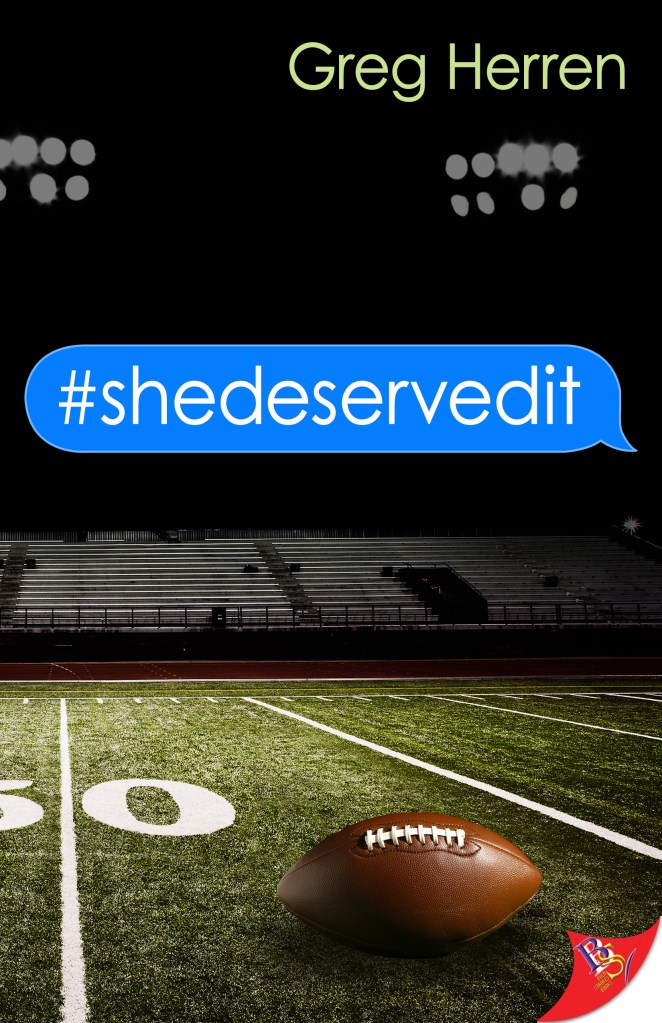
And finally, in July of 2015, I sat down and started writing a book I was no longer calling ‘the Kansas book’ in my head, but rather #shedeservedit.
I wrote over 97,000 words in one month–that’s how angry I was–and there wasn’t even a last chapter because I didn’t know how to finish the book. I sat on it for years, pulling it out every now and then, tinkering with it some more, but never really feeling it was ready–and I still didn’t know how to end it. I finally signed a contract for it because otherwise I probably would have never finished it and just kept futzing with it until I died, and I thought it was an important book to get out there. Sure, I went around and around about it; am I the right person to tell this story? Should someone else be writing it? I started reading other y/a novels about sexual assault, but they always left me feeling unsatisfied; the endings never really worked for me, which was the same problem I was having with this book. But I finally decided the best thing for me to do was sign the contract and give my editor a chance to look it over and give me input…and I am incredibly blessed to have an exceptional one in Ruth Sternglantz. The book is much better than it ever could have been without her insights, her vision, and her sensitivity. I was also very proud of this book when it was released, and I still am. I was both honored and shocked when it made the Agatha shortlist; even more so when it made the Anthony as well.
Alex jogs down the gravel path, his rubber cleats making crunching sounds on the shiny, sparkling white stones. The field, still lit up from the game, looks forlorn and lonely. The sod is chewed up from impacts and cleats and falling bodies. Some debris blows around in the slight warm wind, heavy with coming rain—plastic bags, strands from purple and gold pom-pons on a stick, wrappers from cheeseburgers and hot dogs sold at the concession stands. State championship flags snap and crackle on their poles on either side of the scoreboard. The janitorial team works their way up from bottom to top, picking up trash carelessly left behind by the crowd who’d filled the iron rows of seats.
The scoreboard still reads HOME 48 VISITORS 7.
He’s forgotten his arm pads on the sideline by the bench. He took them off when Coach Musson pulled the starters from the game when the fourth quarter started because the game was already won. He didn’t realize he’d left them behind until Coach Musson’s short post-victory pep talk was over and he went to his locker to take off his pads. His mom always says he’d forget his head if it wasn’t attached. Maybe she’s right. He could just get new ones, sure, but he’s superstitious about these arm-pads. He’d worn them all season last year when they’d won State again.
He knows it’s stupid, but why risk jinxing things?
He’s coming down from the adrenaline rush of the game, beginning to feel tired. His arm pads are right where he’d tossed them, underneath the bench where the big orange coolers of Gatorade sit during the game. The pads are just lying there, graying gold, his name written in purple marker on them.
He’s thirsty but wants to just sit for a minute. Let the locker room clear out a bit before he goes back to shower and change.
The wind is picking up. The summer has been long and hot and dry, but it’s supposed to start raining around midnight. There’s a bruise on his right calf, purple outlined in yellow and orange. He doesn’t remember getting hit there. He never remembers the hits. The games go by so fast. He spends every Friday afternoon with his stomach knotted. The pre-game warm-up seems to last forever. But once the whistle blows and the ball is kicked off the tee, time flies. Later his muscles will ache, the bruises will come up, his joints will start hurting.
He knows he can’t sit for long. India, his girlfriend, is waiting for him. He’s hungry—he can never eat before a game. He wants to grab something to eat before he has to be home. He hates his stupid curfew, but as his dad likes to remind him all the damned time: my house, my rules.
This wasn’t the original opening; originally the book opened with the quarterback missing and Alex, his best friend, goes out looking for him only to find his body floating in the river. But my editor recognized that wasn’t where the story began; we needed to see the night before and not in flashback, to set up everything for the rest of the story. (I am very stubborn and often need someone else to say to me, this isn’t working and this is why for me to give up on trying to make something work when it never will no matter how hard I try.)
I’m very proud of this book. I think for once I actually succeeded in what I was trying to do–and that was, of course, thanks to my editor’s wisdom–and while I most likely won’t win the Anthony (a very strong field), I am so pleased that the book got some recognition.
Masculinity is something I’ve always felt I viewed from the outside.
It’s very strange; for someone who doesn’t look back very often and has a rather healthy disdain for nostalgia, for some reason since the pandemic started, I’ve been revisiting my past a lot. I don’t know, perhaps it was triggered by having dinner with an old friend from high school a while back (which also inspired me to write a horribly dark short story); or perhaps it’s because of short stories or novel ideas I’ve been toying with, but lately, I’ve been thinking about my past much more so than I usually do, and what it was like for me growing up. I wrote a Sisters in Crime quarterly column several years ago about the first time I realized, once and for all, that I was indeed different from everyone else–it centered the first time I heard the word fairy used towards me as a pejorative, as well as the first time I was called a faggot. I’ve also been examining and turning over issues of masculinity inside my head for quite some time (most of my life). #shedeservedit was itself an examination of toxic masculinity and how it reverberates through a small community when it’s allowed to run rampant and unchecked: boys will be boys. Some short stories I’ve published have also examined the same subject.
What can I say? My not being the American masculine ideal has played a very major part in shaping my life and who I am; how could it not? I used to, when I was a kid, pray that I’d wake up the next morning and magically be turned into the kind of boy I was supposed to be, the kind that every other boy I knew–from classmates to cousins to everything I watched on television and at the movies.
Society and culture have changed in many ways since I was a little boy who didn’t fit so easily into the conformist role for little boys; roles for male and female were very narrowly defined when I was a child, and children were forced into conforming to those roles almost from birth. Boys were supposed to be rough and tumble and play sports and get dirty and like bugs and frogs and so forth; girls were supposed to be feminine and play with dolls or play house, wear dresses and mother their baby dolls. Boys weren’t supposed to read or enjoy reading (but I was also supposed to get good grades and be smart), and that was all I wanted to do when I was a kid. I used to love Saturdays, when my mother would go to the grocery store and drop me off at the library on her way. I loved looking at the books on the shelves, looking at the cover art and reading the descriptions on the back. I loved getting the Scholastic Book Club catalog and picking out a few books; the excitement of the day when the books I’d ordered arrived and I could go out on the back porch when I got home and read them cover to cover. I was constantly, endlessly, pushed to do more “boyish” things; I played Pee-wee baseball (very much against my will), and later was pushed into playing football in high school–which I hated at first but eventually came to love…which just goes to show, don’t automatically hate something without trying it. But yeah, I never loved playing baseball. I was enormously happy when we moved to Kansas and I discovered, to my great joy, that my new high school didn’t have a team.
One less traditionally masculine thing for me to participate in was always a bonus.
The things that I really wanted to do weren’t considered masculine pursuits, and as a general rule I was denied them as much as possible. My parents forbade me from reading books about girls–Nancy Drew, the Dana Girls, Trixie Belden–which, quite naturally, made me want them more (my entire life the best way to get me to do something is to tell me either not to do it or tell me I can’t do it…either always makes me want to do it). Oddly enough, when my reading tastes became more adult–when I moved from children’s books to reading fiction for adults–they didn’t seem to care that I was reading books by women about women quite so much as they did when I was younger; either that, or they gave up trying as they finally saw me as a lost cause–one or the other; I don’t know which was the actual case. Maybe my embrace of football in high school overrode everything else suspect about me. It’s possible. My family has always worshipped at the goalposts…and I kind of still do. GEAUX TIGERS!
I spent a lot of my early life trying to understand masculinity and how it worked; what it was and why it was something I should aspire to–and never could quite wrap my mind around it. The role models for men always pointed out to me–John Wayne, etc.–never resonated with me; I always thought they were kind of dicks, to be honest. The whole “boys don’t cry, men never show emotions, men make the money and the entire household revolves around their wants and needs” shtick never took with me, and of course, as I never had any real sexual interest in women…the whole “locker room talk” thing was always kind of revolting to me, because I always saw girls as people. It probably had something to do with the fact that I was more likely to be able to trust girls than boys; I had so many boys decide they couldn’t be friends with me anymore because at some point other kids calling me a fairy began having an negative impact on their own lives all through junior and senior high school (to this day, I’ve never understood this; why were we friends before, and what changed? It wasn’t me…I didn’t suddenly switch gears from butch boy to effeminate overnight) it’s little wonder I have difficulty ever trusting straight men…but in fairness, I have trouble trusting everyone. But I never quite understood the entire “boys are studs girls are sluts” thing, but I also never truly understood the dynamics of male/female attraction. Yes, I dated in high school; I dated women in college before I finally stopped entirely. And yes, I also have had sex with women, back then–but never really enjoyed it much.
In all honesty, I still don’t understand masculinity, at least not as it was defined in my earlier decades of life. I’ve never understood the cavemen-like mentality of responding with violence (no matter how angry I get, I never get violent); I’ve never understood the refusal to recognize that women are human beings rather than life support systems for vaginas and wombs and breasts; I’ve never understood the mentality that a man’s desires should trump (see what I did there?) bodily autonomy for women. No man has a right to a woman’s body, nor does any man have a right to tell a woman what she can or cannot do with her body. Maybe always being an outsider looking in and observing has something to do with my mindset, maybe my difference and always having mostly female friends most of my life is what shaped me into understanding these things.
I also mostly only read women’s books, to be honest. There are some straight male writers I read and admire (Ace Atkins, Bill Loefhelm, Michael Koryta, Harlan Coben, Chris Holm, Stephen King, Jeff Abbott and Paul Tremblay, just to name a few) but I really have no desire to read straight male fantasies that reduce women to caricatures and gay men, if they do appear, as stereotypes; but after I recently read I the Jury by Mickey Spillane, a comment someone left on my post gave me a whole new perspective on how to read such books from the 40’s 50’s, and 60’s; the perspective of reading these books as examples of post-war PTSD…and that opened my eyes to all kinds of questions and potential critical analyses; that the horrors of World War II and what the veterans saw and experienced shaped the development of the culture of toxic masculinity that arose after the war (not that toxic masculinity didn’t exist before the war, of course, but the war experience certainly didn’t help any and it most definitely reshaped what “being a man” meant). I was thinking about doing a lengthier critical piece, on I the Jury, along with the first Travis McGee novel, and possibly including Ross Macdonald, Richard Stark and possibly Alistair MacLean. There’s certainly a wealth of material there to take a look at, evaluate, and deconstruct–and that’s not even getting into Ian Fleming and James Bond.
I’ve also always found it rather interesting that Mickey Spillane was Ayn Rand’s favorite writer. Make of that what you will.And on that note, I am off to bed. The last two days have been long ones, and tomorrow and Sunday will also be long days. I’m planning on driving back to New Orleans on Sunday–timing it so I get back after the parades are over so I can actually get home–regardless of what happens here. It’s not been an easy time here, and I am very tired.



 Queer and Loathing in America