Sunday in the Lost Apartment and all is quiet here. Today’s four parades start later this morning and literally run all day. I suspect I’m going to skip them all today. I wandered out to Iris, but just can’t stand for very long; I’m just not in good enough physical condition yet to exert myself into anything other than sitting in a chair resting and icing my ankles, which I did for quite some time yesterday. I overslept in the morning–Sparky was cuddled up with me again, with the occasional plaintive “mew” to try to wake me up. The bed did feel marvelous yesterday morning, but the morning was already pretty much over by the time I was caffeinated and finished with yesterday’s blog entry. I read for a while (and this reread of The Secret of Hangman’s Inn is showing me, at long last, the primary flaw in kids’ detective fiction–which is also why The Three Investigators have held up better than most of their contemporaries), and did some here and there chores. I don’t, after all, have to go back to the office until Wednesday morning, so having another day that was mostly for resting my body and my brain didn’t seem like a waste, you know?
I finished rewatching Judgment at Nuremberg and it remarkably holds up still in modern times. Not going to lie, and if the reasons I rewatched it aren’t quite as obvious in this modern time, let me explai it to you: we are, despite all the lessons and warnings from the past, sliding into that same kind of world where “just following orders” is no longer merely about ‘doing your job’ but doing evil. Nuremberg is one of the best films–if American propaganda heavy–dealing with these questions of national guilt and national morality; I remember someone writing (or saying) after 1945 how amazing it was that no German was really a Nazi and how none of them “knew.”
Did people admit shamefacedly to being in the Klan after? Still?
I’ve always given the common German people a bit of slack about being Nazis, simply because, monstrous as Nazism was, they weren’t making the plans and the decisions. So, how much culpability did the rank-and-file people actually bear? The cogs in the killing machine?
For example, how culpable are all Americans in what is going on in the country now? Was it possible for every day Germans to not know what was being done in their name?
We don’t know what’s going on in our own concentration camps, do we? But we know they exist and more are being built, don’t we? As Americans, how much culpability do we have as citizens? It is easy to say “we didn’t vote for this” or “I was opposed to Vietnam” or “dropping nuclear weapons on Japan was necessary to save American lives” or “my ancestors didn’t own slaves/weren’t in the Klan/didn’t benefit from systemic discrimination” but…wasn’t enslavement human trafficking, and on a scale modern minds can scarcely comprehend how big it was, how horrible it was, and historians and American propagandists have done an excellent job of downplaying the horrors and dismissing the immorality of owning other people. Human beings had less rights than animals in the so-called land of the free; and this is not even taking into consideration the genocide of the indigenous peoples and the mistreatment of those survivors for generations. History will not look back and think all of that horror was unknown to most Americans. They will say it was a horrible part of US History, a spreading stain that soaked in and spread for hundreds of years. Is not the whole world responsible for not stopping Hitler when they could have? The Allies knew about the camps as early as 1940, if not sooner, and did not only nothing but actively worked to suppress the information. Why?
And there were American Nazis before the war–lots of them. Still are, in fact. So much for never forgetting, right?
Heavy thoughts on Bacchus Sunday, but Judgment at Nuremberg is a still important and necessary film.
After the movie finished, we watched The Fighting Tiger, the ESPN documentary on D-D Breaux, the legendary LSU Gymnastics coach for over forty years, who single-handedly built the program up from nothing, which was incredibly fun and also reminded me of how long Paul and I have been watching LSU Gymnastics. I had been meaning to check out this most recent season of The Traitors, because Johnny Weir and Tara Lipinski are both on, so I switched over to that. We’d never watched the show before, but MY GOD were we entertained! I was kind of hesitant because I despise Lisa Rinna (a complete turn on her, by the way; I was a fan before she was a real housewife), but this show is perfect for her! She stopped being fun as a housewife, but this is the Rinna I enjoyed in her first seasons on the show. We stayed up much later than we intended because we simply couldn’t turn it off–and there are former seasons to catch up on, too! HUZZAH!!!
It looks like its going to be another gorgeous day out on the parade route–maybe I’ll wander down there to take some pictures; tomorrow I plan on walking over to Office Depot and take some current pictures of the bead trees; one of the many things I miss about our office on Frenchmen Street is walking to and from there during parade season, and all the bead debris along the way. There was also a racist moment in Tucks yesterday, apparently, with some riders hanging a black doll over the side of the float by the neck with beads–so it looked like a lynching victim, which is completely and totally disgusting and unacceptable. I hope the fucks who did it are publicly named and shamed; they deserve worse. There’s no excuse for that shit ever–let alone during Carnival. They should have been pulled off the float and had the shit kicked out of them.
And on that note, my easy chair and my ice machine are calling me this morning. Seriously, I cannot wait for Paul to get up so we can get back to The Traitors, which is my new addiction! Have a great Sunday wherever you are, and I’ll be back for a Lundi Gras post tomorrow.
Sunday here in the Lost Apartment, and all is well. LSU won, 13-10, not a particularly impressive showing. (Tulane also won, GO WAVE!) The games yesterday weren’t exciting or interesting, so after Paul got up we alternated between games and other things (more on that later). It was a very nice relaxing day, over all. I did run some errands in the morning, but after I got home that was it; no more outside for me this weekend. It was actually in the 80s yesterday, too. I didn’t do much cleaning around here yesterday, either, and the kitchen is a total mess (because I made Shrimp Creole last night for dinner) which I will need to clean up at some point this morning. I also didn’t read much yesterday, either; something I need to rectify this morning. I mean, it is a real messy mess. Yikes.
I dropped off four boxes of books to the library sale yesterday morning, and yes, this pruning of the books had helped de-clutter the living room, and I also came across some books I’d forgotten that I had–juvenile mysteries, amongst other things–which was also kind of cool. I’m planning to do another round of pruning once I get back from the trip (but probably not next weekend; I’m going to spend Sunday recovering from the drive); progress! I also want to start working on the storage attic. I know, the non-stop rollercoaster thrill ride of my life is almost too much to read about, isn’t it?
But I came across copies from a juvenile series, Ken Holt, that I really loved when I was a kid (still one of my favorites; it’s a toss-up between this series and The Three Investigators) and while paging through one of the copies (The Secret of Hangman’s Inn) I remembered how incredibly homoerotic the series was, particularly the relationship between Ken and his best friend, Sandy Allen–they are often around each other in varying stages of undress, including nude, for one example–and often share rooms and beds. There’s definitely an essay for the newsletter about this series, its homoeroticism, and how well the books are actually written. They all have a hard-boiled, noir-ish aesthetic that I loved. They were shot at with real ammunition, had to outwit and out think criminals, and since they were journalists (despite being so young) Ken’s write-ups of their cases and Sandy’s photos often went into syndication. Not bad for a pair of eighteen-year-olds! I also think this series is why I kind of wanted to be a journalist when I first went to college–but that is also a story for another time.
I didn’t write anything on the computer yesterday, but I did spend a lot of time writing in my journal. I also went back and reread my current one from the start, picking up on notes and ideas and thoughts about several things I am working on. I came across some excellent notes for Chlorine, for example, and as I reread my notes (just from this journal) I recognized something–part of the problem I am having with writing further into the book is base premise that starts the book doesn’t really work or make sense; the stakes aren’t high enough for my main character to get involved to begin with, and so I have to amp them up, kill my darlings, and maybe start over. I get very stubborn about throwing stuff out that I’ve already written, but those chapters are salvageable, kind of; I may be able to use the bits and pieces, but I am going to dive into it, headfirst, in December with the goal of getting a first draft finished by the end of the year. Stubbornness about your work is not a good quality for an author to have.
I also got my contributor copy of Celluloid Crimes, which ironically has the short story I adapted from Chlorine’s first chapter, “The Last To See Him Alive,” which is still a good story and I do love that title an awful lot. It’s always nice to see your work in actual print in a book, you know?
Around the games we watched some of the skating from Cup of Finland, this week’s season finale of The Morning Show, and a lot of the news shows. I am still processing the Friday news; the bromance in the Oval with FOTUS basically rolling over on his back and showing Zohran Mamdani his belly, and it may take me a while longer to wrap my head around the devolution of the MAGA movement into fascism and Nazism with the embrace of Nick Fuentes, the gay Latino Nazi, which makes no sense to me but I’ve never understood people who lick the boots on their own throats.
I am also really enjoying Ken Burns’ The American Revolution, which at least is honest and doesn’t really get into any of the weird national mythology we’ve built up around our history–basically to erase any wrong-doing and eradicate any questioning of the endless justifications for stealing an entire continent from its inhabitants. The Americas weren’t discovered and colonized; they were actually conquered, in a mass genocide that lasted centuries. US History and the American Revolution were actually my gateways into my lifelong obsession and interest in history; watching this series is reminding me of how I went from US History to English history to European history, with some dabbling in the ancients (Egypt, Greece, Rome); I really should have majored in History, the primary problem being picking a particular period to specialize in. As I said the other day, I should have majored in History with a minor in creative writing, and I could have become a historian like Barbara Tuchman; her A Distant Mirror remains one of my favorite histories and served as an inspiration for my idea to write a popular history of the sixteenth by focusing on women holding power…that century remains an outlier in Europe when it comes to powerful women and queens. I am probably going to write an essay about my interest in US History, and one about my interest in ancient Egypt.
And on that note, I am going to take my coffee into the living room to see if any more news has broken since I went to bed last night, after which I am heading into the spice mines. Have a marvelous Sunday, Constant Reader, and I’ll be back tomorrow morning.
I’ve always been weird, even when I was a little boy. I was different from other kids. I didn’t want to play outside, I wanted to read or play with my toys and make up stories. My parents were always urging me to go outside to play, so I’d just take a book and go sit on the back stairs of that little apartment on Komensky in Chicago. When I started school, I remember it being a bit of a shock to me. There were other kids in our neighborhood, but I didn’t really play with them much; they were mostly girls and friends of my sister’s, and while she let me tag along a lot (a running theme of her unfortunate childhood–always being saddled with her weird younger brother), I preferred my solitude and a book. School was strange for me; thrust into a world where I was surrounded by kids I didn’t know, and I didn’t understand how they all seemed to know each other and be friends already. I stayed by myself for the most part until someone asked me to join a game or something, and entertained myself for the most part. No one picked on me, no one said anything hateful to me or called me names, and for the most part I got on with my classmates. I got up in the morning, went to school, went to Mrs. Harris our babysitter’s house for lunch, back to school and then finally home. We only lived a block away from my elementary school, which made life ever so much easier for my parents; they didn’t have to worry about us coming and going to school safely. We only had to cross two streets to get there–down one block and across to the other side–and there were crossing guards. I knew instinctively that somehow I was different from the other kids; no one liked to read as much as me1, and only as an adult did I find other people who read as much, if not more so, than I do.
But reading–and watching television and movies–began defining “normal” to me; and I couldn’t understand in my childish brain (so advanced in so many ways but lacking in just as many) why the real world was so different from the fictional realities I lost myself in while consuming media. Riverdale in Archie comics seemed like such a nice place, but that was definitely not my high school experience. Whenever I took a chance on reading something age-appropriate (ah, those Scholastic book fairs!) I generally didn’t like it unless it was a mystery. I read so many of the kids’ series books for many different reasons; ironically liking the two most popular (Nancy Drew and the Hardy Boys) the least (Ken Holt, Judy Bolton, and the Three Investigators were much better).
It was when we moved to the suburbs that I began to realize that I was not only different but I was weird. I was a boy who didn’t care that much about sports, didn’t want to play them, and there was all kinds of stuff messing with my brain. Sixth grade wasn’t too bad, but that was also the first time that other kids began to wonder about my masculinity, but the worst it got was being taunted by other boys as a “sissy,” and then the next day the group of boys in the neighborhood I met through school acted like nothing had happened the day before–which was when I first learned that you couldn’t really trust other people; they would be your friend one day and cruel the next; and then back to being your friend again. (That group did turn on me completely in junior high school one day; it was weirdly coordinated with other kids at school who weren’t in our neighborhood.)
I hated being shamed more than anything else, for something I couldn’t control. It was in junior high also that I began to understand my sexuality at the same time so many kids began understanding mine and laughing and mocking me for it. I was always in fear of violence, and the kids in my middle-class mostly white desegregation-refugee suburb weren’t above ganging up on one person and beating them. (The suburbs, where we moved for “more stability” and “to have our own house” was far more dangerous for me than living in the city.) I ignored it all, but inside I burned with shame and embarrassment because I also knew the other kids were right about me; I did like boys, and how on earth did I ever learn, in a world that in which homosexuality was erased from public view, what men did together sexually? How did I know? I don’t remember reading about it anywhere, and whenever a gay person appeared in any media it was very negative. But there we were.
The irony lies in the fact that I never really cared that much about having friends or being popular–but media convinced me otherwise; that it was important to be liked and popular and have lots of friends. So I would always allow myself to try to imagine what that would be like. So, I kind of made myself miserable as a teenager, more so than I should have been, because it had been made very clear to me that no one could ever find out. I felt like a pariah, and I also felt like the few actual friends I had weren’t really my friends, because if they knew I was gay they wouldn’t like me anymore. It wasn’t even that I really wanted to be popular, but I thought if I was, the cruelty would go away and no one would question my sexuality.
High school and college was more of the same, really. Lonely and wishing I had friends, forgetting that I didn’t need any. I even joined a fraternity, but even that wasn’t enough; some of the brothers were homophobic trash who loved making fun of me and laughing at me behind my back–which is where I also learned the valuable lesson that men are bigger gossips and much crueler about it than women. Such fraternal love, right? But it was in the fraternity that the seeds of not giving a fuck were beginning to be sown. It was a very bad decade, and it was the last decade of darkness controlling my life.
I was tired of being afraid all the time, you know?
I decided, when I was thirty, to leave that closet behind and get on with my life. It took another three years before I started the long reboot of my life, and when I found Paul I realized I don’t need anyone else, do I? I had long thought, for any variety of reasons, I would always be alone for the rest of my life, and once I’d accepted that (also, part of the shame PTSD went along with believing that I wasn’t deserving of someone’s love) I decided to embrace being weird and different from everyone else. The one piece that was still missing was being a writer…and once that really got started, I didn’t need anyone else. I had Paul, and I had my characters, and devoting myself to a writing career made things a lot easier. I mean, I still prefer being liked–who doesn’t–but if people don’t like me, it’s not my problem.
I’m weird that way. I think everyone who is a creative is weird. You have to be disconnected from the main fabric of society in some way to create; I don’t believe you have to suffer in order to create, either; but I’ve done my fair share of suffering over the years. I am always startled to hear how other people view me and my work; I prefer being liked, as I said, but it’s really not essential for me. It makes writing conferences a lot more fun to have friends to hang out with, but I always have my guard rails up.
Being weird, to me, is a good thing. It’s who I am and I don’t want to fight it anymore. I’m not going to worry if people like me or not; and I don’t owe any apologies to anyone. As Bette Davis once said, “other’s people’s opinions of me are none of my business.” I don’t mind being disliked; no one is liked by everyone and there certainly are a lot of people I wouldn’t cross the street for if they were on fire unless I’m carrying a can of gasoline (you know who you are, but you wouldn’t be reading this anyway because you’re sewage).
And people who dismiss me because I’m gay–or whatever surface reasons they may have–aren’t people I want to know in the first place because homophobes are never good people. Homophobia is usually the first step on the ladder to a soul full of bigotry and prejudice, and rarely if ever do homophobes stop with hating queer people.
Who wants to be normal? I saw that as a horrific existence when I was young, and part of my own misery for the first thirty years of my life was from being gaslit so constantly into what I knew would be a hellish adulthood that would most likely end in suicide.
One of the reasons that the MAGAts hate being called weird so much is because their entire identity is vested in being “normal”–it’s everyone else who is weird, strange, and different. But it’s not normal to want to check everyone’s genitals. It’s not normal to interfere in other people’s lives and tell them how they should live. It’s not normal to think you and your fellow believers are the only ones who have it right and everyone else is going to hell. It’s not normal to think skin tone makes a difference to intelligence, ability, and work ethic. It’s not normal to fetishize Israel because of your apocalyptic religious fantasies. It’s not normal to worship guns over other people’s lives. It’s not normal to see attacks on your faith when no one is even thinking about you. It’s not normal to want to regulate and track women’s menstrual cycles and fertility. It’s not normal to prioritize the unborn over the living. It’s not normal to hate your country unless your golden calf is elected. It’s not normal to claim to be religious but not follow the teachings of your holy book.
They’ve never been normal. Never. But they think they are, and it’s really all PTSD from NOT being popular in high school. They weren’t homecoming queens or cheerleaders or football players; and if they were, they peaked then and are still bitter that their personal glory days are far behind them. (Also: not normal.) Being called “weird” in a dismissive, you don’t matter way gets under their skin because they are not used to be questioned. They claimed to be the normal ones, the correct ones, the true American patriots–and we just let them without challenge. They aren’t used to being challenged, and when they are, it just causes them to melt down completely. They wore their hates and prejudices proudly–embracing being racists and homophobes and TERFs and misogynists3—but challenging their normality hits them hard because they know they aren’t really normal deep down inside.
The best way to deal with bullies? Withering scorn and contempt and outright mockery, as well as constant reminders that they aren’t normal and actually have sociopathic tendencies.
And it’s working. They have no response other than “no, you’re weird!” That doesn’t work on me because I am weird and I’ve embraced my individuality rather than being bullied into being like everyone else. I have no desire to go back to some fantasy halcyon past for straight cisgender white men, where everyone else is merely here to be used for their convenience. I’ve lived in that world and I have no desire to go back to it, in any way.
And wanting to? Is very fucking weird.
I also recently realized that the reason I loved to read and watch movies/television is because that was the only time I could get my brain to calm down and focus. So…my bad mental health as a child set me on the path to being a writer, which is also why getting the anxiety under control–which also has helped dramatically with mood swings–has me worried about being able to write again. But again–anxiety. ↩︎
I loved kids’ series when I was, well, a kid. I still have fond memories of reading and collecting as many of the books as I could–I still have all my copies–and while of course times have changed, I feel bad for kids today who don’t have the plethora of series to choose from that I did when I was a kid.
Of course, I chose all of them, pretty much.
And while the most popular kids’ series were Nancy Drew and the Hardy Boys, my favorites were the ones that weren’t as well known, didn’t last as long, and vanished from print during the late 1960’s and through the 1970’s. I always preferred Judy Bolton, Trixie Belden, and Vicki Barr to Nancy Drew; I enjoyed The Three Investigators, Ken Holt, and Rick Brant far more than I liked the Hardy Boys, but you could get Nancy Drew or Hardy Boys books almost anywhere, whereas the others were incredibly hard to find. Our babysitter used to take us to the Goldblatt’s Department Store on 26th Street in Chicago when she went, pulling her buggy behind her (Dad says Mom used to pull me and my sister in hers to the grocery store, but I don’t remember that). Mom would always give my sister and I two dollars each to spend, and I loved going there because in the basement was the kids’ section, and while my sister was looking at dolls or single records (remember 45’s?) I discovered the remainder table, where Goldblatt’s marked down some of the lesser known Grosset & Dunlap/Stratemeyer Syndicate books on a big table, for like thirty-nine cents, which was a big deal because I could get a lot of books at that price. They were all series books I’d never heard of, but they sounded interesting. It was off that table that I got my first Ken Holt. Rick Brant, and Biff Brewster mysteries. The Biff Brewster books weren’t as good as the other two series, but today I want to talk about Rick Brant, and why I loved the series so much.
Rick Brant, being tall for his age, had no trouble making the final connections on his latest invention. He screwed the bell on solidly, then stepped back to view his handiwork.
The doorbell was now in an unusual position. Instead of being at waist level, it had been moved to the inside of the doorframe and placed up high.
It looked fine. A stranger might have to hunt a little before he saw the push button, but he’d find it all right. Rick went inside and threw the switch that would send electricity into the gadget and went to collect the family.
Mrs. Brant was in the kitchen, supervising the supper preparations for the family and the scientists who made their home on Spindrift Island.
Rick sampled the cake frosting in a nearby bowl and invited, “Can you come out on the porch for a minute, Mom? There’s something I want to show you.”
Mrs. Brant looked up from the roast she was seasoning, a twinkle in her eyes.“What is it now, Rick? Another invention?“
“Wait and see,” he said mysteriously. “I’ll go get Dad and Barby.”
And so opens the first Rick Brant Science Adventure. I bought four Rick Brant books that day (The Rocket’s Shadow, The Egyptian Cat Mystery, The Flying Stingaree, and The Flaming Mountain), all of which had some appeal to me. I wasn’t really that much into science or rocket ships, but I did buy the first because it was, well, the first in the series, and OCD Child Greg had to read the first book. I didn’t have to read the series in order–I did try that with the Hardy Boys, but gave up when it was time for Book 4 and the title, The Missing Chums, didn’t excite me so I got one of the later volumes, The Mystery of the Aztec Warrior instead. There was a pyramid on the cover. I’ve always been a sucker for pyramids–but I always felt obligated to eventually get to the first volume of every series. It wasn’t always necessary, but in some cases–The Three Investigators, Trixie Belden, Judy Bolton–they really did set the stage for the rest of the series and it helped to have read the first one.
I’ll be completely honest here, too: I was never good at science. I don’t know why that was, but I just was never good at any of it–biology, chemistry, physics; math and science were my two Achilles heels. I only read a couple of the Tom Swift books, and even those were because one was reissued in paperback and renamed In the Jungle of the Mayas (the Mayans built pyramids!) but I got the impression the Swift books were more about science than a case or a mystery or anything. The Rick Brant series, on the other hand, while having some insane titles (The Electronic Mind Reader, The Wailing Octopus) like all series did, there were also some that were called “mysteries.” So, yes, science, but also mystery.
I also had no idea it was going to become one of my favorite series.
When I first read The Rocket’s Shadow in the late 1960s/early 1970s, it was already significantly dated. Originally published in either 1946 or 1947, the background to the story was that the scientists on Spindrift Island, off the coast of New Jersey, were trying to build a rocket to send to the moon. Several different groups were trying to accomplish this, and whoever succeeds first was going to get a very lucrative government contract…and their efforts are being sabotaged. Rick’s father, Dr. Hartson Brant, is world-renowned, and of course Rick is very interested in science and is always inventing things to either save time or effort, and they aren’t usually very practical, even though they do work. Rick and his younger sister Barby go to school on the mainland–Spindrift is separated from the coast by tidal flats that are underwater during high tide–but everyone on the island is determined that their rocket will succeed and they’ll catch the saboteurs.
Rick soon figures out a clue and gives chase to some of the saboteurs, who turn on him and attack him–only he is rescued by a blond hitchhiker carrying a military duffle. He and Rick run the attackers off, and then Rick brings his new friend, Don Scott–“Scotty”–home with him because he has no place to go. He’s out of the military and has no family, was just wandering the roads to see where he wound up. The close bond between Rick and Scotty1 resonated with me, especially their sense of camaraderie and affection for each other. They had no girlfriends or even any girls who might be potential dates at first (some were introduced in the series later, Barby growing up for Scotty and a new scientist comes to the island and has a teenaged daughter Jan who is sort of an interest for Rick–but the girls are never more important to them than they are to each other.2
Obviously, by the time I got and read the book we were already into the Apollo space programs from NASA, and we landed on the moon in 1969–so all the science in The Rocket’s Shadow was off and wrong–also the rocket got there in like twenty minutes, not possible even now–and as such, the series could never really be updated and revised like the Hardys and Nancy Drew. The Rocket’s Shadow would have had to have been completely rewritten, and I’m not sure how you could introduce Scotty as a hitchhiker/war vet (he lied about his age) today.
I enjoyed all the books in the series. I did eventually get them all over the years and read them, and many of them are dated. High tech walkie-talkies don’t seem so impressive in a cell phone world, and of course, there are some trips to foreign lands (Asia and Pacific Islands) that are probably more than a little racist and dated now. But I loved The Lost City, where they are off to Tibet to set up a radio receiver on the opposite side of the world from Spindrift to triangulate with the rocket on the moon, and they discover a lost city of Mongols and the tomb of Genghis Khan. They also meet, in that book, an Indian youth named Chahda who helps them out and becomes basically a member of the family, and they take him off the streets of Delhi and pay for him to go to school. Chahda was incredible smart and adventurous too–but not sure how he’d hold up under modern scrutiny in these more evolved times.
And maybe when I’m retired I’ll reread the series critically. The books can be found on ebay and second-hand sites; some are available as ebooks, either on Amazon or Project Gutenberg.
I am even now wondering if this character is why I’ve always liked the name Scotty, and have used it repeatedly for characters of my own creation. ↩︎
I do find in also amusing that my parents–so worried about me reading books about girls instead of boys; did they not understand just how homoerotic the relationships between boys in these books were. This amuses me greatly now. ↩︎
Ah, some more blatant self-promotion! I’ve done some on-line panels so far this year, which has been terrific. Here are the questions from one I did, turned into an interview so I can promote myself! I believe these questions were for a queer crime panel, and the credit for the questions goes to the one and only J. M. (Jean) Redmann; you can order her books here.
Why did you choose your characters and their professions? What drew you to them?
Hmmm. This is tough, because I have so many books and so many different main characters…I think I’ll stick to my two primary series to answer the question. I wanted to write about a gay private detective in New Orleans, and I wanted him to be a big man, a former college football player who may have been able to be a journeyman NFL player had he not been injured in his final college game. I wanted him to be uncomfortable in his gay skin, and the point of his journey throughout the series was to grow and learn until he was finally comfortable in that skin, and able to be loved and give it.
Scotty, on the other hand, was created as a stand-alone character and I wanted him to basically be the antithesis of Chanse; in which he had few if not hang-ups, was completely comfortable being a sexually active gay man with a snarky sense of humor covering an incredibly big and kind heart. He didn’t really need to grow much–he usually is the catalyst for other characters’ growth–but as he’s aged, I’ve really enjoyed his journey.
What attracted you to writing mysteries?
I always liked them. As long as I can remember, my two biggest reading passions were history and mystery, with horror/Gothics close behind. I would check anything out of the library with mystery, haunted, ghost, phantom, secret, or clue in the title. Then I discovered the series books–The Three Investigators, Trixie Belden, et al–and after that there was no turning back.
What does being queer/gay/lesbian bring to your story?
I think queer people have the outsider point of view down to an art form because that’s how we see the world–from the margins. The easiest way to critique society, the culture, and how people interact with each other is from a remove–and queer people see all of those things from a remove through no fault of their own. I didn’t have role models when I was growing up, at least to teach me how to be a decent adult gay human being, so I had to learn it all on my own for the most part. I’ve also been confused and mystified by American culture, philosophy, and society, because it wasn’t designed for people like me. When I came out, I was just at sea in the queer world as I always had been in the straight one, and I’ve never forgotten those experiences, either, and they also inform my work.
How do we deal with how the wider world deals with queer characters? Especially in these times?
It can be depressing, which is emotionally and psychologically dangerous. It’s bad enough experiencing homophobia, but then to immerse yourself in it in order to write about it? Even more horrific. Watching Pray Away this weekend made me furious with the ex-gay movement all over again; listening to queer people hating themselves and their desires in order to be at peace with God in some twisted way? But if God is infallible…this is the doctrine Christianity gets hung up on. They think we’re mistakes, but if their God is infallible, He had to have made us perfect and its willful sin or the devil whispering in our ears. This is their incredibly harmful and dangerous rhetoric. If God tests humans, perhaps he made queer people to test the faithful–and they are failing.
But they can never admit to that.
How do you deal with diversity? No author can be everything their characters need to be, how do you handle reflecting the wider world?
I write mostly about New Orleans, and beyond that, mostly the south with occasional forays into other areas of the country–upstate New York, Kansas, California–and you cannot write about a city like New Orleans realistically without having Black characters, period. New Orleans is a majority Black city. You also can’t write about the South without touching on the issues of race and a problematic history. I’ve always included diverse characters in my books. I don’t like to describe skin color, frankly, and most white writers do it in the form of food, which I find unsettling–do you want to eat them? Cinnamon skin, cocoa, cafe au lait, eggplant, dark chocolate, etc.–I’ve seen all of those used to describe skin color and it always makes me recoil because it’s so damned lazy. I don’t think I would ever write from the perspective of a Black character–there are plenty of Black authors who can do that more authentically, and given how most diversity pledges by major publishers also inevitably end up in quotas, I don’t want to take a spot from a Black creator. I do love reading work by racialized authors, but I would never try to write from that perspective.
How do you use setting? What does it bring to the story?
Setting is one of my strengths, I think, so I always use it to enhance my story. I am also very lucky in that I live in New Orleans, where anything can happen on any given day and you can never go too far over the top about anything–if anything, you have to tone things down to be believable. I think setting is important because it tells you so much about the characters–why do they live there, how has it shaped them, did they live somewhere else, how do they deal with the challenges, what annoys them, what do they love–and is an important foundation for your story.
How do your books start—not the book beginning, but the start of the process of writing the book. Where do the ideas come from and how does that coalesce into a book?
It usually is something I find interesting and I think I should write about that. Sometimes the ideas take years to coalesce and come together, sometimes they are immediate. The Scotty books inevitably begin with three disparate things I want to address in one book, and then I have to figure out how to combine them all into a story. The next Scotty’s prompts are evacuation, statute of limitations, and obsession. It’s coming together in my head enough that I think I’ll be able to write it this fall.
Once you’re writing, what’s your process? Outline? Write from start to finish?
I used to outline, but now I kind of have it in my head and then will only go back and outline when I am stuck, so I can see where I went wrong in the manuscript. I always write from beginning to end. I don’t know how people can write backwards! I’ve thought about trying it sometime, though.
What are the hard parts of writing for you? The parts you enjoy?
Definitely the middle. The middle is soul-destroying, and always triggers Imposter Syndrome. I also hate copy edits, but recognize them as a necessary evil.
I love the actual writing and revising and all of that. There’s nothing like putting down a good word count for the day, regardless of how bad those words might be. I think revising is magic: you take garbage and turn it into something terrific.
Which writers influenced you?
All of them, in one way or another. I especially love Shirley Jackson, Patricia Highsmith, Daphne du Maurier, and John D. MacDonald. Currently? Alison Gaylin, Megan Abbott, Laura Lippman, Michael Koryta, Alex Segura, Michael Thomas Ford, S. A. Cosby, Kellye Garrett, and Alafair Burke–there really are so many. I always take something away from everything I read, whether good or bad.
What are you working on now?
Right now I am writing a sequel to Death Drop, in the Killer Queen series. I also have a ton of short stories and novellas in progress, and I already have ideas for the next three or four (or more) books.
Any advice for newer writers?
Keep writing and keep believing in yourself, and keep reading.
Last words of wisdom?
If you want to be a writer, read Benjamin Dreyer’s Dreyer’s English and Stephen King’s On Writing.
So, are you ready for some MORE blatant self-promotion?
During the Bold Strokes Book-a-thon, the other panel I was on had to do with writing young adult fiction (the other panelists were amazing, I might add), and once again, I am answering the questions sent to us by the moderator to turn into an interview with JUST me (because it’s all about ME ME ME) but I do urge you to seek out the video of the panel. It was terrific, and I was definitely the most uninteresting person on the panel, seriously; this is NOT self-deprecation. (I bought everyone’s books during the panel, I might add; definitely check out Lauren Melissa Ellzey.)
What is the definition of Young Adult? How does it differ from other genres?
I think it’s primarily an age distinction, to be honest, which is something that always makes me uncomfortable. Growing up I read far above my age level; when I was in seventh grade I was reading at a college level, per the tests and so forth. I mean, I did read The Godfather when I was ten; my parents, despite their conservative religious beliefs and values, let me read whatever I wanted without having to ask permission–I think when I asked Mom if I could read something the last time she replied “Read whatever you want, I don’t care” and after that I never asked again. When I was a kid, there was no such thing as young adult; everything was either for adults or “juvenile.” The juvenile category contained multitudes, beginning with the Little Golden Books and picture books to kids’ mysteries to Judy Blume. I think sometime in the 1980’s the genre was separated into “juvenile” for kids 8-12 and “young adult” for 12-18.
But there are kids like me, who can read above their age/class level and others who can’t read at their age/class level, and I think in some ways that differential could be harmful for those who are below-average readers–reading is the most crucial aspect of education, because if you can’t read…and no matter how many ways they try to make the language around slower readers more accepting and less stigmatizing…it doesn’t really help kids to be told they’re below average or not as smart or quick as the other students. (One of my primary problems throughout my education is I would understand something the first time, while others inevitably didn’t, and as the teacher explained for a second or third or more time, my ADD would kick in and my mind would wander because I didn’t need to listen and then wouldn’t be listening when the teacher moved on.
Ah, well.
Oh, and all subgenres of fiction also have the middle grade/juvenile and young adult sub-sub-genres.
Why or how did YOU choose YA?
I don’t know that I chose y/a so much as it chose me.
I started writing when I was a child (all my childish scribblings are lost to moves and time passing), and I wrote about kids my age. My first attempts at writing were always some kind of kids’ mystery series, a la The Hardy Boys and The Three Investigators (I’d still like to do this, frankly), and when I became a teenager, I started writing about teenagers. I wrote a bunch of short stories while in high school about the same group of kids going to the same high school. Those stories slowly but surely grew into a sprawling, handwritten novel about the county with plots and subplots and main characters and minor characters and all of this history; a “Peyton Place in Kansas kind of thing”. I worked on it for like five years, and eventually had this enormous sprawling mess that needed to be revised and rewritten and typed…and since I didn’t know how to type, made that part of it a problem. So I shoved it into a drawer and started pulling from it rather than revising it; taking out plots and characters and using them in other books and other stories.
After I finished that, I spent the next five years mostly working on short stories. I started another book, more horror than anything else, but never got further than the third chapter. I finally decided to write a horror novel built from my old manuscript and those short stories from high school. I was about three chapters into it when I discovered two things: there was a big market in y/a horror at the time (Christopher Pike and R. L. Stine were HUGE during this period) and so I bought some of them. When I finished, I thought, “You know, I should turn Sara into a y/a novel” (because I thought somehow that would be easier? Foolish, foolish rookie) and so… I did. I was right in that thinking of it in those terms made it possible for me to finish a draft, but I wasn’t very happy with it so I put it aside and started writing another one, Sorceress, which was also horror but also had some strong Gothic moments in it. When I finished that one, again I wasn’t pleased with it so I started another–Sleeping Angel–which was the one I thought really had potential. I never finished that draft–by this time I’d discovered that gay fiction and nonfiction existed, so I started reading that and trying to write about gay characters instead.
Those manuscripts remained in my drawer for well over a decade, until a friend of mine took a job as a young adult acquisitions editor, and she wanted to work with me. I told her I’d written three (although it was technically two and a half), and gave her a brief synopsis of them. She liked Sorceress the best, so I started revising and editing it and turning it into something publishable. Once it was all done, she’d left that publisher, but started her own small press for y/a books for underrepresented teens, and she wanted to launch the press with Sorceress. I said “okay” and we were off. I eventually realized I needed to let Bold Strokes know, and when I did, I got an email back saying you know we do y/a, too? And so I sold the other two to them, and have never looked back since then.
Are there specific rules for writing YA (things you can’t do)? Does Bold Strokes add on or impose specific or additional rules?
I don’t pay too much attention to rules, frankly. There’s no graphic sex in my books, but it’s hinted at. I also try to swear less in young adult books than I do in adult fiction, which is probably not as big of a deal as I think it is? The society I grew up in was a lot more puritanical–believe it or not–that the one we live in today. So I always default to that setting, and then have to shake it off. Swearing isn’t as big of a deal as it used to be. No one thinks they’re marrying a virgin anymore, and on and on. And having been attacked for daring to accept an invitation to speak to queer high school students, I tend to tread softly. There have been a couple of times where I’ve had to change language, or how a scene went, because my editor thought it might be problematic; and frankly, I never want to be offensive, so I have no problem with it. I don’t see it as a free speech issue the way so many intentionally offensive writers claim it is. I shouldn’t take offense to someone calling me a faggot? Grow the fuck up. The so-called free speech “crusaders” are always defending hate speech as well as trying to shut up the people who find it objectionable. You do not have a constitutional freedom from consequences or getting a negative response to things you say and do, period. It’s really not hard to understand unless you want to be passive/aggressive and childish and a moron.
How do you remember back to these days, specifically how it felt or feels? (this is coming from your moderator who is much older than you are)
Well, for one thing, I’ve always kept a journal and I still have them all. (I was insufferable when I was younger, seriously.)
My sister has a theory that we forget a lot of the pleasant memories from our childhoods, but remember the traumas in great detail. I believe the truth of that, because school was a nightmare for me from the day we moved to the suburbs until I was done with it. I remember how it felt to read Greg Herren sucks cock on a desk at school. I remember how it felt to be mocked, laughed at, and bullied by assholes. I do remember the good things, though I tend to always focus on the bad.
The first thing I always do is abandon whatever “wisdom” about life I’ve theoretically learned since leaving high school, and put myself into the teenager mindset: they think they are the main characters in everyone they know’s story, and everything is the end of the world or their life is ruined and you are the most horrible parent ever! I’m not entirely sure I’ve escaped thinking that way, to be brutally honest: I am horribly selfish.
How do you come up with your characters? Your stories?
I am weird in that I inevitably always start with a title. I hear something or read something and think, that would make a good title. The next question is what story would fit that title? And it kind of goes from there. The title may change, the character names and story might change and evolve, but I can’t write anything that doesn’t have a title. Bizarre, I know. Usually with my young adult stuff it’s an idea I’ve had for a number of years and finally decide to explore whether it’s a novel or a short story, and go from there.
Dark Tide was originally called Mermaid Inn, Bury Me in Shadows was originally Ruins, but the others pretty much stayed the same from beginning to end.
I wrote #shedeservedit because I was angry about the Steubenville/Maryville rape cases, and remembered stories and gossip from when I was in high school and college…and rethinking them through a more evolved brain about women and misogyny… well, it made me angrier. I had already planned on writing a story set in the same town with the same characters and opening with the same murder (I always referred to it as “the Kansas book” for years), but the motive was something I always had trouble grounding in reality. After those cases…it clicked in my head. You need to write this story about small town misogyny, protecting the star jocks from the girls at all cost, and make that the plot. It was easy to write because I was angry. Making it a compelling read was harder, because the subject matter was sickening to me.
I needed to write that book, and I don’t regret doing it, either…but it’s not exactly a feel good story people can escape into, either.
Why do you think YA is so popular?
It’s more accessible, I think. I mentioned reading ability before, and I do think that most readers aren’t into the Great Literary Tomes, hundreds of pages of beautiful writing with no real point or story. People kind of want to escape their cares and worries, and y/a books tend to be really entertaining. We’re competing with phones and tablets and streaming, so we need to write entertaining and engaging books.
Any specific must do-s or must-haves to get your writing each day?
I’m not nearly as anal about that as I used to be, before I returned to work full-time. I am very aware that I have little time to waste when I write, and thus must seize whatever opportunities to write show up. But if pressed, coffee. I can’t write unless I’ve had coffee when I got up.
I think this is all of them, but I could be wrong.
Saturday and no LSU game, so the day stretches out in front of me a yawning empty chasm. But I feel incredibly well rested after a very relaxing deep good night’s sleep, which is simply marvelous. I have things to do this weekend–out of the ordinary things, different from the usual to-do list–so I have to figure out when to get those things done. I’m going to need to make a grocery run at some point–I have to make a cheesecake for a work potluck this week, and I am thinking it’s probably smart to make some white bean chicken chili in the crockpot at some point (soft food, after all); regardless, I need more ice cream and microwave ramen. I really like that super-hot ramen, and am also very low on yogurt. Maybe I’ll get up tomorrow and head for a grocery run on the West Bank or to the Rouse’s on Carrollton–which I could also just do this afternoon, depending on how I feel. I want to really clean up the house and get stuff done–filing, organizing, and so forth–and I can always have the football games playing on my computer while I am in the kitchen, which desperately needs work. I also want to go for a walk around the neighborhood later on today, to get a look at how the neighborhood has dressed up for Halloween.
Yesterday was a pretty good day. I managed to get my work-at-home duties taken care of and made it to my pain management appointment, which was unnecessary as I am not in pain–I think my surgeon thought I was in pain from the injury, which is cute–I wouldn’t have let it go this long had I been in actual constant pain from it. But it was one more box to check off on the list of things that need to be done before the surgery, so that makes it one step closer to when I am going to be rehabilitating the arm. I think having this hanging over my head isn’t helping much with my anxiety or getting things done; I can try to compartmentalize all I want, and try not to think about things, but the truth of the matter is I cannot control my subconscious–especially when I don’t know what’s going on with it. I think I’ve been more relaxed and rested this week because I’ve not been trying to get much done or worrying about anything; I just came home, sat in my chair with Tug sleeping in my lap (Paul is calling him Puma now, because his claws are so sharp), and read or watched television. I did watch another episode of Moonlighting yesterday while doing work-at-home chores (“My Fair David”) and then finished reading The Dead Zone but also Adam Cesare’s marvelous Clown in a Cornfield (more on both later), and am now trying to decide what horror to read next before Tuesday–which is the end of Halloween season as All Hallow’s Eve itself falls on Tuesday. I am leaning toward Mike Ford’s middle grade The Lonely Ghost, which has been in the TBR pile for far too long, and then maybe something by Chris Grabenstein if I get that done quickly–The Hanging Hill looks like it could be quite fun, or perhaps a reread of my favorite ghost story of all time, Ammie Come Home by Barbara Michaels. I also have a kids’ ghost story anthology–Alfred Hitchcock Presents Ghosts and More Ghosts, actually edited and compiled by Robert Arthur, who created one of the best kids’ series of them all: The Three Investigators. After Paul got home from the gym we also watched this week’s The Morning Show.
And just looking at the college football television schedule, I am not seeing anything other than Georgia-Florida to watch with any degree of interest, and it’s tough–I despise Florida with every molecule of my existence, but I also kind of want Georgia to lose…but I just can’t root for Florida. (Georgia always winds up being my default team in the East because I hate Florida and Tennessee both with the white-hot intensity of a dozen burning suns, and pretty much everyone else is kind of irrelevant. Kentucky and Missouri never break through, nor does South Carolina, and Vanderbilt is…well, Vanderbilt.) I’m trying not to get overly worked up for the LSU-Alabama game, which is a must-win for both. I don’t get nearly as worked up over college football as I used to, which is a good thing–as I have slowly began to recognize that while they may be athletes, they’re also kids, and they shouldn’t be subjected to the scorn from fans. The coaching staffs and administrations, on the other hand, can have all the scorn, as can the conference hierarchy AND the NCAA. I’m not overly excited about all the conference expansion because I’m not so certain that the needs of the student-athletes are being taken into consideration as much as they should be in the pursuit of the almighty television deal dollar, and that NIL stuff isn’t something I quite understand other than that college athletes are now getting paid.
I can’t get over how good I feel this morning, and how good I felt all week, frankly. I’ve got to get all this filing under control and work on the kitchen, too–the living room and the laundry room are complete disasters; although I did start working on the laundry room shelves a bit yesterday. I do get to go for the final fitting for my dentures on Tuesday morning (the same day I am taping Susan Larson’s “My Reading Life” at UNO), so I am hoping to get back to solid food in a couple of weeks–and I am definitely going to reboot my eating habits once I have teeth again. I now am down to somewhere between 205-209 pounds, depending on the day and what is in my pockets, and I’d like to get down to 200 again; but until I am able to exercise again I am going to have to do that by changing the way I eat. I’ve frankly enjoyed the ramen (and the Velveeta shells and cheddar) and may continue to eat it going forward–same with the yogurt–but the calories from Haagen-Däzs will need to be replaced by something healthy. It wouldn’t hurt me to go back to having turkey sandwiches and salads for lunch occasionally. It’s the heavy steady diet of red meat I need to dial back on, mostly; and some of the other fatty stuff I eat far more regularly than I should–and go back to looking at Five Guys as an occasional treat for good behavior.
I can but do better in the future.
And on that note, I think I am going to indulge myself in some self-care this morning and get cleaned up before taking on the rest of the day. Have a great Saturday, Constant Reader, and I’ll be back soon enough, no worries–I have blog posts on “Don’t Look Now”, The Dead Zone, and Clown in a Cornfield to finish writing, too.
Nancy Drew wasn’t the first kids’ sleuth series I discovered (Trixie Belden’s The Red Trailer Mystery and The Three Investigators’ The Mystery of the Moaning Cave came first), but when I was in the fifth grade, sometime between 1969 and 1970, we had a table of books in the back of the room that had belonged to the (now grown) children of our teacher. I was already reading mysteries checked out from the library or ordered from the Scholastic Book Fair, so when I saw The Secret of Red Gate Farm there on the table, along with the banner NANCY DREW MYSTERY STORIES, I couldn’t pass it up.
And on the back was a listing of all the titles in the series to that point in Nancy Drew history when this copy was printed. This was very exciting for me–a series? Of mysteries? I’d never heard of such a thing, and my life was about to be changed forever.
I recently found excellent replacement copies for my collection at the library sale–my copies of Crossword Cipher and Red Gate Farm are seriously dilapidated and wrecked–and I don’t remember if I have a revised text copy of Twisted Candles, so I picked it up, too. I do sometimes wonder if my collecting this books isn’t part of the neuroses I think it it is and part of a tendency to hoard things, especially books.
It probably will not come as a surprise to anyone that it always really bothered me that I didn’t read or acquire the books in order. There were other volumes in the series back on the table, including The Mystery at Lilac Inn, The Hidden Staircase, and The Haunted Showboat. (There was also a Dana Girls, The Secret of the Old Well. I eventually acquired the first and third books, The Secret of the Old Clock and The Bungalow Mystery, from the Woolworth’s on 26th and Pulaski in Chicago.) Nancy Drew was my first real foray into collecting a kids’ series, and of course, my parents were delighted that I moved on to the Hardy Boys without argument as ordered; they never liked me reading books with female heroines, which of course made Nancy Drew even more appealing to me because it was forbidden. (So, of course, I kept reading and acquiring them whenever I could when I wasn’t being supervised. So, yes, I was even in the closet as a Nancy Drew reader,)
But even as the revised texts appealed to me more because the font was better and the books were illustrated, I did notice, even as a kid, that Nancy was a lot more passive than she was in the original texts. Things happened to Nancy in the newer books, and her personality was bland to the point of being beige. It also irritated me that of course this rich lawyer’s daughter didn’t have a job, didn’t go to school, didn’t seem to have any responsibilities whatsoever other than traveling around doing as she pleased and stumbling over mysteries (sometimes the mystery came to Nancy). Her friends all adored her, would do anything she asked, and she was good at everything she tried. As someone who was not good at everything he tried, this annoyed me. Why not give her some flaws? Why make her this super-character who was perfect in every way? As I got older and revisited the original texts more, I could see why aficionados preferred the older versions, despite being dated and rife with racial and racist stereotypes; because Nancy wasn’t perfect in her original incarnation. She was a bit arrogant, definitely classist, and very headstrong to the point of being willful. She was also absolutely fearless, and had very deep convictions about right and wrong, and how wrongs must always be righted. She was fascinating but realistic. She’s aware of her privilege–even as she uses it as needed–but tries to use it to help others less fortunate, which is kind of admirable. The original text Nancy was the kind of character a girl between the ages and nine and thirteen would find aspirational, would want to be like, a role model of sorts presented at a young and formative age that they, too, could be smart and independent and liked as themselves, rather than as someone’s daughter or girlfriend or wife.
Even as a kid, I was drawn to strong, independent female characters. That has never changed.
Most of my collection of Nancy Drew mysteries–and all the other kids’ series I collect–are currently in boxes in my storage attic. There just isn’t room to have them out on display (which makes me crazy, but it’s either that or the copies of my own books, and my vanity trumps not displaying the books every time), because I do have copies of every Nancy Drew except for maybe one or two, and there are some revised editions I don’t have. Shortly after I got to the age where I could actually buy them with my own money, the editions changed; they went from the old flat matte covers to what aficionados and collectors call “the flashlight editions”, because there’s a flashlight as the logo on the spine (rather than the little black box with Nancy in profile) and they went to a glossy cover; also on the cover where NANCY DREW MYSTERY STORIES was changed to a banner across the top in yellow (the Hardy Boys’ banner was blue), and I didn’t like the new glossy covers or the flashlight editions or the banner…plus, I wasn’t going to start over and collect them all in this new format; this was when I started looking for them at yard sales, second hand stores, and flea markets (before the Internet and ebay).
I’ve also noticed how rabid the fans for both Nancy Drew and the Hardy Boys can be. I belong to several Facebook groups for fans and collectors, and those people can get worked up really easily–and of course, it always has something to do with bigotry and change. They hated the new Nancy Drew series because (gasp, the horror!) Ned was Black and even greater horror, she has sex. There was a lot of pearl-clutching over this, as there was about the new Hardy Boys series, in which Joe was made much younger, their mother was killed off, and there were a lot of supernatural elements to both (I never finished the Nancy Drew show, but not out of distaste; I always appreciate new interpretations and find the changes made interesting. I never finished because I forgot about it, in all honesty)–again, pearl clutching–but every so often it amuses me to think about writing a book built around this fandom. But it would of course have to be a fictional series, but it could be really, really funny.
And I think the Hardy Boys may now be in the public domain? I don’t know how that works, but I’d love to be able to write my own. I’ve always wanted to, and if I could actually use the original characters…how fun would that be? I’ve also always hoped to get a gig ghostwriting for either series…I suppose it’s not impossible, but I’m not sure they are still releasing new titles in either series. There have also been spin-off series, too–but I’ve never read outside the original canon. Once they stopped being published in hardcover, I don’t care about collecting the paperbacks or reading them, either.
But Nancy was important in the formation of my interests in reading and what I write, and maybe she wasn’t my favorite series of them all, but I have an appreciation for her and the books still to this day.
My goal is to write an entry on every series I collect–I think I’ve already done The Three Investigators–but so what if I have? My blog, my entries!
Next up, I will probably read the original text of the Hardy Boys’ The Mark on the Door, which I picked up in a tweed edition sans dust-jacket at the library sale.
When I was writing about rereading “The Birds” the other day, it brought Alfred Hitchcock to mind again. I have been revisiting the old Alfred Hitchcock Presents anthologies lately, and slowly (finally) realizing what an enormous influence on my writing Mr. Hitchcock was. Obviously, there’s the films, and the television series, of course, but even more so in books–books he had little to do with other than licensing his name–because hands down, no questions asked, my favorite juvenile series was The Three Investigators. I loved those books, and still do. The Hardy Boys, Nancy Drew, the other series–they don’t really hold up well for me now, but I can still enjoy the The Three Investigators as much today as when I first read them. The books are incredibly well written, and the three boys themselves are very distinct from each other yet not one-dimensional, and that holds true for all the members of their supporting cast–Uncle Titus, Aunt Mathilda, Hans and Konrad, Hitchcock himself, Worthington the chauffeur–as well as the primary settings, the Jones Salvage Yard and Headquarters, a wrecked mobile home hidden in plain sight, beneath and behind piles of junk, with secret tunnels leading to it.
What I liked the most, though, was that the plots of the mysteries themselves were very intricately plotted, and the criminals were actually pretty smart, so it took a lot of good detective work, thinking, and intelligence to outwit them. Many of the books were treasure hunts, which of course I love love love, and often required the solving of a puzzle, which I also loved. The three boys who formed the investigation were Jupiter Jones, Pete Crenshaw, and Bob Andrews. Jupiter (First Investigator)had been a child star on a Little Rascals type television show as “Baby Fatso”, which he doesn’t like being reminded of, or being called fat (this was actually one of the few kids’ series that dealt with fatphobia and flat out said making fun of people for being overweight was cruel; think about how much Chet Morton gets teased for being fat in The Hardy Boys and the same with Bess Marvin in Nancy Drew); he is also the brains of the outfit. He has a quick deductive mind, pays attention to details, and has read a lot so he’s got a lot of arcane knowledge in his mind that comes in handy quite often. Pete (Second Investigator) is strong and athletic and not nearly as bright as Jupiter. Pete also gets scared easily, but an ongoing theme in the books is how Pete always overcomes his fears to come to the aid of his friends. Bob Andrews is Records and Research; he works at the local library so can do research for them, and he also is the one who writes up all their cases to present to Mr. Hitchcock, to see if it’s worthy of his introduction. When the series begins, he has a brace on one leg from a bad fall down a nearby mountain–so he doesn’t get to get involved in any legwork or in-person investigations for several volumes until the brace comes off.
And of course I loved learning from Jupiter’s vast stores of knowledge.
“Help!” The voice that called out was strangely shrill and muffled. “Help! Help!”
Each time a cry from within the mouldering old house pierced the silence, a new chill crawled down Pete Crenshaw’s spine. Then the cries for help ended in a strange, dying gurgle and that was even worse.
The tall, brown-haired boy knelt behind the thick trunk of a barrel palm and peered up the winding gravel path at the house. He and his partner, Jupiter Jones, had been approaching it when the first cry had sent them diving into the shrubbery for cover.
Across the path, Jupiter, stocky and sturdily built, crouched behind a bush, also peering toward the house. They waited for further sounds. But now the old Spanish-style house, set back in the neglected garden that had grown up like a small jungle, was silent.
“Jupe!” Pete whispered. “Was that a man or a woman?”
Jupiter shook his head. “I don’t know,” he whispered back. “Maybe it was neither.“
Jupe and Pete are on their way to call on a prospective new client, referred to them by none other than Alfred Hitchcock himself. Professor Fentriss had bought a parrot from a peddler, primarily because he stuttered and was named Billy Shakespeare (Fentriss is an English professor). The parrot says “to-to-to be or not to-to-to be, that is the question.” But this is in and of itself mysterious, as Jupe points out, because parrots don’t stutter; they have to be taught to stutter. Why would anyone teach a parrot to stutter? But the stuttering parrot is just the start of a bizarre and unusual case, with twists and turns and surprises everywhere the boys turn. Their detecting soon leads them to the revelation that there were six parrots and a mynah bird the peddler was selling, and they were all taught specifically to say one phrase. The phrases are clues to a treasure trail, and the prize is a magnificent and incredibly valuable painting by a master.
This book is an excellent example of precisely why I loved this series so much. The pacing is always excellent, the characterizations are three-dimensional, the mystery is intricate and puzzling and hard to figure out, and the conclusion of the book, where the boys have to beat several bad guys to actually find the painting, which takes place in a spooky abandoned cemetery on a foggy night, is some of the best atmospheric writing I’ve ever encountered. You really feel like you’re lost in the fog with bad guys you can’t see out there somewhere.
I’ve never understood why these books never achieved the popularity of the Hardy Boys and other series like them. They were better written, better stories, and just over all vastly superior to the Hardy Boys in every way. The first book in the series, The Secret of Terror Castle, remains one of my favorite kids’ books to this day (several books from this series make that same list). The problem with the series was time, really. Alfred Hitchcock eventually died, and they had to get someone else to fill in for him. Eventually, recognizing that Hitchcock’s name alone dated the books, they removed the references. The books themselves were never updated, which is also a shame because it dates the books but at the same time gives them a kind of nostalgic charm, as well. The Secret of Terror Castle was about the home of a silent film star whose career was ended by talkies, who turns out to be still alive. That was a stretch for me even when I first read it in the early 1970’s, let alone today. Whenever I think about writing my own kids’ series, I always think of it in terms of being Hardy Boys-like, but really what I would want to do is emulate the Three Investigators, whose books were well-written and a lot of fun to read.
Be sure I will talk about them again another time.
One of the most fun, for me, things about being a writer is being able to pay homage to books and writers I’ve enjoyed or felt a connection to in some way. I do this in at least every book I write–sometimes it’s as little a thing as having one of my characters reading a book I greatly enjoyed–and sometimes it’s a little more sly and tongue in cheek. For one example, I wondered occasionally while writing Bury Me in Shadows if anyone would notice that the name of the plantation house that burned during the Civil Was was Blackwood Hall–I only called it that once or twice; I usually referred to it as “the ruins”–and that it was a ghost story…hence The Ghost of Blackwood Hall, which had always been one of my favorite Nancy Drew mysteries when I was a kid (my favorite books in any series were ones that dealt with ghosts, hauntings, or the supernatural–it never was anything supernatural–in them; even as a kid I had, apparently, this morbid fascination with death and the afterlife that has continued into my adulthood). Vieux Carré Voodoo was also inspired, in some ways, by The Mystery of the Fiery Eye, one of my favorite Three Investigators mysteries–a jewel stolen from an idol that cultists will kill to get back is at the heart of both stories, and I also took inspiration somewhat from Wilkie Collins’ The Moonstone, which I had also read and loved as a child.
I’ve not picked up a Nancy Drew mystery in years to read through, until recently. I remember the series fondly–it wasn’t my favorite, nor was the Hardy Boys; but those books were more easily accessible and easier to find in stores and libraries than the other kids’ series, and with the kind of obsessive behavior I’ve always had–which hasn’t tempered much with the passage of time–once I started reading a series I wanted to read (and own) the complete set. This odd childhood obsession has never abated, even as I am now past sixty; I don’t have room to have all my series books out displayed on bookshelves (they are some of the boxes in the attic and the storage unit) and I think I am missing a few volumes from each series I do collect–but without being able to put them out, it’s hard for me to know which ones I am missing, so I’ve kind of held back on collecting them over the last decade or so. Discovering eBay in the wake of Hurricane Katrina was a big impetus in getting me to start collecting (trying to finish collecting) again, but the lack of space for storage–let alone putting them out on display in bookcases–inhibited me and I began to wonder about the advisability and the point of collecting children’s book series if I was simply going to put them in boxes and store them. It seemed kind of dumb, in all honesty, and so I stopped.
But the kids’ series had an enormous impact on me growing up and as a developing writer. I honestly think that The Haunted Showboat, number 35 in the Nancy Drew series, was my first actual encounter with New Orleans and Mardi Gras; it was either the fourth or fifth Nancy Drew mystery I had actually read (I started with The Secret of Red Gate Farm, The Mystery at Lilac Inn, and The Hidden Staircase; I think the next I read was The Haunted Showboat or Password to Larkspur Lane) and I do believe it was Nancy Drew who introduced me to New Orleans (outside of US History; I knew the Battle of New Orleans and the Louisiana Purchase and all of that, but this was my first non-historical introduction to the city).
I used to be able to list the books in order as well as give some background on the story; my memory isn’t quite as reliable on that score as it used to be. I joined some fan groups on Facebook, primarily to see if there were other alternatives than eBay and scouring second hand stores for the copies of the series books I am missing (and that’s a whole other story; there’s definitely a murder mystery novel that can be built around adult fans of kids’ series, seriously), and have been taken aback by the toxicity that can show up in these groups: hatred of anything new or daring or different to do with the characters (they have gone to TOWN on the new television series for both Nancy Drew and The Hardy Boys–hating changes and updates with the fiery white hot passion of a dozen burning suns–and it inevitably comes down to ‘political correctness’ and ‘being woke’–despite knowing that all the earlier series books were revised in the 1950s thru the early 1970s to get rid of dated stereotypes and racism), but that is a subject for a different time (I’ve not watched Nancy Drew–literally forgot about it–but I’ve liked The Hardy Boys).
Anyway, as I am writing a new Scotty book, I decided to do some research into Nancy Drew and New Orleans–mainly deciding to reread both books that were set, at least in part, here.
So, I went on line (much easier than going through the boxes in storage–which is yet another example of how stupid it is for me to keep storing books) and ordered copies of both The Haunted Showboat and The Ghost of Blackwood Hall, which, according to a synopsis I read on a Nancy Drew website, had Nancy, Bess and George come to New Orleans–which I didn’t remember. I remembered that the book was about Mrs. Putney being swindled out of her jewelry, and it had something to do with spiritualism, which eventually led Nancy and her friends to the abandoned, haunted Blackwood Hall–but I did not remember them coming to New Orleans. This struck me as strange–I certainly vividly remembered other parts of the story, particularly a scene when Ned and Nancy stumbled into quicksand (which, according to everything I read and saw on television and/or movies as a child, I thought would be more of a danger to me at every point of my life).
Both books arrived on the same day, but since I do remember The Haunted Showboat more than I remembered anything New Orleans with The Ghost of Blackwood Hall, I decided to look through the latter and read the New Orleans section again.
Yeesh.
Despite my obsession with collecting and reading the entire series, as I mentioned earlier, Nancy Drew was never my favorite of the kids’ series; I liked The Three Investigators and Ken Holt most of all, and I always thought both Trixie Belden (the original six) and Judy Bolton were better written and more interesting than Nancy (Judy was also a goody two-shoes, but she was more rounded and developed, as were her friends), and looking through The Ghost of Blackwood Hall made me remember why she was never a favorite; the books aren’t very well written. (The original texts were much better than the revised ones, but it was a very low bar to hurdle, seriously.) And yet I had to have all the books and read them all; I watched the 70s television series with pre-Dynasty Pamela Sue Martin; and I still sort of have a soft spot for good ole Nancy; but man, these revised texts are simply terrible–and the later, newer books steadily declined in quality–I remember one where Nancy and her friends, being chased by a bad guy, duck into a room and–this is so stupid, it was even shown as an illustration–hide by sitting in chairs and holding up picture frames because of course the bad guy would look at them sitting still and believe they were a photograph or a painting.
Even as a kid, I knew that was fucking stupid.
Anyway, so Nancy is hired by a jeweler to help out his client Mrs. Putney–who clearly isn’t the sharpest tool in the shed–who is a widow and received a message from “beyond the grave” from her husband that she needed to bury her most valuable jewelry in the woods for safekeeping. (She’s also told to tell “no man or woman” about this; which is why the jeweler brings her to Nancy because she’s a “girl”–but the jeweler is a man…I guess in her mind he doesn’t count because he’s the one who spots that her jewelry is all fake, once she’s reconsidered her stupidity and dug the jewels back up.) There’s a lot of gullibility and superstition in this book, for the record, that doesn’t really make any logical sense. In a weird sequence of events, Nancy winds up with the name of a man from New Orleans who was an accomplished jewelry designer and “capable of making fakes that look real”–so she decides to follow the clue to New Orleans to look for information on the man. Because of course. Anyway, despite the fact that Mrs. Putney isn’t paying for this trip and in fact warns her not to go–Carson Drew, Nancy’s father, decides to foot the bill for her, Bess and George to fly down to New Orleans and follow this laughable clue that could only be a valuable one in a Nancy Drew mystery. (As I was reading this part again, I started thinking about how expensive this would be back then–the revised text was written in 1967, the original in the late 1940’s–and how amazing it was that all three eighteen year old girls had nothing else to do and could hop on a flight to New Orleans just like that; I am sure even back then it was more expensive to buy a ticket at the last minute.)
None of this mattered, of course, to young Greg when he was reading it the first time…and yes, I am being harsh about a kids’ series book which I am clearly too old for, but c’mon. And I knew when I was a kid that the books weren’t well written. (One thing that always annoyed me about this series and the Hardy Boys was they never really deduced anything or solved an actual mystery; really, the books were usually about catching a criminal whose identity was known almost from the start through a series of contrivances.)
But…
Once they are in New Orleans–after Bess tells a strange woman on their flight where they are staying in city: Nancy, seated in front of them, was sorry their hotel had been named. She had wanted to keep their visit to New Orleans as secret as possible. Um, you’re on a flight to New Orleans. So, since it’s too late to call on the suspect’s former boss, they go sight-seeing–but Nancy ducks into every jewelry and/or pawn shop they come upon.
The trip proved to be pleasurable, if not profitable. Their inquiries led them into many sections of New Orleans. The French Quarter, where the buildings were charming in their elegance of a bygone day, interested them most. Beautiful ironwork, delicately tinted plaster walls, old courtyards, once the center of fashionable Creole family life, fascinated the girls.
On a balcony, a brightly-colored parrot chattered at them in friendly fashion. A smiling woman, bearing a basket of flowers, stopped to sell a flower to each girl. On all sides, the visitors saw interesting characters, and heard the soft-spoken dialect which was a blend of French, Cajun, and Gumbo.
GUMBO IS NOT A LANGUAGE.
And since Cajun is a derivative of French…sigh. And by 1967 New Orleans wasn’t really bilingual anymore. It had begun to die out around the turn of the twentieth century, and it’s definitely a rarity here now to find anyone native who speaks both English and French, or speaks French as their first language.
The next day they visit their suspect’s former employer, who knows nothing, and then do some site-seeing before lunch “in a quaint restaurant.”
“New Orleans is wonderful!” Bess exclaimed. Counting on her fingers, she added, “We’ve seen the banana wharf, the market, the garden district, and that old cemetery where all the dead are buried in tombs above the ground.”
“That’s because this place is below sea level,” said George. “Say, do you suppose that guide that we believed the story about the tomb which is supposed to glow at night with an unearthly light?”
“He said spirits come out and weave back and forth like wisps of fog,” said Bess.
“That’s just what they are–fog,” George declared practically.
“Oh, I don’t for a minute believe in ghosts,” Bess replied quickly.
“I wish we had time to go to Grand Isle, the haunt of Lafitte and his men,” said Nancy.
“Who is he?” Bess asked.
“He was a famous pirate,” Nancy replied. “According to tradition, when burying treasure, he always murdered one of his band and left his ghost to guard the hidden loot!”
I guess Bess never studied about the Battle of New Orleans–and no one at either the Stratemeyer Syndicate or Grosset & Dunlap knew that you capitalize “Garden District.” Then comes a really weird section where the girls visit a spiritualist photographer on whose works sometimes “spirit writing” appears. Naturally, Nancy’s image has a warning to stop sleuthing, and then the lights go out and when they come back on, the photographer is unconscious, along with Nancy, are gone! This for me is a particularly weird section. Nancy is the point of view character, even if at a distance. Why would you then switch to Bess and George frantically searching for Nancy rather than showing her capture and abduction and eventual escape? WHY HAVE THE ACTION TAKE PLACE OFF THE PAGE?
Oh, and when Nancy regained consciousness, she was tied up and trapped in a basement near the Quarter.
A basement. Near the French Quarter. In New Orleans, which we’ve already learned is below sea level and therefore bodies can’t be buried in the ground.So of course we have basements.
But Nancy leads the cops back to the house, where all evidence of her being tied up and so forth have disappeared:
To their surprise the policeman remarked soberly, “This isn’t the first time queer things have happened in this section of the city.”
Ah, so it must be the Faubourg Marigny. Lots of queers lived there and in the lower Quarter back then. But I guess the girls should consider themselves lucky that they found an English-speaking cop–who would never say “this section of the city.” He’d name the neighborhood–“this isn’t the first time queer things have happened in the Marigny.” So anyway, the girls decide to go home, and fortunately, there’s a flight from New Orleans to River Heights within an hour. They pack and head for the airport just in time to catch their flight home–when Bess mentions something else mysterious that is going on that she knows about and just hasn’t mentioned before for some reason, and of course, as always, this side story subplot is connected to the main one.
And that’s where I stopped, since that was the end of Nancy’s adventures in New Orleans.
Sigh.
The Haunted Showboat, on the other hand, opens with an immediate eye-roller for New Orleanians:
“Would a trip to the Mardi Gras interest you, Nancy, and also a mystery to solve?” Bess Marvin asked.
Mardi Gras is French for Fat Tuesday, so basically Bess just asked her if she would interested in a trip to “the Fat Tuesday.” Yes, I am well aware that outside of New Orleans it’s all lazily considered Mardi Gras, but it’s really Carnival. Mardi Gras is quite literally Fat Tuesday, the final day of Carnival, and while I’ve grudgingly come to accept that there’s no way that people will ever not refer to the entire event as “Mardi Gras”–even I have a tendency to get lazy and say”Mardi Gras” when I mean Carnival–it will never not bother me. Of course, Bess isn’t from Louisiana and she can be forgiven for getting this wrong, and even using “the” as unnecessary definitive article can be forgiven. But–and this is something that always annoyed me about both Nancy Drew and the Hardy Boys–never is it mentioned in this book that Nancy and her friends have been to New Orleans before, and never was it mentioned on that previous trip in The Ghost of Blackwood Hall that Bess and George have New Orleans relatives.
Wouldn’t you think that would have come up in The Ghost of Blackwood Hall? Of course it didn’t, because when book 25 was written they had no idea that Book 35 would return Nancy and friends to New Orleans and Louisiana. (This kind of continuity thing used to drive me nuts; Nancy and the Hardys were ‘well known’ as amateur detectives, and every book opens with a reference to their first series book as well as the most recent, and closed with a teaser for the next, despite the fact that really, every mystery they solved was a stand alone with no connections to the past or the future. A couple of other continuity errors that always bugged me with Nancy is that Ned is mentioned as her boyfriend in the revised text of Number 5, The Secret at Shadow Ranch even though she meets him for the first time in Number 7, The Clue in the Diary; she finds her dog Togo as a stray at the opening of The Whispering Statue’s original text; but she already has Togo in the revised text of earlier volumes and yes, I am aware that I have spent way too much time in my life obsessing about Nancy Drew and continuity errors in the series–and there are a lot.)
Anyway.
If anything, The Haunted Showboat is actually worse than The Ghost of Blackwood Hall in so many ways, and not just in the aforementioned minor ways. First of all, the cousin of Bess and George’s, who invited them down, is named Donna Mae, because back in the day you could always make your audience know “hey this is set in the South” by giving a female character two first names–and always something Mae. (Ellie Mae Clampett is another example; for the record, out of dozen and dozens of southern women relatives there is exactly one whose name was “Something Mae”.) It takes a while for them to get to Louisiana–Nancy’s car is stolen once, and the replacement is sabotaged–because of course the criminals down in Louisiana will stop at nothing to keep this teenager from the midwest to interfere with their plans!–but there’s one part of their trip that is absolutely hilarious: they drive through Mobile on their way to New Orleans, but somehow get to the Mississippi River before they get to New Orleans or the plantation outside of town they are visiting:
Soon the girls reached the broad Mississippi and gazed at the peaceful, somewhat muddy river.
SOMEWHAT MUDDY?
Nancy then follows the River Road and turns inland. This geography makes literally no sense at all. But..it’s Nancy Drew, and the worst is yet to come.
You see, the Havers–who live at Sunnymead–have two black servants: Mammy Matilda and Pappy Cole. And oh yes, it’s just as racist and horrible as you can imagine–especially when you add in the “voodoo drums” they hear when canoeing through the swamp to get to the wrecked and haunted showboat, the River Princess. Anyway, yes, you can just imagine how dated and awful these depictions are. And everyone calls it “the Mardi Gras,” which no one does in the real world, either. The Quarter is referred to (correctly) as the “Vieux Carré”, but an aside says “or the old city”–it means “old square”, not old city–and of course they have lunch at Antoine’s.
There’s also an Uncle Rufus, who lives in the swamp in a tiny cabin and does voodoo spells.
There’s also a swamp episode and a wrecked, haunted showboat in an episode of Scooby Doo Where Are You?, which I’ve always wondered whether it was inspired (or stolen) from this edition.
So, neither book has aged particularly well–I’m still trying to wrap my mind around Gumbo as a language–and I suppose I shouldn’t be surprised by the racist depictions of Black characters in The Haunted Showboat, but the book is still in print and kids are still reading it. Everyone knows that the original texts of the Hardy Boys and Nancy Drew series were updated in the 1950’s and through the 1960’s to get rid of problematic depictions of non-white characters; it might not be a bad idea for them to do it again now. No one should be reading The Haunted Showboat as it stands today, really.
But it was an interesting time travel to revisit the books again. At some point I’d love to talk about all the kids’ series I read when I was a child, but…time.
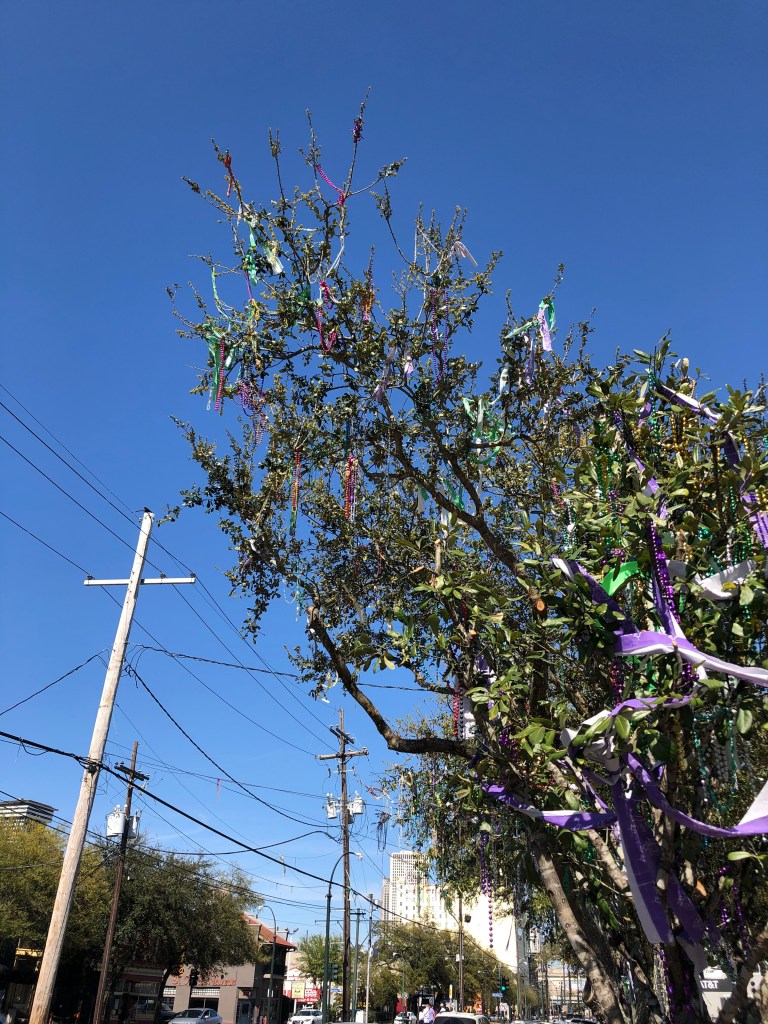


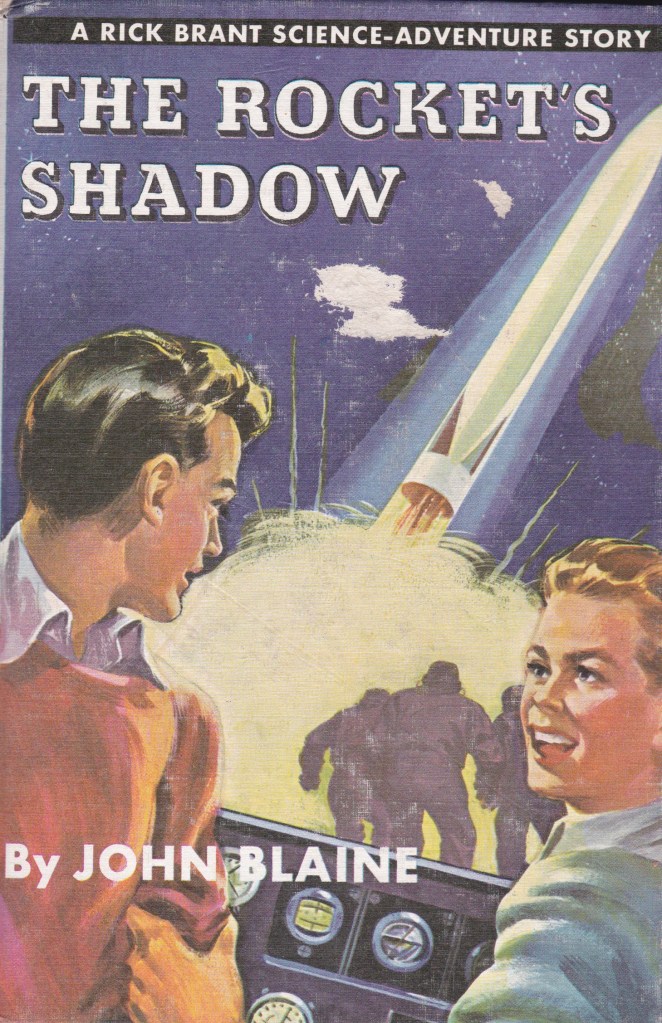

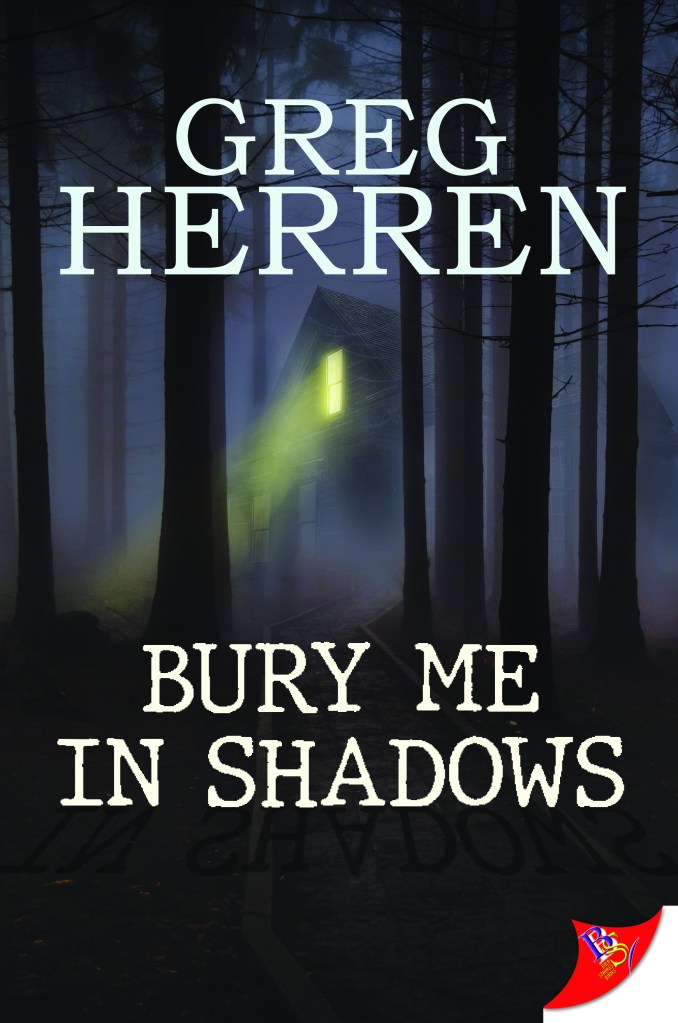
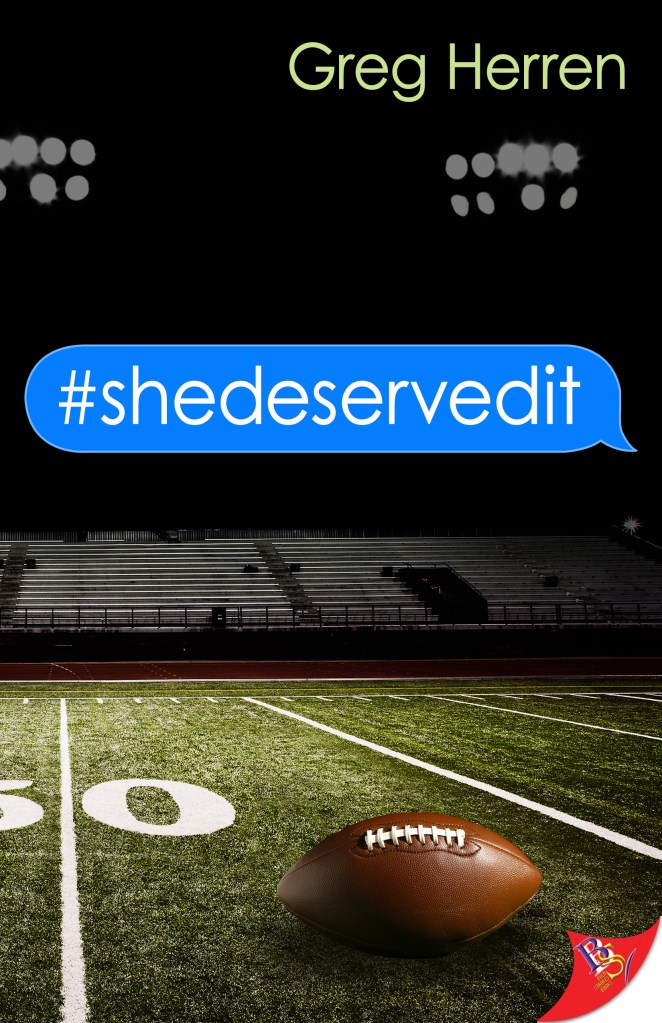
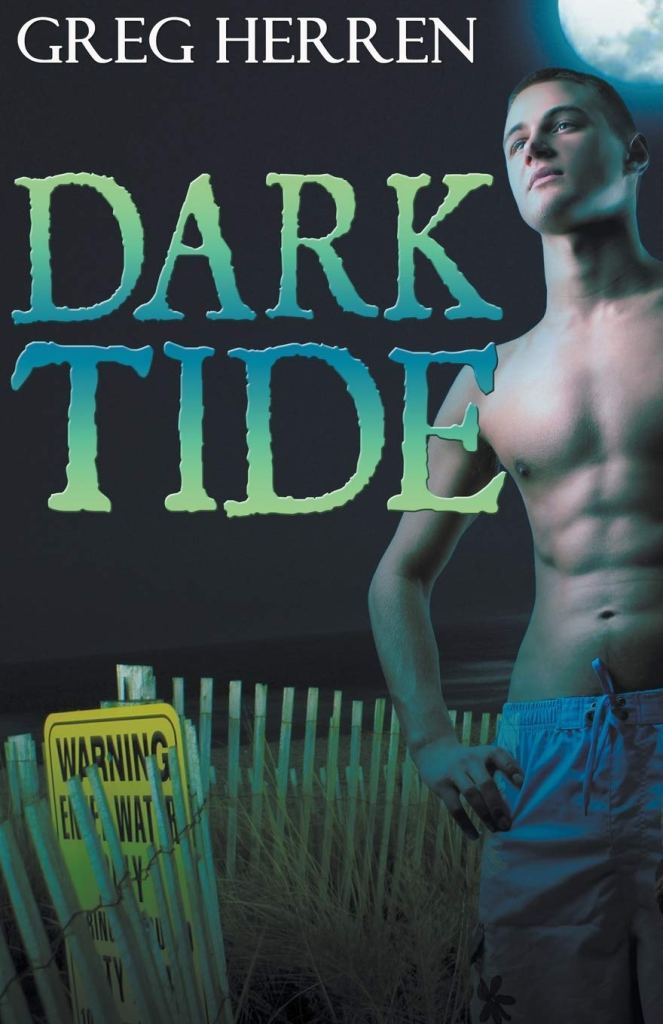
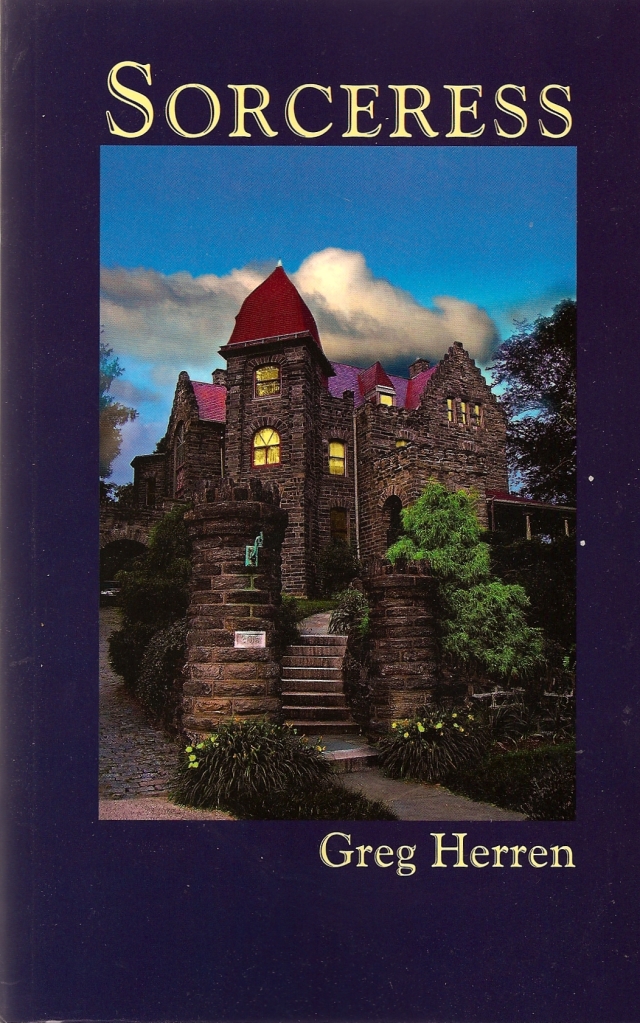

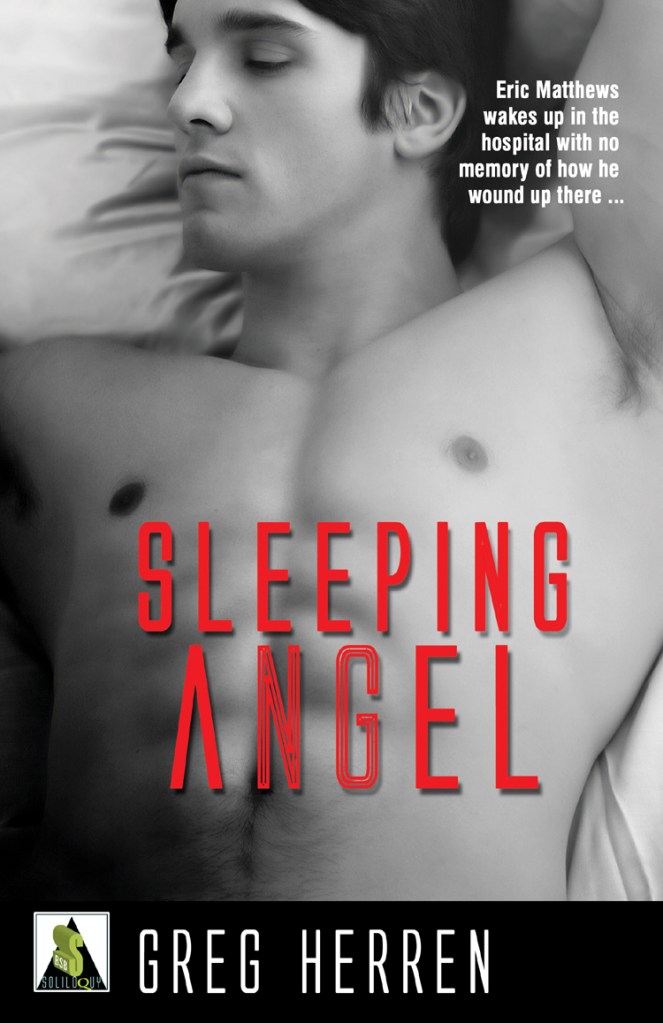

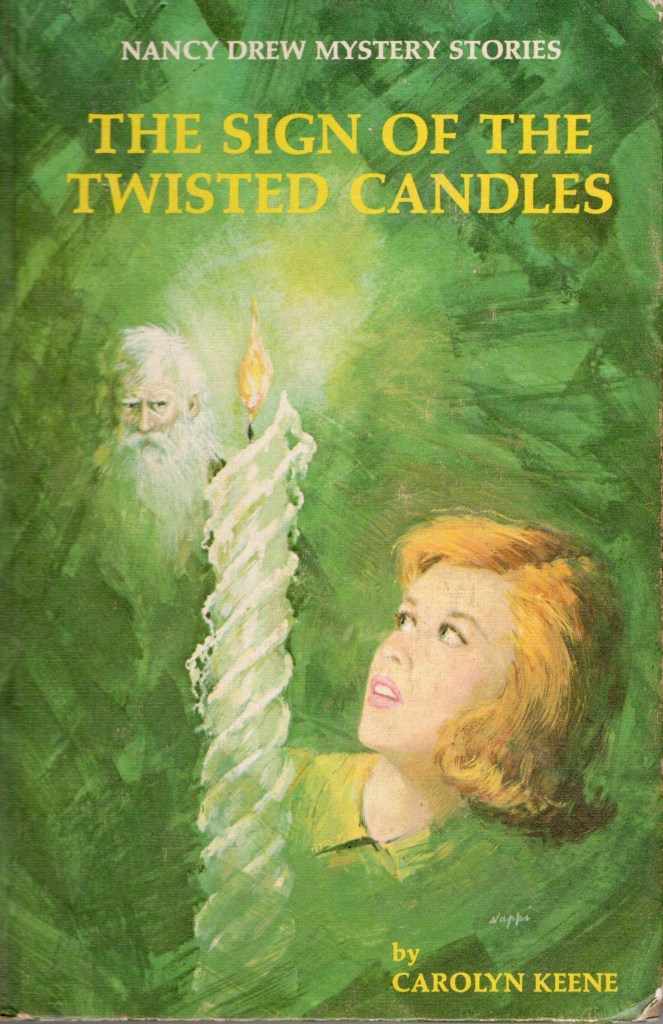
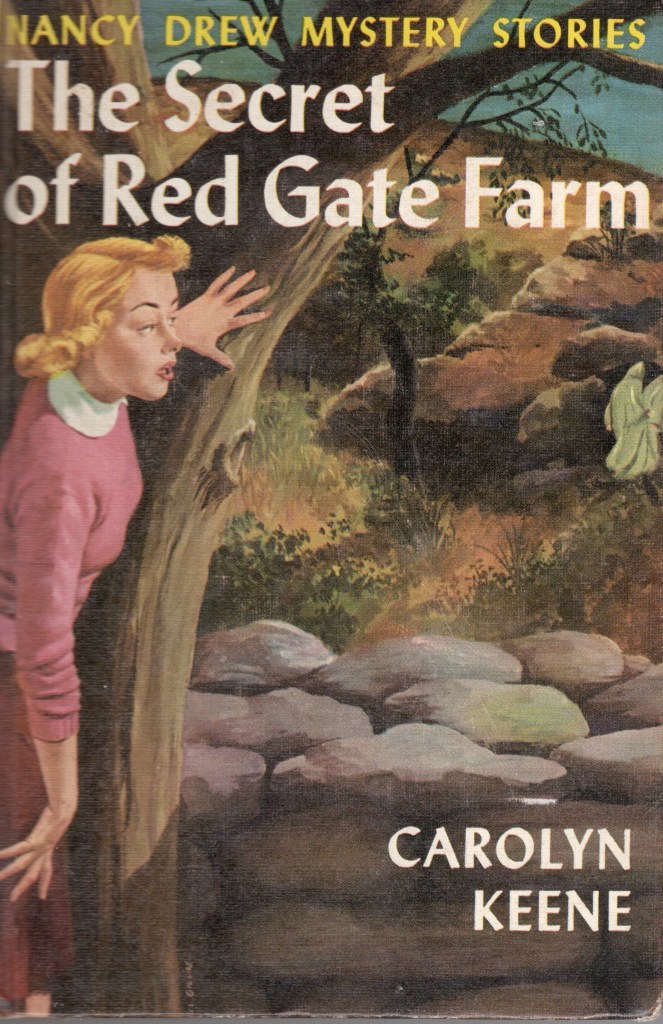
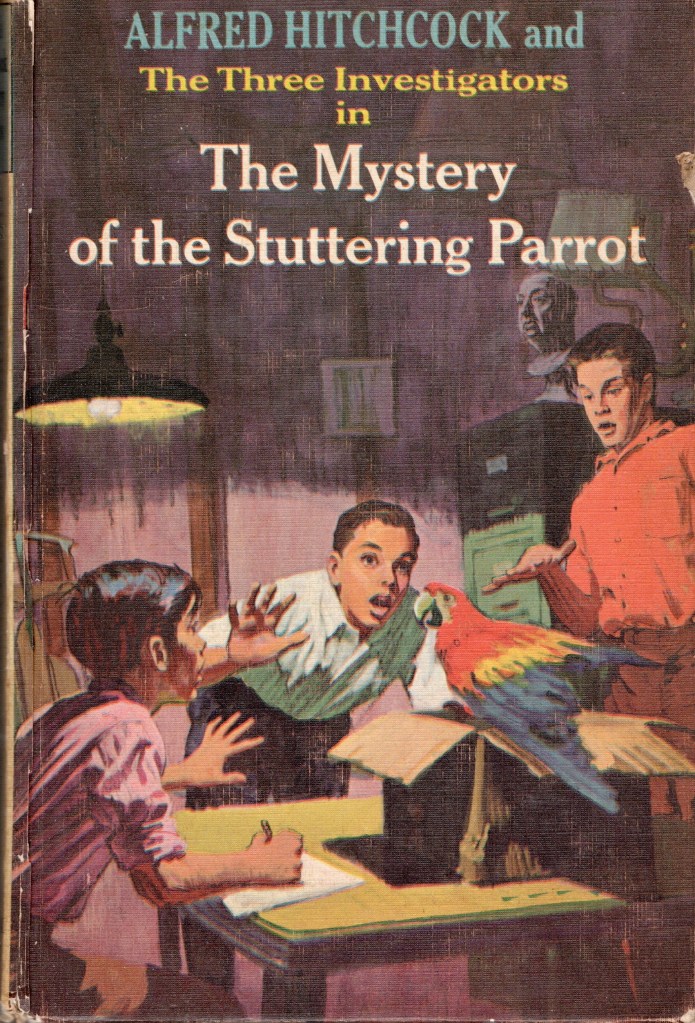
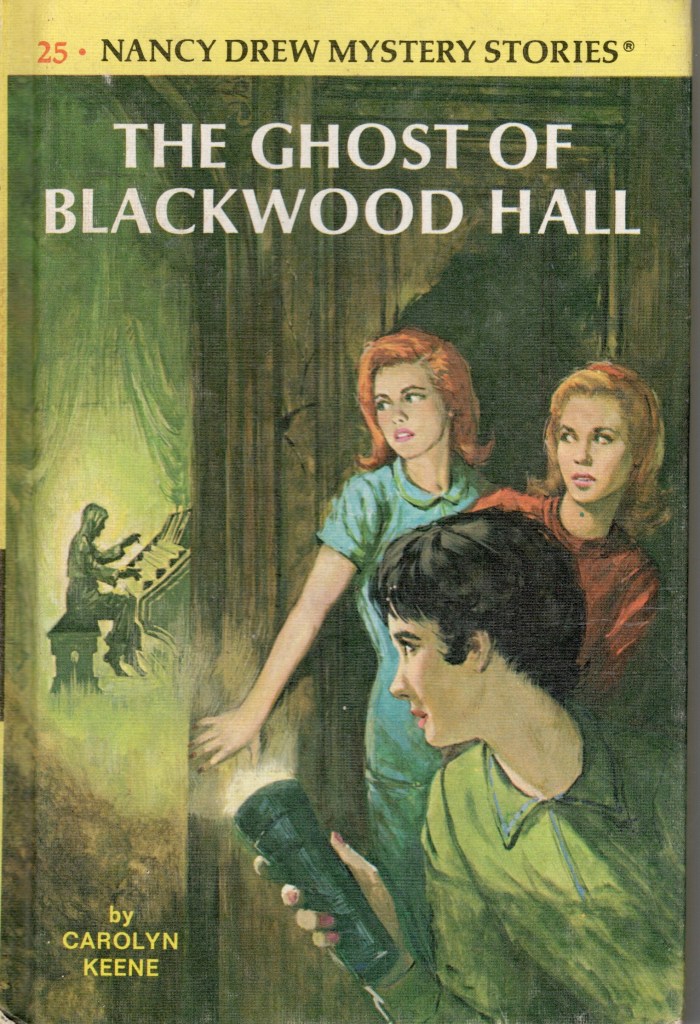
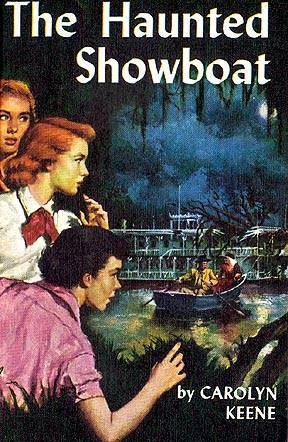
 Queer and Loathing in America