touch

Saturday! Sparky didn’t let me sleep as late as I would have perhaps preferred, but I am awake now and slurping down coffee and having a lovely morning thus far. I slept really well last night, which was nice, but mostly spent my evening after our Costco run (it was bizarre; we ran into two people we know there, which rarely, if ever, happens anymore) watching videos on Youtube about a) the 1970s for another project and b) World War II (for obvious reasons) before I fell asleep in my chair and had to finally go upstairs to bed. I did get a lot of chores done yesterday, which was lovely; the dishes are all done, and there’s a load of clothes in the dryer that also need to be finished and folded and put away. I have to run to the mail today, get gas, and make some groceries (while having others delivered1), and the floors need to be vacuumed, but other than that, I have a nice restful day at home planned. LSU plays game one of the National Championships tonight against Coastal Carolina at six tonight, but isn’t anything college baseball related going to seem anti-climactic after the ninth inning of the Arkansas game the other night? Probably.

I decided to read The Crying Child by Barbara Michaels as my next reread; I did some poking around on-line about Myra Breckinridge and apparently I missed a lot on my two previous reads of the book, so I am going to have to spend more time with it when I read it, and right now I am not feeling the bandwidth in my head to do that kind of critical reading of it–while trying to finish Summerhouse, which is my goal for this weekend. (Next up for my new-to-me read is going to be Mia Manansala’s y/a debut, methinks.) I am also thinking I may rewatch Surviving Ohio State–I was doing things and reading during my first watch, so wasn’t paying as much attention as perhaps I should have, and I’d like to write about it more in depth.

I missed the deadline for the short story I’ve been working on, which means I can now talk about the story and the market without jinxing anything; I was so fatigued this past week from the infusion I lost track of dates and thought the 20th, for some reason, was Monday. Nope, it was yesterday and so I missed the deadline and still didn’t finish the story. I will have to put it aside and finish it later–I think going forward, to keep from having so many story fragments, I’ll finish the story anyway rather than just putting it to the side and forgetting it. For one thing, I kind of got wrapped up in it and the main character. Anyway, the anthology was about sea monsters–anything below the surface of any water, really. When I was in the hospital, I had an idea for a new book–and realized I could use an old unfinished manuscript and its characters to graft onto the new idea (the old idea didn’t work because of its setting), which actually got me a little excited, and when I saw this submission call, I thought, oh, I can write something for this that will be an excerpt from this longer novel. So, that’s what I was trying to do with the story I called “The Lake Must Be Fed.” The original manuscript was called The Enchantress, and was set on the coast of the Florida panhandle, but it never really worked for there; the actual terrain was too different from what I imagined. I’ve also always been interested in the concept of “drowned towns,”–places that were evacuated to make way for a reservoir after a river was dammed. Scott Carsen’s last book that I read was one of these (completely different from my idea), and of course, the primary inspiration for moving it from the panhandle to northwest Alabama is Georgia’s own cursed lake, Lake Lanier. I’m sorry I didn’t finish the story, but I’m not putting it on the back-burner just yet; I have other things I need to write at the moment, but when I get stuck on the front-burner stuff I can work on “The Lake Must Be Fed,” which I think is a great title. I don’t know where it’ll get published, if ever, but it would be nice to have it finished and ready to go.

That’s the thing with short stories. I love the form, I love writing them (even as I always struggle with them), but the problem is there’s not many markets for them and you have to get really lucky with a specific submission call to say “oh, I have something for this!” and not have to write something new…which is partly why I have so many partials and unpublished stories in my files. Heavy sigh. AH, such is the writer’s lot in life, is it not?

I also managed to finish and send out another newsletter yesterday, and I also realized that I don’t have to finish and send every newsletter about my queer life during Pride, just like I don’t just read queer fiction during June, either. I do make more of an effort to talk about these things during Pride Month, when it’s more likely the straights might read it and reflect on what I’ve said (whether they agree or disagree with the points I make), but I’m not just gay during June; I’m gay all the rest of the year, too, and it’s just as important to speak out all year rather than just in June. I am writing one now about Overcompensating, and extrapolating that out to other shows/movies about queer people–and how you can pretty much tell when something queer is made to “play in Peoria” as opposed to being something authentic queer people can relate to other than just the sexualities being portrayed. (For the record, Overcompensating seemed authentic to me; but was it, or was it just something I could relate to? This is why I generally don’t do criticism–because it always feels like you’re speaking for the entire community, and I am uncomfortable with that, always having to make certain people understand I only speak for myself and not others, certainly not for the queer community as a whole.)

Well, my coffee certainly is working its magic on me this morning, isn’t it? This is fairly long already, and I don’t think I’ve covered everything that I want to as of yet? Let me get another cup of coffee and the next stage of my breakfast before I continue on here, shall I? Let’s shall.

1 do love me some honey-nut Cheerios. I started craving them when I was sick, and have been having them for breakfast almost every morning since I was able to start eating normally again. I’ve never been a breakfast person, choosing to use the time I’d spend getting breakfast together and then eating it instead staying in bed longer. That changed a bit when I started having to get up early every day, but now I eat so much breakfast that I’m really not all that hungry the rest of the day. And if I don’t eat a lot in the morning, I am starving by mid-afternoon. And I am also eating in the evenings; my dinners are usually lighter than breakfast, but I’ve been making dinner since I came home from the hospital. Again, I am generally not exhausted every night when I get home from work, and do not always repair to my easy chair to be a Sparky bed and relax from the day the way I used to; I can generally get some writing and reading and cleaning done every night, which is kind of nice. I don’t feel as defeated as I did before I got sick, either. I am suspecting that before it erupted into full-scale illness it was already affecting me physically before the lower intestine/colon went into a full revolt.

All right, I should probably bring this to a close and get to work this morning. I need to do some reading and cleaning and possibly some writing, this morning. I also need to do some editing, which I always seem to hate to do because it means more work. But I also always put it off, which is a mistake. So I am heading into the spice mines. Have a lovely Saturday wherever you are, Constant Reader, and no worries–I’ll be back no later than tomorrow morning.
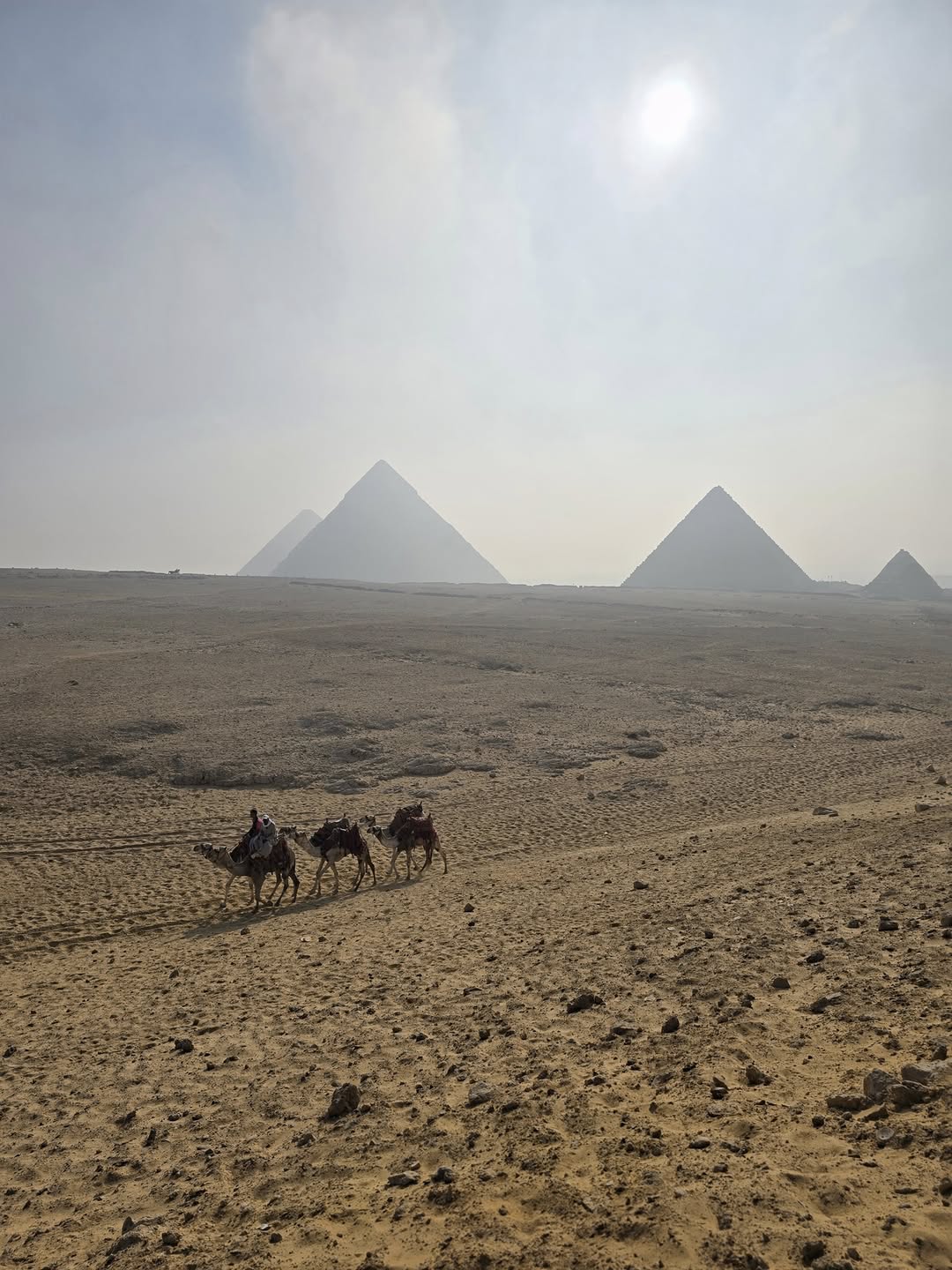
I always wanted to go to Egypt and see the pyramids, among other sites. Egypt has fascinated me since my childhood, and I’ve always wanted to write about Egypt.
  1. Remember the other day when I was talking about not having a day job but would have to leave the house to run errands? I forgot about having things delivered! ↩︎
Under the Boardwalk

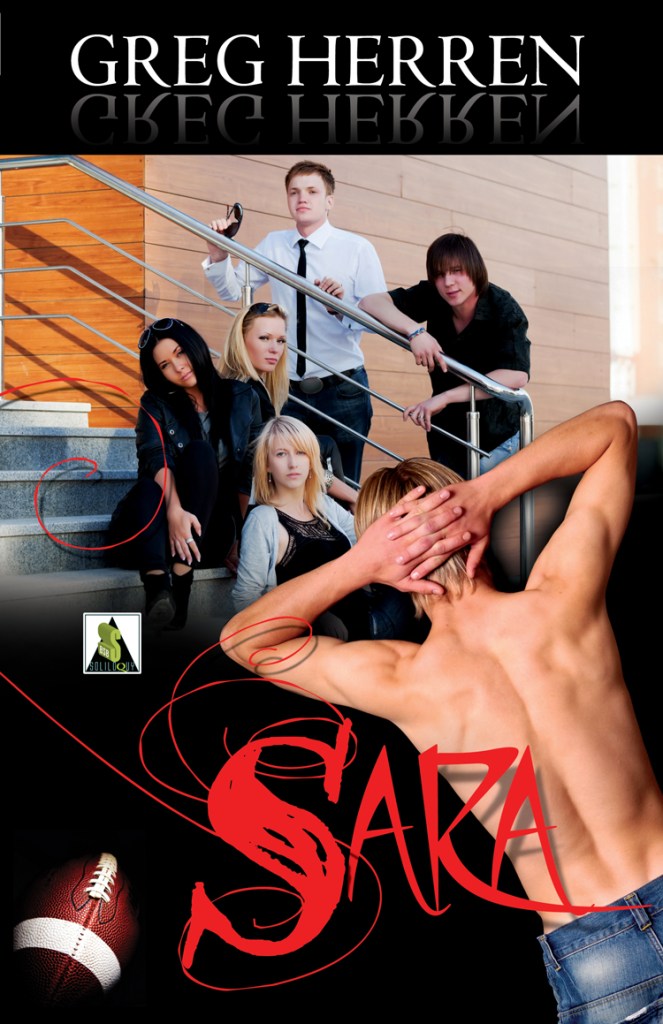
I hadn’t been sure that I would keep writing young adult novels after I revised, rewrote and published the first three (Sorceress, Sleeping Angel, and Sara) I didn’t know if it was a direction I wanted to keep going in. I knew I wanted to do stand-alones–always have wanted to do stand-alones–and I also like writing about teenagers and young adults.

You may remember (doubtful) me talking about a horror novel a while ago that I started writing in the 1980’s called The Enchantress that I only got about three or four chapters into before abandoning (because I didn’t know where to go next with it; and the first chapter I specifically remember rereading at some point in the decades since and shuddering in horror at how badly it was written), but one of the places in the book really stuck in my head–an old family-owned hotel called Mermaid Inn, which sat on the shores of Tuscadega Bay (which was my stand-in for Choctawhatchee Bay–my grandparents retired to a house on that bay and I’d always wanted to write about that area; still do–it’s where “Cold Beer No Flies” was set). After shelving The Enchantress (which I do think about from time to time, and wonder if I should revisit the idea) I kept thinking, you should write a book and call it Mermaid Inn because that is a great title!

I made a folder for it, wrote a few sketchy notes, and then… it sat in my files for a very long time.

If you will remember, I had originally planned to write an entire series of interconnected young adult novels, a la the Fear Street series by R. L. Stine, and one of the varied locations they would be spread out over would be Tuscadega, Florida, in the panhandle on a fictional bay. That was part of the note I scribbled for the folder–set this in the panhandle of Florida, and somehow connect it to the fictional Alabama county you’re going to write about someday.

I decided to write Mermaid Inn sometime after Hurricane Katrina, when I discovered yet again my own ignorance of geography. I was beginning to realize that the panhandle wasn’t the right setting for this book and decided to set it on the Alabama Gulf Coast, which made me realize I had absolutely no clue about that part of Alabama’s geography. I’d just never really given it much thought, to be honest; I knew Mobile was on the bay, and I knew that when you drive on I-10 through Mobile you have to take a tunnel below the Mobile River. I just had always assumed there was nothing south of Mobile in Alabama–I mean, it’s ON the water–and figured that those lower prongs of Alabama that reach down along the sides of the bay were uninhabitable wetlands. I discovered this to not be the case when visiting friends for the first time who lived in Alabama south of Mobile. They told me to take an exit off I-10 and drive south, which I didn’t think was possible.

Turns out it was–and I realized…this will work for my book! So I filed it away and forgot about it again.

I don’t remember precisely why I decided to write Mermaid Inn, but I did, and set in a small town on the prongs, south of Mobile; my friend Carolyn Haines helped me with some background and I know she told me some stories about closeted society men in Mobile and their hijinks and I thought, I could use this for the book and I think that may have been the impetus? And then I created my character, Ricky Hackworth, from Corinth, Alabama–po’ white trash who needs a swimming scholarship to attend the University of Alabama. (Sidebar: alert readers will recognize that Beau’s last name in Bury Me in Shadows–and at one point in the story he mentions he’s only the second Hackworth to go to college; “besides my cousin who got a swimming scholarship.”)

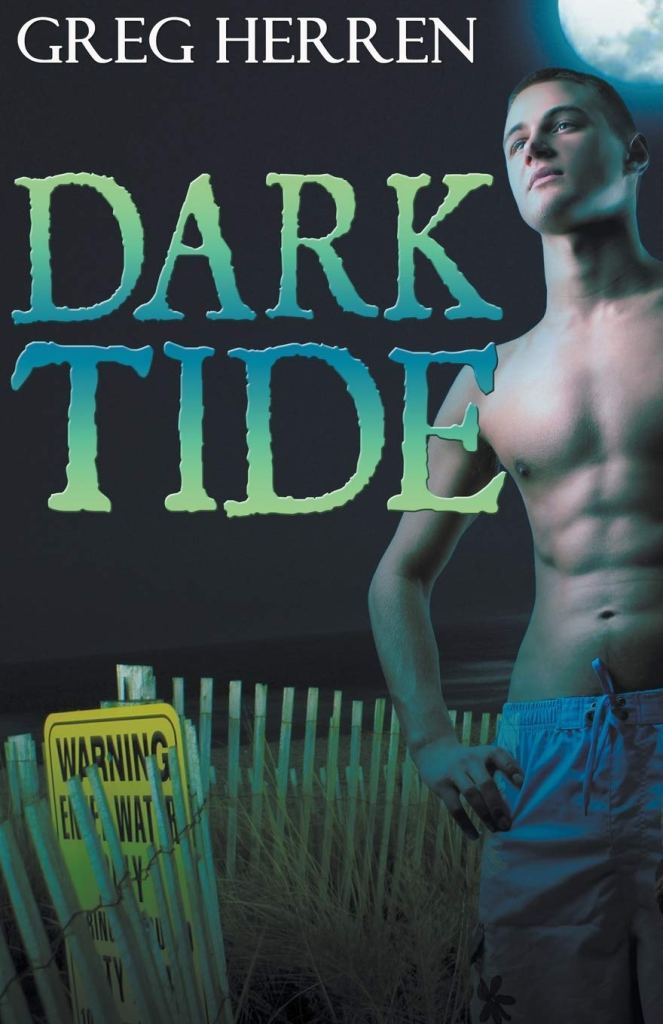
Bold Strokes didn’t like the title, and for perhaps maybe the fourth or fifth time in my career my original/working title didn’t make it on the cover. They recommended Dark Tide, which I really liked because it gave the sense of the book’s mood and tone and voice…and darkness.

The engine of my pickup truck made a weird coughing noise just as I came around a curve in the highway on the Alabama Gulf Coast and I saw Mermaid Inn for the first time.

My heart sank.

That’s not good, I thought, gritting my teeth. I looked down at the control panel. None of the dummy lights had come on. I still had about a half tank of gas. I switched off the air conditioning and the stereo. I turned into the long sloping parking lot of the Inn, pulling into the first parking spot. I listened to the engine. Nothing odd. It was now running smooth like it had the entire drive down. I shut the car off and kept listening. There was nothing but the tick of the engine as it started cooling.

Maybe I just imagined it.

Hope springs eternal.

The last thing I needed was to spend money on getting the stupid old truck fixed. Maybe it just needed a tune-up. I couldn’t remember the last time it had one.

Dad gave me the truck when I turned sixteen. It had been his work truck since before i was born–it was two years older than I was. He’d finally broken down and bought himself a new one. This old one was dependable and had almost two hundred thousand miles on it. Dad had taken good care of it. He’d babied it, gotten an oil change every three thousand miles without fail, and I could count on one hand the number of times it had been in the shop to be repaired.

It still had the original transmission.

It might not have been the nicest or prettiest car in my high school parking lot, but it got me where I needed to go and got good gas mileage. Since I was saving every cent I could for college, that was a lot more important than horsepower and cosmetics and a loud stereo that rattled your back teeth. The swimming scholarship I’d accepted from the University of Alabama wasn’t going to remotely cover anything close to the lowest estimate of what my expenses might be, but it was the best offer I’d gotten.

And I was grateful to have it. If they hadn’t offered, I wouldn’t be going at all.

Swimming was my ticket out of Corinth, Alabama.

That opening scene!

Dark Tide was probably my most hard-boiled young adult title published to that point. It was a dark story, and Ricky was poor–an economic condition I’d touched on with Sara, and something I generally try to avoid when writing. I’ve been poor, and I know how it feels; I don’t like remembering those days of checkbook mistakes and bounced checks and not having enough money from one paycheck to another. Ricky has taken a summer job as the lifeguard at Mermaid Inn in Latona, Alabama (Latona is another name for Daphne, which is actually a town on the prongs below Mobile), to save money to pay for college expenses his swimming scholarship to the University of Alabama wasn’t going to cover, and the water being there meant he could continue training. Once he arrives and is shown to his room on the uppermost floor of the building and meets the owner’s daughter, he learns that his predecessor from the summer before had simply disappeared–and young teenaged boys disappear with an alarming regularity over the past few years. He starts asking questions, mostly out of curiosity, and also starts having horrible dreams, about vicious mermaids beneath the water, and there are a lot of stories about killer mermaids from the days of the indigenous people and the Spanish. I wrote some terrific scenes in this book that I was really proud of–one particular dream sequence was especially chilling–and I was also trying something with the rhythm of the words, which I hadn’t done in a very long time, and I think it worked.

Writing Dark Tide was important to me because this was the book that reminded me again that I was writing stand-alones to help keep the series books fresher, more creative, and less paint by the numbers, too.

Promises in the Dark

I grew up loving both horror and crime stories–those wonderful old black and white Universal monster movies used to scare me to death, not to mention all the marvelous ghost stories and mysteries that got filmed back in the day. I also watched a lot of the 1950’s paranoia horror monster movies–Godzilla and its ilk–and those also used to give me horrible nightmares. I also liked how twisted horror comic books like The Witching Hour, House of Mystery and House of Secrets were. I’ve always wanted to write those kinds of stories, but if you think I have zero confidence in my abilities as a crime/mystery writer, there’s even less when it comes to my writing of horror. I never feel like I ever get it right, you know, and my stuff is macabre and peculiar and slightly twisted, but it’s not really scary. But like I did with the mystery novels and movies I watched as a child, I was always looking for myself in those tales and not finding myself. Oh, every once in a while there would be some homoeroticism in some horror I would be reading (Peter Straub’s If You Could See Me Now comes to mind), but for the most part, there wasn’t much. Thomas Tryon’s The Other resonated with me–it wasn’t until decades later that I learned Tryon was gay, and that sensibility infused all of his work, hence my connection with it–but usually when gays showed up in horror they inevitably were effeminate and soon to become victims. (Kill your gays has always been a thing, clearly.)

When I was going through my “I want to be the gay Stephen King” phase in the 1980’s, I didn’t put gay characters or themes in any of my stories–although rereading my attempts at horror from then now, I can see the sensibility was always there–but the horror novel I started writing in about 1986 or 1987, The Enchantress, had a gay point of view character, even though I didn’t really know what I was doing. I was always afraid, you see, to include gay characters in anything I hoped to get published because I was so busy keeping my two lives completely separated that I feared writing sympathetic gay characters would out me. (During my many writings about my high school students from Kansas, one of them was actually gay and was probably the most realistic and honest character in all of those writings) Trying to salvage those stories now, decades later, I sometimes will revise one and make the point of view character gay–which inevitably makes the story work better, incidentally–and they see publication eventually; “Crazy in the Night” was one of those stories, and another morphed into Bury Me in Shadows, actually. Just this morning I was thinking about some more of those old stories and how to make a couple of them work–partly because I spent the last two mornings reading Other Terrors: An Inclusive Anthology from the Horror Writers Association, edited by my friends Vince Liaguno and Rena Mason. The point of the anthology was to focus and highlight horror stories from marginalized writers–where they are marginalized by race or religion or sexual orientation or gender identity, and it includes stories from some of the top names in horror publishing today.

As with any anthology, some stories stick with the reader more than others; this isn’t a dis on any of the contributors to the anthology–every story was incredibly well-written–it’s just that everything is subjective and some stories stick with the reader longer than others. For me, the standouts were Jennifer McMahon (“Idiot Girls”); Alma Katsu (“Waste Note”); Gabino Iglesias (“There’s Always Something in the Woods”); Hailey Piper (“The Turning”); Larissa Glasser (“Kalkriese”), Michael Thomas Ford (“When The Lovelight Gleams”); M. E. Bronstein (“The Voices of Nightingales”); and S. A. Cosby (“What Blood Hath Wrought”). These were the ones that really resonated me, with the connections of strong writing, three dimensional characters, and completeness of the story. For many of the contributors, this is my first experience with their work, and I will definitely look out for more of their work. These were the ones that made me start thinking about ideas and stories and characters; stories that not only were enjoyable and immersive to read but also kick-started my own creativity and inspiration.

And what more can you ask from a reading experience, as a fellow writer?

Now I want to write more horror.

Definitely check the book out, Constant Reader, I think you’ll enjoy it.

Dark Tide

I hadn’t been sure that I would keep writing young adult novels after I revised, rewrote and published the first three (Sorceress, Sleeping Angel, and Sara) I didn’t know if it was a direction I wanted to keep going in. I knew I wanted to do stand-alones–always have wanted to do stand-alones–and I also like writing about teenagers and young adults.

If you remember, a few entries back I talked about a horror novel I started writing in the 1980’s called The Enchantress that only got about three or four chapters into before abandoning (because I didn’t know where to go next with it; and the first chapter I specifically remember rereading at some point in the decades since and shuddering in horror at how badly it was written), but one of the places in the book really stuck in my head–an old family owned hotel called Mermaid Inn, which sat on the shores of Tuscadega Bay (which was my stand-in for Choctawhatchee Bay–my grandparents retired to a house on that bay and I’ve always wanted to write about that area). After shelving The Enchantress (which I do think about from time to time, and wonder if I should revisit the idea) I kept thinking, you should write a book and call it Mermaid Inn.

I made a folder for it, wrote a few sketchy notes, and it sat in my files for a very long time.

If you will remember, I had originally planned to write an entire series of interconnected young adult novels, a la the Fear Street series by R. L. Stine, and one of the varied locations they would be spread out over would be Tuscadega, Florida, in the panhandle on a fictional bay. That was part of the note I scribbled for the folder–set this in the panhandle of Florida, and connect it to the fictional Alabama county you’re going to write about somehow.

I decided to write Mermaid Inn sometime after Hurricane Katrina, when I discovered yet again my own ignorance of geography. I’d just never really given it much thought, to be honest; I knew Mobile was on a bay, I knew when you drove on I-10 through Mobile you have to take a tunnel below the Mobile River. I just had always assumed there was nothing south of Mobile in Alabama–I mean, it’s ON water–and figured that those lower prongs of Alabama that reach down along the sides of the bay were uninhabitable wetlands. I discovered this to not be the case when visiting friends for the first time who lived in Alabama south of Mobile. They told me to take an exit off I-10 and drive south, which I didn’t think was possible.

It is.

I don’t remember precisely when or how or why I decided to write Mermaid Inn and set in a small town on the prongs, south of Mobile; I just know now that at some point I decided to do this–and my friend Carolyn Haines might have been involved; I know she told me some stories about closeted society men in Mobile and their hijinks and I thought, I could use this for the book and I think that may have been the impetus? And then I created my character, Ricky Hackworth, from Corinth, Alabama–po’ white trash who needs a swimming scholarship to attend the University of Alabama. (Sidebar: alert readers will recognize that Beau’s last name in Bury Me in Shadows–and at one point in the story he mentions he’s only the second Hackworth to go to college; “besides my cousin who got a swimming scholarship.”)

The engine of my pickup truck made a weird coughing noise just as I came around a curve in the highway on the Alabama Gulf Coast and I saw Mermaid Inn for the first time.

My heart sank.

That’s not good, I thought, gritting my teeth. I looked down at the control panel. None of the dummy lights had come on. I still had about a half tank of gas. I switched off the air conditioning and the stereo. I turned into the long sloping parking lot of the Inn, pulling into the first parking spot. I listened to the engine. Nothing odd. It was now running smooth like it had the entire drive down. I shut the car off and kept listening. There was nothing but the tick of the engine as it started cooling.

Maybe I just imagined it.

Hope springs eternal.

The last thing I needed was to spend money on getting the stupid old truck fixed. Maybe it just needed a tune-up. I couldn’t remember the last time it had one.

Dad gave me the truck when I turned sixteen. It had been his work truck since before i was born–it was two years older than I was. He’d finally broken down and bought himself a new one. This old one was dependable and had almost two hundred thousand miles on it. Dad had taken good care of it. He’d babied it, gotten an oil change every three thousand miles without fail, and I could count on one hand the number of times it had been in the shop to be repaired.

It still had the original transmission.

It might not have been the nicest or prettiest car in my high school parking lot, but it got me where I needed to go and got good gas mileage. Since I was saving every cent I could for college, that was a lot more important than horsepower and cosmetics and a loud stereo that rattled your back teeth. The swimming scholarship I’d accepted from the University of Alabama wasn’t going to remotely cover anything close to the lowest estimate of what my expenses might be, but it was the best offer I’d gotten.

And I was grateful to have it. If they hadn’t offered, I wouldn’t be going at all.

Swimming was my ticket out of Corinth, Alabama.

That opening scene!

Sara

Wait a minute, baby…stay with me awhile.

Ah, Sara. The first actual book I wrote for a young adult audience, and what a long and tortured history this story actually had.

I started writing stories when I was really young, my own versions of the kids’ series books I was addicted to and were blatant rip-offs, frankly, but it was good practice, I started writing original fiction when I was in high school; basically, I started writing about a group of high school students at a small rural high school (kind of like the one I was going to), and always felt that someday I would turn them all into a book about those kids. A couple of years after high school I abandoned the first actual novel I tried to write (I don’t even know if I still have it anywhere but I don’t think so; it most likely got lost in one of the many moves over the decades), and decided to write a novel about high school students in Kansas. Writing in cursive longhand, I expanded the story beyond the teenagers–who were still the primary core of the story–but also wrote about their parents and siblings as well. It was very soapy–this was the time when my daytime soap addiction was at its highest–but ultimately, the real story was the murder. I wrote whenever I could, often changing character names and ending subplots and starting new ones willy-nilly as my mind bounced around, always coming up with new ideas for it. I started in 1980, and I finally wrote the end on it in 1984; four years. I had thousands of wide-ruled paper filled with my loopy, pretty handwriting; now the trick was to somehow type it all up and edit it, cut out all the excess and tighten it, decide on final names, and so forth.

Needless to say, I never did that. I still have it all somewhere, in a box–it did survive all those moves–but over the years I pilfered plots and character names and stories from it. I have a tendency to come up with character names for ideas for stories and books that never get used; I then turn around and use those names again in something else I am writing (I talked about Chris Moore and Eric Matthews before; I came up with those names for an idea I had for a book set in a fraternity, and have used them in Todd Gregory “fratboy” books and they’ve turned up elsewhere, too).

Sara is one of those books born from that original manuscript, and no, despite the opening sentence of this entry, I didn’t take the title from the Fleetwood Mac song. I’ve always liked the name, and right around when I started writing the book as a young adult novel, I went to a family reunion and met a cousin’s daughter for the first time, and she was absolutely adorable. She actually looked like she would grow up to look like my mysterious title character–and her name was Sara. (I had originally named the character Tara; it was an easy switch.)

Being a senior sure doesn’t feel any different, I thought as I looked at myself in the bathroom mirror, and I sure don’t look any different–besides that damned pimple on my chin.

I don’t know what I’d been expecting. I;’d been looking forward to my senior year almost from the very day I started high school. This was it–when the year ended, I’d be an adult. No more being treated like a kid, no more getting up Monday through Friday at six thirty, no more being at the mercy of teachers and coaches and guidance counselors–it would all end when I cross the stage, took the diploma, and put the tassel on the other side of the cap.

It couldn’t happen soon enough, thank you very much.

And then I could get the hell out of this podunk town in the middle of nowhere, and never look back.

I finished toweling my hair and hung the wet towel on the rack. I looked in the mirror again. I touched the angry-looking red blotch in the direct center of my chin. It might as well have been blinking and neon–no one could miss the stupid thing. I sighed and wondered what kind of omen that would turn out to be as I put on my underwear and a pair of jean shorts. Probably not a good one, I thought, sighing again as I brushed my damp hair into place. I was out of hair gel, so I just parted it on the side and combed it flat.

I was already starting to sweat. It wasn’t even eight in the morning yet, and our crappy house was already turning into a sauna. The house didn’t have central air conditioning–all we had was some window units in the bedrooms. Mom kept saying when she got a little bit ahead she’d buy one for the bathroom, but until then we’d have to make do with fans.

I walked down the hall back to my bedroom, wiping sweat off my forehead. I stood in front of the window unit and raised my arms so my armpits would dry. When I didn’t feel damp anymore, I reached over to the bed for my purple Trojan Football T-shirt. I pulled it over my head, but had to yank it down hard to get it past my chest. The weightlifting I;d been doing all summer had worked–the shirt stretched so tight across my pecs it looked like it might rip. I looked into the full-length mirror hung on the back of the bedroom door and smiled. It made my muscles look huge–so maybe no one would notice the stupid pimple. I tucked the shirt into my shorts and rubbed some antiperspirant into my armpits, hoping it would work this time. I picked up my backpack and made sure one more time I had everything: notebook, pens, my cheap cell phone–yeah, I hadn’t forgotten anything. I put my wallet into my back pocket and sat down on the edge of my bed to put on my socks and shoes.

I’ve often joked that Sara is my “get even with everyone I went to high school” book, but that isn’t true. Yes, I did not have a great time in high school–either of them–but it wasn’t all bad; I did have some friends, even though it often felt like I didn’t have any, and after graduation, I decided to shut that door behind me firmly and move on with the rest of my life. I harbored a lot of anger and bitterness about my high school experience, but time does provide some healing, even if there’s a scar left behind. I was weird and different from my classmates from kindergarten on: I was gay but I was also an artistic child with a wild and vivid imagination in an environment where no one knew what to make of either. I was different, and that was all that mattered, even if they couldn’t quite process that I wasn’t from another planet or an aberration that needed to be shunned and excluded and mocked.

As I have mentioned before, I started writing in high school about a group of high school kids in a rural high school similar to the one I was attending. That eventually morphed into a lengthy, hand-written (and incredibly amateurish and terrible) first novel from which I have pilfered plots, stories and characters ever since. Sometime in the mid-1980’s, as a fan of Stephen King and Peter Straub, I decided to try my hand at writing horror short stories, with an eye to maybe writing a horror novel. I even started writing a horror novel (The Enchantress, which I occasionally think about getting back out of the drawer and working on again; it did, however, lead me to write a different book decades later, but I still think about The Enchantress from time to time). By this time I’d taken a junior college writing class and was starting to get my confidence in my dream back after the horror of my first creative writing course in college; I took another course in it when I started going to Fresno State (CSU-Fresno at the time, to be correct) and that teacher, in a conference about one of my stories (which he really liked), told me, when asked about writing a novel, “The best way to study how to structure a novel is to take one that you really like, and then break down how it’s structured; how the story and the characters are built and the pattern and rhythm of how action is interlaced into the plot.” I’ve always remembered that, and sometimes when I am stuck on a book I think about his advice and think about how a book with a similar story to the one I am trying to tell is structured.

I put The Enchantress aside and decided to try, once again, to do something with fragments of that horrible first novel I’d written, and introduce an element of horror to it. I decided to structure the book the way Stephen King structured Christine–something awful happened when we were in high school, and now, many years later, the main character is looking back and remembering, and at the end of the story we find out that the reason he is telling us this story is because he’s afraid the awful thing is coming back again (reoccurance/revival of something evil is a strong theme in horror, and King has gone to that well numerous times, most famously with It and the dueling timelines). So, I started writing Sara with a prologue written in the present day; ten years later, the main character has gotten an invitation to the high school reunion and starts remembering back, and then in the first chapter we’re back in the late 1970’s and don’t return to the present again to the epilogue. I also decided to do the different POV thing King did in Christine (which I still think is one of his most underrated novels of all time); he tells the first part and the third part of the book in the first person point of view of Dennis, but the second section is the third person and bounces around from character to character before the return in the final section of the book (it really is a three-act structure). I thought this was very clever and decided to use it in this book, too. But instead of an evil car, we had a mysterious new girl at the rural high school who dazzles and enchants all the boys–but there’s something not right about her.

I decided that the book–primarily focusing on teenagers–would work best as a young adult novel (ater discovering there even was such a thing as y/a horror) and so I dropped the looking back prologue/epilogue framing and moved the action into the present day. I finished a first draft in about six months, and then put it in a drawer for about fifteen years before returning to it, overhauling it and dragging it into the new present day and publishing it.

Revisiting Sara now, thirty years after I first conceived it and ten years after publishing it, the first thing I noticed was “hmmm, you should have reread this before turning in the final draft of #shedeservedit, since technically the two books were supposed to be connected; with the newer book set in the county seat and Sara taking part in the rural southern part of the county” but I am also recognizing that my books don’t, in fact, all need to be connected together; there’s no reason why this particular county and its county seat can’t be a county or two away from this one, even if they are remarkably similar geographically; it’s the plains, after all. There may even be characters in this one with the same name as a character in #shedeservedit, but again, it doesn’t really matter–and I’ve written other stories set in Kansas in the same area where the geography is the same and maybe even some of the character names. I used the ten-year-reunion (or possibly twenty) in rural Kansas thing in my story “Promises in Every Star,” for example, and revisited the Kansas well for “This Thing of Darkness” too.

And will probably return to that well at least once more for a book, if not more than one.

Blowing Kisses in the Wind

Rereading ‘salem’s Lot again, after many years, has proven to be quite a treat: there was clearly a reason why I loved this book so much and why I’ve reread it about a gazillion times. It has always been my favorite vampire novel, and certainly one of my favorite horror novels. It scared the shit out of me when I first read it back when I was a teenager, and it has always entertained me, every single I’ve read it, even though I know what’s going on in the town, what’s going to happen, who lives, who dies. I remember there’s been talk over the years–I think even Stephen King may have aided and abetted this at times–that there might be a sequel; I’ve long since given up on that hope–despite always wanting to know whatever became of Ben Mears and Mark Petrie…and did they ever return to that awful town in Maine?

In the 1980’s, I decided that I wanted to be a writer like Stephen King. I started writing horror short stories, and even came up with an idea for a full-length horror novel called The Enchantress; I still have those four chapters I wrote in my files before I finally put it away for good. The book itself, while influenced most strongly by King, was also influenced by Peter Straub’s Floating Dragon, which I had also recently read–I’d loved Ghost Story and If You Could See Me Now–and wanted to write about, the way King did so often, a small town where something supernatural–and terrifying–happens. I blatantly copied the narrative structure of Floating Dragon (oh look! Four different point of view characters! One an old man, one a child, one a man in his early thirties, and the other a woman with psychic abilities that have basically cursed her life!) but I was also trying to weave some other elements into the story that might not have ultimately worked; it was set in the panhandle of Florida, for one thing, and it had to do with the curse of a witch on four different families (a la Floating Dragon, only he didn’t have a witch), and I don’t think that would have ultimately worked. The idea was also built around a concept I had, an idea, about evil, killer mermaids. I eventually used some of the story and the concepts for Dark Tide, whose original working title was Mermaid Inn.

It’s funny that rereading ‘salem’s Lot brings back such weird memories, isn’t it? I may get around to writing The Enchantress someday–it just can’t be set in Florida, because it needs cliffs–so maybe I’ll move it to a fictional town on the California coast.

Like King–another thing I stole from him–almost all of my books are connected to each other in some way. For years, the connection between the Chanse and Scotty series were my cops–Venus Casanova and Blaine Tujague–appeared in both series; why have different homicide cops in the same city? I had originally intended to connect everything; Woodbridge in California, from Sleeping Angel and Sorceress are connected to the small town in Kansas from Sara; I don’t recall off the top of my head how Lake Thirteen plays into my world-building; but I think the Chicago suburb where the main character in that book is from was the same suburb that the kid from Sara was from, and so on. I always wanted to go back and write some more about Woodbridge; I kind of saw my teen/young adult fiction as being similar in type and style as the Fear Street series by R. L. Stine; which were all in the same town and often minor characters in one book was the main character in another. (Woodbridge was loosely based on Sonora, where some of my college friends were from; I visited them several times up there in the mountains and it was stunningly beautiful up there. One of the few great things about spending the 1980’s in Fresno was accessibility to Yosemite, Sierra National Forest, and Kings Canyon.)

I may get back to this at some point; Bury Me in Satin is connected in that it returns to the part of Alabama where the main character in Dark Tide is from, and more connections might develop as I write the book. I’ve pretty much decided to try to get the first draft of Bury Me in Satin written for Nanowrimo, which is something I’ve never done before; but why not? I am not going to officially participate, but why not use it as a goal to get the first draft of the story done?

I am on chapter nineteen of the revision of Royal Street Reveillon; one big strong last push is all it will take for me to get that finished by the end of the month, and I am enormously pleased at the prospect. It’s shaping up nicely; I think there are still a few holes in the story I am going to have to figure out how to plug later, but that’s perfectly fine.

And now, back to the spice mines.

IMG_4284

I’ll Be There

I loved to read when I was a kid; it’s something I came to early in my life and has never left me, really.

I used to  buy books through the Scholastic Book catalogue (which didn’t count against my allowance), and check out books from the school library and the Tomen branch of the Chicago Public Library, which was about three blocks from our apartment and on the way to Jewel and Woolworth’s; my mom used to drop my sister and I there while she went to the grocery store. When we got our allowances, she would walk us up to Woolworth’s, so we could spend our dollar-a-week. My sister would get 45 records, which only cost 79 cents.

I spent my money on comic books.

I started with Sugar and Spike and Archie comics; eventually I moved on to super-heroes and horror comics. My parents never restricted my reading material–they preferred to restrict my reading time only–and so i kept buying comics, all the way through high school, with occasional other forays into the world of comics throughout my life. (I have the comixology app on my iPad, and scores of comics I’ve bought and downloaded but have yet to read.) But comic books have always played a part in my life, inspiring me and teaching me how to tell stories in a different way than books do.

Recently, Alex Segura tagged me in a “post a comic book every day” thing on Facebook, and digging through the Internet to find the comics that influenced me brought back a lot of memories.

One of the strangest–but true–stories about my books and how they came to be is that Dark Tide was inspired by a comic book. This one, in fact:

bloody mermaid

January 1972, when I was eleven years old, I chanced upon this comic book on the comics rack at the Woolworth’s a few blocks from our apartment in Chicago. I often bought horror comics from time to time, mixing them in with my super-heroes, but this one, for some reason, always resonated with me. I don’t know why I bought it, but that cover is pretty fucking spectacular, isn’t it?

In the 1980’s, when I wanted to be Stephen King, I started writing a horror novel called The Enchantress, which was totally about a killer mermaid. I wrote an introduction and four chapters before giving up because I didn’t know where to go with it from there–like I’ve said before, plot is always my biggest problem–and in all honesty, it was totally,  at least in structure, a rip-off of Peter Straub’s Floating Dragon. I also used the same types he did for the main characters: a woman, a young boy, a man in his early thirties, and a retired older man. All of it was bad other than the chapter introducing the woman, which I’ve tried at very times to reshape into a short story. It was also set in the panhandle of Florida in a small town named Tuscadega; which I used again as the setting for my story “Cold Beer No Flies”, in Florida Happens (available for preorder now!). I eventually renamed and revised the story into one called Mermaid Inn; again, keeping the story about vicious, killer mermaids. Mermaid Inn eventually morphed into Dark Tide; in fact, the entire story is pretty much set at a place called Mermaid Inn, only I moved it to south Alabama, below Mobile.

Wild that something I read when I was eleven inspired a book I published forty years later.

And were there killer mermaids? Afraid you’ll have to buy the book to find out. 🙂

And now, back to the spice mines.

Live to Tell

Well, yesterday was a complete wash as far writing is concerned. I did write about 200 words on the Scotty book, but it was one of those things where once I started trying I could tell I wasn’t going to get very far with it. I was not feeling it, as some might say, and there’s simply no point to forcing it on those days unless I particularly want to feel incredibly frustrated.

And I didn’t want to feel that way.  So, I didn’t try to force it.  Sometimes I can force it and, as Stephen King so aptly put it in Misery, the page will open and I will fall into it. Other days, not so much. Yesterday was definitely one of those days.

Not being able to, apparently, write yesterday led me to trying to be productive in some manner, so I started going through old stories and partial drafts of work-in-progress to see if there was anything that could provide a base for this short story I want to write for a market on my bucket-list (I don’t know why I’m being coy; it’s Cemetery Dance). I always forget that I hand-wrote and then manually typed about twenty or thirty short stories (or fragments of short stories) in the late 1980’s/early 1990’s; I paid someone to type them up as Word documents about ten years ago in case any of them might be usable, reworkable, etc. (They are all terrible…there’s nothing quite so humbling as going back and reading things you wrote years before you knew how to really write.) I printed out about five or six that had potential–based on my memory of them–and I intend to read them over this weekend and see if, indeed, there is anything worth salvaging in them.

I do need to say that one of these longer stories became my novel Sorceress, and some of the others were salvaged and turned into something else, so this is not without precedent….hell, I wrote three chapters of a horror novel back then called The Enchantress that eventually became the foundation of my novel Dark Tide. (In fact, I had turned one of those chapters into a short story, which is one of those I printed out last night.) I don’t think the short story adaptation works, but just remembering the story again made me remember that failed attempt at a novel, and also it was actually a pretty good idea, maybe now you should revisit it?

And this is how, Constant Reader, my creative ADD gets out of control. Last night I was watching documentaries–one was for curiosity; but it triggered a reminder of a book I wanted to write, so the entire time I was sitting there watching it I was also scribbling notes for the book idea. When that documentary finished, I started watching another one, and again, this documentary–I only got about twenty minutes into it–solved an issue with another book idea I had, and made that particular book idea–one I hope to write later this year–even better than it was originally.

This is, of course, kind of exciting…if you don’t take into consideration the fact that I am already writing two novels and have the next one planned as well.

Heavy heaving sigh.

I also want to finish reading this damned Roth novel. There are so many other things I want to read, but I am stubbornly determined to finish reading this damned book.

And now, back to the spice mines.

IMG_4115