Drop Me Off In New Orleans

Ah, some more blatant self-promotion! I’ve done some on-line panels so far this year, which has been terrific. Here are the questions from one I did, turned into an interview so I can promote myself! I believe these questions were for a queer crime panel, and the credit for the questions goes to the one and only J. M. (Jean) Redmann; you can order her books here.

Why did you choose your characters and their professions? What drew you to them?

Hmmm. This is tough, because I have so many books and so many different main characters…I think I’ll stick to my two primary series to answer the question. I wanted to write about a gay private detective in New Orleans, and I wanted him to be a big man, a former college football player who may have been able to be a journeyman NFL player had he not been injured in his final college game. I wanted him to be uncomfortable in his gay skin, and the point of his journey throughout the series was to grow and learn until he was finally comfortable in that skin, and able to be loved and give it.

Scotty, on the other hand, was created as a stand-alone character and I wanted him to basically be the antithesis of Chanse; in which he had few if not hang-ups, was completely comfortable being a sexually active gay man with a snarky sense of humor covering an incredibly big and kind heart. He didn’t really need to grow much–he usually is the catalyst for other characters’ growth–but as he’s aged, I’ve really enjoyed his journey.

What attracted you to writing mysteries?

I always liked them. As long as I can remember, my two biggest reading passions were history and mystery, with horror/Gothics close behind. I would check anything out of the library with mystery, haunted, ghost, phantom, secret, or clue in the title. Then I discovered the series books–The Three Investigators, Trixie Belden, et al–and after that there was no turning back.

What does being queer/gay/lesbian bring to your story?

I think queer people have the outsider point of view down to an art form because that’s how we see the world–from the margins. The easiest way to critique society, the culture, and how people interact with each other is from a remove–and queer people see all of those things from a remove through no fault of their own. I didn’t have role models when I was growing up, at least to teach me how to be a decent adult gay human being, so I had to learn it all on my own for the most part. I’ve also been confused and mystified by American culture, philosophy, and society, because it wasn’t designed for people like me. When I came out, I was just at sea in the queer world as I always had been in the straight one, and I’ve never forgotten those experiences, either, and they also inform my work.

How do we deal with how the wider world deals with queer characters? Especially in these times?

It can be depressing, which is emotionally and psychologically dangerous. It’s bad enough experiencing homophobia, but then to immerse yourself in it in order to write about it? Even more horrific. Watching Pray Away this weekend made me furious with the ex-gay movement all over again; listening to queer people hating themselves and their desires in order to be at peace with God in some twisted way? But if God is infallible…this is the doctrine Christianity gets hung up on. They think we’re mistakes, but if their God is infallible, He had to have made us perfect and its willful sin or the devil whispering in our ears. This is their incredibly harmful and dangerous rhetoric. If God tests humans, perhaps he made queer people to test the faithful–and they are failing.

But they can never admit to that.

How do you deal with diversity? No author can be everything their characters need to be, how do you handle reflecting the wider world?

I write mostly about New Orleans, and beyond that, mostly the south with occasional forays into other areas of the country–upstate New York, Kansas, California–and you cannot write about a city like New Orleans realistically without having Black characters, period. New Orleans is a majority Black city. You also can’t write about the South without touching on the issues of race and a problematic history. I’ve always included diverse characters in my books. I don’t like to describe skin color, frankly, and most white writers do it in the form of food, which I find unsettling–do you want to eat them? Cinnamon skin, cocoa, cafe au lait, eggplant, dark chocolate, etc.–I’ve seen all of those used to describe skin color and it always makes me recoil because it’s so damned lazy. I don’t think I would ever write from the perspective of a Black character–there are plenty of Black authors who can do that more authentically, and given how most diversity pledges by major publishers also inevitably end up in quotas, I don’t want to take a spot from a Black creator. I do love reading work by racialized authors, but I would never try to write from that perspective.

How do you use setting? What does it bring to the story?

Setting is one of my strengths, I think, so I always use it to enhance my story. I am also very lucky in that I live in New Orleans, where anything can happen on any given day and you can never go too far over the top about anything–if anything, you have to tone things down to be believable. I think setting is important because it tells you so much about the characters–why do they live there, how has it shaped them, did they live somewhere else, how do they deal with the challenges, what annoys them, what do they love–and is an important foundation for your story.

How do your books start—not the book beginning, but the start of the process of writing the book. Where do the ideas come from and how does that coalesce into a book?

It usually is something I find interesting and I think I should write about that. Sometimes the ideas take years to coalesce and come together, sometimes they are immediate. The Scotty books inevitably begin with three disparate things I want to address in one book, and then I have to figure out how to combine them all into a story. The next Scotty’s prompts are evacuation, statute of limitations, and obsession. It’s coming together in my head enough that I think I’ll be able to write it this fall.

Once you’re writing, what’s your process? Outline? Write from start to finish?

I used to outline, but now I kind of have it in my head and then will only go back and outline when I am stuck, so I can see where I went wrong in the manuscript. I always write from beginning to end. I don’t know how people can write backwards! I’ve thought about trying it sometime, though.

What are the hard parts of writing for you? The parts you enjoy?

Definitely the middle. The middle is soul-destroying, and always triggers Imposter Syndrome. I also hate copy edits, but recognize them as a necessary evil.

I love the actual writing and revising and all of that. There’s nothing like putting down a good word count for the day, regardless of how bad those words might be. I think revising is magic: you take garbage and turn it into something terrific.

Which writers influenced you?

All of them, in one way or another. I especially love Shirley Jackson, Patricia Highsmith, Daphne du Maurier, and John D. MacDonald. Currently? Alison Gaylin, Megan Abbott, Laura Lippman, Michael Koryta, Alex Segura, Michael Thomas Ford, S. A. Cosby, Kellye Garrett, and Alafair Burke–there really are so many. I always take something away from everything I read, whether good or bad.

What are you working on now?

Right now I am writing a sequel to Death Drop, in the Killer Queen series. I also have a ton of short stories and novellas in progress, and I already have ideas for the next three or four (or more) books.

Any advice for newer writers?

Keep writing and keep believing in yourself, and keep reading.

Last words of wisdom?

If you want to be a writer, read Benjamin Dreyer’s Dreyer’s English and Stephen King’s On Writing.

The Lion Sleeps Tonight

Weeheeheehee dee heeheeheehee weeoh aweem away

You’re welcome for that hellish ear worm.

Well, here it is Tuesday morning and I feel a lot better, more rested, than yesterday. I was extremely tired when I got home after work last night. I didn’t really do much of anything once I was home, other than cuddling with Sparky and watching this week’s Last Week Tonight with John Oliver, which I always enjoy, as well as two more episodes of Alexander on Netflix, which I am enjoying. I was always interested in Alexander when I was growing up–I liked Egyptian, Greek, and Roman history and culture before moving to United States history, then British, and ultimately European. I also watched some documentaries on forgotten kings and queens of Europe. Sparky mostly slept in my lap for much of the evening, and I retired early. PT was rough yesterday morning, but this Friday I get to go to the gym on my own for the first time in well over a year. YIKES. I only have a few exercises to. do there, and I am a little bit excited about going for the first time and getting back into the swing of working out regularly again.

I am starting to feel acclimated back to my life again, and I am also thinking I am feeling more like myself. I’ve been flooded with story ideas over the last few days (Alabama always does that for me, for some reason), solutions to issues in works in progress that I’ve been struggling with, and book ideas. This is, of course, a relief, as I’ve felt kind of stagnant creatively since the surgery. It’s like my brain is finally waking up again, something I was concerned about, obviously–when your identity and most of your life is wrapped around being a writer, the loss of creative energy in my mind is even scarier than falling from a great height or cutting myself (two of my biggest fears). I suppose it would be okay, but I also can’t imagine never writing again.

I actually have thought about it seriously during this time of forced solitude and recovery. Writing and publishing is like a roller coaster ride–filled with ups and downs and frightening hazards to get past. 2023 was obviously a bad year for me, but I did produce two books I am proud of, Death Drop and Mississippi River Mischief. Is it any wonder that I wasn’t able to get much work done after they were finished and proofed and approved? Bouchercon was at the end of August, and when I got back was when I had my teeth done and went on the soft diet–no surprise I was low energy and not able to write very much–and then came the surgery and the recovery. And of course Scooter died last summer…yeesh, what a shitty year, underscored by the grieving for Mom. So, having not really written much after the books went into production, and not really being able to create while I recovered, made me take some stock and wonder if I wanted to keep doing it–the publishing side, anyway. But now that my overactive imagination has been reignited, all those doubts and self-questioning seem like self-pity. Waaah, I’m not Stephen King. So what? Sure, more money would be nice, but it’s not really the be-all end-all of why I do this, anyway. I love writing, I love telling stories, and I love creating characters I genuinely am interested in and want to get to know better.

I feel good this morning. I woke up and didn’t feel fatigued, either. I got a lot of work done at the office yesterday, which was awesome, and tonight when I head home I am making groceries and have some chores to do around the house, too. And…hopefully will get some writing done, too.

And on that note, I am heading into the spice mines. Have a lovely Tuesday, and I’ll check back in with you later.

I Will Survive

Mom died a year ago today.

Sigh.

I didn’t sleep well last night, for the first time since getting the new night meds, and as I sit here blearily this morning drinking my coffee it occurs to me that anticipation of this day probably had a lot to do with it.

Yesterday was a nice day. I slept super-well and even a bit late, came downstairs, posted three blog entries throughout the day, and managed to get a lot done. I got some laundry done, cleaned out the sink and ran a load in the dishwasher, straightened up around my desk some, did some filing and organizing, worked on cleaning up computer files, and so came downstairs to a relatively clean kitchen. Huzzah! I also started making lists of things I need to write this year as well as the things I need to write this year. I am also trying to sort my short stories predicated on submission calls I’d like to send work to and establish some kind of timeline (just the remotest suggestion of one, knowing mood and energy levels will affect that and I won’t make all of them) for getting them done and keeping myself on track. I also want to finish this y/a novel that’s been languishing in the files for quite some time, and I even started thinking about Scotty X, Hurricane Party Hustle1 , which was kind of nice, too.

In other words, yesterday was one of the best days I’ve had since the surgery, and today will probably not be one of my better ones. I don’t feel grief-stricken or anything, but it’s still difficult. I’m glad I am meeting Dad in Alabama this weekend2. I feel good now that the caffeine is percolating through my veins and my body is responding to it. I don’t feel fatigued, but then again it’s also still early in the morning and I haven’t yet had the inevitable caffeine crash that will come this afternoon. I do have to make groceries again today (it really never ends), but I think after that I can just go straight home, which is great. Any other errands can wait until after PT on Friday, before I head up north to Alabama. I know I’ll be sad once I am around Dad, and it’ll be hard saying goodbye on Sunday and heading back south, but that is a lot easier than having to live in her house.

And really, I had my mother for sixty-one years. Thank God they started young, right?

We also watched The Last Voyage of the Demeter yesterday afternoon, and it was very entertaining, although it’s very hard to maintain suspense once you know it’s based on the captain’s log entries from Dracula, and the movie opens with the ship wrecked on the shore with no survivors. SPOILER. right? But it was a clever idea–I’m always a fan of expanding the mythology from books that weren’t addressed fully in the book, especially for movies and television (like Castle Rock and Chapelthwaite built out from the Stephen King universe), because I think it’s cool, it doesn’t take away from my enjoyment of the originals, and I’ve done some homage work myself (Timothy).

And on that note, I am heading into the spice mines. Have a lovely day!

  1. I’m not sure of this wisdom of this title, honestly. It was supposed to be the fourth Scotty, and I had sent the proposal to my editor the week before Katrina. Certainly, there’s a lot of superstition involved in that kind of thinking, but at the same time I feel kind of squeamish and may come up with something else. ↩︎
  2. I was thinking about my next Alabama book, too. ↩︎

Take a Chance On Me

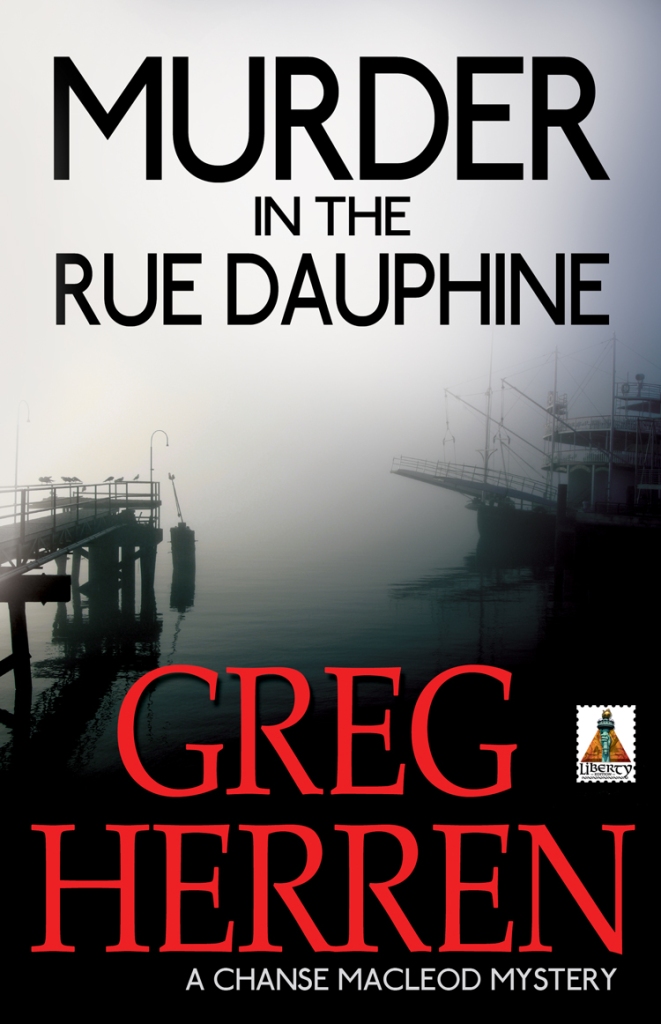
Ah, Murder in the Rue Dauphine.

It’s always weird for me to talk about my writing and my books and so forth on here; I always worry that I am either contradicting and/or repeating myself. When you’re as self-obsessed as I am, that can be a problem; talking about myself is probably my favorite thing to do–on here, at least. And I feel like I’ve told the story of where Chanse came from and how the series developed from the very beginning many, many times.

It was when I was living in Houston that I rediscovered crime fiction, and the old love was even deeper once it was rediscovered. This was the period when I read most of the Perry Mason novels, discovered Paretsky and Grafton and Muller, and decided to give Travis McGee and John D. MacDonald another try. (I had read The Dreadful Lemon Sky when I was a teenager, but I hadn’t liked it; I was more into the classic detective mystery, with lots of suspects and a denouement with everyone gathered in a drawing room as the identity of the killer was unveiled–the McGee series was definitely not that. But MacDonald had written a superb introduction to Stephen King’s first short story collection, Night Shift, and I had always wanted to give him another chance–pun fully intended.) I devoured the McGee series this time around; and I really admired the character and how fully rounded and developed he was (I should give the series a reread; I’d be curious to see how they hold up now)…and armed with all these new private eye novels and Perry Mason puzzles, so I started coming up with my own version. Even the name was a shout out to McGee. My character was also tall with sandy/dirty blond hair, a former college football player, and he lived in Houston, with an office downtown and a secretary named Clara. The title of the first book was going to be The Body in the Bayou, and I started basing the case on the tragic Joan Robinson Hill case, immortalized in Tommy Thompson’s Blood and Money (the premise of the story was that the character representing Joan’s father hires Chanse after Joan’s death to find dirt on John–and then John is murdered; fictionalized, of course.) I wrote about six or seven really bad chapters long hand before giving up. I didn’t know how to write a novel then nor did I understand the concept of rewrites and revisions and drafts. (My ignorance was truly astounding.) The hurdle I couldn’t clear was typing. I was a terrible typist. I’d had a job in California working for an insurance brokerage that was computerized, and had a word processing program that I used to write short stories on; it made such an incredible difference that I knew I would have a much better shot at actually making my dreams come true if I only had a word processor…

In 1991, after I moved to Tampa, I managed to get a word processor, and that was what I wrote my first two and a half young adult novels on–the original drafts of Sara, Sorceress, and Sleeping Angel–and used it happily for several years until it finally died on me. But by then, I was living with Paul and had swung back around to wanting to write adult crime fiction again, and I wanted to write the Chanse character that I’d already created…so I picked back up on The Body in the Bayou, moved it from Houston to New Orleans, got rid of the office and the secretary, and made Chanse gay. I kept the title, but threw away the story; I wanted it to be a gay story, too. I don’t really remember the plot, but it had to do with the murder of a beautiful boy-toy for a wealthy closeted gay man in New Orleans…and Chanse knew the boy-toy from his days working as an escort before he landed the rich man, I wrote about six or seven chapters of this before we moved to New Orleans….and I realized I’d have to throw it all out again because it was all wrong; I’d made the classic mistake so many writers make when writing about New Orleans: writing about it having never lived here, I only had tourist experiences–which are vastly and dramatically different from the actually “living here” experiences. So, once again, I threw it all out and started over, this time calling it Tricks instead of The Body in the Bayou.

The title morphed again to the less saleable Faggots Die after the first draft; and I remember talking to Felice Picano–he was coming into town for the Tennessee Williams Festival, and I picked him up at the airport. As we drove back into the city from Kenner, we talked about my book and the series, and he nixed the new title as well as the old one. “No one, ” he wisely said, “will pick up a book called Faggots Die, and Tricks sounds like a pornographic memoir of your sex life.” Felice was actually the one who suggested I mimic titles for the series from a classic writer…and we were throwing titles around in the car when I said, “You know, the streets in the Quarter are technically rues–Rue Bourbon, Rue Royale, Rue Dumaine–and the murder happens on Dauphine. Maybe Murder in the Rue Dauphine?”

“That’s perfect,” Felice said, and then we played with Poe titles the rest of the way into the city–incidentally, one of them was The Purloined Rentboy, which became my short story “The Affair of the Purloined Rentboy”, so never throw anything away.

And thus was Murder in the Rue Dauphine titled; and the plan for the series titles was also devised–the branding was changed by the publisher, but I can honestly say my first book was titled by Felice Picano.

Never come to New Orleans in the summer. It’s hot. It’s humid. It’s sticky. It’s damp. It’s hot. Air conditioners blow on high. Ceiling fans rotate. Nothing helps. The air is thick as syrup. Sweat becomes a given. No antiperspirant works. Aerosols, sticks, powders, and creams all fail. The thick air just hangs there, brooding. The sun shows no mercy. The vegetation grows out of control. Everything’s wet. The build­ings perspire. Even a simple task becomes a chore. Taking the garbage out becomes an ordeal. The heat makes the garbage rot faster. The city starts to smell sour. The locals try to mask the smell of sweat with more perfume. Hair spray sales go up. Women turn their hair into lacquered helmets that start to sag after an hour or so.

Even the flies get lazy.

My sinuses were giving me fits as I left the airport and headed into the city. It was only 7 o’clock in the morning but already hotter than hell. The air was thick. I reached for the box of tissue under my seat and blew my nose. The pressure in my ears popped. Blessed relief.

As I drove alongside the runways I could see a Transco Airlines 737 taxiing into takeoff position. I saluted as I drove past, thinking it might be the flight that my current lover was working. Paul looked good in the uniform. It takes a great body to look sexy in polyester. He does.

He’d be gone for four days on this trip. I was at loose ends. I’d wrapped up a security job for Crown Enterprises the previous Wednesday. The big check that I’d banked guaranteed I wouldn’t have to worry about money for a while. I like when money’s not a concern.

And so began a series that lasted for seven titles and about twelve years or so; I don’t remember what year the last book in the series was published. I never expected anyone would publish it; it was intended to be a “practice novel” so I would get used to rejections and learn. It was also the first manuscript I ever wrote that went through multiple drafts before I thought it was finished enough to send out on query. It was supposed to be an exercise in learning humility and getting experience with the business while I wrote the book I did expect to get an agent with and sell–which was what I’d always called “the Kansas book” for over a decade at this point. (It eventually morphed into #shedeservedit.) But you never really learn what you’re supposed to when you’re stubborn, thin-skinned, and used to being demeaned and talked over and not taken seriously, for any number of reasons. I sent the manuscript to three agents: two sent me lovely but form rejections, which was disappointed but not surprising. I took this well, put the manuscripts away to send to three more once the final rejection came.

It came on a Friday, if I recall correctly. I went to pick-up the mail and my manuscript was there. Not a surprise, of course, but still a little disappointing. I went out to my car and opened the package…and paper-clipped to the title page of the rubber-band bound manuscript was a torn piece of used paper, with a note in ink reading I find this manuscriptand characters neither interesting or compelling with the agent’s initials at the bottom.

It was like being slapped in the face.

By the time I got home I was in a raging fury. I was literally shaking with rage when I came inside. How fucking unprofessional, I thought as I sat down at my computer to check my emails, trying to decide how I would enact my vengeance on this rude piece of shit.1 There was an email there from the editor I was working with on an anthology which had taken my first-ever fiction short story and thus would be my first publication. I had never read the signature line–mainly because I was so excited for my first fiction sale (NARRATOR VOICE: it was porn). This day, he concluded his email with Please send us more work. We definitely want to see more from you and as my ego preened, slightly soothed from the insulting agent note from earlier in the day2, I also looked down at the signature line and realized I was communicating with the senior editor at Alyson Books! I immediately wrote him back a very short note: I’ve written a novel with a gay private eye set in New Orleans, would you be interested in that? and before I could talk myself out of it, hit send.

He wrote back immediately and said please send it to me ASAP!

I put the same manuscript back in a new envelope, and drove back to the postal service to get it in the mail before I changed my mind, and breathed a sigh of relief once I got back to the car–and immediately forgot all about it.

Six weeks later I came home to a phone message from the editor. I called him back, he made me an offer, and my career leapt forward much faster than I expected…and it started a roll of good luck and “being in the right place at the right time” that has kept me publishing almost non-stop since Murder in the Rue Dauphine was released in 2002.

It sold really well, got mostly favorable reviews, and scored me my first Lambda Literary Award nomination.

Not bad for a manuscript and characters who were neither interesting or compelling, right?3

It also took me a long time to realize–or rationalize–that the note wasn’t meant for me. (I was most offended that I wasn’t even worthy of an actual form rejection letter; that was the truly insulting part for me.) I realized when telling this story on a panel somewhere, that the note was probably meant for an intern or a secretary or an assistant, who just shoved the whole thing in an envelope to do the rejection and through some wild Lucy-and-Ethel office shenanigans, it went out without the rejection letter and with the note intended for internal eyes only…and made me wonder, how different would my career and life be had that fuck-up not happened?

We’ll never know, I guess.

  1. Not really proud of this reaction, but I did get the last laugh. ↩︎
  2. Said agent died a few years later. I may have smiled and said good, a la Bette Davis vis a vis Joan Crawford’s death. ↩︎
  3. I may be more forgiving about a lot of things these days, but I will always be petty about that hateful agent. ↩︎

Sweet Time

And it’s New Year’s Eve.

I slept well last night but my blankets were all tangled up this morning, indicating the sleep was more restless than it has been for weeks. I also wasn’t in the mood to write my blog when I first woke up, so I decided to read, drink my coffee, and maybe have some breakfast before getting cleaned up. I usually write this over my morning coffee, and since I don’t reread or re-edit once it’s written, that could explain the run-on sentences, word repetitions, and occasional poor grammar no one ever points out to me. This blog began nineteen years ago (!!!) on Livejournal (the anniversary was 12/26), migrated over here in about 2016 or so, and still somehow keeps chugging along. It always surprises me that people read it, to be honest. It was always meant mainly for me, and was originally intended as a daily exercise to get me writing again. I guess it worked. When I started I had published four novels, a few anthologies, and some short stories. Nineteen years later, I’ve way surpassed that total, despite some fallow years in which I produced nothing.

I did some more picking up around here yesterday while watching football games. It was fun watching Mississippi beat Penn State, and don’t even get me started on the Florida State-Georgia game. I get the disappointment at not making the play-offs, but you also knew you were scheduled to play Georgia, another team disappointed in not making the play-offs, but instead of showing everyone that the committee was wrong and showing up to beat Georgia…and Georgia also had star players injured and over a dozen opting out and even more entering the transfer portal. This would have been a play-off game had either Auburn or Georgia beaten Alabama this year, but that’s how things go. Auburn went 13-0 in 2004 and wasn’t invited to the BCS title game. You don’t always get what you want in life or sport, and the question is how you handle that. If this was going to be the case, don’t accept the damned bowl bid. Your fans spent a lot of money to go to that game, and it was incredibly disrespectful to the team, the fanbase, and the university to show up and get embarrassed like that. After Coach O was fired in 2021, LSU went to its bowl game with 39 scholarship players and got trounced by Kansas State….but how does it appear in the record books? KSU 42, LSU 21. Twenty years from now when people look back at the history of college football and bowl games, it will read Georgia 63, Florida State 3. It’s a program and culture problem, and all the FSU fans apologizing for this disgraceful beating–do you quit when you don’t get a raise or promotion you worked hard for and feel like you deserved? The word for that is quitter…and for the record, Georgia played it’s back-ups, walk-ons and so forth in the second half and still beat your ass 21-0.

And if LSU went 12-0 and didn’t get picked for the play-offs…and pulled the same shit? Sure, I’d be angry about the play-offs but I’d also call out the Tigers for embarrassing the state and the university that way.

I’m really enjoying Danielle Arsenault’s Glory Be, and am savoring every word. What a fresh and unique voice! I have to say I am so glad I realized I needed to be better about my reading choices and should read more diverse writers. It’s been a great education for me as a reader, a writer, a person and a citizen. I’m still learning how to be better about race and gender and gender identity and sexuality; and I strongly encourage other readers to do the same. Crime fiction is so much stronger and healthier when it represents everyone, I think, and while I don’t consider reading diverse writers to be the total education I need on any social issues facing the country–I need to read more non-fiction and theory.

I rewatched The Birds yesterday after the football games, and it was pretty much as I remembered it. I’d only seen it twice before; originally as a child edited for television, when it frightened me so badly that I had nightmares (I was prone to them growing up) and for years could never see crows on a jungle gym or a wire without feeling uneasy and then again as a rental in college after I’d read the short story again and wanted to see how faithful the film was to the story. I didn’t care as much for it the second time around–the acting is really terrible and so is the script–but the suspenseful parts still held up and were scary. This third time around confirmed my second viewing; and I noticed some other flaws in the picture. Rod Taylor’s mother isn’t much older than he is, and why is there about a thirty year age gap between him and his sister? I think the short story is better than the film, but I can also see why people like it. I do consider it one of Hitchcock’s lesser films.

Since tomorrow is a day for thinking ahead and coming up with some goals for the new year, I suppose today should be a recap of sorts of this past year. It was, as I mentioned in a previous entry, a rather up-and-down rollercoaster of highs and lows with very little level ground in the middle. The recognition of mainstream award nominations for my work–even queer work–was a delightful surprise this past year. But even more important than that is I think my work is getting better. I had felt, some years ago, that my writing was becoming stale and that I wasn’t growing as a writer anymore; I’d become stagnant and that was one of my biggest fears. I wound up deciding to take some time away from writing books on deadline and write things just for me, things that I wanted to write but also wanted to take the time to do correctly. It was during this time that I worked on both #shedeservedit and Bury Me in Shadows in early drafts, and also started the novellas and working more intently on my short stories. I accepted the challenge of writing stories to themed anthologies, and produced some terrific ones of which I am really proud. When I dove back into series work with Royal Street Reveillon, I wanted to write something non-formulaic for the Scotty series. I also wanted to shake things up with Scotty a bit, as the series was getting a bit too comfortable and safe for me. Royal Street Reveillon certainly was neither comfortable nor safe, and neither was Mississippi River Mischief.

Bury Me in Shadows was not easy for me to write. When I went back to the book after setting it aside for awhile, I realized several things: I couldn’t ignore race and racism, I had to address the Lost Cause narrative, and I also had realized while doing more reading and research that the stories my paternal grandmother used to tell me about the Civil War and Alabama and the family were apocryphal stories you can turn up about almost everywhere in the rural South. The book wasn’t working, in fact, because I was trying to elide those issues because I was afraid of doing it wrong…so it pushed me to do better. And actually addressing those issues made the book easier to write. The same thing was true of #shedeservedit; I’d been working on this book in one form or another since I actually lived in Kansas. But again, I realized when I went back to it that what I was doing didn’t work because I wasn’t going there with toxic masculinity and rape culture because it wasn’t personal enough for my main character, and so I bit the bullet and made it more personal for him. It dredged up a lot of memories, some of them painful, but it also made the book better and stronger. I had been wanting to write a cozy for the longest time, and decided to try it for something different and new–and that became A Streetcar Named Murder. I was also very pleased with it, even though the deadline and the turnaround on it was a bit insane…but I still managed to take my time and turned it into something I was proud of when I got the final author copies.

My two releases of this year–Death Drop and Mississippi River Mischief–are also books of which I feel proud. I also published three terrific short stories this year: “Solace in a Dying Hour” in This Fresh Hell; “The Ditch” in School of Hard Knox; and “The Rosary of Broken Promises” in Dancing in the Shadows.

I think I’m settling finally into an acceptance that I am pretty good at what I do. I may not have the master’s or PhD in creative writing or literature of any kind; but I’ve never really wanted to be an academic writer. I never wanted to be Faulkner, but Faulkner did inspire me to interconnect novels and stories in my own fictional world (also Stephen King). I would like to do some non-fiction studies of genre and writers I enjoy, but in an accessible rather than academic way. Academics used to make me feel stupid and uneducated, and I also used to envy those writers who had that kind of background because I felt it made their work stronger than mine, or gave them insights into writing and building a novel that I’d never had, which made me and my work somehow lesser. But that wasn’t on them; that was on me. I was the one who felt inferior and lesser, not talented or good enough. That chip was on my shoulder and I was the one who put it there. My peers actually consider me a peer, and newer writers look at my longevity and my CV and are impressed by the prodigious output, if nothing else. I used to think all the award nominations were kind of hollow because I so rarely won; which was incredibly ungracious because some writers are never nominated for anything…but it doesn’t mean their work isn’t good. Now, I just find myself grateful to make a short-list of five out of all the possibilities for that slot, you know? I’m lucky, and I’m blessed.

I’ve reflected a lot on my life and my career this past year–Mom’s death had something to do with that–and I’ve identified, in many cases, why I am the way am by remembering the event that triggered the response in my brain of “okay, never want to experience that again” which led to so many self-toxic and self-defeating behaviors. But the bottom line of it all is I’ve finally accepted myself for who I am, have determined to stop self-deprecating, and take some pride in myself and my career and my life. I know the most amazing people and have the most incredible friends. I have a day job where I make a difference in people’s lives. I have an awesome life-partner, an enviable writing career, and I get to live in New Orleans.

Not bad, right?

It’s Raining Again

Wednesday and it’s Pay-the-Bills Day again, hurray.

Last night’s sleep wasn’t as good as previous nights, but I do feel awake and rested this morning so that’s a good thing. I am also incredibly excited about my wagon, which i know is weird. I had a straight male co-worker look at it*, and sure enough, he was able to get the wheels attached properly. I stopped on my way home from the office to get the mail and thought, hey I had packages and my hands will be full, so let me use the wagon and it was marvelous. Clearly, I should have bought a wagon a long time ago–and it’s the right size to fit along the narrow walkway alongside the house. It’s actually going to make life so much easier for me now it’s almost scary, and it makes the most sense to actually keep it in the car–it’s out of the way, will always be there when I need it, and if I need it for anything else, well, the car is parked usually out in front of the house so it would be easy to get to. I am most pleased with the wagon, I have to say.

I’m also trying–not always successfully–to stay in control over my anxiety. I have all my pre-surgery appointments on Monday, so that’s when I am going to find out what the recovery is going to look like. I am taking unpaid leave from work (I don’t have near enough sick or vacation time to cover the time I need to be out, so here we are) which is going to be an issue I will deal with when it rolls around; but I do have the process started and I can get the documentation I need for Admin from those visits and turn everything in the following day when I go back to the office.

I wasn’t tired when I got home yesterday, but Tug was feeling lonely and needy, so I had to go give him a lap to sleep in for a while, and after watching another episode of Moonlighting and a documentary about Greek fire and the Byzantine Imperial Navy, I’d lost all motivation and was feeling tired and sleepy. I did nothing for the rest of the evening–nothing. I did go to bed around nine-thirty, and of course woke up just before five again this morning, but I think the body is beginning to adjust somewhat to the time change.

I got an unexpected royalty check (small, but I’ll take it gladly) in the mail yesterday along with my copy of David Valdes’ new Finding My Elf, which looks absolutely adorable, and I can’t wait to give it a read after the surgery. I am two books behind on my Donna Andrews reading, I need to read the new Lou Berney and Angie Kim novels, and there are any number of others I want to get to. I am assuming after the drugged haze of painkillers and so forth dies down afterwards, I’ll have lots of down time to read. I am going to have a rigid cast to keep the arm immobile for at least three weeks, and I am assuming that means limited options for doing things other than reading. I imagine typing one-handed is going to be incredibly frustrating, but it can be done. And during the drug fogs of those early post-surgery days, I can just reread things–like histories or true crime favorites or some Stephen King favorites (it’s been a hot minute since I reread Firestarter, for one, and ‘salem’s Lot and The Stand are always fun to revisit), or some of the other great favorites lying around the house.

I was also very happy to see that Ohio added abortion rights protections to the state Constitution as well as legalizing recreational marijuana–well done, Ohio!–and that Kentucky reelected their Democratic governor. There were some right-wing wins, but the great Blue Wave momentum from 2020 has continued, as well as the reaction to the Supreme Court’s overturning of Roe–congratulations, Federalist Society, your hand-picked Supreme Court majority has effectively destroyed the conservative movement’s electability for a generation. The Democrats needs to hit hard on abortion and the illegitimate Supreme Court–Mitch McConnell’s legacy, by the way, have fun being hated for the rest of American history, douchebag–going forward, and frankly, they need to put Howard Dean–who engineered the historic gains of the 2008 election cycle–back in fucking charge of the DNC.

I always said that abortion rights should be put on the ballot. This is the wedge issue that trumps (couldn’t resist) the Right’s religious zealotry and transphobia and racism.

But of course, they won’t learn the lesson that they’re unpopular and so are their policies and values–they’ll just see this in a paternal way: “clearly the voting public can’t be trusted, so we need to install authoritarianism for their own good.

Yes, this is the same party that thinks they’ve successfully branded themselves as “true American patriots.” Fucking garbage is what they are.

And on that note, I am heading into the spice mines. Have a great day, Constant Reader, and I’ll be back to check on you with more blatant self-promotion later.

*ah, stereotypes. Alas, we have a lack of butch lesbians in the department now, so had to make do with a straight guy. C’est la vie.

Louisiana Moon

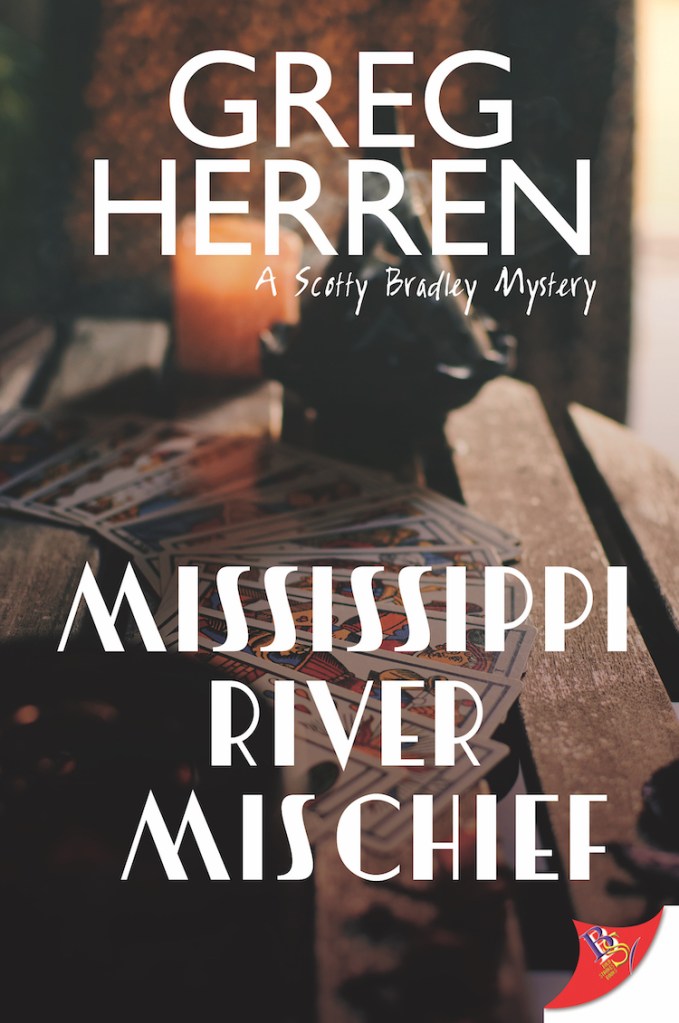
As if you weren’t sick of my self-promotion already, now I get to start promoting Mississippi River Mischief!

It’s hard to believe that this is Scotty’s ninth adventure. Not bad for someone who was just supposed to be a one-off, a stand-alone comic madcap adventure that took place during Southern Decadence. The idea for it came to me at Southern Decadence in 1999; on Saturday afternoon I somehow managed to get a prime spot on the balcony at the Parade to watch the massive crowd of sweating shirtless men partying down below at the intersection of Bourbon and St. Ann. I noticed a really hot guy wearing sweats and carrying a gym bag fighting his way through the crowd to get to the Pub downstairs, and I recognized him as one of the dancers for the weekend. In that instant, I had a mental flash of a dancer being chased through a crowd of shirtless sweating men at the corner by bad guys with guns and the dancer only wearing a lime-green thong. I held that idea in my head, and sometime later that weekend Paul said to me, “you know, you should write a book set during Decadence,” and I grinned and replied, “I already have the idea.” I had started writing a short story called “Bourbon Street Blues” a year or so before this; but realized that would make a better title for the stripper crime caper during Southern Decadence, so I made a folder for it and kept it in my files and in the back of my mind. Several years later, when talking with an editor about something else when I worked at Lambda Book Report, I asked if that might be something he’d be interested in. He said send him a proposal, which I did–having no clue what I was doing–and they offered me a two book deal, turning my stand-alone into a series. Having no idea how to write the second book in such a series, the money was too good for me to say no or to quibble, figuring I’ll figure it out when I need to–which is really the motto of my career.

The Scotty series has always had a bit of a “pantser” feel to it for me because I’ve always pantsed it. I knew that the first adventure–Bourbon Street Blues–was going to be that Southern Decadence story, and I also knew I was going to fictionalize a governor race, basing it on a senate race that occurred when we first moved here and we couldn’t believe that one of the candidates was actually a serious candidate (sadly, he was just a harbinger of what was to come in Louisiana; now he’d seem like one of the fucking sane ones), and I kind of borrowed, a bit unconsciously, from the Stephen King character of Greg Stillson from The Dead Zone. Bourbon Street Blues was a prescient novel in so many ways–and I had no idea of that at the time, seriously. There’s a scene where the Goddess shows Scotty the potential flooding of New Orleans after a levee failure (in the book it was deliberate though) and of course I predicted the Right’s move into full-bore hardcore neo-Nazism as well in that book…never dreaming it would become a reality.

Scotty has always been a fly-by-the-seat-of-my-pants series; I’ve never really outlined or planned the books or the series in any way, other than an amorphous idea that the love triangle situation I created in the first book would take three books to resolve. During the course of the third book I realized I needed at least one more book to resolve that story, and so it went from stand-alone to trilogy to quartet…and then Katrina happened. Katrina created an unplanned gap in the series, and I never really knew how to do Katrina from a Scotty perspective. It struck me that they wouldn’t have evacuated, but Scotty wouldn’t have ridden the storm out in his apartment, nor would his parents have done so at their place; they would have all gone to the Garden District where Papa and Maman Diderot have a generator. I just didn’t see how I could write a funny Scotty book about the levee failure and the city’s destruction. Also, we learned something about Scotty in the second book (Jackson Square Jazz) that I meant to deal with in the fourth book. By the time I was ready and able and willing to write that fourth book in the series…well, I forgot that I’d planned on dealing with that issue from Scotty’s past in it, and never did ever circle back around to that resolution of something from his youth.

I did remember when I decided to write Mississippi River Mischief, though. I kind of wrote myself into a corner with Royal Street Reveillon, in which something happened in Scotty’s personal life that was tied into the case, but I couldn’t write another book and pretend that never happened, even though it would be hard to deal with in the text of the book and story. But then, as I was trying to work it out in my head, I realized now you can circle around back to that issue from Scotty’s teen years because this is the right place and time for him to be reminded of it because of what happened to Taylor.

And you know what? I think it made for a better story now than it would have almost fourteen years ago.

Scotty has grown a lot over the twenty or so years (!!!) I’ve been writing him, but who he is at his core has never changed. Scotty is a good person, with a genuine sense of kindness, and is pretty level-headed and never really lets things get to him the way I let things get to me–and God knows, he’s dealt with a lot more shit than I have in life. I like his sense of humor, I like his spirituality, and I like his untrained, he-doesn’t-know-how-it-works psychic abilities, and of course, I love his family. His parents are amazing, his older brother and sister are also pretty cool characters, and of course Frank and Colin are also fun to write. I also never knew how subversive I was being by creating a throuple long before anyone ever talked about these kinds of relationships within the queer community–and it’s lasted all these years. There have been ups and downs, of course, but they always wind up coming back together again no matter what happens–and a lot has happened. Both Scotty and Frank have been shot a few times, not to mention all those car accidents–and he’s also helped cover up a crime (no spoilers here, no worries!).

You can order it here, if you were so inclined…

Johnny Be Good

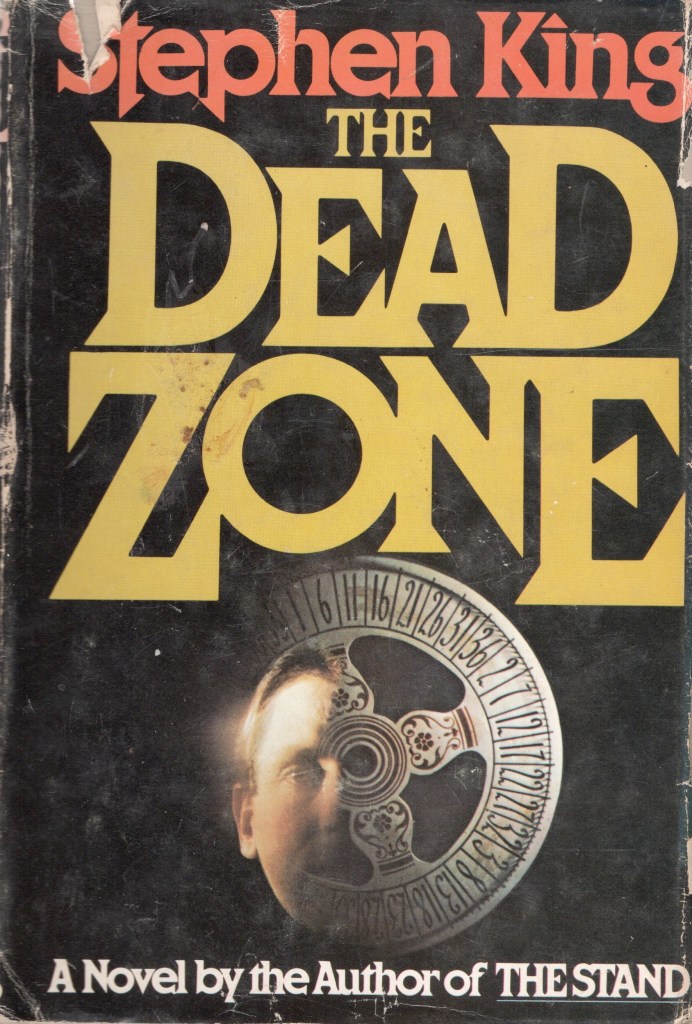
I love Stephen King, and have since I first read Carrie when I was thirteen.

I will also go out on a limb and say that while he has written some amazing fiction and novels in the last forty years, the run of novels between (and including) Carrie and Misery in the 1970s and 1980’s was probably one of the greatest runs of incomparable work ever accomplished by any writer in any sub-genre or genre of fiction, period. There wasn’t a single stinker in that run, and even the one I personally dislike ( Pet Sematary) isn’t bad–it’s actually a testament to King’s skill that I’ve refused to reread it since that first time; it made me incredibly uncomfortable in so many ways viscerally that I’ve really never wanted to read it again.

And isn’t that the real point behind horror?

I also saw something recently about how people who suffer from anxiety often rewatch movies/television shows and reread books when they are anxious because there’s comfort in knowing how something ends. It had never occurred to me that this was a thing, but I used to reread books all the time when I was younger, often picking one up and just opening it at random and diving into the story again. I reread most of the earlier Stephen King novels countless times, as I have also reread books like Gone with the Wind and kids’ series books and other particular favorites. I still reread some periodically, like Rebecca and The Haunting of Hill House. When I picked up The Dead Zone to reread it–I realized that I don’t really reread the way I used to when I was younger. On the rare occasions when I thought about it, I figured it was because I don’t have the time and there are so many unread books around the house that I shouldn’t revisit something when I have unread books collecting dust and moldering on the shelves. But reading that about people with anxiety made me recognize myself and I also realized that I don’t reread as much as I used to (or rewatch) because I don’t have as much anxiety as I did when I was younger. (Don’t get me wrong, I still have too much of it for me to be comfortable going forward without doing something for it, you know.)

I’d thought about rereading The Dead Zone in the wake of the 2016 election; I had posted on social media early on during that campaign season, “Is anyone else reminded of Greg Stillson?” But I couldn’t, just as I couldn’t go back and revisit Sinclair Lewis’ It Can’t Happen Here or The Handmaid’s Tale or any of the other great collapse of American democracy novels. But this reread…made me truly appreciate all over again what a literary genius Stephen King actually is–and an American treasure.

By the time he graduated from college, John Smith had forgotten all about the bad fall he took on the ice that January day in 1953. In fact, he would have been hard put to remember it by the time he graduated from grammar school. And his mother and father never knew about it at all.

They were skating on a cleared patch of Runaround Pond in Durham. The bigger boys were playing hockey with old taped sticks and using a couple of potato baskets for goals/ The little kids were just farting around the way little kids had done since time immemorial–their ankles bowing comically in and out, their breath puffing in the frosty twenty degree air. At one corner of the cleared ice two rubber tires burned sootily, and a few parents sat nearby, watching their children. The age of the snowmobile ws still distant and winter fun still consisted of exercising your body rather than a gasoline engine.

Johnny had walked down from his house, just over the Pownal line, with his skates hung over his shoulder. AT six, he was a pretty fair skater. Not good enough to join in the big kids’ hockey games yet, but able to skate rings around most of the other first-graders, who were always pinwheeling their arms for balance or sprawling on their butts.

Now he skated slowly aruond the outer edge of the clear patch, wishing he could go backward like Timmy Benedix, listening to the ice thud and crackle mysteriously under the snow cover farther out, also listening to the shouts of the hockey players, the rumble of a pulp truck crossing the bridges on its way to U. S. Gypsum in Lisbon Falls, the murmur of conversation from the adults. He was very glad to be alive on this fair, winter day. Nothing was wrong with him, nothing troubled his mind, he wanted nothing…except to be able to skate backward, like Timmy Benedix.

So begins the prologue to The Dead Zone, a King classic that doesn’t get nearly the respect it probably should–especially in wake of the 2016 election. Johnny does, in fact, learn how to skate backwards, but is so excited about it he doesn’t notice he is heading right into the hockey game, where he gets hit broadside by a teenager and sent sprawling, hitting his head on the ice and knocking himself out. As he slowly comes back to consciousness, he starts muttering things that make no sense to the worried kids and adults gathered around him, including saying to “stop charging it’ll blow up”. But then he wakes up, is fine, goes home and doesn’t even tell his parents what happened (imagine a child knocking himself out and the parents not even being told today–never happen). A few days later one of the men’s car battery is dead, he jumps it–and it blows up in his face; only no one remembers the things Johnny was muttering; everyone’s forgotten about it.

The second part of the prologue introduces us to the other main character of the book, or the person who is fated to have the biggest impact on John’s existence, which also begs the question of fate and destiny; these two men’s lives are going to intersect, and the rest of the book follows their lives–primarily focused on Johnny’s, with the occasional swing over to see what’s going on with Greg Stillson and his climb to power and success. That prologue introduction to the traveling Bible salesman in Oklahoma who kicks a dog to death lets us know who he is right from the very start–he’s the bad guy, the reason all these things are happening to Johnny so their lives will cross.

Johnny’s story has three acts: first, the car accident that leaves him in a coma for five years (and introduces us to him, his love interest Sarah, and his parents) and inevitably ends with him catching the Castle Rock Strangler, using the abilities that he woke up from the coma with; the second, which concludes with the vision about the graduation party ending in fire and mass death; and the third, where he realizes he is the only person who can stop Stillson’s political rise, the country’s descent into fascism and a final cataclysmic nuclear war (which was an every day reality for us all back when this book was written, by the way).

The most interesting character to me, always, from the story of The Trojan War (I loved mythology and ancient history as a child) was Cassandra, the princess who was given the gift of prophecy accidentally (her ears were licked by one of Apollo’s temple snakes; he cursed her by having no one believe her and this frustration drove her mad); I always wanted to write from her perspective. John Smith is a modern-day Cassandra, a young man who unwillingly was given the gift to see the future as well as have psychic visions, and his story plays out very similarly to Cassandra’s, and asks the big question: if you had the knowledge and foresight to stop Hitler in 1932, even if it meant killing him, would you do it? The personal good vs. the collective good?

I thoroughly enjoyed this reread, and it definitely holds up, even if it is a time capsule of the 1970s, which also made it a big more fun.

(Oh, and that fall he took as a child? While it is never really explained where his abilities come from, King implies that that first head injury awakened the talent in him; the later head injury and coma woke it up again and gave it more power.)

Rock This Town

As Constant Reader is aware–because I am nothing if not repetitious–I spent ages two to nineteen in the midwest, and the last five of those in rural Kansas. I’ve blogged endlessly about it, have written several books set there, and often blame (some of) my emotional scarring on the experience. It’s one of the reasons that stupid fucking song from earlier this year (“Try That in a Small Town”) was so ridiculous and offensive; yet another tired round of ammunition from people who equate cities with evil and rural life with purity and goodness–to which I always say Someone’s never read Peyton Place, let alone lived in a small fucking town.” Big cities certainly don’t corner the market on crime and sin and lawlessness; small rural communities can be just as vile and horrible as any metropolis.

Shirley Jackson didn’t set “The Lottery” in Times Square for a reason.

There’s an entire essay to be written about the moral rot of the Bible Belt and rural America–and make no mistake, rural America is every bit as corrupt, sinfully evil, and dangerous as the worst neighborhood in any big city–but this is not the time, as I am here to talk about this marvelous novel I read very quickly last night.

“Can you see me?” Cole yelled over to them. He was standing on the south shore of the reservoir, barefoot and facing the water. He looked like he was thinking, but Janet knew better. The scrunch in Cole’s expression came from trying to keep his belly in a six-pack.

“I’ve got you,” Victoria yelled back as she framed her brother. She was using his phone and struggling with the device. “How do you zoom on this thing?” she asked as she shuffled to the edge, not looking at her feet and focusing on Cole. Janet could see a pink stamp of tongue at the corner of Victoria’s mouth as she tried her best to get the shot her brother wanted.

“You’ve got to be in portrait mode when you go live.”

Janet meant it as a polite pointer, but as the words came out of her mouth, they sounded like a dig. SHe didn’t mean it to be a dig, but she couldn’t help it, either. Her tone was why people thought she was such a bitch. Her tone and that she kind of was. Whatever–it was fun to watch the sheep quiver.

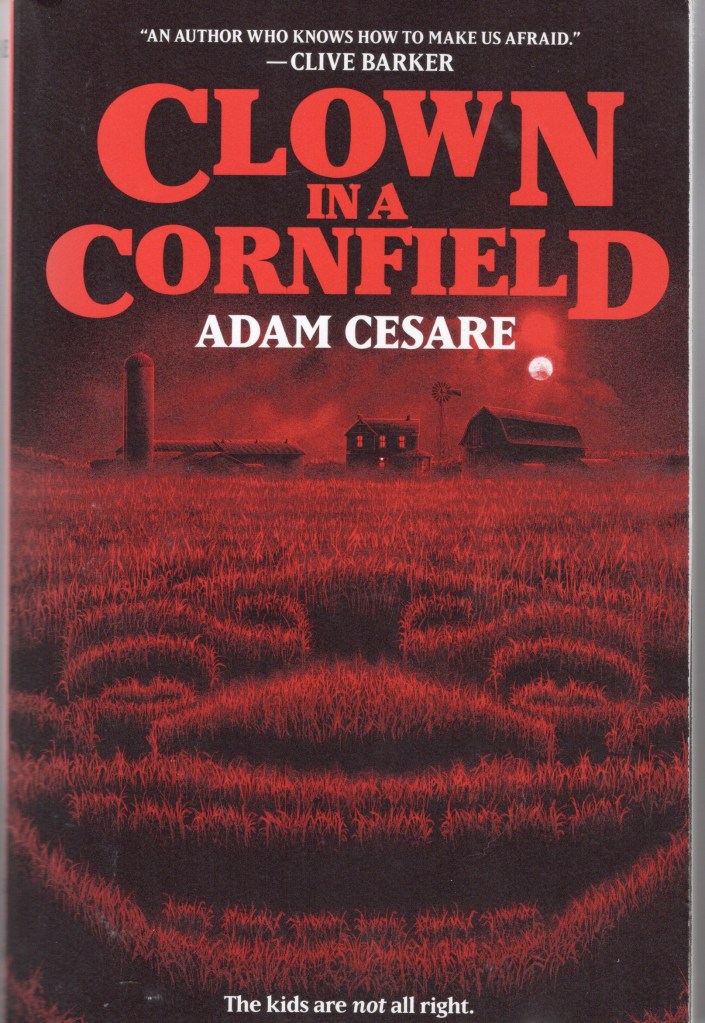
I don’t remember how Adam Cesare and his y/a horror thriller Clown in a Cornfield first came to my attention; if it was a suggestion from a website or if I saw someone talking about it on social media or I don’t know where, but I am very glad it did. The book is absolutely right up my alley–young adults, horror, small town Midwestern America (you know, “the REAL America,” right, Sarah Palin?), and terrifying clowns. I’ve never been afraid of clowns–although many people are, and I can respect that. The white greasepaint, the garish hair and eye make-up, the clothes–it’s not hard to see how something intended to entertain children (remember, fairy tales in their original form are horrifying) can easily become something that is absolutely terrifying. John Wayne Gacy, notorious serial killer who preyed on children, worked as a clown for kids’ parties–which is very unsettling, and of course, who can ever forget Stephen King’s masterclass of clown horror, It? Killer clowns have become kind of a cliché…but they still work.

Clown in a Cornfield works on its basic surface level–it’s a scary story that reads quickly and raises the adrenaline and is chockfull of surprises and twists; like the novel version of a slasher movie. (Something I’ve always wanted to do, frankly.) It takes place over the course of a couple of days, and is set in the small dying town of Kettle Springs, Missouri, where main character Quinn Maybrook and her father have just moved from Philadelphia; it’s hinted early on that the tragic death of her mother is why they moved during her senior year: a fresh start in a wholesome rural small town in the REAL America…which turns out to be all too real. The town is dying because the corn syrup processing plant shut down, and the town is losing population. The above few paragraphs are from the prologue–which sets up the rest of the book. There’s a tragic death at the reservoir that day, which changes the kids and changes the town–as though they’ve finally crossed a line they were dancing very close to the edge of and there isn’t any turning back.

The willful and wild teens of the town have planned a surprise during the Founders’ Day parade which Quinn witnesses when the prank goes haywire, and she learns there’s a lot of anger directed at the town’s teenagers–the kids from above who have a Youtube channel where they film themselves playing pranks on people around town–and the idea is that the pranks have become dangerous and the kids are out of control. The next night there’s a party out in a cornfield, and that’s when the corn syrup company’s mascot, Frendo the Clown, shows up with a crossbow and the body count starts to rise.

I really enjoyed this book. It was well written and works very well on all of its multiple layers, from the basic story which is well paced and exciting, to the layers of social critique, satire, and politics that it also manages to be. I found myself caring about the main characters and rooting for them, and while I saw one major surprise coming way ahead of time, there were a lot of other shocks and surprises along the way that made up for the telegraphing.

There’s also a sequel now, and I am looking forward to the second installment. I think you’ll like it, too, Constant Reader, so give it a whirl–thank me later.

Heartlight

Saturday and no LSU game, so the day stretches out in front of me a yawning empty chasm. But I feel incredibly well rested after a very relaxing deep good night’s sleep, which is simply marvelous. I have things to do this weekend–out of the ordinary things, different from the usual to-do list–so I have to figure out when to get those things done. I’m going to need to make a grocery run at some point–I have to make a cheesecake for a work potluck this week, and I am thinking it’s probably smart to make some white bean chicken chili in the crockpot at some point (soft food, after all); regardless, I need more ice cream and microwave ramen. I really like that super-hot ramen, and am also very low on yogurt. Maybe I’ll get up tomorrow and head for a grocery run on the West Bank or to the Rouse’s on Carrollton–which I could also just do this afternoon, depending on how I feel. I want to really clean up the house and get stuff done–filing, organizing, and so forth–and I can always have the football games playing on my computer while I am in the kitchen, which desperately needs work. I also want to go for a walk around the neighborhood later on today, to get a look at how the neighborhood has dressed up for Halloween.

Yesterday was a pretty good day. I managed to get my work-at-home duties taken care of and made it to my pain management appointment, which was unnecessary as I am not in pain–I think my surgeon thought I was in pain from the injury, which is cute–I wouldn’t have let it go this long had I been in actual constant pain from it. But it was one more box to check off on the list of things that need to be done before the surgery, so that makes it one step closer to when I am going to be rehabilitating the arm. I think having this hanging over my head isn’t helping much with my anxiety or getting things done; I can try to compartmentalize all I want, and try not to think about things, but the truth of the matter is I cannot control my subconscious–especially when I don’t know what’s going on with it. I think I’ve been more relaxed and rested this week because I’ve not been trying to get much done or worrying about anything; I just came home, sat in my chair with Tug sleeping in my lap (Paul is calling him Puma now, because his claws are so sharp), and read or watched television. I did watch another episode of Moonlighting yesterday while doing work-at-home chores (“My Fair David”) and then finished reading The Dead Zone but also Adam Cesare’s marvelous Clown in a Cornfield (more on both later), and am now trying to decide what horror to read next before Tuesday–which is the end of Halloween season as All Hallow’s Eve itself falls on Tuesday. I am leaning toward Mike Ford’s middle grade The Lonely Ghost, which has been in the TBR pile for far too long, and then maybe something by Chris Grabenstein if I get that done quickly–The Hanging Hill looks like it could be quite fun, or perhaps a reread of my favorite ghost story of all time, Ammie Come Home by Barbara Michaels. I also have a kids’ ghost story anthology–Alfred Hitchcock Presents Ghosts and More Ghosts, actually edited and compiled by Robert Arthur, who created one of the best kids’ series of them all: The Three Investigators. After Paul got home from the gym we also watched this week’s The Morning Show.

And just looking at the college football television schedule, I am not seeing anything other than Georgia-Florida to watch with any degree of interest, and it’s tough–I despise Florida with every molecule of my existence, but I also kind of want Georgia to lose…but I just can’t root for Florida. (Georgia always winds up being my default team in the East because I hate Florida and Tennessee both with the white-hot intensity of a dozen burning suns, and pretty much everyone else is kind of irrelevant. Kentucky and Missouri never break through, nor does South Carolina, and Vanderbilt is…well, Vanderbilt.) I’m trying not to get overly worked up for the LSU-Alabama game, which is a must-win for both. I don’t get nearly as worked up over college football as I used to, which is a good thing–as I have slowly began to recognize that while they may be athletes, they’re also kids, and they shouldn’t be subjected to the scorn from fans. The coaching staffs and administrations, on the other hand, can have all the scorn, as can the conference hierarchy AND the NCAA. I’m not overly excited about all the conference expansion because I’m not so certain that the needs of the student-athletes are being taken into consideration as much as they should be in the pursuit of the almighty television deal dollar, and that NIL stuff isn’t something I quite understand other than that college athletes are now getting paid.

I can’t get over how good I feel this morning, and how good I felt all week, frankly. I’ve got to get all this filing under control and work on the kitchen, too–the living room and the laundry room are complete disasters; although I did start working on the laundry room shelves a bit yesterday. I do get to go for the final fitting for my dentures on Tuesday morning (the same day I am taping Susan Larson’s “My Reading Life” at UNO), so I am hoping to get back to solid food in a couple of weeks–and I am definitely going to reboot my eating habits once I have teeth again. I now am down to somewhere between 205-209 pounds, depending on the day and what is in my pockets, and I’d like to get down to 200 again; but until I am able to exercise again I am going to have to do that by changing the way I eat. I’ve frankly enjoyed the ramen (and the Velveeta shells and cheddar) and may continue to eat it going forward–same with the yogurt–but the calories from Haagen-Däzs will need to be replaced by something healthy. It wouldn’t hurt me to go back to having turkey sandwiches and salads for lunch occasionally. It’s the heavy steady diet of red meat I need to dial back on, mostly; and some of the other fatty stuff I eat far more regularly than I should–and go back to looking at Five Guys as an occasional treat for good behavior.

I can but do better in the future.

And on that note, I think I am going to indulge myself in some self-care this morning and get cleaned up before taking on the rest of the day. Have a great Saturday, Constant Reader, and I’ll be back soon enough, no worries–I have blog posts on “Don’t Look Now”, The Dead Zone, and Clown in a Cornfield to finish writing, too.