Mama Can’t Buy You Love

Ah, Wednesday and it’s all downhill for the rest of the week, isn’t it? Huzzah! I feel good this morning, too, more rested and alert than I have been for most of the week. So, this week feels back to normal in that weird way of feeling better later in the week as my body again resets to getting up early every day. I was fatigued again last night when I got home from work, but I wrote for a little while once I was home, and did some chores (the kitchen looks presentable again) before zoning out with The Real Housewives of Beverly Hills and the news last night. I also ran an errand after work, picking up my copy of Christa Faust’s The Get Off, the third and probably final book of the Angel Dare series. I loved the first two (Money Shot and Choke Hold), and nobody writes like Christa. If you’ve not read Christa, and love noir, you really can’t go wrong with reading this trilogy. It really is fantastic.

As a general rule, I simply watch the antics of “”book social media” from a removed, slightly bemused distance and don’t get involved, other than a comment about how jaw-droppingly insane the latest controversy on those sites are, and these controversies usually involve the actions of a problematic author and/or publisher. I have my thoughts and opinions about each and every topic in those hashtags and posts that grow heated (remember the fun days of American Dirt? Good times!) but I don’t contribute to them because I don’t see any point. Are there authors that write bigoted, uninformed work that is questionable at best and horrifying at its worst? Are there readers who will embrace those works because said stories confirm their prejudices and values? 100%. Are they all, authors and readers, awful people? Certainly. Will arguing with them on social media do anything other than raise my blood pressure and wreck my day? Not likely. Personally? I don’t want to ever unintentionally offend anyone (unless you’re MAGA, in which case you shouldn’t be reading my work in the first place because you are not my intended audience but if you are reading it, suck it up snowflakes, and fuck your feelings); and I constantly question my choices in my work. My go-to is always if I question it, best to remove it. (Sidebar: I bet the American Dirt author–Jeanine Cummins?– was really happy about the pandemic because it made everyone forget about her and her shitty racist book.) There have been some tempests in this week’s (and last’s) social media teapots1, haven’t there? Sheesh. There was an explosion (again) of homophobia in the m/m writing community, which got people riled up (I love when cishet straight white women inform gay men that books with two men falling in love aren’t for us.) There was another kerfuffle where a romance writer gave her main male character an HEA–just not with the female lead, but another man. Horrors! Needless to say, that also triggered an on-line meltdown, and I am reminded again why I never want to write romance…just like I eschew the y/a publishing community, which is also a snake pit.

I’d rather jump into a piranha-infested river, to be honest. Or be forced to be on a Kardashian television show.2

And yesterday, the “Tori Woods” groomer romance situation blew up on the Internet–and her book, about a “romance” that begins when an adult male is attracted to a three-year-old “but waits for her to grow-up so it’s not child sexual abuse”, is from the same publisher as the last author who wrote racist books and was “canceled” (whatever the fuck that means) deservedly for being a racist piece of shit. Sounds like a publisher issue to me, doesn’t it? I think the publisher has also published problematically racist books before, too. There was some historical romance writer who also outed herself as a racist pos–apparently, people of color only existed in the past to be enslaved or rescued by noble white people–and seriously, how did RWA take so long to burn to the ground in the first place?3

Don’t get me wrong; I still want to write a gay romance novel at some point–and maybe even more than one, honestly. But I’d really rather not get dragged into that on-line community, if I can. (I saw yesterday that someone is publishing a grooming romance–and the grooming started when the girl was THREE. Um…yeah, no thanks.) Did not trying to be a part of the on-line y/a community probably, possibly have cost me some sales? For sure, but at the same time I am really grateful to have my peace of mind.

Peace of mind is priceless.

I also got my assignments for Saints and Sinners/Tennessee Williams Fests, and I am going to be hopping all weekend, it looks like–panels, a tribute reading, the anthology launch–and I will have LOTS of friends in town, too. But this year I took Monday off, too, so I can recover from the weekend and get things done around the house. I’ll also be commuting back and forth so Sparky’s not alone for the whole weekend, and someone needs to feed him, anyway. He is not going to be happy. Paul went to the office yesterday and wasn’t home when I arrived, so Sparky was especially cuddly and needy. I don’t mind, but clearly he doesn’t like being left alone–or puts on a good show after he has been.

My Youtube algorithms, always an interesting mystery, have recently started showing me videos about the classic scifi television program V. I loved V when it originally aired, but when it became a regular weekly series in the 1980s, I stopped watching because I lost interest. I did love the rebooted series, which was fantastic and again ended on a great cliff-hanger. And of course, once I watched one video, it started showing me more. This of course is because I’ve been watching videos about the rise of fascism in Europe between 1918-1939, World War II, and the “America First” movement of that period (newsflash: conservatives were Nazi-adjacent until Pearl Harbor)…and that’s the allegory at play in the series–the Visitors are stand-ins for Nazis, etc. I had grown up believing that it could never happen here…but watching this show made me realize how incredibly easy it is for people to side with their oppressors. It’s something, sadly, that is very human. I also remember a school did a social experiment with fascism, which was made into a TV movie called The Wave, which was again the same thing–the way we can so easily slide into being “good Germans.” I read Sinclair Lewis’ It Can’t Happen Here during the reign of Bush II: Electric Boogaloo, which cemented it even further into my head. I’ve talked before about writing a book that I originally got the idea for in the 1990s, where the queers fill in for the scapegoated minority…interesting, though, that my video research into fascism triggered the algorithm to remind me of V, which was also probably, along with Red Dawn, the biggest influences on that idea.

And on that grim note, I am heading into the spice mines. Have a wonderful midweek Wednesday, and I’ll probably be back later or tomorrow.
  1. Although I am really hoping the move to cancel Kim Kardashian and her odious family really takes this time. ↩︎
  2. Please, God, let this be the end of all things Kardashian. Haven’t we suffered enough? ↩︎
  3. Racists working with a gay white man (racist) brought RWA down, remember? ↩︎

Johnny Be Good

I love Stephen King, and have since I first read Carrie when I was thirteen.

I will also go out on a limb and say that while he has written some amazing fiction and novels in the last forty years, the run of novels between (and including) Carrie and Misery in the 1970s and 1980’s was probably one of the greatest runs of incomparable work ever accomplished by any writer in any sub-genre or genre of fiction, period. There wasn’t a single stinker in that run, and even the one I personally dislike ( Pet Sematary) isn’t bad–it’s actually a testament to King’s skill that I’ve refused to reread it since that first time; it made me incredibly uncomfortable in so many ways viscerally that I’ve really never wanted to read it again.

And isn’t that the real point behind horror?

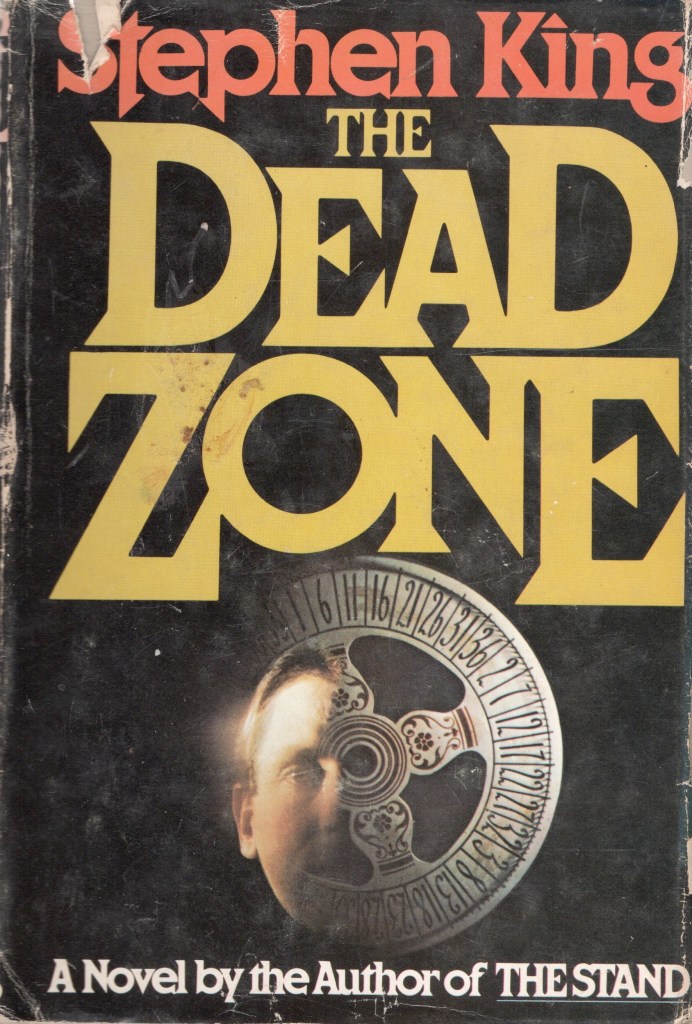
I also saw something recently about how people who suffer from anxiety often rewatch movies/television shows and reread books when they are anxious because there’s comfort in knowing how something ends. It had never occurred to me that this was a thing, but I used to reread books all the time when I was younger, often picking one up and just opening it at random and diving into the story again. I reread most of the earlier Stephen King novels countless times, as I have also reread books like Gone with the Wind and kids’ series books and other particular favorites. I still reread some periodically, like Rebecca and The Haunting of Hill House. When I picked up The Dead Zone to reread it–I realized that I don’t really reread the way I used to when I was younger. On the rare occasions when I thought about it, I figured it was because I don’t have the time and there are so many unread books around the house that I shouldn’t revisit something when I have unread books collecting dust and moldering on the shelves. But reading that about people with anxiety made me recognize myself and I also realized that I don’t reread as much as I used to (or rewatch) because I don’t have as much anxiety as I did when I was younger. (Don’t get me wrong, I still have too much of it for me to be comfortable going forward without doing something for it, you know.)

I’d thought about rereading The Dead Zone in the wake of the 2016 election; I had posted on social media early on during that campaign season, “Is anyone else reminded of Greg Stillson?” But I couldn’t, just as I couldn’t go back and revisit Sinclair Lewis’ It Can’t Happen Here or The Handmaid’s Tale or any of the other great collapse of American democracy novels. But this reread…made me truly appreciate all over again what a literary genius Stephen King actually is–and an American treasure.

By the time he graduated from college, John Smith had forgotten all about the bad fall he took on the ice that January day in 1953. In fact, he would have been hard put to remember it by the time he graduated from grammar school. And his mother and father never knew about it at all.

They were skating on a cleared patch of Runaround Pond in Durham. The bigger boys were playing hockey with old taped sticks and using a couple of potato baskets for goals/ The little kids were just farting around the way little kids had done since time immemorial–their ankles bowing comically in and out, their breath puffing in the frosty twenty degree air. At one corner of the cleared ice two rubber tires burned sootily, and a few parents sat nearby, watching their children. The age of the snowmobile ws still distant and winter fun still consisted of exercising your body rather than a gasoline engine.

Johnny had walked down from his house, just over the Pownal line, with his skates hung over his shoulder. AT six, he was a pretty fair skater. Not good enough to join in the big kids’ hockey games yet, but able to skate rings around most of the other first-graders, who were always pinwheeling their arms for balance or sprawling on their butts.

Now he skated slowly aruond the outer edge of the clear patch, wishing he could go backward like Timmy Benedix, listening to the ice thud and crackle mysteriously under the snow cover farther out, also listening to the shouts of the hockey players, the rumble of a pulp truck crossing the bridges on its way to U. S. Gypsum in Lisbon Falls, the murmur of conversation from the adults. He was very glad to be alive on this fair, winter day. Nothing was wrong with him, nothing troubled his mind, he wanted nothing…except to be able to skate backward, like Timmy Benedix.

So begins the prologue to The Dead Zone, a King classic that doesn’t get nearly the respect it probably should–especially in wake of the 2016 election. Johnny does, in fact, learn how to skate backwards, but is so excited about it he doesn’t notice he is heading right into the hockey game, where he gets hit broadside by a teenager and sent sprawling, hitting his head on the ice and knocking himself out. As he slowly comes back to consciousness, he starts muttering things that make no sense to the worried kids and adults gathered around him, including saying to “stop charging it’ll blow up”. But then he wakes up, is fine, goes home and doesn’t even tell his parents what happened (imagine a child knocking himself out and the parents not even being told today–never happen). A few days later one of the men’s car battery is dead, he jumps it–and it blows up in his face; only no one remembers the things Johnny was muttering; everyone’s forgotten about it.

The second part of the prologue introduces us to the other main character of the book, or the person who is fated to have the biggest impact on John’s existence, which also begs the question of fate and destiny; these two men’s lives are going to intersect, and the rest of the book follows their lives–primarily focused on Johnny’s, with the occasional swing over to see what’s going on with Greg Stillson and his climb to power and success. That prologue introduction to the traveling Bible salesman in Oklahoma who kicks a dog to death lets us know who he is right from the very start–he’s the bad guy, the reason all these things are happening to Johnny so their lives will cross.

Johnny’s story has three acts: first, the car accident that leaves him in a coma for five years (and introduces us to him, his love interest Sarah, and his parents) and inevitably ends with him catching the Castle Rock Strangler, using the abilities that he woke up from the coma with; the second, which concludes with the vision about the graduation party ending in fire and mass death; and the third, where he realizes he is the only person who can stop Stillson’s political rise, the country’s descent into fascism and a final cataclysmic nuclear war (which was an every day reality for us all back when this book was written, by the way).

The most interesting character to me, always, from the story of The Trojan War (I loved mythology and ancient history as a child) was Cassandra, the princess who was given the gift of prophecy accidentally (her ears were licked by one of Apollo’s temple snakes; he cursed her by having no one believe her and this frustration drove her mad); I always wanted to write from her perspective. John Smith is a modern-day Cassandra, a young man who unwillingly was given the gift to see the future as well as have psychic visions, and his story plays out very similarly to Cassandra’s, and asks the big question: if you had the knowledge and foresight to stop Hitler in 1932, even if it meant killing him, would you do it? The personal good vs. the collective good?

I thoroughly enjoyed this reread, and it definitely holds up, even if it is a time capsule of the 1970s, which also made it a big more fun.

(Oh, and that fall he took as a child? While it is never really explained where his abilities come from, King implies that that first head injury awakened the talent in him; the later head injury and coma woke it up again and gave it more power.)

We Didn’t Start the Fire

As Banned Books Week comes to a close, it was exponentially more important and timely this year than before–given the Right Wing’s vicious, well-organized and ultimately doomed to failure attempts to control what people are allowed to fucking read in this country (for the record, you shrewish harpy lying “Moms4Liberty”–the First Amendment exists because the Founding Fathers foresaw the rise of people like you, and amended the Constitution to stop your skank, anti-American asses).

I’ve participated in Banned Books Week in the past; I’ve certainly done readings during it (the ones I remember reading from are Annie on My Mind by the late Nancy Garden–which was not only burned but tried for obscenity--and Elmer Gantry by Sinclair Lewis; I should have read from Peyton Place at least once). I’ve not participated in a long time–haven’t been asked, to be honest–and so I don’t know if anything is going on in New Orleans for it, or whether it’s something we no longer do here, or what; but I never get offended when I’m not included. Life’s too short for that–and yes, I am well aware that such a thing used to offend me, which was incredibly stupid. I’m really sorry I spent so much of my life and my time allowing negativity such free rein in my head.

The first time I did Banned Books Night, it was after Hurricane Katrina (at least the first one I remember) and it was at the House of Blues; Poppy Z. Brite also read, and I gave him a ride home afterwards; it was in that car and on that ride that he convinced me I could write another Scotty book despite everything that had happened to New Orleans since I’d written the last one; that’s why Vieux Carré Voodoo was dedicated to him.

He gave me Scotty back after a very difficult time, and I will always be grateful for that,

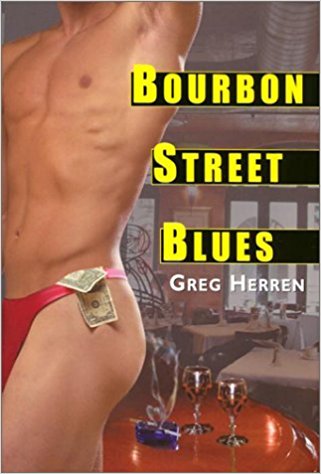
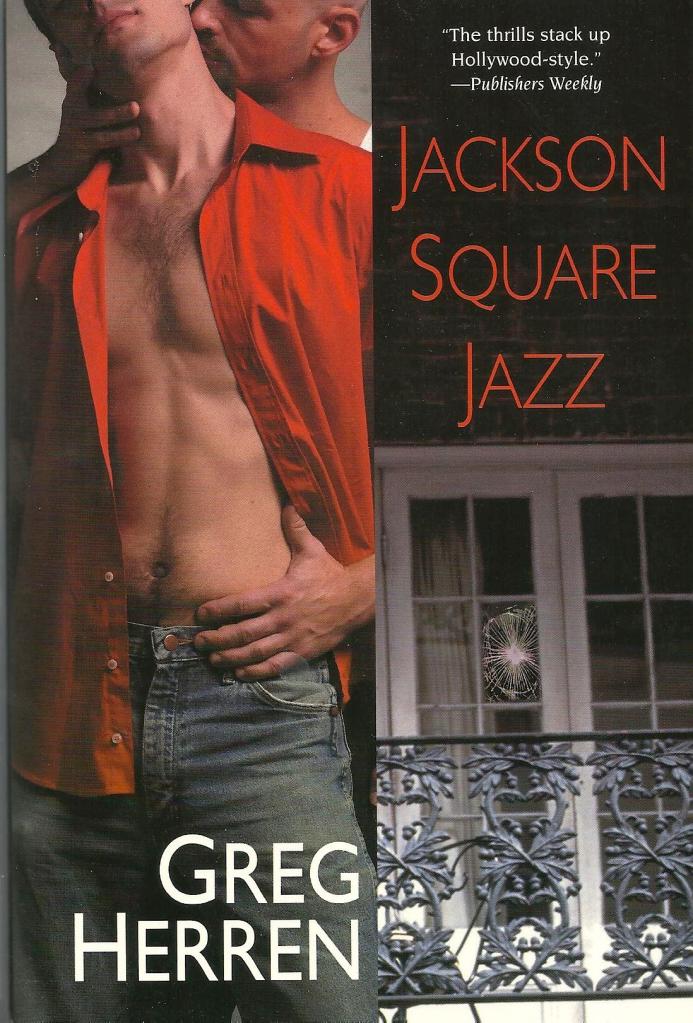
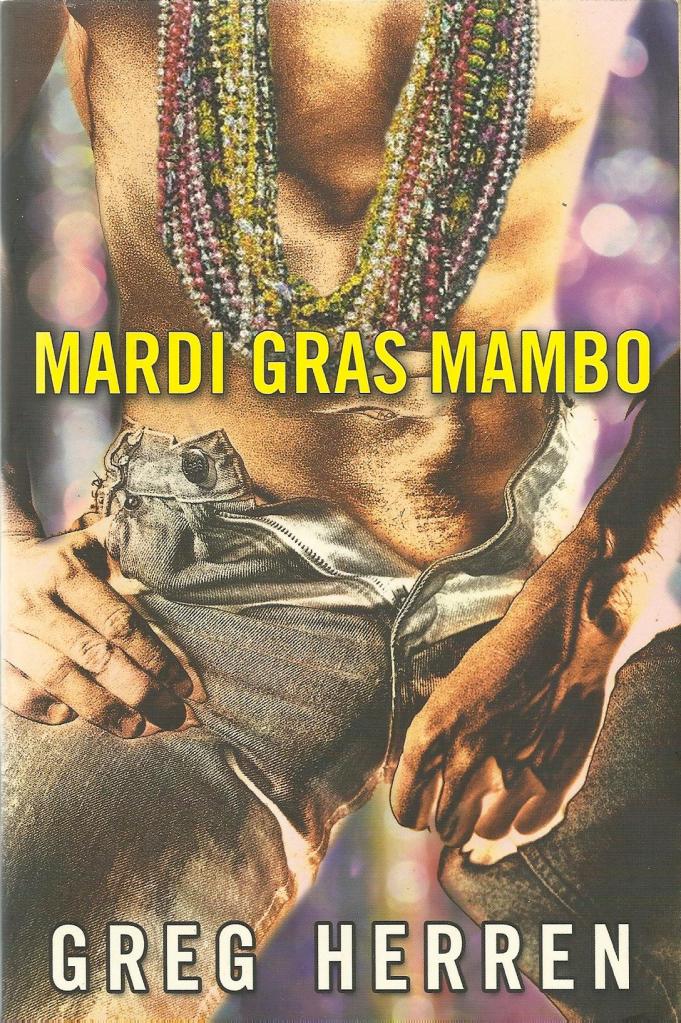
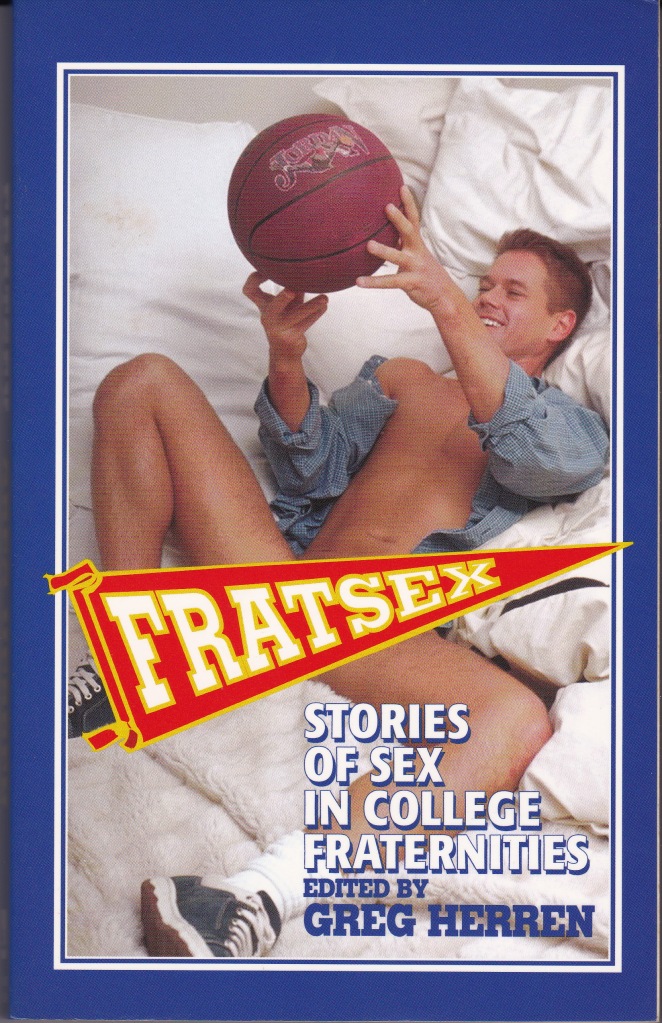
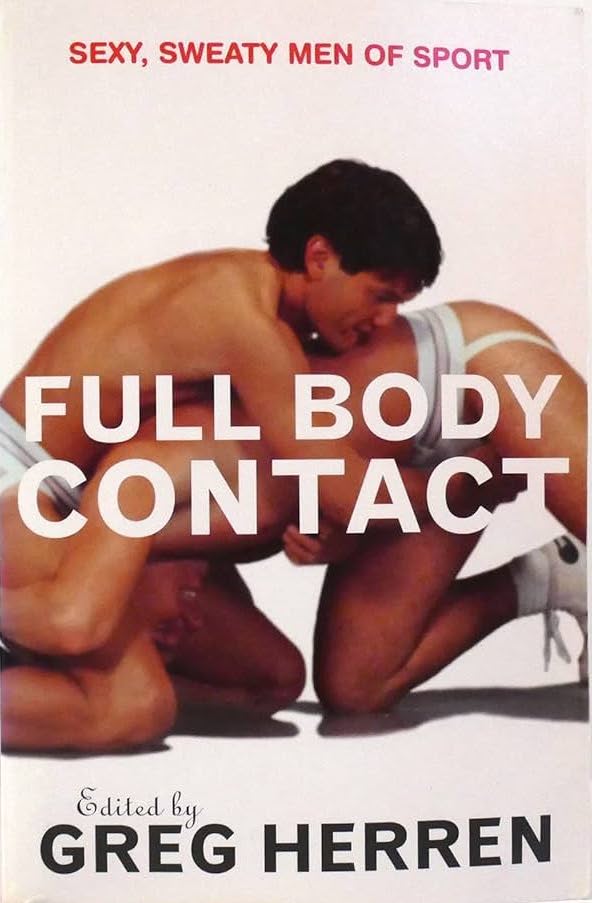
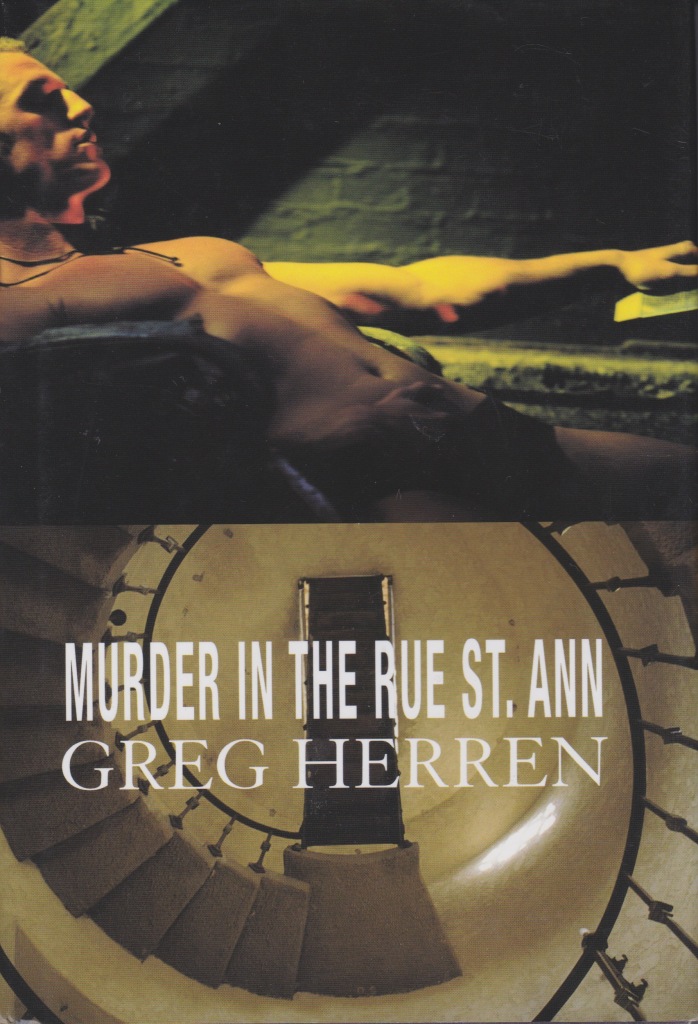
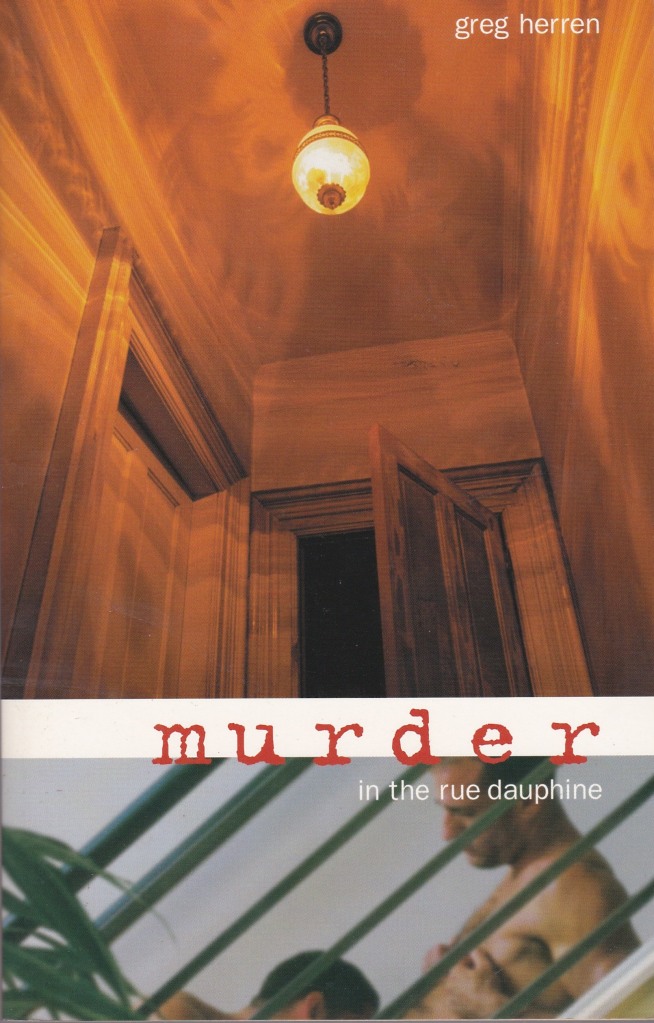
Above are the covers of my seven of my first books. They all look pretty racy, don’t they? But only two of them are actually erotica–Full Body Contact and FRATSEX. Those were the only two erotica anthologies I edited under my own name before switching to Todd Gregory.

The reason I am sharing the covers is because the covers is what the Concerned Women for America, Virginia Chapter, used to get me banned personally (not just my books!) from a high school in suburban Richmond. They used the covers to try to get the Gay-Straight Alliance at a high school shut down, and they used those covers in the House of Burgesses to try to get GSA’s banned at every state-supported school in the state of Virginia.

They came for me based on the covers, not the content–because they had not read the content.

And please, bear in mind, they did not include the erotica anthology covers in their attempts.

In other words, they called me a gay pornographer but didn’t use the actual pornography I actually had done to try to get me banned.

There’s a book in the entire experience at some point for me; I’ve always intended to write a book about the experience called Gay Porn Writer–because that was how they branded me, and the news media, in their attempts to be fair and unbiased, gladly picked up that branding without question or thought or without even looking into me and my writing career in the slightest bit. It was also my first experience with learning that the media cannot be trusted; they are not driven by a desire to print and report the truth; they’re looking for clickbait headlines that drive clicks or people to pick up the paper (print was still very much a thing back then) and which headline would you click on:

Gay author banned from local high school; First Amendment questions raised

or

Gay porn writer’s high school appearance cancelled.

The second one is a lot more enticing, as well as concerning, don’t you think?

That, to me, was the most interesting thing of the entire experience; the perceptions, smears, slanders, and how no one was even the slightest bit interested in the truth. The question that was at the heart of the entire thing is precisely what is driving the bans and book removals and so forth now: how old is old enough to know that queer people exist, that literature and art about us exists, and that we’ve always been here despite being regularly erased from history. It also begged the question we are fighting yet again today: does merely the mention of an alternate sexuality automatically make the book adult content–which really means pornography. We can’t have kids thinking about sex, can we? And we certainly can’t have kids reading a book, recognizing the struggle a character is going through as similar, and feeling less alone, now can we? We’ve got to keep those queer kid suicide rates high!

You see, even the homophobes know the truth that they cannot eradicate our existence, and they also know the truth that the only difference between queer people and straight people is who we are sexually attracted to; ergo, even if you don’t talk about what it means but you have a character who identifies as queer–the “queerdifference means kids will either know that queer people exist (THE HORROR!!!) or think about sex.

And certainly, we cannot have anyone under the age of eighteen thinking about sex, can we? Just because most people become obsessed with it after going through puberty doesn’t mean we should educate them properly. Proper education for teenagers about sex and sexuality would mean a drop in teen pregnancies, teen STI infections, and the need for teen abortions. The spurious argument against sex education for teens has always been we’re just encouraging them to have sex. But that’s stupid; their fucking hormones are encouraging them to have sex, no matter what we teach them, and the more we teach them that sex is bad and wrong will only encourage them to do it more–and once they realize it’s actually a lot of fun and nothing bad immediately happened–they will have more of it.

It’s just basic human psychology. Deny someone something and they will want it all the more even if they weren’t interested in it to begin with. Nothing is more desirable than the forbidden.

The smart thing to do is educate them properly about safety, the risks and hazards of having sex at a young age–and this kind of education will also help teach them about finding the language to get help for sexual abuse they may be experiencing.

But oh no! We don’t want them to have sex! Because not educating them about sex and sexuality has worked so well so far, right? Better they find out by looking stuff up on-line or going to porn sites, right? As a sexual health counselor, I am constantly amazed at the things my clients do not know, or how wrong what they think they know is. Every day I see how our educational system fails to prepare us for one of the most important aspects of our lives.

And learning that queer people exist, can live and love and have happy and fulfilling lives, well, that isn’t what these people want for kids. No, if you’re queer, they want you to be miserable and unhappy and suicidal. What could be more Judeo-Christian than that? The rise in people identifying outside the gender/sexuality binary doesn’t mean that prior generations didn’t have those same people existing in them; just that the world and society wasn’t as accepting and understanding then so they had more to lose by coming out, by talking realistically about who they are and what they feel–and it’s scary, very scary. People who do fall into those binaries, who don’t have to worry about what other people will think about who they are and how they identify, shouldn’t be the ones deciding what is real and what isn’t.

And the sad truth is these people are simply terrified of having a queer child, period. So, they figure if they take away anything that might tell their child it’s okay to be queer and to be yourself, their child will instead choose to live in a closet for the rest of their lives and be completely miserable.

Which tells me all I need to know about what kind of parents these people are.

Their love has conditions, which means it isn’t love at all.

I was always under the impression that parents, first and foremost, want their children to be healthy and happy….which is apparently another myth I’ve been gaslit into believing since childhood. #notallparents

When the Lovelight Starts Shining Through His Eyes

As I mentioned yesterday–these blog post titles taken from the Supremes discography sometimes feel a bit off as I do some Blatant Self-Promotion about my new soon-to-be-released novel #shedeservedit.

I got my first ignorant comment on one of those blog posts yesterday; someone posted a link to a video about “toxic femininity” and how it’s “as bad if not worse” than “toxic masculinity.” Needless to say, I not only didn’t approve the comment but marked it as spam and blocked the user from commenting/reading my blog. For those of you who are new here–I don’t engage with trolls, not do I permit them the energy or the oxygen of allowing their ignorance to be seen by anyone here. This is my blog and I pay for it; therefore I will curate the content here and if you want to troll me, well, it’s just going to earn you a comment marked as spam and get you blocked, so don’t waste your time or energy on me. You may, of course–I cannot stop you, but I won’t engage with you nor will I allow Constant Reader to see your ignorance, so there you have it.

I wrote yesterday, and it felt good to get another chapter down. I only have two more to go and the revisions, and I have to say, pantsing this thing on a tight deadline hasn’t been the easiest way to write this book, but it’s working. I’ve got the plot all worked out now, who the killer is and why, and now all I have to do is cram the resolution into the last two chapters and we are finished, done, ready to go off to the editor with prayers that she likes what I’ve done and doesn’t require a complete overhaul, which is also entirely possible and within the realm of probability–one of the reasons, frankly, that I’ve not signed. a contract to dive straight away into another book when this one is finished; I thought it best to leave my time free just in case. (I am going to start working on Chlorine and Mississsippi River Mischief while waiting for my edits; there’s always something to write, after all–I can also work on the revisions of the novellas in the meantime as well.)

There’s always something…

Today’s BSP is going to focus on writing about small towns, rather than what I’ve been covering (toxic masculinity). The first book I remember reading about a small town that really stands out to me–as an examination of small town dynamics, rather than merely a setting for the story–was Ellery Queen’s Calamity Town, which was, if you are an Ellery Queen fan, the first Wrightsville story. There were several of these novels–the second, I believe, was The Murderer is a Fox–and I enjoyed them all; Queen clearly loved writing about Wrightsville, since he kept returning to the scene of the crimes, as it were, but the best, the true standout for me, was the first: Calamity Town. This book–published well over a decade before Grace Metalious scandalized the world with Peyton Place–also covers the same territory as Peyton Place: scandal and hypocrisy and the paralyzing power of gossip in small town America. Calamity Town remains a favorite mystery novel of mine to this day; I should reread it. It’s plot is ingenious and entirely rooted in human psychology, and it also contains one of the best and most clever misdirections in crime fiction history. It was Calamity Town that made me first start thinking about how small town society is actually a microcosm of American society as a whole, all encapsulated in a small package, and also that made me realize, for the first time, how claustrophobic small towns can be; where everyone knows everyone and you can’t really do anything without someone knowing; and how secrets kept can become very damaging over time. Queen is, at first, struck by the apple-pie Americana of Wrightville…and then he begins peeling back the layers.

Peyton Place, which I found to be far less scandalous than either General Hospital or All My Children by the time I got a copy at a secondhand bookstore in Emporia when I was seventeen or eighteen, also showed me again how claustrophobic small town life could be. Sure, there’s some bad to the point of laughable writing in the book (“your nipples are hard as diamonds”, anyone?) but other than those brief moments, overall it’s a very well-constructed book and a damning indictment on the hypocrisy of American small towns. I also read Sinclair Lewis’ Main Street around the same time for an American Literature class (I still think we should have read Elmer Gantry instead, or It Can’t Happen Here, but I was not in charge of the syllabus), which is also about the falseness of keeping up appearances and worrying what the neighbors think. I find it interesting that “small town American values” are frequently–particularly by conservatives–pointed out as what is the backbone of our country and so on and so forth (part of the entire “cities are BAD” thing we have had going on culturally for decades, if not centuries), but when that veil is peeled back, there is just as much rot and decay as in any “wicked” city. As I pointed out on Susan Larson’s radio show the other day, the vast majority of the soaps were originally set in very small towns, rather than urban centers.

Nobody does small towns quite like Stephen King, and the first time he really addressed small town life was in ‘salem’s Lot–although it can be argued he did a masterwork on small town life with Needful Things–and it was in his tale of small town Maine being overrun by vampires, he also did an incredible job of painting the town, it’s working class citizens and the minutiae of their lives; how circumstances trapped some of them and killed their dreams–and how others never had any dreams to be killed in the first place. The way he interweaves the lives of his small town characters, their relationships and histories and how everything is interconnected is masterful; has anyone ever done a critical analysis of King’s work with small towns? It also falls into this group; what King does with Derry is just as exceptional as his work on Castle Rock and Jerusalem’s Lot in the other works.

I based Liberty Center on Emporia, Kansas, geographically; my town is loosely laid out the same way Emporia is; there’s a small college there, as in Emporia, and there’s a meat packing plant on one side of town that reeks of death and stale blood on the south side of town, and of course, the waterfall on the river on the way out of town heading south and the park that goes with it. Other than that, it’s memory and invention; I’ve not set foot in Emporia in nearly forty years and have no plans to ever do so again. (Likewise, when I write about my fictionalized county in Alabama–it’s loosely based on where my family is from, but I haven’t been there in thirty years and will most likely never go visit again, so it’s all memory and invention for me.) I don’t know if I will write another novel about Kansas–I have some other ideas, of course, don’t I always–but it seems weird to create another fictional small city so similar to Liberty Center, but at the same time it seems even weirder to set another book there after having already done so (although i should probably revisit Sara sometime and see how I did it–and what I called the towns in Kahola County–before deciding one way or the other).

Heavy sigh.

Today I need to write another chapter, and I also need to work on revising a short story as well as writing a promotional article–and of course, there’s the horror that is my email inbox which needs to be dealt with this week once and for all (it’s all relative; answering everything and emptying it out inevitably means generating more emails there; my email responses will trigger emails in response which turns it into a Sisyphean task without end), and today is the men’s US figure skating championships, which naturally I plan to watch so I need to get my writing done before then, don’t I?

So on that note, I head into the spice mines. Have a lovely Sunday, Constant Reader.

King of My Heart

I went down a wormhole thought pattern of sorts this morning, triggered by reading a Crimereads essay about spy novels, and their genesis; it mentioned that Rudyard Kipling’s Kim was one of the first spy novels, and I also realized that only had I not read Kim, I’m not entirely sure I’ve ever read Kipling; however, a quick Internet search just not has reminded me that I have, indeed, read Kipling: Rikki-Tikki-Tavi, The Jungle Book, Captains Courageous, but I really don’t remember anything about them (let’s be honest, all my memories of The Jungle Book are naturally from the Disney animated film). I may have also even read Just So Stories, but am not entirely sure. I’m sure Kipling’s work does not stand the test of time–just the title of the poem “The White Man’s Burden” made my eyes almost pop out of my head when I came across it this morning–as they undoubtedly reflect the white supremacist view of Imperialism and the need for the British Empire.

On that same note, I feel relatively certain that the M. M. Kaye novels I once enjoyed (Shadow of the Moon and The Far Pavilions) probably wouldn’t hold up well, either.

I always read for pleasure and for enjoyment; to escape the world in which I found myself inhabiting and feeling like a changeling for the most part; I still do, for the most part. I haven’t been paid to write a book review in over a decade; I’ve always felt that as an author myself, there was a conflict of interest in accepting pay to read and critique another author’s work, and there was always, inevitably, the possibility that an honest view on something that didn’t work for me as a reader would be seen as a vindictive move on my part to torpedo another author, out of jealousy or spite or both. There are any number of these reviewers being employed, and paid quite handsomely, by major newspapers, and I don’t want to be one of them. I don’t like writing negative reviews, and if I am reading something I don’t care for, having to finish reading it because I am being paid to write about would inevitably make me resent the book and its author and would thus color the review.

I generally read things I think fall under my purview as a writer–mostly crime novels, some horror now and then, and maybe something every once in a great while, that would be considered literary. Often these are books by writers I already have discovered, or new ones recommended to me by others whose tastes I respect–The Coyotes of Carthage came to me in this way; Lisa Unger was recommended to me by numerous friends; and yes, Paul Tremblay came to me as a recommendation from a friend. I know I need to expand my horizons to improve as a writer, which is why I am not only committed to the Diversity Project (books by marginalized writers) but also to the Short Story Project. The Diversity Project has been a terrific learning experience, and the Short Story Project has helped me become a better short story writer. I’ve been trying to read New Orleans history lately–with a dash of Louisiana thrown in for flavor–in order to get a better sense of the city and state, so that I can write about them both more knowledgeably; plus there is so much inspiration in reading about the past of both city and state! It’s also incredibly humbling to know how little of that actual history I did know, and even though I knew how rich that history was, I had no idea just how much of a gold mine of inspiration and ideas it would prove to be.

Like I said, I tend to read things I think I will enjoy, and if I am not enjoying the experience, I inevitably stop reading. I have started things and put them aside, only to go back to them again and greatly enjoy them; Paul Tremblay’s A Head Full of Ghosts being the best and most recent example of this I can remember; I started it, got several chapters in, and wasn’t feeling it. I went back to it months later and couldn’t put it down, and frankly, after The Cabin at the End of the World, Tremblay is becoming one of my current favorite authors.

So, I’ve been wrong about books before, and I’ve also been wrong about authors before. Hence the dilemma in being a book reviewer, and why I have chosen for many years now to seek extra income by reading for reviews. I enjoy writing about books I enjoyed on here, my blog; that’s part of its reason for existence, and I also curate what I read and write about here. No one chooses for me what I read or what I write about; and I will only review something negatively if the writer is, frankly, long dead; and even then, it’s simply an explanation of why the book didn’t work for me (an example of this latter type was Night Has a Thousand Eyes by Cornell Woolrich; I appreciated the book but there were things about it I didn’t like, that I felt didn’t “play”, but since he is long dead–over fifty years–I wasn’t overly concerned about hurting his feelings….and I have enjoyed other works of his).

I often talk about how my education in what the Academy considers to be classic American literature (British, too, for that matter) is sorely lacking. It’s something that I occasionally wonder about; should I go back and read these so-called classics as decided by a group of people whose opinion I generally don’t respect very much? It’s entirely possible, I know, that books I was forced to read as a teenager in high school and college were actually better than I thought at the time because I loathed being forced to read anything and I despised the way they were taught by pompous pseudo-intellectuals with tenure (I really enjoyed mocking that world in my story “Lightning Bugs in a Jar”, and will probably mine it again at some point as story fodder).

But I can honestly say I went back twice to reread The Great Gatsby only to discover that I loathed it even more than I remembered loathing it the first time; I also spent some time in my twenties trying to read other works by the writers I was forced to read and found that I did, in fact, enjoy some of them. I hated Sinclair Lewis when I was forced to read Main Street in college; I later went back and enjoyed both Elmer Gantry and It Can’t Happen Here very much. I disliked Fitzgerald’s This Side of Paradise very much, and I loathed the Hemingways I was forced to read (The Old Man and the Sea, A Farewell to Arms) so much that I just can’t bring myself to read anything else of his. I was very surprised, actually, to find myself enjoying Faulkner quite a bit, and I keep meaning to go back and reread both The Sound and the Fury and Sanctuary–but there are also a lot of other Faulkner novels I’ve not read, and probably should. I also despised Tom Sawyer and the other, celebrated Mark Twain short stories I was forced to read; but as an adult greatly enjoyed Puddinhead Wilson, The Prince and the Pauper, A Connecticut Yankee in King Arthur’s Court, and Life on the Mississippi.

But I am not someone who became a writer because I wanted to have a legacy, or be lionized; I became a writer because I wanted to tell stories, and I wanted to tell the stories that I wanted to tell. I never had any desire to have my work be taught in colleges, or for students to be forced to write papers about my work. I always say that sort of thing isn’t up to me to decide, and it’s never been my aim. If I’m forgotten after I die, well, I won’t be the first.

I justify to myself not reading a lot of literary fiction by saying there simply isn’t enough time for me to read everything that I actually want to read, let alone find the time things people think I should read. But I also have this sense in my mind that perhaps I am missing out on something; I know I’ve read books that have gotten critical acclaim that were more on the literary side and liked them very much and learned from reading them. Colson Whitehead, for example, is simply brilliant while also writing genre fiction–The Nickel Boys and Underground Railroad were stunningly brilliant; I really need to read more of his work–and thinking about Colson Whitehead led me to thinking about, of all people, Cormac McCarthy. I’ve not read McCarthy, but from what I have gathered from what I have heard about his work is it technically is also genre fiction; The Road is a post-apocalyptic dystopian novel, after all–a friend whose opinion I respect read and hated the book, so I’m probably not going to go there–so I started going through his canon on the web and I finally settled on one to add to my TBR pile at some point, Outer Dark, because it too sounds like genre fiction. We shall see how that goes, shan’t we?

Laura Lippman often says that genre fiction is literature, and by claiming literary classics as genre (the most common is, of course, Crime and Punishment) we are demeaning the great genre work, which stands on its own without the necessity of claiming Dostoevsky or Faulkner’s Sanctuary as crime fiction (although I do believe Sanctuary is pulpy noir of the best kind). I do agree with her to some degree; as I said, I do think Sanctuary is noir, and an argument could be made that An American Tragedy by Dreiser is as well. (I’ve also pointed out numerous times that The Great Gatsby is really a murder mystery told in reverse) But her point is spot on: genre fiction doesn’t need to claim classics from the Academy in order to be recognized as literature, and claiming those books does make it seem like trying to make fetch happen.

I also like to believe that my best work is still ahead of me.

Of course, that means I actually need to do it.

And on that note, tis back to the spice mines.

Casting a Shadow

And it’s Friday again! Cue the dancing horses.

I have a lot that I want to get done this weekend. I need to get those stories pulled together, and I want to get started on finishing off the Secret Project. Stupidly, I also started writing another short story yesterday, “The Flagellants,” which I am not really sure what it’s going to be about, or how to even finish the stupid thing. (An\d because I am twelve years old, sometimes when I think the title quickly it sounds like flatulence, which is a joke I may make in the story because I am twelve years old.) And yes, I got the idea from the bubonic plague chapter in Barbara Tuchman’s A Distant Mirror; during the fourteenth century’s bubonic plague outbreak, the church was already in disrepute and many felt that the plague was God’s judgment on a sinful mankind, so there were some religious cults that sprang up; the flagellants movement was one of these, and it was enormously popular and spread throughout central Europe, primarily Germany. These penitents would march through town and flagellate themselves with whips and cat o’nine tails and knotted ropes, trying to take on the sins of all mankind.

Naturally, I found this interesting, and I really liked “The Flagellants” as a title, and we’re kind of in the midst of a pandemic…granted, we’re not that far into it as of yet, but we’ve already seen ridiculous behavior in the name of Jesus–so far, nothing I’m aware of from other faiths–but I began to think about it some more and wondered, what if this becomes more lethal and lasts longer than anyone is even considering now? The second wave of the Spanish influenza pandemic of 1918-1919 was much worse than the first, and in the wake of the Great War (aka World War I) and said pandemic there was a huge religious revival in the US during the 20’s–we tend to only think of that decade as flappers and bathtub gin, but that wasn’t all that was going on during that decade (it was also the decade that inspired Sinclair Lewis to write Elmer Gantry, and the decade of Aimee Semple McPherson)…and the old “what if” questions started running through my head, and I remembered the religious fanatics who always protest at Mardi Gras and Southern Decadence…and yeah, that’s kind of how stories get born. I’m not sure where this story is going to go or what it’s going to become–it’s kind of fun and different than anything I’ve written before–and I’m not entirely sure it’s going to end up as a crime story, which makes it even more fun.

I slept really long and well last night, and didn’t want to get up this morning, which was lovely–and a long time coming. It’s been a while since I’ve had such a great night’s sleep, and it was absolutely wonderful. I feel rested and ready to go mine some spice this morning.

As expected, Joey Burrow was the Number One draft pick last night, taken by the Cincinnati Bengals–and I said to Paul, “it’s going to be weird rooting for the Bengals now”–one of the many reasons I don’t get so far into the NFL is it is impossible for me to not root for former LSU players and their new teams to do well; and I really can’t devote more time to the NFL than I already give to the Saints. But after last night, I feel it’s pretty safe to say the Saints are Louisiana’s favorite team, and now the Bengals are our second favorite. I also never pay attention to the NFL draft, but I did last night because I wanted to see how the LSU players would do in it. Five players in the first round, I believe–Joey Burrow, K’Lavon Chaisson, Patrick Queen,  Justin Jefferson, and Clyde Edwards-Helaire (which is a record, I believe, for LSU and one short of the overall record)–and now I need to go read the Advocate to see how the rest of the team did, and where they wound up.

Obviously, I will always love this 2019 team and everyone on it. It’s kind of hard not to, after the dream season they just gifted us with–and it’s going to be a very hard act to follow; every LSU team going forward is going to be compared to this one.

This weekend, I hope to get some more writing done. I didn’t get hardly anything written this week (after having such a great writing weekend last weekend), but I do need to finish revising and polishing these stories that are due, and maybe even work some more on some of these ones that are in progress–I may just keep writing “The Flagellants” and see where it goes, just letting it develop as it goes–and I need to start getting some other stuff prepared to get back to work on. I also want to do some reading this weekend; I’ve really fallen behind on that, and I want to make reading more of a priority; it certainly is a better thing to do with my time than falling into Youtube rabbit holes.

And now back to the spice mines.

IMG_0247

Did You See Me Coming?

And somehow, just like that, we made it to Wednesday again. Well done, Constant Reader; sometimes it feels like we’re just not going to get there.

So, yesterday morning between screenings, I checked out my iCloud drive to just see what precisely I have in progress at the moment (not counting everything else that has been unfinished for years) and the count is: four novels, four novellas, and at least nineteen short stories. (And y’all wonder why I talk about having creative ADHD. Barbara, please.) Then again, should I get all of these things finished by the end of the year, I would absolutely have another short story collection completed (there are already several unpublished, finished stories I have in my “to submit” folders as well, and three that have been sold–two of which are out now–in The Beat of Black Wings and The Faking of the President; so at some point that second collection will be ready to go within the next year or so*) and so it looks as though the dearth of Gregalicious publications will be solved once he gets off his ass and starts finishing things.

Heavy heaving sigh.

One thing I noticed yesterday as I drove to my essential job (yes, my job is considered essential) is that there was a lot more traffic then usual at that time; and then I remembered driving home Friday night after work in heavier traffic than usual as well. Oh no, I thought, I wondered how long it would be before New Orleanians couldn’t stand the isolation anymore and despaired; but there was so little traffic on my way home from work last night that I managed to play one song on my phone through the car speakers as I pulled onto the highway and it was just finishing as I pulled into a parking space across the street from my house (yes, I managed to hit every light as green once I got off the highway too; I LOVE when that happens), so maybe it’s not so bad after all.

These are such strange and new times, and I’m never really certain what to think about them, you know? Or to try to think ahead; this week is about all I can handle right now, thank you very much and good night.  But I’m also a planner, even if the plans and their timing remains somewhat amorphous all the time; it’s just kind of who I am. I’m also aware that if you don’t plan ahead a bit, you tend to get very surprised along the way and that is never, ever a good thing.

Yesterday I discovered, entirely by accident, that one of my favorite old movies–The Letter, starring Bette Davis, had actually been a short story by W. Somerset Maugham first, before he himself adapted it into a play which then became the basis for the two film versions (the more famous Bette Davis version was actually a remake of the Jeanne Engels version from the previous decade), and it was in the public domain, so I downloaded a copy of it to read for the Short Story Project; it’s a long story, clocking in at over 13,000 words, which in today’s world I suppose would make it a novella. I am, of course, rather excited to read the original source material, and I’m not sure I’ve ever read Maugham before–just another one of those great old white male writers I’ve never read; and it occurs to me just now that one of the things I should reread for the Reread Project is Hemingway’s A Farewell to Arms. I’ve never really gotten Hemingway, and certainly didn’t when I was forced to read him in high school–hating the experience so much I never went back to him–but maybe it wouldn’t hurt to give Papa another turn. Perhaps as a more mature adult and reader I can appreciate him more (although my recent reread of The Great Gatsby made me hate the book even more than I already did); but I certainly didn’t mind reading some other Old White Men over the years, like Sinclair Lewis and Theodore Dreiser (I should tackle the massive An American Tragedy sometime; I really liked Sister Carrie when I read it), and I should probably make up one of the greatest gaps in my reading history–The Adventures of Huckleberry Finn, which I’ve never read–but I’ve read a lot of Twain over the years.

It is absolutely insane how many works I have in progress! (I just reread the opening of this entry again) But I do believe that perfectly illustrates my point about my creative ADHD….and there are even more short stories than that, really; those are the ones I’ve worked on at some point over the last few months. And of course, more ideas come to me all the time. Heavy heaving sigh.

And on that note, I need to get ready to face my day. Have a good Wednesday, Constant Reader!

*the third, “The Carriage House”, has been sold to Mystery Tribune, and I’m not sure when it will be released; so stay tuned!

IMG_0695

Sara

Memorial Day Monday, and I haven’t gotten near as much done as I intended, according to the “long weekend stay-cation to-do list”, but I got so much more else done that I cannot feel defeated or disappointed in myself.

Which, of course, is a step in the right direction. I’ve also gotten used to waking up in the morning between nine-thirty and ten; tomorrow’s alarm is going to be a very rude awakening, I fear. But it is what it is, I suppose, and at least this is only a four day work week, so that’s something, right?

Always find the upside, you know?

I took a lot more notes in the journal yesterday, figuring out how some other stories are going to play out, and even started brainstorming on Muscles. I know this doesn’t seem like I’m getting very much done as far as actual writing is concerned, and that may be true; but what I’ve done this entire weekend is make the actual writing possible. Today I am going to try to get some of that actual writing done–I know, right? SCARED OF THAT. And I also have some reading to do; I’m participating in a panel of readers to choose some short stories for an anthology. I also have some other busy-work to take care of today as well; so I am going to try to get that done before I start writing.

I am still reading that Roth novel; it’s not very quick going, despite being so well-written and the characters aren’t really quite as awful as the ones I recall from Letting Go, but it’s kind of slow going; there’s not really a reason to keep turning the page, which is always the problem, at least for me, with literary fiction. On my shelves, TBR, are two big literary fiction books that are massively long, Hanya Yanaghara’s A Little Life and Garth Risk Hallberg’s City on Fire, and while there are  gay characters and themes in both…they’re so long. Since they have gay characters, I kind of feel, as a gay author, some responsibility to the community to read them, dissect the gay characters, etc. It is representation, after all, and that representation should be critiqued by someone within the community.

I am sure that was handled by Gay and Lesbian Review Worldwide, which is a lovely magazine, and yet…I feel like it’s sort of my job somehow; a need or feeling which I definitely need to get past and over as quickly as possible. I am sure I will finish reading the Roth this week and I can get back to reading crime novels. (Yay!)

So, yesterday’s journal entries included work on my short stories “The White Knuckler” and “Never Kiss a Stranger” and “Hold on to the Night” and “This Thing of Darkness” and “And the Walls Came Down”; and the novels Muscles and Bury Me in Satin. I am writing a lot in my journal, which is convenient and easy, of course; I love having my journal, and I love having it handy, so whenever something occurs to me I can write it down and riff on it for a little while. This has been working tremendously; I solved the problems with the Scotty novel this way, made progress on the WIP; and at the rate I am going when it’s time to work on Bury Me in Satin the entire thing will have already been written or planned out in my journal.

Which will certainly make the process easier.

I’m all about it being easier, in case you’d never noticed.

As I page through my journal I also see notes I made for two essays; one about the evolution of teen movies from the 1950’s to the present (triggered by watching the original Friday the 13th last night, with a very young, dewy and beautiful Kevin Bacon), and another about Robert Downey Jr.’s career trajectory, and yet another about whether Carrie White from Carrie was a villain or a victim (this popped up on Facebook this week, and the question was very strange; I always considered Carrie a victim and certainly never as a victim; I also made the connecting thought that varied interpretations of what role she played in the novel/film has everything to do with the reader/viewer’s life experience as well as how they see themselves; which is an interesting direction to take, essay-wise; I was also thinking it might not be a bad idea to include Christine’s Arnie in the discussion. I consider both novels to be excellent depictions of teenage life and high school; no one really does childhood or high school quite the way King does).

So, that’s it for today, the end of my stay-cation. I got a lot of brainstorming and problem-solving finished for my writing; the Lost Apartment is in some sort of order at long last, and I am of course making myself all kinds of promises I won’t keep; about staying on top of the household chores and staying on top of the writing and the reading and using my journal to get myself out of sticky situations with both. I am very glad I took the stay-cation, even if I didn’t get close to getting all the things finished that I needed to get finished. My visit to the storage facility had to be postponed because of the recurring back pain; hopefully I can get that handled one day this week; either Thursday or Friday.

Always keep moving forward.

Next up in the Short Story Project is “The Jockey” by Carson McCullers, also from The New Yorker’s The 40’s: The Story of a Decade:

The jockey came to the doorway of the dining room, then after a moment stepped to one side and stood motionless, with his back to the wall. The room was crowded, as this was the third day of the season and all the hotels in the town were full. In the dining room bouquets of August roses scattered their petals on the white table linen and from the adjoining bar came a warm, drunken wash of voices. The jockey waited with his back to the wall and scrutinized the room with pinched, crepy eyes. He examined the room until at last his eyes reached a table in the corner diagonally across him him, at which three men were sitting. As he watched, the jockey raised his chin and tilted his head back to one side, his dwarfed body grew rigid, and his hands stiffened so that the fingers curled inward like gray claws. Tense against the wall of the dining room, he watched and waited in this way.

I’ve never been ashamed to admit that often I don’t get McCullers’ work; but I like the way she writes and the insights into her characters that she shares. This short story, about a damaged jockey who enters a crowded dining room during the season at Saratoga and confronts three people, dining together, who’ve had some impact/will have some impact on his life, and their complete disinterest in him as anything other than an object to be pitied, eventually to be scorned, is well drawn and depicted; and very telling about human nature; how we are with people who are of use to us and who we, as a society, generally are to those who cease to be of use to us. I have to confess, my revisitation of McCullers, between this and Reflections in a Golden Eye, has made me a lot more interested in her and her work; just as reading some of Flannery O’Connor’s stories recently has raised my interest in her work as well.

As I have said before, I often find my failure to get certain writers, seen as masters or geniuses, or in other ways celebrated by the so-called Academy, as a failure not only as a reader or a writer but as an intellectual and even, possibly a moral failure; but my recent reread of The Great Gatsby went a long way towards curing me of that mentality; likewise, the recent re-approaches to the works of McCullers and O’Connor have also made me realize that in some cases, I may not have been intellectually and morally ready to read these works. I am going to give Hemingway another chance at some point  as well, and I do want to read more of Faulkner. I’ve certainly enjoyed reading Sinclair Lewis and Theodore Dreiser a great deal more as an adult than I did in college courses. I didn’t enjoy reading Jonathan Franzen, and I’ve come to believe that David Foster Wallace is a cruel joke played on unsuspecting readers and students of literature by bitter professors. I also found Styron’s Set This House On Fire more readable, more enjoyable, and more of an achievement than Sophie’s Choice or The Confessions of Nat Turner; but I also read the latter when I was in my early twenties, so it may be possible for me to appreciate them more greatly now; I do consider myself to be a more sophisticated reader now than I was in my callow youth.

And now, back to the spice mines.

IMG_4109

Shame on the Moon

I have, as an almost fifty-six year old gay man, witnessed some history throughout the course of my over half a century on this planet. When I was young, I used to hear about the great wisdom you acquire with age; I’m still waiting for that to happen. I remember when Bobby Kennedy and Martin Luther King Jr. were shot; I remember the Tet offensive and when the first man walked on the moon. I remember the Watergate break-in, the scandal that followed, and how a newspaper toppled a corrupt presidency that was abusing its power. I remember the Iranian revolution and the taking of American hostage in the embassy in Teheran; I remember the slaughter of Israeli athletes in the Olympic Village in Munich. I remember watching my gay brethren die from AIDS while the political establishment laughed and made jokes about the right people dying; and I remember the Towers falling that beautiful September day in 2001. I watched CNN non-stop while a military coalition liberated Kuwait,  when the Berlin Wall fell,  when Communism in eastern Europe collapsed.

There have been times in my life when I’ve shaken my head over the actions of my government, the ruling of our courts, and at legislation debated and passed by Congress.

But never did I imagine, in my wildest dreams, that I would bear witness to Nazis marching with torches in a college town in support of white supremacy, bigotry, anti-semitism, racism, misogyny, and homophobia in the United States of America in 2017–or that scores of people would be defending them.

Have I been a good ally to the oppressed people of this nation? I don’t know, but I tend to doubt it. I tend to focus, as most people do, on my own rights and that of my community; I’ve spent most of my adult life fighting for my rights as a gay man but have always advocated for people of color and women, because I do recognize that the oppression of one is the oppression of all; that none of us are truly equal until we are all equal. I’ve studied history; I’ve studied civics; I’ve studied the Constitution. The entire point of learning and studying is history is to learn from the mistakes of the past so as not to repeat them.

Sinclair Lewis was an extraordinary social critic and fiction writer who probably isn’t remembered, and studied, as much as he should be in this modern day.  I’ve not read enough of Lewis; most of his canon remains, sadly, unread by me. But I did read Elmer Gantry about ten years ago, and was stunned by how true it was; and how it still applied in so many ways today. Shortly after that I read It Can’t Happen Here, which is one of his lesser known works and considered to be highly flawed in terms of being a novel. The point of the book, written and published in the 1930’s, was that so many Americans of the time didn’t believe what was going on in Italy and Germany could happen in the United States; Lewis, ever the social critic and commentarian, took that as a challenge and titled his book that, and wrote a novel detailing exactly how fascism could rise in the US and take over our government. It was chilling reading it, in the wake of some of the laws and executive orders passed in the wake of 9/11. I don’t really remember much of the story, frankly; the days when I could remember plots and characters and quotations from every book I read have long passed. But it is, I think, due for a reread.

We often wonder how the good German people allowed what happened there to happen. It is easy  for evil to persuade basically decent people to take its side, and how, when things are going well, incredibly easy it is for people to only look at the good and turn their heads away from the bad. The towns near the concentration camps, who claimed they didn’t know what was going on? Bitch, please. You never noticed the smell? You never wondered what that smell was? But, hey, I’m prospering and we don’t have to worry about where our next meal is coming from and how to keep the lights on, and aren’t the streets clean and the trains running on time? I don’t believe those stories we’re hearing about what’s happening to the Jews! And since they’ve been oppressed, look at how much better things are!

That’s how it happens, people.

I will do better. We all must do better. No one is free and equal until we are all free and equal.

In 2006 I was invited to speak at the Virginia Book Festival in Charlottesville. I was given a tour of the town and a tour of the University of Virginia campus; I was shown where Edgar Allan Poe lived when he was a student there and other landmarks. I was not only impressed with how beautiful the town and campus were, by how friendly and welcoming the people who lived there were. I always meant to go back again, to spend more time there–I didn’t get to see Monticello–and it was with horror that I watched the news over the weekend, seeing what was going on in the lovely little town I remembered, appalled and ashamed that this was being broadcast to the entire world.

This is unacceptable. The state of the union is unacceptable.

I have to do better. We all have to do better. As a nation we can do better by our most vulnerable citizens, and we must.

The eyes of history are on us.

Have you ever wondered what you would do if you’d been a German in the 1930’s? What you would do during the Civil Rights era of the 1950’s and 1960’s?

This is your chance to find out who you are as a human being and as an American.

This is Heather Heyer, who gave her life on Saturday to oppose evil. May she never be forgotten.

heather-heyer-2


Can’t Fight This Feeling

Saturday! Yesterday was so obnoxiously humid that I was completely exhausted when I finished all the running around I had to do yesterday; it was all I could do to stay awake. Regardless, I cleaned the kitchen–even doing the floors–and started work on the living room before collapsing into my easy chair with a book in the early evening and dozed off while reading Carson McCullers’ Reflections in a Golden Eye.

Not that it’s not a good book, but I was simply tired.

I often talk about how, despite my voracious habit that goes back as long as I can remember, that there are many classics of literature I’ve not read (including Huckleberry Finn). I was thinking about that this week, because I’d ordered two sets of books–a set of Hemingway and a set of Fitzgerald–that my dad owned, having gotten them from a book club, when I was a kid (I’d already found the Faulkner set on ebay; which is where I found these others as well). I don’t remember if it was the Literary Guild or the Doubleday Book Club or what, but my dad joined one of those mail-order book clubs and got those three sets of books–I suppose thinking that we needed nice copies of classic books by three of American literature’s most shining (straight white male) lights (I think he later added a set of Steinbeck, but I could be wrong; that might have been me in my teens.)

IMG_2244

I took an American Lit class my sophomore year in high school, and it’s from that class–as well as the American Lit class I took in college–that my antipathy to many classic writers was born. I think reading The Great Gatsby, The Grapes of Wrath, Babbitt, The Old Man and the Sea, and A Farewell to Arms in high school, when I was too young to really appreciate them kind of ruined them, and those authors, for me. I’ve not reread the books, so I don’t know if I still wouldn’t care for them; but I do know that I’ve gone on to read other books by some of those authors and liked them (Steinbeck’s East of Eden is one of my favorite books of all time; Sinclair Lewis’ Elmer Gantry and It Can’t Happen Here are terrific; and I really enjoyed This Side of Paradise by F. Scott Fitzgerald). I’ve never revisited Hemingway, as my visceral response to the two books of his I did actually read was so strong. But I am going to give it another go; I am going to read The Sun Also Rises (my father thinks For Whom the Bell Tolls is the greatest American novel; but Dad and I rarely agree on anything cultural), and I am also going to reread The Great Gatsby at some point. I may even give The Grapes of Wrath another go; it actually kind of bothers me that there are ‘American classics’ that I didn’t like and may not have because I wasn’t old enough or mature enough, as either a human or a reader, to have enjoyed and appreciated.

But Christ, there is so little time to read everything!

Which is one of the reasons I am reading this McCullers novel (although calling it a novel is quite generous; it’s only 127 pages so it’s really a novella) is because I’ve not read much of McCullers (The Member of the Wedding in college, didn’t like it–but there is, I think, something about being forced to read something that makes me dislike what I am being forced to read; I should probably revisit Flannery O’Connor as well), and I am thinking that I probably should.

Ah, today’s storm is about to break, so I shall take that as indication that I should put on my helmet and get back to the spice mines.