Take a Chance On Me

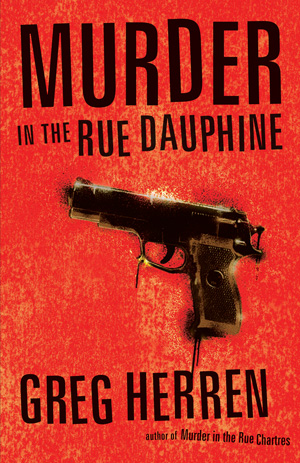
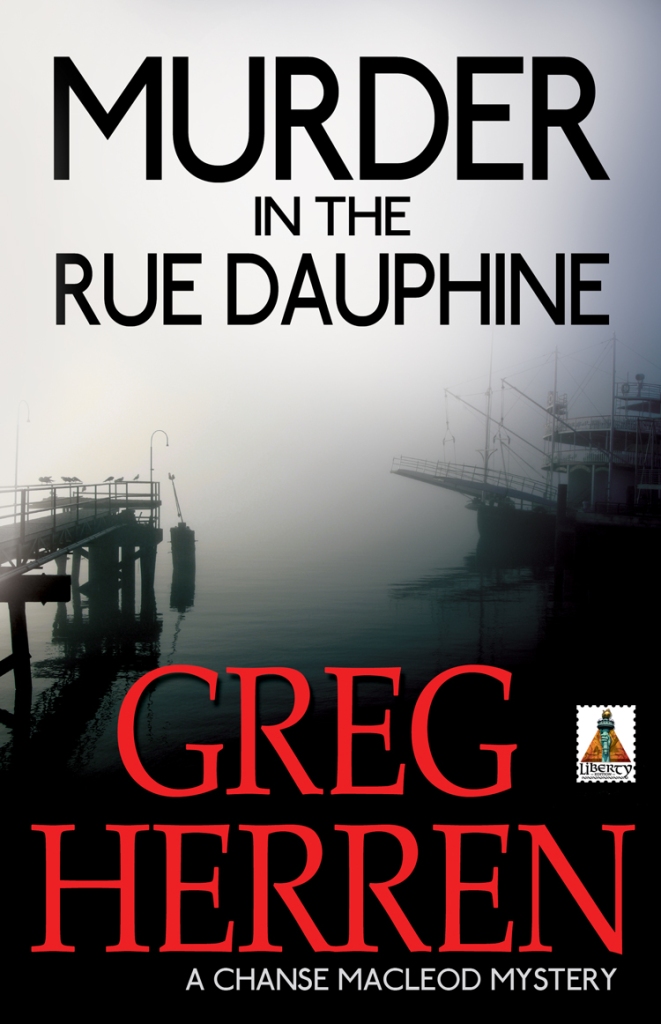
Ah, Murder in the Rue Dauphine.

It’s always weird for me to talk about my writing and my books and so forth on here; I always worry that I am either contradicting and/or repeating myself. When you’re as self-obsessed as I am, that can be a problem; talking about myself is probably my favorite thing to do–on here, at least. And I feel like I’ve told the story of where Chanse came from and how the series developed from the very beginning many, many times.

It was when I was living in Houston that I rediscovered crime fiction, and the old love was even deeper once it was rediscovered. This was the period when I read most of the Perry Mason novels, discovered Paretsky and Grafton and Muller, and decided to give Travis McGee and John D. MacDonald another try. (I had read The Dreadful Lemon Sky when I was a teenager, but I hadn’t liked it; I was more into the classic detective mystery, with lots of suspects and a denouement with everyone gathered in a drawing room as the identity of the killer was unveiled–the McGee series was definitely not that. But MacDonald had written a superb introduction to Stephen King’s first short story collection, Night Shift, and I had always wanted to give him another chance–pun fully intended.) I devoured the McGee series this time around; and I really admired the character and how fully rounded and developed he was (I should give the series a reread; I’d be curious to see how they hold up now)…and armed with all these new private eye novels and Perry Mason puzzles, so I started coming up with my own version. Even the name was a shout out to McGee. My character was also tall with sandy/dirty blond hair, a former college football player, and he lived in Houston, with an office downtown and a secretary named Clara. The title of the first book was going to be The Body in the Bayou, and I started basing the case on the tragic Joan Robinson Hill case, immortalized in Tommy Thompson’s Blood and Money (the premise of the story was that the character representing Joan’s father hires Chanse after Joan’s death to find dirt on John–and then John is murdered; fictionalized, of course.) I wrote about six or seven really bad chapters long hand before giving up. I didn’t know how to write a novel then nor did I understand the concept of rewrites and revisions and drafts. (My ignorance was truly astounding.) The hurdle I couldn’t clear was typing. I was a terrible typist. I’d had a job in California working for an insurance brokerage that was computerized, and had a word processing program that I used to write short stories on; it made such an incredible difference that I knew I would have a much better shot at actually making my dreams come true if I only had a word processor…

In 1991, after I moved to Tampa, I managed to get a word processor, and that was what I wrote my first two and a half young adult novels on–the original drafts of Sara, Sorceress, and Sleeping Angel–and used it happily for several years until it finally died on me. But by then, I was living with Paul and had swung back around to wanting to write adult crime fiction again, and I wanted to write the Chanse character that I’d already created…so I picked back up on The Body in the Bayou, moved it from Houston to New Orleans, got rid of the office and the secretary, and made Chanse gay. I kept the title, but threw away the story; I wanted it to be a gay story, too. I don’t really remember the plot, but it had to do with the murder of a beautiful boy-toy for a wealthy closeted gay man in New Orleans…and Chanse knew the boy-toy from his days working as an escort before he landed the rich man, I wrote about six or seven chapters of this before we moved to New Orleans….and I realized I’d have to throw it all out again because it was all wrong; I’d made the classic mistake so many writers make when writing about New Orleans: writing about it having never lived here, I only had tourist experiences–which are vastly and dramatically different from the actually “living here” experiences. So, once again, I threw it all out and started over, this time calling it Tricks instead of The Body in the Bayou.

The title morphed again to the less saleable Faggots Die after the first draft; and I remember talking to Felice Picano–he was coming into town for the Tennessee Williams Festival, and I picked him up at the airport. As we drove back into the city from Kenner, we talked about my book and the series, and he nixed the new title as well as the old one. “No one, ” he wisely said, “will pick up a book called Faggots Die, and Tricks sounds like a pornographic memoir of your sex life.” Felice was actually the one who suggested I mimic titles for the series from a classic writer…and we were throwing titles around in the car when I said, “You know, the streets in the Quarter are technically rues–Rue Bourbon, Rue Royale, Rue Dumaine–and the murder happens on Dauphine. Maybe Murder in the Rue Dauphine?”

“That’s perfect,” Felice said, and then we played with Poe titles the rest of the way into the city–incidentally, one of them was The Purloined Rentboy, which became my short story “The Affair of the Purloined Rentboy”, so never throw anything away.

And thus was Murder in the Rue Dauphine titled; and the plan for the series titles was also devised–the branding was changed by the publisher, but I can honestly say my first book was titled by Felice Picano.

Never come to New Orleans in the summer. It’s hot. It’s humid. It’s sticky. It’s damp. It’s hot. Air conditioners blow on high. Ceiling fans rotate. Nothing helps. The air is thick as syrup. Sweat becomes a given. No antiperspirant works. Aerosols, sticks, powders, and creams all fail. The thick air just hangs there, brooding. The sun shows no mercy. The vegetation grows out of control. Everything’s wet. The build­ings perspire. Even a simple task becomes a chore. Taking the garbage out becomes an ordeal. The heat makes the garbage rot faster. The city starts to smell sour. The locals try to mask the smell of sweat with more perfume. Hair spray sales go up. Women turn their hair into lacquered helmets that start to sag after an hour or so.

Even the flies get lazy.

My sinuses were giving me fits as I left the airport and headed into the city. It was only 7 o’clock in the morning but already hotter than hell. The air was thick. I reached for the box of tissue under my seat and blew my nose. The pressure in my ears popped. Blessed relief.

As I drove alongside the runways I could see a Transco Airlines 737 taxiing into takeoff position. I saluted as I drove past, thinking it might be the flight that my current lover was working. Paul looked good in the uniform. It takes a great body to look sexy in polyester. He does.

He’d be gone for four days on this trip. I was at loose ends. I’d wrapped up a security job for Crown Enterprises the previous Wednesday. The big check that I’d banked guaranteed I wouldn’t have to worry about money for a while. I like when money’s not a concern.

And so began a series that lasted for seven titles and about twelve years or so; I don’t remember what year the last book in the series was published. I never expected anyone would publish it; it was intended to be a “practice novel” so I would get used to rejections and learn. It was also the first manuscript I ever wrote that went through multiple drafts before I thought it was finished enough to send out on query. It was supposed to be an exercise in learning humility and getting experience with the business while I wrote the book I did expect to get an agent with and sell–which was what I’d always called “the Kansas book” for over a decade at this point. (It eventually morphed into #shedeservedit.) But you never really learn what you’re supposed to when you’re stubborn, thin-skinned, and used to being demeaned and talked over and not taken seriously, for any number of reasons. I sent the manuscript to three agents: two sent me lovely but form rejections, which was disappointed but not surprising. I took this well, put the manuscripts away to send to three more once the final rejection came.

It came on a Friday, if I recall correctly. I went to pick-up the mail and my manuscript was there. Not a surprise, of course, but still a little disappointing. I went out to my car and opened the package…and paper-clipped to the title page of the rubber-band bound manuscript was a torn piece of used paper, with a note in ink reading I find this manuscriptand characters neither interesting or compelling with the agent’s initials at the bottom.

It was like being slapped in the face.

By the time I got home I was in a raging fury. I was literally shaking with rage when I came inside. How fucking unprofessional, I thought as I sat down at my computer to check my emails, trying to decide how I would enact my vengeance on this rude piece of shit.1 There was an email there from the editor I was working with on an anthology which had taken my first-ever fiction short story and thus would be my first publication. I had never read the signature line–mainly because I was so excited for my first fiction sale (NARRATOR VOICE: it was porn). This day, he concluded his email with Please send us more work. We definitely want to see more from you and as my ego preened, slightly soothed from the insulting agent note from earlier in the day2, I also looked down at the signature line and realized I was communicating with the senior editor at Alyson Books! I immediately wrote him back a very short note: I’ve written a novel with a gay private eye set in New Orleans, would you be interested in that? and before I could talk myself out of it, hit send.

He wrote back immediately and said please send it to me ASAP!

I put the same manuscript back in a new envelope, and drove back to the postal service to get it in the mail before I changed my mind, and breathed a sigh of relief once I got back to the car–and immediately forgot all about it.

Six weeks later I came home to a phone message from the editor. I called him back, he made me an offer, and my career leapt forward much faster than I expected…and it started a roll of good luck and “being in the right place at the right time” that has kept me publishing almost non-stop since Murder in the Rue Dauphine was released in 2002.

It sold really well, got mostly favorable reviews, and scored me my first Lambda Literary Award nomination.

Not bad for a manuscript and characters who were neither interesting or compelling, right?3

It also took me a long time to realize–or rationalize–that the note wasn’t meant for me. (I was most offended that I wasn’t even worthy of an actual form rejection letter; that was the truly insulting part for me.) I realized when telling this story on a panel somewhere, that the note was probably meant for an intern or a secretary or an assistant, who just shoved the whole thing in an envelope to do the rejection and through some wild Lucy-and-Ethel office shenanigans, it went out without the rejection letter and with the note intended for internal eyes only…and made me wonder, how different would my career and life be had that fuck-up not happened?

We’ll never know, I guess.

  1. Not really proud of this reaction, but I did get the last laugh. ↩︎
  2. Said agent died a few years later. I may have smiled and said good, a la Bette Davis vis a vis Joan Crawford’s death. ↩︎
  3. I may be more forgiving about a lot of things these days, but I will always be petty about that hateful agent. ↩︎

Near You

Several weekends ago, I did an on-line panel for Outwrite DC. The moderator was John Copenhaver (whom you should already be reading), and my co-panelists were the always delightful and intelligent Kelly J. Ford, Margot Douaihy, Renee James, and Robyn Gigl. The video is actually up on Youtube, if you would like to watch it. John’s questions were insightful and intelligent (as always), and the conversation was marvelous, inspiring, and fun; there’s nothing I love more than communing with other queer crime writers (or any writers, to be certain), and I always try very hard to not monopolize panels because I do have a tendency to talk too much–especially if and when I get going on a topic I am passionate about. So, I thought it might be fun to take John’s questions and turn them into a long form interview, for thoroughly selfish and totally self-promotional reasons.

The panel blurb claims that “queer characters are riveting and necessary material for crime fiction and how those stories can shape (and perhaps reshape) the landscape of contemporary crime fiction.” Do you agree with this statement—and why do the stories of queer characters have the potential to shape crime fiction?

I completely agree with this statement. Queer crime fiction has a very proud history that was never really recognized or appreciated by the mainstream crime writers, readers, organizations, and conferences. That is changing for the better.

New blood is always necessary for any genre–horror, romance, crime, literary fiction–because genres tend to stagnate after a certain period of time. The cultural shifts of the late 1960’s and 1970’s echoed in crime fiction, for example; you couldn’t write crime in those periods without addressing all the cultural and social shifts; Ross Macdonald’s later novels are a good example of this. The 1970’s saw a lot of anti-hero books being written. The private eye sub-genre had grown quite stale by this time, which was when the women really moved in and gave it a shot of adrenaline–Marcia Muller, Sara Paretsky, and Sue Grafton blazed that trail, and revitalized a sub-genre that had kind of lost its way. Queer writers and crime writers of color are currently doing the same to the entire genre. Voices and perspectives we aren’t used to seeing are now getting into print and changing how we see, not only our genre, but each other. Crime fiction has always given voice to societal outsiders and outliers; queer people and people of color are the ultimate outsiders and outliers in this country. Who better to tell stories of societal alienation?

Why did you choose your sub-genre? How do you think the sub-genre has influenced the types of characters you write?

Well, I write in several different ones. Chanse MacLeod was a straight private-eye series; Scotty Bradley was more of an amateur sleuth/humorous series, but he does have a private eye license in Louisiana. A Streetcar Named Murder was a cozy, with an amateur sleuth heroine who gets caught up in a family mystery. I’ve also done young adult and “new adult,” whatever that is (it’s been described as ages 16-25), and Gothics with a touch of the supernatural. I tend to write things that I like to read, and I have a varied reading taste. I started writing the Chanse series because I wanted to do a harder-edged private eye series with a queer twist and set it in New Orleans. I didn’t know about J. M. Redmann’s Micky Knight series when I started writing Chanse; would I have done something different had I known she’d already covered the hardboiled lesbian private eye in New Orleans? We’ll never know, I suppose. Scotty was meant to be a lark; a funny caper novel and a one-off. And here we are nine books later…

As for Streetcar, I had been wanting to try a traditional mystery with a straight woman main character for a long time. When the opportunity presented itself, I jumped in with both feet. I like trying new things and pushing myself. Having to follow the “rules” of a traditional cozy was a challenge–especially because I have such a foul mouth in real life. I love noir so am working on two different gay ones at the moment.

Why do you think amateur detectives are appealing? Do you think there’s a reason queer characters often find themselves in the role of amateur detective?

I think it’s because we all think we’re smarter than the police? We enjoy seeing a character we can identify with figuring things out faster than the cops, especially without access to all the evidence, interviews, and forensics the cops do. Murder She Wrote has been off the air for about thirty years and yet the books based on the show continue coming out every year. If we start out in mysteries reading the juvenile series–Nancy Drew and the Hardy Boys and Judy Bolton and all the rest were amateurs, so we always cut our teeth in the genre with them to begin with. Scotty is basically an amateur, even though he has a private eye license he rarely uses; he and the boys never get hired (although they kind of do in the new one, coming this November.)

Let’s talk about place. Greg, your books take place in the South. Why is place important to the crime novel—why is it especially important to the queer crime novel?

Place shapes who we are–not just as queer people, but as people in general. There are similarities between growing up in a small town in the Midwest and growing up in one in the South, but the differences are very marked. I’ve lived all over the country–pretty much everywhere but New England or the Northwest–and always felt, as a Southerner (despite no accent and not growing up there) like an outsider. Couple that with being gay in a time when it was still considered a mental illness, and you have someone always on the outside looking in. But I have that Southern pull to write about the South–although many would say that writing about New Orleans and writing about the South are not the same; like me, New Orleans both is and isn’t of the South, and I feel that very strongly. I’ve written books set in California and Kansas, even one in upstate New York, but I very much consider myself a Southern writer.

Place is even more important in a queer crime novel because place shapes the queer people so much. As a writer, I think one of my strengths is setting and place, and I think that comes from being very much a fan of Gothics growing up. Gothics are known for place and mood, and I think those are two things I do well.

All of you write wonderfully flawed characters. Sometimes, as LGBTQ+ writers, we feel the burden of representation and the urge to write only positive LGBTQ+ characters as an attempt to undo history’s (the dominant culture’s) demonization of us. Unfortunately, that can be limiting—even flattening. Clearly, you’ve all struck a beautiful balance with your characters. Talk a bit about how you approached this issue.

The flaws, to me, are what make the characters seem real. Nancy Drew and the Hardy Boys always annoyed me because they were so perfect; no one is that perfect, and anyone that close to perfect in real life would be irritating and insufferable. I am am quite aware that I am flawed (one of my biggest flaws is believing I am self-aware because I most definitely am not), but I am not trying to be perfect; I just want to be the best version of myself that I can be. By showing queer people with all their facets and flaws and failures and blind spots, we’re showing the reader that we are human; despite what those who hate us say or claim, we are human beings just like everyone else, just trying to get through life and do the best that we can. The villain in my first book was a gay man–and the entire book was a commentary on how we, as queer people, tend to overlook flaws and red flags from members of our own community. Just because someone is queer doesn’t mean they are a good person–and queers with a criminal bent do exist, and often take advantage of that sense of camaraderie we feel with each other, especially when we don’t know the person well. I tend to trust a queer person more readily than I will a straight person, and that’s wrong–which is why I think we feel so much more hurt when queer people betray us.

Speaking of the demonization of LGBTQ+ folks … Ray Bradbury of Fahrenheit 451 fame said, “There is more than one way to burn a book. And the world is full of people running around with lit matches.” What do you think about the current tactics to ban queer books from schools, libraries, and even bookstores in places like Florida, Arkansas, and Texas? Why are they targeting queer books?

This is, I hope, the last gasp of the homophobes who’ve never updated their hate speech in over fifty years. What the hate group “Moms for Liberty” are doing and saying is no different than what Anita Bryant said and did in the 1970’s, what Maggie Gallagher and her evil co-horts at the National Organization for Marriage repeated, then came the One Million Moms…all too often it’s the cisgender straight white women who are the real foes of progressive politics who fight to uphold a bigoted status quo. They always claim they’re concerned moms worried about their children–but are perfectly fine with them being shot up at school; working in a meat factory on the night shift at thirteen (have fun in hell, Sarah Huckabee Sanders, when you get there and French-kiss your Lord and Master Lucifer); or shouldn’t have the right to vote…they know better than a child’s actual parents, you see, about what the child needs or wants. Maybe they should spend more time with their own children than worrying about everyone else’s? Phyllis Schlafly, queen skank of the conservative right, ignored her own family while she embarked on her crusade to strip women of their rights and autonomy–all the while shrieking like a hyena into any microphone nearby that she was fighting progress to save the American family while selling some Leave it to Beaver-like nonsense as reality. I always felt sorry for her gay son. Imagine that as your mother.

As for why, it’s about control and power. I actually respected Anita Bryant more, because she truly believed all the vile, horrible, unChristian things she said and espoused. Most of the others, including the unspeakably vile and disgusting Moms for Liberty, are working a grift for money, attention and power. Hilariously, they’ve sold their souls in the worst possible way in the guise of family, religion and God; if they’ve ever actually read their Bibles, they need to work on their reading comprehension skills as they are both apostates and blasphemers who will spend eternity doing the breast stroke in the lake of eternal fire. Hope they enjoy it.

Sorry your husbands and children don’t love you, but who can really blame them?

What are you working on next? What’s coming up?

I have a short story in an anthology called School of Hard Knox from Crippen and Landru (and somehow got a co-editor credit for the book with Donna Andrews and Art Taylor); Death Drop, the first in a new series from Golden Notebook press, drops in October; and the ninth Scotty comes out in November, Mississippi River Mischief. I am writing a gay noir, and may be writing second books for the new series I started with Crooked Lane last year as well as a sequel to Death Drop, and have a couple of short stories I want to finish to submit to anthologies I’d love to be in.

Dreams

One of the challenges of being a writer is keeping your work fresh and new and interesting; it becomes easy -for want of a better phrase–to just phone it in and repeat yourself. This is particularly true for crime writers/writers of series; how do you continue writing about the same base foundation of characters without recycling plots or falling into formulaic structure?

One of the primary reasons I stopped writing my Chanse MacLeod series was precisely because of this; as I was writing the last book (thus far) in the series, Murder in the Arts District, I found myself thinking things like okay now it’s chapter five, I need some action here or I need to have a twist in the story before I get to chapter ten…and so on. I didn’t even think about it as I was writing the story–but when I was doing the revisions and edits, I remembered having those thoughts (I generally don’t have them while writing Scotty, but that’s a story for another time…and of course, as a reader pointed out, how many car accidents has Scotty been in, anyway?), and when I turned the book in, I went back and speed-read the entire series over again, and after about the fourth book, the writing pattern became rather obvious to me; and if it was apparent to me, I would imagine it was also fairly obvious to the readers. So, I decided to either end or take a lengthy break from the series unless another great idea for him jumped out at me; I have had several ideas since then, but the longer I go without writing about Chanse the less likely it becomes that I will write about him again. (Caveat: I have written a Chanse short story and have a novella in progress with him as the main character; I guess it is more accurate to say that I am not done with the character completely, yet I cannot see myself writing another novel with him as the point of view character–and will have to go another step forward with that as well to say at least not one set in New Orleans, as I am toying with an idea for a Chanse case in Louisiana but not New Orleans. Yes, that’s me–definitely not definite.)

I have nothing but the utmost admiration for series writers who manage to keep their series going for decades and dozens of books without writing the same book and structure over and over and over again; Ross Macdonald, Ellery Queen, Sue Grafton, Robert B. Parker, and Sara Parestky are just a few of them I can name, and their achievements have made them legends in the field. But other legends who wrote series took a different approach to their careers. Agatha Christie wrote several series–Poirot, Miss Marple, Tommy and Tuppence–but also wrote a lot of stand-alones over the course of the years. (Seriously, when it comes to crime fiction, Christie did everything first) Dennis Lehane and Harlan Coben started out writing series and moved on to stand-alones; as have numerous other authors.

And then there’s Laura Lippman.

Gerry Andersen‘s new apartment is a topsy-turvy affair–living area on the second floor, bedrooms below. The brochure–it is the kind of apartment that had its own brochure when it went on the market in 2018–boasted of 360-degree views, but that was pure hype. PH 2502 is the middle unit between two other duplex penthouses, one owned by a sheikh, the other by an Olympic swimmer. The three two-story apartments share a common area, a most uncommon common area to be sure, a hallway with a distressed concrete floor, available only to those who have the key that allows one to press PH on the elevator. But not even the sheik and the swimmer have 360-degree views. Nothing means anything anymore, Gerry has decided. No one uses words correctly and if you call them on it, they claim that words are fungible, that it’s oppressive and prissy not to let words mean whatever the speaker wishes them to mean.

Take the name of this building, the Vue at Locust Point. What is a vue? And isn’t the view what one sees from the building, not the building itself? The Vue is the view for people on the other side of the harbor, where, Gerry is told, there is a $12 million apartment on top of the residences connected to the Four Seasons Hotel. A $12 million apartment in Baltimore.

Nothing makes sense anymore.

The apartment cost $1.75 million, which Is about what Gerry cleared when he sold his place in New York City, a two-bedroom he bought in the fall of 2001. How real estate agents had shaken their sleek blond heads over his old-fashioned kitchen, his bidet-less bathrooms, as if his decision not to update them was indicative of a great moral failing. Yet his apartment sold for almost $3 million last fall and, as he understood the current was laws, he needed to put the capital gains, less $250,000, in a new residence. Money goes a long way in Baltimore, and it was a struggle to find a place that could eat up all that capital without being nightmarishly large. So here he is at the Vue, where money seems to be equated with cold, hard things–marble in the kitchen, distressed concrete floors, enormous light fixtures.

I’ve been a fan of Lippman’s since I read her debut, Baltimore Blues, mumbledy-mumble years ago. I absolutely loved it; I loved the character of Tess Monaghan, former reporter turned private eye, and the cast of regular characters who she interacted with on a regular basis throughout her amazing series run. Tess remains one of my all -time favorite series characters; the books were always compelling, interesting, and very hard to put down. Lippman is also that writer who can write short stories that are just as powerful as her novels, and over the last few years she has taken up writing personal essays that are also rather exceptional (her collection, My Life as a Villainess, was a bestseller during the pandemic). Her writing is always whip-smart and intelligent; following her on social media one can see how widely and perceptively she reads. About seven years into her career she took the risk to move from her series to stand-alones; a calculated risk, to be sure–but she then spent the next few years alternating between the series and stand-alones (alas, it’s been a while since the last Tess book, Hush Hush, although she has occasionally made guest appearances in her stand-alones when a character needs assistance from a private eye). Her books have explored themes of motherhood, what it means to be a good girl, and have also paid homage to time-honored sub-genres (Sunburn is one of the best noir novels of this century) and classic novels by either flipping the script (for example. Wilde Lake owes an enormous debt to To Kill a Mockingbird, imagining, really, where the characters and story would be decades later). She has also played with form, tense, and character–Lady in the Lake is almost Faulknerian in its use of point-of-view; I lost track of how many different point of view characters were in this book, and every last one of them rang completely true–and she has become, over the years, a true artist.

In my often-benighted first writing class in college (whose scars I still carry to this day),my incredibly pompous professor once berated one of the students for writing a story about a writer. “It’s the laziest form of writing, and character,” he proclaimed from his lectern at the front of the classroom, “and it tells you more about who the writer is more than the character ever will. If you ever start reading anything where the main character is a writer, you should run from it as fast as you can.”

I guess he wasn’t a fan of Philip Roth. (To be completely fair, neither am I. I’ve tried, but have never really got the magic there, but have always accepted that as my failing as a discerning reader rather than his.)

Stephen King often writes about writers; ‘Salem’s Lot has Ben Mears; The Shining has Jack Torrance (and the most deadly and horrifying case of writer’s block in literary history), It has Bill Denbrough, and on and on–but of course the most famous, and best, example would be Paul Sheldon in Misery. While I always have enjoyed King’s writing, and have gleaned things from his writer characters, Sheldon and Misery, for me, has always been the best. Sheldon was perhaps one of the most realistic and compelling writer characters I’ve ever read about–the man with aspirations to becoming a critically acclaimed literary writer, who yet makes a living by writing a bestselling romance series about a character named Misery Chastain whom he has come to hate and despise even as she makes him enough money to live well and focus on simply being a writer (the dream of all of us, really). He has killed her off finally in his most recent book, ending the series at last and finally taking the leap to write what he thinks will be the game changer for his career–until he has a horrific car accident and is rescued by Misery’s biggest fan.

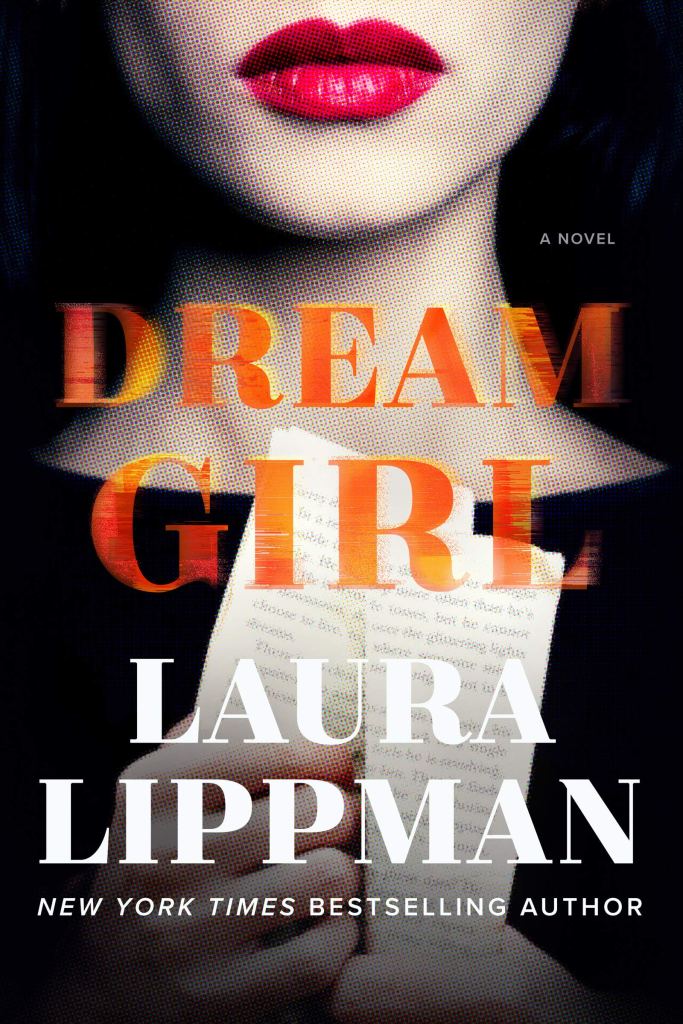
The parallels between Misery and Dream Girl are there, of course, and easy to spot; Lippman’s character Gerry Andersen is an enormously successful literary writer (a la Updike or Roth) who is also kind of a dick in how he has treated the many women who have come through his life, and of course, his ego justifies all of his bad behavior until he, too, has an accident in his home that winds up with him trapped in a hospital bed in his secluded apartment (despite it being in Baltimore; the appeal of the place is its privacy and seclusion). But while Sheldon is being victimized by his sociopathic fan/caregiver in Misery, what is happening to Gerry is very different; he has his original fall that causes his injury because he receives a weird letter from someone claiming to be the real person whom he based the title character in his biggest success, Dream Girl, on, and she wants financial compensation. In his shock and surprise–people have always wondered, and have always asked him, if she was a real person and he has always said no–he falls down his stairs and busts up his leg. Once he is housebound, he has a night nurse AND his personal assistant there–rarely being ever alone in the apartment–but he starts getting strange phone calls from the woman claiming to be the real ‘dream girl’–but there’s never any record of the calls on his called ID, and the original letter disappeared as well. Is his medication playing tricks on his mind, or is there something more sinister at work in his cold, sterile, remote apartment?

As with so many other things, that writing professor was wrong about writing about writers. I’ve stayed away from it myself for most of my career–as I said, the scars are still very much there–but I have started dabbling into it a bit (my Amazon single, “Quiet Desperation,” is one attempt, and I may go even further; I’ve created a character who’s appeared as a minor character in some of my Scotty books who is a writer). The mystery here is quite compelling, and more than enough to keep me turning the pages to see what happens next. But I was also enjoying the insights into another writer’s life, albeit he was a fictional character; I find it incredibly easy to identify with characters who are writers because despite the fact that all writers have different methods and different careers and different mental processes, there are always those little nuggets of oh yes I know that feeling or I thought I was the only person who experienced this or ah yes this is exactly what it’s like.

Dream Girl is an excellent edition to the Lippman canon.

Mr. Disco

Ah, Friday, and the weekend looms on the horizon.

Last night was odd; there was some sort of power problem in our neighborhood–a problem I’ve never experienced anything like before. The living room had power; everything in there worked fine. The upstairs lights? Flickering, and out most of the time. Same with the kitchen and the laundry room; the refrigerator was barely on, and the HVAC wasn’t working at all; and this was only affecting our block. So, so weird–and then around eleven thirty we got all the voltage we could possibly want. I’ve never experienced “low” power before; didn’t even know it was a thing, to be honest. But at least nothing in the refrigerator spoiled–always a plus.

The Edgars went smoothly yesterday, and there were some lovely surprises. All the nominees were deserving–they always are–and it’s always fun to see the excitement of those who get the statue. Obviously, it’s way more fun in person–fingers crossed for next year–and yesterday morning as I made condom packs and broke down expired test kits for biohazard disposal (seriously, my life is just a non-stop thrill ride) I remembered past Edgar ceremonies I attended and deeply enjoyed. I inevitably drink too much–it’s the free wine, always a danger for one Gregalicious–but my favorite ceremony remains the very first one I attended, when I wore a kilt and then took the train with friends the following morning to Washington for Malice Domestic. As I have mentioned before, my memory–once sterling and dependable–is now in tatters, so am trying to remember that first ceremony and evening and am finding it difficult, to be completely honest. I think that was the year Charlaine Harris was MWA president, and Carolyn Hart and Robert Crais were named grand masters, but I could be wrong. I also don’t remember which year Stephen King won for best novel–but it was the year Sara Paretsky was president of MWA, because I have a great picture of the two of them together from the cocktail reception before the ceremony. The third and final time I went–I think I’ve only attended three times–was the year my friend William J. Mann won for Best Fact Crime for Tinseltown. I always enjoy the Edgars and Edgar week activities; missing out on a ceremony the last two years was disappointing. I am hopeful next year we will be able to have it in person again.

Fingers crossed!

I also managed to get deeper into the revision of the book last evening before Paul got home and we settled in for three episodes of season 4 of Line of Duty–and Acorn loaded the fifth season yesterday as well.So, that’s the weekend pretty sorted. I also want to spend some time with The Butcher’s Boy, perhaps even finishing it–so I can dive into my next Mary Russell adventure. I am also currently reading Barbara Tuchman’s The Zimmerman Telegram–and it occurs to me that all the espionage and so forth that went on before the American entry into the first World War between the Germans and Mexico (trying to keep the US occupied and distracted from what was going on in Europe, as well as disrupting the supplying of the Allies) could make for a wonderful “Holmes in New Orleans” story. New Orleans was a major port (still is, actually) and fairly close to Mexico…hmmm. I was also thinking about the banana intrigues–seriously, that is one of the most fascinating times in New Orleans history!

We really are enjoying Line of Duty, which is an interesting take on your typical crime show. The heroes of the stories–each season is relatively self-contained, although there was an over-all arc that tied all the first three seasons together–are an anti-corruption division; so the good guys are cops, but so are the bad guys. It is chilling to see how easy it is for the cops (at least in the show; I don’t know enough to comment on reality) to corrupt and divert an investigation; falsify evidence and so forth; with no concept of how deep and how high up the corruption actually runs. Thandie Newton is the dirty cop in season four, and like the previous villains/guest stars of previous seasons, she is terrific in the role. Can’t wait to see how this one turns out.

Yesterday afternoon as I made condom packs, I watched North Dallas Forty. This is a 1979 film starring Nick Note and Mac Davis (!), and was adapted from Peter Gent’s novel. I had read the novel, but had never seen the movie; it came up on Twitter a week or so ago when someone asked people for the best sports movie (I said Brian’s Song, and stand by my answer). Laura Lippman brought up North Dallas Forty, which made me think of Semi-Tough, another pro football novel and movie from the same period (remember? I tried to reread it and the blatant racism was so horrific I put it in the donate box after rereading the first page?). I’d like to reread the Gent novel–it was very dark; painkillers and drugs and alcohol and rapes and sexual assaults and racism and all kinds of horrible behavior–but unlike Semi-Tough, the Gent took those issues seriously and didn’t try to play them for laughs. The movie takes the same tone as the book–dark–and Nolte is really good as the wide receiver whose years playing have battered and broken his body and left him needing painkilling shots to play and swallowing pain killers to get through the day, and the alcohol and drug abuse. Mac Davis is surprisingly good as his best friend, the quarterback–who eventually betrays him in the end to keep his own contract alive. The game scenes are particularly funny; even in the 1970’s professional football stadiums were better than where these scenes were filmed; the “stadiums” they play in look like high school football fields–and not even the better ones. It definitely fits into the Cynical 70’s Film Festival–it exposes the “team as a family” mentality as the crock that it is, and that the players are all just cogs in a money-making machine for the owners, and the coaches don’t give two shits about their players, either.

I still stick with Brian’s Song as the best sports movie, though.

And on that note, this data isn’t going to enter itself nor are these condoms going pack themselves, so it’s off to the spice mines with me.

Weirdo

What a lovely night’s sleep I had last night. I’m not sure what’s been up lately, but my sleep hasn’t been as good as it could be (or should be) but yesterday I got my order of pillow spray from This Works (I’ve used it before; my friend Lauren recommended it to me years ago. It’s what they give the first class passengers on British Airways flights to spray on their pillows to help them sleep during a flight; it does work…it’s just not inexpensive. I ordered two bottles with my stimulus check and they arrived yesterday–and last night I slept deeply, restfully, and well–and through the night.) I woke up at six–thanks, early mornings–but was able to go back to sleep for a few more hours. This is a very good thing, as I have–outside of some errands to run this morning–to spend the entire day working on my book–the same with tomorrow. It’s due on Thursday–but I may take the next weekend to go over it one more time.

I finished reading Gore Vidal’s Lincoln yesterday; it’s been quite a voyage. I’m not sure, frankly, how long it’s taken me to read it–I think I started it sometime last year–but I was reading a few pages a day rather than curling up with it. I love the way Vidal writes–he uses a weirdly distant, almost but not quite omniscient third person point of view–and the characters he follows are interesting choices. I’ve read another one of his chain of books Narratives of Empire (Empire) and rather enjoyed it; I’ve enjoyed most of Vidal’s work that I’ve read (Julian the Apostate is a particular favorite) and now I suppose will seek out others in the series; 1876 sounds kind of appealing, if for no other reason that it is a little-known but incredibly important year in American history. I’ll do an entry about Lincoln at some point, but I did really enjoy this, and do recommend it.

It’s very weird feeling so rested this morning–it makes me realize all those other mornings when I thought I was actually rested, well, I was wrong. It was just an improvement over insomnia, I guess.

It’s sort of gray outside again today–my windows are covered in condensation, which means it’s very definitely humid outside this morning. I am going to drop off two boxes of books at the library for their sale this morning and I need to stop at Whole Foos–I’ve been carrying a gift card valued at $25 in my wallet for nearly two years at this point, and as horrific as the Whole Foods on Magazine will be on a Saturday with all the uptown Karens out with their yoga pants or tennis skirts with a latté in hand will inevitably prove to be, I may as well make use of the extra trip uptown. I made groceries yesterday already, so I am just going to check out their berry situation as well as see if they have blackened catfish at the prepared food bar–it’s been a long time since I’ve had that, and Whole Foods’ is pretty good–and then head home to hibernate. Tomorrow all I have to do is work on the book and go to the gym–I am also doing some cleaning around the house, when I need a break and to clear my head–and hopefully, will be able to make some great progress on the book. We shall see, shan’t we?

The World Figure Skating championships are also currently going on in Stockholm–spoiler! I just checked results and Nathan Chen made a comeback from third place in the short to win the free skate by enough points to win the gold medal by a decisive margin–he hasn’t lost since the Olympics in 2018–which makes him the favorite for the Olympics next year. Pretty cool. We may win two medals in the ice dance, which finishes later–and the ladies finished fourth and ninth, so we can send three women to the Olympics next year as well. Our best pairs team finished seventh–not bad, since they’ve only been skating together for less than a year, and they are probably the best pairs team we’ve had in decades; they certainly have the potential to be at any rate. I just wish we could get another ladies’ champion again….particularly when you take into consideration we won two medals (gold and bronze) in 1992; a silver in 1994; gold and silver in 1998, and gold and bronze in 2002 (also a silver in 2006; the last time an American woman won an Olympic medal in figure skating).

The Tennessee Williams Festival also comes to a close this weekend, and I will shortly have my marriage back. Paul was actually home last night in time for me to make dinner–the Festival is virtual, so he doesn’t have to live at the Monteleone this weekend and can actually come home and watch things as they air on his computer–so we actually had dinner together for the first time since Valentine’s Day, really; and even that dinner together was an outlier. I’ve barely seen him for several months now, and perhaps that’s part of the reason I slept so well last night; because it was also a return to some semblance of what passes for normal around here; we ate dinner together and watched the rhythm dance competition.

It was kind of nice, actually.

I also reas Sara Paretsky’s introduction to a new edition of Dorothy B. Hughes’ Ride the Pink Horse. Hughes is one of the great crime writers of the past, probably best known for her In a Lonely Place, which is certainly stellar; but I’ve never been disappointed by a Hughes novel, just as I never have been with anything written by her contemporaries Charlotte Armstrong and Margaret Millar. I got a cheap ebook edition of Dorothy Gilman’s The Unexpected Mrs. Pollifax, which I remember enjoying tremendously–I loved the early books in the series, but in one of them Gilman gave her a love interest whom she also married, and I felt the books weren’t really the same after that and I stopped reading them. I reread the first two pages of the book last night and was instantly charmed, just as I had been decades ago when I read it for the first time (I honestly don’t know why I picked up the first one in the first place), but the idea of the CIA hiring a widowed grandmother as a courier because no one would suspect the nice elderly American lady always has entertained me tremendously. It also occurred to me, as I set my iPad aside to come make dinner, that I am currently reading John LeCarré’s The Russia House..another novel of spies and international intrigue, and that I should perhaps read the two books back to back, comparing and contrasting them; spy thrillers coming from such vastly different perspectives…and voices.

Ah, my coffee tastes marvelous this morning. My brain is shaking off the vestigial fog from the sleep and my body is waking up. I am going to take this delicious cup of coffee with me to my easy chair, where I shall spend the next hour reading LeCarré, before doing the dishes and then venturing out to get my errands completed. Have a lovely Saturday, Constant Reader, and I will talk to you again tomorrow.

Blue Monday

And Monday again; the work week is reborn and refreshed and ready to go again. Whether one Gregalicious can say the same about himself remains to be seen, but it is early yet and this is still my first cup of coffee, so the rest remains fairly unclear. I have high hopes for today and this week; I am hoping that I will have the energy, drive and will to finally get caught up on everything.

Then again, this week could also bitch-slap me back into place at any particular moment, so there’s that as well.

It turned out to be stunningly beautiful yesterday–mostly cloudy, but still managed to get up into the lower seventies. As I walked to and from the gym, I marveled at how lovely the weather was for late January…but stopped myself from the false hope the fake early spring we always seem to get in late January inevitably gives rise to; there’s always another cold front that seems to roll in, with rain and damp and cold winds, before March returns with the first hints of real spring. The workout was also nice; I always love that post-workout tired feeling, when your muscles are fatigued.

I also had a great morning reading yesterday. I read the opening chapter of Faulkner’s Sanctuary; three short stories (“Miss Bianca” by Sara Paretsky, originally published in MWA’s Ice Cold and reprinted in Paretsky’s own collection, Love and Other Crimes; “The Lady’s Maid’s Bell” by Edith Wharton, from The Ghost Stories of Edith Wharton–also my first time reading Ms. Wharton; and “Mermaids on the Golf Course” by Patricia Highsmith, from The Selected Stories of Patricia Highsmith. The Paretsky was my favorite of the three, but I do feel there will inevitably be a blog post about older ghost stories vs. modern); and then dove headfirst into Alyssa Cole’s When No One is Watching, which is particularly quite marvelous, and a solid entry into a new subgenre I hope we’ll see more of–gentrification noir. I had thought about doing a Scotty book about New Orleans gentrification–Bywater Bohemia Bougie–and I still might–it’s an awesome title, after all, but I am not sure of what the actual story would be; an unscrupulous developer is kind of a no-brainer, wouldn’t you say, though?

We only have one episode left of Flack, and I must say we are really enjoying it. I hate to see it end, but season 2 of Apple Plus’ chilling Servant has also dropped, so we have something interesting and disturbing to move onto.

Yesterday was kind of lovely; I felt rested, did a lot of reading and cleaning, and eventually did some more brainstorming on the book, which I am almost ready to start revising. Always a plus.

And on that note, I am heading into the spice mines. Have a lovely Monday, Constant Reader!

Tied Together with a Smile

Monday morning and facing down the three clinic days, which makes me tired to even just think about, honestly. I love working with my clients, though; that’s always a plus, and while my program coordinator is out quarantining (her roommate tested positive for COVID-19 last week), I think I can handle my job without her being there. (This is why I was so concerned about the stomach issues on Saturday; the last thing in the world I need right now it to have to go out on quarantine myself.)

There actually wasn’t a Saints game yesterday; I didn’t realize it was a bye week for the Saints–it was just weird that neither LSU nor the Saints had a game on the same weekend (I looked up the time for the game earlier in the week and didn’t realize it brought up next week’s game instead), and it’s been quite a while since that happened. In fact, I cannot remember the last time bye weeks fell on the same weekend–although to be fair, LSU wasn’t supposed to have a bye.

But still.

We watched the season finale of The Vow last night, and it seemed to wrap up pretty quickly; Paul was very quick to assert, “there’s going to be a second season, clearly” and after looking around on-line this morning a bit, I see that the show has been renewed for a second season. We enjoyed watching the show, despite its deeply uneven story-telling and a sense that it was longer than it needed to be; I also didn’t think compressing everything–from the arrests, etc. to the present day–into the final fifteen minutes of the finale was the best methodology; it really felt rushed, particularly since some previous episodes were obviously dragged out; it could have been six episodes, I think.

We also watched the first episode of the Jude Law mini-series The Third Day, and decided not to continue. It was very well done–some of the images were exceptional–but it was all just very murky and strange and really, you should watch one part of a three-part show and have literally no idea what’s going on, or have no sense of the characters, or why you should give a shit about their story. We won’t be watching more, I think, which is a shame; the previews looked wonderfully creepy and spooky; and while the first episode contributed greatly to the mood of creepy dread, that was about all we came away from it with, other than little to no desire to watch any more of it.

I started going through old journals yesterday–I found the one in which I started keeping the journal again (2017! It’s been three years!)–mainly because I am trying to get back into Bury Me in Shadows again; it’s been weeks since I worked on it, and I was thinking I needed to go through my notes and so forth to make sure everything is going into the story that needs to be in the story. The old journals are fascinating; there’s also the plans and notes for Royal Street Reveillon in them, as well as the birth of short stories that have since been written and even, in some cases, published; there are other story ideas and titles that never were followed up on–some of them are quite good, upon a review with fresh eyes–as well as sketches and ideas for stories that were written but wound up not really working after several drafts were completed (“The Problem with Autofill” is one of those; it’s a great concept but it doesn’t work because the central conceit winds up triggering how can you be so stupid as a reader reaction, which kills the story, frankly). It’s also interesting to see that this particular novel began being titled Bury Me in Satin, which I discarded early on, changing “satin” for “shadows”, which works ever so much better.

I also managed to do some filing and organizing, and I do feel much better about everything I now need to get done–and feel confident I can do it all.

I also read some short stories yesterday.

“Love & Other Crimes” is the title story from Sara Paretsky’s short story collection, and yes, it’s a V. I. Warshawski story. One of the problems I’ve always had with writing crime fiction short stories is the compression of the investigation aspect. I am used to spreading the story out from anywhere from sixty five thousands words to just over a hundred thousand; Royal Street Reveillon was slightly more than a hundred thousand, and is probably my longest novel. I wrote my first ever Chanse short story, “My Brother’s Keeper”, for my own collection Survivor’s Guilt and Other Stories, and I’ve started yet another, “Once a Tiger,” that has stalled, along with a couple of other investigation short stories that have never reached a complete first draft–some Venus stories (“A Little More Jazz for the Axeman,” “Falling Bullets,” and “Stations of the Cross”), and there’s a Jerry Channing story (he has appeared in the Scotty books; he’s a true crime writer) whose title I cannot recall at this moment. I struggle with these stories, obviously; reading Ross MacDonald’s Lew Archer short stories (The Archer Files) helped somewhat, as did reading Sue Grafton’s Kinsey short stories (Kinsey and Me); and it’s really no surprise that Paretsky–MWA Grand Master and crime fiction legend–can also pull off the private eye short story. A kid from the old neighborhood is being framed for murder; his sister rather snottily hired Vic to prove his innocence. She manages to do so–ironically, he was really implicated in another crime, just not the murder–and the success of the story makes me think that I should change the way I write these kinds of stories. I am not much of an outliner anymore–somewhere around Murder in the Rue St. Ann I realized that I never really stuck to the outline so wasn’t really sure I should keep doing them; instead, I either come up with a very loose synopsis–or just know where I am going to end it and start writing in that general direction and see where it goes. But…maybe I should outline the short stories that are investigations rather than just starting to write and seeing where they go; I always stop writing when I get stuck, and who knows if or when I will ever get back to it? But I am also digressing from the point of what a great story Paretsky opens her collection with! I don’t think all of the stories are necessarily Warshawski stories–the next, “Miss Bianca,” doesn’t appear to be–but I am really looking forward to seeing what other magic she hath wrought with her writing.

After reading the Paretsky story, I moved on to the Lawrence Block anthology The Darkling Halls of Ivy–whose theme is crime stories set in academia. The very first story is David Morrell’s “Requiem for a Homecoming,’ and it’s an interesting take on a crime story. A successful screenwriter returns to his alma mater for Homecoming as a special guest, and the story opens with him having a drink in a campus-area pub with an old friend from his college days…and then bringing up a twenty-year old murder that occurred when they were both undergrads. They talk a bit about the murder, and some things that never came out in the investigation all those years ago–including the pov character having gone out on a date with her once, but didn’t come forward because he supplemented his income by dealing drugs–the drug dealer would be an obvious suspect and this could have jeopardized his scholarship to USC for grad work in screenwriting–but there’s also a lot more to this fiendishly clever story. But Lawrence Block’s anthologies never disappoint; my bucket list includes getting to write a story for one of these.

And on that note, it’s off to the spice mines with me. Have a lovely Monday, Constant Reader.

The Lakes

Yesterday was one of those lovely autumn days in New Orleans that always reminds me how lucky those of us who get to live here actually are. Oh, what a gorgeous day it was, with the temperature in the mid-seventies, the sun shining and the sky that brilliant sapphire shade of blue. As I am sure you can imagine, Halloween is extremely popular in New Orleans, and I love seeing the way people go all out in decorating the exteriors of their homes for the holiday. So, driving uptown in the early afternoon hours of such a glorious day, and seeing the lovely houses all festooned in their orange and black spectral finery was quite relaxing and joyous. The shade from the live oaks also seems somewhat spooky in October–not sure why that is, it just is.

I definitely need to take my phone and go for a lengthy walk, taking pictures.

I proofed the story yesterday–a start on getting things done–and then turned on the television for background noise…and what a crazy day for football in the SEC. Auburn was upset by South Carolina; Texas A&M took out Mississippi State (whose only win is, natch, LSU); Kentucky embarrassed Tennessee in Knoxville, Arkansas somehow took out Ole Miss; and then in the big game of the day, Alabama took out Georgia decisively for the third time in four years after trailing at half-time. I suspect Alabama is going to run the table this year and be the SEC’s best chance for the national title yet again, which means things are sort of back to normal–although the usual suspects don’t seem to be in a position to challenge. Alabama and Georgia will probably play again the conference championship game–with Florida holding an outside chance at winning the East, but would also have to run the table–it’s possible, as I doubt LSU is going to take Florida down this year. The Saints are playing today at noon, but I’m not sure I am going to watch that or not. (Again, probably have it on as background noise, while I reread Bury Me in Shadows.)

Proofing my story yesterday allowed me to reread it again as well, and much as I hate to say things like this about my own work, “Night Follows Night” is actually a good story, and I did a good job on it. I also realized that, in some ways, the in-progress story “The Flagellants” could easily be tweaked into a sequel to it; which I may try to do, just to see…but by making it a sequel, I don’t know what the crime part of the story could turn out to be. So maybe, maybe not. We’ll have to see how it all turns out, I suppose.

I have two books on hold currently at the library–both of which are research for Chlorine–and I am a bit surprised they didn’t email me to let me know they were waiting for me. I can pick them up on Thursday, and will need to remember to call and make an appointment with them so I can do so. I also need to order prescription refills for Thursday as well, so I can get it all over and done with in one fell swoop. (That might be, in fact, a good day to take pictures of the skeleton house in Uptown–they always do such a great job of decorating for Halloween.)

It’s going to be weird not having Gay Halloween this year, just as it was weird there was no Southern Decadence for the first time in decades. It’s not like I’ve attended or participated in years–or for that matter, even go out on Halloween weekend anymore–but the absence still bothers me somewhat. I also have to go up to Kentucky this year–probably for Thanksgiving–which means I’ll be able to get a lot of reading done and maybe even get some writing done as well. The last time I went up there I checked out audiobooks from the library; I’ll have to do the same again this time. Perhaps Stephen King’s The Institute, or another one of his works that I’ve not had the chance to read yet? I am not so sure that it’s perhaps the wisest thing to do to travel–Mom and Dad are getting up there, and if I am an asymptomatic carrier…yeah, so I don’t know. Maybe I should put it off until after this is all over, I don’t know.

Perhaps indeed.

I need to get back to reading for pleasure and education again, seriously. I am still reading Gore Vidal’s Lincoln, which is well-written but rather dense–it’s not like it’s hard to put it down and walk away from it–and I want to dive back onto gobbling up short stories again. I have Sara Paretsky’s short story collection glaring at me from the stack of collections and anthologies I set aside for the Short Story Project, for example, and of course the latest Lawrence Block anthology is right there next to it.

Yesterday I felt a little off–gastronomically speaking; mostly some terrible heartburn that thankfully seems to have gone away overnight while I slept, which of course had me more than a little concerned. I’ve not had that in a while–of course, I forgot to take my pills both Friday and yesterday, but even after taking them for yesterday the heartburn remained, which was disconcerting and alarming. Needless to say, I am quite delighted this morning that it’s gone away–and I should go take my pills right now, shouldn’t I, while I’m thinking about it and before I forget?

Okay, I am back now. The sun is in my eyes as it rises in the east over the West Bank–is it any wonder we are so off here in New Orleans?–but it’ll just be annoying and right in my eyes for a couple of minutes. Once I finish this, I think I am going to draft some emails to be sent tomorrow morning, and then adjourn to my easy chair with some short stories to read, as well as some of my own work to look over, reread, and correct. When the Saints game starts I’ll probably launch into the reread of Bury Me in Shadows–it’s been so long since I’ve worked on it, and so much is always going on that it’s hard for me to remember anything and everything, which is just plain wrong.

Sigh. I really miss my memory.

And on that note, it’s time to head back into the spice mines. One more cup of coffee, a Sara Paretsky short story, and then a shower to get my day going. Have a lovely Sunday, Constant Reader.

Teardrops on My Guitar

Saturday, and the first blog entry of the three day Labor Day weekend.

Labor Day.

September.

Sep-fucking-tember.

I think the kindest thing anyone can say about this year is that it hasn’t been a pleasant experience for most people, and putting it that way is perhaps a bit of a stretch. I do feel bad for people who are actually having good things happen to them in this year of utter misery and repeated horror; as I said recently, this is why we  need to get our joy where we can find it. Adaptability is one strength (supposedly) of our species, and I do see people adapting left and right; on the other hand, I also see others desperately clinging to the past and resisting adaptation most stubbornly. This has been quite a year on every level–and it has been interesting seeing how people have adapted, and how people are handling it all so differently.

This is why it surprises me when I see authors talking about how they are going to handle the pandemic in their work–or rather, how they are not going to address the pandemic in their work. It’s so global and so intense and it’s affected everyone, changing how we do things and how we live our lives, from the most mundane things like picking up prescriptions to grocery shopping to going out to eat, to the big things like jobs and house payments and school attendance and daycare. It has affected every part of our lives, so how can we ignore it or pretend like it never happened? It’s very similar to the Katrina situation New Orleans writers found ourselves in afterwards; we couldn’t pretend like the city hadn’t been destroyed or that we’d all been through a horrible trauma. But when I, for example, started writing my post-Katrina work, we were over a year into the recovery and so I could write about what it had been like, rather then trying to figure out what it was going to be like. Pandemic writing, of course, will inevitably date your work, just like Katrina divided my career into before and after. I’m still, frankly, trying to decide how to deal with it in my own work–or if I even want to continue writing the series or not.

And let’s be honest: my first and thus far only attempt to write pandemic fiction, started in the first weeks of the quarantine/shutdown, quickly became dated; I am very glad I didn’t finish it because a lot of the work would have been wasted. I do want to finish the story, though, see if anyone wants to publish it.

Today is going to be my catch-up day; I am going to try to get a chapter revised today, but my primary concern is getting things caught up; I want to finish reading Little Fires Everywhere (I really got sucked into it for a few hours last night) and get started on The Coyotes of Carthage, and I also think I might spend some time today with some short story reading–that Sara Paretsky collection keeps giving me side-eye whenever I sit down in my easy chair–and of course, there’s always electronic files to sort and clean up as well as physical ones. The house really needs some serious cleaning, frankly, and I know I’ll feel much better once that chore is actually accomplished.

Then again, who knows? This could easily turn into another lazy day.

Yesterday during condom-packing time, I watched the season finale of Real Housewives of New York (Dorinda’s recently firing makes a lot more sense now) and moved on to the next on my Cynical 70’s Film Festival, All the President’s Men. To digress for a moment, can I just say how fucking ridiculously good-looking Robert Redford was? I know, I know, commenting on the almost insane beauty of Redford isn’t like anything new, but good lord. Dustin Hoffman was also never considered to be particularly good-looking, but he looks pretty good in this movie and isn’t completely overshadowed by Redford, which would have been expected. It’s a very good film, from top to bottom; everyone in the cast is superb (it was also interesting to see so many people in bit roles that would later become stars on television–Polly Holiday, Stephen Collins, Meredith Baxter Birney), and it also made me miss the heyday of the thriller featuring the intrepid, dogged, never say die investigative journalist. This is something we’ve lost with the rise of the Internet, 24 hours news channels, and the death of print: with magazines and newspapers either shuttering or cutting back staff, it’s really no longer realistic to have the crusading journalist as the heroic center of your book or movie; as I watched the show I kept thinking about the old Ed Asner series Lou Grant, and whether it was streaming anywhere.

All the President’s Men, of course, is the film version of the book Carl Bernstein and Robert Woodward wrote about their investigation into the Watergate break-in in 1972, which was the tiny thread that was pulled and eventually brought down the Nixon presidency and almost destroyed the Republican party in the process. I read the book initially when I was in college–it was required reading for my Intro to Journalism class (I was torn between majoring in journalism or English; being unaware that I could have gone to college somewhere and majored in Creative Writing–but actually, I am very glad I never did that)–and it was my first real experience with understanding, for the first time, what Watergate was all about. It happened in real time during the course of my life, but I was also between the ages of 11 and 13 from the first reports of the break-in and the resignation of a president, and so I didn’t really understand what was going on and only had a vague idea as it infiltrated every aspect of the culture beyond the news. It certainly gave rise to the concept of conspiracy theories and the belief that the government couldn’t be trusted–which gave rise to Reaganism in the 1980’s–but reading the book was my first baby-step forward to shaking off the ideology with which I had been raised. I had never seen the film, and so it really seemed to be perfect for my Cynical 70’s Film Festival…although it was difficult for me to get up the desire to actually queue it up and click play, frankly; the utter failure of the 4th Estate to do its job properly in this century plays no small part in why we are where we are today. But it’s a good film, and it also depicts the back-room aspect of journalism–the battle for column inches, the struggle for the front page, the competition with other newspapers and television–which is really kind of a lost world now. (I had always wanted to write about a newspaper–which is partly why I made Paige a journalist, morphing her gradually into a magazine editor.) I will say watching this movie now made me think about writing about a modern-day journalist; the struggle between the print and on-line copy, etc. If I only had more time.

It’s also very sad to know that if Watergate was happening now, the story would be killed by an editor, and we’d never know the truth.

We also finished watching Outcry last night, which was terrific, and the latest episode of Lovecraft Country (it dropped early because of the holiday weekend), and its continued brilliance is really something. We also saw the preview for Raised by Wolves, the new Ridley Scott series for HBO MAX, and it also looks terrific. A new season of The Boys also just dropped on Prime; so there’s a wealth of things for us to watch, and I rediscovered (oops) my Showtime watch list last night, which also has a cornucopia of delights on it.

And on that note, tis time for me to head into ye olde spice mines for the day. May you all have a lovely, lovely day today.

IMG_4205

Picture to Burn

Thursday, Thursday, is today’s child full of woe? I used to know that rhyme when I was younger–one of those things that would pop out of my mouth and brain every now and then when I wasn’t expecting it to–and now I cannot seem to summon it from the depths of my memories. I think it was Tuesday’s child, anyway; was Thursday’s child full of grace or something like that? Possible, I suppose.

Another good night’s sleep was had yesterday evening, which is lovely. I have to go into the office today and run errands on the way in.  I’m just glad to be feeling more rested, to be honest, and then tomorrow is a work-at-home day, and then I slide into the three day weekend, which is kind of nice. I hope to finish reading  Little Fires Everywhere this weekend, start reading The Coyotes of Carthage, and perhaps dip my eyes back into the Short Story Project–I have Sara Paretsky’s short story collection glaring at me from the end table as well as the new Lawrence Block anthology, and so many others I’ve not finished reading–and of course, I want to get a lot of writing done. I want to spend some time on Bury Me in Shadows, as well as maybe get some short story writing done, which would be lovely.

One can certainly hope, can’t one?

But I’ve also learned my lesson about over-planning for the weekend; I know I need to just make a list of things to do that need to be done and not overly pressure myself to get it all done over the course of the long weekend, while recognizing that I also need to recharge my batteries and I also need to do some cleaning; perhaps even work on that damned file cabinet which I never finished working on.

Yesterday’s Cynical 70’s Film Festival choice wound up being nothing I was considering. Instead, I choose to rewatch The Exorcist, which I’ve never seen other than the “edited for television” version. The Exorcist was a phenomenon at the time, and most people still, to this day, consider it the scariest film they’ve ever seen and it regularly pops up on lists of best horror films ever made. I read the book at the height of its popularity, when I was in junior high school, and while it didn’t precisely scare me, it was lurid–we all read it for the lurid parts, like the crucifix masturbation scene and so forth; there was something sacrilegious about reading it, like actually reading it was an act of subversion. The film broke all box office records of the time and was nominated for a lot of Oscars, and the soundtrack–Mike Oldfield’s “Tubular Bells”–always brings up mental associations with the film. It was the first outright horror film to get that many Oscar nominations, or to be nominated for any, really, other than Rosemary’s Baby, which wasn’t nominated for a lot; William Friedkin, fresh off his Oscar winning outing with The French Connection–which is also on my list–directed it. A more traditional entertainment, The Sting, wound up sweeping the Oscars that year. A few years ago, I reread the book to see how well it held up, and as an adult who is also now a writer and has been a reviewer, and has read thousands of other books in the interim, I can say it doesn’t hold up well at all–it really isn’t all that scary, either; it was a product of its time and it might not even get published were it written today. The characters were very cardboard and one-dimensional and behaved in ways that made no sense whatsoever; the focus was on the sacrilege, really, and the shock. I wondered if that would be true of the movie, as well, in its unedited version.

The acting was fine, really; Ellen Burstyn is never bad in anything, and Linda Blair was also fine; but the truth is the direction of the film doesn’t really develop the characters enough to make the viewer empathize with them, or identify with them. The scares weren’t as scary as they were; it’s hard to be scared when you know something is coming and you’ve already seen it, after all; part of the thrill of a horror film is not knowing when the scares are coming, so rewatches never have quite the same effect. I watched this time in a more analytic way, rather than as a viewer–but while others I’d seen before–Aliens comes to mind–really hold up incredibly well, The Exorcist doesn’t; I don’t feel like I got to know enough about Chris MacNeil or Father Karras enough to care about either one of them; and I found that I had more questions about them and who they were than I did when I viewed it as simply an entertainment. I think had the film been filmed more intimately, rather than from a cold distance, it would have held up a lot more; I don’t know, I am neither a filmmaker or a critic. But it didn’t trigger much of a reaction in me, and that’s rather telling. I think the problem, from a story-telling point of view, is that it couldn’t make up its mind whether it was about the MacNeils or Father Karras; although the title would tend to make you think the focus was on Father Karras; it should have been titled The Exorcism, really, and that, I think, was the end problem result for me: the book and film were really about Father Karras and his struggle with his faith, but only touched on that issue glancingly; because it also wanted to focus on how dismissive we are of spiritual issues in our modern scientific world, and wanted to show how an atheist, irreligious woman would try to get her child scientific treatment and slowly come around to the idea that in the modern world, something rooted in past superstition was the issue. Both are great stories, but for me, it failed in trying to tell both and wound up just skittering across the surface like a needle on a warped vinyl record.

Ultimately, though, The Exorcist–both book and film–are important works in both disciplines; along with Rosemary’s Baby, ushered in the 1970’s revival and rejuvenation of horror, in both film and literature, and that influence cannot be denied. Without either of those books, would Carrie have been published, or Peter Straub’s first horror novel? It was The Exorcist, after all, that first really introduced me to horror.

And I absolutely loved the television series inspired by it.

And on that note, tis time for me to return to ye old mines of spice. Have a lovely day, Constant Reader, and I’ll catch you again tomorrow.

IMG_4201