Julie Do You Love Me

One can never go wrong with old Bobby Sherman hits, can one? 🙂

Well, it’s Saturday morning, the apartment looks a lot better, and I am not feeling tired this morning, as opposed to yesterday morning. I had a good night’s sleep before my alarm kitty went off this morning–he let me sleep a while longer–and now I am awake, swilling coffee, and ready to get to work today. I have to get my COVID shot today (more on that story later), so am hoping for no adverse reactions so I can get some work done today. Paul is working with his trainer and then going by his office–they have to move out by the end of the month (remember the building collapse last year?), and so he is packing and throwing things away. There are football games all day today, too–including LSU-Mississippi and some other terrific match-ups, so the siren song of my easy chair and the television is going to be difficult to resist, but I do have work to do today, that I have to get done if I am going to be finished with this book on time.

Several weeks ago, I talked to my doctor about the COVID shot (I am not sixty-five yet, but I am immunocompromised), at which point I was informed that in Louisiana you now need a prescription for it and if you aren’t 65 or older you have to be at risk”. Well, everyone’s at risk, since it spreads so easily from person to person, thank you again, MAGA garbage human beings who are seriously too stupid to breathe if it weren’t involuntary. Your doctor has to write a prescription for it, send it to the pharmacy, and you have to know which version of the shot they have. So first, you have to check with said pharmacy to see which brand they offer, and let your doctor know so he can write the scrip for the correct version. So, you can’t just can’t get a prescription–if it’s written for the wrong version they won’t give you either. Idiotic, right? This is what comes from living in a MAGA majority state filled with temporarily embarrassed millionaires. After jumping through these hoops, it turned out that CVS, my pharmacy of choice, wasn’t offering it in New Orleans at all…which meant biting the bullet and getting it at a Walgreens. I hate Walgreens. I’ve been boycotting Walgreens for the most part (other than the convenience of having one a short block away, so I might go get milk or bread from there in a pinch)and don’t spend money there if at all possible. Since the convenient one is the one I used to call the Marsten House on St. Charles, I decided to have it called into the one in the Garden District, by Breaux Mart on Magazine. When I went, they made me wait almost an hour–I had another appointment and had to leave. After leaving, about half an hour later I got a notice that my appointment was cancelled–so they expected me to sit there for an hour and half? And were rude about it when I finally asked? Yeah, I walked out and gave them one-star on Yelp. I also was more than happy to fill out the “customer satisfaction survey” they sent me because I had checked in for my appointment. I refuse to go back to that one, but still need the vaccine so had my doctor call it into the Marsten House on St. Charles. I will report back, for sure.

Paul didn’t get home until after I went to bed, and I imagine I won’t see an awful lot of him until they are finished moving into their new, temporary office space. DISLIKE.

A lovely review of Double Crossing Van Dine by Oline Cogdill in the South Florida Sun-Sentinel was published this week:

Double Crossing Van Dine, edited by Donna Andrews, Greg Herren and Art Taylor; introduction by Catriona McPherson; Crippen & Landru; 310 pages; $22

The Golden Age of Detective Fiction that launched the classic genre novel is considered to be from the 1920s to 1930s. But contemporary readers know that a second Golden Age began in the mid-1980s when the novels became more emotionally involving along with the introduction of detectives from myriad backgrounds and cultures. The genre continues to evolve, seeing several golden ages in the past decades.Going out on a limb here, many authors from the ’20s and ’30s haven’t survived the test of time, aside from a few, such as Agatha Christie. And going out on another limb here, S.S. Van Dine, the focus of this short story anthology, probably is among those only recognized by readers steeped in the history of mystery fiction.Van Dine, whose real name was Willard Huntington Wright, was an American art critic, literary editor, biographer and author who wrote the series about detective Philo Vance.

Each story begins describing one of Van Dine’s rules, then crushing it. Fort Lauderdale author Elaine Viets’ “Sweet Poison,” about two young women struggling in New York’s Lower East Side during 1921, forgets the rule that “all clues must be publicly stated,” as they deal with the unexpected death of one’s “Wall Street sugar daddy.”Barb Goffman puts aside the “no love interest” rule in “Baby Love” as a fledgling-but-broke private detective tries to launch his career so he and his very loving wife can afford a baby. Co-editor Greg Herren stifles the “no supernatural” rule with “The Spirit Tree,” in which the solution to a murder comes from beyond. The “only one detective rule” doesn’t work for Delia Pitts’ “Better Together,” which finds two heads are better than one.Boca Raton author Alan Orloff’s “The Society Set” takes a butler who has several jobs for his persnickety employer on a journey of a jewelry heist that actually embraces Van Dine’s version of a “fascinating crime.” Leigh Perry has a work-around for the “no secret societies” ban in “Guilted Lily,” in which a tight-knit group of grifters seek a score.Tom Mead dismisses the rule that servants should never be the culprits in “The Tell-Tale Thumb.” Some people, Mead writes, see only the uniform, not the person who hides in plain sight.The majority of the authors in “Double Crossing Van Dine” have either won or been nominated for awards. A handy brief bio of each of the authors may inspire readers to seek out more of their stories.

Pretty cool!

And on that note, I am heading back into the spice mines. Have a lovely day, Constant Reader, and I will be back tomorrow morning.


I Wouldn’t Want To Live If You Didn’t Love Me

Sunday morning, and all is well in the Lost Apartment.

I woke up early this morning and, remembering, thought it might have been a dream, but no, a quick glance at the Internet told me it really did happen–Alabama did lose to Vanderbilt yesterday, 40-35. Hell, Arkansas came back to upset Tennessee last night while we were were watching ‘salem’s Lot (more on that later). What in the world was going on in college football yesterday? Admittedly, insane days like yesterday (Washington even went to Michigan and won. What the holy hell is going on this year?) are what make college football so fun to watch and experience as a fan; and I think 2024 might just be one of those insane “reset” seasons where everything goes out the window. Vanderbilt beating Alabama1 just two weeks after losing to Georgia State–another Vandy embarrassment–and now the concept of hope has shown up for the hapless Commodores; if they can beat an Alabama team, on any given Saturday, the ‘dores could beat anyone. Absolutely wild. I was watching a different game–I don’t even remember which this morning–when I saw that the score was 13-7 in the second quarter, Vandy leading, and I thought, what the hell and switched over to that game, and both Paul and I watched in stunned bemusement, riveted until the clock ticked to zero and the Vandy fans rushed the field, tore down the goalposts, and carried them three miles to throw them into the Cumberland River. I can only imagine what it was like to be a Vandy fan watching all of this yesterday.2 I do pity the new Alabama coach; he’s got a hell of a week to get through before next weekend’s South Carolina game (LSU comes back from the bye week to play Mississippi next week at home; the Rebs trounced South Carolina yesterday), but still have to play Tennessee, LSU and Oklahoma. They can still make the play-offs if they run the table, but I am beginning to wonder about that. Missouri was also beaten badly by Texas A&M yesterday, so now Texas is the only unbeaten SEC team still standing and there’s no telling who might run the table, who is good and who isn’t, and so forth. It’s kind of exciting, actually. CHAOS.

I did sleep late yesterday, got up and ran all over town and even went out to Metairie for my eye appointment (which has to be rescheduled; it was an on-line booking error), but was thoroughly exhausted when I got home from everything. I immediately started cleaning while the A&M game was on–no need to watch that thrashing, so it was mostly background noise. I did manage to get all the dishes done, and launder the bed linens, and pick up around here. The Lost Apartment looks better this morning, but I also need to finish assembling my desk chair, do some more cleaning up around here (the floors, the floors!) and hopefully do some reading and writing today as well. The Saints play tomorrow night (Taylor Swift has been rumored to be attending; so I imagine all day tomorrow local networks will have someone stationed at the airport to see if her plane lands), and the weather has been lovely since that sopping wet mess of a Friday we had here. I am glad to be up early this morning–clearly I needed to sleep in yesterday, and I was still easily exhausted, so I know I am still not at 100% yet…patience, Gregalicious, patience. You’re older and it takes longer to bounce back than it used to, and you’ve never had a major surgery before; it hasn’t even been a full year yet since the surgery.

I do have one errand to run today, and I should get it done this morning.

So, we decided to watch ‘salem’s Lot instead of watching the Tennessee game (which we should have watched, apparently; I never tire of watching Tennessee lose), and going into it, I knew that most of the King fans amongst my horror writer/reader social media friends didn’t care for it. As I watched the movie–which is a fairly competent vampire horror movie–I immediately saw what the problem with this film adaptation was going to be, and even understood why even the cheesy two-part television version with David Soul failed. I have always thought of ‘salem’s Lot as “Peyton Place with vampires, and that strength of the novel–the townspeople themselves, their relationships with each other and all the long-simmering feuds and gossips and pettiness–was the primary strength of the novel, as is its pacing: it begins as a slow building burn, and the momentum just keeps building. Everyone knows the story is about vampires now; it’s even a bit of an homage, in its own way, to Dracula–there’s even a scene in the book where Matt Burke reminds Ben of Van Helsing–but when I first read the paperback from Signet back in the fall of 1976 in Kansas, I had no idea what it was about. I just knew it was scary, it was about evil in a small town, and the writer was the guy who wrote Carrie, which I had read in one sitting a year earlier. So, I was enjoying how the town is originally shown, a small town that’s like every other small town, that idyllic vision of America that the right keeps forcing on us all–small town America is the real America as this Norman Rockwell painting/Mayberry like life, and it’s anything but that. (Small town America is the real America, but not in the way they mean–small towns are composites of the society as a whole, with percentage wise just as much crime, adultery, incest and passive-aggression as the rest of the country, no matter how much better they believe they are than urban dwellers.) That slow build, as we settle into Jerusalem’s Lot as a town like any other, with likable people and unlikable people whose dirty secrets King allows us to see; in the first half of the book it’s almost like reading Peyton Place; Jerusalems Lot even has the Marsten House as Peyton Place had Samuel’s castle (which was also the name of Allison’s novel in the book). Something dark is going on in the town, and just getting started, which we get glimpses of from time to time–a dog killed and left on the cemetery fence spikes; the disappearance of Ralphie Glick and his brother’s strange sickness and death…but it isn’t until Danny Glick shows up at Mark Petrie’s window do we know that it’s actually vampires, and then the entire book flips and no longer lazily meanders along on its assigned path; it then becomes a thriller that moves with the speed of a locomotive.

This pacing is what most readers like me (and I suspect a lot of others) loved the most about the book; I always loved the town-stuff as much as the vampires, honestly, but that kind of pacing is impossible in a film or a two-part television movie–you can’t have the first half be meandering and slowly moving along the path of the story, folks who have no idea what’s happening in their town and still aren’t entirely sure as the depopulation moves faster and faster, because you risk losing your audience. This was the problem with the David Soul version–the pacing was the same throughout, which isn’t the way the story reads. In this film version they chose to abandon everything from the story that isn’t about vampires, and to just make a standard horror film about vampires. On that level, the movie works. It’s a standard vampire movie that moves very quickly, just as the second half of the book does, but by cutting out all the stuff that made us care about the characters, we aren’t as vested, and when they die, we don’t really feel it much or care–every death in the book was a fucking tragedy, and so the movie is actually kind of soulless. We aren’t given enough character development to care when characters die. I think the only true way to film ‘salem’s Lot successfully, it needs to be a six or eight episode series to be done truly properly. There was hardly anything about the Marsten House in the movie, and that’s a significant change from the book. It’s just there, and we have no idea what kind of research Ben is doing for his novel or why he even came back. The loss of all the supporting characters that really made the book so strong can be felt deeply in the film. It’s just a competent vampire movie, but it isn’t ‘salem’s Lot, but I did like the big scene at the drive-in movie theater.

And on that note, I am heading into the spice mines. I want to get a lot done today, and here’s hoping that shall come to pass.

  1. No one ever worries about losing to Vanderbilt; it’s usually seen as a bye for most teams because Vanderbilt has always been terrible in football; they’ve never won the conference in all the years of belonging, haven’t beaten Alabama since 1984, and are always cellar-dwellers in the SEC (one of my favorite things to remind people is that Senator Tatertown the moron lost to Vanderbilt as a football coach; now Kalen DeBoer will also have that distinction. What a wake-up call for Tuscaloosa, and how wild that it happened one week after Alabama beat Georgia, handing them their first regular season loss in 42 games. I mean, good for Vanderbilt, but whoa, what the hell, Bama? ↩︎
  2. Vanderbilt always has more visiting fans in their stadium than their own fans; at one point I was in the kitchen washing dishes and would hear the crowd cheer, so would come take a look–they were Alabama cheers, and they were louder than the smaller contingent of Vandy fans there. ↩︎

She Called Me Baby

Saturday morning in the Lost Apartment, with a trip to Metairie looming for an eye appointment. Yesterday was a bit more hectic than I would have liked, beginning with having to go in to the office on what is usually my remote day (meetings, mostly, and some catch up on work I didn’t get to on Thursday), and then I had errands to run all afternoon. It was a gloomy, off and on raining kind of day, so when I got home I was very happy to be safely back into the Lost Apartment so I could do my chores and do some work. I was very tired last night when I was finished with everything, so just kind of zonked out in my chair. We spent the last few nights getting caught up on our shows (we’re now watching Agatha All Along, Bad Monkey, Only Murders in the Building, Grotesquerie, English Teacher, and American Sports Story), and I am hoping to get to watch the new ‘salem’s Lot movie aat some point this weekend, and I’d like to watch Fall Guy, too.

And I need to write this weekend, big time.

Thursday night, when I was working on the Scotty Bible and was marking pages in Mississippi River Mischief, I realized the murder victim in the book was a corrupt politician who goes by JD; prescience, perhaps? It also reminded me of something from a book I had read a very long time ago–Sarah Schulman’s Stagestruck. The thesis of the book was about the similarities between a very popular Broadway musical (Rent) and her nove, People in Trouble. Sarah had actually attended and reviewed Rent, and while it seemed familiar to her, she just dismissed it as being inspired by the struggling artist scene in lower Manhattan in the 1980s and thought it played very false, given her own experience; it wasn’t until later when a friend told her you must be so mad about Rent”–and she went back and reread her book. (In all honesty, I went on to read People in Trouble and also watched the film of Rent and I also saw the similarities; she wasn’t inventing anything.) But the point of this particular story is that at the time, as an unpublished aspiring novelist, I found it a bit of a reach that she didn’t remember her own book…but doing the Scotty Bible–and talking with other authors–I realized that not remembering your own book isn’t that much of a stretch, and it does get harder the more book you have; the exponential possibility that you won’t remember your own books grows with each new book you write. that the piece of art basically ripped off her piece of art–and she couldn’t remember much I have been routinely shocked about how much of the Scotty series had slipped from my memory banks as I enter the information from each book into the master document; the huge plot points that are the most memorable things about them…but gone completely. I’d forgotten my villainous politician JD, and I only wrote that book last year. I’d forgotten a lot of the stuff in most of the books. I thought the one I’d really be able to temember was Bourbon Street Blues, and nope. I’d forgotten about the entire sequence in the swamp, the fire, and who the first victim was…and I also was able to remember, while going through it, what I was trying to do with him as a character as more time passed and he gained more experience with criminality and human behavior.

And given all those experiences, it was very important to me to ensure he remained a positive person who prefers to expect the best of people, not the worst, and never become cynical. Cynicism was one of the most powerful traits I wrote into Chanse, and I didn’t want to do that over again.

It was also rainy and dreary all day yesterday, and much as I love rain, it can damper your spirits a little especially when you’re already a bit fatigued. But I am feeling good today (I slept really late this morning) and like I can get a lot accomplished. I am going to make groceries on the way home from my eye appointment. I am going to run an errand in my neighborhood on foot when I get back from that, and I am going to try to get the house cleaned up and do some writing this afternoon while football games play in the living room. I also want to read some more of Gabino’s book and get more into it. Tomorrow morning I will run another errand that I don’t want to do much today–Fresh Market is close so it’s an easy thing to do…maybe I can run it later today and get it over with, but I suspect after getting home from the errands today I won’t want to leave the house so much.

And on that note, I am going to get cleaned up so I can get moving on the errands and the other things to get done around the house. Have a lovely Saturday, best of luck to your favorite team, and I am heading into the spice mines. I might be back later; I am itching to finish my review of Monsters, and the Menendez Brothers in general.

Sweet Surrender

Well, we survived. I can’t speak for the rest of the city or state, but we managed to even maintain our Lower Garden District hurricane privilege and didn’t lose either power or cell service. I know there was a lot of flooding in the city, and a lot of power outages. Our office is closed this morning–no power and street flooding–so I have another day at home today (I will definitely be going into the office tomorrow), which is nice, even if I had to get up at my usual go-to-work alarm time to be sure.

I don’t know if our street flooded, but I didn’t want to go out and look last night once the eye wall had mostly passed. I went to bed and slept through the last three or four hours of the storm. But even before I went to bed, I couldn’t hear most of the wind gusts until right before I went to bed. I could see tree limbs and lots of leaves shining wetly in the light of the outside lamp, and chose not to brave going out into it; some things are best left unpacked once the tension is released the morning after. There were still some tropical pockets left to pass when I went to bed last night, but none of it had rain and it was mostly wind gusts that would peter out the more time passed. But…I did get a lot of impressions for the book, so that was a good thing. Everything is material, after all, and this storm reminded me exactly of how the hurricane timeline works–as well as the reminder that it’s never the same, so I don’t really need to worry so much about that part.

I wrote a lot in my head yesterday. I hope I remember it all.

I just hope my car is okay, which I will go check on once I finish this and am more awake.

So yesterday was one of those tense days where you wait, watching weather reports to see where the storm is now and wondering, hoping, that you don’t lose power or get wind damage or anything. We were lucky again–that Lower Garden District privilege working once more–so we were able to stay up-to-date all day while luxuriating in our climate controlled apartment while watching television and basically–outside of the tension and nerves–a free day to stay home (which is again today).

We binged The Perfect Couple on Hulu, which is quite interesting and kind of escapist rich people drama murder fun, like Big Little Lies. Nicole Kidman is terrific (although her fabulous life as a wealthy and successful crime novel “who keeps cranking them out because they need the money” is why people think all crime writers are rich, because that’s all you ever see in movies and television; no one wants to read about mid-list authors, other than Ben Mears in ‘salem’s Lot) and, frankly, so is everyone else in the cast. The plot is interesting, more so because of how it’s structured, going back and forth in time to before and after the murder. We have only one episode left, and we also got caught up on Bad Monkey, too.

I bit the bullet and just walked out to the car. Our path is covered in leaves and branches, and so is the street; it’s also in the sixties out there right now which felt marvelous. But the street didn’t flood (filled with branches and other assorted debris), and my car is also fine, so we made it through this with little more than inconvenience, really. I went ahead and checked the inside to be sure the mats weren’t either wet or damp, and the car started right up without a problem. Today does feel a bit anticlimactic. Francine wasn’t nearly as bad as Ida, but Ida was a bigger and more powerful storm. We lost power for Ida before she even made landfall, and that was a miserable experience. Ida was also terrifying. The wind gusts shook and rattled the entire house, the rain was torrential and the lightning and thunder were horrifying. I kind of decided after Ida that I’d never ride out anything more than a Category 2 going forward. We’ve been lucky since Ida, too.

And on that note, I am going to get cleaned up, get some more coffee, and get to work on some chores around here while also doing some reading. I’ll probably be back later, of course, and until then, have a great day, Constant Reader, and I’ll check in with you again later on.

It’s Raining Again

Wednesday and it’s Pay-the-Bills Day again, hurray.

Last night’s sleep wasn’t as good as previous nights, but I do feel awake and rested this morning so that’s a good thing. I am also incredibly excited about my wagon, which i know is weird. I had a straight male co-worker look at it*, and sure enough, he was able to get the wheels attached properly. I stopped on my way home from the office to get the mail and thought, hey I had packages and my hands will be full, so let me use the wagon and it was marvelous. Clearly, I should have bought a wagon a long time ago–and it’s the right size to fit along the narrow walkway alongside the house. It’s actually going to make life so much easier for me now it’s almost scary, and it makes the most sense to actually keep it in the car–it’s out of the way, will always be there when I need it, and if I need it for anything else, well, the car is parked usually out in front of the house so it would be easy to get to. I am most pleased with the wagon, I have to say.

I’m also trying–not always successfully–to stay in control over my anxiety. I have all my pre-surgery appointments on Monday, so that’s when I am going to find out what the recovery is going to look like. I am taking unpaid leave from work (I don’t have near enough sick or vacation time to cover the time I need to be out, so here we are) which is going to be an issue I will deal with when it rolls around; but I do have the process started and I can get the documentation I need for Admin from those visits and turn everything in the following day when I go back to the office.

I wasn’t tired when I got home yesterday, but Tug was feeling lonely and needy, so I had to go give him a lap to sleep in for a while, and after watching another episode of Moonlighting and a documentary about Greek fire and the Byzantine Imperial Navy, I’d lost all motivation and was feeling tired and sleepy. I did nothing for the rest of the evening–nothing. I did go to bed around nine-thirty, and of course woke up just before five again this morning, but I think the body is beginning to adjust somewhat to the time change.

I got an unexpected royalty check (small, but I’ll take it gladly) in the mail yesterday along with my copy of David Valdes’ new Finding My Elf, which looks absolutely adorable, and I can’t wait to give it a read after the surgery. I am two books behind on my Donna Andrews reading, I need to read the new Lou Berney and Angie Kim novels, and there are any number of others I want to get to. I am assuming after the drugged haze of painkillers and so forth dies down afterwards, I’ll have lots of down time to read. I am going to have a rigid cast to keep the arm immobile for at least three weeks, and I am assuming that means limited options for doing things other than reading. I imagine typing one-handed is going to be incredibly frustrating, but it can be done. And during the drug fogs of those early post-surgery days, I can just reread things–like histories or true crime favorites or some Stephen King favorites (it’s been a hot minute since I reread Firestarter, for one, and ‘salem’s Lot and The Stand are always fun to revisit), or some of the other great favorites lying around the house.

I was also very happy to see that Ohio added abortion rights protections to the state Constitution as well as legalizing recreational marijuana–well done, Ohio!–and that Kentucky reelected their Democratic governor. There were some right-wing wins, but the great Blue Wave momentum from 2020 has continued, as well as the reaction to the Supreme Court’s overturning of Roe–congratulations, Federalist Society, your hand-picked Supreme Court majority has effectively destroyed the conservative movement’s electability for a generation. The Democrats needs to hit hard on abortion and the illegitimate Supreme Court–Mitch McConnell’s legacy, by the way, have fun being hated for the rest of American history, douchebag–going forward, and frankly, they need to put Howard Dean–who engineered the historic gains of the 2008 election cycle–back in fucking charge of the DNC.

I always said that abortion rights should be put on the ballot. This is the wedge issue that trumps (couldn’t resist) the Right’s religious zealotry and transphobia and racism.

But of course, they won’t learn the lesson that they’re unpopular and so are their policies and values–they’ll just see this in a paternal way: “clearly the voting public can’t be trusted, so we need to install authoritarianism for their own good.

Yes, this is the same party that thinks they’ve successfully branded themselves as “true American patriots.” Fucking garbage is what they are.

And on that note, I am heading into the spice mines. Have a great day, Constant Reader, and I’ll be back to check on you with more blatant self-promotion later.

*ah, stereotypes. Alas, we have a lack of butch lesbians in the department now, so had to make do with a straight guy. C’est la vie.

Black and White

I don’t remember how old I was the first time I saw Robert Wise’s film The Haunting; all I do remember was it was late at night–in Chicago, one (maybe more) of the local affiliates always ran films after the news at 10:30; they also ran afternoon movies at 3:30 Monday thru Friday–which is where I got most of my education in classic Hollywood movies. But The Haunting was probably the most terrifying movie I’d ever seen; it wasn’t until a rewatch later in my life that I realized that perhaps the most terrifying and unsettling thing about the movie was you never saw whatever it was that was creating the happenings at Hill House–and they were never really explained, either. I had nightmares after watching it the first time, and those nightmares became recurring. To this day I am not comfortable climbing a metal spiral staircase…

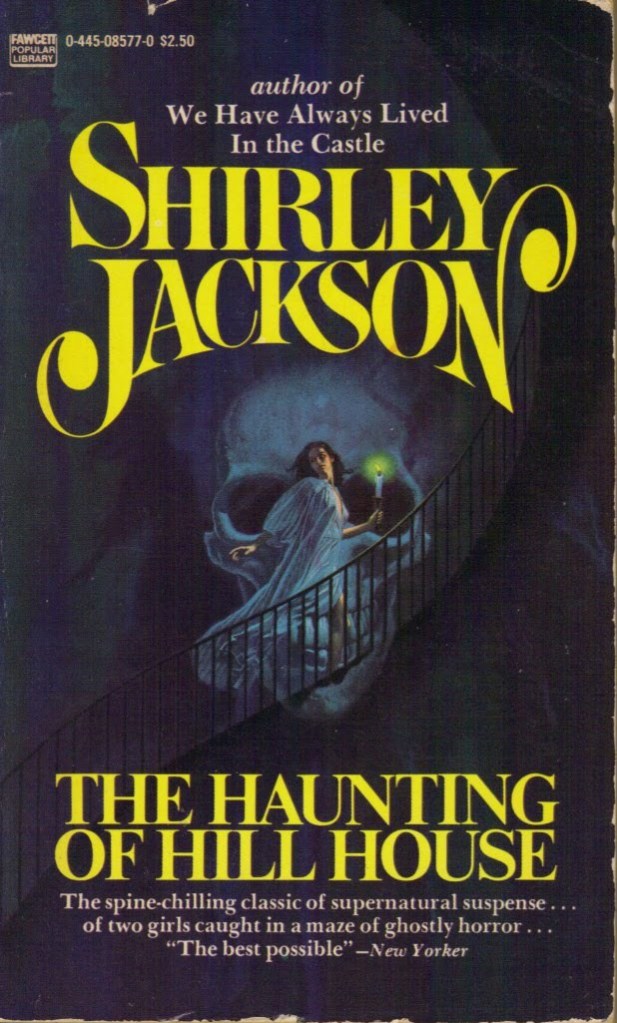
One afternoon when we were at Zayre’s for whatever reason–we went there almost weekly, although I am not sure why–I found a copy of Hell House by Richard Matheson on the paperback racks. It sounded, from reading the back, similar to the movie that had scared me so when I was younger, and I couldn’t help but wonder if the movie was taken from the book? I bought it and read it–loved it, in fact–but while it was similar to the story of The Haunting, it was also different enough for me to be certain they weren’t the same. (Hell House was filmed actually as The Legend of Hell House, which was also a terrifying film–more on that later). It wasn’t until years later, when I was in a used bookstore in Emporia, that I stumbled across this:

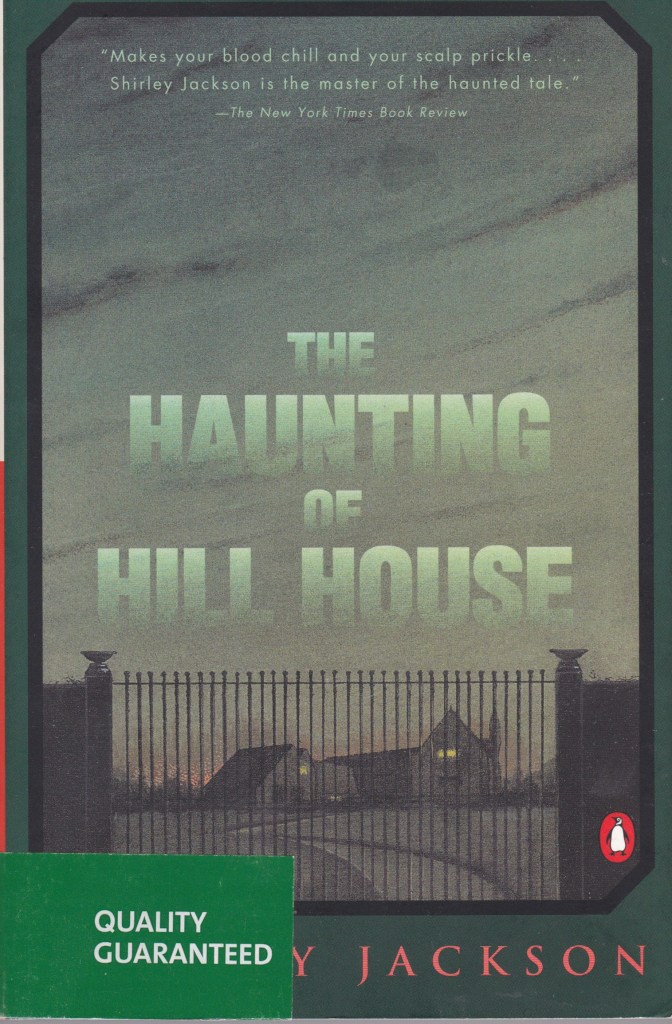
It was only a quarter, and looking at the back I recognized the characters–Nell, Theo, Dr. Montague, Luke–and of course, the name of the haunted house–Hill House. I bought it and a couple of others, and I started reading at the first opportunity, and was completely mesmerized. It quickly became one of my favorite novels of all time–I already knew Jackson’s story “The Lottery”, because at some point in school I’d been shown the film (why was this appropriate school viewing? Imagine trying to show it to students today!) and in a Drama class we’d actually read the stage adaptation and even put it on for the school (I think I had one line in our production?). Reading Stephen King’s Danse Macabre also told me more about both Jackson’s writing and the Robert Wise directed film, which was my first exposure to Julie Harris; I also remembered that the opening of Jackson’s novel was used by King as an epigram in ‘salem’s Lot; he also dedicated a book to her “because she never had to raise her voice,” which is a very poetic way to describe the softly macabre writing style and voice she used in her works. I lost my original copy at some point during moves over the years, and I acquired another copy after we returned to New Orleans in 2001 from our brief, preferably forgotten interlude in Washington DC–and have made a point to reread it every year since.

And no matter how many times I reread it, I never tire of its haunting, terrifying beauty.

No live organism can continue for long to exist sanely under conditions of absolute reality; even larks and katydids are supposed, by some, to dream. Hill House, not sane, stood by itself against its hills, holding darkness within; it had stood so for eighty years and might stand for eighty more. Within, walls continued upright, bricks met neatly, floors were firm, and doors were sensibly shut; silence lay steadily against the wood and stone of Hill House, and whatever walked there, walked alone.

Dr. John Montague was a doctor of philosophy; he had taken his degree in anthropology, feeling obscurely that in this field he might come closest to his truest vocation, the analysis of supernatural manifestations. He was scrupulous about the use of his title because, his investigations being so utterly unscientific, he hoped to borrow an air of respectability, even scholarly authority, from his education. It had cost him a good deal, in money and pride, since he was not a begging man, to rent Hill House for three months, but he expected to be compensated for his pains by the sensation following upon the publication of his definitive work on the causes and effects of psychic disturbances in a house commonly known as “haunted.” He had been looking for an honestly haunted house all his life. When he heard of Hill House he had been at first doubtful, then hopeful, then indefatigable; he was not the man to let go of Hill House once he had found it.

Dr. Montague’s intentions with regard to Hill House derived from the methods of the intrepid nineteenth-century ghost hunters; he was going to go and live in Hill House and see what happened there. It was his intention, at first, to follow the example of the anonymous Lady who went to stay at Ballechin House and ran a summer-long house party for skeptics and believers, with croquet and ghost-watching as the outstanding attractions, but skeptics, believers, and good croquet players are harder to come by today; Dr. Montague was forced to engage assistants. Perhaps the leisurely ways of Victorian life lent themselves more agreeably to the devices of psychic investigation, or perhaps the painstaking documentation of phenomena had largely gone out as a means of determining actuality; at any rate, Dr. Montague had not only to engage assistants but to search for them.

That opening paragraph alone is a masterpiece.

I parodied it for the beginning of one of my Scotty books–it gave me great pleasure to write the words New Orleans, not sane, stood by itself within its levees–and of course, this book was a pretty heavy influence on Bury Me in Shadows. The book reads almost like a fever dream, with its rhythms and poetries of language, and the story itself is as mysterious as one could possibly hope. The genius of Jackson is knowing that the biggest fear of all is the unknown; so we never know what is actually going on at Hill House–is the house actually bad, or just unlucky? The house’s history is bad and tragic from the very beginning, as we are told in Jackson’s spellbinding voice; who precisely was Hugh Crain, who built the house for his wife and family but never knew any kind of peace within its walls? What went wrong? Jackson never lets us know anything other than that the house is bad. Her primary point of view character is perhaps the must untrustworthy and unreliable of narrators, Eleanor Vance, Nell. Dr. Montague invited Nell because of a strange occurrence that happened when she was a small child; stones rained down on their house out of clear blue sky; her mother darkly blamed it on the neighbors (this also happened to Carrie White’s house when she was a little girl in Stephen King’s Carrie–in the newspaper write-up included in the book Mrs. White also blamed it on “the neighbors”), but other than that, Nell is pretty ordinary and small. She’s wasted most of her adult life taking care of her invalid mother; she’s now in her early thirties and living with her sister’s family, sleeping on the couch. She’s meek but capable of anger–she has a lot of anger and rage buried deep inside of herself–anger at the world, at the injustice of her wasted life, at the lack of a viable future; she has no prospects, no job, no friends, no nothing. The invitation to Hill House awakens a joy in her that she’s never known–she’s wanted somewhere. Her sister and brother-in-law refuse to let her take their mutual car; she gets up early and rebelliously takes the car anyway and heads to Hill House. As she drives she daydreams and observes everything along the road, making up a lovely fantasy for herself about living in a house with stone lions at the foot of the driveway; she stops for lunch and observes a little girl who refuses to drink her milk because she doesn’t have her special cup with stars on the bottom she can she as she drinks. Mentally, Nell urges the little girl not to give in, to not surrender to the injustice of not having her proper cup–as it will be the first of many surrenders of herself she’ll end up making throughout her life until she, like Nell, becomes invisible.

And then, hopeful and happy and excited, she arrives and gets her first look at Hill House:

The house was vile. She shivered and thought, the words coming freely into her mind, Hill House is vile, it is diseased; get away from here at once.

Which then gives Jackson the opportunity, as the next chapter opens, to describe Hill House:

No human eye can isolate the unhappy coincidence of line and place which suggests evil in the face of a house, and yet somehow a maniac juxtaposition, a badly turned angle, some chance meeting of roof and sky, turned Hill House into a place of despair, more frightening because the face of Hill House seemed awake, with a watchfulness from the blank windows and a touch of glee in the eyebrow of a cornice. Almost any house, caught unexpectedly or at an odd angle, can turn a deeply humorous look on a watching person; even a mischievous little chimney, or a dormer like a dimple, can catch up a beholder with a sense of fellowship; but a house arrogant and hating, never off guard, can only be evil. This house, which seemed somehow to have formed itself, flying together into its own powerful pattern under the hands of its builders, fitting itself into its own construction of lines and angles, reared its great head back against the sky without concession to humanity. It was a house without kindness, never meant to be lived in, not a fit place for people or for love or for hope. Exorcism cannot alter the countenance of a house; Hill House would stay as it was until was destroyed.

Nell’s sanity, never the strongest, is affected deeply by the house–she both hates and loves it, separate parts of her nature begging her to flee while the other telling her she’s come home, to stay. The other three in the party–Dr. Montague, Theo the lesbian with some psychic ability, and Luke, due to inherit the house one day–become aware very quickly that the house is having an odd effect on her; they also hate and fear the house, but that welcoming feeling Nell experiences, that desire to never leave, is for her and her only. The rest of the book is quietly terrifying–the noises in the night, the realization that whatever is going on in the house has a sly intelligence of a sort–and the scene where Nell is terrified in the night and holds Theo’s hand…until Theo turns on the lights and Nell realizes she was across the room so whose hand was I holding? is one of the most horrifying moments in horror fiction. And then, the chilling, tragic end.

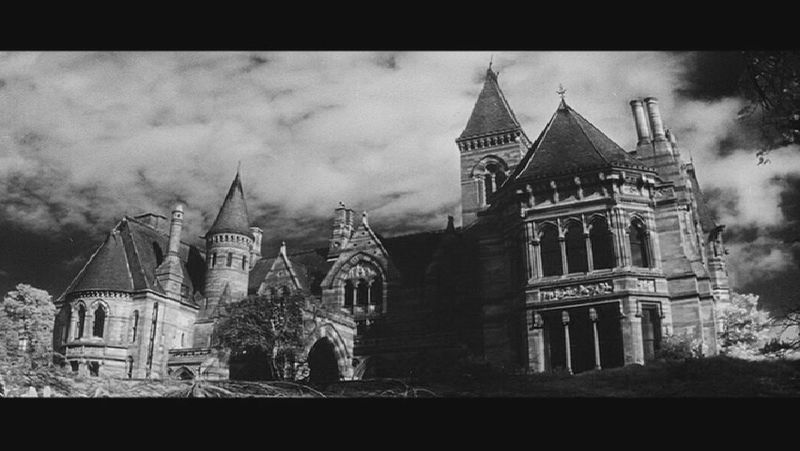
I also always see the house the way it was shown in the movie.

I also rewatched the movie while I was rereading the novel–not the execrable remake but the original–and it holds up just as terrifying and unsettling as it was the first time. Julie Harris is fantastic as Nell, fragile and frayed and slowly unraveling; in the movie isn’t not quite as left to the viewer as it is to the reader the notion that Nell herself is the one haunting Hill House; the house gains its power through her. (This was done beautifully in the Netflix adaptation, The Haunting of Hill House, which is loosely based on the book but updated and adapted and changed significantly; I thought the series was fucking fantastic and an excellent homage to both the book and the original film. You can’t improve on what came before, so why not reinterpret it? I know Jackson purists were outraged, but having seen the dreadful 1999 remake…yeah, this wasn’t that, for sure.)

Also, because of the movie, whenever I read the book I see it in my mind in black and white. The film wouldn’t work in color, either.

If you’ve not read the book, you really should. It’s a masterpiece on every level.

The Nightwatchers

I never really thought much about writing vampire fiction.

I’ve been a Stephen King fan since I read a battered paperback copy of Carrie when I was fourteen, and ‘salem’s Lot continues to be a top 5 King novel for me, if not my favorite (it’s always a toss-up between this and The Stand, frankly) and despite my attempts to turn myself into a King clone in the 1980’s, I’ve never been very good at writing horror. I love to read it–there are some truly terrific horror writers publishing now (if you’ve not read Paul Tremblay, you really need to start), and they are, if you’ll pardon the incredibly cheap pun, killing it. I can do creepy. I can do Gothic. I can do atmosphere and all those marvelous things I love in horror fiction. But I cannot, for the life of me, scare people. I don’t know why I can’t write anything that gets under your skin and into your nervous system; the kind of thing that makes you leave a light burning after you go to bed. I wish I could write like that. I’ve certainly tried a few times…I still have an idea for a horror novel sitting in the back of my brain that I am really going to have to try to get around to writing at some point, because I really should give it a real try sometime.

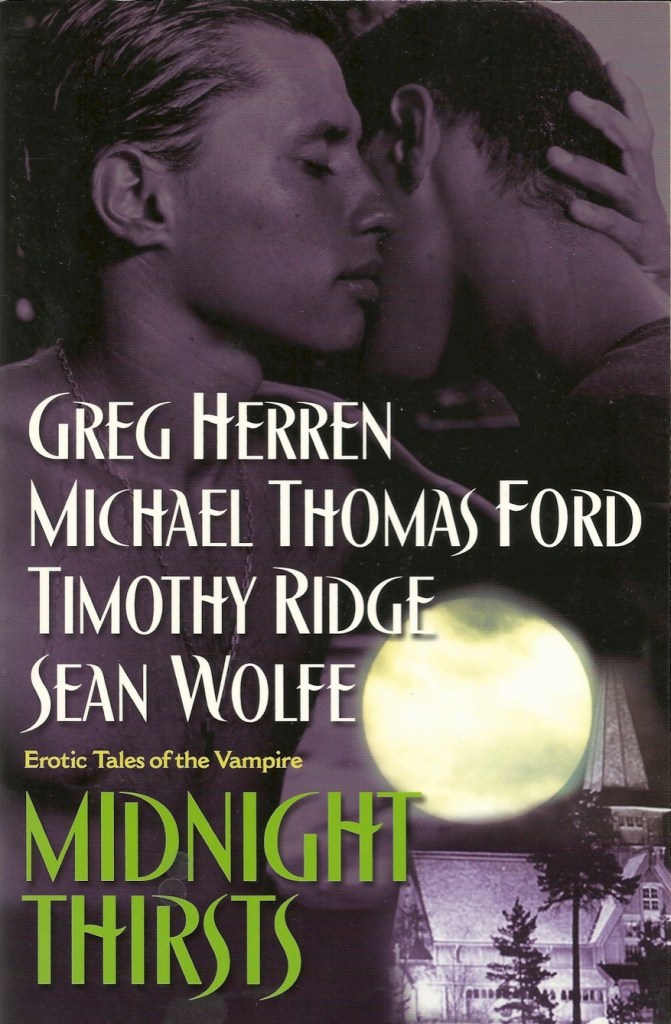
I have always enjoyed reading vampire stories. “salem’s Lot has always been one of my top five Stephen King novels; I loved Dracula (oh to write an epistolary novel!) and numerous other such tales. It took me awhile to come around on Anne Rice’s The Vampire Chronicles (a tale for another time), but I did eventually. Twilight never struck any chords with me. But the one thing I never thought I would do was write about vampires, despite loving them the way I do–going all the way back to my childhood and Dark Shadows. I don’t think I ever would have written about vampires, but my editor at Kensington thought I could; thought I would do a good job at it, and encouraged it, beginning with an offer to write an erotic vampire novella for a collection to be called Midnight Thirsts.

Go home, old man, Rachel thought, tapping her black fingernails on the counter.

It was a quarter till nine, fifteen minutes before she could lock the doors. Everything was clean and the cash register was already counted down. All she had really left to do was dump the remains of the day’s coffee down the sink, lock the cash drawer in the safe, and turn everything o. She’d be gone by ten minutes after at the latest.

She glanced out the big windows fronting the coffee shop. The streetlight just outside cast a yellowish glow in the thick mist pressing against the glass. She shivered and looked back at the old man. He was sitting at one of the tables in the far corner, with the same cup of coffee he’d ordered when he came in around seven thirty. He hadn’t touched it. It was still as full as when she’d filled the cup, only no steam was coming off the black surface now. He didn’t seem to be watching for anyone, or waiting. He never glanced at this watch, which she’d spotted as a platinum Tag Heuer, nor did he ever look out the window. Every once in a while. he would look up from his newspaper and catch her staring. He’d smile and nod, then go back to his reading.

Apparently, he was determined to read every word.

She stood up, bending backward so her back cracked. The night had been really slow. The Jazz CafĂ©, even on weeknights, usually was good for at least thirty to forty dollars in tips. Tonight, when she counted out the tip jar, it yielded less than seven dollars. Just enough to get her a pack a cigarettes and a twenty-ounce Diet Coke at Quartermaster Deli on her way back to her apartment. It wasn’t, she thought, wiping down the counter yet again, even worth coming in for.

Usually, on this kind of night, cold and damp and wet, Rachel was kept busy with orders for triple lattĂ©s. The tables would be full of people who would coming in shivering, bundled against the cold wetness in the air, which seemed to penetrate even the thickest coat. They’d hold their steaming cups of coffee with both reddened hands, talking and laughing. SOme would be doing their homework on laptops.

She liked busy nights, when the orders kept coming and the tip jar filled. Then, the time seemed to fly by, her closing shift passing in the blink of an eye. She hated the slow nights, when every passing minute seemed to take an eternity. She glanced back at the clock on the wall, then back at the old man. If you would just leave, she thought, I could go ahead and close early.

He’s kind of good-looking, she thought as she sipped her tepid cup of green tea, for an older guy.

At that moment he look up, and their eyes met. His were blue, a deep blue with some green in it. Once again, he nodded his head to her and smiled, but this time he didn’t go back to his newspaper. He held her eyes.

Not to worry, my child, I’ll be gone soon enough.

She turned away, shaking her head, the hair on the back of her neck standing up…

As is frequently the case with my work, The Nightwatchers began as a short story. Within a year of moving here, Paul had struck up a friendship with the director of the Tennessee Williams/New Orleans Literary Festival (which is where he now works), and as such he volunteered us both to help out with the 1997 Festival. I worked at the sign-in desk, where people picked up their badges and so forth, and it was in the lobby of Le Petite Theatre de Vieux Carre, a marvelous old theater on the corner of Chartres and St. Peter, right across the street from the Cabildo, and kitty-corner to Jackson Square. It was very old, and the main stage was named for Helen Hayes, who’d actually played there before. It was haunted, too–every building in New Orleans is–and I heard some of the stories. Being a volunteer, I had access to back stage, upstairs to the balcony, the prop attic; everywhere. (I eventually used some of this knowledge in Jackson Square Jazz.) At some point during the weekend I had an idea for a story–a horror story–about a theater company rehearsing in an old haunted theater in the French Quarter, where the person always cast in the lead female roles is also sleeping with the director. The young actress who deserved the part doesn’t listen to company gossip, but she does eventually find out that the rumors are true, and at some point made a deal with a devil who appeared to her in her dressing room, on and on and on. I called the story The Nightwatchers, because to me, that was what the devils/demons were called–they watch at night for souls to prey on. When I was asked to write this novella, I dug out the story and reread it, deciding it was perfect to adapt into something new.

I played with it a while, and couldn’t quite get it right in my head until I decided to abandon the theater idea; I’d tried turning the girl into a gay guy but it didn’t really work. I also couldn’t seem to get the atmosphere right, either, and I was convinced–still am, in fact–that the atmosphere had to be just right or the story wouldn’t work. Then one night I was walking through the lower Quarter in December–meeting Paul somewhere, I think–and it was one of those evenings when the fog is so insanely thick that you literally can’t see more than a foot or so in front of you at any time. As I walked along the sidewalk, with the old buildings pushing up against the sidewalk, when I heard the sound of hooves on the street–and realized, bemusedly, that in the fog and the only light from a gaslight–that I could have traveled back in time. Only in New Orleans can you feel like you’ve traveled back in time when it’s foggy, I thought, and wrote an entire scene around that feeling when I got back home. It was the perfect mood/atmosphere for the story, and it worked very well.

And as I wrote the novella, I got more and more into the characters and started imagining my own supernatural world, with vampires and witches and werewolves and everything else, including a ruling council over the paranormal world, the Council of Thirteen, and the old man Rachel sees in the coffee shop is a representative of the Council, in New Orleans to hunt a rogue vampire…a vampire who believes her young friend Philip Rutledge (now the center of the story) is the reincarnation of someone he loved hundreds of years earlier when he was human (shades of Dark Shadows!) and so wants to turn Philip into his eternal companion, and it’s up to Nigel and Rachel to rescue Philip.

It was a lot of fun to write, and I left the ending a bit open so I could write more about the characters if I ever chose to do so; I actually slotted a continuation novel into my writing schedule; it was supposed to be what I wrote next after finishing Mardi Gras Mambo…needless to say, life conspired to keep me from ever getting around to this book. I am still a bit disappointed I never carried on with the story; I used this same mythology when I returned to writing about vampires again several years later with Blood on the Moon.

So, that’s how The Nightwatchers came to be a story. Writing this now I see the parallels between what I wrote and some things I read and enjoyed (or watched, a la Dark Shadows); and is my “Nightwatcher” group that different from Anne Rice’s Talamasca? Probably not.

I did read and enjoy the other novellas back in the day; I’ve been meaning to revisit Michael Thomas Ford’s because it was particularly memorable.

Moonlight (A Vampire’s Dream)

I often refer to ‘salem’s Lot as “Peyton Place, but horror.” Because while Stephen King’s second novel (and still one of my favorites) absolutely does its job as a wrenching piece of horror fiction, it’s also a truly insightful and meaningful look at a small town (population 1300) and how everyone knows everyone, as well as the way their lives intersect and connect and cross intricately; we get to know a lot of the townspeople before they succumb to the horror that is overwhelming their little town. If you took the vampires out of the story, you’d have to replace them with something, as there’s no story without them, but at the same time, this novel along with Needful Things some twenty or so years later, are remain two of the best books about life in small towns that I’ve ever read.

I used to reread old Stephen King novels a lot for comfort, losing myself in the worlds he creates and enjoying the stories, the writing, and the characters. ‘salem’s Lot is definitely one of my favorites of his; definitely always in the Top 5, with perhaps only The Stand outranking it.

Almost everyone thought the man and the boy were father and son.

They crossed the country on a rambling southwest line in an old Citroen sedan, keeping mostly to secondary roads, traveling in fits and starts. They stopped in three places along the way before reaching their final destination: first in Rhode Island, where the tall man with the black hair worked in a textile mill; then in Youngstown, Ohio, where he worked for three months on a tractor assembly line; and finally in a small California town near the Mexican boarder, where he pumped gas and worked at repairing small foreign cars with an amount of success that was, to him, surprising and gratifying.

Wherever they stopped, he got a Maine newspaper called the Portland Press-Herald and watched it for items concerning a small southern Maine town named Jerusalem’s Lot and the surrounding area. There were such items from time to time.

He wrote an outline of a novel in motel rooms before they Central Falls, Rhode Island, and mailed it to his agent. He had been a mildly successful novelist a million years before, in a time when the darkness had not come over his life. The agent took the outline to his last publisher, who expressed polite interest but no inclination to part with any advance money. “Please” and “thank you,” he told the boy as he tore the agent’s letter up, were still free. He said it without too much bitterness and set about the book anyway.

The boy did not speak much. His face retained a perpetual pinched look, and his eyes were dark–as if they always scanned some bleak inner horizon. In the diners and gas stations where they stopped along the way, he was polite and nothing more. He didn’t seem to want the tall man out of his sight, and the boy seemed nervous when the man left him to use the bathroom. He refused to talk about the town of Jerusalem’s Lot, although the tall man tried to raise the topic from time to time, and he would not look at the Portland newspapers the man sometimes deliberately left around.

When the book was written, they were living in a beach cottage off the highway, and they both swam in the Pacific a freat deal. It was warmer than the Atlantic, and friendlier. It held no memories. The boy began to get very brown.

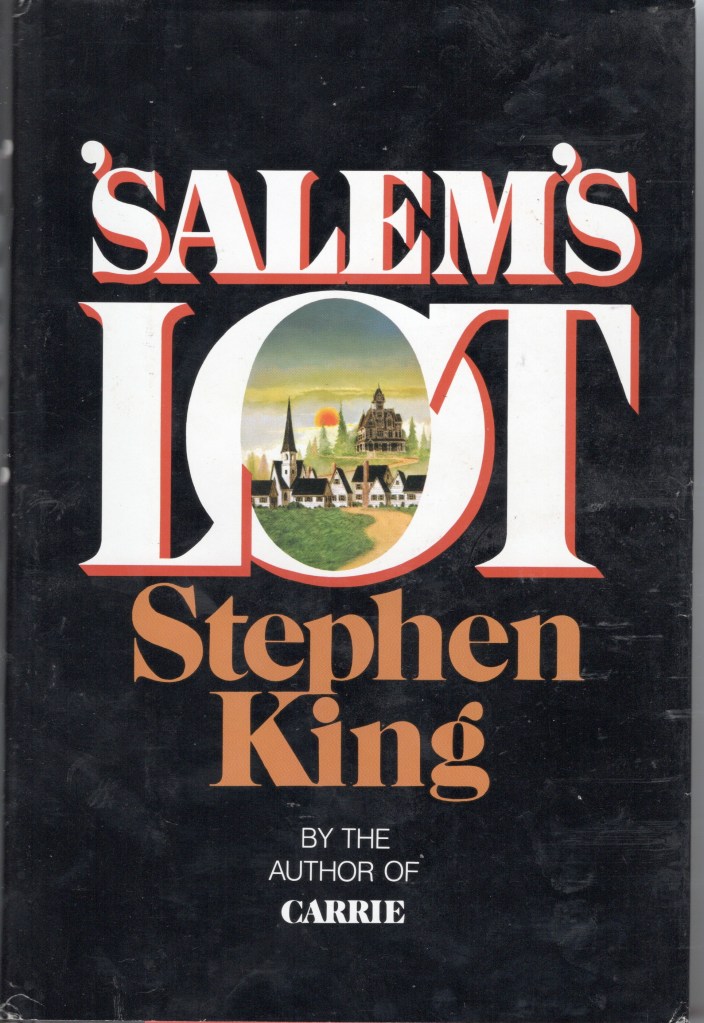
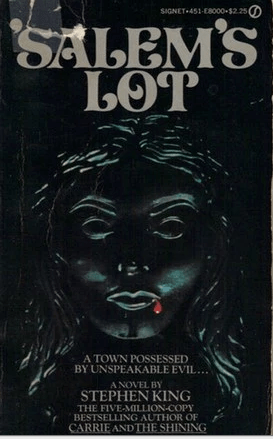
This is the cover of the version I originally read in high school–I bought it off the paperback rack at the Safeway in Emporia, Kansas. I kept that copy for years; eventually replacing it with a hardcover reprint in the 1990′, before finally getting an old copy with the original cover on eBay (which has since turned out to be a first edition; I love finding all the mistakes in it as I reread it).

I had read Carrie in paperback in one night when I’d borrowed it from a friend; it was only in the last decade that I finally acquired a copy of it to keep and reread periodically (I bought it to read the opening shower scene at Banned Books Night; ironically, the objections to the book have nothing to do with explicit talk about menstruation, or bullying, or violence…people object to the book because of its depiction of Christianity, particularly in the case of Carrie’s fanatic mother, Margaret (whom I always see in my head as Piper Laurie, who should have won an Oscar). I don’t think Carrie was the book that made me begin to question Christianity, to be honest; I think I already was questioning it before I read the book, but it was one of the first times I’d see a disparaging representation of someone committing horrifying abuses in the name of Jesus, or how the way the religion viewed sexuality could be taken to such horrific extremes. But I loved the book and became interested in Stephen King as an author. I was aware of ‘salem’s Lot before I found a copy while grocery shopping with my mom; I’d known he’d published a second book because I saw it in the book club ads (Doubleday, Book of the Month, etc.) in magazines. I had no idea what the book was about when I started reading it–I had no clue it was about vampires, and vampires never even crossed my mind when I started reading. It was a Saturday (Mom always drove into Emporia on Saturday to buy groceries), and I repaired to my room with the book (my homework was already done, and whatever college football game was on that Saturday was of no interest to me) and started reading. I finished reading it at around two in the morning, and was completely blown away by it. There was no way I was going to stop reading, and there was no way to stop reading once the big reveal about the vampires happened and the pace picked up.

The book was utterly terrifying, and it started raining later on that day as I read. I was living in a small town (population 973) and my bedroom window looked out at a corn field that was right across the street. I started seeing, as I read, a lot of similarities between Jerusalem’s Lot in the book and my little town–the characters, the interconnectedness of the community, and like Ben Mears, I was still kind of a stranger in the town. I just remember that when I got to the part where Danny Glick comes to Mark Petrie’s window, the storm outside brushed a tree branch against my window and I literally jumped, the book flying out of my hands and landing across the room in the middle of the floor.

It was also the first time I remember reading a book whose main character was a writer–something Stephen King returns to quite regularly, write what you know indeed–which also helped me connect with the book more; Ben Mears was a publisher novelist of minor success, but had published three books already and hadn’t graduated from college. He also seemed like a real person, living and breathing and absolutely real; it wasn’t until this reread that I realized how much physically he’s like King–tall and slender with thick black hair.

But it was also the first time I’d read anything about vampires that was so clearly set in the real world, in the real present, and with real characters I could relate to–which made it even more terrifying. I started thinking about how easy it would be for, say, a vampire to come to our small little town and how quickly people could be turned, primarily because no one would believe it was actually happening until it was too late–which King handled beautifully in the book.

It still holds up, and I am glad I revisited it.

Skies the Limit

I finished my reread of ‘salem’s Lot (entry to follow at some point) and really enjoyed it, as much as I have every time I’ve reread it. It’s a marvel that the book was King’s second published novel, and while yes, it was, like Carrie, horror–but it was a completely different kind of book, in style, tone, voice and structure. How can anyone have read King’s first two books and not seen the rise of a major new force in publishing? The pacing is stunning as well; the first act is kind of charming and meanders here and there, introducing us to the characters and the town as well as letting us know something bad is coming, and it just keeps picking up steam, faster and faster, until the last hundred pages or so just fly. The ending was left open to a sequel–I remember reading once that King had written the opening of a sequel, or had the idea or something–but it never happened.

Probably just as well.

I also started my reread of The Haunting of Hill House and as ever, am completely captivated by the power of that first chapter and Shirley Jackson’s writing style.

Yesterday’s LSU game was quite fun, if stressful. As always, they got off to a relatively slow start by playing a little loose and sloppy at first; early in the second quarter LSU fell behind 17-3 because of miscues and mistakes–it easily could have been 17-14–but then the team found it’s rhythm and went on a 42-3 tear against a 7-0 6th ranked Mississippi team (who, to be fair, really hadn’t played the meat of the schedule so far; their biggest win had been Auburn, who is floundering this season) to win the game handily 45-20, and to look pretty impressive while doing so. The last time Mississippi came to Baton Rouge 7-0 and in the top ten (#3, actually) was in 2014 when an underachieving LSU beat them 10-7 (apparently, LSU is 1-5 against Mississippi when they are ranked in the Top 10–is it any wonder they hate us so? Add in to that the fact that LSU’s most legendary and iconic play of all time–Billy Cannon’s Run–was against them, and you see where their antipathy comes from. I’ll be the first to admit, I wasn’t a fan of Brian Kelly’s or his fire, but he is 100% turning this program around from the depths of the last two seasons and it’s entirely possible LSU could go 9-3 this season–maybe even 10-2 (I daren’t to dream yet; a win over Alabama this year seems almost too much to hope for; but if it happens Brian Kelly will immediately be crowned King of Louisiana) but hearing people talking about SEC titles and play-off games this year seems to be a bit premature–but watch out for LSU next year. Jayden Daniels is really quite a player–I wasn’t completely sold on him, either, to be honest, but he’s really turned out to be quite the player; fun to watch, and getting better and more seasoned and acclimated as the season goes on. Seriously, next year LSU will be a contender for sure.

And yes, it’s petty, but I also kind of enjoyed that Texas A&M lost to South Carolina last night, and good for USC, really (I started to write “good for the Cocks” because I am ten years old; but in fairness they call themselves the Cocks). Petty because they wanted Jimbo Fisher at LSU, and now having seen what he can do with all the money and resources behind him at A&M? Yeah, glad you chose College Station instead of Baton Rouge, Jimbo. Have fun with the Aggie alumni, and let us know how that goes. I can’t believe they wanted him so bad that his buy-out had no restrictions…they are either going to be stuck with him for a very long or getting him out is going to be extremely costly. Again, oh, well, too bad so sad. You had some success at Florida State, but they were already circling the drain before you bailed on them, Jimbo…and this is yet another year A&M won’t be in the SEC title game. Oh, well.

Another rather interesting football season. Tulane also won, so they are 7-1 now, too. Good on you, Wave!

I feel very rested and relaxed this morning. I was stressed during that first quarter of the LSU game, so rather than sitting in my chair stewing in my worry and letting myself get worked up (I literally sometimes get so into games that I have to remind myself, Dude, it’s a sporting event, not the end of the world) so I decided to use that nervous energy to clean the house and work on the book while I watched the game. I planned some of the next act of the book, so I can get some chapters written in the meantime, and I also pruned the books; did some more laundry; did the dishes; and cleaned the floors. I also did some filing that needed doing. Paul had some errands to run in the afternoon–he didn’t check the game time when he made appointments–so he didn’t get home until the fourth quarter, and then we watched the short programs from Skate America, which I’d recorded. The young American “quadgod” Ilia Malinin is definitely a rising star, as is Isabeau Levito, the young American woman who looks like she’ll be our best and most successful since at least Sasha Cohen, if not Michelle Kwan (although achieving more than Kwan is unlikely for any other skater). Today there’s not a Saints game, and I am going to finish this and do some things before diving deep into my book to get it going again. Paul will be gone next weekend, and LSU is on a bye week, so I have literally no excuse next weekend for not being highly productive and getting caught up on things–I still have to empty the dishwasher and fold clothes; and I want to make white bean chicken chili today as well–it’s getting to be soup and chili season in New Orleans, and I do love this time of year and would even more if it didn’t get dark so early.

I’m glad I feel rested this morning, to be sure. Hopefully I will be able to motivate myself to work my way down and through my to-do list. But I am not getting there by doing this, so I am going to bid you farewell now, Constant Reader, and head back into the spice mines.

Everywhere

Saturday morning in the Lost Apartment and all is well this morning. I slept in a bit (I also went to bed later than I usually do, so I slept about the same amount, really) and feel rested and relaxed this morning, which is always a nice, pleasant thing to feel. I didn’t get much work done on the book yesterday (355 words, all of them bad except maybe “Scotty” and “Frank” and “Colin”) but that’s okay; I feel a lot less stressed and a lot less pressured this morning about everything that needs to be done now. The stuff all needs to get done, of course; that hasn’t changed, but I am not feeling as much stress about it as I was feeling yesterday.

I read more of ‘salem’s Lot last night while I was waiting for my friend Ellen Byron (buy her books! Bayou Book Thief is amazing!) to text me to meet her for a drink. I picked her up at the Sazerac House (Canal and Magazine) and it had been quite a while since I drove down that way in the evening, and yikes. SO much traffic, so many people everywhere. I’m still not used to pedestrians in the CBD at night, even though the area hasn’t been a ghost town at night in years, but then we swung around and came up to have drinks at St. Vincent’s, which has been renovated and redone and remade and turned into a boutique luxury hotel right here in the heart of my neighborhood. I’ve posted some pictures of the place when I was doing my walks through the neighborhood last year; it’s even more beautiful inside than I imagined. These weekend is Tulane Homecoming, so there are a shit ton of people in town (that’s actually what brought Ellen to New Orleans, in fact; she is an alum) for that, and of course the people from Mississippi here for today’s LSU game in Baton Rouge (Geaux Tigers!). It was lovely to sit and have a drink and talk about writing and books and this crazy business we are in; she’s an absolute delight (buy her books!) and I look forward to the next time I get to see her.

But this morning I realized how utterly I am failing at reading. October is winding down; Halloween is a week from Monday, and I still haven’t finished my reread of ‘salem’s Lot, let alone done my annual Halloween reread of The Haunting of Hill House or getting caught up on the horror novels in my TBR pile. I’ll spend some more time with Mr. King this morning before I run my errands–I have to go get the mail and I have to stop at the grocery store because I want to make white bean chicken chili tomorrow, and have nothing I need for that–and I am debating whether I want to grill burgers today or not. The LSU game is on today at 2:30, and of course Skate America is airing this weekend (yay for figure skating!) so I’ll have to write around those times.

The reread of ‘salem’s Lot is a lot of fun, actually; I am really enjoying this revisit of the book and seeing why I enjoyed it so much the first time around. King wasn’t STEPHEN KING yet when he wrote and published it, so I am sure it didn’t get the kindest reception from critics of the time; particularly when you take into consideration what they considered to be great writing back then. I don’t remember when it was that the Literati changed their mind on Stephen King, but I do remember how he wasn’t taken seriously as a writer by them for a very long time (he writes horror! He’s too prolific to be a real writer!), and some of his best work was already behind him by the time he got the anointing he deserved for a very long time. I mean, he had quite a run, and quite a varied one at that, before he finally published a book I didn’t like (The Tommyknockers, for the record) and it seemed an aberration as he seemed to climb back on the horse and right the saddle in the next one after that. I love how many points of view he uses in ‘salem’s Lot, giving us little glimpses of fully realized characters and their lives to show us human beings so that when they actually wind up becoming vampires, you do feel a sense of loss. Many of these minor characters are objects of sympathy, while others you just kind of shrug when the vampires come for them and think, well, you were a shitty person anyway, oh well, this is justice of a sort. The scene where Mike Ryerson has to finish burying the coffin of Danny Glick is one of the most terrifying scenes I’ve ever read, and it still holds up today. I like how King gets into the point of view character’s head and gives them a voice–which is still King’s, but different from the other voices he uses–and that sort of structured stream of consciousness is something I really like and enjoy reading; I sometimes use that style in my own writing.

(I started to write something self-deprecating, but am proud of myself for catching it and not doing it. Progress.)

And on that note, I am going to head into the manuscript and do some cleaning before the errands are run. Have a lovely day, Constant Reader, and I will check in with you again later or tomorrow.