Happy Easter to all who celebrate, and a happy Sunday to those who do not. We do not celebrate Easter, but we do recognize the Easter Bunny and candy because who doesn’t? My favorite parts of “Christian holidays” are inevitably always the parts appropriated from pagan holidays. Funny how that works, isn’t it? It’s also raining, and I slept in later than I’d hoped to. Sparky eventually got impatient waiting for me to get up and scratched my face near my left eye, and while I easily and happily could have slept longer, I am glad I got up. I feel rested, which is very nice, and relaxed. I didn’t really do a whole lot yesterday; I ran my errands and got home in the early afternoon and basically chilled for the rest of the day while Paul was at his office and the gym. He got home in time to watch LSU Gymnastics to win the regional final. They didn’t have a great meet, but still almost broke 198.00–which is incredible. After that we started watching Something Very Bad Is Going to Happen, but the first episode was just weird and odd and un-involving, so we moved on to season three of The Night Agent, which is a very fun action packed high energy international intrigue thriller. Gabriel Basso, who plays the lead, is very sexy, too.
While Paul was out, I watched a couple more episodes of season 4 of The Traitors. I am really going to enjoy writing about the show, but I definitely have to outline the essay so I don’t forget to talk about something I find interesting. Yesterday’s watch reminded me of how The Traitors somehow pulls off something I wouldn’t have thought possible–redeeming people I have disliked in other media. I was resistant to watching this particular season (which was still airing when we started watching) because I hated both Lisa Rinna and Candiace Dillard from their time on Real Housewives; but I really enjoyed them of The Traitors. Same with Colton Underwood; I didn’t love how he came out after his time on The Bachelor and it seemed like the powers-that-be thought they could make him–a very pretty blue-eyed blond white man–into THE Gay Celebrity, especially given his problematic past. I actually wound up liking him on this show, and maybe I should go back to his reality series about coming out and “learning to be gay”; I’ve been wanting to watch through some gay-base reality shows I’ve watched and how terrible they inevitably are (Drag Race being the sole exception). I’m also, while rewatching, remembering how Alabama Rob charmed us all–and seeing the seeds of Rob and Maura’s bond (it literally goes back to episode one) being planted makes her loyalty to him at the end make more sense; she really wasn’t his “dicktim.” (That’s another interesting thing about rewatching; you pick up on things you didn’t notice the first time through.)
After getting the mail, I swung by the Fresh Market on my way home, which I usually don’t mind as far as grocery stores are concerned. It’s slightly more expensive, but it’s never crowded and the customers aren’t nearly as annoying as the ones at Whole Foods (I get highly annoyed every time I shop there, which I why I don’t). But it seemed like all the entitled rich old white people somehow got an alert that they needed to go to the Fresh Market and show their whole asses. I was quite relieved when I put my bags in the car and skedaddled away from that portal to hell. I never do a big shop when I go there–the slightly more expensive thing–but I love their meat counter (lots of fresh meat options there) and they also sell Jelly Belly jelly beans there by weight. I love me some Jelly Belly jelly beans, but I stopped eating them when I got sick last year and haven’t bought any since. I snacked a bit on them last night and yes, I still love them. I just cannot overdo it with them because the goal here is to lose weight.
I also mailed some books yesterday. I still have two more copies to send out, and one to drop off Uptown, but I also did very little around the house yesterday because I was being a bit on the lazy side and relaxing. I’m going to try to do some cleaning today–at least get everything picked up and put away–and I am also going to try to do some reading this morning. I also want to try to get a newsletter out today, and I know which one I am going to try to get taken care of; I want to talk about Christa Faust’s Derringer Award nominated short story “Hollywood Prometheus” from Crime Ink: Icons. (I did find a way into my essays series about masculinity yesterday, too, but I want to think about that introductory prologue essay and let it marinate in my brain for a few days.
And on that note, I am going to head into the spice mines and clean up this mess of a kitchen and work space. I also have to balance my checkbook–always a joy–and do some other thankless tasks so I am not behind on anything anymore. Heavy heaving sigh. It’s also supposed to get cold later today, too. Woo-hoo!
And here we are, with a truly strange schedule for work-at-home Friday, as I have some things to get done today outside of the house; Sparky needs some shots (and his Freddy Krueger like claws trimmed, thank you baby Jesus), and we are going to go to Costco at some point. I made a list last night (I’m sorry, but those sausage egg and cheese microwave breakfast sandwiches from Jimmy Dean are addicting), and hopefully it won’t exhaust me. One can hope, at any rate. I did manage to do some of the dishes and get started on that, but was a bit tired and Sparky needed some attention, one thing led to another, and next thing I knew Paul was home and we were getting caught up on Agatha All Along1and watched another two episodes of American Horror Stories, which continues to be much better than we remembered. I would have sworn we stopped watching, but per Hulu, we’d watched all of the previous two seasons? I don’t know, I might have to revisit an episode or two of the previous seasons to trigger my memories. (It does bother me a little bit that I don’t remember things anymore; I seem to have forgotten a lot–but sixty three years of things to remember is apparently more than my storage banks inside my skull can handle.)
I did pick out a story yesterday for that other anthology I want to submit to–which means I need to get working on it this weekend, as well as other writing chores around the football games tomorrow. The Saints lost last night, so I don’t have to worry about watching them on Sunday, so that should be a good writing day for me. I’ll mostly be watching the Alabama-Tennessee game and the LSU-Arkansas game (but keeping an eye on the Georgia-Texas game, which is on at the same time), which makes my Saturday a little freer. I could watch the Auburn-Missouri game (the early game), but that’s a proper time for me to run errands and be home before the bigger game at 2:30. The living room really has gotten out of control and I need to get that under control this weekend as well. So, the plan for the weekend is to have a good writing weekend and a good “get things taken care of” goal is not a bad thing by any means. I think I am going to drive up to Kentucky next weekend for a week, see my grand-nephew (!!!) play football, that sort of thing and spend some time with Dad.
I also got caught up on The Real Housewives of Salt Lake City, which is the only reality show I am really watching anymore (I’ll watch Beverly Hills when it comes back, but the others are getting a bit tired for me; I honestly think we’ve reached max exposure for them and they’ve peaked), and at some point I’ll probably have to get to work on writing out my perceptions and thoughts about this cast, and why I started enjoying and watching so late in its run (I have a problem with shows with criminals in the cast; so by the end of the first season we already knew Jen Shah was one, and I just can’t support that; just like Teresa Guidice’s conviction ended my watching New Jersey–which I was already hate-watching by then); I have only watched the previous season of SLC, and it was quite good. I do have some other thoughts about reality television and why I watch (I think the night time soap comparison that the horrible Camille Paglia made in an interview a while back was spot on; she can be right sometimes, even if she is awful in general) that will probably go into an essay at some point; I also want to do something on gay reality shows, which are generally awful (despite believing, from time to time, that a gay show would be amazing–RuPaul’s Drag Race has, after all, pretty much taken over the world and made her a billionaire–but they are always tragic disappointments)–anyone remember the The A-List? Real Friends of West Hollywood?
My coffee is quite marvelous this morning, I must say. I slept really well last night (which seems to be more of a daily occurrence anymore, which is wonderful), and I feel rested and ready to go today. Once I finish this I am going to work on the dishes and the kitchen, and unpack my backpack. My work at home today is mostly correcting paperwork and some on-line trainings, which is lovely and shouldn’t make me tired in the least before it’s time to punch the clock and then spend the rest of the evening reading or writing until it’s time to catch up on our shows–for some reason Grotesquerie wouldn’t stream last night, and there are more episodes of American Horror Stories to check out. I also want to go back and watch The Assassination of Gianni Versace, which I’ve never watched all the way through (Paul disliked it). It also looks like a beautiful day outside. It’s been colder this week than usual; it’s only 63 today and the sun is our and the sky is that lovely New Orleans blue with puffy white clouds lazily drifting across.
And on that note I am heading into the spice mines. Have a lovely Friday, Constant Reader, wherever you are, and I may be back later; stranger things have happened.
Those are some legs. Sheesh!
Absolutely loving this show, and Joe Locke is fantastic, which pleases me to no end. ↩︎
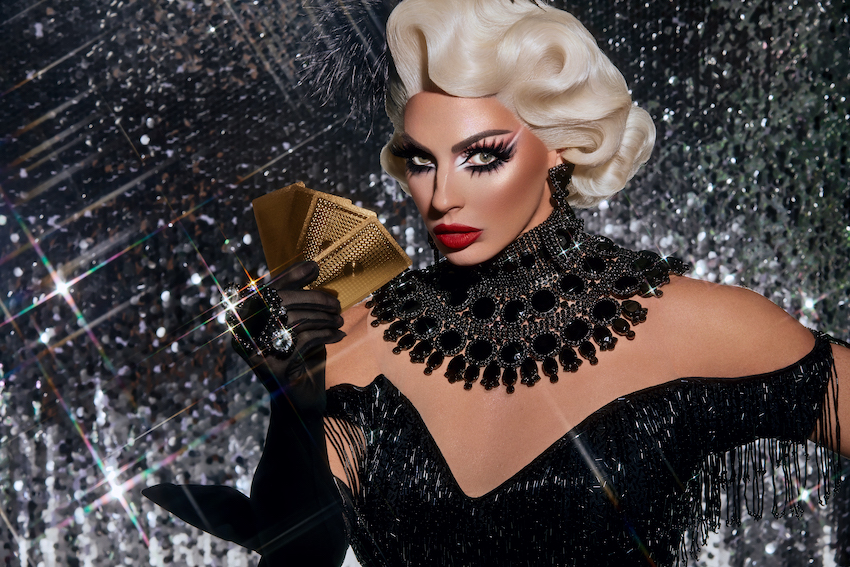
I love Alyssa Edwards. She’s the perfect reality star; a completely delusional human living in her own reality, yet also funny and witty with a highly expressive and thoroughly meme-able face, and basically harmless. I’ve always meant to catch her reality show on Netflix about her dance studio–which is so fricking cool that she does that–but have never gotten around to it. I was amused by her on her initial season, but really hated her feud with Coco Montrese, and of course that was also the season won by the marvelous Jinkx Monsoon. Alyssa was also terrific on All Stars 2, which made the rigging of the season all that much more disappointing. (We also gave up on Project Runway after one season where it was clear they’d already decided who was going to win at the start of the season. Don’t give me a rigged competition, thank you very much; if I want that, I’ll watch professional wrestling, thank you very much.)
Which makes it interesting for me to write a book about a drag pageant. I already have tons of ideas for the book, and it’s going to be very brutal in how it approaches the homophobes who have wrested control of Florida from the sane people (hey Moms4Liberty, how’d those elections turn out for you, you pathetic soulless pieces of shit? Your tears are as delicious as mimosas at a gay Sunday drag bunch, you miserable fucking bitches.) and have taken the state, once a beautiful place with scenic beaches and lovely weather, on its final steps to a complete and utter hellhole. Bravo, by the way; nicely done.
Anyway, back to drag; sorry about that sidebar. But that kind of shit will always enrage me. Nothing makes me angrier than misplaced self-righteousness. I may no longer be a practicing Christian, but I know that faith far better than many–if not most–of its most ardent public proselytizers and purveyors.
Gender-bending, of course, is nothing new. For centuries, women weren’t allowed on the stage so female roles were always played by men. This was certainly true in Shakespeare’s day, and often he wrote plays with characters pretending to be the other gender. So there’s a long, proud history of men doing drag in theater and performance art. Who decides what is masculine and what is feminine, anyway? As I have said numerous times, I love this new young generation of leading men and actors who are abandoning traditional black-tie male drag for new and inventive outfits that showcase their youth, beauty, creativity, and personal style; there’s nothing quite so stifling as toxic masculinity and it’s regular insistence that there is only one way to be a man–which is not only stultifying but incredibly limiting. Film and television (and theater, to a far lesser degree) have long influenced what is considered masculine in this country–the prototype being, of course, John Wayne. (Probably the funniest scene in both La Cage aux Folles and it’s American version The Birdcage is when the more butch of the gay couple tries to get the more feminine partner to be more masculine–telling him to walk like John Wayne…which was the first time I ever noticed how peculiarly John Wayne walked. Also amusing is that Mr. American Macho Man John Wayne–and Mr. Patriotism Ronald Reagan–didn’t serve in World Was II…but played war heroes in movies about it. Style over substance.)
But the history of the colonizing of this continent is very queer. Do we really believe those frontiersmen, trappers, hunters and explorers simply went for months and even years without having sex? There weren’t enough women to satisfy the need–and cattle drives? Pshaw. In any purely male society like that–the cattle drive, the explorations, etc.–there is always male/male sexual contact; “helping a buddy out.” This has been erased from history as effectively as if it had never happened–as though homosexuality is some modern thing that never existed before.
It’s always struck me as odd that the masculine ideal (as shown to us by Hollywood, at any rate) inevitably is depicted in all male environments–war movies, cattle drive movies, Westerns–with the occasional token female thrown in as a supporting love interest. These women are often set up to be abused–spanking was often popular in these films; how many times did John Wayne spank a woman in a movie?–and mocked and made fun of; if they had any kind of mind of their own, well, they had to be tamed.
Anyway, I digress.
I also know there are women who despise drag, see it as mocking women and misogynistic. I can actually see how they could feel that way, and far be it from me to tell a woman–any woman–how she should or shouldn’t feel about something, particularly when it comes to misogyny. (I sure don’t want anyone telling me what to think is homophobic or not.) I don’t think drag is misogynistic; if anything, it’s critiquing the misogyny of society. Dolly Parton also exaggerates femininity to the point of being a drag queen–she even says it about herself. Mae West was so good at this exaggeration that people believed she was an actual drag queen for years. Marilyn Monroe, Jayne Mansfield, and Jane Russell became sex symbols (and stars) by exaggerating their bodies and the way they dressed and their make-up and hair; how is that not female-drag as the converse of over-exaggerated masculinity (John Wayne, Charles Bronson, Clint Eastwood); establishing exaggerated norms of masculine and feminine that subconsciously altered what the over-all culture thought in terms of gender roles.
If I had a dollar for every time someone has told me to be more manly…
But the reason gender roles exist are because they are more comfortable for most people than thinking about it at any great length. You were born with a penis, so you should be interested in sports and guns and hunting and wear pants; your parents don’t have to think about it and neither do you. But for those of us who weren’t comfortable in those comforting boxes society so gladly constructed for us all to fit into–it’s not quite that easy. I hated having to do “boy” things and hated the expectations that since I was a boy I should like something in particular–and being incredibly stubborn, being told that I should like something was much more likely to make me disdain it. I didn’t want to play sports or even watch them when I was a kid; I just wanted to read. My struggles with wrapping my head around my gender and my sexual identity as a child were difficult, and those scars are still there–some of them are still scabbed over and not healed. All the messages I was being sent through popular culture, school, and society were telling me that something was wrong with me–and you don’t get over that overnight. I’m still unpacking a lot of that to this very day.
Writing Death Drop forced me to start thinking about these things again–gender markers, gender identities, the duality of our natures (no one is 100% one or the other, I think; I will always believe that gender and sexuality are a lot more fluid than anyone thinks)–and what makes one male and what makes one female. I hope, in writing more about Jem in the future, that it will help me understand myself better as well as society.
As I was saying in my other blatant self-promotional post of today (for Mississippi River Mischief) I rather jokingly mentioned that perhaps my childhood fandom of celebrities like Cher, Bette Midler, Liza Minnelli, Katharine Hepburn, Bette Davis, Joan Crawford and Barbara Stanwyck was an early sign of my destiny as a gay man; and yes, I know that’s a stereotype but as I always say, “stereotypes have to start somewhere“–there’s occasionally some kernel of truth in a gay stereotype. (Example: Jack on Will & Grace got some grief for being a stereotype–but I’ve known any number of gay men who were very similar to Jack; imagine being told you’re a stereotype.)
RuPaul’s genius idea to kind of create a Project Runway and American Idol hybrid reality show started out very slow–it was on Logo, I believe, and the budget was incredibly bare bones that first season or two or three; part of the fun of the show was how much it looked like a cable-access do-it-yourself reality show. And as usual with any art form created by gay men, it was popular with gay men and straight women; the show slowly started building an audience and then WHAM! One day it seemed like drag had taken over the world.
Katya from RuPaul’s Drag Race, whom I find hilarious–and beautiful.
Paul and I lost interest in the show after the Bianca-Courtney-Adore season, because that season was so good we both felt that anything after that would be anti-climactic. I know there have been other good seasons and incredibly fierce queens since then, but we came back for All Stars Season 2 (when I became a fan of Katya, actually) and were bitterly disappointed at how scripted, staged, and unfair the entire season was to everyone who wasn’t Alaska, Detox, or Roxxy. And just like with Project Runway, once we saw a season that was clearly predetermined from the start, we stopped watching.
I have zero interest in watching a “competition” with a predetermined winner, which is kind of why I don’t watch WWE much anymore. (it’s also very cartoonish, but that’s a subject for another time.)
I know there are cisgender women who have issues with drag, and I know there are transwomen who do as well; I think the transwomen’s issues primarily have to do with the conflation between the two–which was clearly prescient, given the rise of the raw sewage known as LibsofTikTok and “Moms4Liberty” (how’d that election go for you on Tuesday, you miserable soulless contemptible bigoted shrews? CRY MORE BITCHES, your tears are like Mimosas to us gays), who see no difference (because the harpies are as ignorant and uneducated as they are bitter, soulless, and unChristian). I’ve never seen a lot of criticism for drag from the straight cisgender women as a general rule, but I know there are concerns and critiques from the feminist community, which I do not dismiss or take lightly.
But since the primary straight cisgender woman who used to scream at me about the “misogyny of drag” also has turned out to be a sociopathic TERF who is dead to me (shocker, I know; a feminist who hates drag is a bigoted disgusting piece of shit TERF? Who could have seen that coming?), I don’t necessarily take those feminist critiques as seriously as I used to. If your feminism is about cisgender white women only, go fuck yourself. (This is the same woman who claimed to be a gay ally because she loved going to gay bars where gay men made much of her…the irony that it was primarily because she acted like an over-the-top drag queen completely escaped her–but then, drag queens competed with her for attention in gay bars, and I’ve also come to recognize that the poor bitch is so fucking thirsty for attention that she probably needs intense therapy for at least a decade.)
I’ve always seen drag as a critique of the societal notions of what a woman is supposed to be; drag is that expectation taken over the top to the nth degree. This is why they have the exaggerated everything–from wigs to shoes to gowns to make-up to hip padding and fake boobs. (I also think that the reason drag kings never attained the same level of popularity and mainstreaming as the queens is because it’s harder to over-exaggerate masculinity; it’s not as easy to create the illusion of a thickly muscled body, a super-deep baritone voice, and thick body hair–and besides, who wants to watch women performing toxic masculinity? And as a general rule, men don’t wear make-up when they are cosplaying masculinity.) They’re also loud, funny, and crude–all the things women aren’t supposed to be in proper society–and when they are hyper-sexualized, it’s to make a point about the hyper-sexualizing of women by the dominant culture. Women aren’t supposed to have control of their bodies and sexuality; they aren’t supposed to be crude and crass and vulgar. They aren’t parodying women; they are parodying the cultural expectations (that still exist) for women by over-exaggerating everything and reflecting back to the overall societal culture about how we limit and control women.
I tried explaining this several times to my former friend, but she was also sociopathic in her narcissistic belief that she was never wrong. She was exhausting, frankly, and when I cut her out of my life like the cancerous tumor she was, it was amazing how much better I felt knowing I would never see any of her ignorant bigotry anywhere on my social media ever again, and sorry–you come for transpeople, you’re coming for all of us.
Keep your conditional allyship, bitch.
It’s called intersectionality, use the Google.
And yes, there are misogynistic gay men and drag queens. Some of the common language of drag is misogynist; “fishy” and so forth are questionable–but again, it plays into that critique of societal feminine archetypes; women would never talk about themselves that way and would be furious if a straight man did; so why is it okay for gay men and drag queens to do so? It’s not really; but if you’re going to come for drag with honest concerns about misogynist anti-woman language, that’s one thing; when you come for the entire community because of it, fuck you with a cheese grater.
So, part of the reason I wrote Death Drop was for the same reasons I write y/a about rape culture and homophobia and racism; to put a human face on an issue that might help the reader develop more empathy about the subject than they may have felt before reading my book. Death Drop is not going to convince drag-haters or TERFs that their beliefs and values are trash and they need to rethink and reevaluate; but maybe, just maybe, someone who doesn’t know much about the subject and the issues around it might learn something.
That may be hubris, but you can’t be a writer without some level of hubris in your personality.
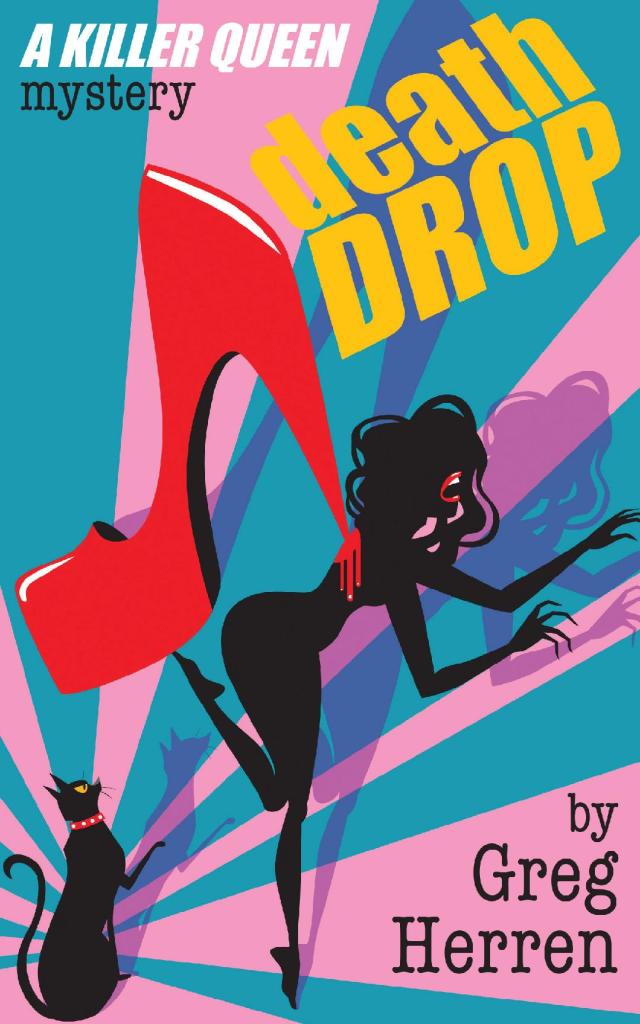
Today’s blatant self-promotion for Death Drop image is of one of my favorites from the world of Drag Race–Manila Luzon. I fell in love with her during her initial run on the show, and wanted her to win. (She didn’t, alas, but I also like Raja, who did win that season.)
When I was a personal trainer, I always asked new clients what their fitness goals were. Straight women inevitably wanted to lose an average of ten pounds or so; gay men always wanted to look like underwear models or Olympic athletes; and lesbians generally just wanted to be healthier. I tried to educate the women on the fallacy and dangers of “dieting”, and that the best thing to do was restructure and rethink how and what they ate and when. I used to always tell the gays, “can you afford a personal chef and nutritionist, and can you exercise three to four hours a day every day? Because they don’t look like their photos most of the time…they usually maintain their bodies regularly but go on ridiculously limited diets that aren’t healthy and also dehydrate themselves to look more cut for pictures. And it’s also their full time job to look like that. Now, let’s realistically talk about a plan that can make your body fit and toned in a healthy way that will be easier to maintain.”
Jem, my main character in Death Drop, is a professional hair stylist and make-up artist, and also has a good eye for fashion. His job is to make women, as he says, feel beautiful and confident, and as a gay man, he also can see the endless pressures from every direction that are put on women. Part of his issue with Marigny Mercereau, whose fashion show he is hired to work in the book, is that he hates the clothes she designs because the silhouettes are unattractive and they don’t flatter women’s bodies. Add to that the fact that the last time he worked for her, her check bounced, and yeah, she isn’t one of his favorite people. But so much is going on that night of the fashion show that Marigny’s clothes–and his dislike of her–aren’t in the forefront of his mind.
I mean, he does have to do drag for the first time that night–in front of a bunch of wealthy or upper middle class women he would love to have as glam clients. And Jem has stage fright.
That is one of the keys for me with Jem and the whole drag thing: he has stage fright, like I do. I’ve never really written about that much in my fiction–I know I’ve talked about it on here ad nauseum ad infinitum–but despite mining almost every experience I’ve ever had in my life into my fiction at some point, it’s kind of odd that I’ve never written about stage fright. I have it, bad. I am sure it’s a symptom of my anxiety–as everything is–but I have it, and I’ve always had it bad. When I was in plays in high school, it was torture. I liked being in the plays–I used to dream, as a kid, of being in show business, and yes, practiced award acceptance speeches in the mirror while clutching a shampoo bottle–but the actual performances? Absolutely not. I generally shake so much when on panels that I usually try not to use my hands when I talk–which I always do–because I don’t want anyone to see that I’m literally trembling in terror; I am also usually sweating a lot and my heart is racing and there’s a massive adrenaline rush…panels aren’t as bad as moderating one is; but now that I know it’s anxiety I try to handle it. Before I moderated that panel at Bouchercon this past year, I walked around a lot before the panel to burn off the adrenaline and try to get my heart rate down to something passing as normal. Also knowing it was based in anxiety gave me a handle on it; when I know what is going on I can try to cope with it better than what I did before–which was just grit my teeth and get through it.
Jem didn’t have stage fright while walking in the fashion show–and he also knew it was because of the lighting and it being after dark, he couldn’t really see the people in the audience. He knew they were there, but as long as he couldn’t see them it didn’t phase him. His fears of performing, of getting on stage, is going to be something he is going to have to work on in future books–of which I am hoping there will be at least three, if not more. He probably won’t have to deal with it in the second book either–because while he has graduated from drag school and performed in the graduation show, that was for friends and family and not the general public–because the second book takes place at a national drag pageant…which is being protested by a hideous hate group called Moms4Freedom…which I am having a lot of fun with, rest assured.
And on that note, I will bring this to a close–there will be more blatant self-promotion to come!
RuPaul likes to say we’re all born naked–everything else is just drag, and she isn’t wrong here.
Everything we wear is a form of drag. We always try to dress properly for whatever occasion, but yes–there’s work drag and formal drag and casual drag and gym drag and sports drag and around-the-house drag and pretty much any way you want to look at clothing…it’s all kind of a costume, really. And those costumes also depend on the time period.
I used to always think that I had no fashion sense–straight women and other gay men have often been astounded at how little I care about clothes or fashion or style. I have slight color-blindness, too–it’s hard for me to differentiate between darker shades; the darkest shades of blue and purple and brown and gray and green all look black to me. I also have some difficulty determining whether colors actually go together or not–which is why when it comes to formal/dressier clothing I tend to stick to black, white and red; I have so many red dress shirts, Constant Reader, you have no idea–so as I got older, I tend to go with what is easiest and less anxiety-inducing for me.
Of course, I also worked at an airport and had to wear a uniform for over two years: airline work drag. And after years of being a personal trainer, where all I wore was workout clothes or sweats, so yeah–my fashion sense has always been untrained and severely lacking for the most part.
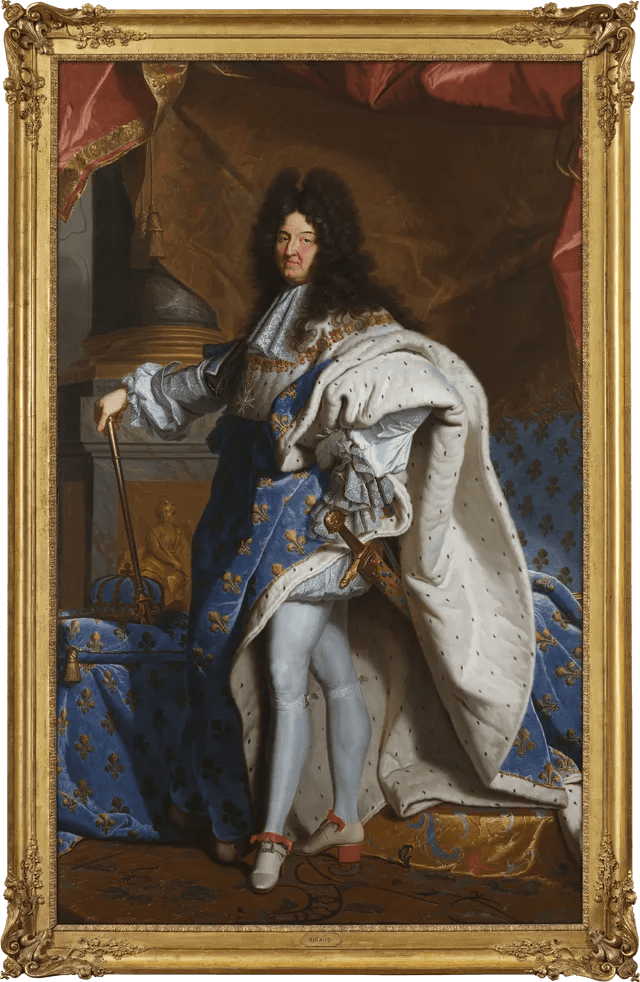
Louis XIV, the Sun King–but those tights! That wig! Those shoes! More like La Reine Soleil, am I right?
I also always used to deplore the fact that men’s clothes gradually became so incredibly boring from the heydays of Beau Brummel-type male fashion icons. Look at the above painting of Louis XIV. Now imagine a man wearing that outfit to an awards show or a film premiere. Even our own Founding Fathers wore tights, powder, wigs, and heeled shoes.
But somehow, those clothing items became feminized and gender swapped–of course, women in the past also wore heeled shoes, wigs, powder and tights beneath their skirts and bustles and hoops. But even in the 1930’s and 1940’s, men’s clothes were far more stylish–trench-coats and linen pants, fedoras and other hats, spats and Oxford shoes, argyle socks. I hated the “traditional” styles of dress for men that developed in the post-war period. and the utter rejection of those same styles in the 60s and 70s. Men’s clothing began to evolve a bit more during this period–and some serious fashion faux-pas were prevalent during the last decades of the century.
As I said the other day (and as so many others have pointed out), men have always dressed as women for one reason or another that had nothing to do with gender expression or identity for years. The Sun King’s gay younger brother (he also had a gay bastard son by Louise de la Valliere; homosexuality was rampant at the Sun King’s court) Philippe duc d’Orleans (whose son was the namesake for New Orleans) had many male lovers and often dressed as a woman for appearances at court. I’ve always wanted to write about Philippe, who has always fascinated me–the young gay bastard son of Louis XIV, who died young, was Louis duc de Valentinois; I’ve also had some minor interest in writing about him as well, or just gay life at Versailles in general.
There is a long-standing drag tradition in New Orleans as well. The Red Dress Run, for example, may not be full drag as we know it, but it’s essentially all about men in red dresses for charity.
One of the things I really enjoy about the modern young generation is they don’t subscribe to the antiquated rules of fashion for men and women. I love seeing young actors and celebrities showing up at red carpet events in daring outfits instead of that tired old tux look. Yes, men look dashing in tuxedos; I’ve always wanted to go full tuxedo with hat, cane, tails and gloves–but again, not the ordinary or expected.
I wore a kilt twice when I went to the Edgars, and wore it again at Bouchercon in Albany for our Real Housewives of Bouchercon panel. I loved wearing it–skirts are sooooo much more comfortable than pants–and it was definitely a fashion risk; people who didn’t know me but saw me wearing it undoubtedly thought ah, that one must be gay. I love the way the Musketeers dressed in The Three Musketeers–I think the seventeenth century was probably my favorite era for men’s clothes; I also love a pirate look from the early eighteenth as well.
One thing I definitely need to explore more with Jem is not only his sense of fashion for his clients, but for himself–both in and out of drag. Those are critical decisions for a queen–because while a particular look or style for a queen can evolve over the years, it’s very unusual for them to do something radically different than their usual; again, it probably has to do with ease more than anything else; it’s much easier to fall back on a regular look and color palette than to reinvent yourself every time or to come up with something new every time. I do think I am going to have Jem do the Madonna constant reinvention thing–mainly because it’s more interesting that way for me–because it is part of who he is as a person; Jem thinks he’s boring but he’s actually quite adventurous. Jem has very little confidence in Death Drop, which is easy for me to write because I know how that feels. One of the goals of the series is to show him develop self-confidence and self-assurance and becoming more comfortable with himself, and part of that is going to come from performing in drag and another part from actually solving crimes…which makes him start believing in himself more.
And that is always fun to write–character growth and development.
Research is always important for a writer, always.
I will generally spend years doing research for books before I start writing them; my scattershot approach to research usually goes something like hey this sounds interesting I should look it up which then takes me down wormholes and I’ll become obsessed with something, I’ll come up with a story idea that I can use the research for, and then it may sit in the files for years, occasionally striking my fancy sometime when I come across something else that might fit in with that, and so on. A lot of my research never makes it onto the pages of my books, either–I could have written chapters on glass-making and the Murano style of Venetian glass in The Orion Mask, but finally decided that, while I thought it was all interesting–Phyllis A. Whitney used to use her books to educate her readers about the area she was writing about, which I loved–but it definitely bogged down the story because there was no way I could figure out to tie the glassmaking to the modern day story.
That was very disappointing, I don’t mind saying.
Likewise, I didn’t have as much time to research drag the way I should have before I started writing Death Drop. Ordinarily, I would have wanted to actually talk to the local who runs the drag school; I would have talked to any number of queens about performing, how they got into it in the first place; and there are so many aspects of drag culture and so many levels and layers to it that it was impossible for me to get the research done and write the book at the same time. Ideally, I would have liked to have actually paid someone–preferably my former supervisor, who went to the drag school and now works full-time in drag as Debbie with a D (check out her Instagram, seriously)–to do the full drag on me–wig, make-up, pads, dress and shoes. (I kind of still need to do this, so I know how it feels; I relied on memories of high school plays for the make-up and wearing a Minuteman costume with real buckled and heeled shoes for walking in heels; I didn’t care for that one bit and have nothing but the deepest sympathies for women or anyone who has to wear any kind of heel on a daily basis. I can still feel how sore my calves were the next day.)
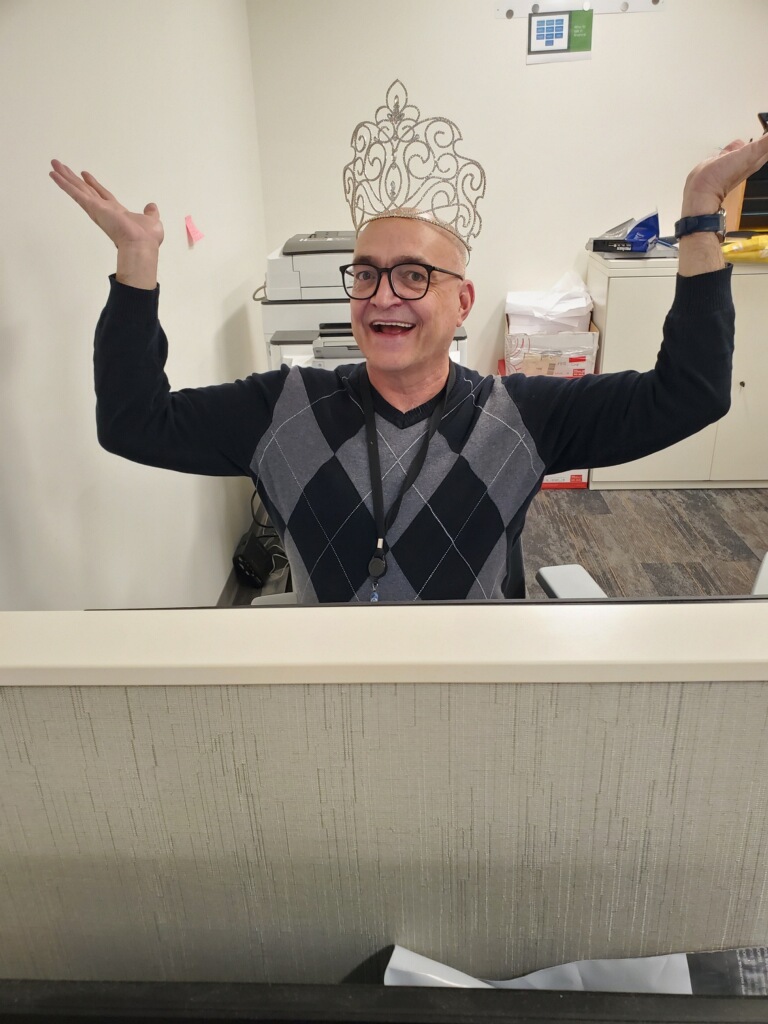
Me with my supervisor’s pageant crown
That was part of the reason I made the book an origin story for Jem and “Joan Crawfish,” the drag name he is christened with at the last minute as he sent down the runway at the Designs by Marigny fashion show. I don’t know drag lingo or slang–outside of whatever I’ve picked up from watching RuPaul‘s Drag Race and having co-workers who do drag and the occasional drag show I’ve caught over the years–and so neither does Jem/Joan. And the second book–set in Florida at the Miss Queer America pageant–will include some of that, as it will have to as he’s already finished the drag school he was considering entering at the end of Death Drop.
It doesn’t hurt that my current supervisor does pageants and was even Miss Gay Mississippi USofA; so I have a good source of information that I see at the office every day, which is….kind of cool, actually.
I do feel pressure to drag it up a bit more in this second book (You Gone, Girl) than I did in the first, but the pageant itself makes for a lot of drama and comedy, and that’s not even taking into consideration all the protests and bomb threats and things and other shenanigans that the evil witches from Moms4Freedom are throwing at the pageant.
And I am going to have some serious fucking fun with those Moms4Freedom bitches, believe you me.
Drag is a part of queer culture I’ve always known about but has also been something primarily on the periphery of my gay life and world; I’ve only occasionally ever thought about perhaps doing it–as a gag or as a costume at some point; a very dear friend has always wanted to dress me up as Joan Crawford (narrow waist, big shoulders, enormous eyebrows), which is something I would consider doing if it wasn’t so much work–I am way too lazy to ever do drag properly and respectfully. I did a very poor attempt at drag many years ago, for a Showgirls themed birthday party for a friend; the result was far from pretty. I did sometimes used to use mascara and eye liner when I would go out; it emphasized my enormous and expressive eyes which most people have always considered my best feature (although aging has deprived me of my eyelashes). Drag was just another part of the community and culture, like leathermen, bears, and gym queens–another patch on the quilt that makes up our queer world.
My primary interest in drag has always been historical and cultural; drag culture has always been a part of the gay bar scene, since time immemorial, it seems. I have always been interested in every aspect of gay culture since coming to terms with my own sexuality and recognizing that not coming to terms with it meant a lifetime of guaranteed misery, and shouldn’t I really take a chance on being happy? There was always a lot, for me, of misunderstanding about drag culture and its place in the gay community; but that also primarily came from people outside of the community and therefore didn’t have the slightest grasp of it–i.e. ignorant slurs that all gay men dressed like women whenever they had the chance, you know–not “real men.”
But seriously, who wants to buy into the cult of toxic masculinity? No fucking thanks.
I don’t know the history of drag, but I did know–from the very beginning–that there was a significant difference between drag and the trans experience; there’s definitely crossover, but the Venn diagram of drag and trans is not a complete circle. I understood this always, even when I knew very little of either. This was always the issue I had with To Wong Foo Thanks for Everything Julie Newmar–the queens in the movie didn’t just do drag for performance or pageants, but dressed as women in their everyday life…which made them transwomen who also did drag. The failure of that film to define the difference between the two, I think and believe, has a lot to do with the current-day conflation by the Right of drag queens with transwomen. Likewise, was the Nathan Lane character from The Birdcage (and the French original) a transwoman or a drag queen?
And the fact that I, knowing as little about gay life and culture as I did in 1994, knew that the Wong Foo movie was conflating two completely different things as the same certainly means that other, better-educated people should have, as well.
But it’s also important to remember that the movie wasn’t made for the queer community–no Hollywood studio film with queer characters is intended for a queer audience, and thus there’s a falseness to them that rings hollow to me (don’t even get me started on Philadelphia); what Sarah Schulman once (paraphrasing) described as “the creation of a fake public homosexuality that will play in Peoria.”
There’s an essay in that, methinks.
The first time I went to a gay bar in Houston is my first true memory of seeing someone in drag performing on the bar in person. She was doing Liza as Sally Bowles from Cabaret, and as I walked in the door with some co-workers from That Airline, the first thing I saw was her up on the bar, with a musclebound dancer on either side of her in bikinis or thongs, and I can remember thinking wow this is decadent like Isherwood’s Berlin–but I liked it. I felt at home there, in a way I never did in gay bars in Fresno (or anywhere else I was able to sneak away and visit one), and felt like that night was when my gay life actually began: I was with co-workers, I was going to a gay bar openly, and the co-workers knew I was gay but had never really experienced being gay as anything but misery and depression and a curse. I don’t remember the name of the queen, but ever since then, “Mein Herr” always brings a nostalgic smile to my face.
But again, I didn’t go out much or do much during those two years in Houston as I still wasn’t completely comfortable being totally out. I moved to Tampa in 1991 and started living as an out gay man…and started spending more time in gay bars. A popular night for airline employees as Tuesday Nights at Tracks, where cocktails were only fifty cents and no cover before ten. There was also a drag show at midnight, with an actual stage in a show room, and that was my first real experience watching drag queens perform. There was a gay paper there–I cannot remember what it was called to save my life; I know the one in Texas was This Week in Texas, called TWIT by everyone–but it often had information about performances and other night life ads and so forth. I began to get a better understanding of drag, its place in the community, and its importance to gay culture, period.
And of course, once I moved to New Orleans, there was Bianca del Rio.
The mainstreaming of drag actually began in the early 1990’s, with RuPaul having a surprise hit record out of nowhere, “Supermodel (You Better Work)”, which started exposing more people to drag who ordinarily would have never seen one. RuPaul was everywhere in the early 1990’s, and even had her own talk show on MTV for a while. The Adventures of Priscilla Queen of the Desert and its homogenized American version To Wong Foo, Thanks for Everything, Julie Newmar were both incredibly popular. (I enjoyed Priscilla, and I’ve already touched on my issues with Julie Newmar–which will probably become an essay at another time.)
There were, of course, other successful queens out there before RuPaul’s big breakthrough and later, comeback with Drag Race, but few had as large a profile in the culture as RuPaul. Lady Bunny, Miss Coco Peru, Miss Richfield 1998, and Varla Jean Merman were all making a pretty decent living as performers before the drag explosion that followed the launch of Drag Race.
I’ve met numerous drag queens on the local scene both in and out of drag–I’ve always been fond of Princess Stephaney and Blanche Debris (who is retired now), and the drag community of New Orleans was always incredibly supportive of the NO/AIDS Task Force. I met Bianca out of drag a couple of times, but I doubt he remembers me…but Drag Bingo at Oz on Sundays with Bianca and Blanche (I just realized their first names both translate into English as white) was always a blast–and I made a point of never trying to get Bianca’s attention because she was always quick and that tongue was sharp as a scalpel always.
I also work with several co-workers who either did drag or have started doing it while I’ve known them, which indirectly helped me with the writing of Death Drop and my original story for a drag queen. Jem is sort of patterned in some ways on one of my former co-workers who actually went to a drag school here in New Orleans–and eventually quit his full-time job to do drag full-time. He’s been in Queer as Folk and numerous other shows filmed here, and has been booking gigs all over the country–check out his Instagram, isn’t he fucking gorgeous? So that gave me the idea to make the first book with Jem his drag origin story.
Learning about drag to write this book–and its sequel–has been an enjoyable learning experience for me. At some point I know I am going to have to do a transformation; I need to know how it feels to have the make-up and the padding and the wig and the dress and shoes on. I can imagine it all from doing theater in high school, but it’s not the same.
And yes, I will share the pictures when and if it does happen.
So, Greg, you have a book coming out from a new press in October, and the main character is a drag queen? What the actual hell?
Well, therein lies a tale.
I never thought I would write about a drag queen, in all honesty. It’s not that I’m opposed to drag or anything like that; drag has always been an important part of gay culture (I really wish someone would do a history of drag that’s not academic in tone and therefore accessible to everyone without a PhD) and I’ve always appreciated it as an art form. Yes, some queens are better at it than others, and there are some who are just really tragic…but I admire and respect every single one of them who puts on the dress and wig and heels and make-up and goes out there to perform. My own anxiety manifests itself whenever I have to perform or speak in public (although I managed to successfully control it and get through Boucheron panels swimmingly; I don’t think my stage fright is a thing of the past yet but I’m getting better); I can’t imagine the courage it takes to do drag that first time.
I also never considered doing drag because of my vanity–I wouldn’t look pretty in drag and I would want to be pretty. Shallow, party of one, your table is ready. I’ve seen many performances over the year and even have friends who do it, but my primary interest in drag has always primarily been in it as an art form and political statement critiquing gender roles, masculinity, and femininity; and it holds a very important place in queer culture. I once did drag, for a Showgirls-themed birthday party–I looked like Stockard Channing, which isn’t a bad thing–but it was more of a costume than a real attempt at doing drag. My friend Mark always wanted to make me up for Halloween or Fat Tuesday as Joan Crawford–it was the shoulders, the eyebrows, the narrow hips, and the shape of my face more than any striking resemblance to Ms. Crawford, I think–and while I was interested in being transformed into Ms. Crawford, one of the things I hated the most about doing plays in high school was the make-up. I hated having that shit all over my face, and it never did what it was supposed to in the first place (I inevitably always played old men, so they had to try to age me, and it’s not like we had make-up artists who knew what they were doing in high school.). And the padding? The wig? The dress? Not to mention the lack of pockets and the difficulty in using the bathroom– yeah, not for me. Drag does show up in my work sometimes–not very often–and the most fun thing for me about that is coming up with drag names for the characters. I know I’ve used Floretta Flynn a number of times, to the point where in my New Orleans universe she’s probably one of the bigger and most successful queens in New Orleans. Two of the biggest names in drag came from New Orleans–Varla Jean Merman and Bianca del Rio are both from here. We used to go to Drag Bingo hosted by Bianca and Blanche Debris at Oz on Sundays before she left for New York after Katrina–and Bianca was just as funny and just as big of a bitch then as she is now. She always drew crowds, and of course I met her a few times out of drag (I am quite sure Roy doesn’t remember me).
And believe me, I was very careful not to attract her attention while she was holding a microphone.
I also once wrote a short story that opened with one character saying in the Clover Grill, “You sure see a lot of tragic drag in this town at four a.m.”
Paul and I also were fans of RuPaul’s Drag Race for awhile, too–but like Project Runway, we stopped watching one season when it was obvious that it wasn’t being judged fairly (it was fucking blatantly obvious) and that was it for us. Don’t serve me competition reality when the competition is obviously rigged for a particular competitor. I do love some of the queens we did watch on there–it’s been amazing watching Jinkx Monsoon’s star take flight–and I always liked Tatianna, and just to name a few–Ben de la Creme, Adore Delano, and Manila Luzon are all fabulous. Paul follows a lot of them on Youtube, and of course I do enjoy Trixie and Katya’s We Like to Watch on Netflix.
And naturally, we love Bianca because she’s a New Orleans queen.
But it never crossed my mind to write about one as a main character. It wasn’t my milieu, so to speak (and just typing that made me want to bang my head on my desk. Take risks! I should always take risks in my work!), and so while every once in a while I’d think “maybe I should write a drag queen into this story”, I never did.
Last summer, I am not exactly sure when (2022 was pretty much a blur of misery), I got an email with a request for a ZOOM meeting with two very dear friends, along with another friend of theirs I may have met once over twenty years ago, James Conrad. He wrote Making Love to the Minor Poets of Chicago back in the days when I was a reviewer/worked for Lambda Book Report, and the purpose of the call was they wanted to talk about a possible project for me. You know me, I am always up for a new project and a new possibility…so you can imagine my surprise to find out what they wanted was for me to write a cozy with a drag queen main character. James owns and operates the Golden Notebook bookstore in Woodstock, and decided to start a publishing company through the store and wanted this to be their first venture into crime. I pointed out that I a) knew next to nothing about drag and b) I’m not really a cozy writer (the Scotty series can be classified that way except for a lot of cozy rule-breaking; and yes, I did write A Streetcar Named Murder, which wasn’t out yet and I wasn’t sure if it was even any good), they pointed out that I am a writer who can write anything (this is true, but there are some things I can’t and won’t ever write–and yes, as I typed that I was thinking there you go limiting yourself again–maybe those are the things you should be trying to take on), and then I also remembered a few things–some of my co-workers at the day job do drag, and in fact, my former supervisor had attend a “drag school” here locally, started by a queen who’d retired here from San Francisco after a lengthy and successful career in drag; Paul even knows the queen who runs it. I sent James an early electronic uncorrected proof of Streetcar, so he could get an idea of my writing style, and waited to hear back.
While waiting, I asked some of my co-workers if they’d be okay with me asking them questions–which of course they were more than happy to do–and the more I thought about it, the more it made sense for me to approach this in the same way I approached writing Streetcar–I knew nothing about antiques, so I made my character the same. So, if I am going to write about a drag queen, I needed to write her origin story first–and I decided to make her an accidental drag queen; forced to step in when a queen doesn’t show for a performance. But how would that work? I realized my character had to already know about hair and make-up, so I decided to make him a glam artist, hired to do make-up for women on special occasions and styling them. How did he wind up doing glam? His grandmother, who was from New Orleans, used to have her own Uptown beauty shop on Magazine Street that was frequented by upper class New Orleans women, who would also hire her for special occasions to style them. He spent his childhood summers in New Orleans; his grandmother was the only family member who had no problem with his sexuality, and she taught him all about hair and make-up (and classic Hollywood). He went to cosmetology school instead of college (his grandmother paid for it) and he worked in a high-end salon in Dallas until his grandmother died, leaving him the house and most of her money.
I also had a great idea for the opening, which I quickly wrote up and James liked it…and so we moved forward with the plans for it. I had a Scotty book under contract, and I knew I could juggle the two and get them both done on time.
Of course, I didn’t realize how much work it would be to turn MWA over to my successor, I didn’t know Mom was going to go into the final decline ending with her death during this time, and….well, hindsight is twenty-twenty, isn’t it?
“I don’t know, Jem,” Lauralee Dorgenois said, frowning and raising a perfectly plucked eyebrow as she looked back over her shoulder into the three-way mirror set-up in her dressing room. “You’re sure that this dress doesn’t make my butt look big?”
Okay, I’m going to take a sidebar right here to give y’all some free-of-charge advice that is more than worth its weight in gold. There is only one correct answer to be given without pause or hesitation any time a woman asks you if something she is wearing makes her butt look big: “No.”
You always, always,ALWAYSsay no.
If that is, in fact, a lie—you say “I don’t know if that cut drapes right” or “I don’t like what that color does to your skin”.
There are literally a thousand other options besides making the incredibly foolish mistake of saying ‘yes’ or the seemingly safe, non-comital ‘maybe.’ Marriages, engagements, friendships, and relationships have all ended over this question being answered incorrectly—and no, it’s not a trap question. Women are bombarded from childhood with images of what they are supposed to look like and what they are supposed to wear. They are taught to fear fat cells and fatty foods, spend millions on diets and gym memberships and personal trainers. They are gaslit into thinking that being any size larger than zero and not having big firm breasts and not having a wrinkle-free face aglow with the dewiness of youth means they are doomed to grow old alone and unloved. So, they try to fight aging—and the fear of being traded in for a younger model—by having poison injected into their faces, excess skin surgically removed, and their hair constantly colored and touched up. Centuries of societal and systemic misogyny, of telling women they don’t measure up, echo in those sad, simple words: does it make my butt look big?
My heart breaks a little every time I hear them.
However, I get paid to make them look good. My opinion must be honest, but I still need to be delicate. Why be hurtful when you don’t have to be?
I tilted my head to one side and brought my eyebrows together as I looked her up and down yet again. “You’re curvy, Lauralee,” I replied finally, fluffing the peacock feathers on her shoulders to spread them out further. It was true. Lauralee was about five seven, and maybe could stand to lose a pound here and there. Her hourglass figure had thickened a slight bit once she hit forty, but it was barely noticeable. I’d picked out a green silk dress for her because the color made her green eyes sparkle like emeralds. It clung perfectly to her hips and was cut low in the front to shove off the ample bosom, highlighted by an emerald pendant handing from a gold chain just above the cleavage. I’d braided her long auburn hair into a French braid that dropped about half-way down her back. I’d woven some extra pieces of auburn into the braid to make it thicker. “And there’s nothing wrong with that, you know. We’d put Marilyn Monroe on a diet today.”
Several years ago, I tried writing a third series set in New Orleans with a gay male protagonist. It was a character I had already created; he showed up in a couple of Scotty books: true crime writer Jerry Channing, who’d gotten rich on a true crime novel about a child murder case in the Garden District in the 1990’s called Garden District Gothic, (which also became a Scotty title when he and the boys got sucked into that ancient cold case) and wound up solving it. I had wanted to write a fictional story based on the very real Jeff Davis Eight murders, and thought who better to center in the story than a true crime writer researching the case for an article or perhaps even a follow-up book than Jerry Channing? But as I started developing the character out from the sketchy details provided in earlier Scotty books, I suddenly realized what I was actually doing was combining Chanse and Scotty into a single person, so I shelved the story–or at least, the new series, because if all I was going to do was just merge two previous characters into one, there was no point in bothering. I had then gone on to create a new series with a straight woman as the main character (A Streetcar Named Murder), and I was determined that, with this new potential series set in New Orleans, the last thing I needed was to just rip-off previous characters.
So meet Jem Richard, twenty-something glam artist and New Orleans home owner. Jem lives in the 7th Ward (not far from my day job office, actually; over on St. Roch Avenue between Claiborne and St. Claude), and the house flooded during Katrina–Jem remembers coming down with his family to help work on the house for his grandmother, Mee Maw of sainted memory–and I gave him a pole-dancing roommate who also works at Crescent Care. (Another Easter egg is the book opens with Jem being enormously disappointed to be ghosted by someone with whom he had several dates –a Tulane grad named Tradd. Bury Me in Shadows readers may remember Tradd as the asshole who broke up with Jake and sent him into the alcohol/drug spiral that landed him in the hospital when that story opens. I also want to use Tradd again somewhere else…but that is indeed a tale for another time.) Jem does well for himself, but has no health insurance and never is guaranteed work–but he also really doesn’t want to go back to working in a salon again, either. (He also sometimes books gigs with film, theater and television companies.) He’s kind of a lost soul, not really sure what he wants or what he wants to do with the rest of his life–but he also is lucky: he owns his own home, for one, and has several marketable skills. He kind of feels like he’s been spinning his wheels and not getting anywhere since coming to live in New Orleans. Jem has considered doing drag before–he’s very into costuming, and has won the Bourbon Street Award for Best Drag Costume on Fat Tuesday the previous two Carnivals–but he (like me) is haunted by stage fright. He did a play while in high school and the stage fright was such a horrible experience he gave up his dream of being a performer and started working as the make-up and hair person for the school productions.
So, when he’s hired to be a back-up glam artist for a fashion show at Designs by Marigny, only to find out the models were drag queens. A little taken aback, he rolls with the challenge, and when one doesn’t show, Jem gets pressed into service (he can fit into the dress). The show is being managed by the same person who runs the local drag school–a sweetheart named Ellis, whose drag name is Mary Queen of THOTS. Jem has a bad history with Marigny the fashion designer–she’d hired him todo the make-up for a previous show, and her check bounced–so the friend who recruited him to do the show makes sure he gets paid in advance. Of course, since the models are drag queens, the show attracts anti-drag protestors–there’s a suspicion that the designer, Marigny, deliberately used queens hoping to attract a protest and more publicity. Throughout the course of the evening Jem overhears Marigny arguing with several different people, and the next morning wakes up to the news she’s been murdered–and somehow Jem is not only a suspect but he’s also a target.
But why?
Jem also has a black cat named Shade.
As I said, while it had never occurred to me previously to write a drag queen character, the more I thought about it, the more I wanted to do so. Drag queens are currently under attack by the forces of bigoted evil. Part of this comes from the right-wing demonization of transwomen, spear-headed by hateful bigoted lying trash like Libs of TikTok (if you’ve ever retweeted the Axis Sally of the Proud Boys, know that’s why I blocked you and we will never, ever be friends again) and Moms for Liberty, who are both so fucking ignorant and clouded with hate that they think drag queens and transwomen are the same thing. The idea that children need to be protected from drag queens at all costs because it’s somehow sexualizing them is disgusting and ignorant and offensive on its face; merely rephrasing Anita Bryant’s vile claim that queers need to recruit children, i.e. all queers are pedophiles. They prove they’re liars on a daily basis and that it really has nothing to do with “concern” for children and everything to do with bigotry and hatred, because they never go after religious organizations, youth pastors, Boy Scout troop leaders, and Republicans–you know, the ones who are being convicted of child rape and child porn on a regular, almost daily basis –but only the queers are their primary concern. First off, not all drag queens are transwomen and not all transwomen were drag queens. Yes, some transpeople start their transition by doing drag, to get a better idea of whether or not they are more comfortable as a woman than as a man. I work with a lot of transpeople, and have for quite some time. I’ve witnessed people transition and evolve, and I’ve also seen the change in demeanor, confidence, and emotional well-being when they do.
What better way for a writer to fight back against ignorance than writing about it? And I loved the deliciousness of fighting homophobic and transphobic bigotry by writing a cozy series.
I got up early because of that weird stress-inducing dream I’d had, and then spent the morning doing things–organizing the kitchen, doing some laundry, taking out trash, vacuuming (God, what a difference a good vacuum cleaner can make; I am so glad I bit the bullet and spent the money on a good one Saturday–and I am reading the manual AND will be taking care of this one, to make it last), and yes–I actually spent some time writing “Festival of the Redeemer,” which was lovely. I am actually enjoying writing this novella or whatever it is going to be–I can’t get it out of my head, so I keep writing on it, even though I should be working on other things, but there’s no deadline for anything and so why not while I wait for my edits on the two manuscripts I turned in? I am trying for a Daphne du Maurier Gothic style, but am trying very hard not to reread “Don’t Look Now” or “Ganymede”–her two Venice stories, much as I desperately want to because I don’t want it to be derivative; I really like the voice, and I like my untrustworthy narrator a lot. (oops, shouldn’t have said that, I suppose) It’s also interesting writing about a dysfunctional couple, one where there is an enormous power differential as well as an undefined relationship; which helps keep my main character off-balance–he wants to know but then he’s afraid to have that conversation because he is afraid of the answer–and while I know how I want this story to end, I am finding my way there slowly; I am just writing in free form without any real sense of what I am writing and where it is going and you know, just seeing where it is going to wind up as I keep writing. I’m not writing at the pace I generally do–but I am writing, which is kind of nice, and there is an element where I kind of want to get this finished instead of putting it aside; I kind of want to finish something since I’ve had so many false starts since turning in the Kansas book. (I’ve also had a few more ideas while working on this, but am just writing notes and coming back to this.)
We had quite a marvelous thunderstorm last night–which was undoubtedly why it was so oppressively humid yesterday; I think I must have sweated out ten pounds of water walking to and from the gym. Oh yes, I made it to the gym again yesterday and the stretching and weight lifting felt absolutely marvelous. I was actually a little surprised that my flexibility gains hadn’t been lost during the fallow weeks of not going, and as the summer continues to get hotter and more humid daily, there will undoubtedly be days when I won’t want to go. But I also need to remember how good I feel during and after–especially the next morning. I also took a lot of pictures on the walk home for Instagram, which I am really starting to enjoy doing. I don’t know why I never really got into Instagram before, but since I love to take pictures and I live in one of the most beautiful–if not the most beautiful–cities in North America…it seems like it’s only natural that I bring them all together into one user app. I’ve talked about how I’ve felt sort of disconnected from New Orleans for a while now–several years at least; I feel like I’m no longer as familiar with the city as I used to be; the changes and gentrification plus all the working I’ve been doing in the years since Katrina have somehow weakened or lost my connection to the city. Yesterday, walking home and detouring a bit around Coliseum Square, I felt connected to the city again in a way I hadn’t in a long time. I also took and posted a picture of the house where Paul and I first lived when we moved here in 1996; the house, in fact, where Chanse MacLeod lives and runs his business from…we were living there when I wrote Murder in the Rue Dauphine, in fact…and I started remembering things from when we lived there and were new to the city. This is a good thing, making me feel anchored and tethered to the city again, and if I am going to write another Scotty book–well, the strength of my books set in New Orleans is that sense of love for the city I always feel and try to get across in the work.
I also had weird dreams last night. I rested well, but drifted in and out of sleep most of the night. I’m not sure what the deal is with the dreams; I dreamt that someone I went to high school with in the Chicago suburbs came to New Orleans with some of her friends from her current life and wanted to connect again; and I did so, primarily out of curiosity other than anything else. (Maybe it was all the tourists I saw out and about yesterday?) But it was very strange–going to the casino and watching them drink the insane tourist-targeted colored drinks; meeting them at their hotel on the West Bank, listening to them talk about New Orleans to me in the insane and often offensive ways tourists will speak to locals about the place where we live, not even realizing they are being insulting and offensive. I don’t know; I cannot say for certain what is the deal with the weird dreams lately, but I’ve been having them.
We rewatched Victor/Victoria last night–we’ve been talking about rewatching it for a while now, and it recently was added to HBO MAX. I don’t remember what brought it up, or what made us think about it–I know it was Paul who did; I had already added it to my watchlist when it dropped and when he said he wanted to watch it again, I replied, “Its on the HBO app so we can, whenever we want to” and so last night we did–primarily to see if it still worked, if it was still funny, and watching it–a relatively tame movie, really–last night I remembered (rather, we remembered) how incredibly subversive it was at the time it was released in 1982; it depicted homosexuality and drag in a nonjudgmental way years before being gay was less offensive to society at large, as well as bringing drag into the mainstream years before RuPaul’s Drag Race. The performances are stellar–especially Robert Preston and Lesley Anne Warren in supporting roles–and the humor is kind of farcical and slapstick, which never really ages; as Paul said, “that kind of humor is kind of timeless.” It also struck me that it was very Pink Panther-like; the film, not the cartoon–which makes sense since Blake Edwards wrote, directed and produced both. Some of it wouldn’t play today, of course, and the movie probably couldn’t be made today–some of the sex humor was misogynistic, not to mention men trying to spy on “Victor” to find out if he was really a man or a woman, which is incredibly invasive and horrible, plus it was very binary about gender and gender roles. 1982 was also the year of Tootsie, which I also kind of want to rewatch now to see how it holds up as well. It would seem that both films–which were both critical and box office hits , rewarded with scores of Oscar nominations–seemed to signal a new direction for Hollywood when it came to queerness and gender; it was also around this time that the soapy Making Love was released as well. but HIV/AIDS was breaking around this time as well, and soon the repressive politics of the 1980’s would change everything.
Tonight after work I am going to run some errands and then I am going to be guesting on Eric Beetner’s podcast, along with Dharma Kelleher, to talk about three queer writers everyone should be reading year-round, not just during Pride Month. That should be interesting; I am also appearing on a panel for the San Francisco Public Library tomorrow night being moderated by Michael Nava–one of my heroes–which should also be interesting and fun.
And on that note, it is time to go back to the spice mines. Have a lovely Monday, Constant Reader.



 Queer and Loathing in America