Cool Change

Saturday morning and I slept late, which felt positively marvelous. I feel rested and ready to kick some ass and take some names–at least for now, at any rate. Paul is going to be out of the house most of the day–appointments and going to the office–and therefore I have the Lost Apartment to myself for most of the day and no excuse not to get a lot of things done. I am still planning on walking over to the AT&T store to replace my phone–who knows how that is going to go?–but other than that, my day is pretty much set for cleaning, revising, and reading.

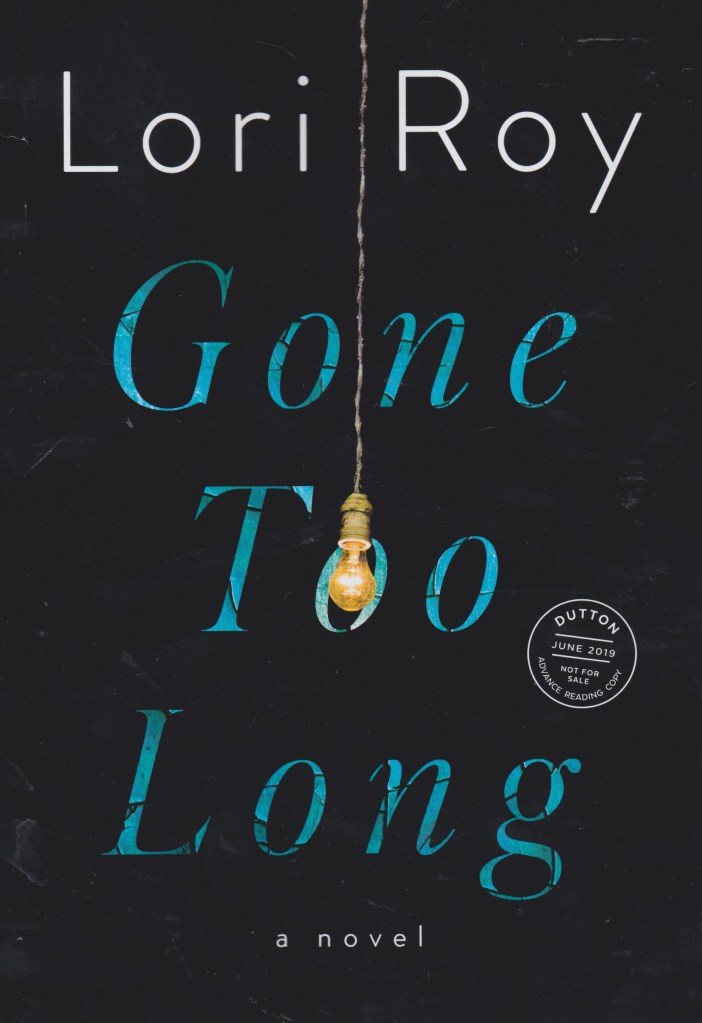
Last night, we started watching the new Netflix show The Umbrella Academy, based on the Dark Horse comic series–and while I didn’t madly love it, I am curious enough to continue watching. For one thing, it has both Ellen Page and Tom Hopper (who I’ve been crushing madly on since his days as Billy Bones on Black Sails), and it has an interesting premise. We will be continuing with it tonight, I think. I had just started reading Lori Roy’s Gone Too Long when Paul got home last night, and then was distracted by getting caught up on How to Get Away with Murder and then The Umbrella Academy.

And I’ve been dealing with yet another Apple upgrade issue that has fucked with my desktop, laptop, phone and iPad since last night. Now the cloud drive is missing from both my desktop and my laptop (I managed to resolve the handheld device issues last night) and so am trying to get that resolved this morning. Seriously, Apple–when you update/upgrade your systems, is it absolutely necessary to fuck up everything for your customers? 

Seriously, Apple. Do better.

So I am trying to resolve all this before scheduling a call from Apple Support…which I also don’t understand; you used to be able to do this in an on-line chat, but now of course they make you take a phone call. Why, precisely? And how able-ist is this? What about those of us who are hard of hearing, or those who are deaf? Seriously, fuck you in the ass without lubrication, Apple. HARD.

Thank you for allowing me to vent about these issues, Constant Reader. It’s helping me reduce the future body count.

This week I got a copy of Kyle Onstott’s bestselling Mandingo from the 1950’s. As Constant Reader is aware, I’ve been trying to diversify not only my fiction reading but to learn more about the horrible history of race in North America. Part of this has taking an amorphous shape in my head around a lengthy essay, tracing revisionism of slavery and the Old South and civil rights from such novels as The Clansman (which was filmed as Birth of a Nation) to Gone with the Wind to To Kill a Mockingbird and The Klansman, which I recently reread. As I was scrolling through Amazon Prime looking for something to watch the other night, I came across the late 1970’s film Mandingo, and remembered that it was also a novel. I bought a copy from eBay which arrived this week (I wasn’t able to get far in the movie because it was just incredibly bad; not even campy bad, like Showgirls, just bad.) The book arrived this week and….just looking at the note from the publisher in the beginning was horrifying. Yet Mandingo might just be the only novel about slavery and the Old South that actually tears the veneer of respectability and gentility away and exposes the true horror of what the “peculiar institution” was actually like. (Even John Jakes’ dreadful North and South series never delved deeply into the actual horrors; Colson Whitehead’s Underground Railroad was one of the first novels to truly explore this that I’ve read.) Barbara Hambly’s Benjamin January series, set in New Orleans before the Civil War, also does a terrific job of exploring how deeply entrenched and horrible racism/slavery were.

This essay I am thinking about would probably wind up, should I ever have the time to read the books and write it (it would, for example, require a reread of Gone with the Wind and it’s over eleven hundred pages, as well as some in depth reading of actual history) would probably be a part of Gay Porn Writer: The Fictions of My Life…which is a project I really do want to work on someday.  Mandingo takes on an aspect of slavery and the South that is rarely, if ever, touched on in fictions: the sexual abuse of the female slaves by their masters (come on, like it never happened. Really?) as well as the breeding of actual slaves for better, more valuable stock, as well as raising them for fighting–kind of a human version of cock-fighting or dog-fighting. Is it more likely that never happened, or that it did? Slavery, as Harriet Beecher Stowe repeatedly explained in Uncle Tom’s Cabin, debases both slave and master; are we really supposed to believe that slave-owners didn’t abuse their ‘property’?

Given how people of color–theoretically free and equal in the eyes of the law in the twenty-first century–are treated in the present day, I’m not buying the notion of the kind, gracious slave owner.

Take, for example, this passage from the Publisher’s Note to the movie tie-in paperback edition which I just received in the mail:

From today’s vantage point,, almost a hundred years after the cataclysm, the developing situation may be viewed objectively. Actually, the finger of blame should be pointed at no one geographical group of people. Although the factions that promoted the abolition of slavery were ethically in the right (emphasis: mine), Southern planters in general are shown to have been victims of circumstance rather than diabolical tyrants as they have sometimes been painted. (again, emphasis mine.)

Doesn’t get more apologetic than that, does it? Those poor planters. (massive eye roll)

And is it any wonder that we still have so many societal problems of racial injustice today?

And on that note, back to the spice mines.

Bfxx_LRCYAEPj_N

Pop Muzik

Friday, and a new month. Rabbit, rabbit, and all that, you know.

Or did I mess that up by typing something else first?

I’m so bad at these things.

Anyway, it is now February, and Carnival is just over the horizon. Parades literally start three weeks from today. #madness

I am taking vacation during most of the parade season; the new office is too far for me to walk to and from, so I decided to simply take vacation and actually enjoy parade season for a change. I should also be able to get a lot done during those days–kind of like a mini-staycation (although I loathe that not-a-word and can’t believe I still use it from time to time). I also can’t believe the first night of the parades is in three weeks. THREE WEEKS.

Of course, as Facebook seems to remind me on an almost daily basis, Carnival is late this year. Usually at this time parades are rolling and the city is full of tourists and I am exhausted from walking and working and going to parades. So, yes, Carnival is later this year than usual and yet somehow…it still snuck up on me? Go figure.

I finished reading The Klansman last night, but as I did some things occurred to me–namely, for a book about the Civil Rights struggle and racism in Alabama, there sure weren’t many characters that were people of color. Yes, a book about civil rights and racism placed the white people at the center of the story. Admittedly, the book wasn’t aimed at or written for people of color; the audience was white people…but I can’t see racist white people in the 1960’s reading the book and not being outraged by its “sympathetic” depictions of people of color. The book also sports the trope of the white savior–the “good white man” who stands up for the people of color and therefore becomes a target of the Klan.

There’s a really good essay–and one I might try to write–about the arc from The Clansman (the horribly offensive novel that Birth of a Nation was based on; it’s actually available for free from Google Books) to Gone with the Wind to The Klansman and how Southern people and authors rewrote history to not just romanticize and glorify the Southern Cause in the Civil War, but also the Ku Klux Klan; and how those narratives have changed perceptions not only of the war and racism, and the South itself. The Klansman is an attempt to reverse that trend, but to expose racism in the Jim Crow South not as something romantic and necessary, but as an evil on par with the original sin of slavery itself.

William Bradford Huie (who also wrote The Americanization of Emily, The Revolt of Mamie Stover, and The Execution of Private Slovik) deserves a lot of credit for writing this book, despite its flaws. He was born and raised in Alabama, and still lived there when he wrote and published this book–which couldn’t have earned him a lot of fans in the state. I’ve read any number of books by white people that have attempted to talk about the Civil Rights movement–and there are always these heroic white Southern people who stood up to the Klan and fought for the rights of people of color at great risk to themselves and to their families; as well as pushing the narrative that the real racists in the South were the working class and poor whites, while the middle and upper classes wrung their  hands with dismay but didn’t try to do anything. I think that narrative is false; white people aren’t the heroes of the Civil Rights movement by any means. And while class certainly played a huge part in Jim Crow and the codification of segregation and racism into law; I find it really hard to believe that more financially stable white Southern people weren’t racists. I first encountered the class discussion in David Halberstam’s The Fifties (which I do highly recommend); but while I do believe the class discussion has merit–and discussion of class/caste in America is way overdue–I don’t think it completely holds water, or holds up under close scrutiny.

Ironically, Jim Crow and codified racism is part of the reason the South lags so far behind the rest of the country economically.

We continue to ignore class in this country at our own peril, quite frankly.

I am going into the office early today to get my four hours out of the way, and then I am going to go run errands so hopefully I won’t have to leave the Lost Apartment this weekend. I hope to get all the cleaning and organizing done today, and then I am most likely going to either read Walter Mosley’s Devil in a Blue Dress or Caleb Roehrig’s White Rabbit, which I am picking up at the library today. I also am going to tackle some Stephen King short stories this weekend, rereading Skeleton Crew. I need to get back to work on both the Scotty book and the WIP this weekend; I also want to do some short story revisions so I can send some more stories out for submission. I also have some other projects in the beginning stages I’d like to organize and plan out.

And on that note, ’tis back to the spice mines. Have a terrific Friday, Constant Reader!

17523549_1306428822738512_2755094986544804343_n.jpg

I’ll Be There

Thursday–the last full day of work for me this week; Fridays I only work half-days. The weekend looms on the horizon, and in theory, my life should be settling down into a normal routine next week at the day job after weeks of never being completely certain what I would be working the next day. For someone who is an utter control freak about time and scheduling, this has been torturous for me. For some reason I crave structure; I have to be at the office at this time, I can go to the grocery store here and then I can come home and spend this time writing and this time cleaning and this time watching television, relaxing.

And yet I also don’t like being caught in a routine, a rut, if you will.

I am nothing if not a writhing mass of contradictions.

But, like with audiobooks, an old dog can learn a new trick every now and then.

I am currently rereading Erich von Däniken’s Chariots of the Gods?, which I originally read in the 1970’s. The 1970’s was, for some reason–probably all the upheaval of that decade and attempts to recover from the social unrest of the previous decade–a decade of weird conspiracy theory and even more peculiar science; the Bermuda Triangle, UFO’s, Area 54, ancient aliens, etc. I used to read a lot of these books, mainly because they were interesting, even though there were frequently enormous gaps and huge leaps of logic required to follow the authorial reasoning to the points they were trying to make in those days; and even as a teenager I often spotted these logistical flaws. But the concept behind Chariots of the Gods? was one that I was interested in, and while von Däniken’s writing style (in fairness, the book was written in German and translated) left something to be desired, one thing I took away from the book in the first place was the realization that exclamation points used in non-fiction usually means most of the reasoning is bullshit.

(I also loved the movie Stargate, which can probably be directly traced back to reading Chariots of the Gods?)

I kind of love these theories, though, even as I recognized they are problematic. A lot of human history isn’t recorded, and so we are left, for the most part, to wonder about the origins and rise of Egyptian civilization, or what life was like in Ur, or how the idea for written communication began or where it came from, and so forth. I also remember one of the reasons I was partly drawn into the whole Chariots of the Gods? things in the first place was because one of the “sites” he tried to explain away as being designed for ancient astronauts were the strange lines on the plan of Nazca, in Peru–which I had read about in the forty-fourth Nancy Drew mystery, The Clue in the Crossword Cipher. (In retrospect, I am also horribly disappointed neither Nancy or the Hardy Boys–in the original series–never went to Egypt; both Rick Brant and Biff Brewster did, in The Egyptian Cat Mystery and Egyptian Scarab Mystery, respectively.)

But, as I said, even I, a relatively uneducated and unformed preteen, could spot fallacies in logic and reasoning in the book. It was made into a TV special, In Search of Ancient Astronauts, and then a feature film with the same name as the book. Von Däniken wrote several more books–turning it into a virtual cottage industry–but I never read beyond the first.

I was reminded of this recently when I came across an article on Von Däniken’s racism, and that his theories were based in racism (you can read it here), and as I read through the piece, nodding, I was also amazed at how it never occurred to me that essentially, Von Däniken’s theories were predicated on racism and asserting white supremacy by erasing the historical accomplishments of ancient, non-white civilizations. So, I checked the book out of the library to reread it and look for the racial coding–plus, to see if there are as many irrational and illogical leaps made as I remember.

And I also can’t stop thinking about the Bermuda Triangle and other conspiracy theories that were huge in the 1970’s…and wondering why the 1970’s was such a fertile ground for pseudoscience.

And now, back to the spice mines.

IMG_4431

Nasty

I was writing notes in my journal the other day when this thought came to me : social media is actually neither. You aren’t really being social, or socializing with anyone; and it’s not really media either. If anything, it’s anti-social media, because people tend to spend their time looking at their phones and spending time on their computer on social media sites rather than actually talking to, or engaging with, actual human beings.

When I was a kid I was taught that there were three things you never discussed, at parties, dinner, bars, etc: politics, money, and religion. Your politics, your income, and your religion were no one else’s business; likewise, everyone else’s were none of mine. At the time, I was told it was simply manners; you weren’t supposed to know or care about anyone else’s politics, money or religion–nor were you supposed to hold that against them. This is why we vote in booths with a curtain closed, because our politics are supposed to be private. Likewise, so is our religion, so is our income.

The rise of social media, however, has broken down those barricades of politeness and what used to be known as minding your own business. It’s very difficult, you know, to find out someone you’ve been friends with for a very long time might hold a belief or a value that is not just not in line with your own, but might even be repugnant to you. I’ve long recognized that simply because my core values and beliefs are my own doesn’t necessarily make them right; but I have also always been willing to change my mind, to learn and grow, from talking to other people, from reading, and from occasionally questioning my beliefs and values. 

What I often find astonishing is that people not only do not want to rethink or analyze their beliefs and values, but how quickly they are to not only take offense at the very idea but also how quickly they will get defensive and immediately go on the attack. Asking for a careful reevaluation of what you believe is neither telling you you’re a horrible person nor does it mean the other person is attacking you; it simply is ‘hey, have you ever thought about it this way?’ I have often enjoyed my exchanges with friends who believe differently than I do; sometimes it has actually changed or altered my opinion in some way, even if it’s minor: I don’t understand why anyone would not be interested in personal growth, or would want to shy away from intellectual stimulation.

As a writer, I long ago realized two things: I always need to listen, and it is very rare to actually change someone’s mind in a social media exchange about anything. Social media discussions quickly descend into vitriol, condescension, and name-calling; I have the privilege of knowing people who have far higher degrees of celebrity than I can ever hope to achieve and when I see the venom and vitriol directed at them in the public sphere, it makes me recoil quite a bit. Why do people have to be so nasty? I wonder, and then of course the inevitable “what-about-isms” and “your side started it” and all of that nonsense that deflects and derails what could actually be constructive conversation is tossed aside, and beliefs and values become more deeply hardened, the brain more callused.

I have evolved on many issues throughout the course of my lifetime; many. I was raised in a society that believed many terrible things, and I was raised to believe many things that I now find abhorrent. But as a gay male who always knew he was different, even when he didn’t know what precisely it was that made him different, I had to question everything. It was hard–my teens and my twenties were horrific and I often thought about suicide–before I finally realized that the problem wasn’t me but rather the values and beliefs that had been drilled into me for as long as I remembered. Once I realized that I could reject those values and beliefs because they didn’t stand up under scrutiny, my life changed and I continued to grow and evolve and achieve all the things that I wanted in life.

This is why I find the trope that’s just the way I was raised to not only be tired but the sign of intellectual laziness; a mental atrophying that I neither understand nor sympathize with. But I also recognize that being an outsider, someone consigned by the dominant culture and society to the margins, has also created a higher sense of empathy and sympathy for the others out here on the margins; and all we are interested in, really, is being allowed to be on the actual page; why I am willing to always listen rather than react–no matter how tempting it may be to simply react.

This past week, I saw a lot of people proudly showing how mentally atrophied they were, and how much they preferred remaining in a state of atrophy rather than listen to other people. This was, of course, in regards (in this example) to the American Library Association’s unanimous vote to change the name of the Laura Ingalls Wilder Award to the Children’s Literature Legacy Award, because of some racist tropes and language used in her books.  What was even more shocking was that a lot of this appeared on a list-serve for a writer’s organization I belong to whose entire purpose is to focus on diversity in literature. 

Not just atrophied brains, but ones also incapable of irony, apparently.

It wasn’t the first time something like that has exploded on the list-serve; several months ago there was a, to me, shocking outbreak of homophobia on the list. The situations weren’t the same, of course; no one had decided to change the title of an award because the person it was named after was homophobic. No, in this instance a writer had simply posted a question about a manuscript she’d submitted to her agent, who’d told her no one would publish it because of its depiction of a gay character as well as HIV. I started to reply to her, explaining precisely why her plot was problematic and also incredibly ill-informed about HIV when the list exploded with a bunch of wonderful straight white women who completely missed the point, called the agent’s remarks censorship (they most emphatically were NOT) and advised the writer that ‘she needed to find another agent who wasn’t so worried about political correctness.’

I was so horrified by these comments and remarks by writers who belong to a writer’s organization committed to diversity that I almost resigned from the organization.

Instead, I decided to keep writing my quarterly diversity column (which these women clearly never read) and keep fighting the good fight; because the marginalized never get the chance, no matter how tired we are, to just sit back and let things develop or run their course. If we want anything, if we want to move in from the margins, we have to keep fighting because they simply aren’t going to give it to us unless we make them.

And you know what? There’s still a lot of fight left in this tired old queen.

Be fucking warned.

The next story in Promises in Every Star and Other Stories is “The Pool Boy”:

I waited until I heard Jason’s car back out of the driveway before I got out of bed. I was being a coward, I knew, but I still wasn’t ready to face him with what I knew. I didn’t want to have that argument, that confrontation. I wasn’t sure I was ready yet to talk calmly and rationally. It still hurt too much. I wasn’t sure I could discuss this with him without getting angry, without saying something that shouldn’t be said, words in anger that couldn’t be taken back. I wasn’t sure I was quite ready yet to turn my back on ten years of loving and laughing and fighting, of good times and bad, of sleeping in the same bed with him and drawing comfort from the warmth of his body.

I called in sick to work. I might not have been physically ill, but I was certainly an emotional basket case. There wasn’t any way that I could help my clients in this state. Their needs and concerns and problems all seemed so unimportant, so completely pointless to me, that going in to the office was probably a bad idea. I brushed my teeth and took a shower, then put on my robe and went downstairs for a fresh pot of coffee. While I waited for it to brew I got the notice out of the bill drawer, the notice that proclaimed his guilt to the world, the indisputable proof of his guilt; that he’d betrayed me, lied to me,  ignored how I felt and did what he wanted to anyway.

Funny that a twenty dollar parking ticket could mean so much more than what it was on the surface.

I stared at it. Yes, that was Brent’s address on the ticket. The time of the offense was four thirty in the morning. The date was that weekend I’d gone home to my nephew’s wedding. Jason had been illegally parked in front of Brent’s house at four thirty in the morning while I was out of town. There was absolutely no logical explanation for Jason’s car to be there at that hour.

He was still fucking Brent. Even though we’d talked about it. Even though he’d promised me he would end it. Even though he assured me he still loved me and he didn’t love Brent.

This just happened to be the one time he was caught.

How many other times had he gone over there without me knowing, fucking Brent’s pretty little ass?

I don’t remember which anthology I wrote this for; but it was pre-Katrina, and I’ve always liked this story. It’s basically about a guy whose partner is cheating on him, has promised to stop, but he’s caught him in yet another lie. Hurt and devastated and not knowing how to deal with the whole situation (do I leave him? Do I forget it? Do I pretend I don’t know? How do I even approach discussing this with him?), he calls in sick to work and stays home…and then the pool boy shows up; a beautiful, sexy young man and yes, before long, they are hooking up…and that hook up is what heals his soul; reminds him that despite this betrayal he’s still an active, vital, attractive, sexual human being who deserves better; sexual healing, if you will.

I really like this story.

6a00e54ecca8b98833017c328e11de970b

Out of Touch

As a general rule, my blog is something that I simply sit down and write while I drink my morning coffee and wake up in the morning. It’s part of my waking up process, so not only is it unfiltered, it’s unedited; I rarely go back and reread it with an eye towards fixing mistakes, sentences where I’ve left out a word, spelling mistakes that spell check  didn’t catch as I write, etc.

But every once in a  great while, I’ll start writing a blog post and am not entirely comfortable with discussing the subject matter publicly. I’ve said things before publicly that later were removed from their proper context and thus twisted by someone with an agenda determined to make me look bad; so when I am talking about a sensitive topic, I tend to either shelve the blog post entirely, or put it aside to read over again at a later date, or post it so that only I can see it. I worry about posting things because the last thing I ever want to do is deal with an angry on-line lynch mob, or say something that, taken out of context years later, will be used to bludgeon me; lynch mobs don’t care about either context or nuance, alas, and once the torches are lit and the pitchforks hoisted, no one listens.

This has happened to me more than once, as I said, so I tend to be careful.

So, in some ways I’ve become self-censoring; but this self-censoring has also saved me a lot of stress, aggravation, and worry. I also rarely, if ever, go off on one of what my friend Jeffrey used to call my Julia Sugarbaker rants. This has helped lower my blood pressure, for one thing; I still do it, of course, I just don’t make it public anymore. My opinion on anything and everything isn’t so amazing and profound that I feel it needs to be shared because it will change minds and make the world a better place. Simply because I can speak my mind freely on-line doesn’t mean that I should. I have a right to my opinion, as does everyone, but I also have a right to keep my own counsel and I also don’t have to argue with anyone I disagree with publicly; and the reality is, I am never going to be convinced that I as a gay man am not entitled to equality; that transfolk have no right to human dignity; that women are lesser than men; or that white people by virtue of being white are somehow superior to people who are not. I also will never be convinced that people do not have the right to be seen as individuals, rather than any subgroup they might be put into by other people. There is nothing worse than being judged by preconceptions you have no control over.

As you know, Constant Reader, I’ve been engaged in something I call The Short Story Project since the beginning of the year; in which I am focusing most of my fiction reading on short stories rather than novels. I’ve not read any novels since the first of the year; I am still reading nonfiction. The reasoning behind this was twofold; because I don’t think short stories get nearly enough attention from readers, myself included, and because I have always struggled with writing them; this was, for me, a self-improvement exercise as a writer. It has helped in that regard; I have written more short stories in the first few months of this year than I have in any year since I decided to pursue this.

One of my favorite writers from the past is Ross Macdonald; he’s a favorite, but he isn’t up there with James M. Cain and John D. Macdonald and Daphne du Maurier and Shirley Jackson and Faulkner and some others than I consider not only to be iconic but also consider to be major influences on me and my work; Ross Macdonald is an influence, but not as much as the others I named and some others unnamed as well. But I do love Ross Macdonald (I love his wife Margaret Millar more, but that’s another blog entry, methinks), and several years ago I bought a compendium called The Archer Files, in which Macdonald’s short stories, some of which were unpublished, were pulled together in one volume and the editor did some academic discussion of them.

I am still kind of processing one of his short stories; “Strangers in Town.”  I have to give Macdonald credit for writing a short story in that time period (early 1950s)  with characters who were people of color who also drove the story, but…yeah, the casual racism of the period slapped me in the face. That story today most likely would not be published as written, but it has value historically since it stands as an example of how casual and easy systemic racism was in that period. He used parts of it in the next story in The Archer Files, and it also apparently structurally was important to his novel The Ivory Grin, which I think I’ve read; I miss my old ability to recall plots and characters and details of every book that I’d read. It would be a lot more helpful now than it ever was when I retained the skill, you know? Heavy sigh.

One of the issues of this new century involves separating the art from the artist; in other words, can you enjoy art by someone whom, as a private citizen, is problematic? The best examples of this, to name merely two, are Woody Allen and Roman Polanski. I am not a fan of Allen’s art nor have I ever been; but Roman Polanski? He fled the United States to avoid jail on charges of statutory rape. Yet I love his films Rosemary’s Baby and Chinatown; films I saw and enjoyed before he committed his crime.  Distaste has certainly kept me from seeing anything he has done since. But I still love those two films, and rewatch them on occasion; perhaps someday I will rewatch them to look for problematic tropes to unpack.

Likewise, other works from the American past are rife with tropes of sexism, homophobia and racism; the society and culture were sexist, racist, and homophobic; how can the art from that time not be? Yet but it’s how things were back then seems like a feeble response and defense; but I do think it’s possible to enjoy the art as long as one recognizes the presence of things which would never pass muster in today’s society and culture; there is a wonderful essay/book to be done about homophobia in crime fiction of the past, and how gay characters were seen/depicted/represented. I used to want to write that book, but I will undoubtedly never have the freedom and luxury of time to do the necessary research and writing of a book that would prove, ultimately, to have an exceptionally limited audience.

You can’t truly equate racism with homophobia; while there are similarities in oppression and bigotry, both systemic and personal, faced by the two communities, they aren’t the same thing; the differences can be, and are, as significant as the similarities. As a white gay man, I have systemic privilege of skin; unless my car has bumper stickers denoting it as belonging to a gay man I can feel relatively safe in my car from ‘driving while gay’; and while there are certainly levels of homophobia within law enforcement, just walking down the street I don’t need to be worried about being either harassed by law enforcement or profiled. Reading works, or seeing films, that are blatantly homophobic or have stereotypical queer characters who are there to be laughed at, mocked, or held in contempt, while somewhat jarring doesn’t feel the same to me as reading or seeing something current with those same metrics. I am not willing to judge a writer from the pre-Stonewall culture as harshly as I am someone from the present day; it is how things were. You cannot write a realistic novel or short story today about queer characters in the 1950’s, for example, without including homophobic characters and a certain degree of self-loathing in the queer characters themselves: they were outlaws, held in contempt by the society as a whole.

Yet Macdonald’s story bothered me; despite being written in a time when he was undoubtedly considered brave for writing characters of color who weren’t criminals or the kind of “Stepin’ Fetchit” stereotypes so prevalent in films of the time. And yet…and yet…

“Strangers in Town,” by Ross Macdonald, The Archer Files

“My son is in grave trouble,” the woman said.

I asked her to sit down, and after a moment’s hesitation she lowered her weight into the chair I placed for her. She was a large Negro woman, clothed rather tightly in a blue linen dress she had begun to outgrow. Her bosom was rising and falling with excitement, or from the effort of climbing the flight of stairs to my office. She looked no older than forty, but the hair that showed under her blue straw hat was the color of steel wool. Perspiration furred her upper lip.

“About your son?” I sat down behind my desk, the possible kinds of trouble that a Negro boy could get into in Los Angeles running like a newsreel through my head.

That last sentence! Referring to an adult young man of color as a “Negro boy”! And the story goes on with this sentence: She leaned towards me with the diffident and confiding charm of her race.

Yikes. Yup, no stereotyping going on there.

The murder victim was a “light-skinned brown woman.” Another “had straight black hair, trimmed short, and black-rimmed harlequin spectacles that gave her face an Asiatic cast.” Throughout the story, the word “Negro” is used; this is also jarring, because with all due respect, it’s the word that was used politely, rather than the other “n” word. But…no one said “African-American” back then…the police are also willing to view the murder of the light-skinned woman as a possible suicide–which would mean she’d slit her own throat; I can’t imagine anyone ever committing suicide that way–but the white cops’ willingness to believe that a woman of color could or would is also telling.

Other than these issues, it’s a good story; the way it twists and turns and moves away from the original crime and suspects makes for a great detective yarn; the cops never would have solved this, and the son of the woman who hired Archer most likely would have taken the fall for the crime. So, there’s that.

But the next story in The Archer Files, “Gone Girl”,  a different version of the same story, without the people of color, is also a much stronger story.

It was a Friday night. I was tooling home from the Mexican border in a light blue convertible and a dark blue mood. I had followed a man from Fresno to San Diego and lost him in the maze of streets in Old Town. When I picked up his trail again, it was cold. He had crossed the border, and my instructions were to go no further than the United States.

Halfway home, just above Emerald Bay, I overtook the worst driver in the world. He was driving a black fishtail Cadillac as if he were tacking a sailboat. The heavy car wove back and forth across the freeway, using two of its four lanes, and sometimes three. It was late, and I was in a hurry to get some sleep. I started to pass it on the right at a time when it was riding the double line. The Cadillac drifted towards me like an unguided missile, and forced me off the road in a screeching skid.

Rather than being hired by a mother whose son is being accused of murder, Archer now happens onto a strange situation while driving home from a case. He decides to stop for the night at a hotel, and becomes involved in another murder investigation. The basic story after this is the same, both structurally and thematically, but the casual racism is gone and it’s now about white people, and interestingly enough, not nearly so problematic as “Strangers in Town.” The second story works better as well; I’m not sure why that is; did it work better because he didn’t use the people of color, and thus without the stereotyping it worked better?

I am still processing this. As I said, I love Ross Macdonald, and his writing is extraordinary. He’s one of the greats. But what, and where, is that line?

I don’t know the answers; I don’t think anyone does, nor do I think there even is one answer. I don’t recall ever getting any racist vibe from Macdonald’s work before, but on the other hand, I may not have been looking for it, either; the subtleties of systemic prejudices aren’t always apparent at first glance, or even second. Sometimes it takes someone else to point them out.

While I can’t speak to whether racism in American art from the past should not be seen, viewed or read, I can speak, for myself, about art from our homophobic past (while recognizing they are not the same things). Seeing casual homophobia in American art from the past, while jarring, doesn’t bother me as much because that’s the way things were. I don’t think it should be glossed over, or censored out of existence; if we forget the past and how things were, we can’t make things better for the future nor can we understand not only how far we’ve come but how far we have to go; we cannot truly understand the present without understanding our past–and, for want of a better term, in stark black-and-white; we have to understand and appreciate the shades of gray.

And on THAT note, it’s back to the spice mines with me.

Here’s your Monday hunk.

IMG_2015

Cool It Now

I still have that horrible throaty cough periodically, but my voice is more normal and I don’t feel off, which I am counting as a win. I also think that my body has changed on me again; my eating habits are bad–I often forget to eat and rarely, if ever, get hungry–but now my blood sugar will drop, leaving me feeling tired and ill. I need to start making sure that I fuel my body properly; gallons of coffee in the morning aren’t the way to go, and that is also inhibiting my sleep at night.

Heavy sigh.

But once the Olympics are over, I can go back to getting in bed at ten and reading for a half an hour or so before going to sleep; I am greatly enjoying The Black Prince of Florence, as well as my other current non-fiction read, Joan Didion’s essay collection After Henry. Didion is amazing; the way she crafts sentences and paragraphs is both lyrical and beautiful. I wish I had one tenth of her skill. I also made some progress with the Short Story Project, and am thinking I may write a Chanse short story. Reading all these Tess Monaghan (Laura Lippman) and Kinsey Millhone (Sue Grafton) and Lew Archer (Ross Macdonald) short stories are showing me how it’s possible to write and craft a private eye short story; and I have an idea in my head about one where Chanse goes back to LSU for a fraternity reunion that might turn deadly. It’s just a thought; I’ve always wanted to do that in a novel, but it might just be a short story, you know? One of my problems has always been that I think in terms of novels as opposed to short stories; I’ve certainly turned short stories into novels (Sorceress and Sleeping Angel come to mind), and am even thinking of turning another one into a novel. Reading all these short stories has been inspiring me to write short stories, which is incredibly cool. I have several in progress right now; I’ve been asked to write for two anthologies where the story is inspired by a song; which is something I have certainly done before, and I’m having a lot of fun with those. I also want to write something for the MWA anthology, and I have another I am writing to submit to another anthology as well. I am still working on the WIP and the Scotty, never fear–the Scotty is taking a timely and dark turn, which is kind of cool–but I have all these short stories dancing around in my head!

Bitchin’.

I also read two short stories over the weekend. The first was Sue Grafton’s “Long Gone,” from her Kinsey and Me collection.

September in Santa Teresa. I’ve never known anyone yet who doesn’t suffer a certain restlessness when autumn rolls around. it’s the season of new school clothes, fresh notebooks, and finely sharpened pencils without any teeth marks in the wood. We’re all eight years old again and anything is possible. The new year should never begin on January 1. It begins in the gall and continues as long as our saddle oxfords remain unscuffed and our lunch boxes have no dents.

My name is Kinsey Millhone. I’m female, thirty-two, twice divorced, “doing business as” Kinsey Millhone Investigations in a little town ninety-nine miles north of Los Angeles. Mine isn’t a walk-in trade like a beauty salon. Most of my clients find themselves in a bind and then seek my services, hoping I can offer a solution for a mere thirty bucks an hour, plus expenses. Robert Ackerman’s message was waiting on my answering machine that Monday morning at nine when I got in.

One of the things that rarely gets mentioned in discussion about Sue Grafton’s work is how funny she can; and this particular story, with Kinsey having to interview a husband who wants to hire her to find his wife, and having to deal with his three children, all under five, is actually, despite its dark tone and subject matter, kind of breezy and funny. Kinsey’s droll sense of humor, and her sympathy for the missing wife–which comes from her own dour outlook at marriage and family–made me laugh out loud several times during the course of reading the story. It’s a pity that Grafton didn’t write more short stories, because these are gems.

I then moved on to “The Barber” by Flannery O’Connor, from The Complete Stories.

It is trying on liberals in Dilton.

After the Democratic White Primary, Rayber changed his barber. Three weeks before it, while he was shaving him, the barber said, “Who you gonna vote for?”

“Darmon,” Rayber said.

“You a n*****r-lover?”

Rayber started in the chair. He had not expected to be approached so brutally. “No,” he said. If he had not been off-balance, he would have said, “I am neither a Negro- nor a white-lover.” He had said that before to Jacobs, the philosophy man, and–to show you how trying it is for liberals in Dilton–Jacobs–a man of his education, had muttered, “That’s a poor way to be.”

A writer friend of mine–probably one of my closest friends who is also a writer–is a huge Flannery O’Connor fan. As I mentioned when I talked about reading her story “The Geranium,” I had read her A Good Man Is Hard To Find and wasn’t overly impressed with it. Also, as I said when I read “The Geranium,” the racism and use of the n-word is kind of hard for me to see. And yet…in this story, it fits and has to be used, even though it fills me with distaste to see it on the page and to read it. “The Barber,” you see, is the perfect personification of what it’s like to live in the South and be confronted by in-your-face racism all the time. This doesn’t excuse it by any means, or say it’s okay; but wow, how honest and true this story is.

Rayber is a liberal, who clearly believes in racial equality; he is a teacher at the local college and when he is confronted with the racism from his barber and some of the other men in his shop, he is startled, shocked; doesn’t know what to do. Part of his white privilege comes from being surrounded, he believes, by people who believe the same way he does; that racism and bigotry and segregation is wrong and a moral evil. He doesn’t know what to do when he is confronted by it in the face of his barber, someone whose chair he has sat in for years, presumably, and allowed to apply a straight razor to his face and neck. Now, this pleasant person whom he has never really paid a whole lot of attention to and has never really given much of a thought to, other than he provides a service well that Rayber needs, is confronting him with a hideousness that is quite horrifying while holding a sharp razor at his throat. What makes this all the more brilliant is how O’Connor doesn’t even make that connection for the reader; she just puts it out there and lets the reader come to his own realization. And afterwards, after being mocked by the barber and his friends in the shop for how he chooses to cast his vote, he spends the next week angry and bitter about the experience, and preparing to explain his vote logically and rationally the next time he gets shaved; to reason with the barber and tell him how wrong racism is…and inevitably, when that times comes, as the barber jovially mocks him for his vote, he eventually becomes frustrated and physically lashes out.

This story resonated strongly with me. Whenever I am confronted with something I find morally abhorrent, to my face, it catches me so off-guard that I can’t really respond logically and rationally–sometimes even at all– because it is hard for me to understand that there are people out there who actually can hold positions I hold morally abhorrent; I’ve never been able to wrap my mind around, for example, homophobia. I don’t get it. I do not understand how anyone can simply devalue and deny another human being their humanity. It’s hard for me to write homophobic characters because I cannot fully flesh those characters out and make them anything other than one-dimensional; I cannot grasp hatred like that. But, as one editor told me early in my career, even Hitler loved his dogs. I could relate to O’Connor’s character, and his inability to understand, to realize, what he was dealing with; that behind the friendly face and jovial attitude is someone whose core values and beliefs are so repugnant to him that they didn’t seem POSSIBLE.

And that is the mark of a truly gifted writer.

I haven’t been able to stop thinking about that story since I read it, and again, the mark of a great writer. Ms. O’Connor made me think, made me reflect, got under my skin and made me question my own self, not only as a person but as a writer.

Wow.

And now back to the spice mines.

RyanPaevey14

Shout

It doesn’t seem like Thursday; this short post-Mardi Gras week has messed up my inner clock and pretty much everything else you can think of; Carnival messed up my sleep and workout schedules as well. I was going to go to the gym this morning, but I am worn out still and have little to no energy; so I am going to wait and get back on track this weekend.

I did manage to start writing a short story yesterday (2800 words of it) and finish a chapter of the new Scotty (1800 words) for a grand total of 4600 words written yesterday, which is pretty freaking awesome, and I am going to count that as a major win. The writing muscles were, frankly, rusty, but I’m hoping I was able to shake the rust out some. I’d say I managed to do just that; it was difficult at first, but then the words started coming so I took it and ran with it.

I was also commenting yesterday to a friend and fellow writer yesterday about how crazy this business is; we are so constantly beaten down by not only the industry but by readers and reviewers that even little things like an email I found yesterday–I am still digging out from under–rejecting a story I’d submitted but read You’re too good of a writer to get a standard form rejection letter; this story was too slow for us, but please send more of your work–can make your day.  Heavy sigh.

I also saw a lot of chatter on social media–before the mass shooting–about charity anthologies and writers needing to be paid for their work. I have some thoughts about that as well, but I’ve not had enough coffee yet this morning to coherently put them together; although I found it interesting that one of the people talking about not writing for free and needing to be paid said I hate writing, so…

Wow. That one caught me off guard. Maybe he/she was simply being flippant in the moment, but no matter how hard it is sometimes, how stressful, and how much I loathe doing it, I never really hate writing, and would never say that I do. I love writing. I have a love/hate relationship with the publishing industry, but the writing itself? I love doing it. I enjoy it. It gives me pleasure. I wouldn’t do it if I hated it because I don’t have to do it. I miss it when I’m not doing it; and not writing definitely affects my moods; not for the better. To each their own, I suppose.

Over the weekend, between parades, I read a shit ton of short stories for The Short Story Project. It really is amazing how many anthologies and single-author collections I have here on hand.

For example, I have Flannery O’Connor’s National Book Award winner The Complete Stories. I read the first story in the book, “The Geranium,” Monday afternoon, I think it was.

Old Dudley folded into the chair he was gradually molding to his own shape and looked out the window fifteen feet away into another window framed by blackened red brick. He was waiting for the geranium. They put it out every morning about ten and they took it in at five-thirty. Mrs. Carson back home had a geranium in her window. There were plenty of geraniums at home, better-looking geraniums. Ours are sho-nuff geraniums, Old Dudley thought, not any er this pale pink business with green, paper bows. The geranium they would put in the window reminded him of the Grisby boy at home who had polio and had to be wheeled out every morning and left in the sun to blink. Lutisha could have taken that geranium and stuck it in the ground and had something worth looking at in a few weeks. Those people across the alley had no business with one. They set it out and let the hot sun bake it all day and they put it so near the ledge the wind could almost knock it over. They had no business with it, no business with it. It shouldn’t have been there. Old Dudley felt his throat knotting up. Lutish could root anything. Rabie too. His throat was drawn taut. He laid his head back and tried to clear his mind. There wasn’t much he could think of to think about that didn’t do his throat that way.

Many authors whom I respect often speak reverently of Flannery O’Connor. Many years ago, I read A Good Man Is Hard to Find and wasn’t overly impressed with it, to be honest. I bought this collection after reading a list of great Southern Gothic classics. I honestly think back when I first tried to O’Connor I was not in the kind of place where I could appreciate her work–similar to reading Carson McCullers and not getting the big deal and recently reading Reflections in a Golden Eye and getting it–because “The Geranium” is a really great story; and a very Southern one, at that, about family responsibility. The story is basically about old Dudley, whose family has now judged him too old to live by himself or to take care of himself, even in a boarding house, so he has to move in with one of his children. The daughter who takes him in lives in New York, and she doesn’t take him in out of love and wanting to help out; it’s done out of responsibility and a desire to show her siblings that she’s a better daughter than they are. That responsibility clearly chafes at her (Southern child martyr syndrome; I’ve seen it in my own family), and he is very unhappy to be there as well. He focuses on two things–the geranium across the alley in the window, and the fact that a man of color has moved into the apartment next door. The daughter and her family think nothing of it; he, as a Southern man, is horrified by it (he doesn’t say ‘man of color,’ either, FYI) and the two obsessions juxtapose against each other. It’s more an in-depth character study than anything else; one that you can’t stop thinking about after it’s over, and it’s kind of awful and true and sad all at the same time.

I definitely wasn’t in a place to appreciate O’Connor when I tried before.

I then went back to Alive in Shape and Color, Lawrence Block’s second anthology of stories inspired by paintings, and read Michael Connelly’s “The Third Panel.”

Detective Nicholas Zelinsky was with the first body when the captain called for him to come outside the house. He stepped out and pulled the breathing mask down under his chin. Captain Dale Henry was under the canopy tent, trying to protect himself from the desert sun.  He gestured toward the horizon, and Zelinsky saw the black helicopter coming in low under the sun and over the open scrubland. It banked and he could see FBI in white letters on the side door. The craft circled the house as if looking for a place to land in tight circumstances. But the house stood alone in a grid-work of dirt streets where the planned housing development was never built after the big bust a decade earlier. They were in the middle of nowhere seven miles out of Lancaster, which in turn was seventy miles out of LA.

“I thought you said they were driving out,” Zelinsky called above the sound of the chopper.

Michael Connelly is one of the most successful and prolific crime writers of our time. I read his first Bosch novel several years ago and absolutely loved it; but as much as I loved it the thought of even trying to get caught up on his canon is overwhelming–so many books! It would almost be like a year-long project, a la the Short Story Project, to read the entire Connelly oeuvre. But this story–which is quite short, actually–is taut and suspenseful and well-written; a team of detectives and crime scene techs are investigating a meth-lab murder when the FBI agents show up, with a rolled up copy of a Heironymous Bosch painting, and reveals that there’s a group going around killing ‘sinners’ in ways based from images from the painting. Very clever, and the twist at the end is also really well done.

And now, back to the spice mines.

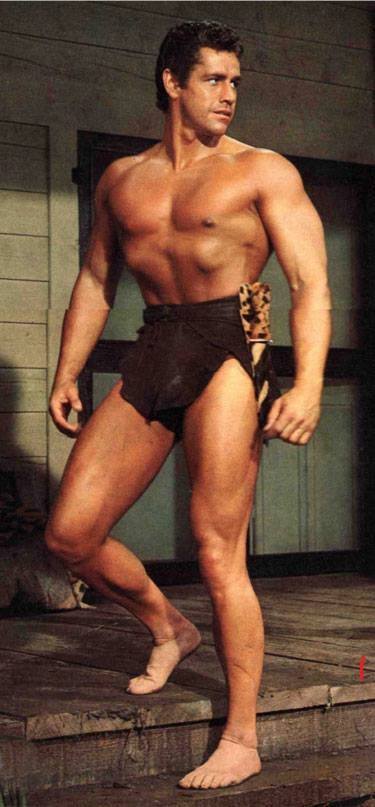
Here’s a Throwback Thursday hunk for you, actor and physique model Gordon Scott:

20728242_10212670337849946_4851579278645951324_n

If Ever You’re In My Arms Again

Thursday! It’s hard to believe Christmas is just next weekend. But I mailed my Christmas cards last night on the way home from work (I am very proud of myself; I generally don’t do cards. But this year I not only bought them, but addressed and stamped them and put them in the mail. Not sure how this all came about, but there you have it.), before stopping at the grocery store, and there it is. I’m a bit worn out this morning, tired despite sleeping well (one lovely thing about colder weather is that I sleep better), but I don’t have a lengthy day today and tomorrow is a short one. I hope to start revising stories today while also working on the book some. We shall see how that goes.

I”m still processing the election results in Alabama the other night. I pretty much saw the whole thing as a foregone conclusion; I am from Alabama and my family is from there, and outside of my immediate family, almost everyone on both sides still lives there. I am very well aware of what the Roy Moore supporters are like, how they think, etc. I didn’t need to red Hillbilly Elegy–I did try, but it’s Appalachian apologia was so smug and frankly, wrong I not only put it in the donation pile but I also donated the cover price I’d spent to the Southern Poverty Law Center. (For the record, I think that book is a falsehood designed not only to fool liberals but to lure them into a false state of understanding; one that will hoodwink them into being fooled again and again. There was nothing true or profound in that book.)

I love Alabama in spite of not only itself but myself. The Alabama values the entire country saw on display during the Roy Moore campaign (a pedophile is better than a Democrat; the entire country is out to get us in a liberal conspiracy; we had no race problems here until Obama; Roy Moore waving his pistol at a rally; everything about Kayla Moore–from her teen pregnancy to  her adulterous affair to her divorce to her gold, diamond encrusted earrings she wore on every occasion to prove to everyone just how much more Christian she is than everyone else) are something I am well-acquainted with; I’ve dealt with that mentality my entire life and have tried, unsuccessfully, to wrap my mind around it for fifty-six years: a Christianity that has nothing to do with the actual teachings of Jesus; an almost fanatical belief that their belief and values are the only right ones and anyone who disagrees is in the service of evil; that Satan is very real and working his evil on the country and the world through the Democratic party; and an absolute, unwavering faith that they are going to Heaven and anyone who disagrees in the slightest way with the way they think is going to straight to Hell unless they repent and change their ways and believe what they do and get on board with their version of not just religion but politics. Religion and politics are very much mixed in the South, and don’t ever believe otherwise; they are used interchangeably to validate the other.

It has always been thus; thus is may always be. And don’t mistake it–this election was far closer than it should have been.

Maybe my outlook is a bit bleak, but the county where my family is from in Alabama went 76% for Moore. So I know whereof I speak.

A while ago, I talked about rereading To Kill a Mockingbird and having a lot more issues with it than I did when I originally read the book, back when I was ten or eleven. Don’t get me wrong, the central message of the book–racism is terrible and wrong–still comes through just as strongly as it did when I originally read it, and it’s still incredibly beautifully written. The problems I saw with it, though, went way beyond the notion or concept of the white savior; which Atticus Finch certainly was. Probably the most false scene in the book to me, and the most problematic, was the scene where Tom is in jail and the sheriff comes to get Atticus because those trashy Ewells have gotten some of the other trashy rural people in the county riled up about Tom’s alleged rape of Mayella Ewell; and they want to lynch him. When I originally read the book the horror of those terrible racists coming to exact an unjust punishment on Tom terrified me, and I was thrilled that the upright citizens of the town came to stand off against them and save Tom. Rereading that as an adult–well, every bit of it read to me as not only false but a-historical. Anyone who knows anything about the Jim Crow south knows that the sheriff wouldn’t have gotten some “good men” together to protect a black man accused of raping a white girl; the sheriff would have been one of them. All one has to do is read accounts of what happened to Emmett Till…and so many others, to call bullshit on this part of the book.

Not every white person in Alabama is, or was, a racist; an active member of the KKK. But those who didn’t stand up to those who were? The word we’re looking for is complicit.

I still haven’t read Go Set a Watchman, but I will at some point. I’m still amused at all the people, mostly white, who were so upset and horrified that their beloved Atticus Finch turned out to be a racist and a segregationist after all. I never once got the sense when I was reading To Kill a Mockingbird, even when I was a child, that Atticus wasn’t a racist; he was appointed by the court to represent a black man accused of raping a white girl–and he did, as he was an ethical lawyer, bound to to defend him to the best of his ability. He did so. Did that make him a better man than a lawyer who might have refused to take the case? Yes, it did. It also made him a better man than a lawyer who would have taken the case and botched it. But what also strikes me as false about this book was the judge who appointed Atticus, knowing he would do the best job possible. Really? Again, all you have to do is read accounts of Jim Crow justice in Alabama to know this is also false. If Tom Robinson wasn’t lynched  he most certainly would have been railroaded. He was found guilty despite the great job Atticus did in his defense, despite proving that Mayella Ewing’s testimony couldn’t have been the truth. That, indeed, seemed real and true to me. But the system in 1930’s Alabama trying to be fair to Tom? Bullshit.

Don’t get me wrong: To Kill a Mockingbird is still a beautiful book, and its message is a good one. But it’s also a fairy tale; a fiction that would have never happened in the time period in which it was set. I also can see why Harper Lee’s editor persuaded her not to publish Go Set a Watchman, in which Scout deals with her father being a segregationist, and write To Kill a Mockingbird, in which her father is a hero fighting prejudice and racism, instead. That was the book that needed to be published at the time; and it was a very savvy move. The book was a huge bestseller, has never been out of print, won the Pulitzer Prize, and was made into an Academy Award winning film classic.

This election, in which a small majority of Alabama voters, led by people of color, chose not to elect the racist homophobic evangelic Christian child molester, was a wonderful outcome on every level. akin to the Louisiana electorate choosing the Democrat over adulterous whoremonger David Vitter for governor. But is this is a sea change for the two deep red Southern states, both of which have a proportionally large evangelical Christian population who seriously believe there were no racial issues in their state until Barack Obama was elected president? Only time will tell–and progressives and Democrats have a lot of work to do in the meantime. A lot. But the South can be won back. It won’t be easy, but it can happen.

And now back to the spice mines.

8ae2faf03b2cfd39ca16762fa3d16751

Spooky

During the Civil War, Harriet Beecher Stowe was invited to dinner at the White House. When she was introduced to President Lincoln, his eyes twinkled and he said, “So this is the little lady who made this great big war.” Stowe, of course, had authored Uncle Tom’s Cabin, published originally in 1852, and it was probably one of the most influential books ever published in the United States.

Born This Way

Monday and we survived Weekend One of Carnival Parades. *whew*. I am exhausted, though, which is never a good thing for a Monday morning of a new work week. Heavy heaving sigh.

Now I know what ‘bone tired’ means. And speaking of ‘bone tired’….

As Constant Reader knows, I taught a session on writing LGBTQ characters at the SinC into Great Writing workshop at Bouchercon this past September in New Orleans. It was an amazing experience, and it was enormously flattering to be asked to do so in the first place. I was also asked to write something for the Sisters newsletter, pretty much given carte blanche to write whatever I wanted to, and since I had an essay about being a gay writer on the backburner (I’ve been toying with it for almost a year) which I was calling “Death by a Thousand Cuts,” I said sure. As I was wrapping up deadlines and looking ahead to the glory days of NOT HAVING ANY DEADLINES, I started writing the essay again, whittling away things from the original unfinished draft that no longer fit my thesis and…I got about halfway through and stopped.

The reason why I stopped? Because it is next to impossible to write about the challenges of being a gay crime writer writing about gay characters without sounding like the biggest whiner in the world, and I don’t want to be that guy.

Then, a question posted on a list-serve I belong to for crime writers triggered some answers that were so horrific, so thoughtless, and so ignorant that I suddenly knew how to write the essay–or at least how to address it with a starting place.

One of the current ‘boiling points’, if you will, in our current society is the question of ‘cultural appropriation’ as well as ‘cultural insensitivity’, and how these questions apply in a broader sense with the American guarantee of First Amendment rights under the Constitution (without getting into the reality–which most people either don’t understand, or chose to ignore– that ‘freedom of speech’ is actually only guaranteed as a protection from persecution and prosecution from the state; not from other people, and certainly not from consequences. The example I always use is, “Well, when I worked at the ticket counter I couldn’t tell a passenger to go fuck himself, could I, without getting fired?”) Recently–I don’t remember where I saw this, but it was on Facebook; I don’t know if it was from an industry publication or a newspaper or something–I read a piece about the major publishers hiring what were called ‘sensitivity readers’ to read manuscripts dealing with characters who were out of the author’s experience to make sure the characters weren’t offensive. I am of two minds about this, and I can certainly understand why people would find this alarming/concerning; how much control/power would these ‘sensitivity readers’ have over the author’s work? Not to mention the fact that no one can speak for an entire community; what one gay man finds offensive the next three you ask may not.

So, yes, I do have a bit of a problem with the concept of sensitivity readers. However, if I were writing a character from a culture not my own; say, a New Orleanian of Vietnamese descent, wouldn’t I want to talk to a New Orleanian or two of Vietnamese descent? Wouldn’t I want my character to be as authentic and realistic as I can possibly make him or her? I’ve talked to cops, private eyes, and FBI agents to make my characters are grounded in reality as I can. So, why wouldn’t a heterosexual writer creating a gay character want to get some insight from a gay person? And so on, and so on, and so on. I don’t see a problem here, but again, that is the work that should be done before the manuscript is turned into the editor and publisher, and I’m not sure how comfortable I would be with that for myself.

Of course, there are those who, because of this, have pulled out the ‘censorship’ battleflag, thoroughly missing the point. The First Amendment does not guarantee anyone a publishing contract, nor does it guarantee a platform; if it does I’d like to be booked on both The Daily Show and Stephen Colbert when my next book comes out, thank you very much. Oh, wait, it doesn’t mean that, after all?

Blimey.

Which is my roundabout way of getting to the latest provocateur, Milo. People were rightly outraged when the conservative imprint of Simon & Schuster gave him a book deal; people were rightly outraged when he started getting invitations to speak at colleges and universities; people were outraged when he got invited to go on Real Time with Bill Maher (whom I also have problems with, but we’re talking about Milo now). As loathsome as the things he says are, I will defend his right to say them against any attempt by the state to silence him. Simon & Schuster is a business; they have a right to give a book deal to anyone they think will make them money (although I seriously doubt this book will make them any money; I see it going onto the remainder table pretty damned quickly, and not even being released in paperback; unless, of course, conservative clubs and organizations buy it in bulk at a deep discount as giveaways for fundraising drives and so forth–which is often how people like Ann Coulter wind up on the bestseller lists), and likewise, college/university groups have a right to invite anyone they want to come speak to them…but rescinding those invitations (and promise of payments and expenses) when said invitations blow up in their faces is not censorship as defined by the law and the Constitution. The same law that gives Milo the right to say what he does also applies to those who oppose the things he says.

That’s um, kind of how our country works.

Being utterly uninterested in anything he has to say (I’ve never enjoyed listening to transphobia or racism), I didn’t watch Real Time with Bill Maher, only watching the clips of Larry Wilmore telling him to go fuck himself, which I will also admit to enjoying immensely. (Of course, now that clips of him talking approvingly of sex between children and adults have turned up–and really, who didn’t think something like this was going to come up; it was just a matter of time–he won’t be getting invited to speak anywhere anymore, and I suspect S&S will be cancelling their book contract.) But Milo–like Ann Coulter before him–fascinates me. (And for the record, I use ‘fascinate’ with the old meaning of like how a snake fascinates its prey; I do think he is kind of dangerous, and snake-like.) I always wonder how people like him come to be. I wrote eighty pages of a Paige novel in which the victim was a Coulter-like character, attempting to peel back the layers and see what could create someone like her/him (that manuscript is in a drawer, as no one had the slightest interest in publishing it). Coulter apparently sees herself as a comedian/performance artist; I sadly know people who know her, and they state she doesn’t really believe what she says but it makes her money; I suspect Milo is kind of similar to her in that regard, yet at the same time…

Take, for example, his appearance on Bill Maher. Milo is precisely the kind of gay stereotype that triggers homophobic reactions from the right, and even from some gay men: he isn’t particularly masculine, and wore enormous faux pearls around his neck on the show, which he played with as he spoke (damn it, I am going to have to watch); he is an effeminate gay man (think a conservative Jack from Will & Grace, or Emmett from Queer as Folk: the kind of gay man that ‘straight-acting’ gay men loathe and despise). The loathing of homophobes for effeminate gay men (and, let’s be honest, a number of GAY MEN as well) has everything to do with the culture of masculinity and the fear of ‘not being a man’; which, really, is where homophobia and sexism and transphobia comes from.

I just saw on Twitter that Milo may lose his job at Breitbart over the pedophilia comments; I am not holding my breath, nor will I hold my breath about losing the contract with S&S. He has, always, positioned himself as a spokesperson for the First Amendment; all of this should give him more material to work with, and of course, I am sure it’s the fault of the ‘politically correct’ who ‘want to silence him.’

So, I doubt he will go gently into that good night, and he will undoubtedly continue to fascinate me the way cobras fascinate their prey before they kill and eat them.

I always am curious at to what made these types of people what they are.