Under the Boardwalk

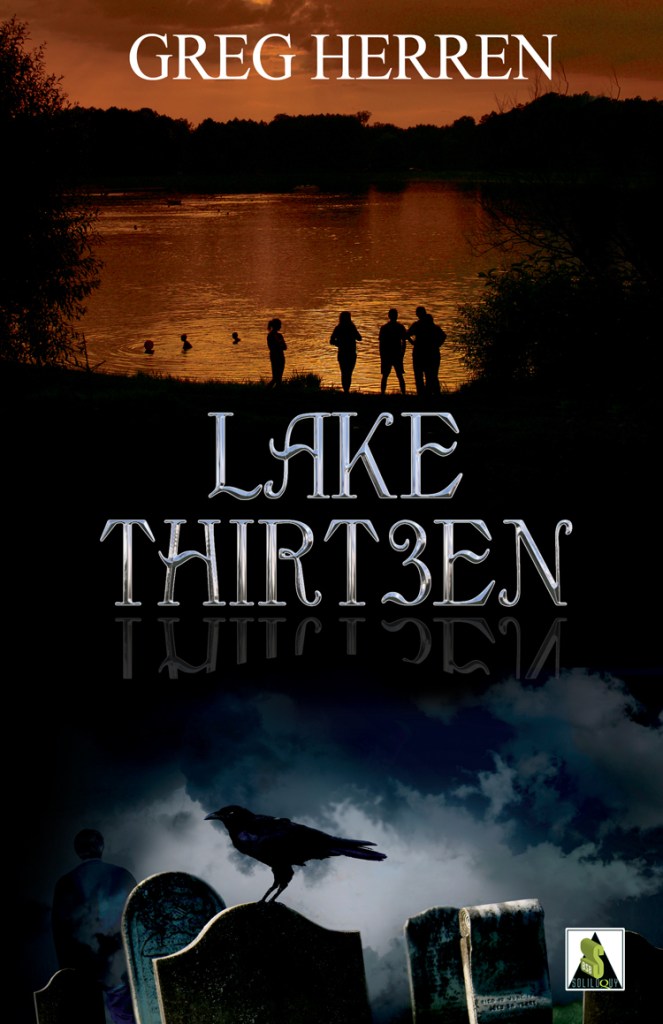
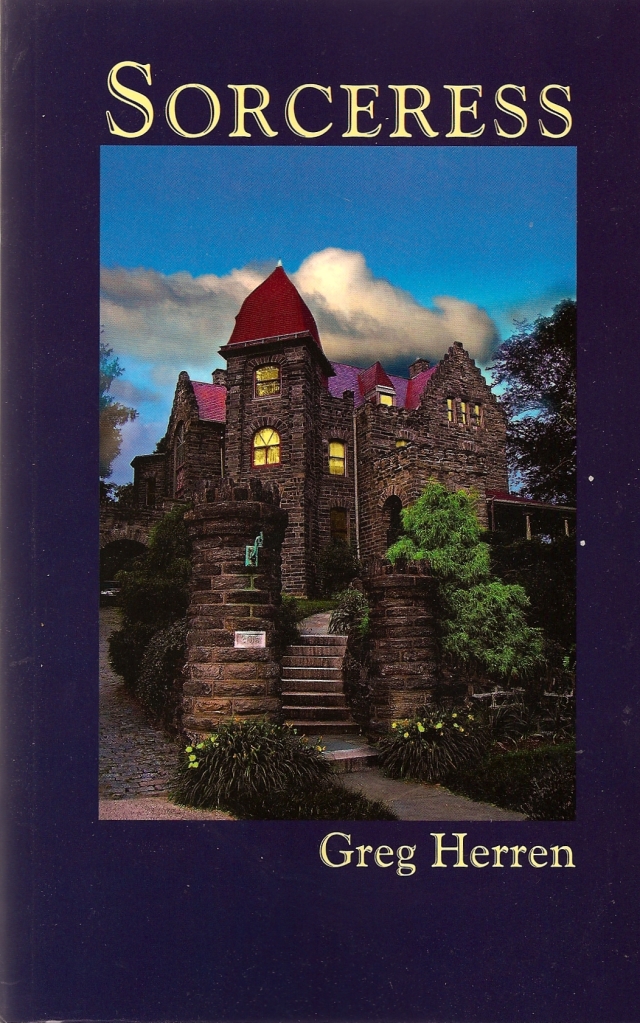
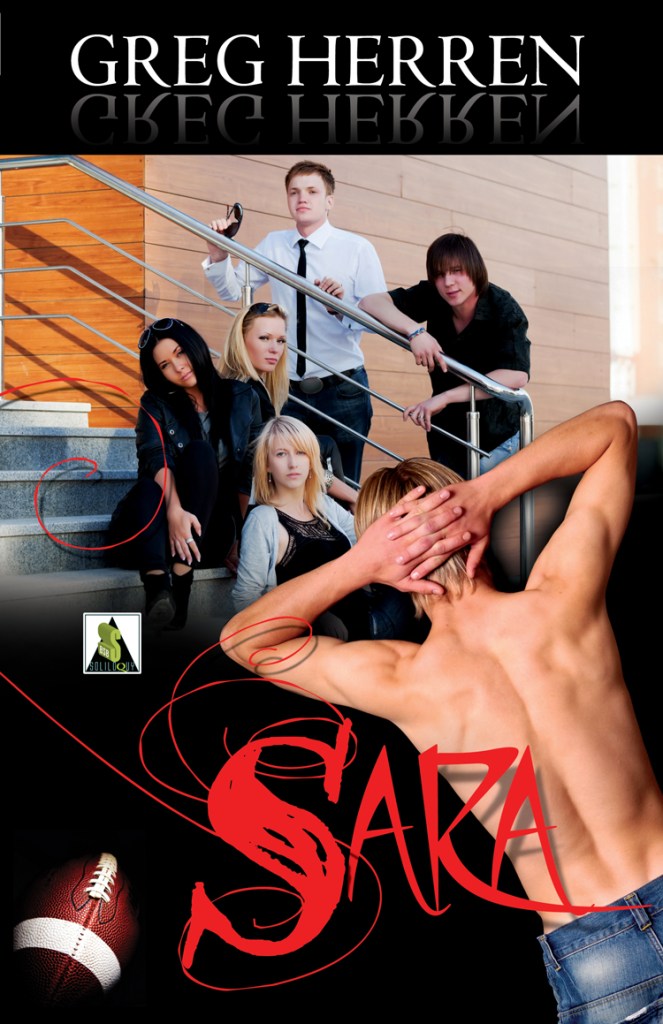
I hadn’t been sure that I would keep writing young adult novels after I revised, rewrote and published the first three (Sorceress, Sleeping Angel, and Sara) I didn’t know if it was a direction I wanted to keep going in. I knew I wanted to do stand-alones–always have wanted to do stand-alones–and I also like writing about teenagers and young adults.

You may remember (doubtful) me talking about a horror novel a while ago that I started writing in the 1980’s called The Enchantress that I only got about three or four chapters into before abandoning (because I didn’t know where to go next with it; and the first chapter I specifically remember rereading at some point in the decades since and shuddering in horror at how badly it was written), but one of the places in the book really stuck in my head–an old family-owned hotel called Mermaid Inn, which sat on the shores of Tuscadega Bay (which was my stand-in for Choctawhatchee Bay–my grandparents retired to a house on that bay and I’d always wanted to write about that area; still do–it’s where “Cold Beer No Flies” was set). After shelving The Enchantress (which I do think about from time to time, and wonder if I should revisit the idea) I kept thinking, you should write a book and call it Mermaid Inn because that is a great title!

I made a folder for it, wrote a few sketchy notes, and then… it sat in my files for a very long time.

If you will remember, I had originally planned to write an entire series of interconnected young adult novels, a la the Fear Street series by R. L. Stine, and one of the varied locations they would be spread out over would be Tuscadega, Florida, in the panhandle on a fictional bay. That was part of the note I scribbled for the folder–set this in the panhandle of Florida, and somehow connect it to the fictional Alabama county you’re going to write about someday.

I decided to write Mermaid Inn sometime after Hurricane Katrina, when I discovered yet again my own ignorance of geography. I was beginning to realize that the panhandle wasn’t the right setting for this book and decided to set it on the Alabama Gulf Coast, which made me realize I had absolutely no clue about that part of Alabama’s geography. I’d just never really given it much thought, to be honest; I knew Mobile was on the bay, and I knew that when you drive on I-10 through Mobile you have to take a tunnel below the Mobile River. I just had always assumed there was nothing south of Mobile in Alabama–I mean, it’s ON the water–and figured that those lower prongs of Alabama that reach down along the sides of the bay were uninhabitable wetlands. I discovered this to not be the case when visiting friends for the first time who lived in Alabama south of Mobile. They told me to take an exit off I-10 and drive south, which I didn’t think was possible.

Turns out it was–and I realized…this will work for my book! So I filed it away and forgot about it again.

I don’t remember precisely why I decided to write Mermaid Inn, but I did, and set in a small town on the prongs, south of Mobile; my friend Carolyn Haines helped me with some background and I know she told me some stories about closeted society men in Mobile and their hijinks and I thought, I could use this for the book and I think that may have been the impetus? And then I created my character, Ricky Hackworth, from Corinth, Alabama–po’ white trash who needs a swimming scholarship to attend the University of Alabama. (Sidebar: alert readers will recognize that Beau’s last name in Bury Me in Shadows–and at one point in the story he mentions he’s only the second Hackworth to go to college; “besides my cousin who got a swimming scholarship.”)

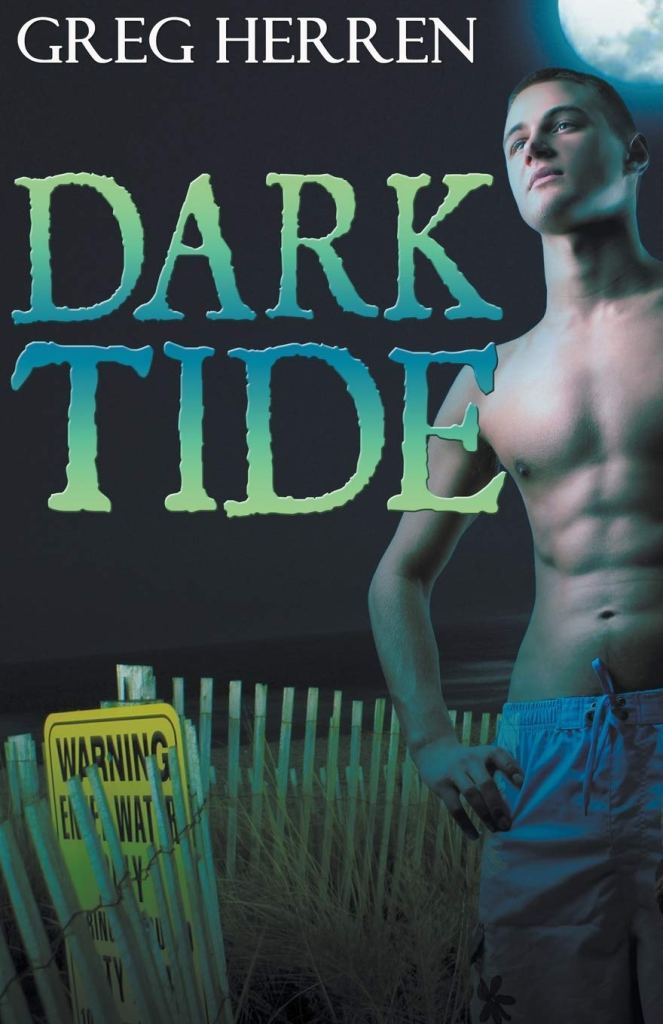
Bold Strokes didn’t like the title, and for perhaps maybe the fourth or fifth time in my career my original/working title didn’t make it on the cover. They recommended Dark Tide, which I really liked because it gave the sense of the book’s mood and tone and voice…and darkness.
The engine of my pickup truck made a weird coughing noise just as I came around a curve in the highway on the Alabama Gulf Coast and I saw Mermaid Inn for the first time.

My heart sank.

That’s not good, I thought, gritting my teeth. I looked down at the control panel. None of the dummy lights had come on. I still had about a half tank of gas. I switched off the air conditioning and the stereo. I turned into the long sloping parking lot of the Inn, pulling into the first parking spot. I listened to the engine. Nothing odd. It was now running smooth like it had the entire drive down. I shut the car off and kept listening. There was nothing but the tick of the engine as it started cooling.

Maybe I just imagined it.

Hope springs eternal.

The last thing I needed was to spend money on getting the stupid old truck fixed. Maybe it just needed a tune-up. I couldn’t remember the last time it had one.

Dad gave me the truck when I turned sixteen. It had been his work truck since before i was born–it was two years older than I was. He’d finally broken down and bought himself a new one. This old one was dependable and had almost two hundred thousand miles on it. Dad had taken good care of it. He’d babied it, gotten an oil change every three thousand miles without fail, and I could count on one hand the number of times it had been in the shop to be repaired.

It still had the original transmission.

It might not have been the nicest or prettiest car in my high school parking lot, but it got me where I needed to go and got good gas mileage. Since I was saving every cent I could for college, that was a lot more important than horsepower and cosmetics and a loud stereo that rattled your back teeth. The swimming scholarship I’d accepted from the University of Alabama wasn’t going to remotely cover anything close to the lowest estimate of what my expenses might be, but it was the best offer I’d gotten.

And I was grateful to have it. If they hadn’t offered, I wouldn’t be going at all.

Swimming was my ticket out of Corinth, Alabama.

That opening scene!

Dark Tide was probably my most hard-boiled young adult title published to that point. It was a dark story, and Ricky was poor–an economic condition I’d touched on with Sara, and something I generally try to avoid when writing. I’ve been poor, and I know how it feels; I don’t like remembering those days of checkbook mistakes and bounced checks and not having enough money from one paycheck to another. Ricky has taken a summer job as the lifeguard at Mermaid Inn in Latona, Alabama (Latona is another name for Daphne, which is actually a town on the prongs below Mobile), to save money to pay for college expenses his swimming scholarship to the University of Alabama wasn’t going to cover, and the water being there meant he could continue training. Once he arrives and is shown to his room on the uppermost floor of the building and meets the owner’s daughter, he learns that his predecessor from the summer before had simply disappeared–and young teenaged boys disappear with an alarming regularity over the past few years. He starts asking questions, mostly out of curiosity, and also starts having horrible dreams, about vicious mermaids beneath the water, and there are a lot of stories about killer mermaids from the days of the indigenous people and the Spanish. I wrote some terrific scenes in this book that I was really proud of–one particular dream sequence was especially chilling–and I was also trying something with the rhythm of the words, which I hadn’t done in a very long time, and I think it worked.

Writing Dark Tide was important to me because this was the book that reminded me again that I was writing stand-alones to help keep the series books fresher, more creative, and less paint by the numbers, too.
Oh Very Young

So, are you ready for some MORE blatant self-promotion?

During the Bold Strokes Book-a-thon, the other panel I was on had to do with writing young adult fiction (the other panelists were amazing, I might add), and once again, I am answering the questions sent to us by the moderator to turn into an interview with JUST me (because it’s all about ME ME ME) but I do urge you to seek out the video of the panel. It was terrific, and I was definitely the most uninteresting person on the panel, seriously; this is NOT self-deprecation. (I bought everyone’s books during the panel, I might add; definitely check out Lauren Melissa Ellzey.)

What is the definition of Young Adult? How does it differ from other genres?

I think it’s primarily an age distinction, to be honest, which is something that always makes me uncomfortable. Growing up I read far above my age level; when I was in seventh grade I was reading at a college level, per the tests and so forth. I mean, I did read The Godfather when I was ten; my parents, despite their conservative religious beliefs and values, let me read whatever I wanted without having to ask permission–I think when I asked Mom if I could read something the last time she replied “Read whatever you want, I don’t care” and after that I never asked again. When I was a kid, there was no such thing as young adult; everything was either for adults or “juvenile.” The juvenile category contained multitudes, beginning with the Little Golden Books and picture books to kids’ mysteries to Judy Blume. I think sometime in the 1980’s the genre was separated into “juvenile” for kids 8-12 and “young adult” for 12-18.

But there are kids like me, who can read above their age/class level and others who can’t read at their age/class level, and I think in some ways that differential could be harmful for those who are below-average readers–reading is the most crucial aspect of education, because if you can’t read…and no matter how many ways they try to make the language around slower readers more accepting and less stigmatizing…it doesn’t really help kids to be told they’re below average or not as smart or quick as the other students. (One of my primary problems throughout my education is I would understand something the first time, while others inevitably didn’t, and as the teacher explained for a second or third or more time, my ADD would kick in and my mind would wander because I didn’t need to listen and then wouldn’t be listening when the teacher moved on.

Ah, well. 

Oh, and all subgenres of fiction also have the middle grade/juvenile and young adult sub-sub-genres.

Why or how did YOU choose YA?

I don’t know that I chose y/a so much as it chose me.

I started writing when I was a child (all my childish scribblings are lost to moves and time passing), and I wrote about kids my age. My first attempts at writing were always some kind of kids’ mystery series, a la The Hardy Boys and The Three Investigators (I’d still like to do this, frankly), and when I became a teenager, I started writing about teenagers. I wrote a bunch of short stories while in high school about the same group of kids going to the same high school. Those stories slowly but surely grew into a sprawling, handwritten novel about the county with plots and subplots and main characters and minor characters and all of this history; a “Peyton Place in Kansas kind of thing”. I worked on it for like five years, and eventually had this enormous sprawling mess that needed to be revised and rewritten and typed…and since I didn’t know how to type, made that part of it a problem. So I shoved it into a drawer and started pulling from it rather than revising it; taking out plots and characters and using them in other books and other stories.

After I finished that, I spent the next five years mostly working on short stories. I started another book, more horror than anything else, but never got further than the third chapter. I finally decided to write a horror novel built from my old manuscript and those short stories from high school. I was about three chapters into it when I discovered two things: there was a big market in y/a horror at the time (Christopher Pike and R. L. Stine were HUGE during this period) and so I bought some of them. When I finished, I thought, “You know, I should turn Sara into a y/a novel” (because I thought somehow that would be easier? Foolish, foolish rookie) and so… I did. I was right in that thinking of it in those terms made it possible for me to finish a draft, but I wasn’t very happy with it so I put it aside and started writing another one, Sorceress, which was also horror but also had some strong Gothic moments in it. When I finished that one, again I wasn’t pleased with it so I started another–Sleeping Angel–which was the one I thought really had potential. I never finished that draft–by this time I’d discovered that gay fiction and nonfiction existed, so I started reading that and trying to write about gay characters instead.

Those manuscripts remained in my drawer for well over a decade, until a friend of mine took a job as a young adult acquisitions editor, and she wanted to work with me. I told her I’d written three (although it was technically two and a half), and gave her a brief synopsis of them. She liked Sorceress the best, so I started revising and editing it and turning it into something publishable. Once it was all done, she’d left that publisher, but started her own small press for y/a books for underrepresented teens, and she wanted to launch the press with Sorceress. I said “okay” and we were off. I eventually realized I needed to let Bold Strokes know, and when I did, I got an email back saying you know we do y/a, too? And so I sold the other two to them, and have never looked back since then.

Are there specific rules for writing YA (things you can’t do)?  Does Bold Strokes add on or impose specific or additional rules?

I don’t pay too much attention to rules, frankly. There’s no graphic sex in my books, but it’s hinted at. I also try to swear less in young adult books than I do in adult fiction, which is probably not as big of a deal as I think it is? The society I grew up in was a lot more puritanical–believe it or not–that the one we live in today. So I always default to that setting, and then have to shake it off. Swearing isn’t as big of a deal as it used to be. No one thinks they’re marrying a virgin anymore, and on and on. And having been attacked for daring to accept an invitation to speak to queer high school students, I tend to tread softly. There have been a couple of times where I’ve had to change language, or how a scene went, because my editor thought it might be problematic; and frankly, I never want to be offensive, so I have no problem with it. I don’t see it as a free speech issue the way so many intentionally offensive writers claim it is. I shouldn’t take offense to someone calling me a faggot? Grow the fuck up. The so-called free speech “crusaders” are always defending hate speech as well as trying to shut up the people who find it objectionable. You do not have a constitutional freedom from consequences or getting a negative response to things you say and do, period. It’s really not hard to understand unless you want to be passive/aggressive and childish and a moron.

How do you remember back to these days, specifically how it felt or feels? (this is coming from your moderator who is much older than you are)

Well, for one thing, I’ve always kept a journal and I still have them all. (I was insufferable when I was younger, seriously.)

My sister has a theory that we forget a lot of the pleasant memories from our childhoods, but remember the traumas in great detail. I believe the truth of that, because school was a nightmare for me from the day we moved to the suburbs until I was done with it. I remember how it felt to read Greg Herren sucks cock on a desk at school. I remember how it felt to be mocked, laughed at, and bullied by assholes. I do remember the good things, though I tend to always focus on the bad.

The first thing I always do is abandon whatever “wisdom” about life I’ve theoretically learned since leaving high school, and put myself into the teenager mindset: they think they are the main characters in everyone they know’s story, and everything is the end of the world or their life is ruined and you are the most horrible parent ever! I’m not entirely sure I’ve escaped thinking that way, to be brutally honest: I am horribly selfish.

How do you come up with your characters?  Your stories? 

I am weird in that I inevitably always start with a title. I hear something or read something and think, that would make a good title. The next question is what story would fit that title? And it kind of goes from there. The title may change, the character names and story might change and evolve, but I can’t write anything that doesn’t have a title. Bizarre, I know. Usually with my young adult stuff it’s an idea I’ve had for a number of years and finally decide to explore whether it’s a novel or a short story, and go from there.

Dark Tide was originally called Mermaid Inn, Bury Me in Shadows was originally Ruins, but the others pretty much stayed the same from beginning to end.

I wrote #shedeservedit because I was angry about the Steubenville/Maryville rape cases, and remembered stories and gossip from when I was in high school and college…and rethinking them through a more evolved brain about women and misogyny… well, it made me angrier. I had already planned on writing a story set in the same town with the same characters and opening with the same murder (I always referred to it as “the Kansas book” for years), but the motive was something I always had trouble grounding in reality. After those cases…it clicked in my head. You need to write this story about small town misogyny, protecting the star jocks from the girls at all cost, and make that the plot. It was easy to write because I was angry. Making it a compelling read was harder, because the subject matter was sickening to me.

I needed to write that book, and I don’t regret doing it, either…but it’s not exactly a feel good story people can escape into, either.

Why do you think YA is so popular?

It’s more accessible, I think. I mentioned reading ability before, and I do think that most readers aren’t into the Great Literary Tomes, hundreds of pages of beautiful writing with no real point or story. People kind of want to escape their cares and worries, and y/a books tend to be really entertaining. We’re competing with phones and tablets and streaming, so we need to write entertaining and engaging books.

Any specific must do-s or must-haves to get your writing each day?

I’m not nearly as anal about that as I used to be, before I returned to work full-time. I am very aware that I have little time to waste when I write, and thus must seize whatever opportunities to write show up. But if pressed, coffee. I can’t write unless I’ve had coffee when I got up.

Southern Nights

I have a confession to make that is more than a little shameful. You see, I occasionally write books that are classified as “young adult fiction” because the protagonists are young; usually high school students, sometimes college. The shameful confession is that I write and publish young adult fiction without reading very much of it. Most of my reading time is devoted to crime novels for adults, the occasional horror novel, lots of history and non-fiction, and the occasional short story. My biggest influences on my y/a are Christopher Pike, R. L. Stine, and Jay Bennett (there will be much more on him at another time); and sometimes I do manage to slide a young adult crime novel into my TBR stack. But outside of crime and/or horror? I don’t read any y/a that can’t be classified as either of those genres.

I’ve also not had the pleasure of reading a great deal of young adult fiction set in New Orleans. The one thing I’ve not actually done–despite writing a lot about New Orleans and a lot of young adult novels–is write a young adult novel set in New Orleans. I read one about a decade ago that I simply loathed; it was a ghost story set around Lafayette #1 in the Garden District, and it just didn’t click with me. I kept thinking the whole time I was reading it, this could have been so much better. It’s not like I don’t have any ideas for young adult fiction set here; I’ve any number of those ideas sitting in my files–everything from Maid of New Orleans to Daughters of Bast, among others–but I think I am resistant to writing New Orleans-based y/a because I didn’t grow up here. It’s hard enough to have Scotty reminiscing about his days at Jesuit High School when I didn’t go there, let alone writing an entire book about a teenager in New Orleans.

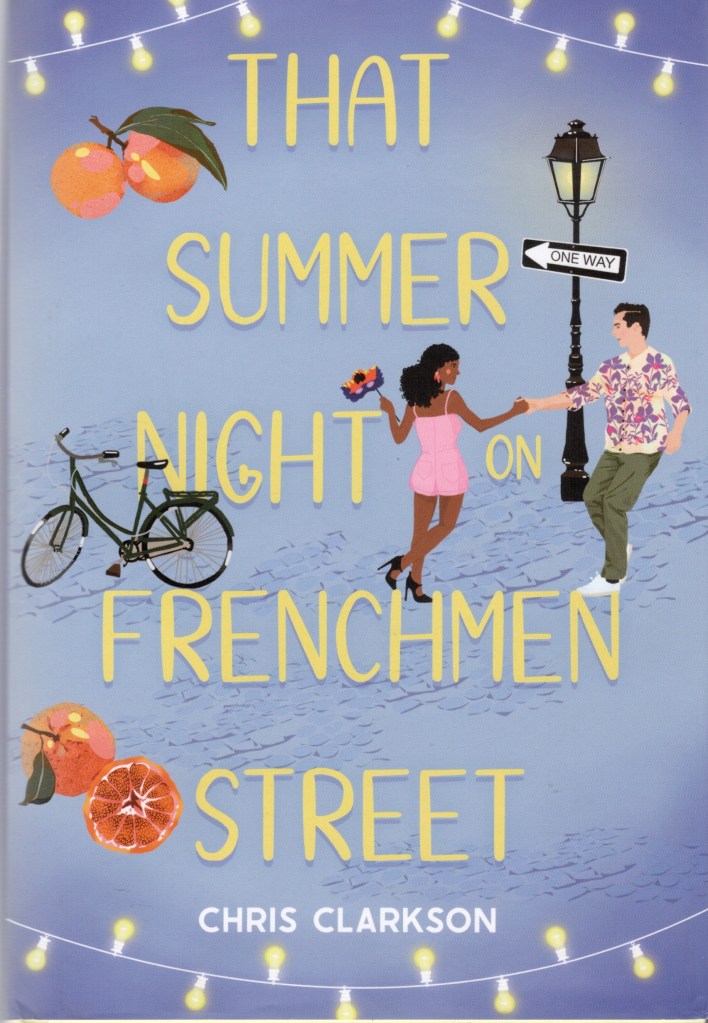
So, imagine my delight this past year at Saints and Sinners when I discovered that one of my co-panelists on the y/a panel was a local named Chris Clarkson who’d just published his first young adult novel set in New Orleans. Naturally, I got a copy–I really liked him, and I owe him a text message–and have really looking forward to digging into it.

Constant Reader, it did not disappoint. And it’s neither crime nor horror.

I absolutely loved it.

Solange’s snakeskin pumps were abandoned by the door, one standing proud, and the other playing possum on its side. Beside her, crumpled in a heap of lavender and lace, was the dress we shopped for on Magazine Street last week. The dress she had been so thrilled to find.

“Excuse me, ma’am. You sashayed in here serving body and hair teased to the gods. Why did you change? I demand an encore! Body. Dress. Wig. Grace.” I pointed at the sad taupe button-down shirt she was wearing. “Put your high heels back on and act like you got some common sense.”

Solange wiped at her tears. “Jess, I’m not in the mood to fool with you.”

“Good, I’m not in the mood to fool with you either.” I sank down on the floor beside her. She sniffed and wiped at her nose. “Why’d you change?”

That Summer Night on Frenchmen Street is, of all things for me to read, a romance–on several different levels. Our two main point of view characters are Tennessee and Jessamine–great names for a couple, don’t you think–and they initially are in the same orbit because they are both having meals at Commander’s Palace when the book opens. Tennessee’s full name is Tennessee Rebel Williams, and he’s a child of wealth and privilege from Oxford, Mississippi. His dad is an alcoholic douchebag and his mother is a narcissistic author. The marriage is a non-stop battle royal, with Tennessee doing most of the suffering. His mother has decided she needs to move to New Orleans to finish her next book, and she brought Tennessee with her; they have a big house on St. Charles Avenue, and he’s enrolled in Magnolia Prep–the rich kids’ private school in the book. Tennessee also wants to be a writer but he’s also a bit adrift; getting ready for college but still not mature enough or strong enough to stand up to his awful parents.

Jessamine is a native New Orleanian with a twin brother and a deceased father. Jessamine also has some issues from her own past that are troubling her, making her behave in self-destructive patterns that could affect her future and college choices. She feels drawn to Tennessee–their developing relationship is one of the strongest parts of the book itself–but cannot commit. She cares about him but keeps him at arm’s length because she’s afraid she’ll just end up hurting him. As the story progresses, we slowly become aware that Jessamine suffered a horrific trauma as a child, one that she’s never really confronted or dealt with, and that trauma is the key to her self-destructive behavior. Her twin brother, Joel, is gay but not out yet; he’s not really sure who he is and what his sexuality is, which causes trouble for him and his love interest, a wealthy young Black kid named Saint Baptiste (who deserves a book of his own, really) goes to school with Tennessee and becomes one of his best friends–since they are falling for twins, how could they not?

There’s also a fantastic trans character, Joel and Jessamine’s cousin Solange–who also deserves her own book–that I couldn’t get enough of, either. Clarkson also does an excellent job of exploring–even if casually–the generational divide between the teens and their parents, through Solange’s tradition; the elders still dead name her, and the teens are always pleased whenever one of the older generation gets Solange’s gender and pronouns correct.

All the main characters, despite their faults and flaws and past traumas, are completely likable and people you can’t hope but root for; you want their love to conquer all, get their lives settled, and grow from their traumatic pasts. It was fun seeing New Orleans through teenaged eyes; I’ve always wondered what it would be like to grow up here, where New Orleans is your default to normality.

Highly recommended, and one of my favorite books set in New Orleans.

That’s Alright

Sunday morning and I slept really well last night, so am feeling rested. I believe the Saints game is tonight, if I am not mistaken, which gives me most of the day to get things done. I did manage to get some things done yesterday in the wake of the LSU debacle; my kitchen is all straightened and cleaned up (I also watched the Auburn debacle against Georgia before giving up on football entirely for the day, as it was clearly not meant to be my day at all) and I finished reading my Donna Andrews book (Round Up the Usual Peacocks, more on that later) while getting started on my revisitation of Interview with the Vampire (which I realized, once again, upon starting that it’s really not a horror story of the kind one usually associates with vampires) and I also got some other things done yesterday as well. Today I have even more things to do, including picking up the groceries I ordered yesterday, and am hoping that I’ll be able to get a lot of things powered through. My coffee tastes great, I feel rested–if a little loopy from sleep, and that should wear off rather soon. A new episode of Interview with the Vampire should drop today as well–it’s fun to reread the book while watching the new adaptation–and of course, tomorrow I have to return to the office to see how much, if any, of a difference returning to the office for Mondays will make in how my work week goes every week.

We watched Sins of Our Mother last night on Netflix, a documentary about the so-called “Doomsday Mom,” who began to believe we were living in the end times and that she and her lover were modern-day prophets, which led to the murders of their spouses, one of her brothers, and two of her children. She hasn’t been tried yet–which of course led to my “why would you make the documentary before the trial?” question–but it was interesting. I feel incredibly sorry for her son Colby, her only surviving child–how do you go on with your life after something like this happens to you?– which is why the impact of crime on people is becoming more and more interesting to me than actually writing whodunnit murder mysteries. How do you go back to your normal life? How do you carry on, go on, get past the horror of your brother and sister being murdered by your mother and her lover? That she has become almost completely insane with religious fervor? I shudder at the thought.

We also started watching the Netflix adaptation of Christopher Pike’s The Midnight Club into a series. I loved Christopher Pike back in the day, once I discovered him; I made a point of going back and reading everything he wrote, and it was reading Pike (and from him, discovering other y/a horror/suspense writers in his wake like R. L. Stine, Jay Bennett, and Lois Duncan) that led me into writing my original three young adult novels (Sara, Sorceress, Sleeping Angel). I liked the Pike novels because they were so damned dark, and happy endings were never guaranteed in a Pike book (I always liked Pike more than Stine, even though I liked the way Stine linked his books together under the Fear Street series header), which I also liked. The Midnight Club is totally dark; the premise is that the book is set in a hospice for terminally ill teenagers, and they gather every night at midnight to tell each other stories–scary stories for the most part, but stories–and they also swear that the first one to die will try to come back and tell the others what death is like…while strange things are going on in the hospice itself, in which you can never be sure if those things are really happening or if the kids themselves are hallucinating from their drug protocols, which as I recall kept me off-balance as I read the book. Such a great premise, really; I don’t really remember much of the book other than the setting and the dying teenagers–which is pretty fucking grim, if you don’t mind me pointing that out–so there’s this almost-casual acceptance of their impending deaths as well as their curiosity about the supernatural and the world beyond–or if there even is one. I remember reading The Midnight Club and thinking “this is really heavy shit for teenagers to digest” but then…I was reading Stephen King when I was a teenager, so there’s that…but Pike was the one who made me realize my perceptions of what you could and couldn’t do in young adult fiction were heavily skewed and incredibly incorrect in almost every way. I’m not sure I am going to write any more of them, to be honest–I do have ideas for any number of others, but I think I’m going to pause my young adult writing for a while and maybe, perhaps, do some stand alones that are for adults rather than a young adult audience…(although I think mine do qualify as readable by adults, too, but I am not the best judge of any of that, really)

I really need to work on my book this morning once I finish this and get cleaned up. I want to do a little more reading on Interview today, and I have some other things that need to get done, too. The key is to not allow myself to get derailed or distracted, which is never an easy thing for me to have not happen, you know? I sometimes wonder how much I could get done if I weren’t so easily distracted from everything, but there you are; we’ll never know because I will always be distracted. Heavy sigh.

And on that note, I am going to head into the spice mines this morning. Y’all have a lovely Sunday and if you have an NFL team you root for, I hope they do well today.

Dark Tide

I hadn’t been sure that I would keep writing young adult novels after I revised, rewrote and published the first three (Sorceress, Sleeping Angel, and Sara) I didn’t know if it was a direction I wanted to keep going in. I knew I wanted to do stand-alones–always have wanted to do stand-alones–and I also like writing about teenagers and young adults.

If you remember, a few entries back I talked about a horror novel I started writing in the 1980’s called The Enchantress that only got about three or four chapters into before abandoning (because I didn’t know where to go next with it; and the first chapter I specifically remember rereading at some point in the decades since and shuddering in horror at how badly it was written), but one of the places in the book really stuck in my head–an old family owned hotel called Mermaid Inn, which sat on the shores of Tuscadega Bay (which was my stand-in for Choctawhatchee Bay–my grandparents retired to a house on that bay and I’ve always wanted to write about that area). After shelving The Enchantress (which I do think about from time to time, and wonder if I should revisit the idea) I kept thinking, you should write a book and call it Mermaid Inn.

I made a folder for it, wrote a few sketchy notes, and it sat in my files for a very long time.

If you will remember, I had originally planned to write an entire series of interconnected young adult novels, a la the Fear Street series by R. L. Stine, and one of the varied locations they would be spread out over would be Tuscadega, Florida, in the panhandle on a fictional bay. That was part of the note I scribbled for the folder–set this in the panhandle of Florida, and connect it to the fictional Alabama county you’re going to write about somehow.

I decided to write Mermaid Inn sometime after Hurricane Katrina, when I discovered yet again my own ignorance of geography. I’d just never really given it much thought, to be honest; I knew Mobile was on a bay, I knew when you drove on I-10 through Mobile you have to take a tunnel below the Mobile River. I just had always assumed there was nothing south of Mobile in Alabama–I mean, it’s ON water–and figured that those lower prongs of Alabama that reach down along the sides of the bay were uninhabitable wetlands. I discovered this to not be the case when visiting friends for the first time who lived in Alabama south of Mobile. They told me to take an exit off I-10 and drive south, which I didn’t think was possible.

It is.

I don’t remember precisely when or how or why I decided to write Mermaid Inn and set in a small town on the prongs, south of Mobile; I just know now that at some point I decided to do this–and my friend Carolyn Haines might have been involved; I know she told me some stories about closeted society men in Mobile and their hijinks and I thought, I could use this for the book and I think that may have been the impetus? And then I created my character, Ricky Hackworth, from Corinth, Alabama–po’ white trash who needs a swimming scholarship to attend the University of Alabama. (Sidebar: alert readers will recognize that Beau’s last name in Bury Me in Shadows–and at one point in the story he mentions he’s only the second Hackworth to go to college; “besides my cousin who got a swimming scholarship.”)

The engine of my pickup truck made a weird coughing noise just as I came around a curve in the highway on the Alabama Gulf Coast and I saw Mermaid Inn for the first time.

My heart sank.

That’s not good, I thought, gritting my teeth. I looked down at the control panel. None of the dummy lights had come on. I still had about a half tank of gas. I switched off the air conditioning and the stereo. I turned into the long sloping parking lot of the Inn, pulling into the first parking spot. I listened to the engine. Nothing odd. It was now running smooth like it had the entire drive down. I shut the car off and kept listening. There was nothing but the tick of the engine as it started cooling.

Maybe I just imagined it.

Hope springs eternal.

The last thing I needed was to spend money on getting the stupid old truck fixed. Maybe it just needed a tune-up. I couldn’t remember the last time it had one.

Dad gave me the truck when I turned sixteen. It had been his work truck since before i was born–it was two years older than I was. He’d finally broken down and bought himself a new one. This old one was dependable and had almost two hundred thousand miles on it. Dad had taken good care of it. He’d babied it, gotten an oil change every three thousand miles without fail, and I could count on one hand the number of times it had been in the shop to be repaired.

It still had the original transmission.

It might not have been the nicest or prettiest car in my high school parking lot, but it got me where I needed to go and got good gas mileage. Since I was saving every cent I could for college, that was a lot more important than horsepower and cosmetics and a loud stereo that rattled your back teeth. The swimming scholarship I’d accepted from the University of Alabama wasn’t going to remotely cover anything close to the lowest estimate of what my expenses might be, but it was the best offer I’d gotten.

And I was grateful to have it. If they hadn’t offered, I wouldn’t be going at all.

Swimming was my ticket out of Corinth, Alabama.

That opening scene!

Sleeping Angel

I originally started writing Sleeping Angel in 1994.

That seems like such a long time ago, too. I hadn’t met Paul yet, was still working for that wretched airline at the airport, was broke broke broke and often ran out of money long before payday, and any kind of decent life for me seemed impossible. It was the next year I decided to snap out of the constant feeling sorry for myself, and instead of waiting for the world to come knocking on my door to make my dreams come true, that the only person who could make my dreams a reality was me, and that I needed to make the changes necessary to my life if I were going to become a writer for real–like stop dreaming about it and writing now and then, and start taking it seriously and writing all the fucking time, and trying to make it happen–which meant sending things out to try to get them published.

It’s weird how you forget things about books you’ve written until something out of left field reminds you of something. Julie Hennrikus, during our Sisters in Crime podcast interview, asked me about writing young adult fiction, and how I came to do that. The story is very simple, really; after discovering Christopher Pike and R. L. Stine and other young adult authors who wrote young adult novels that were either crime or horror or a cross of the two, I decided to take the book I was writing at the time–Sara–and write it as a young adult novel instead of as one for adults. It really didn’t take a lot, to be honest–I removed the framing device that firmly set the book back in the 1970’s–and turned it into a modern day story about teenagers (which it always was). After I finished Sara, I wrote another called Sorceress–and when I finished it, I began writing Sleeping Angel. I still didn’t have a strong grasp of how writing actually worked (which is kind of embarrassing when I remember how naive and stupid I actually was back then, but what did I know. seriously? Very little.) and so I never rewrote anything; I just printed them (I had bought a very inexpensive word processor that I loved, and wrote on) out and saved the originals. I was about half-way through Sleeping Angel when I discovered there was such a thing as queer crime novels…so I abandoned writing young adult fiction and started thinking more in terms of writing a gay private eye series…which eventually became the Chanse MacLeod series and Murder in the Rue Dauphine.

Flash forward another decade or so, and in the spring of 2005 I attended BEA and the Lambda Awards in New York. I lost twice that year (Best Gay Mystery for Jackson Square Jazz and Best Scifi/Fantasy/Horror for Shadows of the Night) and then on Saturday night I attended a cocktail party for the Publishing Triangle. (It was at this party that I met both Tab Hunter and Joyce Dewitt.) I also met a very nice man who was familiar with my work, and asked me if I had ever considered writing young adult fiction with gay characters and themes? I laughed and replied that I had two completed first drafts and a partial for another in a drawer back home; he then gave me a business card and told me he would love to take a look at them with an eye to publishing. I lost the card years ago, probably in the Katrina aftermath, but he was an editor for Simon and Schuster Teen, which was very exciting. I told him I would revise one and send it to him as soon as I finished Mardi Gras Mambo, which was at that point over a year overdue (I didn’t mention that part). This was exciting for me, as one can imagine; another opportunity gained by simply being in the right place at the right time, which has been the story of my career pretty much every step of its way. Once I finished Mardi Gras Mambo that August, I started revising Sara.

And then came Hurricane Katrina, and everything went insane for a few years, and I abandoned the attempt to rewrite Sara. There was just too much going on, I was displaced and finding it hard to get back into writing, and I just wasn’t in the right place emotionally to revise or rewrite a book. I’ve always regretted that last opportunity.

Flash forward another year or so and I casually mentioned to a friend this missed opportunity. What I didn’t know when I mentioned it (bemoaned it, really; I still regret this lost chance) was that she had been working for another publisher as an acquiring editor for young adult/children’s work. “Would you rewrite one of these for me? I’d love to pitch this to the company.” So….rather than Sara, I went with a rewrite of Sorceress, which had a teenaged girl lead character and I didn’t see any place to add queer content (I’d been adding that to the revision of Sara ) and sent it to her. Alas, before she had the opportunity to pitch it the line she acquired for was closed down and that was the end of that….until a few years later when she decided to start her own small press for juvenile/young adult fiction, and wanted Sorceress. I sent it to her, we signed a contract…and then I realized I needed to let Bold Strokes Books know I was doing this. I emailed them, and they replied, “You know we do young adult?”

Well.

I wrote back and mentioned I had two others collecting dust, and so I contracted both Sara and Sleeping Angel with them. I decided to do Sleeping Angel first–which is odd, as I didn’t even have a completed first draft; I don’t remember why I decided to do this, frankly–and so I started writing and revising.

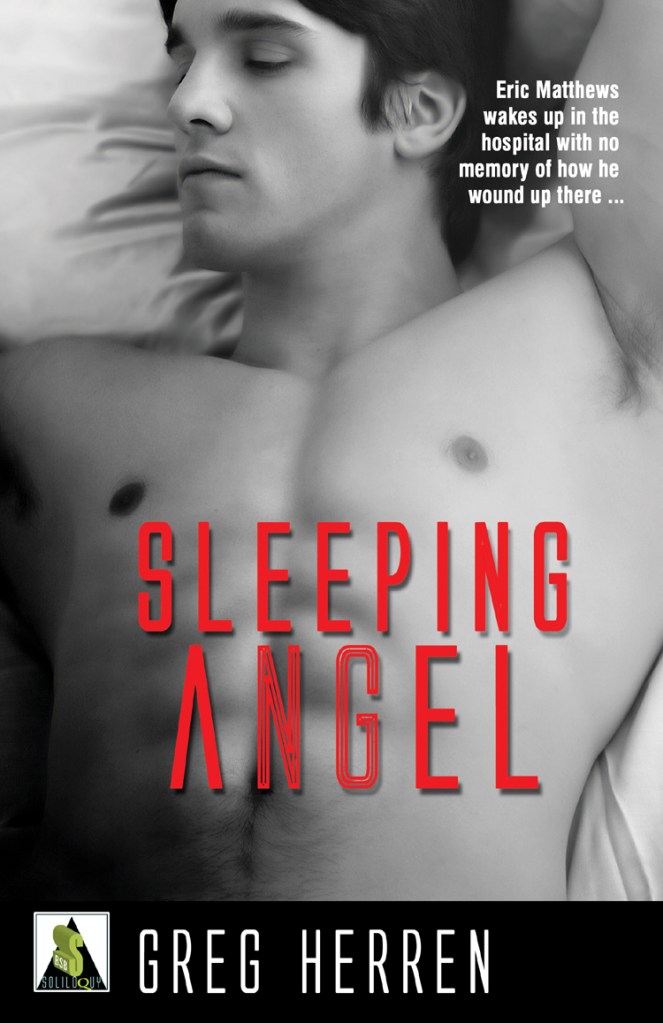
The really funny thing–just looking at the cover for the book–is that the character name “Eric Matthews” was one I came up with when I was in college; I had an idea for a book set in my fraternity, and came up with three names for characters that were pledge brothers and friends: Eric Matthews, Chris Moore, and Blair Blanchard. I used Eric and Chris for Sleeping Angel (completely forgetting that I had already used those names in Every Frat Boy Wants It a few years earlier), so yes, even though the fraternity books I used were by “Todd Gregory”, I accidentally re-used the character names.

Whoops.

The original intent with my young adult fiction was to connect it all together, the way R. L. Stine did with Fear Street, and sort of how all of Stephen King’s work is as well. The three books I started with–Sara, Sorceress, and Sleeping Angel–were connected, and were the springboard from which the others would come–or were supposed to come, from. Sara was set in rural Kansas. The main character of Sorceress moved from rural Kansas to a small town in the mountains in California, Woodbridge, which was also where Sleeping Angel was set. The main character of Sara moved to Kansas from the Chicago suburb where the main character of Lake Thirteen was from, and so on. (Likewise, the main character from Dark Tide was also from the same county in Alabama where Bury Me in Shadows took place, and #shedeservedit was set in the town that was the county seat for that rural Kansas area where Sara was set.) I’d consciously forgotten that, but fortunately my subconscious still holds on to things the forefront of my brain doesn’t.

When I originally envisioned Sleeping Angel back in 1993 (or 1994, I don’t remember which), the concept I wanted to explore was something, a concept, that Dean Koontz had used in his book Hideaway–that someone was in a car accident and died, only to be resuscitated by the EMT’s. But when he came back to life, he brought back something with him from the other side that gave him a psychic connection with a serial killer. It was an interesting idea–I wasn’t using the serial killer thing–but I loved the entire concept of someone being brought back with something extra (which, now that I think about it, is also the entire conceit Stephen King built The Dead Zone around). I decided to keep the car accident to open the book in the new version, but the opening I originally wrote had to be tossed. I also came up with an entirely new concept for the book: what if you were in a bad car accident, but there was a dead body in the car who was NOT killed in the accident but had been shot and was already dead when the car crashed? And if the main character has amnesia….who killed the kid in the back seat?

And away we went.

He was driving too fast, and knew he should ease his foot off the gas pedal, bringing the car down to a safer, more manageable speed.

But he couldn’t bring himself to do it.

“Hang in there, buddy,” he muttered grimly under his breath, taking his eyes off the road for just a moment to glance in the rearview mirror into the backseat. What he saw wasn’t encouraging. Sean’s eyes were closed, and he couldn’t tell if Sean was still breathing.

The blood–there was so much of it, and it was everywhere.

He swallowed and took a deep breath, trying to hold down the panic. He had to stay calm. He couldn’t let the fear take over, he just couldn’t. He had to hold himself together. He had to get to town, to get Sean to the hospital before it was too late–if it wasn’t already too late.

Not a bad beginning, right? Pulls you right into the story.

I don’t remember what–if anything–I was expecting when Sleeping Angel was finally released (it actually wound up coming out before Sorceress, ironically); it had not even been six years since the right-wing homophobes had come for me for daring to accept an invitation to speak to high school students in a Gay-Straight Alliance. And now I’d actually dared to write a book about teenagers, for teenagers. The horror! But the book come out and there wasn’t even the slightest whisper of controversy about the “gay pornographer” writing a y/a book. It got really good reviews for the most part, people really seemed to enjoy it, and it eventually won a gold medal for Outstanding Young Adult Mystery/Horror from the Moonbeam Children’s Book Awards, which I’d never heard of but was kind of a big deal, or so I’m told. The gold medal was nice, too–very pretty (but it’s not the rock from the Shirley Jackson Awards–the smooth polished stone I got for being a finalist may be my favorite thing I ever received as recognition for my writing).

I’m still pretty proud of Sleeping Angel.

Here Comes That Rainy Day Feeling Again

I didn’t start reading young adult fiction until I was an actual adult.

I didn’t read it when I was an actual young adult,, which I’ve tried to remedy in the years since I discovered that there is young adult fiction that is not “ABC Afterschool Special” style drama–these abounded to an extreme when I was a teen; everything was a cautionary tale. You want to have sex? Here, read Mr. and Mrs. Bo Jo Jones or My Darling My Hamburger. Drugs? You should read Go Ask Alice. And on and on it went…the 1970s were a very weird time to go through puberty and your teens, especially if you were beginning to realize your sexuality was all wrong and you needed to hide almost everything true and honest about yourself from everyone you know. There were actually good books for teens being written and published during that time, of course; I just never found them (some have been recommended to me by friends who are the same age and read them at the time; Trying Hard Not to Hear You by Sandra Scoppetone could have made a significant difference in my life had I read it back then).

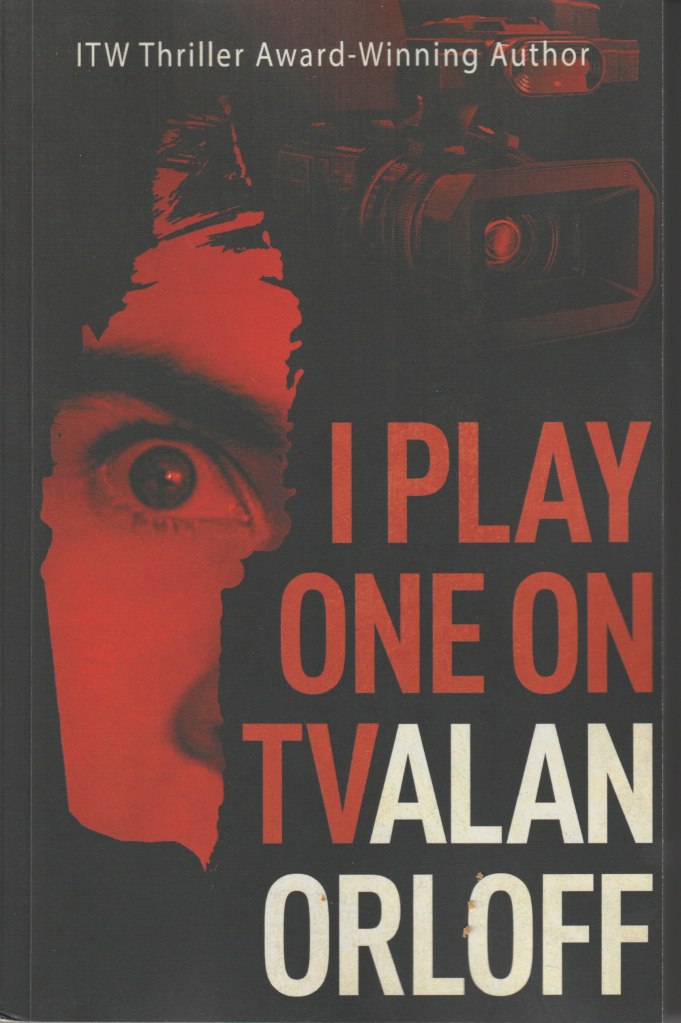
But in the early 1990’s, I started reading horror/mystery novels by teens by Christopher Pike, which led me to R. L. Stine’s Fear Street books and my favorite mystery writer for teens–the forgotten and vastly under-appreciated Jay Bennett. Those books got me to start writing my own y/a horror/mystery/suspense novels for teens–which eventually became my novels Sara, Sleeping Angel, and Sorceress–and I continue to write them from time to time; my last two releases were actually young adult fiction (or marketed as such). I try to keep my hand in the field by reading horror/mystery/suspense novels for young adults that are more current; it’s hard to keep up with everything I want to read as it is, but I was really happy one of the books I took with me on my trip was Alan Orloff’s Agatha Award winning (and Anthony Award finalist) I Play One on TV.

He watched as a teen in a dark hoodie emerged from a storage closet and crept into the high school locker room. In the dum light, the shadowy figure advanced, slowly, methodically. In his left hand, a knife blade glinted.

The man’s insides constricted as he observed. He could almost smell the stale sweat left behind by the athletes after football practice, soon to be replaced by the stench of fear and the coppery odor of fresh blood.

The feelings he experienced now–rage, fear, excitement–mirrored those he had felt then, five years ago. When he had been the teen in the hoodie in that locker room. When he had been wielding the knife.

When he had been stalking his unsuspecting victim.

The premise of I Play One on TV is very original and clever: the main character is a teenager with ambitions of becoming an actor–he has an agent, goes out on auditions for commercials and local theatre productions, and works with his high school’s summer theater camp–and thus far his biggest break was starring as a teenaged killer in a true crime reenactment series. The killer he is playing, Homer Lee Varney, was a bullied outsider who murdered a jock, and has recently been released from prison due to a legal technicality. Dalton’s two best friends are also aspiring actors, and shortly after his episode of the show airs, someone starts stalking him–and he fears he is being stalked by the actual killer.

But was Homer guilty, or was he railroaded? Dalton has found some discrepancies in the police reports which indicate that the investigation might not have been as thorough or efficient as one might think…so maybe Homer isn’t a killer after all?

Dalton, despite his faults (and it’s to Orloff’s credit as a writer that he doesn’t make Dalton perfect–especially since this is a first person narrative), is easy to connect with, identify with, and root for to succeed–not just as an amateur private eye but as an actor and as a person. He’s a bit selfish and self-absorbed (as creative artists have a tendency to be), and he also has some serious professional jealousy for a schoolmate who often winds up going up for the same parts–but gets them instead of Dalton (which is a stage name). Dalton’s relationships with his parents and with his sister are also realistic and well drawn, and the story/mystery progresses at an excellent pace, and comes to a very satisfying, enjoyable conclusion.

I Play One on TV recently won the Agatha Award for Best Childrens/Young Adult Novel, and also received an Anthony nomination in the same category.

Definitely recommended!

All for You

Saturday, and it’s lovely to have it be the weekend again. Huzzah!

I finished “Never Kiss a Stranger” last night after the gym, which made me extremely happy. It’s slightly less than twenty thousand words, and it needs a lot of work before anyone else will ever be allowed to see it, but that’s two novellas down, and as they sit right now that means the collection sits at around forty thousand words; halfway done. Huzzah! This makes me quite happy, frankly. I had thought I’d finish it over the course of this weekend, and having it finished already means I have the weekend free to do some other things, other writing. Reading and cleaning, definitely.

So, the first part of the final line edit of Bury Me in Shadows dropped into my inbox last night, and so I skim-read it last night in my easy chair while we watched a few episodes of Happy Endings–which was quite funny, although some episodes missed the mark; I am really surprised it only lasted three seasons–and having NOT read it in months, I was relatively pleased with it. It’s much better than I remembered, to be honest, and it flows really well, and it feels like I nailed the main character’s voice. The mood seems right, too. This is quite a relief, frankly. One of the hardest parts of writing anything, for me at least, is the contempt that familiarity brings in its wake. I am so roundly sick of everything I write by the time I turn it in I literally have no concept as to whether it’s any good or not, if I got the mood and the characters right, if it flows…so inevitably there’s always that moment when I hit send on the email with the manuscript attached where I have that fleeting thought this could be the last nail in the coffin of your career. So, it was quite a relief last night to read the first third of it, post line edit clean-up, and realize, hey, this is really pretty good. I am kind of proud of this book, and hope my readers like it, too.

I’m also pretty pleased with myself for finishing “Never Kiss a Stranger” last night. As opposed to “Festival of the Redeemer”, I knew what the ending for this one was going to be–the question was how to get there. (“Festival” I only had a vague idea of what the end would be, but the proper ending revealed itself to me as I got closer to the end, and I am pretty happy with its ending as well.) Both stories are going to need significant edits and revisions–I suspect there are a ridiculous amount of run-on sentences to break up; paragraphs that need to be moved; scenes to be strengthened; and maybe even a scene or two that need to be added. I also want to revise “The Sound of Snow Falling” this weekend; possibly write a chapter of Chlorine, and get to work on either the next novella, or another story (for some reason, “Parlor Tricks” has been hanging out in my frontal lobe this past week); I definitely want to finish reading Bath Haus so I can move on to Razorblade Tears.

I also slept rather well last night–I even slept in a little later than usual this morning, which was not only a surprise but a very pleasant one. We watched Fear Street 1978 last night, which was a lot of fun (the first was better, but it also set a pretty high bar), and next week the final episode, Fear Street 1666, drops, which should also be a lot of fun. I read a lot of the Fear Street books back in the day–they were fun–and R. L. Stine, whom I finally got to meet a few years back, was quite a lovely man; very gracious and kind (which was really nice; it’s awful when you meet someone whose work you admire and they turn out to be horrible).

Looking around the apartment this morning as I sit here, slurping coffee and scarfing down coffee cake, there’s also a lot of cleaning that needs to be done around here, too. I have errands to run later–getting the mail; picking up a book at the library; possibly stopping around Uptown to take pictures; possibly stopping to get a few things at the grocery store–but for now, I am content to just sit here and write this and drink my morning coffee, and bask in the glow of being well-rested as the caffeine slowly clears the cobwebs inside my head. Paul is going to the office this afternoon, which is a prime opportunity for me to get some more writing done rather than wasting time watching videos on Youtube (which has become my go-to when I am too tired to focus on anything or don’t want to commit to watching a movie or something)–I love the Kings and Generals channel; I watched some great videos of theirs on the sack of Constantinople during the Fourth Crusade in 1204, which is the starting point for a stand-alone Colin book I’ve always wanted to write (I know, I know–but I’ve always wanted to do a Colin stand alone which is an action-adventure thriller along the lines of Indiana Jones or Dirk Pitt; I’ve had this idea since the late 1980’s, and after creating the character of Colin I realized he was the perfect lead for this story, should I ever get around to it…and then I think, wouldn’t it be fun to do a series of books about Colin’s capers while he’s away? And then think, but part of what makes him so fun is that he is kind of an international. man of mystery and then but he still would be that to Scotty, just not to the readers…and yeah, you see how this goes)–so who knows what will happen today? Tomorrow I definitely have to go to the gym and have a good workout; I enjoyed last night’s work out but the problem with those week night workouts is there’s always too many other people there, which I have never liked…so Sunday’s workout is inevitably the best one of the week.

And on that note, I should probably get to work else I will wind up wasting the day. Have a happy Saturday, Constant Reader!

History Has Its Eyes On You

Ah, Independence Day.

That’s really what the 4th of July commemorates–the day the Continental Congress ratified, and began signing, the Declaration of Independence, when the thirteen British colonies along the Atlantic seaboard threw off the yoke of the King of England and his Parliament and said, nah, thanks–we’re going out on our own. It was extremely radical–particularly since the British Empire was the greatest power in the world since the end of the Seven Years’ War (to the colonials, the French and Indian War) in 1763; perhaps the largest empire to date in world history.

And yet…no rights for women and there was still slavery for another ninety-odd years, give or take.

Someday I will write an essay about American mythology and how I learned it as absolute truth as a child; American history (or rather, US history) was my gateway drug to world history. I should have gone into History as my major in college; it’s entirely possible that History rather than English (or business; I switched back and forth between the two for a very long time) might have garnered an entirely different result when it came to my academic career. But I also would have had to have picked a time to specialize in, and how on earth could I have ever decided? There were so many interesting periods…although inevitably, I tend to think my metiér would have been sixteenth century Europe.

Someday–probably after I retire–I am going to write A Monstrous Regiment of Women.

Yesterday was rather lovely. I actually slept late, of all things; I cannot remember the last time that happened, and thus got a rather late start to my day. I started cleaning up around the house, and organizing things, but again–a late start kind of threw me off my game a bit, and I didn’t get near enough done that I had wanted to get done. I did read a couple of short stories for the Short Story Project, and I also read some more of Robyn Gigl’s wonderful By Way of Sorrow; that was lovely. I also listened to some Bette Midler albums on Spotify (joking on Facebook that I was doing my part to break down gay stereotypes by doing so); in particular I listened to It’s the Girls and Bette Midler, before moving on to Liza with the Cabaret soundtrack, and the little known sequel to Rocky Horror soundtrack, Shock Treatment, and then moved on to the Pet Shop Boys. I made meatballs in the slow cooker for dinner, and then we watched Fear Street 1994 (which was remarkably fun), then a few episodes of High Seas (which is really fun) and a few episodes of Happy Endings before bed.

R. L. Stine and Christopher Pike, who were hugely successful writers of young adult suspense/mystery/horror in the 1990’s, actually had an influence on me as a writer, surprisingly enough. I read most of their novels when I lived in Tampa back in the day (I actually preferred Pike, to be honest), and I actually wrote three novels–Sara, Sorceress, and Sleeping Angel–for young adults during that time. I had always intended to do the Fear Street thing–where the books were all connected somehow and minor characters in one would become the lead characters in another–and spread them across the country, as opposed to one town, as Stine had done; mine would be scattered between Kansas, California, Chicago, and Alabama (one of those ideas became Dark Tide and another Bury Me in Shadows). Then I discovered, through Paul, gay mysteries and all those ideas went into a drawer, along with those manuscripts, and I started creating Chanse and his world, and what eventually became Murder in the Rue Dauphine.

Fear Street 1994 is a lot of fun, as I said, both a mystery, a slasher film, and horror–the main romantic story is a lesbian love story, which was very cool–and it also slightly involved class differentials between the town of Shadyside (often called Shittyside) and it’s wealthier, preppy neighbor, Sunnyvale. It was a fun homage to Scream as well, and it was clever, witty, and quite a fun ride. I do recommend you watch it, if you like those kinds of movies. Nothing deep, but lots of fun, and now I can’t wait for the next part of the trilogy, which drops this Friday: Fear Street 1978.

I did try writing yesterday, without much luck, logging in less than a thousand words. But rather than despairing, as I am wont to do (Oh no! I knew I was breaking my momentum!), I chose to understand and recognize that the scene I was writing needed to be set up better–which was why it wasn’t working–and it needed more than just the cursory slide over I was giving it. I am going to open the document back up later this morning–probably after getting another load of laundry finished, and emptying the dishwasher–and scroll back a bit to start revising and getting into the story again. There really is such a thing as thinking too much about what you’re writing; that’s when the door to doubt starts to open a crack and Imposter Syndrome starts saying pssst through that open crack in the door.

And on that note, I am heading back into the spice mines. Have a happy and safe 4th of July, Constant Reader!

Everything’s Gone Green

My memory has truly become amazingly awful and limited as I grow older. Yesterday was one of those days that reminded me just how bad it’s become–and how rarely I follow through on plans I make.

I started writing about Kansas when I was a teenager living in Kansas, and I wrote a long, messy manuscript by hand that was essentially a kind of Peyton Place tip-off, with tons of characters and plots and subplots that meandered about and never really had one cohesive central story. Over the years since that handwritten, almost a thousand page first draft was finished, I came to the realization that as a single novel itself I would need to cut out a minimum of fifty percent of the characters and even more of the subplots while tightening it into one cohesive story. The name of the town changed multiple times, as did the names of the some of the characters, while others remained the same from beginning to end. I had no idea at the time of how to write a novel, or how to structure one…but since it already existed, I began mining it for other novels and short stories, pilfering names and subplots and so forth (the murder story in Murder in the Garden District, and the Sheehan family in the book, were directly lifted from this old manuscript; I changed the family name from Craddock to Sheehan). My young adult novel, Sara, also had a lot of story lifted from this same old manuscript–even characters’ names–so when I started building this iteration of what I’ve taken to calling “the Kansas book” over the years, I knew it was possible I was repeating names from the old original, and at some point I would have to check Sara at some point to get the character names from it, to not repeat them. The Kansas book was also intended to be set in the same world as Sara–Sara being primarily set in the county and the small grouping of three small towns consolidated into one high school; with this book set in the county seat, the small city/large town I called Kahola. Kahola never really sat well with me for the town name; it’s perfectly fine for the name of the county as well as the lake (there actually is a Lake Kahola; it’s where we went when I lived there and “went to the lake”), so I decided to change it to Liberty Center (which I got from Philip Roth’s When She Was Good, so it’s also an homage) and Sara geography be damned. So, yesterday while the Saints played terribly and ended their season (and possibly Drew Brees’ career), I was scanning though the ebook of Sara and pulling out character names–even minor ones– as well as place names and so forth.

I am very pleased to report that there is only one character name that traveled from the original manuscript to Sara and finally into this new iteration of the Kansas book, and obviously that needs to be changed. I am not willing to change the name of the county seat back to Kahola; it never really seemed to fit, and Liberty Center works much better on every level, but I can change the name of the character in #shedeservedit to avoid confusion…not that there would be much, since Sara is my lowest selling book for some reason I certainly don’t get, but it would unsettle me, so it cannot be. As I was pulling names out of the ebook, and place names and places of interest, I also began remembering other things.

I had originally intended for all of my young adult novels to be connected in some way, kind of how R. L. Stine had done his Fear Street series, where all of the books take place in the same town and high school, and a minor character in one would become the hero of another. I was reminded of this because Laura Pryce is mentioned by name in Sara; she was the protagonist of Sorceress, and she was from the same rural part of Kahola County and went to the same consolidated high school. Sorceress tells the story of how Laura goes to live with her aunt in a huge house outside the California mountain town of Woodbridge; Woodbridge is also the setting for Sleeping Angel, and characters overlapped from Sorceress to Sleeping Angel. The Chicago suburb in Sara where Glenn is from is the same suburb that the main character in Lake Thirteen was from; it is the same suburb where Jake’s father, stepmother, and half-siblings live in Bury Me in Shadows; and of course, this latter is set in Corinth County, Alabama–which is where my main character in Dark Tide was also from. As I was picking out the character and place names from Sara, I was also reminded of other books I’d wanted to write, and I had introduced some of these characters in this book intending to revisit them again at another time in another book or story–books and stories I have since forgotten about completely, and yet there are the characters, crying out to me from my Kindle app for me to write about them.

Having triggered my brain into the creative mode yesterday by doing this chore during the Saints game (I started during the men’s finals at the US Figure Skating Championships; congratulations to our world team o Nathan Chen, Vincent Zhou, and Jason Brown) I also began remembering other things I was working on–like “The Rosary of Broken Promises” and “To Sacrifice a Pawn,” two stories I started for a submissions call I didn’t manage to make; or some of my pandemic story ideas (inspired by the pandemic or during it) like “The Flagellants”, “The Arrow in the Cardinal’s Cap”, and “The Pestilence Maiden”; amongst so many, many others. This is why I despair of ever writing everything I want to write during the limited time I have on this earth; I could spend the rest of my life trying to write every story and novel idea I already have and would never be able to finish them all.–and I have new ideas, all of the time; it’s almost ridiculous.

I already know I am most likely going to revisit Corinth County in Alabama again–it’s basically where my already-in-progress novellas “Fireflies” and “A Holler Full of Kudzu” are set, amongst many other ideas for short stories, novellas, and novels. I will undoubtedly return to Liberty Center at some point as well; I have ideas for other Kansas books and stories, too; I’ve revisited Kahola County, Kansas in my short stories numerous times already as well. I’ve also got my own parish in Louisiana–Redemption Parish, which I wrote about in Murder in the Arts District, The Orion Mask, and some other short stories. I’ve also already invented a fictional town on the north shore–similar to Hammond–that showed up in Baton Rouge Bingo and will undoubtedly turn up again in my work, although perhaps not under my own name.

I spent some more time with Laurie R. King’s The Beekeeper’s Apprentice and am thoroughly enjoying the ride. King’s authorial voice is so strong (and reminiscent of the late great Elizabeth Peters) that I cannot wait to read more of the Mary Russell series–it’s so different from her Kate Martinelli series, which I also love–and intend to spend some more time with it this morning with my coffee as well; I see a new tradition for non-working days developing; reading with my coffee in the mornings, which is simply wonderful. I recently acquired Alyssa Cole’s thriller When No One Is Watching, which I am also looking forward to, and I have added both Stephen King’s The Stand and Faulkner’s Sanctuary to the reread pile…and I’d also like to get back to the Short Story Project at some point….and of course there are all those ebooks piled up in my Kindle as well.

We also spent last evening after the Saints’ loss getting caught up on The Stand, which I am enjoying, although it’s made some choices I find questionable. I’m okay with everything having to do with the plague and the characters making their way to either Boulder or Las Vegas being done entirely in flashback, but the focus on the character of Harold Lauder–whom, while important to the story, was at best a supporting character in the novel and the original mini-series–is an interesting choice. They’ve certainly spent more time with him than they have with any of the people who were the novel’s protagonists–Stu, Larry, Glen, Frannie–so the focus of the mini-series seems a bit off to me….but props to them for casting the delightful Alexander Skarsgard as Flagg; his beauty and charisma–so evident as Eric on True Blood–playing perfectly into the role of the dark leader of the other side. Over all, the series is well done and well cast (Whoopi Goldberg as Mother Abagail doesn’t quite work for me; in the book she was old and frail and Whoopi is many things but frail is not one of them; I’d have gone with Cicely Tyson or any of the other gifted Black actresses who are older now) and I am a bit more forgiving than most when it comes to adaptations, I think–especially since the key part of the word is adapt. (I saw some more Hardy Boys enthusiasts bitching about the Hulu series somewhere again yesterday; honestly–I really have to center a book and a mystery around a kids’ series’ overly enthusiastic fans) We still have the rest of the first season of Bridgerton to watch, and season two of Servant has dropped on Apple Plus–do NOT sleep on this creepy-as-fuck show; you will not regret it–and I am also anticipating the release of Apple Plus’ adaptation of Foundation, starring Jared Harris, and we’ve also got a second season of The Terror somewhere to watch, and the second season of Mr. Mercedes on Peacock as well…so we seem to be set for things to watch for a good while.

And on that note, tis back to the spice mines with me. Today is going to be mostly spent reading Laurie King this morning, and then the rest of the day spent with my manuscript as I try to work out the kinks and figure out what else needs to go into it. Have a happy holiday Monday, and do try to remember Dr. King’s message of equality, unity, and freedom for all.