It’s A Sin

Ah, SIN.

The human concept of sin is something that has alays fascinated me; as does the societal distinction that sin isn’t necessarily a crime. Adultery, after all, made the Top Ten in the Bible; but adultery isn’t a crime, at least in our country. Maybe I’ve been reading too much medieval plague history, but as a result the entire concept of sin v. crime has been running through my head a lot. We also always tend to speak and think of historical as being more religious and superstitious than our modern, “rational” time; which is why when the religious superstitions start finding their way out of the woodwork, people are always surprised. I’ve seen that a lot, actually, since 2008; the surprise of people who were just now noticing that much of organized religion is steeped in bigotry propped up by skillful, selective usage of their “holy” book while ignoring the parts that do not prove their bigotry and ignorance as holy. I’ve been toying, since the start of this current pandemic and the beginning of my own plague readings, with a story called “The Flagellants,” based on an idea obtained from rereading Barbara Tuchman’s A Distant Mirror and it’s plague chapter–about a movement of religious fanatics who believed God had sent the plague as a punishment for mankind’s sin (as fanatics have always believed in divine punishment as long as they have believed there are gods in the sky), and marched through the streets praying and repenting loudly while flogging themselves; their theory (if one can call it that) was that they were representing mankind’s penitence to God and therefore their behavior was intended to get God to take the scourge away. This set me to thinking about that Christian group that loves to show up here in the Quarter during Southern Decadence and Carnival to loudly tell us all, through megaphones and over amplifiers, that we are all sinners that need to repent and find our way back to the Lord, and wondering why they weren’t parading through the streets of the Quarter, doing something similar. (Their faith isn’t as strong as they would have us believe, apparently.) And so I started writing said story, but wasn’t really sure where to take it…I have some ideas; hopefully this weekend will help me sketch some of those ideas out.

Ah, sin.

A three day weekend is always a delight; I’m of the mind that every weekend should be three days rather than two. It generally takes me one day to rest and recover from the weekend, which is when I do my errands and clean and so forth, and then I am centered enough and rested enough (after two good night’s sleep) to get some work done on Sunday. With a three day weekend, that gives me an extra day to simply focus on writing. Naturally, of course, if every weekend was a three day weekend it would eventually prove also to not be enough time for me, I suppose, and so probably best to leave things as they are and simply enjoy those weekends when they come around. I have some plans for today; primarily a grocery run and perhaps a trip to the gym, along with some cleaning and organizing and perhaps some writing/brainstorming.

We continue to enjoy The Great on Hulu; I do recommend it, it’s very entertaining if not always the most historically accurate–and as I have stated many times, when it comes to television or film adaptations of actual historical events, accuracy inevitably goes out the window (the most egregious example of this being The Tudors. By combining Henry VIII’s sisters Margaret and Mary into one person, and then having her die without children, they essentially erased not only the Brandon/Grey line–no Nine Days’ Queen Jane Grey–but also the Scottish Stewarts; so no Mary Queen of Scots or any of the royalty since the death of Elizabeth I); and complaining about historical inaccuracies in fictional representations of actual history is low-hanging fruit, as it were.

I also want to finish reading Phyllis A. Whitney’s The Red Carnelian, and I’ve also started rereading a book from one of my favorite kids’ series, the Ken Holt mysteries by Bruce Campbell. The Ken Holt series is always neck and neck with The Three Investigators as my favorite kids’ series; they are very well written, action-packed, and well plotted as well; with a kind of hard-boiled edge to them. The first book in the series, The Secret of Skeleton Island, (a title also used in The Three Investigators series) introduces us not only to our young hero but to the people at Global News (Ken’s father is a globe trotting reporter; his mother is dead, and since his father is gone a lot Ken is at a boarding school somewhere outside of New York; I always assumed it was up the Hudson valley but it may have actually been Long Island), and how Ken meets up with, and basically is adopted into, the Allen family. I’m actually enjoying the book–and considering it was written for 9-12 year olds in the late 1940’s/early 1950’s, and it still holds up, is saying quite a bit. The fact these books never caught on or were as popular as, say the Hardy Boys, and have been out of print for decades, is disgraceful.

And on that note, I am going to head into the spice mines. Have a lovely Saturday, Constant Reader, and I look forward to speaking to you again this weekend.

IMG_1305

It’s Alright

Monday morning, and we have thus far made it through another weekend, and have another week to stare down. I’ve not heard or seen any reports about how the gradual reopening of New Orleans went this weekend–I stayed my ass at home; I didn’t go outside at all other than to take out the trash–and today’s a work-at-home day. The gym has reopened, and I am debating whether I should go workout after work tonight. I’ve been itching to get back to the gym since everything closed–if you will recall, I’d started working out again before the shutdown, even managing to make it through Carnival, and had developed a really good routine before the world closed down on me.

I got some writing done on the Secret Project yesterday, almost two thousand words, which was pretty thrilling for me. I’d hoped to get more done–as I always do–but I really had to force those words out, and I was pretty glad to have been that productive when the words weren’t coming, so I called it a day when the well went dry and retired to my easy chair. I watched a great documentary on Galaxy Quest (one of my favorite movies) on Prime called Never Surrender–if you’re a fan of the movie, I highly recommend the documentary. Last evening Paul and I continued watching The Great, which is becoming more and more fun as I no longer think of them as actual historical figures, since the show bears so little resemblance to the actual history.

I also tried reading  a classic novel by a master of our genre, but couldn’t get very far into it. I admire what the author was doing with his style, voice and use of language–I’ve heard him speak and he’s all about the rhythm of the words, which is very important, and something I tell beginning writers all the time to watch for, and why it’s always important to read your work out loud to make sure the rhythm you’re using is consistent–but he also was guilty of one of my pet peeves: the use of colons and semi-colons in fiction prose. Anyway, between that and the toxic masculinity and racism–I don’t care if it was accurate for the period, it’s hard for me to see toxic racist men as heroic–and when I got to the extensive use of the n*word–again, probably accurate and correct for the period–I was done. I put it in the donation pile and was done with it. I’ve read his work before and I don’t remember it being quite as bad as this particular book; but I intend to reread that book again at some point (it was also homophobic, which jumped off the page at me, and that’s why I want to reread it–to see if it still rings that way) and then I can gladly call it quits on that author.

I’m also still rereading Phyllis A. Whitney’s The Red Carnelian, which is more of a straight-up mystery than any of her other novels for adults. As I mentioned before, it was originally titled Red is for Murder; most of her novels for adults had a color in the title somehow–The Turquoise Mask, Silverhill, Hunter’s Green, Black Amber, Sea Jade–but when her work became more romantic suspense, it was reissued and retitled as The Red Carnelian, to fit her other titles more. Set in a sprawling department store on State Street in Chicago (like Marshall Field’s or Carson Pirie Scott, back in the day–I wonder which store she used as a research; Mrs. Whitney was a librarian, and always exhaustively researched her novels) named Cunningham’s, the book also offers an interesting, behind-the-scenes look at how department stores are run, and the various jobs (window dresser, poster and sign copy, marketing and sales, backdrop painting, mannequin arranging) that are necessary for the day-to-day operation of a large department store. Thinking about which store she used to research her novel sent me into an Internet wormhole, where I looked up Marshall Field’s, Carson Pirie Scott, Goldblatt’s, and Zayre’s, among the many department stores I remember visiting as a child in Chicago. (The bargain basement at Zayre’s was where I first discovered the children’s mystery series featuring Rick Brant, Ken Holt, and Biff Brewster.)

I kind of miss department stores.

I am hoping to get a lot accomplished this week–and I am really looking forward to our three day weekend that’s coming up. Huzzah!

Have a lovely day, Constant Reader.

IMG_1316

Home and Dry

And here we are at Friday once again. Lovely, isn’t it?

Yesterday I had a massive breakthrough on the Secret Project; I found the character’s voice and precisely how to write the opening. I also immediately realized that the plot I was planning on recycling here doesn’t necessarily work as easily as I might like, and then I realized precisely what the story was. I even wrote a few paragraphs, and as I wrote them the characters began taking form in my head; I could hear her voice and I knew exactly who she was.

It was such an enormous relief; I am always terrified that the “Eureka!” moment will stop coming to me and the well will, finally, once and for all, run dry. I don’t know if other authors worry about things like that–but it happens whenever the work isn’t coming well for me, and it affects my moods and everything else, every other aspect of my life–and not in a positive way. You’d think by now I’d recognize all the symptoms of the work not going well, and the subconscious worry involved; the restless sleep, the exhaustion, the grouchiness and deepening of my auto-pilot snarkiness, and the lackadaisical approach to everything else in my life. It always means the work isn’t going well and I am starting to get worried about it deep inside the inner recesses of my psyche–and it’s always such an enormous relief when the breakthrough comes and the sun begins to shine again after the dark night of the soul.

We had a horrific thunderstorm last night before I went to bed–long lasting rolls of thunder that seemed to never end. I could feel the pressure change, and I also knew that the combination of thunderstorm at bedtime and writing breakthrough meant I would also sleep deeply and well and restfully. Apparently, the surrounding parishes flooded and still have standing water this morning. Yikes! But it also meant that I slept well, which was good for me if horrible for the poor people impacted by the downpour.

I finished reading House of Many Shadows yesterday. I had a doctor’s appointment that was a bit of a clusterfuck (I won’t go into the details here, but I’ll leave it at I didn’t see the doctor today), and afterwards I ran a few errands. Once I was home–it did sprinkle on me during the errands, but I was able to get everything out of the car and into the house without being rained upon; I don’t think it ever did much more than sprinkle, but once the groceries were put away, I relaxed in my easy chair and finished reading my book. I was much closer to the end than I thought I was, and immediately after I started another reread, The Red Carnelian by Phyllis A. Whitney; the book originally published as Red is for Murder. It was Mrs. Whitney’s first novel for adults, and was more of a straight-up mystery than the novels that took her to the top of the New York Times list and to the pinnacle of success. I thought of it because of an odd thing; someone–Scott Heim, perhaps?–had posted a link on social media to an article about a cafe or restaurant that was seating mannequins in the dining room to help with social distancing as well as make it seem less empty; it reminded me of a truly terrifying scene in this book (as I remember it) that takes place in a darkened room filled with unused mannequins; the heroine is alone in the room with the killer. I’ve never quite been able to not see mannequins as something terrifying ever since. The book is set in a large department store in Chicago; which I also thought was an interesting setting for a mystery novel. (I came up with an idea for a soap built around a department store dynasty, back in the days when I wanted to be a soap writer; it was probably born of reading this book. Now that I think about it more, my “soap” was also set in Chicago. Hmmm. Well, if you’re going to steal, steal from the best.)

And on that note, tis back to the spice mines with me. Have a lovely Friday, Constant Reader!

IMG_1029

I’m In Love with a German Film Star

Thursday morning, how you doing?

So New Orleans is slowly beginning to open up this Saturday morning–I’m kind of skeptical, quite frankly, but at the same time, I’m also kind of happy that my gym will be open again. Yes, I’m that shallow gay man. But I had really gotten into a groove working out before the country shut down for the first time in over ten years, and my body was actually responding to it. So, yes, I’ll put on my mask and go to the gym, cleaning everything before and after I use it, and try to maintain distance from people as much as I can.

Does that sound selfish? Now that I’m putting it own into words, it kind of does.

And of course, the irony of catching a potentially lethal virus while working out to be healthier does not escape me.

But I’ve tried to maintain some sort of exercise; taking walks, stretching every other day, and when I’m feeling particularly ambitious, some crunches and push-ups. And the fact that I’ve missed going to the gym, and am anxious to get back to it, is a good thing, right? And yet at the same time, I can’t help but feel maybe I’m being stupid? Ah, the conflict and inner turmoil! I can also be smarter about this, too–going when there isn’t as many people there, for one, and determining whether I feel it’s safe or not to go ahead and work out after getting there and seeing how many people are there and so forth. I suspect with the gym opening up it’ll be similar to January–always crowded at first as people try to stick to their resolutions and then gradually tapering off to normal. I don’t know, I’m really torn. While continuing to do my best while at work to reduce my risk of exposure, is it really smart to be at risk for exposure while at work and then go to the gym?

Well, I have until Saturday to figure it all out and decide.

I slept really well last night, probably the best night’s sleep I’ve had in ages, frankly, and it was lovely. I am still a bit groggy this morning, but that good groggy feeling from sleeping well and wishing I could have stayed in bed a lot longer this morning. I was tired yesterday; and hopefully that will carry over into another good night’s sleep tonight. One can hope, at any rate. But the coffee is tasting particularly good this morning–another sign that I’m still groggy–and I have to leave work early today because I have a doctor’s appointment this afternoon, after which I’ll run some errands before heading home.

I almost finished reading House of Many Shadows last night–I am, according to my Kindle, about 85% finished with the book, so it shouldn’t be an issue to finish reading it tonight. I am also now wondering what I should reread next. I was leaning toward another Mary Stewart–Madam Will You Talk?–but I’ve reread a lot of Mary Stewarts since beginning the Reread Project (each of which was a gem and a total pleasure to reread), and perhaps it’s time to move on to another writer for now, and save the Stewarts for later in the year? I do have an awful lot of Phyllis Whitneys on my Kindle, as well as some other terrific books I would love to reread–there’s also some Agatha Christies, including one that never gets talked about much but was always a favorite of mine, The Man in the Brown Suit–and there are any number of others as well.

Paul was working on things last night, so I watched One for the Ages, the ESPN 30 for 30 documentary recapping LSU’s 2019 football season (I still can’t believe how amazingly good they were; better than my wildest dreams for an LSU football season) and then they replayed the national title game between LSU and Clemson. And no, I wasn’t really watching the game again, it was just on for background noise while I read. (I will admit to having watched it again more than once, but primarily skipping the parts when Clemson played well and scored; while I was doing my data entry yesterday in my easy chair I played through the games with Florida and Alabama on Youtube)

I am also hoping to get back to work on the Secret Project tonight. It took me awhile, but I think I have a better way to open the first chapter than the original way I had.

And on that note, tis back to the spice mines with yours truly. Have a happy Thursday, Constant Reader!

IMG_0998

He Stopped Loving Her Today

I put off making a grocery run from Saturday to Sunday, like a fool, only to discover the Baronne Street Rouse’s closed for Easter this year; I decided not to go to the one in Uptown because I didn’t feel like driving all the way down there only to find out the drive had been in vain. I did stop at the gas station–filled it up for slightly more than fifteen dollars, something that’s never happened since I bought the thing–and then at Walgreens to get a few things I could get there. It was weird navigating the empty streets of New Orleans; I was reminded very much of that time post-Katrina when I came back and most of the city was empty. I itched to turn stop lights into stop signs–and at one point did stop at a stop sign and wait for it to change. It was weird, very weird–the vast emptiness of streets that are usually filled with cars and seeing more people than the beggars at the intersections. Had the stop lights not have been working, the similarities would have been even eerier.

And of course, people were going through red lights and ignoring all rules of traffic, because they clearly were the only people our driving. #cantfixtrash

I managed to eke out another thousand words on the Sherlock story,  and I was enormously pleased to make some sort of progress.  It’s very weird because I am trying out the Doyle voice and style–which I am neither familiar with nor used to–which makes the going perhaps slower than it ordinarily would be. At least I hope that’s the case, at any rate; it’s been so long since I’ve actually written anything or worked on anything and gotten anywhere with it, I sometimes fear that I’ve fallen out of the habit and practice of writing. (I always worry the ability to write–the ability to create–is going to go away and leave me, particularly in time of crisis; my reaction to the Time of Troubles, sadly, wasn’t to retreat into my writing but rather to stop almost entirely.)

Yesterday was rather delightful; the entire weekend was lovely. It’s always nice to get rest, to sleep well, to be able to read and occasionally do some writing. I am very deep into Mary Stewart’s Nine Coaches Waiting and, while I do distinctly remember enjoying the book when I read it, I am loving it more than I would have thought (as I have with the other recent Stewart rereads); perhaps as a writer myself and an older person, it resonates more? I can appreciate the artistry more? I don’t know, but I am really glad I decided to revisit Stewart novels I’ve not read in decades again. I just can’t get over how she brilliantly she undercuts the governess/Jane Eyre trope, and how easily she does it. Truly remarkable. I also finished it before bed, and it’s marvelous, simply marvelous–and will be the subject of another blog post.

We started watching Devs on Hulu last night, which people have been raving about, and while I give it a lot of props for production values…it moved so slowly I kept checking my social media on my iPad. It was vaguely interesting, sort of, but we just couldn’t get vested in it–there was a bit of a show-offy nature to it; like they were going overboard in saying see how good we are? We’re an important show and we’re going to win all the Emmys. I doubt we’ll go back to it, especially since Killing Eve is back, and Dead to Me is coming back for its second season; something else we watch was also returning relatively soon, too–and of course, I just remembered I pay for CBS All Access; not sure why, but there are some shows on there I’d like to watch, like the new Star Trek shows and Jordan Peele’s reboot of The Twilight Zone. (But you see what I’m saying about paying too much for too many streaming services? I really need to pay more attention to that, and one of these days I’m going to need to sit down, figure out what we need and what we don’t need, and cut some of these services off once and for all.

I think my next reread for the Reread Project is going to be the first in Elizabeth Peters’ amazing Amelia Peabody series, Crocodile on the Sandbank. There’s an Amelia Peabody fan account on Twitter (@teamramses) that I follow; they usually post quotes from the books and occasionally run polls, and they also reminded me of how I discovered the series. I originally found it on the wire rack (when I replied to the tweet, I got it wrong; I said I found it on the paperback rack at Walgreens; wrong drug store chain) of paperbacks at a Long’s drugstore in Fresno. I was still deep in the thrall of Victoria Holt, Phyllis A. Whitney, and Mary Stewart at the time, and here was another romantic suspense novel SET IN EGYPT, by an author I didn’t know. I absolutely loved the book, and looked for more books by Elizabeth Peters the next time I went to Waldenbooks at the mall–but they didn’t have any, and eventually I forgot about her. Flash forward many years, and a title of a new paperback on the new releases rack at Waldenbooks and More jumped out at me: The Last Camel Died at Noon. What a great title! I had to buy it, took it home, and started reading it….and you can imagine my delight, and joy, to discover that Crocodile on the Sandbank was not, in fact, a stand alone, but rather the first in a series I was bound to love. I went back and started the series over from the beginning, collecting them all, and I also started buying them as new releases in hardcover because I couldn’t wait for the paperback. It might not actually be a bad idea to revisit the entire series…I also think The Last Camel Died at Noon (it’s still one of my favorite titles of all time) was when I discovered Elizabeth Peters and Barbara Michaels were both the pseudonyms of archaeologist Dr. Barbara Mertz, and I went on a delightful period of reading all of their backlists as well.

One of my biggest regrets of my writing career–in which I’ve met so many of my writing heroes–is that I was never able to meet Dr. Mertz before she died. She was going to be the guest of honor at the first Malice Domestic I attended, but she was too ill and she died shortly thereafter. But one thing I learned, from reading all of her books–but especially the Peters novels–was that humor can work in a suspense/mystery novel, and can make a reader engage even more with it. Dr. Mertz was also a master of the great opening line. In one of the Vicky Bliss novels, for example–I think Silhouette in Scarlet–opens with this treasure: “I swear, this time it was not my fault.”

And while I have been cleared to return to work today, my failure in deciding to wait until Easter to go to the grocery store, as well as forgetting an integral and necessary part to my working at home today at the office over a week ago means that I decided to use today as a vacation day, and try to get all the remaining loose odds and ends (mail, groceries) taken care of today, and return to the actual office tomorrow. (I am going to do the windows today if it kills me.) Yesterday we were supposed to have bad thunderstorms, and while the air got thick and heavy, it never actually rained here–although the rest of Louisiana was blasted with these same storms that somehow chose to avoid New Orleans–there were even tornadoes in Monroe.

The weirdest thing to come out of this whole experience has been my sudden, new addiction to my Kindle app on my iPad, which has me thinking that I can do a massive purge/cull  of my books now, keeping only the ones I can’t replace, if needed, as ebooks. I’ve avoided reading electronically for so long, but I find with my Kindle app I can just put the iPad to the side for a little while and pick it up again when I have a moment or so to read. I tore through all the Mary Stewart novels I’ve reread recently on the Kindle app, and that’s where my copy of Crocodile on the Sandbank is. I doubt that I’m going to get rid of all my books any time soon–there are still some I want to keep, obviously, and it’s not like I can afford right now to go to the Amazon website or the iBooks one and replace everything right now anyway…but then again, I think, you’d only need replace them when you’re ready to read them, right?

I am literally torn here.

And on that note, I am going to head into the spice mines. I made some great progress on the Sherlock story–it now clocks in at over two thousand words, and I’d like to get a working first draft finished, if not today, then before the weekend so I can edit it and the other story that’s due by the end of the month as well over the course of the weekend. April is beginning to slip through my fingers, and while I am still not completely certain of what day it is every day, I’m getting better about figuring it all out.

Have a lovely Monday, Constant Reader.

gabe2kepler

You Are My Sunshine

Ah, Phyllis A. Whitney.

I first discovered Mrs. Whitney’s work at the Tomen Branch of the Chicago Public Library, where it stood on the corner of Pulaski and 27th Street. My mother used to leave my sister and I at the library while she grocery shopped (not always; we could only go to the library and check out books when we were returning the ones we’d checked out the last time, so about every other Saturday; I can only imagine the relief she felt when she saw us go through the library doors on those Saturdays to be free of her kids for a while) at the Jewel/Osco kitty corner across the street. The book–The Secret of the Tiger’s Eye–was a lot of fun; I was just discovering the joys of mysteries through the Scholastic Book Club at school, and was also discovering the Hardy Boys, Nancy Drew, and the other series for kids, and it was educational. Set in Cape Town,  I learned a lot about apartheid and the structural and systemic racism in South Africa. Bonita (I think that was her name) had to come spend the summer there with her aunt, and soon became involved in a mystery involving her dead cousin. It was great fun, and soon I was either buying her books from the book club or checking them out from the public library or the school library: The Mystery of the Hidden Hand (Greece), The Mystery of the Golden Horn (Istanbul), and so forth. Her books was also kind of travelogues, where she managed to also educate her young readers about the places where there were set, and the history there, as well. Mrs. Whitney had been a librarian, and so she knew her research, she took her writing–and her audience–seriously, and she won two Edgar Awards for best mystery for juveniles.

When I was eleven or twelve–not sure which–my parents let me join the Mystery Guild, and after I got the initial shipment of books, the first catalogue with a selection was a novel called Listen for the Whisperer, by Phyllis A. Whitney–whose juvenile mysteries I was still reading. I read the description, and its story–about a film star and a murder twenty years in the past–intrigued me; I was just starting my Hollywood fascination, and this seemed right up my alley. My mother gave me permission; I ordered it, and I never looked back with Phyllis A. Whitney.

listen for the whisperer

I sat in the darkened theater with my hands clasped tensely in my lap and my eyes fixed unblinking upon the screen. The man beside me touched my arm and I pulled away from him, not wanting anything to break the spell of the scene that was moving, inexorably to its climax.

“Let up, Leigh,” Dick whispered. “This is pure corn, even if Laura Worth did win an Oscar nomination for it years ago.”

Twenty years ago. I knew. But I would not listen to him. I shut him out and watched the screen. I knew the scene by heart, but the impact was always the same. My ambivalence was always the same. I was fascinated by every move the woman on the screen made, yet at the same time I detested her utterly. No one had a better right to detest her.

In the role of Helen Bradley in the movie adaptation of my father’s novel, The Whisperer, Laura Worth was coming down that famous Victorian staircase that had been almost a character in the book. Not only I, but the entire audience sensed her fear. Terror seemed to emanate from her as she descended the stairs, one hand clinging to the banister, the other held to her throat in dread. She was a woman going to meet death–and knowing it. The audience knew it, too. Sure of the outcome, sure she would finally escape, they still felt the fright she meant to convey. Even Dick was silent, watching as she reached the foot of the stairs.

The black and white screen managed to reproduce the eeriness of gaslight; even the furnishings seemed to suggest the gray flicker that was the very color of terror. Helen Bradley knew that she lived in this house with a husband who intended to kill her. She knew that no one would believe her accusation if she made it, and that there was no escape from what was going to happen–very soon. Yet she must go down those stairs, cross the hall and enter the parlor where he waited for her. The background music was hushed, suitably tense and anticipatory. You forgot this was Laura Worth, the actress. You became Helen Bradley.

Pretty great opening there, isn’t it? Mrs. Whitney established who the center of the novel is: an actress named Laura Worth, and as the opening scene progresses, Dick asks Leigh, “Wasn’t there some scandal that hurt the picture and cost her the Oscar?”

And that is the central mystery at the heart of the novel: the murder of director Cass Alroy during the filming of The Whisperer, some twenty years or so earlier. Ms. Worth had a habit of sleeping in her dressing room during filming; in order to feel closer to the part and to the process of filming. She’d been feuding with her director since filming started; there were rumors of a love affair gone bad between them. One night while she was staying in her dressing room, she had a crash and went out to see what made the noise; a younger co-star who also happened to be a huge fan of hers, Rita Bond, was also there, and they discovered the dead body of Cass Alroy, hit over the head and killed by someone unknown. The feud stories cast suspicion on Laura; after the filming was complete she gave up her career, left Hollywood, and returned to her home country, Norway–she was half-Norwegian–and became a recluse.

Leigh Hollins, the main character, is Laura’s daughter. Laura had an affair with Leigh’s father during the filming of another of his books, but she wasn’t interested in either marriage or being a mother; so she gave up the child to Leigh’s father, who later married someone else who raised Leigh as her own. Leigh has never known her birth mother, and that has always been a bone of contention and discontent in her life. Now, watching the film again, as a young journalist who often writes profiles of film stars and with her father dead, Leigh decides to go to Norway and make contact with her birth-mother after all these years. But what she finds when she gets to Norway is that the secrets from the past–and the mystery of who killed Cass Alroy–is still very current and swirling around her mother’s household. Leigh also finds herself not only in danger, but some romance as she tries to build a relationship with her mother and get to the truth about what happened so many years ago on the set of The Whisperer–and almost everyone in the household is a suspect, then and now.

It’s a terrific book, if a little dated; one of my primary problems with Whitney’s heroines is they weren’t nearly as strong as I would have liked, and another trope she repeatedly used (although not in this particular novel) was good girl (her heroine) vs. “bad girl” (the villainess); the bad girl in the story inevitably was sexually promiscuous, mean-spirited, and often married to the man the heroine was in live with, and made him miserable (Lost Island, Columbella, The Turquoise Mask, among many others). Another recurrent theme in Whitney’s work was family drama/tension; her heroines also often had to return to somewhere they’d fled and avoided to try to repair a family relationship: in this book, the heroine and her birth mother; in Silverhill, she is returning her mother’s body to the family she was estranged from; in The Turquoise Mask she is going to meet her mother’s family and try to get to the truth of her mother’s death when she was a little girl; in Lost Island she is returning to get to know the son she gave up to her cousin and the son’s father, whom her cousin married (Lost Island was always one of my favorites; I may have to revisit it as well).

Whitney’s books are mostly available as ebooks now; some are still in paperback print–but I think the majority of her children’s books are unavailable. She won two Edgars for Best Juvenile Mystery, and was named a Grand Master by Mystery Writers of America in the 1980’s. As I said, some of her books probably seem a little dated now, but she was an incredibly prolific writer, the books are still engaging, and I think she isn’t remembered as much as perhaps she should be.

Walking the Floor Over You

I have always loved to read, and have always encouraged other people to read. It’s one of the great pleasures of my life, for as long as I can remember. Once I learned how to read, I never stopped reading. I will probably never stop reading. There are fewer non-sexual pleasures in life as satisfying as reading a good book.

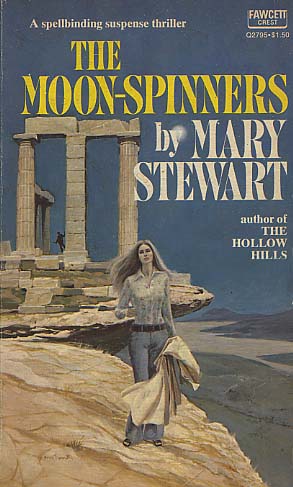
As I’ve mentioned before, my grandmother got me really started into watching old movies–both horror and crime–and also encouraged me to read. She was the one who got me started reading Mary Stewart, by giving me her copy of The Ivy Tree; my friend Felicia in high school reminded me of Stewart and so I started reading more of her work. (I still have not read all of Mary Stewart’s work–that “I don’t ever want to run out of something new to read by Mary Stewart” thing I do) And while I enjoyed all of them, I enjoyed some more than others. For example, i remember reading The Moon-spinners, but not really enjoying it very much, frankly. I never revisited the book…but now that I am doing the Reread Project, I decided to give it another read.

0449027953

It was the egret, flying out of the lemon grove, that started it. I won’t pretend I saw it straight away as the conventional herald of adventure, the white stag of the fairytale, which, bounding from the enchanted thicket, entices the prince away from his followers and loses him in the forest where danger threatens with the dusk. But, when the big white bird flew suddenly up among the glossy leaves and the lemon flowers, and wheeled into the mountain, I followed it. What else is there to do, when such a thing happens on a brilliant April noonday at the foot of the White Mountains of Crete; when the road is hot and dusty, but the gorge is green, and full of the sound of water, and the white wings, flying ahead, flicker in and out of the deep shadow, and the air is full of the scent of lemon blossom?

The car from Heraklion had set me down where the track for Agios Georgios leaves the road. I got out, adjusted on my shoulder the big bag of embroidered canvas that did duty as a haversack, then turned to thank the American couple for the lift.

“It was a pleasure, honey.” Mrs. Studebaker peered, rather anxiously, out of the car window. “But are you sure you’re all right? I don’t like putting you down on the hill like this, in the middle of nowhere. You’re sure you’re in the right place? What does that sign post say?”

The above pictured cover was the one I originally read; the reread was of a more recent edition. When I was younger, I was fascinated by ancient history: Egypt, Greece, and Rome, to be exact; Greek or Roman or Egyptian ruins on the cover of a book, especially if it was a suspense novel, drew me to the book like moth to flame. (That was what originally drew me to read Phyllis A. Whitney’s Mystery of the Hidden Hand, which I now believe–my memory lies, remember–was the first Whitney I read, because it was set in Greece) I had also remembered seeing a film version of The Moon-spinners, broken up over two weeks’ episodes of The Wonderful World of Disney, which starred Hayley Mills. I don’t remember much of the film now, but I do remember thinking it was vastly different from the book when I read it the first time. It’s not on Disney Plus (neither is Johnny Tremain or Now You See Him Now You Don’t, which has annoyed me regularly since I signed up for the service), and I’m not about to spend even three dollars on renting it on Amazon Prime–although I was tempted enough to look it up to see if it can actually be viewed anywhere.

Anyway.

I enjoyed the book much more greatly this time. I’m not certain why, precisely, I didn’t like it as much as Stewart’s other books at the time, but sometimes that’s just the way it is. The Moon-spinners focuses on Nicola Ferris, an adventurous young Englishwoman in her early twenties. She works at the British Embassy in Athens; her parents died when she was a teenager and she went to live with her aunt Frances, who is a leading botanist. Frances is also single and terribly independent, like most women in Stewart novels; Nicola admires and loves her aunt greatly and emulates her. Her aunt is taking a yacht voyage with friends around Greece and the islands; Nicola decides to take a vacation, meet up with Frances on Crete–a friend, a travel writer, has recommended a very remote village with a small hotel to them–and Nicola has the great good fortune, while on Crete, to meet an American couple (the above mentioned Studebakers) who are driving around Crete and offer her a lift to Agios Georgios, putting her there a day earlier than expected. (This sentence, describing the Studebakers,  They were both lavish with that warm, extroverted, and slightly overwhelming kindliness which seems a specifically American virtue–is a terrific example of Stewart’s exceptional skill as a writer; in that one sentence she tells you exactly who the Studebakers are.) The Studebakers aren’t terribly keen on letting her off in the middle of nowhere, to lug her suitcases and such over a dusty mountain trail to a village where she isn’t expected until tomorrow and where she will know no one; fortunately her work at the embassy has given her a passable knowledge of speaking Greek.  Nicola insists she’s fine and thanks them for their kindness, and starts trudging along the dusty path.

All of Stewart’s heroines are strong, capable, intelligent young woman who can take care of themselves; and courageous. It is while walking on the path that Nicola’s Greek adventure takes off–she stops at a pond to get a drink of water, and in the reflection of the water she sees a man’s face, watching her. Your average run-of-the-mill heroine would scream and run off or be terrified; Nicola is merely startled and curious. This is how she comes across Lambis, the Greek boatman, and young Mark Langley, who has been shot and needs medical attention. Nicola immediately makes Mark’s problems her own. Lambis, as it turns out, had put in his boat in a nearby bay so that Mark and his younger brother Colin could go exploring and look at the ruins of an old church, originally a shrine to a Greek god but converted during the days of the old Eastern Empire into a Byzantine church. As they are walking back to the boat they come across of small group of people arguing over a recently dead body. Mark is shot and left for dead; Colin is taken. And so, now of course, Nicola wants to help rescue Colin and help Mark–she isn’t, after all, expected for another day, and of course, the killers/kidnappers must be from the small town of Agios Georgios.

Stewart is, as always, an exceptionally talented writer. Her descriptions are simple yet poetic; she vividly brings the town, the mountains, the sea, everything to life so well you can easily imagine yourself there. And courageous Nicola, now possessed of dangerous knowledge that could get her killed, has to navigate the village while trying to help Mark find Colin, with no idea of who she can trust and where she can turn to help.

Nicola is a terrific heroine, and I can see why Stewart was so popular with women and teenaged girls; she wrote smart, no-nonsense, capable young women who were courageous and fearless and could pretty much handle anything. The suspense is, at times, unbearable.

There is an element of romance to the story as well; Nicola begins to have feelings for Mark, but it’s practically an afterthought, and it feels almost like it was inserted into the story. There’s absolutely no need for the two of them to develop feelings for each other; other than the psychological closeness that comes from a shared danger (one of the things I loved the most about the sequel to Romancing the Stone, The Jewel of the Nile, is that it showed that happy couples who bond over adventures don’t necessarily wind up living happily ever after; I’ve often wondered about the couples from these types of novels), and this is one of the reasons I no longer really consider Stewart a romantic suspense writer; the romances in her books often feel that way–something inserted into the story later to appease either her agent or editor–and they are completely unnecessary to the story; if anything, the romance develop organically because of what else is going on in the story; the suspense/mystery aspect is the most important part.

And Stewart consistently wrote some of the best openings in crime fiction.

Highly recommended; I will probably reread it again someday.

Mama He’s Crazy

Believe it or not, back before the Internet and social media, it was possible for a book to go viral; to become so popular and so talked about it would sell a gazillion copies and establish the author–usually–as a long-time bestseller. To this day, I don’t know how I became aware of the viral books of the 1970’s (titles like Coma by Robin Cook; Jonathon Livingston Seagull by Richard Back; Jaws by Peter Benchley; The Other by Thomas Tryon; The Exorcist by William Peter Blatty; and The Godfather by Mario Puzo, among others), yet I did become very aware of them, and read most of them (true confession: I never read Jonathon Livingston Seagull, despite being a number one fiction bestseller for two consecutive years).

Mary Higgins Clark’s Where Are The Children? was a viral sensation when it was first published in 1975; I read it in paperback, and distinctly remember plucking it off the wire rack in the Emporia Safeway. I started reading it in the car as my mom drove us back home to Americus–the little town seven miles or so northwest of Emporia, where we lived; population less than a thousand, and the only time I’ve ever lived in such a small town–and couldn’t stop reading. I helped her bring the groceries in, went to my bedroom, and piled the pillows up and went back to reading.

where are the children

He could feel the chill coming through the cracks around the windowpanes. Clumsily he got up and lumbered over to the window. Reaching for one of the thick towels he kept handy, he stuffed it around the rotting frame.

The incoming draft made a soft, hissing sound in the towel, a sound that vaguely pleased him. He looked out at the mist-filled sky and studied the whitecaps churning in the water. From this side of the house it was often possible to see Provincetown, on the opposite side of Cape Cod Bay.

He hated the Cape. He hated the bleakness of it on a November day like this; the stark grayness of the water; the stolid people who didn’t say much but studied you with their eyes. He had hated it the one summer he’d been here–waves of tourists sprawling on the beaches; climbing up the steep embankment to this house; gawking in the downstairs windows, cupping their hands over their eyes to peer inside.

He hated the large FOR SALE sign that Ray Eldredge has posted on the front and back of the big house and the fact that now Ray and the woman who worked for him had begun bringing people in to see the house. Last month it has been only a matter of luck that he’d come along as they’d started through; only lyck that hed gotten to the top floor before they had and been able to put away the telescope.

Time was running out. Somebody would buy this house and he wouldn’t be able to rent it again. That was why he’d sent the article to the paper. He wanted to still be here to enjoy seeing her exposed for what she was in front of these people…now, when she must have started to feel safe.

I bought another copy of Where Are The Children? in 2014; my original copy lost years ago to one of many moves, intending to go back and rereading it at some point. The importance of Mary Higgins Clark, not just to women crime writers but to the genre in general, cannot ever be overstated. Clark was the bridge between the domestic suspense masters of the past–Margaret Millar, Charlotte Armstrong, Dorothy B. Hughes, among many others–and the next generation of women crime writers that dawned in the 1980’s, as well as to the modern domestic suspense writers–women like Alison Gaylin, Lori Rader-Day,  Catriona McPherson, and Wendy Corsi Staub, among many others–and her example–of grace, generosity, kindness, and assistance–is one other writers should emulate.

We could all use more Mary Higgins Clarks in the world.

Anyway, because of this importance, I thought I should reread her first as an homage to her importance; I’d recently met her, in passing, and was shocked when I ran into her again a year later that she remembered my name and the short conversation we’d had as I’d helped her onto the escalator at the Grand Hyatt in New York; I, of course, remembered every word and that glowing smile she’d given me. There was little doubt in my mind she wouldn’t remember me; how many thousands of people had passed briefly through her life? But she was sharp as a tack, and remembered me. “Greg! I was hoping you’d be here if I needed help with the escalator again,” she said, holding our her hand to me with that thousand-watt smile of hers. Then she winked, “I’ll be looking for you later. How did that book you were writing turn out?” When I told her I’d worked out the problem (yes, as I helped her onto the escalator and chatted briefly, I somehow managed to tell her that one of the many reasons I admired her was her dedication to working hard, and asked if she ever got stuck–because I was stuck on my WIP. She laughed and said, “Work through it. That’s the only way.” She was right.) and the book was coming out that very month, she replied, “I look forward to reading it.”

I seriously doubt that she did, frankly–but it was an incredibly kind and generous thing to say to someone many many rungs on the ladder beneath her, if we can even be said to be on the same ladder.

Her recent death obviously saddened many, me amongst them. So I decided to memorialize her by rereading her first and most famous bestseller, Where Are The Children? 

And really, it was past time, wasn’t it?

Upon finishing my reread, I would say that Clark was most like Charlotte Armstrong, of the women who came before her; she wrote about, like Armstrong, normal every day women who were simply minding their own business when something evil came across their path, and they had to dig deep inside and discover their own strength to overcome it.

In Where Are The Children?, Clark came up with a devilishly clever plot about one of the worst things that could ever happen to a woman: the loss of her children. Nancy Harmon, now Nancy Eldredge, married one of her college professors and had two children by him, only to have them snatched away and murdered. Their bodies were found washed ashore, their heads taped inside plastic bags; dead before they went into the water. Nancy was tried for their murders, convicted–and then released on appeal due to a technicality. The disappearance of the prime witness against her made retrying her impractical; so she changed her hair and disappeared from San Francisco to Cape Cod, where she found and married a realtor and had two more children–where no one knows who she is. (This would, of course, be impossible–or incredibly difficult–today; with the Internet and 24 hour news, everyone in the country would recognize her, different hair color or no.) Nancy is still haunted by her past, most of which she has buried in her subconscious–but little does she realize her idyllic new life is about to upended: on the same day the local paper runs an article exposing her past, her two children, Michael and Missy, disappear yet again; and of course, it looks like she has killed yet another set of her children.

But what Clark does is let the reader know immediately that Nancy is not only innocent of killing this set of children, but the first set as well. The book opens, as seen above, with a chapter in the point of view of the villain of the story; she does this consistently throughout the book–we see the events from other points of views, other than just Nancy’s and the villain’s, which also helps the suspense build and keeps the reader turning the page.

Also, it should be noted that the entire timeline of the book is less than one day, and probably not even ten hours; the children disappear around ten in the morning and the climax of the book happens after nightfall. Also, the book takes place during a particularly nasty thunderstorm, which includes hail.

Another excellent way she builds suspense is bringing in minor characters on the periphery of the story, puts a scene in their point of view, and of course it turns out that each one of these minor characters holds another, crucial piece of the puzzle.

Where Are The Children? is a subversive novel in many ways, and it’s easy to see how it became a phenomenon, and why Clark won the hearts of millions of readers. She plays with the tropes of what it means to be a mother; how quickly we blame mothers for anything that happens to their children or how they behave; and how quickly the admiration for motherhood can turn to contempt and scorn–and how easy that turn is made.

It can also be seen as a sequel, of sorts, to those Gothic novels where a child is endangered and the heroine has to act to save the child; this was a well Phyllis A. Whitney and Victoria Holt drew from, many many times. Instead of trying to save the child, in this case this is the aftermath of what happened should the mother (or young governess, whomever the heroine was) not have succeeded the first time in saving the children–but has a chance at redemption by finding and saving the second set of children.

It reminded me somewhat of Charlotte Armstrong’s Mischief, which is also long overdue for a revisit.

And now, back to the spice mines.

Red

I was tagged awhile back in one of those post seven covers of books you love with no explanation things on Facebook, so I obliged, and even tweeted the covers.

I love nothing more than sharing information or titles or covers of books I love; the problem is, as always, narrowing the list down to just seven. I’ve read (and loved) thousands of books over the course of my life (I kind of wish I’d actually kept track or logged them somehow, because the completist in me wants to know the actual number), and for this round I decided to go with suspense novels written by women that I read when I was in high school or younger; women authors who might not be as well remembered as they perhaps should be (although, in fairness, Sarah Weinman and Jeffrey Marks have both done an excellent job of preserving some of these women writers; I went with the ones considered domestic suspense first, then switched and finished with romantic suspense).

The books I chose are: Mischief by Charlotte Armstrong; The Expendable Man by Dorothy B. Hughes; The Fiend by Margaret Millar; The Ivy Tree by Mary Stewart; The Secret Woman by Victoria Holt; Listen for the Whisperer by Phyllis A. Whitney; and An Afternoon Walk by Dorothy Eden.

Holt, Eden, and Whitney are generally forgotten today when female crime writers of the past are discussed; only recently have the names of the amazing triad of  Millar, Armstrong, and Hughes gone through a sort of renaissance. (Stewart isn’t as forgotten as Holt, Eden and Whitney; nor is she enjoying the same sort of renaissance as Millar, Armstrong and Hughes. More’s the pity in all four cases, frankly; the books might seem dated today, but they are excellent time capsules for the era in which they were written, and all seven women deserve better.) All seven women were fantastic writers, and the books I recommended are simply a starting place. Case in point: Victoria Holt’s The Secret Woman was the first of hers I’d read, so it always holds place of honor for me; but if pressed to name a favorite I would go with On the Night of the Seventh Moon, simply because it’s plot was almost completely insane–and she pulled it off. As I have said in previous entries, I also revisited Kirkland Revels lately, one of the few earlier works of hers I’ve not read multiple times–and frankly, it was kind of a revelation in how well it’s done.

I’ve also been revisiting Armstrong lately–well, over the last five or six years or so; undoubtedly since Sarah Weinman reminded me of her existence, and her importance to my developing crime fan mind as a kid–and I’ve focused primarily on reading the works of hers I hadn’t already read. Her Edgar-winning A Dram of Poison is actually one of the more charming suspense novels I’ve ever read; it was dark, of course, but had such a warm, optimistic heart that you couldn’t help but smile as a ragtag group of people tried to track down a lost olive oil bottle filled with poison.

I do want to reread Millar’s The Fiend (it’s my personal favorite of her novels) and Eden’s An Afternoon Walk (another favorite, but it’s been at least thirty years or so since I read it, if not more)–which is a very underrated and unjustly forgotten tale of domestic suspense that rivals the masters of the form.

And on that note, back to the spice mines.

Happy-31st-Birthday-Kevin-Peake-150429-05

U Got the Look

This week, The CW debuted a new version of Nancy Drew. I sort of watched it Thursday night, and will probably watch again so I can pay better attention. It’s definitely a reboot, with a lot of changes–Nancy’s mom died much later in her life, for example, and there’s no Bess. The story is also set in Horseshoe Bay rather than River Heights, and Nancy has hung up her sleuthing cap since her mother’s death and is now working as a waitress in a diner. George Fayne isn’t a close friend but now her boss, and they don’t get along–I expect that to change. Ned Nickerson is not white–a change I liked a lot–and prefers to go by Nick. It’s also a bit more in the vein of Riverdale than the classic Nancy Drew stories, but let’s face it–the real Nancy as originally written is kind of insufferable–bit more on that later.

I’m also sure these changes will enrage the Nancy Drew fanbase–anything other than the way she was originally written by a lot of ghostwriters generally sets them off. I am not such a purist–I recognize that changes have to be made for a different medium, for one thing, and for another–as I said earlier, Nancy was a bit insufferable as originally written.

I did enjoy the movie a few years ago with Emma Roberts (it might be the only time I’ve ever actually enjoyed an Emma Roberts performance, frankly); a lot was changed from the books to the series.

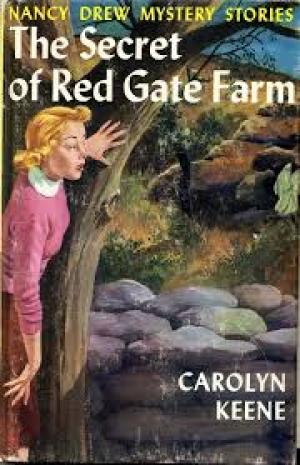
Nancy Drew and I go back to my fifth grade year at Eli Whitney Elementary in Chicago. I was already reading as many mysteries as I could get my hands on–those Scholastic Book Fairs were my favorite part of school–and I was checking out as many mysteries from the library as I could. (This was also the period of time when I discovered Phyllis Whitney’s mysteries for children; the first I read was The Secret of the Tiger’s Eye.) My fifth grade teacher had a big table in the back of the room with books for kids on them; we were on the honor system. We could borrow a book but we were supposed to return it when we finished reading it. The first day of school I wandered back there and looked at the books on the table; the first title to jump out at me was The Secret of Red Gate Farm. Above the title was NANCY DREW MYSTERY SERIES, and on the cover was a picture of a girl with wavy blonde hair, wearing a sweater and a long skirt, hiding behind a tree and looking, her mouth wide open in shock, fear or surprise, staring at the entrance to a cave  as some strangely robed figures entered it. I took it back to my desk, and started reading it.

red gate farm

“That Oriental-looking clerk in the perfume shop certainly acted mysterious, ” Bess Marvin declared, as she and her two friends ended their shopping trip and hurried down the street to the railroad station.

“Yes,” Nancy Drew answered thoughtfully. “I wonder why she didn’t want you to buy that bottle of Blue Jade?”

“The price would have discouraged me,” spoke up Bess’ cousin, dark-haired George Fayne. Her boyish name fitted her slim build and straight-forward, breezy manner. “Twenty dollars an ounce!”

“Oriental-looking.”

Sigh. The great irony is that both the Nancy Drew and Hardy Boys series were rewritten and revised to remove racist stereotypes and language…

Anyway, The Secret of Red Gate Farm enthralled me, as Nancy and her friends tried to help a young girl and her grandmother save Red Gate Farm from mortgage foreclosure while also trying to expose a ring of counterfeiters. There was a list of intriguing-sounding Nancy Drew titles on the back of the book, and back on the table in my fifth grade classroom there were three more titles: The Mystery at Lilac Inn, The Haunted Showboat, and The Clue of the Leaning Chimney. As I scoped around, there was another series novel, but it wasn’t Nancy Drew; it was the Dana Girls The Secret of the Old Well, allegedly written by the same person: Carolyn Keene.

Nancy Drew introduced me to the world of Grosset & Dunlap series–which were actually all produced, for the most part, by the Stratemeyer Syndicate. I eventually found myself reading–and collecting–many of those series, including the Hardy Boys, Dana Girls, Ken Holt, Rick Brant, Biff Brewster, Chip Hilton, and Judy Bolton, among others–I also wound up collecting Trixie Belden and the Three Investigators, too.

I always wanted to write a series like these when I was a kid; I even came up with a list of about forty titles I could use. I wrote one, actually, when I was in the fifth grade–called The Secret of the Haunted Mansion–which, to the best of my recollection, might be the first fiction I ever wrote; alas, it is lost in the mists of time. Periodically, I come back to the thought of writing such a series, but I don’t know that there’s a market for them anymore. Most of the series have gone out of print, with only Nancy Drew and the Hardy Boys, as far as I know, still available; Trixie Belden might be but I’m not sure. I still collect the books–it really pleases my OCD to have the series completed. I’m still missing a few from some of the harder to find series–like Biff Brewster and Ken Holt, and I do think I am missing a couple of Judy Boltons and Dana Girls as well–but I’ve stopped scouring eBay over the last few years because, well, money.

But at some point, I imagine I will go back and try to complete the series.

I do credit these series with a lot of my devotion to the world of crime and crime writing; while I always loved mysteries, it’s entirely possible I would have moved on to something else had I not discovered, and become addicted, to these series. These series led me eventually to Agatha Christie, Mary Stewart, Charlotte Armstrong, and Ellery Queen; and those authors eventually led me to others…and wanting to write crime fiction of my own.

So, thank you, Nancy Drew. It’s kind of your fault.