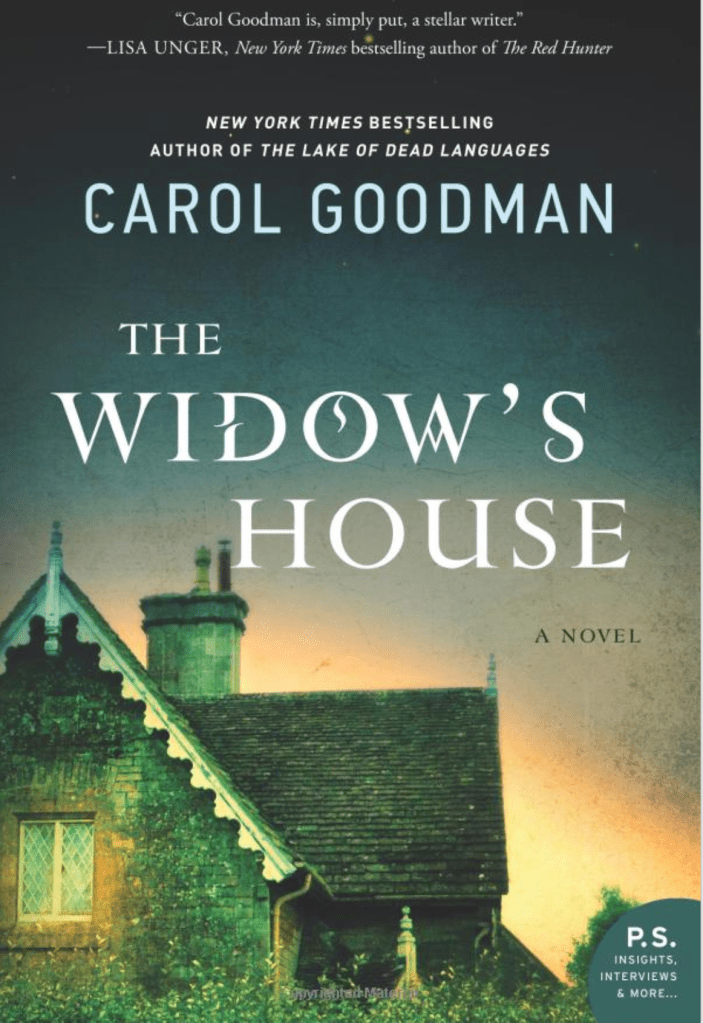
My appreciation of all things Gothic is at least partly due to the old soap opera Dark Shadows, which I watched as a child and has crept its way into my work, my reading, and the majority of my entertainment consumption ever since. I have always loved anything with a touch of the Gothic in it, and spent my teen years (and a lot of my twenties and thirties) loving and consuming Gothic fiction. The post-war style of Gothic literature, marketed primarily towards women, was being done by authors whom I loved like Phyllis A. Whitney and Victoria Holt and others (while Mary Stewart’s work was also considered Gothic and featured many of the tropes of Gothic fiction, I consider her books to be Gothic-adjacent, and I will probably explain that better and in more depth at another time) and I couldn’t get enough of them. Holt and Whitney, to me, were the two best at this subgenre, and when Gothics stopped being published in such great numbers, I was disappointed and mournful.
Which is why I love Carol Goodman’s books so much. Her books have that Gothic feel to them, are beautifully literate in their prose and structure, and they are also incredibly smart. The books also cover art, education, and the classics; every book is filled with classical references that inevitably make me feel smarter for reading them.
The Drowning Tree is no exception.
The river feels wider from the shallow boat, the humpbacked hills of the Hudson Highlands looming like the giants Dutch sailors believed dwelled there.
“Just put the water behind you,” he says.
I can’t see the man in the boat behind me, and I don’t want to risk my precarious balance turning to see him.
“You’re been through the drill,” he goes on.
And I have. Six weeks practicing in the indoor pool under the watchful eye of the kayaking instructior, tipping myself into blue chlorinated water and rolling up again, gasping, into the humid air, all in one long in-drawn breath. I’ve practiced it until it’s become second nature, but it’s one thing to turn over in the clear, warm pool water and another to imagine myself hanging upside down in the cold gray water of the Hudson, trapped in the currents…
“This is where the current is most dangerous,” the voice says. “The Dutch called it World’s End.”
Like many of Goodman’s novels, this book is set in the Hudson Valley and there’s also an institute of higher learning–Penrose College–involved. Our main character here, Juno McKay, runs a stained glass restoration business in the same town where she went to college and grew up; she also lives in the building that houses her glass works. Her best friend from college, Christine, is coming back to the college to give a lecture into her research into a stained glass window at the college that Juno’s company is in the process of being restored. But before the lecture, Juno sees Christine arguing with the school president, the most recent Penrose, and afterwards when they have drinks together before Christine catches her train back into the city, Juno gets the impression that somethings’s going on with Christine–and then she is found, drowned in a creek along the shoreline of the original Penrose estate, near a sunken sculpture garden, in a scene very reminiscent of the scene in the stained glass window Juno is restoring. IS there a connection? Was it an accident, or was it murder or suicide?
Like any intrepid heroine in a Gothic novel, Juno is soon drawn into the mystery Christine was looking into–what happened years ago, between the first Penrose, his wife and her half-sister? How many secrets does the abandoned estate (very Nancy Drew, too–it reminded me of The Clue in the Crumbling Wall a bit) conceal? What secrets did the original Mr. Penrose, an artist and painter, conceal in his paintings and art and stained glass windows? Briarwood, a local mental institution, also comes into play as well; years ago, Juno’s ex-husband tried to kill her and their infant daughter by drowning them in the river. They survived, but his mental health did not and he’s been in Briarwood ever since. The pattern of three from the past with Penroses and the half-sister also seemed to play itself out with Juno, Christine, and Juno’s ex-husband, pulling the reader into all these complicated skeins and twists and turns, until the book comes to an extremely satisfying end with all secrets revealed and life back to normal at the end.
What a great read, and a great example of why I love Goodman’s work so much.
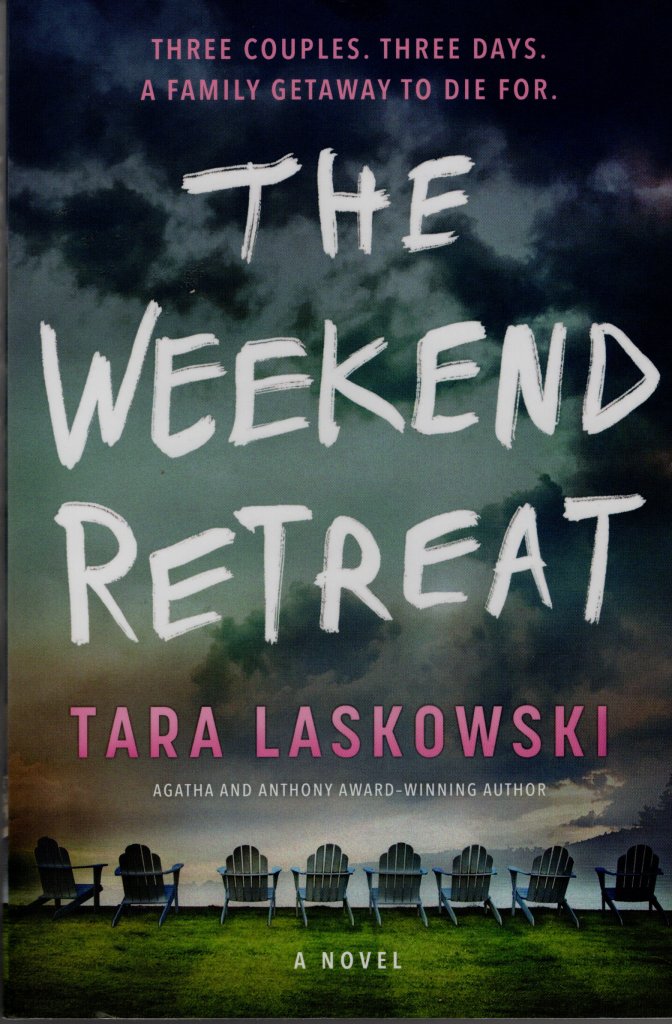
I don’t remember when and where I first met Tara Laskowski; my memory has become a sieve over the years and the bout of long COVID in the summer of 2022 didn’t help much, nor did any of the things that have gone on for the last three or four years. But I’ve liked her from the very first–I love that she loves Halloween and centered one of her books arounnd it–and when I read her debut novel, I became a big fan. She, along with Carol Goodman, are killing the Gothic suspense novel genre, which has always been one of my favorites ever since I was a kid and discovered Mary Stewart and Victoria Holt and that Phyllis A. Whitney also wrote books for adults. She followed up her sensational debut One Night Gone with the Halloween book, The Mother Next Door, and it was also magnificent.
So I really was looking forward to her third novel, and Constant Reader, it did not disappoint.
Ever since Zack told me about The Weekend, it’s all I’ve been able to focus on. Most people would naturally be at least a little nervous to meet their significant other’s family for the first time.
But most people aren’t dating a Van Ness.
“Earth to Lauren.” Zach snaps his fingers, grinning over at me. He left work early to get on the road sooner and didn’t have time to change, so he’s still wearing his suit, purple tie slightly askew but knotted even after hours of driving.
“Sorry,” I say, tugging the ends of my hair. “Zoning out.”
“You look like I’m driving you to your death,” he says, then grabs my hand and squeezes. “Don’t worry. I promises it’ll be fun. Even if my family’s there.”
This is a great opening, and it sets up the story perfectly. Our sympathies are immediately with Lauren. Laskoswki has put her into a situation we can all relate to: the terror of meeting your partner’s family and the discomfort that comes with it, the self-doubt, the need to be liked and accepted. Zach is a Van Ness, too, and while we aren’t really certain what that means yet, it’s important and stressful enough so that Lauren, in communicating her thoughts and feelings, thinks it bears mentioning and we should understand how she feels. It works, and that outsider feeling (and haven’t we all felt like an outsider at some time? See Saltburn) keeps the reader’s sympathies with Lauren completely.
But there are three more point of view characters–two other women, one a Van Ness by blood and the other by marriage–which is always a difficult feat for an author to pull off, but making those voices distinct and clearly different from each other is what makes the book work. Harper, Zack’s sister, is harsh, tough, cold and vindictive. She runs her own beauty company and blog, VNity, which is struggling. Elle is married to Harper’s twin brother Richard, who oversees the vast Van Ness holdings, and like Lauren, has some serious “pick me” energy too; she joined the Van Ness family and has wiggled her way into the family by asserting herself as well as trying to take over the role of family matriarch, as their mother is dead. Their mother, Katrina, was a tough woman who was hard on her children, but babied the youngest, Zack–which the twins have always resented. The retreat, this Weekend, is a celebration of the twins’ birthdays, with a huge party being thrown the Saturday night of that weekend, spent up at the Van Ness Winery, in the Finger Lakes section of New York.
So yes, that Gothic feeling is there almost from the start. The wide-eyed young innocent, coming to the big family estate in a remote part of the country (see also, Beware the Woman by Megan Abbott) into a situation where she’s not sure she can entirely trust her boyfriend. The house is filled with secrets, too–hidden rooms, secret staircases and passage ways–and a lot of sibling resentment, bitterness, and anger begins bubbling up to the surface almost immediately.
There’s also a fourth POV character, known only as the Weekend Guest, who hates the Van Ness siblings and is trying to bring the entire family down as a brutal winter storm bears down on Van Ness Winery…
What a terrific read! Get a copy–you can thank me later.
Research is always important for a writer, always.
I will generally spend years doing research for books before I start writing them; my scattershot approach to research usually goes something like hey this sounds interesting I should look it up which then takes me down wormholes and I’ll become obsessed with something, I’ll come up with a story idea that I can use the research for, and then it may sit in the files for years, occasionally striking my fancy sometime when I come across something else that might fit in with that, and so on. A lot of my research never makes it onto the pages of my books, either–I could have written chapters on glass-making and the Murano style of Venetian glass in The Orion Mask, but finally decided that, while I thought it was all interesting–Phyllis A. Whitney used to use her books to educate her readers about the area she was writing about, which I loved–but it definitely bogged down the story because there was no way I could figure out to tie the glassmaking to the modern day story.
That was very disappointing, I don’t mind saying.
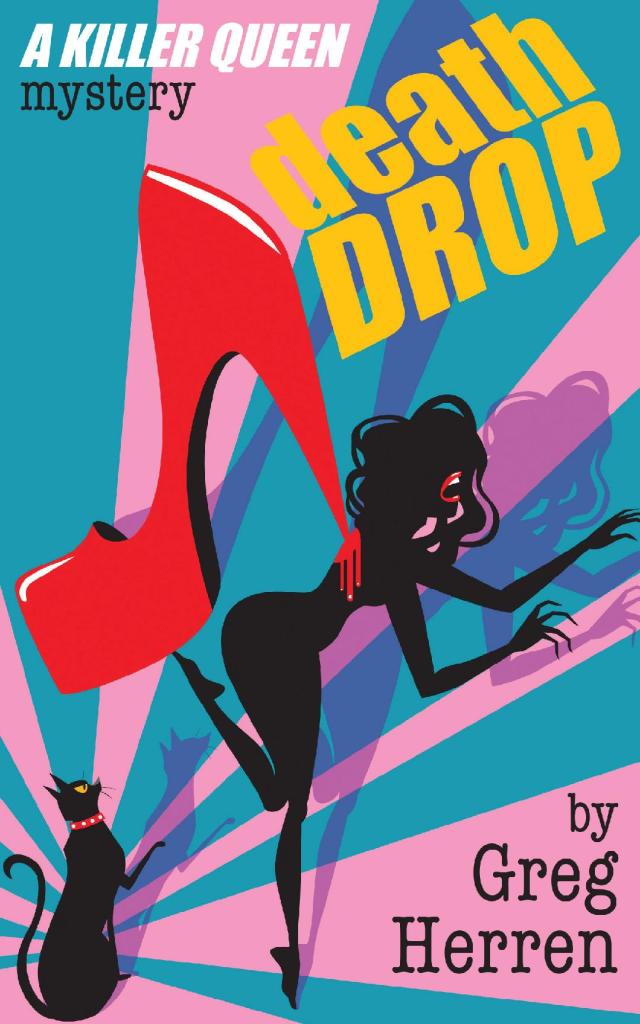
Likewise, I didn’t have as much time to research drag the way I should have before I started writing Death Drop. Ordinarily, I would have wanted to actually talk to the local who runs the drag school; I would have talked to any number of queens about performing, how they got into it in the first place; and there are so many aspects of drag culture and so many levels and layers to it that it was impossible for me to get the research done and write the book at the same time. Ideally, I would have liked to have actually paid someone–preferably my former supervisor, who went to the drag school and now works full-time in drag as Debbie with a D (check out her Instagram, seriously)–to do the full drag on me–wig, make-up, pads, dress and shoes. (I kind of still need to do this, so I know how it feels; I relied on memories of high school plays for the make-up and wearing a Minuteman costume with real buckled and heeled shoes for walking in heels; I didn’t care for that one bit and have nothing but the deepest sympathies for women or anyone who has to wear any kind of heel on a daily basis. I can still feel how sore my calves were the next day.)
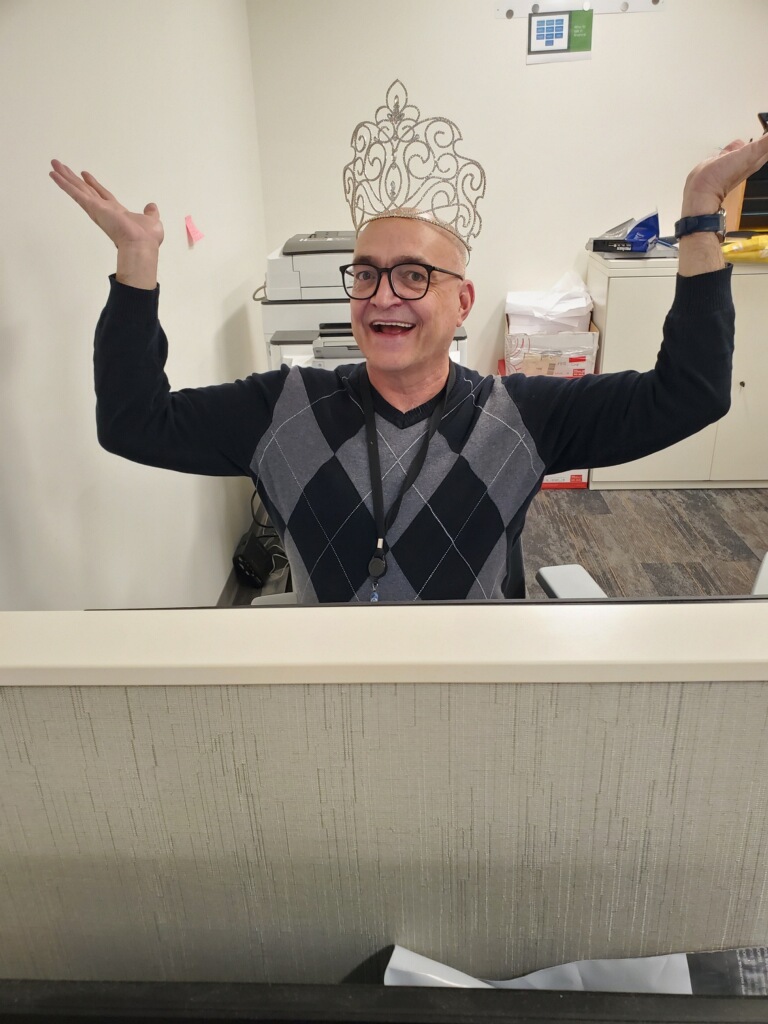
Me with my supervisor’s pageant crown
That was part of the reason I made the book an origin story for Jem and “Joan Crawfish,” the drag name he is christened with at the last minute as he sent down the runway at the Designs by Marigny fashion show. I don’t know drag lingo or slang–outside of whatever I’ve picked up from watching RuPaul‘s Drag Race and having co-workers who do drag and the occasional drag show I’ve caught over the years–and so neither does Jem/Joan. And the second book–set in Florida at the Miss Queer America pageant–will include some of that, as it will have to as he’s already finished the drag school he was considering entering at the end of Death Drop.
It doesn’t hurt that my current supervisor does pageants and was even Miss Gay Mississippi USofA; so I have a good source of information that I see at the office every day, which is….kind of cool, actually.
I do feel pressure to drag it up a bit more in this second book (You Gone, Girl) than I did in the first, but the pageant itself makes for a lot of drama and comedy, and that’s not even taking into consideration all the protests and bomb threats and things and other shenanigans that the evil witches from Moms4Freedom are throwing at the pageant.
And I am going to have some serious fucking fun with those Moms4Freedom bitches, believe you me.
Monday morning after a relatively relaxing and stable weekend. I did a lot, mostly chores that needed to be done and reading, but it was also very nice. The Saints won their game yesterday, which was a very pleasant surprise, and we finished watching this most recent season of Élite, which I realized yesterday I’ve always put the accent on the wrong e, but it’s pronounced ah-lee-tay, so it made sense to me for the accent to go there.
Or maybe I’ve been saying it wrong.
Anyway, this seventh season was disappointing, as the storylines and the crime focused on parents rather than the students–which was a major error, I felt. The season did end with a murder–I’d wondered how long that character, an abusive and controlling lover, would last without being killed or redeemed; I got my answer in the finale–but the primary issue with the season is I don’t really care very much about any of the characters anymore. One of the show’s greatest strengths in those early fantastic seasons was how well the characters were developed (and the talent of the actors playing them) was that they were multi-faceted; even when they were being bad or doing terrible things, you understood them and why they were doing it so they were sympathetic. Now they are all just kids who bad things happen to who have no control over anything that happens or what they do–which is the problem. Before, in the earlier seasons, the kids had agency, and while originally the show was the Gossip Girl we all deserved, it slowly turned itself into Gossip Girl, which was fun but had little depth. A pity. We’ll stick around for the eighth season, which is the last one, while mourning its former glory.
Tomorrow is Halloween, and I signed up to make a cheesecake. The mistake I made was forgetting that I have to go to the dentist tomorrow morning before work, and the other was I must have gotten rid of my cake carrier during one of my pandemic decluttering purges, so I have nothing to carry it to work with–and I don’t like the idea of it sitting in my car while I am at the dentist. Going back home to get it after the dentist isn’t an option, either, because I am trying to spare paid time off as much as possible with the surgery coming, as I also have to run off to UNO after lunch to record “My Reading Life with Susan Larson”. Big day indeed. I guess I can just put the cheesecake into a box and bring it while still in the springform pan? AH, well, all I know is when I get home from work tonight I have to make a cheesecake and figure out the rest tomorrow.
These difficult life decisions, seriously.
I did manage to read Mike Ford’s The Lonely Ghost yesterday which I quite enjoyed; middle-grade books tend to read a lot faster than those for older readers and there will definitely be more on that to come. I will say for now that had he been writing when I was a kid, Ford would be one of my go-to authors, like Phyllis A. Whitney.
We also watched a hilarious (to us, anyway) movie on Prime yesterday, Totally Killer, which starred Kiernan Shipka in the lead of a hilarious mash-up of Back to the Future with a slasher movie playing Jamie, whose mom was the final girl of a spree killer thirty-five years earlier, who comes back in the present day to kill her mom. Her mom is obviously very into self-protection and more than a little paranoid–which of course makes Jamie even more sullen and distant. Her best friend is trying to build a time machine as a science project out of an old photo book, and for some reason the science fair takes place at an old, abandoned amusement park. Anyway, the killer kills her mom and chases her into the amusement park, she ducks into the photo booth and accidentally turns it on, and then the killer stabs the console with his butcher knife–which activates the time machine and sends her back to 1987, with a new task and mission: catch the killer before he kills anyone and thus save her mother–and with the benefit of her knowledge of the history, she knows who is going to be killed and where. A great plan, of course–but her being there slowly starts changing the future. It’s very clever and funny, and the juxtaposition of a modern teenager into a teenager back in the highly problematic 80’s and the cultural/societal differences are absolutely hilarious–especially to those of us who lived through them the first time. It’s light and fluffy, fun and entertaining and not to be taken terribly seriously. Also, because it’s Halloween Horror Month, I’ve been reading a lot of books that would fall into the slasher versions of horror–Clown in a Cornfield, Final Girls–so I’ve been thinking about the trope a lot lately too.
Maybe my next y/a should be a slasher novel? It could be fun.
And on that note, off to the spice mines! Have a lovely All Hallows’ Eve Eve!
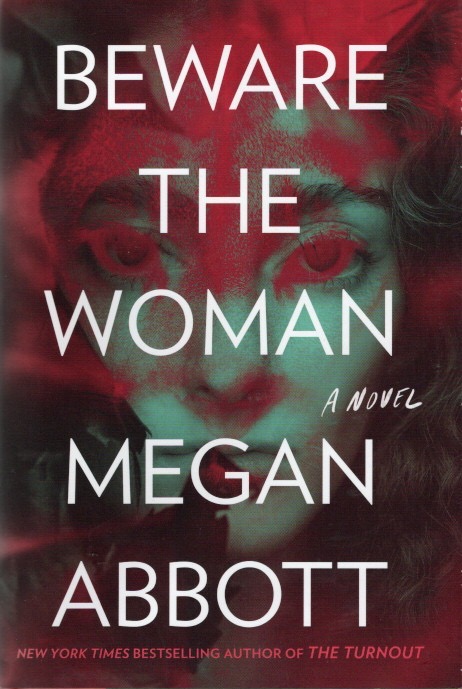
I finished reading the new Megan Abbott novel, Beware the Woman, this morning during a marvelous, raging thunderstorm that filled the gutters and streets of New Orleans with dirty swirling water, cutting the temperature to something bearable for once this summer and cooling the interior of my apartment to the point I needed to put on a sweatshirt and a knit cap on my head. Curled under a blanket with a good book while a thunderstorm rages with a warm cup of coffee on the side table, tendrils of steam rising in curly-cues of white from the creamer-lightened pool of soft brown, is perhaps my happiest of places.
Hell, reading anything new by Megan Abbott is my happiest of places.
My first Megan Abbott novel was Bury Me Deep, which stunned me with its craftsmanship, its voice, its literate choices of words and sentences structures that are short yet lyrical, minimalist strokes painting a broad canvas of human frailty and contradiction, crime and desire that comes from a primal place within, almost inexplicable and unexplainable yet so easily understandable and recognizable. I went on from there to Dare Me and the rest of her all-too-short canon; admiring, loving, respecting and enjoying each book with its magical spell woven by a true master of the literary form, astonishing in its humanity and an exploration of what lengths her characters will go to in order to get the thing (or things) they want, need, desire and hunger for.
Some of the earlier reviews I saw for Beware the Woman painted some parallels between the book and what is perhaps my favorite novel of all time, Rebecca by Daphne du Maurier…which had me intrigued and interested even more than usual.
But more on that later.
“We should go back,” he said suddenly, shaking me out of sleep.
“What?” I whispered, huddled under the thin bedspread at the motor inn, the air conditioner stuck on HI. “What did you say?”
“We should turn around and go back.”
“Go back?” I was trying to see his face in the narrow band of light through the stiff crackling curtains, the gap between every motel curtain ever. “We’re only a few hours away.”
“We should go back and just explain it wasn’t a good time. Not with the baby coming.”
His voice was funny, strained from the AC, the detergent haze of the room.
I propped myself up on my elbows, shaking off the bleary weirdness.
We’d driven all day. In my head, in my chest, we were still driving, the road buzzing beneath us, my feet shaking, cramped, over the gas.
Our main character here is Jacy Ashe, a pregnant wife in her early thirties, married to a neon sign artist, Jed, and working as an elementary school teacher. They are en route when the story opens to the remote upper peninsula of Michigan (primarily known to me from Steve Hamilton’s novels) to visit Jed’s retired doctor father, who lives up there in what used to be the family summer place, with his housekeeper, Mrs. Brandt. This is one of the classic set-ups of one of my favorite subgenres of crime fiction–the Gothic–as well as placing it strongly into another category I love, domestic suspense. This novel has echoes of du Maurier, Phyllis A. Whitney, Dorothy B. Hughes, and Margaret Millar…blended seamlessly together into a classic yet modern novel that updates and reinvigorates both subgenres, bringing them into the modern era and proving they are still just as relevant and important as they have ever been.
(Aside: I do not know where Abbott came up with the name “Jacy,” but it’s one I’ve always liked and wanted to use in my own work since first reading Larry McMurtry’s The Last Picture Show and seeing the Bogdonovich film based on it; I smiled and wondered if that was where Abbott got the unusual name from.)
The Gothic set-up is there, and I can also see the slight echoes from Rebecca: the brooding remote house in the country where tragedy has occurred in the past; the mysterious housekeeper who doesn’t seem to like our heroine very much; the slow-burn of slow revelations of secrets from the past; and the creeping paranoia and potential gaslighting of Jacy…often explained away as her pregnancy hormones or a reaction to the medications after she has a pregnancy complication. One of the strengths of Gothics, for me, is that question of paranoia vs. reality; the gaslighting that is always a hallmark of a Gothic novel. After all, what reason could either Jacy’s father-in-law or husband have for wanting to drive her mad and risking her baby’s health and well-being? She feels her husband slipping away from her and no one seems to believe her…this is probably one of the best depictions of a paranoid pregnant woman in literature since at least Rosemary’s Baby.
Someone once said the Gothic and domestic suspense novels were “women’s noir,” because the danger to them always arose from them being women and doing women’s things; a reaction to the terror of getting married and placing (until very recently) all of your agency into the hands of your husband–and what if you chose poorly?
Abbott takes the best elements of noir and combines them with the foundations of domestic suspense and Gothic to explore what it is like to be a woman, how it is to be a woman, and the trap of societal and cultural expectations for women.
And there’s a reason why the cops always look at the husband first when a woman is killed.
This is a brilliant novel, with many layers to unpack and unravel through its deceptively simple voice and brevity of language. Megan Abbott is a sorceress, a Scheherazade of crime fiction to whom you simply cannot stop listening. Read it, cherish it, love it.
It really boggles my mind that it took me so long to get into listening to audiobooks. I think it was more of a sense that it didn’t count as reading if I wasn’t holding a book (or my iPad) in my hands and scanning the words with my eyes. I’ve never really liked being read to, either; and while I do enjoy live readings by authors of their work, those generally don’t last more than ten hours. I also worried that, as I do have ADHD and good writing always inspires me and floods my brain with ideas for new work for me or stuff that I am already working on (driving through Alabama, for whatever reason, always is inspiring to me), and it’s very easy to go back to where I was reading when inspiration hit. It’s not quite as easy to do this when you’re listening–I haven’t exactly mastered the rewind thing while driving at eighty miles per hour–so I am always afraid I’ve missed something. But…audiobooks in the car on long trips has literally changed my life and made the drives less irritating, boring and painful.
I have always had a taste for fiction that could be classified as Gothic; two of my favorite writers (Daphne du Maurier and Mary Stewart) were masters of the genre. I thought with the deaths or retirements of the major Gothic authors of the mid to late twentieth century that the style (or sub-genre, if you will) had fallen out of fashion (after it’s peak in the 1970’s and early 1980’s) and I missed them, terribly. What I hadn’t known was authors were still writing them, updating and reinvigorating the field…because the cover styles that always marked a Gothic novel (big spooky house, light in a window, creepy looking tree, woman in a flowing nightgown with long hair running from it and looking back over her shoulder in fear) were actually which became obsolete.
I am so glad I found Carol Goodman.
When I picture the house I see it in the late afternoon, the golden river light filling the windows and gilding the two-hundred-year old brick. That’s how we came upon it, Jess and I, at the end of a long day looking at houses we can’t afford.
“It’s the color of old money,” Jess said, his voice full of longing. He was standing in the weed-choked driveway, his fingers twined through the ornate loops of the rusted iron gate. “But I think it’s a little over our ‘price bracket.'”
I could hear the invisible quotes around the phrase, one the Realtor had used half a dozen times that day. Jess was always a wicked mimic and Katrine Vanderburgh, with her faux country quilted jacket and English rubber boots and bright yellow Suburban, was an easy target. All she needs is a hunting rifle to look like she strode out of Downton Abbey, he’d whispered in my ear when she came out of the realty office to greet us. You’d have to know Jess as well as I did to know it was himself he was mocking for dreaming of a mansion when it was clear we could barely afford a hovel.
It had seemed like a good idea. Go someplace new. Start over. Sell the (already second mortgaged) Brooklyn loft, pay back the (maxed-out) credit cards, and buy something cheap in the country. By country, Jess meant the Hudson Valley, where we’d both gone to college. and where Jess had begun his first novel. He’d developed the superstition over the last winter that if he returned to the site where the muses had first spoken to him he would finally be able to write his long-awaited second novel. ANd how much could houses up there cost? We both remembered the area as rustic: Jess because he’d seen it through the eyes of a Long Island kid and me because I’d grown up in the nearby village of Concord and couldn’t wait to get out and live in the city.
Isn’t that a great opening?
All of Goodman’s novels are unique, but tied together by that strong, literate authorial voice that makes starting to read (or listen) to a new one as comfortable as slipping into your house shoes; the word choices are marvelous, and the sentence/paragraph constructions are so intricate yet not impenetrable to the reader. Goodman’s novels usually have a central core that has to do with education and/or literature of some kind, and are inevitably set in either upstate New York and/or the Hudson Valley or the city itself; but there’s always a brooding, old building involved. The books are also smart and well-paced, and there is often a dual timeline involved, whether it alternates between past and present or does an entire time-jump to reveal the secrets and the truths bedeviling our heroine. Goodman’s heroines are likable, relatable, and understandable.
The Widow’s House focuses primarily on our main character, Clare Martin. Clare met her husband, Jess, in a creative writing seminar at a impressive university near Concord, where she grew up and she and Jess are currently looking for a house they cannot afford. Both were aspiring writers when they met; Jess wrote a debut novel that made a splash but is now ten years overdue on his second (aside: this always amazes me. I don’t think I’ve ever known a writer given an advance who then never delivered a manuscript for ten years or more without consequence, but this always pops up in novels about literary writers–Michael Chabon’s Wonder Boys comes to mind. Then again, most writers I know are genre writers and no crime writer could ever not deliver for ten years–I always feel horribly guilty when I miss a deadline and then it’s usually only an extra month that I need, not ten years. Maybe it’s different for those who write lit-ra-CHOOR) while Clare has buried her own authorial ambitions while working as an editor (and then a freelance one) to support Jess while he writes his book (I also would never let Paul go ten years without working while I couldn’t write so I could support him financially; I feel relatively confident the obverse is also true). The house their realtor is showing them at the opening of this book is called River House, but it’s also a site of many tragedies and deaths and madness, so much so that someone has taken a chisel and changed RIVER HOUSE on the gate column to RIVEN HOUSE. But the master of the crumbling old house is looking for caretakers to live on the property rent-free in exchange for upkeep work on the estate… but the master is the same writing professor in whose class they met–a professor Jess resents for trashing his debut novel in the New York Times, a review Jess is certain has kept him from breaking out as a major (best-selling) literary star. But the deal is too good to pass up, and Clare herself thinks moving there might help her restart her own writing…
Several of Goodman’s other novels tackle the world of the writer–The Stranger Behind You was a particular standout–and boy, could I relate to Clare’s fears and insecurities and anxieties about writing. To make matters worse, there also seems to be a ghost (or two, or maybe even three) at Riven House–but only Clare sees or experiences the haunting, to the point that she begins to question her own sanity. But why? Why would someone gaslight Clare, the wife of an underperforming novelist? There were some times in the book where Jess would be a bit of a emotionally abusive ass to her, and I would get a bit frustrated with her–a point I often had with the heroines of Victoria Holt and Phyllis A. Whitney–for subsuming herself and her needs and desires and dreams in service to his, and he doesn’t seem to appreciate it in the least. The ghost mystery has to do with tragedies in the path; the murder of an illegitimate child, the suicide of its mother, and madness and murder. Clare starts unraveling the mysteries from the past to get to the bottom of what is going on at Riven House–and there’s a marvelous, heart racing conclusion during a massive winter storm and power loss at Riven House, when Clare finally finds the truth and has to fight for her own life.
What a satisfying, thoroughly enjoyable read–which is what you always get from Carol Goodman. If you haven’t read her yet, START. Immediately.
Well, I met quota again last night which was marvelous. It’s still a bit chilly this morning. By the weekend it should be back into the seventies (it was yesterday as I ran my errands after work; it’s sixty-one this morning but it does feel colder outside of my bed and blankets), as the Alabama and Kansas State fans start arriving for the Sugar Bowl. LSU is also playing on New Years’ Day in the Citrus Bowl against Purdue, which will probably be the only game I actually watch that day.
There’s been a conversation going on over at Book Twitter lately that doesn’t really impact me in any way, but it’s been kind of interesting to follow. The conversation has to do with concerns about what is and isn’t considered y/a fiction as well as what is, or should be, considered age-appropriate reading material for teenagers and pre-teens. It doesn’t impact me because no one considers me a young adult writer, for one thing; despite having written numerous books with younger and/or teenaged characters (Sorceress, Sleeping Angel, Sara, Lake Thirteen, Dark Tide, Bury Me in Shadows, #shedeservedit), most people think of me as a gay mystery writer. Everything published under my own name is a mystery novel of some sort, whether it’s one of the series books or one of the stand-alones. I’ve never really marketed myself as a writer of young adult fiction, really; I shy away from that, I think, because of The Virginia Incident and the subconscious fear that one day that controversy might resurrect itself (which is ludicrous, and I know that; it certainly would have by now and it hasn’t, which further proves my belief that The Incident had nothing to do with me or my writing or my career and everything to do with systemic homophobia and othering used for political gain). It just seems weird to me that in less than five years after that happened–when I was deemed a menace to America’s youth–I could publish books for teenagers without a single whiff of complaint or scandal or even the raise of a single eyebrow.
Interesting, isn’t it? Almost like the whole thing was just more smoke and mirrors whose sole intent was to rile the homophobic base.
I just love that my existence is considered by some as a constant and continued threat to children.
One of the things that has always mystified me over the years is what is and isn’t considered age-appropriate. Intellectually I was far more advanced that most of my classmates (my emotional and personal maturity being an entire other subject–I’d say I am still behind on that score) and I started reading early. The library and the Scholastic Book Fairs were my best friends as a child, and I read everything I could get my hands on. I loved history, from which grew an appreciation and love for historical fiction (which I really don’t read much of anymore, which is odd. I really want to read Hilary Mantel’s Cromwell books…) and of course, my grandmother got me interested in “scary” movies and mysteries.
You’d think I’d be a huge fan of historical mysteries, but I actually don’t read many of them. I did love Elizabeth Peters’ Amelia Peabody series, and I’ve become a huge fan of Laurie R. King’s Mary Russell series…I think exploring historical mysteries might be a project for 2023.
But the point was I was reading books far too advanced for most people my age when I was young. I freely will admit that in my first read of Gone with the Wind at age ten I didn’t know Rhett raped Scarlett the night of Ashley’s surprise birthday party–it wasn’t until a reread in my late teens where I thought oh, this isn’t right–let alone that she enjoyed being overpowered and forced. I also read The Godfather when I was ten, and there was no mistaking anything about Sonny Corleone and Lucy Mancini. He had a cock the size of a horse’s and her vagina was apparently the Lincoln Tunnel. (Although the she felt something burning pass between her thighs still mystifies me to this day.) I also read The Exorcist when I was ten and I was also very well aware of what was going on in the crucifix masturbation scene. As a kid, I was fascinated by these sex scenes (aka “the dirty parts”), and it wasn’t until I was older than I began to question the entire Sonny-Lucy thing (and why it was even in the book in the first place); and while the crucifix scene was gross, shocking and basically icky to me at ten–when I reread the book sometime in the past decade it seemed prurient, to be honest–used primarily for shock value and to get people to talk about it.
So, yes, I started reading books for adults when I was around ten. I also read Antonia Fraser’s Mary Queen of Scots and Robert K. Massie’s Nicholas and Alexandra that same year–I remember doing a book report on Mary Queen of Scots and my teacher not believing that I had read the thick volume; he started opening the book at random and asking me questions–which I was able to answer, so he grudgingly accepted the book report and gave me an A. (Teachers have doubted me all of my life; can’t imagine why I am insecure about my intelligence…)
Over the course of my teens I also read books by Harold Robbins, Sidney Sheldon, Jackie Collins, Jacqueline Susann and Gordon Merrick-every last one of them crammed to the gills with racy sex scenes. I was also reading Stephen King, Irving Wallace, Herman Wouk, Agatha Christie, Ellery Queen, Jean Plaidy, Victoria Holt, Phyllis A. Whitney and any number of authors who wrote for adult audiences not teens. Were there things in the books I didn’t understand? Sure there were. Were there things in those books that were probably inappropriate for teenagers? Undoubtedly. (I’ve also never forgotten the scene in Joyce Haber’s The Users where a Liza Minnelli-based character fucked herself with her own Oscar; some images are simply too vivid to forget methinks.)
This is one reason I shy away from calling some of my books with teenagers “young adult” novels. Megan Abbott’s Dare Me centered teenagers, but I would never consider Dare Me a young adult novel. I was thinking about this the other night while watching Sex Lives of College Girls (it’s hilarious, you really should be watching); can I authentically write about teenagers anymore? Have I ever been able to? I don’t speak their language anymore, and I haven’t been one in over forty years (!!!!); I don’t know the technology they use or their slang or what they watch or listen to. I don’t know what today’s teens think about virginity and sexuality these days; do the tired old tropes still exist? Does that whole “good girl/bad girl” dynamic still exist, or are today’s teenaged girls a bit more sophisticated than they were when I was in high school when it comes to sex and sexuality? (Contrasting two high school shows with queer content makes you wonder–there’s the jaded cynicism of the rich kids in Elite vs the wholesome purity and innocence and sweetness of Heartstopper, which also had me wondering–although I feel certain Heartstopper might be closer to reality than Elite…or that’s just my hope?) Of course I have other ideas for more books about young people–I have another in-progress one that’s been sitting around for a very long time that I need to repurpose–and I’d kind of like to write more at some point, but I don’t know. My suburban 70’s serial killer preying on teenaged boys book would be told from the perspective of a twelve year old, but it would definitely not be a young adult novel–but will probably be marketed and sold as one.
And on that note I am heading into the spice mines on my last day in the office for 2022. Check back in with you later, Constant Reader.
Nothing will get my attention more quickly than a Daphne du Maurier comparison.
I’d been meaning to get around to reading Ruth Ware since her The Woman in Cabin 10 broke her out in the crime writing community. I’d heard lots of good things about her work from reviewers and people on social media, and as her career continued to grow and develop it seemed like all of her books–while similar, in some ways, to each other–were rather dramatically different from each other. I began acquiring copies of her books, unable to decide where to start while each new one joined the TBR pile and began collecting dust. When I saw someone had compared her The Death of Mrs. Westaway to du Maurier and Rebecca, that got my attention and I decided to start there. I listened to it on one of my drives to Kentucky and loved, loved, LOVED it.
So, while planning for my recent trip up, I decided to listen to The Woman in Cabin 10, and have been admonishing myself for the lengthy delay in getting to it ever since finishing. It is quite excellent, and I am finding myself becoming quite a fan of Ruth Ware.
The first inkling that something was wrong was waking in darkness to find the cat pawing at my face. I must have forgotten to shut the kitchen door last night. Punishment for coming home drunk.
“Go away,” I groaned. Delilah mewed and butted me with her head. I tried to bury my face in the pillow but she continued rubbing herself against my ear, and eventually I rolled over and heartlessly pushed her off the bed.
She thumped to the floor with an indignant little meep and I pulled the duvet over my head, but even through the covers I could hear her scratching at the bottom of the door, rattling it in its frame.
The door was closed.
I sat up, my heart suddenly thumping, and Delilah leaped onto my bed with a glad little chirrup, but I snatched her to my chest, stilling her movements, listening.
I might well have forgotten to shut the kitchen door, or I could even have knocked it to without closing it properly. But my bedroom door opened outward–a quirk of the weird layout of my flat. There was no way Delilah could have shut herself inside. Someone must have closed it.
I sat, frozen, holding Delilah’s warm, panting body against my chest and trying to listen.
How’s that for a beginning?
I defy anyone to stop reading after those opening paragraphs, seriously.
Our main character turns out to be Laura Blacklock–nicknamed Lo–who is an aspiring travel journalist working as an assistant at Velocity magazine. Usually her boss is the one who gets to go on trips to write about the experience, but pregnancy has forced her to turn over a rather plum assignment to Lo; taking a cruise on a luxury ship through Scandinavia, including a look at the Northern Lights and exploratory visits to fjords. But as she is preparing for the trip, her flat is broken into while she is in it. This understandably causes her some trauma, and she is already taking medication for anxiety. Shaken up and still having nightmares, she boards the Aurora Borealis in a determined attempt to fulfill her job responsibilities well enough to get a promotion or better assignments. Easier said than done, really; on the first night she hears the toilet in the next cabin–Cabin 10–at the same time realizing she doesn’t have any mascara. She goes to Cabin 10, borrows mascara from a beautiful young woman, and returns to her cabin. Having a few drinks at dinner to calm her nerves even more, she keeps an eye out for the young woman, who never shows. In the middle of the night a sound in the next cabin wakes her, and she goes out onto her veranda to glance around the privacy screen. Before she can get out there she hears a cry, a clank, and a splash; once she is out there she thinks she sees a human hand disappearing into the water, and smear of blood on the glass screen next door. She gets the ship’s security, but Cabin 10 is empty. The man who was staying in there cancelled at the last minute. There is no trace of the girl she met, no trace of anything exceptional having happened in Cabin 10–and the only proof of her story is the mascara tube, which she still has.
No one believes her–and her recent break-in and the anxiety medications, along with the drinking she’s done, make it relatively easy for her claims to be dismissed. Certain she’s a peripheral witness to a murder, Lo starts poking around–eventually finding herself in danger.
I really enjoyed this book. Ware makes you care about Lo, and you root for her to get to the bottom of what’s going on aboard the Aurora. Ware is, indeed, a modern day writer of Gothics in the mid-to-late twentieth century traditions of duMaurier, Victoria Holt and Phyllis A. Whitney, with a generous dash of Mary Stewart as well. Is she being gaslighted, and if so, by whom and why? Who was the woman? What was she doing on board? Why was she murdered? The reader knows Lo is telling the truth, which is a brilliant way of getting reader buy-in for both the character and the story, and the gaslighting is done so well that even the reader sometimes has to question Lo’s sanity; was it alcohol and drug-related PTSD? But as the story progresses and Lo learns more and more about her fellow passengers–this is a press junket, so everyone on board is a professional travel journalist of some sort–she starts putting together the pieces and fragments of information she gathers that gradually reveal the picture of a very clever murderer who won’t stop at anything to get away with their crime, even if it means killing Lo.
Highly recommended–especially if you, like me, love the old books with the woman in a nightgown running away from a scary looking house with a light on in one window on the cover. Cannot wait to read some more of Ruth Ware.
Sidebar: the story itself is very Hitchcockian in style, and of course the gaslighting made me think of the great film Gaslight which defined the word into the vernacular…and made me also think, sadly, of what a greater masterpiece Gaslight might have been had Hitchcock also directed it.
This is another one where I had the idea years before I actually sat down and wrote the damned book. I actually got the idea at my first ever Carnival; when I came as a tourist in 1995. We were at the Orpheus Parade on Monday night–I caught some beads thrown by Barbie Benton, if anyone remembers who she is–and I had noticed, at the parades since flying in late the preceding Friday for a long weekend, that the majority of the riders wore masks. I think I’d already known that, from books I’d read and movies and so forth, but seeing those plastic face-masks in person was a bit on the creepy side. I was already deeply in love with New Orleans–this was like the fifth or sixth trip I’d made there since my birthday the previous August–and that whole time I’d been thinking about how there had never been a New Orleans romantic suspense novel that I could recall; Phyllis A. Whitney wrote about New Orleans in Skye Cameron, but it was set in the 1880’s and I hadn’t much cared for the book (note to self: reread it!). I wanted something set in the present day, and as I caught more and more beads at the parade, it came to me: The Orpheus Mask.
I somehow even managed to remember the idea after staying out dancing until late at night, scribbling it down in my journal the next day. I honestly don’t remember if I flew home on Fat Tuesday or Ash Wednesday, but I also don’t remember Fat Tuesday, so it makes more sense that I did fly back on Fat Tuesday. I was an airline employee, after all, and since I had to fly standby would I have waited to fly home until Ash Wednesday, when every flight would have been overbooked by about thirty, or would I have flown home on a lighter travel day, Fat Tuesday? I’ll have to find my journals (I’ve been looking for the old ones forever; I distinctly remember finding them a few years back but I don’t know where I put them; perhaps I can spend some time looking for them this weekend?) to check and be sure. But The Orpheus Mask idea was always in the back of my mind somewhere–even after I moved to New Orleans and realized I couldn’t use “Orpheus” in the title, but the krewe and its parade were far too new and modern to work in the story I was developing. Finally I decided to simply invent a krewe, the Krewe of Orion, and thus the book’s title became The Orion Mask.
I also always knew that The Orion Mask was going to be my attempt at writing a romantic suspense novel, using some of the classic tropes of the genre, particularly those used by one of my favorite writers, Phyllis A. Whitney. I grew up reading her juvenile mysteries (the first were The Mystery of the Hidden Hand and The Secret of the Tiger’s Eye) and then I moved on to her novels for adults, the first being Listen for the Whisperer, after which there was no turning back. I went and devoured her back list (I haven’t read all of the books for juveniles) and then she gradually became an author whose books I bought upon release in hardcover. The last I read was The Ebony Swan; the quality of the books had started to slip a bit as we both got older plus the world and society had changed; even I had noted earlier that her characters were often–I wouldn’t go so far as to say doormats, but they didn’t seem to stand up for themselves much, and often the “nice” heroine was put in competition and contrast to an “evil” villainess; a scheming woman who didn’t mind lying and scheming to get what they want–which also included tormenting the “nice heroine”. (There were any number of times I thought read her for filth or whatever the saying for that at the time was.) My main character wasn’t going to be a pushover or weak; but I also wasn’t going to make him an asshole, either.
Taking this trip was probably a mistake I would regret.
I finished my cup of coffee and glanced over at my shiny black suitcases. They were new, bought specifically for this trip. My old bags were ratty and worn and wouldn’t have made the kind of impression I wanted to make. My cat was asleep on top of the bigger bag, his body stretched and contorted in a way that couldn’t possibly be comfortable. I’d put the bags down just inside my front door. I’d closed and locked them securely. I’d made out name tags and attached them to the handles. I’d taken pictures of them with my phone in case they were lost or misdirected by the airline. My flight wasn’t for another three and a half hours, and even in heavy traffic it wouldn’t take more than fifteen minutes to get to the airport. I had plenty of time; as always, I’d gotten up earlier than I needed to, and finished getting ready with far too much time left to kill before leaving for the airport. I checked once again to make sure I had my airline employee ID badge, my driver’s license, my laptop, and the appropriate power cords in my carry-on bag. I was flying standby, of course, but I’d checked the flight before leaving work the previous night and there were at least thirty seats open with a no-show factor of fifteen The only way I wouldn’t get on Transco flight 1537 nonstop from Bay City to New Orleans was if another flight to New Orleans canceled or this one was canceled for mechanical problems. But should that happen, I had my cousin’s cell phone number already loaded into my phone so I could give her a call and let her know what was going on.
I got up and poured what was left in the pot into my mug, making sure I turned the coffeemaker off.
The occupational hazard of flying standby was that your plans were never carved in stone and were subject to change at any moment.
They’d offered to buy me an actual ticker, of course, but I’d said no.
I wasn’t really ready to take any money from the family I didn’t know just yet.
I sipped my coffee. Has it really only been two months? I thought again.
I’d known they’d existed, of course, since that day I accidentally found my birth certificate when rooting around in my father’s desk drawer.
Phyllis A. Whitney’s books almost always involved two things: a murder in the past that cast shadows on the present, and someone going to meet a family they’ve been estranged from–usually not through any fault of their own–since their childhood. Another popular trope was that the murder involved one of the main character’s parents; in this case, I made it his mother. I named him Heath Brandon (after a co-worker), and the mystery from the past was his mother’s death. When Heath was a very small child, his mother was murdered by her lover, who then committed suicide. Heath’s father–never a fan of her family, the Legendres–took his son and left, cutting off all communications and never telling Heath anything about his mother. He always knew his father’s second wife wasn’t his mother, but all he knew about his mom was she died when he was young and talking about her upset his father, so he never brought her up and never even knew her name.
His father is now dead and Heath is working at the Bay City Airport for Transco Airlines (my go-to whenever I need an airline), when one night he notices a very attractive bald man in a tight T-shirt and jeans watching him work at the ticket counter. When the man appears the next night, Heath wonders if he should report him to security–but the man approaches him, invites him out for a drink and promises to tell him about his mother’s family. Heath in intrigued–he found out about how his mother died after finding his birth certificate and doing some on-line searches. But the man–Jerry Channing, who has also popped up in the Scotty series–is actually a true crime writer who doesn’t necessarily believe the story of how Heath’s mom and lover died, and is looking into it with an eye to writing a book. Jerry puts Heath in touch with the family, and now…he is going to meet them.
The Legendre plantation, Chambord, has been in the family for centuries. At one point, it became known for glass-making; I tied this somehow into Venetian glass, particularly the famous Murano style, and while the glass-making has long since fallen by the wayside, Chambord houses a Chambord glass museum on the property as well as a high-end restaurant–and also does the de rigeur plantation type tours. Once Heath arrives, any number of mysteries present themselves to him: why is his first cousin bear him such animosity? Why does is aunt? Why is everyone so afraid of his grandmother? And he begins to feel an attraction to his cousin’s handsome, sexy cousin–who runs the restaurant with her. Their marriage doesn’t seem happy–his cousin is kind of a bitch, as is his aunt Olivia–and he gets signals from the married restauranteur. Could it be?
And then, is it his imagination or has someone tried to kill him?
He also inherits his mother’s house in the lower Garden District of New Orleans (a house that is real and I’ve been in love with for decades), and when he goes to stay there for a night or two, he discovers a clue to the dark secrets that hang over Chambord–and what really happened in the boathouse when his mother and her lover died.
One of the things I realized while writing The Orion Mask how freeing it was for me to write a Gothic with a gay main character; Whitney and her colleagues were constrained by the rules of their genre and what their readers expected these books to be. I didn’t have either those fears or constraints; and whenever I would think oh I can’t do that Whitney would have never–then I would stop and think, you aren’t Whitney and you aren’t writing in her time period, and besides, your main character is a gay man not a young woman; of course you can do that even if its against the rules!
That realization also made me admire the talents and skills of Whitney and her contemporaries, and what they were able to accomplish within the boundaries of their genre, even more than I had previously. I will most likely write more of these style books in the future; it was a lot of fun writing this and playing with the conventions of romantic suspense.
Chambord was sort of based on Houmas House–I think I even reference that “Chambord” was made famous by a film with two aging stars that was filmed there (obviously, Hush Hush Sweet Charlotte); I also referred to Belle Riviére in Murder in the Arts District that same way.
Sunday morning in the Lost Apartment and I am feeling a bit bleary-eyed this morning. I slept magnificently last night; I didn’t want to arise from the nest of blankets in my comfortable bed this morning in the least. But arise I did, because there are things I must get done today and staying in the bed for a longer time than usual would not help accomplish anything except, you know, more pleasure of sleep.
We did finish watching Black Bird last night, which was an interesting show based on a true story and executive-produced by Dennis Lehane; in which a cop’s son turned bad gets a chance to get his sentence commuted if he goes into a prison for the criminally insane and gets a serial killer–whose appeal might earn his release–to confess to him. It was quite entertaining and more than a little intense, but I do recommend it. I don’t think it needed to be six episodes–I think it felt a little padded here and there to get to six episodes, which seems to be the American minimum/sweet spot for mini-series. We also started watching Five Days at Memorial, which is…interesting. It’s a dramatization based on a book and the true-life experiences of those who were trapped there after Katrina and the flooding; one thing that was absolutely spot-on was how everyone kept lapsing and calling the hospital “Baptist” instead of “Memorial”–the hospital had been bought out by Tenet Health and renamed in the years before the storm; it was a New Orleans thing as to how long it would take for the new name to catch on; I was still calling it “Baptist” to the point that even the title of the series took me aback; I actually did wonder before we started watching, was the name of the hospital Baptist Memorial and we all just called it Baptist? Mystery solved.
I did run my errands yesterday–it didn’t feel quite as miserable outside as I thought it would–and actually made dinner last night…meatballs in the slow cooker, but I also made them differently than I usually make slow-cooker meatballs, the recipe I donated to the Mystery Writers of America Cookbook; I added sour cream to the recipe, for one thing, as well as some other spices and vegetables in the sauce. They turned out really well–quite tasty, actually–and as I sliced bell peppers, celery and onions yesterday while the roux bubbled and browned, I remembered oh yes, I love to cook; I just never get the opportunity to do so anymore. Our work and sleep schedules are now completely out of sync, and the only time I ever cook anything is on the weekends. Today I do need to make things to take for lunch this week–the meatballs will only stretch so far, and I am starting the week in the office on Monday instead of Tuesday this week. I am also having Costco delivered this afternoon as well. I also need to get to work on my second-pass page proofs for a Streetcar today; they are due on my birthday, ironically, but I’d rather get them out of the way today. I also want to get some writing in today, if I am lucky and motivated; I need to start getting more focused and less concerned about other things and issues as well as getting distracted, which is getting easier and easier all the damned time. I know there’s medication for ADHD, but unfortunately it can also act like speed–and the last thing in the world I need is to take something that will make it harder for me to fall asleep.
Yeah, definitely don’t need something to keep me awake longer. (Although every night before I go to bed now I start drifting off to sleep in my easy chair, which is so fucking lovely you have no idea.)
I’ve been reading some non-fiction lately; my mind hasn’t been clear or steady enough to continue reading fiction–a malaise that has come and gone since the beginning of the pandemic in 2020–so I’ve been focusing more on non-fiction when I am reading lately. I’ve got a really interesting book called Charlie Chan: The Untold Story of the Honorable Detective and His Rendezvous with American History by Yunte Huang, which is absolutely fascinating. I loved the Charlie Chan movies when I was a kid (neither knowing nor comprehending how racist they were, not to mention their “yellowface” aspects)–again, the influence of my grandmother–and I read some of the Earl Derr Biggers novels when I was a teenager. I am really interested in getting into the meat of this book, since the character was beloved but is problematic in our more enlightened time; can the stories and the character be reclaimed from the morass of stereotyping and cultural colonialism the books and films were steeped in so deeply? Reading the introduction to the book yesterday did again make me feel like gosh, I wish I was educated enough in criticism and the writing of non-fiction to produce this type of work; there are any number of books and writers and characters I would love to explore and dissect and deconstruct. But alas, I do not have that background or education, nor do I have the necessary egotism/self-confidence in my own intellect to believe that I could come up with anything interesting or constructive or scintillatingly brilliant to say that hasn’t already been side (although I have an interesting take on Rebecca I would love to write about someday). I’d love to write about the heyday of romantic suspense and the women who hit the bestseller lists throughout the 50’s-80’s writing those books (Whitney, Stewart, Holt being the holy trinity); deconstructing the themes and tropes and tracing their evolution as the role of women in society began to change during the decades they wrote their novels.
I also bought an ebook about the children of Nazis, which is something that has always fascinated me; how did and have Germany and Germans dealt with, and continue to deal with, their horrific and genocidal past?
Obviously, as a Southerner, I am curious to see how one deals with a horrific history.
And on that note, I am heading into the spice mines. Y’all have a lovely Sunday, and I will check in with you again tomorrow.