Nancy Drew wasn’t the first kids’ sleuth series I discovered (Trixie Belden’s The Red Trailer Mystery and The Three Investigators’ The Mystery of the Moaning Cave came first), but when I was in the fifth grade, sometime between 1969 and 1970, we had a table of books in the back of the room that had belonged to the (now grown) children of our teacher. I was already reading mysteries checked out from the library or ordered from the Scholastic Book Fair, so when I saw The Secret of Red Gate Farm there on the table, along with the banner NANCY DREW MYSTERY STORIES, I couldn’t pass it up.
And on the back was a listing of all the titles in the series to that point in Nancy Drew history when this copy was printed. This was very exciting for me–a series? Of mysteries? I’d never heard of such a thing, and my life was about to be changed forever.
I recently found excellent replacement copies for my collection at the library sale–my copies of Crossword Cipher and Red Gate Farm are seriously dilapidated and wrecked–and I don’t remember if I have a revised text copy of Twisted Candles, so I picked it up, too. I do sometimes wonder if my collecting this books isn’t part of the neuroses I think it it is and part of a tendency to hoard things, especially books.
It probably will not come as a surprise to anyone that it always really bothered me that I didn’t read or acquire the books in order. There were other volumes in the series back on the table, including The Mystery at Lilac Inn, The Hidden Staircase, and The Haunted Showboat. (There was also a Dana Girls, The Secret of the Old Well. I eventually acquired the first and third books, The Secret of the Old Clock and The Bungalow Mystery, from the Woolworth’s on 26th and Pulaski in Chicago.) Nancy Drew was my first real foray into collecting a kids’ series, and of course, my parents were delighted that I moved on to the Hardy Boys without argument as ordered; they never liked me reading books with female heroines, which of course made Nancy Drew even more appealing to me because it was forbidden. (So, of course, I kept reading and acquiring them whenever I could when I wasn’t being supervised. So, yes, I was even in the closet as a Nancy Drew reader,)
But even as the revised texts appealed to me more because the font was better and the books were illustrated, I did notice, even as a kid, that Nancy was a lot more passive than she was in the original texts. Things happened to Nancy in the newer books, and her personality was bland to the point of being beige. It also irritated me that of course this rich lawyer’s daughter didn’t have a job, didn’t go to school, didn’t seem to have any responsibilities whatsoever other than traveling around doing as she pleased and stumbling over mysteries (sometimes the mystery came to Nancy). Her friends all adored her, would do anything she asked, and she was good at everything she tried. As someone who was not good at everything he tried, this annoyed me. Why not give her some flaws? Why make her this super-character who was perfect in every way? As I got older and revisited the original texts more, I could see why aficionados preferred the older versions, despite being dated and rife with racial and racist stereotypes; because Nancy wasn’t perfect in her original incarnation. She was a bit arrogant, definitely classist, and very headstrong to the point of being willful. She was also absolutely fearless, and had very deep convictions about right and wrong, and how wrongs must always be righted. She was fascinating but realistic. She’s aware of her privilege–even as she uses it as needed–but tries to use it to help others less fortunate, which is kind of admirable. The original text Nancy was the kind of character a girl between the ages and nine and thirteen would find aspirational, would want to be like, a role model of sorts presented at a young and formative age that they, too, could be smart and independent and liked as themselves, rather than as someone’s daughter or girlfriend or wife.
Even as a kid, I was drawn to strong, independent female characters. That has never changed.
Most of my collection of Nancy Drew mysteries–and all the other kids’ series I collect–are currently in boxes in my storage attic. There just isn’t room to have them out on display (which makes me crazy, but it’s either that or the copies of my own books, and my vanity trumps not displaying the books every time), because I do have copies of every Nancy Drew except for maybe one or two, and there are some revised editions I don’t have. Shortly after I got to the age where I could actually buy them with my own money, the editions changed; they went from the old flat matte covers to what aficionados and collectors call “the flashlight editions”, because there’s a flashlight as the logo on the spine (rather than the little black box with Nancy in profile) and they went to a glossy cover; also on the cover where NANCY DREW MYSTERY STORIES was changed to a banner across the top in yellow (the Hardy Boys’ banner was blue), and I didn’t like the new glossy covers or the flashlight editions or the banner…plus, I wasn’t going to start over and collect them all in this new format; this was when I started looking for them at yard sales, second hand stores, and flea markets (before the Internet and ebay).
I’ve also noticed how rabid the fans for both Nancy Drew and the Hardy Boys can be. I belong to several Facebook groups for fans and collectors, and those people can get worked up really easily–and of course, it always has something to do with bigotry and change. They hated the new Nancy Drew series because (gasp, the horror!) Ned was Black and even greater horror, she has sex. There was a lot of pearl-clutching over this, as there was about the new Hardy Boys series, in which Joe was made much younger, their mother was killed off, and there were a lot of supernatural elements to both (I never finished the Nancy Drew show, but not out of distaste; I always appreciate new interpretations and find the changes made interesting. I never finished because I forgot about it, in all honesty)–again, pearl clutching–but every so often it amuses me to think about writing a book built around this fandom. But it would of course have to be a fictional series, but it could be really, really funny.
And I think the Hardy Boys may now be in the public domain? I don’t know how that works, but I’d love to be able to write my own. I’ve always wanted to, and if I could actually use the original characters…how fun would that be? I’ve also always hoped to get a gig ghostwriting for either series…I suppose it’s not impossible, but I’m not sure they are still releasing new titles in either series. There have also been spin-off series, too–but I’ve never read outside the original canon. Once they stopped being published in hardcover, I don’t care about collecting the paperbacks or reading them, either.
But Nancy was important in the formation of my interests in reading and what I write, and maybe she wasn’t my favorite series of them all, but I have an appreciation for her and the books still to this day.
My goal is to write an entry on every series I collect–I think I’ve already done The Three Investigators–but so what if I have? My blog, my entries!
Next up, I will probably read the original text of the Hardy Boys’ The Mark on the Door, which I picked up in a tweed edition sans dust-jacket at the library sale.
Sunday morning in the Lost Apartment again, and I am looking forward to a lovely and productive day here. We had a rather marvelous thunderstorm last night–although there was potential street flooding, so hopefully the car is okay–which was nice. It’s been awhile since we’ve had a thorough cleansing rain like that, which is part of why the heat index has been so miserable lately. The temperature has been hot, and the humidity about what it usually is–not humid enough to rain, but so close it’s miserable. I had planned to barbecue last night, despite the heat, but when I was getting ready to start putting everything together was when I realized it was not only raining but pouring. There was also magnificent, long lasting rolling thunder claps that lasted for seconds; the kind where it sounds like the sky is splitting apart. So, I made pizza instead for dinner, and hopefully will be able to cook out this afternoon. The power also went out overnight–I slept well again last night, to wake up to blinking clocks everywhere. It was out for maybe about twenty minutes, based on the emails from Entergy letting me know an outage had occurred (how does one check one’s email without power? A mystery for the ages) and the follow up announcing the restoration of power was sent about twenty minutes later.
I ran my errands yesterday, including making groceries and dropping off boxes of books at the library sale. I cleaned and organized and filed most of the rest of the day, finally getting the office area whipped into some semblance of order that’s not only workable but close enough to being finished that it won’t take long to do so that I can finish it over my coffee this morning and while taking breaks from writing this–although these things generally tend to be fairly stream of consciousness. Today I am going to make a to-do list for the week, update the bills list and make sure everything is current, and I’d like to make some progress on the rugs in the kitchen. The living room looks much more bearable now that those boxes of books are gone, and I think I need to thin out the beads next as well as do some additional book pruning. I cleaned out some drawers yesterday, getting that project under way, and I also need to go through my last few journals to mark the places where I made notes on the things I am thinking about writing now. I’m also trying to decide what the point of whatever it is I want to write next will be. I’d like to write something for the Malice anthology, but the deadline looms and I don’t think I really have anything I can whip into shape in merely one day, which means I am going to need to write a draft and figure this story out as I go–the idea is very amorphous, and I’ve not been feeling terribly creative yesterday, which could prove to be a most frustrating writing experience. There’s another one I’d like to revise and work on–I am feeling connected to it, and to its voice, but again I am trying to figure out what I am trying to say in the story. I need to reread all of these things, of course. I need to reread lots of things so that I can get a grasp of them again so I can find my way into writing them. I actually started two books this past week, can you believe that? Like I don’t already have enough things in progress already that I need to start two more? I wrote the first sentence of each book, and stopped there. I know what I want to say in both of them, and where I want those opening chapters of each to go, but I’m not sure precisely how to say it.
I also got deeper into Megan Abbott’s Beware the Woman, taking it slowly and savoring the experience as the rare treat and pleasure reading anything written by Abbott always winds up being. Each book is different in content, yet variations on a theme; I think future literary scholars will look book on her canon and study it as the incisive social commentary it is, about what it is to be a woman as well as how it is to be one, the strictures and compromises, the struggles between expectations and reality, all wrapped up in a lovely bow of beautifully constructed sentences that are complex in their very simplicity, and razor-sharp observations and insights into the strange tangle of emotions and contradictions that make us all so tenderly and sadly human.
We watched a tragic gay romance movie last night, Firebird, which was based on a true story from the days of the Soviet Union and its homophobia (still a thing in Russia to this very day, never forget). It was very well done, but it was also sad as such stories always are, with the kind of bittersweet ending where the truly conflicted one ends up dead and the one who isn’t moving on with his life stronger for the experience. So, no, not the feel-good gay movie of any year, by any means, so after that a few episodes of Awkwafina is Nora from Queens was just the ticket back from that downer.
Also, when I was dropping off books at the library sale, since I had cash on me (which is a rare thing) I checked the children’s section for series books I collect (I do this periodically, but only when I have cash on me) and I scored today with four books at two dollars apiece, and I had exactly eight dollars on me. I got three yellow-spined revised text (important) Nancy Drews (The Secret of Read Gate Farm, The Sign of the Twisted Candles, The Clue in the Crossword Cipher) which was the style when I started reading them so those are the ones I want. I already had copies, but the ones I already had on hand have been damaged over the years, and these were in excellent condition. I also got a tweed original text Hardy Boys The Mark on the Door, which I’ve never had a copy of (I only ever had the blue spine revised text) and have never actually read. There was no dust jacket, but it’s in really good condition. It’ll be fun to read it; per the fan groups, this was one of the books written during the time the original writer had left and the new ghost writers weren’t as good; and the plots tended to be a bit on the insane side sometimes. I am rather intrigued to read it–since they were all revised to get rid of offensive ethnic and racist stereotypes and language, it could be eye-opening.
I’ve also been reading Matt Baume’s marvelous Hi Honey I’m Homo, and am now up to the chapter on Dinosaurs, which I never watched. It’s really a fun book about how queer representation began and evolved over the years, as well as documenting the pushback against that representation (newsflash shocker: evangelicals have been coming for us every step of the way), and it’s written in an easy and accessible style that flows well. I’ve enjoyed his Youtube content, and I’m delighted to see that the book is in the same vein and just as well done. Highly recommended, and definitely more to come on that when I’ve finished reading the entire thing.
And now to my easy chair, to spend more time with Megan Abbott. Have a great Sunday, Constant Reader, and I will check in on you again tomorrow.
When I was writing about rereading “The Birds” the other day, it brought Alfred Hitchcock to mind again. I have been revisiting the old Alfred Hitchcock Presents anthologies lately, and slowly (finally) realizing what an enormous influence on my writing Mr. Hitchcock was. Obviously, there’s the films, and the television series, of course, but even more so in books–books he had little to do with other than licensing his name–because hands down, no questions asked, my favorite juvenile series was The Three Investigators. I loved those books, and still do. The Hardy Boys, Nancy Drew, the other series–they don’t really hold up well for me now, but I can still enjoy the The Three Investigators as much today as when I first read them. The books are incredibly well written, and the three boys themselves are very distinct from each other yet not one-dimensional, and that holds true for all the members of their supporting cast–Uncle Titus, Aunt Mathilda, Hans and Konrad, Hitchcock himself, Worthington the chauffeur–as well as the primary settings, the Jones Salvage Yard and Headquarters, a wrecked mobile home hidden in plain sight, beneath and behind piles of junk, with secret tunnels leading to it.
What I liked the most, though, was that the plots of the mysteries themselves were very intricately plotted, and the criminals were actually pretty smart, so it took a lot of good detective work, thinking, and intelligence to outwit them. Many of the books were treasure hunts, which of course I love love love, and often required the solving of a puzzle, which I also loved. The three boys who formed the investigation were Jupiter Jones, Pete Crenshaw, and Bob Andrews. Jupiter (First Investigator)had been a child star on a Little Rascals type television show as “Baby Fatso”, which he doesn’t like being reminded of, or being called fat (this was actually one of the few kids’ series that dealt with fatphobia and flat out said making fun of people for being overweight was cruel; think about how much Chet Morton gets teased for being fat in The Hardy Boys and the same with Bess Marvin in Nancy Drew); he is also the brains of the outfit. He has a quick deductive mind, pays attention to details, and has read a lot so he’s got a lot of arcane knowledge in his mind that comes in handy quite often. Pete (Second Investigator) is strong and athletic and not nearly as bright as Jupiter. Pete also gets scared easily, but an ongoing theme in the books is how Pete always overcomes his fears to come to the aid of his friends. Bob Andrews is Records and Research; he works at the local library so can do research for them, and he also is the one who writes up all their cases to present to Mr. Hitchcock, to see if it’s worthy of his introduction. When the series begins, he has a brace on one leg from a bad fall down a nearby mountain–so he doesn’t get to get involved in any legwork or in-person investigations for several volumes until the brace comes off.
And of course I loved learning from Jupiter’s vast stores of knowledge.
“Help!” The voice that called out was strangely shrill and muffled. “Help! Help!”
Each time a cry from within the mouldering old house pierced the silence, a new chill crawled down Pete Crenshaw’s spine. Then the cries for help ended in a strange, dying gurgle and that was even worse.
The tall, brown-haired boy knelt behind the thick trunk of a barrel palm and peered up the winding gravel path at the house. He and his partner, Jupiter Jones, had been approaching it when the first cry had sent them diving into the shrubbery for cover.
Across the path, Jupiter, stocky and sturdily built, crouched behind a bush, also peering toward the house. They waited for further sounds. But now the old Spanish-style house, set back in the neglected garden that had grown up like a small jungle, was silent.
“Jupe!” Pete whispered. “Was that a man or a woman?”
Jupiter shook his head. “I don’t know,” he whispered back. “Maybe it was neither.“
Jupe and Pete are on their way to call on a prospective new client, referred to them by none other than Alfred Hitchcock himself. Professor Fentriss had bought a parrot from a peddler, primarily because he stuttered and was named Billy Shakespeare (Fentriss is an English professor). The parrot says “to-to-to be or not to-to-to be, that is the question.” But this is in and of itself mysterious, as Jupe points out, because parrots don’t stutter; they have to be taught to stutter. Why would anyone teach a parrot to stutter? But the stuttering parrot is just the start of a bizarre and unusual case, with twists and turns and surprises everywhere the boys turn. Their detecting soon leads them to the revelation that there were six parrots and a mynah bird the peddler was selling, and they were all taught specifically to say one phrase. The phrases are clues to a treasure trail, and the prize is a magnificent and incredibly valuable painting by a master.
This book is an excellent example of precisely why I loved this series so much. The pacing is always excellent, the characterizations are three-dimensional, the mystery is intricate and puzzling and hard to figure out, and the conclusion of the book, where the boys have to beat several bad guys to actually find the painting, which takes place in a spooky abandoned cemetery on a foggy night, is some of the best atmospheric writing I’ve ever encountered. You really feel like you’re lost in the fog with bad guys you can’t see out there somewhere.
I’ve never understood why these books never achieved the popularity of the Hardy Boys and other series like them. They were better written, better stories, and just over all vastly superior to the Hardy Boys in every way. The first book in the series, The Secret of Terror Castle, remains one of my favorite kids’ books to this day (several books from this series make that same list). The problem with the series was time, really. Alfred Hitchcock eventually died, and they had to get someone else to fill in for him. Eventually, recognizing that Hitchcock’s name alone dated the books, they removed the references. The books themselves were never updated, which is also a shame because it dates the books but at the same time gives them a kind of nostalgic charm, as well. The Secret of Terror Castle was about the home of a silent film star whose career was ended by talkies, who turns out to be still alive. That was a stretch for me even when I first read it in the early 1970’s, let alone today. Whenever I think about writing my own kids’ series, I always think of it in terms of being Hardy Boys-like, but really what I would want to do is emulate the Three Investigators, whose books were well-written and a lot of fun to read.
Be sure I will talk about them again another time.
I was born in Alabama but didn’t grow up there. I was two years old when my parents migrated north in search of work, good jobs, and a better life for our family. My parents, however, were very Southern, so I was raised with their values and beliefs (which were very Southern and of their time) but being confronted with very different values and beliefs at school every day opened up my mind in ways that it may not have been had I grown up in Alabama. Our neighborhood in Chicago, near Lawndale Park (our nearest major cross street was 31st and Pulaski), was the perfect representation of America’s vaunted ‘melting pot’; our neighborhood was filled with first or second generation European immigrants; many from eastern Europe, who fled either before or after the war. There were Czechs, Poles, Austrians, Hungarians, and Serbs; in the fourth grade we even had a Muslim girl from Yugoslavia. She had the most delightful first name which I’ve never forgotten–Zlatiça–even as her last name is lost in the clouds of memory. It was also very confusing trying to figure out where the immigrant kids (either they were born in another country or their parents/grandparents were) came from, given that the maps of Europe had been redrawn barely twenty years earlier. The Czech children I knew didn’t identify as Czech but rather as Bohemian; they also called their language that. It took years of study and reading up on history to realizing Bohemia became Czech after the first world war; for many years I believed Bohemia still existed under that name but had somehow been folded into another country or something; I don’t remember. I do remember being confused. Until I finally wrapped my mind around the post WWI renaming of the region, I always just assumed Bohemia was a German region. Reading history didn’t help much in that regard, as Bohemia was part of the Holy Roman Empire for centuries (in fact, the Thirty Years’ War kicked off in Bohemia).
But there was a lot of racism in our neighborhood too; the white European immigrants detested the brown immigrants from Mexico and Central America; I vividly remember the way our babysitter would sneer the word Mexican when referencing anyone brown. There was also a lot of strife in Central America at that time; I think both Guatemala and Nicaragua were enduring civil wars of some sort, hence the influx of Central American refugees and immigrants. I remember Martha, a girl in the sixth grade, telling me about how soldiers came and shot up her village, killing dozens of people she knew and members of her family. She was very calm and unemotional as she told me about it, which is pretty remarkable for a child who couldn’t have been more than ten or eleven, talking about a trauma she witnessed when she was six or seven. (Now I know she was dissociating; and I do remember her telling me calmly that she felt like she wasn’t even there as it happened; like she was watching it all happen from a distance.) Ironically, we became friends because we exchanged Nancy Drew or Hardy Boys mysteries; this conversation came about because we were reading a Hardy Boys book set in Central America; I want to say Footprints Under the Window, but it may have been something else….but she wanted me to know that the depiction of Central America in the book was nothing like the reality.
My grandmother used to tell me wonderful stories when I was a kid about my family history and the history of the county we’re from in Alabama. As a wide-eyed innocent and naïve child, I believed everything she told me, and always wanted to fictionalize those stories. I was in my early twenties when I wrote a short story based on one of those tales; about the Lost Boys and the evil renegade Yankee soldier who burned the house down and presumably murdered the two boys of the house. The story was called “Ruins,” and while I was pleased with the story I felt the story was too short; there was more to the story than I could fit given the length restrictions. I always thought of the story as a kind of an abstract or lengthy synopsis of the novel I would write someday. But it was also a Civil War story, and I wasn’t sure how I could write a Civil War ghost story without being, frankly, offensive. I tucked it away in a drawer and would think about it from time to time–usually when driving through Alabama on my way north–but still couldn’t wrap my mind around it. I worried and fretted and feared and doubted myself constantly. I told the story once to another writer friend of mine, and she urged me to write it…in fact, she hounded me about it for about twelve or thirteen years before I decided to take a deep breath, put on my big boy pants, and take that risk.
“Was this an accident, or did you do it on purpose?”
I opened my eyes to see my mother standing at the foot of my hospital bed, her heart-shaped face unreadable as always. The strap of her Louis Vuitton limited edition purse was hooked into the crook of her left arm. Her right hand was fidgeting, meaning she was craving one of the rare cigarettes she allowed herself from time to time. Her dove gray skirt suit, complete with matching jacket over a coral silk blouse, looked more rumpled than usual. Her shoulder length bob, recently touched up as there were no discernible gray roots in her rigid part, was also a bit disheveled. She wasn’t tall, just a few inches over five feet, and always wore low heels, because she preferred being underestimated. Regular yoga and Pilates classes kept her figure slim. She never wore a lot of make-up, just highlights here and there to make her cheekbones seem more prominent or to make her eyes pop. Looking at her, one who didn’t know better would never guess she was one of the top criminal attorneys in the country or that her criminal law classes at the University of Chicago were in high demand.
I could tell she was unnerved because she’d allowed her Alabama accent to creep slightly back into her speech. She’d worked long and hard to rid herself of that accent when she was in law school, because she said no one took her seriously when she spoke or else thought she was stupid once they’d heard it. The only times she used it now was when she wanted someone to feel superior to her, or she’d been drinking, or she was upset.
It worked like a charm getting her out of speeding tickets.
I hadn’t been asleep, nor had I been awake either, hovering in that weird in-between state where it seemed like I’d been living for the last three or four days.
“It wasn’t on purpose.” I managed to croak the words out. My throat was still raw and sore from having my stomach pumped. My lips were dry and chapped, and my eyes still burned from the aftermath of the insane drug-and-alcohol binge I’d gone on in the aftermath of the break-up with fucking Tradd Chisholm. “It was an accident.” I shifted in the hospital bed, trying to sit up more, the IV swinging wildly. The memory of that last and final fight with Tradd flashed through my head.
The main character in the original short story was only twelve, and the cousin he shares the adventure with was supposed to be fourteen. I was writing a lot of short stories at the time set in Alabama, with the idea to tie them all together in some ways–and was also reading a lot of Faulkner at the time, so yeah, a fictional county in Alabama where all the stories were set and were interconnected was kind of derivative; I kind of smirk to myself now when I think about the hubris of aspiring to be Faulkner-esque, especially at that time, when everything I wrote was pretty much garbage. Ah, the hubris of youth. But I did write a lot of “Corinth County” short stories back in the day, and while the writing may have been atrocious, the idea behind them and the core themes were good and had potential.
When I started thinking about turning the short story into a novel, I soon realized that the characters were too young, so I aged them. I originally aged them to teenagers, and in the first attempt at a rough first draft, I got about two chapters in with my main character, Jake, being banished the summer before his senior year to help take care of his dying grandmother back in rural Corinth County. The original first line was something like The summer before my senior year my mother ruined my life. Properly self-absorbed, narcissistic, everything’s about me teenager, right? My original thought was he was a student at a Catholic all boys’ school, was openly gay, and had a crush on a classmate…and having just found out said classmate had gotten a summer job lifeguarding, managed to get himself and his female best friend jobs at the concession stand at the pool, so he could be around his crush and see him all the time. His banishment for the summer had to do with his lawyer mother accepting a co-counsel role in a major trial in California and being gone; she has also kicked out her fourth husband (a much younger tennis pro) and so she can’t leave him alone in Chicago for the summer. The other option was staying with his father and his second family in the suburbs, which was equally unappealing, so he choses Alabama…and is picked up at the airport in Birmingham by another teenager who’d been taken in by Jake’s grandmother when his own mother died. This character, Kelly Donovan, was originally meant to become close with Jake and participate in all the mysteries Jake encounters at his grandmother’s. I also wanted to play with Jake’s being strongly attracted to Kelly, who is some kind of distant cousin, and straight.
But I scrapped that beginning, too. Would a young senior in high school in rural Alabama, a star athlete, be so accepting and open to Jake’s sexuality? Probably not…and he would also be worried and nervous about his patron’s grandson coming to stay there. As I delved more deeply into Jake’s character and who he was, I started thinking it made more sense for him to be older. Why not have him be a student at Tulane, and living in New Orleans? But if he was living in New Orleans, what would make his mother exile him to rural Alabama for the summer? And the more I thought about Jake…the more I realized there was underlying trauma in his life. I didn’t want his mother to be homophobic, but her mother, the dying family matriarch? Yes, yes, that worked better. I made him a loner, but someone who didn’t want to be a loner. He didn’t ever feel like he had friends at his Catholic school; and coming to Tulane he met his first, real boyfriend…which ended up being a disaster. And then realized, what if he goes on a binge–easy enough to do in New Orleans–after a bad break-up and winds up in the hospital? And if he had tried once before to kill himself…yes, yes, this is a MUCH better backstory and pulls the actual plot of the book together much better.
I also knew I wanted to touch on themes of homophobia in the rural South, as well as the horrors of modern-day Southern racism and the South’s racist past.
When I started doing research for the book, I soon learned that many of the old family/county stories my grandmother used to enthrall me with were all apocryphal; almost every region of the South has some version of the stories she told me; the story of the Lost Boys, a local legend which was the foundation of the book, pops up all over the old South–almost every state and every region of the old Confederacy has a version of the story, complete with renegade Union soldier (think Gone with the Wind), and so I decided to address that trope in the book while also using it. But I also added another layer to the story–the Lost Boys may not be the only ghosts at the old Blackwood place, which has a tragic and bloody and horrifying history, as does the entire county. I also started lessening Kelly’s importance to the story–he’s still there, he’s still a character who also gets a big reveal later in the book–but Kelly’s behavior to Jake is abominable and homophobic, establishing some conflict between the two of them as well. Part of this was because of the change in the story, but then I needed to partner-in-crime as well as potential love interest, so I came up with Beau Hackworth (the Hackworths are a large and poor family in the county; I’ve used that family before in stories; my main character in Dark Tide was a Hackworth from Corinth County).
And of course, when you’re writing about a Southern rural county and the Civil War, you cannot avoid the issues of race, prejudice, Jim Crow, and enslavement. I wanted to make it very clear that this wasn’t some “Lost Cause” romantic fantasy that perpetuates the lies and mythologies that sprang up in the South decades after the actual war ended. Jake’s mother raised him not to be racist or prejudiced, as she tells him several times, “We do not take pride in the fact our ancestors enslaved people. The heritage is hate, and don’t ever forget that.” I did wonder if I was being too generous to white people with this, but on the other hand I wasn’t interested in writing from the perspective of someone racist. I will be the first to admit that I worried about being offensive in this book; the last thing I would ever want to do is be insensitive on the subject of race. But I also knew and trusted my editor enough to know she wouldn’t let me get away with anything, and I also had to trust myself to handle it all sensitively. There were a couple of things she saw in the manuscript that could potentially be considered problematic–but they were also easily fixed.
I was very pleased with the end result, and I do think it is one of my best books. I was absolutely thrilled when it was nominated for two Anthony Awards last year at Bouchercon.
And it also goes to show that you cannot play it safe, and things that scare you are precisely the things you should write about .
(For the record, I will add Cheryl A. Head’s Time’s Undoing is one of the best crime novels ever written about racism in Alabama. Beautifully written and brilliantly told, it should really be required reading.)
Friday Eve! Or Thursday, in actuality. But we’ve made it this far, with just today and tomorrow to get through before sleeping in on the weekend! Huzzah! I slept decently last night–not deeply, not that wonderful “I’ve turned into a log” coma-type sleep, but it was good enough that I don’t feel tired this morning, and I actually was awake before the alarm. It’s ridiculous how much more awake I feel when I don’t get up to an alarm–and how much less resentful I feel.
I also woke up to an email that the Nancy Drew action figure I pledged to support through Kickstarter reached it’s funding goal. I got the one from the cover of The Secret of the Old Clock, where she is wearing a green outfit, is holding a screwdriver, and looks (according to That Bitch Ford) about forty years old. Given that Nancy will be a hundred this decade, forty’s not a bad look on her.
Yesterday was a pretty good day. I got home, worked for a few hours, and then repaired to the chair to rewatch this week’s Ted Lasso (which was marvelous) and then we finished off Shrinking, which is one of the funniest shows to come along in a long while. I talked about this the other day, and the quality and high level of writing and acting continue through the final episode, which was also one of the greatest (and most unexpected) literal cliff-hangers I’ve seen in a long while.
I have been watching, with growing alarm and disgust, the recent right-wing war on anything non-Christian (which is hysterical, because nothing they believe is Christianity: you shall know them by their acts) and especially everything not straight and not white. Who knew straight white people were so fucking fragile? (Everyone non-white and non-straight) They also have incredibly weak faith in their Lord and Savior; because anything that might challenge that belief has to be eradicated, made not available, and swept under the rug and hidden from view because it makes them uncomfortable. What I would like to say to all of these people is mind your own fucking business. The hypocrisy of beating the drums and warning people about how they’re aren’t haters “just worried about the children! Won’t someone think of the children?” (Yet they are also the same people who believe everyone should be armed to the teeth and that school shootings are A-Okay with them because you know, ‘slippery slope’ and all that. Of course, they use the First Amendment for toilet paper but hey, newsflash! The Founding Fathers considered everything in the first more important than the second, otherwise GUNS would have been the First Fucking Amendment, wouldn’t it? No, they deliberately made it the second because the rights and privileges granted in the first were more important.)
The other day, a friend in the Queer Crime Writers’ group I belong to posted a screenshot of the age restriction requirement on the home page of a small but highly regarded lesbian press, where you actually had to plug in your birthdate in order to gain access. This was done to reduce potential liability in such states as Texas and Florida that have been passing unconstitutional, flagrantly Fascistic laws–laws that are deeply unpopular, but merely designed to advance the presidential aspirations of their deeply unlikable governor, who has the charisma of Ted Cruz and the charm of Matt Gaetz; nothing turns out the bigots like a fear that other people might be as equal in the eyes of the law as they are. This was horrific–but small queer presses don’t have the money or resources to fight these draconian, restrictive laws; one complaint from some skeevy parent in Florida whose pastor is probably molesting their children but oh no queer books! is what they see as the real problem. The demonization of trans people–directly tied into their stupid notion that transwomen and drag queens are the same thing (repeat after me: not all transwomen do drag–is the exact same thing as the crusades against gays and lesbians (not that far back), and is the same song, different verse. And why not go back to the scare tactics that have always worked? The piece of shit “libs of TikTok” woman is nothing more than a more modern, less talented Anita Bryant (she was a bigoted bitch, but I will give her credit for her singing talent; she actually had a successful career as a singer and spokesperson for the Florida Orange Growers–Florida again; it’s always Florida–until her bigotry destroyed her career. I have no sympathy for her, so don’t even try it. She deserved worse than divorce, bankruptcy, and public scorn.); the insidiousness of straight white women leading homophobic movements (see Maggie Gallagher) is predicated on motherhood; they are just mothers worried for their children! Won’t someone think of the children? (Unless it’s school shootings and legislation that might make a difference–doing nothing clearly isn’t working–in which case, who fucking cares about the kids? GUNS! MAH FREEDUM!)
These are indeed scary times, in which the complacent Left has allowed the rise of Fascism on the right, and even now isn’t doing enough to fight back against it; when small presses that have been doing the heavy lifting for queer books when we are not in fashion at the big houses could be fined and/or punished by a state for the crime of selling books on their website. (The irony of this happening to Bywater Books–who later took it down–whose DNA goes back to Naiad Press which was based in fucking Florida, is something you couldn’t put into a book. (In times like these, I miss Barbara Grier. Barbara would have ripped off deSantis’ head and shit down his neck.) This brings up several legal questions–which should be left to the lawyers–but it seems to me these laws and restrictions are not only censorship but also violate interstate commerce laws as well as the full faith and credit article in the Constitution.
It’s so tiring to be constantly having to explain to people why you deserve to be treated like a human being.
It occurred to me last night before I went to bed that I need to use this little platform better than I have been. I am sure anyone who reads my blog probably is on the same page as me politically; I can’t imagine this being a safe space for a bigot. But I’ve not been talking much about politics here, not in a long time at any rate, because I’ve always been of the mindset that it would just be preaching to the choir. Anyone who knows anything about me, or has read my books, should know where I stand politically. That I oppose bigotry and prejudice of any kind. That I believe that all Americans should be equal in the eyes of the law; that it’s the government’s job to intervene when something in the public sphere reaches crisis stage–whether it’s recovery from a weather event, health care, or violence. In a capitalist system, the government has to step in when the system fails to correct it.
But now we have a Supreme Court that seems determined to roll back the clock to the “good ole days” when non-white non-straight non-cisgender people were invisible–and it was socially acceptable to mistreat them if they weren’t.
For the record, your freedom ends before it infringes on mine.
Age restrictions and requiring adult permission to check out books dealing with queer or racial issues in this country essentially renders all that work–regardless of its intended audience–as pornography.
Queer characters are automatically pornography, because that’s all the “christians” think about when they think about queer people–dicks in asses, tongues in vaginas–which is frankly kind of creepy and revolting. I don’t look at straight people and wonder, does she like to do reverse cowgirl? Does he like it when she pegs him? because it’s none of my fucking business. I’m sorry you people are so frightened by sexuality and the mere thought of sex–but maybe try not thinking about it for a minute or two? My sex life is none of your business just as yours is none of mine. There is nothing more invasive that government intervention into your sex life.
Talk about slippery slopes*! Straight people also do oral and anal. Straight people are also into kink, threeways, orgies, leather, BDSM, you name it. And if we the people allow the government to legislate our sex lives…don’t you think it’s entirely possible they’ll come for yours someday? Why not outlaw oral and anal sex (sodomy laws are still on the books in some states, including Louisiana…those laws are never enforced on straight people, quelle surprise). Why not virginity laws? Or a virginity tax you only have to pay once you’ve had sex? If this sounds insane or crazy to you, please bear in mind that this is precisely what Florida, Texas, and Tennessee, among umpteen others, are trying to do.
It was nice, though, actually feeling like a full-fledged American citizen there for a few years. I should have known it would be a fleeting feeling.
*Of course, the only slippery slope the right cares about has to do with the Second Amendment, or as I like to call it, the Eleventh Commandment.
Masculinity is something I’ve always felt I viewed from the outside.
It’s very strange; for someone who doesn’t look back very often and has a rather healthy disdain for nostalgia, for some reason since the pandemic started, I’ve been revisiting my past a lot. I don’t know, perhaps it was triggered by having dinner with an old friend from high school a while back (which also inspired me to write a horribly dark short story); or perhaps it’s because of short stories or novel ideas I’ve been toying with, but lately, I’ve been thinking about my past much more so than I usually do, and what it was like for me growing up. I wrote a Sisters in Crime quarterly column several years ago about the first time I realized, once and for all, that I was indeed different from everyone else–it centered the first time I heard the word fairy used towards me as a pejorative, as well as the first time I was called a faggot. I’ve also been examining and turning over issues of masculinity inside my head for quite some time (most of my life). #shedeservedit was itself an examination of toxic masculinity and how it reverberates through a small community when it’s allowed to run rampant and unchecked: boys will be boys. Some short stories I’ve published have also examined the same subject.
What can I say? My not being the American masculine ideal has played a very major part in shaping my life and who I am; how could it not? I used to, when I was a kid, pray that I’d wake up the next morning and magically be turned into the kind of boy I was supposed to be, the kind that every other boy I knew–from classmates to cousins to everything I watched on television and at the movies.
Society and culture have changed in many ways since I was a little boy who didn’t fit so easily into the conformist role for little boys; roles for male and female were very narrowly defined when I was a child, and children were forced into conforming to those roles almost from birth. Boys were supposed to be rough and tumble and play sports and get dirty and like bugs and frogs and so forth; girls were supposed to be feminine and play with dolls or play house, wear dresses and mother their baby dolls. Boys weren’t supposed to read or enjoy reading (but I was also supposed to get good grades and be smart), and that was all I wanted to do when I was a kid. I used to love Saturdays, when my mother would go to the grocery store and drop me off at the library on her way. I loved looking at the books on the shelves, looking at the cover art and reading the descriptions on the back. I loved getting the Scholastic Book Club catalog and picking out a few books; the excitement of the day when the books I’d ordered arrived and I could go out on the back porch when I got home and read them cover to cover. I was constantly, endlessly, pushed to do more “boyish” things; I played Pee-wee baseball (very much against my will), and later was pushed into playing football in high school–which I hated at first but eventually came to love…which just goes to show, don’t automatically hate something without trying it. But yeah, I never loved playing baseball. I was enormously happy when we moved to Kansas and I discovered, to my great joy, that my new high school didn’t have a team.
One less traditionally masculine thing for me to participate in was always a bonus.
The things that I really wanted to do weren’t considered masculine pursuits, and as a general rule I was denied them as much as possible. My parents forbade me from reading books about girls–Nancy Drew, the Dana Girls, Trixie Belden–which, quite naturally, made me want them more (my entire life the best way to get me to do something is to tell me either not to do it or tell me I can’t do it…either always makes me want to do it). Oddly enough, when my reading tastes became more adult–when I moved from children’s books to reading fiction for adults–they didn’t seem to care that I was reading books by women about women quite so much as they did when I was younger; either that, or they gave up trying as they finally saw me as a lost cause–one or the other; I don’t know which was the actual case. Maybe my embrace of football in high school overrode everything else suspect about me. It’s possible. My family has always worshipped at the goalposts…and I kind of still do. GEAUX TIGERS!
I spent a lot of my early life trying to understand masculinity and how it worked; what it was and why it was something I should aspire to–and never could quite wrap my mind around it. The role models for men always pointed out to me–John Wayne, etc.–never resonated with me; I always thought they were kind of dicks, to be honest. The whole “boys don’t cry, men never show emotions, men make the money and the entire household revolves around their wants and needs” shtick never took with me, and of course, as I never had any real sexual interest in women…the whole “locker room talk” thing was always kind of revolting to me, because I always saw girls as people. It probably had something to do with the fact that I was more likely to be able to trust girls than boys; I had so many boys decide they couldn’t be friends with me anymore because at some point other kids calling me a fairy began having an negative impact on their own lives all through junior and senior high school (to this day, I’ve never understood this; why were we friends before, and what changed? It wasn’t me…I didn’t suddenly switch gears from butch boy to effeminate overnight) it’s little wonder I have difficulty ever trusting straight men…but in fairness, I have trouble trusting everyone. But I never quite understood the entire “boys are studs girls are sluts” thing, but I also never truly understood the dynamics of male/female attraction. Yes, I dated in high school; I dated women in college before I finally stopped entirely. And yes, I also have had sex with women, back then–but never really enjoyed it much.
In all honesty, I still don’t understand masculinity, at least not as it was defined in my earlier decades of life. I’ve never understood the cavemen-like mentality of responding with violence (no matter how angry I get, I never get violent); I’ve never understood the refusal to recognize that women are human beings rather than life support systems for vaginas and wombs and breasts; I’ve never understood the mentality that a man’s desires should trump (see what I did there?) bodily autonomy for women. No man has a right to a woman’s body, nor does any man have a right to tell a woman what she can or cannot do with her body. Maybe always being an outsider looking in and observing has something to do with my mindset, maybe my difference and always having mostly female friends most of my life is what shaped me into understanding these things.
I also mostly only read women’s books, to be honest. There are some straight male writers I read and admire (Ace Atkins, Bill Loefhelm, Michael Koryta, Harlan Coben, Chris Holm, Stephen King, Jeff Abbott and Paul Tremblay, just to name a few) but I really have no desire to read straight male fantasies that reduce women to caricatures and gay men, if they do appear, as stereotypes; but after I recently read I the Jury by Mickey Spillane, a comment someone left on my post gave me a whole new perspective on how to read such books from the 40’s 50’s, and 60’s; the perspective of reading these books as examples of post-war PTSD…and that opened my eyes to all kinds of questions and potential critical analyses; that the horrors of World War II and what the veterans saw and experienced shaped the development of the culture of toxic masculinity that arose after the war (not that toxic masculinity didn’t exist before the war, of course, but the war experience certainly didn’t help any and it most definitely reshaped what “being a man” meant). I was thinking about doing a lengthier critical piece, on I the Jury, along with the first Travis McGee novel, and possibly including Ross Macdonald, Richard Stark and possibly Alistair MacLean. There’s certainly a wealth of material there to take a look at, evaluate, and deconstruct–and that’s not even getting into Ian Fleming and James Bond.
I’ve also always found it rather interesting that Mickey Spillane was Ayn Rand’s favorite writer. Make of that what you will.And on that note, I am off to bed. The last two days have been long ones, and tomorrow and Sunday will also be long days. I’m planning on driving back to New Orleans on Sunday–timing it so I get back after the parades are over so I can actually get home–regardless of what happens here. It’s not been an easy time here, and I am very tired.
It’s a work at home Friday and Paul is getting ready to head out to the airport. Heavy heaving sigh. While alone time is something I can always appreciate, it doesn’t take more than a day or two before I start missing him. But I have a lot to keep me busy, so if I just focus and work my way down the to-do list, I should be able to keep busy enough to not miss him while at the same time getting a lot of things done–always a plus, especially given how behind I am on this book–but a Gregalicious at rest tends to stay at rest, so the big thing for me is going to be staying motivated.
Ugh, I hate when Paul goes away.
I was tired again yesterday when I got off work and came home, so spent some time organizing and doing mindless chores once I got home until Paul got home from work. By the time he’d gotten home I’d already finished the chores and given in to Scooter’s demands for a lap to sleep in, and was watching the latest iteration of ESPN’s show Saturdays Down South, which of course is a history of the Southeastern Conference. This episode was for the decade 2010-2019, and while it naturally focused on the Alabama supremacy, it was fun revisiting some of that football history from that decade: Auburn’s runs in 2010 and 2013 (the “Kick Six” win against Alabama included); the runs for both Mississippi and Mississippi State in 2014 that ended disappointingly but had them both ranked in the Top Three at the same time (until they lost to LSU and Alabama, respectively, on the same day), and of course ending with the incredible LSU season in 2019. Much as I would love to climb on board this year’s LSU hype train, I’m reserving that excitement until a week from tomorrow. Alabama is the stumbling block as it always is (only one national champion since 2006 was able to claim the title without having to beat Alabama–hence The Alabama Supremacy), and even the game being in Tiger Stadium means nothing. LSU has beaten Nick Saban exactly four times (2007, 2010, 2011, 2019) with three of those games being in Tuscaloosa. LSU hasn’t beaten Alabama in Baton Rouge since 2010–twelve years.
So, yes, I am a huge LSU fan but I am also realistic. I’ll be cheering for the Tigers, you bet, and I want them to win…but I am not expecting them to win. I am hoping for it to be a great game.
After Paul got home we caught up on American Horror Story: NYC, which weren’t as interesting to me as the first two episodes. In other words, as we get deeper into the season the plot is beginning to derail a little as so often happened with seasons of the show. However, since the story is set so strongly in the gay community of the early 1980’s, I’ll keep watching. I somehow always manage to keep watching this show (Double Feature we bailed out of during the aliens second feature; we also gave up on Hotel but somehow managed to watch both Roanoke and Apocalypse all the way to the bitter end) despite how far off the rails some of these seasons inevitably wind up going–it’s the completist in me, I think–although I feel pretty confident we’ve also given up on A Friend of the Family as well. (Paul: “This could have been a two-hour movie; it didn’t need to be an ongoing series.”) I am now at a loss for what to watch with Paul gone–I can’t watch anything we’re watching together, or something we’d watch together–but I think I am going to revisit the latest Nancy Drew series; I watched the debut episode and kind of was intrigued by it, but Paul wasn’t interested so never went back to it. I checked yesterday and was stunned to see three seasons have aired, which is cool. I hope The Hardy Boys also gets another season, in all honesty; I enjoyed the show. Having grown up on the Hardy Boys and Nancy Drew, I am always interested to see how the characters/stories get adapted for a modern audience (and belonging to several fan groups on social media for the books is equally interesting, particularly in how imprisoning and limiting so many people can make of nostalgia for something from their childhoods), just as I was interested in seeing Riverdale’s approach to the Archie characters.
I wound up going to be relatively early as I started falling asleep in my chair while watching AHS: NYC last night (I will probably have to rewatch the latest one because I kept dozing off; I also rewatched Andor last night for the same reason before Paul got home). I also got a new espresso maker yesterday which I am dying to try out this morning. I also want to finish my reread of The Haunting of Hill House before moving on to something by Paul Tremblay. I didn’t do well with my “October horror reading month”–I didn’t read very much this month at all, which is shameful, especially since I got Wanda Morris’ new book this week as well–can’t wait to dig into that.
Sigh. Am I being overly ambitious with my plans to get things caught up while Paul is out of town? It’s entirely possible, and I could possibly be setting myself up for a terrible disappointment, but there it is.
And on that note, I am heading into the spice mines. Have a lovely Friday, Constant Reader, and I will check in with you again tomorrow.
Well, I jinxed myself by saying yesterday–either here or to someone at the office–that I hadn’t had insomnia for a long time. So, of course last night it returned with a vengeance. I stayed in bed, of course, drifting in and out of mild, light sleep most of the night, which wasn’t very much fun. I feel rested this morning, but I also felt rested yesterday and was really tired by the time the afternoon rolled around. I did get a lot of work done, too, which was super-great. I wrote a chapter of the book (a terrible one, but a chapter was written nonetheless) so progress was made–and the story is beginning to coalesce inside my head right now, which is also a very good thing. I am thinking I can get this draft finished by the end of the month and then spend November cleaning it the fuck up.
We continued watching A Friend of the Family last night, and yikes, what a situation this family found itself in. It’s very easy to judge them with the hindsight of the twenty-first century behind our reasoning, but the 1970’s were a vastly different time. In a small city like Pocatello and in a small community like the Mormon Church of the area–you’d never think you’d meet a sociopath in that environment, nor would you think about perverts or pedophilia or sociopathy in someone you’d met that way. And you never want to believe that your child was molested; so naturally in that time you would seize on any excuse to say that wasn’t the case. We only have one episode left, so I am curious to see how it all turns out. I don’t think they ever got any justice (which seems to be a rare thing indeed), and the fact that the man claimed he had the parents’ permission to take the girl to Mexico–where he married her, bigamously–even though the parents said it was a lie and the police basically took his side, is mind-boggling to me. (An adult can no longer take a minor out of the country without documentation, usually notarized, from the parents. A single parent taking a minor out of the country has to have documentation stating that the other parent is aware and grants permission; this was drilled into us at the airline…)
I also cannot imagine the guilt the parents lived with for the rest of their lives, either. Yet another reason I am glad to not be a parent, seriously. Never had any desire, and don’t miss it in the least.
It rained overnight, apparently, which could explain the insomnia; barometric pressure changes, particularly dramatic ones, can affect my sinuses and thus my sleep. My sinuses feel fine, but I also took a Claritin yesterday so that could be the answer. It’s feeling very muggy this morning, which is okay as our office is always super-cold in one area while temperate in another. I may wear a sweatshirt under my work T-shirt. (Is this stuff as fascinating to you as it is to me?)
Probably, since I’m boring myself I can’t imagine that I am fascinating or interesting you, Constant Reader.
I have errands to run on my way home. I am getting antsy, because I am expecting the finished box o’books for A Streetcar Named Murder to arrive at any time (probably will not come until November because I want them to come now, right?) and I am also expecting to get a contributor copy for an anthology I sold a story to–still waiting to get paid as well–so I actually have a vested interest in going to get the mail. Again, probably none of this will come until next month, but I am getting antsy and I am always impatient; something that can inevitably always be counted on is my impatience. I haven’t had a hardcover release in eighteen years or so, so am really looking forward to seeing how beautiful the finished book looks. I love the cover, and the entire thing has been an absolute pleasure every step of the way once the book was finished, you know? I hope you’ve preordered. I am planning on turning this blog into a heavy promotion site soon for the book as well; I’m not really sure what I am doing so bear with me. I’m not exactly sure how to go about doing promotional entries here, either, but hey–it’s something new and different and why shouldn’t I talk about my book here, trying to get people interested enough to read it?
I also came to a hilarious realization yesterday on the current book as I was writing it, and thinking to myself, can you really bring this character back from Scotty’s past when you’ve already mentioned him earlier in the plot? Isn’t that kind of, I don’t know, contrived? And then I started laughing because I had completely forgotten what I was doing with this Scotty book–that no one will probably notice, as no one seems to ever notice what I am doing with my books, but that’s okay; I know and that’s all that matters, right? Anyway, I remembered what the entire point of writing the book was yesterday and now that I’ve actually remembered what I was doing–an homage to Nancy Drew/The Hardy Boys style of crime novels–of course this all will make sense. Besides, the point of the Scotty series is their utter preposterousness; it’s not reality and it doesn’t claim to be; they never have. I also kind of worried because of some similarities to Streetcar–namely, an old family feud no one remembers the root cause behind–but then I laughed at myself yet again. I’ve written over forty books and over fifty short stories at this point in my life; inevitably I am going to repeat plot points and themes.
And on that note, I am heading into the spice mines. Have a lovely day, Constant Reader.
One of the most fun, for me, things about being a writer is being able to pay homage to books and writers I’ve enjoyed or felt a connection to in some way. I do this in at least every book I write–sometimes it’s as little a thing as having one of my characters reading a book I greatly enjoyed–and sometimes it’s a little more sly and tongue in cheek. For one example, I wondered occasionally while writing Bury Me in Shadows if anyone would notice that the name of the plantation house that burned during the Civil Was was Blackwood Hall–I only called it that once or twice; I usually referred to it as “the ruins”–and that it was a ghost story…hence The Ghost of Blackwood Hall, which had always been one of my favorite Nancy Drew mysteries when I was a kid (my favorite books in any series were ones that dealt with ghosts, hauntings, or the supernatural–it never was anything supernatural–in them; even as a kid I had, apparently, this morbid fascination with death and the afterlife that has continued into my adulthood). Vieux Carré Voodoo was also inspired, in some ways, by The Mystery of the Fiery Eye, one of my favorite Three Investigators mysteries–a jewel stolen from an idol that cultists will kill to get back is at the heart of both stories, and I also took inspiration somewhat from Wilkie Collins’ The Moonstone, which I had also read and loved as a child.
I’ve not picked up a Nancy Drew mystery in years to read through, until recently. I remember the series fondly–it wasn’t my favorite, nor was the Hardy Boys; but those books were more easily accessible and easier to find in stores and libraries than the other kids’ series, and with the kind of obsessive behavior I’ve always had–which hasn’t tempered much with the passage of time–once I started reading a series I wanted to read (and own) the complete set. This odd childhood obsession has never abated, even as I am now past sixty; I don’t have room to have all my series books out displayed on bookshelves (they are some of the boxes in the attic and the storage unit) and I think I am missing a few volumes from each series I do collect–but without being able to put them out, it’s hard for me to know which ones I am missing, so I’ve kind of held back on collecting them over the last decade or so. Discovering eBay in the wake of Hurricane Katrina was a big impetus in getting me to start collecting (trying to finish collecting) again, but the lack of space for storage–let alone putting them out on display in bookcases–inhibited me and I began to wonder about the advisability and the point of collecting children’s book series if I was simply going to put them in boxes and store them. It seemed kind of dumb, in all honesty, and so I stopped.
But the kids’ series had an enormous impact on me growing up and as a developing writer. I honestly think that The Haunted Showboat, number 35 in the Nancy Drew series, was my first actual encounter with New Orleans and Mardi Gras; it was either the fourth or fifth Nancy Drew mystery I had actually read (I started with The Secret of Red Gate Farm, The Mystery at Lilac Inn, and The Hidden Staircase; I think the next I read was The Haunted Showboat or Password to Larkspur Lane) and I do believe it was Nancy Drew who introduced me to New Orleans (outside of US History; I knew the Battle of New Orleans and the Louisiana Purchase and all of that, but this was my first non-historical introduction to the city).
I used to be able to list the books in order as well as give some background on the story; my memory isn’t quite as reliable on that score as it used to be. I joined some fan groups on Facebook, primarily to see if there were other alternatives than eBay and scouring second hand stores for the copies of the series books I am missing (and that’s a whole other story; there’s definitely a murder mystery novel that can be built around adult fans of kids’ series, seriously), and have been taken aback by the toxicity that can show up in these groups: hatred of anything new or daring or different to do with the characters (they have gone to TOWN on the new television series for both Nancy Drew and The Hardy Boys–hating changes and updates with the fiery white hot passion of a dozen burning suns–and it inevitably comes down to ‘political correctness’ and ‘being woke’–despite knowing that all the earlier series books were revised in the 1950s thru the early 1970s to get rid of dated stereotypes and racism), but that is a subject for a different time (I’ve not watched Nancy Drew–literally forgot about it–but I’ve liked The Hardy Boys).
Anyway, as I am writing a new Scotty book, I decided to do some research into Nancy Drew and New Orleans–mainly deciding to reread both books that were set, at least in part, here.
So, I went on line (much easier than going through the boxes in storage–which is yet another example of how stupid it is for me to keep storing books) and ordered copies of both The Haunted Showboat and The Ghost of Blackwood Hall, which, according to a synopsis I read on a Nancy Drew website, had Nancy, Bess and George come to New Orleans–which I didn’t remember. I remembered that the book was about Mrs. Putney being swindled out of her jewelry, and it had something to do with spiritualism, which eventually led Nancy and her friends to the abandoned, haunted Blackwood Hall–but I did not remember them coming to New Orleans. This struck me as strange–I certainly vividly remembered other parts of the story, particularly a scene when Ned and Nancy stumbled into quicksand (which, according to everything I read and saw on television and/or movies as a child, I thought would be more of a danger to me at every point of my life).
Both books arrived on the same day, but since I do remember The Haunted Showboat more than I remembered anything New Orleans with The Ghost of Blackwood Hall, I decided to look through the latter and read the New Orleans section again.
Yeesh.
Despite my obsession with collecting and reading the entire series, as I mentioned earlier, Nancy Drew was never my favorite of the kids’ series; I liked The Three Investigators and Ken Holt most of all, and I always thought both Trixie Belden (the original six) and Judy Bolton were better written and more interesting than Nancy (Judy was also a goody two-shoes, but she was more rounded and developed, as were her friends), and looking through The Ghost of Blackwood Hall made me remember why she was never a favorite; the books aren’t very well written. (The original texts were much better than the revised ones, but it was a very low bar to hurdle, seriously.) And yet I had to have all the books and read them all; I watched the 70s television series with pre-Dynasty Pamela Sue Martin; and I still sort of have a soft spot for good ole Nancy; but man, these revised texts are simply terrible–and the later, newer books steadily declined in quality–I remember one where Nancy and her friends, being chased by a bad guy, duck into a room and–this is so stupid, it was even shown as an illustration–hide by sitting in chairs and holding up picture frames because of course the bad guy would look at them sitting still and believe they were a photograph or a painting.
Even as a kid, I knew that was fucking stupid.
Anyway, so Nancy is hired by a jeweler to help out his client Mrs. Putney–who clearly isn’t the sharpest tool in the shed–who is a widow and received a message from “beyond the grave” from her husband that she needed to bury her most valuable jewelry in the woods for safekeeping. (She’s also told to tell “no man or woman” about this; which is why the jeweler brings her to Nancy because she’s a “girl”–but the jeweler is a man…I guess in her mind he doesn’t count because he’s the one who spots that her jewelry is all fake, once she’s reconsidered her stupidity and dug the jewels back up.) There’s a lot of gullibility and superstition in this book, for the record, that doesn’t really make any logical sense. In a weird sequence of events, Nancy winds up with the name of a man from New Orleans who was an accomplished jewelry designer and “capable of making fakes that look real”–so she decides to follow the clue to New Orleans to look for information on the man. Because of course. Anyway, despite the fact that Mrs. Putney isn’t paying for this trip and in fact warns her not to go–Carson Drew, Nancy’s father, decides to foot the bill for her, Bess and George to fly down to New Orleans and follow this laughable clue that could only be a valuable one in a Nancy Drew mystery. (As I was reading this part again, I started thinking about how expensive this would be back then–the revised text was written in 1967, the original in the late 1940’s–and how amazing it was that all three eighteen year old girls had nothing else to do and could hop on a flight to New Orleans just like that; I am sure even back then it was more expensive to buy a ticket at the last minute.)
None of this mattered, of course, to young Greg when he was reading it the first time…and yes, I am being harsh about a kids’ series book which I am clearly too old for, but c’mon. And I knew when I was a kid that the books weren’t well written. (One thing that always annoyed me about this series and the Hardy Boys was they never really deduced anything or solved an actual mystery; really, the books were usually about catching a criminal whose identity was known almost from the start through a series of contrivances.)
But…
Once they are in New Orleans–after Bess tells a strange woman on their flight where they are staying in city: Nancy, seated in front of them, was sorry their hotel had been named. She had wanted to keep their visit to New Orleans as secret as possible. Um, you’re on a flight to New Orleans. So, since it’s too late to call on the suspect’s former boss, they go sight-seeing–but Nancy ducks into every jewelry and/or pawn shop they come upon.
The trip proved to be pleasurable, if not profitable. Their inquiries led them into many sections of New Orleans. The French Quarter, where the buildings were charming in their elegance of a bygone day, interested them most. Beautiful ironwork, delicately tinted plaster walls, old courtyards, once the center of fashionable Creole family life, fascinated the girls.
On a balcony, a brightly-colored parrot chattered at them in friendly fashion. A smiling woman, bearing a basket of flowers, stopped to sell a flower to each girl. On all sides, the visitors saw interesting characters, and heard the soft-spoken dialect which was a blend of French, Cajun, and Gumbo.
GUMBO IS NOT A LANGUAGE.
And since Cajun is a derivative of French…sigh. And by 1967 New Orleans wasn’t really bilingual anymore. It had begun to die out around the turn of the twentieth century, and it’s definitely a rarity here now to find anyone native who speaks both English and French, or speaks French as their first language.
The next day they visit their suspect’s former employer, who knows nothing, and then do some site-seeing before lunch “in a quaint restaurant.”
“New Orleans is wonderful!” Bess exclaimed. Counting on her fingers, she added, “We’ve seen the banana wharf, the market, the garden district, and that old cemetery where all the dead are buried in tombs above the ground.”
“That’s because this place is below sea level,” said George. “Say, do you suppose that guide that we believed the story about the tomb which is supposed to glow at night with an unearthly light?”
“He said spirits come out and weave back and forth like wisps of fog,” said Bess.
“That’s just what they are–fog,” George declared practically.
“Oh, I don’t for a minute believe in ghosts,” Bess replied quickly.
“I wish we had time to go to Grand Isle, the haunt of Lafitte and his men,” said Nancy.
“Who is he?” Bess asked.
“He was a famous pirate,” Nancy replied. “According to tradition, when burying treasure, he always murdered one of his band and left his ghost to guard the hidden loot!”
I guess Bess never studied about the Battle of New Orleans–and no one at either the Stratemeyer Syndicate or Grosset & Dunlap knew that you capitalize “Garden District.” Then comes a really weird section where the girls visit a spiritualist photographer on whose works sometimes “spirit writing” appears. Naturally, Nancy’s image has a warning to stop sleuthing, and then the lights go out and when they come back on, the photographer is unconscious, along with Nancy, are gone! This for me is a particularly weird section. Nancy is the point of view character, even if at a distance. Why would you then switch to Bess and George frantically searching for Nancy rather than showing her capture and abduction and eventual escape? WHY HAVE THE ACTION TAKE PLACE OFF THE PAGE?
Oh, and when Nancy regained consciousness, she was tied up and trapped in a basement near the Quarter.
A basement. Near the French Quarter. In New Orleans, which we’ve already learned is below sea level and therefore bodies can’t be buried in the ground.So of course we have basements.
But Nancy leads the cops back to the house, where all evidence of her being tied up and so forth have disappeared:
To their surprise the policeman remarked soberly, “This isn’t the first time queer things have happened in this section of the city.”
Ah, so it must be the Faubourg Marigny. Lots of queers lived there and in the lower Quarter back then. But I guess the girls should consider themselves lucky that they found an English-speaking cop–who would never say “this section of the city.” He’d name the neighborhood–“this isn’t the first time queer things have happened in the Marigny.” So anyway, the girls decide to go home, and fortunately, there’s a flight from New Orleans to River Heights within an hour. They pack and head for the airport just in time to catch their flight home–when Bess mentions something else mysterious that is going on that she knows about and just hasn’t mentioned before for some reason, and of course, as always, this side story subplot is connected to the main one.
And that’s where I stopped, since that was the end of Nancy’s adventures in New Orleans.
Sigh.
The Haunted Showboat, on the other hand, opens with an immediate eye-roller for New Orleanians:
“Would a trip to the Mardi Gras interest you, Nancy, and also a mystery to solve?” Bess Marvin asked.
Mardi Gras is French for Fat Tuesday, so basically Bess just asked her if she would interested in a trip to “the Fat Tuesday.” Yes, I am well aware that outside of New Orleans it’s all lazily considered Mardi Gras, but it’s really Carnival. Mardi Gras is quite literally Fat Tuesday, the final day of Carnival, and while I’ve grudgingly come to accept that there’s no way that people will ever not refer to the entire event as “Mardi Gras”–even I have a tendency to get lazy and say”Mardi Gras” when I mean Carnival–it will never not bother me. Of course, Bess isn’t from Louisiana and she can be forgiven for getting this wrong, and even using “the” as unnecessary definitive article can be forgiven. But–and this is something that always annoyed me about both Nancy Drew and the Hardy Boys–never is it mentioned in this book that Nancy and her friends have been to New Orleans before, and never was it mentioned on that previous trip in The Ghost of Blackwood Hall that Bess and George have New Orleans relatives.
Wouldn’t you think that would have come up in The Ghost of Blackwood Hall? Of course it didn’t, because when book 25 was written they had no idea that Book 35 would return Nancy and friends to New Orleans and Louisiana. (This kind of continuity thing used to drive me nuts; Nancy and the Hardys were ‘well known’ as amateur detectives, and every book opens with a reference to their first series book as well as the most recent, and closed with a teaser for the next, despite the fact that really, every mystery they solved was a stand alone with no connections to the past or the future. A couple of other continuity errors that always bugged me with Nancy is that Ned is mentioned as her boyfriend in the revised text of Number 5, The Secret at Shadow Ranch even though she meets him for the first time in Number 7, The Clue in the Diary; she finds her dog Togo as a stray at the opening of The Whispering Statue’s original text; but she already has Togo in the revised text of earlier volumes and yes, I am aware that I have spent way too much time in my life obsessing about Nancy Drew and continuity errors in the series–and there are a lot.)
Anyway.
If anything, The Haunted Showboat is actually worse than The Ghost of Blackwood Hall in so many ways, and not just in the aforementioned minor ways. First of all, the cousin of Bess and George’s, who invited them down, is named Donna Mae, because back in the day you could always make your audience know “hey this is set in the South” by giving a female character two first names–and always something Mae. (Ellie Mae Clampett is another example; for the record, out of dozen and dozens of southern women relatives there is exactly one whose name was “Something Mae”.) It takes a while for them to get to Louisiana–Nancy’s car is stolen once, and the replacement is sabotaged–because of course the criminals down in Louisiana will stop at nothing to keep this teenager from the midwest to interfere with their plans!–but there’s one part of their trip that is absolutely hilarious: they drive through Mobile on their way to New Orleans, but somehow get to the Mississippi River before they get to New Orleans or the plantation outside of town they are visiting:
Soon the girls reached the broad Mississippi and gazed at the peaceful, somewhat muddy river.
SOMEWHAT MUDDY?
Nancy then follows the River Road and turns inland. This geography makes literally no sense at all. But..it’s Nancy Drew, and the worst is yet to come.
You see, the Havers–who live at Sunnymead–have two black servants: Mammy Matilda and Pappy Cole. And oh yes, it’s just as racist and horrible as you can imagine–especially when you add in the “voodoo drums” they hear when canoeing through the swamp to get to the wrecked and haunted showboat, the River Princess. Anyway, yes, you can just imagine how dated and awful these depictions are. And everyone calls it “the Mardi Gras,” which no one does in the real world, either. The Quarter is referred to (correctly) as the “Vieux Carré”, but an aside says “or the old city”–it means “old square”, not old city–and of course they have lunch at Antoine’s.
There’s also an Uncle Rufus, who lives in the swamp in a tiny cabin and does voodoo spells.
There’s also a swamp episode and a wrecked, haunted showboat in an episode of Scooby Doo Where Are You?, which I’ve always wondered whether it was inspired (or stolen) from this edition.
So, neither book has aged particularly well–I’m still trying to wrap my mind around Gumbo as a language–and I suppose I shouldn’t be surprised by the racist depictions of Black characters in The Haunted Showboat, but the book is still in print and kids are still reading it. Everyone knows that the original texts of the Hardy Boys and Nancy Drew series were updated in the 1950’s and through the 1960’s to get rid of problematic depictions of non-white characters; it might not be a bad idea for them to do it again now. No one should be reading The Haunted Showboat as it stands today, really.
But it was an interesting time travel to revisit the books again. At some point I’d love to talk about all the kids’ series I read when I was a child, but…time.
G’morning, Saturday! How you doing? I slept well, woke up sans alarm, and feel kind of rested and good this morning. The sun is ridiculously bright this morning–it was yesterday as well–but that’s fine. Today is a long day of college football, and I have one errand to run this morning later on. Yesterday was a fairly good day; I got my work done during the day and ran the errands that needed running. I made Swedish meatballs (my version of them, any way) for dinner last night, and we settled in to watch the finale of Bad Sisters and of course, Halloween Ends, which was remarkably different than what I was expecting and despite a slow start, turned out rather interestingly after all.
I did think about the book last night while I was waiting for Paul to be ready for television viewing (and while I was doing some chores and making dinner), so I think I may have some success working on it this morning. I am going to try to get this done, put the dishes away and do some other chores before taking a shower and getting cleaned up to work on the book before I have to run the errands. And while I am of course hoping that Alabama cleans Tennessee’s clock today, the LSU game isn’t until this evening so I have the day pretty much all free heading into that, so there’s no reason I can’t get some writing done today and tomorrow (note to self: check the time of the Saints game today so you can plan accordingly). I don’t need to make another grocery run this weekend–or even order anything for pick-up–so I can pretty much plan on having the time to get things done around here. I have to work Monday morning in the clinic (covering for someone) but I also don’t have to be there until eight-thirty, either. Huzzah!
I also want to start rereading ‘salem’s Lot today; but I also have some other things I want to read as well. There never is enough time for everything, seriously. I have a couple of short stories written by friends that I need to look over (I promised feedback months ago) and I also have that Shirley Jackson Edgar-winning story I want to read, too. At some point I want to drive around the city and take pictures of Halloween decorations too–maybe I can take a walk with my phone tomorrow morning around the neighborhood and the Garden District–because I feel like I don’t document life in New Orleans as much as I should.
But then this blog has never really had a theme other than really just being a kind of diary for me, more than anything else, one where I don’t really talk about personal things as much perhaps as I would in a diary but just a way of situating myself and seeing where and how I am every morning. I have some pending entries that I also need to finish–entries talking about other books I’ve written, other books I’ve read and yet not done an entry for yet–and of course that takes time out of my day every day as well as time away from my other writing. But I do have a rather funny one about Nancy Drew and New Orleans I really should finish sometime–I have a weird love/hate thing with Nancy Drew; my OCD required me to collect and read the entire series, yet she was never really a favorite of mine; there were other juvenile series I vastly preferred to both Nancy and The Hardy Boys–but I had wanted to pay homage to Nancy’s adventures in New Orleans in the new Scotty book, so I reread the two books where Nancy came to New Orleans (The Ghost of Blackwood Hall and The Haunted Showboat) and whoo-boy, were they dated, wrong on almost every level, and horrifyingly racist. (Sidebar: I’ve always wanted to write my own juvenile series, similar to Nancy Drew and the Hardy Boys, and at the same time I’ve always wanted to write a murder mystery set at a fan convention for one of these series–because I belong to some fan-pages on Facebook and let me tell you, those folks are interesting)
I also have my entry about Donna Andrews’ marvelous Round Up the Usual Peacocks to finish, and I also have a rather lengthy entry about Interview with the Vampire I think I’ll wait to finish until I am done with watching the show.
I am not going to lie, I was curious about Halloween Ends primarily because I absolutely hated the second film in this sequel/reboot series, or whatever the hell it is considered. I was impressed by the creative decisions made on how to handle this absolutely, finally the last chapter (the end definitively ends it, trust me); but I am not entirely sure how I felt about the focus being moved off Laurie and Michael Myers. I guess I was a little disappointed–I was hoping to see, I guess, a balls-to-the-wall Laurie v. Michael battle, which we did kind of get, but it also wasn’t the primary focus of the film? I appreciated the new story as well as the new cast members like Rohan Campbell (who plays Frank on Hulu’s The Hardy Boys reboot), but I came away a little disappointed, but that was due to my own expectations, not any failure of the film itself. (I was also really amused to no end that Kyle Richards of The Real Housewives of Beverly Hills, who played one of the kids Laurie babysits in the very original Halloween, was brought back to reprise the role in the new trilogy. After listening to her talk about “filming” all season, and “having to focus on learning her lines” while dealing with RHOBH drama…only to watch the actual film to see she has exactly two scenes and at most five lines made me laugh out loud–and of course, Paul shadily said “I find it really hard to believe a bartender in Haddonfield could afford all that plastic surgery” which sent me into gales of laughter. I did enjoy the movie, though, and appreciated the different direction it took. If you’re a fan of Halloween, I think you’ll enjoy it, too–but understand it’s different going in.
All right, on that note I am going to head into the spice mines. Have a lovely Saturday, Constant Reader, and GEAUX TIGERS!

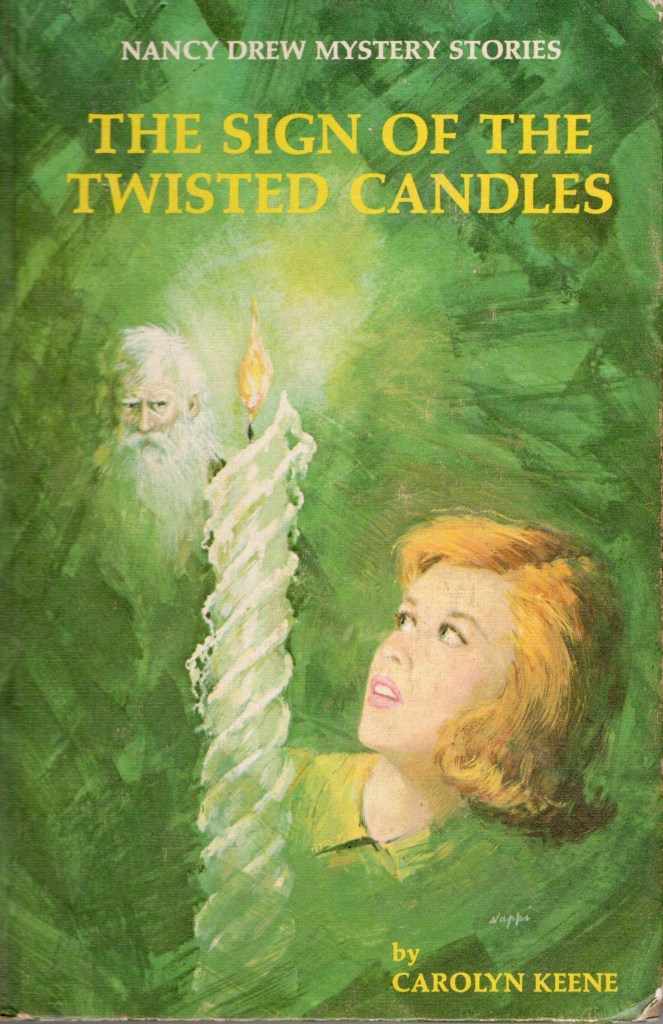
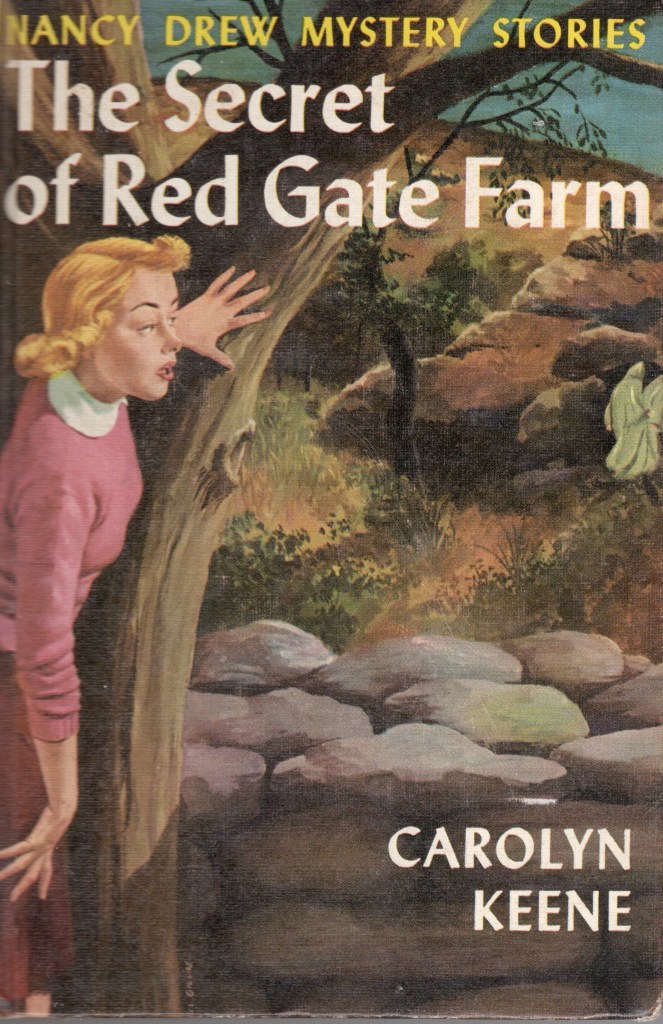

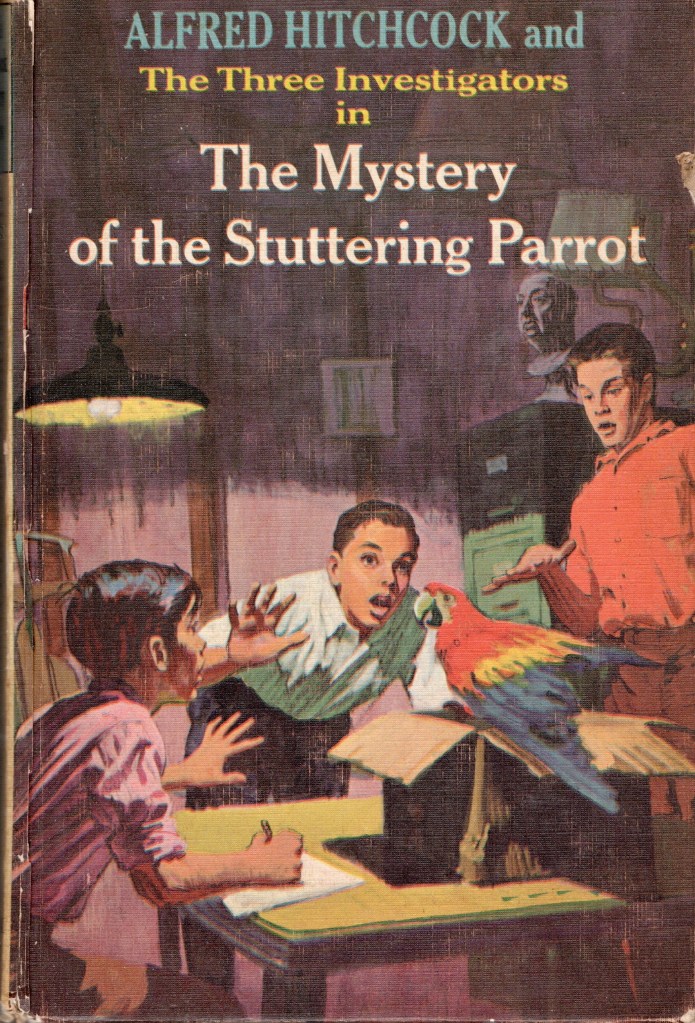
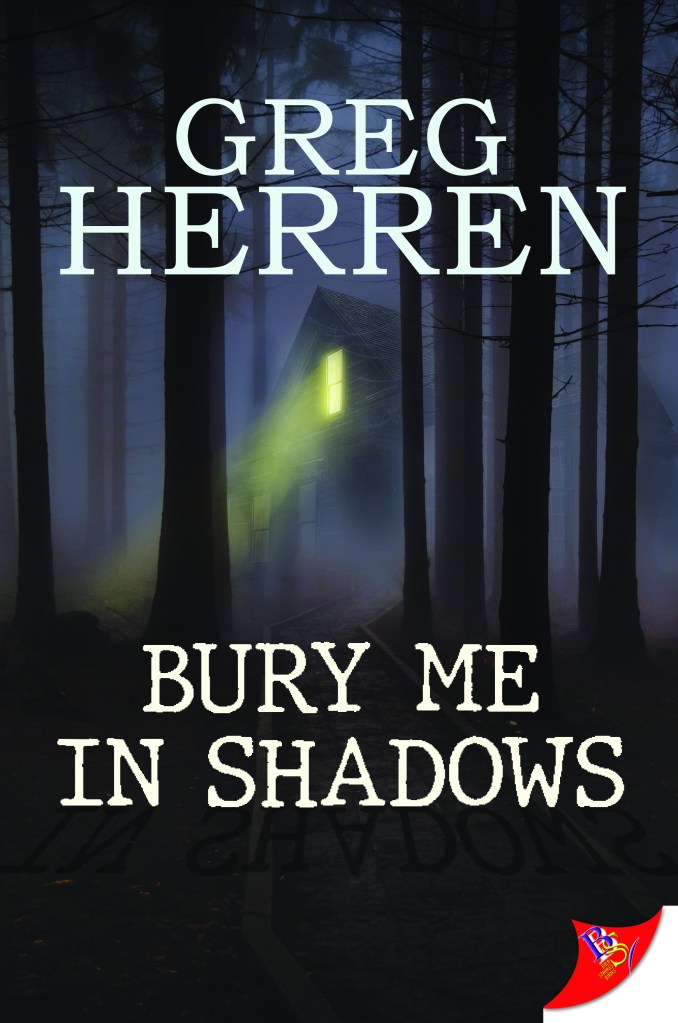



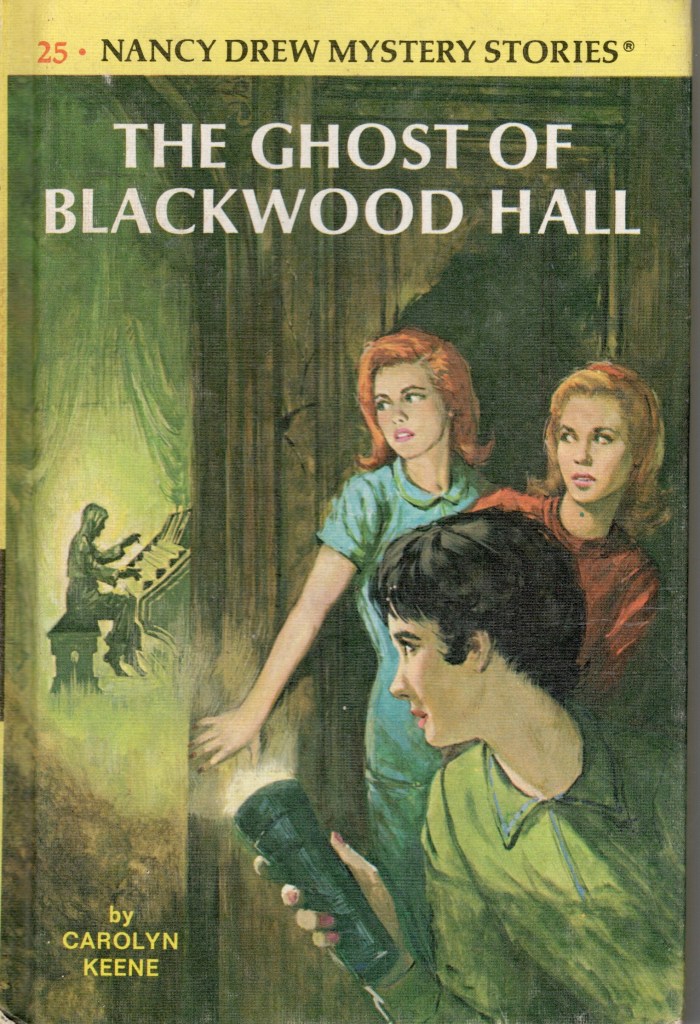
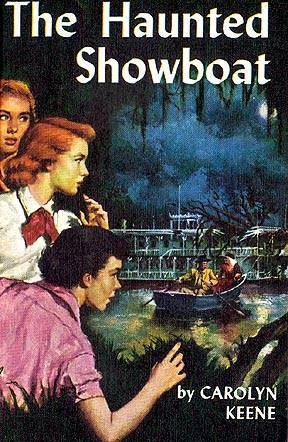

 Queer and Loathing in America