Weird Science

I loved kids’ series when I was, well, a kid. I still have fond memories of reading and collecting as many of the books as I could–I still have all my copies–and while of course times have changed, I feel bad for kids today who don’t have the plethora of series to choose from that I did when I was a kid.

Of course, I chose all of them, pretty much.

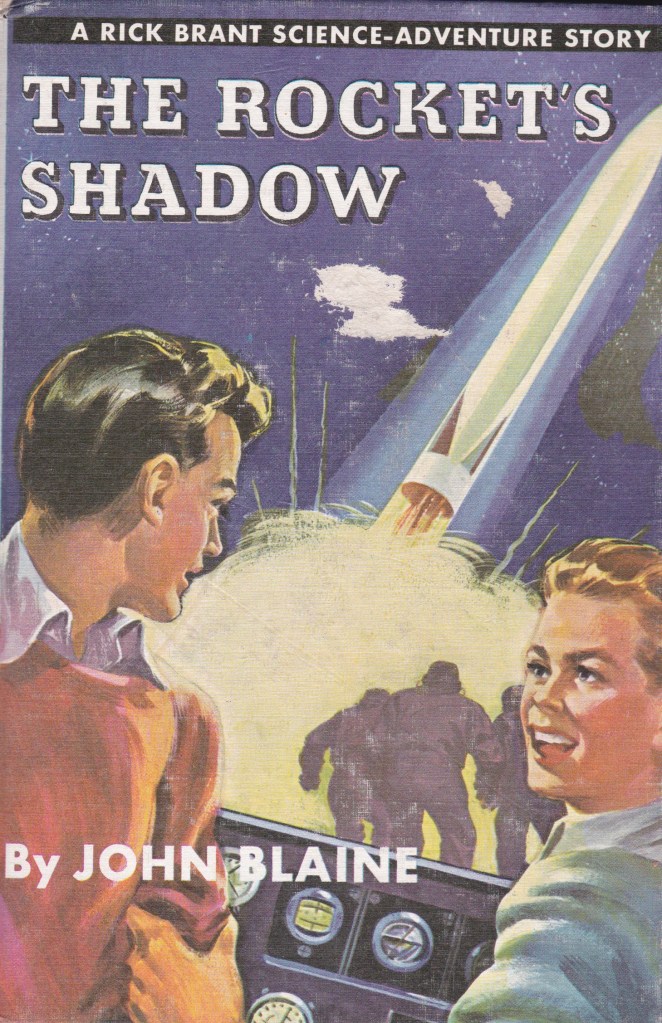
And while the most popular kids’ series were Nancy Drew and the Hardy Boys, my favorites were the ones that weren’t as well known, didn’t last as long, and vanished from print during the late 1960’s and through the 1970’s. I always preferred Judy Bolton, Trixie Belden, and Vicki Barr to Nancy Drew; I enjoyed The Three Investigators, Ken Holt, and Rick Brant far more than I liked the Hardy Boys, but you could get Nancy Drew or Hardy Boys books almost anywhere, whereas the others were incredibly hard to find. Our babysitter used to take us to the Goldblatt’s Department Store on 26th Street in Chicago when she went, pulling her buggy behind her (Dad says Mom used to pull me and my sister in hers to the grocery store, but I don’t remember that). Mom would always give my sister and I two dollars each to spend, and I loved going there because in the basement was the kids’ section, and while my sister was looking at dolls or single records (remember 45’s?) I discovered the remainder table, where Goldblatt’s marked down some of the lesser known Grosset & Dunlap/Stratemeyer Syndicate books on a big table, for like thirty-nine cents, which was a big deal because I could get a lot of books at that price. They were all series books I’d never heard of, but they sounded interesting. It was off that table that I got my first Ken Holt. Rick Brant, and Biff Brewster mysteries. The Biff Brewster books weren’t as good as the other two series, but today I want to talk about Rick Brant, and why I loved the series so much.

Rick Brant, being tall for his age, had no trouble making the final connections on his latest invention. He screwed the bell on solidly, then stepped back to view his handiwork.

The doorbell was now in an unusual position. Instead of being at waist level, it had been moved to the inside of the doorframe and placed up high.

It looked fine. A stranger might have to hunt a little before he saw the push button, but he’d find it all right. Rick went inside and threw the switch that would send electricity into the gadget and went to collect the family.

Mrs. Brant was in the kitchen, supervising the supper preparations for the family and the scientists who made their home on Spindrift Island.

Rick sampled the cake frosting in a nearby bowl and invited, “Can you come out on the porch for a minute, Mom? There’s something I want to show you.”

Mrs. Brant looked up from the roast she was seasoning, a twinkle in her eyes. “What is it now, Rick? Another invention?

“Wait and see,” he said mysteriously. “I’ll go get Dad and Barby.”

And so opens the first Rick Brant Science Adventure. I bought four Rick Brant books that day (The Rocket’s Shadow, The Egyptian Cat Mystery, The Flying Stingaree, and The Flaming Mountain), all of which had some appeal to me. I wasn’t really that much into science or rocket ships, but I did buy the first because it was, well, the first in the series, and OCD Child Greg had to read the first book. I didn’t have to read the series in order–I did try that with the Hardy Boys, but gave up when it was time for Book 4 and the title, The Missing Chums, didn’t excite me so I got one of the later volumes, The Mystery of the Aztec Warrior instead. There was a pyramid on the cover. I’ve always been a sucker for pyramids–but I always felt obligated to eventually get to the first volume of every series. It wasn’t always necessary, but in some cases–The Three Investigators, Trixie Belden, Judy Bolton–they really did set the stage for the rest of the series and it helped to have read the first one.

I’ll be completely honest here, too: I was never good at science. I don’t know why that was, but I just was never good at any of it–biology, chemistry, physics; math and science were my two Achilles heels. I only read a couple of the Tom Swift books, and even those were because one was reissued in paperback and renamed In the Jungle of the Mayas (the Mayans built pyramids!) but I got the impression the Swift books were more about science than a case or a mystery or anything. The Rick Brant series, on the other hand, while having some insane titles (The Electronic Mind Reader, The Wailing Octopus) like all series did, there were also some that were called “mysteries.” So, yes, science, but also mystery.

I also had no idea it was going to become one of my favorite series.

When I first read The Rocket’s Shadow in the late 1960s/early 1970s, it was already significantly dated. Originally published in either 1946 or 1947, the background to the story was that the scientists on Spindrift Island, off the coast of New Jersey, were trying to build a rocket to send to the moon. Several different groups were trying to accomplish this, and whoever succeeds first was going to get a very lucrative government contract…and their efforts are being sabotaged. Rick’s father, Dr. Hartson Brant, is world-renowned, and of course Rick is very interested in science and is always inventing things to either save time or effort, and they aren’t usually very practical, even though they do work. Rick and his younger sister Barby go to school on the mainland–Spindrift is separated from the coast by tidal flats that are underwater during high tide–but everyone on the island is determined that their rocket will succeed and they’ll catch the saboteurs.

Rick soon figures out a clue and gives chase to some of the saboteurs, who turn on him and attack him–only he is rescued by a blond hitchhiker carrying a military duffle. He and Rick run the attackers off, and then Rick brings his new friend, Don Scott–“Scotty”–home with him because he has no place to go. He’s out of the military and has no family, was just wandering the roads to see where he wound up. The close bond between Rick and Scotty1 resonated with me, especially their sense of camaraderie and affection for each other. They had no girlfriends or even any girls who might be potential dates at first (some were introduced in the series later, Barby growing up for Scotty and a new scientist comes to the island and has a teenaged daughter Jan who is sort of an interest for Rick–but the girls are never more important to them than they are to each other.2

Obviously, by the time I got and read the book we were already into the Apollo space programs from NASA, and we landed on the moon in 1969–so all the science in The Rocket’s Shadow was off and wrong–also the rocket got there in like twenty minutes, not possible even now–and as such, the series could never really be updated and revised like the Hardys and Nancy Drew. The Rocket’s Shadow would have had to have been completely rewritten, and I’m not sure how you could introduce Scotty as a hitchhiker/war vet (he lied about his age) today.

I enjoyed all the books in the series. I did eventually get them all over the years and read them, and many of them are dated. High tech walkie-talkies don’t seem so impressive in a cell phone world, and of course, there are some trips to foreign lands (Asia and Pacific Islands) that are probably more than a little racist and dated now. But I loved The Lost City, where they are off to Tibet to set up a radio receiver on the opposite side of the world from Spindrift to triangulate with the rocket on the moon, and they discover a lost city of Mongols and the tomb of Genghis Khan. They also meet, in that book, an Indian youth named Chahda who helps them out and becomes basically a member of the family, and they take him off the streets of Delhi and pay for him to go to school. Chahda was incredible smart and adventurous too–but not sure how he’d hold up under modern scrutiny in these more evolved times.

And maybe when I’m retired I’ll reread the series critically. The books can be found on ebay and second-hand sites; some are available as ebooks, either on Amazon or Project Gutenberg.

  1. I am even now wondering if this character is why I’ve always liked the name Scotty, and have used it repeatedly for characters of my own creation. ↩︎
  2. I do find in also amusing that my parents–so worried about me reading books about girls instead of boys; did they not understand just how homoerotic the relationships between boys in these books were. This amuses me greatly now. ↩︎

Get Up and Go

Sunday morning and the temperature is falling in New Orleans. It’s forty-one right now, which is nothing compared to what people up north are dealing with today, but we are getting down into water-freezing temperatures later this week. I slept for eleven hours last night, which is insane, but…my guess is I needed the rest. I didn’t get up until nine this morning, which is almost as insane as the weather. It’s amazing what a difference the right medications make, isn’t it? Yesterday was actually pleasant. I did some things, ran some errands, and then settled in to watch the LSU Gymnastics meet, which was a quad competition against three of the best teams in the country–UCLA, Oklahoma, and Utah–and the LSU team actually had to count a fall and still managed to come in second. They also had a subpar vault and beam rotation, which makes it even more amazing. GEAUX TIGERS! I also spent some time reading–which I am going to go do some more of once I finish this–and even wrote a little bit yesterday (a very little bit). But tomorrow is a holiday, and I have more chores and things to do today, without anything really to watch on deck.

It’s very nice to get up and feel rested, which happens more frequently these days.

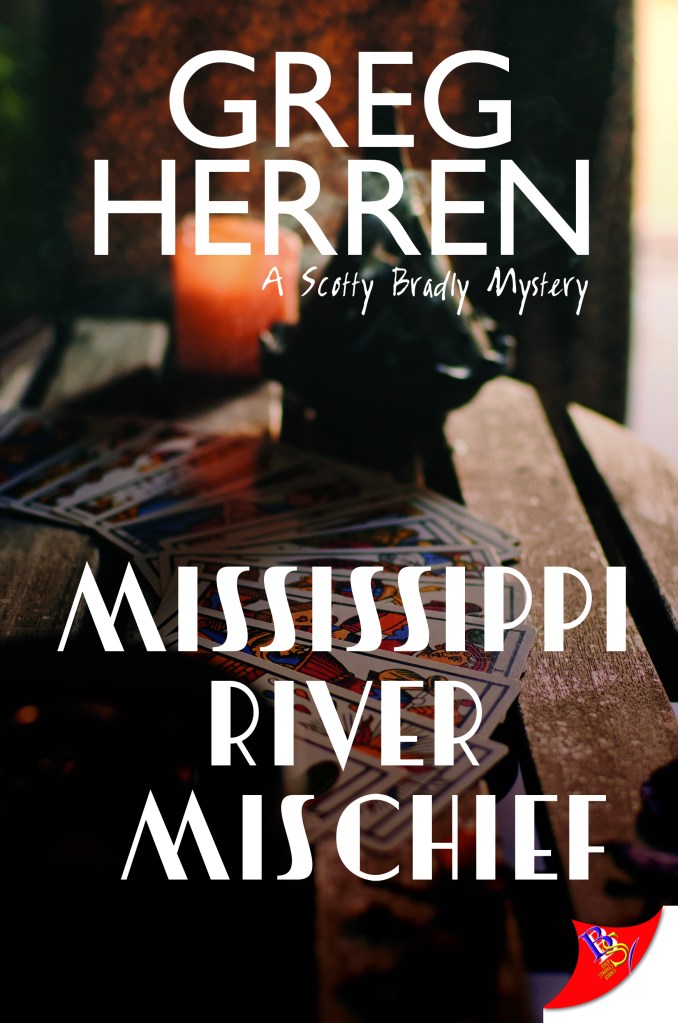
I did a reading for the Bold Strokes Book-a-thon yesterday, with some other mystery writers from Bold Strokes, which was kind of nice. Mary Burns, who moderated the reading, also asked us all how we plan our books–essentially the plotter/pantser question–and it did make me think a bit about my process, how I do things. I write Scotty books differently than I write other books, fo one thing. I always think up three or four things that I want to address in a Scotty book, and from there I try to figure out how to weave them together into a story. This started with Baton Rouge Bingo–prior to it, I pretty much just pantsed the whole thing and figured it out as I went. I was asked on a panel at Saints and Sinners after Who Dat Whodunnit if I planned on writing another Scotty book, and I flippantly replied “if I can figure out a way to make the book about Huey Long’s deduct box, Mike the Tiger (the live LSU animal mascot), and the state’s ban on gay marriage, I will”, figuring as I said it there was no way anyone could write a book with all three elements in it. Three days later it all came to me how to make that actually work, and so I started writing it. For Mississippi River Mischief, there were several separate things; I wanted a family values politician hypocrite who had a thing for teenager boys, a tie in to The Haunted Showboat, and something from Scotty’s own past that he’s never really reexamined before, but has to because of the events in the book. It took me a while to figure out how to deal with the characters’ response to the events of Royal Street Reveillon–I could hardly pretend those things didn’t happen, after all–but eventually it all began to fall into place. I ended up with a book I was very pleased with, and probably one of the best books in the series. I’m not sure what Scotty is next, but I know it’s going to take place while the building on Decatur is renovated and redone as a single family residence, the boys will be living in the dower house–Taylor will be living in the Diderot mansion because there’s not enough space in the old dower house for all four of them. I think this is going to be the hurricane party book, which I am kind of reluctant to write because the last time I decided to write that story was right before Katrina. But I am going to start figuring that one out a bit, see where we can go with it. I do think a crime story set during an evacuation, with the city emptied, is an interesting idea, so I’ll probably write some free form brainstorming the way I always do. I’m kind of excited about writing another Scotty book this year.

There are also some short stories I want to get under control and finished and submitted.

But once I finish this, I am going to my chair with my journal and Tara’s book, so I can hopefully get that done today. I also have chores to get done–the kitchen is sliding again–and here’s hoping for a productive Sunday, okay? Have a great one–I may be back later.

Lost in Love

Saturday morning and we’ve at long last made it to the weekend! Huzzah! I have a lot to do this weekend, and I even have to leave the house both nights. This afternoon I am attending a co-worker’s wedding; tomorrow I am having dinner at San Lorenzo with my friend Ellen. Woo-hoo! Yesterday was a good day. I did my work-at-home chores, along with chores, and then ran some errands so I wouldn’t have to do them today–a decision I am very grateful for this morning, believe you me. I then read Angel Luis Colón’s Infested for a while, finished my reread of Death Drop, and watched an episode of Moonlighting. I also rewatched the last two episodes of Our Flag Means Death again–glad I did; I slept through most of them and they were most witty and clever and funny. When Paul got home we started the new season of Elité, but it’s more a habit and completionism to continue watching it at this point. It’s glory days are long past, I barely remember who any of the characters are, and I don’t really remember much of last season, to be honest.

Sigh. But those first three seasons are still epic television. This is kind of what I mean when I talk about shows that keep going because they’re successful when they should have stopped when they were ahead; the season three finale was an excellent stopping place–but at the same time I would have been terribly bummed had the show ended there, too. Be careful what you wish for, right?

The sun was bright and high this morning, just as it was yesterday morning, which leads me to believe the time change should have been this weekend instead of two or three weeks from now. It used to always be in October; and I don’t know why or when it was changed to November, but if we’re going to have to do this every year, can’t we at least have it happen when it always used to happen? I slept really well last night–I’ve been sleeping well all week, actually. I think the change in the weather has helped with that dramatically. I still feel a bit groggy this morning, but that’s okay. I am going to write this and read some more of Infested once it’s posted, and then I have some things to do around here. The wedding window period is from 4-9, with the actual ceremony around five. I am going to try really hard not to be that person who always arrives ahead of the scheduled time and has to sit around waiting for everyone else to show up–the story of my life–and I am quite determined not to even summon a Lyft until four o’clock.

I’m really enjoyed Infested, but I knew I would. I’ve been a long-time admirer of Angel’s work for quite some time now, and his narrative voice is absolutely perfect in this book. I’m not sure if it’s considered middle-grade or y/a–that line is always so blurry–but it’s quite engaging and I really like the main character. I’m also not entirely sure I’ve read a book before that’s set entirely in the Bronx? (And why is it “the Bronx”? It’s not “the Queens” or “the Brooklyn” or “the Manhattan”, but just saying “Bronx” without the article is weird…although I suspect that’s entirely from years of hearing it said with the article.) I am really enjoying it.

I’ve thought about writing for middle grade (I’ve literally thought about writing everything other than fantasy –I even have some science fiction, incredibly bad, in the files) but am not sure if I can do it, which is precisely the reason I should try writing it. I’ve always wanted to do my own kind of Nancy Drew-style series for kids, have wanted to ever since I was a kid reading those books, and I’d really like to at least give it a try at some point before I finally exit the planet or am unable to write anything anymore. Although can I really write for middle-graders when I don’t know any kids that age? Writing is writing, I suppose, and the best thing to do is try it and write the very best book I can with the very best characters I can; I do think two of my strengths as a writer are likable characters and a good narrative style that draws the reader in. Can that translate to middle grade mysteries? I guess I will never know unless I try–and maybe, just maybe, I could write one set in New Orleans?

And on that note, I am heading into the spice mines with my book to read. Have a lovely Saturday; I may be back later; you never know!

Up Where We Belong

Shirley Jackson never explained.

I’ve always loved The Haunting of Hill House, and Jackson has always been one of my favorite writers. I’ve long ago lost count of how many times I’ve reread the book, and of course I love the original film version from 1963, directed by Robert Wise and starring Julie Harris in one of her best screen roles as Nell. The sense of dread and fear contained within the pages of that incredibly short novel are astounding. I’ve always believed that one of the book’s greatest strengths was its lack of explanation; horror novels, or ghost stories, or whatever you want to call Jackson’s novel, inevitably always get hung up on explanations of who or what caused the place to become haunted and/or accursed. Jackson never bothered, knowing instinctively that the unknown is far more unsettling and terrifying than any understanding or explanation she could provide to her readers; she just never explained. “The Lottery” offers no clues as to why the villagers have developed this annual ritual, it simply happens and she shows it to us without explanation…which again makes it that much more unsettling. In the years since I originally discovered and read a very cheap copy of The Haunting of Hill House at a used book store, with its Gothic-style cover depicting a beautiful Nell with long flowing hair and a long flowing gown, holding a candle while climbing the horrible spiral staircase in the library, I’ve read more of Jackson and become an even bigger fan of her work than I already was. The Haunting of Hill House and “The Lottery” firmly cemented Jackson’s deserved place in American literature; the rest of her equally brilliant, disturbing and unsettling work serve to heighten that place and elevate it even more.

I am not a purist. A long time ago I realized that films and television programs adapted from books would almost always be disappointing for a fan of the book; ones that are actually better than the book (The Exorcist, The Godfather) are few and far between. I stopped getting irritated by these changes a long time ago. I also learned to stop being bothered by such things; it’s an adaptation, after all, and that means changes because it’s now a different medium. (I have already mentioned my amusement at how militant fans can be about these things; particularly when it comes to things like Nancy Drew or the Hardy Boys.) I hated the 1999 remake of The Haunting; it was special effects nightmare that made little to no sense; the whole point of the story was you never see what it is that’s going on and never are really sure; this second film version ignored that and therefore, it wasn’t The Haunting but just another haunted house movie. I greatly enjoyed the Netflix adaptation mini-series by Mike Flanagan; it was a different interpretation–again, you never see anything–and I thought it was a brilliant modernization/adaptation.

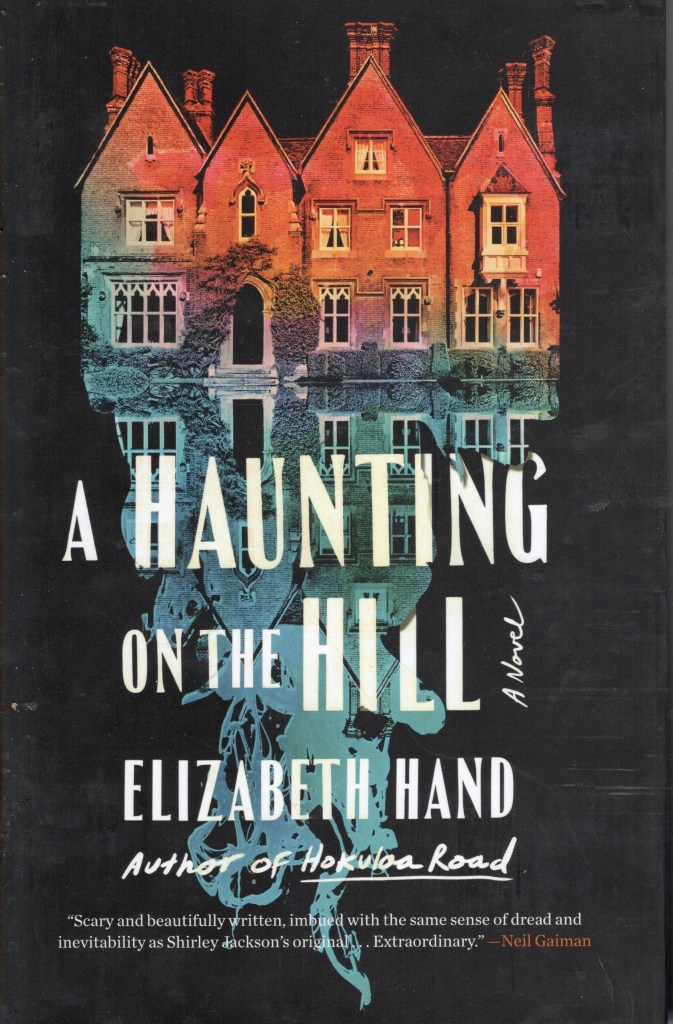
But I did approach this book, said to be a retelling of the story, with a bit of trepidation. I’d heard of Ms. Hand before, of course–I have a copy of Curious Toys, which I bought when she on the Shirley Jackson Award for it, and had been meaning to get to her work at some point.

I left the rental just as the sun poked its head above the nearby mountains, and golden light filled the broad stretch of river that ran alongside the little town. Nisa was still curled up in bed, beathing deeply, her dark curls stuck to her cheek. I brushed them aside but she never stirred. Nisa slept like a child. Unlike me, she was never troubled by nightmares or insomnia. It would be another hour or two before she woke. Longer, maybe. Probably.

I kissed her cheek, breathing in her scent–lilac-and-freesia perfume mingled with my own Jasmin et Tabac, one of my few luxuries–and ran my hand along her bare shoulder. I was tempted to crawl back in bed beside her, but I also felt an odd restlessness, a nagging sense that there was somewhere I needed to be. There wasn’t–we knew no on around here except for Theresa and Giorgio, and both would be at work at their home offices overlooking the river.

I kissed Nisa again: if she woke, I’d take it as a sign, and remain here. But she didn’t wake.

I scrawled a note on a piece of paper–Nisa often forgot to turn her notifications off, she’d be grumpy all morning if a text woke her. Going for a drive, back with provisions. Love you.

This book isn’t a retelling of the Jackson novel, but rather a kind of sequel, picking up at Hill House some sixty years after poor Nell drove her car into the tree after the turn in the driveway as she realized she’d been wrong about everything but only too late. This is a new story of Hill House, and our main character, Holly Sherwin, is staying upstate with her lover Nisa in an Air BnB, and bored, wakes up early and goes for a drive. A playwright, she’s recently won a grant to help cover expenses while she works on her play, Witching Night, which is based on an old sixteenth century manuscript she came across by chance. It’s the story of an old woman accused of witchcraft and burned at the stake, based on a real event; her girlfriend Nisa is an accomplished rising singer/songwriter, who is rewriting old murder ballads to use as the soundtrack/backdrop of the play. She goes for a drive and finds herself at Hill House…which draws her in much as it did Nell in the original Jackson and she decides to rent the house for two weeks, move in with her cast (her bisexual friend Stevie, a former child star molested on set and now an amazing sound tech) and Amanda, a brilliant aging actress whose career took a turn when a costar fell to his death–and of course people wondered if she pushed him. Holly herself has a bit of a checkered past; someone had told her a story that she adapted into a play; the original person threatened to sue her but before anything can be done that person commits suicide. That derailed her playwriting career–and believe me, Hand does an excellent job of depicting what the excitement that a burnt-out creative experiences when inspiration, an opportunity to flex those creaky muscles and create again, feels like.

All four of the characters are beautifully rendered and are completely real, and one of the things I liked was how Hand slyly also referenced the Flanagan mini-series as a part of the Hill House continuity. Hand’s Hill House has similarities to Jackson’s, and there are more than enough nods for the Jackson fan to recognize and smile about. Hand also does an incredible job of creating that claustrophobic dream-like feel Jackson used for her book, but Hand doesn’t mimic Jackson’s style; the style of this novel is entirely Hand’s, but one has to marvel at Hand’s mastery of creating that same feeling in her reader but in an entirely different way. The language she uses is flawless and rhythmic, just like Jackson’s was, but again completely different. There are also moments that mirror the original novel beautifully; call backs to the original story that I personally felt like little secrets Hand was sharing with me the reader. It’s a very intimate story, and I felt like I was there with them, the characters were people I understood and knew and cared about. Hand also tells the story in alternating points of view, which helps create the off-balance slightly skewed perspective the story needs; Holly tells the story in the first person, but the others are from a third person point of view.

It was terrific, and I look forward to reading more of Hand’s work.

Adios Amigo

I’ve been toying with an idea for an essay for a while. It began as a blog post, but as I worked on it I realized it might be too long for a blog entry, were I to cover the entire scope of the issue even in abstract form. I moved it from here into a Word document yesterday, which may or may not mean something bigger in store for it than simply a blog entry. I don’t know. It will probably wind up here at some point as one of those long rambling things I do from time to time when I feel passionately about something. Consider that your warning. I’ve been thinking about masculinity a lot lately–it’s been an albatross hung around my neck since I was a child (“Boys don’t play with dolls! Boys don’t read Nancy Drew!”) and after reading so many bad takes about how “men are in crisis”–which basically boil down to an inability to adapt to cultural and societal change that is so intense that they resist such adaptation violently–I started thinking about masculinity and what it means to be a man; if it means anything, really. It’s probably too important an issue for me to take on in a personal essay, but personal essays are supposed to be revealing, and no one expects me to have an encyclopedic knowledge of everything ever written about American masculinity, and to discuss it; thinking I can’t write something for whatever reason is self-sabotage of the worst kind, and something I am guilty of, over and over, throughout my life and career.

And yes, self-sabotage is 100% a by-product of my anxiety.

I also have Justin Baldoni’s book about masculinity, Man Enough, which is also an exploration of masculinity. Baldoni played the incredibly hot and sexy father of Jane the Virgin’s baby, and so as a gorgeous male actor/sex symbol, he has some gravitas to speak on the subject. I’m looking forward to cycling around to his book, once I finish my reread of a Charlemagne biography I really enjoy. I also spent some more time with Shawn’s All the Sinners Bleed, which I am liking and savoring as I go–and can’t wait to spend some more time with it today. When I finish, Lou Berney’s Dark Ride has preempted everyone and been moved to the top of the TBR pile. It’s so lovely having so many great options of what to read next. I also think once October rolls around I am going to read only horror that month, in honor of the season–so I need to finish Shawn and Lou’s books before the month turns.

It also occurs to me that many of my books–unbeknownst to me–have explored the topic of masculinity in great detail already.

I slept really well last night, and only got up once. Ironically once I did wake up, I thought wow you really slept late and then saw it was quarter past seven on my alarm. I guess how it feels matters more than how long it actually was, and what truly matters is that I woke up feeling rested and relaxed and ready for my coffee this morning. I am debating right now whether I want to take the books to the library sale and the beads to the donor bins as well s make a slight grocery run–but am leaning towards not making the trip outside the house. I don’t really need anything from the store until Monday at the earliest, and the boxes of books and beads are out of the way and not bothering anyone, let alone my need for order and open space in the living room. I also want to work on some writing today before the games, so maybe leaving the house today isn’t in the cards–or am I just being lazy? It’s definitely possible that laziness and procrastination and my tendency to self-sabotage is what is really going on here. It’s possible. I do tend to put things off I consider unpleasant (and by unpleasant, I mean have to put some effort into it)…

LSU plays Arkansas tonight in Death Valley, and tonight we’ll find out two things: basically, how good either time is. It’s hard to say this early in the season how much quality your wins and losses have; the Florida State-Clemson game today will impact how good the LSU loss to the Seminoles was, and of course we aren’t sure how good Mississippi State is, so we don’t know if that was a quality win yet or not. Arkansas lost to BYU last weekend, so there’s also no telling how good they may or may not be, either. The whole conference seems to be down this year, but a tight win for Georgia can be shaken off as meaningless this early, and Alabama may bounce back; a Nick Saban coached Alabama team has never lost more than three games in a season since 2010 and only twice overall; sure, they looked unimpressive against USF and lost badly to Texas in Tuscaloosa, but does that mean Alabama isn’t going to rebound and is destined for a bad season? No, I don’t think so. Love them or hate them, Alabama consistently wins, and an early season loss means nothing to their program. Sure, LSU could run the table, win the West and potentially even the conference title game and make it to the play-offs; but they have to run the table on a schedule filled with landmines, including both Alabama and a rebuilding Auburn as well as the always hated Florida Gators. There are some great games today, which is why I want to spend some time reading Shawn’s book this morning before the games start, and I plan on rereading and revising Jackson Square Jazz during the games today.

And of course, there’s always filing and organizing to be done. I have seriously messed up my filing system so thoroughly and completely that it’s going to require a major overhaul to begin with, but I also have to think about putting together a new and workable system that will be easier to maintain than this haphazard way I’ve been doing things–and of course the computer files are an utter disaster as well. Heavy sigh.

I’ve been doing a lot more research (or rather, falling into research black holes on the web) about New Orleans during the decade of the 1910’s. I am definitely going to write a Sherlock pastiche for the Bouchercon anthology–which of course means I will most likely be rejected. Perhaps a Sherlockian-type character, and if they turn it down I can simply turn him into Sherlock and toss the story into my short story collection? I need to finish the revisions of “Whim of the Wind” and finish a draft of “Parlor Tricks,” which will probably go into that collection as well. What particularly interests me now is “Manila Village,” a settlement of Filipinos on Barataria Bay, settled by native Filipinos who were forced to serve in the Spanish navy and escaped to Louisiana. There’s still a strong Filipino-American community here (which I actually didn’t know before falling into this wormhole of research), and I do feel that Holmes, living in New Orleans in that decade, would probably embrace them and their culture. (I also need to research the Isleños; descendants of the Canary Islanders who settled here.) New Orleans was also dramatically different geographically back then; the New Basin Canal was still there, for one thing, and I am not entirely sure when the Carondelet Canal (also called the Old Basin Canal) was filled in, but it came right up next to Congo Square; the streets in the Quarter were either dirt or cobblestone, and the lower part of the neighborhood had been almost entirely taken over by Italian immigrants.

I’ve also got strong starts of first chapters for another Jem book (sequel to Death Drop) and another Valerie (sequel to A Streetcar Named Murder); so there’s plenty of writing to be done this weekend as well. I’m not feeling overwhelmed by any or all of this writing that must be worked on and done; this morning I literally feel like all I need to do is roll up my sleeves and dive into the word documents head first, which is a great way to feel.

And on that note, it’s spice mine time this morning. Have a great Saturday and I’ll probably check in with you again later.

Judy in Disguise

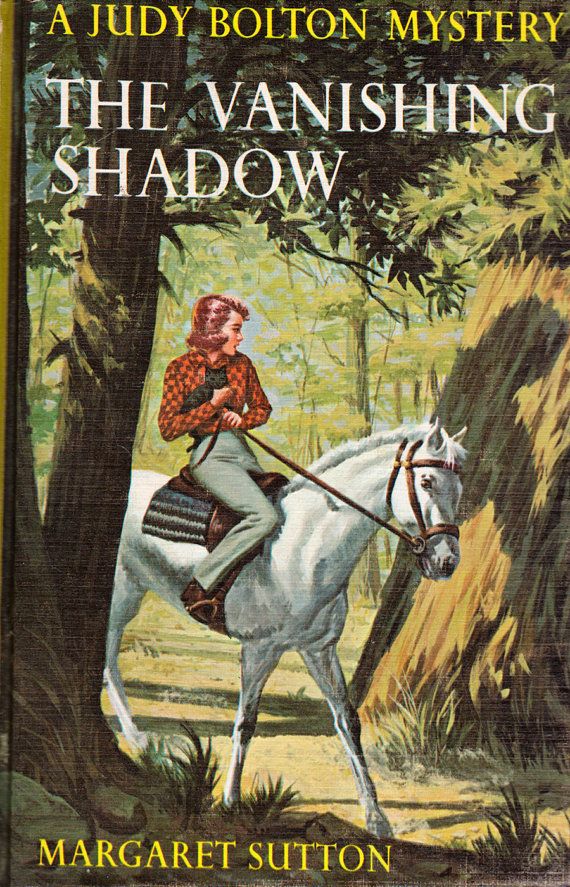
Judy Bolton was never quite as popular as Nancy Drew, but she has some very loyal and very partisan fans. Unlike Nancy Drew and the Hardy Boys (and perhaps some other Stratemeyer Syndicate series), there was only one writer for the entire length of the series, Margaret Sutton, and she wrote about her native Pennsylvania–the state is never mentioned in the series, but it’s close enough to New York for a short train ride to take you into the city, and it was pretty clear she had set the series in a fictional town in her native state. The series was also unique amongst kids’ series in that Judy aged–she was fifteen or sixteen in the first book, The Vanishing Shadow, eventually graduated from high school, and got married. The grandmother she is staying with at the farm in Dry Brook Hollow in that first book eventually passes away and leaves the farm to Judy, who moves into the old farmhouse with her husband and former high school boyfriend, Peter Dobbs.

I discovered Judy Bolton at Bargaintown USA, which eventually became Toys R Us. Their book wall, which was the back wall of the store, had every kids’ series in print at the time. I just stared at the wall in wonder, wondering how I would ever choose just one book out of the vast array of choices. I liked the title The Vanishing Shadow, and my parents–eager to get me to read about boys instead of girls–didn’t notice it was a “girls” book because the spine was green–Nancy Drew was a very bright yellow, and they’d trained themselves to watch out for those telltale yellow spines in time to negate the purchase. Like most kids’ series, the Judy Bolton books had never been revised or updated; they weren’t Stratemeyer Syndicate books and had a single author, for one (Sutton always felt Grosset & Dunlap “favored” Nancy Drew in marketing over Judy Bolton; and that her series would have been just as successful with the same marketing Nancy got), and so this initial book, originally published in 1932 (!!!) seemed a bit old-fashioned. I was also a bit surprised because Judy was kind of unpleasant and unlikable. She was especially mean and vicious to her younger brother Horace–who was timid, shy, and weak; dismissed as a coward by everyone including his sister–and she was incredibly bored, staying at her grandmother’s–which I could also related to as I often was bored when I spending the summer at my grandmother’s. Judy and her family actually lived nearby in the small city of Roulsville, which sat in the shadow of an enormous dam and reservoir. Judy overhears some suspicious characters talking about a weakness in the dam–and so she entertains herself trying to figure out what’s going on. There’s a very exciting climax where the dam itself does rupture, and Horace rides a horse into town to warn everyone to flee for safety, becoming in the process the hero of the Roulsville Flood. This surprising act of heroism for the formerly “cowardly” Horace has a strong effect on him, and he becomes a completely different person from then on–strong, confident, courageous. Judy also solves her mystery, involving shoddy construction of the dam and corruption, and all’s well that ends well–except the Boltons are now homeless.

My junior high school had a lot of the kids’ series in its library, and I checked out and read as many as I could–not just Judy Bolton, but other series like Biff Brewster and Ken Holt, that I also enjoyed (more on them later)–and in the second book of the series, The Haunted Attic, the Boltons move into an old but beautiful, reputedly haunted mansion in the nearby, much bigger than Roulsville city of Farringdon. Judy’s transition from her old high school to the new one in Farringdon brought its own set of challenges; her adventures in the first book also made Judy grow up some and become a little less self-centered and more concerned about helping other people, with a strong sense of right and wrong. The Judy Bolton series was kind of amazing and vastly different from the others in that Judy not only grew and evolved, but so did her friends. The books also tackled social issues, like class and snobbery and mean girls, while Judy also solved mysteries. She became friends with a group of kids, with both wealthy Arthur Farringdon-Pett and Peter Dobbs interested in her; Arthur’s sister Lois became Judy’s friend, but Lois’ other best friend Lorraine Lee was a bitch who was extremely jealous of Judy–but rather than dragging her for the filth she is, Judy feels more sorry for her than anything else, and is always kind to her.

One of the other things I really liked about this series–besides Judy aging and growing and changing from a teenager to an adult married woman over its run–was often Judy’s mysteries involved reuniting long lost children with their families. The Haunted Attic put her squarely in the sights of a criminal gang, who had a sad teenaged daughter Judy took pity on and befriended…eventually discovering she was actually Peter Dobbs’ sister, who everyone thought had died at birth. Judy and Peter eventually married, and they wound up living in her grandmother’s house in Dry Brook Hollow, which she inherited when her grandmother dies (off camera). Another thing I liked about the series was its careful attention to continuity–many of Judy’s later adventures were tied to the Roulsville Flood, or have long-running characters like Holly Potter who eventually have a mystery that needs clearing up by Judy; she and Peter also took in a little girl named Roberta who lived with them for several volumes before Judy finds out the truth about Roberta’s past and reunites her with her parents (The Clue of the Stone Lantern). Judy even deals with racism against Muslim-Americans in The Search for the Glowing Handwhich was pretty fucking far ahead of its time for the 1960s, don’t you think?

As you can see, advertising played up the fact that Sutton based her stories on real places and real events.

The last Bolton case written by Sutton herself was The Secret of the Sand Castle, which, of all things, takes Judy to FIRE ISLAND to solve a mystery. I know, right? When I finally got a copy of it (in very good condition, and far cheaper than I would have ever guessed it would be) I wasn’t surprised to read that Judy encountered no partying gay men, never wandered into the Pines at night by mistake, and so on. It was also set in the off-season, so there was no one else–or not many people, at any rate–out there on the barrier island with her.

I also liked that Peter, Judy’s husband, became an FBI agent after they were married, and sometimes Judy inadvertently got involved in one of his cases. Her cat Blackberry, originally gifted to her as a kitten in volume one, is “loaned” to Congress to catch mice in the basements of the Capital when she and Peter are living in Washington briefly because of his work–The Whispered Watchword involves a conspiracy against the US by a foreign enemy–before they return back to Dry Brook Hollow. Peter is also often away (gosh, sounds like Frank and Colin, doesn’t he?) so Judy is usually on her own when a mystery comes across her path. I also liked that Judy didn’t just become a wife when she married; she continued having adventures, even if she is a bit more deferential to Peter than I would have liked, but marriage neither changes her nor makes her settle down into domesticity, the way an actual baby would have; that was my biggest fear reading the series…that Sutton would eventually make her a mother. But that wouldn’t have flown with the audience or the publisher, I suppose (SEX! OMG JUDY AND PETER HAVE SEX!), so that’s why Roberta came along–to give Judy that “normal” look of having a child to look after now that she’s a wife.

Fans completed some of Sutton’s unfinished manuscripts after she died; while I am sure they are marvelous stories, maybe someday I’ll have an interest in reading either of them. But it’s hard for me to read someone else’s take on a long-running series; it just feels wrong to me, somehow and I know it’s irrational. I did like Ace Atkins’ take on Spenser, and I am going to read Alison Gaylin’s take on Parker’s Sunny Randall. (I also used to not like watching movies that were subtitled, either, so…change is possible.)

It would be very cool if someone could update this series, but I’m not sure if it can be done. The first book came out almost a hundred years ago (!), and times have changed dramatically since then. I always thought if I wrote a girl detective, she’d be a cross between Judy Bolton and Trixie Belden.

Near You

Several weekends ago, I did an on-line panel for Outwrite DC. The moderator was John Copenhaver (whom you should already be reading), and my co-panelists were the always delightful and intelligent Kelly J. Ford, Margot Douaihy, Renee James, and Robyn Gigl. The video is actually up on Youtube, if you would like to watch it. John’s questions were insightful and intelligent (as always), and the conversation was marvelous, inspiring, and fun; there’s nothing I love more than communing with other queer crime writers (or any writers, to be certain), and I always try very hard to not monopolize panels because I do have a tendency to talk too much–especially if and when I get going on a topic I am passionate about. So, I thought it might be fun to take John’s questions and turn them into a long form interview, for thoroughly selfish and totally self-promotional reasons.

The panel blurb claims that “queer characters are riveting and necessary material for crime fiction and how those stories can shape (and perhaps reshape) the landscape of contemporary crime fiction.” Do you agree with this statement—and why do the stories of queer characters have the potential to shape crime fiction?

I completely agree with this statement. Queer crime fiction has a very proud history that was never really recognized or appreciated by the mainstream crime writers, readers, organizations, and conferences. That is changing for the better.

New blood is always necessary for any genre–horror, romance, crime, literary fiction–because genres tend to stagnate after a certain period of time. The cultural shifts of the late 1960’s and 1970’s echoed in crime fiction, for example; you couldn’t write crime in those periods without addressing all the cultural and social shifts; Ross Macdonald’s later novels are a good example of this. The 1970’s saw a lot of anti-hero books being written. The private eye sub-genre had grown quite stale by this time, which was when the women really moved in and gave it a shot of adrenaline–Marcia Muller, Sara Paretsky, and Sue Grafton blazed that trail, and revitalized a sub-genre that had kind of lost its way. Queer writers and crime writers of color are currently doing the same to the entire genre. Voices and perspectives we aren’t used to seeing are now getting into print and changing how we see, not only our genre, but each other. Crime fiction has always given voice to societal outsiders and outliers; queer people and people of color are the ultimate outsiders and outliers in this country. Who better to tell stories of societal alienation?

Why did you choose your sub-genre? How do you think the sub-genre has influenced the types of characters you write?

Well, I write in several different ones. Chanse MacLeod was a straight private-eye series; Scotty Bradley was more of an amateur sleuth/humorous series, but he does have a private eye license in Louisiana. A Streetcar Named Murder was a cozy, with an amateur sleuth heroine who gets caught up in a family mystery. I’ve also done young adult and “new adult,” whatever that is (it’s been described as ages 16-25), and Gothics with a touch of the supernatural. I tend to write things that I like to read, and I have a varied reading taste. I started writing the Chanse series because I wanted to do a harder-edged private eye series with a queer twist and set it in New Orleans. I didn’t know about J. M. Redmann’s Micky Knight series when I started writing Chanse; would I have done something different had I known she’d already covered the hardboiled lesbian private eye in New Orleans? We’ll never know, I suppose. Scotty was meant to be a lark; a funny caper novel and a one-off. And here we are nine books later…

As for Streetcar, I had been wanting to try a traditional mystery with a straight woman main character for a long time. When the opportunity presented itself, I jumped in with both feet. I like trying new things and pushing myself. Having to follow the “rules” of a traditional cozy was a challenge–especially because I have such a foul mouth in real life. I love noir so am working on two different gay ones at the moment.

Why do you think amateur detectives are appealing? Do you think there’s a reason queer characters often find themselves in the role of amateur detective?

I think it’s because we all think we’re smarter than the police? We enjoy seeing a character we can identify with figuring things out faster than the cops, especially without access to all the evidence, interviews, and forensics the cops do. Murder She Wrote has been off the air for about thirty years and yet the books based on the show continue coming out every year. If we start out in mysteries reading the juvenile series–Nancy Drew and the Hardy Boys and Judy Bolton and all the rest were amateurs, so we always cut our teeth in the genre with them to begin with. Scotty is basically an amateur, even though he has a private eye license he rarely uses; he and the boys never get hired (although they kind of do in the new one, coming this November.)

Let’s talk about place. Greg, your books take place in the South. Why is place important to the crime novel—why is it especially important to the queer crime novel?

Place shapes who we are–not just as queer people, but as people in general. There are similarities between growing up in a small town in the Midwest and growing up in one in the South, but the differences are very marked. I’ve lived all over the country–pretty much everywhere but New England or the Northwest–and always felt, as a Southerner (despite no accent and not growing up there) like an outsider. Couple that with being gay in a time when it was still considered a mental illness, and you have someone always on the outside looking in. But I have that Southern pull to write about the South–although many would say that writing about New Orleans and writing about the South are not the same; like me, New Orleans both is and isn’t of the South, and I feel that very strongly. I’ve written books set in California and Kansas, even one in upstate New York, but I very much consider myself a Southern writer.

Place is even more important in a queer crime novel because place shapes the queer people so much. As a writer, I think one of my strengths is setting and place, and I think that comes from being very much a fan of Gothics growing up. Gothics are known for place and mood, and I think those are two things I do well.

All of you write wonderfully flawed characters. Sometimes, as LGBTQ+ writers, we feel the burden of representation and the urge to write only positive LGBTQ+ characters as an attempt to undo history’s (the dominant culture’s) demonization of us. Unfortunately, that can be limiting—even flattening. Clearly, you’ve all struck a beautiful balance with your characters. Talk a bit about how you approached this issue.

The flaws, to me, are what make the characters seem real. Nancy Drew and the Hardy Boys always annoyed me because they were so perfect; no one is that perfect, and anyone that close to perfect in real life would be irritating and insufferable. I am am quite aware that I am flawed (one of my biggest flaws is believing I am self-aware because I most definitely am not), but I am not trying to be perfect; I just want to be the best version of myself that I can be. By showing queer people with all their facets and flaws and failures and blind spots, we’re showing the reader that we are human; despite what those who hate us say or claim, we are human beings just like everyone else, just trying to get through life and do the best that we can. The villain in my first book was a gay man–and the entire book was a commentary on how we, as queer people, tend to overlook flaws and red flags from members of our own community. Just because someone is queer doesn’t mean they are a good person–and queers with a criminal bent do exist, and often take advantage of that sense of camaraderie we feel with each other, especially when we don’t know the person well. I tend to trust a queer person more readily than I will a straight person, and that’s wrong–which is why I think we feel so much more hurt when queer people betray us.

Speaking of the demonization of LGBTQ+ folks … Ray Bradbury of Fahrenheit 451 fame said, “There is more than one way to burn a book. And the world is full of people running around with lit matches.” What do you think about the current tactics to ban queer books from schools, libraries, and even bookstores in places like Florida, Arkansas, and Texas? Why are they targeting queer books?

This is, I hope, the last gasp of the homophobes who’ve never updated their hate speech in over fifty years. What the hate group “Moms for Liberty” are doing and saying is no different than what Anita Bryant said and did in the 1970’s, what Maggie Gallagher and her evil co-horts at the National Organization for Marriage repeated, then came the One Million Moms…all too often it’s the cisgender straight white women who are the real foes of progressive politics who fight to uphold a bigoted status quo. They always claim they’re concerned moms worried about their children–but are perfectly fine with them being shot up at school; working in a meat factory on the night shift at thirteen (have fun in hell, Sarah Huckabee Sanders, when you get there and French-kiss your Lord and Master Lucifer); or shouldn’t have the right to vote…they know better than a child’s actual parents, you see, about what the child needs or wants. Maybe they should spend more time with their own children than worrying about everyone else’s? Phyllis Schlafly, queen skank of the conservative right, ignored her own family while she embarked on her crusade to strip women of their rights and autonomy–all the while shrieking like a hyena into any microphone nearby that she was fighting progress to save the American family while selling some Leave it to Beaver-like nonsense as reality. I always felt sorry for her gay son. Imagine that as your mother.

As for why, it’s about control and power. I actually respected Anita Bryant more, because she truly believed all the vile, horrible, unChristian things she said and espoused. Most of the others, including the unspeakably vile and disgusting Moms for Liberty, are working a grift for money, attention and power. Hilariously, they’ve sold their souls in the worst possible way in the guise of family, religion and God; if they’ve ever actually read their Bibles, they need to work on their reading comprehension skills as they are both apostates and blasphemers who will spend eternity doing the breast stroke in the lake of eternal fire. Hope they enjoy it.

Sorry your husbands and children don’t love you, but who can really blame them?

What are you working on next? What’s coming up?

I have a short story in an anthology called School of Hard Knox from Crippen and Landru (and somehow got a co-editor credit for the book with Donna Andrews and Art Taylor); Death Drop, the first in a new series from Golden Notebook press, drops in October; and the ninth Scotty comes out in November, Mississippi River Mischief. I am writing a gay noir, and may be writing second books for the new series I started with Crooked Lane last year as well as a sequel to Death Drop, and have a couple of short stories I want to finish to submit to anthologies I’d love to be in.

Old Man River

And somehow, almost twenty-one years have passed since Scotty Bradley burst forth into the world with Bourbon Street Blues, one of what I hoped was the most unconventional and original amateur sleuths in the history of crime fiction. This is neither the time nor the place to again tell the story of how I created him, or how what was supposed to be a one-off stand alone book became a series spread out over twenty years (!!!); I’ve told those stories endlessly over the last twenty years both here and on panels. But Scotty remains very precious to me all these years later, and I still care about getting him and his life right on the page. I don’t torture him or make his life as miserable as I do Chanse’s (poor, poor Chanse), but he has his own problems and issues that he has to face–but his endless optimism and willingness to face things head on and deal with them, rolling with the punches and always getting back up, has never once wavered in all the years I’ve been writing him. I love him, his family–even the stuffy Bradley side; I love that the unconventional family their son married into pushes every single one of their buttons–and I love his New Orleans.

The other night I was scrolling through Youtube and, just for the hell of it, searched for a song that I’ve been trying to find a digital copy of for my Spotify or Apple Music accounts; Erin Hamilton (Carol Burnett’s daughter) remade Cheap Trick’s “The Flame” as a dance song (she also did the same with that old 1970s classic, “Dream Weaver” and I prefer her versions to the originals), and I love the extended remix. I found the video on Youtube and as I listened to it, it brought back a lot of memories of going out to the gay bars, hitting the dance floor and staying out there all night, getting caught up in the music and just having a great time. I think this song predated the turn of the century, so it’s a late 90’s recording…anyway, it really made me think, put me back into a Scotty place in my mind, and as I listened, sang along, and bopped my head, the next Scotty book started forming in my head….and I realized that’s been part of the disconnection I felt writing the last few Scotty books; sure, I could and can still write him, and sure, I could get back into his head space, but it was much harder for me to do than it used to be. I thought it might be because I don’t go to the Quarter at all anymore, or that I don’t spend any time in gay bars anymore; that I don’t know what it’s like to be a gay man in his forties (almost fifties) today–my own memories are of a completely different world than the one we live in now. But now I know what I was doing wrong–I was listening to the wrong kind of music while writing him. If I want to ease back into Scotty’s mind and world, I need to listen to dance music I used to hear in the gay bars.

And can I say that it’s a real shame that it’s so hard to track down old gay bar dance remixes?

Knowing this means I’ll probably keep going with Scotty for a while longer, at any rate. I love him, I love the character, and I know I’ve been avoiding dealing with some things in that series that will eventually have to be addressed…but it’s absolutely lovely to know that I can slip back easily into his mind-space just by listening to great old gay dance remixes.

“I think we should turn it into a home gym,” I said into the gloom. “I mean, wouldn’t it be great to just have to go downstairs to work out? And we can put in a sauna and a steam room. What do you think, guys?”

It was the Monday night after Mother’s Day, and the termites were swarming.

That was why we were sitting around the living room in the dark. The only illumination in the entire building came from two blasphemy candles, flickering in the center of the coffee table. Modeled after Catholic prayer candles, one had a picture of Drew Brees in his Saints jersey with a halo and heavenly light shining on his head with the words Pray to Breesus around the base. The other was St. Chris Owens of Bourbon Street.

So, yeah—blasphemy candles. They’re very popular here.

Yet even the scant pale light from the teardrop shaped flames was enough to draw an occasional scout termite from the gloom. We wouldn’t see it until it landed on the glass lip of one of the candles, before dive-bombing into the flame. There would be a brief sizzling sound, and then the yellow flame flickered and turning briefly reddish as the termite immolated. Once it was consumed, the flame would be steady and yellow again.

The swarming rarely lasted more than an hour, but that hour seemed to last an eternity.

Termites have always been the bane of New Orleans’s existence. The domestic kind were bad enough. Houses and buildings were tented to get rid of infestations, the bright yellow and red stripes announcing to the world that a termite Armageddon was happening inside. The city’s original termite problem had grown exponentially worse since the particularly vicious Formosan variety had hitched a ride on a freighter to the fertile feeding grounds of our old, mostly wooden city shortly after World War II. The dampness of our climate must have made them feel like they’d arrived at termite Disney World. The little fuckers love wet wood, so the entire city was an all-you-can-eat buffet. They’d killed live oaks that had survived hurricanes, destroyed historic homes, and I’d heard that they could even chew through brick and mortar.

Maybe that was an urban legend, but it wasn’t one I was interested in proving.

Formosan termites swarmed.

The first rule of surviving Formosan termite season was speed. Every source of light had to be turned off the moment you spotted the first scout. They’re drawn to the light, like moths, but unlike moths, they’re drawn to the light in the hundreds of thousands, turning your home into a scene from Cecil B. DeMille’s ultimate cheesefest The Ten Commandments. The big streetlamps along Decatur Street outside drew the swarms, horrifying clouds of little monsters flying around, frantically trying to mate while shedding wings like revoltingly nasty snowflakes.

It is incredibly hard for me to believe that I have written seventeen or so books and countless short stories set in New Orleans and never have once addressed the swarms of Formosan termites we live through every spring. They return after Mother’s Day and haunt us in the evenings, usually between eight and nine pm, until Memorial Day, give or take. They aren’t a nightly occurrence, thank the heavens, but they are usually at their worst on Mondays and Tuesdays. No one had warned Paul and I about them, so the first time we were swarmed we didn’t know what to do. Remembering that horror from the old apartment on Camp Street (we had a massive security light attached to the house right outside our living room, so any light at all inside would draw clouds and clouds of them inside), how was it possible I had never written about the Formosan termite swarms? And with Scotty having bought the building on Decatur Street from Millie and Velma–who I sent into retirement along the Gulf Coast of Florida–and learning about the responsibilities and drawbacks to being a New Orleans home-owner, as well as trying to figure out how to redesign the interior for more functionality as a single-family dwelling? Of course, the question of what to do with the empty retail space on the first floor would be an issue; I wouldn’t want a living space right on the sidewalk of Decatur Street at any time of day or night or month or year. I also wouldn’t want to deal with renters, either, and thus neither would Scotty. But the space can’t just be left vacant, either. So, I thought it would be a great way to open the book with them sitting out the swarms in the dark, with a couple of candles lit, talking about the renovation plans?

After I finished writing Royal Street Reveillon, I was pretty damned pleased with myself. I thought it was perhaps the best Scotty book of the entire series, and reflected my growth as a writer along with Scotty’s growth and development as a character. When I finished it, I had the thought I always have whenever I finish writing a series book: maybe that should be the last one. But I immediately dismissed that thought from my head; I had left something in the personal story of Scotty and the boys hanging with a bit of a cliffhanger, so I knew there had to be one more book at least to tie off that loose end. I was also thinking about a local-ish political scandal of the last decade–the usual, a conservative Christian pro-family politician outed for having an inappropriate relationship with a teenager (who was over seventeen, the age of consent for boys in Louisiana), and a political powerhouse dynasty that had ruled a near-ish parish for generations was dead in the water. I had been thinking a lot also about taking Scotty and the boys outside of New Orleans and the safety of Orleans Parish for an adventure; as my knowledge of Louisiana grew exponentially along with my study of the state’s history, I really wanted to set a book in a part of Louisiana I could fictionalize and have some fun with. I had already created a couple of fictional parishes and towns in previous work; The Orion Mask particularly was set in fictional Redemption Parish–but Redemption wouldn’t work for this one, so I needed another one.

While I was thinking this through, I remembered that two Nancy Drew mysteries were connected to New Orleans–she was only here for a couple of chapters of The Ghost of Blackwood Hall, but most of The Haunted Showboat was set here, or just outside of the metropolitan area (a quick reread showed that “Carolyn Keene’s” Louisiana and New Orleans bore no resemblance whatsoever to the reality…but I knew I had a Nancy Drew Easter egg in Bury Me in Shadows (Blackwood Hall), and I wanted to put one in a Scotty book–so why not a showboat? The ruling dynasty of the invented parish–St. Jeanne d’Arc, for the record–was given the same name as the relatives of Bess and George’s that they and Nancy were visiting in The Haunted Showboat, Haver. I even named the house in Mississippi River Mischief the same name as the Havers’ home in The Haunted Showboat, Sunnymeade.

And yes, the Havers’ showboat/gambling casino was also named the River Princess.

I originally planned on the case coming to Scotty through his sort-of-nephew, Frank’s blood nephew Taylor; someone he met in group therapy (which he is doing to help get through what happened to him in the previous book), or possibly even a boyfriend, someone he’s seeing. I could never get it to work right…and finally, I realized it couldn’t come from Taylor. Taylor is going to continue growing as a person and as a character, but this was too soon after his own trauma for him to be trying to help other people. And then I remembered David, Scotty’s best friend, the music teacher. David’s not been in a book since Mardi Gras Mambo, but I’ve never forgotten about him. And it made sense–David has moved on from his old school and now teaches at NOCCA (our local Fame high school), and the kid is one of his students–and David finds out by confiscating the kid’s phone in class. I wanted to create a character based on this absolute sweetheart of a young man I met; I don’t remember how we met, but friends of a mutual friend were in New Orleans, and wanted me to meet them for drinks…and they had a daughter who went to school here. The kid was a friend of hers, absolutely adorable and sweet, and a ballet major at Tulane. After the daughter and her friend left, the parents immediately turned to me and asked me, “is he gay? <The daughter> think so, and so do we.” What I should have said was, “Well, he’ll let people know if and when he’s ready”; what I actually said was “absolutely.” (I did later find out the kid did eventually come out; wherever he is, I hope he is happy and living his best life. He was so sweet and charming and likable…) When I started writing the character, I made him unlikable, arrogant and sure of himself and his own beauty, and the effect it had on other people. That was wrong, and I went back and made him more of a naïve kid, with a strong sense of right and wrong; and the story worked a lot better. It wasn’t like Scotty to be so judgmental about this kid; if anything, especially after what happened to Taylor, he’s be super-protective.

And this tale–the corrupt old politician and the beautiful teenager working at the food court at Lakeside Mall–gave me a chance to dig into something from Scotty’s past that’s never been truly explored: that his first lover was his high school wrestling coach when he was about fifteen/sixteen. This came up in Jackson Square Jazz–which of course has been unavailable for thirteen years–and I always meant to circle back around to it, just never did…but over the years there have been throwaway lines in books about how Scotty has always preferred older men (Frank is fifteen years older; we’re not really sure how old Colin is), and so to bring it up again in this instance? Yes, perfect.

I loved my story about the corrupt politician, the wrecked showboat in St. Jeanne d’Arc Parish, and the teenager, but something was missing.

I realized two things: something very important was missing, and the crimes of the Haver family were just too big and too many to fit into this book, so I chose to focus on only one…and then the Murdaugh case broke. The Murdaughs were a real life Haver family, and their crimes were almost exactly the same! So, I ripped one of their crimes from the headlines and made that the primary focus of the story, and it was the right choice: the book started falling into place and the story began flowing. I was very nervous about the book–slicing out all the other crimes while building up only one was tricky, since they were all woven through the entire manuscript and the new one had to be as well. I also wasn’t sure if the subject matter was handled appropriately; the old/young daddy/boy thing is the gay community is often mistaken for something much worse than it is, and talking about gay teenagers’ sexuality is also kind of a third rail. But I trust my editor, and she loved it.

I hope you will, too.

You can preorder it here, if you like, or from your favorite e-retailer or local independent!

Rilkean Heart

Wednesday morning and all is well in the Lost Apartment. We’ve reached mid-week successfully, which is always a plus, and have survived thus far. Yesterday was another good day, in which I got things done. I finished revising the first two chapters of the new work-in-progress, adding about 1500 words in total; the end result both chapters now clock in at a total of eight thousand words combined. I don’t know many words I deleted, though, so I am going to just round it up to 2000 words written over the last two days, which isn’t stellar but isn’t bad, either. I didn’t sleep well again Monday night, but it was better than Sunday’s sleep, so I was dragging by the time I got off work and had to head uptown to get the mail (the new Laura Lippman and Michael Koryta were waiting for me there) and then made some groceries before heading home. I feel very good about this book.

I also am feeling good about writing again. Go figure. I’m kind of enjoying this lessening of my anxiety, too. Being able to breathe, being able to not have to rush through things because there’s so much else to do always, but the truly tragic part is that it took loss for me to slow down and step back away from everything. I know I am in a weird place right now, with the grief, with the acceptance of the realities I’d prefer not to face, but I also don’t think it’s ever a bad thing to be introspective and really think about, well, everything. The work I’ve been doing on the new project is very good, don’t get me wrong; the writing itself is kind of satisfying me in some way it either hasn’t before, or that I simply don’t remember (yay for memory loss!) from before, which is also lovely. In a way, it almost feels like I am discovering a new way to think and process and write? I don’t know what it might be, but I know I am enjoying myself writing in a way I feel like I haven’t in a while.

On the other hand, I could also be completely insane and not remembering anything.

But the absence of anxiety could be what is making the difference. I am anxious about everything–driving, paying the bills, cleaning the house–and it’s also interesting to dissect how being anxious about everything somehow translated into a kind of rigid stance to keep from having anxiety about being an author–not reading reviews, never looking at the reviews posted on Amazon or Goodreads, staying away from things I know will make me feel beaten and utterly defeated. It’s also like finally recognizing and realizing that most of my neuroses are based in anxiety I inherited from my mother has also somehow loosened the power of the anxiety to control and run my life? I was a bit tired yesterday when I got home from work–I am not sleeping as deeply this week as I usually do, but it’s not insomnia so I am not complaining–but I still got the writing done, and did some more dishes, and was going to do more laundry but stopped myself since there wasn’t a full load. Paul was late getting home last night so we didn’t watch much television. Instead, we talked about his trip home to visit his mom (he booked the ticket and will be gone for ten days), the refrigerator issue, and about getting a new cat. We need to get a new refrigerator–ours never fully recovered from the power outage during Ike (or was it Isaac?) in 2008…so we’ve been living with a not fully operational refrigerator for quite some time. (It’s not that bad, only over the last year has it really started having ‘we need to replace this thing’ vibes.) The problem is the kitchen cabinets run above the refrigerator, so there’s only so much room for the height–and of course, I can’t find one anywhere on line that will fit and that I want. I want the freezer on the bottom, since I don’t go into as much I wouldn’t have to bend down as much (aging issue), but those are inevitably an inch or two too tall; I can’t even find one with a freezer on the top that will fit. So, we either have to keep looking, or we need to have those cabinets taken down. I am all about taking the cabinet down–it’s above the refrigerator so it’s impossible to use anyway, and anything in there hasn’t been needed for years so can be tossed out–but I don’t know how easy that would be or what kind of pain in the ass it could be to remove. All I need is a single inch more clearance, and we’d already have a new one. I also managed to get a couple of extra entries done yesterday; one about Nancy Drew and another about writing my book Need.

Tonight I’ll be coming straight home from work, and maybe tomorrow night the same. I’ve a ZOOM meeting tonight, so when I get home I’ll need to put the dishes in the dishwasher away as well as do another load (they’re soaking in the sink now), and then can probably relax for a bit before the call, maybe get my words in for the day as well. Maybe I’ll start another blog essay about another teen sleuth character. Maybe I’ll finish some of these others I’ve already started and have yet to finish. I’m feeling super-productive, and of course once Paul leaves on his trip I’ll have nothing but time on my hands when I am not at the office, so there’s no reason why I can’t get a lot of things done while he’s gone other than pure laziness, which is always a possibility. I’ll also not have a cat to keep me company, which is deeply unfortunate. But I have chores and books to read and things to write, so that I have no excuse other than pure laziness for not getting anything done while he’s gone.

And on that note, I am heading into the spice mines. Have a lovely Wednesday, Constant Reader, and I will check in with you again later.

Roar

Ah, Nancy Drew.

Nancy Drew wasn’t the first kids’ sleuth series I discovered (Trixie Belden’s The Red Trailer Mystery and The Three Investigators’ The Mystery of the Moaning Cave came first), but when I was in the fifth grade, sometime between 1969 and 1970, we had a table of books in the back of the room that had belonged to the (now grown) children of our teacher. I was already reading mysteries checked out from the library or ordered from the Scholastic Book Fair, so when I saw The Secret of Red Gate Farm there on the table, along with the banner NANCY DREW MYSTERY STORIES, I couldn’t pass it up.

And on the back was a listing of all the titles in the series to that point in Nancy Drew history when this copy was printed. This was very exciting for me–a series? Of mysteries? I’d never heard of such a thing, and my life was about to be changed forever.

I recently found excellent replacement copies for my collection at the library sale–my copies of Crossword Cipher and Red Gate Farm are seriously dilapidated and wrecked–and I don’t remember if I have a revised text copy of Twisted Candles, so I picked it up, too. I do sometimes wonder if my collecting this books isn’t part of the neuroses I think it it is and part of a tendency to hoard things, especially books.

It probably will not come as a surprise to anyone that it always really bothered me that I didn’t read or acquire the books in order. There were other volumes in the series back on the table, including The Mystery at Lilac Inn, The Hidden Staircase, and The Haunted Showboat. (There was also a Dana Girls, The Secret of the Old Well. I eventually acquired the first and third books, The Secret of the Old Clock and The Bungalow Mystery, from the Woolworth’s on 26th and Pulaski in Chicago.) Nancy Drew was my first real foray into collecting a kids’ series, and of course, my parents were delighted that I moved on to the Hardy Boys without argument as ordered; they never liked me reading books with female heroines, which of course made Nancy Drew even more appealing to me because it was forbidden. (So, of course, I kept reading and acquiring them whenever I could when I wasn’t being supervised. So, yes, I was even in the closet as a Nancy Drew reader,)

But even as the revised texts appealed to me more because the font was better and the books were illustrated, I did notice, even as a kid, that Nancy was a lot more passive than she was in the original texts. Things happened to Nancy in the newer books, and her personality was bland to the point of being beige. It also irritated me that of course this rich lawyer’s daughter didn’t have a job, didn’t go to school, didn’t seem to have any responsibilities whatsoever other than traveling around doing as she pleased and stumbling over mysteries (sometimes the mystery came to Nancy). Her friends all adored her, would do anything she asked, and she was good at everything she tried. As someone who was not good at everything he tried, this annoyed me. Why not give her some flaws? Why make her this super-character who was perfect in every way? As I got older and revisited the original texts more, I could see why aficionados preferred the older versions, despite being dated and rife with racial and racist stereotypes; because Nancy wasn’t perfect in her original incarnation. She was a bit arrogant, definitely classist, and very headstrong to the point of being willful. She was also absolutely fearless, and had very deep convictions about right and wrong, and how wrongs must always be righted. She was fascinating but realistic. She’s aware of her privilege–even as she uses it as needed–but tries to use it to help others less fortunate, which is kind of admirable. The original text Nancy was the kind of character a girl between the ages and nine and thirteen would find aspirational, would want to be like, a role model of sorts presented at a young and formative age that they, too, could be smart and independent and liked as themselves, rather than as someone’s daughter or girlfriend or wife.

Even as a kid, I was drawn to strong, independent female characters. That has never changed.

Most of my collection of Nancy Drew mysteries–and all the other kids’ series I collect–are currently in boxes in my storage attic. There just isn’t room to have them out on display (which makes me crazy, but it’s either that or the copies of my own books, and my vanity trumps not displaying the books every time), because I do have copies of every Nancy Drew except for maybe one or two, and there are some revised editions I don’t have. Shortly after I got to the age where I could actually buy them with my own money, the editions changed; they went from the old flat matte covers to what aficionados and collectors call “the flashlight editions”, because there’s a flashlight as the logo on the spine (rather than the little black box with Nancy in profile) and they went to a glossy cover; also on the cover where NANCY DREW MYSTERY STORIES was changed to a banner across the top in yellow (the Hardy Boys’ banner was blue), and I didn’t like the new glossy covers or the flashlight editions or the banner…plus, I wasn’t going to start over and collect them all in this new format; this was when I started looking for them at yard sales, second hand stores, and flea markets (before the Internet and ebay).

I’ve also noticed how rabid the fans for both Nancy Drew and the Hardy Boys can be. I belong to several Facebook groups for fans and collectors, and those people can get worked up really easily–and of course, it always has something to do with bigotry and change. They hated the new Nancy Drew series because (gasp, the horror!) Ned was Black and even greater horror, she has sex. There was a lot of pearl-clutching over this, as there was about the new Hardy Boys series, in which Joe was made much younger, their mother was killed off, and there were a lot of supernatural elements to both (I never finished the Nancy Drew show, but not out of distaste; I always appreciate new interpretations and find the changes made interesting. I never finished because I forgot about it, in all honesty)–again, pearl clutching–but every so often it amuses me to think about writing a book built around this fandom. But it would of course have to be a fictional series, but it could be really, really funny.

And I think the Hardy Boys may now be in the public domain? I don’t know how that works, but I’d love to be able to write my own. I’ve always wanted to, and if I could actually use the original characters…how fun would that be? I’ve also always hoped to get a gig ghostwriting for either series…I suppose it’s not impossible, but I’m not sure they are still releasing new titles in either series. There have also been spin-off series, too–but I’ve never read outside the original canon. Once they stopped being published in hardcover, I don’t care about collecting the paperbacks or reading them, either.

But Nancy was important in the formation of my interests in reading and what I write, and maybe she wasn’t my favorite series of them all, but I have an appreciation for her and the books still to this day.

My goal is to write an entry on every series I collect–I think I’ve already done The Three Investigators–but so what if I have? My blog, my entries!

Next up, I will probably read the original text of the Hardy Boys’ The Mark on the Door, which I picked up in a tweed edition sans dust-jacket at the library sale.

Until then, hang in there.