touch

Saturday! Sparky didn’t let me sleep as late as I would have perhaps preferred, but I am awake now and slurping down coffee and having a lovely morning thus far. I slept really well last night, which was nice, but mostly spent my evening after our Costco run (it was bizarre; we ran into two people we know there, which rarely, if ever, happens anymore) watching videos on Youtube about a) the 1970s for another project and b) World War II (for obvious reasons) before I fell asleep in my chair and had to finally go upstairs to bed. I did get a lot of chores done yesterday, which was lovely; the dishes are all done, and there’s a load of clothes in the dryer that also need to be finished and folded and put away. I have to run to the mail today, get gas, and make some groceries (while having others delivered1), and the floors need to be vacuumed, but other than that, I have a nice restful day at home planned. LSU plays game one of the National Championships tonight against Coastal Carolina at six tonight, but isn’t anything college baseball related going to seem anti-climactic after the ninth inning of the Arkansas game the other night? Probably.

I decided to read The Crying Child by Barbara Michaels as my next reread; I did some poking around on-line about Myra Breckinridge and apparently I missed a lot on my two previous reads of the book, so I am going to have to spend more time with it when I read it, and right now I am not feeling the bandwidth in my head to do that kind of critical reading of it–while trying to finish Summerhouse, which is my goal for this weekend. (Next up for my new-to-me read is going to be Mia Manansala’s y/a debut, methinks.) I am also thinking I may rewatch Surviving Ohio State–I was doing things and reading during my first watch, so wasn’t paying as much attention as perhaps I should have, and I’d like to write about it more in depth.

I missed the deadline for the short story I’ve been working on, which means I can now talk about the story and the market without jinxing anything; I was so fatigued this past week from the infusion I lost track of dates and thought the 20th, for some reason, was Monday. Nope, it was yesterday and so I missed the deadline and still didn’t finish the story. I will have to put it aside and finish it later–I think going forward, to keep from having so many story fragments, I’ll finish the story anyway rather than just putting it to the side and forgetting it. For one thing, I kind of got wrapped up in it and the main character. Anyway, the anthology was about sea monsters–anything below the surface of any water, really. When I was in the hospital, I had an idea for a new book–and realized I could use an old unfinished manuscript and its characters to graft onto the new idea (the old idea didn’t work because of its setting), which actually got me a little excited, and when I saw this submission call, I thought, oh, I can write something for this that will be an excerpt from this longer novel. So, that’s what I was trying to do with the story I called “The Lake Must Be Fed.” The original manuscript was called The Enchantress, and was set on the coast of the Florida panhandle, but it never really worked for there; the actual terrain was too different from what I imagined. I’ve also always been interested in the concept of “drowned towns,”–places that were evacuated to make way for a reservoir after a river was dammed. Scott Carsen’s last book that I read was one of these (completely different from my idea), and of course, the primary inspiration for moving it from the panhandle to northwest Alabama is Georgia’s own cursed lake, Lake Lanier. I’m sorry I didn’t finish the story, but I’m not putting it on the back-burner just yet; I have other things I need to write at the moment, but when I get stuck on the front-burner stuff I can work on “The Lake Must Be Fed,” which I think is a great title. I don’t know where it’ll get published, if ever, but it would be nice to have it finished and ready to go.

That’s the thing with short stories. I love the form, I love writing them (even as I always struggle with them), but the problem is there’s not many markets for them and you have to get really lucky with a specific submission call to say “oh, I have something for this!” and not have to write something new…which is partly why I have so many partials and unpublished stories in my files. Heavy sigh. AH, such is the writer’s lot in life, is it not?

I also managed to finish and send out another newsletter yesterday, and I also realized that I don’t have to finish and send every newsletter about my queer life during Pride, just like I don’t just read queer fiction during June, either. I do make more of an effort to talk about these things during Pride Month, when it’s more likely the straights might read it and reflect on what I’ve said (whether they agree or disagree with the points I make), but I’m not just gay during June; I’m gay all the rest of the year, too, and it’s just as important to speak out all year rather than just in June. I am writing one now about Overcompensating, and extrapolating that out to other shows/movies about queer people–and how you can pretty much tell when something queer is made to “play in Peoria” as opposed to being something authentic queer people can relate to other than just the sexualities being portrayed. (For the record, Overcompensating seemed authentic to me; but was it, or was it just something I could relate to? This is why I generally don’t do criticism–because it always feels like you’re speaking for the entire community, and I am uncomfortable with that, always having to make certain people understand I only speak for myself and not others, certainly not for the queer community as a whole.)

Well, my coffee certainly is working its magic on me this morning, isn’t it? This is fairly long already, and I don’t think I’ve covered everything that I want to as of yet? Let me get another cup of coffee and the next stage of my breakfast before I continue on here, shall I? Let’s shall.

1 do love me some honey-nut Cheerios. I started craving them when I was sick, and have been having them for breakfast almost every morning since I was able to start eating normally again. I’ve never been a breakfast person, choosing to use the time I’d spend getting breakfast together and then eating it instead staying in bed longer. That changed a bit when I started having to get up early every day, but now I eat so much breakfast that I’m really not all that hungry the rest of the day. And if I don’t eat a lot in the morning, I am starving by mid-afternoon. And I am also eating in the evenings; my dinners are usually lighter than breakfast, but I’ve been making dinner since I came home from the hospital. Again, I am generally not exhausted every night when I get home from work, and do not always repair to my easy chair to be a Sparky bed and relax from the day the way I used to; I can generally get some writing and reading and cleaning done every night, which is kind of nice. I don’t feel as defeated as I did before I got sick, either. I am suspecting that before it erupted into full-scale illness it was already affecting me physically before the lower intestine/colon went into a full revolt.

All right, I should probably bring this to a close and get to work this morning. I need to do some reading and cleaning and possibly some writing, this morning. I also need to do some editing, which I always seem to hate to do because it means more work. But I also always put it off, which is a mistake. So I am heading into the spice mines. Have a lovely Saturday wherever you are, Constant Reader, and no worries–I’ll be back no later than tomorrow morning.
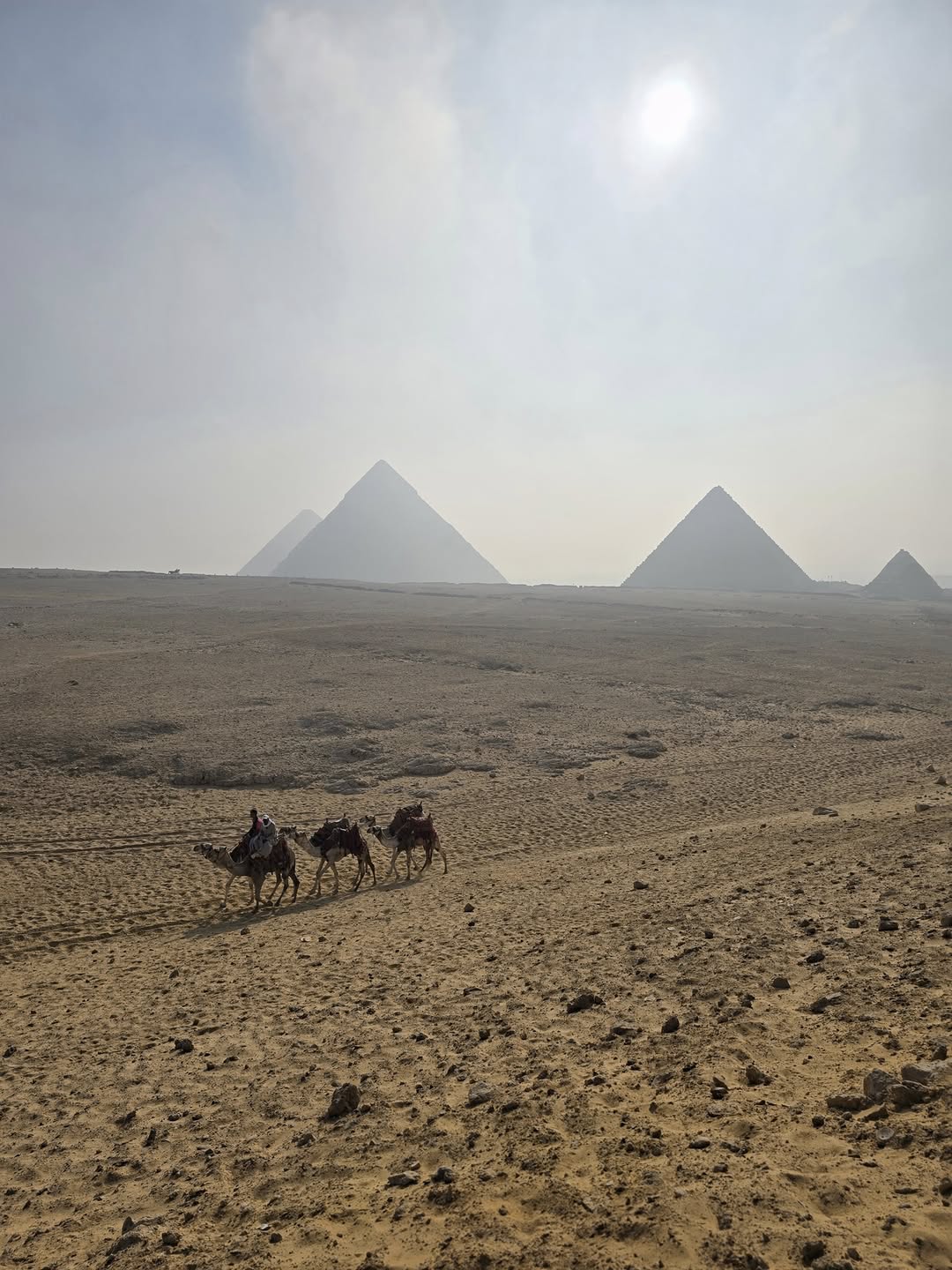
I always wanted to go to Egypt and see the pyramids, among other sites. Egypt has fascinated me since my childhood, and I’ve always wanted to write about Egypt.
  1. Remember the other day when I was talking about not having a day job but would have to leave the house to run errands? I forgot about having things delivered! ↩︎
Pictures of You

Yesterday was lovely, really. Sparky let me sleep a little longer than normal, and I felt good when I woke up, although unsure as to whether or not I would be fatigued and foggy-brained yet again for the day. But breakfast and morning coffee were marvelous, and I started doing some chores while watching coverage of the game from the other night. I also was basking a bit in the afterglow of that insane final two innings and the insanity of the win–going into that bottom of the ninth, and two outs from Arkansas winning? Apparently, Arkansas has never won the College World Series and is also 0-5 overall playing LSU there. That, and the fact that errors cost them this game, has got to be galling for their fans. I’m sure it doesn’t go down any easier since the Razorbacks also see LSU as one of their major rivals. It’s also kind of weird–and nice–to see LSU fans on-line congratulating and talking up the Razorbacks since the game; we all felt bad for those kids suffering through such a heartbreaking loss. I was glad to see it wasn’t just me; the finals will seem almost kind of anticlimactic now. I hope the Arkansas players–especially poor Charles Davalan–are feeling better now. And now I kind of feel like I should root for them in the future when they aren’t playing LSU. Well done, Arkansas baseball team–you’ve made Arkansas a secondary team for me to root for, which I would have never thought possible.

It’s never dull being an LSU fan. That game was intense.

Anyway.

I also watched Surviving Ohio State–Jim Jordan should be behind bars–while finishing The Dark on the Other Side, which was a lot more interesting than I remembered. All of Barbara Michaels’ work is good, but this one isn’t quite as good as the ones I consider her best (Ammie Come Home, The Crying Child, Be Buried in the Rain, House of Many Shadows, and Witch); but she is an excellent Gothic writer, and probably a much bigger influence on me as a writer mysel than I’ve probably ever realized; the Scotty books are actually kind of similar in tone to some of her Elizabeth Peters novels, which are also delightful. I am debating what my next reread will be; I was thinking about another Michaels that I’ve not revisited in a while (The Crying Child) or, since it’s Pride Month, perhaps Myra Breckinridge? I was thinking about Gore Vidal the other day, which reminded me of the book, and wondered how it would hold up to modern scrutiny. I will not lie; I’ve read it twice at different periods of my life and didn’t know what to make of it–and with the current day trans community under relentless attack, I thought maybe try it again? I do remember how it ends, and I am not entirely certain how any reading of the book could make the ending not problematic–but the thing about Vidal is he never gave a shit; I can only imagine how vitriolic he would be about modern times and social media and trigger warnings…he died before social media became the monster it did, and when someone came for him he threw acid back at them. He didn’t mind offending people, nor did he take criticism well.

Although I suppose the fact Myra Breckinridge has never appeared on any list of great and/or influential and/or important queer novels that I’ve ever seen is probably giving me my answer about whether the book has aged well or not.

Surviving Ohio State was horrifying, simply horrifying. I do not believe Jim Jordan and the head coach didn’t know what was going on, but I also can’t understand why they didn’t stop it. It was also infuriating to see how shitty people can be about male sexual assault victims (the patriarchy at work again, hand in glove with toxic masculinity), especially ones that are athletes, without taking into consideration how young and naïve so many of them were. I’ve been thinking a lot about the things we take for granted in order to function in this life and world, and one of the things is trusting medical professionals. When you’re young and have been raised to with that institutional trust (trusting doctors, and trusting that your college will take care of you and protect you from predators), and the fact that it seems like everyone knows and acts like it’s not a big deal (Narrator Voice: It was, in fact, quite a big fucking deal), what do you do? It’s horrifically corrupt, just as both Penn State and Michigan State were institutionally corrupt in how they handled their athletic staff’s predatory conduct. The documentary left me very angry, and hating Jim Jordan even more than I already did. (Of course, if I were writing the story Dr. Strauss would have been murdered, which would have uncovered his behavior–only to have the murder not be related to the abuse at all.) Unsettling, but I think everyone should watch this documentary.

Today is a work remotely day, and I feel pretty good this morning. I rested for the most part yesterday, which was nice, and slept really well last night, too. I have things to get done today–some of it very tedious, but it has to be done–for work but being at home makes it a little better for me. We’re going to go to Costco after work today, and run some other errands as well, before coming home and settling in for the weekend. I have a lot of things I need to get done this weekend, writing-wise, so hopefully today won’t wear me out too much and I can get everything done. I need to finish a short story, and I need to work on some of my other writing as well. If I miss the short story deadline it’s not the end of the world; the story is an excerpt from what I hope will turn out to be a much longer work, so if I don’t get it finished and submitted it’s not the end of the world. I didn’t anticipate the fatigue and foggy brain I’d get from Monday’s infusion, and so didn’t really plan for it.

AH, well.

And on that note, I am going to get another cup of coffee and make my breakfast before going to work. Have a great Friday, Constant Reader, and I’ll be back either later today or tomorrow morning. Until then…

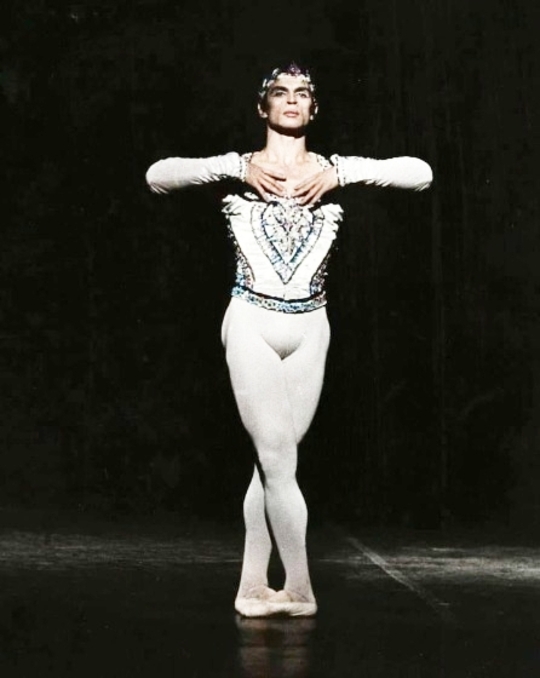
Nureyev. Need I say more?

Homage

Gore Vidal was one of three rather important gay male writers who emerged from the wreckage of World War II (the others being Tennessee Williams and Truman Capote), and I have always enjoyed reading his work–even if it’s not page turning material; I like the way he writes and I like the way he tells his stories.

He wrote six or seven major works of fiction based in American history that tell, in their own way, a more clear-eyed vision of what American history was and how the nation developed; called the Narratives of Empire, they certainly weren’t published in order but rather, I gather, in the order that struck his fancy; he was also busy writing other things and feuding with other writers–notably Capote, Norman Mailer, and William F. Buckley–and he obviously had a flair for the outrageous and controversial; The City and the Pillar, a very frank and daring and sympathetic look at the experiences of one young man navigating the world as a gay man, made him so controversial he was unpublishable for a number of years; he spent the time writing mysteries under the name Edgar Box and writing screenplays. Myra Breckinridge, which undoubtedly does not hold up to modern scrutiny and eyes; the book was clearly intended as satire, examining societal gender constructs and views on sexuality as well as the role of women. I read it for the first time maybe ten years ago, and it struck me as quaint; an artifact of a time certainly less enlightened, but trying to head for the light. (It may be worth a reread.) He also wrote Julian the Apostate, which I greatly enjoyed and read one year beside the pool during Saints & Sinners, back when it was in May and we used to always spend the weekend at the Olivier House on Toulouse Street.

But the Narratives of Empire began with, I think, Washington DC, followed by 1876 and later Burr; he also wrote about the aftermath of the Spanish-American War and the growth of the American empire in Empire, which I have also read and greatly enjoyed. I’ve not read all the titles yet; but reading Lincoln next after Empire made the most sense to me as some of the real-life characters depicted in that book are also in Lincoln, and it’s been a very long time since I read anything about Lincoln.

Elihu B. Washburne opened his gold watch. The spidery hands shows five minutes to six.

“Wait here,” he said to the driver, who said, “How do I know you’re coming back, sir?”

At the best of times Congressman Washburne’s temper was a most unstable affair, and his sudden outbursts of rage–he could roar like a preacher anticipating hell–were much admired in his adopted state of Illinois, where constituents proudly claimed that he was the only militant teetotaller who behaved exactly like a normal person at five minutes to six, say, in the early morning of an icy winter day–of the twenty-third of February, 1861, to be exact.

“Why, you black—!” As the cry in Washburne’s throat began to go to its terrible maximum, caution, the politican’s ever-present angel, cut short the statesman’s breath. A puff of unresonated cold steam filled the space between the congressman and the Negro driver on his high seat.

Heart beating rapidly with unslaked fury, Washburne gave the driver some coins. “You are to stay here until I return, you hear me?”

Growing up with Southern parents and the so-called “Southern heritage”, Lincoln’s place in history was, to say the least, still resented. The lionization of Lincoln after his death was, in some part, made possible by his murder; there’s not telling what the judgment of history would be on him had he lived to serve out his second term. Would we revile Lincoln for the reconstruction policies he would have followed? How different would the face of our present day nation be had he lived? An enormous mythology has sprung up around Lincoln since his death; “Honest Abe the rail-splitter” is a tale told to school children to this day, or how a young girl told him to grow a beard, and so on and so forth. The Civil War has been analyzed and written about endlessly; no one person could ever hope to read and digest all the documentation that exists of the conflict, let alone all the books published centering the war. I was always interested in Lincoln–even as a child I couldn’t wrap my mind around the mentality that people claiming to be “patriotic Americans” reviled Lincoln and glorified the Confederacy; I still am unable to consider such without triggering a massive amount of cognitive dissonance in my brain–and read lots of children’s books about him, but by the time I was an adult I was no longer interested in reading further biographies of the man. I am relatively uninterested in the possibility that he may have had relationships with men; without definitive proof that will always be a theory, and let’s face it, there is more evidence (although nothing conclusive) about his predecessor James Buchanan’s sexuality than there ever will be about Lincoln’s–hence my story “The Dreadful Scott Decision” I wrote for The Faking of the President.

Lincoln’s task was to preserve the Union in the face of its collapse, and that is what he strove to do. Was secession constitutional? Lincoln didn’t think so; the Constitution did not provide for the dissolution of the Union but at the same time it stated that any rights or restrictions not granted to the federal government in the document thereby fell to the individual states. So, does that mean the states held the right to leave the union? Andrew Jackson certainly didn’t think so, since he threatened to send federal troops into South Carolina during the nullification crisis. Part of the reason I actually wanted to read this book at this time was because of the stark reminder that Lincoln’s presidency, and the Civil War, serve as proof that mollifying white supremacy and continually compromising with an angry volatile minority, never ends well. (We are seeing it again now with the old Confederate states allied with their rural midwestern states…and of course as always, the ones threatening insurrection or secession claim to be “true patriots.”

Whatever, Mary.

Lincoln serves to humanize the man, and is also equally frank about Lincoln’s own white supremacist beliefs. Is Vidal’s assertion that Lincoln wanted to take the freed slaves and colonize them into Central America or somewhere back in Africa while reimbursing the slave owners for the loss of “property” accurate? It’s not the first time I’ve heard this (never heard it in school, though) and it seems likely to me. I also liked how Vidal got the panic of what it was like to live in Washington during there war so spot on; we never think about that, or how Maryland was a slave state surrounding the district, or that slavery existed and was legal in the district itself; slaves built the White House and the Capital. We never see into Lincoln’s head or from his point of view in this book–a masterful trick of Vidal’s, who thus leaves Lincoln a mystery to the reader.

It’s a compelling narrative, and it also shows us the point of view throughout of one of the conspirators who were hanged for plotting to kill him–David Suratt–and this jumping around from points of view–either of those who admired Lincoln, hated him, or thought him incompetent–gives a more three-dimensional view of the man we have deified for the last 156 years. He was definitely smart, a master politician, and, as Vidal says in the closing paragraphs of the book–if Washington was the father of our country, Lincoln was the father of our modern country.

Highly recommended.

The Other Side of the Door

Friday and I am taking the day off from the day job. Yes, I know it was a short week already and I should probably save the vacation day for sometime later in the year when it would really come in handy, but this was a rough week for me and I feel entitled to take a mental healing day, so sue me, okay?

The Lost Apartment is, as always, a disheveled hovel that looks like two college-age males live here, and that always plays a part into my emotional stability. I am not sure why that is, but I simply cannot abide clutter and dust and dirty windows–being raised, no doubt, by a woman who made Joan Crawford look slovenly probably has something to do with it–and it always weighs on my mental stability, which is always tenuous at best. I had hoped to do something about that over Labor Day weekend, and while progress of a sort was definitely made, not enough to really make a difference; rather, it was more like a lick-and-a-promise; a mere surface touching that simply kept it from looking like a condemned property. But the heat has been so horrifically intense this year that doing anything in the kitchen/laundry room is misery, let alone going outside and climbing a ladder to clean the windows. But….if I get up early one morning, it should still be cool enough to be bearable.

Right?

One can dream, at any rate.

This morning is probably the morning I should have done the windows, ironically. It’s not terribly sunny this morning, and it doesn’t feel particularly hot here in the Lost Apartment, either. There are an insane amount of tropical systems being tracked by the Hurricane Center; I’ve seen reports ranging from four to seven; and there’s a low pressure system just off the coast here in the Gulf that apparently is going to bury us with rain even if it doesn’t develop into anything stronger. I also allowed myself to sleep in this morning–note to self: set alarm for tomorrow–and it felt terrific to get rest again. I’ve already started a load of the bed linens, and when I finish this I am going to start filing in an attempt to get the office under control. Today is my day to clean and start working through all the emails that have accumulated; and later this afternoon I will try to get some writing done. I’m also going to read a couple of short stories today, rather than diving into Babylon Berlin; I don’t want to risk getting sucked into it, which I suspect will happen. I’m also reading–and savoring–Gore Vidal’s Lincoln, which is another of his American Empire series; I’ve already read Century–and I’ve always enjoyed Vidal’s work whenever I can bring myself to read it. He has a very distinct writing style that I enjoy, but I also don’t think I would have particularly liked Vidal had we ever met; he seemed like a difficult person, and an intellectual snob–and there are few character traits I despise more than snobbery of any kind. But he was incredibly smart, and a talented writer; I know I’ve enjoyed everything of his that I’ve read–and would, and probably should, like to revisit both The City and the Pillar and Myra Breckinridge again. (I would imagine Myra Breckinridge would not fly today…) I also find some of my reading choices this year thus far, looking back, to be…interesting. I’ve read a lot of plague literature, obviously, and now I seem to be gravitating to Civil War narratives. Curious.

Yes, I just got a local “tropical advisory” alert, and it looks like we’re going to get hit with a lot of heavy rain Tuesday and Wednesday. Huzzah. Of course, I love rain–it’s the risk to my car from street flooding I don’t like very much. I mean, there’s nothing more comforting than sleeping, all warm and dry, inside when it’s pouring outside, is there? I’ve always loved that warm and dry feeling when it’s raining outside, even if I am simply inside a car driving through a storm. (It always reminds me of the Trixie Belden volume The Mystery of Cobbett’s Island, which opens with Trixie and the Bob-Whites being driven by Miss Trask through a storm to a ferry to the island, and I think Trixie says something about that safe, warm feeling during storms, and it’s always stuck in my head as the perfect way to sum up why I love thunderstorms and downpours. And yes, so many things in my life inevitably lead back to the mystery series for kids I read as a child.)

Wednesday is also a work at home day for me, so I can just stay home and watch and listen to the rain while making condom packs and continuing my Cynical 70s Film Festival, which I think may move onto Chinatown and Don’t Look Now. I’ve already seen both of those, but as a lot of the films I am including in this “film festival” could also be considered crime/neo-noir, it only makes sense to rewatch both with an eye to the cynicism of the 1970’s as well as to the neo-noir aspects of both (in all honesty, I’m not really sure what the definition of neo-noir actually is; just as there’s no definition for noir, there really isn’t one for neo-noir, either; I suspect it’s because the classic films noir were black and white films and later noirs were filmed in color. I could be wrong, but that’s my takeaway). Don’t Look Now, is, of course, one of my favorite short stories of all time; and the film is extraordinary.

I’m also rather curious to see this new Netflix adaptation of du Maurier’s Rebecca. Constant Reader knows how much I love me some Daphne du Maurier; and of course, Rebecca is right up there as one of my favorite novels (the original Hitchcock film version is also one of my favorite films of all time; it’s why I generally have avoided remakes and the dreadful sequels to the original novel). Armie Hammer wouldn’t have been my choice to play Maxim de Winter, but the female casting–particularly Kristen Scott Thomas as Mrs. Danvers–is rather intriguing to me. I’ve always seen Mrs. Danvers clearly in my head as Judith Anderson–her performance was so definitive–that it’s hard for me to see anyone else in the role. Hammer is no Olivier, really, and I honestly think that if I were to recast the film currently I would have gone for Kenneth Branagh as Maxim, Saoirse Ronan as his second wife, and probably either Emma Thompson or Maria Doyle Kennedy as Mrs. Danvers…I’ve also always wondered, whatever happened to Mr. Danvers?

Just like I’ve always wanted to delve into the psyche of Veda Pierce.

I kind of want to reread Mildred Pierce and Rebecca now. Sigh.

And on that note, tis back to the spice mines with me.