Tennessee Williams is kind of responsible for my career, in a very indirect way. Sounds impressive, doesn’t it? But it’s true, even if he had been dead almost two decades.
When we first moved to New Orleans, Paul got a job working for the Grants Director of the Arts Council of New Orleans, and at that time, the Tennessee Williams New Orleans Literary Festival had an office in the Arts Council’s suite. Paul got to know the director, and he convinced me to volunteer with him at the 1997 Festival…which was my introduction to the world of the book/writing festival/conference. I had the best time. That first year I met so many authors, and they were so kind and lovely. I volunteered again the next year, after Paul was hired part time (he left the Arts Council), and that was the year I met the author who would offer to mentor me. Three years later, I had a book contract and had sold some short stories and there was no turning back for one Gregalicious at that point.
So, yes, Tennessee Williams had a hand in the establishment of my career as a professional writer. I began reading the plays again, and started using quotes from them as epigraphs for my books.
It was a no-brainer when John Copenhaver asked me to contribute to this anthology to write about Tennessee Williams, even if it wound up being kind of peripheral to the story itself. The anthology is up for preorders everywhere, or you can preorder from Bywater here.
There was a little brass plaque on the next to the table the host showed me to.
The plaque was below an enormous tinted picture window looking down Dauphine Street. Engraved on the face were the words “TENNESSEE’S TABLE.” The host offered me a menu as I sat in a chair facing the door, placing another down on the setting across from me. “Why Tennessee’s Table?” I asked. “Are there tables for Alabama and Mississippi, too?”
I was joking, but in my two months in New Orleans thus far I’d found there were historic markers pretty much everywhere you looked. The others explained why the place was historic, but this one had no explanation, no words in smaller type below explaining why it was there.
This meant there was a story behind the plaque. I was also finding out the city had a story about almost everything.
His grin exposed a chipper incisor. “Tennessee is for Tennessee Williams, the playwright,” he explained, adding, “He loved the Quarter Scene and had lunch here every day he was in town. This was his favorite table, and he’d just call whenever he’d get in and let them know, so they’d reserve it for him. They put the plaque up after he died.” He winked. “We get a lot of Williams tourists who like to trace his steps—I guess to commune with his spirit, maybe? The plaque makes it easier for them.”
And less hassle for the staff, I added mentally.
I’d heard of Tennessee Williams. He’d also been out and proud when that could have been career and social suicide. The name brought up memories of chalk dust, a cold classroom in winter, and canned dry hot air. We must have studied him in high school. A Streetcar Named Desire and Cat on a Hot Tin Roof, I think the plays were? I’d slept with a Williams scholar once, on a vacation in Honolulu. I’d met him on the beach. He had a stack of non-fiction books piled up on his nightstand for a paper he was writing, pages marked by a forest of Post-It notes.
You see the peripheral connection in that excerpt, don’t you? That’s all Tennessee had to do with my story, other than a later mention.
That table and plaque did exist. The Quarter Scene closed and was replaced by Eat, but it now called the Quarter Scene again. I don’t know if the plaque is still up by his table or not, but I always sat there whenever I ate there.
Years ago, when we first moved here, I started working on two novels. One became Murder in the Rue Dauphine, the other was a kind of Tales of the City kind of thing about three young gay men who rented apartments around a courtyard in the Quarter, with an older gay man living in the main house and kind of being a mentor to them all. I called that one The World is Full of Ex-Lovers, and began putting it together by writing short stories. One of those stories was called “Tennessee’s Table,” and that was what I immediately thought of when casting about in my head to write a Tennessee Williams inspired kind of story. I dug it out of the files–it was dreadful–and threw everything out except the very opening with the main character arriving at the Quarter Scene to meet someone for lunch. I also realized that this story would actually work in a longer project I am also writing–a book set in 1994 New Orleans called Never Kiss a Stranger, and so I wrote that story with the idea that I could insert it into the novel manuscript.
I am kind of pleased with it, to tell you the truth. It’s called “The Rhinestone.”
Wednesday, which is both Pay-the-Bills Day and my last day in the office for the week. Woo-hoo! Long weekend where I may not have to leave the house very much! Even bigger woo-hoo!
I sound rather curmudgeonly, don’t I? I’ve always had a bit of the curmudgeon in me–how much I am not sure, but I certainly have been feeling like I am getting more curmudgeonly with every passing year. I will be sixty four in just slightly over two months (two months Friday, to be exact), and I’ve been through some things in all those revolutions around the planet. I feel like I can be a little curmudgeonly? But if I were retired and home all day every day, I’d want to run errands and get out of the house more if I never really had to leave the Lost Apartment, you know? Since I’ve weaned back on so many other things that I was doing (which really were just all distractions that kept me away from my writing and focusing on my career more), I also don’t spend hours answering emails, which is delightful. There was nothing worse than opening my inbox and just immediately feeling overwhelmed and defeated by the amount that needed to be answered quickly–and diplomatically, even when the email didn’t deserve anything but scorn and contempt. It was exhausting, and I don’t miss it in the least.
The fatigue from Monday’s infusion–which really hit Monday evening–carried over a bit into yesterday, alas. I slept great, but was still a little foggy-brained, and my legs felt tired, which is usually an indicator that I am not as rested as I should be. Ironically, I did feel rested, just not mentally firing on all cylinders. I really could have slept longer yesterday–Sparky was not pleased when I hit the snooze button twice, and I haven’t even hit it once lately. My routine has shifted so dramatically, but at the same time the illness gave me so much new and better perspective on so many things. I do things when I get home rather than just being a vegetable in my easy chair, doom-scrolling while bingeing something on the television before staying up later than I should. It’s nice to come down to a kitchen that isn’t a disaster. It’s nice to stay current with the kitchen and the dishes and the laundry. It’s nice to run errands and read–when my mind can focus enough to read; the last two nights did not cooperate. But if this is the worst side effect from the infusions, I feel very lucky and grateful. I can plan around this next month, knowing I am going to be fatigued for the day of and the day after. Yeah, that’s something I can live with.1
I also didn’t want to get up this morning and had another great night’s sleep last night. I don’t know if I am foggy-brained for the day or not, but here’s hoping I won’t be. I think we’re very busy in the clinic today, so I won’t have a lot of time to think about it very much one way or the other, but I do have to run some errands this evening, too. But tomorrow is a holiday! Huzzah! Hopefully Sparky will let me sleep in a bit. I also have an extra day to read and write and clean, which should be a good thing, depending on how motivated I am.
In other exciting news, LSU beat UCLA 9-5 yesterday, finishing off Monday night’s game from the weather delay, and thus remain unbeaten in the College World Series so far, which is kind of exciting. GEAUX TIGERS! We have to play Arkansas again tomorrow night, which is a shame; I do think Arkansas and LSU are the two best teams there and should be playing for the title instead of so early. Should make for an exciting game, provided there’s no weather delay.
I also went over the copy edits on a story I sold to an anthology, which remains untitled but will come out in September, I think. It’s another Alabama story, “The Spirit Tree,” and rereading it…it’s not bad. I don’t really remember writing it (it’s been a rough year, okay? Don’t judge me) , but I do know where the idea came from; “spirit trees’ were mentioned in the opening of a non-fiction book about Alabama I’d read (about snake handlers), and I remembered that one of my relatives–distant and I don’t remember who it was or how they were related or on which side of the family they came from–had one, and then I thought, wouldn’t it be interesting if spirit trees actually worked? And started writing the story from there. It’s another one of my “Alabama back in the holler” stories (one of the ones I am currently working on is also one of those), which always seem to wind up being my favorites, for some reason. (This is why I am not the best judge of my own work; some of it has a personal connection of some sort for me, and that does affect how I view it…for example, Bury Me in Shadows was deeply personal for me on many levels, and so it’ll always be a favorite of mine; Murder in the Rue Dauphine was my first book contract; and so on…besides, it’s really not up to me to determine what my best work is, is it?)
I do wonder what kind of writer I would be had we never left Alabama, though.
I still haven’t made a to-do list, either, which is just shameful. I do feel a little foggy this morning, despite being on my third cup of coffee, so it may not be a terribly productive day for me again. Heavy heaving sigh. But that’s just the way things roll, isn’t it? There are definitely things that need to be done today, so maybe–just maybe, I should make two lists, one for today and one for the long weekend? Hmmm.
And on that note, I am heading back into the spice mines. Have a lovely day, hope you enjoy your holiday tomorrow, which is most likely when I shall return to the blog.
The temple of Ramses II at Abu Simbel–another site I’d love to see in person.
John Copenhaver, one of queer crime’s latest (and brightest) stars recently (you should read his books, frankly; I am looking forward to his latest, Hall of Mirrors) wrote a brilliant essay on the concept of writing complex queer characters, and the artistic need to push beyond ‘gay is good’ messaging and not worrying about the question of role models which you can read by clicking here. I highly recommend it–it’s well thought, reasoned, and stylishly written, and the kind of thing I wish I could write.
But reading this essay made me think about my own work, the pressures I’ve had–either real or imagined–about representation and addressing social issues through the framework of queer people and characters, and made me think about the work I do from not only a creative view (which is how i always view my work) but from a cultural, political, and societal perspective. That’s not something I’ve ever really consciously done (“oh, let’s make this political“) but one thing I’ve never done is worry about how straight people might react to my work…primarily because it isn’t really for them that I write my books in the first place. If my work offends straight people that isn’t my problem, nor is their whining about how queer people see and perceive them…and it’s not like there aren’t millions of books designed as comfort reads for cishet white people. I’ve also never understood taking offense at a book. I’ve read plenty of books whose point of view I’ve neither understood nor care to; and I tend to not read anything that I think is going to either offend me or be antithetical to everything I read–I tend to avoid Westerns, international spy thrillers, and war novels, and mostly for the same reason I tend to avoid most cishet white male authors. Your work isn’t written for me, and I can’t imagine westerns to be not problematic1–likewise, I’m not interested in reading about toxic male he-men that are racist rah-rah-rah books to make white men feel better about themselves (you know who you are) and so I avoid covers that pretty much spell out to me what the contents are going to be–women who exist only to be beautiful sex toys, any gay characters are offensive stereotypes and usually die, and so on and so forth; I love my country in spite of its flaws, and that love is strong enough to bear critiques on our nation and the people who run it, so I don’t need to read fiction designed to make me thump my chest and scream AMERICA LOVE IT OR LEAVE IT at anyone who dares critique the country and its domestic and foreign policies.
If cishet white people enjoy my work, fine. If they don’t, well, as I said it isn’t intended for them in the first place.
first author photo
When I first dreamed of being a writer, it never occurred to me to write about gay characters or themes. I was a child, for one, and for another that child was terrified that anyone might figure out that I wasn’t one of the “normies”, and what I actually was inside was something they’d all view with contempt. When I was a kid I wanted to write a kids’ series, like Nancy Drew or the Hardy Boys, and even came up with multiple different ones that I wanted to write, and came up with a rather lengthy list of titles for the books (which I still have, because I’d still like to try this at some point before I die), and gradually moved on to wanting to write other styles of books as I got older and began reading more. My addictions to soaps, both daytime and nighttime, during the late 1970s thru the early 1990’s, had me looking at writing more about towns and large casts of characters, and I always wrote a murder mystery into my ideas for these Peyton Place type novels I wanted to write; I also wanted to write Gothic suspense novels, and Stephen King had me also wanted to write mainstream horror novels…and later on, I moved into wanting to write horror/suspense/crime novels for young people.
It wasn’t until I met Paul, and I found gay bookstores, that I realized I could write gay stories and themes and characters, and I decided I wanted to write gay crime novels, set in New Orleans, and so that’s what I set out to do, starting a novel called The Body in the Bayou, which I had already thought up as a series about a straight Houston private eye–so I made the main character gay and moved it to New Orleans. I threw out the first ten chapters within two weeks of moving here, and started over again.
Promo photo for my old training business
And then I found myself in the conundrum John talks about in his essay so brilliantly; is it okay to have queer characters be the bad guy? Do we have to write all of our stories and novels from a thematic viewpoint that ‘gay is good’? Do we as creators have a responsibility to the community to only present queer people as heroic, or can they be flawed or even bad?
Author photo from 2007
I’ve talked about this before–how the idea for the case in Murder in the Rue Dauphine came to me, and I also worried about how the book would be received because I was explicitly creating a case and a world where not all queer people were good people. It was inspired by a gay man who came to New Orleans, got involved in the non-profit world here, threw a bunch of money around, and then disappeared overnight as his house of cards was about to collapse, stealing a shit ton of money and owing everyone a lot of money. That was when I realized how we always are welcoming to other queer people and we can sometimes overlook red flags and warning signs because you’re working with another queer person. We tend to give other queer people the benefit of the doubt and more chances than we would a straight person…and I wanted to explore that in fiction. Shining heroes without feet of clay also aren’t fun or interesting to write about, either.
Gay isn’t always good.
Most recent author photo, and I definitely need a new one.
And we aren’t doing our readers any services by creating “perfect” characters, either. Neither Chanse nor Scotty is perfect (although Scotty’s definitely an idealized person, I have to admit, but he does have flaws and blind spots) and the main characters in my stand alones are often messy, sloppy people who need to get out of their own way sometimes. Those are the kinds of characters I like to read about–because they are human.
I also find gay criminality enjoyable to read. James Robert Baker’s books were like being slapped in the face; full of gay anger and revenge and bitterness about the homophobic world in which we all exist–but Baker’s messy characters are active; they want revenge on the world and by God they are going to get it. The Ripley books by Patricia Highsmith are magnificent. Christopher Bollen’s A Beautiful Crime was terrific with its messy gay characters perpetrating a fraud.
I think we relate to and enjoy messy criminal queers because they are so relatable to us. There’s no worse feeling than powerlessness, the inability to control your own destiny and life, and always wondering …is it because I’m gay? I’ve gotten angry about this any number of times during my life, and I have always wondered somewhat would this happen to a straight man? and the answer is always no.
But do read John’s article. It’s very well done and thought provoking, and I’m going to let it simmer in my head for a while longer.
Westerns would be a good discussion for another time, actually. ↩︎
Well, good morning, Constant Reader! I am currently fighting Sparky for space on my desk. Seeing him sprawled across my desk this morning has made me realize just how big he’s getting. YIKES. I feel rested this morning–another good night’s sleep, which was very welcome–and pretty good overall. I wrote last night when I got home, and it felt good. I didn’t read my book last night at all, much to my own regret, but Paul got home shortly after I moved over to the easy chair and we finished Young Royals, which we enjoyed (even if we got annoyed with certain characters at various times) before going to bed relatively early. This week is going to be busy at work, so I am trying to steel myself for facing the next few days. I hope to stay on the writing roll I started last night, and get some progress made before the weekend. I also need to finish my taxes, sigh; an odious chore to be sure, but there’s nothing more patriotic than paying your taxes. I SAID WHAT I SAID.
It was also a little surreal this morning to wake up to a Facebook tag for Banned Books Week here in New Orleans for September–and to see the reason I was tagged was because someone is going to be reading MY work. That was startling, to say the least, but kind of cool. No one ever seemed to care about the fact that I was banned–particularly when it was happening–and I eventually got tired of telling the story and hoping someone else would be as outraged about the entire experience as I was. (NARRATOR VOICE: No one ever was, outside of the ACLU of Virginia.) I overheard someone saying after a panel I was on, where it came up, sometime in the late aughts, “I am so tired of him telling that story over and over again” and so I stopped talking about it much, even on here. Now that I am remembering that bitch (cis white woman, of course, and probably from fucking Metairie), I should have tapped her on the shoulder and said, “Imagine having to live it, bitch.”
That thought–about that woman, and being banned and no one caring (not even my local newspaper covered the story, at least not that I can recall; on the other hand, maybe they did and I just never saw it)–led me around a circular driveway to another point, the one that I’ve thought a lot about lately: why do I always have such a chip on my shoulder when it comes to writing? I think it has to do with primarily my own issues, really; I just assumed people weren’t treating me like a serious person and were dismissive of me because I did work out and stay in shape; something I didn’t quite understand–why shouldn’t writers take care of themselves? It also has to do with the horrific experience I had in college with my first writing teacher–you’ll never be a published writer so you need to find another dream (I was reminded of this lately because I was asked if someone could use the introduction to the ebook of Murder in the Rue Dauphine as a blog entry for a writing site, and that introduction is where I tell that story. Sidebar: I had also forgotten completely that I’d done a new introduction to the reissue, which will fit nicely into my essay collection). So I always felt that not only was I fighting all the odds against being a published writer but I had to also additionally prove that I wasn’t a lunkhead gym bunny.
Maybe this was all in my head? It’s entirely possible–generalized anxiety disorder could have easily put that all into my mind. Sigh.
This decade has been interesting for me. The world is on fire, of course, and has been for quite some time; but my little corner of the world has been very different. Granted, there was a pandemic and all of those things, but my longevity in this business–which is really my stubborn refusal to ever give up–seems to be starting to pay dividends of a sort, I guess? The “academy”, whatever that may be, may still not take me or my work seriously, but longevity eventually begins to work in your favor; i.e. “you’ve lasted this long, so there must be something to your work.” And you know what? I’ll take it. Really, probably thinking that way about five or ten years ago would have irritated me and got my back up a bit; now I don’t care so much about the things that seemed to matter so much to me back in the early days. Ultimately, none of it mattered. I have had an enviable career, once I divorce myself from it and view it from an outside perspective. Well over forty novels, fifty short stories, and I’ve edited over twenty anthologies. I’ve lost count of the award nominations, and don’t care enough to go back and try to count them all. I’ve gotten some pretty great reviews, and I have a readership, or following, or whatever you want to call it.
I really have nothing to complain about.
And on that rather introspective note, I am heading into the spice mines. May your Tuesday be terrific, and I may check in with you again later.
Oddly enough, the second Chanse was the fourth novel I published, and therein lies a tale.
Funny how with these earlier books there’s always a story, isn’t it?
So, I sold Murder in the Rue Dauphine to Alyson in September of 1999–but the pub date wasn’t until February 2002. I saw no point in writing a sequel to the book immediately; primarily because there was a nearly two and a half year wait between signing the contract and when they were able to schedule me in. So, I figured I had about a year and a half before I needed to get it finished (everyone told me it would be released a year after the first, and in all honesty, what was the point of writing two or three books while waiting for the first to come out so the others could be scheduled?), and so, with time to spare and a lengthy period of time to “waste”, I decided to start thinking about the “what ifs”–what if the book sells super-well and is popular? What if this isn’t just a one-off standalone and could be turned into a series? The more I thought about it, the more I liked the idea and I liked letting my mind roam.
So, what would I do if the series took off and I needed to write more?
Being creative and full of energy in my late thirties, and thrilled to death that now I wouldn’t die without having published a novel, I reread the manuscript and my analysis of who Chanse was and why he was who he was, and I started mapping out a personal journey for him, that lasted several books. He was a cynical loner, with a couple of friends, and he was still really not adjusted to being gay when the first book opens. He was estranged from his immediate family of younger sister and brother and his parents; he never returned to Cottonwood Wells after leaving for LSU. He’s ashamed of his family but he also knows they will never accept his sexuality, either, so it’s very easy for him to cut them off almost entirely. So, his journey was going to be like that of the main characters of the show Moonlighting; each case would teach himself something about life and himself, and he would grow from the lesson learned in each book. Each book going forward would have a life lesson for him (Rue Dauphine did as well; the lesson was ‘you can’t just trust someone automatically because they’re queer.’); and the one he’d learn in the second book would be about love and trust (the third would be about sacrifice, the fourth would deal with his family, the fifth would have him fall in love with someone else, the sixth would deal with him dealing with losing his best friend to her husband and realizing he does need other people, and the seventh, the swan song for the story, would find him ready to finally commit to someone and live with them, so the series would be seven books long).
Shortly after I sold the first book, I again learned that lesson myself–the case in the first book was inspired by a gay con artist who’d gotten involved with a non-profit here in the city and then blew out of town overnight, having stolen/embezzled a shit ton of money and leaving a pile of debts behind. I had written to a local color magazine for the gay community (I can’t remember the name!) about writing for them. I wrote something for them, and they hired me to be editor of the magazine, as the business was expanding and it would free up the founder to focus on the new directions while I ran the magazine. It was fun, I got to work with a lot of fun new friends, and…then it all blew up in our faces. It was very similar to the earlier situation–a gay con artist blows into town, makes a lot of promises, runs up a lot of debt and then it just blew up completely. Turns out the guy was a con artist with a record of credit card fraud, and he was on the FBI watchlist so yes, I did get interviewed several times by the local office of the FBI.
The second book, which had the working title Murder in the Rue Royal, was based on that story, but I had already been playing around with a stalker storyline, and then I realized how I could cross the two stories into one seamlessly and write the book. I managed to get another first draft finished when a two-book deal to write the Scotty series for Kensington and Alyson dropped the option for the second book, saying “two mystery series with a gay main character in the same city by the same author are too similar to each other”–which I took as a challenge to make Bourbon Street Blues and Scotty as different as I possibly could to prove them wrong. So, the manuscript went into a drawer and I started happily working on Scotty instead…and again, it was a stand-alone that morphed into a series.
This was the Insightoutbooks edition cover of Murder in the Rue St. AnnThis is the new cover the book got when Bild Strokes Books republished the book as an ebook.
I took a streetcar named St. Charles down to Canal, crossed the street and walked down to Royal.
It was eleven o’clock in the morning on one of those splendidly sunny September days that makes you glad to be alive. Taking the streetcar had been a good idea. The long heat of summer had broken, and the air was crisp and in the mid-seventies. The sky was that blue unique to New Orleans, with wispy white clouds scattered across its expanse. There was just a hint of cool moisture in the air. There were a lot of people milling around the sidewalks on Canal— a good sign for the tourist season. Canal used to be the main shopping drag of the city, with huge department stores like Maison Blanche and D. H. Holmes. Those were long gone. They had either gone out of business or fled to the suburbs— now it was mostly hotels, fast food, and Foot Lockers.
There were hopes that putting the Canal streetcar line back in place would stimulate a recovery for the street. So far, all the construction work had simply made the Quarter difficult to get to from uptown. Add to that the chore of trying to find a place to park that would get me a ticket in two hours or cost ten dollars, and I was kind of glad I was having car trouble—the streetcar down and a cab home was very simple.
Not that riding the streetcar didn’t bring its own set of aggravations. If the cars ran on any fixed schedule, I’d never been able to figure it out. You could wait for one for half an hour and then three in a row, all packed to the gills, would show up. The streetcar ostensibly operated as public transportation, but was also a de rigeur tourist attraction. There was no way of telling when you’d be able to catch one with a place to sit. But when you did, it was nice to find a window seat on a sunny day and enjoy the city clacking by.
So, when Alyson chose to drop the Chanse series after I signed with Kensington, Murder in the Rue Royal went back into a drawer, which was fine–it wasn’t a good book–and I moved on with my life. The advance for signing with Kensington paid for our move back to New Orleans from Washington, and moving back here was absolutely worth ending the Chanse series for, seriously. I still didn’t have an agent, but I’d been signed to book contracts by two publishers already, and I figured it might be easier now. We accomplished the move, get our new apartment set up on Sophie B. Wright Place, and started putting our lives back together. I don’t remember the timeline of how it came to be, but I was still working with Alyson on my first and second erotic anthologies (Full Body Contact and FRATSEX), so I was aware when my editor left and a new person, that I knew slightly, moved from assistant editor to senior editor. We were talking on the phone one day about Full Body Contact and she casually mentioned, “I don’t see your second Chanse book here on the schedule, what’s going on?” and I told her the story, “Oh for fuck’s sake, when can you get it done by?” and that became the second contract for Chanse.
So, after finished Jackson Square Jazz and turning it in, I broke out Murder in the Rue Royal (the title had already been changed on the contract to Murder in the Rue St. Ann; my new editor didn’t like the alliteration) from the drawer, blew the dust off it, and reread the manuscript. I looked at my timeline for the series, and saw that this was the one where he was supposed to fuck up his relationship, but I didn’t see it in the manuscript. I reread the first book, thought long and hard about Chanse and who he was at this point in his life and after several long days of musing it hit me, between the eyes: jealousy. Jealousy would be what fucks up his relationship, and it only made more sense to me that Chanse would be the jealous one. Paul had a loving, accepting family and was more secure in and of himself as a gay man and what he wanted out of life. Paul was considering becoming ground-based at the New Orleans airport so he could settle down and have more of a life with Chanse, which also has Chanse very alarmed and makes the jealousy even more intense….so what would be the thing that would set Chanse’s jealousy off? Something from Paul’s past that Chanse didn’t know but finds out about in the worst possible way?
I had had some issues, believe it or not, with stalkers over the years. I had always wanted to write about a stalker, so what if Paul had a stalker? Why would Paul have a stalker? And then it occurred to me that Paul had a past he wasn’t ashamed of, but had never mentioned to Chanse. Not out of a fear that Chanse wouldn’t understand, but mainly because he had no need to tell him because it wasn’t anything dark. He had done some nude modeling when he was younger and he had also done some soft-core wrestling fetish porn, which is where the stalker came from. And what if I could work the con man he’s been hired by was someone Paul knew from the soft-core fetish porn? What if the guy contacted Paul because he’d been getting threatening notes on top of everything else going on in his life? And what if Chanse ran into Paul when he was leaving the con man’s offices, which brings all this out about Paul’s past? What if it shook a jealous, possessive, insecure Chanse enough for them to fight about it? And what if Paul disappears after the con man is murdered?
That was something I could work with, and so I did.
I’ve always called Murder in the Rue St. Ann my most under-appreciated work. By the time the book had come out, Paul had lost his eye to the muggers and we were in recovery mode. I didn’t do much of anything to promote the book (other than a signing at Outwrite in Atlanta, where I signed all of my books until they closed), and it kind of came and went quickly. I felt it was the most unappreciated of all my books. Jackson Square Jazz had come out earlier in the year before Paul was attacked, and it sucked all the oxygen up that year intended for me–it was the Lambda nominee, not Rue St. Ann–and I didn’t pay much attention to the book after it came out, either. The ‘christians” came for me a few months after the book’s release as well, and then Katrina…so yeah, Rue St. Ann got no press, got no attention, but somehow still managed to sell well.
I did have the next one planned, Murder in the Rue St. Claude, which there was a proposal in for, but Alyson was also going through other, deeply concerning changes that showed how little the higher-ups knew about anything, let alone publishing. But that’s a tale for another time, I think.
It’s always weird for me to talk about my writing and my books and so forth on here; I always worry that I am either contradicting and/or repeating myself. When you’re as self-obsessed as I am, that can be a problem; talking about myself is probably my favorite thing to do–on here, at least. And I feel like I’ve told the story of where Chanse came from and how the series developed from the very beginning many, many times.
It was when I was living in Houston that I rediscovered crime fiction, and the old love was even deeper once it was rediscovered. This was the period when I read most of the Perry Mason novels, discovered Paretsky and Grafton and Muller, and decided to give Travis McGee and John D. MacDonald another try. (I had read The Dreadful Lemon Sky when I was a teenager, but I hadn’t liked it; I was more into the classic detective mystery, with lots of suspects and a denouement with everyone gathered in a drawing room as the identity of the killer was unveiled–the McGee series was definitely not that. But MacDonald had written a superb introduction to Stephen King’s first short story collection, Night Shift, and I had always wanted to give him another chance–pun fully intended.) I devoured the McGee series this time around; and I really admired the character and how fully rounded and developed he was (I should give the series a reread; I’d be curious to see how they hold up now)…and armed with all these new private eye novels and Perry Mason puzzles, so I started coming up with my own version. Even the name was a shout out to McGee. My character was also tall with sandy/dirty blond hair, a former college football player, and he lived in Houston, with an office downtown and a secretary named Clara. The title of the first book was going to be The Body in the Bayou, and I started basing the case on the tragic Joan Robinson Hill case, immortalized in Tommy Thompson’s Blood and Money (the premise of the story was that the character representing Joan’s father hires Chanse after Joan’s death to find dirt on John–and then John is murdered; fictionalized, of course.) I wrote about six or seven really bad chapters long hand before giving up. I didn’t know how to write a novel then nor did I understand the concept of rewrites and revisions and drafts. (My ignorance was truly astounding.) The hurdle I couldn’t clear was typing. I was a terrible typist. I’d had a job in California working for an insurance brokerage that was computerized, and had a word processing program that I used to write short stories on; it made such an incredible difference that I knew I would have a much better shot at actually making my dreams come true if I only had a word processor…
In 1991, after I moved to Tampa, I managed to get a word processor, and that was what I wrote my first two and a half young adult novels on–the original drafts of Sara, Sorceress, and Sleeping Angel–and used it happily for several years until it finally died on me. But by then, I was living with Paul and had swung back around to wanting to write adult crime fiction again, and I wanted to write the Chanse character that I’d already created…so I picked back up on The Body in the Bayou, moved it from Houston to New Orleans, got rid of the office and the secretary, and made Chanse gay. I kept the title, but threw away the story; I wanted it to be a gay story, too. I don’t really remember the plot, but it had to do with the murder of a beautiful boy-toy for a wealthy closeted gay man in New Orleans…and Chanse knew the boy-toy from his days working as an escort before he landed the rich man, I wrote about six or seven chapters of this before we moved to New Orleans….and I realized I’d have to throw it all out again because it was all wrong; I’d made the classic mistake so many writers make when writing about New Orleans: writing about it having never lived here, I only had tourist experiences–which are vastly and dramatically different from the actually “living here” experiences. So, once again, I threw it all out and started over, this time calling it Tricks instead of The Body in the Bayou.
The title morphed again to the less saleable Faggots Die after the first draft; and I remember talking to Felice Picano–he was coming into town for the Tennessee Williams Festival, and I picked him up at the airport. As we drove back into the city from Kenner, we talked about my book and the series, and he nixed the new title as well as the old one. “No one, ” he wisely said, “will pick up a book called Faggots Die, and Tricks sounds like a pornographic memoir of your sex life.” Felice was actually the one who suggested I mimic titles for the series from a classic writer…and we were throwing titles around in the car when I said, “You know, the streets in the Quarter are technically rues–Rue Bourbon, Rue Royale, Rue Dumaine–and the murder happens on Dauphine. Maybe Murder in the Rue Dauphine?”
“That’s perfect,” Felice said, and then we played with Poe titles the rest of the way into the city–incidentally, one of them was The Purloined Rentboy, which became my short story “The Affair of the Purloined Rentboy”, so never throw anything away.
And thus was Murder in the Rue Dauphine titled; and the plan for the series titles was also devised–the branding was changed by the publisher, but I can honestly say my first book was titled by Felice Picano.
Murder in the Rue Dauhoine has had three covers in its 21 years of existence. This center one is the current.
Never come to New Orleans in the summer. It’s hot. It’s humid. It’s sticky. It’s damp. It’s hot. Air conditioners blow on high. Ceiling fans rotate. Nothing helps. The air is thick as syrup. Sweat becomes a given. No antiperspirant works. Aerosols, sticks, powders, and creams all fail. The thick air just hangs there, brooding. The sun shows no mercy. The vegetation grows out of control. Everything’s wet. The buildings perspire. Even a simple task becomes a chore. Taking the garbage out becomes an ordeal. The heat makes the garbage rot faster. The city starts to smell sour. The locals try to mask the smell of sweat with more perfume. Hair spray sales go up. Women turn their hair into lacquered helmets that start to sag after an hour or so.
Even the flies get lazy.
My sinuses were giving me fits as I left the airport and headed into the city. It was only 7 o’clock in the morning but already hotter than hell. The air was thick. I reached for the box of tissue under my seat and blew my nose. The pressure in my ears popped. Blessed relief.
As I drove alongside the runways I could see a Transco Airlines 737 taxiing into takeoff position. I saluted as I drove past, thinking it might be the flight that my current lover was working. Paul looked good in the uniform. It takes a great body to look sexy in polyester. He does.
He’d be gone for four days on this trip. I was at loose ends. I’d wrapped up a security job for Crown Enterprises the previous Wednesday. The big check that I’d banked guaranteed I wouldn’t have to worry about money for a while. I like when money’s not a concern.
And so began a series that lasted for seven titles and about twelve years or so; I don’t remember what year the last book in the series was published. I never expected anyone would publish it; it was intended to be a “practice novel” so I would get used to rejections and learn. It was also the first manuscript I ever wrote that went through multiple drafts before I thought it was finished enough to send out on query. It was supposed to be an exercise in learning humility and getting experience with the business while I wrote the book I did expect to get an agent with and sell–which was what I’d always called “the Kansas book” for over a decade at this point. (It eventually morphed into #shedeservedit.) But you never really learn what you’re supposed to when you’re stubborn, thin-skinned, and used to being demeaned and talked over and not taken seriously, for any number of reasons. I sent the manuscript to three agents: two sent me lovely but form rejections, which was disappointed but not surprising. I took this well, put the manuscripts away to send to three more once the final rejection came.
It came on a Friday, if I recall correctly. I went to pick-up the mail and my manuscript was there. Not a surprise, of course, but still a little disappointing. I went out to my car and opened the package…and paper-clipped to the title page of the rubber-band bound manuscript was a torn piece of used paper, with a note in ink reading I find this manuscriptand characters neither interesting or compelling with the agent’s initials at the bottom.
It was like being slapped in the face.
By the time I got home I was in a raging fury. I was literally shaking with rage when I came inside. How fucking unprofessional, I thought as I sat down at my computer to check my emails, trying to decide how I would enact my vengeance on this rude piece of shit.1 There was an email there from the editor I was working with on an anthology which had taken my first-ever fiction short story and thus would be my first publication. I had never read the signature line–mainly because I was so excited for my first fiction sale (NARRATOR VOICE: it was porn). This day, he concluded his email with Please send us more work. We definitely want to see more from you and as my ego preened, slightly soothed from the insulting agent note from earlier in the day2, I also looked down at the signature line and realized I was communicating with the senior editor at Alyson Books! I immediately wrote him back a very short note: I’ve written a novel with a gay private eye set in New Orleans, would you be interested in that? and before I could talk myself out of it, hit send.
He wrote back immediately and said please send it to me ASAP!
I put the same manuscript back in a new envelope, and drove back to the postal service to get it in the mail before I changed my mind, and breathed a sigh of relief once I got back to the car–and immediately forgot all about it.
Six weeks later I came home to a phone message from the editor. I called him back, he made me an offer, and my career leapt forward much faster than I expected…and it started a roll of good luck and “being in the right place at the right time” that has kept me publishing almost non-stop since Murder in the Rue Dauphine was released in 2002.
It sold really well, got mostly favorable reviews, and scored me my first Lambda Literary Award nomination.
Not bad for a manuscript and characters who were neither interesting or compelling, right?3
It also took me a long time to realize–or rationalize–that the note wasn’t meant for me. (I was most offended that I wasn’t even worthy of an actual form rejection letter; that was the truly insulting part for me.) I realized when telling this story on a panel somewhere, that the note was probably meant for an intern or a secretary or an assistant, who just shoved the whole thing in an envelope to do the rejection and through some wild Lucy-and-Ethel office shenanigans, it went out without the rejection letter and with the note intended for internal eyes only…and made me wonder, how different would my career and life be had that fuck-up not happened?
We’ll never know, I guess.
Not really proud of this reaction, but I did get the last laugh. ↩︎
Said agent died a few years later. I may have smiled and said good, a la Bette Davis vis a vis Joan Crawford’s death. ↩︎
I may be more forgiving about a lot of things these days, but I will always be petty about that hateful agent. ↩︎
Tuesday morning, up early and dark is pressing up against my windows. I slept better last night than I have since Friday night, but woke up out of a deep sleep to go to the bathroom around two in the morning and wasn’t able to get back to it–my body was relaxed completely and resting, but my mind was still working. I feel rested this morning but I don’t know how long that’s going to last…I imagine I am going to run out of steam at some point this afternoon, but I also have to get the mail and make groceries, too. I had also wanted to cook some things for dinner tonight–or to at least have something to take for lunch this week (today is a Lean Cuisine). I feel better, though, this morning than I have in a few days upon waking, so I am taking that as a good sign. It’s been nice having all this out of the office, but it’s kind of weird going back. Outside of unemployment periods, I don’t think I’ve ever not worked for this long since probably high school?
I hope I can remember how to do my job.
It’s also cold this morning–forty-nine degrees, according to my phone–which makes going outside less agreeable and certainly undesirable. I can put the brace on over a jacket, take it off to remove the jacket and put it back on, which makes total sense and I don’t understand why this is something I am initially hesitant to do? The PT went well yesterday and I have the full range of motion back for the elbow; and my fingers are getting more dextrous and ny hand grip stronger. (I kind of felt guilty when he said, ‘yes, keep doing your home exercises because they are working’–because I haven’t been doing them…I told you, I am a terrible patient.) I was exhausted from the PT and from not having slept for two nights, so I wound up not doing much of anything yesterday other than reading deeper into Calypso, Corpses and Cooking by Raquel V. Reyes, which I am enjoying–I really like her character, Miriam–and a likable main character is crucial in a cozy mystery. Nurse. Sparky spent most of the afternoon curled up asleep in my lap, which was comforting and calming and adorable, and then when Paul got home we started watching the Big Vape documentary on Netflix (I think?), which is interesting and got me started thinking about smoking. I smoked from ages 16 to 50, a whopping 34 years, before finally quitting, and frankly, I don’t miss it. I do remember how much i used to actually enjoy smoking, but I’ll never smoke another cigarette in my life. The cultural view on smoking certainly has changed over the course of my life–when I was a kid, you could smoke anywhere and pretty much most people seemed to smoke. My parents did, my grandparents did (not my maternal grandmother; Mom was the only smoker in her family, but pretty much everyone on my dad’s side did), and they used to smoke with the windows up with us in the car. No one thought much about it, of course; despite the surgeon general’s warning about carcinogens getting more and more explicit and fervent as the years passed. I tried smoking in junior high but didn’t inhale, and didn’t much care for it; I tried again the night I graduated from high school and essentially smoked for the next thirty-four years. I still smoked cigarettes when I started writing–which is why Chanse was a smoker and all of his friends were (I did get some pushback from readers about the smoking; a friend who was also a smoker joked that his favorite thing about Murder in the Rue Dauphine was that all the good guys smoked and all the bad people didn’t) but I never really addressed him quitting in the books; I just stopped writing him as a smoker after I quit–and the reason I quit was because Skittle died from cancer. That guilt–that I helped contribute to Skittle’s death–was all it took, even though the cancer he had wasn’t caused from second-hand smoke…just the thought that it could have been a contributing factor was too much for me and I refused to do that to another cat–because by then we were definitely confirmed cat people and it just doesn’t feel like home without a cat in it.
There will be more on Big Vape when we finish watching.
I also am going to be getting back to writing. I signed a contract for a sequel to Death Drop and need to get that finished and out of the way. I wasn’t able to get as much done during this lengthy time off because, well, I had surgery and the recovery–while not as painful as i feared–did drain a lot of my energy, and the enforced rest also made it a little harder to get motivated. I did manage to read more than usual, but the ceiling disaster and repair, the recovery, the physical therapy, and the just now changed medications to deal with my brain chemistry issues was a lot to deal with. I’m also not beating myself up over not getting more done because for fuck’s sake, even as mad as I get at myself for not getting things done…I’m giving myself a break on this. It’s not been an easy year, from beginning to end; but like I always say–if you’re going to have bad things happen, isn’t it best for them to happen all at the same time? That probably sounds insane, but in all honesty–when Paul was attacked and lost his eye? That was the best time for the Christian scum to come for me because I was so focused on getting Paul through what he was dealing with that I couldn’t give them very much attention, one way or the other. (At any other time, I would have been freaking the hell out.) And the weird thing is, professionally this was a great year. I was nominated for an Agatha and a Lefty for the first time, I was nominated for three Anthonys, and I have two books out, and I did some short stories that I am pretty damned proud of–it’s just weird that the highs always come with the lows…or maybe the highs make up for the lows? That’s probably the best way to look at it.
And on that note, I am heading into the spice mines. Have a great day, Constant Reader, and I’ll be back at some point.
He met Marmalade down in old New Or-leenz, strutting her stuff on the street, she said “hello, hey Joe, you want to give it a go?“
That classic song by Labelle came out while I was in high school, during the early to mid-1970’s, and there was a lot of prurient young teenager thrill in knowing that the French lyrics translated to “do you wanna have sex with me tonight?” But the song–essentially about a hooker in New Orleans and a man’s experience with her–was an introduction to another side of New Orleans–one you wouldn’t find in the World Book Encyclopedia.
It was very important to me, for a variety of reasons, to make Scotty someone who embraced his sexual orientation and sexuality. I wanted to write someone who LOVED having sex, loved beautiful men, and felt no Puritan-American based shame about enjoying sex. Those kinds of characters were few and far between in gay fiction, let alone in gay crime fiction. After writing the typical miserable cynical bitter gay man with Chanse, I didn’t want to do that again. I wanted Scotty was to be the obverse of Chanse in everything, except their mutual love of New Orleans.
(This was, in part, in response to being briefly dropped by Alyson when I signed the Scotty series with Kensington, being told “two mystery series set in New Orleans would be too alike.” I took that personally, as an insult to my talent, ambition, creativity, and abilities…and I think I proved my point. Once Murder in the Rue Dauphine and Bourbon Street Blues were released–and Rue Dauphine sold super well for them and was nominated for a Lammy–Alyson changed their minds. I’m still mad at myself for not asking for more money.)
But while Scotty was highly sexually active, he never got paid for it. He also never did porn–although I did consider that at one point as an option; I thought a murder mystery built around a porn shoot would be interesting and kind of fun. And of course, in this book he mentions that he and the guys have recorded themselves having sex, and have sexted each other.
Scotty always preferred to keep his status amateur–but he was a go-go boy (stripper, exotic dancer, dick dancer, whatever you prefer to call the guys who dance for dollars in gay bars wearing various kinds of male undergarments), and he was certainly someone who was not averse to having a sexual encounter with a handsome stranger. (There’s a joke about this in Mississippi River Mischief where Frank comments after they’ve met someone, “I’ve been with you for almost twenty years. If you think I can’t tell by now that you’ve recognized someone but you’re not sure from where, which means you’ve probably slept with them, think again”–a paraphrase, but you get the gist; Scotty is often running into men who look vaguely familiar, and that usually does mean he slept with them a long time ago.)
New Orleans, despite it’s rather prim-and-proper high society set (on the surface, anyway), with the Pickwick Club and the Boston Club and the mysterious Mystick Krewes of Rex and Comus and so on, has always been a city of loose morals and freewheeling attitudes towards sex and sexuality. We had a zone where prostitution was legal for three decades or so (Storyville) and I wouldn’t be surprised if there were several bordellos operating within the city limits as we speak. There was the arrest of the Canal Street madam; and of course local author Chris Wiltz wrote The Last Madam, a biography of notorious Norma Wallace–the last well-known madam in the city. (Which I need to reread…) Bourbon Street was known for its strippers and vice for decades; there are still strip clubs on the infamous strip running from Canal downtown to Esplanade–and there are usually men in bikinis or something equally scanty on the bars of the gay clubs down down around the St. Ann/Bourbon queer nexus of the Quarter. When I was starting my deep dive into New Orleans/Quarter history, I wasn’t surprised to find out there were “stag” bars down along the riverfront along the levee; and if someone at one of the fancy houses in Storyville had a predilection for the Greek vice that needed scratching, the madam would send one of her bouncers down there to find someone willing to turn a trick, with a fair share going to the house, of course.
I think that’s fascinating, really; and something I want to explore in a story. I’ve started the story (it’s “The Blues Before Dawn” which I’ve mentioned from time to time) but can’t quite nail down the crime part of it. The set-up is great, though, he typed modestly.
I didn’t intend for Scotty to wind up in what is now known as a throuple–a three way couple, or a relationship of three people–on purpose. I wanted to create the dynamic of two men being interested in him at the same time, and have some fun with that in the first book. I absolutely did, and when I sent Colin away at the end of the first one, that was deliberate. I couldn’t decide who Scotty should wind up with, and I wanted Frank to be really who he logically should end up with–but this bad boy with a mysterious background who was so hot and sexy? I couldn’t NOT bring him back, and so I decided I had three books to wrap up the romantic dilemma. I wasn’t certain what the backstory of the dilemma would be, or how it would turn out, or how it would go–but when I was writing Jackson Square Jazz I found the perfect place and perfect way to bring Colin back. That book ended with them deciding to try a throuple to see how it works out. It was going pretty well until Mardi Gras Mambo–and I tried really hard with that book to not end the romantic story the way it ended in that book…and finally decided, since the series was actually turning out to be popular, that I would finish it by the end of the fourth book.
I’ve also not talked about it in the books or on this blog at all, but….they also have an open relationship. (Someone asked me about this at some point after the last book came out.) Nothing else would work for Scotty–he may not take advantage of the opportunities that pop up now the way he used to, but that’s because he has the freedom to make that choice. If he was forbidden from outside sexual relationships, he would cheat–and he doesn’t want to do that because that’s hurtful and wrong. He never wants to hurt Frank or Colin–but both of them are also away from New Orleans for long periods of time; Colin off doing his international agent stuff, while Frank is on the wrestling tour doing shows and promo events; so they are on their own a lot and temptation is always there–after all, all three of them are gorgeous–so while it is unspoken on the page, it’s an open throuple. And usually, Scotty finds outside sex to be kind of dull, unemotional, and not nearly as much fun as it is with one or both of the guys. That’s a character development arc. I also don’t show Scotty going out to clubs or waking up with hangovers with a stranger in his bed anymore, either. He does still go out–he loves dancing–but the gay bar scene has changed since he was younger and he doesn’t find it to be nearly as much fun as he used to.
Though he won’t say no to a hit of Ecstasy during Carnival or Decadence.
How subtle are the changes in Scotty as he has grown, aged and evolved? I think they are miniscule, but a revisit of the first two books in the series has shown a lot of change and growth over the years for him. He is definitely not that same flighty twenty-nine year old who booked a gig dancing at Southern Decadence all those years ago to make rent and wound up kidnapped by neo-Nazis deep in a swamp–I think he’s a little less flighty and a lot more responsible than he used to be…though he’s not as responsible as most people his age. Turning him into a property owner in the Quarter from a renter–and letting Millie and Velma ride off into the sunset in Florida as retirees–has also made him grow up, as now taking care of the property is his responsibility.
I will always be fond of my Scotty, though, and hope to keep writing him till I can no longer type into a computer or speak into a word-to-text app.
my neighborhood is so beautiful at night, isn’t it?
(NOTE: I started writing this post back in January, after I’d returned to New Orleans from my last Mystery Writers of America board meeting–this is to give context to the opening paragraph– as you are no doubt well aware, Constant Reader, that I’ve not been back to New York since January; so this is that same trip where this happened and I started thinking about these things, which have never been far out of the forefront of my mind since then.)
While I was in New York recently, walking around to and fro, here and there, hither and yon, I was always checking my phone (and yes, I hate that I’ve become one of those people) and then shoving it back into my pants pocket without putting it to sleep first or closing the app that was open. As I walked around, of course this led to my phone doing all kinds of weird things –closing an app and opening another, etc.; but at least there were no butt dials, right? At one point, when I pulled out my phone as I took a seat on the subway, somehow what was open on the screen was a google search for my book A Streetcar Named Murder–and when I went to close that screen I touched one of the images by mistake, which took me to the Goodreads page for the book. Bear in mind, I never look at Goodreads for any of my books, let alone Amazon–the temptations to start reading the bad reviews is too great, and while I can usually laugh them off, occasionally–and it depends entirely on my mood, of course–one will get under my skin and it will annoy me, and that’s not good for anyone.
This particular day on the subway the Goodreads page opened to the bad reviews first–its average is four stars, which I will always take because I am not Lauren Hough–and the very first one made me laugh out loud on the subway. Paraphrased, it was basically someone taking umbrage at “someone who doesn’t live here or know the first thing about New Orleans” writing a book about New Orleans. The reason they had come to this conclusion was because Valerie referred to Mardi Gras as “Fat Tuesday”, and according to this one-star reviewer, no one from New Orleans would ever say Fat Tuesday instead of Mardi Gras.
Well, I’ve lived here for twenty-seven years and I have heard any number of locals say Fat Tuesday rather than Mardi Gras, and so of course I had to click on the reviewer’s profile…and grinned to myself when I saw that they actually live in Metairie, not New Orleans…which to locals is a bigger crime than getting something wrong about New Orleans: claiming to be from New Orleans when you actually live in Metairie. (the rejoinder is usually along the lines of “bitch, you live in Metairie.”)
It was also kind of fun to be accused of inauthenticity when it comes to writing about New Orleans, because I personally have never claimed to be an expert on anything New Orleans (others have said that about me, and I always am very quick to reply not even close); the more I learn about the city the more I realize how little I actually know about the city. There’s an extremely rich (and often incredibly dark) history here; it’s hard for me to wrap my mind around the fact that the New Basin canal was there as long as it was, or that there were several train stations around the French Quarter (including one that essentially was in Storyville–rather convenient for the whores and pimps, right?), or that where UNO is now used to be the lake shore resort of Milneburg, or that the only way across the river or the lake was by ferry until Huey Long built a bridge at the Rigolets (the narrow inlet between lakes Pontchartrain and Borgne).
I was on a panel once at the Tennessee Williams Festival with Bill Loefhelm (if you’re not reading Bill’s books, shame on you and correct that immediately) and the question of New Orleans authenticity came up, and Bill’s response (paraphrasing) was that New Orleanians have a tendency to play a game called “NOLier than Thou,” in which they try to one-up each other to see who the true New Orleanian actually is–which is, of course, gatekeeping. (And yes, I immediately turned to him and said, “I like that and am going to steal it” SO CONSIDER IT STOLEN.)
It does bother me somewhat when I read books set in New Orleans written by people who have never lived here; you can tell, but I also get over it pretty quickly; who is to say who can and can’t write about a place? There’s a significant difference between visiting and living here, which I realized almost immediately after we moved here, and that also becomes very apparent in fiction. I had started writing the book that would become Murder in the Rue Dauphine before I moved here, and I realized, once I did live here, that everything I’d written about New Orleans was completely wrong. I didn’t work on the book for another two years; and even then I wasn’t entirely sure I’d lived here long enough to write about the city. So…I kind of cheated by making Chanse MacLeod not a native either; he’d moved to New Orleans after getting his degree in Criminology from LSU, and had been here about six or seven years when the story opened. So he was an outsider, too; so his views on the city and how things work around here were from an outsider’s perspective, like mine; that was easier. With Bourbon Street Blues, I decided that Scotty was not only a native but came from two old-line society families, from the Garden District and Uptown. One of the greatest joys of my publishing career was having the Times-Picayune’s mystery reviewer, as well as the Books Editor, both say repeatedly that I got New Orleans right in my books. (Thanks again as always for all of your support, Diana Pinckley and Susan Larson!)
And I never really worried about it too much from then on. I wrote about New Orleans as I saw it–the potholes, the cracked sidewalks, the leaning houses, flooding streets, oppressive weather and hurricanes. As the years passed, I became more and more aware that my New Orleans writing was primarily confined to the Quarter, the Marigny, the CBD, the Lower Garden District, the Garden District, and Uptown–a very narrow slice of the city, but those were also my slices of the city, so that’s I wrote about. Sometimes I’d venture into another neighborhood–Lakeview, the Irish Channel, English Turn–and sometimes the story would take the characters to another part of Louisiana–the bayou and river parishes, the Maurepas swamp, the Atchafalaya Swamp, Baton Rouge–which, oddly enough, I had no qualms about fictionalizing. I’ve created numerous fictional towns and parishes surrounding New Orleans; I’ve even invented a sleazy gay bar in the Quarter (the Brass Rail).
So, was I doing New Orleans (and Louisiana) right by making stuff up, inventing places like the Royal Aquitaine Hotel, the Brass Rail, Bodytech Health Club, Riverview Fitness, etc.? Sometimes you have to fictionalize things, even if they are based on something that really exists. I never really thought much about it; I felt like I was getting the feel of New Orleans right, that my characters talked the way people in New Orleans do and react the way people here do, and that I was putting enough reality into the books for them to ring true to locals, natives, and tourists. Sometimes the cases are based on, in or around something that actually happened or exist; like the Cabildo Fire, the Fire at the Upstairs Lounge, Hurricane Katrina and the ensuing flood; termite swarms; Huey Long’s deduct box; and even the court case in, I think, Murder in the Irish Channel that triggered the murders was actually based on a civil trial I served as a juror on.
When I started writing A Streetcar Named Murder, I realized a lot of things I was writing about had to be fictionalized; I couldn’t set a murder at a Mardi Gras krewe ball and use an actual krewe that exists in real life, for one thing (like I had to invent a French Quarter hotel for a couple of murders to occur in) and while I didn’t want to use the cheat that Valerie had moved here again, like I did with Chanse, I wanted her to be of New Orleans but not be of New Orleans…so her parents are from Georgia and moved here after college and marriage, so Valerie was born here, went to school here, met and fell in love with and married her husband here–but her roots aren’t very deep, so she is both insider and outsider at the same time. I liked that idea; like how I am of the South but not of the South, she was of New Orleans but not of New Orleans at the same time. When creating Jem Richard in Death Drop, again, he’s a recent transplant to the city but his father is from New Orleans but relocated to Dallas, where Jem was born and raised. Jem spent a lot of his summers in New Orleans when he was growing up with his paternal grandmother, so he too is of New Orleans but not of New Orleans; which I am really liking as a method of storytelling about the city. I also moved Jem to a different part of the city; he lives in the 7th ward, on St. Roch Avenue in what is known as the St. Roch neighborhood (aka what realtors are trying to redefine and rename as the “new Marigny”, in order to raise prices) which is also very close to my office. Part of this was to move the action out of the neighborhoods I usually write about (although he does wind up in both Uptown and the Quarter) and so I could explore another neighborhood/part of the city than what I usually write about.
I also had recently–prior to the pandemic–started feeling more disconnected from the city than I ever had before. Primarily I think this was due to my office moving; we had been on Frenchmen Street in the Marigny, one block from the Quarter and where Scotty lives, so whenever I needed some Scotty inspiration I could walk a block, stand under the balconies of his building and just look around, drinking in the sights and sounds and smells of the block. To get past this, I started joining New Orleans history pages on Facebook, like Ain’t Dere No Mo New Orleans or the HNOC page and various others–you do occasionally run into Confederate apologists and racists there (they usually cry about the “crime” in New Orleans–you know, the usual dog-whistles from the white flight racists who fled to Jefferson Parish or the North Shore to escape desegregation of the public schools) and reading more histories of the city, state, and region–which are incredibly fascinating. That reading/research helped me write my historical Sherlock in New Orleans short story, “The Affair of the Purloined Rentboy”–but I have also since realized I got some things wrong in the story too, but there is just so much to know. I set the story in 1916 for example….without knowing New Orleans was hit by a MAJOR hurricane in 1915 that wiped out any number of settlements and villages around the lakes and the bay shores (that will turn up in a story sometime; the destruction of the lake front village of Freniere is just begging to be fictionalized and written about). When I mentioned this to another writer, who primarily does historicals, she snorted. “It’s impossible to know everything, and would people in 1916 still be talking about a hurricane from 1915?”
Probably, but if it doesn’t have anything to do with the story being told, why would I mention it?
A very valuable lesson, to be sure.
So, yes, lady from Metairie: you caught me. I’m not from New Orleans, you’re correct. But I’ve also published over twenty novels and umpteen short stories set here, and have even won awards for doing it.
And I’ll call it Fat Tuesday if I fucking want to.
The Huey P. Long Bridge at sunset, photo credit Marco Rasi
My first series will always be special to me, even though I’ve retired Chanse MacLeod…at least for now, at any rate; I’ve learned (sometimes the hard way) that I shouldn’t ever say never when it comes to my writing career. Chanse will always be special for me in that he was the main character in my first book to be published as well as the first series of mine to see print. I originally created Chanse in 1989–can you believe that? Thirteen years from the time I first started constructing the character and him getting into print.
When I left California and moved to Houston that year, I decided to put the miseries of the 1980’s behind me, forget the past, and try to move on to the future I wanted for myself. I still had no idea what I wanted to do to make a living, but I knew I was never going to become a writer unless I actually, you know, wrote. When I moved to Houston, I moved away from reading mostly epic fantasy and horror to reading crime and horror. Sue Grafton’s F is for Fugitive had just been released, and the bookstore–Bookstop?–I frequented in Houston had a store catalogue that had book reviews and author interviews, and Sue Grafton was on the cover. I thought the alphabet titles was a great idea, so I bought the first three and took them home. I loved them, and started diving back into the crime fiction genre headfirst. I also started reading the Erle Stanley Gardner Perry Mason novels again–I’d read some when I was a kid–and I also started reading the rest of the Travis McGee series (I’d read, and not liked, The Dreadful Lemon Sky when I was thirteen; I wasn’t old enough to appreciate the series) and absolutely loved them. I loved McDonald’s writing style more than anything else, and the descriptions of McGee sounded, well, hot.
I started creating Chanse MacLeod as a blend of Kinsey and Travis McGee, really; I was driving to work one day and crossed a bayou. noticing the sign for the first time, and thought “The Body in the Bayou would be a great title for his first book” and so i started constructing the character and his world. He was a former cop turned private eye in Houston; he’d played college football at Auburn but suffered a career-ending injury his senior year and so he went into law enforcement, eventually going out on his own. He had a secretary named Clara that he shared with a couple of lawyers in an office suite in downtown Houston, and most of his work involved trying to get evidence of adultery for wealthy and suspicious spouses. In 1994. after I fell in love with New Orleans, I moved Chanse to New Orleans and his college experience to LSU; I also was discovering gay crime novels around this same time, so I decided to make Chanse a gay man; from a small town in Texas with homophobic parents and family, playing a sport where homophobia is rife, and he too discovered and fell in love with New Orlean…so he became a cop when his football career ended, eventually becoming a private eye. I started rewriting the four or five chapters I’d written with the story set in Houston…but once I moved to New Orleans and began to grasp what it was actually like to live here, I threw the entire thing out and started over.
That manuscript I started over became Murder in the Rue Dauphine, and the first place I submitted it to offered me a contract six weeks after I mailed them the manuscript. Alyson was home for the first five books in the series…before Alyson Books went belly-up, without paying me the advance for the fifth book and no longer paying me royalties on the others (the entire series was still in print when Alyson folded).
Burn in hell, corporate trash who bought Alyson.
(The company had been doomed for a while, and the unfortunate last minute attempt to rescue it failed, which I thought was horrifically unfair to the person who they brought in to save it. The final collapse was hardly his fault; his predecessors had made so many unbelievably stupid mistakes there was no saving the business, really. And ebooks and so forth started eroding away at the reader base, at the same time the business began to crumble. I’ve always felt bad for the poor dude who was the last to hold the title of publisher. I don’t think he had any staff and he was the only person working there by the bitter end.)
But when Alyson went belly-up and chose to stop honoring their contractual obligations to pay their writers, I’d already moved the Scotty series to Bold Strokes Books and was doing not only anthologies for them but also editorial work for them, so moving the Chanse series there was a no-brainer.
The last two books in the series were done with Bold Strokes Books.
As with anything with my career, I had a plan for the Chanse series but of course, man plans and the gods laugh. I had always intended the series to be seven books, from the very beginning, and I had this emotional journey for him all mapped out: the series would chart his progression from lonely, damaged and scarred loner with a snide sense of humor to more centered, more grounded, more mature and more settled into his life. So, when the series opened, he was–against his better judgment–seeing a hot flight attendant, and wondering if he was actually falling in love and had the opportunity to be happy for once in his life. I really did give him a miserable backstory; alcoholic mother, abusive drunk redneck father, grew up living in a trailer park in a snotty small Texas town where no one would let him forget he was trash until he showed some football playing ability–and he was just cynical enough to understand they still considered him trash, but trash with a skill they appreciated. He went to LSU and joined a fraternity in a final attempt to banish the homosexuality from his brain (it didn’t work), and then was injured in a bowl game so his career was over–he’d been considering going for the NFL draft. He was a big man, as such; and spent a lot of time in the gym working out and keeping fit. I also had to make a horrific decision while writing the second book–with every intention of walking that ending back in the third.
And then Katrina happened, and everything changed.
My editor at Alyson Books at the time, Joe Pittman, was new. He had come on board shortly after my previous editor was let go (I had a different editor for each of the first three Chanse books, and in fact had a different for the last two–so the Chanse series went through five editors at Alyson…now I would see that as a sign), and I was assigned to him as a gay mystery writer. He got in touch with me after Katrina to check in on me and of course, to encourage me to write about Katrina, which I did NOT want to do whilst I was in the middle of experiencing the aftermath still. I was still unhoused at the time, staying with my parents in Kentucky, before moving back to Hammond, Louisiana, just before Rita to housesit. Paul and I talked on the phone one morning and suggested we do a fundraising anthology for Katrina victims…but I wasn’t interested. Joe called me that afternoon and with the same suggestion, so I told him Paul wanted to do one and that was how Love, Bourbon Street came to be. Joe also kept insisting to me that I should write a post-Katrina book as the next Chanse book, and despite my reluctance I decided to go ahead and do it. Part of the problem, as I saw it, was, how do you end a book on a hopeful note when the city is still in ruins and most of the population still displaced? Joe kept pushing me, and I finally agreed to write Murder in the Rue Chartres–and I really don’t remember anything about writing the book other than I did actually write it, and it turned out to be one of my best books. It won the Lambda, for one thing, and got great reviews everywhere.
The fourth Chanse novel was, in my opinion, the weakest of the series. They’d fired my editor before I signed a contract for the fourth book, and when that finally happened, they needed me to write in like eight weeks. I asked for a two book contract so I would never have to write another book in eight weeks again (LOL at my naivete), and they were so desperate for the fourth they agreed. (I had already written a Scotty book that was just sitting in a drawer; I turned it into the fourth Chanse and to this day I think it was a mistake.) Of course, they did publish the fifth, but they never paid me a dime for Murder in the Garden District. The only money I’ve made off that book is from the ebook Bold Strokes put up–I gave them the entire Chanse backlist for ebooks, and those Chanse books still sell.
Maybe I shouldn’t have ended the series at seven?
But it felt like the right place to stop. Chanse’s personal story of personal growth and how it happened kind of got lost along the way; he grew and changed as the series progressed, but writing the last two–which I also think are good–felt a little paint-by-the-numbers for me; I felt that writing the sixth and when I felt it again in the seventh, I decided to stop there. I wasn’t getting any satisfaction for writing the books anymore, there was no joy derived from doing them, and since I’d already planned to stop at seven…I stopped at seven.
I still get ideas for Chanse books, of course. I have an LSU fraternity murder that would be a perfect Chanse story–I planned it as a novella–and of course, I’ve always wanted to fictionalize the Jeff Davis Eight murders as a Chanse novel, too. Maybe I could do three Chanse novellas published in one book?
That would make a lot more sense, and could be even more fun to write than one long single story novel.
Or I may not do anything with Chanse at all, and use those stories/plots for something else.

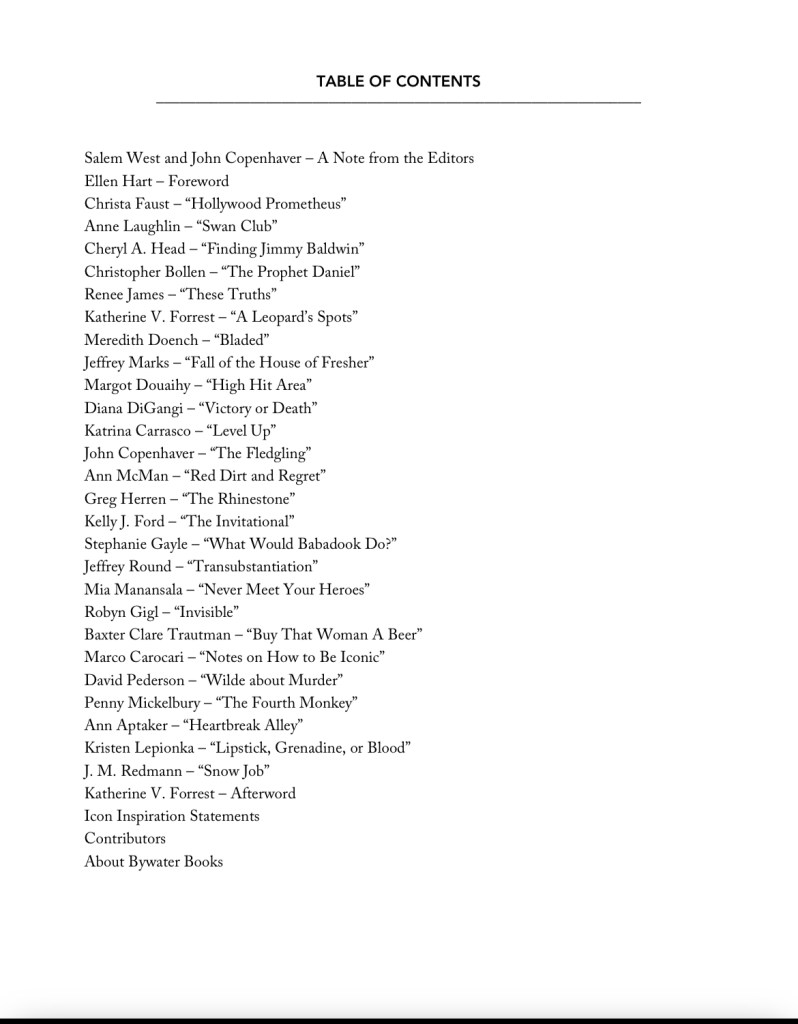



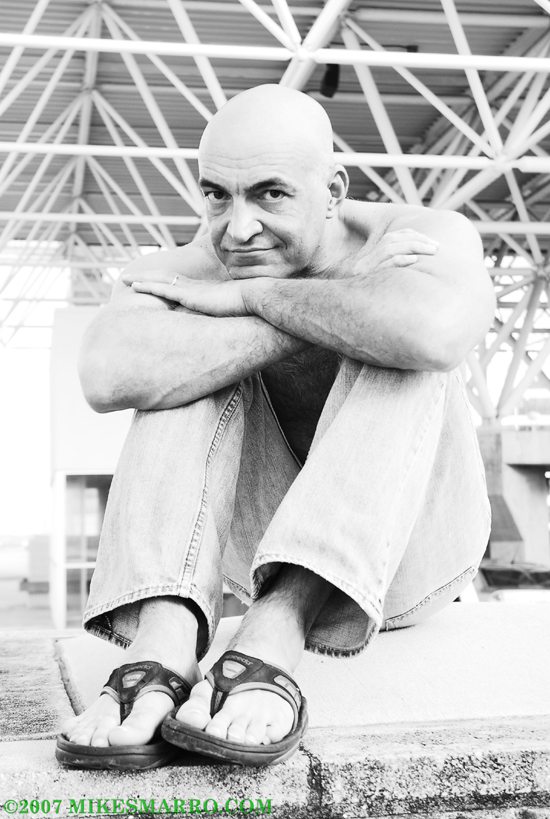
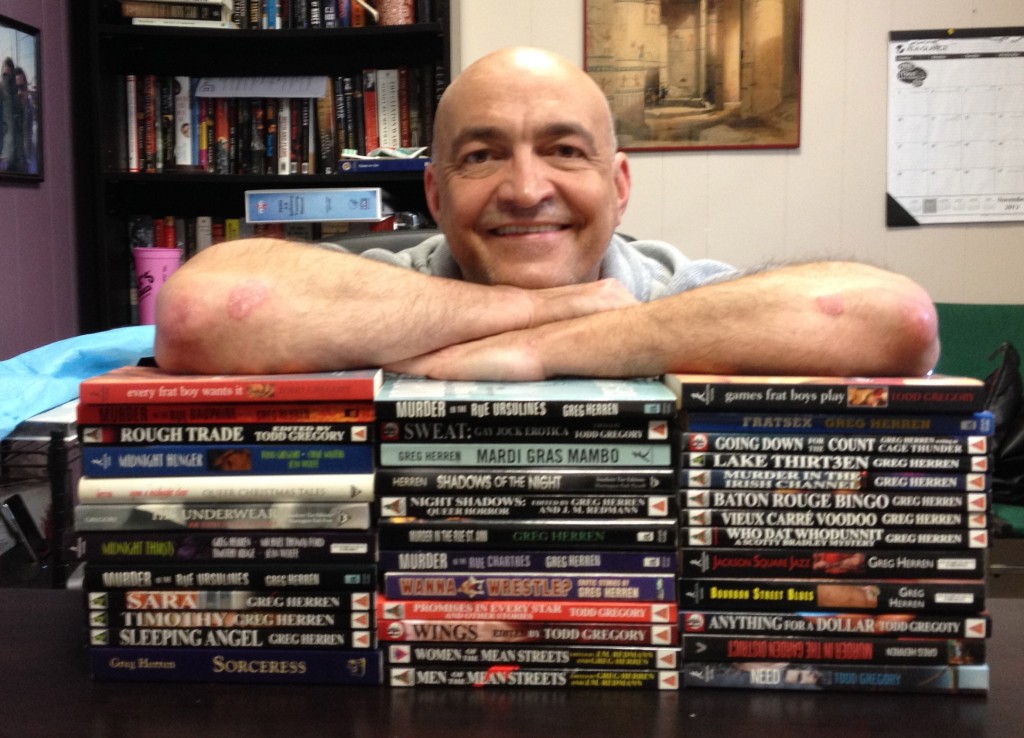

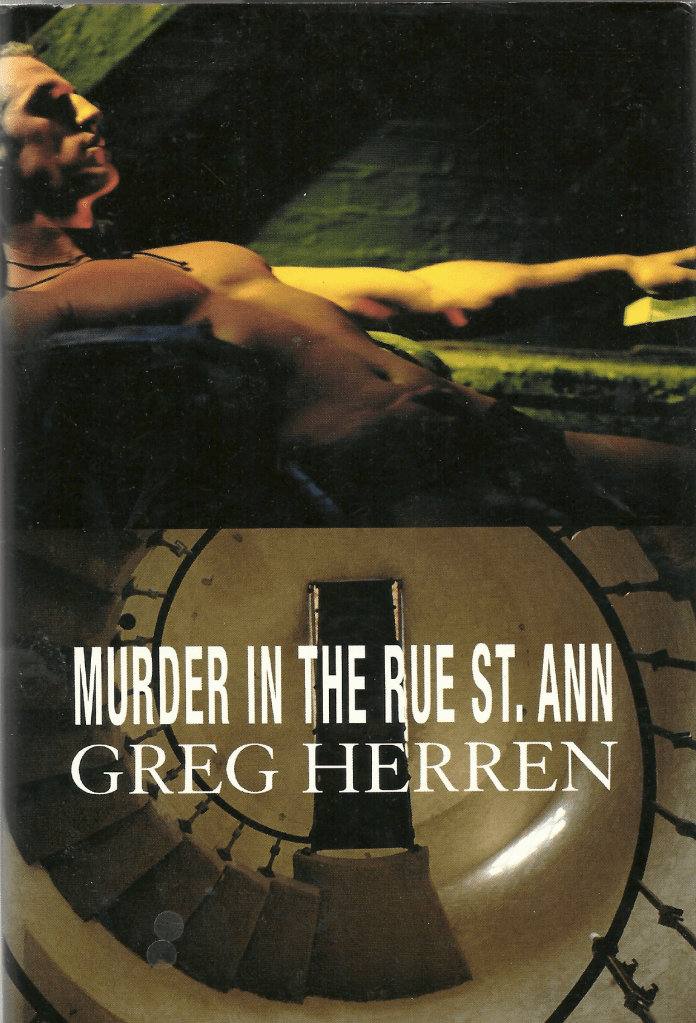
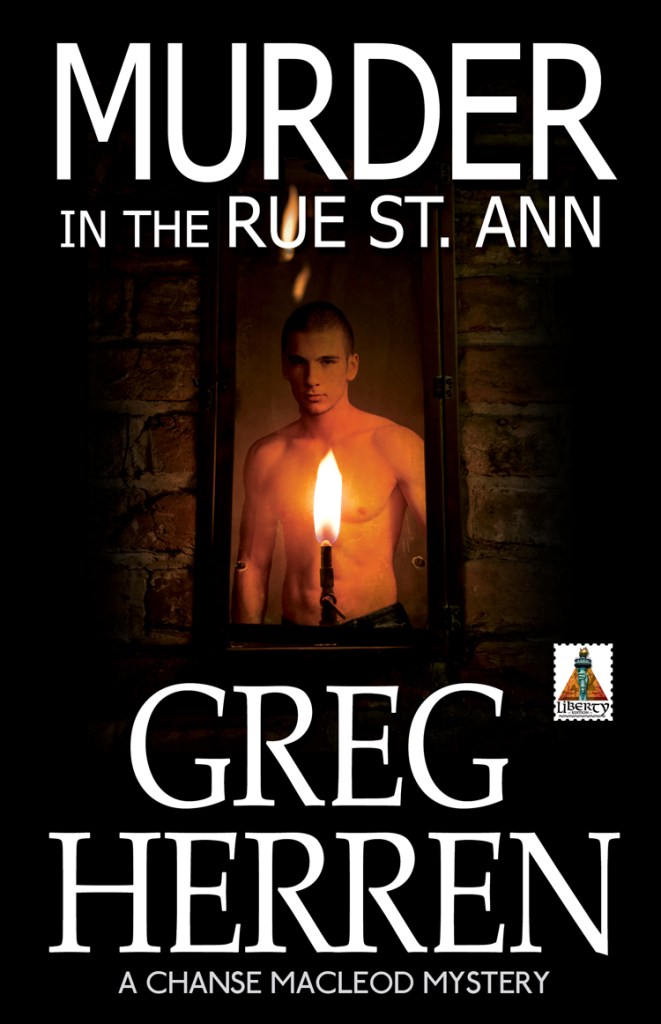

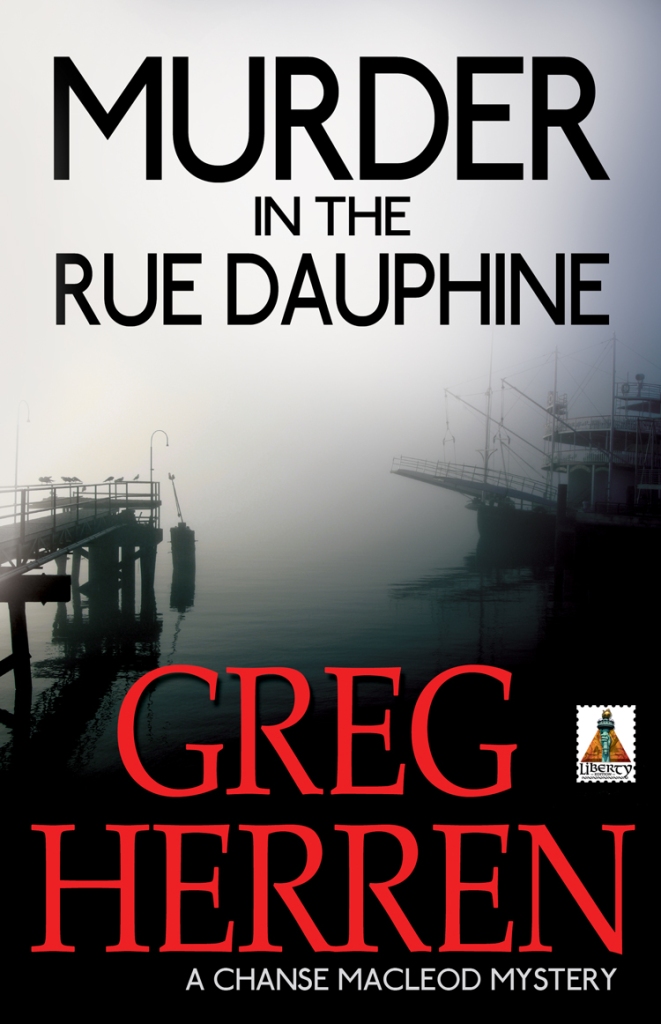
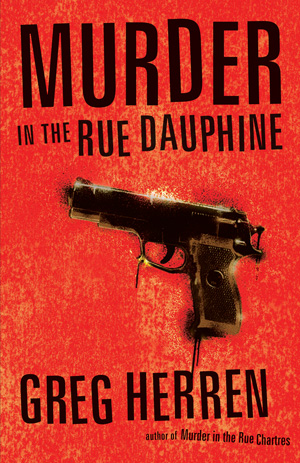

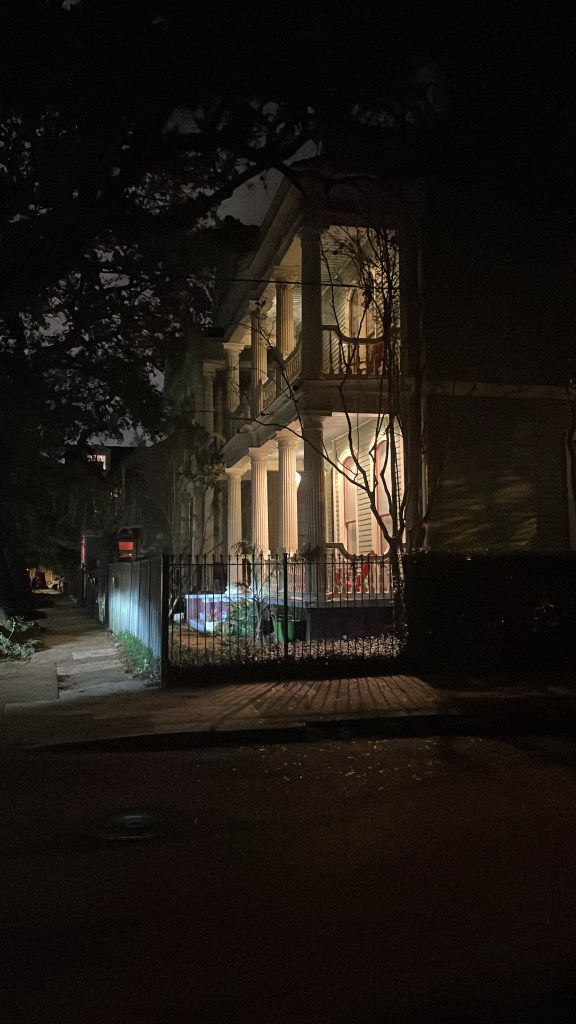

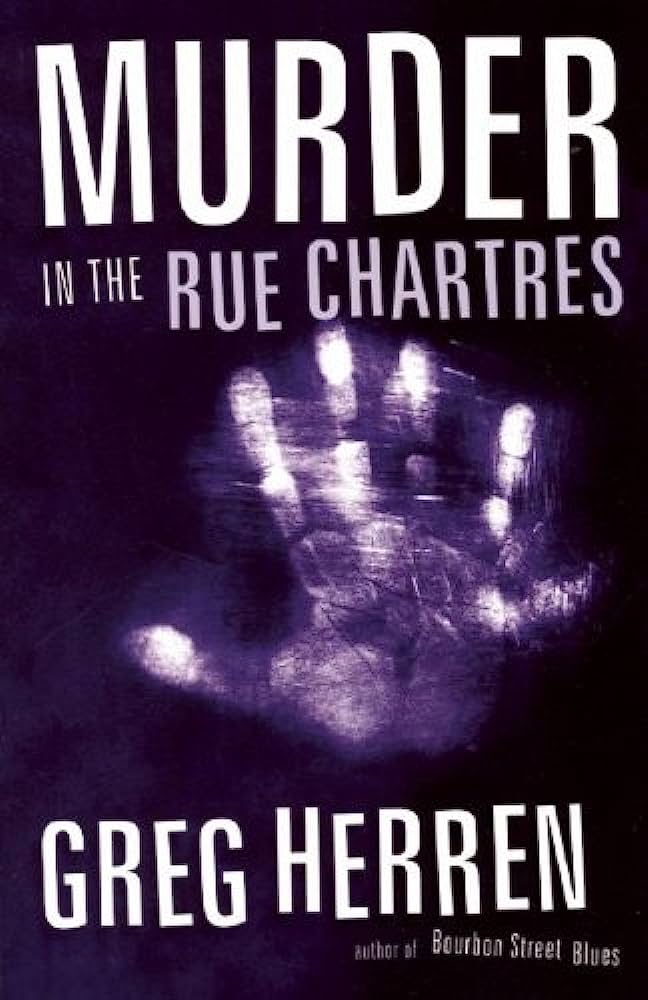

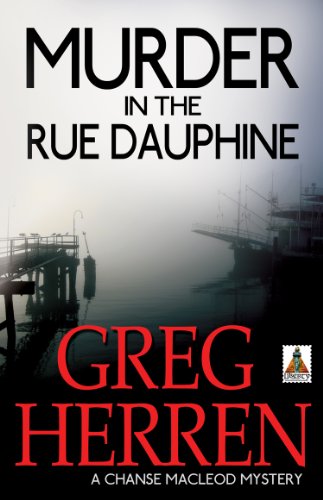
 Queer and Loathing in America