It was supposed to rain this morning, but the sun is shining and the sky is bright blue. I slept well again last night until Sparky got me up this morning, wanting his breakfast. (He is such a sweet boy.) I had a lovely day yesterday, actually. I ran my errands in the morning, ordered groceries to be delivered last evening, and had a pretty nice day overall. I finished rereading my Jay Bennett and Barbara Michaels novels1, and hope to finish reading the Megan Abbott today. I also watched a lot of television while doing chores and reading before falling asleep in my chair last night after a nice, relaxing day. Here’s to having another today, right?
Netflix has a new show about the 2024 SEC football season called Any Given Saturday, and so I watched about four episodes of that while Paul slept on the couch. It’s very well done, and while I don’t feel it pays enough attention to LSU–and what there is focuses on games they lost (really? No coverage of the amazing upset of Top Ten-ranked Mississippi?)–it is nice to see the stories on the other teams and get a recap of the season. The show, of course, is hype for the upcoming season; the pro pre-season is already under way. I think LSU can be really good this year, but LSU always manages to find a way to LSU. There are only two episodes of the show left–we switched it off to watch Wednesday, which we also didn’t finish last night–that I may have on in the background this morning while I read.
I think I am going to go ahead and spend some time with the news and my coffee this morning before finishing this. I’ll be back momentarily, Constant Reader. (According to the weather, we should be having a thunderstorm in five minutes, which I don’t think is going to happen, given how it currently looks out there.)
It’s now noon, and it never rained here. It does look like the calm before a storm outside my windows at the moment, but I’ve already closed up my wagon and put it away (I’d left it out last night after the delivery) just in case. I got cleaned up–even shaving–and that woke me up and made me feel being productive for a while. I put Any Given Saturday back on to stream, getting through the last two episodes while reading more of El Dorado Drive and marveling at what a fucking MASTER Megan Abbott is; she may be the best writer publishing today, and is definitely in the top tier without question. I also picked out my next reads: the reread will be Life Among the Savages by Shirley Jackson2 and the juvenile/young adult will be The Secret of the Red Scarf, which belongs to a close-to-forgotten girls’ series featuring Nancy Drew rip-off Kay Tracey, and I won’t decide on the new new-to-me read until I finish the Abbott–I’m currently torn between Mia Manansala’s latest or Disco Witches of Fire Island or Lev AC Rosen’s Rough Pages; all queer authors, I might add.
But The Hunting Wives might win the race in a photo-finish.
As I finished off Any Given Saturday, I found myself very curious about the lack of coverage for Texas, Georgia, Oklahoma, and Auburn, among others…and LSU and Alabama were only covered in reference to their games with South Carolina and Vanderbilt, period. Was it about getting some of these lesser-known programs more coverage? And it’s definitely difficult to cover 16 teams with any degree of depth and certainly every team had a story to tell this past year. But it definitely whetted my appetite for the return of college football, which was its intent, so mission accomplished, Netflix.
I’d forgotten we’d watched Towards Zero in between the SEC show and Wednesday; I’d seen bad reviews of it so was curious as to what we would think of it. I remembered the story as soon as I saw the geography of the setting, which is crucial to the crime, and yes, I was proven correct in the third episode. It was fine, if perhaps not really needing a third episode? It did feel like it was dragged out more than it needed to be, which is not a good sign for a murder mystery.
And on that note, I am heading into the spice mines. I need to do some picking up and organizing and cleaning, and I am also going to write for a while before probably returning to the Abbott. I doubt I will be back later; I may finish a newsletter today and I may not. If not, I will be here again in the morning before the infusion. Have a lovely Sunday, Constant Reader!
I will write newsletters about both authors at some point. ↩︎
I’ve always wanted to write about this unique Jackson book; I usually reread The Haunting of Hill House every October. ↩︎
Saturday! Sparky didn’t let me sleep as late as I would have perhaps preferred, but I am awake now and slurping down coffee and having a lovely morning thus far. I slept really well last night, which was nice, but mostly spent my evening after our Costco run (it was bizarre; we ran into two people we know there, which rarely, if ever, happens anymore) watching videos on Youtube about a) the 1970s for another project and b) World War II (for obvious reasons) before I fell asleep in my chair and had to finally go upstairs to bed. I did get a lot of chores done yesterday, which was lovely; the dishes are all done, and there’s a load of clothes in the dryer that also need to be finished and folded and put away. I have to run to the mail today, get gas, and make some groceries (while having others delivered1), and the floors need to be vacuumed, but other than that, I have a nice restful day at home planned. LSU plays game one of the National Championships tonight against Coastal Carolina at six tonight, but isn’t anything college baseball related going to seem anti-climactic after the ninth inning of the Arkansas game the other night? Probably.
I decided to read The Crying Child by Barbara Michaels as my next reread; I did some poking around on-line about Myra Breckinridge and apparently I missed a lot on my two previous reads of the book, so I am going to have to spend more time with it when I read it, and right now I am not feeling the bandwidth in my head to do that kind of critical reading of it–while trying to finish Summerhouse, which is my goal for this weekend. (Next up for my new-to-me read is going to be Mia Manansala’s y/a debut, methinks.) I am also thinking I may rewatch Surviving Ohio State–I was doing things and reading during my first watch, so wasn’t paying as much attention as perhaps I should have, and I’d like to write about it more in depth.
I missed the deadline for the short story I’ve been working on, which means I can now talk about the story and the market without jinxing anything; I was so fatigued this past week from the infusion I lost track of dates and thought the 20th, for some reason, was Monday. Nope, it was yesterday and so I missed the deadline and still didn’t finish the story. I will have to put it aside and finish it later–I think going forward, to keep from having so many story fragments, I’ll finish the story anyway rather than just putting it to the side and forgetting it. For one thing, I kind of got wrapped up in it and the main character. Anyway, the anthology was about sea monsters–anything below the surface of any water, really. When I was in the hospital, I had an idea for a new book–and realized I could use an old unfinished manuscript and its characters to graft onto the new idea (the old idea didn’t work because of its setting), which actually got me a little excited, and when I saw this submission call, I thought, oh, I can write something for this that will be an excerpt from this longer novel. So, that’s what I was trying to do with the story I called “The Lake Must Be Fed.” The original manuscript was called The Enchantress, and was set on the coast of the Florida panhandle, but it never really worked for there; the actual terrain was too different from what I imagined. I’ve also always been interested in the concept of “drowned towns,”–places that were evacuated to make way for a reservoir after a river was dammed. Scott Carsen’s last book that I read was one of these (completely different from my idea), and of course, the primary inspiration for moving it from the panhandle to northwest Alabama is Georgia’s own cursed lake, Lake Lanier. I’m sorry I didn’t finish the story, but I’m not putting it on the back-burner just yet; I have other things I need to write at the moment, but when I get stuck on the front-burner stuff I can work on “The Lake Must Be Fed,” which I think is a great title. I don’t know where it’ll get published, if ever, but it would be nice to have it finished and ready to go.
That’s the thing with short stories. I love the form, I love writing them (even as I always struggle with them), but the problem is there’s not many markets for them and you have to get really lucky with a specific submission call to say “oh, I have something for this!” and not have to write something new…which is partly why I have so many partials and unpublished stories in my files. Heavy sigh. AH, such is the writer’s lot in life, is it not?
I also managed to finish and send out another newsletter yesterday, and I also realized that I don’t have to finish and send every newsletter about my queer life during Pride, just like I don’t just read queer fiction during June, either. I do make more of an effort to talk about these things during Pride Month, when it’s more likely the straights might read it and reflect on what I’ve said (whether they agree or disagree with the points I make), but I’m not just gay during June; I’m gay all the rest of the year, too, and it’s just as important to speak out all year rather than just in June. I am writing one now about Overcompensating, and extrapolating that out to other shows/movies about queer people–and how you can pretty much tell when something queer is made to “play in Peoria” as opposed to being something authentic queer people can relate to other than just the sexualities being portrayed. (For the record, Overcompensating seemed authentic to me; but was it, or was it just something I could relate to? This is why I generally don’t do criticism–because it always feels like you’re speaking for the entire community, and I am uncomfortable with that, always having to make certain people understand I only speak for myself and not others, certainly not for the queer community as a whole.)
Well, my coffee certainly is working its magic on me this morning, isn’t it? This is fairly long already, and I don’t think I’ve covered everything that I want to as of yet? Let me get another cup of coffee and the next stage of my breakfast before I continue on here, shall I? Let’s shall.
1 do love me some honey-nut Cheerios. I started craving them when I was sick, and have been having them for breakfast almost every morning since I was able to start eating normally again. I’ve never been a breakfast person, choosing to use the time I’d spend getting breakfast together and then eating it instead staying in bed longer. That changed a bit when I started having to get up early every day, but now I eat so much breakfast that I’m really not all that hungry the rest of the day. And if I don’t eat a lot in the morning, I am starving by mid-afternoon. And I am also eating in the evenings; my dinners are usually lighter than breakfast, but I’ve been making dinner since I came home from the hospital. Again, I am generally not exhausted every night when I get home from work, and do not always repair to my easy chair to be a Sparky bed and relax from the day the way I used to; I can generally get some writing and reading and cleaning done every night, which is kind of nice. I don’t feel as defeated as I did before I got sick, either. I am suspecting that before it erupted into full-scale illness it was already affecting me physically before the lower intestine/colon went into a full revolt.
All right, I should probably bring this to a close and get to work this morning. I need to do some reading and cleaning and possibly some writing, this morning. I also need to do some editing, which I always seem to hate to do because it means more work. But I also always put it off, which is a mistake. So I am heading into the spice mines. Have a lovely Saturday wherever you are, Constant Reader, and no worries–I’ll be back no later than tomorrow morning.
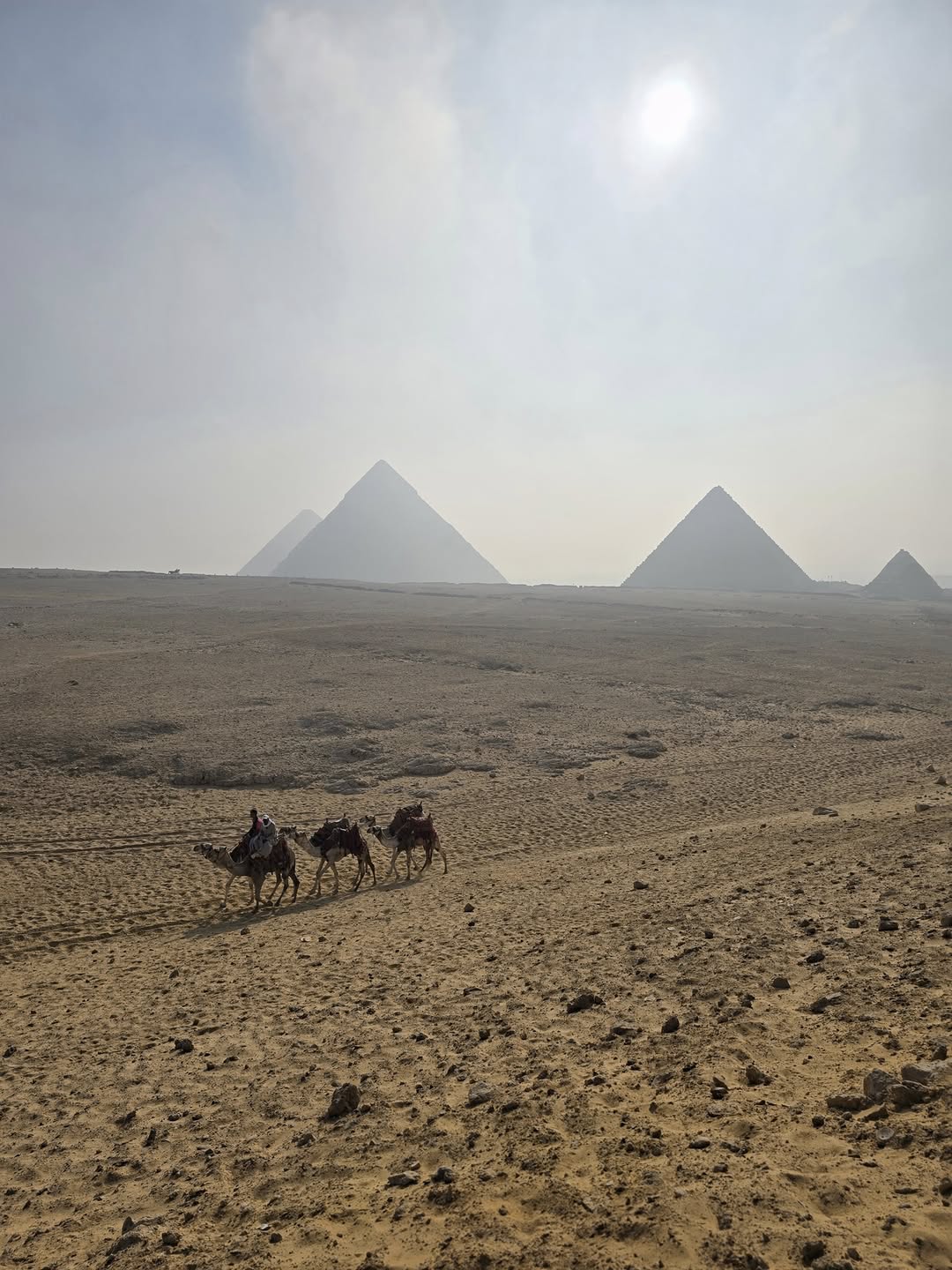
I always wanted to go to Egypt and see the pyramids, among other sites. Egypt has fascinated me since my childhood, and I’ve always wanted to write about Egypt.
Remember the other day when I was talking about not having a day job but would have to leave the house to run errands? I forgot about having things delivered! ↩︎
Thank God, my sister was never into Donny Osmond or his brothers. But he was everywhere on Top Forty radio in the 1970s, and later he teamed up with Marie–which was actually worse than his solo/with his brother efforts, but for some reason they were enormously popular1, which I never understood. But then I’ve never understood a lot of things that were popular in our culture.2
And “puppy love” is kind of a creepy saying, anyway.
My first infusion is now scheduled, for this coming Monday morning. I am winding down the prednisone; half a pill this week and next, then a quarter pill for the next two, and the massive swelling of my ankles and feet (side effect of the prednisone) has gone down significantly, which is why it is easier for me to walk now than it was before. There was a slight hang-up, of course, with my insurance (I know, gasp) but it got straightened out and the treatments are now approved. For the record, I will never take the word of an insurance company trying to make money for its shareholders about what is or isn’t “medically necessary,” thank you very much. How much of everyone’s time did this waste? How on earth is this considered an effective use of staff time? Our system is so broken. I am getting good care, and I am very grateful for that, but at the same time I shouldn’t have to spend so much time stressing about what is going to be covered and what is not when I am trying to get well. It seems counterproductive to the healing process, but I am not an insurance company employee, so what do I know?
I worked a bit on the story yesterday–broke through the middle and realized what I am writing will need to be restructured in the next draft, but I do like where it’s going–and was also kind of tired by mid-afternoon. I think it was the relaxation from the insurance approval; I hadn’t realized how much that was bothering me under the surface. It also rained all afternoon–marvelous downpours with thunder and lightning, which kind of made me sleepy. I think we’re going to have a very tropical summer this year in New Orleans, where it’s so humid it rains every afternoon. I didn’t read anything when I got home–the traffic on the highways was dense and moving very slow–but just kind of relaxed for a moment before working on the story very briefly. I’m glad I figured it out, though–I was getting a little worried, as I always do when writing doesn’t come as easily as it used to. The story is over two thousand words now, which pleases me; it’s been a hot minute since I wrote that much on anything, so that’s a win, thank you very much.
But it’s Thursday and my last day in the office for the week. The schedule is very light in the clinic today, so I’ll be able to get a lot of Admin work taken care of, which will have me all caught up on the office work before Remote Friday, which will again be admin work, just at home (I save stuff that I can do at home for Remote Fridays), and then it’s the weekend. I should do chores tonight, so I don’t have to do them this weekend, but the house does need to have some picking up and cleaning done. I want to finish writing this story and work on some other writing this weekend, all the while getting the reading done. I should be able to finish my three current reads this weekend before moving on to the next three; I think probably Mia Manansala’s new y/a, along with a Jay Bennett 3reread of one of his y/a’s, and my adult reread will probably be another Barbara Michaels, perhaps The Crying Child, which I’ve not reread in forever.
Those are some really good choices, don’t you think?
I also have some library books for research that I need to get through and make notes so I can return them. One is for Chlorine, and the other is for my deconstruction of Gone with the Wind and Lost Cause mythology–primarily focusing on how the Confederate widows and their daughters drove that mythology (because they couldn’t accept the fact their husbands, fathers and sons were treasonous losers, so they deified them, to the detriment of the country to the present day).
And of course, LSU plays this weekend in the College World Series, so I’ll definitely have that on, too.
And on that note, I am heading into the spice mines. Have a great day, Constant Reader, and I’ll be back tomorrow morning.
I did like his comeback hits in the early 1990’s–“Sacred Emotion” and “Soldier of Love”, though. Go figure. ↩︎
Don’t even get me started on Jonathan Livingston Seagull, which was the Number One bestseller for two full years in the early 1970s. ↩︎
Bennett is mostly forgotten today, but he wrote y/a noir/suspense, won two Edgars from three nominations, and was a master. I’ll probably do a newsletter about him someday, once I get through his entire canon. ↩︎
TRIGGER WARNING: Racism, homophobia, and archaic racist terms.
I learned long ago that the best way to deal with assholes was to develop a razor-sharp quick wit. I don’t know how I trained myself to be snarky and fast with my sense of humor, but at some point in my teens—in college, I think—I realized that not being filtered, and not being able to recognize most social cues, could actually prove to be a powerful defensive tool, if controlled. It has worked marvelously for me ever since. I also learned that a really good thing to do was say things to people I disliked that could be taken as either a compliment or shade, leaving it up to them to decide what I meant.
A few years ago, I had an experience at Left Coast Crime in Albuquerque where my usual biting sense of humor deserted me when I really needed it the most. I’ve grown used to dealing with homophobes and contemptuously cutting them off at the knees; I even relish doing it at times. But this? I’d never dealt with this kind of bigotry before, and my only excuse is that I was caught completely off-guard. I’ve also turned what happened over and over again in my mind in the time since, wondering how I should feel about it. It still hasn’t finished processing yet, and I’ll probably keep processing it for a few more years.
This was my first (and so far, only) time attending Left Coast Crime (unrelated; I want to go again but it just hasn’t worked out). I had always heard wonderful things about it, but the timing was always difficult for me to actually attend; all too frequently it is around the time of the Festivals here. I’d come home to the locks changed, methinks, were I to go away at that time.
At the time, I was still serving as Executive Vice-President of Mystery Writers of America. It was 2021, we hadn’t had any kind of crime publishing events since March 2020, and the events were just starting to slowly to come back. MWA had signed on to sponsor the Lefty banquet, and I felt someone should be there to rep the org at the event, and it wound up being me. I felt a bit uncomfortableabout registering and agreeing to do panels; we were a sponsor, and I didn’t want Programming to feel pressured to give me anything because of that (I tried very hard not to use the position to promote myself; I may have been a bit over-zealous on that score, but better safe than sorry). I arrived in Albuquerque on Thursday, had a quiet dinner with a friend, and the next day I went to panels, ran into people, and had a lovely time. I also had dinner plans for Friday that I was excited about–I was having dinner with Marco Carocari, whom I had just met at Saints and Sinners; John Copenhaver, whom I was starting to get to know better; Oline Cogdill, a dear friend of well over a decade; Mia Manansala, whom I met at New Orleans Bouchercon before she was published and I’ve always felt a bit protective of her (my neuroses, not hers) and someone new to me–Wanda Morris, whom I had neither read nor met before.1
Constant Reader, that was such a fun dinner, the kind I always dreamed of being a part of when I was that lonely kid in Kansas wondering what his future would be. We talked about books, writing, gossip, and I believe everyone, other than Oline and I, was up for a Lefty. We toasted their nominations, and when we headed back to the hotel I felt marvelous; giddy almost. I was having a good time and was excited to be around writers again, and I wanted it to keep going. I didn’t want the evening to end…
Little did I know what I was in for as we walked back into the hotel lobby, and we three gays decided to go have a drink at the bar, while the women wisely all went up to bed.
It started with a chair.
So innocuous, so nothing, just a little thing that happens in hotel bars all the time; you join a table without enough chairs so you grab a free one from the next table…but this time? Very different.
Basically, we had decided to join friends at a high-top table with room for eight, with all the chairs already taken and some others pulled up. There was a tall bar chair standing at the next table–a low table, so it didn’t really belong there in the first place–and several people were sitting around that table. I smiled, said, “is anyone using this?” and one of the three people shook their head no, so I took the chair…which bothered the woman who was sitting closest to me and who decided, in her inebriation, that I shouldn’t have the chair.
DRUNK WHITE WOMAN (Henceforth, DWW): You can’t take that chair because you have to sit here and talk to me.
I’d never seen her before in my life, but I’ve also been drunk in public before, so I just smiled as I sat down at the other table, and said politely, with no idea of what I was letting myself in for: “Can’t you talk to me if I sit here?”
DWW: Great!
I nodded to her, hoping that was the end of the interaction. I’d had two drinks at dinner, but wasn’t even slightly buzzed. I had a glass of Pinot Grigio in my clutches, I’d had a marvelous evening already, and I was looking forward to catching up with the others at the table. I started to turn back to the table to talk to my friends, when…she leaned towards me, narrowing her eyes, and saying, in a very low tone, “Are you a mulatto?”2
Needless to say, I was taken aback–not by the assumption, but the language.
I literally thought, are we really still using that word in this year of our Lord 2022?
I didn’t know what to say, I was so stunned and shocked that my ability to lobby back an icy, conversation ending retort, something of which I was so so proud, had deserted me. I just smiled and said, “no,” which she countered with a scoff, “Well, you’re at least a quadroon.3“
And rubbed each side of her nose with an index finger, adding with a knowing smirk, “Especially with that nose.”
I said, rather sharply, “I know who all my grandparents were, so no.”
Again, it wasn’t the racial profiling that bothered me, but it was the entitlement and the language she was using.
First and foremost, my racial heritage–anyone’s, really–is no one’s business.
She was being racist to me, but even as I floundered, I couldn’t figure out why I was so flustered and having trouble figuring out what to say next. It didn’t bother me in the least that she thought I was part Black (more on that later), but she was using racist language to inquire, which I was offendedby, and I was more than a little insulted by her condescending assumption that I’d lie about it? And again, what business was it of hers if I was or wasn’t? (I’m still not sure how to wrap my mind around this; two years later I am blogging about it in order to process it in my brain.)
DWW: (waving her hand, poo-pooing me) Oh, everyone’s mixed there.
Hoping this ordeal was over and still in shock, I turned back to my friends…only to hear her voice loudly asking me, “Are you gay?” I confirmed that yes, I was–and then she went on a long, incredibly tiresome (and repetitive) monologue about how she’s always been good with the “L and the G and the B and the T”, tried bonding with me over hot male asses (in horrific terms: think locker room talk), and just kept on until finally I was able to finally excuse myself. I got up and left my friends, never to return. Definitely made me uncomfortable, so yeah, it also counts as sexual harassment–what I do or don’t do in my bedroom, DWW, is none of your fucking business.
I still can’t believe that happened, that someone felt comfortable using that kind of language to, and about, me about my racial heritage (when I was a child in the 1960’s I knew you don’t use those words, and they usually only appeared in old racist books, like Gone with the Wind), not to mention trying to get into my bedroom and what I do there. It’s not okay for anyone to use those horrible, archaic old terms that were humiliating and degrading even when they were in common use…and I also felt like I’d failed. I should have stopped her, I should have called her out for using racist and homophobic language, not to mention the fact that she felt, in her drunken stupor, perfectly okay to treat me not as a person but as a thing.
That is the real shame I feel. Not that she used such language to me, but I allowed it. I have to do better than that. My silence was complicity.
And yes, I should have filed a complaint with the conference. I’m still ashamed that I didn’t correct her or say anything before I made my escape. But I sensed it also wouldn’t do any good. Alcohol brings your barriers down, after all.
It also wasn’t the first time this has happened–but at least the first time, it wasn’t so offensive.
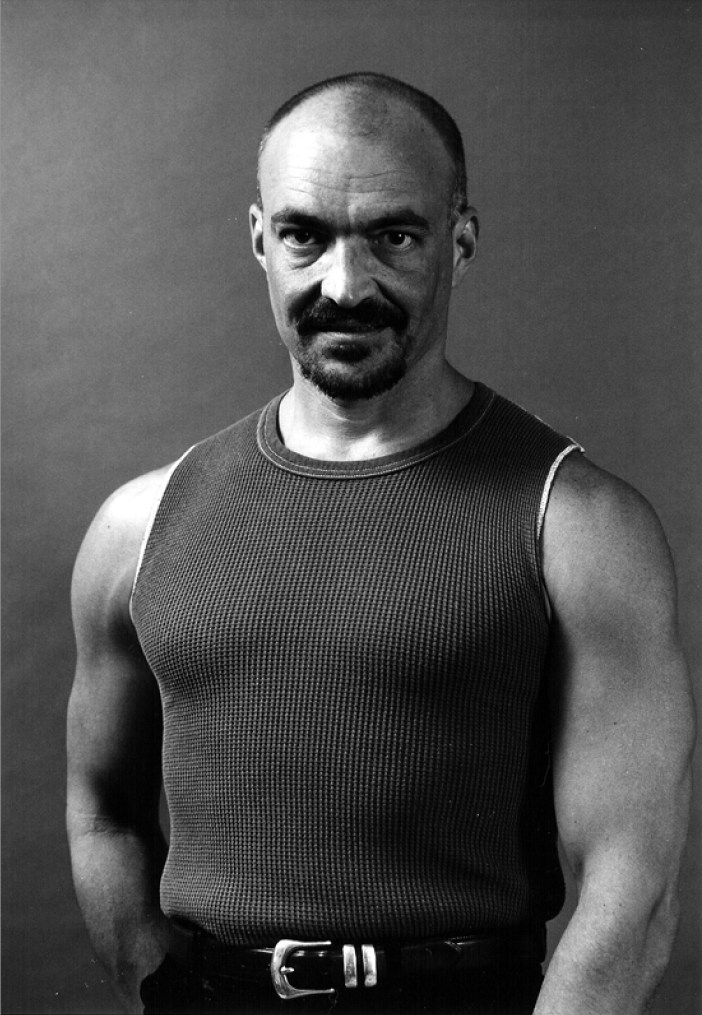
This, for an illustration, was my second author photo.
Taken by Sylvester Q, a photographer in New York, he also loaned me the shirt and some other clothes for the shoot. It was my first professional author photo shoot, and this was the best image, in my opinion, to come out of the session. I used it for Jackson Square Jazz (when I got the book down to reread it for the new edit for the 20-year anniversary edition, I noticed the picture) and for several other books. I don’t remember which image I used to replace this one–I think it’s the black and white one of me sitting and hugging my knees–but I am very well aware that I need new author photos. The one I just referenced was taken in either 2008 or 2009; the one of me with my stack of books is from around 2013 or 2014 (and yes, old age has hit me very hard since those last ones were taken). I did a shoot at Sleuthfest with Morgan Sophia in the summer of 2022; the pictures look like me but I don’t like the way I look in them, so I’ve not really used them.
Anyway, this was the image I provided to the Louisiana Book Festival when I was on a New Orleans Noir panel for their program in 2007 (I think). I don’t remember everyone else that was on it, other than editor/moderator Julie Smith and the person I am about to mention.
I was a little taken aback when said contributor sat down next to me, and exclaimed after we were officially introduced, “But I thought you were Black!”
She’d only seen my photograph in the program.
I was more amused than anything else, and perplexed. But when I looked at my image in the program later, it had printed even darker than the image above, which was already pretty dark. I think it had to do with how the shot was lit more than anything else. It was kind of funny, and it became a story that I told sometimes over drinks.
That wasn’t the first time my genetic heritage has been questioned by someone.
White people have this strange curiosity thing about people’s backgrounds, always trying to figure out where you’re from. “Are you German?” “Are you Italian?” That sort of thing. I will comment on a name–“oh, is that French/Spanish/German etc.”–but I would never ask anyone what are you?
I’d never really thought about it before the LCC incident, but people have very often wondered–and asked–what I am.
And in all honesty, I’ve never liked being asked, mainly because I wasn’t entirely sure.
I guess I am what is I’ve sometimes seen referred to as “ethnically ambiguous5“; in other words, had I been a movie star in Hollywood back in the golden age I probably would have been cast in roles that today would be considered offensive for me to play. People have often–again, this weird thing white people have about trying to figure out “what” I am–taken me for everything from Greek to Italian to indigenous to Syrian to Persian to Latino. I’ve never given it much thought, and I don’t really see it. My skin tone is what is called olive, and I’ve always tanned easily, a very dark brown with some red mixed into it (I’ve only been sunburned twice in my life). My facial features are a curious mix of my family; I look like both my parents, and my nose was broken in high school, with the cartilage never reattaching to the bone. I also shave my head, which apparently adds to the confusion.
Almost all of the ancestors (that I’m aware of, but I only know my father’s side, and there’s not anyone left on Mom’s side who’d know more) were British (Scots, Irish, English and possibly some Welsh) but white people have this weird need to classify people. I don’t know if it’s an American thing, or what, but it happens. Not so much anymore as it used to–maybe people are finally starting to realize that it’s offensive or that it doesn’t matter or some combination of the two.
But still. Basically, the woman in Albuquerque othered me. She looked at me and was confused, so she just had to find out what I was.
What I am. “What ARE you?”
And for the record, what happened to me at Left Coast is the kind of horrifically racist and offensive behavior that racialized people have to deal with multiple times every damned day. In some ways I’m glad it happened; that I got to experience racism targeted directly at me, but at the same time…it shouldn’t happen. To anyone, regardless of who they are or how they identify. It also made me very aware of my own privilege, which is something I do need a reminder about periodically; I get so wrapped up in being marginalized as a gay man that I forget how horrible it is to be a person of color in this racialized country and society and culture.
And ultimately, white people? It’s really none of your fucking business in the first place!
And would people have considered me white in the antebellum South? is a question we might have to revisit at another time.
Part of the struggle in writing this all down and sharing it with you, Constant Reader, comes from not wanting to make myself seem like either a martyr or center the conversation about racist bigotry on me. Unsettling as this all was–the privilege on display, the language used, the shame in not putting her in her place–it was momentary, something that didn’t impact or effect my life in any way; another anecdote for cocktail parties or dinner conversation. The sexual harassment aspect of it, had that been all there was (oh yes, during the ass conversation she also talked about mine), would have merely been something I would have laughed about with friends later, but the racial component was horrible. All I could think about was, really, how lucky she was that I wasn’t biracial.
Which makes me squirm more for not reporting it to the conference–what if she does this to authors or readers of color at one of these events? Was I coward for not only not stopping her but not reporting her? It’s been two years now, and I still am not entirely sure what I think or feel about this, which is very unusual for me; it’s very rare that I am unsettled this way.
But putting it all down has helped somewhat. I probably should have written this years ago.
I did buy her book that weekend, and once I read it became a fan. ↩︎
If you aren’t aware of this word, it’s an old, ugly, and pejorative term used for biracial people during the human trafficking era and the Jim Crow time that came after it. I’ve not heard anyone say the word aloud in at least fifty or so years. AT LEAST. If you want to understand just how offensive it is, it’s root word is mule–the product of interspecies breeding. Go fuck yourself, you horrible racist. ↩︎
Again an archaic deeply problematic word that actually comes from antebellum New Orleans, indicating how much Black blood someone had. These were the days of the “one drop” rule, which meant any Black ancestry, no matter how remote, made you Black in the eyes of the state and the law. Quadroon means one quarter, so the person had a single Black grandparent, the “roon” comes from “maroon”, which is another old and archaic racist term for Black people. Despicable, really. ↩︎
Credit where it’s due, she was using racist language that originated in New Orleans. ↩︎
And here we are, on the final day of the year 2022. Happy New Year, I guess? It doesn’t feel like the year is turning, but everything has felt so totally out of whack since the 2020 Shutdown that it’s not a surprise, really. As I sit here bleary-eyed with my coffee trying to wake up for another thrilling day of writing and cleaning, it seems very weird to look back to a year ago at this time. I was on deadline then, too–and was way behind on that book, too (A Streetcar Named Murder, for the record), but other than that I don’t remember what my mood was like or what I was thinking about going into the new year. We were still in the midst of the pandemic (that hasn’t changed–what’s changed is it isn’t news anymore and everyone seems to be pretending it’s all over), and I know I wasn’t exactly going into 2022 thinking oh this is the year I’ll get the coronavirus! That did happen, and my ten-day experience with COVID-19 was bearable for the most part. I just had intense and severe exhaustion as well as the brain fog, which hasn’t entirely lifted. I still have no short term memory, and am struggling to remember things every day–which has made writing this book more difficult because I can’t remember small details and things that are kind of important. I also think being so scattered isn’t much help in that regard; I’ve never been able to handle getting a grip on things and have felt like I’ve been behind the eight-ball for the last three years, floundering and struggling to keep my head above water, and never confident that I had a handle on everything. It’s been unpleasant, really; I prefer to be better organized and to have things under some sort of manageable control, and this constant feeling that I am behind and will never catch up on everything has been overwhelming, depressing, and damaging.
I read a lot of great books this year–I was going to try to make a “favorite reads of the year” list, but as I went back through the blog for the last year looking at all the books I talked about on here, there’s no real way for me to quantify what were my avorite reads of the year. I managed to read both of Wanda M. Morris’ marvelous novels, All Her Little Secrets and Anywhere You Run; Marco Carocari’s marvelous Blackout; John Copenhaver’s The Savage Kind; Carol Goodman’s The Night Villa, The Lake of Dead Languages, and The Disinvited Guest; Ruth Ware’s The Death of Mrs. Westaway and The Woman in Cabin Ten; Raquel V. Reyes’ Mango, Mambo and Murder; Ellen Byron’s Bayou Book Thief; Rob Osler’s debut Devil’s Chew Toy; Mia P. Manansala’s Arsenic and Adobo; Kellye Garrett’s Like a Sister; Alex Segura Jr’s Secret Identity; Laurie R. King’s Back to the Garden; Tara Laskowski’s marvelous The Mother Next Door; James Kestrel’s Five Decembers (which would be a contender for favorite read of the year, if I did such things); and of course several Donna Andrews novels as well. I am forgetting some great reads I truly enjoyed this past year, I am sure–I will kick myself later for not remembering I Play One on TV by Alan Orloff, for one example–but it was a year of great reads for me. I know 2023 will also be a great year for reading.
I also watched a lot of great television this past year as well, and again, I won’t be remembering everything and will kick myself later. If nothing else, it was a year of some amazing queer representation on television; this was, after all, the year Netflix not only gave us the wonderful, amazing, adorable Heartstopper but the equally charming and adorable Smiley (which you should watch, absolutely). It was also the year where Elité continued, but the shine is starting to go off the show a bit. I was very vested in their Patrick/Ivan romance, which they ended in this last season with Manu Rios, who plays Patrick, leaving the show at the end of the season along with his two sisters (spoiler, sorry), which was dissatisfying. I am looking forward to seeing what else Manu Rios gets up to in the future…we also enjoyed 1899, Andor, Ted Lasso, Sex Lives of College Girls, Peacemaker, The Sandman, House of the Dragon, Ozark, and so many other shows I can’t possibly begin to remember them all this morning. But I have no problem saying that without question my favorite show of the year was Heartstopper. Even just looking at clips on Youtube, or those “Ten Cutest Moments on Heartstopper” videos, always makes me feel warm and fuzzy when I view them. The soundtrack for the show was also terrific, with some songs so firmly engrained in my head with scenes from the show (one in particular, Shura’s “What’s It Gonna Be” always makes me think of that scene where Charlie comes running after Nick in the rain to give him another kiss, which is what was playing in the background). Wednesday was another highlight, a surprising delight when I was prepared to have my hopes dashed, and The Serpent Queen was also a lot of fun. We also enjoyed The Bastard Son and the Devil Himself, but it was cancelled after its first season, which was disappointing.
Professionally, it was a pretty good year in which I had three book releases: #shedeservedit in January and A Streetcar Named Murder in December, with the anthology Land of 10000 Thrills, thrown in for good measure in the fall. I sold some short stories that haven’t come out yet, as well as some that did this last year: “The Rosary of Broken Promises,” “A Whisper from the Graveyard,””The Snow Globe,” and “This Thing of Darkness” all came out in anthologies this year, with “Solace in a Dying Hour” sold and probably coming out sometime in the spring. I also sold another story to another anthology that will probably come out in the new year as well, and I still have one out on submission. In what was probably the biggest surprise of the year, last year’s Bury Me in Shadows was nominated for not one, but TWO Anthony Awards (Best Paperback Original and Best Children’s/Young Adult) which was one of the biggest shocks of maybe not just the year, but definitely one of the highlights of my career thus far. I lost both to friends and enormously talented writers Jess Lourey and Alan Orloff respectively, which was kind of lovely. I had been nominated for Anthonys before (winning Best Anthology for Blood on the Bayou and “Cold Beer No Flies” was nominated for Best Short Story), but being nominated for one of my queer novels was such a thrill–and to have it nominated in two different categories was fucking lit, as the kids would say. The response to A Streetcar Named Murder was an incredibly pleasant surprise; people seemed to genuinely love the book, which was very exciting and cool.
I traveled quite a bit this year as well–going to Murder in the Magic City/Murder on the Menu, Left Coast Crime, the Edgars, Sleuthfest, and Bouchercon. I went to Kentucky twice to see my family, which further fueled my love of audiobooks for long drives–on both trips I listened to Ruth Ware on the way up and Carol Goodman on the way back–and also did some wonderful podcasts and panels on-line, which was nice. We didn’t go to any games this season in Baton Rouge, but in all honesty I don’t know if I can hang with a game day anymore–the drive there and back, the walk to and from the stadium, the game itself–I would probably need a week’s vacation afterwards!
College football was interesting this season, too. This season saw the reemergence of Tennessee, USC, and UCLA to some kind of relevance again; the slides of the programs at Texas A&M, Florida, Oklahoma, Auburn, and Texas continued; and LSU turned out to be the biggest surprise (for me) of the year. Going into the season I had hopes, as one always does, but after two years of consistent mediocrity (with some surprise wins both years) they weren’t very high. The opening loss to Florida State was a surprise and disappointment, but at least the Tigers came back and almost made it all the way to a win. The blowout loss to Tennessee at home was unpleasant, certainly, as was the loss at Texas A&M. But LSU beat Alabama this season! We also beat Mississippi, so LSU was 2-2 against Top Ten teams this season–and I would have thought it would be 0-4. And 9-4 is not a bad record for a transitional year, with a new coach rebuilding the program. And LSU beat Alabama. The Alabama game will undoubtedly go down as one of the greatest Saturday night games in Tiger Stadium. It was incredibly exciting, and I still can’t quite wrap my mind around it or how it happened. It certainly shouldn’t have; LSU was simply not an elite-level team this past season, but what a job Brian Kelly did coaching in his first season in Baton Rouge. Did I mention that LSU beat Alabama this year? (And one really has to feel for Alabama, in a way; they lost two games by a total of four points on the last play of each game. Four. Points. That would probably be what I would call this season for Alabama: Four Points from Greatness. The LSU-Alabama game this year is definitely one of those that gets a nickname from the fan base, I am just not sure what it would be. The Double Earthquake Game? (The cheers when LSU scored in overtime and then made the two point conversion registered on the campus Richter scale) The Conversion Game? I don’t know what it will be named for all eternity, but it was an amazing game. I do think it also bodes well for the future for LSU. Will both LSU and Tennessee (which also beat Alabama for the first time in like fifteen years) be able to consistently compete with Alabama now? Has Georgia taken over as the SEC behemoth? Has the Alabama run ended? I don’t think so–they have an off year where they lose two or three games periodically (2010, 2019, 2022)–and they could bounce right back. next year and win it all again. You can never count them out, even in their off years.
As for the Saints, they swept Atlanta again this year, and that is enough for me.
I did write a lot this year, even though it didn’t seem like I actually did while the year was passing. I also worked on Chlorine and another project I am working on throughout the year, as well as the novellas, and of course, I was writing short stories and essays for much of the year. I also read a lot more New Orleans and Louisiana history, and I had tons of ideas for things to write all year long. I did make it to the gym on a fairly regular basis at the beginning of the year, but then it became more and more sporadic and after my COVID-19 experience, never again. I also injured my arm a few weeks ago–when I flex the bicep it feels like I have a Charley horse, so not good, but it doesn’t impact my day to day activities. I also had my colonoscopy at last this past year–the prep was horrific, and I am really dreading doing it again at sixty-five, should I make it that far.
Yesterday was a nice day. I was exhausted, and after my work-at-home duties were completed I did some chores–laundry, dishes–and I also spent some time both reading (A Walk on the Wild Side) and writing. I also watched the Clemson-Tennessee Orange Bowl last night before Paul got home from his dinner engagement and we watched a few more episodes of Sex Lives of College Girls. Today I am going to read a bit this morning with my coffee before getting cleaned up and diving headfirst back into the book. Paul has his trainer today and usually either goes to the gym to ride the bike or to his office to work for the rest of the afternoon, so I should be able to have some uninterrupted writing time, which will be lovely. And on that note I am heading into the spice mines. Have a happy and safe New Year’s Eve, Constant Reader, and I will check back in with you later.
As Constant Reader should know by now, while my entire identity and ego is wrapped up (probably too much) in being a writer, the truth is I have always been, currently am, and will always be, a reader first. I love to read, always have since I first learning what the little squiggles on the pages actually meant and learned how to decipher the little squiggles first into words, then into sentences, paragraphs and eventually entire stories. Reading was always my escape from a world too harsh for a little creative gay boy surrounded by people who didn’t read much nor cared much about books and so forth; sometimes the fantasy worlds I created in my head–always influenced by my reading–were safer and better places that I preferred to what, to me, was the horror of reality. I also learned a lot from my reading. I learned about other countries and cultures and groups; history and geography and other little odds and ends of information that remain lodged in my head and make me good at both Jeopardy! and Trivial Pursuit (case in point: I learned from Nancy Drew’s 44th adventure The Clue in the Crossword Cipher that the Incas’ language was quechua; I’ve never forgotten that, or that the Nasca Lines play a part in the book, and she and her friends also went to Machu Picchu).
Over the last few years I realized that my reading was primarily white and straight and decided to correct that; since then I have discovered the eye-opening marvel that is the talent of non-white authors and their remarkable story-telling ability. S. A. Cosby, Kellye Garrett, Silvia Moreno-Garcia, Mia P. Manansala, Alex Segura Jr, Raquel V. Reyes and many others have opened my eyes to other American experiences, and reading their work has also given me a broader and deeper understanding and appreciation of a different kind of American experience.
And then I read Gabino Iglesias’ 2022 release, The Devil Takes You Home.
Leukemia. That’s what the doctor said. She was young, white, and pretty. Her brown hair hung like a curtain over her left eye. She talked to us softly, using the tone most people use to explain things to a child, especially when they think the child is an idiot. Her mouth opened just enough to let the words flow out. She said our four-year-old daughter had cancer in her blood cells. Our Anita, who waited in the other room, playing with Legos and still wrapped in innocence. Acute lymphoblastic leukemia. Those strange words were said in a voice that was both impossibly sharp and velvety. Her soft delivery didn’t help. You can wrap a shotgun in flowers, but that doesn’t make the blast less lethal.
The young, white, pretty doctor told us it was too early to tell for sure, but there was a good chance that Anita was going to be okay. Okay, that’s the word she used. Sometimes four letters mean the world. She immediately added that she couldn’t make any promises. People fear being someone else’s hope. I understood her, but I wanted her to be our hope.
Jesus.
The opening of the book rips your heart out and rends your soul.
I am not a parent, never have been, never wanted to be, and never will be. I admire and respect parents (for the most part) because when I try to imagine what it’s like to be one, I can’t–it literally wears my brain down. I am a chronic worrier as it is; I get nervous when Paul doesn’t come home from work when he’s supposed to, or dawdles and delays and doesn’t text me. But for the most part, I know he’s an adult and functional and I believe he can, for the most part, navigate the world safely so I don’t spend a lot of time worrying about him.
I don’t think parents ever have a moment’s rest from the time the child is born until the child or the parents die–and I can imagine no greater grief than losing a beloved child.
Losing their child is how this book opens. And you just know in your heart of hearts–things aren’t going to get better any time soon for the father narrating this story. It isn’t a spoiler to let you know, Constant Reader, that by Chapter Three Anita is dead and her parents are swimming in debt and grief and drowning in it all. Before long, the marriage is over and Mario is alone with his grief and his debt and misery.
I don’t think I’ve ever read such a literate and powerful description of rock bottom in my life.
Mario turns back to crime in an attempt to make things right with the world and to somehow fill his horrible emptiness with something, anything. He starts off as a hitman, killing bad people and making money to pay down his debt and maybe, just maybe, somehow get his wife back and they can start over. Mario is desperate–and aren’t desperate characters the essense of noir at its purest distillation? He is then recruited to help liberate some cash from a cartel on its way to Mexico. Success means a cool two hundred grand and the potential to start over. Failure means a bullet in the head.
Both are better options than the life Mario is living at the time.
The pacing is breakneck and the story itself is a trainwreck you can’t look away from; you can’t help rooting for Mario, flaws and all, because the suffering is so intense you want him to find, somehow, both redemption and peace. (The book also serves as a stinging indictment of poverty in this country, and the near-impossibility of bettering yourself while drowning in the debt incurred for the possibility of bettering yourself, as well as our fraudulent health care system. Parents shouldn’t be saddled with insurmountable debt for trying to keep their child alive and especially not when the child passes.)
There are also some fascinating elements of the paranormal/supernatural mixed into the story, too–but while this might throw a typical noir off-track, it works here to heighten the sense of madness and unreality the entire book invokes. The true horror of the book is the system, designed to keep people of color down and to keep the cycle of poverty going.
Here are just a few of the gems in the prose:
The middle of nowhere is remarkably consistent in terms of being unmemorable.
The décor was a mix of a failed attempt at hill-country chic circa 1970 and neon signs for the kinds of beers folks buy at gas station convenience stores on their way to somewhere they wish they could escape.
The Devil Takes You Home is raw, fresh and original, with the kind of crisp smart literate writing that speaks of Lisa Lutz, Megan Abbott, and Jim Thompson.
I marked any number of pages for these writing gems that both awed and inspired me (to do better with my own work).
I highly recommend the book–but be warned: there is violence and gore aplenty, but it all works because it’s not there for shock value.
The traditional mystery, to quote Rodney Dangerfield, “don’t get no respect.”
I’m not sure why that is, to be perfectly honest. I do have my suspicions and opinions, most of which inevitably circle back to the root of so many societal ills: misogyny. Traditional mysteries, often called (both respectfully and derisively) cozies, are, as a general rule, primarily written by women, tell women’s stories, and theoretically, the primary market for them is women. So naturally, much like the entirety of the romance genre, it is subject to derision, not being taken as seriously as darker works, and often is shut out during awards seasons (the primary exception being the Agatha Awards, given at Malice Domestic, which is primarily focused on the traditional mystery). They generally also don’t get a lot of review coverage, because women mystery writers also traditionally don’t get their fair share of print reviews in major publications, either–and the ones who usually do trend to the darker side.
I will also admit that I, too, am guilty of being more drawn to the darker, harsher, more noir side of crime fiction in my reading–which is kind of ironic, as one of my favorite series writers of all time is Elizabeth Peters, who didn’t write dark but rather light-hearted and funny; the Amelia Peabody series is one of the all-time greats. I also love Ellen Hart’s and Donna Andrews’ and and Miranda James’ and Elaine Viets’ series; but a few years ago I realized I wasn’t giving the subgenre enough love and attention, so focused on consciously reading more traditional mysteries. I have since discovered other terrific traditional mystery writers by expanding my scope and not just reaching for the next thing that sounds interesting. I discovered Kellye Garrett’s terrific Detective by Day series, Leslie Budewitz, Sherry Harris, Julia Henry, Hannah Dennison, and far too many others to name. (Also, shout outs to Raquel V. Reyes and Mia P. Manansala for outstanding new series over the last year or so.)
And then of course there’s Ellen Byron.
In some cities, a middle-aged woman dancing down the street dressed as a cross between a 1970’s disco queen and Wilma Flintsone would be unusual. But this was New Orleans, where the unusual was the everyday.
The woman dancing past Ricki James-Diaz, dodging the broken concrete in the Irish Channel’s worn sidewalks, happened to be her landlady, Kitty Kat Rousseau, who lived on the other side of Ricki’s double-shotgun cottage on Odile Street.“On your way to rehearsal?” Ricki called to Kitty from the porch. Kitty belonged to the ABBA Dabbo Do’s, one of the Crescent City’s many synchronized dance and marching troupes that entertained at parades and special events.
“You know it, chère.” Kitty did the hustle, then paused. “Whew, spinning made me dizzy.” She leaned against a lamppost, trying to regain her equilibrium. “I’m glad you caught me. I wanted to wish you good luck today.”
Ricki used the back of her hand to wipe a drop of perspiration from her forehead, the result of nervrs, not the mid-August heat. “Thank you so much.”
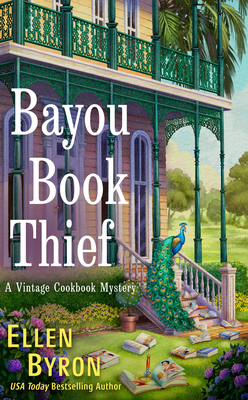
I’ve been meaning to read Ellen Byron for quite some time now; I’m not really sure why I haven’t. Ellen and I met electronically, but I am not exactly sure I remember precisely how; a Facebook group, or something. I don’t know, but Ellen–who graduated from Tulane University and whose daughter was attending Loyola–wanted to meet for dinner on a trip here to get her daughter settled into an apartment and the rest was history. She has written two series already–the Cajun Country series (which I need to read) and the Catering Hall mysteries as Maria DiRico. She’s doing a prelaunch party for the first in her new series, the Vintage Cookbook series, the first of which is called Bayou Book Thief. She graciously asked me to do the event with her, and as such I spent yesterday afternoon reading the book…which is absolutely charming.
The premise of the book is the Ricki (full name: Miracle Fleur de Lis James-Diaz, thank you very much) has returned to New Orleans to escape two awful experiences: the freak accident death of her husband, a viral Youtube video-maker (think Jackass) who choked to death doing one of his stunts, and of course the video of his death–he filmed it live–has gone viral. If that isn’t bad enough, her employer (she curated his collection of rare first editions) was convicted of a massive Bernie Madoff-like fraud scheme. Having been born in New Orleans and lived there her first seven years of life till her adoptive (yes, she was abandoned at Charity Hospital as an infant) parents moved to Los Angeles, she has decided to return to the city of her birth, maybe find her birth mother, and start a new business–selling vintage cookbooks and vintage serving ware in a shop in the Bon Vee museum, which used to be the home of one of the city’s legendary restauranteurs, Genevieve “Vee” Charbonnet. The board president approves her idea, and the story is off to the races as Ricki gets to know her co-workers, the Bon Vee family, from administration to the tour guides to the docents, as well as those who work in the little café on the grounds.
Soon, one of the more irritating tour guides (let’s face it, he’s a dick) turns up dead in a trunk and dropped off at the mansion with some boxes of donated books for the shop. Ricki herself has had a few run-ins with the victim, and she’s also the one who finds the body. Worried about whether or not she herself is a suspect, as well as what damage the murder might do to her new business, Ricki starts looking into the murder herself–while also developing a weird relationship/friendship with the female police detective looking into the case. But this murder is just one of several mysteries surrounding Ricki and her life at the mansion, and many complications that arise from her working there and her amateur sleuthing.
Bayou Book Thief is a lot of fun, and is filled with endearing, likable characters along with some marvelous observations and truths about New Orleans–watching out for tree roots as you walk along the sidewalks; the horror of your air conditioning going out while it’s still hot; being in a bar during a Saints game; and above all else, that the city is really a very small town at heart. I really enjoyed it, and look forward to the next in the series, Wined and Died in New Orleans.
Join us tonight at five pm at Blue Cypress Books. It’ll be a fun time.
I’m referring to the crime fiction world. I’ve been having a marvelous time reading debut authors lately–Mia P. Manansala, Wanda M. Morris, just to name two–and I have to say, the debut authors are simply killing it lately. I am glad I’ve not been asked to sit on any judging panels for best firsts lately, because while it would be amazing to read all of these exceptional debuts for an entire year, having to winnow them down first to five and then to pick a winner would be incredibly difficult. It’s hard enough participating in fan-voted awards, like the Leftys and the Anthonys.
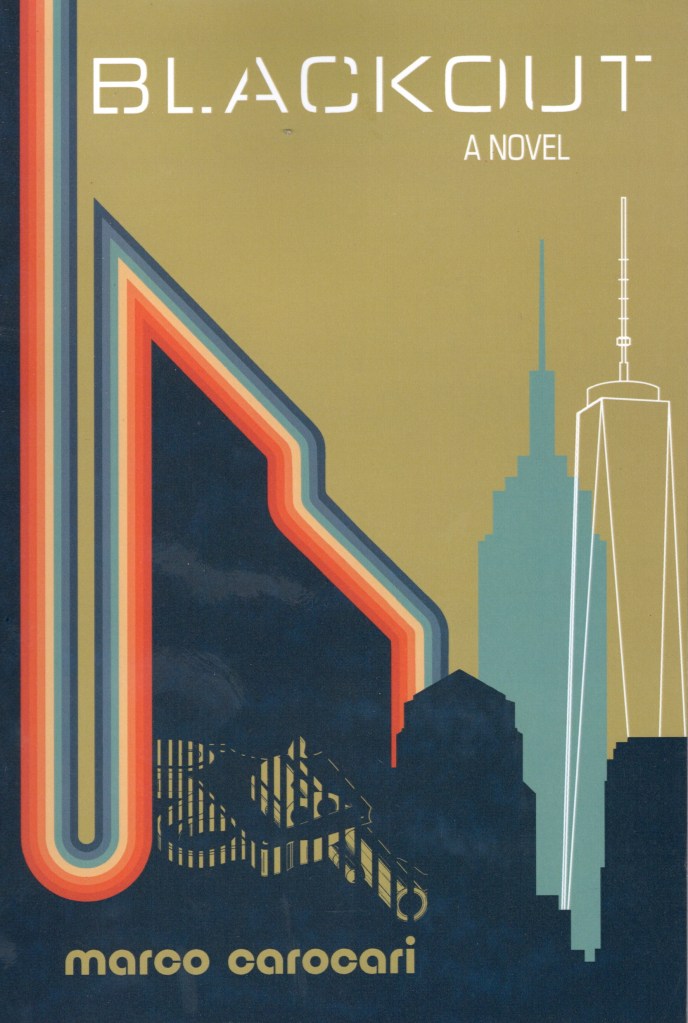
That is also particularly true when it comes to queer crime. Some of the queer crime novels I’ve been reading over the last year or so have been exceptional–and Marco Carocari’s Blackout fits right in with the premise of this post: an exceptional debut novel, and with gay characters, issues and themes front and center; and written by a gay man. Blackout was a Lefty finalist for Best First Novel (a truly packed category, seriously) and I couldn’t have been prouder of Marco–especially once I finished reading the book.
Franco couldn’t deny it any longer. This had been a mistake. “I’m sorry…hold on a second,” he said, gripping the rooftop’s metal railing to keep his balance, his blue gym shorts around his ankles. All around him low hanging pinkish clouds held back SoHo’s city lights, dousing the neighborhood in a muted glow.
The half-naked man behind him grunted and stepped back. “Dude, this isn’t working for me.”
Franco detected frustration in his voice, but found it hard to care.Wiping sweat from his forehead, he scratched the blond stubble on his cheek, his naked skin damp from from the sultry air. “Sorry, I…need a moment. I don’t feel so hot,” he said over his shoulder, straightening up. He spat on the ground, but the strange metallic taste lingered in his dry mouth. He swayed and saw double. “What the hell was in that thing?”
He got no answer and glanced at his bare chested hunk of a date standing there, zipping up.
Okay, considering this had barely taken ten minutes, date was probably grossly overstated. Franco eyed the ripped, olive-skinned stud who went by Pitcher9 on the MeatUp app, but whose real name he’d already forgotten. Pressed, he’d go with Hey since that was an intimate an introduction the situation warranted. A fading, crudely drawn mermaid tattoo on the man’s left oblique, possibly a blast from his youthful past, only increased his bad boy vibe.
Well, that’s an opening, isn’t it?
When I discovered that not only was queer fiction a thing, but that queer crime fiction was a strong and vital force in the genre, I was in heaven. I devoured queer fiction, and especially queer crime fiction of any kind. I discovered the rich history of queer fiction by reading writers like Joseph Hanson, Barbara Wilson, Richard Stevenson, Michael Nava, Ellen Hart, and Katherine Forrest–and any number of others. I was a queer book reviewer for years. I was editor of Lambda Book Report and served as a Lambda judge any number of times. I kind of burned out on it, to be honest…but I kept reading it and I certainly was paying attention. There has been any number of ups and downs in queer crime over the decades, but the flourishing we’re seeing now is pretty amazing for me to witness.
First of all, Marco’s book begins with the above scene (there’s a set-up introduction chapter, that dates back to the New York blackout of 1977), and it’s from a crime fiction small press. Not a small press that is queer owned and operated, but a crime fiction small press. That’s some serious in-your-face gay sexuality going on in those opening paragraphs; a hook-up gone bad on a rooftop in Manhattan. It is both blunt and frank and right there, in your face–and I cannot even begin to express how exciting it is for me, not just as a gay author but as a gay man of a certain age, to see gay sexuality expressed so bluntly and openly from a small crime press. Just as it amazed me that PJ Vernon’s Bath Haus was published (and promoted heavily) by one of the big presses in New York, it’s also lovely to see that small crime fiction publishers are embracing this kind of content.
It’s lovely, frankly.
The book itself is a strong debut novel from someone who will undoubtedly be a force to reckon with in the years to come. Franco smokes a joint with his trick, but the joint is laced with something so Franco becomes what we call an unreliable narrator/unreliable witness. He thinks he sees a murder happen in the window across the street–but the police find nothing to corroborate or back up his story. Did he really see something? Was it the drugs? And slowly, as Franco and his friends try to figure out what is going on and what is happening to Franco, it all seems to lead back in time to that night when the lights went out in New York…
Franco is a terrific character–likable if frustrating from time to time–but how would anyone react in this kind of situation? The trope of “I think I saw a murder but I may not have” isn’t original–Agatha Christie’s brilliant What Mrs. McGillicuddy Saw is one of the best of these types of stories, but Carocari giving it a gay twist–and what a gay twist it was, indeed!–made it fresh and original and new. I don’t know if Carocari plans on writing more books with Franco as his protagonist–or if what he writes next will be a crime thriller or gay at all; but whatever it is, I am looking forward to reading it when it comes out.
I am a fan. Well done, Marco, and welcome to the queer crime fiction club!
And today we fly back home from the glamour of New York and the Edgar Awards; to reality and what I would usually describe as the drudgery of my day to day existence. I do love New York; I love walking the streets and looking in shop windows and looking at the menus posted in the windows of little restaurants (and the bigger ones) and the crowds of people. I don’t know if I could handle living here–I’m far too old to try to find out now, at any rate–but there’s a part of me that kind of wishes I had run away to the big city from the provincial and pedestrian life I lived up until I was thirty; but that would make my life different than it is now and I am pretty damned happy with my life now. Could be better, but could also but a shit ton worse than it is, too.
I could also be dead had I been here during the plague years, so there’s also that.
Yesterday was a lovely and relaxing recovery day from the Edgar banquet. I slept really well that night (and last night; I don’t get it but for whatever reason I’ve been able to sleep here at the hotel and it’s been quite marvelous), and spent the day exploring and meeting friends here and there for coffee or drinks. I actually met a friend at the Campbell Apartment in the mid-afternoon for drinks; I had never been before but it was quite marvelous! It was like being back in old New York, with the gorgeous old decor, the magnificent window behind the bar, and sipping on a martini (dirty vodka, of course; aka the Gaylin) while talking about books and publishing and writing with a writer friend; one of the things I love about coming to New York–particularly when it’s on Mystery Writers of America business–is that it reminds me of what I used to dream being a writer was like: coming to New York, walking the busy streets from meeting to meeting, talking to other people in the business about the business and about writing and books. I always feel like An Author when I am in Manhattan in ways that I don’t when I am anywhere else–even if it’s a writer’s conference. There’s just something about Manhattan that gets into my system somehow and makes me feel like I’m really a writer. I guess it’s because when I was a kid everything I ever saw, in movies and television or even read in books, about being a writer always involved either living in New York or coming to New York to meet with editors, agents, etc.
I love New York because I love feeling like An Author, and I never feel that as intensely as I do when I am here.
I also spent some more time with Raquel V. Reyes’ marvelous Mango, Mambo and Murder, which she described on stage while accepting her Lefty Award for Best Humorous Mystery a few weeks ago, as her “Spanglish mystery,” and while I wasn’t sure what she meant by that when she said (as I hadn’t read the book yet) now that I am about two-thirds of the way through, I totally get it. Miriam, her main character, is a Cuban-American who is absolutely (as she should be) proud of that heritage and wants to keep it alive with her son, who has a white father. She speaks Spanish to her son (his father speaks English to him) so he will grow up bilingual and understanding and appreciating his maternal heritage; she speaks Spanish with other Spanish speakers; and her mother-in-law is…well, let’s just call her horrible and passive-aggressively racist in that way that certain white women can be. There have been any number of times in the book where I’ve wanted to slap the snot out of Mother-in-Law; and while intellectually I’ve always known how awful that kind of behavior (and equally awful those snide little remarks) are, experiencing it through the eyes of a character you’ve grown to like and admire and respect and identify with–all the while knowing I can just put the book down and escape from it, which people of Hispanic/Latinx heritage cannot in every day life–is always a little eye-opening and makes me understand just how much privilege my skin gives me (there was a weird incident at Left Coast Crime I’ve not blogged about that kind of put me in the shoes of a non-white person for a little while; I’ve not written about it because I am not really sure how to, and I’ve not managed to fully process the experience, to be honest, and there’s also the reality that this momentary sort-of-racist experience I had isn’t common, isn’t likely to happen again, and as a general rule I enjoy a lot of privilege due to my lack of melanin.)…which is precisely why books like Raquel’s (and Kellye Garrett’s, and Rachel Howzell Hall’s, and Mia Manansala’s, and so many others) are important. So many of us don’t understand how privileged we are as a category (it’s always infuriating when people are tone-deaf and make it about them–“I’ve struggled”–rather than stepping back and recognizing that it’s about the group and not individuality), and these books can help us see things from a different perspective as well as exposing us to other cultures within our over-arching society that we should actually embrace and celebrate and learn about in order to be more fully rounded and developed as people. I’ll probably finish reading the book either at the airport or on the flight; I have some more on deck in my backpack so I won’t be without a book to read (We also have to change planes in Nashville, and we have about an hour or two there as well).
I’d best wrap this up and get ready. Checkout time is 11, and our car is coming for us at 11:45 to take us to LaGuardia. I need to pack the last few odds and ends into the suitcases, take a shower, and get Paul up. So farewell to you, my beloved New York and Manhattan, and I promise to be back again at some point.
And I’ll check in with you again tomorrow as always, Constant Reader.
The traditional mystery often gets a bum rap by mystery fans. I’m not sure why that is; these books have never gone out of style, have never decreased in popularity, and have always been the backbone of the crime/mystery genre. They are often (wrongly, I think) identified with Agatha Christie–if anything, Christie should be identified with every sub-genre of crime/mystery fiction. She wrote private eye novels (Poirot); dark noir (Endless Night); spy fiction (N or M?, The Man in the Brown Suit, They Came to Baghdad); historicals (Death Comes as the End); and even romantic suspense (as Mary Westmacott). Sure, she often relied on the amateur sleuth–her most famous amateur being probably Miss Marple–but she literally did everything first, really.
Probably why everyone refers to her as the Queen of Crime Fiction.
But the traditional mystery, for some reason, gets short shrift in our modern world, despite being one of the most popular subgenres of crime fiction. Why? I don’t really understand it. Sure, there’s not any blood or sex or violence–the sort of thing generally used to sell everything from television shows to movies to laundry soap and deoderant. Many of us grew up reading books about amateur detectives, from Nancy Drew to the Hardy Boys to Trixie Belden. So why do so many turn their noses up at the traditional mystery, also known as the cozy mystery?
I think it’s much harder to write about crime without using the tough guy male lead (stereotype), blood, violence, swear words, and sex. Is it this lack of the “rougher” aspects of crime that earned these books the nickname “cozy”?
What precisely does the word cozy mean, used as a book descriptor in this way? Ask five mystery fans/writers, and you will get five different answers. It’s often hard to quantify the variety of subgenres within the mystery/crime field. Everything else aside, I think the most important thing, the key, for a mystery novel to get this kind of classification is that the book focuses, on one level, on a sense of community; the reader develops a warm, comfortable feeling, the kind that you usually get from visiting family and friends you don’t get to see all of the time. You open the book and start reading and already feel relaxed and at home; happy to see people you care about, are interested in, and are excited to find out what they have been up to. Donna Andrews’ Meg Langslow series is an excellent example of this; so is Leslie Budewitz’ Spice Shop mystery series (both series, obviously, are favorites of mine). These books welcome you in, invite you to put your feet up, get comfortable, and spend some time with your old friends you’ve not seen in a while.
This, naturally, is very difficult to establish when writing the first book in a new series of this kind; how do you immediately establish this warm environment where the reader feels comfortable enough to kick off their shoes and relax? It’s not the easiest thing to pull off for an accomplished writer; so it’s all the more remarkable when someone nails it in their very first book.
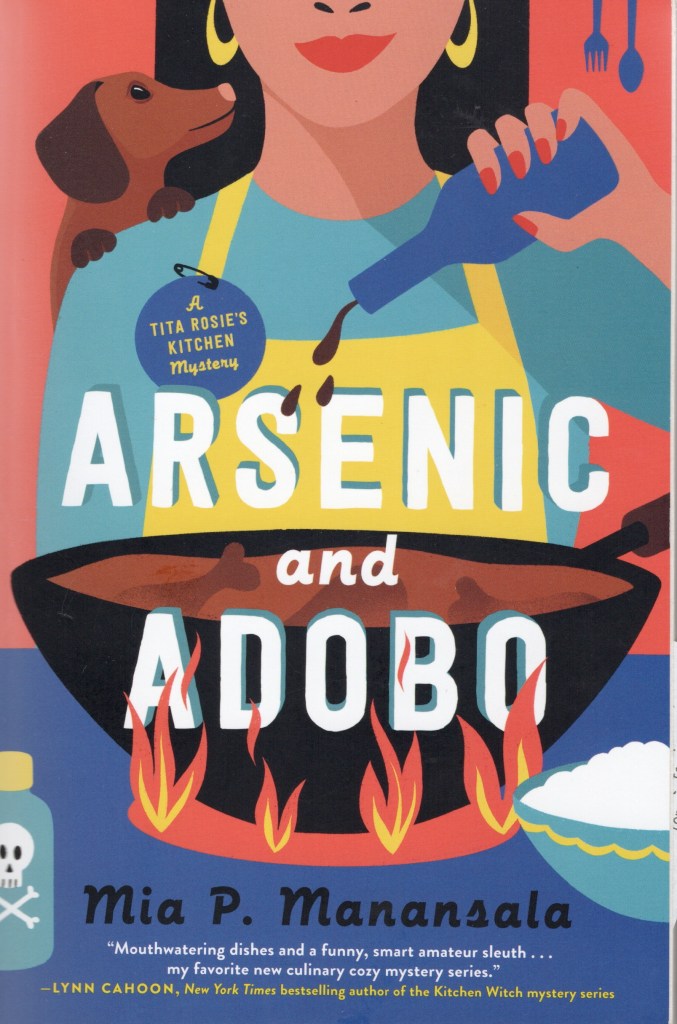
Mia P. Manansala nailed it in her debut.
My name is Lila Macapagal and my life has become a rom-com cliché.
Not many romantic comedies feature an Asian-American (or dead bodies, but more on that later), but all the hallmarks are there.
Girl from an improbably named small town in the Midwest moves to the big city to make a name for herself and find love? Check.
Girl achieves these things only for the world to come crashing down when she walks in on her fiancé getting down and dirty with their next-door neighbors (yes, plural)? Double check.
Girl then moves back home in disgrace and finds work reinvigorating her aunt’s failing business? Well now we’re up to a hat trick of clichés.
And to put the cherry on top, in the trope of all tropes, I even reconnected with my high school sweetheart after moving back to town and discovered the true meaning of Christmas.
Okay, that last part is a joke, but I really did run into my high school sweetheart. Derek Winter, my first love.
First of all, can we talk about the voice?
It is impossible not to fall in love with Lila’s voice from the very first sentence of the book. She is smart and funny and eminently likable, which is important in a traditional mystery (no one wants to read a cozy whose main character is an unlikable bitch) and much harder to do than most people who don’t actually write books think it is. Lila is a remarkable character; very clear-eyed about what she wants and what she doesn’t, as well as who she thinks she is and wants to be. She’s returned from her big escape to the big city to the small town she wasn’t terribly happy in when she was growing up–her past experiences continually are reminding her, and not in pleasant way, of why she left in the first place. She never intended to return home (as Thomas Wolfe said, you can’t go home again), but she is back and rather than focusing on what she is certain everyone she knows or is related to sees as her “failure,” she intends instead to focus on helping save her aunt’s restaurant business.
The immense strength of this story rests upon those family bonds, and Lila’s recognition of just how important those bonds–family, friends, community–actually are to her; and her growing realization, over the course of the books, that those things she once thought were strangling and restraining her are actually where her own power comes from.
The mystery itself is also strong: Lila’s wretched local ex, whose mother has since married a businessman who rents Tita Rosie’s building to her and is a total dick, has taken to writing shitty reviews of local restaurants, apparently targeting one and trying to destroy its business before moving on to another. Lila’s relationship with him is also strained; and she also doesn’t like the dickish stepfather either. It is while she is serving them lunch that her ex keels over face-first into his plate–dead from arsenic poisoning. In the food Lila fed him, and came from her aunt’s kitchen. The financially strapped business is shut down pending an investigation into the murder and a health department inspection, and there is the very real fear that Tita Rosie may lose her restaurant. Lila takes it upon herself to investigate and find the real culprit, to clear herself as well as her aunt and the beloved family business of any wrongdoing and scandal. The journey, which introduces us to her friends and family, and welcomes the reader into their charming world and community, twists and turns and is full of surprises every step along the way–as Lila also learns just how much the restaurant, her family, and her friends really mean to her.
This book is absolutely charming, well-written, and very fun. I cannot wait to revisit Lila and her crew in the second book, Homicide and Halo-Halo. Mia P. Manansala is definitely one to watch, and it’s going to be fun watching her career reaching even more heights than she has already achieved.



 Queer and Loathing in America