Friday morning and it’s not as chilly in the Lost Apartment as it has been. The sun is shining, the sky is blue, and all seems right with the world this morning. I have a lot to get done today–tomorrow is another work day, heavy sigh–and have errands to run later on. I am going to do some things this morning before I leave for the afternoon errands; hopefully once I return home from said errands I will be in the mood to do some writing/cleaning/filing/organizing. I’ve been remarkably productive thus far on this stay-cation (sob, I should be in New York right now); I need to keep that momentum going and I also need to make sure that I am getting properly rested as well. I feel like I’m getting decent sleep and I feel rested when I get up, which is always a plus.
Yay, well-rested Gregalicious!
And it’s a holiday weekend, which is theoretically marvelous. Monday was going to be my re-acclimate to reality after my New York trip, which is no longer necessary or needed, so I should be able to get my focus in order and write write write. I also want to get some reading done this weekend as well. I have Laura Lippman’s short story collection, the new Alafair Burke, and a massive TBR pile full of prospective treasures, which is very cool. I think maybe today when I get home from the errands I may curl up with a blanket and a book for the rest of the afternoon. It’s been a while since I’ve lost myself in a good book–or so it feels–and reading is a pleasure I don’t allow myself to indulge in as much as I would like. Partly because reading is compulsive for me; once I start reading a good book I really don’t want to do anything other than finish reading it, and will make endless excuses to justify or rationalize doing nothing other than reading until the book is finished. This is dangerous, obviously, when I am on deadline…I have enough trouble with deadlines as it is; I don’t need to add something else that will keep me from writing to the already crowded ADHD-addled brain inside my skull.
The kitchen needs to be cleaned, obviously, and of course the floors always need attention. I am going to try today to not be as awful as I have been about the upkeep on the Lost Apartment over the last few months; I am not certain how successful I will be with that, in all honesty. There’s been a lot of lethargy lately–not sure what that’s about, but it’s definitely not the post-book malaise, that’s for sure. I suspect it comes from being overburdened and overwhelmed a bit with everything I need to get done, which inevitably leads to the why bother I’ll never get this all done blues which includes paralysis and the inability to focus and get things done, when the answer is always make a list and start crossing things off. I need to make a grocery list this morning for sure; I am having some “Greg-time” today with an appointment for self-care and I intend to go get groceries once that is over. I need to empty the dishwasher, I need to take out the trash and recycling, and there are numerous other odds and ends that need taking care of around here–which is why the list is of utmost importance this morning. Putting it all down on paper makes it seem less scary and intimidating, and of course, once you have a picture of everything in your head that needs doing it becomes easier to get it all done.
So, after I finish this I am going to make a grocery list, a to-do list, and then I am going to start organizing and cleaning around the kitchen before showering and getting the day off to a good start. Sounds like a good plan, does it not?
And maybe this afternoon, after I read for a bit and while I wait for Paul to come home, I can watch a movie or a Marvel show on Disney Plus. I really liked Loki, despite its slow start, and would like to see some of these other shows as well. We did start The Book of Boba Fett but that first episode was really kind of boring, frankly; I don’t know that we’ll return to it. (I never got the Boba Fett fandom in the Star Wars fan-base; he was really not much of a character in the original trilogy but for some reason caught on, so Lucas made him a key player in the next trilogy…which didn’t play for me.)
And on that note, I am heading into the spice mines. Have a lovely pre-holiday weekend, Constant Reader, and I will check in with you again tomorrow.
Thursday and I have a lot of work to get done today. I was exhausted yesterday and very low energy for most of the day; the coffee never kicked into high gear (I assumed that all it managed in the face of yesterday’s exhaustion was keeping me awake, alas and alack) but it’s fine. Sometimes you need those low energy, low production days to recharge your batteries, and mine certainly feel charged this morning. I am hoping against hope that this means a highly productive day here in the Lost Apartment; one can certainly hope so at any rate. I did start some things yesterday that I never finished, so that’s up first while I am still bright-eyed and bushy-tailed (which has always struck me as an odd thing to say) and then I am going to dive back into the book headfirst.
Under normal circumstances, I would have woken up at the Marriott Marquis at Times Square this morning and would be writing this on my laptop in my room while swilling coffee from the Starbucks on the eighth floor (with which I became very well acquainted during my stay there back in November). But thanks to the latest variant, the trip was cancelled and no New York for me in January for the second year in a row. It’s just as well, I suppose–I’m not certain I would have been able to finish the book while on the road, and that’s kind of important; although knowing the trip was still happening would have made me push harder last weekend and this week before leaving to try to get as much handled as possible.
I was very tired last evening after the day’s business was concluded, so I basically went down some Youtube wormholes while waiting for Paul to come home so we could get back into Stay Close, the new Harlan Coben show on Netflix, which is quite intriguing seeing how all the disparate stories are connected together as the show progresses. Ozark is coming back soon, which is exciting, and I am looking forward to seeing the new John Cena super-anti-hero show when it finally drops. Superman and Lois has also returned, and I watched the first episode of its second season last night while waiting for Paul to get home–it’s the best interpretation of the Superman mythos since Christopher Reeve; if you’re a Superman fan you really should be watching it–and it looks like the second season will be just as good as the first.
It’s chilly again this morning in New Orleans; not as bad as yesterday (I did wonder if the cold had something to do with my low energy day yesterday) but chilly enough to be noticeable. The sun is out though, which is always a plus, and the sunshine certainly helps my mood dramatically. I am just fascinating this morning, aren’t I? Heavy sigh. But this is working to warm me up and get my brain going while I swill down my coffee, and that’s always what the purpose of this has been–to get my brain and creativity going in the mornings so I can get things done. I just realized I didn’t mark the anniversary of the blog, started on Livejournal back in the day; right around Christmas 2004, to be exact, which means this blog has been going now for well over seventeen years over two different servers. That is a ridiculous amount of blogging, really; it’s something I should probably be better about archiving. (Which reminds me: I still need to find my old journals, don’t I?)
I also want to start reading the new Alafair Burke; maybe I’ll carve some time out today between the writing and the watching of television to come tonight to spend some time with it. I am choosing not to read the jacket copy; I want to be completely surprised by the story when I read it. I also want to start reading some more of Laura Lippman’s short stories in her collection Seasonal Work, and of course my TBR pile is completely out of control. Heavy sigh. But I think I can get some pruning and organizing done around the writing today; sometimes you have to get up and walk away from the computer, and that’s going to help me get some other things done over the next few days (oh, the shelves in the laundry room stress me out every time I walk in there) and of course, there’s always some laundry to do, and the floors, and the dishes…heavy sigh. It never ends, does it?
And on that note, I am going to head into the spice mines. Have a lovely Thursday, Constant Reader, and I’ll catch you tomorrow morning.
The late Joan Didion famously said we tell ourselves stories in order to live. I’ve parsed the statement any number of times–it’s most commonly taken to mean that it’s important we tell stories of the human experience (the good, the bad, the mediocre and all the varieties in between) to better understand ourselves, our society and culture. I had never read Didion myself until several years ago; of course I knew who she was and what she had written–although if asked before reading her work, I would have only been able to name Play It as It Lays, which I still haven’t read. One of my co-workers had a library copy of her Miami in his officer a few years ago, and I idly picked it up when I was in his office. He recommended very strongly that I read Didion, and so it was with Miami I started; the opening line (Havana dreams come to dust in Miami) sold me on the book. I enjoyed it, and went on to read other works of hers: A Book of Common Prayer, Slouching Toward Bethlehem, and After Henry, among others. I loved the way she wrote; that the complexity of her work came from her poetic use of language and words rather than on complicated sentences. It was reading Didion’s essays (and Laura Lippman’s) that made me start thinking about writing essays myself; I started one trying to use a similar style to Didion–which was interesting–but think it’s rather more important to stick to my own voice, for better or for worse; there was only one Didion, and there should only be the one.
As I was being interviewed the other night I was talking about my re-education; about having to unlearn and relearn things from when I was a kid. I’ve been thinking about this a lot lately; part of it was turning sixty this past year, part of it was writing two books back-to-back that are sort of based in my own personal history–so remembering what Alabama and Kansas were like for me meant exploring a lot of my past, reliving and rehashing it with the perspective of time having passed and with a coldly sober, unemotional eye. I remembered, as I was talking about the Lost Cause and other American mythology we are taught as children (Washington and the cherry tree; Honest Abe the rail-splitter; and so many other Americans of the past we have deified) , the Didion quote and found a new meaning in it. When I was a child, I remember that in the South, for some reason, my cousins and their friends and the adults never would refer to someone as a liar; etiquette, perhaps, or politeness being behind this oddity. What they said instead of saying you were lying was “Oh, you’re telling stories.” If someone was a liar, you’d say “he tells stories.”
We tell ourselves stories in order to live.
Given this weird rural Southern thing about “telling stories”, this can be reinterpreted as we tell ourselves lies in order to live–and it all falls into place, because we do tell lies to ourselves in order to live with ourselves, within this culture, within this society. Never has this been more evident than is this strange battle the right has started about Critical Race Theory–which wasn’t being taught in any American public school below the collegiate level. If there’s nothing in American history that we should be ashamed of, why is there so much opposition to the truth? Why are we taught lies in order that we may live?
The war cry of the white Southerners who want to keep their monuments to white supremacy and treason has been “Heritage not hate!” But the heritage is hate, which was the entire point of Bury Me in Shadows. You cannot have it both ways: you cannot celebrate a history of treason against the United States, while claiming to be “more patriotic” that other Americans who do not celebrate the killing of American soldiers (ask Jane Fonda about how posing on an enemy gun goes over). The bare facts of the matter are that some (not all) of the states where it was legal to enslave people were afraid they would lose their right to enslave people, and as such they decided they were better off starting their own country. They wanted a war they couldn’t possibly win, and the fact that it didn’t end quickly has more to do with the incompetence of the Union generals and their political ambitions (there are reasons there are no statues of George McLellan anywhere to be found) than the righteousness of the Confederate cause and the brilliant leadership of Robert E. Lee. They abhor Sherman as a war criminal (“he waged war on civilians!” Um, we also firebombed Dresden during the second world war, and what were Nagasaki and Hiroshima if not the obliteration with atomic weapons of civilian populations? Sherman said “war is hell”–you cannot start a war and then complain about how the other side chooses to fight it.). They claim it had nothing to do with slavery and everything to do with “states’ rights”…when the reality is the only state right they were concerned about was the right to enslave people–they certainly wanted the federal government to enforce the Fugitive Slave Act against the wills of the free states, didn’t they? Their end game in Congress and the courts was to force the federal government to permit enslavement in every state of the union and every territory; this was the crux of the Dred Scott Decision of the Supreme Court, which more than anything else set the stage for the war.
If there’s nothing terrible about the actual history, why so much fear around the truth?
We tell ourselves lies in order to live.
If the truth is too terrible to be faced, then it absolutely needs to be.
There’s nothing quite so romantic as a lost cause, is there? Whether it’s the Jacobites in England with their toasts to “the King across the water”; the emigres from the French Revolution; or the Confederacy, losing sides inevitably always romanticize their defeat and the loss of a better world their victory would have created. An entire industry has developed in this country around the mythology of the Lost Cause; how could it not when one of the most successful American films of all time portrays the Lost Cause so sympathetically? The opening epigram of Gone with the Wind reads “There once was a land of Cavaliers and cotton fields known as the Old South…” And yet the movie depicts an incredibly classist society, predicated on the enslavement of Africans; the entire idea behind the founding of this country was the elimination of class distinctions–the equality of all.
But even Margaret Mitchell, when asked if the Tara in the movie was how she pictured it as she wrote about it, scoffed and said, “Tara was a farm.”
And not everyone in the old South was rich or owned a plantation. Not everyone was an enslaver, and not everyone was on board with the Lost Cause. But we rarely hear about the Southerners who fought on the Union side in the war; we never hear about Southerners who were abolitionists; and we never hear about the atrocities inflicted on those loyalist Southerners by the rebels, either.
And speaking of war crimes, what about Andersonville?
We tell ourselves lies in order to live.
We cannot celebrate our achievements without acknowledging our failures. It is far worse to not learn from a mistake than making the mistake in the first place. It is not unpatriotic to look at our history, culture, and society critically, to examine and evaluate how we are failing to live up to the ideals upon which our country was founded. The Founding Fathers were not mythical gods of infallibility; they were all too human, with all the concomitant jealousies, pettiness, arrogance and ego that comes with it. They were, for one thing, mostly unable to conceive of a society where women and non-white people were deserving of equality under the law. But they also knew they were not perfect, which was why they created a system that could adapt to the changing tides of history.
George Santayana’s famous quote, “Those who cannot learn from history are doomed to repeat it” is something I think about every day. I also love the George Bernard Shaw quote, “What we learn from history is that we learn nothing from history.“
We need to stop telling ourselves lies. The truth might seem to be too much to be faced; it might be ugly and hideous and shameful…but it will also set us free.
A question I’ve been hearing a lot lately, when it comes to my new book. is why do you question whether you are the right person to tell this story?
It may entirely be a side effect of the long psychological disorder (one of many!) I possess that is more commonly known as Imposter Syndrome; but over the last decade or so there have been so many questions about who can tell what story that I don’t really think it’s so surprising that I would be concerned about my right to the tell the story of #shedeservedit that I chose to tell. It’s a book about toxic masculinity in a small town that manifests itself in a rape culture that devalues women, especially the girls, at the local high school; that toxic masculinity culture was created by the town’s worshipful devotion of the high school football team. Fans derives from fanatics, after all, and living in the South (and being Southern) has exposed me to the ‘football fan mob mentality’ that I was trying to recreate in my story. I’ve seen, for example, LSU fans rise up in righteous fury and indignation at the questioning of whether it’s animal cruelty for them to have a live tiger mascot with an amazing habitat on the campus; I’ve seen them rise up in defense of the administration and the players when players have been credibly accused of any number of crimes (not the least of which sexual harassment/assault of female students); and there are any other number of examples here I could cite–and that’s just LSU.
But in a story about toxic masculinity in a small town, I also centered a teenaged boy in the story; we see it all through his eyes, not that of any of the girls. That’s really the primary concern I had about how this book would be received: how could you put a boy at the center of a story about rape culture?
And I guess my response should be why wouldn’t I?
Because, as I read the articles and books that served as background research (there’s a chilling amount of research out there for anyone who is interested), all I could keep thinking was what is wrong with these boys? And from there I began to extrapolate further in my never-ending mental gymnastics. What do the kids who are not football players think about the privilege the players enjoy? High school is, after all, wanting/trying to fit in, not wanting to attract bad attention from people, not standing out from the crowd with an unpopular view or opinion. As I continued to read and research–and in the beginning, you have to remember, I started looking into all of this to begin with not because I wanted to write about it, but because the Steubenville/Marysville cases stoked my curiosity.
It was actually during the reading on Marysville that it hit me right between the eyes: the Marysville victim, Daisy Coleman, had not only been a cheerleader but her older brother was on the football team; the guys that got her drunk and assaulted her were not only guys she knew but felt safe with but were her brother’s teammates and friends.
And that was when I realized, you need to change the Kansas book to be about this, and write about the brother of a past victim when there is a new victim.
And then the other day, in an irony of ironies, I got my copy of Laura Lippman’s new collection, Seasonal Work, in the mail–and there it was, in the table of contents; her own story inspired by the Marysville incident, “Five Fires”; which I read when it was initially published; a story Laura and I had, in one of our infrequent but marvelous alcohol-fueled conversations, talked about (I’d forgotten what an integral part of shaping my own story that conversation with Laura all those years ago played).
“Five Fires” is quite marvelous.
“There was another fire last night.” That’s the first woman. Tennis skirt, Lacoste polo, gold chain with a diamond on it, like a drop of water.
The other woman–I don’t know either of them, you can’t, even in a town as small as ours, know everybody–says: “That makes three this month, doesn’t it?”
“Two. The one at the vacant–you know that place. And now behind Langley’s.”
And the playhouse, I want to say. The first one was that playhouse. But I don’t say it, because, again, I don’t know them. But three is right. There have been three since August 1, and it’s only August 10.
Whereas my story is told from the point of view of a victim’s brother–who is also on the football team–Laura’s story was inspired (if I remember correctly) by a newspaper article on Marysville, when the victim’s house was burned to the ground in a nasty work of arson–as if the family hadn’t been through enough already–and I don’t remember whether it was a photograph or a video she’d seen, of a vigil supporting the accused; there was a young woman in the picture that caught her attention and made her think, now why would that girl not support another young woman in a horrible situation? Why is it so easy for her to not believe the victim? And she thus wrote the story, to try to get into the mindset of a young teenaged girl who found it easy to believe an accused rapist and blame the victim.
It’s really quite an extraordinary story, and rereading it now, after all these years, I am even more impressed with how well done–touching, sad, and poignant–it is. It would be easy to make a villain of this girl, but Lippman approaches her with a strong sense of empathy, and while the character’s views and behavior can be quite repellant, the fact that Lippman gets so deep into her head and point of view makes character all the more compelling, and heartbreakingly sad at the same time–all the while never ever losing sight of who the real victim in the story is. It’s a terrific story, incredibly well done, and I strongly recommend getting this collection of stories; it’s worth it for “Five Fires” alone.
And on that note, I am heading back into the spice mines. Have a lovely Thursday, Constant Reader!
And so we have reached the last day of 2021 at last (it’s still hard for me to wrap my mind around the fact that it has been 2021 for a year; 2022 is going to seem even stranger, methinks). I’m on a holiday, so there’s no work for the day-job to be done today, but there’s plenty of other things that need to be done. I need to work on the book some more, I need to clean, I need to run some errands, and I’d also like to do some reading. It’s a lot, I know, and who knows how much I can or will actually get done around here? Yesterday I did data entry, made condom packs and rewatched the original Clash of the Titans (starring a very young Harry Hamlin and his nipples; seeing this in the theater made me a Harry Hamlin fan for life) while I did so. I also was able to pick up two boxes of home COVID-19 tests (the day-job procured you them for the staff as a preventive measure, which are apparently like gold these days.
It was a very challenging year in many ways. I suspect that if I looked back at a list of my goals for the year, two of the most key things–getting an agent and finishing Chlorine–would not be able to be checked off the list. My faulty memory–I keep, for one thing, conflating the last two years as one and the same mentally–has something to do with it. I know I wanted to write more short stories in 2021, and I don’t know that I succeeded at that. I know I had a couple of stories of which I am very proud come out this past year (my first ever attempt at writing a Sherlock Holmes story for one), and of course I finished writing two books while trying to finish yet a third under contract, and trying to get Chlorine done.
I always feel sort of weird at the end of the year when I compile my favorite things (books, movies, television) because I never limit myself to things that were new to the year, but rather new to me during the year; I am always so woefully behind on everything I read and watch that it doesn’t seem fair to leave off things that didn’t debut in 2021. Besides, it’s always kind of fun, I think, to remind people of things they themselves might have missed and forgotten about. But when I started thinking about all the books I read this past year, I would have sworn that I hadn’t read this much, or that I couldn’t have possibly read this many books–and I know I am also forgetting some, and these are the ones that stand out enough to be remembered. My favorite reads of the year were, in no particular order, The Turnout by Megan Abbott; The Collective by Alison Gaylin; Dream Girl by Laura Lippman; The Gift of the Magpie by Donna Andrews (I read three or four Andrews novels this past year, and loved them all, frankly); Velvet was the Night by Silvia Moreno-Garcia; Jar of Hearts by Jennifer Hillier; Razorblade Tears by S. A. Cosby; A Beautiful Crime by Christopher YBollen; Yes Daddy by Jonathan Page-Ramage; The Other Black Girl by Zakiya Dalila Harris; These Toxic Things by Rachel Howzell Hall; Invisible City by Julia Dahl; and By Way of Sorrow by Robyn Gigl. I also read a lot more cozies than I generally do, which were quite fun–I highly recommend checking out Leslie Budewitz, Vivien Chien, Sherry Harris, Ali Brandon, Miranda Harris, and Carolyn Haines, among many others–my TBR pile is nothing if not a treasure trove of terrific reading–and I am hoping to get even more reading done in the new year as well.
As for movies, I also watched a lot of movies. I saw a lot of classic cinema of the past I’d never seen before–my Cynical 70’s Film Festival had some marvelous entries this past year–as well as revisited some favorites. I greatly enjoyed Dune, which I thought was incredibly well done, and Shang-Chi and the Legend of the Ten Rings was a great super-hero film, with just the right amount of spectacle, humor, and humanity to ground it in enough reality that an audience could relate to it. I don’t remember any other new films that we saw in this past year, but I am sure there were some–the direct-to-streaming/limited theatrical release model for the pandemic ensured that I saw some things much sooner than I probably would have otherwise–but give me a break, I am still on my first cup of coffee after a lovely and deep night’s sleep.
Television again is something a bit blurry for me; the lines between 2020 and 2021 also blurring a bit here. I know we loved Mare of Easttown, Ted Lasso (a true gem of a show), The Mandalorian, Elité, Superman and Lois (probably the best version of Superman since the first two Christopher Reeve films), the original Gossip Girl (which is winding down now with a last season that is rather disappointing, alas), Hacks,One of Us is Lying, Cruel Summer, and Only Murders in the Building, which was also a jewel. But maybe my favorite show of the year was HBO’s It’s a Sin, which was not only well done, but powerful and thought-provoking. I had debated whether I wanted to see it or not; entertainment about HIV/AIDS, particularly about the height of the plague, has never sat well with me–either pandering nonsense or heavy-handed. The gold standard for me has always been Longtime Companion, but after watching I had to say It’s a Sin belongs up there. It was hard to watch at times–and I realized that the reason was the characters were all the same age that I was when it all started, which was a big part of it–but it also made me acknowledge and understand any number of things about myself and my past; namely that I had never grieved, just going numb at one point and deciding to keep moving forward and not think about anything. Watching the show brought back a lot of memories which, while painful at times, was necessary and needed.
I also spent time writing and working on two novellas, “Festival of the Redeemer” and “Never Kiss a Stranger”; one thing I really want to be able to do in the new year is get the novella collection together as well as another collection of short stories. Lots of plans for the new year, including a new Scotty novel I’ve been itching to get to, and another stand alone, in addition to Chlorine. I was able to visit my parents twice this past year, and I was also about to make it to New York and then Boston for Crime Bake, which was simply marvelous. I have lots of travel plans for the new year that I am hoping new pandemic variants aren’t going to jettison–I really do want to be around writers again, seriously–and over all, the year wasn’t as terrible as it easily could have been (2022, do not take this as a challenge). I got a new computer, paid off a lot of debt, and over all, I have to say, all things considered, 2021 wasn’t altogether terrible. I wish I had been more productive, but I also wish that every year.
And on that note, this next chapter isn’t going to write itself, is it? Have a lovely New Year’s Eve, Constant Reader, and I’ll talk to you next year!
One of the things I’ve greatly enjoyed over the last few years has been the sea change in how publishing views works by non-white and non-straight authors; the push for more diverse voices in the publishing community has already borne wonderful fruit. I’ve been saying for years that the world of crime fiction was in danger of getting stale again, much as it did in the late 1970’s and early 1980’s; particularly the private eye novel. The arrival of Sara Paretsky, Sue Grafton, and Marcia Muller on the scene shook things up and shook things out; the private eye novel got a much-needed shot in the arm of adrenaline with these three women and the others their work inspired; I strongly believe the move toward diversity is going to bear fruit in much the same manner–and it already has, frankly; the works of diverse writers like S. A. Cosby, Kellye Garrett, Rachel Howzell Hall, Alex Segura, Tracy Clark, Cheryl Head, and so many others have joined the great pioneers like Walter Mosley and the wonderful Barbara Neely to open up new perspectives on crime and crime fiction; our society and world; and again, this was desperately needed–and is necessary every so often, for our genre to refresh and expand and become more inclusive. We’re also seeing more queer books being sent out into the world from the big houses in New York, which is also incredibly exciting (another shout out to Yes Daddy By Jonathan Parks-Ramage and A Beautiful Crime by Christopher Bollen).
It’s a very exciting time to be a fan of crime fiction.
Noir has always been one of my favorite sub-genres of crime fiction, and I always enjoy reading modern takes on it. I want to write more noir, quite frankly; Chlorine would be the first of at least four I want to write, if not more (for now, I have ideas for four of them, with Chlorine being the most full formed). I always enjoy modern takes on noir–Laura Lippman’s Sunburn was quite marvelous, as was Christa Faust’s Money Shot and Choke Hold)–and of course, S. A. Cosby is a master of rural Southern noir; both Blacktop Wasteland and Razorblade Tears are destined to be considered classics, I think.
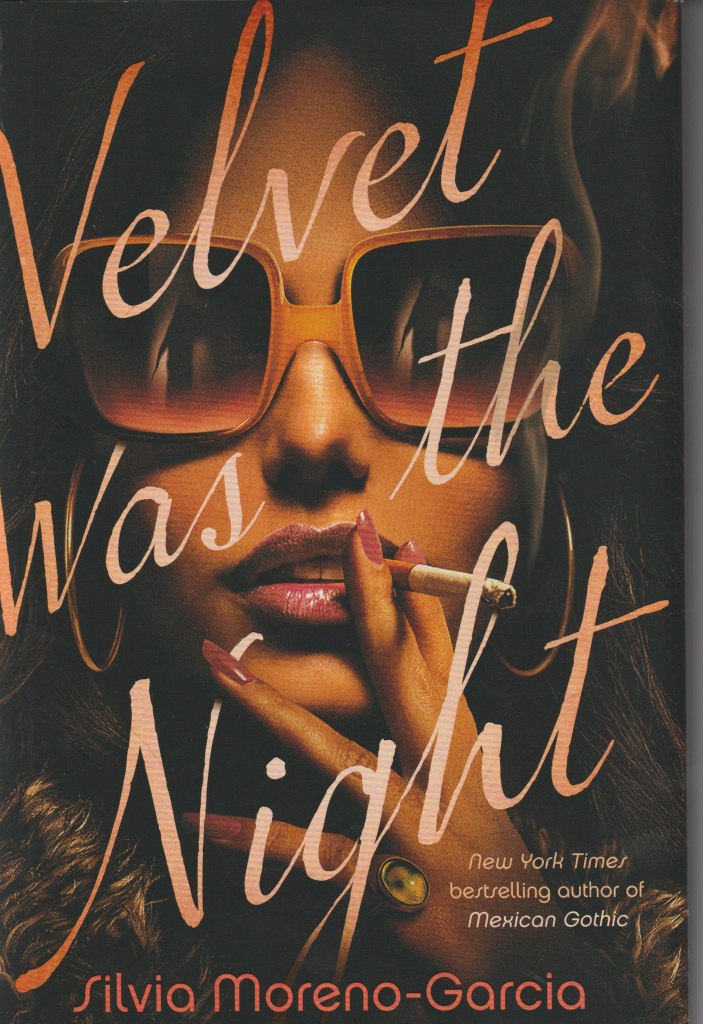
So, I was very curious to read Silvia Moreno-Garcia’s take on modern noir, Velvet Was the Night. It took me a very long time to finish–which is not indicative of the quality of the book, I hasten to add–because after I read so much during the post-Ida power outage, I kind of broke my brain and thus haven’t been able to really focus as much on reading as I would like; yesterday after the LSU game I sat down and finished it with Georgia-Kentucky on as background noise.
And what a fun ride it was.
He didn’t like beating people.
El Elvis realized this was ironic considering his line of work. Imagine that: a thug who wanted to hold his punches. Then again, life is full of such ironies. Consider Ritchie Valens, who was afraid of flying and died the first time he set foot on an airplane. Damn shame that, and the other dudes who died, Buddy Holly and “The Big Bopper” Richardson; they weren’t half bad either. Or there was that playwright Aeschylus. He was afraid of being killed inside his house, and then he steps outside and wham, an eagle tosses a tortoise at him, cracking his head open. Murdered, right there in the stupidest possible way.
Often life doesn’t make sense, and if Elvis had a motto it was that: life’s a mess.That’s probably why he loved music and factoids. They helped him construct a more organized world. When he wasn’t listening to his records, he was poring over the dictionary, trying to memorize a new word, or plowing through one of those almanacs full of stats.
No, sir. Elvis wasn’t like some of the perverts he worked with, who got excited smashing a dude’s kidneys. He would have been happy solving crosswords and sipping coffee like their boss, El Mago, and maybe one day he would be an accomplished man of that sort, but for now there was work to be done, and this time Elvis was actually eager to beat a few motherfuckers up.
He hadn’t developed a sudden taste for blood and cracking bones, no, but El Güero had been at him again.
The recent rise of Silvia Moreno-Garcia has been meteoric, although I am sure to her it has seemed anything but. I read her terrific vampire novel, Certain Dark Things, a while back, loved it, and have been following her career ever since as she has turned out novels at a terrific rate–Gods of Jade and Shadow, Untamed Shore, Mexican Gothic–all of which have been critically acclaimed and sold very well; I love that she bounces from genre to genre–horror to fantasy to crime; even bouncing around in the sub-categories of the crime genre. This is only my second read of her work–I have them all, of course–and had been meaning to get around to her take on noir with a Mexican flourish for quite some time. (I am really sorry I broke my brain with all the reading I did after the power went out; I greatly enjoyed this book, but it was so hard for me to focus for some reason…but am glad I sat down yesterday with the book, determined to finish it at last.)
One of the things that strikes me about Moreno-Garcia’s work is that I am seeing Mexico, a place I greatly love, through a fresh new perspective; like all Yanquis, I always view Mexico through the prism of a tourist. I’ve always wanted to write about Mexico, and have several short stories in the files that are set there (I did write one erotica story as Todd Gregory set in Acapulco; from the perspective of a tourist, of course: “Oh, What A Friend I Have in Jesus”)…but reading Moreno-Garcia makes me aware of how scant my knowledge of our Southern neighbor is–all of the counties south of the Rio Grande, frankly–which is a stinging indictment of our education system. (Don’t even get me started on the concept of Latin America vs. “America”) I know very little of Mexican history after the Spanish conquest, other than the Mexican War and the French empire set up under a Hapsburg by Napoleon III during our civil war. I know very little history of any of the countries that make up the rest of the American continents, really–and isn’t that more than a little bit disgraceful? I also know very little about their cultures, their politics, and what goes on there; a quick glance through the news also will show very little information or news being reported about those non-United States/Canada American countries, which is really a shame.
Velvet Was the Night is set un 1971, a particularly politically rife period in Mexico. The US was terribly concerned about communism being spread by the Soviets in what has always been considered the American soft underbelly–I mean, look at our reaction to Cuba–and there’s no question that CIA operatives and money were working to subvert Communism while supporting borderline Fascist governments because that was preferable to Washington than another potential Soviet satellite state in our hemisphere. The vast paranoia of that time–which really lasted from 1945-1990, really–cannot be underestimated or understated. By rooting her story in actual events of 1971–the crackdown of the Mexican government on dissidents–Moreno-Garcia slyly gives us a taste of how American foreign policy of the time affected everyone in Mexico, as well as a history lesson. (One of the great modern deceptions of our society is this idea that we always act benevolently as a nation; we’re doing this for your own good.) The book has two point of view characters; one, depicted in the opening above, is “Elvis”, a very young man who works as a thug, basically, for an oppressive group of anti-Communists that try to infiltrate dissident groups and haunt protests in order to make them turn violent, so the military can intervene on behalf of the “people.” Elvis grew up very poor and sometimes imagines what his life would be like if he were able to pursue his primary interests–educating himself and music. He doesn’t know what his future holds but is vaguely aware the path he is on–violence and more violence–will not end well. Over the course of the book he begins to question the values he’s been taught to believe in his gang, and begins to aspire to get out of it.
The other main character is Maite, a legal secretary barely getting by on her low salary and barely able to afford food. Her car has been in the shop unclaimed because she cannot afford the mechanics’ bill. She leads a lonely and solitary life, has a very vivid imagination and fantasy world she prefers to inhabit, colored strongly by her love of romance comic books and the music she likes to listen to. Maite’s lovely neighbor, Leonora, asks her to feed her cat while she is away, and when she agreed, Maite unknowingly enters the world of political struggle and upheaval. The riot depicted in the first chapter, that Elvis helps engineer? A friend of Leonora’s has taken pictures that prove that the riot was started by government forces, and those two rolls of film are the McGuffin everyone in the book is after–except poor innocent Maite, who, like any main character in a great Hitchcock film, becomes involved in something life threatening by simply agreeing to feed a neighbor’s cat–something she resents agreeing to do. When Leonora doesn’t come back, Maite starts looking for her–primarily motivated by the fact she can’t afford to keep feeding the car, and Leonora promised her money for feeding it–money she needs to get her car back. Motivated by her own poverty, Maite finds herself getting involved more and more in this clandestine world, and her own life is in danger soon.
The true strength of the book lies in the careful characterizations of both Elvis and Maite; two desperate people trapped by poverty in lives they want to escape, and the parallel journeys they both follow that lead their paths to cross; and the richness of the reality of what life in Mexico City was like during the turbulent time when the book is set. Moreno-Garcia shows us, as she did in Certain Dark Things, what the reality of life is like in one of the world’s largest cities, the reality the tourists rarely, if ever, get a chance to see. And while the hopelessness of both their situations seem unresolvable at times, the pacing is strong and the story construction so tight, and you the readers finds yourself rooting for them both to get out safely.
I really loved this book, and am sorry my inability to focus forced me to take so long to finish reading it. It’s extraordinary, and I recommend it highly.
Late September is a gift Mother Nature gives to New Orleans; one that’s kind of owed to us after the brutality of a normal New Orleans summer. I greatly enjoyed my walk Wednesday afternoon, and walking to the gym after work yesterday was equally marvelous. The gym workout felt incredible; my muscles had clearly been aching to be worked and stretched, and they feel absolutely wonderful this morning. My creativity is slowly coming back–the walk on Wednesday kind of kick-started it all; and I’ve been having a lot of thoughts about this upcoming new series book I have to write, that I am looking forward to writing. First and foremost, as with all my books set in New Orleans, it needs to be more about New Orleans than what I’ve already written on it; I think I am going to spend some time over the next few days revising and rewriting those first four or five chapters to get more of a “New Orleans” feel to them; I think that’s what is missing and why I feel so dissatisfied with them.
I definitely need to reread them, at any rate.
I also need to reread and edit the first three chapters of Chlorine; I’d like to get chapter four written this weekend as well as–if not an actual outline for the rest of the book, than at least– a working synopsis of how it all is going to come together in the end. I am very behind and i need to start getting caught up, even if that means no more lazing around in my easy chair watching documentaries from the BBC/Odyssey about ancient Egypt with a bizarre British Egyptologist/historian with raspberry colored hair as the star–but the woman clearly loves not only history but all things Egypt, so it is very difficult to not get caught up in her enthusiasm about her subject. Each documentary is about an hour, and I’ve not been watching them in order; I’ve watched the one about Amenhotep III and the Armana revolution, as well as the one about the foreign conquerers, leading eventually to the final recognized dynasty of pharaohs, the Ptolemies–who fascinate me; there’s so much more there than the story of the final and most famous Cleopatra (yes, she’s fascinating, but I’ve long been more interested in her sisters/rivals, Berenice and Arsinoë).
I also watched, for the very first time, the original film of The Postman Always Rings Twice, which, surprisingly enough, I’d never seen. I’ve never really been much of a Lana Turner fan (I’ve never had a lot of respect for her as an actress–certainly in Peyton Place and Imitation of Life she never seemed to inhabit her characters and simply followed her director’s orders) and I’ve never really thought she was all that pretty; there was always something artificial about her to me–though the body was definitely stunning. The costume designer was incredibly smart in putting her always into white ensembles, that went with the stiff white hair, and John Garfield was pretty good as the homicidal, lovesick drifter; he had the right “beaten around by life” lived-in look that was perfect for the character. Cecil Kellaway as Cora’s husband was the best performance in the film, really; he stole every scene he was in, but was the movie progressed Turner seemed less stiff and mannered, and Garfield’s performance of a man so driven mad by lust and love that he would cold-bloodedly murder Cora’s husband to be with her (Body Heat was often compared to Double Indemnity, but I think it’s more like Postman, in all honesty). I also felt the changes to the script and to the ending actually worked better than in the book (same with Double Indemnity and Mildred Pierce, even though I love Cain as a writer). I also couldn’t help thinking, as I watched, what Marlon Brando or Montgomery Clift could have done with the role of the drifter, and Marilyn Monroe could have done with Cora. (Dream casting: filmed in 1954 with Brando and Monroe; with Karl Malden as the husband–what a film that would have made!) But it’s a very good movie, very well done, and I greatly enjoyed it; it’s definitely a classic. I’ve never seen the remake with Jack Nicholson and Jessica Lange, but what a terrific version could be made today, starring someone like Robert Pattinson along with Margot Robbie or Rosamund Pike.
It also got me thinking about noir again, and what fun it is to write, plot, and think about; as well as got me thinking about Laura Lippman’s marvelous Sunburn and everything by Megan Abbott.
I’ve also been, since my walk the other day, thinking about my noir story about the condos built recently on my street, “Condos for Sale or Rent” and so maybe I can squeeze in the time to work on it a bit this weekend…
Big dreams, as always, but at least I am thinking in terms of getting things written again, which is a big step in the right direction.
We also finished watching season two of The Other Two, which is fantastic and has one of the best, most honest and realistic gay characters–struggling actor Cary Dubek–that I’ve ever seen on television. The premise of the season finale–Cary takes a photo of his butthole to send to a potential Grindr hook-up, only he has his camera on LIVE rather than PHOTO, and the little LIVE feature means you can not only see his face at the beginning but you can also hear the flight announcements (he does it in the First Class bathroom on a flight from New York to LA)…and it kind of goes viral. It’s hilarious, and the fact that this is the primary STORY for the gay character in a TV show (granted, it’s HBO MAX) had me impressed for the writers’ willingness to go there, but how fucking funny it all turned out to be.
And on that note, I am heading into the spice mines, and a happy Friday to all.
Oh, wow, it’s pay the bills day and I didn’t even see it coming! How weird is that?
I managed to write 1500 words or so on a short story yesterday–AND I went to the gym. I slept well again last night, which was also pretty marvelous. It’s lovely to feel rested, as well as to feel awake when I leave the house, rather than walking and driving in a fog I don’t remember later. As such, my moods have been better and I haven’t been on edge, either. While this is all quite marvelous, at the same time I find myself reluctant to deal with odious chores or tasks–simply because I worry about opening Pandora’s box and releasing the demons of stress, irritation, and insomnia into my little world again.
The short story I am working on is called “The Sound of Snow Falling,” and it was one I had thought up in order to submit to the Minneapolis Bouchercon anthology I am co-editing with the marvelous Terri Bischoff. But I have also been thinking lately that I probably shouldn’t submit anything to the blind read; I did for the other two I edited, and my stories were chosen. No one ever said anything, but after the books were released I always felt a little uncomfortable because it could be seen as improper (the New Orleans story was nominated for a Macavity Award and the St. Petersburg for an Anthony, so that helped alleviate that somewhat), but I am thinking this time around that it’s better to not mess with it at all. I like the idea behind the story, and I might try to actually go the submit it to a magazine route, but we’ll see. Right now I am just regurgitating stuff up on the page that I’ll have to whittle down later to make it work, but I love the title and I am interested in the story, so will keep going with it and see how it turns out. I am thinking this weekend I am going to edit stories–I have one that was rejected by the last MWA submissions call that needs a bit of work, and of course, the novella; hopefully I’ll have a first draft of this one finished to edit this weekend. I also would like to do some reading this weekend–but this is all dependent on how things go with the tooth extraction. If I am still on painkillers this weekend, well, it’s not very likely I’ll be writing or editing or doing much reading–if my memory of painkillers is accurate–but I am not going to worry about any of that now, and am just going to proceed with making my plans. It won’t be the first time life interfered with the plans of mice and Greg.
I am enjoying writing again, frankly, and it feels very good, to be honest. I am enjoying going to the gym again. I feel like in some weird way that I am more of myself now than I have been in a long time, and I am not really sure what that is all about, to be completely honest; like I’ve just been going through the motions for a very long time and somehow in a dark cloud that turns everything into an odious chore, one more thing I need to check off the list, one more task to accomplish on the slow descent into the grave or something. Plotting out the Scotty is also turning out to be something a lot more fun than I had thought it would be; I am enjoying thinking and plotting and creating, and also thinking of other ways to challenge myself and stimulate myself into taking bigger chances with the writing and pushing myself harder. I’ve been thinking a lot about one of Michael Nava’s questions for us all on the San Francisco Public Library panel on queer crime writing–how do you keep your series fresh? It also came up during Laura Lippman’s interview on CBS This Morning that I watched the other day; and it’s a valid question. One of the reasons I stopped writing the Chanse series was a sense that I had fallen into a repeating pattern with the stories–and now that I am thinking back on the Scotty series, I am also seeing patterns developing in the last few books. I’ve already mentioned here about someone asking how many car accidents HAS Scotty been in?–which is actually valid; I think he’s been in one at least four times out of eight books–and last night I was thinking, you know, the last two Scotty books opened at parties–or rather, with him GOING to a big party, which then set up the story for the rest of the book…
Not good, Gregalicious. But this new one–working title Mississippi River Bottom, although Mississippi River Mayhem fits the alliteration pattern of the previous books in the series better–will NOT open at a party, and there will be some changes for the boys as well–no, I am not moving them out of the Quarter, no worries on that score–but some significant changes nonetheless. For one thing, and I’d hinted at this in Royal Street Reveillon–Scotty has bought the building from Millie and Velma, who have retired to the Florida Gulf Coast (which will give me a chance to the send the boys to the panhandle at some point to solve a mystery). But I’ve also got a sticky note on my computer reading NO CAR CRASHES THIS TIME.
I also worry about repeating myself with short stories and the novellas, frankly. I was thinking about my 1994 New Orleans novella, “Never Kiss a Stranger”–and realized that the scene I originally envisioned for my main character meeting the younger man he becomes involved with I had lifted and used in another story, “A Streetcar Named Death.” I mean, there’s clearly no reason why my character can’t first see the young man on the streetcar in the early hour of the morning–it happens, and it’s definitely a way for people to meet in New Orleans, for sure–but there’s always that nagging worry about have I done this already? Is this story pattern the one I default to following all the time?
Sigh. It’s never easy being a Gregalicious,
And on that note, tis off to the spice mines. Have a lovely Wednesday, Constant Reader!
So we had a major thunderstorm yesterday afternoon, complete with street flooding and thunder and lightning and all the fixin’s. This naturally led me to wonder, as the lights flickered at the office and Elysian Fields (the street, not the Greek afterlife) filled with water, whether or not to wait until the advisory was lifted (in theory at 5:45 pm), or head home when my work day was complete? One can never be certain where and when parts of the city are going to flood; and the last thing in the world I need–being this close to having the car paid off–is to risk flooding it out and possibly ruining it.
Sigh. It’s never easy living in New Orleans.
Getting home was a challenge; Claiborne Avenue’s low-lying areas were filled with water, water was pouring down not just from the clouds but from the I-1o high-rise, and I decided to risk going through the CBD, never the best option, but potentially even worse than usual since the Plaza Tower started falling apart and
And now for some blatant self-promotion, The Queer Crime Fiction roundtable I participated in for Crime Reads can be found here. And my brief appearance on Writer Types recommending queer crime writers can be found at this link right here.
Thanks again to Lisa Levy for the roundtable, and to Eric Beetner for inviting me onto his podcast. Both were a lot of fun, frankly, and it’s always fun for me to have the chance to talk about books and writers and make recommendations of books and writers I admire and enjoyed. I really missed that during the pandemic.
We got caught up on Lisey’s Story last night–we were both dismayed to see that it hasn’t all aired yet, and so no new episode until Friday–and then went on to the second chapter of The Underground Railroad, which was equally as disturbing as the first, but in a completely different way; I do remember, reading the novel and thinking, my God, so many different ways white people have found to punish and hurt black bodies and souls throughout our history. The show, being a visual medium, is even more disturbing than the book, because my imagination wasn’t quite strong enough to erase the imagery from my head I had grown accustomed to throughout a lifetime of privilege, that kept elbowing the stark realities Colson Whitehead so poignantly and beautifully wrote about in his book, out of the way; the show does not allow this, and the beautifully way it is filmed so poetically reflects the beauty of Whitehead’s language, even as the subject matter in truly an abomination.
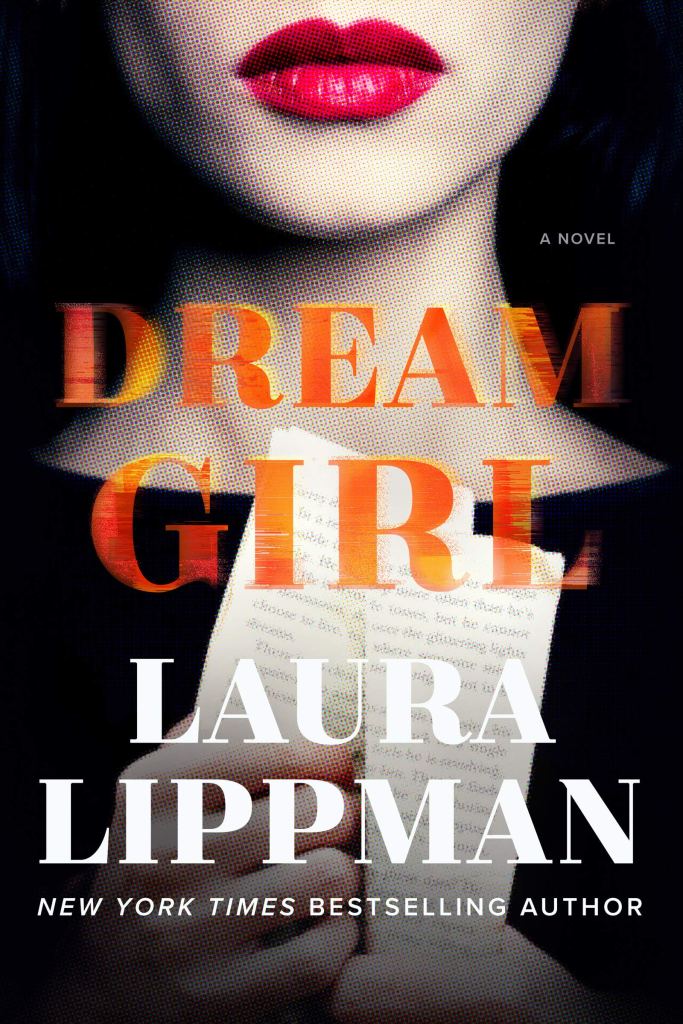
Laura Lippman’s Dream Girl drops today, and so those of you not fortunate enough to get an advance copy can now indulge yourselves in reading a truly marvelous book by a great thinker and a terrific writer. I need to get back to reading; Robyn Gigl’s By Wayof Sorrow needs to be finished, and on deck I have Bath Haus by PJ Vernon, Everything I Never Told You by Celeste Ng, Arsenic and Adobo by Mia Manansala, and several others. So much reading; I really need to focus on getting my reading done and caught up. Now that I’ve finished the novella I can take a look at duMaurier’s “Don’t Look Now” again, as well as her “Ganymede”; I already know, from doing some post-writing research today that there are some major adjustments that need to be made to my novella, and it may wind up being longer than than 20, 430 words it sits at now–not the least of them the days of the week, and so forth. I also have to figure out some way to make the story work a little better, more suspenseful, than it sits right now; but that has a lot to do with figuring out the story as it went. I also want to start pulling together the next short story collection–madness, I know–but I do love when I am basically overwhelmed with projects; so I always have something to be working on if something stalls out or I just don’t want to work on something in particular.
I also took some time and started plotting out another Scotty; yes, I know–I really need to dive into Chlorine again, but I had also decided that I was going to do that in July; it doesn’t hurt to have the Scotty’s various intertwining plots planned and mapped out. I generally don’t do this with Scotty books, primarily because the writing inevitably takes me in much different directions than I had planned, and thus inevitably all the planning turns out to be waste time. Also ironically, despite having any number of possible and potential titles on hand, none of them seems to fit this story–and since I can’t ever really work on anything without a title, and knowing that the title can be eventually changed–I am calling this one, for now, Mississippi River Bottom, which was actually the working title for Jackson Square Jazz.My editor didn’t like Mississippi River Bottom (which I rather thought was a clever play on words) and asked me to change it. I also know that this working title doesn’t really fit the alliteration patterns of the rest of the series, and thus will inevitably have to be changed. Perhaps while I am actually writing it, the title will come to me; stranger things have, indeed, happened before.
Last night’s sleep was terrific–there were strange dreams, of which I’ve been having a plethora of lately; last night was me working at Target for some reason–but I again feel terrific and rested this morning; everything looks wet outside, so I am assuming the rain continued over night. It must not have been terrible or dangerous, as we never got one of those horrible WARNING alerts during the night on our phones. Tonight when I get off work I’ll go uptown and get the mail before heading home and to the gym. The Tuesday night workout is somehow always rushed, with me skipping things–more to do with too many people being there than me being lazy, really; the free weight area is always so crowded I inevitably skip the two exercises I used free weights for–and then it’s back home to watch some television and possibly do some writing. This weekend is going to see weird; I have a broken tooth that needs to be extracted, and I scheduled that for Friday afternoon. That inevitably will mean a strange diet of soft food over the weekend and pain killers; but better that than the dull throb and swollen gums I’ve been dealing with since the molar broke. Ah, the endless saga of Greg and his bad, bad teeth. One thing I definitely envy in other people is good teeth…I also want to get to work on “The Sound of Snow Falling.” I am assuming I’ll be incapacitated this weekend after the tooth extraction, but I am hoping I can at least sit in my easy chair and edit.
And yesterday, the first active roster NFL pro football player to come out came out! Yay, and welcome to the team, as it were. I’m old enough to remember when David Kopay came out in the 1970’s; the first former NFL player to do so.
And on that note–writing ADHD, my bad teeth, NFL player out of the closet–I am heading into the spice mines. Have a lovely and winning Tuesday, everyone.
One of the challenges of being a writer is keeping your work fresh and new and interesting; it becomes easy -for want of a better phrase–to just phone it in and repeat yourself. This is particularly true for crime writers/writers of series; how do you continue writing about the same base foundation of characters without recycling plots or falling into formulaic structure?
One of the primary reasons I stopped writing my Chanse MacLeod series was precisely because of this; as I was writing the last book (thus far) in the series, Murder in the Arts District, I found myself thinking things like okay now it’s chapter five, I need some action here or I need to have a twist in the story before I get to chapter ten…and so on. I didn’t even think about it as I was writing the story–but when I was doing the revisions and edits, I remembered having those thoughts (I generally don’t have them while writing Scotty, but that’s a story for another time…and of course, as a reader pointed out, how many car accidents has Scotty been in, anyway?), and when I turned the book in, I went back and speed-read the entire series over again, and after about the fourth book, the writing pattern became rather obvious to me; and if it was apparent to me, I would imagine it was also fairly obvious to the readers. So, I decided to either end or take a lengthy break from the series unless another great idea for him jumped out at me; I have had several ideas since then, but the longer I go without writing about Chanse the less likely it becomes that I will write about him again. (Caveat: I have written a Chanse short story and have a novella in progress with him as the main character; I guess it is more accurate to say that I am not done with the character completely, yet I cannot see myself writing another novel with him as the point of view character–and will have to go another step forward with that as well to say at least not one set in New Orleans, as I am toying with an idea for a Chanse case in Louisiana but not New Orleans. Yes, that’s me–definitely not definite.)
I have nothing but the utmost admiration for series writers who manage to keep their series going for decades and dozens of books without writing the same book and structure over and over and over again; Ross Macdonald, Ellery Queen, Sue Grafton, Robert B. Parker, and Sara Parestky are just a few of them I can name, and their achievements have made them legends in the field. But other legends who wrote series took a different approach to their careers. Agatha Christie wrote several series–Poirot, Miss Marple, Tommy and Tuppence–but also wrote a lot of stand-alones over the course of the years. (Seriously, when it comes to crime fiction, Christie did everything first) Dennis Lehane and Harlan Coben started out writing series and moved on to stand-alones; as have numerous other authors.
And then there’s Laura Lippman.
Gerry Andersen‘s new apartment is a topsy-turvy affair–living area on the second floor, bedrooms below. The brochure–it is the kind of apartment that had its own brochure when it went on the market in 2018–boasted of 360-degree views, but that was pure hype. PH 2502 is the middle unit between two other duplex penthouses, one owned by a sheikh, the other by an Olympic swimmer. The three two-story apartments share a common area, a most uncommon common area to be sure, a hallway with a distressed concrete floor, available only to those who have the key that allows one to press PH on the elevator. But not even the sheik and the swimmer have 360-degree views. Nothing means anything anymore, Gerry has decided. No one uses words correctly and if you call them on it, they claim that words are fungible, that it’s oppressive and prissy not to let words mean whatever the speaker wishes them to mean.
Take the name of this building, the Vue at Locust Point. What is a vue? And isn’t the view what one sees from the building, not the building itself? The Vue is the view for people on the other side of the harbor, where, Gerry is told, there is a $12 million apartment on top of the residences connected to the Four Seasons Hotel. A $12 million apartment in Baltimore.
Nothing makes sense anymore.
The apartment cost $1.75 million, which Is about what Gerry cleared when he sold his place in New York City, a two-bedroom he bought in the fall of 2001. How real estate agents had shaken their sleek blond heads over his old-fashioned kitchen, his bidet-less bathrooms, as if his decision not to update them was indicative of a great moral failing. Yet his apartment sold for almost $3 million last fall and, as he understood the current was laws, he needed to put the capital gains, less $250,000, in a new residence. Money goes a long way in Baltimore, and it was a struggle to find a place that could eat up all that capital without being nightmarishly large. So here he is at the Vue, where money seems to be equated with cold, hard things–marble in the kitchen, distressed concrete floors, enormous light fixtures.
I’ve been a fan of Lippman’s since I read her debut, Baltimore Blues, mumbledy-mumble years ago. I absolutely loved it; I loved the character of Tess Monaghan, former reporter turned private eye, and the cast of regular characters who she interacted with on a regular basis throughout her amazing series run. Tess remains one of my all -time favorite series characters; the books were always compelling, interesting, and very hard to put down. Lippman is also that writer who can write short stories that are just as powerful as her novels, and over the last few years she has taken up writing personal essays that are also rather exceptional (her collection, My Life as a Villainess, was a bestseller during the pandemic). Her writing is always whip-smart and intelligent; following her on social media one can see how widely and perceptively she reads. About seven years into her career she took the risk to move from her series to stand-alones; a calculated risk, to be sure–but she then spent the next few years alternating between the series and stand-alones (alas, it’s been a while since the last Tess book, Hush Hush, although she has occasionally made guest appearances in her stand-alones when a character needs assistance from a private eye). Her books have explored themes of motherhood, what it means to be a good girl, and have also paid homage to time-honored sub-genres (Sunburn is one of the best noir novels of this century) and classic novels by either flipping the script (for example. Wilde Lake owes an enormous debt to To Kill a Mockingbird, imagining, really, where the characters and story would be decades later). She has also played with form, tense, and character–Lady in the Lake is almost Faulknerian in its use of point-of-view; I lost track of how many different point of view characters were in this book, and every last one of them rang completely true–and she has become, over the years, a true artist.
In my often-benighted first writing class in college (whose scars I still carry to this day),my incredibly pompous professor once berated one of the students for writing a story about a writer. “It’s the laziest form of writing, and character,” he proclaimed from his lectern at the front of the classroom, “and it tells you more about who the writer is more than the character ever will. If you ever start reading anything where the main character is a writer, you should run from it as fast as you can.”
I guess he wasn’t a fan of Philip Roth. (To be completely fair, neither am I. I’ve tried, but have never really got the magic there, but have always accepted that as my failing as a discerning reader rather than his.)
Stephen King often writes about writers; ‘Salem’s Lot has Ben Mears; The Shining has Jack Torrance (and the most deadly and horrifying case of writer’s block in literary history), It has Bill Denbrough, and on and on–but of course the most famous, and best, example would be Paul Sheldon in Misery. While I always have enjoyed King’s writing, and have gleaned things from his writer characters, Sheldon and Misery, for me, has always been the best. Sheldon was perhaps one of the most realistic and compelling writer characters I’ve ever read about–the man with aspirations to becoming a critically acclaimed literary writer, who yet makes a living by writing a bestselling romance series about a character named Misery Chastain whom he has come to hate and despise even as she makes him enough money to live well and focus on simply being a writer (the dream of all of us, really). He has killed her off finally in his most recent book, ending the series at last and finally taking the leap to write what he thinks will be the game changer for his career–until he has a horrific car accident and is rescued by Misery’s biggest fan.
The parallels between Misery and Dream Girl are there, of course, and easy to spot; Lippman’s character Gerry Andersen is an enormously successful literary writer (a la Updike or Roth) who is also kind of a dick in how he has treated the many women who have come through his life, and of course, his ego justifies all of his bad behavior until he, too, has an accident in his home that winds up with him trapped in a hospital bed in his secluded apartment (despite it being in Baltimore; the appeal of the place is its privacy and seclusion). But while Sheldon is being victimized by his sociopathic fan/caregiver in Misery, what is happening to Gerry is very different; he has his original fall that causes his injury because he receives a weird letter from someone claiming to be the real person whom he based the title character in his biggest success, Dream Girl, on, and she wants financial compensation. In his shock and surprise–people have always wondered, and have always asked him, if she was a real person and he has always said no–he falls down his stairs and busts up his leg. Once he is housebound, he has a night nurse AND his personal assistant there–rarely being ever alone in the apartment–but he starts getting strange phone calls from the woman claiming to be the real ‘dream girl’–but there’s never any record of the calls on his called ID, and the original letter disappeared as well. Is his medication playing tricks on his mind, or is there something more sinister at work in his cold, sterile, remote apartment?
As with so many other things, that writing professor was wrong about writing about writers. I’ve stayed away from it myself for most of my career–as I said, the scars are still very much there–but I have started dabbling into it a bit (my Amazon single, “Quiet Desperation,” is one attempt, and I may go even further; I’ve created a character who’s appeared as a minor character in some of my Scotty books who is a writer). The mystery here is quite compelling, and more than enough to keep me turning the pages to see what happens next. But I was also enjoying the insights into another writer’s life, albeit he was a fictional character; I find it incredibly easy to identify with characters who are writers because despite the fact that all writers have different methods and different careers and different mental processes, there are always those little nuggets of oh yes I know that feeling or I thought I was the only person who experienced this or ah yes this is exactly what it’s like.
Dream Girl is an excellent edition to the Lippman canon.








 Queer and Loathing in America