comfortably numb

Lou Berney is not only one of my favorite writers, but he’s also one of my favorite people in this business.

I met Lou for the first time many years ago, because we shared a panel together at Bouchercon in Raleigh (the moderator was Katrina Niidas Holm, and the other panelists were Lori Roy and Liz Milliron; none of whom I knew before and have been grateful ever since that I not only got to meet them and become friendly but also because–even better–I discovered incredible new-to-me writers whose work I’ve been enjoying ever since). Shortly after this I read his novel The Long and Faraway Gone and was completely blown away by it; it won every conceivable award for crime writing the next year, and he followed it up with the completely different but just as fascinating and brilliant November Road several years later. I’ve yet to go back and read his earlier work, but plan to eventually–but I also like having them in reserve; Lou’s not nearly as prolific as I would like. I kind of think of him as a male version of Megan Abbott: brilliant, insightful, and exceptionally gifted writers with piercing perceptions into the kinks and flaws of character that make people human.

And Dark Ride is exactly what is promised in that title–a dark ride.

I’m lost, wandering, and somewhat stoned. This parking lot, when you’re in the middle of it, deems much vastr and more expansive than it does from the street. Or do I just seem much less consequential? That’s the question. One for the ages.

It’s July, hot as balls. I stare up. The sky, pale and papery, looks like it’s about to burst into flame.

How would you describe the sky to someone who’s never seen a sky? You’d have to explain how it’s different every day. So many shades of blue, of grat. And we’re not even talking about sunrise or sunset. Plus the clouds! How would you describe clouds?1

“You need some help?”

“What?” I say.

Some dude in a suit is about to climb in his car. He’s about my age, probably a couple of years out of college. With the suit and haircut, though, he’s all business. Me, I’m wearing board shorts, flip-flops, and a vintage faded Van Halen T-shirt I found for five bucks at Goodwill. I haven’t cut my hair in almost forever and I’m a minimum-wage scarer at an amusement park fright zone.

Jesus, what a fucking great opening. (Although I did wonder if any T-shirt costs $5 at Goodwill.)

Dark Ride has about the most unlikely main character you’ll ever meet in a crime novel–Hardy “Hardly” Reed–and that above paragraph is a master-class in character. In fifty-two words and two sentences, Lou Berney created a character that I absolutely, 100% know and believe is real. I’ve known any number of Hardlys over the years, and I can also certainly identify with being in your twenties and kind of drifting aimlessly, with no plan for the future other than you’re afraid of it and you don’t want the path everyone else seems to wnt for you that you know isn’t right.

The story opens with Hardly going to the city building of some unnamed city in the Midwest (since it’s Lou Berney, I’m going out on a limb and saying it’s probably Oklahoma City or Tulsa) to get a thirty-day continuation on paying a parking ticket. A tedious, horrible, day-disrupting chore that most of us have had to deal with at some point in our lives. Personally, I despise having to go to any city or state office for any kind of business, and feel pretty confident in stating that’s probably pretty much how everyone feels about that sort of thing. (Even worse is getting the camera fucking ticket in the mail.) Hardly is, by every definition of the word, a loser–despite being very likable and relatable; the kind of man whose relatives just sigh and say, “well, that’s Hardly” when they talk about him. But Hardly doesn’t have relatives. His mother died when he was a child and he would up in foster care–and even admits he and his foster brother, a successful rising architect, got very lucky with their foster family. But he came out out of it with no purpose, no sense of direction, and no goals or desires for life. He just does his minimum-wage job, lives in his shitty rented room, and smokes a lot of weed. So do most of his friends.

And the opening paragraph and that meditation on the sky and clouds? Such a stoner thing to do. (I’ve had some experience with cannabis–especially in my twenties, but that’s a story for another time.) So, why is this amiable, stoner loser the main character of this book? we soon find out. As he waits in line to get his continuance, he sees a woman with two very young children–and notices on both a pattern of cigarette burns on each child. Horrified, he looks for someone in authority to report this to–but no one seems to care. The woman and her children leave, and he manages to meet someone who works there who pointedly won’t tell him their names but that he needs to sign in, which makes him realize he can her name that way–Tracy Shaw. He finally calls CPS and makes a report over the phone. Relieved that he’s done his duty, he goes on with the rest of the day, which includes going to work at the crappy amusement park where he works (a fair played a major role in The Long and Faraway Gone, which makes me think at some point in his life Berney must have worked for an amusement park or a fair) where we meet his co-worker and friend, a mentally challenged 16 year old named Salvadore, who is one of my favorite characters in the book.

It begins, though, to bother him that CPS never calls him back with questions or for more information–he’s sadly still young enough to believe in the efficacy and efficiency of Authority–and it begins festering in his head. He’s worried about Tracy, but he’s even more worried about the kids, seven and six by his estimate, and how their lives are being shaped and ruined by the abuse. It keeps bothering him until he decides to do something about it, and what follows is a delightfully entertaining, beautifully written saga of someone who has been completely written off by society as a loser and a wastrel yet still manages to find the strength of character and moral purpose to try to save those kids, however foolhardy–and dangerous–it may turn out to be for him.

I’m not really sure how to describe the book, to be honest. I feel like “stoner noir” is the best fit, even though the cover calls it a thriller, I don’t know if that’s actually correct or not. Hardly’s sense of purpose, his sense that he’s the only person who cares about saving those kids, reminded me of a knight’s quest from classic literature; another time he reminded me a bit of Don Quixote tilting at windmills. I loved this book. I loved the main character, I loved the voice, I loved everything about this book–except the fact I didn’t write it.

Buy it, read it, cherish and love it–and thank me later.

  1. “Bow and flows of angel’s hair, and ice cream castles in the air” per Joni Mitchell. You’re welcome. ↩︎

Sweet Music Man

Thursday and my last day in the office for the week. Yay, I think. I have to get up early and go see my new primary care physician tomorrow morning–I fired the last one for a multitude of reasons I will probably go deeper into in a future post–but I also have to fast for that because I am having blood work done, which means no coffee, no nothing other than maybe water tomorrow morning. I think as long as I sleep well, I’ll not leave a body count behind in my wake on the way to and from the appointment. I am also going to be making a go-cup of coffee that I will be taking with me and you can best bet I’ll be slugging it down once the blood has been drawn.

I slept well last night, which was lovely because I was definitely running down my batteries by the time I got home last night. By the time I’d done a load of laundry, emptied the dishwasher and reloaded it, I was more than ready to collapse into my easy chair. I did some minor writing last night–a few hundred words or so, nothing much other than to be able to say “I wrote some fiction last night”–but that’s okay. I’m getting back into the saddle again gradually, and soon I’ll be clocking three thousand word days again. We watched this week’s The Morning Show last night, and I have to say, it’s an exceptionally well done show. The ensemble itself is incredibly star-powered, beginning with Jennifer Aniston and Reese Witherspoon as the two primary leads, and the excellent job of the casting director manages to work its way down from the stars all the way down to the bit players–Shari Belafonte Harper is actually a member of the cast, but has very few lines and is rarely on camera, but it’s always nice to see her when she pops up on screen, to be honest. It’s very smart and very well-written, as are most shows on Apple Plus–let’s not forget we wouldn’t have Ted Lasso without Apple Plus.

Ironically, I was also watching shorter and longer videos on Youtube before Paul got home and went down a “Calvin and Hobbes” wormhole of videos about the greatest comic strip of all time. I always loved Calvin and Hobbes, and have all the collections, including the massive coffee-table sized one that contains every strip ever published. I was very sad when Bill Watterson ended the strip on a high note, and I’ve always loved his artistic integrity about not selling out to film or television or merchandising (I would have definitely bought a Hobbes plushy back in the day), as well as his decision to end the strip and take it out on top. (I was also a big fan of “Doonesbury”, “Bloom County”, and of course “The Far Side”.)

Anyway, watching a few documentaries on Youtube about “Calvin and Hobbes” mentioned how much emotional depth the strip had; how it could not only make you laugh but make you think as well as tear up sometimes…and I realized that Ted Lasso, like Schitt’s Creek, was also like that. Calvin and Hobbes were both so fully realized as characters in the strip–as well as his parents, and the other occasional characters that showed up, too–that you cared about them, just as you do the characters on Ted Lasso and Schitt’s Creek, which is why character is so important when it comes to story-telling. People will only care if the characters seem like actual real people to them, and once they care…well, you’ve got them, don’t you?

Maybe I should revisit my massive Calvin and Hobbes collection, too.

There are some good games this weekend in college football, but my primary concern is, as always, the LSU game; they’re hosting Arkansas in Death Valley and we’ll get yet another chance to see how good the Tigers are–but we also don’t know how good either Mississippi State (trounced last weekend) or Arkansas yet are this year; the test will always be how the Tigers do against Auburn, Alabama, and Florida–and there’s also no telling how good Mississippi is this year, either–they play Alabama this weekend, so we’ll get an idea of how the Tide is rebounding and how good the Rebels are. Everyone is writing Alabama off, and maybe it’s simply been burned into my brain throughout the course of a long lifetime of being a college football fan,…but you can never take the Tide for granted or ever completely count them out. They have that “brand” recognition that somehow manages to get them the win in close games; the luck always seems to magically appear every time they need it, only deserting them in the one game they may lose per year. They’re in the same position that LSU is in; already one loss early and therefore cannot lose again if they want to win the conference and the national title. College football is certainly more interesting this year than it has been since 2019, at any rate.

I want to be able to drop books at the library sale this weekend, wash the car and clean out the inside, and hopefully go to the SPCA and get a new cat. I also need to clean the house more–at least try to keep up with it the way I did when Paul was out of town earlier this summer–and get some writing done. I also need to do some reading. I want to finish Shawn’s book because I also just got my copy of the new Lou Berney, Dark Ride, which I am really looking forward to; I’ve been a big Lou Berney fan since we were on a panel together all those years ago at Bouchercon in Raleigh, and his work never disappoints. (That panel in Raleigh was definitely one of the highlights of my paneling career as a crime writer; Katrina Niidas Holm was the moderator; the other panelists were Lou, Lori Roy, and Liz Milliron. Nice, right?)

So, tonight when I get home from work I am going to do some more laundry, unload the dishwasher and clean the kitchen, and then I am going to either write or curl up with Shawn’s book.

And on that note, I am heading into the spice mines. Have a lovely day, Constant Reader, and I’ll check in with you again later.

You Must Love Me

Many years ago, at a Bouchercon in the far distant past, I was lucky enough to be assigned to a panel with several strangers. It was Raleigh, and I don’t remember what the panel was about–other than none of us on the panel actually wrote what the topic was about–but it ably helmed by Katrina Niidas Holm. That was the weekend where I was lucky enough to meet both her and her husband, Chris. Also on the panel were Liz Milliron, Lou Berney, and Lori Roy. I always intend to read my co-panelist’s work before panels, so I can talk to them intelligently about their books–but it’s not near as pressing as it is when I moderate, and this was one of those years where I was busy and simply didn’t have the time. The panel was marvelous. I had the best time, and I loved everyone on the panel. I have since gone on to read their work and have become a besotted fan of all three of them, really.

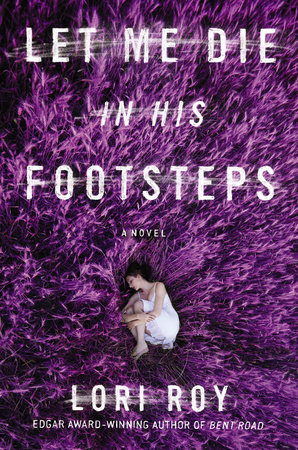
My first Lori Roy novel was Bent Road, which won her (deservedly) the Edgar for Best First Novel. I absolutely loved it, and made sure I got the next two as well. (At the Edgars following the Raleigh Bouchercon, both Lou and Lori won Edgars; her second, also making her one of the few authors to win Edgars for Best First and Best Novel.) I’ve read everything she’s published since then, but have never gotten to the second novel (an Edgar Best Novel finalist) or Let Me Die in His Footsteps, her second nomination for Best Novel and her second Edgar win. I don’t remember why I decided to finally read Let Me Die in His Footsteps, but I am very glad I did.

It’s really quite marvelous.

Annie Holleran hears him before she sees him. Even over the drone of the cicadas, she knows it’s Ryce Fulkerson, and he’s pedaling this way. That’s his bike, all right, creaking and whining. He’ll have turned off the main road and will be standing straight up as he uses all his weight, bobbing side to side, to pump those pedals and force that bike up and over the hill. In a few moments, he’ll reach the top where the ground levels out, and that front tire of his will be wobbling and groaning and drawing a crooked line in the soft, dry dirt.

Theyre singing in the trees again today, those cicadas. A week ago, they clawed their way out of the ground, seventeen years’ worth of them, and now their skins hang from the oaks, hardened husks with tiny claws and tiny, round heads. One critter calls out to another and then another until their pulsing songs made Annie press both hands over her ears, tuck her head between her knees, and cry out for them to stop. Stop it now. All these many days, there’s been something in the air, a spark, a crackle, something that’s felt a terrible lot like trouble coming, and it’s much like the weight of those cicadas, thousands upon thousands of them crying out to one another.

Annie has known all morning Ryce would be coming. It’s why she’s been sitting on this step and waiting on him for near an hour. She oftentimes knows a thing is coming before it has come. It’s part of the curse–or blessing, if Grandma is to be believed–of having the know-how.

Let Me Die in His Footsteps is set in rural Kentucky, with a dual timeline–the present in the book is 1952; the past is 1936. Both timelines feature two sisters, one normal and the other with the “know-how.” In the present, Annie is the sister with the know-how while her sister Caroline is normal and pretty and sweet and pretty much beloved. The 1936 section focuses on Caroline’s mother, Sarah, and her sister with the know-how, Juna. It is soon made clear in the present day that something terrible happened back in 1936, something whose repercussions are still being felt to this present day of 1952. Annie isn’t Caroline’s sister, but rather her cousin; Sarah is Caroline’s mother while Juna was Annie’s. Juna also had a bad reputation around the county, having played a pivotal role in the 1936 tragedy. The book opens with Annie reaching her ascension; the halfway mark between sixteen and seventeen, when she is supposed to look down into a well at midnight, where she will see the face of the man she is going to marry. Annie sneaks out of the house late at night to go next door and peer down into the Baine family well; there’s trouble and tension between the two neighboring families…dating back to 1936. All the Baine sons are long gone; the only one left is old Mrs. Baine, who sits out on her porch with a shotgun in case of her worthless sons try to come home. Caroline follows Annie and sees someone in the well; Annie sees no one. But after the look into the well, they discovered Mrs. Baine’s dead body in the yard…and all the secrets and lies from 1936 start to not only unravel but impact 1952.

We’re never really sure what the “know-how” is, or if it’s just an old wives’ tale, a superstition. The rural south in both 1936 and 1952 were dramatically different than modern times; the rural areas weren’t as exposed to television or films or the newspapers, really and the old ways still held sway. I can remember being told about someone with the sight that everyone was supposed to stay away from in rural Alabama when I was a kid; those kinds of superstitions and beliefs still exist in some of these more backward rural areas. But one thing I truly appreciate about Roy–who often writes about poor rural Southern people–is that her writing isn’t what I call “poverty porn”; her characters are very real and this just happens to be their situation. The Hollerans have a lavender farm, having eschewed tobacco in the recent past after Grandpa Holleran died from lung cancer. Lavender infuses the novel almost from the very first page. I love the smell of lavender, although I would imagine fields and drying houses filled with it might be a lot. The story plays out in a slow burn, terrific build to the end, and all kinds of secrets from the past must be dealt with in order for the present-day characters to get on with their lives.

Roy is such a good writer that it almost takes my breath away. She uses a distant third person point of view, one in which we don’t really get inside her character’s heads that much, so the reader has a kind of distant remove from the characters, but it really works. Her work reminds me of Faulkner without the racism, and of other great Southern writers. Her novels are very smart, with a lot of depth and emotional honesty that resonates with the reader, compelling us to keep reading.

Highly recommended; Let Me Die in His Footsteps clearly deserved to win the Edgar for Best Novel.

Hopefully there will be a new Lori Roy soon, because all I have left of her canon is her second novel, Until She Comes Home, which was also an Edgar finalist.

I Just Want to Celebrate

…because it’s finally fucking Friday!

Yesterday was…not a great day, really. I was physically tired, but not mentally tired, if that makes sense? The problem is that the physical tired makes it hard for the not-tired brain to focus on anything, and I get kind of punchy, which isn’t really the face I like to show to the world. But my day was okay for the most part. I think the tired primarily came about because of the early return of summer weather to New Orleans. Yes, I know to those of you who do not live here New Orleans always seems brutally hot all of the time, but there are degrees to New Orleans heat, and yes, it usually starts getting hotter in May and yes, the humidity usually is back in May. But it was ninety-five degrees on Wednesday; and even at the hottest part of the dog days of August it rarely gets to that. Usually it hovers somewhere between 88 and 93, but it’s the humidity that makes it so awful. Also, I’ve been more active this week than usual. I did Ellen’s book launch on Sunday evening, I had that ZOOM meeting on Wednesday night, and I had drinks with a friend in from out of town before the ZOOM meeting. So, that was a lot more of social interaction than I am accustomed to, and instead of going home from work Wednesday night (the way I usually do) and collapsing into my chair while going into a Youtube wormhole of some sort, I didn’t get to relax until after nine pm.

That is not my norm.

I stopped on the way home last night to get some things at the grocery store, and then spent some time doing some kitchen chores (since I had drinks with a friend before the ZOOM meeting, I had to move everything off the kitchen counters, shove it all in the laundry room, and then closed the doors so no one could see it; and the dishes in the sink had to be organized so nothing could be seen from the camera on the computer; I never realized having my work station in the kitchen would turn out to be so problematic, but I couldn’t have foreseen ZOOM in the summer of 2005 when we moved into the Lost Apartment, either) before collapsing into my easy chair to wait for Paul to get home.

So, there I was, minding my own business, watching first Superman and Lois before The Real Housewives of Beverly Hills (I have tuned back in for this season, I have thoughts) and occasionally checking social media and my emails when…I got a notification on Twitter. I clicked to see this tweet from Katrina Niidas Holm:

GREG HERREN!!! You wrote a book so damn good, it got nominated twice! Congratulations, @scottynola! Hope you’ll remember us Pogues when…

(‘Pogues’ being an Outer Banks reference, a show she and her husband Chris–buy his Child Zero, available now and amazing–convinced me to watch with the result Paul and I fell in love with the show, too)

I literally had no idea what she was talking about and gave my usual intelligent response of wait what? at which point she linked to this year’s Anthony Award nominees. Bury Me in Shadows was nominated not only for Best Paperback/Ebook/Audio Original, but also for Best Children’s/Young Adult.

TWO NOMINATIONS FOR THE SAME BOOK IN DIFFERENT CATEGORIES.

I am still in shock this morning–a delighted shock, to be sure, but it’s still shock. It still hasn’t completely sunken in yet, either. It’s going to take me a hot minute to thank everyone who has tweeted or posted on Facebook their congratulations, as well as to congratulate the ridiculously amazing amount of friends that are also nominated in one of the categories–it really is, overall, a remarkable list with a lot of books nominated that I read and loved loved loved–but what a lovely chore to have, you know? And talk about turning your mood and your day around! So, this morning–needless to say I slept very well last night–I am sipping my coffee and riding the high a bit still. At some point I’ll need to make sure I thank everyone and congratulate everyone else nominated and get through my social media, but right now I am just sitting here at my desk feeling very proud and happy and content while I sip my coffee. Wow. I mean, wow.

I’ve not been in a very good place about my career lately, honestly–any number of things; the problems with getting myself to actually write, not feeling great about what I write when I do write, all the little doubts and insecurities that have built up over a lifetime of wanting to be a writer but getting little to no encouragement from anyone, really. It all kinds of builds up sometimes, and anything–no matter how small or inconsequential–will trigger it and send me spiraling down into the Pit of Despair. As I struggle with my schedule and all the things I need and want to get done, with a to-do list that seems to grow like the Hydra, with two new things to do replacing every single task that gets scratched off the list, this was precisely the right time to get this kind of reassurance from my community, my wonderful crime fiction world, and I’ll always be grateful for this. Bury Me in Shadows was a very hard book for me to write, emotionally; but digging deep into the issues I dealt with in the book–and that emotional difficulty–made it a better book, I think.

Wow. I mean, wow.

And on that note, I am heading into the spice mines. Have a wonderful Friday, Constant Reader.

Disco Potential

Sunday morning and I slept very well last night, which feels pretty lovely this morning, quite frankly. Yesterday was a good day, which I took off from all my deadlines, worries, and cares. I did run to the grocery store for a few things, tried to buy ink at Office Depot to no avail, and then went to the gym. I then came home and showered before reading for a while, and then I started watching Outer Banks again, after it being recommended by Chris and Katrina Niidas Holm; this time I got sucked into the story. Is it a great show? Not really, but it is trashy fun, and I like that the writers finally got what they were actually doing and went all in. We also finished watching The Great last night, which is actually quite fun and terrific. I’m not quite sure who the audience for The Great is, but Elle Fanning is terrific as Catherine and it’s highly entertaining.

Sigh. Saturday nights are a whole lot different for me now than they were for years.

It doesn’t seem that long ago that Saturday meant an entirely different thing than it does to me now. Now, it’s all about what can I get done today and what will we watch this evening and so forth; back then it wasn’t a question of whether we would be going out or not–the question was which bars would we be going to and what time would we be going out. Even if the idea was always just to be around people and listen to fun music, we’d inevitably pass the tipping point over into drunk. Sometimes we’d go dancing, sometimes we’d just hang out in the non-dance clubs with friends or would run into people; the free flow of going out on the weekend in the French Quarter was something that could never be planned. You never knew who you’d run into and how that would impact or change your plans; whether the mood or the music in a particular club would be off or fun–which also impacted how long we’d stay there before moving on.

I miss going dancing sometimes, but I don’t miss the late nights and the cigarette smoke (of course that’s also a thing of the past) and I don’t miss getting drunk two or three times on the weekend, either (the only question of the weekend wasn’t if we would go out on Saturday or not, it was would we also go out on Friday as well? And Sunday inevitably wound up being a given). I drank enough in those days to last me the rest of my life, and while I do like the occasional cocktail and the occasional buzz, I don’t like getting sloppy drunk anymore, and that happens more rarely now than it used to.

Now, of course, as a fifty-eight year old who feels like he’s going on eighty sometimes, the thought of going to a bar or a club isn’t appealing to me in the least. I can’t imagine standing around for hours, for one thing, and for another, I can’t imagine dancing for hours like I used to, getting hot and sweaty and taking off my shirt and tucking it into the back of my jeans. Then again, it’s been so long since I’ve been to a gay bar I don’t know if gays still do that–oh, what am I saying? Of course they do. Just like the swallows return to Capistrano, a certain subset of gay men will always go dancing on the weekends, drink too much, perhaps indulge in some illegal substances, and dance the night away with their shirts off. Why else would you go to the gym all week if you’re not going to show off the hard work on the dance floor?

I do miss it sometimes, though.

Today I am going to do some writing and trying to get out from behind this eight ball I seem to have been behind for most of this year. I have some things to reread and edit, and of course I want to get going on the Secret Project again, which has stalled for a moment–damned work week heat and humidity, sucking the life out of me every day–and there’s some cleaning to do as well. I didn’t get the floors done yesterday–trying to get caught up on the dishes and laundry was hard enough work as it was–and I am going to try to finish reading Phyllis Whitney’s The Red Carnelian today, as well as Bruce Campbell’s The Secret of Skeleton Island, which is the first novel in one of my favorite kids’ series, the Ken Holt mysteries. And yes, as always, I am probably assuming I can get more done today than I actually can, but hey–you never know until you try.

It’s also so incredibly easy to get distracted…I must try to avoid distractions at all cost. Distractions are the progress killer.

And I am, after all, so easily distracted. In fact, even as I type about not letting myself get distracted….I am thinking about things to do to waste my time today rather than writing.

But one important thing: I am going to close my web browser before I start writing. The Internet is the true distraction.

And on that note, tis off to the spice mines. Have a lovely Sunday, Constant Reader!

IMG_0878

Wanted Dead or Alive

The past month been an interesting one, so much so that I’ve not really been able to get a whole lot of anything writing related finished. This is partly my own fault, of course; I should have repeatedly resisted the urge to continue to read and refresh pages and follow links and so forth; but like a train wreck, I wasn’t able to ever tear my eyes away from the carnage.

As I said to a friend at the height of the drama, “Every time I think the last car of the train has come off the rails and the wreck is finished, here comes another train on the same tracks and I am mesmerized all over again.” I’ve read blog posts and Facebook posts and Twitter threads, over and over again, my mouth wide open and there being literally no way to keep my jaw from its permanently dropped position other than using both hands to push it up and then hold it in place.

I mean, wow. What a month it has been for both the crime and horror fiction communities.

This is a roundabout way of getting to a question that has come up a lot in the last decade or so, and one I’ve thought about a lot, but have never really addressed very much…but with all these shenanigans going on recently, I started thinking about this again, and it also played into my thoughts about reading The Hunter by Richard Stark, and my recent read of I the Jury by Mickey Spillane; two enormously popular novels by well-regarded crime writers that might not hold up as well through the modern day lens as they perhaps did when they were originally released.

And that ever-present question of the artist versus the art.

Probably the first time I’ve ever thought about whether it’s possible to continue to enjoy art despite the artist was, of course, the film Chinatown. I never saw it in the theatrical release, but it’s widely regarded as one of the best crime films ever made; I remember it was nominated for like ten or eleven Oscars in the year it was released (which, if memory serves, was the same year as The Godfather Part II, which pretty much won everything imaginable), and the debate about the movie has raged ever since Polanski fled the country to avoid statutory rape consequences. I find that abhorrent; and any defense of Polanski’s indefensible behavior irrelevant to me. But I wanted to watch Chinatown, and Rosemary’s Baby is one of my favorite horror movies of all time; I revisit it every now and then. So, how can I justify watching and enjoying these two films directed by someone who did something heinous? When I was finally able to stream Chinatown a few years back, I justified it to myself by saying it was 1. before the statutory rape and 2. if I didn’t review or talk about or promote the film on social media or on my blog, streaming it through a service I already pay for isn’t contributing much, if any, money to Polanski’s bank account.

And yes, I am very well aware of how ludicrous and torturous those mental hoops I jumped through actually are.

There was also the Orson Scott Card debacle a few years back, and I didn’t jump through hoops on that one. I had read and enjoyed Ender’s Game, and had thought about reading more of Card’s work…until I discovered he was a horrific homophobe who actually worked, donated money to, and actively sought to block gay equality in the United States. 

Nope, sorry, done.

It’s one thing to have abhorrent opinions about a minority; it’s another to actively work–and use the money you’ve earned through your art–against the rights of that minority. Fuck all the way off, Mr. Card, and never come back.

Which brings me to The Hunter.

the hunter

When a fresh-faced guy in a Chevy offered him a lift, Parker told him to go to  hell. The guy said, “Screw you, buddy,” yanked his Chevy back into the stream of traffic, and roared on down to the tollbooths. Parker spat in the right-hand lane, lit his last cigarette, and walked across the George Washington Bridge.

The 8 a.m. traffic went mmmmmm, mmmmmm, all on this side, headed for the city. Over there, lanes and lanes of nobody going to Jersey. Underneath, the same thing.

Out in the middle, the bridge trembled and swayed in the wind. It does it all the time, but he’d never noticed it. He’d never walked it before. He felt it shivering under his feet, and he got mad. He threw the used-up butt at the river, spat on a passing hubcab, and strode on.

Richard Stark is one of the pseudonyms of crime writer extraordinaire Donald Westlake. I will be the first to admit, repeatedly, that my education in not only literature but crime fiction is sorely lacking; there are many authors whose works I should have read and haven’t; Westlake is one. I read my first Westlake a few years ago, a Hard Case Crime edition of The Comedy is Finished and it was amazingly good. I ordered a copy of The Hot Rock shortly thereafter; alas, it is still in the TBR pile., and I do intend to get to it at some point.

Westlake also happens to be an inspiration to one of my favorite queer writers, Rob Byrnes, who writes witty, Westlake-like queer caper novels (if you’ve not already read him, you must do so immediately).

I first discovered that Westlake was also Richard Stark when these Parker novels he wrote under that name were brought back into print recently by the University of Chicago Press, and a crime writer I admire deeply, Chris Holm, announced he’d written an introduction for one of the books. Chris has never steered me wrong in his recommendations (for that matter, neither has his amazing wife, Katrina Niidas Holm, who was the one who steered me to Michael McDowell’s The Elementals, for which I will always be grateful), and so I thought, as is my wont, to start with the first book in the series, The Hunter.

And once I started reading it, as you can see by the opening above, I was caught up in the story and the voice.

But, as I said earlier, The Hunter was very much a novel of its time: 1960.

Parker was considered an anti-hero when the books first started coming into print–although today I suppose he would be considered a sociopath. He does live by a code, even if he is a sociopathic criminal; and one has to admire the dedication to that code, and how he never deviates from it. He doesn’t have an issue with breaking the law–in fact, he makes his living breaking the law–nor does he have a problem with meting out vengeance on those who do him wrong. In The Hunter, he is betrayed–and almost killed–by his partners in a high-stakes robbery; amongst those who wronged and cheated him are his wife–and he kills her without a second thought, and then goes after the rest of those involved in the scam, even though some of them are very well connected with the New York mob. (The mob is referred to as a ‘syndicate’ in the book; an old term I haven’t heard in a very long time, and it was a lovely piece of nostalgia. Organized crime was often referred to as a ‘syndicate’ back in the day.)

It’s tautly written, suspenseful (will Parker get his revenge, or will he be betrayed yet again?) and I kept turning the pages. I really enjoyed the book tremendously, and will go back and continue to read the Parker novels–I am curious to see how Stark developed the character and the continuing story of his life and career in crime, as well as to see how Westlake continued to develop as a writer under the name Richard Stark.

However–the casual homophobia of the time slapped me in the face a couple of times while I was reading the book:

Page Three: On the way, he panhandled a dime from a latent fag with big hips and stopped in a grimy diner for coffee.

p. 38: “She’s dead. So is your fat pansy. You can be dead, too, if you want.”

Yeah, I did kind of recoil, and in both instances I debated finishing the book. But…it was written in 1960, and the attitude towards homosexuality exhibited in those lines (including the slur pansy, which I haven’t heard in a while) was common. We can’t deny that it existed–we cannot deny homophobia exists today any more than we can that it did in 1960–and it was a sign of the times. Does that mean the book shouldn’t be read? Should it come with a trigger warning? A deep-seated contempt for homosexuality was part and parcel of the alpha male/tough guy persona of the times, and including that language in the book was an easy way to convey the no-nonsense masculinity of the character (it was also there in I the Jury–much more so in the Spillane than the Stark).

The attitudes towards women isn’t much better; but again, a sign of the times:

p. 135 He used one cord to tie her hands behind her, the other to tie her ankles. He found scissors in a desk drawer next to an inhaler, snipped off part of her slip and used it for a gag. She had good legs–But not now. After it was over, after Mal was dead, he’d want somebody then.

Ew, because killing someone is a turn-on? Although it fits with the character Stark has created; this is a man who killed his wife without a second thought.

But…I enjoyed reading the book. I suspect my enjoyment would have been greater in the past–I probably would have loved this series had I discovered it in my late teens and early twenties, but the world was a different place then, too. I am definitely going to continue reading the series; as I said earlier, I am curious to see how the character develops and changes and grows–or if he doesn’t, how bad he becomes. I am intrigued by the character, and of course, the writing is absolutely stellar.

I don’t think, for the record, books from earlier times should be held to the same standards as we would hold something newly published; times and attitudes vary and change over time. It’s hard to read an older book without the modern lenses, however; probably as little as ten years ago I would have dismissed the “pansy” remarks or the misogyny apparent in the character without feeling the need to point it out. I don’t think these books should be cancelled or not read; primarily because it’s incredibly important to have these conversations–as well as these works serve as a time capsule, a window into another time where things hadn’t yet changed but needed to, certainly.

I do recommend it; as I said, I will continue reading the Parker series and I am looking forward to reading more of the Westlake novels as well.

Love Touch

Sunday morning, as I sit here in my cool workspace swilling coffee, trying to wake up and figure out what to do with the rest of my day. I need to go to the grocery store and I should also probably make an attempt to go to the gym; but I can’t seem to find my iPad, which makes doing cardio pointless (I read or watch TV on my iPad while on the treadmill; perhaps not having my iPad is simply an excuse for not going; what if it’s gone, lost, stolen? I am trying not to think that way and am hoping that I simply left it at the office. If not, I am terribly screwed because I don’t know where it is and I currently don’t have the cash on hand to replace it. So, yes, let’s just continue pretending happily that it’s as the office, shall we?)

I could, of course, just go to the gym and do weights. That always feels good, at any rate. Perhaps once I finish swilling this coffee….

I slept late yesterday, and I slept even later today. I spent most of yesterday not only reading but doing chores around the house, on the pretense that today I would not only go to the grocery store and the gym, but I would also spend some time writing today. I need to finish a short story; I need to revise still another, and there’s that new one struggling to take root in my brain that I haven’t really decided what to do with just yet. There are two others swirling around up there in my head, as well as others I’ve not thought about or have forgotten about in the meantime. But now, now as I wake up I feel more confident about running the errands and going to the gym and actually doing some writing today.

I’ve been reading The History of Western Philosophy by Bertrand Russell, and greatly enjoying it; is there anything quite like well-written non-fiction? It’s why I love Joan Didion and Barbara Tuchman; one of the things I love to do while reading is to learn, and non-fiction fills that need quite beautifully. I also like non-fiction that makes me think; which is why I am looking forward to reading Dead Girls by Alice Bolin. I still would love to do a collection of my own essays, book reviews, and so forth; but egad, what an odious chore pulling all of that together would be. I struggle with essays, but I also think that the writing of essays; the ability to pull thoughts from my head and extrapolate them out to their fullest meaning, is vitally important and a skill-set I wish I had honed more properly. A friend once pointed out to me, as I bemoaned my inability to write essays, that my blog itself is nothing more than years of personal essays. That took me aback, because it was, in many ways, correct; there is definitely some truth to that, but it’s hard for me to take the blog seriously in that fashion, because so much of it is simply written off the top of my head in the morning as I wake up and drink coffee and try to figure out what to do with the rest of my day.

One of the problems for me with personal essays is, ultimately, the issue of self-deprecation, which I’ve addressed in previous blog entries about my writing and my career and my books; who am I to write about this subject? Am I expert enough in this to write about it, or am I simply talking about things that smarter, better-educated people have written about long ago and having the hubristic belief that I am the only person to see this truth for the first time? 

And, in considering myself self-deprecatingly as not that special or particularly smart, I defeat myself and never write the essay.

And of course, there is the problem of all the lies my memory tells me.

But yesterday, I took the afternoon to finish read an ARC of Lou Berney’s new novel, November Road, and was blown away by it.

Scan.jpeg

Behold! The Big Easy in all its wicked splendor!

Frank Guidry paused at the corner of Toulouse to  bask in the neon furnace glow. He’d lived in New Orleans the better part of his thirty-seven years on earth, but the dirty glitter and sizzle of the French Quarter still hit his bloodstream like a drug. Yokels and locals, muggers and hustlers, fire-eaters and magicians. A go-go girl was draped over the wrought-iron rail of a second floor balcony, one book sprung free from her sequined negligee and swaying like a metronome to the beat of the jazz trio inside. Bass, drums, piano, tearing through “Night and Day.” But that was New Orleans for you. Even the worst band in the crummiest clip joint in the city could swing, man, swing.

A guy came whipping up the street, screaming bloody murder. Hot on his heels–a woman waving a butcher knife, screaming, too,

Guidry soft-shoed out of their way. The beat cop on the corner yawned. The juggler outside the 500 Club didn’t drop a ball. Just another Wednesday night on Bourbon Street.

Lou’s previous novel, The Long and Faraway Gone, won every crime-writing award under the sun that it was eligible for: Edgar, Anthony, Macavity, and I don’t know what all; it was the crime publishing equivalent of the EGOT. It was, obviously, an exceptional novel. I met Lou when we were on a panel together at the Raleigh Bouchercon, along with Lori Roy and Liz Milliron; moderated by the amazing Katrina Niidas Holm. It was funny, because the panel topic was, I think, writing about small towns which, in fact, none of us on the panel really did, but we had fun with the topic and I know I brought up Peyton Place at least once and pointed out that suburbs are small towns with the primary difference being suburbs are bedroom communities for cities while small towns aren’t attached in any way to a larger city. It was fun and spirited and I liked Lou, thought he was incredibly smart, as were Liz and Lori. Lori and Lou went on to win Edgars for that year; and I admire their work tremendously. I’ve not had the opportunity to read Liz’ work; but she did have a terrific story in the New Orleans Bouchercon anthology, Blood on the Bayou.

Anyway, I digress.

I’ve been looking forward to November Road since I finished reading The Long and Faraway Gone, but I still need to go back and read Lou’s first two novels, Whiplash River and Gutshot Straight. 

I also have to admit, I was a little hesitant about Lou’s new book; it’s built around the Kennedy assassination in 1963, which always gives me pause (I have yet to immerse myself in Stephen King’s 11/22/63). I’m not sure why I don’t care to read fiction around the Kennedy assassination, but there you have: an insight into my mind. But the Kennedy assassination, while a primary plot device, is just that: a device to set the story in motion. Frank Guidry is involved with a mob boss in New Orleans, and after the Kennedy assassination he is given instructions to fly to Dallas, retrieve a car, and drive it to Houston to dispose of it. While he is doing this, he realizes that he is getting rid of evidence that may be of vital importance to the investigation into the president’s murder–and as such, is a loose end who knows too much and figures out he’s got to disappear now because they’re going to want to kill him. And sure enough, they do send someone after him, Paul Barone, a remorseless killer and tracker. The cat-and-mouse game between them builds suspense throughout the book.

But it’s not just about Frank, and it is a credit to Berney’s talent, creativity and imagination in that he throws in another primary character, constructed carefully in all the facets and layers that make her live and breathe: Charlotte. Charlotte is a wife and mother in a small town in Oklahoma, married to a useless drunk fuck-up with whom she had two daughters, and her salary working for the local town photographer is the primary thing keeping a roof over their heads. Her own ambitions for being a photographer herself are constantly shat upon by her boss, her society and culture and environment: she is a woman, a wife and mother, and in 1963 that so thoroughly defines her that any other ambition she might have throws her identity as wife and mother into question. Trapped, with the walls closing in on her closer every day, Charlotte takes the president’s assassination as a sign for her to run away with the girls and start over. Charlotte is an extraordinary character;  her relationship with her daughters is the strong backbone of this story. You root for her, you want her to make her escape and make her dreams come true.

Frank and Charlotte cross paths in New Mexico, and Frank sees them as his salvation; his murderous pursuers might be thrown off as they are looking for a single man, not one traveling with his wife and kids; the book becomes even stronger and more suspenseful once they are all together. Frank and Charlotte become close, despite not being completely honest with each other; they are both keeping their cards close to their vests, but yet form a loving bond. WIll they escape, or will they not?

November Road reminded me a lot of Laura Lippman’s Sunburn; the same kind of relationship building between a man and a woman where a lot of information, important, information, is held back from each other, and that lack of trust while falling in love is an important theme in both books: women trying to make their best lives, even if it means making morally questionable decisions, while becoming involved with a man who isn’t completely honest with her. Berney’s writing style, and tone, and mood, also put me in mind of Megan Abbott’s brilliant Give Me Your Hand. If you’ve not read yet the Lippman and Abbott novels, I’d recommend getting them and holding on to them until Berney’s book is released in October and reading them all over the course of a long weekend.

Bravo.

I Won’t Hold You Back

Being from, not only the South but also from Alabama, I am very particular about Southern fiction, and fiction set in Alabama (there is more of it than you might think; there is certainly much more of it than To Kill a Mockingbird). Robert McCammon has written some exceptional Southern horror fiction set in Alabama; I absolutely loved Boy’s Life, while I have yet to read Gone South (which is in the TBR pile). He actually  set a book in the part of Alabama I am from; it was a good book, but it bore no more actual resemblance to that county than anything other book set in the rural South; it was as though he simply put up a map of Alabama and stuck in a pin in it, said “okay this is where it will be set” and worked from there. But it was a good book that I enjoyed; it had some interesting things to say about religion–particularly the rural Southern version of it. I myself want to write about Alabama more; I feel–I don’t know–connected somehow when I write about Alabama in a greater way than I do when I am writing about New Orleans, and that’s saying something. Mostly I’ve written short stories, the majority of which have never been published; only two have seen print, “Smalltown Boy” and “Son of a Preacher Man.”

I remember Michael McDowell from the 1980’s, when the horror boom was at its highest crest; I never read his work but I was aware of it. I remember reading the back covers of his Blackwater books and not being particularly interested in them; there was just something about them, and their Alabama setting, that somehow didn’t ring right to me; I don’t remember what or why, but I do remember picking them up several times in the bookstore, looking them over, and putting them back.

In recent years, McDowell has enjoyed a renaissance of sorts; he was a gay man who died from AIDS-related complications in 1999. I wasn’t aware that he was part of the writing team who published a gay mystery series under the name Nathan Aldyne until sometime in the last few years, and I’d been meaning to get around to finally read one of his horror novels, the reissue of The Elementals (which included an introduction by my friend, the novelist Michael Rowe–whose novels Enter, Night and Wild Fell are quite extraordinary)–which again is set in Alabama, only this time Mobile and the lower panhandle of Alabama that sits on either side of Mobile Bay (the same area, in fact, where I set my novel Dark Tide, only my novel was set on the other side of the bay). My friend Katrina Niidas Holm recently asked me to read the book so we could discuss it drunkenly over cocktails at Bouchercon in Toronto later this month; this morning I sat down and read it through. (It’s not very long; 218 pages in total.)

the elementals

In the middle of a desolate Wednesday afternoon in the last sweltering days of May, a handful of mourners were gathered in the church dedicated to St. Jude Thaddeus in Mobile, Alabama. The air conditioning in the small sanctuary sometimes covered the noise of traffic at the intersection outside, but it occasionally did not, and the strident honking of an automobile horn ould sound above the organ music like a mutilated stop. The space was dim, damply cool, and stank of refrigerated flowers. Two dozen enormous and very expensive arrangements had been set in converging lines behind the altar. A massive blanket of silver roses lay draped across the light-blue casket, and there were petals scattered over the white satin interior. In the coffin was the body of a woman no more than fifty-five. Her features were squarish and set; the lines that ran from the corners of her mouth to her jaw were deep-plowed. Marian Savage had not been overtaken happily.

In the pew to the left of the coffin sat Dauphin Savage, the corpse’s surviving son. He wore a dark blue suit that fit tightly over last season’s frame, and a black silk band was fastened to his arm rather in imitation of a tourniquet. On his right, in a black dress and a black veil. was his wife Leigh. Leigh lifted her chin to catch sight of her dead mother-in-law’s profile in the blue coffin. Dauphin and Leigh would inherit almost everything.

Big Barbara McCray–Leigh’s mother and the corpse’s best friend–sat in the pew directly behind and wept audibly. Her black silk dress whined against the polished oaken pew as she twisted in her grief. Beside her, rolling his eyes in exasperation at his mother’s carrying-on, was Luker McCray. Luker’s opinion of the dead woman was that he had never seen her to better advantage than in her coffin. Next to Luker was his daughter, India, a girl of thirteen who had not known the dead woman in life. India interested herself in the church’s ornamental hangings, with an eye toward reproducing them in a needlepoint border.

On the other side of the central aisle sat the corpse’s only daughter, a nun. Sister Mary-Scot did not weep, but now and then the others heard the faint clack of her rosary beads against the wooden pew. Several pews behind the nun sat Odessa Red, a thin, grim black woman who had been three decades in the dead woman’s employ. Odessa wore a tiny blue velvet hat with a single feather dyed in India ink.

Before the funeral began, Big Barbara McCray had poked her daughter, and demanded of her why there was no printed order of service. Leigh shrugged. “Dauphin said do it that way. Less trouble for everybody so I didn’t say anything.”

This is an auspicious beginning to a novel that straddles the line between Southern Gothic and horror; but in using the word horror I am thinking of the quiet kind of horror, the kind Shirley Jackson wrote; this isn’t the kind where blood splatters and body parts go flying or you can hear the knife slicing through flesh and bone. This is the kind of horror that creeps up on you slowly, building in intensity and suspense until you are flipping the pages anxiously to find out what happens next.

McDowell introduces all of his characters in those few short sentences; Dauphin and his wife, Leigh; her mother Big Barbara; her brother Luker and her niece, India. Odessa also has a part to play in this story, and the only other character who doesn’t appear in this opening is Big Barbara’s estranged husband, Lawton. Lawton, like Mary-Scot, only plays a very small part in this tale, and so the reader doesn’t need to meet him until later.

(I do want to talk about character names here; the Savage family all have names that have something to do with Mary Queen of Scots; the deceased is Marian, her long dead husband Bothwell; Mary-Scot is as plain a reference as can be, whereas her two brothers were Mary Stuart’s husbands: Dauphin–her first husband was Dauphin Francois, later King Francois I of France–and the deceased elder brother, Darnley; the romantic Queen’s second husband was Lord Darnley. Marian’s –of Mary–deceased husband Bothwell bore the name of the Scottish Queen’s third husband, the Earl of Bothwell. These Savage men died in reverse order of the Queen’s husband’s though; Bothwell first followed by Darnley,  and of course, as the only one living, Dauphin will die last. Also, there’s never any explanation for why Big Barbara is called Big Barbara; usually in Southern families the reason you would call someone “Big” is because there is a “Little;” there is no Little Barbara in this story, and I’m not sure where Luker came from as a name, either. I wondered if it was a colloquial pronunciation; names and words that end in an uh sound turn into ‘er’ in Alabama; Beulah being pronounced Beuler, for example, so I wondered if his name was Luka…)

The McCrays and the Savages are families bound by decades of friendship and now marriage; they have three identical houses on a southern spit of land in the lower, western side of the Alabama panhandle in a place called Beldame; Beldame is very remote, bounded by the Gulf on one side and a lagoon on the other; during high tide the gulf flows through a channel into the lagoon and turns Beldame into an island. There are no phones there nor power lines; electricity is provided by a generator and there is no air conditioning. Oh, how I remember those Alabama summers without air conditioning! One of the three houses is being lost to a drifting sand dune and is abandoned…and as the days pass, the reader begins to realize there’s something not right about that dune…or about that house.

The book reminded me some of Douglas Clegg’s brilliant Neverland; that sense of those sticky hot summers in the South, visiting a place you’re not familiar with and is kind of foreign (the primary POV once the story moves to Beldame is India, who has never been there before); those afternoons where the heat and humidity make even breathing exhausting, the white sugary sand and the glare from it, lying in a shaded hammock just hoping for a breeze–the sudden rains and drops in temperature, where eighty degrees seems cold after days of it being over a hundred…the sense of place is very strong in this book, and Beldame is, like Hill House, what Stephen King called in his brilliant treatise on the genre Danse Macabre, ‘the bad place.”

I really enjoyed this book. A lot. And it has made me think about writing about Alabama again; this entire year I’ve been thinking that, and now feel like it’s a sign that maybe I should.

And now back to the spice mines.

Wrapped Around Your Finger

Good morning, Constant Reader, and welcome to Hump Day. I probably shouldn’t have been so excited about my sleep improving, as it hasn’t been that great the last two nights which has resulted in me feeling a bit tired this morning and not being quite awake. Ah, well. The revising on the WIP is going well; my goal is to do a chapter a day and before I know it, it will be finished. I’m actually starting to enjoy myself with this revision, which is also a good sign, which means I may even get on a roll and do more than one chapter a day at times.

On the other hand, I shouldn’t get ahead of myself.

I’ve started reading Dennis Lehane’s latest novel, Since We Fell, after finishing Ill Will, and am curious to see where he goes with his story. It’s the first time he is writing a book solely from the point of view of a woman, which is rare with male writers. I will report back.

I started writing a new short story this week; as I said the other day I have several ideas for new stories swirling around in my head, and finally, when I finished revising Monday I decided to go ahead and get the opening of a new story down. The story is called “Closing Time” (which may change), and it was actually not my idea originally; when I was on a panel at Bouchercon in Raleigh, I was talking about how after Katrina and the flood, for several months those of us who were in New Orleans were subject to a curfew–which was unusual, and as a result the bars closed at midnight, which was eventually moved back to 2 a.m, and then, at New Year’s, they went back to being open round the clock. Some bars simply locked their doors at closing time, and anyone who hadn’t left there was stuck there until the curfew was over, at six in the morning. The moderator, the amazing Katrina Niidas Holm, said “You should write a story about a murder that takes place when everyone is locked inside the bar overnight”–and since then, I’ve never gotten that suggestion out of my head–and for some reason I started really thinking about that lately.

We’ll see how it goes.

But I need to focus on the revisions, and getting “Quiet Desperation” finished.

And now, back to the spice mines. Here’s a Hump Day Hunk for you:

de4ac92092fac4d5f2733d4d0b1e064e